Market Overview
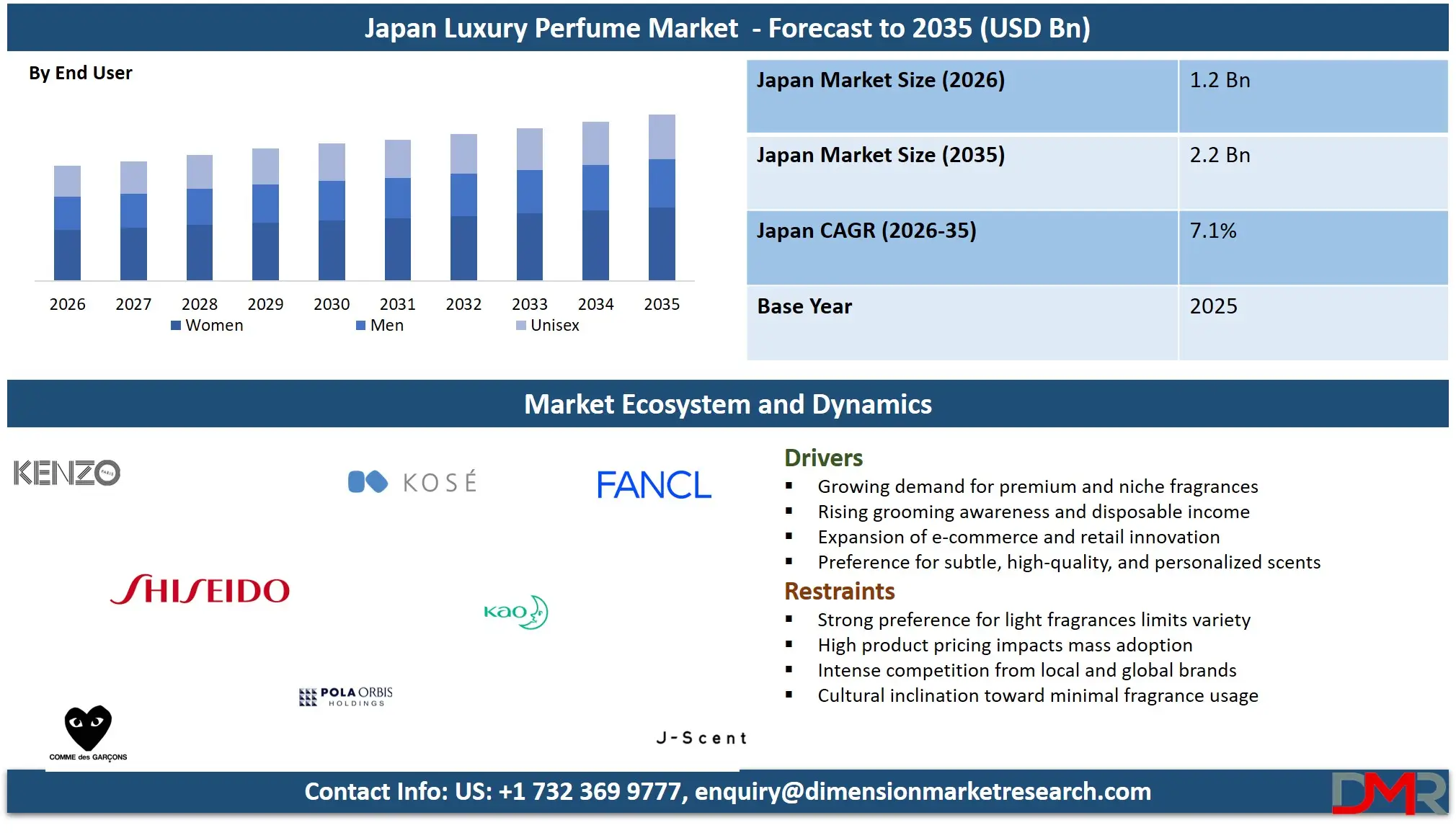
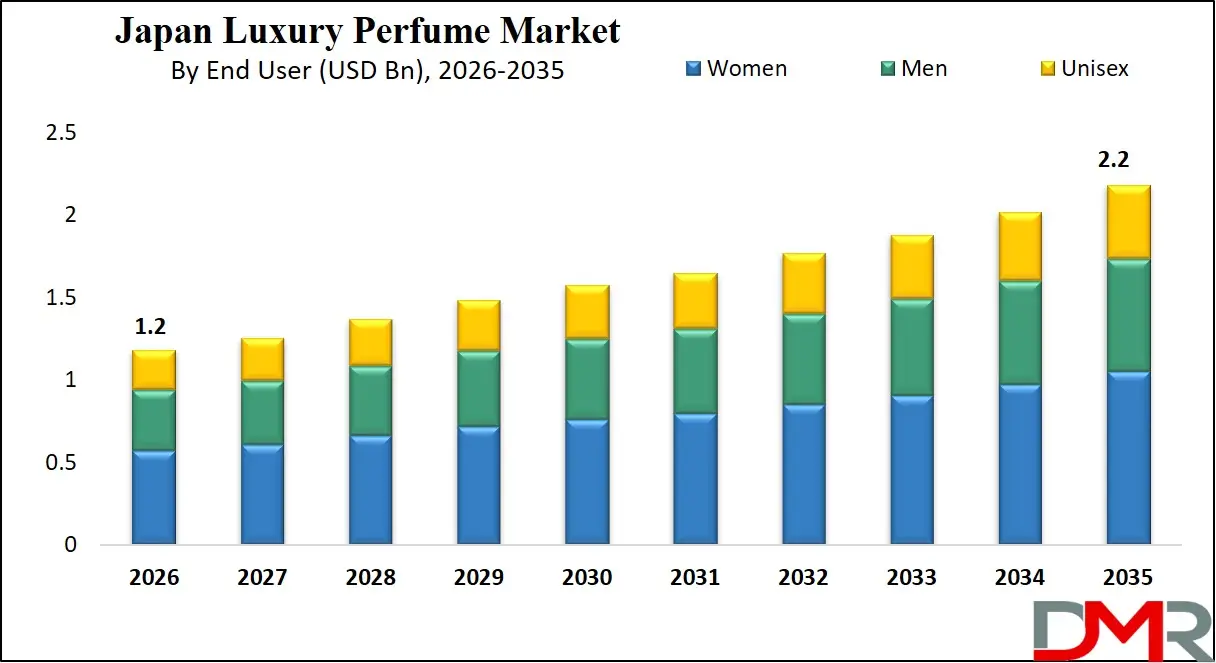
The Japan Luxury Perfume Market size is projected to reach USD 1.2 billion in 2026 and grow at a compound annual growth rate of 7.1% to reach a value of USD 2.2 billion in 2035.
ℹ
To learn more about this report –
Download Your Free Sample Report Here
Luxury perfume encompasses premium fragrance products crafted with high-quality ingredients, sophisticated compositions, and refined branding, often reflecting minimalism, harmony with nature, and artisanal precision. These fragrances merge traditional craftsmanship with advanced olfactory science to deliver exclusivity, superior quality, and cultural narratives. The category includes niche perfume houses, designer labels, and bespoke creations catering to affluent consumers seeking uniqueness and elegance. Within the broader beauty and personal care sector, luxury perfume emphasizes innovation, personalization, and lifestyle enhancement, appealing to consumers who value both aesthetic and sensory experiences.
In Japan, the luxury perfume sector stands out due to a long-standing legacy of meticulous craftsmanship and attention to detail. Advances in fragrance formulation, sustainable ingredient sourcing, and premium packaging have strengthened its appeal. Consumer preference for personalized and high-end products is rising, particularly among urban populations and international buyers. The market is increasingly oriented toward experiential luxury, where emotional engagement, storytelling, and exclusivity drive purchasing decisions, reflecting broader shifts in Japanese consumer behavior.
ℹ
To learn more about this report –
Download Your Free Sample Report Here
Ongoing transformations in the Japanese luxury perfume industry include the adoption of clean-label ingredients, the rise of gender-neutral fragrances, and the expansion of experiential retail formats. Digital channels are playing a key role in extending market reach while maintaining exclusivity through curated online experiences. Rising tourism and cross-border e-commerce are boosting international demand. The market is also shaped by technological innovation in fragrance development, strategic collaborations, sustainable packaging initiatives, and regulatory measures ensuring safety, transparency, and environmental responsibility.
Japan Luxury Perfume Market: Key Takeaways
- Market Growth: The Japan Luxury Perfume Market size is expected to grow by USD 0.9 billion, at a CAGR of 7.1%, during the forecasted period of 2027 to 2035.
- By End User: Women are anticipated to get the majority share of the Japan Luxury Perfume market in 2026.
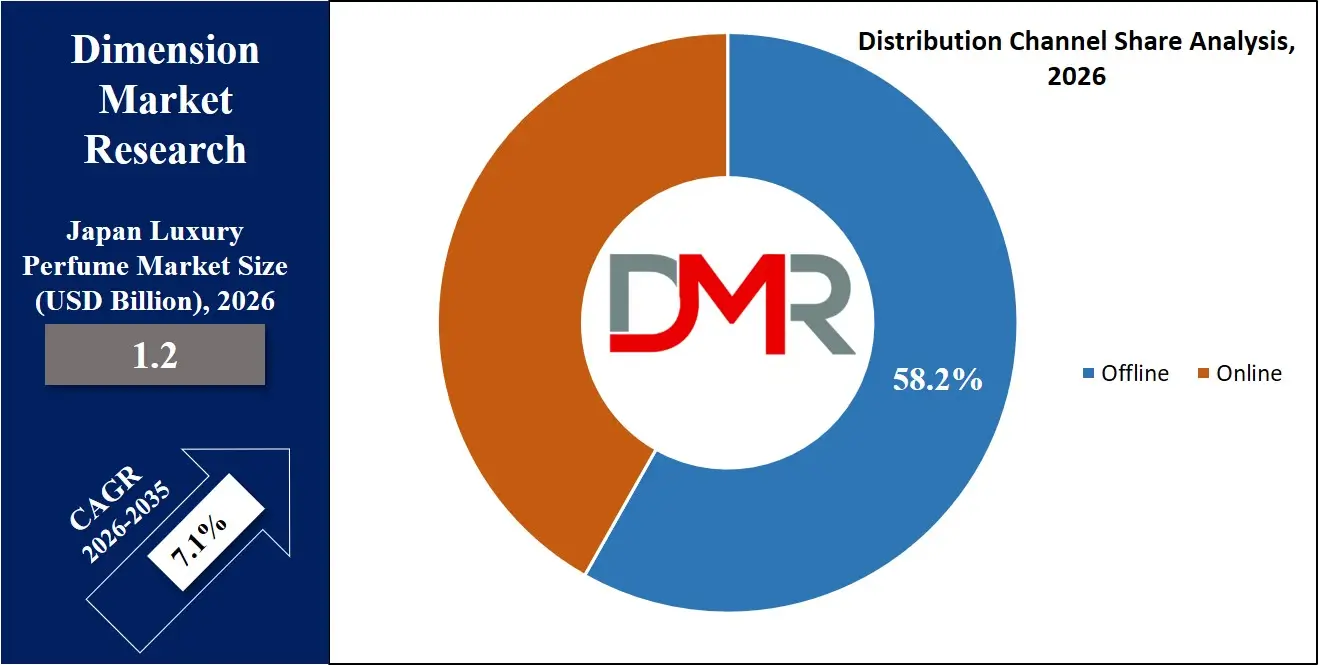
- By Distribution Channel: The offline segment is expected to get the largest revenue share in 2026 in the Japan Luxury Perfume market.
- Use Cases: Some of the use cases of Luxury Perfume include personal identity expression, gifting culture and more.
Japan Luxury Perfume Market: Use Cases
- Personal Identity Expression: Luxury perfumes are used to reflect individuality, with consumers selecting unique scent profiles that align with their personality and lifestyle preferences.
- Gifting Culture: Premium fragrances are popular as high-value gifts during festivals and special occasions, symbolizing sophistication and thoughtfulness.
- Corporate and Social Presence: Professionals use luxury perfumes to create lasting impressions in business and social environments.
- Wellness and Mood Enhancement: Fragrances incorporating natural and calming notes are used for relaxation and emotional well-being.
- Travel Retail Consumption: Tourists purchase luxury perfumes as part of their shopping experience in Japan’s duty-free and premium retail outlets.
- Special Events and Ceremonies: High-end perfumes are used during weddings, celebrations, and formal gatherings.
- Collectible and Niche Enthusiasm: Enthusiasts collect limited-edition and artisanal fragrances as part of a luxury lifestyle.
Stats & Facts
- Ministry of Economy, Trade and Industry Japan reported that cosmetics production value exceeded JPY 2.7 trillion (USD 16.9 billion) in 2024.
- Japan External Trade Organization stated that fragrance imports grew by over 8% in 2024.
- Statistics Bureau of Japan highlighted that household spending on personal care rose by 5.2% in 2024.
- World Bank indicated Japan’s high-income economy status with GDP per capita above USD 33,000 in 2024.
- International Trade Centre noted Japan’s perfume exports increased by 6.5% in 2025.
- OECD reported that luxury goods spending in Japan grew steadily by 4% in 2024.
- Ministry of Finance Japan recorded a rise in duty-free retail sales by 12% in 2025.
- UN Comtrade data showed fragrance trade volume expansion in East Asia by 7% in 2024.
- Japan Tourism Agency stated international tourist arrivals surpassed 30 million in 2025.
- IMF reported stable inflation in Japan at around 2.3% in 2025 supporting premium consumption.
- Cabinet Office Japan highlighted increased consumer confidence index levels in 2024.
- World Economic Forum noted Japan’s strong innovation index ranking in 2025.
Market Dynamic
Driving Factors in the Japan Luxury Perfume Market
Rising Demand for Premium and Personalized Fragrances
The increasing preference for premium and personalized products is a major driver of the Japan luxury perfume market. Consumers are shifting away from mass-produced fragrances toward niche and artisanal offerings that reflect individuality. Advances in scent customization technologies enable brands to create tailored fragrances based on personal preferences, enhancing customer engagement. Additionally, higher disposable incomes and evolving lifestyle aspirations are encouraging spending on luxury goods. This trend is particularly strong among younger consumers who value exclusivity and storytelling, making luxury perfumes a key element of self-expression and identity.
Growth of Tourism and Duty-Free Retail Channels
Japan’s expanding tourism sector significantly contributes to luxury perfume sales. International visitors often purchase high-end fragrances as souvenirs due to Japan’s reputation for quality and authenticity. Duty-free stores and premium retail outlets in major cities and airports provide convenient access to luxury brands. Additionally, favorable currency exchange rates and tax exemptions enhance purchasing appeal. The integration of digital retail platforms with physical stores further strengthens this channel, enabling seamless shopping experiences. This combination of tourism growth and retail innovation continues to drive market expansion.
Restraints in the Japan Luxury Perfume Market
High Product Costs and Limited Accessibility
Luxury perfumes are priced significantly higher due to premium ingredients, branding, and packaging, which limits their accessibility to a niche consumer base. This restricts market penetration, particularly among price-sensitive consumers. Additionally, economic fluctuations can impact discretionary spending, affecting sales of high-end products. The exclusivity factor, while beneficial for brand positioning, can hinder broader adoption. Smaller brands may also struggle to compete due to high production and marketing costs, further limiting market growth.\
Regulatory and Compliance Challenges
Strict regulations governing cosmetic ingredients, labeling, and environmental standards in Japan can pose challenges for manufacturers. Compliance with these regulations requires significant investment in research, testing, and certification processes. This can delay product launches and increase operational costs. Furthermore, global brands entering the Japanese market must adapt formulations to meet local standards, adding complexity. These regulatory barriers can limit innovation speed and create entry challenges for new players.
Opportunities in the Japan Luxury Perfume Market
Expansion of Sustainable and Clean Fragrances
Growing consumer awareness of environmental and health concerns presents opportunities for sustainable and clean luxury perfumes. Brands adopting eco-friendly packaging, natural ingredients, and refillable systems can attract environmentally conscious consumers. This shift aligns with global sustainability trends and enhances brand reputation. Additionally, innovations in biodegradable materials and ethical sourcing practices can differentiate products in a competitive market, opening new growth avenues.
Digital Transformation and E-commerce Growth
The rapid growth of e-commerce platforms offers significant opportunities for luxury perfume brands. Online channels enable wider reach, personalized marketing, and direct consumer engagement. Technologies such as virtual scent experiences and AI-driven recommendations enhance online shopping experiences. Furthermore, social media and influencer marketing play a crucial role in brand promotion. This digital transformation allows brands to expand beyond traditional retail and tap into younger, tech-savvy audiences.
Trends in the Japan Luxury Perfume Market
Rise of Gender-Neutral and Minimalist Fragrances
A growing trend in the Japan luxury perfume market is the shift toward gender-neutral fragrances. Consumers are increasingly seeking scents that transcend traditional gender boundaries, focusing on personal preference rather than classification. Minimalist packaging and subtle scent profiles reflecting Japanese aesthetics are also gaining popularity. This trend reflects broader societal changes and evolving consumer values, influencing product design and marketing strategies.
Integration of Technology in Fragrance Development
Technological integration is reshaping the fragrance industry. AI and data analytics are being used to predict consumer preferences and develop innovative scent combinations. Smart devices and digital platforms enable personalized recommendations and enhanced customer experiences. This trend not only accelerates product development but also improves accuracy in meeting consumer demands, giving brands a competitive edge.
Impact of Artificial Intelligence in Japan Luxury Perfume Market
- AI-driven scent personalization: AI analyzes consumer preferences to create customized fragrances, improving satisfaction and loyalty.
- Predictive analytics for trends: Algorithms forecast emerging scent trends, enabling proactive product development.
- Enhanced customer experience: Virtual fragrance testing tools simulate scent profiles online.
- Supply chain optimization: AI improves inventory management and demand forecasting.
- Product innovation acceleration: Machine learning identifies unique ingredient combinations quickly.
- Targeted marketing campaigns: AI enables precise audience segmentation and personalized promotions.
- Quality control automation: AI ensures consistency in fragrance composition and production processes.
- Sustainability optimization: AI helps identify eco-friendly ingredients and reduce waste.
Research Scope and Analysis
By Product Type Analysis
Parfum (pure perfume) holds the dominant share in the Japan luxury perfume market, projected to account for approximately 34.5% in 2026. Its high concentration of fragrance oils ensures a long-lasting and rich scent profile, making it especially attractive to affluent consumers seeking exclusivity and superior quality. This segment benefits from strong brand positioning, premium pricing strategies, and limited-edition offerings that enhance its desirability. Japanese consumers tend to prefer subtle yet enduring fragrances, aligning perfectly with parfum characteristics. Additionally, the growing popularity of niche and artisanal perfume houses that emphasize craftsmanship, rare ingredients, and cultural storytelling further strengthens this segment’s leadership. The increasing demand for signature scents and personalized fragrance experiences continues to reinforce its market dominance.
Eau de Parfum (EDP) represents the fastest-growing segment within the Japan luxury perfume market due to its optimal balance between longevity, intensity, and affordability. Compared to pure parfum, EDP offers a more accessible price point while still delivering a premium fragrance experience, making it appealing to a wider consumer base. Younger consumers and working professionals are increasingly gravitating toward EDP products as part of their daily grooming routines. Brands are responding by expanding their EDP portfolios with diverse scent profiles, seasonal collections, and innovative packaging formats. Additionally, the segment benefits from strong online retail presence and marketing campaigns that emphasize versatility and convenience, further accelerating its adoption.
By Distribution Channel Analysis
Offline distribution channels dominate the Japan luxury perfume market, with an estimated market share of 58.2% in 2026. Physical retail spaces such as luxury boutiques, department stores, and duty-free outlets play a critical role in influencing consumer purchasing decisions. Fragrance is a highly sensory product, and consumers often prefer to test scents in person before making a purchase. High-end retail environments provide immersive brand experiences, personalized consultations, and exclusive product displays that enhance customer engagement. Additionally, Japan’s strong retail culture and emphasis on service excellence further strengthen offline sales. The presence of trained staff and curated product selections also contributes to higher conversion rates and brand loyalty.
ℹ
To learn more about this report –
Download Your Free Sample Report Here
Online distribution channels are witnessing rapid growth, driven by increasing digital adoption and evolving consumer preferences for convenience. E-commerce platforms enable consumers to explore a wide range of luxury perfumes, compare products, and access detailed descriptions and reviews. Innovations such as virtual try-on tools, AI-based scent recommendations, and personalized marketing campaigns are enhancing the online shopping experience. The rise of mobile commerce and social media influence is also playing a significant role in driving online sales. Brands are investing heavily in digital strategies, including direct-to-consumer platforms and collaborations with online luxury retailers, to expand their reach beyond traditional urban markets and attract younger, tech-savvy consumers.
By End User Analysis
The women segment leads the Japan luxury perfume market, projected to account for approximately 47.8% of the total share in 2026. This dominance is driven by higher consumption rates, a broader range of product offerings, and strong brand engagement among female consumers. Luxury perfume brands frequently design marketing campaigns, product lines, and packaging specifically tailored to women, reinforcing their central role in the market. Additionally, women are more likely to purchase multiple fragrances for different occasions, contributing to higher overall demand. Continuous product innovation, seasonal launches, and limited-edition collections further strengthen this segment’s growth and maintain high levels of consumer interest and loyalty.
The unisex segment is emerging as one of the fastest-growing categories in the Japan luxury perfume market, driven by shifting consumer attitudes toward gender-neutral products. Increasing acceptance of inclusive branding and the desire for versatile fragrances that can be worn by anyone are key factors supporting this growth. Younger consumers, in particular, are embracing unisex perfumes as a form of self-expression that transcends traditional gender norms. Brands are responding by developing innovative scent profiles that blend traditionally masculine and feminine notes, along with minimalist packaging that appeals to a broader audience. This trend is expected to continue expanding, creating new opportunities for market players.
The Japan Luxury Perfume Market Report is segmented on the basis of the following:
By Product Type
- Parfum (Pure Perfume)
- Eau de Parfum (EDP)
- Eau de Toilette (EDT)
- Eau de Cologne (EDC)
- Eau Fraiche
By Distribution Channel
By End User
Competitive Landscape
The Japan luxury perfume market is characterized by intense competition driven by innovation, branding, and exclusivity. Companies focus on product differentiation through unique scent compositions, premium packaging, and storytelling. High entry barriers exist due to the need for strong brand identity, distribution networks, and regulatory compliance.
ℹ
To learn more about this report –
Download Your Free Sample Report Here
Strategic collaborations, limited-edition launches, and investments in research and development are common approaches to maintain competitive advantage. Additionally, digital transformation and direct-to-consumer strategies are becoming increasingly important for market penetration and customer engagement.
Some of the prominent players in the Japan Luxury Perfume are:
- Shiseido
- Kosé Corporation
- Pola Orbis Holdings
- Kao Corporation (Sensai)
- Fancl Corporation
- Comme des Garçons Parfums
- Issey Miyake Parfums
- Kenzo Parfums
- Sholayered
- Di Ser
- J-Scent
- Parfum Satori
- Annayake
- Three Cosmetics
- Decorté
- Albion Cosmetics
- RMK
- Ainz & Tulpe (private labels)
- Muji (Fragrance line)
- Takasago International Corporation
- Other Key Players
Recent Developments
- In June 2025, Kosé Corporation announced a strategic partnership with a European fragrance house to co-develop high-end perfumes targeting global markets. The collaboration focused on combining Japanese minimalism with European olfactory expertise. The initiative included joint R&D investments and expansion into digital retail channels. This partnership is expected to enhance product innovation, broaden international reach, and reinforce competitive positioning.
- In February 2025, Shiseido expanded its luxury fragrance portfolio by launching a new line of artisanal perfumes inspired by traditional Japanese ingredients such as hinoki wood and yuzu citrus. The collection emphasized sustainability with refillable glass bottles and eco-friendly packaging. The company also integrated AI-driven personalization tools in its flagship stores, allowing customers to customize scent profiles. This move aimed to strengthen its position in the premium segment while catering to evolving consumer demand for unique and environmentally conscious products.
Report Details
| Report Characteristics |
| Market Size (2026) |
USD 1.2 Bn |
| Forecast Value (2035) |
USD 2.2 Bn |
| CAGR (2026–2035) |
7.1% |
| Historical Data |
2021 – 2025 |
| Forecast Data |
2027 – 2035 |
| Base Year |
2025 |
| Estimate Year |
2026 |
| Report Coverage |
Market Revenue Estimation, Market Dynamics, Competitive Landscape, Growth Factors and etc. |
| Segments Covered |
By Product Type (Parfum (Pure Perfume), Eau de Parfum (EDP), Eau de Toilette (EDT), Eau de Cologne (EDC), Eau Fraiche), By Distribution Channel (Offline, Online), By End User (Women, Men, Unisex) |
| Country Coverage |
Japan |
| Prominent Players |
Shiseido, Kosé Corporation, Pola Orbis Holdings, Kao Corporation (Sensai), Fancl Corporation, Comme des Garçons Parfums, Issey Miyake Parfums, Kenzo Parfums, Sholayered, Di Ser, J-Scent, Parfum Satori, Annayake, Three Cosmetics, Decorté, Albion Cosmetics, RMK, Ainz & Tulpe (private labels), Muji (Fragrance line), Takasago International Corporation, and Other Key Players |
| Purchase Options |
We have three licenses to opt for: Single User License (Limited to 1 user), Multi-User License (Up to 5 Users) and Corporate Use License (Unlimited User) along with free report customization equivalent to 0 analyst working days, 3 analysts working days and 5 analysts working days respectively. |
Frequently Asked Questions
How big is the Japan Luxury Perfume Market?
▾ The Japan Luxury Perfume Market size is expected to reach USD 1.2 billion by 2026 and is projected to reach USD 2.2 billion by the end of 2035.
Who are the key players in the Japan Luxury Perfume Market?
▾ Some of the major key players in the Japan Luxury Perfume Market include Shiseido, Kose, J-scent and others.
What is the growth rate in the Japan Luxury Perfume Market?
▾ The market is growing at a CAGR of 7.1 percent over the forecasted period.