Market Overview
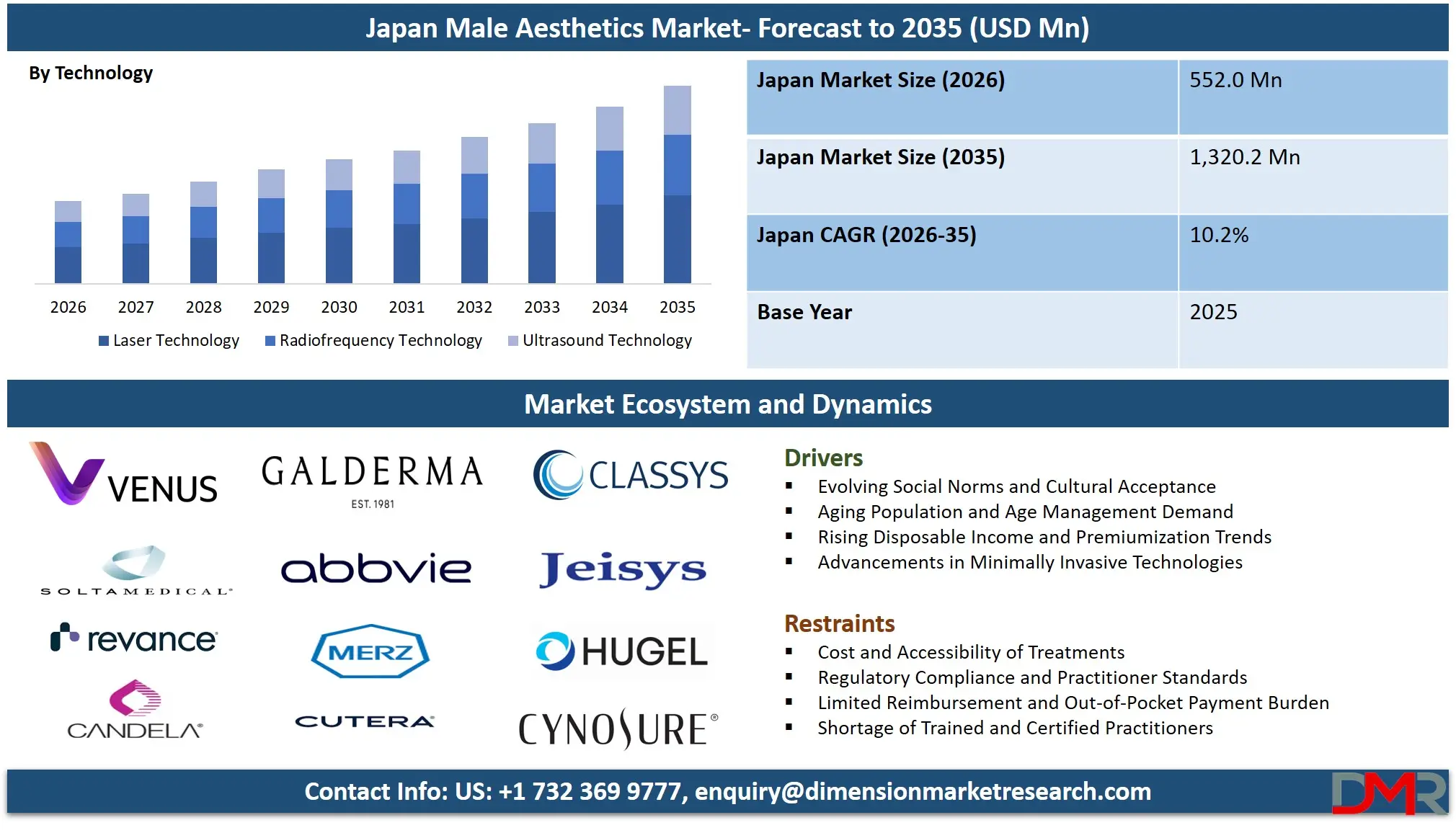
The Japan Male Aesthetics Market is projected to attain a valuation of USD 552.0 million in 2026 and is expected to expand significantly, reaching USD 1,320.0 million by 2035, advancing at a robust compound annual growth rate (CAGR) of 10.2% during the forecast period.
ℹ
To learn more about this report –
Download Your Free Sample Report Here
This growth reflects Japan's evolving social norms, increasing male disposable income, and a growing cultural acceptance of aesthetic procedures among men. The demand for minimally invasive treatments, hair restoration solutions, and body contouring is accelerating across demographics, driven by a desire to maintain a youthful and competitive appearance in both professional and personal spheres.
Japan has historically maintained one of the most sophisticated healthcare and aesthetics markets in Asia, with world-class clinics and hospitals in metropolitan areas like Tokyo, Osaka, and Nagoya serving as major hubs for aesthetic medicine. The integration of advanced technologies, such as laser systems, radiofrequency devices, and ultrasound platforms, is becoming central to the country's next-generation aesthetics transformation. Japan's aging population, strong focus on personal grooming, and growing influence of social media are pushing men to adopt advanced aesthetic treatments at an unprecedented pace.
Government initiatives such as the Medical Tourism Promotion Policy and the Digital Transformation Strategy for Healthcare aim to position Japan as a leader in safe, effective, and technologically advanced aesthetic services. These programs promote investment in certified clinics, practitioner training, and digital consultation platforms, creating a favorable ecosystem for aesthetic innovation.
Japan's demographic trends also strongly support market growth. According to Ministry of Health, Labour and Welfare statistics, Japan has one of the highest proportions of elderly citizens globally, with a significant portion of the male population seeking age-management solutions. The country's position as a leader in dermatological research and medical device manufacturing creates sustained demand for reliable aesthetic services capable of meeting strict safety and efficacy standards.
The workplace culture represents another major growth pillar. Japan's demanding corporate environment, where appearance can influence career progression, drives demand for subtle, natural-looking enhancements that convey vitality and confidence. Aesthetic providers are developing specialized capabilities in non-surgical rejuvenation, discreet treatments, and rapid recovery protocols to serve this expanding segment.
ℹ
To learn more about this report –
Download Your Free Sample Report Here
In the personal care and grooming sectors, male aesthetics is transforming self-care through specialized clinics, direct-to-consumer products, and integrated grooming services. The rapid growth of men's skincare and grooming platforms increases demand for accessible, high-quality aesthetic solutions that fit into busy lifestyles.
Japan's unique combination of advanced medical infrastructure, strong cultural emphasis on personal presentation, technological leadership, and government-backed innovation programs positions the country as one of the most significant male aesthetics markets in the Asia-Pacific region.
Japan Male Aesthetics Market: Key Takeaways
- Market Size Insights: The Japan Male Aesthetics Market is estimated at USD 552.0 million in 2026 and is expected to reach USD 1,320.0 million by 2035.
- Market Growth Rate: The market is projected to grow at a CAGR of 10.2% from 2026 to 2035.
- Key Players: Major players in the Japan Male Aesthetics Market include Galderma S.A., AbbVie Inc., Merz Pharma GmbH & Co. KGaA, Solta Medical, Candela Corporation, Cynosure Lutronic.
- Non-Surgical Procedures as a Core Growth Driver: Non-surgical procedures, including injectables, laser hair removal, and energy-based devices, are expected to dominate the Japanese male aesthetics market due to their minimal downtime, lower risk profile, and growing demand for preventative and maintenance treatments.
- Facial Aesthetics as the Leading Application: Facial aesthetics, encompassing treatments like rhinoplasty, blepharoplasty, and injectables, represents the largest application segment, driven by strong demand for facial rejuvenation, enhanced masculine features, and professional image management.
- Government Policy as a Catalyst: Programs such as the Medical Tourism Promotion Policy and the Digital Transformation Strategy for Healthcare promote innovation and accelerate the adoption of advanced aesthetic technologies.
Japan Male Aesthetics Market: Use Cases
- Hair Restoration for Professional Image Management: Japan's demanding corporate culture is significantly accelerating the deployment of specialized hair restoration treatments. Advanced hair transplantation techniques, including FUE (Follicular Unit Extraction), enable the safe and natural-looking treatment of male pattern baldness. Clinics equipped with advanced extraction and implantation systems ensure aesthetic results with minimal scarring and rapid recovery, with comprehensive consultation providing continuous patient guidance.
- Injectables for Subtle Facial Rejuvenation: Japan's image-conscious male demographic relies heavily on non-surgical injectables for age management and facial enhancement. Botulinum toxin and dermal fillers are used to address forehead lines, crow's feet, and nasolabial folds, as well as to enhance jawline definition. Aesthetic clinics provide specialized solutions including precise injection techniques that support a refreshed, natural appearance without the "overdone" look.
- Body Contouring for Fitness Enhancement: Japan's growing focus on fitness and physique among men creates substantial demand for body contouring services. Liposuction, radiofrequency skin tightening, and ultrasound fat reduction help men achieve desired body shapes that complement their fitness efforts. Clinics with technical expertise in male anatomy provide specialized consultation, procedure planning, and post-treatment support.
- Laser Hair Removal for Grooming Efficiency: Modern grooming habits among Japanese men, including the desire for smooth, hair-free skin on the back, chest, and face, require efficient, long-lasting solutions. Laser hair removal clinics provide tailored treatment protocols, advanced laser systems, and expedited scheduling that enable men to achieve grooming goals while maintaining active lifestyles.
- Eyelid Surgery (Blepharoplasty) for a Refreshed Appearance: The rapid growth of social media and video conferencing has transformed aesthetic requirements for Japanese men. Blepharoplasty provides solutions for addressing droopy eyelids, under-eye bags, and a tired appearance. Clinics offer integrated services including consultation, surgical precision, and rapid recovery management that enable effective and discreet rejuvenation.
Japan Male Aesthetics Market: Stats & Facts
Ministry of Health, Labour and Welfare (MHLW)
- Japan's medical aesthetics market is one of the largest in Asia, with over 5,000 registered clinics offering specialized aesthetic procedures for men.
- The Medical Tourism Promotion Policy aims to create a globally recognized medical service infrastructure through quality certification, digital integration, and international patient support systems.
- Aesthetic medicine services are key components of Japan's national healthcare innovation strategy and medical tourism competitiveness agenda.
Tokyo Metropolitan Government
- Tokyo serves as Japan's premier medical aesthetics hub, accounting for approximately 40% of all male aesthetic procedures performed in the country.
- The city connects to over 100 international cities, providing extensive global reach for medical tourists seeking high-quality aesthetic care.
Japan Customs
- Japan processes over 1 million medical device import declarations annually for aesthetic equipment and consumables, with increasing adoption of automated clearance systems and digital documentation.
- The NACCS (Nippon Automated Cargo and Port Consolidated System) handles a growing volume of medical device customs documentation, reducing processing times and improving clearance efficiency.
World Bank
- Japan ranks among the top countries globally for healthcare infrastructure and service quality, with particularly strong scores in medical technology, safety standards, and service efficiency.
- The country's disposable income per capita exceeds USD 40,000, reflecting the financial capacity for discretionary spending on aesthetic treatments.
International Society of Aesthetic Plastic Surgery (ISAPS)
- Japan represents one of the largest aesthetic medicine markets in the Asia-Pacific region, with male procedures accounting for a growing percentage of total treatments.
- The average number of non-surgical procedures per male patient consistently exceeds 2-3 sessions per year, indicating strong engagement with maintenance treatments.
Japan Society of Aesthetic Surgery (JSAS)
- Japan hosts over 3,000 board-certified plastic surgeons and dermatologists providing comprehensive aesthetic services to domestic and international patients.
- The society reports steady growth in specialized male procedures including hair transplantation, liposuction, and eyelid surgery.
Japan Male Aesthetics Market: Market Dynamics
Driving Factors in the Japan Male Aesthetics Market
Evolving Social Norms and Cultural Acceptance
Japan's shifting social landscape is one of the strongest drivers for male aesthetics demand. The growing cultural acceptance of cosmetic procedures, driven by media representation, celebrity influence, and changing definitions of masculinity, has significantly reduced stigma. Men increasingly view aesthetic treatments as a form of self-care and personal investment rather than vanity. The rise of "ikemen" (good-looking men) culture and the influence of K-beauty and J-beauty trends encourage men to prioritize skincare and aesthetic maintenance. As social norms continue to evolve, aesthetic clinics provide essential services that support men's personal and professional confidence.
Aging Population and Age Management Demand
The rapid expansion of Japan's elderly demographic, particularly among men seeking to maintain a youthful appearance, has significantly increased demand for aesthetic treatments. Men increasingly seek age-management solutions, including injectables, laser treatments, and surgical procedures, to counter visible signs of aging. The desire to remain competitive in the workforce, where appearance can influence perceptions of vitality and capability, drives sustained interest in preventative and corrective treatments. The growth of this demographic creates new opportunities for clinics offering specialized age-management programs and maintenance protocols.
Restraints in the Japan Male Aesthetics Market
Cost and Accessibility of Treatments
The male aesthetics market in Japan faces ongoing challenges related to treatment costs and service accessibility. High-quality procedures, particularly surgical interventions, require significant financial investment, which may limit access for younger or lower-income demographics. Clinics must navigate the balance between premium pricing for advanced services and the need to attract a broad patient base. Cost sensitivity, influenced by economic conditions and treatment frequency, creates uncertainty for both providers and patients in budgeting and pricing.
Regulatory Compliance and Practitioner Standards
Medical aesthetics in Japan involves navigating complex regulatory requirements to ensure patient safety and treatment efficacy. Clinics must ensure compliance with medical device regulations, pharmaceutical standards, and safety protocols for all procedures. Specialized categories including injectables, laser devices, and surgical equipment face additional regulatory scrutiny and handling requirements. The complexity of maintaining compliance while ensuring efficient patient care can strain clinic resources and create potential delays or liabilities. Changes in healthcare policies or device regulations in key markets add further complexity to aesthetic operations.
Opportunities in the Japan Male Aesthetics Market
Expansion of Non-Surgical, Minimal Downtime Treatments
Japan's busy professional culture creates substantial opportunities for non-surgical aesthetic services requiring minimal recovery time. The increasing demand for lunchtime procedures, including injectables and laser treatments, requires sophisticated solutions with rapid recovery and natural results. Clinics investing in advanced non-surgical technologies, patient education, and efficient scheduling can capture growing demand from time-constrained male patients. The expansion of combination treatments, where multiple modalities are used in a single session, further increases requirements for integrated, efficient service delivery.
Digital Transformation and Virtual Consultations
The ongoing digital transformation of healthcare presents significant opportunities for clinics offering advanced technology solutions. Japanese patients increasingly demand online booking, virtual consultations, and seamless integration between clinic systems and personal devices. Aesthetics providers investing in digital platforms, CRM systems, and advanced patient tracking can differentiate their services while improving operational efficiency. The integration of AI for facial analysis, 3D simulation for surgical planning, and digital follow-up creates opportunities for clinics to offer premium visualization and planning services that justify higher margins and strengthen patient relationships.
Trends in the Japan Male Aesthetics Market
Natural-Looking Results and Subtle Enhancements
Japanese male patients are placing greater emphasis on achieving natural-looking results that enhance rather than transform their appearance. The preference for subtle, refined outcomes is increasingly influencing treatment selection, with patients seeking procedures that maintain individual characteristics while addressing specific concerns. Aesthetic clinics are responding with advanced injection techniques, customized surgical approaches, and comprehensive consultation processes that prioritize patient education and expectation management. The development of more sophisticated injectable products and precise surgical tools supports these goals. Clinics that can demonstrate consistently natural results and offer personalized treatment plans gain competitive advantage with discerning patients.
Integration of Aesthetics with Wellness and Grooming
Aesthetics clinics in Japan are increasingly developing integrated wellness and grooming services that combine medical treatments with broader self-care. Rather than viewing aesthetics in isolation, clinics design comprehensive programs that may include injectables, laser treatments, and surgical procedures alongside nutrition advice, skincare regimens, and fitness support. This trend reflects growing patient demand for holistic approaches that address overall well-being. Clinics with multidisciplinary capabilities can offer optimal treatment recommendations based on individual patient goals, strengthening their position as comprehensive wellness partners.
Japan Male Aesthetics Market: Research Scope and Analysis
By Procedure Type Analysis
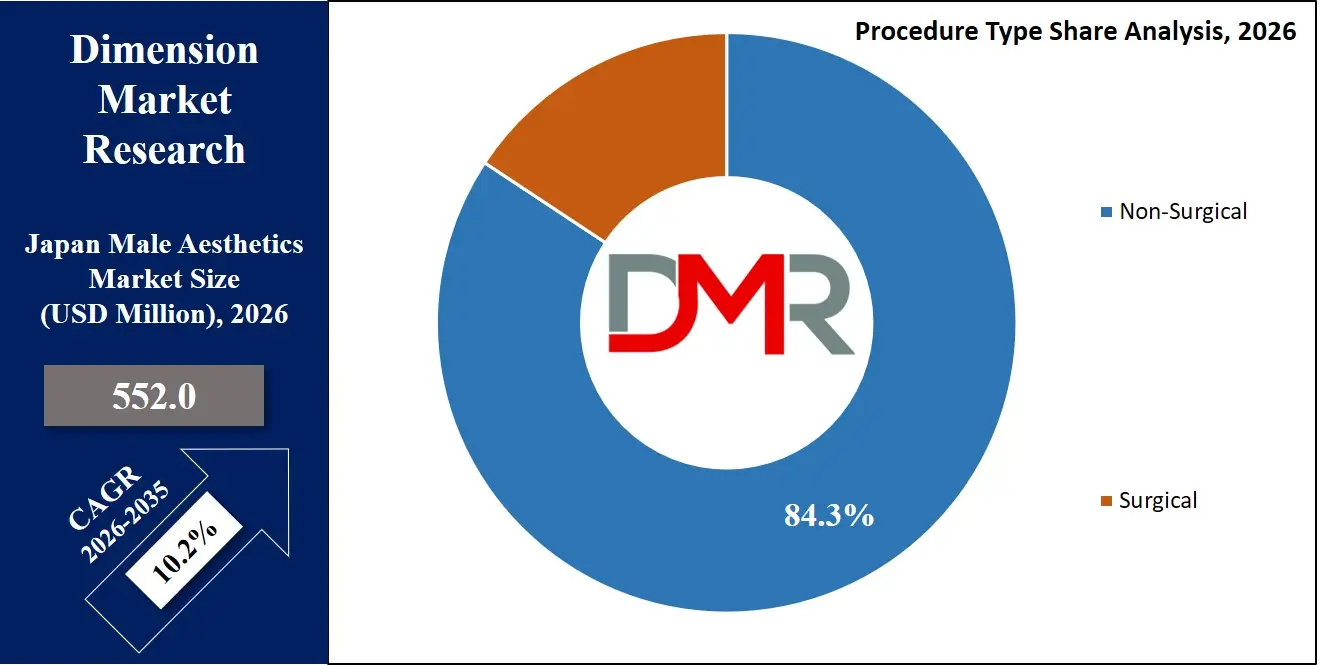
Non-Surgical procedures are projected to dominate the Japan Male Aesthetics Market, holding approximately 84.3% of market share in 2026. This dominance is driven by Japan's busy professional culture, where demanding work schedules leave little time for extended recovery periods. Men increasingly prefer treatments that offer visible results with minimal downtime, allowing them to return to work and social activities immediately. The non-surgical segment encompasses injectables, including botulinum toxin (Botox) for dynamic wrinkle reduction and dermal fillers for volume restoration and facial contouring; laser hair removal for long-term grooming efficiency; radiofrequency skin tightening for non-invasive laxity improvement; and ultrasound lifting for deep tissue stimulation and facial rejuvenation. Government initiatives such as the Digital Transformation Strategy for Healthcare emphasize advanced non-surgical technologies, supporting the adoption of innovative platforms that enhance treatment precision and patient comfort. The lower risk profile, reduced cost compared to surgery, and the ability to perform treatments in outpatient settings further fuel demand for non-surgical options. Additionally, the growing trend of "prejuvenation" or starting preventative treatments in younger years, is expanding the non-surgical patient base, creating long-term patient relationships built around maintenance protocols.
ℹ
To learn more about this report –
Download Your Free Sample Report Here
Surgical procedures, while representing a smaller volume share, continue to serve patients seeking permanent, transformative results where non-surgical options are insufficient. This segment includes rhinoplasty, which remains one of the most sought-after surgical procedures for men seeking facial harmony and profile refinement; liposuction, particularly for addressing stubborn fat deposits resistant to diet and exercise; eyelid surgery (blepharoplasty), which corrects droopy eyelids and under-eye bags; and hair transplantation, which offers a permanent solution for male pattern baldness. The surgical segment requires specialized expertise, advanced facilities, and comprehensive pre- and post-operative care. Japan's board-certified plastic surgeons and well-equipped clinics ensure high-quality outcomes that meet stringent safety standards. Innovations in surgical techniques, such as minimally invasive liposuction and Follicular Unit Extraction (FUE) hair transplantation, are bridging the gap between surgical and non-surgical paradigms by offering reduced downtime and less visible scarring, thereby attracting a broader patient demographic.
By Age Group Analysis
Middle-Aged Adults (ages 35-55) are projected to dominate the age group segment of the Japan Male Aesthetics Market. This dominance is driven by this demographic's convergence of financial capacity, visible onset of age-related concerns, and strong motivation to maintain a competitive edge in the workplace. Men in this age bracket experience the most pronounced signs of aging, including hair loss, deepening facial wrinkles, loss of skin elasticity, and accumulation of stubborn fat deposits. They possess the disposable income to invest in both corrective and preventative treatments, viewing aesthetics as a strategic investment in their professional and personal lives. The desire to project vitality and competence in Japan's demanding corporate environment makes this demographic particularly engaged with treatments that offer natural-looking rejuvenation. This group is the primary driver for combination approaches, where surgical interventions are paired with non-surgical maintenance treatments.
Young Adults (ages 18-34) represent a rapidly expanding segment, driven by social media influence, the normalization of aesthetic treatments among younger demographics, and a proactive approach to appearance management through "prejuvenation" treatments such as laser hair removal, subtle injectables, and skin rejuvenation. The rise of male grooming culture, amplified by Japanese and Korean pop culture, has significantly reduced stigma, with young adults discovering clinics through social media and online reviews. Seniors (ages 55 and above) represent a growing segment for restorative procedures, with Japan's aging population driving demand for surgical interventions like blepharoplasty, facelifts, and hair transplantation, alongside non-surgical options for deep wrinkles and skin laxity, supported by significant accumulated wealth and willingness to invest in high-quality, safe treatments.
By Technology Analysis
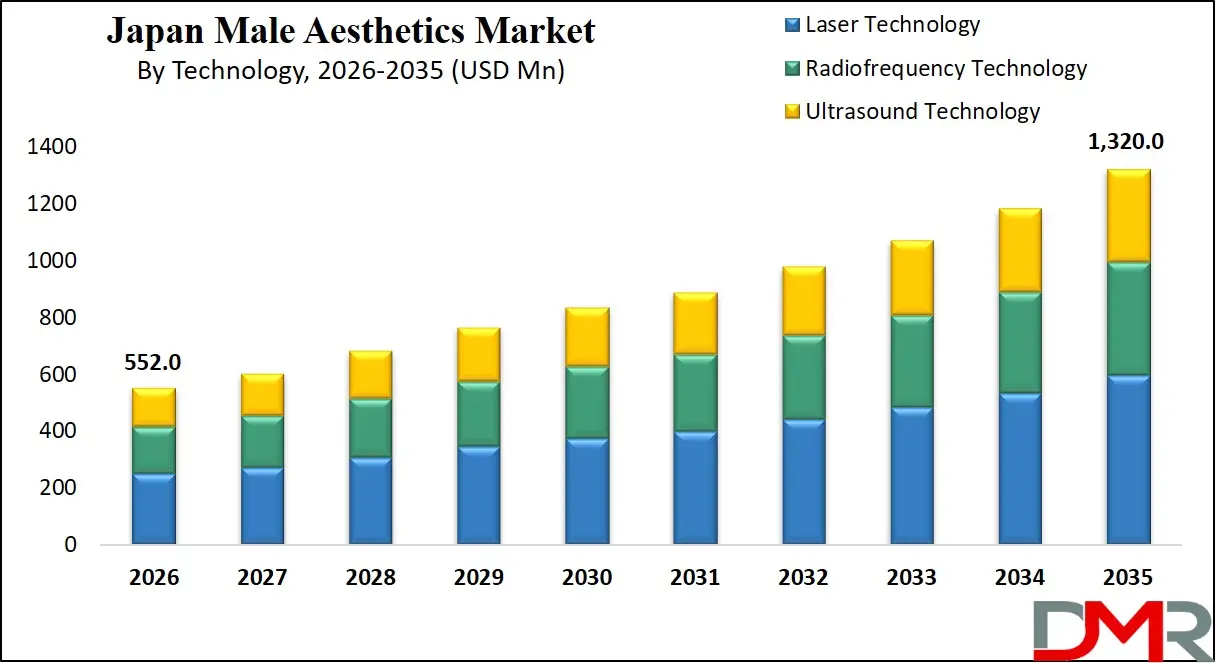
Laser Technology is anticipated to dominate the technology segment of the Japan Male Aesthetics Market. This dominance is driven by its versatility and efficacy across multiple applications, including laser hair removal, skin rejuvenation, and tattoo removal. Major clinics depend on advanced laser systems, including diode, alexandrite, and Nd:YAG lasers, for delivering consistent, high-quality results across diverse skin types and treatment areas. Japan's position as a leader in optical technology ensures access to cutting-edge laser platforms that offer improved patient comfort, faster treatment times, and enhanced safety profiles. The continuous evolution of laser technology, with innovations such as fractional lasers for resurfacing and picosecond lasers for pigment correction, expands the clinical applications available to practitioners.
Radiofrequency Technology is expanding rapidly due to strong demand for non-invasive skin tightening and body contouring solutions, delivering controlled thermal energy to deep dermal layers to stimulate collagen production without significant downtime. This technology is particularly appealing to male patients seeking subtle lifting effects for the face, neck, and body without the risks and recovery associated with surgery. Ultrasound Technology, including high-intensity focused ultrasound (HIFU), represents a growing segment allowing for non-surgical lifting and tightening by delivering focused energy to the SMAS layer traditionally addressed during surgical facelifts. The single-treatment nature of many ultrasound protocols appeals to men who prefer a one-time intervention, while the gradual, natural-looking improvement aligns with the preference for subtle enhancements.
By Treatment Frequency Analysis
Series-Based Treatments are projected to dominate the treatment frequency segment of the Japan Male Aesthetics Market. This dominance is driven by the fundamental nature of many aesthetic procedures, which require multiple sessions to achieve optimal, long-lasting results. Laser hair removal typically requires six to eight sessions spaced several weeks apart to target hair follicles in various growth cycles. Similarly, skin rejuvenation protocols often involve a series of sessions to achieve desired improvements. This treatment model creates sustained patient engagement over several months, allowing clinics to build strong relationships and recommend complementary treatments. Series-based treatments also generate predictable, recurring revenue streams for clinics, supporting business planning and resource allocation.
One-Time Treatments represent a significant segment for transformative results achieved in a single session, including surgical procedures such as rhinoplasty, liposuction, eyelid surgery, and hair transplantation, as well as certain non-surgical treatments like HIFU lifting and some dermal filler protocols. The appeal of a single intervention with no ongoing treatment obligations resonates with men who prefer a straightforward, results-oriented approach. Maintenance Treatments represent a growing segment for patients seeking ongoing management of age-related concerns, particularly evident in the injectables market where botulinum toxin treatments are repeated every three to four months. This model creates long-term patient relationships that extend over years, representing a stable and predictable revenue source for clinics, especially among middle-aged and senior patients.
By Application Analysis
Facial Aesthetics is projected to dominate the application segment of the Japan Male Aesthetics Market, driven by the face being the primary focus for age management and professional image. Procedures targeting the face directly address visible signs of aging, including forehead lines, crow's feet, under-eye hollows, and sagging jowls, encompassing surgical interventions such as rhinoplasty and blepharoplasty alongside non-surgical treatments including botulinum toxin, dermal fillers, laser therapies, and energy-based lifting devices. Japan's cultural emphasis on facial harmony and presentation ensures sustained demand, while the growing acceptance of subtle enhancements among men, driven by media representation of well-groomed celebrities, is expanding the patient base. Hair Restoration addresses male pattern baldness through surgical options like Follicular Unit Extraction (FUE) offering permanent, natural-looking results, and non-surgical options including platelet-rich plasma (PRP) injections and low-level laser therapy. Body Contouring continues to grow with surgical options like liposuction and gynecomastia surgery alongside non-surgical options such as cryolipolysis and radiofrequency fat reduction that appeal to men seeking to enhance their fitness results.
Skin Rejuvenation serves as a foundational application, with laser resurfacing, chemical peels, and micro-needling addressing acne, scarring, pigmentation, and sun damage, often serving as entry points for men new to aesthetic medicine. Japanese men are increasingly investing in skin health as part of their overall grooming routines, driven by greater awareness of skincare principles and the desire for a clear, even complexion. Other Applications, including hand rejuvenation and scar revision, contribute additional diversity to the market, demonstrating the comprehensive range of services available to male patients. The growing awareness of comprehensive aesthetic care, where patients seek harmony across multiple areas of the body, is driving interest in these complementary applications. As the market matures, these niche applications are expected to gain greater prominence within the broader male aesthetics landscape.
By End-User Analysis
Service Providers are projected to dominate the end-user segment of the Japan Male Aesthetics Market, driven by the requirement for medical supervision, specialized expertise, and advanced facilities for the majority of aesthetic procedures. Hospitals and Cosmetic Centers offer comprehensive surgical and non-surgical services under medical supervision, equipped with operating rooms and advanced technologies. Dermatology Clinics specialize in skin-related treatments, including laser therapies and injectables, often serving as entry points for non-surgical interventions. Medical Spas offer a hybrid model combining medical-grade treatments with spa-like environments. Ambulatory Surgery Centers provide efficient, cost-effective settings for outpatient surgical procedures. Franchised Chains have expanded rapidly, offering standardized services and convenient locations. Barbershop-Adjacent Grooming Clinics represent an emerging category that integrates aesthetic services into male grooming environments, creating a comfortable, familiar setting that reduces intimidation often associated with medical clinics.
Direct-to-Consumer channels represent a growing segment for non-invasive, non-medical treatments and products. Online retail platforms offer a wide range of skincare products, hair growth treatments, and at-home aesthetic devices that appeal to men seeking convenient, cost-effective options. Salons provide services including advanced facials and grooming treatments that complement professional aesthetic services. While direct-to-consumer channels cannot replace the medical expertise available through service providers, they serve as important touchpoints for consumer education and engagement. Many male patients discover aesthetic concerns and treatment options through these channels before seeking professional care, creating opportunities for integrated marketing and patient acquisition strategies that bridge both end-user categories.
The Japan Male Aesthetics Market Report is segmented on the basis of the following:
By Procedure Type
- Surgical
- Rhinoplasty
- Liposuction
- Eyelid surgery (Blepharoplasty)
- Hair transplantation
- Non-Surgical
- Injectables: Botulinum Toxin (Botox), Dermal Fillers
- Laser Hair Removal
- Radiofrequency Skin Tightening
- Ultrasound Lifting
By Age Group
- Young Adults
- Middle-Aged Adults
- Seniors
By Technology
- Laser Technology
- Radiofrequency Technology
- Ultrasound Technology
By Treatment Frequency
- One-Time Treatments
- Series-Based Treatments
- Maintenance Treatments
By Application
- Facial Aesthetics
- Hair Restoration
- Body Contouring
- Skin Rejuvenation
- Others
By End-User
- Service Providers
- Hospitals and Cosmetic Centers
- Dermatology Clinics
- Medical Spas
- Ambulatory Surgery Centers
- Franchised Chains
- Barbershop-Adjacent Grooming Clinics
- Direct-to-Consumer
Japan Male Aesthetics Market: Competitive Landscape
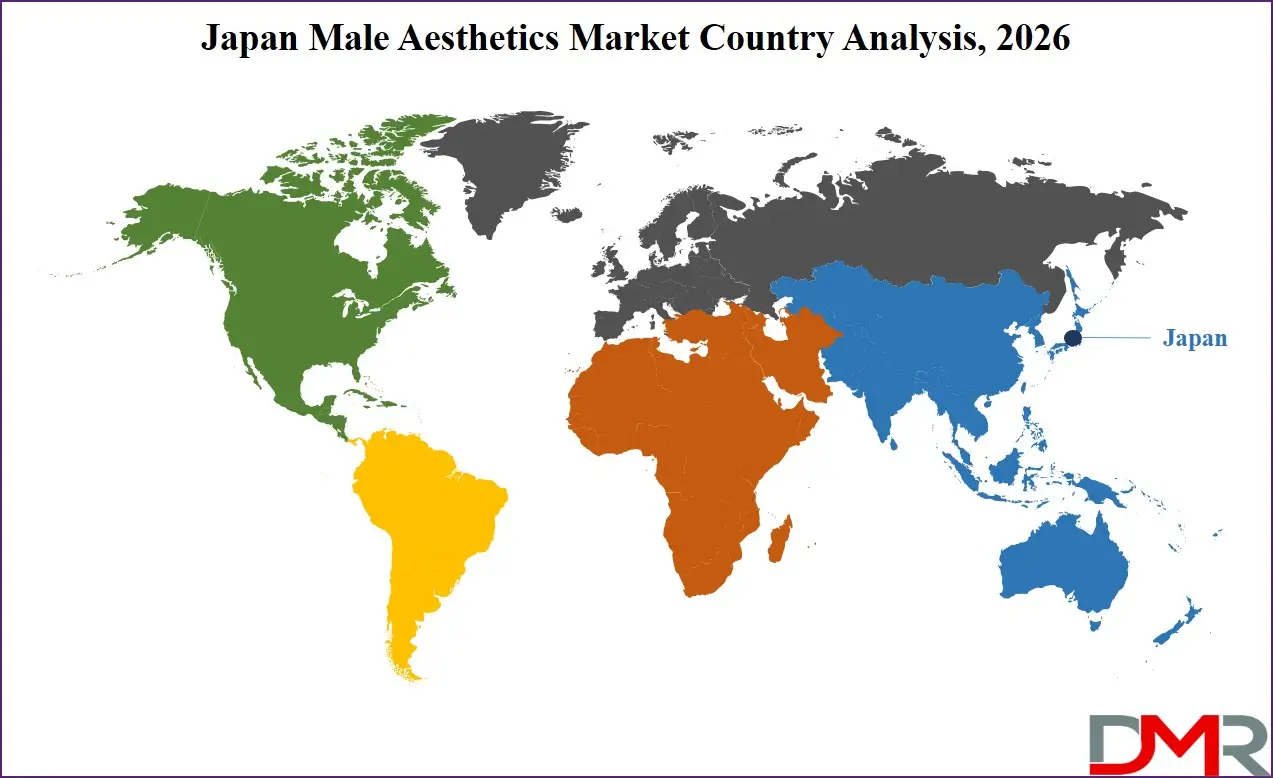
The competitive landscape of the Japan Male Aesthetics Market is characterized by the presence of globally recognized medical device manufacturers, pharmaceutical companies, and specialized aesthetic providers that are continuously advancing service capabilities and technological solutions. Japan has one of the most sophisticated medical aesthetics markets in Asia, supported by world-class infrastructure, strong regulatory standards, and demanding patient requirements across multiple demographics.
ℹ
To learn more about this report –
Download Your Free Sample Report Here
Leading global aesthetics companies such as Galderma S.A., AbbVie Inc. (Allergan Aesthetics), and Merz Pharma dominate the injectables segment through established botulinum toxin and dermal filler portfolios widely adopted across Japanese clinics. Medical device manufacturers including Candela Corporation, Cynosure Lutronic, Lumenis Ltd., and Bausch Health (Solta Medical) lead the energy-based device segment with advanced laser, radiofrequency, and ultrasound platforms enabling non-surgical treatments. Korean manufacturers such as Lutronic Corporation, Jeisys Medical, Classys Inc., and Hugel Inc. have strengthened the market through competitive pricing and technological innovation, while European and North American players including Alma Lasers, Venus Concept, InMode Ltd., BTL Industries, and Fotona bring specialized expertise in body contouring and skin tightening. Pharmaceutical companies including Revance Therapeutics, Johnson & Johnson, and Medytox Inc. contribute through novel injectable products and complementary aesthetics portfolios.
Some of the prominent players in the Japan Male Aesthetics Market are:
- Galderma S.A.
- AbbVie Inc. (Allergan Aesthetics)
- Merz Pharma GmbH & Co. KGaA
- Candela Corporation
- Cynosure Lutronic
- Cutera, Inc.
- Lumenis Ltd.
- Bausch Health Companies Inc. (Solta Medical)
- Alma Lasers Ltd.
- Venus Concept Inc.
- Lutronic Corporation
- Jeisys Medical Inc.
- Classys Inc.
- InMode Ltd.
- BTL Industries
- Fotona d.o.o.
- Revance Therapeutics, Inc.
- Johnson & Johnson
- Hugel Inc.
- Medytox Inc.
- Other Key Players
Recent Developments in the Japan Male Aesthetics Market
- March 2026: AbbVie Inc., introduced its “AA Signature Skin360+” framework at a global aesthetics congress, emphasizing combination treatments integrating injectables and energy-based devices, reflecting the growing demand for personalized, multi-modality aesthetic solutions.
- October 2025: Merz Pharma GmbH & Co. KGaA continued expanding its Merz Aesthetics division through strategic investments in research and development, focusing on non-invasive technologies such as ultrasound-based skin lifting systems.
- September 2025: Bausch Health Companies Inc., strengthened the global adoption of its energy-based devices, including radiofrequency-based skin tightening platforms, supporting increased demand for non-surgical procedures.
- July 2025: Candela Corporation, Cynosure Lutronic, and Cutera, Inc. increased investments in next-generation laser and energy-based platforms, enhancing treatment precision and expanding applications in skin rejuvenation and hair removal.
- May 2025: Fotona d.o.o. and BTL Industries continued strengthening their global presence through advanced laser and radiofrequency platforms targeting aesthetic and dermatological applications.
- March 2025: Jeisys Medical Inc. and Classys Inc. advanced high-intensity focused ultrasound (HIFU) and radiofrequency technologies, supporting growth in non-surgical lifting procedures.
Report Details
| Report Characteristics |
| Market Size (2026) |
USD 552.0 Mn |
| Forecast Value (2035) |
USD 1,320.0 Mn |
| CAGR (2026–2035) |
10.2% |
| Historical Data |
2021 – 2025 |
| Forecast Data |
2027 – 2035 |
| Base Year |
2025 |
| Estimate Year |
2026 |
| Report Coverage |
Market Revenue Estimation, Market Dynamics, Competitive Landscape, Growth Factors and etc. |
| Segments Covered |
By Procedure Type (Surgical and Non-Surgical), By Age Group (Young Adults, Middle-Aged Adults and Seniors), By Technology (Laser Technology, Radiofrequency Technology and Ultrasound Technology), By Treatment Frequency (One-Time Treatments, Series-Based Treatments, and Maintenance Treatments), By Application (Facial Aesthetics, Hair Restoration, Body Contouring, Skin Rejuvenation, and Others), By End-User (Service Providers and Direct-to-Consumer) |
| Country Coverage |
Japan |
| Prominent Players |
Galderma S.A., AbbVie Inc. (Allergan Aesthetics), Merz Pharma GmbH & Co. KGaA, Candela Corporation, Cynosure Lutronic, Cutera, Inc., Lumenis Ltd., Bausch Health Companies Inc. (Solta Medical), Alma Lasers Ltd., Venus Concept Inc., Lutronic Corporation, Jeisys Medical Inc., Classys Inc., InMode Ltd., BTL Industries, Fotona d.o.o., Revance Therapeutics, Inc., Johnson & Johnson, Hugel Inc., Medytox Inc., and Other Key Players |
| Purchase Options |
We have three licenses to opt for: Single User License (Limited to 1 user), Multi-User License (Up to 5 Users), and Corporate Use License (Unlimited User) along with free report customization equivalent to 0 analyst working days, 3 analysts working days and 5 analysts working days respectively. |
Frequently Asked Questions
How big is the Japan Male Aesthetics Market?
▾ The Japan Male Aesthetics Market size is estimated to have a value of USD 552.0 million in 2026 and is expected to reach USD 1,320.0 million by the end of 2035.
What is the growth rate in the Japan Male Aesthetics Market in 2026?
▾ The market is growing at a CAGR of 10.2% over the forecasted period of 2026.
Who are the key players in the Japan Male Aesthetics Market?
▾ Some of the major key players in the Japan Male Aesthetics Market are Galderma S.A., AbbVie Inc., Merz Pharma GmbH & Co. KGaA, Candela Corporation, Cynosure Lutronic, and many others.