Market Overview
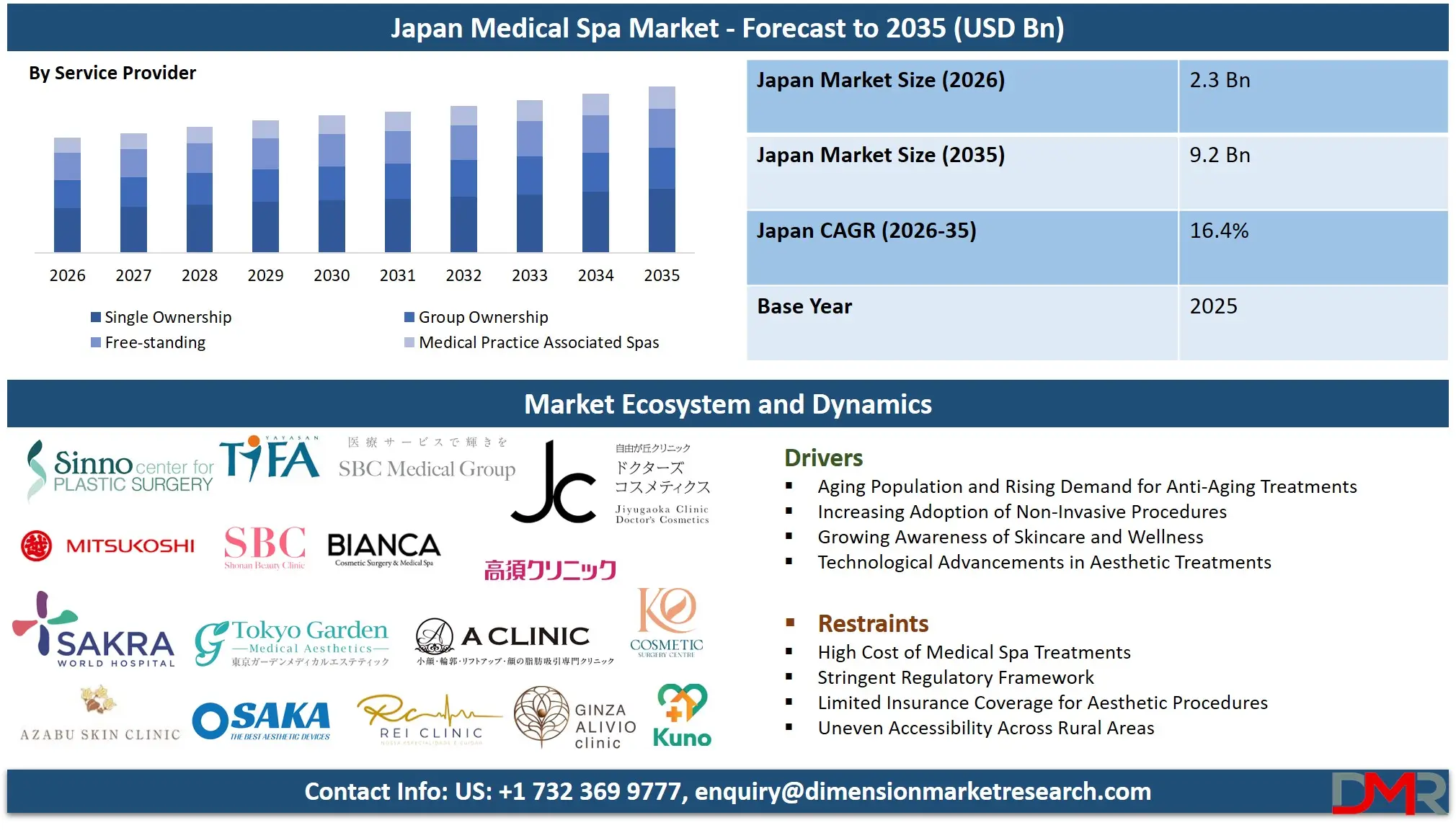
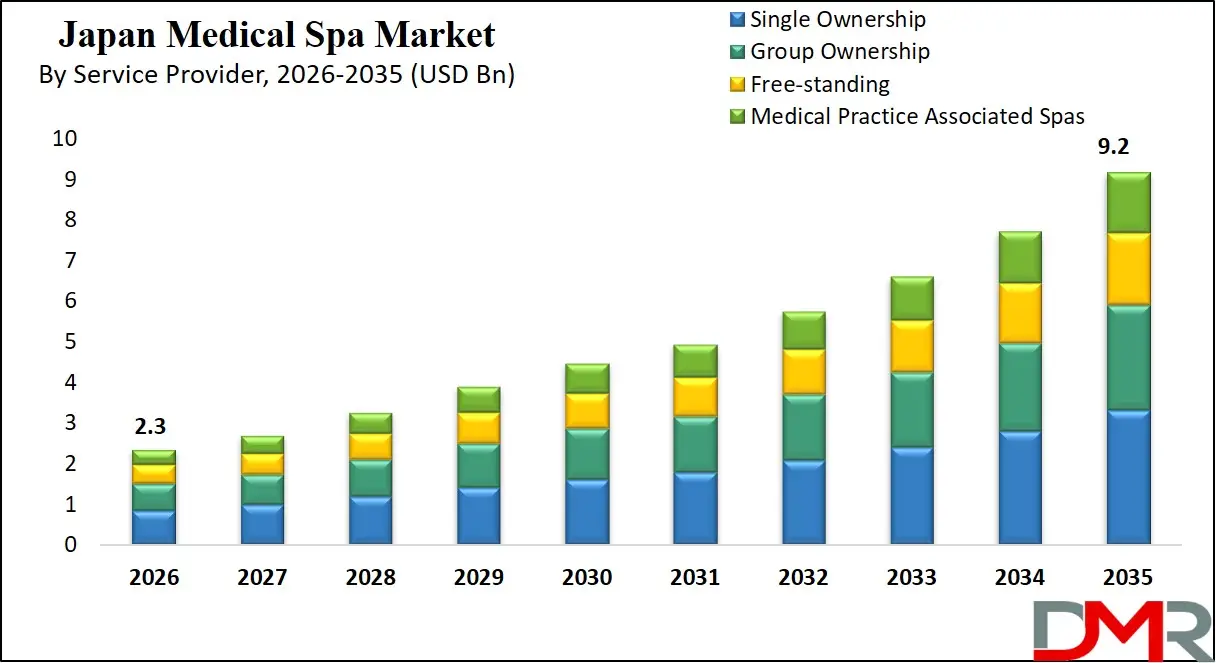
The Japan Medical Spa Market is projected to reach USD 2.3 billion in 2026 and grow at a compound annual growth rate of 16.4% from there until 2035 to reach a value of USD 9.2 billion.
ℹ
To learn more about this report –
Download Your Free Sample Report Here
The Japan Medical Spa Market is expanding consistently because of the rising demand for aesthetic treatments that are non-invasive and due to the culture of skincare and well-being. The increase in the country's population of elderly people is a significant contributor to this trend, since more individuals in this age group require anti-aging procedures, which include Botox injections, derma fillers, and skin rejuvenation services.
Moreover, young people, too, have begun taking preventative measures in their skincare regimens inspired by global trends. Innovations in laser technology and AI have contributed to improvements in this industry. Major cities in Japan, including Tokyo and Osaka, are the leading hubs of the market because of high disposable incomes. On the other hand, the high cost of services and the regulations involved pose obstacles.
ℹ
To learn more about this report –
Download Your Free Sample Report Here
Japan Medical Spa Market: Key Takeaways and Other Influencing Factors
- Market Growth Insights: It is forecasted that Japan Medical Spa Market will reach USD 2.3 billion by 2026 and further estimated to be worth USD 9.2 billion by 2035 at a CAGR of 16.4%. This can be attributed to the growing demand for aesthetic surgeries, fast aging population, and importance of skincare in Japanese culture.
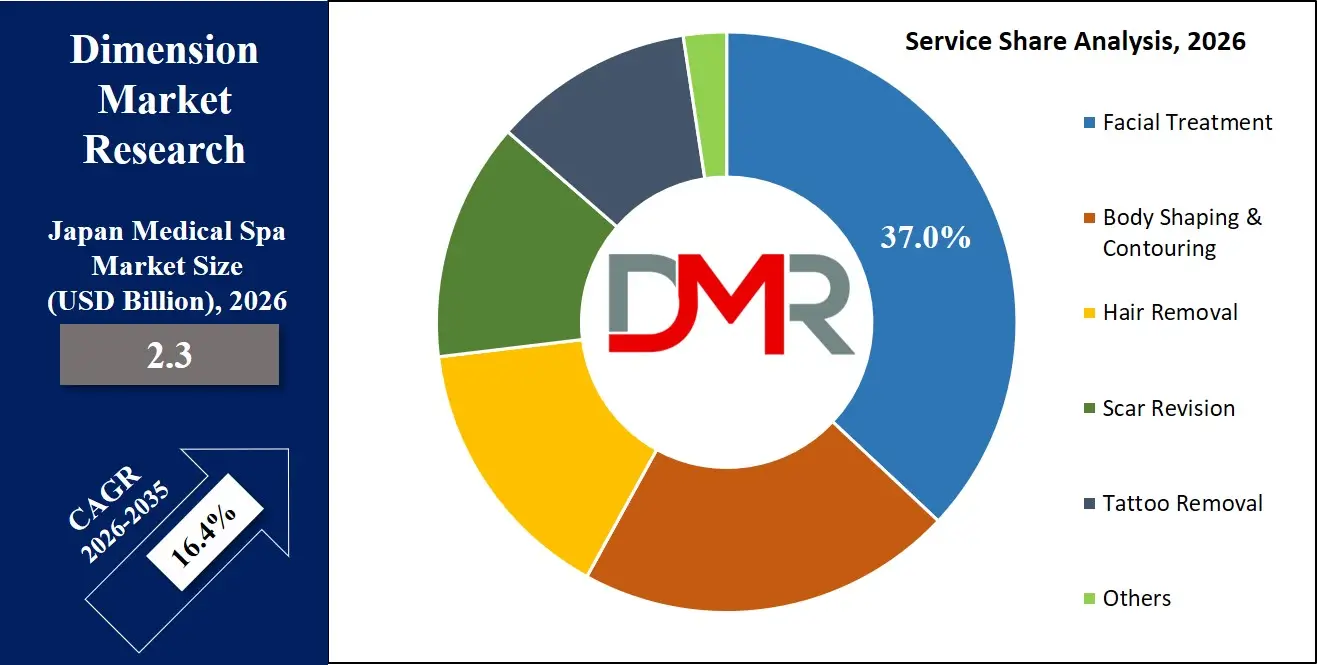
- By Service Segment Insights: Facial treatment segment is expected to gain the highest market share owing to the high demand for anti-ageing, hydrating, and acne face treatments. Moreover, body contouring treatments have gained popularity with the use of latest non-invasive treatment methods such as cryolipolysis.
- By Gender Segment Insights: Women is projected to hold the major share in terms of revenues owing to the beauty-consciousness and regular skincare habits. However, increasing involvement of men in various treatments like hair removal, skin revitalization, and scar correction is observed.
- By Age Segment Insights: Adult age groups account for the maximum market revenue owing to greater disposable income levels and higher awareness about aesthetic procedures. On the other hand, older age group individuals represent the main customer base for anti-aging treatments whereas younger customers prefer acne and preventive skincare treatment procedures.
- By Service Provider Segment Insights: Medical practice-associated spas have gained popularity in Japan due to their scalability, high service standards, and brand reputation. Well-established chains of aesthetic clinics and dermatology clinics maintain a leading position in large urban areas.
- ISAPS (International Society of Aesthetic Plastic Surgery): In 2020, there were 835,556 non-invasive surgeries performed in Japan. Hair removal procedures accounted for 36.64% of all non-surgical procedures performed in 2020. The top aesthetic procedures included botulinum toxin, chemical peels, fillers, and fat reduction.
- Ministry of Health, Labour and Welfare (Japan): In 2023, there were 2,016 cosmetic surgery clinics in Japan. Cosmetic surgery clinics witnessed a CAGR of 43.6% during 2020-2023. During 2020 there were 1,404 cosmetic clinics in Japan. Cosmetic clinics reached 1,068 in 2011. Plastic surgery clinics totaled 2,491 in 2023. Plastic surgery clinics recorded a CAGR of 15.0%.
Impact of Iran Conflict on the Japan Medical Spa Market
The conflict between Iran has an indirect effect on the Japan Medical Spa Market. Heightened geopolitical tension in the world often brings about increased volatility in the price of oil around the world. Since Japan is one of the biggest importers of oil in the world, this can increase costs associated with running the medical spas. Energy intensive equipment like laser and radiofrequency machines in the spas become expensive to run and maintain.
Also, increased geopolitical tension may result in inflationary pressures, limiting the ability of consumers to spend their disposable income on wellness and aesthetic services. However, there are certain factors that may offset any effects of geopolitical tension. First, the economic stability and health standards in Japan provide a solid foundation for the growth of the market even in adverse circumstances. Additionally, the consumer base for medical spas in Japan remains loyal and steady.
Japan Medical Spa Market: Use Cases
- Advanced Anti-Aging and Skin Rejuvenation: Anti-aging treatments available at medical spas in Japan include Botox injections, dermal fillers, collagen induction, and laser resurfacing. The services are highly sought after by elderly patients and middle-aged professionals who seek youthfulness and dermatological wellness.
- Body Contouring and Fat Reduction Solutions: Body contouring treatments, which include cryolipolysis, ultrasound cavitation, and radiofrequency therapy, are becoming more common in people who want to improve their body contours without surgical intervention. Non-invasive body contouring appeals to busy professionals since they need minimal downtime.
- Hair Removal and Skin Enhancement Procedures: Laser hair removal and skin resurfacing have become common practices among young consumers who are guided by the beauty standards of today. Laser hair removal and skin resurfacing provide long-lasting effects on the skin and make the skin smoother.
- Holistic Wellness and Recovery Programs: The integration of Japanese traditions into the treatment procedures provided in medical spas in Japan involves the use of hot springs, aromatherapy, and massages.
Japan Medical Spa Market: Market Dynamic
Driving Factors in the Japan Medical Spa Market
Demographic Shift and Longevity Culture
The growing number of aged people contributes significantly to the development of medical spa services in Japan. One of the most aged societies in the world, Japan features high life expectancy among its population. Hence, more and more people pay attention to their appearance and health conditions. The aging generation prefers non-invasive medical spa treatments, including injections, skin tightening, and pigmentations. The focus on longevity, self-care, and wellness among Japanese culture makes people visit spas regularly for health purposes. Therefore, medical spas offer special anti-aging services by combining skin treatments and relaxation therapies. This factor creates a stable basis for market development in the future.
Technological Advancements in Aesthetic Medicine
Technology development provides a substantial stimulus for the medical spa market to expand. The development and implementation of innovative devices like fractional lasers, ultrasound skin lifting, and artificial intelligence diagnosis increase the precision and efficiency of treatment, which attracts customers. Personalized approach based on an individual's skin condition increases client satisfaction with the results. Moreover, the reduced risk of side effects and faster recovery after treatments provide additional benefits. Thus, regular innovations made through joint work of medical devices providers and clinics contribute to market growth.
Restraints in the Japan Medical Spa Market
Premium Pricing and Limited Accessibility
Due to the high prices, Japanese medical spas cannot reach out to a larger number of customers. Highly sophisticated technology and well-trained experts are some of the factors behind the high prices of these services. Although people from richer backgrounds and those residing in urban centers can pay for these facilities, they may be costly for middle-class citizens. In addition, more than one visit is necessary for the attainment of the expected outcomes, thus adding up to the expenses. Lastly, cosmetic surgeries are not covered under health insurance policies.
Regulatory and Compliance Challenges
Japan operates a highly regulated industry when it comes to health care and aesthetics. Though this system offers advantages to consumers, it poses challenges when introducing new technologies and products into the market. For instance, the operators must fulfill strict licensing criteria before offering any services to clients. They should also obtain certificates and approvals for any equipment used during operations. Besides, the authorities prohibit advertisements of any medical treatment, which makes it difficult for small firms to penetrate the market.
Opportunities in the Japan Medical Spa Market
Expansion of Wellness Tourism
As an internationally known country that provides world-class healthcare and wellness treatments, there is a huge potential for a business in Japan's market when it comes to the integration of medical aesthetics and tourism. The use of customized services that cater to the needs of international clients will prove beneficial to the development of medical spa providers. Places such as Tokyo, Kyoto, and Osaka have the potential to be highly effective in the field of medical spa services.
Rising Demand for Personalized Treatments
The personalization of treatments is becoming increasingly common in today's market. Patients are more inclined to receive treatments that fit their particular needs based on their skin type and health problems. AI and other technologies will help tailor-make the procedure according to the individual needs of the consumer, resulting in a higher quality of service and customer satisfaction.
Trends in the Japan Medical Spa Market
Hybridization of Medical and Wellness Services
Japanese medical spas have started to provide an array of clinical treatments mixed with relaxation therapies. This dual service model adds value to the client's experience because it improves both physical and psychological health. Procedures that combine cosmetic treatments with spa therapies have become popular at Japanese medical spas. This tendency is dictated by the need for a more comprehensive approach to medical care and helps differentiate Japanese spas among other clinics around the world.
Digital Transformation and Online Consultations
Technology can make a significant contribution to the work of modern medical spas. Internet consultations, virtual dermatology, and booking through the app have become common practices. They bring many benefits for the customers because of increased convenience and efficiency. Moreover, technological solutions help clinics engage with customers more actively by social media channels.
Japan Medical Spa Market: Research Scope and Analysis
By Service Analysis
It is estimated that facial treatments will dominate the Japan Medical Spa Market because of the high emphasis that the people of Japan have placed on skincare and facial aesthetics. In Japan, people value having clear and young-looking skin. As a result, services such as anti-aging treatments, acne treatment, pigmentation correction, and skin rejuvenation are quite popular among the Japanese people.
ℹ
To learn more about this report –
Download Your Free Sample Report Here
With advanced technology such as laser resurfacing and chemical peelings, there is even more demand for these treatments. Facial treatments also need to be conducted periodically; hence, there will always be steady income for the service providers.
By Gender Analysis
The female demographic is expected to be the dominant force in the Japan Medical Spa market owing to high levels of awareness, acceptance, and expenditure towards beauty and wellness procedures. The women in Japan take their skin care very seriously, as they are constantly investing in prevention as well as correction of their looks with beauty and anti-aging procedures, such as skin rejuvenation, facial and body sculpting. The Japanese culture puts an immense emphasis on retaining perfect skin and appearance, making them the core customers for medical spas. Even as the number of men using medical spa services rises, the female demographic will remain dominant because of their customer loyalty and regular service use.
By Age Analysis
The adult market segment is set to dominate the Japan Medical Spa Market owing to the high disposable income, lifestyle consciousness, and greater importance given to one's appearance. The target population for medical spas comprises working adults ranging from 25 to 55 years old, who are looking to achieve non-surgical methods for retaining their youthfulness and confidence. The working environment of this particular segment plays a significant role in influencing their decisions. Hence, there is an emphasis on the continuous expenditure that they incur for their skincare regimen. Moreover, the adoption of anti-aging procedures at an early age is yet another factor contributing to their dominance in the market.
By Service Provider Analysis
Medical practice associated spas is expected to exert their dominance in the Japan Medical Spa Market owing to high levels of trust, credibility, and safety amongst customers. These spas function under the auspices of certified medical professionals who ensure adherence to stringent regulations and deliver treatments in a medically supervised setting. Consumers opt for these spas for complicated procedures like injections and laser treatments that demand medical expertise. In addition, the combination of wellness and health care makes the treatment more efficient. Moreover, the high level of brand recognition along with access to modern medical technology adds to their market dominance.
The Japan Medical Spa Market Report is segmented on the basis of the following:
By Service
- Facial Treatment
- Body Shaping & Contouring
- Hair Removal
- Scar Revision
- Tattoo Removal
- Others
By Gender
By Age
- Adolescent
- Adult
- Geriatric
By Service Provider
- Single Ownership
- Group Ownership
- Free-standing
- Medical Practice Associated Spas
Impact of Artificial Intelligence in the Japan Medical Spa Market
AI technology is revolutionizing the Japan Medical Spa Market by bringing about improvements in accuracy, customization, and efficiency. AI-assisted skin analysis devices have the ability to detect conditions such as the formation of wrinkles, skin pigmentation, levels of moisture, and skin elasticity, which allows service providers to develop tailor-made treatment options for patients.
Moreover, there is an increased use of AI in improving medical spa operations by automating processes like booking appointments and managing relationships between providers and customers. With the help of AI, it is now easier than ever to offer consultations remotely and provide consumers with the kind of service that they prefer. The use of AI also enables service providers to gain insights into consumer behavior and develop effective pricing strategies.
Japan Medical Spa Market: Competitive Landscape
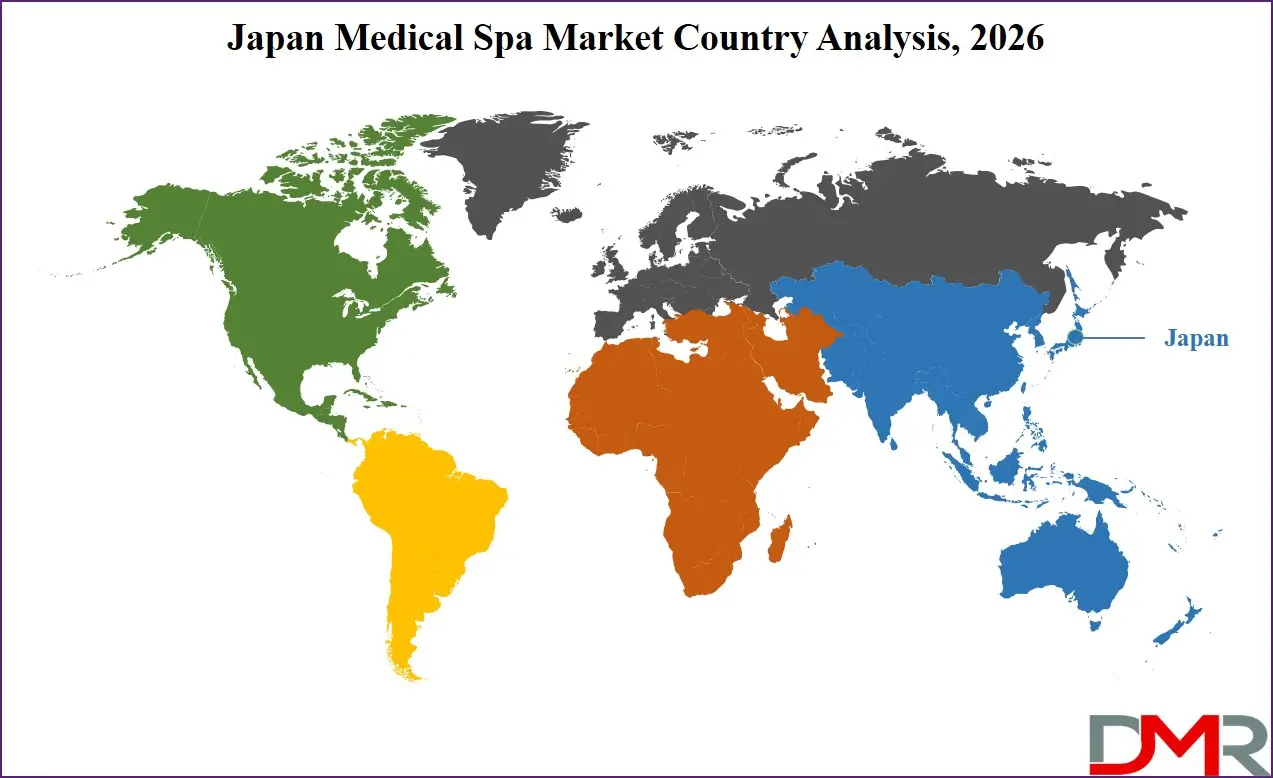
Japan Medical Spa Market is one of the competitive markets where established dermatological clinics, aesthetic facilities, and other competing wellness facilities are found. The leading competitors in this market compete based on technology, service quality, price, and branding. Some of the key players in this market make use of innovative techniques such as utilizing AI-enabled diagnostic systems and using laser treatments among others.
ℹ
To learn more about this report –
Download Your Free Sample Report Here
Growth strategies such as geographic expansion of the facility to cities, partnering with the hospitality industry, and development of customized treatment packages for different clients have been undertaken by many organizations in this market. Moreover, new customer segments are being targeted through innovative treatment plans aimed at younger generation patients and male customers.
Some of the prominent players in the Japan Medical Spa Market are:
- Shonan Beauty Clinic (SBC Medical Group)
- TCB Tokyo Central Beauty Clinic
- Takasu Clinic
- Jiyugaoka Clinic
- BIANCA Clinic
- Azabu Skin Clinic
- A Clinic (Ginza)
- Tokyo Aesthetic Medical Clinic
- KO Clinic for Antiaging
- Rei Clinic
- Sakisaka Hospital (Aesthetic Division)
- Mitsukoshi Beauty Clinic
- Ginza Dermatology Clinic
- Osaka Dermatology & Aesthetic Clinic
- Kuno Clinic
- Tifa Clinic Yokohama
- Tokyo Skin Clinic
- Aisei Medical Group
- SBC Medical Group
- Seishin Plastic Surgery Clinic
- Other Key Players
Recent Developments in the Japan Medical Spa Market
- In March 2025, Shonan Beauty Clinic expanded its advanced laser and AI-based skin diagnostic services across major cities in Japan, enhancing personalized treatment offerings and improving patient outcomes in its medical spa network.
- In January 2025, TCB Tokyo Central Beauty Clinic announced the launch of specialized male aesthetic programs, focusing on skin rejuvenation, hair removal, and anti-aging treatments to cater to the growing male consumer segment in Japan.
- In November 2024, Takasu Clinic introduced next-generation non-invasive body contouring technologies, strengthening its service portfolio and addressing increasing demand for fat reduction and skin tightening solutions.
- In September 2024, Jiyugaoka Clinic partnered with wellness and hospitality providers to develop integrated medical spa and relaxation packages, targeting both domestic clients and international wellness tourists.
Report Details
| Report Characteristics |
| Market Size (2026) |
USD 2.3 Bn |
| Forecast Value (2035) |
USD 9.2 Bn |
| CAGR (2026–2035) |
16.4% |
| Historical Data |
2021 – 2025 |
| Forecast Data |
2027 – 2035 |
| Base Year |
2025 |
| Estimate Year |
2026 |
| Report Coverage |
Market Revenue Estimation, Market Dynamics, Competitive Landscape, Growth Factors and etc. |
| Segments Covered |
By Service (Facial Treatment, Body Shaping & Contouring, Hair Removal, Scar Revision, Tattoo Removal, and Others), By Gender (Male, and Female), By Age (Adolescent, Adult, and Geriatric), By Service Provider (Single Ownership, Group Ownership, Free-standing, Medical Practice Associated Spas) |
| Country Coverage |
Japan |
| Prominent Players |
Shonan Beauty Clinic (SBC Medical Group), TCB Tokyo Central Beauty Clinic, Takasu Clinic, Jiyugaoka Clinic, BIANCA Clinic, Azabu Skin Clinic, A Clinic (Ginza), Tokyo Aesthetic Medical Clinic, KO Clinic for Antiaging, Rei Clinic, Sakisaka Hospital (Aesthetic Division), Mitsukoshi Beauty Clinic, Ginza Dermatology Clinic, Osaka Dermatology & Aesthetic Clinic, Kuno Clinic, Tifa Clinic Yokohama, Tokyo Skin Clinic, Aisei Medical Group, SBC Medical Group, Seishin Plastic Surgery Clinic, and Other Key Players |
| Purchase Options |
We have three licenses to opt for: Single User License (Limited to 1 user), Multi-User License (Up to 5 Users) and Corporate Use License (Unlimited User) along with free report customization equivalent to 0 analyst working days, 3 analysts working days and 5 analysts working days respectively. |
Frequently Asked Questions
How big is the Japan Medical Spa Market?
▾ The Japan Medical Spa Market size is estimated to have a value of USD 2.3 billion in 2026 and is expected to reach USD 9.2 billion by the end of 2035.
What is the growth rate in the Japan Medical Spa Market in 2026?
▾ The market is growing at a CAGR of 16.4 percent over the forecasted period of 2026.
Who are the key players in the Japan Medical Spa Market?
▾ Some of the major key players in the Japan Medical Spa Market are Shonan Beauty Clinic (SBC Medical Group), TCB Tokyo Central Beauty Clinic, Takasu Clinic, Jiyugaoka Clinic, BIANCA Clinic, Azabu Skin Clinic, A Clinic (Ginza), Tokyo Aesthetic Medical Clinic, KO Clinic for Antiaging, and many others.