Market Overview
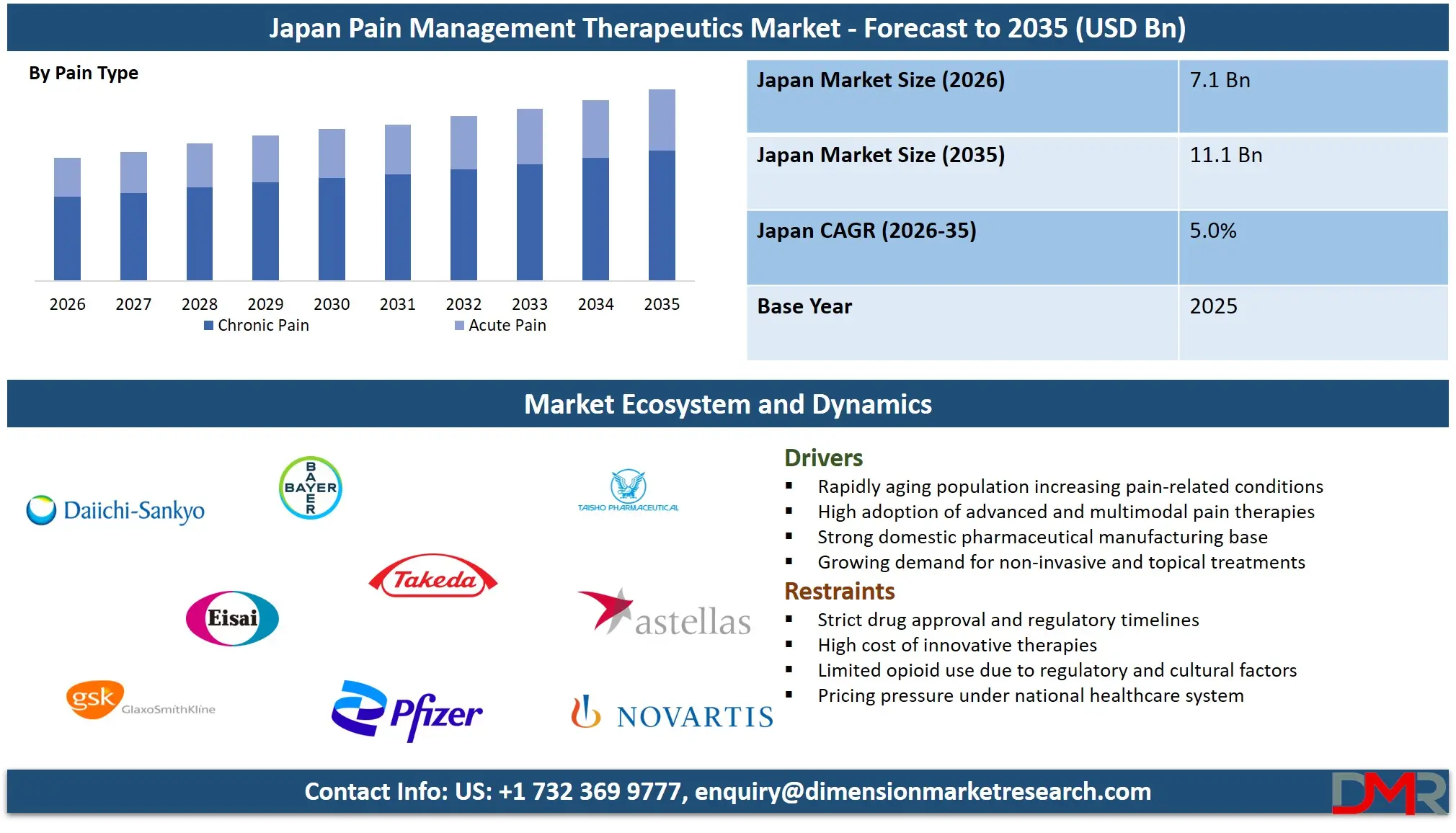
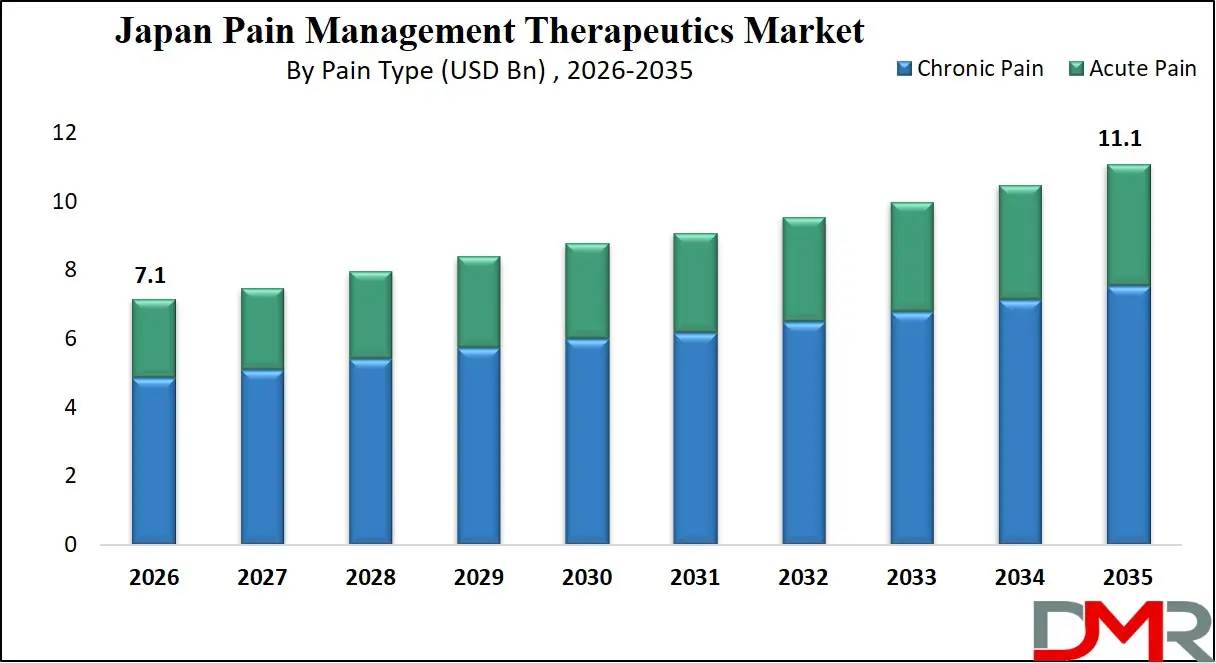
Japan Pain Management Therapeutics Market size is projected to reach USD 7.1 billion in 2026 and grow at a compound annual growth rate of 5.0% to reach a value of USD 11.1 billion in 2035.
ℹ
To learn more about this report –
Download Your Free Sample Report Here
Pain Management Therapeutics refers to the comprehensive range of pharmaceutical treatments, drug delivery systems, and supportive therapies designed to alleviate acute and chronic pain conditions across diverse patient populations. This includes non-steroidal anti-inflammatory drugs (NSAIDs), opioids, anesthetics, antidepressants, anticonvulsants, and anti-migraine medications, administered through oral or parenteral routes. These therapeutics play a critical role in improving patient quality of life, particularly in aging populations where pain-related conditions are more prevalent. The market is closely integrated with healthcare infrastructure, clinical practices, and regulatory frameworks in Japan.
The sector is evolving rapidly due to demographic shifts, particularly Japan’s aging population, which significantly increases the incidence of chronic pain conditions such as arthritis, neuropathy, and cancer-related pain. Technological advancements in drug formulations and delivery methods are also contributing to improved efficacy and safety profiles. Additionally, the increasing focus on personalized medicine and non-opioid alternatives is reshaping treatment paradigms, while digital health tools are supporting pain monitoring and management.
ℹ
To learn more about this report –
Download Your Free Sample Report Here
Regulatory oversight in Japan remains stringent, ensuring patient safety while encouraging innovation. The market has transitioned from traditional pain relief approaches toward more targeted and multimodal therapies. There is growing emphasis on minimizing opioid dependency while enhancing treatment outcomes, which reflects broader global healthcare trends and positions the market for steady transformation in the coming years.
Japan Pain Management Therapeutics Market: Key Takeaways
- Market Growth: Japan Pain Management Therapeutics Market size is expected to grow by USD 3.6 billion, at a CAGR of 5.0%, during the forecasted period of 2027 to 2035.
- By Pain Type: The chronic pain segment is anticipated to get the majority share of Japan Pain Management Therapeutics market in 2026.
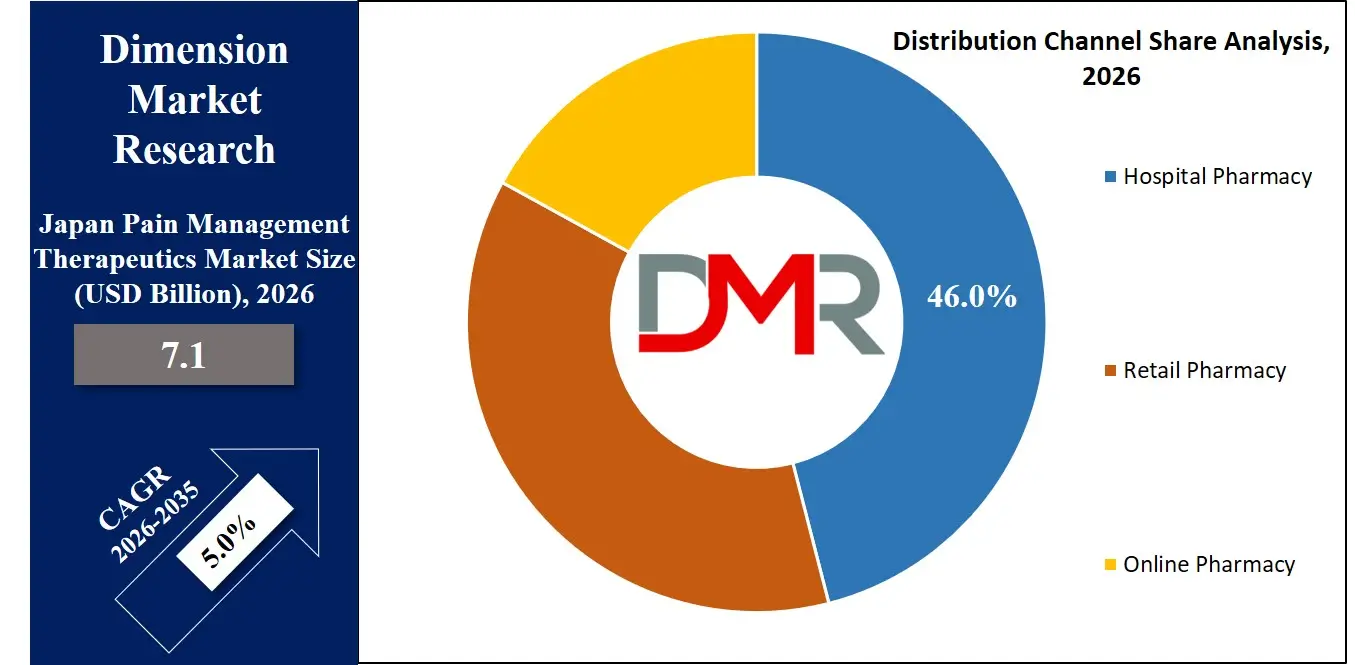
- By Distribution Channel: The hospital pharmacy segment is expected to get the largest revenue share in 2026 in Japan Pain Management Therapeutics market.
- Use Cases: Some of the use cases of pain management therapeutics include migraine management, cancer pain relief, and more.
Japan Pain Management Therapeutics Market: Use Cases
- Chronic Pain Management: Widely used in treating long-term conditions such as arthritis and lower back pain, enabling patients to maintain functional independence and improved daily living.
- Post-Surgical Recovery: Therapeutics help manage acute pain following surgeries, reducing recovery time and minimizing complications through controlled drug administration.
- Cancer Pain Relief: Essential in oncology care to alleviate severe pain associated with cancer progression and treatment side effects, improving patient comfort.
- Neuropathic Pain Treatment: Used for nerve-related pain conditions, often involving anticonvulsants and antidepressants to modulate nerve signals effectively.
- Migraine Management: Anti-migraine drugs like triptans and CGRP inhibitors provide targeted relief and reduce the frequency of migraine episodes.
- Geriatric Care: Increasingly applied in elderly populations to manage age-related chronic pain while ensuring safety and reduced side effects.
- Emergency Care Settings: Rapid-acting analgesics are used in emergency departments to provide immediate relief from trauma or injury-related pain.
Stats & Facts
- Ministry of Health, Labour and Welfare (Japan) reported that over 28% of Japan’s population was aged 65 or older in 2024.
- Ministry of Health, Labour and Welfare (Japan) stated that musculoskeletal disorders accounted for approximately 20% of outpatient visits in 2025.
- World Health Organization indicated that chronic pain affects nearly 20% of adults globally, with higher prevalence in aging nations like Japan in 2024.
- OECD reported that Japan’s healthcare expenditure reached about 11% of GDP in 2024.
- Ministry of Health, Labour and Welfare (Japan) noted that opioid prescriptions remained below 5% of total pain treatments in 2025.
- International Association for the Study of Pain estimated that neuropathic pain affects around 7–10% of the population in developed countries in 2024.
- World Bank highlighted that Japan’s life expectancy exceeded 84 years in 2024, increasing demand for pain therapeutics.
- OECD reported that hospital admissions related to chronic pain conditions rose by 8% in Japan in 2025.
- Ministry of Health, Labour and Welfare (Japan) indicated a 12% rise in demand for non-opioid analgesics in 2025.
- WHO reported that migraine disorders rank among the top 10 causes of disability worldwide in 2024.
- OECD data showed that pharmaceutical spending in Japan grew by approximately 6% in 2025.
- Ministry of Internal Affairs and Communications (Japan) stated that digital health adoption increased by 15% in 2025.
Market Dynamic
Driving Factors in the Japan Pain Management Therapeutics Market
Aging Population and Rising Chronic Disease Burden
Japan’s rapidly aging demographic is a primary driver of the pain management therapeutics market. With a significant proportion of the population aged 65 and above, there is a higher prevalence of chronic conditions such as arthritis, osteoporosis, and neuropathic disorders. These conditions often require long-term pain management solutions, increasing the demand for both pharmacological and non-pharmacological treatments. Additionally, elderly patients often present complex comorbidities, necessitating tailored therapeutic approaches. This demographic trend not only expands the patient pool but also drives innovation in safer and more effective drug formulations designed specifically for older populations.
Advancements in Drug Development and Personalized Medicine
Technological progress in drug discovery and formulation has significantly enhanced the effectiveness of pain management therapies. The emergence of targeted therapies, such as CGRP inhibitors for migraines, and improved delivery mechanisms has increased treatment precision. Personalized medicine approaches allow clinicians to customize therapies based on genetic and clinical profiles, improving outcomes and reducing adverse effects. Furthermore, increased investment in research and development is accelerating the introduction of innovative drugs, while digital tools support better patient monitoring and adherence, contributing to overall market growth.
Restraints in the Japan Pain Management Therapeutics Market
Strict Regulatory Framework and Drug Approval Processes
Japan’s stringent regulatory environment poses a significant challenge for market participants. The approval process for new drugs is rigorous, requiring extensive clinical trials and safety data, which can delay product launches. While these regulations ensure patient safety, they also increase development costs and limit the speed at which innovative therapies reach the market. Additionally, pricing controls imposed by healthcare authorities can affect profitability, discouraging smaller companies from entering the market and limiting competition.
Concerns Over Drug Dependency and Side Effects
The risk of dependency, particularly with opioid-based medications, remains a major concern in pain management. Although Japan has relatively low opioid usage, strict monitoring and cautious prescribing practices limit their adoption. Furthermore, side effects associated with long-term use of certain drugs, such as gastrointestinal issues with NSAIDs or sedation with opioids, can hinder patient adherence. These concerns drive the need for alternative therapies but also create challenges in balancing efficacy with safety.
Opportunities in the Japan Pain Management Therapeutics Market
Expansion of Non-Opioid and Alternative Therapies
The increasing focus on reducing opioid dependency presents a significant opportunity for non-opioid pain management solutions. Pharmaceutical companies are investing in developing safer alternatives, including biologics and novel drug classes. Additionally, complementary therapies such as neuromodulation and regenerative medicine are gaining traction. This shift aligns with patient preferences for safer treatments and opens new avenues for innovation and market expansion.
Integration of Digital Health and AI Technologies
The adoption of digital health solutions and artificial intelligence offers substantial growth potential. Tools such as wearable devices, mobile health apps, and AI-driven diagnostics enable real-time pain monitoring and personalized treatment adjustments. These technologies improve patient engagement, enhance clinical decision-making, and optimize treatment outcomes. As Japan continues to advance in digital healthcare infrastructure, the integration of these technologies is expected to play a crucial role in shaping the future of pain management.
Trends in the Japan Pain Management Therapeutics Market
Shift Toward Multimodal Pain Management Approaches
There is a growing trend toward combining multiple therapeutic approaches to manage pain more effectively. Multimodal strategies integrate pharmacological treatments with physical therapy, psychological support, and lifestyle modifications. This approach not only improves pain relief but also reduces reliance on single-drug therapies, particularly opioids. Healthcare providers are increasingly adopting these strategies to achieve better patient outcomes and minimize side effects.
Increasing Adoption of Biologics and Targeted Therapies
Biologics and targeted treatments are transforming the pain management landscape in Japan. These therapies offer improved specificity and efficacy compared to traditional drugs, particularly for conditions like migraines and inflammatory diseases. The growing availability of such treatments, coupled with advancements in biotechnology, is driving their adoption. This trend reflects a broader shift toward precision medicine and innovation-driven healthcare solutions.
Impact of Artificial Intelligence in Japan Pain Management Therapeutics Market
- Predictive Pain Assessment: AI analyzes patient data to predict pain patterns, enabling proactive treatment adjustments and improved outcomes.
- Personalized Treatment Plans: Machine learning algorithms tailor drug regimens based on patient history and genetic profiles.
- Drug Discovery Acceleration: AI reduces development timelines by identifying promising compounds and optimizing clinical trial design.
- Remote Patient Monitoring: AI-powered apps track pain levels and medication adherence, enhancing patient engagement.
- Clinical Decision Support: AI tools assist physicians in selecting the most effective therapies based on real-time data.
- Adverse Effect Prediction: Algorithms identify potential side effects early, improving patient safety.
- Workflow Optimization: Automation streamlines hospital and pharmacy operations, reducing delays in treatment delivery.
- Data-Driven Research: AI enables large-scale analysis of clinical data, supporting innovation in pain therapeutics.
Research Scope and Analysis
By Pain Type Analysis
Chronic pain dominates the Japan pain management therapeutics market, accounting for an estimated 68% share in 2026. This leadership is driven by the high prevalence of long-term conditions such as arthritis, neuropathy, and cancer-related pain, particularly among the aging population. These conditions require continuous and carefully monitored treatment, leading to sustained demand for multiple drug classes including NSAIDs, antidepressants, and anticonvulsants. The growing shift toward non-opioid therapies and personalized medicine further strengthens this segment. Additionally, healthcare providers are increasingly adopting multimodal treatment approaches, combining pharmacological and non-pharmacological therapies to enhance effectiveness and improve patient outcomes.
Acute pain represents the fastest-growing segment due to the increasing number of surgical procedures, trauma cases, and emergency treatments across Japan. The demand for rapid-acting analgesics in postoperative and critical care settings is rising significantly. Advances in anesthetics and short-duration pain relief drugs are enhancing treatment efficiency and patient recovery times. Improved healthcare infrastructure and accessibility are also encouraging early diagnosis and timely management of acute pain conditions. Furthermore, rising awareness among patients and healthcare professionals regarding effective pain management is contributing to the expansion of this segment, making it a crucial area of growth within the overall market.
By Drug Class Analysis
NSAIDs hold the largest share in the Japan pain management therapeutics market, projected at 34% in 2026. Their dominance is attributed to their widespread use in managing mild to moderate pain conditions such as arthritis, musculoskeletal disorders, and postoperative discomfort. These drugs are highly accessible, cost-effective, and widely prescribed, making them a preferred choice among healthcare providers. Continuous improvements in drug formulations aimed at reducing gastrointestinal and cardiovascular side effects are further enhancing their adoption. Additionally, the availability of both prescription and over-the-counter options strengthens their position, ensuring consistent demand across diverse patient groups and healthcare settings.
Anti-migraine drugs are witnessing rapid growth due to the increasing prevalence of migraine disorders and heightened awareness regarding their treatment. The introduction of advanced therapies such as CGRP inhibitors has significantly improved treatment outcomes by offering targeted and long-lasting relief. These drugs are particularly effective in reducing the frequency and severity of migraine episodes, making them highly attractive to patients and healthcare providers. Furthermore, ongoing research and development efforts are leading to the introduction of innovative therapies with improved safety profiles. This segment continues to gain traction as demand for specialized and precision-based treatments increases across Japan.
By Route of Administration Analysis
The oral segment dominates the market with a projected 72% share in 2026, primarily due to its convenience, ease of administration, and high patient compliance. Most pain management medications, including NSAIDs, antidepressants, and anticonvulsants, are commonly available in oral forms, making them suitable for long-term use. This route is cost-effective and does not require specialized medical supervision, further enhancing its popularity. Continuous advancements in oral drug formulations, such as extended-release tablets and improved absorption mechanisms, are supporting its sustained dominance. Additionally, patient preference for non-invasive treatment options further reinforces the widespread adoption of oral medications.
Parenteral administration is growing rapidly, particularly in hospital and clinical settings where immediate pain relief is required. This method offers faster onset of action compared to oral routes, making it ideal for acute pain, postoperative care, and emergency situations. It is widely used for administering anesthetics and strong analgesics in controlled environments. Increasing hospital admissions and surgical procedures are driving the demand for parenteral therapies. Additionally, advancements in injectable drug formulations and delivery systems are improving safety and efficiency. This segment is expected to expand further as healthcare systems continue to prioritize rapid and effective pain management solutions.
By Indication Analysis
Arthritic pain leads the market with an estimated 29% share in 2026, driven by the high prevalence of arthritis among Japan’s aging population. Conditions such as osteoarthritis and rheumatoid arthritis require long-term pain management, resulting in consistent demand for therapeutics. Anti-inflammatory drugs, including NSAIDs and biologics, play a key role in managing symptoms and improving patient mobility. Continuous advancements in treatment options and increased awareness among patients contribute to this segment’s dominance. Furthermore, the growing focus on early diagnosis and intervention is enhancing treatment outcomes, reinforcing the importance of this segment within the broader market landscape.
Cancer pain is expanding rapidly due to rising cancer incidence and improved survival rates in Japan. As more patients undergo long-term cancer treatment, the need for effective pain management becomes increasingly critical. Advanced therapeutics, including opioids and targeted treatments, are widely used to address severe and complex pain conditions associated with cancer. Additionally, the integration of palliative care services is enhancing the overall management of cancer-related pain. Ongoing research and innovation in oncology therapeutics are further improving treatment outcomes. This segment is expected to witness sustained growth as healthcare systems focus on improving patient quality of life.
By Distribution Channel Analysis
Hospital pharmacies dominate the market with a projected 46% share in 2026, as most pain management treatments, particularly for severe and complex conditions, are administered in clinical settings. These pharmacies provide access to a wide range of prescription medications under professional supervision, ensuring safe and effective use. Strong healthcare infrastructure and the presence of skilled medical professionals contribute to their leading position. Additionally, hospital pharmacies play a critical role in managing postoperative and emergency pain treatments. The increasing number of hospital admissions and surgical procedures further supports the continued dominance of this segment in Japan.
ℹ
To learn more about this report –
Download Your Free Sample Report Here
Online pharmacies are the fastest-growing segment, driven by increasing digitalization and changing consumer preferences for convenience and accessibility. Patients are increasingly opting for online platforms to purchase medications, particularly for chronic pain management, due to ease of ordering and home delivery services. The expansion of e-commerce and telemedicine services in Japan is further accelerating this trend. Additionally, online pharmacies often provide competitive pricing and a wide range of products, enhancing their appeal. Growing internet penetration and digital health adoption are expected to sustain the rapid growth of this segment in the coming years.
The Japan Pain Management Therapeutics Market Report is segmented on the basis of the following:
By Pain Type
By Drug Class
- Non-steroidal Anti-inflammatory Drugs (NSAIDs)
- Opioids
- Oxycodone
- Hydrocodones
- Tramadol
- Morphine
- Fentanyl
- Others
- Anesthetics
- Anti-Migraine Drugs
- Triptans
- Ergot Alkaloids
- CGRP Inhibitors
- Antidepressants
- Anticonvulsants
- Other Drug Class
By Route of Administration
By Indication
- Arthritic Pain
- Neuropathic Pain
- Chronic Back Pain
- Post-Operative Pain
- Cancer Pain
- Fibromyalgia
- Other Indication
By Distribution Channel
- Online Pharmacy
- Retail Pharmacy
- Hospital Pharmacy
Competitive Landscape
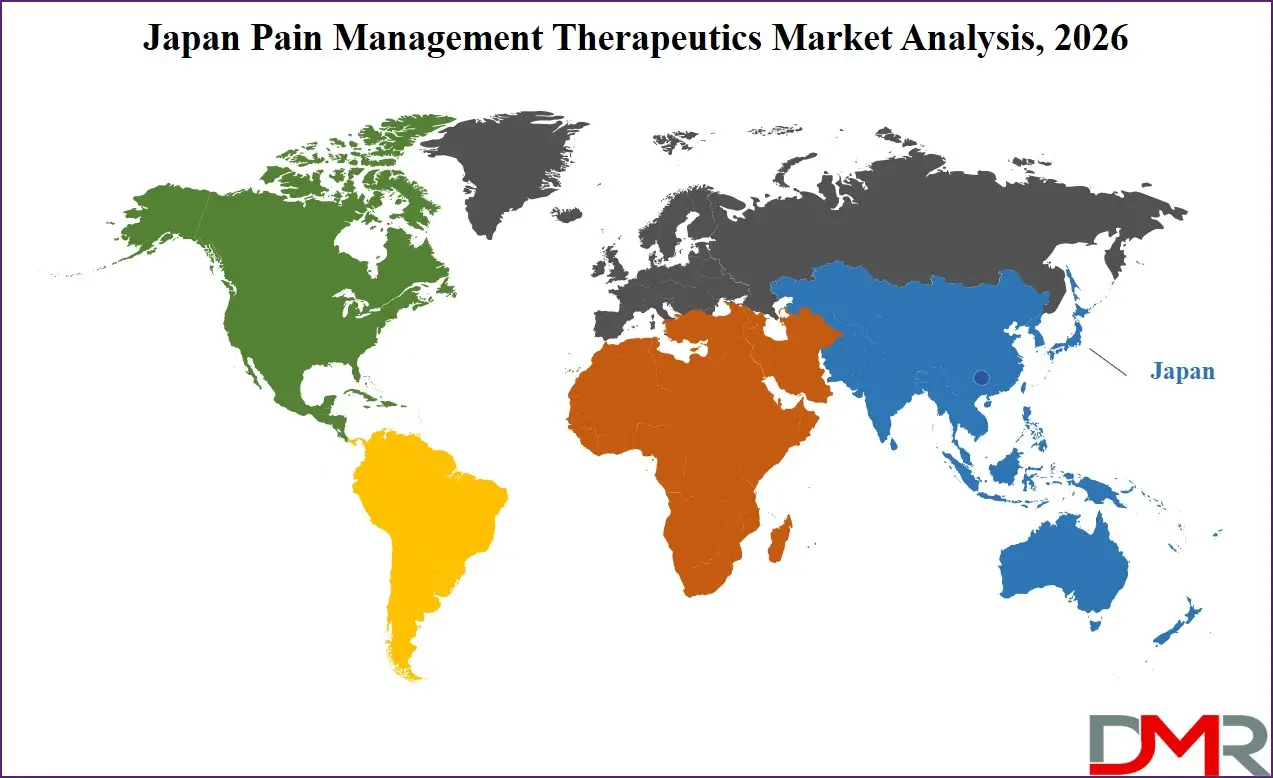
The Japan pain management therapeutics market is characterized by intense competition, driven by continuous innovation and strict regulatory standards. Companies focus on research and development to introduce advanced and safer therapies, particularly non-opioid alternatives. Strategic collaborations, licensing agreements, and partnerships with research institutions are common approaches to expand product portfolios and accelerate market entry.
ℹ
To learn more about this report –
Download Your Free Sample Report Here
High entry barriers, including regulatory approvals and significant R&D investments, limit new entrants but ensure quality and safety. Additionally, pricing pressures and the need for differentiation encourage companies to invest in novel drug delivery systems and personalized treatment solutions.
Some of the prominent players in the Japan Pain Management Therapeutics are:
- Takeda Pharmaceutical
- Astellas Pharma
- Daiichi Sankyo
- Otsuka Pharmaceutical
- Eisai
- Hisamitsu Pharmaceutical
- Sumitomo Pharma
- Taisho Pharmaceutical
- Teikoku Seiyaku
- Rohto Pharmaceutical
- Mitsubishi Tanabe Pharma
- Kowa Company
- Shionogi & Co.
- Santen Pharmaceutical
- Nippon Kayaku
- Pfizer
- Novartis
- Johnson & Johnson
- GlaxoSmithKline
- Bayer
- Other Key Players
Recent Developments
- In March 2025, Daiichi Sankyo announced the launch of an advanced non-opioid pain management drug targeting chronic musculoskeletal conditions in Japan. The product incorporates a novel mechanism of action designed to reduce inflammation while minimizing gastrointestinal side effects commonly associated with traditional NSAIDs. The launch followed successful late-stage clinical trials demonstrating improved efficacy and safety profiles.
- In January 2025, Takeda Pharmaceutical Company entered into a strategic collaboration with a biotechnology firm to develop next-generation therapies for neuropathic pain. The partnership focuses on leveraging advanced biologics and AI-driven drug discovery platforms to accelerate innovation. The agreement includes joint research initiatives, shared intellectual property, and plans for clinical trials in Japan.
Report Details
| Report Characteristics |
| Market Size (2026) |
USD 7.1 Bn |
| Forecast Value (2035) |
USD 11.1 Bn |
| CAGR (2026–2035) |
5.0% |
| Historical Data |
2021 – 2025 |
| Forecast Data |
2027 – 2035 |
| Base Year |
2025 |
| Estimate Year |
2026 |
| Report Coverage |
Market Revenue Estimation, Market Dynamics, Competitive Landscape, Growth Factors and etc. |
| Segments Covered |
By Pain Type (Chronic Pain, Acute Pain), By Drug Class (Non-steroidal Anti-inflammatory Drugs (NSAIDs), Opioids, Anesthetics, Anti-Migraine Drugs, Antidepressants, Anticonvulsants, Other Drug Class), By Route of Administration (Oral, Parenteral), By Indication (Arthritic Pain, Neuropathic Pain, Chronic Back Pain, Post-Operative Pain, Cancer Pain, Fibromyalgia, Other Indication), By Distribution Channel (Online Pharmacy, Retail Pharmacy, Hospital Pharmacy) |
| Country Coverage |
Japan |
| Prominent Players |
Takeda Pharmaceutical, Astellas Pharma, Daiichi Sankyo, Otsuka Pharmaceutical, Eisai, Hisamitsu Pharmaceutical, Sumitomo Pharma, Taisho Pharmaceutical, Teikoku Seiyaku, Rohto Pharmaceutical, Mitsubishi Tanabe Pharma, Kowa Company, Shionogi & Co., Santen Pharmaceutical, Nippon Kayaku, Pfizer, Novartis, Johnson & Johnson, GlaxoSmithKline, Bayer, and Other Key Players |
| Purchase Options |
We have three licenses to opt for: Single User License (Limited to 1 user), Multi-User License (Up to 5 Users) and Corporate Use License (Unlimited User) along with free report customization equivalent to 0 analyst working days, 3 analysts working days and 5 analysts working days respectively. |
Frequently Asked Questions
How big is Japan Pain Management Therapeutics Market?
▾ Japan Pain Management Therapeutics Market size is expected to reach USD 7.1 billion by 2026 and is projected to reach USD 11.1 billion by the end of 2035.
Who are the key players in Japan Pain Management Therapeutics Market?
▾ Some of the major key players in Japan Pain Management Therapeutics Market include Pfizer, Novartis, Bayer and others.
What is the growth rate in Japan Pain Management Therapeutics Market?
▾ The market is growing at a CAGR of 5.0 percent over the forecasted period.