What is the Japan Pharmaceutical Market Size?
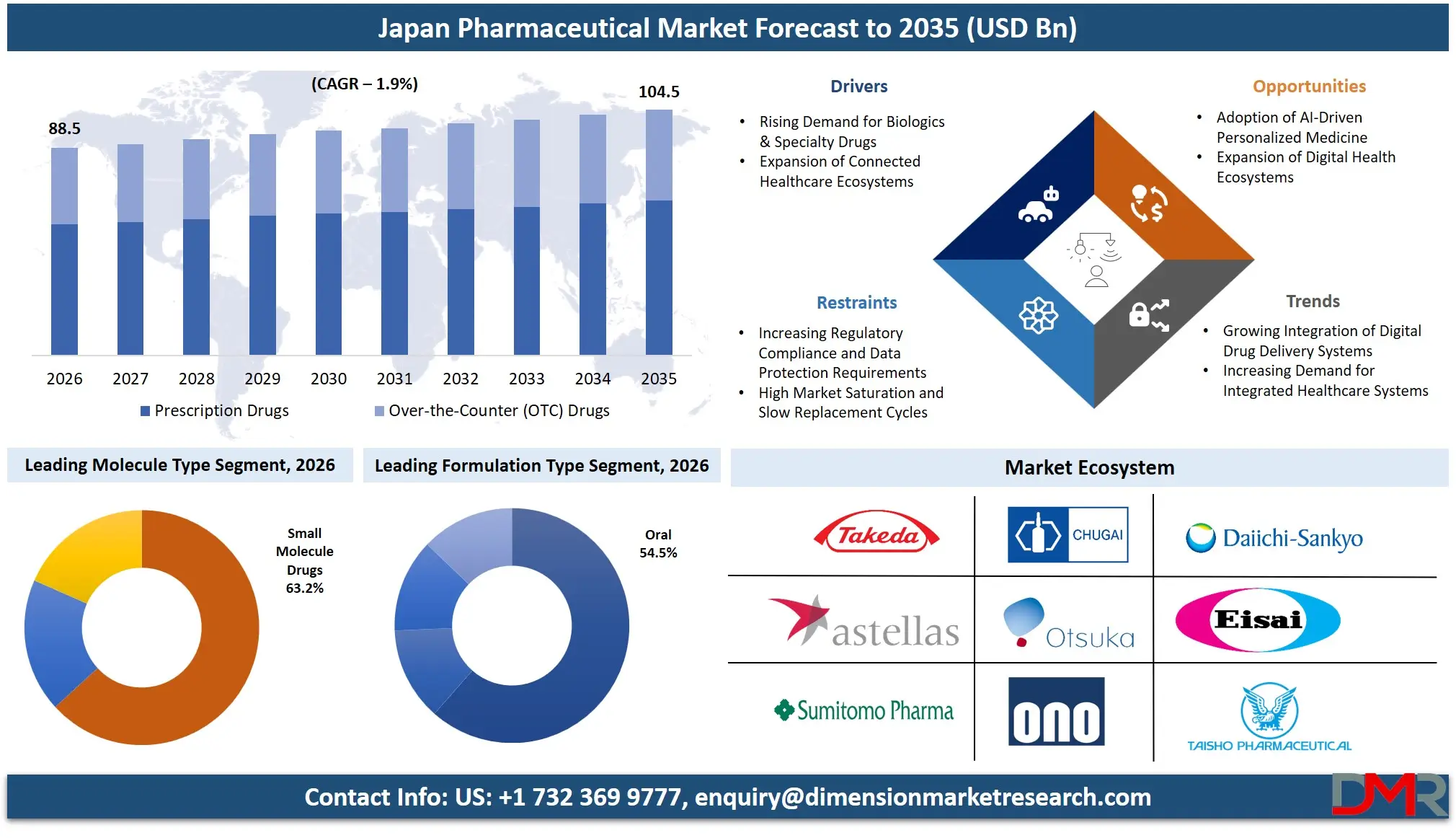
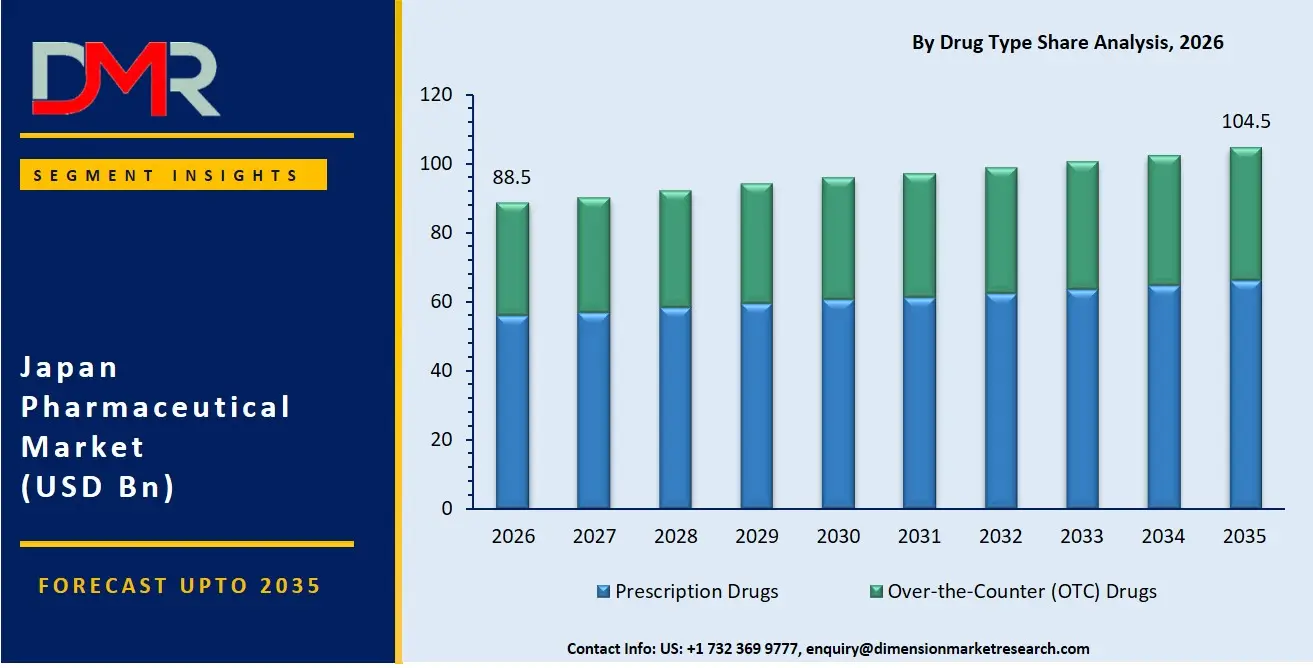
The Japan Pharmaceutical Market is expected to reach a value of USD 88.5 billion in 2026, and it is further anticipated to reach USD 104.5 billion by 2035, growing at a CAGR of 1.9% during the forecast period.
ℹ
To learn more about this report –
Download Your Free Sample Report Here
The pharmaceutical market has been showing consistent growth due to Japan's rising dependence on resilient, intelligent, and connected healthcare solutions for effective, secure, and scalable patient care. This includes several drug platforms and expert services that help consumers and healthcare providers deploy smart therapies for hospital, clinical, and home-care purposes. There has been a rising need for specialty pharmacy services owing to the requirements for implementing advanced biologic therapies, securing treatment continuity against supply disruptions, and delivering high-performance personalized medicine to patients. Large healthcare enterprises have emerged as the largest consumer segment for pharmaceutical services, with specialty drugs being the most popular choice due to their wide availability and efficacy, while there has been rapid growth in biosimilar platforms and analytics services.
ℹ
To learn more about this report –
Download Your Free Sample Report Here
Key Takeaways
- Market Size & Forecast: The Japan Pharmaceutical market is forecasted to be valued at USD 88.5 billion in 2026, growing incrementally to USD 104.5 billion by 2035, due to the joint efforts of digital health strategy deployment on the part of healthcare enterprises as well as the obligatory deployment of advanced biologics and cell and gene therapies.
- Growth Rate & Outlook: Japan market is expected to grow at 1.9% CAGR, propelled by the urgent need to mitigate emerging drug resistance vulnerabilities in infectious diseases, alongside increasing challenges in orchestrating multi-directional patient care pathways from community clinics, general hospitals, and national medical centers.
- Primary Growth Drivers: Major driving factors comprise the transition from traditional small-molecule drugs towards modern biologic and biosimilar systems, the necessity to deploy secure and robust cold-chain distribution networks for biologics, as well as the implementation of patient management APIs necessitating unique platform & pharmacy expertise.
- Key Market Trends: Major trends encompass the introduction of AI-driven personalized medicine through commercial channels, usage of machine learning within wide area networks for demand forecasting and preventing drug waste in supply chains, and increased focus on pharmacovigilance amidst rising patient safety considerations of regulators.
- By Drug Type Analysis: The Prescription Drugs segment is projected to dominate the Japan Pharmaceutical Market due to high demand for scalable treatment platforms by an aging population, with capabilities like real-time monitoring, adverse event detection, and remote patient management, which offer daily adherence tracking, regional health balancing, and real-time performance monitoring activities within national health management.
- By Molecule Type Analysis: The Small Molecule Drugs segment is projected to dominate the Japan Pharmaceutical Market due to its long-standing adoption, oral formulation convenience, proven safety profiles, cost-effectiveness, and widespread use in treating chronic diseases such as cardiovascular disorders and diabetes across metropolitan areas, rural health zones, and government healthcare infrastructure.
- By Therapeutic Area Analysis: The Oncology segment is anticipated to dominate the Japan Pharmaceutical Market as healthcare providers adopt therapies that are scalable, flexible, and efficient, providing real-time patient monitoring, AI-based treatment analytics, telemedicine integration, treatment continuity, and higher-resolution hospital operations.
What are Pharmaceuticals?
Pharmaceuticals are about the unique set of drug platforms and expertise involved in developing, manufacturing, and distributing intelligent, digitally-enabled therapeutic products. These drugs, unlike conventional medicines, pertain to "the how and where" of high-reliability, real-time patient data management. It entails having a smart platform to provide the means through which drug efficacy is monitored and controlled for optimal outcomes, and services to help integrate hospital management, manage healthcare costs, and optimize patient flow. As companies take charge of their healthcare commitments, it is important to have services that ensure that pharmaceuticals will be administered successfully while maintaining cost and safety measures.
Use Cases
- Home Care Resilience: Individual consumers employ Pharmaceutical Services for the delivery of biologic therapies that include real-time adverse event detection and automated refill notifications to avoid treatment interruptions and increase therapeutic trust.
- Hospital Device Integration: Hospital networks rely on Pharmaceutical Platforms for deploying electronic health record integration for drug administration, ensuring stable, zero-error operation, and maintaining compliance with regional health and safety mandates.
- Public Health Services: Municipal health authorities incorporate patient management APIs to push vaccination schedules and adherence notifications to central control centers in real-time for public health monitoring.
- Industrial Health Response: Large healthcare organizations leverage analytics platforms in a cloud-based telemedicine suite to initiate geo-targeted drug distribution during epidemic peak seasons.
How AI is Transforming the Pharmaceutical Market?
AI is revolutionizing the pharmaceutical industry through increased drug demand forecasting and predictive maintenance of supply chains. The analytics platform suite includes AI-based systems that detect consumption anomalies and drug inefficiencies in order to resolve them instantaneously, thereby preventing any financial losses and operational damage. In addition, the AI-driven functions of patient management services help organizations assess usage behavior, determine optimal dosing schedules, and customize their shortage planning. AI forms an essential part of governance and patient trust initiatives. Professional services involve intelligent agents that monitor compliance and keep drug maintenance logs free of any non-compliant entries while ensuring that all operations comply with regulations and the stringent pharmaceutical safety protocols in Japan.
Market Dynamics
Key Drivers in the Japan Pharmaceutical Market
Rising Demand for Biologics & Specialty Drugs
The biologic and specialty drug category is shaping the Japan Pharmaceutical Industry substantially through enhanced effectiveness, accuracy, and customization of the treatments available. Such therapies range from monoclonal antibodies, recombinant proteins, and other advanced forms of biologic therapies being increasingly adopted in oncology, immunology, and rare disorders therapy. Adoption of such therapeutic options is driven by developments in identifying biomarkers and conducting clinical diagnostics to enhance treatment efficacy and response rates. The highly innovative nature of Japan’s healthcare industry is enhancing the adoption of these valuable treatments in the country. Furthermore, pharmaceutical companies have invested substantially in enhancing their production processes and cold-chain logistics to ensure product integrity. Consequently, biologics and specialty drugs are set to emerge among the most valuable segments of the Japan Pharmaceuticals industry.
Expansion of Connected Healthcare Ecosystems
The evolution of connected health care ecosystems is one of the factors that are contributing to growth structure in the Japan pharmaceutical market. Such systems combine various elements including electronic health records, telemedicine, remote patient monitoring, and digital medicines, thereby promoting greater connectivity throughout the health care value chain. With Japan being a nation with an aging population characterized by several chronic diseases, there is increasing demand for health care delivery systems that provide efficiency outside hospitals. Such health care systems have made medication easier, facilitated disease monitoring, and ensured that the pressure on health care systems is relieved. Furthermore, the rise in the adoption of telehealth and teleconsultations has increased access to health care services for elderly patients in rural areas.
Restraints in the Japan Pharmaceutical Market
Increasing Regulatory Compliance and Data Protection Requirements
Regulatory restrictions play an important part in constraining market flexibility and becoming more prevalent in Japan. Recently, regulatory frameworks have been developed related to pharmacovigilance, clinical trial reports, traceability, and personal data protection. Moreover, as the digitization of processes associated with research and development, production, and distribution of pharmaceutical products becomes increasingly common, pharmaceutical manufacturers must comply with new cybersecurity standards, which add to the complexity and cost of development and production, especially concerning biological and special drugs that have a longer development period. Another challenge associated with regulatory measures involves the frequent revisions of guidelines, requiring ongoing software and documentations maintenance. Non-compliance with regulatory policies may lead to various negative consequences, such as product delays and even recalls.
High Market Saturation and Slow Replacement Cycles
The Japanese pharmaceutical market can be considered one of the most mature markets, where all major therapeutic areas like cardiovascular diseases, central nervous system (CNS) disorders, metabolic diseases, etc., have already reached the point of saturation. Consequently, further development of these areas will be impossible without creating new patients due to existing competition, meaning that further market growth will only come from replacement therapies or innovation. Typically, physicians in Japan tend to prescribe proven medications for their long-term efficiency and safety, thus creating difficulties for companies trying to switch patients from other therapy lines. At the same time, strict regulatory practices and clear reimbursement procedures contribute to the ongoing usage of the same medications in treating diseases. Moreover, the two-year price revision procedure under the National Health Insurance (NHI) program makes this market a very stable, but hardly growing one.
Growth Opportunities in the Japan Pharmaceutical Market
Adoption of AI-Driven Personalized Medicine
Artificial intelligence-backed personalized medicine stands out as one of the promising opportunities for the Japanese pharmaceutical industry. The rise in digital health use means that patients and clinicians can better control treatment strategies using data, such as genetic and biomarker testing and diagnostic predictions. Japan’s healthcare environment is especially prepared for the implementation of precision medicine since the country values the quality of services provided and its advances in technology. AI is becoming increasingly popular in drug development processes such as testing and prediction of patient outcomes. In addition, the aging population and high prevalence rates of chronic conditions in Japan increase the demand for personalized medication solutions. As time passes, AI will help to develop more accurate treatments and reduce healthcare spending.
Expansion of Digital Health Ecosystems
The growth in digital health ecosystems in Japan is presenting new avenues for pharmaceutical companies. Digital health ecosystems enable the integration of patients, healthcare professionals, and pharmaceutical companies within digital platforms that help monitor treatments and medication adherence, and keep track of patients’ health status in real time. For instance, biologics and specialty medications stand to gain immensely from digital health ecosystem technologies due to their need for specialized treatment protocols. Furthermore, digital ecosystems improve supply chain visibility, especially where medicines have to be stored in certain temperatures. Japan has excellent digital infrastructure and is open to the use of digital technologies in healthcare services. Collaboration among pharmaceutical companies and digital health companies has increased.
Trends in the Japan Pharmaceutical Market
Growing Integration of Digital Drug Delivery Systems
One of the main trends influencing the pharmaceutical industry in Japan is the use of digital drug delivery systems. Patients have started using more medical devices that are capable of connecting to the internet and provide the ability to monitor the intake of medication by users. Smart inhalers, auto-injectors, and digital pill dispensers can be used to facilitate adherence to prescribed medications. Connected devices become especially beneficial for the treatment of chronic diseases, as the intake of medicine becomes critical and should not deviate from the set regimen. Digital drug delivery systems allow healthcare professionals to evaluate patients’ behaviors and intervene if needed, thus making treatment even more effective. High technological infrastructure in Japan allows for rapid adoption of such technology.
Increasing Demand for Integrated Healthcare Systems
A notable development in the pharmaceutical industry of Japan relates to the growing interest in integrated healthcare ecosystems that allow linking together various monitoring tools and software. Such devices as glucose meters, blood pressure monitors, sensors and devices for administering medication are becoming more and more common and are often connected to central platforms. Through this process, better communication is established between patients and practitioners and diagnoses and treatments become more convenient to organize and manage. Integration of various types of monitoring equipment is being facilitated by collaboration between pharmaceutical organizations and digital health companies focused on facilitating integrated care practices, especially for patients with chronic diseases and seniors. Given the aging population, these services are becoming increasingly popular in Japan, which helps improve efficiency of hospital operations.
Research Scope and Analysis
The Japan Pharmaceutical Market is segmented by drug type, molecule type, formulation type, therapeutic area, and distribution channel. The market supports hospital drug management, clinical demand response, home healthcare automation, and government public health across individual consumers, small clinics, large hospital networks, educational institutions, and government health agencies through cloud-based and on-premise patient management solutions.
ℹ
To learn more about this report –
Download Your Free Sample Report Here
By Drug Type Analysis
Prescription Drugs are expected to lead the Japan Pharmaceutical Market in 2026 with a projected market share of 72.2% as a result of healthcare providers' growing preference for scalable treatment platforms. Japanese patients have developed a preference for branded drugs, generic drugs, and specialty drugs for performing such functions as adherence tracking, adverse event detection, and real-time dose adjustment. Specialty Drugs are likely to occupy the second place due to the rising trend in favor of AI-driven analytics and biologic optimization across hospital networks. Generic Drugs, though currently growing steadily, is expected to continue their growth as a consequence of increased cost-saving initiatives and ongoing healthcare modernization projects in Tokyo, Osaka, and Nagoya. OTC Drugs collectively account for the remaining share, with the segment experiencing steady growth due to self-medication trends among Japan's aging demographics.
By Molecule Type Analysis
Small Molecule Drugs are projected to dominate the Japanese Pharmaceutical Market in 2026, accounting for an estimated 63.2% share, driven by their extensive use in oral therapies, chronic disease management, and cost-effective treatment options across both urban and rural populations. Their dominance is supported by strong prescribing patterns in cardiovascular, metabolic, and CNS disorders, particularly among Japan’s aging population. Biologics represent a fast-growing segment, supported by oncology, autoimmune, and rare disease treatments, with increasing adoption in hospital settings due to higher efficacy and specificity. Biosimilars are expanding gradually due to patent expirations and cost-containment policies, mainly in institutional procurement. Overall, the market is gradually shifting from small molecules toward biologics-driven value growth.
By Formulation Type Analysis
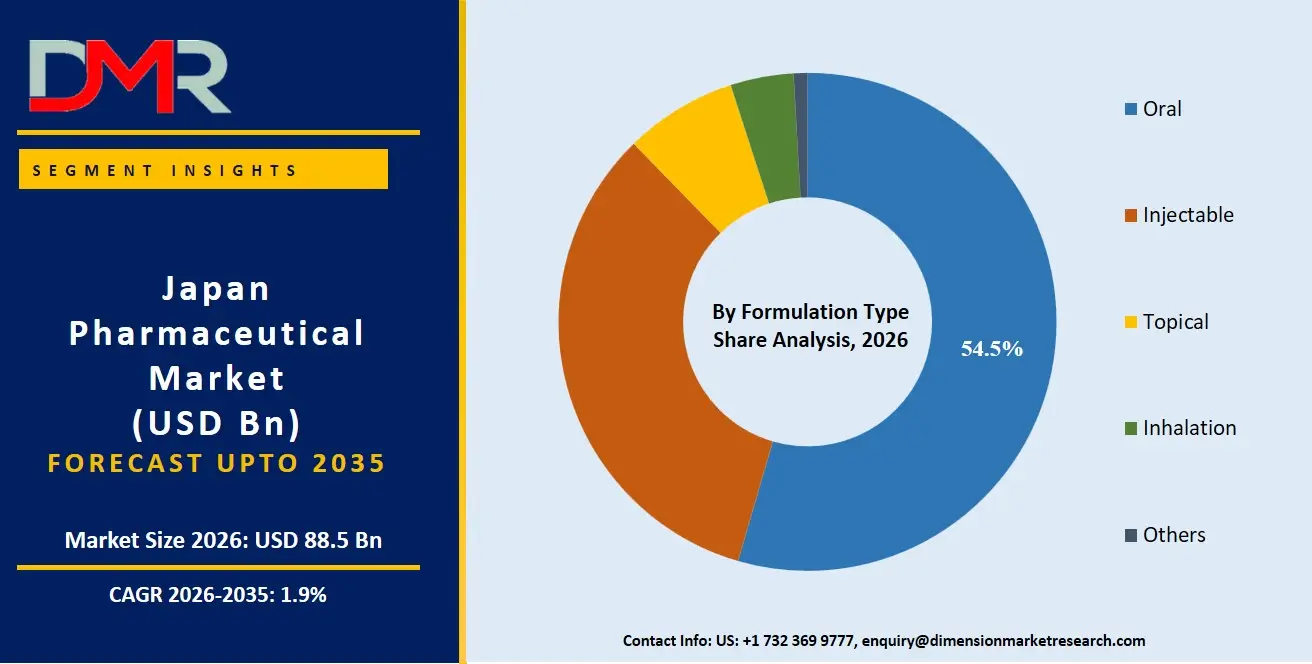
The Oral segment is expected to lead with 54.5% share in 2026, driven by strong demand for convenient, self-administered treatments. Patients prefer oral tablets, capsules, and liquids for chronic disease management, offering ease of use, high adherence, and lower manufacturing costs. Demand is concentrated in major cities such as Tokyo, Osaka, and Yokohama, where higher healthcare access supports oral therapy adoption. The Injectable segment follows, supported by patients and hospitals seeking high bioavailability and rapid onset for biologics and specialty drugs. Japanese healthcare professionals prefer injectable drugs for oncology and immunology indications, making it a strong segment across hospital and clinic settings. The Inhalation and Topical segments hold smaller shares, driven by respiratory disease patients and dermatological conditions. Oral remains largely replacement-driven rather than primary for acute care.
By Distribution Channel Analysis
Hospital Pharmacies are anticipated to dominate the Japan Pharmaceutical Market in 2026 with an estimated share of 62.3%, owing to Japanese patients' strong preference for in-person counseling, after-dispensing service, and immediate fulfillment. Major hospital networks continue to attract patients through loyalty programs, integrated medication management areas, and on-site clinical pharmacist services. Retail Pharmacies are expected to grow at a rapid rate, driven by the expansion of chains such as Ain Holdings, Welcia, and Matsumoto Kiyoshi, as well as increasing digital literacy among younger Japanese consumers and the convenience of home delivery for chronic medications. Online & Mail-Order Pharmacies are growing steadily due to e-commerce adoption and telemedicine integration.
By Therapeutic Area Analysis
Oncology is set to dominate the Japan Pharmaceutical Market in 2026 with a projected share of 39.3%, thanks to its high drug deployment penetration, government-backed rollout programs for cancer care, and low complexity for end-users. Oncology therapies enable real-time biomarker tracking, remote patient monitoring capabilities, and granular efficacy analytics that do not necessitate additional hardware investment. Cardiovascular Diseases will experience robust growth in the coming years because of heightened preference for adverse event detection and treatment reliability in aging populations. Anti-diabetic Disorders are driven by bulk procurement for metabolic health, remote patient monitoring, and integrated care systems across corporate wellness programs. Central Nervous System (CNS) Disorders are growing rapidly as hospitals adopt novel therapies for dementia and Parkinson's under Japan's national health initiatives. Infectious Diseases primarily deploy vaccines and antivirals for public safety and pandemic response in densely populated prefectures to reduce transmission and improve operational efficiency.
The Japan Pharmaceutical Market Report is segmented based on the following:
By Drug Type
- Prescription Drugs
- Branded Drugs
- Generic Drugs
- Specialty Drugs
- Over-the-Counter (OTC) Drugs
By Molecule Type
- Small Molecule Drugs
- Biologics
- Monoclonal Antibodies
- Recombinant Proteins
- Other Biologics
- Biosimilars
By Formulation Type
- Oral
- Injectable
- Topical
- Inhalation
- Others
By Therapeutic Area
- Oncology
- Cardiovascular Diseases
- Anti-diabetic Disorders
- Central Nervous System (CNS) Disorders
- Infectious Diseases
- Respiratory Diseases
- Immunology
- Rare Diseases
- Others
By Distribution Channel
- Hospital Pharmacies
- Retail Pharmacies
- Online & Mail-Order Pharmacies
Competitive Landscape
The dynamics of competition in the Japan Pharmaceutical marketplace have developed to become increasingly dynamic, with a wide range of multinational drug manufacturers and Japanese pharmaceutical companies specializing in various niche therapeutic categories such as oncology, immunology, cardiovascular, and CNS disorders. The essential ingredient for success is found in deep-seated strategic partnerships with raw material suppliers, wholesale distributors, and digital health platform partners in Japan, which strengthen supply chains and enable premium patient support services to be delivered alongside core drug products. Market consolidation trends are moving rapidly ahead, with established players in the pharmaceutical industry acquiring specialized AI, software, and analytics capability providers to enhance biologic functionality and predictive performance features. Proprietary intellectual property rights, with AI-based optimization algorithms and smart drug ecosystem integration, hold increasing importance compared to just competitive drug pricing and standalone product efficac.
Some of the prominent players in the Japan Pharmaceutical Market are:
- Takeda Pharmaceutical Company Limited
- Chugai Pharmaceutical Co., Ltd.
- Daiichi Sankyo Company, Limited
- Astellas Pharma Inc.
- Otsuka Pharmaceutical Co., Ltd.
- Eisai Co., Ltd.
- Shionogi & Co., Ltd.
- Ono Pharmaceutical Co., Ltd.
- Kyowa Kirin Co., Ltd.
- Sumitomo Pharma Company, Limited
- Mitsubishi Tanabe Pharma Corporation
- Santen Pharmaceutical Co., Ltd.
- Taiho Pharmaceutical Co., Ltd.
- Taisho Pharmaceutical Co., Ltd.
- Sawai Pharmaceutical Co., Ltd.
- Nichi-Iko Pharmaceutical Co., Ltd.
- Towa Pharmaceutical Co., Ltd.
- Nippon Shinyaku Co., Ltd.
- Mochida Pharmaceutical Co., Ltd.
- Tsumura & Co.
- Other Key Players
Recent Developments
- May 2026: Takeda Pharmaceutical Company Limited announced positive Phase 3 clinical trial results for its investigational gastrointestinal and immunology pipeline asset, demonstrating improved remission rates in patients with moderate-to-severe inflammatory bowel disease, reinforcing Takeda’s leadership in gut-brain and GI therapeutics.
- May 2026: Eisai Co., Ltd. announced new clinical evidence updates for LENVIMA (lenvatinib) at ASCO 2026, strengthening its oncology pipeline across established indications and reinforcing its role in targeted cancer therapies.
- December 2025: AstraZeneca plc and Daiichi Sankyo Company, Limited received U.S. FDA approval for ENHERTU (trastuzumab deruxtecan) in combination with pertuzumab as a first-line treatment for HER2-positive metastatic breast cancer, significantly expanding its use into earlier treatment lines and strengthening its global oncology dominance.
Report Details
| Report Characteristics |
| Market Size (2026) |
USD 88.5 Bn |
| Forecast Value (2035) |
USD 104.5 Bn |
| CAGR (2026–2035) |
1.9% |
| Historical Data |
2021 – 2025 |
| Forecast Data |
2027 – 2035 |
| Base Year |
2025 |
| Estimate Year |
2026 |
| Segments Covered |
By Drug Type, By Molecule Type, By Formulation Type, By Therapeutic Area, By Distribution Channel |
| Country Coverage |
Japan |
Frequently Asked Questions
How big is the Japan Pharmaceutical Market?
▾ The Japan Pharmaceutical Market is valued at around USD 88.5 billion in 2025 and is expected to reach USD 104.5 billion in 2026, driven by strong demand for specialty drugs, biologics, and steady replacement cycles due to an aging population.
What is the CAGR of the Japan Pharmaceutical Market from 2026 to 2035?
▾ The market is projected to grow at a CAGR of around 1.9% from 2026 to 2033, supported by premium biologic adoption, biosimilar uptake, and consistent replacement demand in a mature pharmaceutical ecosystem.
What factors are driving the growth of the Japan Pharmaceutical Market?
▾ Growth is driven by rising demand for biologic drugs, AI-enabled precision medicine, specialty pharmaceuticals, and connected health systems. Japan's aging population and strong preference for high-quality, innovative therapies also support steady replacement-driven market expansion.
What are the major trends in the Japan Pharmaceutical Market?
▾ Key trends include IoT-enabled drug delivery, AI integration in drug development, connected healthcare ecosystem expansion, and increasing demand for personalized therapies. Patients prefer seamless connectivity across digital health tools, wearables, and pharmacy platforms.
Who are the key players in the Japan Pharmaceutical Market?
▾ Key players include Takeda Pharmaceutical Company Limited, Astellas Pharma Inc., Daiichi Sankyo Company, Limited, Otsuka Holdings Co., Ltd., Eisai Co., Ltd., Chugai Pharmaceutical Co., Ltd., and many more.
How is the Japan Pharmaceutical Market segmented?
▾ The market is segmented by drug type, molecule type, formulation type, therapeutic area, and distribution channel.