Market Overview
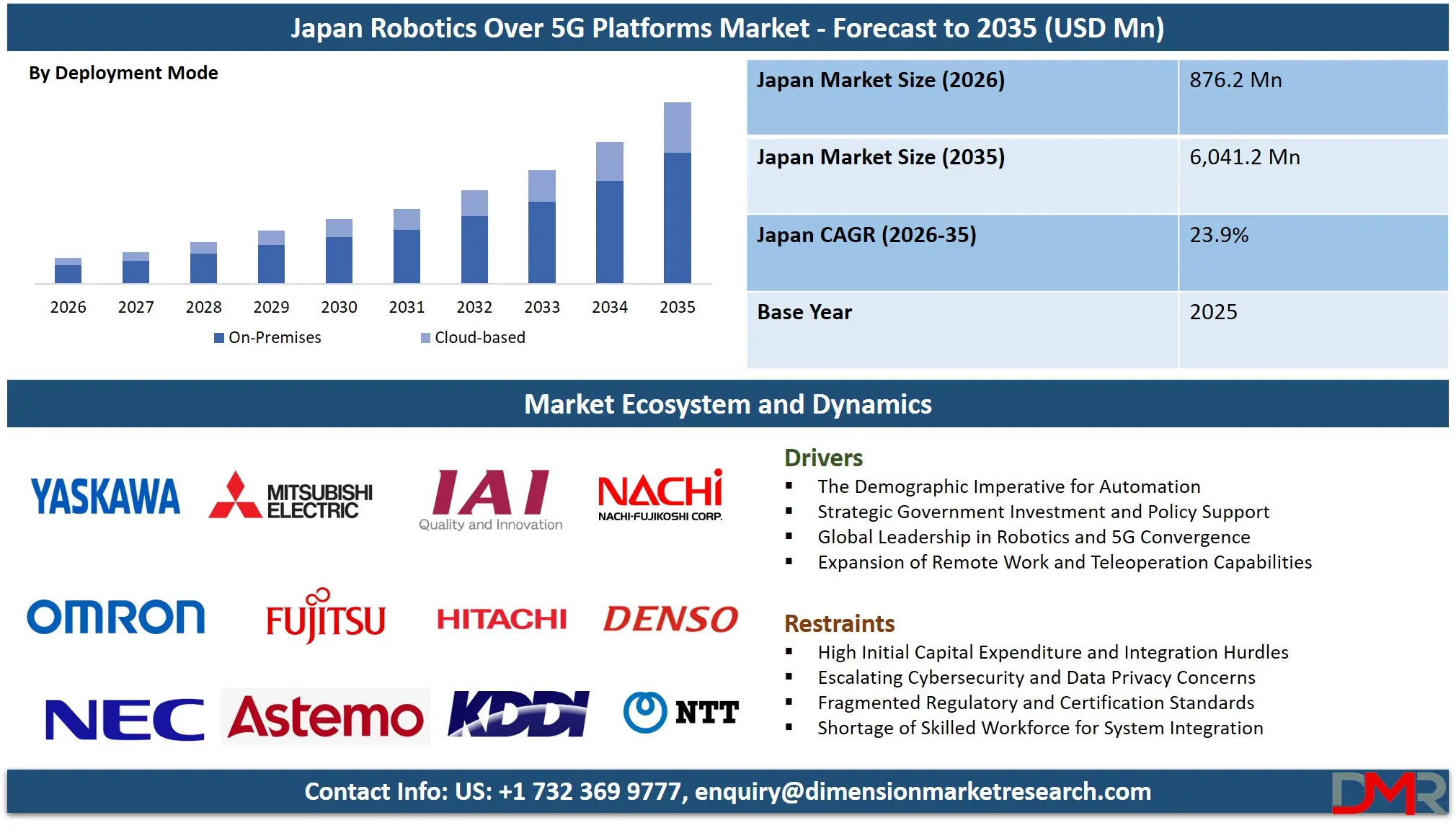
The Japan Robotics Over 5G Platforms Market is projected to attain a valuation of USD 876.2 million in 2026 and is expected to expand significantly, reaching USD 6,041.2 million by 2035, advancing at a robust compound annual growth rate (CAGR) of 23.9% during the forecast period.
ℹ
To learn more about this report –
Download Your Free Sample Report Here
This surge is fueled by the powerful synergy between Japan's global leadership in robotics engineering and its early deployment of advanced 5G infrastructure. The fusion of these domains is unlocking unprecedented capabilities, such as real-time haptic feedback, swarm robotics coordination, and AI-driven decision-making at the edge. Key sectors, including next-generation manufacturing, automated logistics, and an aging society's healthcare needs, are creating immense demand for these intelligent, connected systems.
Japan's technological landscape is among the most advanced in the world, anchored by a robust 5G ecosystem from carriers like NTT Docomo, KDDI, and SoftBank. The country is now rapidly integrating edge computing, dedicated network slicing, and private 5G/Local 5G licenses to build the digital backbone for Industry 4.0. This convergence is enabling Japanese industries to move beyond simple automation toward fully autonomous and remotely operated systems at an accelerating rate.
Strategic government initiatives, such as the Society 5.0 framework, the Beyond 5G Promotion Strategy, and subsidies for smart manufacturing, are deliberately cultivating this market. These policies actively fund R&D into connected robotics, promote the deployment of private 5G in industrial parks, and encourage digital transformation across public and private sectors, creating a fertile ground for innovation in robotics-over-5G platforms.
Japan's socio-economic challenges, particularly its demographic reality, are a powerful catalyst for this market. As reported by the Ministry of Internal Affairs and Communications, the nation's shrinking and aging workforce creates an urgent, non-discretionary need for automation. Sectors facing critical labor shortages, from construction and farming to factory floors, are turning to 5G-enabled robotics not just for efficiency, but as an essential solution for maintaining operational capacity and national economic vitality.
The healthcare and elder care sector represents a uniquely pressing growth opportunity. With a super-aged society, Japan requires scalable solutions for patient care, rehabilitation, and assisted living. 5G-powered service robots can deliver telepresence for remote consultations, provide physical assistance, and autonomously handle medication delivery, thereby enhancing care quality and easing the burden on a strained caregiver workforce. This is driving specialized development in teleoperation, sensor fusion, and secure data transmission.
ℹ
To learn more about this report –
Download Your Free Sample Report Here
In logistics and warehousing, the rapid expansion of e-commerce and the demands of just-in-time manufacturing are pushing the limits of traditional automation. 5G-enabled Autonomous Mobile Robots (AMRs) can now communicate seamlessly, adapt to dynamic environments in real-time, and be managed via centralized cloud platforms, leading to unprecedented efficiency and flexibility in supply chain operations.
Japan's distinctive combination of world-class industrial robotics, cutting-edge telecommunications infrastructure, proactive governmental strategy, and pressing demographic imperatives solidifies its position as the most dynamic and significant market for robotics-over-5G platforms in the Asia-Pacific region.
Japan Robotics Over 5G Platforms Market: Key Takeaways
- Market Size Insights: The Japan Robotics Over 5G Platforms Market is estimated to reach USD 876.2 million in 2026 and is forecast to soar to USD 6,041.2 million by 2035.
- Market Growth Rate: The market is projected to achieve a remarkable CAGR of 23.9% from 2026 to 2035.
- Key Players: The competitive landscape is shaped by synergistic partnerships between robotics giants and telecom leaders, including Fanuc Corporation, Yaskawa Electric, Kawasaki Heavy Industries, NTT Docomo, KDDI Corporation, SoftBank Corp., Mitsubishi Electric, Omron Corporation, and NEC Corporation.
- Software as a Foundational Driver: The Software segment, including AI-enabled control platforms, digital twins, and cloud-based orchestration solutions, is anticipated to dominate initial market revenue. Hardware components such as sophisticated 5G modules, high-precision sensors, and next-generation robotic arms will play a critical supporting role in enabling connected robotic fleets and retrofitting legacy systems.
- Manufacturing as the Primary Adopter: Japan's globally dominant manufacturing sector will be the largest end-user. The push for "smart factories" utilizing private 5G for flexible, reconfigurable production lines makes Manufacturing the leading industry vertical.
- Government Policy as a Catalyst: Strategic programs, including the Beyond 5G Promotion Strategy and subsidies for smart manufacturing and local 5G, are the primary catalysts accelerating technology adoption and infrastructure investment.
Japan Robotics Over 5G Platforms Market: Use Cases
- Enabling Flexible Smart Factories with Teleoperation: In Japan's advanced manufacturing sector, 5G is the linchpin for the next generation of smart factories. Ultra-reliable low-latency communication (URLLC) allows skilled technicians to teleoperate industrial robots and robotic arms from centralized operation centers. This enables rapid production line changeovers, remote troubleshooting, and the transfer of expert knowledge to multiple factory floors, directly addressing the skilled labor shortage while maximizing production flexibility.
- Orchestrating Next-Gen Logistics with AMR Fleets: The logistics and warehousing industry is being revolutionized by fleets of 5G-connected Autonomous Mobile Robots (AMRs). Unlike Wi-Fi dependent systems, 5G provides seamless handovers and guaranteed bandwidth, enabling centralized, real-time orchestration of hundreds of robots. These AMRs can dynamically adjust to order surges, coordinate for collaborative lifting, and feed real-time inventory data directly into warehouse management systems, creating a truly responsive and efficient supply chain.
- Transforming Healthcare with Remote Rehabilitation and Assistance: Japan's healthcare system is leveraging 5G robotics to extend the reach of specialized care. For example, rehabilitation robots equipped with haptic feedback sensors allow physical therapists in urban centers to guide patients in rural or remote facilities through precise exercises. Simultaneously, 5G-enabled service robots in elder care homes provide companionship, monitor vital signs, and assist with mobility, using the network's reliability to ensure constant, secure connectivity for patient safety.
- Advancing Precision Agriculture with Autonomous Machinery: The agricultural sector is deploying 5G-connected autonomous tractors, harvesters, and drones to counter severe labor shortages. These machines operate with precision, guided by real-time data from field sensors and high-resolution cameras. The 5G network allows for a single operator to monitor and control a fleet of tractors, while drones survey crop health and transmit data instantly for AI-driven analysis, optimizing water usage, fertilizer application, and harvest timing.
- Enhancing Safety in Critical Infrastructure Inspection: In the energy and utilities sector, safety and efficiency are paramount. 5G-connected crawler robots and drones are being deployed to inspect hazardous environments such as offshore oil platforms, radiation zones, and aging pipeline networks. These robots transmit ultra-high-definition video and telemetry data in real-time to operators in safe command centers, enabling immediate decision-making and detailed structural analysis without exposing human workers to potential dangers.
Japan Robotics Over 5G Platforms Market: Stats & Facts
Ministry of Internal Affairs and Communications (MIC)
- Japan's 5G infrastructure now covers over 95% of the population, creating a nationwide foundation for deploying connected robotic services from urban centers to rural communities.
- The government's Beyond 5G R&D fund, with a budget exceeding around USD 189.4 million, is actively financing projects focused on integrating future 6G networks with AI-driven robotics and autonomous systems.
Ministry of Economy, Trade and Industry (METI)
- Japan maintains its global leadership in industrial robotics, accounting for nearly 45% of worldwide production, with a significant and growing portion now being designed with native 5G connectivity.
- The Smart Manufacturing Promotion Policy has supported over 150 demonstration projects focused on 5G integration in factories, providing critical proof-of-concepts for wide-scale adoption.
Telecom Operators (NTT Docomo, KDDI, SoftBank)
- The issuance of Local 5G licenses to enterprises has surged past 500, with manufacturing, logistics, and port operators leading the charge to build dedicated networks for private, high-performance robotic automation.
- Major telecom carriers are increasingly partnering with robotics firms to offer bundled Robotics-as-a-Service (RaaS) solutions, lowering the entry barrier for SMEs by combining hardware, 5G connectivity, and maintenance into a single operational expense.
Japan Robot Association (JARA)
- The association reports a consistent annual growth rate of over 10% in the service robot segment, with logistics, cleaning, and hospitality robots representing the fastest-growing categories enabled by 5G.
- Japan's robotics ecosystem comprises over 300 companies, from global leaders to specialized startups, fostering a highly innovative and competitive market for 5G-integrated solutions.
International Federation of Robotics (IFR)
- Japan consistently ranks first globally for robot density in manufacturing, with more than 400 industrial robots per 10,000 employees, creating a massive installed base ripe for 5G connectivity upgrades.
- The country is the largest market for collaborative robots (cobots) in Asia, with new models increasingly featuring integrated 5G modules to enable safe, human-robot collaboration without physical tethers.
Japan Robotics Over 5G Platforms Market: Market Dynamics
Driving Factors in the Japan Robotics Over 5G Platforms Market
The Demographic Imperative for Automation
Japan's profound demographic challenges, a shrinking workforce and an aging population, are the most fundamental and powerful drivers for this market. As the labor pool contracts across critical sectors like manufacturing, construction, and logistics, maintaining economic output is no longer optional but a national necessity. 5G-enabled robotics provides a scalable solution, allowing a leaner workforce to manage complex automated systems, operate machinery remotely, and perform tasks that would otherwise be impossible due to labor shortages. This creates a non-cyclical, long-term demand for connected automation as a direct substitute for human labor.
Strategic Government Investment and Policy Support
The Japanese government is not merely a spectator but an active architect of this market's growth. Through initiatives like Society 5.0, it has articulated a clear vision for a digitally transformed future. This vision is backed by substantial financial commitments, including tax incentives for companies investing in smart factories, subsidies for deploying private 5G networks, and direct funding for R&D in core technologies like edge AI and ultra-reliable communication. This policy framework de-risks early investment and creates a powerful tailwind for the entire robotics-over-5G ecosystem.
Restraints in the Japan Robotics Over 5G Platforms Market
High Initial Capital Expenditure and Integration Hurdles
The transition to 5G-enabled robotics requires a significant upfront investment that extends beyond the robots themselves. Companies must also budget for private 5G network infrastructure, edge computing nodes, and the complex systems integration work needed to connect robotic operations with existing enterprise resource planning (ERP) and manufacturing execution systems (MES). For Japan's numerous small and medium-sized enterprises (SMEs), this capital intensity and technical complexity can be a formidable barrier, potentially slowing the pace of widespread market adoption despite the long-term benefits.
Escalating Cybersecurity and Data Privacy Concerns
As industrial robots and service machines become nodes on a 5G network, they expand the attack surface for potential cyber threats. A successful breach could lead to operational shutdowns, physical damage to equipment, theft of proprietary manufacturing processes, or compromise of sensitive data, particularly in healthcare applications. Ensuring end-to-end security, from the robot's operating system to the core network, requires specialized expertise and robust, layered security protocols. These heightened cybersecurity demands add another layer of complexity and cost for adopters, acting as a tempering factor on market growth.
Opportunities in the Japan Robotics Over 5G Platforms Market
The Rise of Robotics-as-a-Service (RaaS) Models
The high upfront cost of robotics presents a significant opportunity for the RaaS model, enabled and enhanced by 5G. With robots constantly connected, providers can remotely monitor performance, deploy software updates, and guarantee uptime as part of a subscription service. This transforms a capital-intensive purchase into an operational expense, making advanced automation accessible to a much broader range of customers, including cash-conscious SMEs. Japanese telecom and robotics companies are well-positioned to lead in creating bundled RaaS offerings that combine hardware, 5G connectivity, and AI-powered analytics.
Developing Specialized Solutions for the Silver Economy
Japan's super-aged society is a unique and massive market opportunity for 5G-powered service robots. There is immense potential to develop specialized robots for elder care facilities and home use, including assistive mobility devices, social companion robots, and telemedicine platforms with haptic capabilities. The low latency of 5G is crucial for making these interactions safe, natural, and reliable. Companies that can successfully navigate Japan's specific regulatory and cultural landscape to deploy these solutions will capture significant value in a growing "silver economy".
Trends in the Japan Robotics Over 5G Platforms Market
Convergence of AI and 5G for Autonomous Swarm Robotics
A key trend is the convergence of AI with 5G to enable swarm robotics. Instead of individually programmed machines, fleets of robots (e.g., for warehouse picking or farm harvesting) can communicate and coordinate with each other in real-time over a 5G network. AI algorithms, running on edge servers, can process data from the entire swarm to optimize collective behavior, dynamically assign tasks, and improve overall system efficiency. This moves beyond simple automation to create truly intelligent, self-organizing systems.
Emphasis on Edge Computing for Real-Time Operations
To meet the stringent latency requirements of critical robotic applications, there is a strong trend toward edge computing. Instead of sending all data to a centralized cloud, processing occurs at the network edge, close to the robots themselves. This dramatically reduces latency for time-sensitive functions like collision avoidance in an AMR fleet or precise force feedback in a teleoperated surgical robot. The integration of 5G network slicing with dedicated edge computing resources is becoming a standard architecture for high-performance robotics applications.
Japan Robotics Over 5G Platforms Market: Research Scope and Analysis
By Component Analysis
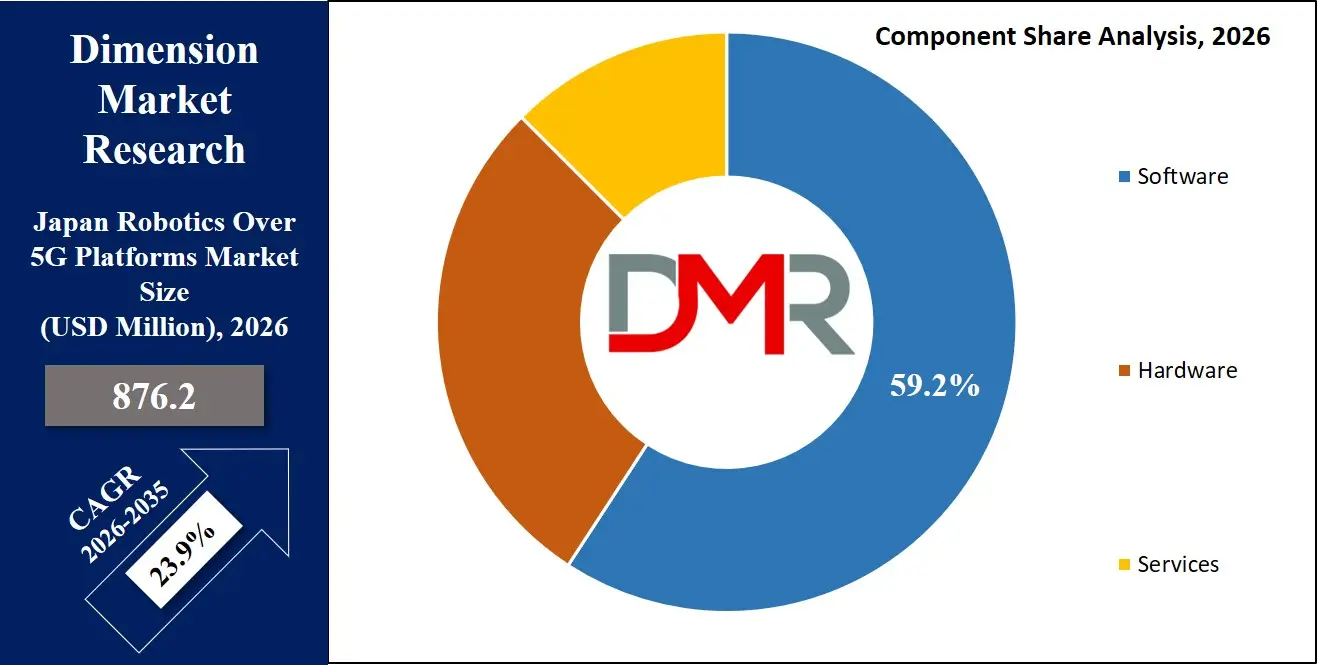
The Software segment is projected to dominate the Japan Robotics Over 5G Platforms Market, capturing a significant share of revenue in 2026. This dominance is driven by the increasing reliance on AI-enabled platforms, digital twins, and real-time robotic orchestration systems that leverage 5G connectivity. These software solutions enable advanced functionalities such as predictive maintenance, autonomous decision-making, and seamless coordination of robotic fleets across industrial environments. As Japanese manufacturers transition toward smart factories, software acts as the core intelligence layer, making it the primary driver of value creation in the market.
ℹ
To learn more about this report –
Download Your Free Sample Report Here
The Hardware segment remains a foundational enabler of the market. This includes sophisticated robotic arms equipped with advanced actuators, high-fidelity sensors (LiDAR, vision, force-torque), and 5G modules that act as communication gateways. While initial investments in upgrading robotic fleets and deploying 5G-compatible systems are significant, hardware is increasingly becoming standardized over time, supporting rather than leading market growth.
The Services segment forms the crucial support ecosystem. It includes deployment and integration services to embed 5G robots into complex industrial environments, maintenance and managed services to ensure continuous operation, and consulting to help enterprises navigate their automation journey. As the installed base of connected robots grows, demand for these services will expand proportionally, creating a stable and recurring revenue stream.
By Deployment Mode Analysis
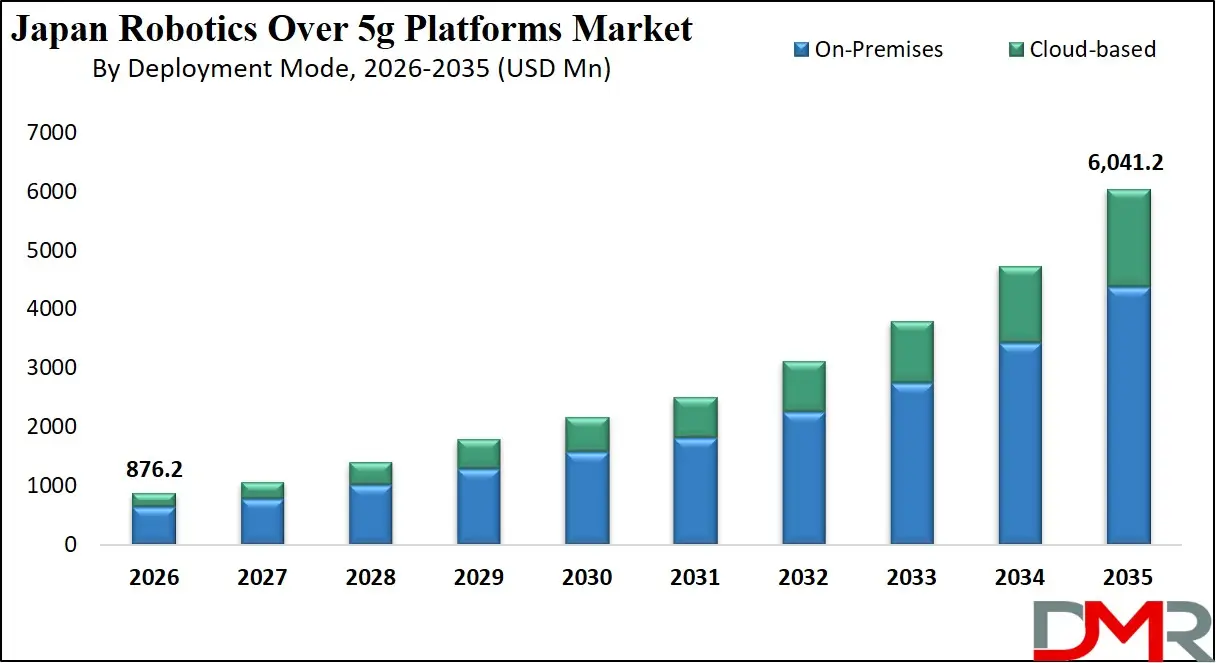
On-Premises deployment, particularly through private or Local 5G networks, is anticipated to dominate in the early years of the forecast period. This is driven by the stringent requirements of industrial end-users, especially in manufacturing and logistics. On-premises networks offer unparalleled control over latency, security, and reliability, which is essential for real-time control of production-critical robotic systems. Companies are investing in dedicated local infrastructure to ensure their automation runs in a secure, isolated, and predictable environment.
Cloud-based deployment, while initially smaller, is poised for substantial growth, particularly for service robots and applications with less stringent real-time demands. The public cloud offers scalability, flexibility, and access to massive computational power for AI model training and fleet-level analytics. As public 5G networks mature and edge computing becomes more integrated with cloud services, hybrid models will emerge, combining cloud-based intelligence with edge-based control, thereby expanding adoption.
By Robot Type Analysis
Industrial Robots are projected to dominate the market by robot type, reflecting Japan's strong industrial base. This includes articulated robots, SCARA robots, and parallel robots widely used in automotive and electronics manufacturing. The integration of 5G transforms these systems into connected and flexible assets, enabling real-time monitoring, remote control, and rapid reconfiguration.
Service Robots represent the fastest-growing category, driven by labor shortages in logistics, retail, hospitality, and healthcare. These include autonomous mobile robots (AMRs), cleaning robots, and service-oriented robotic systems. 5G connectivity enables real-time navigation, cloud-based intelligence, and dynamic interaction in human-centric environments.
Collaborative Robots (Cobots) are gaining traction due to their ability to work alongside humans. 5G enhances their responsiveness and safety by enabling real-time data exchange and integration with broader industrial systems. Autonomous Mobile Robots (AMRs) are playing a critical role in logistics and warehousing. Their ability to navigate dynamically using real-time data and centralized fleet management systems makes them highly dependent on reliable 5G connectivity, further strengthening their adoption.
By End-User Industry Analysis
Manufacturing is projected to be the dominant end-user industry, driven by Japan's strong industrial ecosystem and focus on smart factory initiatives. 5G-enabled robotics support flexible production lines, real-time monitoring, and efficient automation of processes such as assembly, welding, and inspection.
Logistics & Warehousing is a rapidly growing segment, supported by the expansion of e-commerce and the need for efficient supply chain operations. 5G-connected robots, including AMRs and automated sorting systems, enable real-time coordination and 24/7 operations.
Automotive remains a key end-user, given its reliance on precision manufacturing and just-in-time processes. The adoption of 5G robotics supports the transition toward electric vehicles and more flexible production models. Healthcare is an emerging high-potential segment, with applications in surgical assistance, rehabilitation, hospital logistics, and disinfection. The reliability and low latency of 5G are critical for these use cases.
Other sectors, including energy & utilities, agriculture, and construction, represent niche but growing opportunities where 5G-enabled robotics improve operational efficiency and safety in complex environments.
The Japan Robotics Over 5G Platforms Market Report is segmented on the basis of the following:
By Component
- Hardware
- 5G Modules
- Sensors
- Robotic Arms
- Software
- AI & Algorithms
- Real-Time Control
- Data Processing
- Services
- Deployment
- Maintenance
- Consulting
- Professional Services
- Managed Services
By Deployment Mode
By Robot Type
- Industrial Robots
- Service Robots
- Collaborative Robots
- Autonomous Mobile Robots
By End-User Industry
- Manufacturing
- Logistics & Warehousing
- Automotive
- Healthcare
- Energy & Utilities
- Agriculture
- Mining & Construction
- Others
Japan Robotics Over 5G Platforms Market: Competitive Landscape
The competitive landscape of the Japan Robotics Over 5G Platforms Market is dynamic and defined by strategic convergence, bringing together traditional manufacturing powerhouses and advanced telecommunications providers. Japan's market is one of the most sophisticated globally, supported by a dense ecosystem of robot manufacturers, component suppliers, system integrators, and network operators collaborating to deliver end-to-end solutions.
Leading Japanese robotics companies such as Fanuc, Yaskawa Electric, Kawasaki Heavy Industries, and Denso Wave are at the forefront, integrating 5G modules directly into their latest industrial robots, cobots, and SCARA robots. Their dominance is built on decades of engineering excellence, deep customer relationships in manufacturing and automotive, and comprehensive service networks. These organizations are now partnering with telecom leaders to ensure their hardware is fully optimized for private 5G and edge computing environments, offering integrated automation cells that are "plug-and-play" for the smart factory.
ℹ
To learn more about this report –
Download Your Free Sample Report Here
Global system integrators and technology giants like Mitsubishi Electric, Omron, and NEC are providing the crucial software, control systems, and AI platforms that orchestrate these robots. They offer the middleware that connects robotic hardware to 5G networks and enterprise IT systems, enabling real-time data flow and centralized management. Their deep expertise in industrial automation (OT) and information technology (IT) positions them as key partners for companies undertaking comprehensive digital transformations.
Telecom operators NTT Docomo, KDDI, and SoftBank are not merely connectivity providers but active ecosystem builders. They are investing heavily in Local 5G infrastructure, edge computing nodes, and platform services. By partnering with robotics firms, they are creating bundled offerings and RaaS models, effectively lowering the barrier to entry and expanding the total addressable market. Their role is shifting from infrastructure provision to solution co-creation.
Overall, Japan's competitive landscape is a highly collaborative and innovation-driven environment. It combines established industrial leaders with agile technology partners and network operators, fostering a market that is rapidly advancing capabilities in 5G-integrated automation, service differentiation, and the realization of fully connected, intelligent systems across multiple sectors.
Some of the prominent players in the Japan Robotics Over 5G Platforms Market are:
- Yaskawa Electric Corporation
- Mitsubishi Electric Corporation
- Omron Corporation
- Nachi‑Fujikoshi
- Intelligent Actuator, Inc.
- Fujitsu
- Hitachi Ltd.
- Panasonic Holdings Corporation
- NEC Corporation
- Nippon Telegraph and Telephone Corporation (NTT)
- SoftBank Group
- Rakuten Mobile
- Kawasaki Heavy Industries
- Denso Corporation
- Sony Group Corporation
- Toshiba Corporation
- KDDI Corporation
- Astemo, Ltd.
- Cyberdyne Inc.
- Other Key Players
Recent Developments in the Japan Robotics Over 5G Platforms Market
- March 2026: Nippon Telegraph and Telephone Corporation and NEC Corporation launched Japan's first commercial 5G core with AI-driven network automation, enhancing ultra-low latency connectivity for advanced industrial automation and robotics use cases.
- February 2026: NTT DOCOMO and Keio University demonstrated high-fidelity robot teleoperation over a commercial 5G network using low-latency slicing, enabling stable real-time control with tactile feedback, improved precision in remote operations, and enhanced reliability for industrial and hazardous environment applications.
- December 2025: Yaskawa Electric Corporation and SoftBank Corp. collaborated on "Physical AI" applications, integrating robotics with advanced connectivity technologies to enhance intelligent automation capabilities, improve real-time data processing, and enable more adaptive and autonomous robotic systems across industrial environments.
- November 2025: Fujitsu expanded its 5G-enabled digital twin and AI platform capabilities, supporting real-time industrial automation and robotics optimization across manufacturing environments, improving predictive maintenance, operational efficiency, and seamless integration of connected robotic systems.
- April 2025: Kawasaki Heavy Industries and KDDI Corporation announced a strategic partnership to develop autonomous construction solutions using 5G-connected heavy machinery and AI-powered remote operation systems, enabling real-time monitoring, improved operational safety, and enhanced efficiency in large-scale infrastructure projects.
Report Details
| Report Characteristics |
| Market Size (2026) |
USD 876.2 Mn |
| Forecast Value (2035) |
USD 6,041.2 Mn |
| CAGR (2026–2035) |
23.9% |
| Historical Data |
2021 – 2025 |
| Forecast Data |
2027 – 2035 |
| Base Year |
2025 |
| Estimate Year |
2026 |
| Report Coverage |
Market Revenue Estimation, Market Dynamics, Competitive Landscape, Growth Factors and etc. |
| Segments Covered |
By Component (Hardware, Software and Services), By Deployment Mode (On-Premises and Cloud-based), By Robot Type (Industrial Robots, Service Robots, Collaborative Robots and Autonomous Mobile Robots), By End-User Industry (Manufacturing, Logistics & Warehousing, Automotive, Healthcare, Energy & Utilities, Agriculture, Mining & Construction and Others) |
| Country Coverage |
Japan |
| Prominent Players |
Yaskawa Electric Corporation, Mitsubishi Electric Corporation, Omron Corporation, Nachi-Fujikoshi, Intelligent Actuator, Inc., Fujitsu, Hitachi Ltd., Panasonic Holdings Corporation, NEC Corporation, Nippon Telegraph and Telephone Corporation (NTT), SoftBank Group, Rakuten Mobile, Kawasaki Heavy Industries, Denso Corporation, Sony Group Corporation, Toshiba Corporation, KDDI Corporation, Astemo, Ltd., Cyberdyne Inc., and Other Key Players |
| Purchase Options |
We have three licenses to opt for: Single User License (Limited to 1 user), Multi-User License (Up to 5 Users), and Corporate Use License (Unlimited User) along with free report customization equivalent to 0 analyst working days, 3 analysts working days and 5 analysts working days respectively. |
Frequently Asked Questions
How big is the Japan Robotics Over 5G Platforms Market?
▾ The Japan Robotics Over 5G Platforms Market size is estimated to have a value of USD 876.2 million in 2026 and is expected to reach USD 6,041.2 million by the end of 2035.
What is the growth rate in the Japan Robotics Over 5G Platforms Market in 2026?
▾ The market is growing at a CAGR of 23.9% over the forecasted period of 2026.
Who are the key players in the Japan Robotics Over 5G Platforms Market?
▾ Some of the major key players in the Japan Robotics Over 5G Platforms Market are Fanuc Corporation, Yaskawa Electric, Kawasaki Heavy Industries, NTT Docomo, KDDI Corporation, SoftBank Corp., Mitsubishi Electric Corporation, Omron Corporation, and many others.