What is the Solar Energy Market Size?
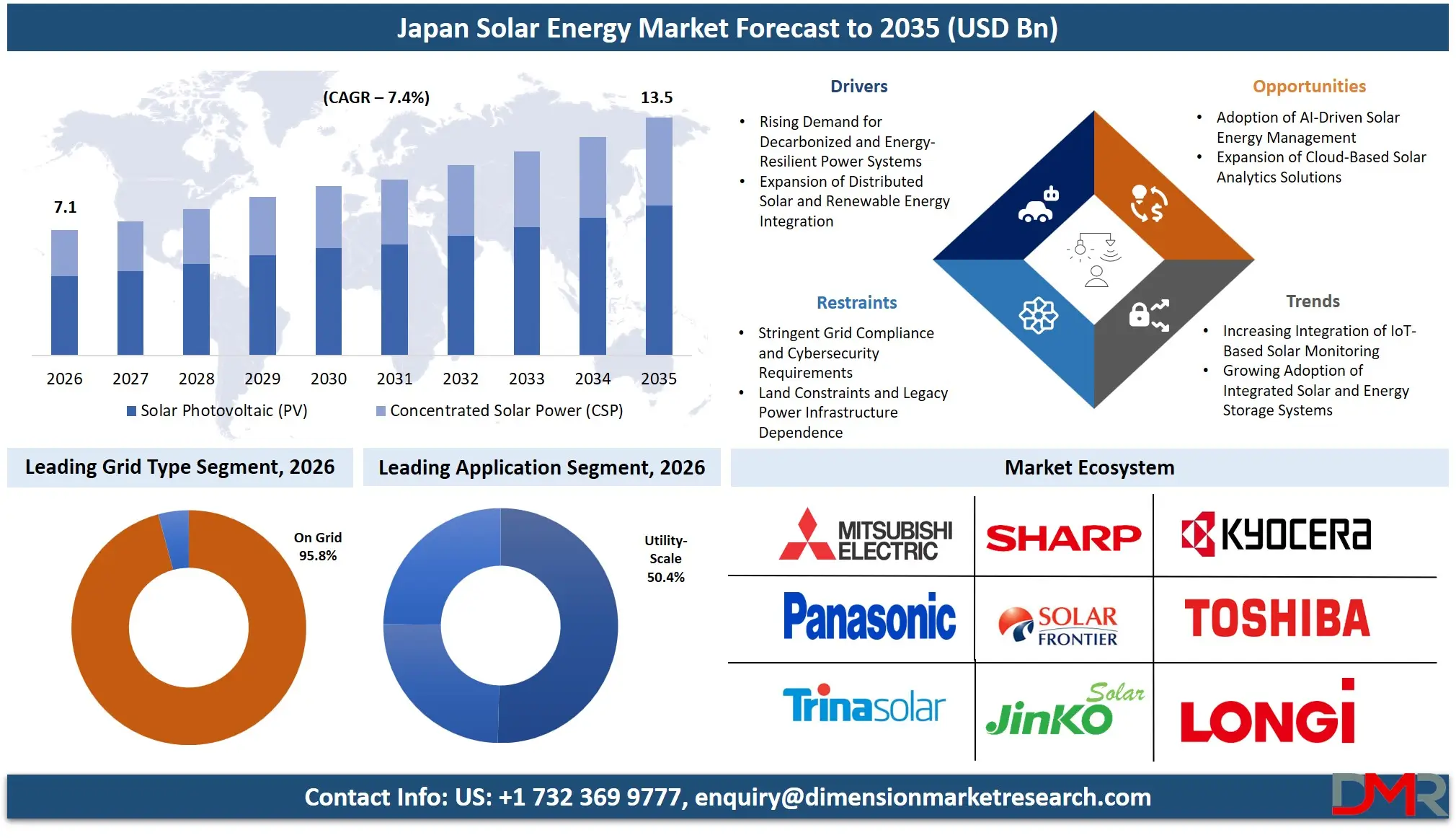
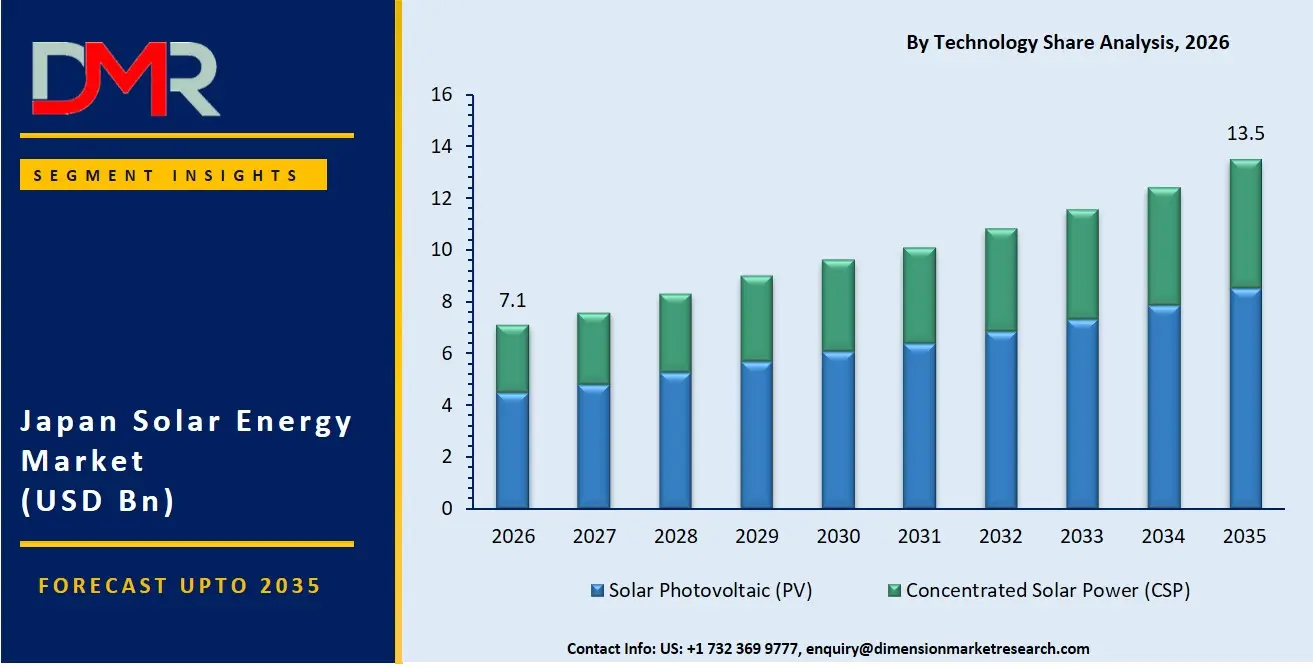
The Japan Solar Energy (FCV) Market is expected to reach a value of USD 7.1 billion in 2026, and it is further anticipated to reach USD 13.5 billion by 2035, growing at a CAGR of 7.4% during the forecast period.
ℹ
To learn more about this report –
Download Your Free Sample Report Here
The solar energy market has been showing consistent growth due to Japan's rising dependence on resilient, decarbonized, and decentralized energy systems for effective, secure, and scalable power generation. This includes several solar platforms and expert services that help utilities and grid operators deploy intelligent solutions for residential, commercial, and industrial purposes. There has been a rising need for professional services owing to the requirements for implementing advanced solar metering infrastructure, securing operational continuity against supply disruptions, and delivering high-performance solar automation systems to customers. Utility operators have emerged as the largest consumer segment for solar energy services, with solar modules/panels being the most popular choice due to their wide availability and reliability, while there has been rapid growth in energy storage and hybrid integration platforms.
ℹ
To learn more about this report –
Download Your Free Sample Report Here
Key Takeaways
- Market Size & Forecast: The Japan Solar Energy market is forecasted to be valued at USD 7.1 billion in 2026, growing incrementally to USD 13.5 billion by 2035, due to the joint efforts of energy strategy deployment on the part of enterprises as well as the obligatory deployment of zero-emission and resilient power technologies.
- Growth Rate & Outlook: Japan market is expected to grow at 7.4% CAGR, propelled by the urgent need to mitigate emerging renewable energy intermittency vulnerabilities, alongside increasing challenges in orchestrating multi-directional power flows from residential solar, commercial buildings, and industrial facilities.
- Primary Growth Drivers: Major driving factors comprise the transition from traditional centralized power grids towards modern intelligent distribution systems, the necessity to deploy secure and robust communication networks for solar assets, as well as the implementation of solar management APIs necessitating unique platform & services expertise.
- Key Market Trends: Major trends encompass the introduction of AI-driven solar substation automation through commercial channels, usage of machine learning within wide area networks for solar demand forecasting and preventing power waste, and increased focus on cybersecurity amidst rising consumer safety considerations of regulators.
- By Technology Analysis: The Solar Photovoltaic (PV) segment is projected to dominate the Japan Solar Energy Market due to strong demand for scalable and efficient solar generation systems supporting real-time monitoring, grid balancing, and performance optimization. Concentrated Solar Power (CSP) remains limited due to land and geographic constraints.
- By Grid Type Analysis: The On-Grid segment is projected to dominate the market owing to its reliability, large-scale grid connectivity, and widespread use in urban distribution networks, industrial infrastructure, and utility-scale solar integration.
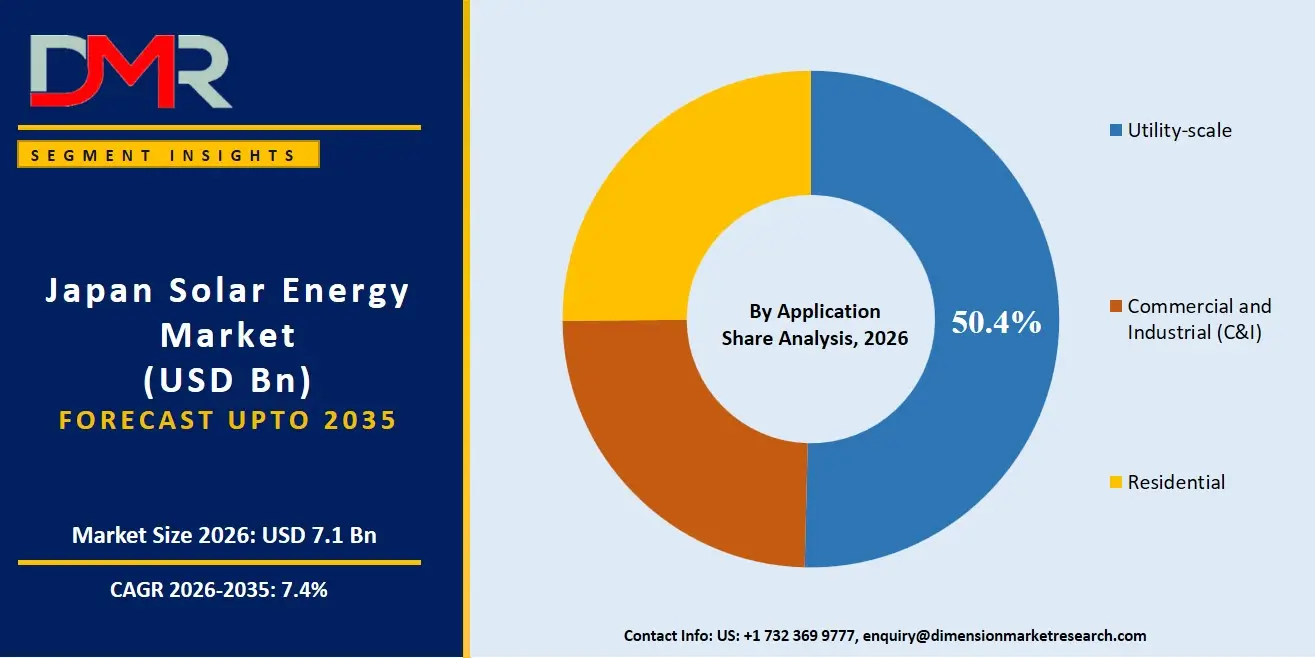
- By Application Analysis: The Utility-scale segment is anticipated to lead the Japan Solar Energy Market due to growing deployment of large-scale solar projects supporting grid operations, energy management, and long-term renewable power generation.
What is Solar Energy?
Solar energy is described as producing electricity from sunlight through photovoltaic cells or concentrated solar power plants. The current generation of solar power systems has incorporated smart features such as monitoring systems, grid management, energy storage, and power management techniques that will allow for the optimization of electricity production, distribution, and utilization. This type of power generation system can be implemented either on rooftops, land surfaces, reservoirs of water bodies, and integrated building structures based on the energy needs and available surface area.
Use Cases
- Utility Grid Resilience: Electric utilities employ Solar Energy Services for the installation of distribution automation solutions that include real-time fault detection and outage notifications to avoid supply interruptions and increase operational trust.
- Hospital Power Reliability: Hospital networks rely on Solar Platforms for deploying uninterruptible power supply integration with solar backup, ensuring stable, zero-outage operation, and maintaining compliance with regional health and safety mandates.
- Public Infrastructure Services: Municipal authorities incorporate solar substation automation APIs to push voltage schedules and grid adherence notifications to central control centers in real-time.
- Industrial Demand Response: Manufacturing organizations leverage solar analytics platforms in a cloud-based telematics suite to initiate geo-targeted load shedding during peak energy pricing seasons.
How AI is Transforming the Solar Energy Market?
AI is revolutionizing the solar energy industry through increased demand forecasting and predictive maintenance capabilities. The analytics platform suite includes AI-based systems that detect consumption anomalies and solar inefficiencies in order to resolve them instantaneously, thereby preventing any financial losses and operational damage. In addition, the AI-driven functions of distribution management services help organizations assess load behavior, determine optimal voltage schedules, and customize their outage planning. AI forms an essential part of governance and customer trust initiatives. Professional services involve intelligent agents that monitor compliance and keep solar maintenance logs free of any non-compliant entries while ensuring that all operations comply with regulations and the stringent cybersecurity protocols in Japan.
Market Dynamics
Key Drivers in the Japan Solar Energy Market
Rising Demand for Decarbonized and Energy-Resilient Power Systems
AI technology is revolutionizing the solar energy sector through improved demand prediction, predictive maintenance, and operational optimization. Modern analytical tools incorporate AI algorithms for detecting discrepancies in power consumption and solar energy production to minimize operational losses, the cost of maintenance, and unexpected downtimes. Moreover, AI-enabled energy management technologies assist enterprises in optimizing their energy consumption schedules, balancing energy, and managing outages within distributed solar networks. Smart monitoring systems further facilitate operational transparency by keeping a reliable record of solar efficiency and complying with stringent regulations for cybersecurity practices in Japan. The rising pressure of attaining carbon neutrality goals, building resilient infrastructure against disasters, and reducing reliance on imported energy sources is driving various Japanese utilities, corporations, and residential consumers to embrace innovative solar energy solutions.
Expansion of Distributed Solar and Renewable Energy Integration
The fast-paced growth of distributed solar power systems in Japan is driving demand from residential rooftop systems, energy storage for commercial use, microgrids in industry, and community energy systems. The implementation of solar power among companies is becoming popular for achieving the company's target for carbon neutrality, better management of electricity use, enhanced efficiency of assets, and ensuring compliance with regulations. With the introduction of increasing amounts of renewable energy sources in the existing utilities by utility providers, there is an increased need for robust solar management platforms that can efficiently manage large amounts of operational data. In addition to government incentives, there is a strong focus on reliable renewable energy generation and management of demand response, driving investment in intelligent solar management platforms and energy optimization.
Restraints in the Japan Solar Energy Market
Stringent Grid Compliance and Cybersecurity Requirements
The rigid grid security protocols and information protection rules in Japan have been posing certain operational difficulties for solar suppliers, project developers, and utilities firms. There has been an upsurge in regulatory scrutiny regarding solar monitoring systems, energy data handling processes, and cyber security measures aimed at minimizing risks related to cyber attacks, system outages, and weak infrastructure. Strict compliance with the regulatory measures has made solar power plants more difficult, time-consuming, and costly to install. The solar power plant operator needs to ensure that there is secured communications system, encryption in the monitoring systems, as well as clear operational record-keeping in addition to the maintenance of the grid's operational efficiency. Violation of these regulatory guidelines may lead to various penalties, including financial sanctions and reputation damage.
Land Constraints and Legacy Power Infrastructure Dependence
The limited availability of land and reliance on existing power infrastructure are some of the factors holding back the growth of solar energy projects in Japan. Projects involving utility-scale solar installations are currently facing increasing difficulties in acquiring suitable plots of land, obtaining environmental clearances, overcoming grid constraints, and other permitting issues, especially in urbanized metropolitan areas. Additionally, these projects encounter delays owing to grid capacity issues and higher risks of energy curtailments in congested regions. Rural communities still depend on legacy power infrastructure because these projects require minimal capital expenditure and operate using simpler technology than renewable energy facilities. Reliance on old power systems is slowing down the shift towards decentralized solar energy and energy management solutions. These challenges are driving investors to develop small-scale solar projects.
Growth Opportunities in the Japan Solar Energy Market
Adoption of AI-Driven Solar Energy Management
Growth prospects have emerged in the form of the adoption of AI-powered solar energy management systems in Japan. Such innovative solutions allow utility operators and energy providers to enhance electricity production, automate process management, and enhance the overall efficiency of the system with the help of analytics and diagnostics. This is facilitated by means of features like automatic system analysis, intelligent energy balancing, and predictive maintenance that lead to better performance and reliability of renewable energy sources along with lower maintenance expenses and downtime. AI-powered energy management solutions can help organizations manage electricity scheduling, monitor the performance of solar assets, and increase energy utilization efficiency. With the further development of digital infrastructure, cloud computing, and sensor technology, energy providers are likely to invest more into solar management innovations.
Expansion of Cloud-Based Solar Analytics Solutions
Cloud computing has been incorporated in solar energy platforms with the potential to offer great growth possibilities within Japan's solar energy industry. This includes cloud computing technology solutions, which are being embraced by utility operators and providers to automate energy monitoring, energy prediction, performance optimization, and solar energy asset management. Advanced analytics technology using AI is helping companies analyze their electricity consumption behaviors, plan preventive maintenance, and optimize performance across multiple sites. Solar energy platforms based on cloud computing also ensure real-time access to data, visibility of operations, and quick decision-making for renewable energy providers handling various renewable energy sources. Adoption of machine learning, automation, and predictive analytics among other intelligent technologies is expected to create greater demand for cloud-based solar energy technology solutions within Japan.
Trends in the Japan Solar Energy Market
Increasing Integration of IoT-Based Solar Monitoring
The use of IoT technology for monitoring solar plants by energy suppliers is gaining popularity due to the ability to optimize operational transparency and asset management, as well as increase the effectiveness of systems. Due to IoT technology, companies can analyze the performance of solar energy production, identify potential issues with equipment, track asset performance, and conduct maintenance services without having to make any major changes to the current infrastructure of the company. Smart solar monitoring technology helps to analyze energy generation processes, perform remote operational management, as well as optimize performance in multiple locations. Remote asset management and digital transformation initiatives help to boost the adoption of IoT-based monitoring technologies. The development of rooftop, battery-operated, and decentralized solar farms increases the need for innovative monitoring systems.
Growing Adoption of Integrated Solar and Energy Storage Systems
Utility companies, corporations, and households in Japan are increasingly opting for integrated photovoltaics and battery storage systems to promote efficient use of renewable energy sources and increase energy resilience. There is an increasing trend among organizations to engage in the creation of integrated energy management systems incorporating the use of solar power, battery energy storage, and advanced intelligent optimization technology. Such integrated systems help in managing peak loads, energy balancing, providing back-up power, and resilience against disasters in case of disruption of the grid. Issues such as electricity price volatility, energy security issues, and the need for a reduction in carbon emissions have led to increased adoption of solar plus battery energy storage systems in Japan. Besides this, advances in battery technologies and reduced cost of batteries have made the system more feasible.
Research Scope and Analysis
The Japan Solar Energy Market is segmented by technology, grid type, deployment, component, and application. The market supports residential energy management, commercial demand response, industrial automation, and government infrastructure across individual consumers, utility operators, public authorities, and energy companies through cloud-based and on-premise solar management solutions.
ℹ
To learn more about this report –
Download Your Free Sample Report Here
By Technology Analysis
Solar Photovoltaic (PV) components are expected to lead the Japan Solar Energy Market in 2026 with a projected market share of 99.5% as a result of utility operators' growing preference for scalable metering and sensing platforms. Japanese utilities have developed a preference for solar PV modules, sensors, and inverters for performing such functions as consumption tracking, outage detection, and real-time voltage control. Concentrated Solar Power (CSP) solutions are likely to occupy a minor share due to Japan's mountainous terrain and limited direct normal irradiance, with most projects limited to research installations.
By Grid Type Analysis
On-Grid systems are projected to dominate the Japan Solar Energy Market in 2026, with an estimated share of 95.8%, owing to their widespread adoption in distribution automation, substation automation, and transmission network monitoring. Japanese grid operators and energy aggregators favor on-grid solar because it provides reliable long-distance communication along with high bandwidth and low latency. Off-Grid systems follow, driven by increasing solar-plus-storage concentration in remote islands and localized demand response programs targeting regional utilities, particularly in the Ogasawara Islands and rural Hokkaido.
By Deployment Analysis
Rooftop solar is set to dominate the Japan Solar Energy Market in 2026 with a projected share of 54.2%, thanks to its high deployment penetration, government-backed feed-in-tariff programs, and low complexity for end-users. Rooftop solutions enable real-time billing, remote disconnect capabilities, and granular consumption analytics that do not necessitate additional hardware investment. Ground-Mounted solar will experience robust growth in the coming years because of heightened utility preference for fault detection and service restoration reliability, particularly in abandoned farmland repurposed for mega-solar projects across Kyushu and Tohoku regions.
By Component Analysis
Solar Modules/Panels are projected to continue dominating in the Solar Energy Market of Japan, with an expected market share of 42.1% in 2026, owing to robust energy intensity targets and demand response participation, as well as heavy reliance on real-time power quality and load management solutions. Businesses are increasingly adopting high-efficiency monocrystalline panels due to the benefits offered by such systems, including lower electricity costs, predictable production scheduling, and regulatory compliance with energy efficiency mandates. Inverters are expected to experience the fastest growth, thanks to the increasing deployment of smart hybrid inverters with grid-forming capabilities. Other significant components include Mounting and Tracking Systems gaining traction in utility-scale projects, Balance-of-System and Electricals for rooftop retrofits, and Energy Storage and Hybrid Integration which is accelerating due to Japan's feed-in-premium scheme requiring solar-plus-storage for grid stabilization.
By Application Analysis
The Utility-scale segment is projected to dominate the Japan Solar Energy Market in 2026 with an expected market share of 50.4% in 2026, owing to robust energy intensity targets and demand response participation, as well as heavy reliance on real-time power quality and load management solutions. Utility operators are increasingly adopting solar technologies due to the benefits offered by such systems, including lower electricity costs, predictable production scheduling, and regulatory compliance with energy efficiency mandates. The Commercial and Industrial (C&I) segment is expected to experience the fastest growth, thanks to the increasing deployment of building energy management systems, smart HVAC controls, and lighting automation funded by green building incentives. Other significant applications include Residential with home solar management systems and time-of-use optimization.
The Japan Solar Energy Market Report is segmented based on the following:
By Technology
- Solar Photovoltaic (PV)
- Concentrated Solar Power (CSP)
By Grid Type
By Deployment
By Component
- Solar Modules/Panels
- Inverters
- Mounting and Tracking Systems
- Balance-of-System and Electricals
- Energy Storage and Hybrid Integration
By Application
- Residential
- Commercial and Industrial (C&I)
- Utility-scale
Competitive Landscape
The dynamics of competition in the Japan Solar Energy marketplace have developed to become increasingly dynamic, with a wide range of multinational solar manufacturers, Japanese renewable energy developers, and energy solution providers specializing in various solar generation and energy storage functions. The essential ingredient for success is found in deep-seated strategic partnerships with renewable energy developers, EPC contractors, and utility operators in Japan, which open up high-quality supply chains and allow integrated solar solutions and maintenance services to be offered alongside one another. Market consolidation trends are moving rapidly ahead, with established players in renewable energy, power infrastructure, and energy storage taking on acquisitions of specialized solar technology providers to strengthen their AI-enabled monitoring and energy optimization capabilities. Proprietary intellectual property rights, including advanced photovoltaic technologies, AI-based predictive maintenance systems, and energy optimization platforms, hold increasing importance compared to just competitive hardware pricing and installation capabilities.
Some of the prominent players in the Japan Solar Energy Market are:
- Sharp Corporation
- Kyocera Corporation
- Panasonic Holdings Corporation
- Mitsubishi Electric Corporation
- Toshiba Energy Systems & Solutions Corporation
- Solar Frontier K.K.
- Canadian Solar Inc.
- Trina Solar Co., Ltd.
- JinkoSolar Holding Co., Ltd.
- JA Solar Technology Co., Ltd.
- LONGi Green Energy Technology Co., Ltd.
- Hanwha Solutions Corporation
- First Solar, Inc.
- RENOVA, Inc.
- Eurus Energy Holdings Corporation
- Shizen Energy Inc.
- West Holdings Corporation
- SB Energy Corp.
- TEPCO Renewable Power, Incorporated
- Sekisui Chemical Co., Ltd.
- Other Key Players
Recent Developments
- March 2026: RENOVA, Inc. advanced development of its 90 MW / 270 MWh Kikugawa Nishimura energy storage project in Shizuoka Prefecture and secured non-recourse project financing, supporting its long-term renewable energy and grid-scale solar integration strategy in Japan.
- December 2025: TEPCO Renewable Power, Incorporated announced an additional financing agreement for a rooftop solar power project in Singapore through a joint venture with ESR Group Limited. The project will support the development of multiple rooftop solar facilities with a combined capacity of approximately 20 MW, strengthening TEPCO's Asia-Pacific solar expansion strategy.
- December 2025: Sekisui Chemical Co., Ltd. gained increased market attention after the Japanese government strengthened support for next-generation perovskite solar cells while planning tighter regulations on conventional mega-solar projects, accelerating industry focus on domestically developed solar technologies.
- October 2025: West Holdings Corporation and RENOVA, Inc. experienced major market movement following policy discussions by Japan's incoming administration regarding stricter controls on large-scale solar projects and increased support for domestic perovskite solar technologies, reflecting the sector's transition toward next-generation solar infrastructure.
Report Details
| Report Characteristics |
| Market Size (2026) |
USD 7.1 Bn |
| Forecast Value (2035) |
USD 13.5 Bn |
| CAGR (2026–2035) |
7.4% |
| Historical Data |
2021 – 2025 |
| Forecast Data |
2027 – 2035 |
| Base Year |
2025 |
| Estimate Year |
2026 |
| Segments Covered |
By Technology, By Grid Type, By Deployment, By Component, By Application |
| Country Coverage |
Japan |
Frequently Asked Questions
How big is the Japan Solar Energy Market?
▾ The Japan Solar Energy Market is poised to be valued at USD 7.1 billion in 2026 and is projected to reach USD 13.5 billion by 2035, driven by the universal need for secure, scalable, and reliable digital customer communications.
What is the CAGR of the Japan Solar Energy Market from 2026 to 2035?
▾ The market is expected to grow at a CAGR of 7.4% from 2026 to 2035, reflecting the maturing nature of the solar market and the accelerating complexity of multi-channel, interactive engagement strategies.
What factors are driving the growth of the Japan Solar Energy Market?
▾ Key drivers include the decarbonization imperative for carbon reduction, the need to modernize legacy power grid systems, the management complexity of multi-directional renewable energy orchestration, and the surge in demand for distribution automation amid evolving grid resilience laws.
What are the major trends in the Japan Solar Energy Market?
▾ Major trends include the integration of AI into demand forecasting and predictive maintenance, the rise of substation automation on commercial channels, the demand for vertical-specific analytics solutions, and the focus on secure, cyber-resilient solar communication practices.
Who are the key players in the Japan Solar Energy Market?
▾ Key players include Toshiba Energy Systems & Solutions Corporation, Sharp Corporation, Kyocera Corporation, and Mitsubishi Electric Corporation, alongside Japanese utility infrastructure leaders and many more.
How is the Japan Solar Energy Market segmented?
▾ The market is segmented by technology, grid type, deployment, component, and application.