Market Overview
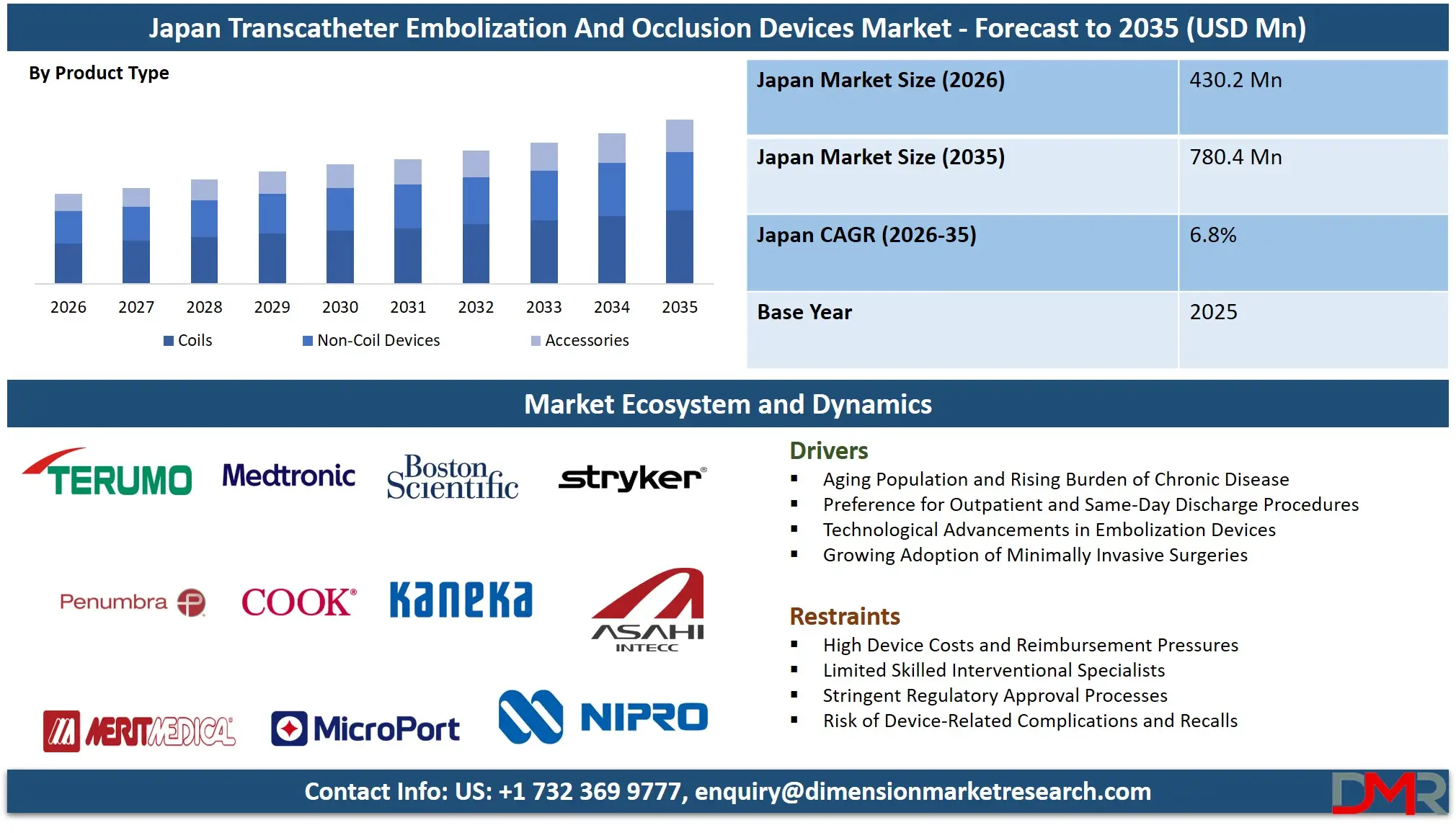
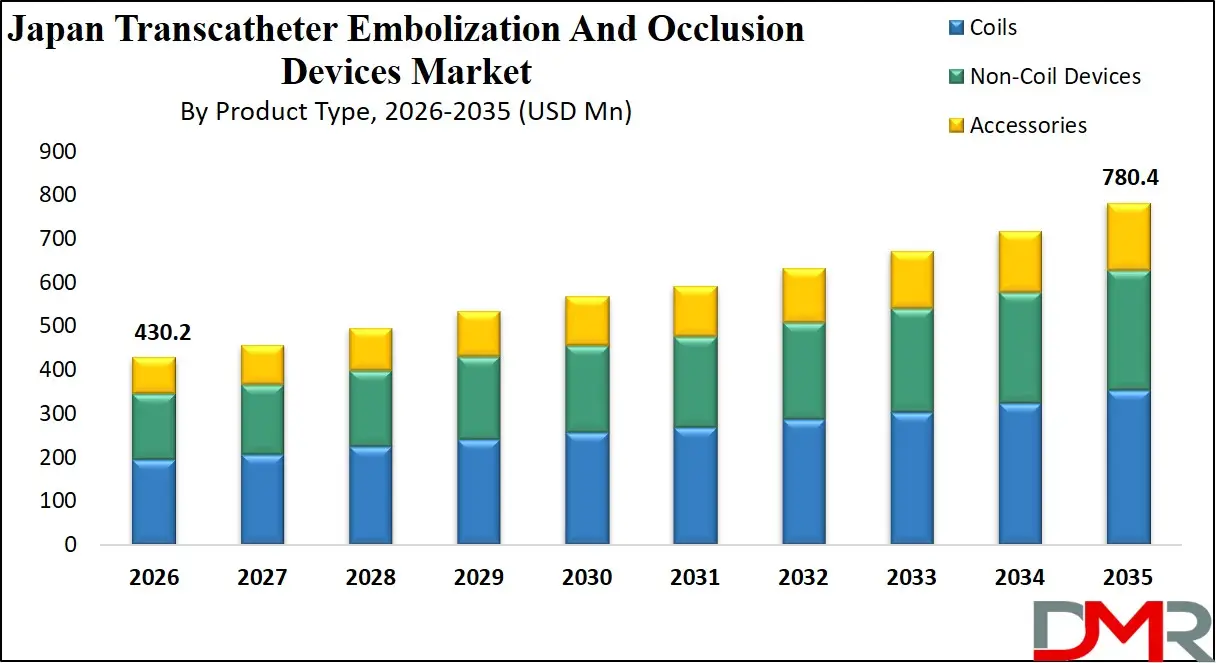
The Japan Transcatheter Embolization And Occlusion Devices Market size is projected to grow from USD 430.2 million in 2026 to USD 780.4 million in 2035, with a compound annual growth rate (CAGR) of 6.8% during the forecast period from 2026 to 2035.
ℹ
To learn more about this report –
Download Your Free Sample Report Here
A transcatheter embolization or occlusion device is a minimally invasive medical device which is intended to stop or decrease the blood flow in certain target vessels. On the other hand, occlusion devices are used for sealing off vessels and their abnormalities. The market in Japan is growing due to the growing popularity of minimally invasive procedures, image guidance navigation, and discharge on the same day from hospitals in major cities, such as Tokyo, Osaka, and Nagoya.
Moreover, the increasing incidences of hepatocellular carcinoma and cerebral aneurysm, aging population, and robotic angiography technology in Japan are also contributing factors to the market growth. Furthermore, along with the stringent regulations of MHLW in Japan regarding device safety, biocompatibility, and effectiveness in neurovascular coiling and tumor embolization, detachable coil usage, flow diverting techniques, and liquid embolic systems are becoming popular in Japan.
ℹ
To learn more about this report –
Download Your Free Sample Report Here
Japan Transcatheter Embolization And Occlusion Devices Market: Key Takeaways & Other Influencing Factors
- Market Size Insights: The Japan Transcatheter Embolization And Occlusion Devices Market is predicted to gain up to USD 780.4 million by 2035, up from USD 430.2 million in 2026, at a growth rate (CAGR) of 6.8% during the forecast period.
- Coils Leading Product Type: Coils account for nearly 48.5% of the share in the product type segmentation in 2026, mainly because of the increased usage of coils to treat cerebrovascular aneurysms and peripheral vascular lesions, with detachable coils accounting for more sales than pushable coils.
- Oncology as Primary Application Driver: Oncology application is projected to lead with a nearly 42.1% market share, because of TACE used to treat hepatocellular carcinoma, embolization of hypervascular tumors.
- Hospitals & Clinics Leading End-User: The end-user of embolization devices with a highest maximum share is hospitals & clinics at around 73.8%, mainly due to the presence of interventional radiology suite facilities and stroke centers in tertiary care hospitals.
- Improvement in Precision and Imaging: More than 60% of the embolizations in Japan utilize fusion imaging (CT/fluoroscopy) and AI-based vessel navigation system for interventional procedure, creating a high demand for advanced occlusion devices, resulting in lower fluoroscopy time and higher particle accuracy in delivery.
- Infrastructure Scale (MHLW): Number of hospitals with dedicated interventional radiology suites – 1,450, embolization cases/year - 215,000, interventional operations/hour per year – 8.2 million, and number of hybrid ORs (new) - 22 by 2030.
- Digital Adoption (JRS): 58% of interventional radiology departments are equipped with AI-assisted treatment planning software for embolization, and 16.5% of occlusion procedures utilize cloud-based procedural analytics, representing a fast-growing trend toward smart, data-driven interventions.
Impact of the Iran conflict on the Japan Transcatheter Embolization And Occlusion Devices Market
The conflict in Iran is driving up costs through global logistics and higher energy prices, hence driving up the costs of medical-grade metals (such as platinum and nitinol) and polymer parts in Japan. The need, however, will still remain high because the country has plans to expand minimally invasive procedures for its elderly population, thus making the use of domestic production of bio-resorbable polymers and occlusion devices necessary.
Japan Transcatheter Embolization And Occlusion Devices Market: Use Cases
- TACE for Hepatocellular Carcinoma: Detachable coils and embolization particles are employed in transcatheter arterial chemoembolization treatments within Japan's cancer hospitals for selective occlusion of tumor-supplying blood vessels, thereby enhancing local chemotherapy and diminishing adverse effects on other body systems.
- Cerebral Aneurysm Coiling: Pushable coils and detachable coils are introduced into neurovascular procedures to occlude both unruptured and ruptured aneurysms of the brain, avoiding surgical brain operations and minimizing ICU hospital stays.
- Uterine Fibroid Embolization (UFE): Embolization particles and liquid embolics are administered to occlude uterine arteries, offering a non-surgical solution to a hysterectomy for patients with symptomatic uterine fibroids, sparing reproductive capacity.
- Peripheral Vascular Malformation Treatment: Flow diverting coils and liquid embolics are incorporated in peripheral vascular interventions for occlusion of arteriovenous malformations and incompetent veins, yielding favorable results with high accuracy and low reoccurrence rate.
Japan Transcatheter Embolization And Occlusion Devices Market: Market Dynamics
Driving Factors in the Japan Transcatheter Embolization And Occlusion Devices Market
Aging Population and Rising Burden of Chronic Disease
Born from a society where elders make up more than any other nation, Japan sees growing numbers of liver cancer, brain aneurysms, and circulation problems in limbs. Because of this shift, doctors lean toward minimally invasive embolization and occlusion procedures that offer shorter recovery and lower complication rates compared to open surgery.
Preference for Outpatient and Same-Day Discharge Procedures
Healthcare facilities in Japan are increasingly embracing transcatheter embolizations in outpatient and day-discharge settings in order to minimize hospital costs and the number of occupied beds. Consequently, there is a growing need for effective, fast deployment and safe occlusion devices.
Restraints in the Japan Transcatheter Embolization And Occlusion Devices Market
High Device Costs and Reimbursement Pressures
Advanced detachable coils, flow diverters, and liquid embolics carry high per-unit costs. Japan's strict reimbursement framework under the national health insurance system can limit hospital margins, potentially delaying adoption of next-generation devices in smaller institutions.
Limited Skilled Interventional Specialists
While Japan does have excellent infrastructure for endovascular procedures, there still is not a large number of board-certified interventional radiologists and neurointerventionists practicing in the country. Shortage of skills could prevent the application of more complicated techniques.
Opportunities in the Japan Transcatheter Embolization And Occlusion Devices Market
Development of Bio-resorbable and Drug-Eluting Occlusion Devices
Growing interest in temporary embolization and vessel scaffolding is creating opportunities for bio-resorbable polymers and drug-eluting embolic agents. These innovations can reduce long-term foreign body reactions and enable targeted drug delivery, with strong R&D support from Japanese academic centers.
Expansion of Hybrid Interventional Suites and Robotics-Assisted Navigation
With the growing adoption of hybrid operating rooms and robotic angiography systems, opportunities have emerged within the market space. Procedural planning through cloud computing and intelligent catheter navigation through artificial intelligence are improving the accuracy of coils and particle delivery, thereby demanding embolization devices.
Trends in the Japan Transcatheter Embolization And Occlusion Devices Market
Use of AI-Assisted Vessel Mapping and 3D Fusion Guidance
There has been an increasing inclination towards using vessel segmentation by AI and 3D image fusion for the purposes of embolization, which allows for better targeting of vessels, lower radiation doses, and complete occlusion in difficult vascular structures.
Implementation of Real-Time Procedural Analytics
Interventional departments are becoming digital, with operations including real-time fluoroscopy analytics, coil count tracking, and complication prediction using machine learning. These technologies are being integrated with embolization devices to achieve better procedure efficiency, reduced contrast volume, and predictive safety alerts.
Japan Transcatheter Embolization And Occlusion Devices Market: Research Scope and Analysis
By Product Type Analysis
The Japan transcatheter embolization and occlusion devices market is dominated by coils, which occupy approximately 48.5% of the market in 2026 because of their extensive application in cerebral aneurysm coiling and peripheral embolization. Detachable coils hold the larger sub-segment due to their precise deployment and repositionability, followed by pushable coils. Non-coil devices, including flow diverters, embolization particles, and liquid embolics, are growing rapidly in oncology and vascular malformation treatments. Accessories such as microcatheters and guidewires represent a steady support segment. Constant innovation in bio-resorbable and hydrogel-coated coils is further contributing to the evolution of the Japanese market.
By Material Composition Analysis
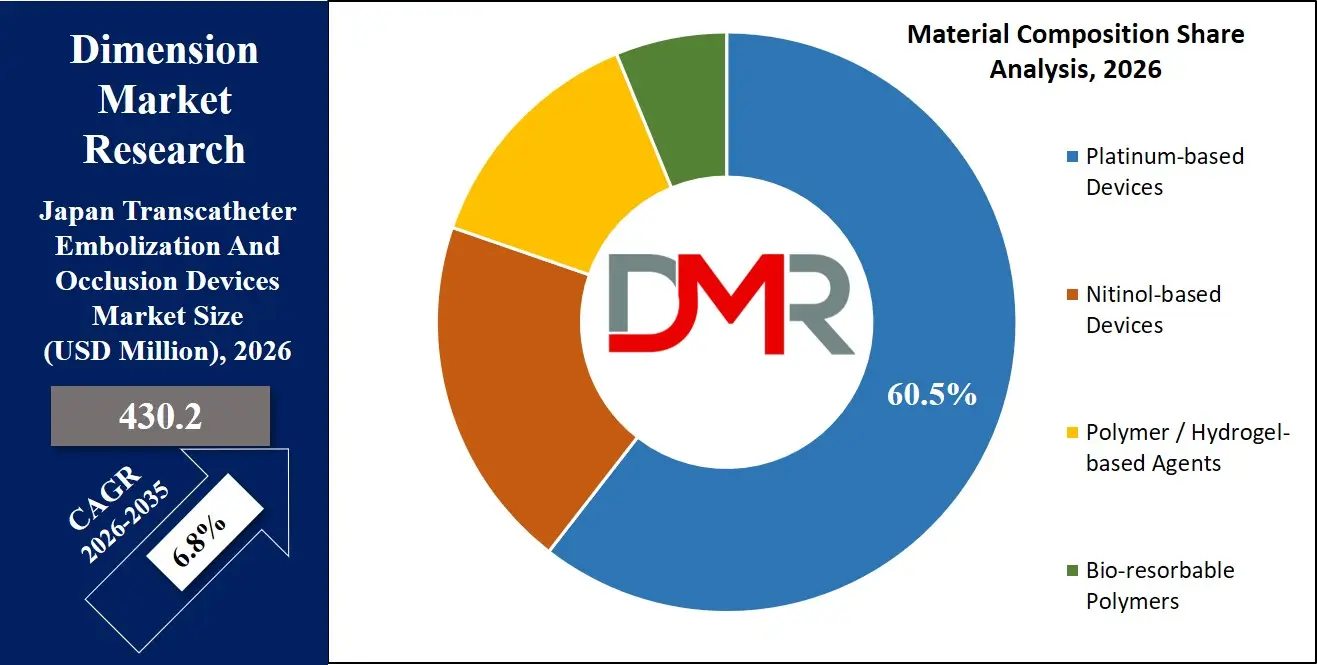
Platinum-based devices occupy leading position with a market share of about 60.5% in 2026, owing to their radiopacity, biocompatibility, and clinical history in coils and flow diverters. Nitinol-based devices are frequently utilized in self-expandable occluders and flow diverters because of their superelasticity.
ℹ
To learn more about this report –
Download Your Free Sample Report Here
Devices based on polymer/hydrogel are becoming popular in tumor embolizations and uterine fibroid embolizations. Biodegradable polymers constitute a minor portion of the market but signify the rising trend of the upcoming generation.
By Application Analysis
The oncology segment is projected to account for approximately 42.1% of the market share in 2026 owing to a large number of TACE procedures performed in the treatment of hepatocellular carcinoma and embolization of metastatic liver tumors. Applications of peripheral vascular diseases such as arteriovenous malformations and varicocele embolization constitute a considerable share. Neurology segment shows the highest growth rate owing to rising diagnosis of unruptured cerebral aneurysms.
By End User Analysis
The hospital and clinic segment holds the largest market share, representing about 73.8% in 2026 due to the high availability of interventional radiology units and stroke care units. Ambulatory surgery centers are witnessing steady growth because of the transition to ambulatory embolization for uterine fibroids and peripheral vascular disease. Other end-users include academic research hospitals and cancer treatment centers. The continuous development and installation of hybrid operating theaters and interventional robots at top Japanese medical facilities will ensure that the hospitals and clinics segment maintains its dominance during the forecast period.
The Japan Transcatheter Embolization And Occlusion Devices Market Report is segmented on the basis of the following:
By Product Type
- Coils
- Pushable Coils
- Detachable Coils
- Non-Coil Devices
- Flow Diverting Devices
- Embolization Particles
- Liquid Embolics
- Other Non-Coil Devices
- Accessories
By Material Composition
- Platinum-based Devices
- Nitinol-based Devices
- Polymer / Hydrogel-based Agents
- Bio-resorbable Polymers
By Application
- Oncology
- Peripheral Vascular Disease
- Neurology
- Urology
- Others
By End User
- Hospitals & Clinics
- Ambulatory Surgical Centers
- Others
Impact of Artificial Intelligence in the Japan Transcatheter Embolization And Occlusion Devices Market
Artificial intelligence is transforming the Japan transcatheter embolization and occlusion devices market, as it now enables AI-based vessel segmentation, optimal catheter path planning, and real-time fluoroscopic anomaly detection during embolization procedures. These AI-based technologies minimize non-target embolization risk, reduce contrast medium usage, and shorten procedure time. Collaborative robotic navigation has also been used in combination with AI to enhance precision, coil packing density, and operational efficiency in highly complex Japanese interventional cases.
Moreover, AI supports predictive analysis of device wear (e.g., detachment handle performance) and remote procedural fleet monitoring based on continuous operational data to reduce unplanned equipment downtime, improve scheduling of preventative maintenance, and enhance the overall safety and scalability of transcatheter embolization procedures.
Japan Transcatheter Embolization And Occlusion Devices Market: Competitive Landscape
The Japan transcatheter embolization and occlusion devices market exhibits moderate to high consolidation, with market leaders including Terumo Corporation, Medtronic plc, and Boston Scientific Corporation supplying a broad array of products such as embolization coils, flow diverters, liquid embolic agents, and delivery devices. Competitive advantage among the firms is gained via technology advancement, delivery accuracy, and product effectiveness, as well as integration of embolization products.
ℹ
To learn more about this report –
Download Your Free Sample Report Here
The market is characterized by high demand from large metropolitan intervention centers, where performance of procedures, patient outcomes, and compatibility with imaging systems are considered crucial factors for decision making, besides competition based on product portfolio, cost advantages, and developments in bioactive and bioresorbable materials.
Some of the prominent players in the Japan Transcatheter Embolization And Occlusion Devices Market are:
- Terumo Corporation (MicroVention)
- Medtronic plc
- Boston Scientific Corporation
- Stryker Corporation
- Penumbra Inc.
- Kaneka Corporation
- Cook Medical
- Johnson & Johnson (Cerenovus)
- Merit Medical Systems
- Abbott Laboratories
- B. Braun Melsungen
- Cardinal Health Inc.
- Asahi Intecc Co., Ltd.
- Nipro Corporation
- MicroPort Scientific Corporation
- W. L. Gore & Associates
- Edwards Lifesciences
- Phenox GmbH
- Medikit Co., Ltd.
- Other Key Players
Recent Developments in the Japan Transcatheter Embolization And Occlusion Devices Market
- January 2026: Medtronic plc made an announcement regarding the acquisition of neurovascular firm Scientia Vascular to enhance its presence in access catheters and embolization technologies.
- October 2025: Terumo Corporation collaborated with Geisinger Terumo Corporation to improve its stroke treatment services and innovations within neurovascular field with a focus on minimally invasive treatment techniques such as embolization therapy.
- January 2025: Stryker Corporation acquired Inari Medical for around USD 4.9 billion to expand its reach in thromboembolism and vascular treatments along with neurovascular and embolization treatments.
Report Details
| Report Characteristics |
| Market Size (2026) |
USD 430.2 Mn |
| Forecast Value (2035) |
USD 780.4 Mn |
| CAGR (2026–2035) |
6.8% |
| Historical Data |
2021 – 2025 |
| Forecast Data |
2027 – 2035 |
| Base Year |
2025 |
| Estimate Year |
2026 |
| Report Coverage |
Market Revenue Estimation, Market Dynamics, Competitive Landscape, Growth Factors and etc. |
| Segments Covered |
By Product Type (Coils, Non-Coil Devices, Accessories), By Material Composition (Platinum-based Devices, Nitinol-based Devices, Polymer / Hydrogel-based Agents, Bio-resorbable Polymers), By Application (Oncology, Peripheral Vascular Disease, Neurology, Urology, Others), By End User (Hospitals & Clinics, Ambulatory Surgical Centers, Others) |
| Country Coverage |
Japan |
| Prominent Players |
Terumo Corporation (MicroVention), Medtronic plc, Boston Scientific Corporation, Stryker Corporation, Penumbra Inc., Kaneka Corporation, Cook Medical, Johnson & Johnson (Cerenovus), Merit Medical Systems, Abbott Laboratories, B. Braun Melsungen, Cardinal Health Inc., Asahi Intecc Co., Ltd., Nipro Corporation, MicroPort Scientific Corporation, W. L. Gore & Associates, Edwards Lifesciences, phenox GmbH, Medikit Co., Ltd., and Other Key Players |
| Purchase Options |
We have three licenses to opt for: Single User License (Limited to 1 user), Multi-User License (Up to 5 Users), and Corporate Use License (Unlimited User) along with free report customization equivalent to 0 analyst working days, 3 analysts working days and 5 analysts working days respectively. |
Frequently Asked Questions
How big is the Japan Transcatheter Embolization And Occlusion Devices Market?
▾ The Japan Transcatheter Embolization And Occlusion Devices Market size is estimated to have a value of USD 430.2 million in 2026 and is expected to reach USD 780.4 million by the end of 2035.
What is the growth rate in the Japan Transcatheter Embolization And Occlusion Devices Market in 2026?
▾ The market is growing at a CAGR of 6.8% over the forecasted period of 2026.
Who are the key players in the Japan Transcatheter Embolization And Occlusion Devices Market?
▾ Some of the major key players in the Japan Transcatheter Embolization And Occlusion Devices Market are Terumo Corporation, Medtronic plc, Boston Scientific Corporation, Stryker Corporation, Penumbra Inc., Johnson & Johnson, and many others.