Market Overview
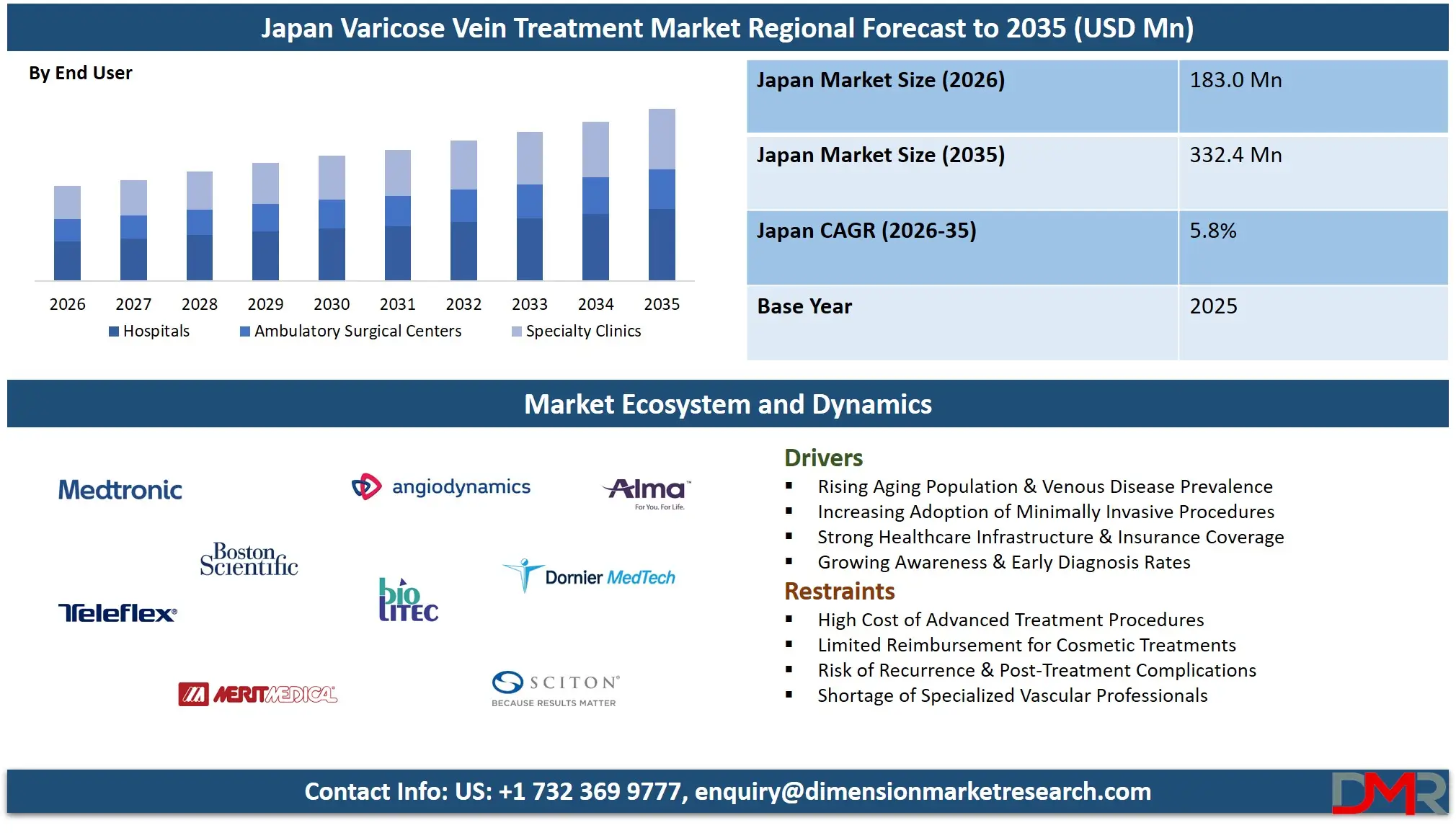
The Japan Varicose Vein Treatment Market is projected to reach USD 183.0 million in 2026 and grow at a compound annual growth rate of 5.8%, reaching USD 332.4 million by 2035.
ℹ
To learn more about this report –
Download Your Free Sample Report Here
Varicose veins treatment methods denote several types of procedures that involve treatment of abnormally enlarged and twisted veins due to venous insufficiency through means such as endovascular laser treatments, radiofrequency ablation, sclerotherapy and surgery in order to promote proper blood flow, alleviate symptoms of pain, swelling, fatigue and heavy legs while ensuring overall vascular wellness.
The varicose vein treatment market in Japan is characterized by an advanced and dynamic healthcare sector owing to its increasing geriatric population base, high incidence rate of venous disorders, rising popularity of outpatient vein treatment solutions, robust medical facilities, supportive healthcare reimbursement policies, growing need for cosmetic vein repair services, and technological developments in laser-based devices and catheters among other treatment tools for vascular diseases.
ℹ
To learn more about this report –
Download Your Free Sample Report Here
Japan Varicose Vein Treatment Market: Key Takeaways and Other Influencing Factors
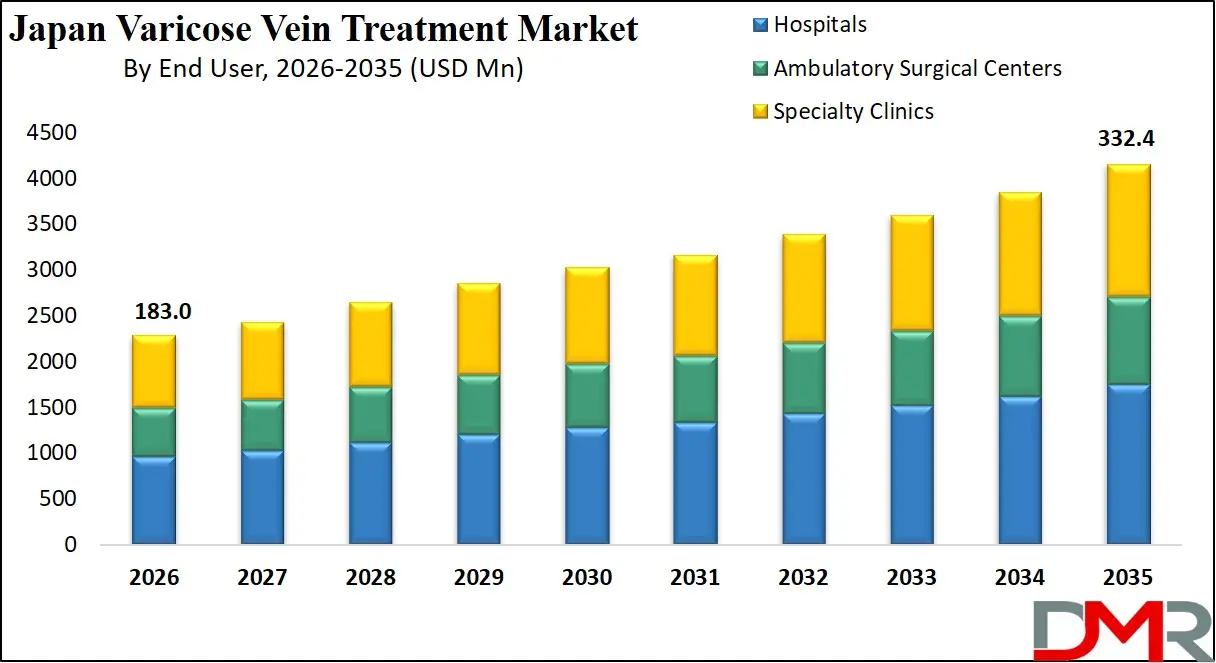
- Strong Market Growth Outlook: The market is set to grow from USD 183.0 million in 2026 to USD 332.4 million by 2035, reflecting steady expansion supported by increasing treatment adoption and healthcare advancements.
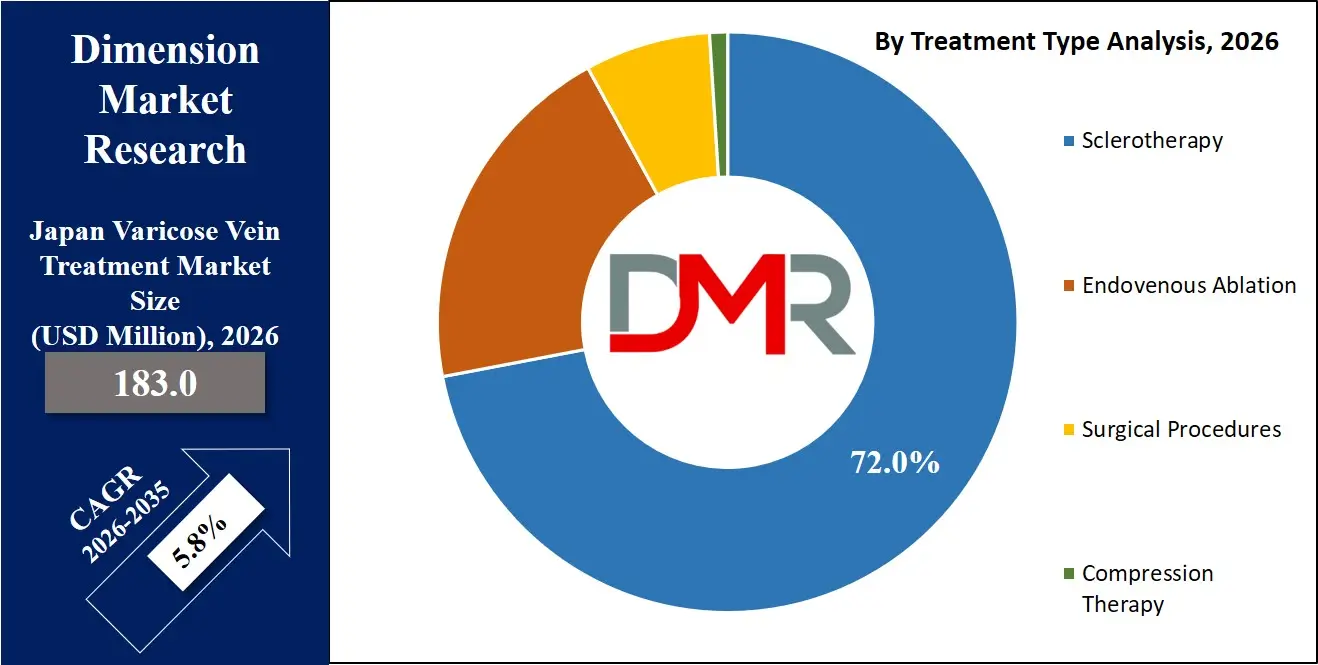
- Dominance of Sclerotherapy Segment: Sclerotherapy leads with 72.0% market share in 2026, driven by its cost effectiveness, outpatient suitability, and high preference for cosmetic vein treatment.
- Hospitals Leading End User Segment: Hospitals account for 42.0% share in 2026 due to advanced infrastructure, availability of specialists, and higher procedural capacity for complex vein treatments.
- Rising Shift toward Minimally Invasive Procedures: Growing adoption of endovenous ablation and non surgical treatments is accelerating market growth, supported by faster recovery and improved clinical outcomes.
- Aging Population Driving Demand (Source: Ministry of Internal Affairs and Communications, Japan): Japan's elderly population reached 36.25 million in 2024, accounting for 29.3% of the total population, significantly increasing demand for vascular treatments.
- Increasing Longevity Trends (Source: Ministry of Health, Labour and Welfare, Japan): Japan recorded nearly 99,763 centenarians in 2025, highlighting rising life expectancy and long term demand for chronic venous insufficiency management.
- High Median Age Impact (Source: Government of Japan Statistics Bureau): Japan's median age reached 49.5 years in 2023, indicating a rapidly aging society and sustained need for varicose vein treatment solutions.
Japan Varicose Vein Treatment Market: Use Cases
- Chronic Venous Insufficiency Management: Used to improve blood circulation and reduce venous reflux through minimally invasive procedures like endovenous ablation, helping relieve pain and swelling.
- Cosmetic Vein Correction: Applied for removal of spider veins and visible varicose veins using sclerotherapy and laser treatment for better aesthetic appearance.
- Geriatric Care Applications: Widely used among the aging population in Japan to manage vein disorders, leg fatigue, and mobility related vascular issues.
- Outpatient Minimally Invasive Procedures: Adopted in ambulatory and specialty clinics for quick, non-surgical vein treatment with shorter recovery time and improved patient convenience.
Impact of Iran Conflict on the Japan Varicose Vein Treatment Market
The Iran conflict has led to disruptions in global supply chains and rising energy costs, increasing the overall cost of medical devices and consumables used in varicose vein treatments in Japan. Japan's reliance on Middle Eastern energy imports has further elevated operational expenses for hospitals and specialty clinics, impacting treatment affordability. Shortages of petrochemical based materials have affected the availability of essential vascular treatment supplies such as catheters and syringes. Additionally, logistics delays and trade uncertainties are slowing down equipment procurement, creating short-term challenges for market growth and service delivery.
Japan Varicose Vein Treatment Market: Market Dynamics
Driving Factors in the Japan Varicose Vein Treatment Market
Rising Aging Population and Venous Disorder Prevalence
Japan's rapidly aging population is increasing the incidence of chronic venous insufficiency and related vein disorders, driving demand for advanced varicose vein treatment solutions. Higher awareness of symptoms such as leg pain, swelling, and vascular complications is encouraging early diagnosis and adoption of minimally invasive procedures.
Technological Advancements in Minimally Invasive Therapies
Continuous innovation in endovenous laser therapy, radiofrequency ablation, and catheter based treatments is improving clinical outcomes and reducing recovery time. The availability of advanced vascular devices and outpatient vein treatment options is accelerating adoption across hospitals and specialty clinics.
Restraints in the Japan Varicose Vein Treatment Market
High Cost of Advanced Treatment Procedures
The cost of laser based vein treatment and modern ablation techniques remains relatively high, limiting accessibility for some patient groups. Expenses related to specialized equipment and skilled professionals also impact overall treatment affordability.
Limited Coverage for Cosmetic Procedures
While medically necessary treatments are supported, cosmetic vein removal procedures such as spider vein treatment often receive limited reimbursement. This restricts demand in the aesthetic segment of the varicose vein treatment market.
Opportunities in the Japan Varicose Vein Treatment Market
Expansion of Outpatient and Ambulatory Care Services
The shift toward ambulatory surgical centers and specialty clinics is creating growth opportunities for non surgical vein treatment. Increasing preference for day care procedures and faster recovery is supporting market expansion.
Growing Demand for Aesthetic and Preventive Care
Rising focus on cosmetic dermatology and preventive vascular care is boosting demand for sclerotherapy and laser vein removal. Increasing consumer awareness and lifestyle changes are further supporting this trend.
Trends in the Japan Varicose Vein Treatment Market
Shift Toward Non-Surgical and Image Guided Procedures
There is a strong trend toward ultrasound guided sclerotherapy and minimally invasive vein ablation techniques. These approaches offer improved precision, reduced complications, and enhanced patient outcomes.
Integration of Advanced Medical Devices and Laser Technologies
The adoption of next generation laser systems, radiofrequency devices, and catheter technologies is transforming vein treatment practices. Continuous innovation is enabling safer procedures, higher success rates, and improved patient experience.
Japan Varicose Vein Treatment Market: Research Scope and Analysis
By Treatment Type Analysis
Sclerotherapy is anticipated to dominate the treatment type segment in Japan, capturing 72.0% of the total market share in 2026 due to its cost-effectiveness, ease of administration, and strong clinical preference for treating spider veins and smaller varicose veins in outpatient settings. The procedure's minimally invasive nature, quick recovery time, and growing demand for aesthetic vein correction further support its widespread adoption across specialty clinics.
ℹ
To learn more about this report –
Download Your Free Sample Report Here
In contrast, endovenous ablation is gaining steady traction as an advanced treatment option, particularly for larger and more complex vein conditions, supported by increasing use of laser and radiofrequency technologies. Although it holds a smaller share compared to sclerotherapy, its higher precision, long-term effectiveness, and ability to treat chronic venous insufficiency are driving its adoption in hospitals and advanced care centers across Japan.
By End User Analysis
Hospitals are anticipated to dominate the end user segment in Japan, capturing 42.0% of the total market share in 2026 due to their advanced medical infrastructure, availability of skilled vascular specialists, and ability to manage complex varicose vein cases using technologies such as endovenous ablation and surgical interventions. Their strong reimbursement support and access to comprehensive diagnostic facilities further strengthen their leading position. Meanwhile, specialty clinics are emerging as a significant segment driven by the growing preference for outpatient vein treatment, particularly for minimally invasive procedures like sclerotherapy and laser therapy. These clinics offer faster treatment, shorter waiting times, and a more patient focused approach, making them increasingly popular for both medical and cosmetic vein treatments in Japan.
The Japan Varicose Vein Treatment Market Report is segmented on the basis of the following:
By Treatment Type
- Endovenous Ablation
- Sclerotherapy
- Surgical Procedures
- Compression Therapy
By End User
- Hospitals
- Ambulatory Surgical Centers
- Specialty Clinics
Impact of Artificial Intelligence on the Japan Varicose Vein Treatment Market
The artificial intelligence sector is helping to grow the Japan varicose veins treatment industry through the provision of effective imaging for diagnosis and AI-driven ultrasounds systems for diagnosis purposes. AI aids in the improvement of treatment methods through the use of minimally invasive treatments such as endovenous ablation. Analyzing patient's conditions and treatment history through AI-driven analytics is essential in personalizing vein treatment.
The automation process within hospitals and medical centers makes the procedures more efficient. There are even predictions made through the use of analytics tools which can predict the likelihood of recurrence and its effects.
Japan Varicose Vein Treatment Market: Competitive Landscape
The Japan varicose vein treatment market is moderately consolidated with a mix of global medical device manufacturers and domestic healthcare providers competing on advanced minimally invasive technologies and treatment outcomes. Companies focus on innovation in laser based systems, radiofrequency ablation, and sclerotherapy solutions to strengthen their market position and expand clinical adoption. Strategic collaborations, product upgrades, and expansion of outpatient treatment services are key approaches driving competition and market growth.
ℹ
To learn more about this report –
Download Your Free Sample Report Here
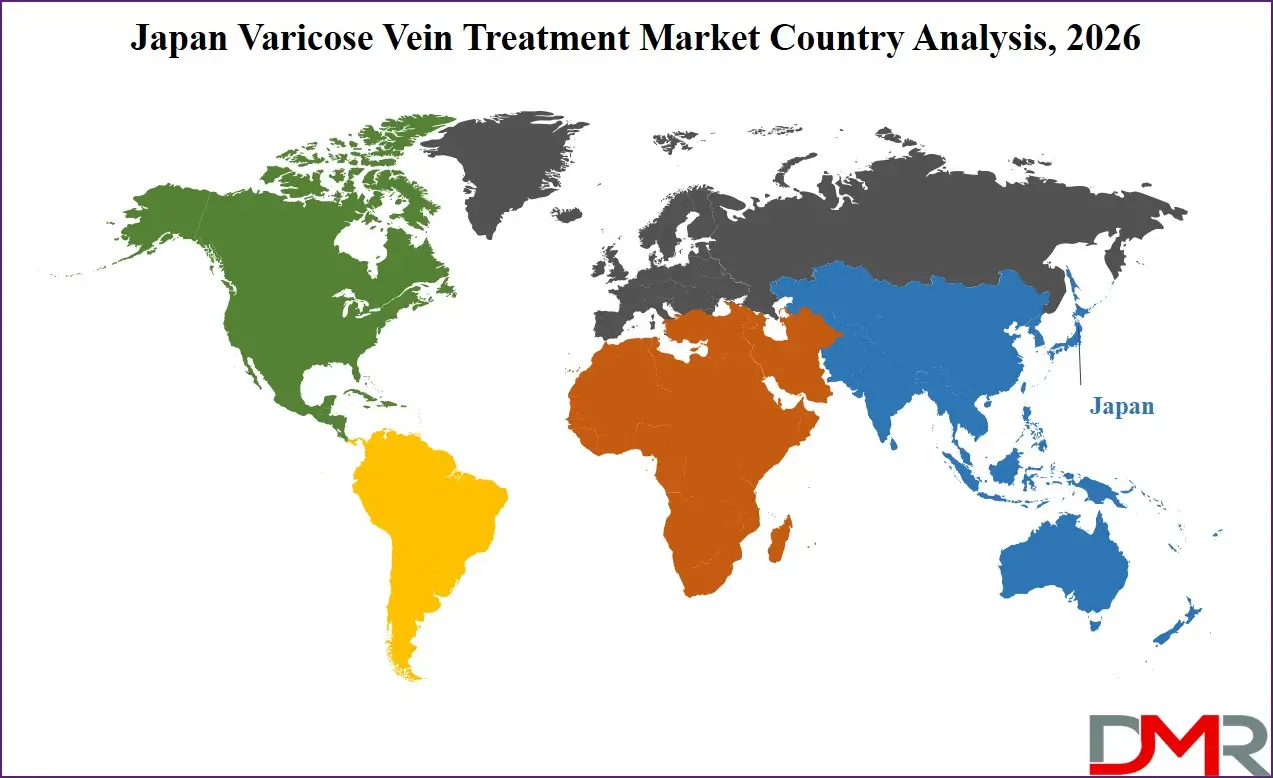
Some of the prominent players in the Japan Varicose Vein Treatment Market are:
- Medtronic Plc
- Boston Scientific Corporation
- Teleflex Incorporated
- Merit Medical Systems, Inc.
- AngioDynamics, Inc.
- Biolitec AG
- Alma Lasers Ltd.
- Dornier MedTech GmbH
- Sciton, Inc.
- Becton, Dickinson and Company
- BTG Limited
- Candela Medical
- Lumenis Ltd.
- Fotona d.o.o.
- Quanta System S.p.A.
- Won Tech Co., Ltd.
- Eufoton S.R.L.
- Theraclion S.A.
- Invera Medical Ltd.
- Chemische Fabrik Kreussler & Co. GmbH
- Other Key Players
Recent Developments in the Japan Varicose Vein Treatment Market
- January 2026: InterVene announced the first patient treatment using its Recana thrombectomy catheter system, a next generation venous device designed to address complex vein obstructions and improve minimally invasive vascular treatment outcomes.
- October 2025: Olympus Corporation launched its THUNDERBEAT II advanced energy device with vessel sealing capabilities, supporting improved surgical efficiency and precision in vascular and vein related procedures.
Report Details
| Report Characteristics |
| Market Size (2026) |
USD 183.0 Mn |
| Forecast Value (2035) |
USD 332.4 Mn |
| CAGR (2026–2035) |
5.8% |
| Historical Data |
2021 – 2025 |
| Forecast Data |
2027 – 2035 |
| Base Year |
2025 |
| Estimate Year |
2026 |
| Report Coverage |
Market Revenue Estimation, Market Dynamics, Competitive Landscape, Growth Factors and etc. |
| Segments Covered |
By Treatment Type (Endovenous Ablation, Sclerotherapy, Surgical Procedures, Compression Therapy), and By End User (Hospitals, Ambulatory Surgical Centers, Specialty Clinics) |
| Country Coverage |
Japan |
| Prominent Players |
Medtronic Plc, Boston Scientific Corporation, Teleflex Incorporated, Merit Medical Systems Inc., AngioDynamics Inc., Biolitec AG, Alma Lasers Ltd., Dornier MedTech GmbH, Sciton Inc., Becton Dickinson and Company, BTG Limited, Candela Medical, Lumenis Ltd., Fotona d.o.o., Quanta System S.p.A., Won Tech Co. Ltd., Eufoton S.R.L., Theraclion S.A., Invera Medical Ltd., Chemische Fabrik Kreussler & Co. GmbH, and Other Key Players |
| Purchase Options |
We have three licenses to opt for: Single User License (Limited to 1 user), Multi-User License (Up to 5 Users) and Corporate Use License (Unlimited User) along with free report customization equivalent to 0 analyst working days, 3 analysts working days and 5 analysts working days respectively. |
Frequently Asked Questions
How big is the Japan Varicose Vein Treatment Market?
▾ The Japan Varicose Vein Treatment Market size is estimated to have a value of USD 183.0 million in 2026 and is expected to reach USD 332.4 million by the end of 2035.
What is the growth rate in the Japan Varicose Vein Treatment Market in 2026?
▾ The market is growing at a CAGR of 5.8% over the forecasted period of 2026.
Who are the key players in the Japan Varicose Vein Treatment Market?
▾ Some of the major key players in the Japan Varicose Vein Treatment Market are Medtronic Plc, Boston Scientific Corporation, Teleflex Incorporated, Merit Medical Systems Inc., AngioDynamics Inc., Biolitec AG, Alma Lasers Ltd., Dornier MedTech GmbH, Sciton Inc., Becton Dickinson and Company, BTG Limited, Candela Medical, Lumenis Ltd., and many others.