What is the Japan Wearable Technology Market Size?
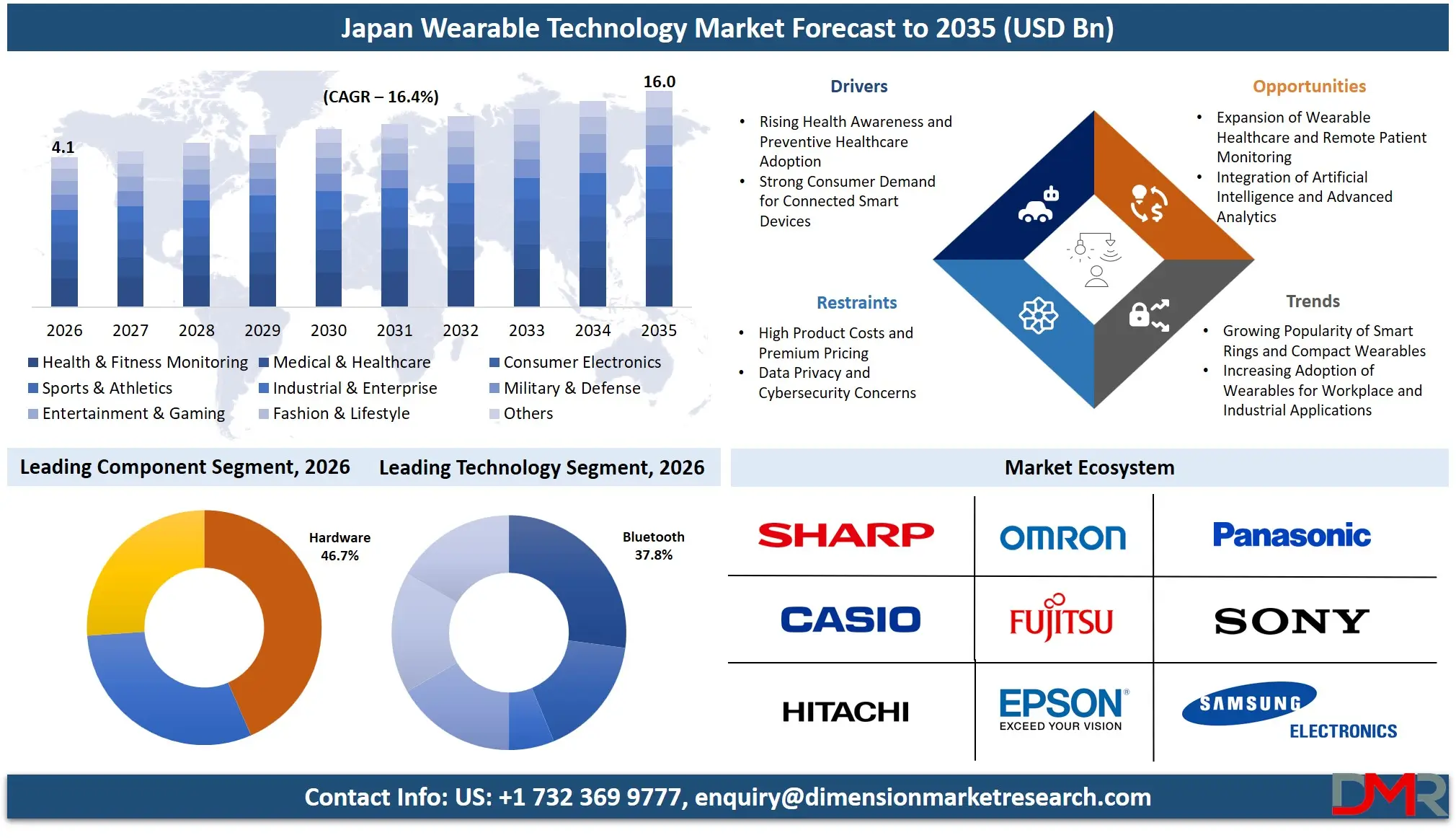
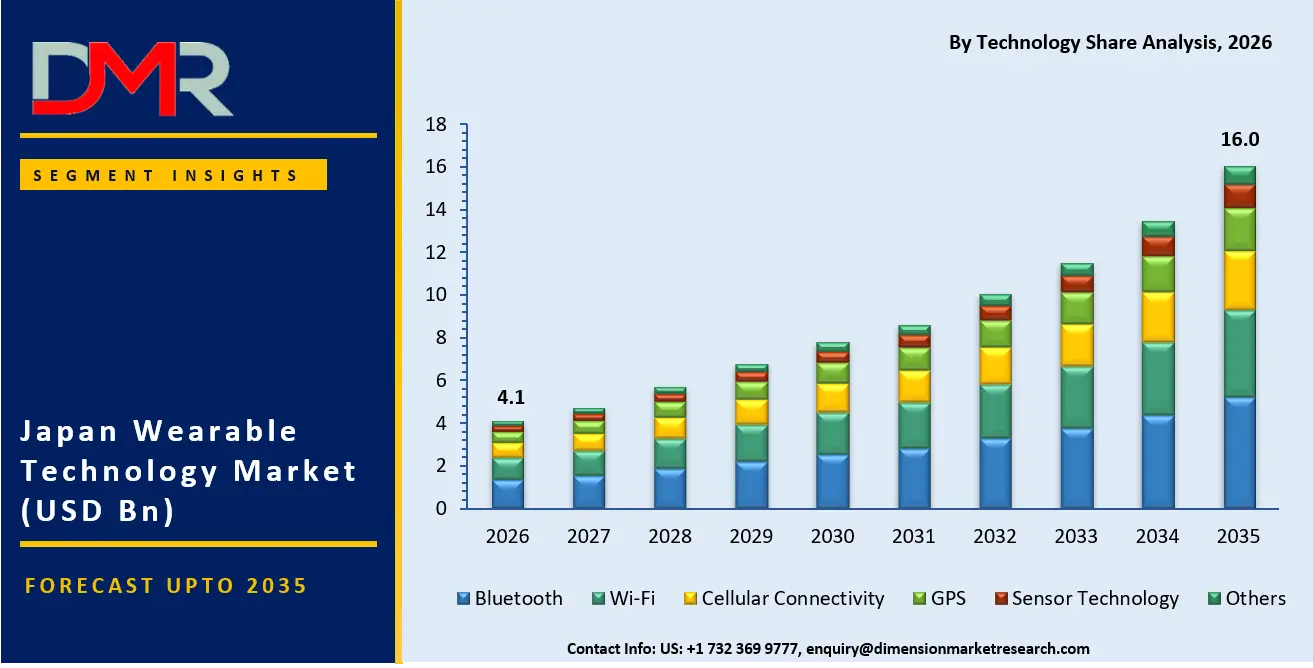
The Japan Wearable Technology Market is expected to reach a value of USD 4.1 billion in 2026, and it is further anticipated to reach USD 16.0 billion by 2035, growing at a CAGR of 16.4% during the forecast period.
ℹ
To learn more about this report –
Download Your Free Sample Report Here
The market of wearable technology in Japan has grown immensely in recent years with the aging population in the country and a drive for digital transformation (DX). This includes devices such as smartwatches, fitness bands, medical wearables, and even smart clothing that have been developed specifically to work alongside the sophisticated network infrastructure of the country. Growing needs for remote monitoring, self-quantification, and industrial safety necessitate smaller sensor technologies and low-energy chips. Individual consumers and healthcare practitioners are major end users of the technology, while the most widely adopted devices include smart earbuds and smartwatches because of their ability to make mobile payments and monitor physiological readings. Healthcare, consumer electronic goods, and industrial/enterprise markets are important segments, as they need accurate biometric tracking and secure information transfer.
ℹ
To learn more about this report –
Download Your Free Sample Report Here
Key Takeaways
- Market Size & Forecast: The Japan Wearable Technology market is projected to reach USD 4.1 billion in 2026, expanding significantly to USD 16.0 billion by 2035, fueled by the dual drivers of an aging population requiring remote geriatric care and the enterprise shift toward augmented workforce connectivity.
- Growth Rate & Outlook: Market growth is expected at a CAGR of 16.4%, due to the vital introduction of edge-based AI processors in hearables and the increasing consumer preference for preventive wellness and analysis of their sleep cycles.
- Primary Growth Drivers: These factors comprise the transition from reactive hospital visits to proactive remote health monitoring using wearables, the necessity for haptic feedback solutions in industries, and the introduction of contactless payment SoCs into smart rings and smartwatches.
- Key Market Trends: Some of the important trends in the market are the adoption of hearable computers, non-invasive glucose monitors using sensors, and the use of advanced materials in smart clothing for muscle oxygen and posture monitoring in the sports & athletics category.
- By Product Analysis: Smartwatches and wrist communicators have gained popularity because of their ability to perform call services without LTE services and also act as disaster alert systems. However, smart rings are experiencing rapid growth since business professionals in Japan are looking for discrete ways of corporate identity through smartwear technology.
- By Application Analysis: The highest revenue-generating categories in the market are medical & healthcare and health & fitness monitoring categories due to the presence of universal health care in Japan, which aims at improving telehealth. The category growing rapidly is Industrial & Enterprise due to the use of exoskeletons and AR smartglasses in factories.
What is the Wearable Technology?
Wearable technology means electronic equipment that can be worn by people and allows for the monitoring, collection, and transfer of data in real-time. This type of equipment combines the features of sophisticated sensors, software, wireless technology, and computing to offer services such as monitoring health, tracking fitness, communication, navigation, and entertainment. Some common examples include smart watches, fitness trackers, smart rings, smart glasses, wearable medical equipment, and wireless headphones. Wearable technology is usually connected with other digital tools such as smartphones and cloud platforms. Artificial intelligence, sensors, and connectivity have made the scope of wearable technology even wider in healthcare, consumer electronics, industry, sports, and defense.
Use Cases
- Geriatric Fall Detection and Medical Security: Insurance providers and municipalities employ wristbands with built-in medical devices containing accelerometers and barometers for quick detection of falls among elderly individuals, notifying first responders of the fall and giving GPS coordinates.
- Industrial Worker Safety Monitoring: Corporations in manufacturing industries leverage smart glasses and wearable sensors for worker monitoring regarding heart rate and ambient heat stress, warning the workers of proximity to dangerous machines using smart wearables.
- Contactless Train Travel and Payments: Trendy wearers use rings and smartwatch straps featuring FeliCa NFC chip technology for entry into trains, making payments at stores, and gaining entrance into their workplace without having a smartphone on them.
- Athletic Movement Analysis Optimization: Major sports federations deploy smart clothing that is fitted with strain gauges for the collection of data related to muscle activity and posture, allowing AI-powered training of movements such as swing and stride.
How is AI Transforming the Wearable Technology Market?
The use of AI technologies is rapidly reshaping the wearable technology market of Japan by transitioning from simple logging devices to sophisticated companions that actively engage in improving users' health status. For instance, when it comes to sensor fusion technology, the use of machine learning algorithms allows processing PPG and EDA sensor readings on low-power processors, filtering out motion artifacts and providing heart rate variability analysis at clinical-grade accuracy. In addition to that, AI-assisted predictive analytics used in healthcare software enables wearable devices to forecast any arrhythmic episodes and report them to healthcare professionals.
Generative AI is being integrated into wearable technology for personalizing and enhancing safety applications. Consumer electronics have already incorporated generative AI to enable smart earbuds capable of automatically switching from conversation awareness mode to immersive mode depending on where and what a user is doing. In addition to that, generative AI assistants will be increasingly implemented in AR-enabled smart glasses as assistants that would provide text translations for elderly users who need assistance from non-native speakers, as well as simulate workflow changes for engineers.
Market Dynamics
Key Drivers in the Japan Wearable Technology Market
Rising Health Awareness and Preventive Healthcare Adoption
The increasing emphasis on preventative medicine in Japan has emerged as an important factor driving the uptake of wearables. People in the nation are increasingly relying on wearable products such as smartwatches, fitness bands, and health monitors for purposes such as tracking heart rate, sleeping habits, exercise level, blood oxygen saturation, and stress. The aging population in Japan has increased interest in continuous health monitoring products to ensure better health management. Government efforts to advance healthcare through digital platforms and individual wellness programs have played an important role in fueling the growth of the market. In addition, improved sensor technology and artificial intelligence-driven analysis in wearable products provide accurate health information.
Strong Consumer Demand for Connected Smart Devices
The technologically savvy residents of Japan have displayed great interest in connected and multi-functional gadgets, leading to increased popularity and usage of wearable technology. People today look forward to integration between smartphones, smart home technology, and wearables for better ease and efficiency. Smart watches, smart headphones, and even smart rings provide people with a means of communication, entertainment, making payments, and exercising. With the rapid developments in wireless technology, battery performance, and small-sized electronics, users benefit from improved usability. Also, the high penetration rates of the Internet and smartphones contribute towards higher utilization of wearable technologies.
Restraints in the Japan Wearable Technology Market
High Product Costs and Premium Pricing
Although becoming more widespread, the relatively high price point of cutting-edge wearable technology presents a substantial barrier to growth in Japan. Smart watches, medical sensors, and smart glasses utilize high-end technology such as advanced sensors, powerful chips, and high connectivity capabilities, thus making production and sales more expensive. Although wealthy individuals embrace these devices, financially conservative consumers are likely to think twice about investing in these gadgets. Moreover, medical sensors often demand further investment in software applications. The high-cost model used by many top brands presents additional barriers. Price sensitivity is therefore one of the most notable barriers to entry.
Data Privacy and Cybersecurity Concerns
Sensors installed in wearable devices constantly generate and record sensitive personal information such as biometric indicators, geographical coordinates, and behavioral habits, which raises concerns about the privacy and security of data. Japanese customers realize that cybersecurity threats arise when using IoT technology and cloud services. Any data leak related to health or any other type of personal information will harm consumer trust and prevent adoption. Additionally, there are certain regulatory standards that companies have to follow regarding their compliance with data security issues. With a rise in interconnectivity between various applications, the process of data transfer becomes even more complicated.
Growth Opportunities in the Japan Wearable Technology Market
Expansion of Wearable Healthcare and Remote Patient Monitoring
The rising need for digital health solutions represents a huge opportunity for companies engaged in providing wearable technology in Japan. Wearable technology that can be used to track vitals, chronic conditions, and patient status from afar is becoming an increasingly important solution as healthcare institutions are looking for more efficient ways to deliver care. Given the fact that the country's population is getting older, there is increasing demand for monitoring solutions that help patients avoid hospital visits and achieve better results. Moreover, the combination of wearables with telemedicine services and EHRs provides even more opportunities for companies that operate in this segment.
Integration of Artificial Intelligence and Advanced Analytics
Through advances in artificial intelligence technology, there are new areas of growth being created through a significant improvement in wearable devices' functionalities. The wearable AI will be able to make analyses from large amounts of information related to one's behavior and health conditions. Consumers in Japan are showing more preference towards smart devices that can increase convenience, improve their well-being, and help them work effectively. Machine learning algorithms will allow the device to detect any abnormality within the health of an individual, improve their workout regimen, and facilitate personalization in healthcare management. Other functionalities will include voice recognition and gesture recognition.
Trends in the Japan Wearable Technology Market
Growing Popularity of Smart Rings and Compact Wearables
Another trend that is becoming more popular among consumers in the wearable technology space in Japan is the rising prevalence of smart rings. Consumers have expressed an interest in lightweight and subtle options that would provide the same features provided by smartwatches but without the bulkiness of the latter. Smart rings will allow for the constant monitoring of sleep cycles, heart rates, activity, and general wellness without having to sacrifice ease or style. With improvements in sensor and battery technology, smart rings may prove to be very important in the future for Japanese consumers.
Increasing Adoption of Wearables for Workplace and Industrial Applications
Wearable technology is extending from consumer markets to industrial settings within Japan. Firms are leveraging wearables like smart glasses, wearable sensors, and other IoT-enabled wearables to increase worker productivity, operational efficiencies, and workplace safety. The technology offers real-time information access and remote assistance functionality. Industrial sectors like manufacturing, logistics, healthcare, and field services are incorporating wearables for their digital transformation efforts. Emerging technologies like augmented reality and AI-powered analysis are adding value to industrial applications of wearables. As firms adopt new technologies to improve their processes and workforce management, wearable technology in industrial applications has gained significant attention in Japan.
Research Scope and Analysis
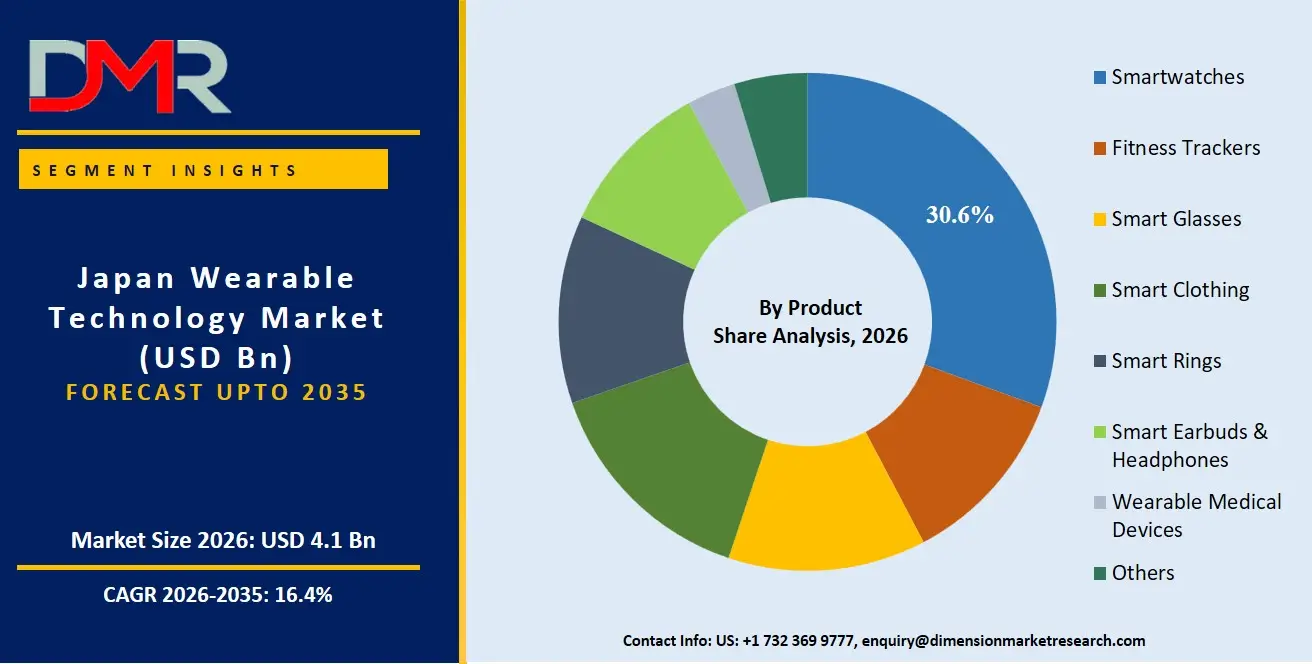
The Japan wearable technology market is segmented by component into hardware, software and services, by product into smartwatches, fitness trackers, smart glasses, smart clothing, smart rings, smart earbuds and medical wearables, by technology, application, distribution channel and end user, including consumers, healthcare providers, enterprises, government agencies and sports organizations.
ℹ
To learn more about this report –
Download Your Free Sample Report Here
By Component Analysis
Hardware is predicted to dominate the wearable technology industry in Japan, as it constitutes the actual building block of all kinds of wearable gadgets, ranging from smartwatches, fitness bands, smart rings, to medical wearables. The Japanese people have a strong preference for technologically innovative devices with excellent durability and accuracy, leading to increased demand for hardware parts. The constant developments in miniature processors, high-tech displays, batteries, and sensors continue to propel hardware to lead the market. Electronics companies also dedicate a large part of their resources towards the development of improved hardware components. Moreover, the rise of health tracking devices and consumer electronics raises the requirement for hardware systems, thus contributing to the lion's share of wearable technology sales revenue.
By Product Analysis
Smartwatches is anticipated to represent the dominant product category in Japan's wearable technology market due to their multifunctional capabilities and widespread consumer adoption. These devices combine fitness tracking, health monitoring, communication features, mobile payments, and smartphone integration into a single platform, making them highly attractive to users. Japan's tech-savvy population increasingly relies on smartwatches for convenience and wellness management. The growing focus on preventive healthcare and active lifestyles has further accelerated smartwatch demand. Continuous product innovation, enhanced battery performance, AI-powered health analytics, and advanced sensors have expanded their functionality. Strong support from global and domestic manufacturers, along with rising demand across various age groups, ensures smartwatches maintain the leading market position.
By Technology Analysis
Bluetooth is projected to dominate the technology segment because it serves as the primary connectivity solution for most wearable devices in Japan. The technology enables seamless communication between wearables and smartphones while maintaining low power consumption, which is critical for portable devices. Bluetooth's reliability, affordability, and widespread compatibility have made it the preferred connectivity standard for smartwatches, fitness trackers, earbuds, and healthcare wearables. Continuous advancements such as Bluetooth Low Energy (BLE) have improved battery efficiency and data transmission capabilities, supporting broader adoption. As consumers increasingly demand connected ecosystems and real-time data synchronization, Bluetooth remains essential for wearable functionality, securing its dominant position across consumer, healthcare, and enterprise applications.
By Application Analysis
Health and fitness monitoring is poised to be the leading application segment in Japan's wearable technology market due to the country's strong emphasis on wellness, preventive healthcare, and healthy aging. Wearable devices equipped with heart rate monitoring, sleep tracking, activity measurement, stress detection, and fitness analytics have gained widespread popularity among consumers. Japan's aging population further drives demand for continuous health monitoring solutions that help individuals manage chronic conditions and maintain active lifestyles. Government initiatives promoting healthcare digitization and personal wellness also contribute to market growth. As consumers increasingly prioritize health awareness and data-driven lifestyle management, wearable devices focused on fitness and health monitoring continue to generate the largest share of market demand.
By Distribution Channel Analysis
Online retail is expected to dominate wearable technology distribution in Japan due to increasing consumer preference for digital shopping platforms offering convenience, product variety, and competitive pricing. Consumers frequently research wearable products online before making purchasing decisions, benefiting from detailed specifications, reviews, and comparison tools. The growth of e-commerce platforms, fast delivery services, and secure payment systems has significantly strengthened online sales channels. Manufacturers also leverage direct-to-consumer online stores to launch new products and engage customers more effectively. Additionally, Japan's high internet penetration and widespread smartphone usage support robust online purchasing behavior. These advantages have enabled online retail to capture the largest share of wearable technology sales across the country.
By End User Analysis
Individual consumers is anticipated to dominate the end-user segment as wearable devices are primarily designed for personal use in health monitoring, fitness tracking, communication, entertainment, and lifestyle enhancement. Japan's technologically sophisticated population readily adopts innovative consumer electronics that offer convenience and personalized experiences. Rising awareness of wellness, increasing participation in fitness activities, and growing demand for smart connected devices have significantly expanded consumer adoption. Wearables are increasingly viewed as everyday accessories that combine functionality with fashion and personal productivity. Continuous improvements in design, affordability, and feature-rich capabilities further support widespread consumer demand. As a result, individual consumers account for the largest proportion of wearable technology purchases and usage in Japan.
The Japan Wearable Technology Market Report is segmented on the basis of the following:
By Component
- Hardware
- Processors
- Sensors
- Displays
- Batteries
- Memory & Storage
- Software
- Services
By Product
- Smartwatches
- Fitness Trackers
- Smart Glasses
- Smart Clothing
- Smart Rings
- Smart Earbuds & Headphones
- Wearable Medical Devices
- Others
By Technology
- Bluetooth
- Wi-Fi
- Cellular Connectivity
- GPS
- Sensor Technology
- Others
By Application
- Health & Fitness Monitoring
- Medical & Healthcare
- Consumer Electronics
- Sports & Athletics
- Industrial & Enterprise
- Military & Defense
- Entertainment & Gaming
- Fashion & Lifestyle
- Others
By Distribution Channel
- Online Retail
- Offline Retail
- Specialty Stores
- Brand Stores
- Hypermarkets & Supermarkets
- Electronics Stores
By End User
- Individual Consumers
- Healthcare Providers
- Enterprises & Industrial Users
- Government & Defense Organizations
- Sports Organizations
Competitive Landscape
The competitive environment of the Japan wearable technology market is highly unique, marked by a fierce battle between vertically integrated domestic consumer electronics giants and global component innovators. Japanese conglomerates like Sony and Panasonic leverage their deep audio and battery heritage to dominate the premium smart earbud and smartwatch segments, while domestic mobile carriers aggressively push white-label health trackers into the medical ecosystem. The key to success lies in strategic alliances with local fashion labels and sporting goods manufacturers to break the "gadget" stigma and reposition wearables as lifestyle accessories. The movement toward health sovereignty is rapidly progressing, with Japanese IT service firms acquiring algorithmic startups to build localized cloud services that guarantee biometric data never leaves domestic servers, creating a distinct competitive moat against foreign hyperscalers.
Some of the prominent players in the Japan Wearable Technology Market are:
- Apple Inc.
- Samsung Electronics Co., Ltd.
- Sony Corporation
- Casio Computer Co., Ltd.
- OMRON Healthcare Co., Ltd.
- Seiko Epson Corporation
- Fujitsu Limited
- Hitachi, Ltd.
- Panasonic Corporation
- Sharp Corporation
- Garmin Ltd.
- Fitbit (Google)
- Huawei Technologies Co., Ltd.
- Fossil Group Inc.
- LG Electronics Inc.
- BONX Inc.
- NTT QONOQ Devices
- MEDIROM Healthcare Technologies
- Xenoma Inc.
- Logbar Inc.
- Other Key Players
Recent Developments
- January 2026: NTT Docomo announced the expansion of its health monitoring division, launching a new enterprise wellness service that integrates smart clothing and smart ring trackers for corporate health insurance societies. The platform focuses on reducing lifestyle-disease risks and insurance costs through continuous activity, sleep, and biometric monitoring.
- November 2025: Panasonic Holdings Corporation unveiled a next-generation enterprise AR smart glasses solution for the manufacturing sector. The device incorporates proprietary transparent-display technology and edge AI processing to provide aging factory technicians with real-time workflow guidance, equipment diagnostics, and localized visual overlays.
- October 2025: A consortium led by ASICS Corporation and TDK Corporation partnered to integrate advanced motion-sensing technology into athletic wear. The solution combines six-axis sensors, haptic feedback modules, and bone-conduction audio systems to deliver real-time biomechanical coaching for elite athletes, including Japan's national gymnastics and baseball programs.
Report Details
| Report Characteristics |
| Market Size (2026) |
USD 4.1 Bn |
| Forecast Value (2035) |
USD 16.0 Bn |
| CAGR (2026–2035) |
16.4% |
| Historical Data |
2021 – 2025 |
| Forecast Data |
2027 – 2035 |
| Base Year |
2025 |
| Estimate Year |
2026 |
| Segments Covered |
By Component, By Product, By Technology, By Application, By Distribution Channel, and By End User |
| Country Coverage |
Japan |
Frequently Asked Questions
How big is the Japan Wearable Technology Market?
▾ The Japan Wearable Technology market is poised to be valued at USD 4.1 billion in 2026 and is projected to reach USD 16.0 billion by 2035, driven by the national need for compact, sensor-rich devices that support an aging population and connected industrial workforce.
What is the CAGR of the Japan Wearable Technology Market from 2026 to 2035?
▾ The market is expected to grow at a CAGR of 16.4% from 2026 to 2035, reflecting the accelerating adoption of biometric monitoring and the shift toward invisible, wearable interfaces in corporate and healthcare settings.
What factors are driving the growth of the Japan Wearable Technology Market?
▾ Key drivers include the demographic demand for geriatric remote care, a cultural preference for miniaturized smart rings and hearables over bulky devices, the corporate push for industrial safety exoskeletons, and the integration of advanced sensor technology for predictive health analytics.
What are the major trends in the Japan Wearable Technology Market?
▾ Major trends include the evolution of smart earbuds into health monitors, the use of washable conductive fabrics in professional attire, the dominance of FeliCa-based payment rings, and the use of edge AI processors to ensure data privacy in health monitoring.
Who are the key players in the Japan Wearable Technology Market?
▾ Key players include vertically integrated domestic giants like Sony, Panasonic, and Epson, alongside healthcare device specialists like Omron Healthcare, and component pioneers like Murata Manufacturing, which provide the essential sensors, batteries, and memory for the ecosystem.
How is the Japan Wearable Technology Market segmented?
▾ The market is segmented by Component, Product, Technology, Application, Distribution Channel, and End User.