Global Joint Replacement Market Snapshot
- Market Size (2026): USD 24.8 Billion
- Market Size (2035): USD 46.0 Billion
- Global CAGR (2026–2035): 7.1%
- Leading Product Segment (2026): Knee Replacement, 47.6% Share
- Leading Fixation Type (2026): Cemented, 56.8% Share
- Leading End User (2026): Hospitals, 69.2% Share
- Fastest-Growing Segment: Cementless Implants, 8.9% CAGR
- Leading Region (2026): North America, 41.4% Share
Definition
The Joint Replacement Market encompasses orthopedic implants, surgical instruments, robotic systems, navigation technologies, and associated healthcare services used to replace damaged or diseased joints. Joint replacement procedures are primarily performed on knees, hips, shoulders, elbows, ankles, wrists, and other joints affected by degenerative diseases, traumatic injuries, congenital disorders, or inflammatory conditions.
These procedures aim to restore mobility, reduce chronic pain, improve joint stability, and enhance overall quality of life. Modern implants are manufactured using advanced biomaterials such as titanium alloys, cobalt-chromium alloys, ceramics, and highly cross-linked polyethylene, ensuring improved durability and reduced wear. Continuous advancements in implant design, minimally invasive surgical techniques, and digital orthopedic technologies have significantly increased the success rates and longevity of joint replacement procedures. Rising patient expectations for maintaining active lifestyles well into old age continue to drive demand for advanced orthopedic solutions.
Market Overview
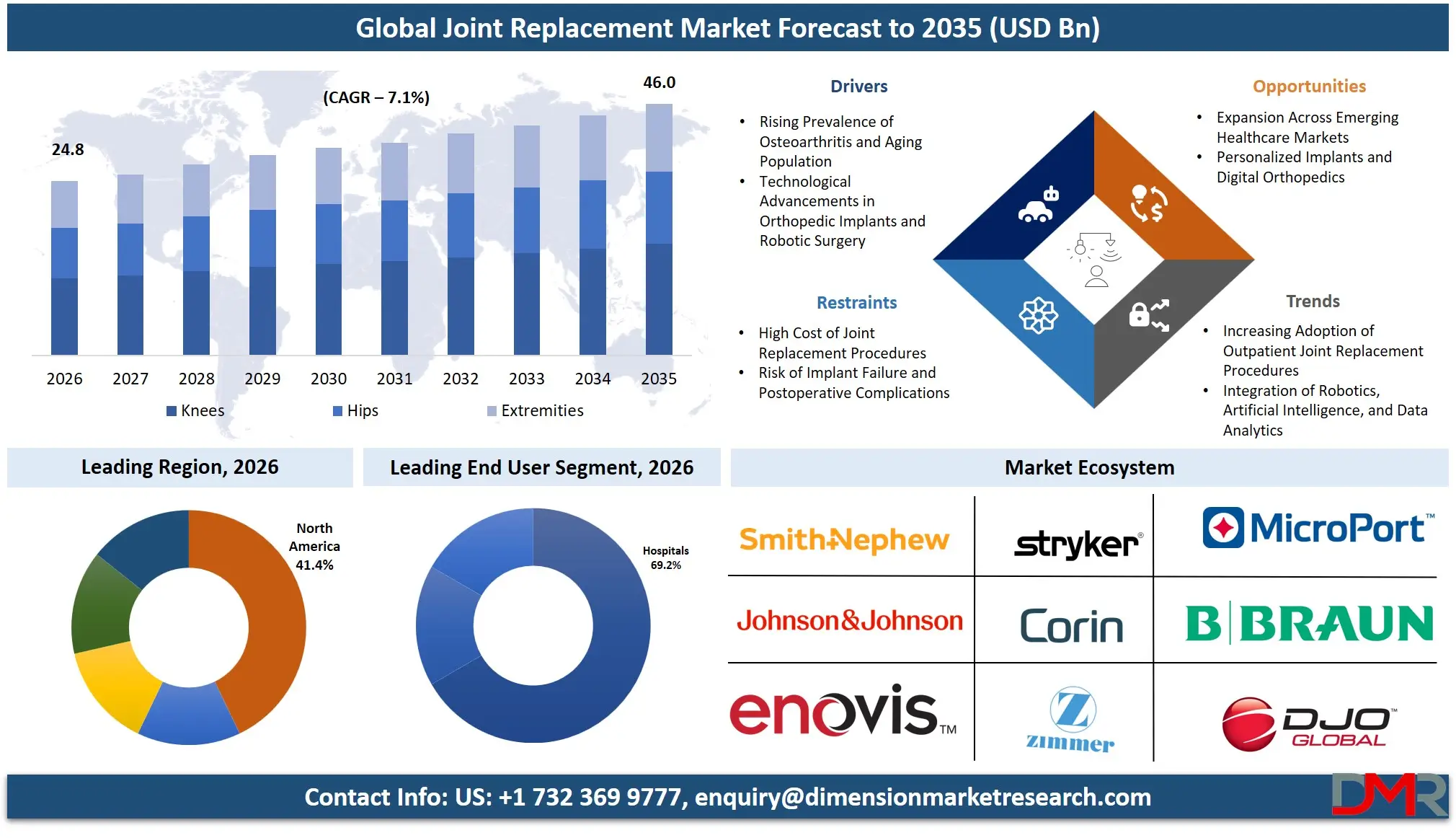
The Global Joint Replacement Market is estimated to reach USD 24.8 billion in 2026 and is projected to expand to approximately USD 46.0 billion by 2035, registering a CAGR of 7.1% during the forecast period.
ℹ
To learn more about this report –
Download Your Free Sample Report Here
The market's growth is supported by several macroeconomic and healthcare trends, including the rapid aging of the global population, increasing incidence of osteoarthritis and obesity, growing participation in sports activities, and expanding healthcare infrastructure across emerging economies. Technological advancements such as robotic-assisted surgeries, AI-enabled surgical planning, patient-specific implants, and enhanced biomaterials are improving surgical outcomes and increasing patient confidence. Furthermore, favorable reimbursement policies in developed nations and increased healthcare investments in Asia-Pacific and Latin America are expected to sustain long-term market expansion.
Use Cases
- Total Knee Replacement: The largest application segment, performed to relieve pain and restore mobility in patients with severe osteoarthritis, rheumatoid arthritis, and degenerative knee disorders.
- Hip Replacement Surgery: Widely adopted for treating hip fractures, osteoarthritis, avascular necrosis, and congenital hip abnormalities, significantly improving patient mobility and quality of life.
- Shoulder Replacement: Increasingly utilized for patients with severe arthritis, rotator cuff arthropathy, fractures, and sports injuries requiring restoration of shoulder function.
- Revision Joint Replacement: Performed to replace worn, loosened, or infected implants, representing an important and steadily growing segment due to increasing numbers of primary procedures.
- Trauma and Sports Injury Reconstruction: Advanced joint replacement technologies are increasingly used in managing complex orthopedic trauma and sports-related injuries, particularly among active adults and elderly patients.
Key Takeaways
- The global market is projected to grow from USD 24.8 billion in 2026 to USD 46.0 billion by 2035, at a 7.1% CAGR.
- Increasing prevalence of osteoarthritis, obesity, and age-related musculoskeletal disorders is driving procedure volumes.
- Knee replacement remains the largest product segment due to its high global procedure volume.
- Cementless implants are expected to record the fastest growth owing to superior biological fixation and increasing adoption among younger patients.
- Hospitals remain the dominant end-user because of advanced surgical infrastructure and comprehensive postoperative care.
- North America is expected to retain the largest market share, while Asia-Pacific is projected to experience the fastest regional growth.
How AI/Gen AI is Transforming the Joint Replacement Market?
Artificial intelligence (AI), robotic-assisted surgery, computer navigation, augmented reality (AR), and 3D printing are fundamentally reshaping the Joint Replacement Market. AI-powered imaging and planning software enable surgeons to analyze patient anatomy, predict optimal implant sizes, and develop highly personalized surgical plans. Robotic-assisted systems improve bone preparation, implant positioning, and soft tissue balancing, reducing surgical variability and enhancing implant alignment.
These technologies contribute to shorter operating times, reduced blood loss, lower complication rates, faster recovery, and improved long-term implant survivorship. Patient-specific implants produced through additive manufacturing further enhance anatomical fit and promote osseointegration using porous implant structures.
As healthcare providers increasingly adopt digital orthopedic ecosystems integrating AI, robotics, cloud-based analytics, and remote rehabilitation, competition among manufacturers is shifting beyond implant production toward comprehensive technology-enabled surgical platforms. Companies capable of offering integrated implant, software, robotic, and digital monitoring solutions are expected to strengthen their competitive positions over the forecast period.
Key Drivers in the Global Joint Replacement Market
Rising Prevalence of Osteoarthritis and Aging Population
The increasing prevalence of osteoarthritis and the rapid growth of the elderly population are the primary factors driving the Joint Replacement Market. Osteoarthritis remains one of the leading causes of disability worldwide, particularly among individuals aged 60 years and above. As cartilage deteriorates with age, patients increasingly require knee, hip, shoulder, and other joint replacement procedures to restore mobility and reduce chronic pain.
Technological Advancements in Orthopedic Implants and Robotic Surgery
Technological innovation continues to transform orthopedic surgery and significantly contributes to market growth. Modern implants are designed using advanced biomaterials such as titanium alloys, ceramic bearings, highly cross-linked polyethylene, and porous metal coatings that improve implant durability and reduce wear. Robotic-assisted joint replacement systems enable surgeons to perform highly precise bone preparation and implant placement. These systems improve alignment accuracy, reduce surgical variability, and contribute to faster patient recovery and lower revision rates.
Restraints in the Global Joint Replacement Market
High Cost of Joint Replacement Procedures
Despite favorable clinical outcomes, joint replacement surgery remains a costly medical procedure. Total treatment expenses include implant costs, surgeon fees, hospital charges, diagnostic imaging, anesthesia, rehabilitation, and follow-up care. In many low- and middle-income countries, limited insurance coverage and inadequate reimbursement policies reduce patient access to these procedures. Even in developed healthcare systems, pricing pressure and cost-containment initiatives require hospitals to optimize procurement and operational efficiency.
Risk of Implant Failure and Postoperative Complications
Although implant longevity has improved substantially, complications such as infection, aseptic loosening, implant wear, dislocation, and periprosthetic fractures continue to affect long-term outcomes. Revision surgeries are considerably more complex than primary procedures and involve longer operating times, greater blood loss, increased healthcare costs, and extended rehabilitation periods. Younger patients often delay surgery due to concerns about future revision procedures associated with implant wear over time.
Growth Opportunities in the Global Joint Replacement Market
Expansion Across Emerging Healthcare Markets
Emerging economies such as China, India, Brazil, Indonesia, Vietnam, Saudi Arabia, and the United Arab Emirates are investing heavily in healthcare infrastructure and specialized orthopedic services. Increasing disposable income, expanding health insurance coverage, and improving access to modern hospitals are creating favorable conditions for market growth. Medical tourism is also contributing significantly, particularly in countries offering high-quality orthopedic procedures at competitive costs. Government initiatives to improve public healthcare systems and establish orthopedic specialty centers are expected to further increase procedure volumes.
Personalized Implants and Digital Orthopedics
The demand for patient-specific implants and personalized orthopedic care is growing rapidly. Customized implants based on three-dimensional imaging improve anatomical compatibility, reduce surgical complexity, and enhance postoperative outcomes. Digital orthopedic platforms integrating wearable rehabilitation devices, remote patient monitoring, AI-powered recovery analytics, and telemedicine are expected to become increasingly important over the next decade. These technologies support value-based healthcare by improving long-term patient engagement and reducing readmission rates.
Trends in the Global Joint Replacement Market
Increasing Adoption of Outpatient Joint Replacement Procedures
Advances in minimally invasive surgical techniques, enhanced recovery after surgery (ERAS) protocols, and improved pain management have accelerated the shift toward outpatient and same-day joint replacement procedures. Ambulatory surgical centers are performing an increasing number of knee and hip replacement surgeries, reducing healthcare costs while maintaining favorable clinical outcomes. Patients also benefit from shorter hospital stays, faster rehabilitation, and reduced risk of hospital-acquired infections.
Integration of Robotics, Artificial Intelligence, and Data Analytics
Digital transformation is becoming a defining trend across orthopedic surgery. Healthcare providers are increasingly integrating robotic-assisted systems, AI-powered planning software, cloud-based surgical data platforms, and predictive analytics into routine clinical practice. These technologies support evidence-based decision-making, improve implant positioning accuracy, and enable personalized postoperative rehabilitation. Manufacturers are also leveraging data analytics to optimize implant design, monitor long-term outcomes, and strengthen surgeon training programs.
Research Scope and Analysis
The Global Joint Replacement Market is segmented by Product, Fixation Type, End Use, and Procedure. Each segment demonstrates distinct growth dynamics influenced by technological advancements, patient demographics, clinical preferences, healthcare infrastructure, and reimbursement policies. Knee replacement procedures continue to dominate the global market due to their high procedural volume, while cementless implants, ambulatory care settings, and personalized surgical approaches are expected to register significant growth during the forecast period.
ℹ
To learn more about this report –
Download Your Free Sample Report Here
By Product Analysis
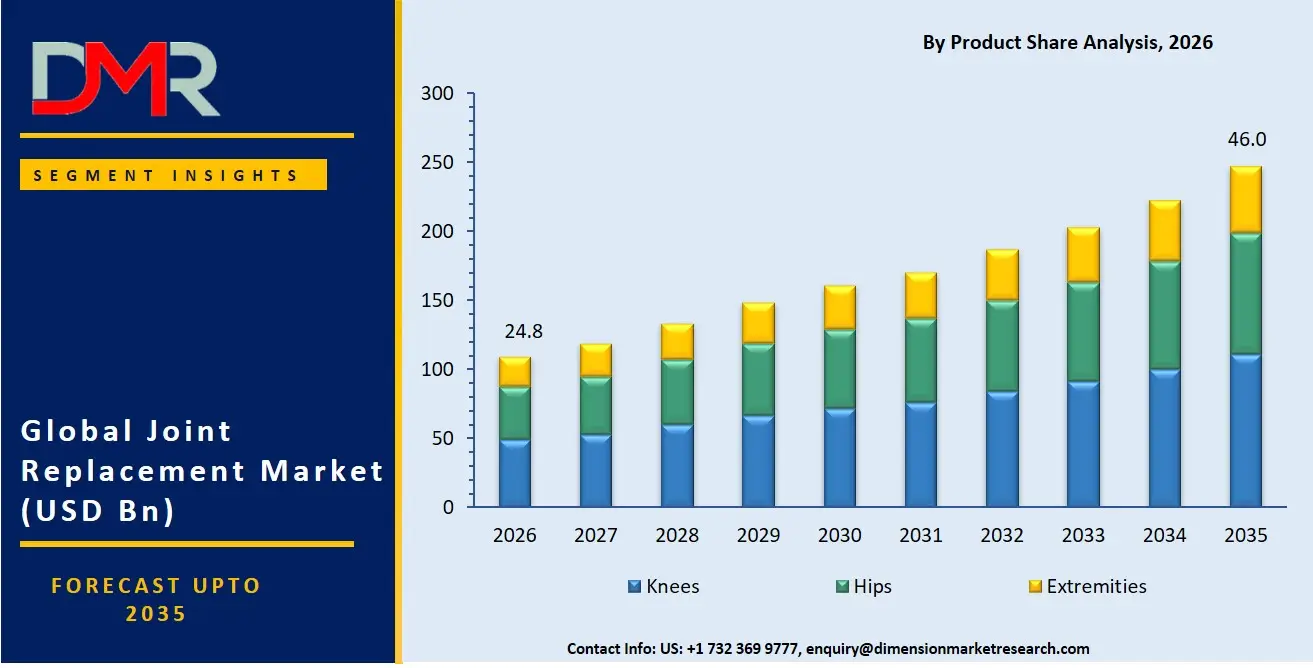
The Knee Replacement segment accounted for approximately 47.6% of the global market in 2026, making it the largest product category. The segment's dominance is primarily attributed to the increasing prevalence of knee osteoarthritis, obesity, sports injuries, and age-related degenerative disorders. Knee replacement surgery has become one of the most commonly performed orthopedic procedures globally due to its high success rate, improved implant durability, and favorable long-term clinical outcomes.
ℹ
To learn more about this report –
Download Your Free Sample Report Here
Continuous innovations in robotic-assisted knee replacement, patient-specific instrumentation, and minimally invasive surgical techniques have further accelerated market adoption. Additionally, increasing awareness regarding early intervention and enhanced recovery protocols continues to support procedural growth.
The Hip Replacement segment remains the second-largest product category, accounting for approximately 34.1% of the global market in 2026. Hip replacement procedures are widely performed for osteoarthritis, hip fractures, avascular necrosis, and congenital deformities. Growing demand among elderly patients and improvements in implant materials continue to strengthen this segment.
The Extremities segment, including shoulder, elbow, wrist, ankle, and small joint replacements, is projected to be the fastest-growing category, registering a CAGR of 8.4% between 2026 and 2035. Rising sports injuries, increasing incidence of shoulder arthritis, and advancements in reverse shoulder replacement systems are driving demand for extremity reconstruction procedures.
By Fixation Type Analysis
The Cemented fixation segment held the largest market share of 56.8% in 2026. Cemented implants remain the preferred option, particularly among elderly patients with lower bone density, due to their immediate fixation, predictable outcomes, and long-established clinical success. Their widespread use in knee replacement procedures further contributes to segment dominance.
Orthopedic surgeons continue to favor cemented fixation in patients with osteoporosis and other conditions affecting bone quality, where immediate implant stability is critical.
The Cementless segment is projected to register the highest CAGR of 8.9% during the forecast period. Cementless implants promote biological fixation through bone ingrowth into porous implant surfaces, making them increasingly suitable for younger and more active patients. Advances in porous titanium coatings, 3D-printed implant designs, and improved surface technologies are accelerating adoption.
The Hybrid fixation segment accounted for approximately 14.6% of the global market in 2026. Hybrid techniques combine cemented and cementless components to optimize implant stability while addressing patient-specific anatomical requirements.
By End Use Analysis
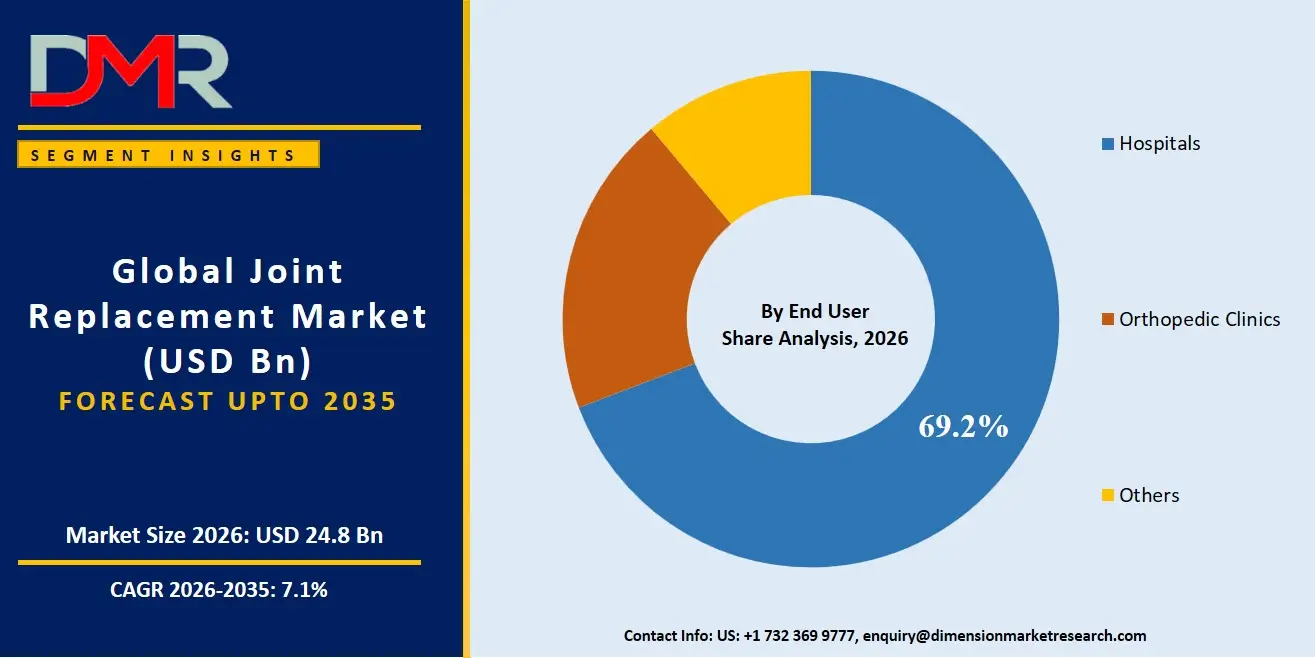
The Hospitals segment accounted for approximately 69.2% of the global market in 2026. Hospitals remain the primary centers for joint replacement surgeries due to their comprehensive surgical infrastructure, multidisciplinary orthopedic teams, advanced imaging capabilities, intensive care facilities, and postoperative rehabilitation services.
Large tertiary hospitals are increasingly investing in robotic-assisted surgical platforms, navigation systems, and digital orthopedic technologies to improve surgical outcomes and attract higher patient volumes.
The Orthopedic Clinics segment represents the second-largest market, supported by the growing number of specialized orthopedic centers offering high-quality elective procedures. These facilities provide personalized care, shorter waiting times, and specialized expertise, particularly in urban healthcare markets.
The Others segment, including ambulatory surgical centers (ASCs), is expected to record the fastest growth, with a CAGR of 9.3% through 2035. The increasing shift toward outpatient joint replacement procedures, enhanced recovery protocols, and lower treatment costs is driving demand for ASCs across developed healthcare markets.
By Procedure Analysis
The Total Replacement segment dominated the market with a 74.8% share in 2026. Total joint replacement procedures remain the preferred treatment option for patients with advanced osteoarthritis, rheumatoid arthritis, and severe joint degeneration. These procedures provide long-term pain relief, improved mobility, and excellent clinical outcomes, making them the standard of care for end-stage joint disease.
Continuous improvements in implant materials, surgical techniques, and postoperative rehabilitation have further strengthened the adoption of total replacement procedures across both developed and emerging markets.
The Partial Replacement segment accounted for approximately 18.5% of the market in 2026. Partial joint replacement is generally recommended for patients with localized joint damage, preserving healthy bone and ligaments while enabling faster recovery and reduced surgical trauma.
The Others category, including revision and complex reconstructive procedures, is expected to experience steady growth due to the increasing number of aging implants requiring replacement and the rising incidence of implant-related complications requiring revision surgery.
The Global Joint Replacement Market Report is segmented on the basis of the following:
By Product
- Knees
- Hips
- Extremities
- Upper Extremities
- Lower Extremities
By Fixation Type
- Cemented
- Cementless
- Hybrid
- Reverse Hybrid
By End Use
- Hospitals
- Orthopedic Clinics
- Others
By Procedure
- Total Replacement
- Partial Replacement
- Others
Regional Analysis
North America is the Leading Region in the Global Joint Replacement Market
ℹ
To learn more about this report –
Download Your Free Sample Report Here
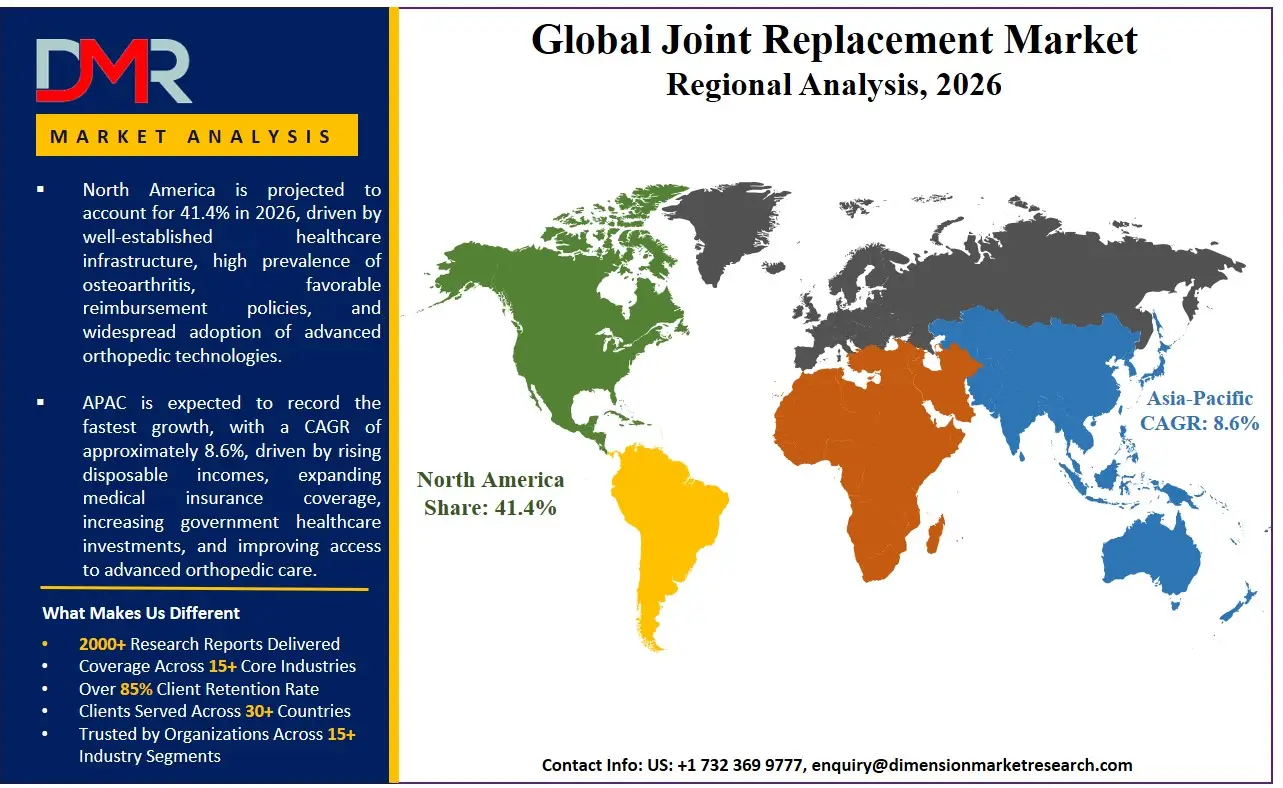
North America is expected to maintain its leading position in the Global Joint Replacement Market, accounting for approximately 41.4% of the global market in 2026. The region's dominance is attributed to its well-established healthcare infrastructure, high prevalence of osteoarthritis, favorable reimbursement policies, and widespread adoption of advanced orthopedic technologies.
The United States performs one of the highest numbers of knee and hip replacement procedures globally, supported by an aging population, increasing obesity rates, and growing patient awareness regarding mobility restoration. Hospitals and orthopedic centers across the region have rapidly adopted robotic-assisted surgery, AI-enabled surgical planning, computer navigation systems, and patient-specific implants, improving surgical precision and clinical outcomes.
The presence of leading orthopedic device manufacturers, continuous investment in research and development, and strong regulatory oversight further strengthen the regional market. Additionally, increasing demand for outpatient joint replacement procedures and enhanced recovery protocols is reshaping orthopedic care delivery across North America.
Asia-Pacific is the Fastest-Growing Region in the Global Joint Replacement Market
Asia-Pacific is projected to register the highest CAGR of 8.6% during the forecast period from 2026 to 2035. The region is experiencing rapid healthcare transformation driven by rising disposable incomes, expanding medical insurance coverage, increasing government healthcare investments, and improving access to advanced orthopedic care.
Countries such as China, India, Japan, South Korea, and Australia are witnessing substantial growth in orthopedic procedure volumes due to demographic aging, increasing sports participation, and growing awareness regarding joint replacement surgery. Medical tourism is also contributing significantly, particularly in India and Thailand, where high-quality orthopedic procedures are available at competitive costs.
Furthermore, manufacturers are expanding production facilities, strengthening distribution networks, and collaborating with hospitals to address the growing demand for orthopedic implants throughout the region.
Europe Joint Replacement Market
The Europe Joint Replacement Market is estimated at approximately USD 6.1 billion in 2026 and is projected to reach USD 10.8 billion by 2035, registering a CAGR of 6.6% during the forecast period. Germany, the United Kingdom, France, Italy, and Spain account for the majority of regional procedures. Increasing investments in robotic surgery, growing adoption of minimally invasive techniques, and favorable reimbursement policies continue to support market growth. Rising life expectancy and a high prevalence of osteoarthritis further contribute to increasing procedure volumes across the region.
Latin America Joint Replacement Market
The Latin America Joint Replacement Market is valued at approximately USD 1.4 billion in 2026 and is expected to reach USD 2.5 billion by 2035, growing at a CAGR of 6.8%. Brazil and Mexico represent the largest regional markets owing to improving healthcare infrastructure, increasing orthopedic specialist availability, and expanding private healthcare investments. Rising awareness regarding joint replacement surgery, coupled with growing healthcare expenditure, is supporting market expansion. Medical tourism and public-private healthcare partnerships are also contributing to increased procedure volumes across the region.
Middle East & Africa Joint Replacement Market
The Middle East & Africa Joint Replacement Market is estimated at approximately USD 1.0 billion in 2026 and is projected to reach USD 1.9 billion by 2035, registering a CAGR of 7.2%. Saudi Arabia, the United Arab Emirates, South Africa, and Israel are the primary contributors to regional growth. Government investments in healthcare infrastructure, increasing prevalence of obesity-related orthopedic disorders, and expanding orthopedic specialty centers are driving demand for advanced joint replacement procedures. The region is also benefiting from growing medical tourism and the adoption of robotic-assisted orthopedic surgery in major hospitals.
Major Countries Analysis
United States Joint Replacement Market
ℹ
To learn more about this report –
Download Your Free Sample Report Here
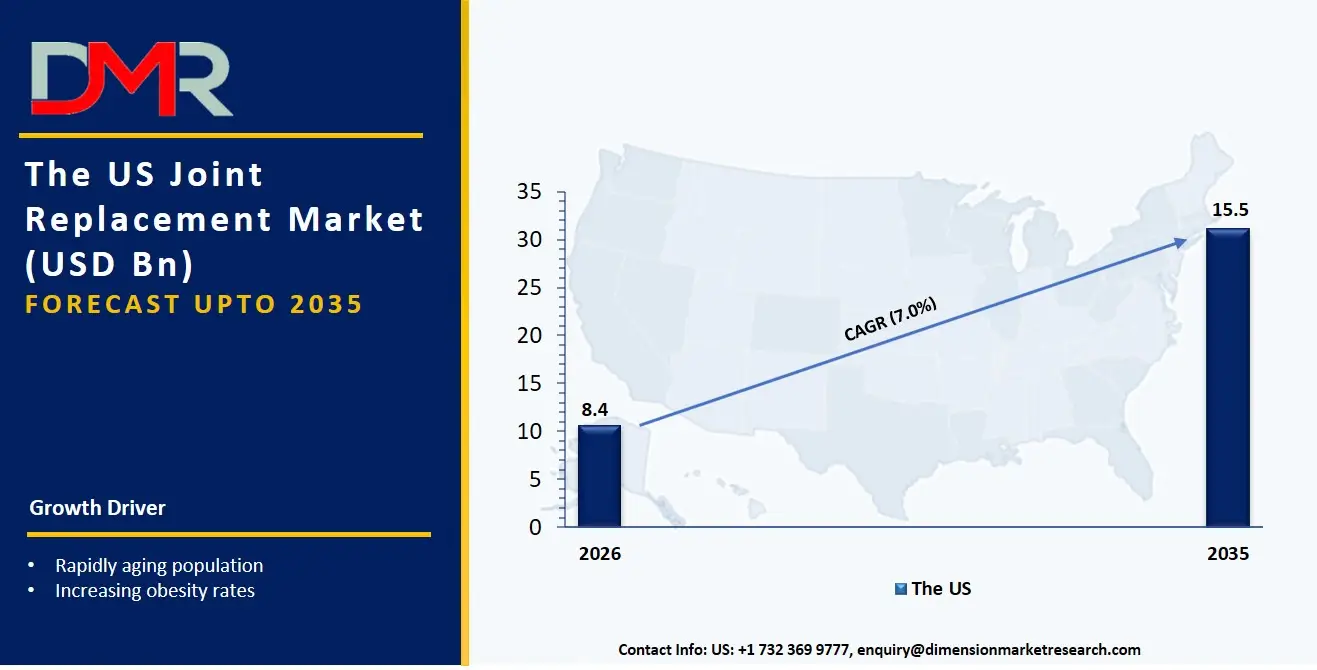
The United States remains the largest national market for joint replacement procedures. The market is valued at approximately USD 8.4 billion in 2026 and is expected to reach USD 15.5 billion by 2035, registering a CAGR of 7.0%. Market growth is driven by a rapidly aging population, increasing obesity rates, a high prevalence of osteoarthritis, and widespread adoption of robotic-assisted surgery. Strong reimbursement systems, continuous technological innovation, and the presence of leading orthopedic device manufacturers further support market expansion. The growing shift toward outpatient knee and hip replacement procedures is also improving healthcare efficiency and patient outcomes.
Japan Joint Replacement Market
Japan is one of the leading orthopedic markets in Asia-Pacific due to its rapidly aging population and advanced healthcare system. The market is estimated at USD 1.8 billion in 2026 and is projected to reach USD 3.2 billion by 2035, growing at a CAGR of 6.7%. Increasing life expectancy, high incidence of degenerative joint disorders, and early adoption of robotic-assisted orthopedic surgery continue to drive demand. Japanese healthcare providers are also investing in AI-assisted surgical planning, precision medicine, and minimally invasive procedures to improve patient outcomes and reduce recovery times.
Saudi Arabia Joint Replacement Market
Saudi Arabia is emerging as one of the fastest-growing orthopedic markets in the Middle East. The market is valued at approximately USD 320 million in 2026 and is forecast to reach USD 640 million by 2035, registering a CAGR of 8.0%. Growth is supported by the country's healthcare transformation initiatives under Vision 2030, increasing healthcare expenditure, expansion of specialized hospitals, and rising prevalence of obesity and diabetes-related musculoskeletal disorders. Investments in advanced orthopedic technologies, including robotic-assisted surgery and digital healthcare infrastructure, are expected to further accelerate market development.
Regulatory Landscape
The Joint Replacement Market is governed by stringent regulatory frameworks to ensure the safety, efficacy, and quality of orthopedic implants and associated surgical technologies. Regulatory agencies require manufacturers to demonstrate clinical performance, biocompatibility, sterilization validation, manufacturing quality, and long-term post-market surveillance before commercialization.
In the United States, orthopedic implants are regulated under the U.S. Food and Drug Administration (FDA) through the 510(k), De Novo, or Premarket Approval (PMA) pathways, depending on the device classification. Manufacturers are also required to comply with the Quality System Regulation (QSR) and Unique Device Identification (UDI) requirements.
Within Europe, manufacturers must comply with the Medical Device Regulation (MDR) (EU) 2017/745, which introduced more rigorous clinical evaluation, traceability, and post-market surveillance requirements. CE marking remains mandatory for commercialization throughout the European Economic Area.
In Asia-Pacific, regulatory oversight continues to strengthen through agencies such as China's National Medical Products Administration (NMPA), Japan's Pharmaceuticals and Medical Devices Agency (PMDA), and India's Central Drugs Standard Control Organization (CDSCO). These agencies are increasingly harmonizing regulatory standards with global best practices.
International quality standards, including ISO 13485 for medical device quality management systems and ISO 14971 for risk management, play a critical role in product development and global market access.
Investment and White Space Analysis
The Joint Replacement Market presents significant investment opportunities driven by demographic changes, technological innovation, and expanding access to orthopedic care. Investors are increasingly focused on robotic-assisted surgery platforms, AI-enabled surgical planning software, advanced biomaterials, and personalized implant technologies.
High-growth investment areas include:
- Robotic-assisted orthopedic surgical systems
- Patient-specific and 3D-printed implants
- Smart implants with embedded sensors
- Digital rehabilitation and remote patient monitoring
- Artificial intelligence for surgical planning and outcome prediction
- Biologic materials for improved implant fixation
Emerging markets such as India, China, Brazil, Indonesia, Vietnam, Saudi Arabia, and the United Arab Emirates remain attractive due to increasing healthcare expenditure, expanding private hospital networks, and rising orthopedic procedure volumes.
White-space opportunities also exist in outpatient joint replacement services, revision arthroplasty solutions, and orthopedic care for younger, active patients requiring longer-lasting implants. Companies investing in integrated digital orthopedic ecosystems are expected to benefit from long-term market expansion.
By Region
North America
Europe
- Germany
- The U.K.
- France
- Italy
- Spain
- Rest of Europe
Asia-Pacific
- China
- Japan
- South Korea
- India
- ANZ
- ASEAN
- Rest of Asia-Pacific
Latin America
- Brazil
- Mexico
- Argentina
- Colombia
- Rest of Latin America
Middle East & Africa
- Saudi Arabia
- UAE
- South Africa
- Israel
- Egypt
- Rest of MEA
Competitive Landscape
The Global Joint Replacement Market is moderately consolidated, with several multinational medical device companies accounting for a significant share of global revenue. Market competition is primarily based on product innovation, implant durability, robotic-assisted surgical technologies, clinical evidence, pricing strategies, and geographic expansion.
Leading manufacturers continue to strengthen their market positions through acquisitions, strategic partnerships, research and development investments, and expansion into emerging economies. The growing adoption of robotic-assisted surgery has intensified competition, encouraging companies to develop integrated solutions that combine implants, navigation systems, digital planning software, and data analytics.
Increasing emphasis on personalized implants, minimally invasive surgical techniques, and enhanced patient outcomes is expected to shape future competitive dynamics.
Some of the prominent players in the Global Joint Replacement Market are
- Zimmer Biomet
- Stryker Corporation
- Johnson & Johnson MedTech
- Smith+Nephew
- Enovis
- Exactech
- MicroPort Orthopedics
- B. Braun
- Corin Group
- DJO Global
- Medacta International
- LimaCorporate
- Mathys AG Bettlach
- Waldemar Link GmbH & Co. KG
- Aesculap Implant Systems
- ConforMIS
- United Orthopedic Corporation
- Kyocera Corporation
- Japan Medical Dynamic Marketing
- Meril Life Sciences
- Baumer
- Beijing Chunlizhengda Medical Instruments
- AK Medical Holdings
- Arthrex
- Medtronic
- Globus Medical
- Orthofix Medical
- Shandong Weigao Orthopaedic Device
- Beijing AIMED Medical International
- Elite Surgical
- ImplanTec
- Peter Brehm GmbH
- Corentec
- Auxein Medical
- United Surgical Industries
- Groupe Lépine
- Implantcast GmbH
- Ortho Development
- Signature Orthopaedics
- FH Orthopedics
- Other Key Players
Recent Developments
- January 2026 (Zimmer Biomet Holdings, Inc.): Zimmer Biomet expanded its portfolio of robotic-assisted orthopedic solutions by introducing next-generation AI-enabled surgical planning capabilities designed to improve implant positioning, workflow efficiency, and personalized treatment planning for knee and hip replacement procedures.
- September 2025 (Stryker Corporation): Stryker announced the expansion of its Mako robotic-assisted surgery platform across additional international markets. The company also enhanced software functionality to improve preoperative planning and intraoperative decision-making for orthopedic surgeons.
- May 2025 (Johnson & Johnson MedTech (DePuy Synthes)): Johnson & Johnson MedTech introduced new knee replacement implant technologies featuring advanced biomaterials and improved implant geometries designed to enhance long-term survivorship, patient comfort, and postoperative mobility.
- November 2024 (Smith+Nephew plc): Smith+Nephew expanded its digital orthopedic ecosystem by integrating advanced imaging and navigation capabilities into its joint reconstruction portfolio, supporting more precise implant placement and improved surgical efficiency.
- July 2024 (Medacta International SA): Medacta strengthened its personalized orthopedic platform through the launch of patient-specific planning technologies and expanded surgeon education programs focused on minimally invasive joint replacement procedures.
Report Details
| Report Characteristics |
| Market Size (2026) |
USD 24.8 Bn |
| Forecast Value (2035) |
USD 46.0 Bn |
| CAGR (2026–2035) |
7.1% |
| Historical Period |
2021 – 2025 |
| Forecast Period |
2027 – 2035 |
| Base Year |
2025 |
| Estimate Year |
2026 |
| Segments Covered |
By Product, By Fixation Type, By End Use, By Procedure |
| Regional Coverage |
North America – The US and Canada; Europe – Germany, The UK, France, Russia, Spain, Italy, Benelux, Nordic, & Rest of Europe; Asia-Pacific – China, Japan, South Korea, India, ANZ, ASEAN, Rest of APAC; Latin America – Brazil, Mexico, Argentina, Colombia, Rest of Latin America; Middle East & Africa – Saudi Arabia, UAE, South Africa, Turkey, Egypt, Israel, & Rest of MEA |
Frequently Asked Questions
What is the projected size of the Global Joint Replacement Market by 2035?
▾ The Global Joint Replacement Market is projected to grow from USD 24.8 billion in 2026 to approximately USD 46.0 billion by 2035.
What is the expected CAGR of the market?
▾ The market is anticipated to register a compound annual growth rate (CAGR) of 7.1% during the forecast period from 2026 to 2035.
What factors are driving market growth?
▾ Major growth drivers include the increasing prevalence of osteoarthritis, expanding geriatric population, rising obesity rates, technological advancements in orthopedic implants, and growing adoption of robotic-assisted surgery.
Which product segment dominates the market?
▾ The Knee Replacement segment leads the market, accounting for approximately 47.6% of global revenue in 2026 due to its high procedural volume and strong clinical outcomes.
Which region holds the largest market share?
▾ North America is expected to remain the largest regional market, representing approximately 41.4% of global revenue in 2026, supported by advanced healthcare infrastructure and high procedure volumes.
Which region is expected to grow fastest in Joint Replacement Market ?
▾ Asia-Pacific is projected to be the fastest-growing regional market, driven by rapid healthcare modernization, expanding insurance coverage, increasing healthcare expenditure, and a growing elderly population.
Who are the leading companies in the Joint Replacement Market?
▾ Key market participants include Zimmer Biomet Holdings, Stryker Corporation, Johnson & Johnson MedTech (DePuy Synthes), Smith+Nephew, Medtronic, B. Braun, Enovis, Exactech, Corin Group, Medacta International, and MicroPort Orthopedics.
How is the Joint Replacement Market segmented?
▾ The market is segmented by Product, Fixation Type, End Use, Procedure, and Region, enabling detailed analysis of demand patterns, technology adoption, and growth opportunities across global markets.