Market Overview
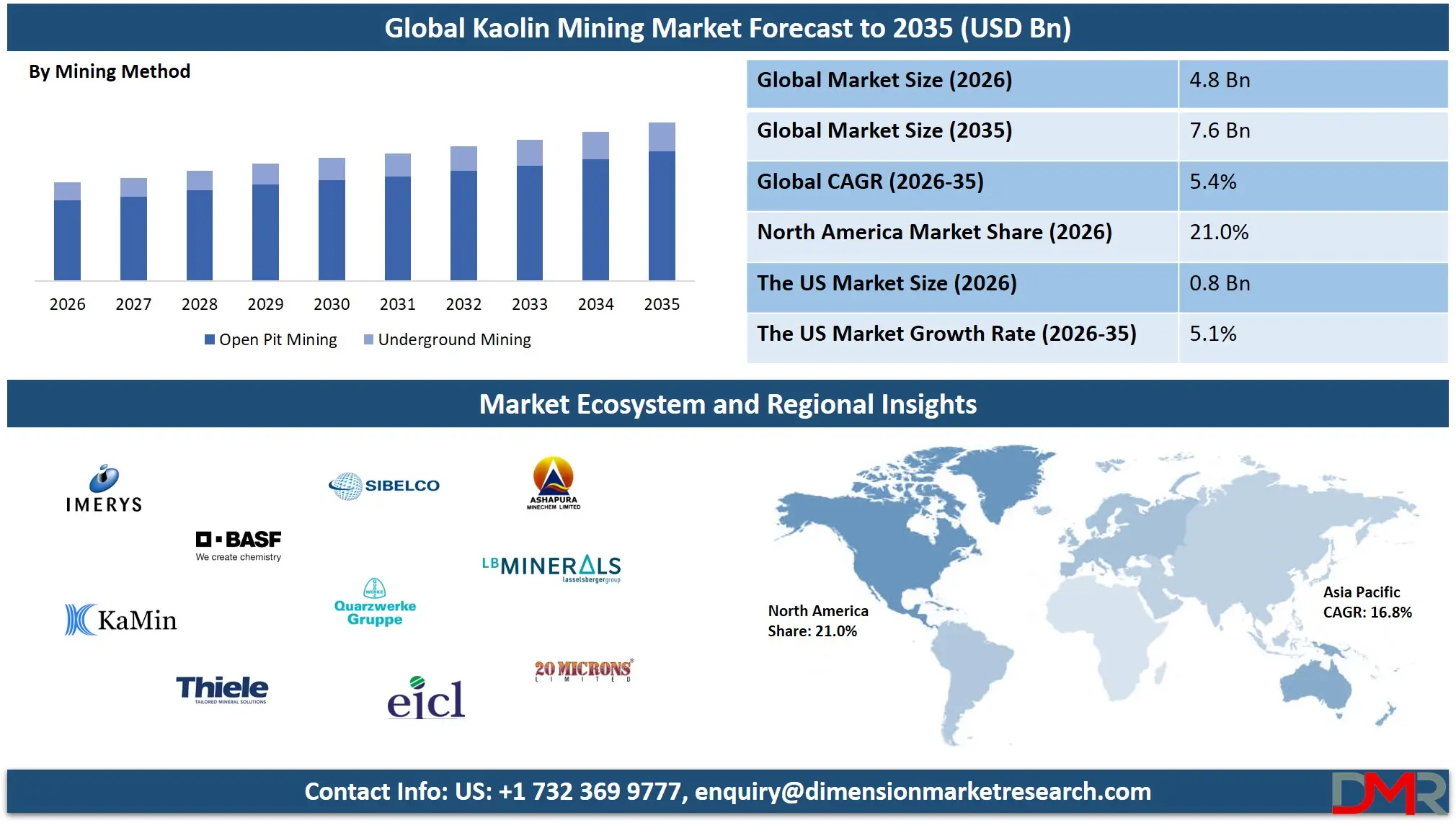
The Global Kaolin Mining Market is estimated at USD 4.8 billion in 2026 and is projected to expand at a CAGR of 5.4% during 2026 to 2035, reaching approximately USD 7.6 billion by 2035, driven by rising demand for industrial minerals, ceramic raw materials, and paper coating clay, and performance fillers across construction, packaging, and specialty chemicals industries.
ℹ
To learn more about this report –
Download Your Free Sample Report Here
Kaolin mining refers to the extraction and processing of kaolin clay, a naturally occurring white aluminosilicate mineral primarily composed of kaolinite. The mining process typically involves open pit operations where overburden is removed to access clay deposits, followed by crushing, slurry preparation, magnetic separation, and particle size classification to achieve desired purity and brightness levels. After extraction, the raw clay undergoes beneficiation, washing, calcination, or surface treatment depending on end use requirements. Kaolin is widely utilized as an industrial mineral in paper coating, ceramic manufacturing, paints and coatings, rubber compounding, plastic fillers, fiberglass production, and specialty chemical formulations due to its fine particle size, chemical inertness, high whiteness, and reinforcing properties.
The global Kaolin Mining Market represents the worldwide production, processing, trade, and consumption of kaolin across major industrial sectors. Market growth is supported by rising construction activities, expanding packaging demand, increasing ceramic tile production, and the steady need for performance fillers in polymers and coatings. Asia Pacific leads in both production and consumption due to strong infrastructure development and manufacturing output, while North America and Europe maintain stable demand driven by advanced coating technologies and specialty applications. The supply chain involves mining companies, mineral processors, distributors, and end use industries operating across established deposits in the United States, Brazil, China, India, and parts of Europe.
ℹ
To learn more about this report –
Download Your Free Sample Report Here
From an industry perspective, the market dynamics are shaped by ore quality, beneficiation technology, environmental regulations, export trade flows, and shifting demand from paper to high value engineered grades. Calcined and surface modified kaolin are gaining traction in functional filler applications, while traditional paper grade consumption faces structural adjustments due to digitalization trends. Investments in mineral processing plants, sustainable mining practices, and value added clay products are influencing competitive positioning among global producers. Overall, the market remains moderately consolidated with leading mineral companies focusing on product innovation, regional expansion, and supply security to strengthen their presence in the industrial minerals sector.
US Kaolin Mining Market
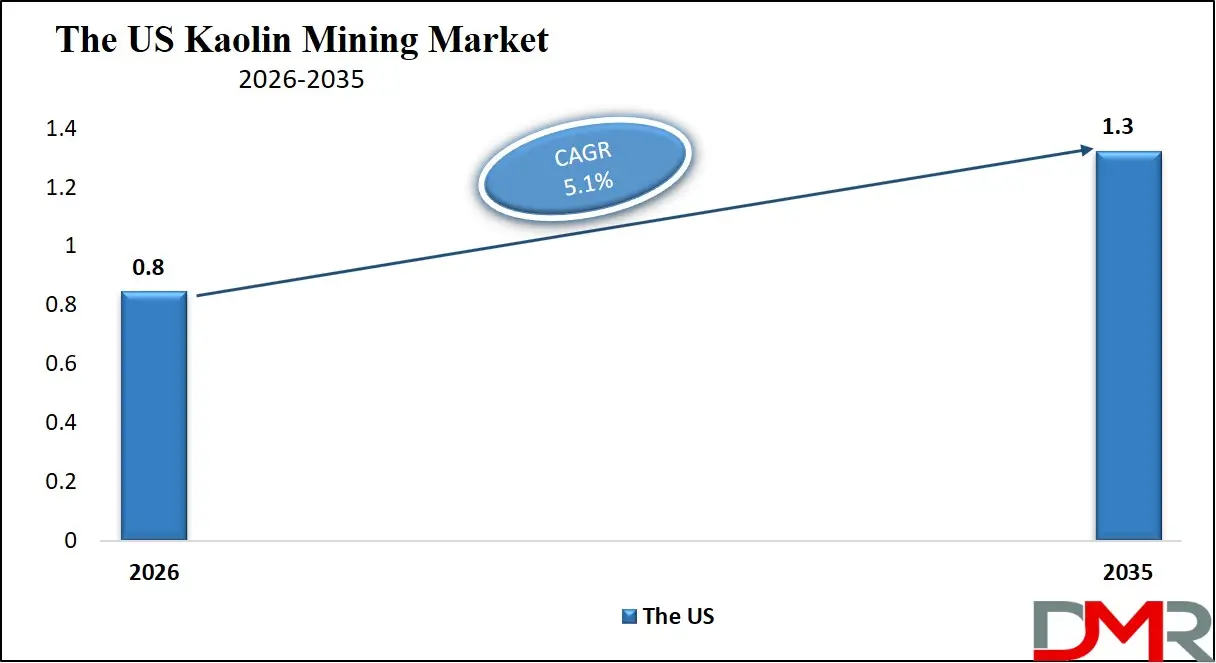
The U.S. Kaolin Mining Market size is expected to reach at USD 0.8 billion in 2026. It is further expected to witness subsequent growth in the upcoming period, holding USD 1.3 billion in 2035 at a CAGR of 5.1%.
ℹ
To learn more about this report –
Download Your Free Sample Report Here
The US Kaolin Mining Market is a mature and strategically significant segment of the North American industrial minerals industry, driven by abundant domestic deposits primarily in Georgia, South Carolina, and Alabama. The market caters to diverse end-use sectors, including paper coating, ceramics, paints, rubber, plastics, and fiberglass manufacturing. High-quality hydrous and calcined kaolin produced in the United States supports both domestic consumption and exports, with processing technologies focused on beneficiation, washing, and surface modification to meet stringent industry standards for brightness, particle size, and purity.
Market growth in the US is influenced by rising construction activity, packaging demand, and specialized industrial applications requiring engineered clays. Calcined and surface-treated kaolin grades are increasingly adopted in high-performance coatings, polymers, and chemical fillers, enhancing product value. Investments in sustainable mining practices, plant modernization, and efficient supply chain management have strengthened market competitiveness. The US remains a key exporter of kaolin, supplying global paper, ceramics, and specialty chemical industries while maintaining steady domestic consumption.
Europe Kaolin Mining Market
The Europe Kaolin Mining Market is projected to reach a value of approximately USD 1.1 billion in 2026, reflecting steady growth driven by strong demand across key industrial sectors. The region's market is supported by well-established kaolin deposits in countries such as Germany, the Czech Republic, and the United Kingdom, which supply high-quality clay for diverse applications. Hydrous and calcined kaolin are widely used in paper coating, ceramics, and specialty coatings, where consistent brightness, particle size, and purity are critical. Industrial standards and technological advancements in beneficiation processes ensure the region maintains a reliable supply chain for domestic and export markets.
Market growth in Europe is expected to continue at a compound annual growth rate of 5.0%, supported by rising construction activity, urbanization, and the expanding demand for high-performance industrial fillers. Calcined and surface-treated kaolin grades are increasingly used in paints, polymers, and specialty chemical applications, adding value to the market. Environmental regulations and sustainable mining practices are encouraging companies to adopt efficient extraction and processing methods, further strengthening the region's competitive position. The combination of mature industrial demand and innovation in kaolin applications ensures Europe remains a significant contributor to the global market.
Japan Kaolin Mining Market
The Japan Kaolin Mining Market is projected to reach approximately USD 240 million in 2026, driven by demand from the paper, ceramics, and coatings industries. Japanese manufacturers rely on high-purity hydrous and calcined kaolin to enhance product quality, including brightness, opacity, and surface smoothness in paper and packaging. Kaolin is also essential in ceramics and sanitaryware production, providing thermal stability and improved surface finish. The domestic supply is supplemented by imports to meet specialized requirements, ensuring that manufacturers can maintain consistent performance for industrial and consumer applications.
The market in Japan is expected to grow at a compound annual growth rate of 5.4%, aligned with the global growth trend. Increasing industrial automation, advanced processing technologies, and demand for specialty kaolin in high-performance coatings and polymer fillers support market expansion. Investments in beneficiation and surface treatment processes enhance product quality and competitiveness, while sustainable mining and efficient supply chain practices are becoming increasingly important. The combination of steady domestic demand and technological innovation ensures that Japan remains a key regional market within the global kaolin industry.
Global Kaolin Mining Market: Key Takeaways
- The global kaolin mining market is valued at USD 4.8 billion in 2026 and is projected to reach USD 7.6 billion by 2035, growing at a CAGR of 5.4%.
- Asia Pacific leads regional revenue with a 43.0% share in 2026, while the Middle East and Africa region is expected to register the highest CAGR over the forecast period.
- The U.S. market is estimated at USD 0.8 billion in 2026, projected to reach USD 1.3 billion by 2035 at a CAGR of 5.1%.
- Europe is projected at USD 1.1 billion in 2026, growing at a CAGR of 5.0% through 2035.
- Japan's market is expected to reach USD 240 million in 2026, expanding at a CAGR of 5.4%.
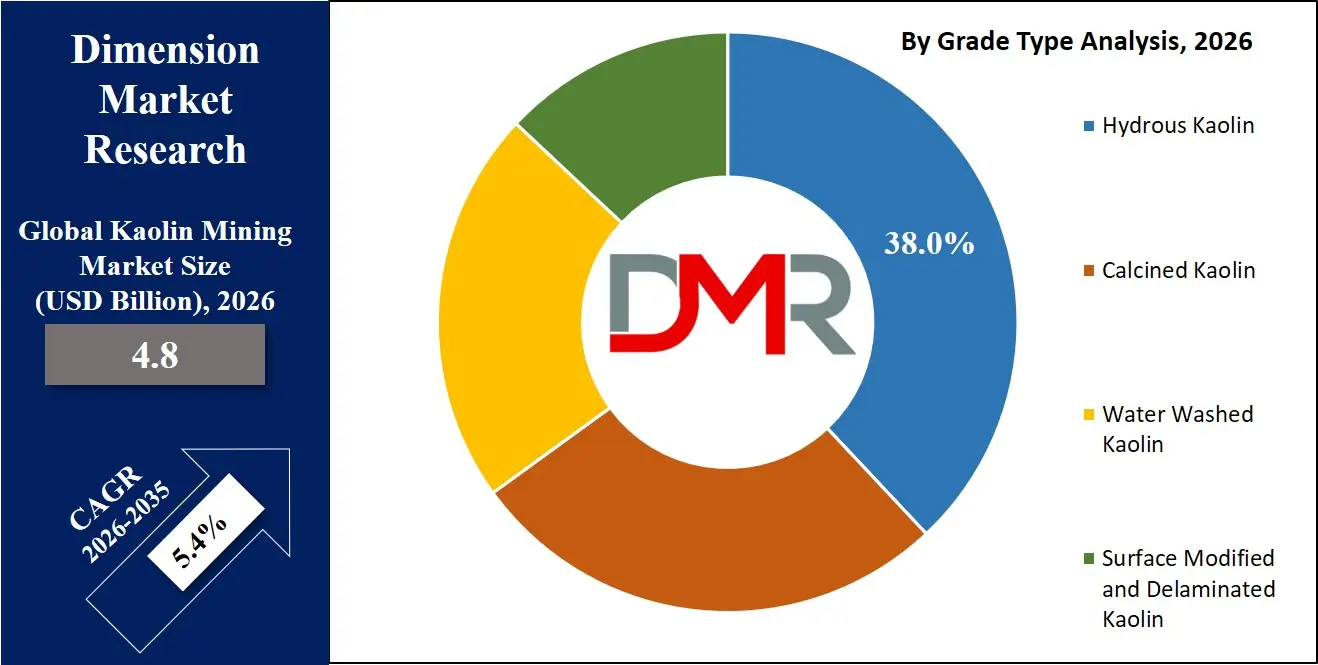
- Hydrous kaolin dominates the grade type segment with approximately 38.0% market share in 2026, with calcined kaolin as the next significant contributor.
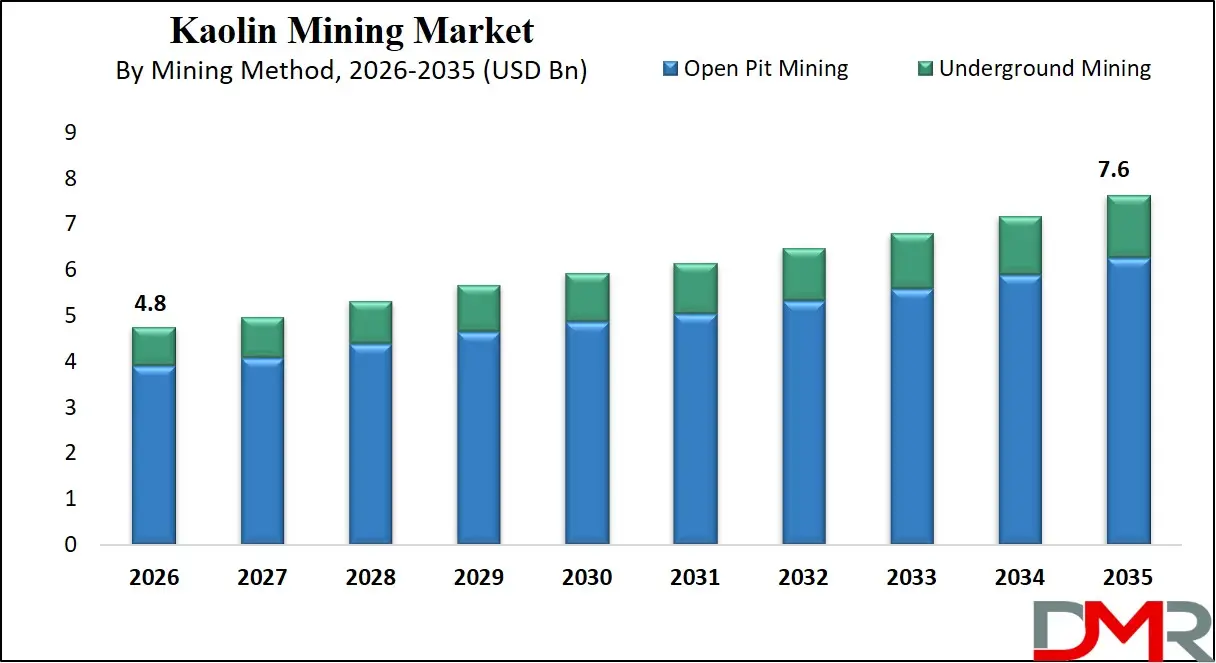
- Open pit mining leads the mining method segment with approximately 82.0% of market share in 2026, with underground mining holding the remaining share.
- Beneficiated kaolin captures approximately 46.0% of the processing level segment in 2026, followed by crude kaolin and advanced treated kaolin.
- The paper industry dominates the application segment with approximately 37.0% share in 2026, followed by ceramics as the second largest application area.
Grade Type Analysis
In the grade type segment of the global Kaolin Mining Market, hydrous kaolin is expected to maintain a leading position, accounting for approximately 38.0% of the total market share in 2026. This dominance is attributed to its widespread use in paper coating, ceramics, and other industrial applications where high brightness, fine particle size, and chemical inertness are critical. Hydrous kaolin is valued for its ability to improve surface smoothness, opacity, and printability in paper products while also enhancing the strength and finish of ceramic and porcelain materials, making it a preferred choice for large-scale industrial consumption.
ℹ
To learn more about this report –
Download Your Free Sample Report Here
Calcined kaolin, on the other hand, represents a significant portion of the grade type segment due to its enhanced performance characteristics achieved through heat treatment. The calcination process increases the mineral's opacity, brightness, and chemical stability, making it ideal for high-performance applications in paints, coatings, polymers, and specialty fillers. While its market share is smaller than hydrous kaolin, calcined kaolin is gaining traction in industries that demand superior quality and functional properties, supporting market growth and encouraging producers to invest in advanced processing and surface modification technologies.
Mining Method Analysis
In the mining method segment of the global Kaolin Mining Market, open pit mining is expected to dominate, capturing approximately 82.0% of the total market share in 2026. This dominance is due to the shallow and extensive nature of kaolin deposits, which makes surface mining more cost-effective and efficient compared to other extraction methods. Open pit operations allow large-scale production with lower operational costs and simpler logistics for overburden removal, crushing, and beneficiation. This method supports high-volume kaolin output, meeting the demands of industries such as paper, ceramics, paints, and coatings, where consistent supply and quality are critical.
Underground mining, in contrast, accounts for a smaller share of the market as it is primarily used for deeper kaolin deposits that cannot be economically accessed via surface methods. While underground mining enables the extraction of high-quality kaolin with minimal surface disruption, it involves higher operational costs, complex ventilation systems, and safety measures. As a result, underground mining is less prevalent but remains essential in regions where valuable kaolin reserves are buried beneath significant overburden, providing specialized material for niche industrial applications and high-purity kaolin requirements.
Processing Level Analysis
In the processing level segment of the global Kaolin Mining Market, beneficiated kaolin is expected to lead, capturing approximately 46.0% of the total market share in 2026. Beneficiated kaolin undergoes advanced processing techniques such as washing, particle size classification, magnetic separation, and chemical treatment to remove impurities and enhance brightness and purity. This makes it highly suitable for industrial applications such as paper coating, ceramics, paints, polymers, and specialty chemicals, where consistent quality and functional performance are critical. The high demand for improved product properties and export-quality material drives the dominance of beneficiated kaolin in the global market.
Crude kaolin, in comparison, accounts for a smaller share of the processing segment as it is mined and supplied with minimal refinement. Crude kaolin is typically used in local ceramic and construction industries where high purity is not essential. While it is cost-effective and widely available, its limited application in high-performance sectors reduces its market share relative to beneficiated kaolin. However, crude kaolin remains important for meeting basic industrial needs and supporting low-cost supply chains, particularly in emerging markets with growing construction and ceramic production activities.
Application Analysis
In the application segment of the global Kaolin Mining Market, the paper industry is expected to dominate, capturing approximately 37.0% of the total market share in 2026. Kaolin is extensively used in paper coating and filling to enhance brightness, opacity, smoothness, and printability. High-purity hydrous and calcined kaolin improves surface finish and reduces ink consumption, making it an essential mineral for producing coated paper, cardboard, and specialty packaging materials. The growing demand for high-quality printing and packaging paper, driven by e-commerce, consumer goods, and publication sectors, continues to support the strong presence of kaolin in the paper industry.
The ceramics industry also represents a significant portion of the application segment due to the use of kaolin as a primary raw material in porcelain, tiles, sanitaryware, and tableware. Its fine particle size, whiteness, and thermal stability enhance product durability, surface finish, and aesthetic appeal. Beneficiated and washed kaolin ensures consistent quality for ceramic production, meeting industrial standards. Urbanization, infrastructure expansion, and increased construction activity in emerging economies further drive the demand for kaolin in the ceramics sector, making it a critical material for high-quality ceramic manufacturing.
The Global Kaolin Mining Market Report is segmented on the basis of the following:
By Grade Type
- Hydrous Kaolin
- Calcined Kaolin
- Water Washed Kaolin
- Surface Modified and Delaminated Kaolin
By Mining Method
- Open Pit Mining
- Underground Mining
By Processing Level
- Crude Kaolin
- Beneficiated Kaolin
- Advanced Treated Kaolin
By Application
- Paper Industry
- Ceramics Industry
- Paints and Coatings
- Rubber and Plastics
- Fiberglass and Specialty Applications
Global Kaolin Mining Market: Market Dynamic
Driving Factors in the Global Kaolin Mining Market
Rising Demand in Paper and Packaging Industry
The increasing consumption of coated and specialty paper for packaging, labels, and cardboard is boosting kaolin demand. High-brightness hydrous and calcined kaolin improves printability, opacity, and surface smoothness, making it a preferred mineral in modern industrial paper coating and filling applications. Global growth in e-commerce and consumer goods packaging further accelerates the adoption of kaolin across regions.
Expansion of Construction and Ceramics Industry
Urbanization, housing development, and infrastructure projects are driving the use of kaolin in ceramics, porcelain tiles, and sanitaryware. Its fine particle size, thermal stability, and whiteness enhance product durability and aesthetics. Beneficiated and washed kaolin ensures consistent quality, meeting industrial standards for high-performance construction materials.
Restraints in the Global Kaolin Mining Market
Environmental and Regulatory Challenges
Kaolin mining involves large-scale land disturbance, water usage, and waste management, leading to stricter environmental regulations. Compliance with emission control, effluent treatment, and sustainable mining practices increases operational costs for producers, particularly in North America and Europe.
Volatility in Raw Material Prices
Fluctuations in kaolin ore quality and transportation costs can impact profit margins. High-grade hydrous and calcined kaolin often requires extensive beneficiation and surface treatment, making producers sensitive to global supply-demand imbalances and energy cost variations.
Opportunities in the Global Kaolin Mining Market
Growing Demand for Specialty and Engineered Kaolin
High-performance applications in paints, coatings, polymers, and specialty chemicals present new growth avenues. Surface-modified and calcined kaolin grades improve gloss, opacity, and mechanical strength, enabling manufacturers to create value-added products for automotive, industrial coatings, and polymer industries.
Emerging Markets in Asia Pacific and Latin America
Rising industrialization, infrastructure projects, and urban development in China, India, Brazil, and Mexico are expanding kaolin consumption. Investments in beneficiation plants and modern mining technology provide opportunities to tap these high-growth regional markets.
Trends in the Global Kaolin Mining Market
Shift towards Value-Added and Functional Fillers
Manufacturers are increasingly using engineered kaolin to enhance paper coating, polymer reinforcement, and paint performance. This trend toward functional fillers is reducing reliance on traditional bulk kaolin while increasing market profitability.
Sustainable Mining and Processing Practices
The industry is adopting eco-friendly mining methods, water recycling, and waste management solutions. Companies are focusing on low-impact extraction and green beneficiation processes to meet global sustainability standards and consumer expectations.
Global Kaolin Mining Market: Use Cases
- Paper Coating and Filling: Kaolin improves brightness, opacity, and smoothness in paper and cardboard. Hydrous and calcined grades enhance printability and reduce ink use, driving demand in packaging and specialty paper.
- Ceramics and Sanitaryware: Used in tiles, porcelain, and tableware, kaolin enhances thermal stability, whiteness, and surface finish. Beneficiated grades ensure consistent quality for growing construction and urbanization.
- Paints, Coatings, and Polymers: Calcined and surface-treated kaolin improves opacity, gloss, and durability in paints and coatings. It acts as a functional filler in polymers for industrial and automotive applications.
- Rubber, Plastics, and Fiberglass: Kaolin reinforces rubber, plastics, and fiberglass, boosting strength and dimensional stability. Specialty grades are used in insulation, automotive components, and lightweight composites.
Global Kaolin Mining Market: Stats & Facts
- U.S. Geological Survey (USGS) – United States (2021–2025 estimates)
- U.S. kaolin production (sold or used) rose from about 4.39 million metric tons in 2021 and 2022 to an estimated 4.60 million metric tons in 2023, around 4.64 million metric tons in 2024, and approximately 4.80 million metric tons in 2025.
- Average unit value of kaolin in the U.S. increased from about USD 151 per metric ton in 2021 to roughly USD 170 per metric ton in 2025, reflecting price trends.
- World Trade Data – China Import Statistics (2023)
- In 2023, China imported about 677,047,000 kg of kaolin and kaolinic clays valued at roughly USD 141.35 million, including 253,314,000 kg from the United States and significant amounts from Brazil, the United Kingdom, Indonesia, and India.
- Indian Government Mineral Production Data
- Official Indian statistics show kaolin production figures reported as 4,46,358 tonnes and 17,09,970 tonnes across different years in environmental statistical data, indicating variable production scale reported in national mineral output listings.
- European Kaolin Production Patterns (United Kingdom)
- British kaolin (china clay) production data from geological surveys indicates output levels fluctuating year by year, with around 996 thousand tonnes produced in 2018 and 715 thousand tonnes by 2019, reflecting trends in European clay minerals.
Impact of Artificial Intelligence in the Global Kaolin Mining Market
The integration of artificial intelligence in the global Kaolin Mining Market is gradually transforming mining operations, processing, and supply chain management. AI-driven solutions are being used to optimize exploration by analyzing geological data, identifying high-quality kaolin deposits, and predicting ore grades with greater accuracy. In processing plants, machine learning algorithms help improve beneficiation efficiency, particle size classification, and quality control, reducing waste and energy consumption. AI-based predictive maintenance of mining equipment minimizes downtime and lowers operational costs, enhancing productivity across open pit and underground mining operations.
Additionally, artificial intelligence facilitates smarter supply chain and logistics management in the kaolin industry. AI-powered forecasting models enable producers to anticipate market demand for different kaolin grades, including hydrous, calcined, and specialty modified clays, optimizing inventory and reducing excess production. Intelligent process automation also supports the production of consistent quality kaolin for applications in paper, ceramics, coatings, plastics, and specialty chemicals. As global demand for high-performance kaolin grows, the adoption of AI technologies is expected to increase efficiency, lower operational risks, and drive innovation in mining and mineral processing practices worldwide.
Global Kaolin Mining Market: Regional Analysis
Region with the Largest Revenue Share
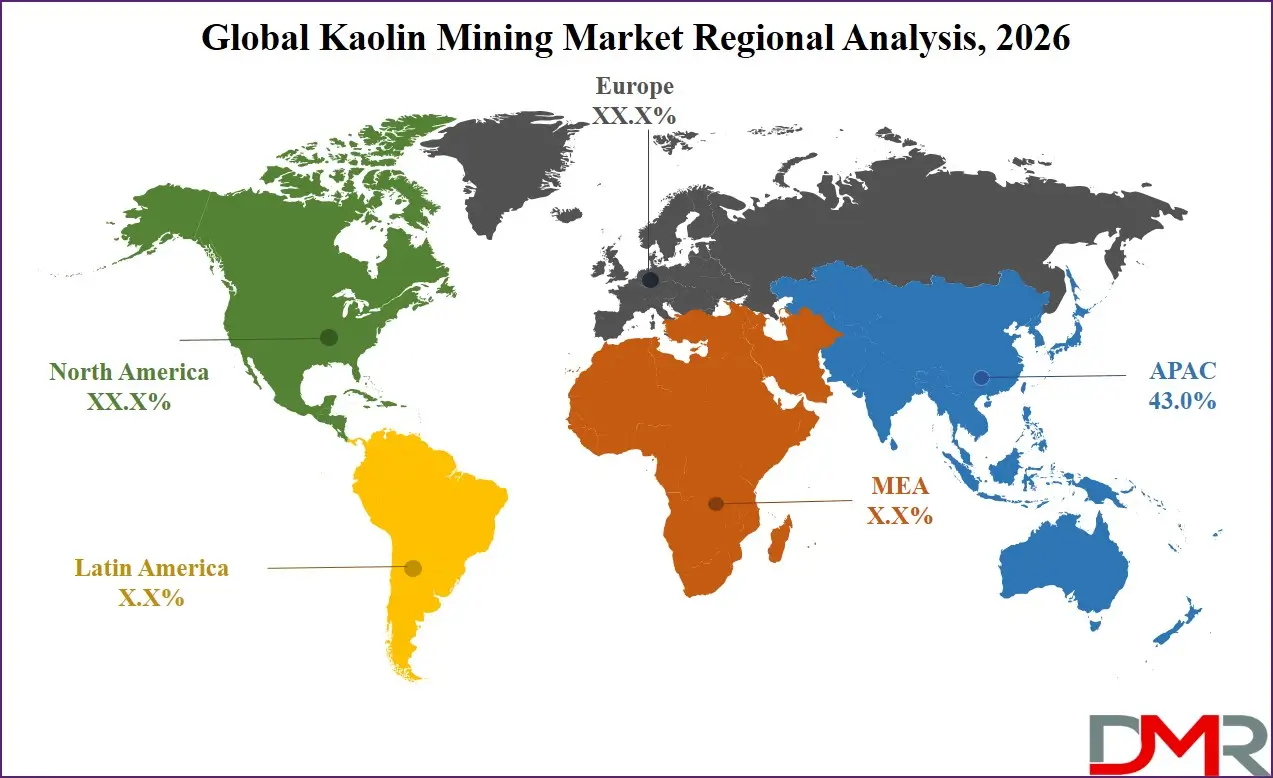
Asia Pacific is expected to lead the global Kaolin Mining Market, accounting for approximately 43.0% of total market revenue in 2026. The region's dominance is driven by abundant kaolin deposits in China and India, integrated with rapidly growing demand from the paper, ceramics, paints, coatings, and polymer industries. Expanding construction, urbanization, and packaging sectors further fuel consumption, while investments in beneficiation plants and modern mining technologies enhance production efficiency. Strong export capabilities and rising industrialization make Asia Pacific the largest and fastest-growing market for kaolin globally.
ℹ
To learn more about this report –
Download Your Free Sample Report Here
Region with the Highest CAGR
The Middle East and Africa region is expected to record the highest compound annual growth rate in the global Kaolin Mining Market over the forecast period. Rapid industrialization, expanding construction activities, and growing demand for ceramic tiles, paints, and polymer fillers are driving kaolin consumption in emerging economies within this region. Investments in modern mining operations, beneficiation facilities, and infrastructure development further support market growth. While current market revenue is smaller compared to Asia Pacific or North America, the accelerated adoption of kaolin across industrial applications positions the Middle East and Africa as the fastest-growing regional market globally.
By Region
North America
Europe
- Germany
- The U.K.
- France
- Italy
- Russia
- Spain
- Benelux
- Nordic
- Rest of Europe
Asia-Pacific
- China
- Japan
- South Korea
- India
- ANZ
- ASEAN
- Rest of Asia-Pacific
Latin America
- Brazil
- Mexico
- Argentina
- Colombia
- Rest of Latin America
Middle East & Africa
- Saudi Arabia
- UAE
- South Africa
- Israel
- Egypt
- Rest of MEA
Global Kaolin Mining Market: Competitive Landscape
The competitive landscape of the global Kaolin Mining Market is moderately consolidated, with key players focusing on product innovation, expansion of mining and processing facilities, and adoption of advanced beneficiation and surface treatment technologies. Companies are increasingly investing in high-performance and specialty kaolin grades to meet rising demand in paper, ceramics, coatings, and polymer applications. Strategic partnerships, mergers, and acquisitions are common to strengthen regional presence and supply chain efficiency. Additionally, sustainability initiatives, eco-friendly mining practices, and cost optimization strategies are shaping competitive dynamics, allowing producers to maintain market share in both mature and emerging markets.
Some of the prominent players in the Global Kaolin Mining Market are:
- Imerys
- BASF
- KaMin
- Thiele Kaolin Company
- Sibelco
- Quarzwerke Group
- Ashapura Group
- LB Minerals
- EICL Limited
- 20 Microns
- I-Minerals
- Sedlecký Kaolin
- UMA Group of Kaolin
- Jiangxi Sincere Mineral Industry
- Active Minerals International
- Kaolin EAD
- Minotaur Exploration
- Kaolin Malaysia
- Burgess Pigment Company
- Kerala Clays and Ceramic Products Limited
- Other Key Players
Recent Developments in the Global Kaolin Mining Market
- November 2025: A leading Chinese kaolin materials producer launched its initial public offering on the Hong Kong Stock Exchange, offering shares to raise capital for expanding deep processing of calcined kaolin products and supporting R&D initiatives for the materials value chain.
- November 2025: A kaolin producer's IPO raised significant funds through share placement, providing capital for expansion of high-value kaolin product lines and supporting growth in precision kaolin applications.
- May 2025: A major kaolin mining firm secured investment to build a new dry processing facility using advanced beneficiation technology, reducing operational costs and environmental impact while accessing deeper clay reserves.
- September 2024: A major kaolin supplier announced plans to commission a new processing plant at a historic deposit, aiming to produce enriched kaolin with strong industrial mineral applications, including ceramic and specialty clay products.
Report Details
| Report Characteristics |
| Market Size (2026) |
USD 4.8 Bn |
| Forecast Value (2035) |
USD 7.6 Bn |
| CAGR (2026–2035) |
5.4% |
| The US Market Size (2026) |
USD 0.8 Bn |
| Historical Data |
2021 – 2025 |
| Forecast Data |
2027 – 2035 |
| Base Year |
2025 |
| Estimate Year |
2026 |
| Report Coverage |
Market Revenue Estimation, Market Dynamics, Competitive Landscape, Growth Factors and etc. |
| Segments Covered |
By Grade Type (Hydrous Kaolin, Calcined Kaolin, Water Washed Kaolin, Surface Modified and Delaminated Kaolin), By Mining Method (Open Pit Mining, Underground Mining), By Processing Level (Crude Kaolin, Beneficiated Kaolin, Advanced Treated Kaolin), By Application (Paper Industry, Ceramics Industry, Paints and Coatings, Rubber and Plastics, Fiberglass and Specialty Applications) |
| Regional Coverage |
North America – The US and Canada; Europe – Germany, The UK, France, Russia, Spain, Italy, Benelux, Nordic, & Rest of Europe; Asia-Pacific – China, Japan, South Korea, India, ANZ, ASEAN, Rest of APAC; Latin America – Brazil, Mexico, Argentina, Colombia, Rest of Latin America; Middle East & Africa – Saudi Arabia, UAE, South Africa, Turkey, Egypt, Israel, & Rest of MEA |
| Prominent Players |
BASF, KaMin, Thiele Kaolin Company, Sibelco, Quarzwerke Group, Ashapura Group, LB Minerals, EICL Limited, 20 Microns, I-Minerals, Sedlecký Kaolin, UMA Group of Kaolin, Jiangxi Sincere Mineral Industry, and many others. |
| Purchase Options |
We have three licenses to opt for: Single User License (Limited to 1 user), Multi-User License (Up to 5 Users) and Corporate Use License (Unlimited User) along with free report customization equivalent to 0 analyst working days, 3 analysts working days and 5 analysts working days respectively. |
Frequently Asked Questions
How big is the Global Kaolin Mining Market?
▾ The Global Kaolin Mining Market size is estimated to have a value of USD 4.8 billion in 2026 and is expected to reach USD 7.6 billion by the end of 2035.
What is the growth rate in the Global Kaolin Mining Market in 2026?
▾ The market is growing at a CAGR of 5.4% over the forecasted period of 2026.
What is the size of the US Kaolin Mining Market?
▾ The US Kaolin Mining market is projected to be valued at USD 0.8 billion in 2026. It is expected to witness subsequent growth in the upcoming period as it holds USD 1.3 billion in 2035 at a CAGR of 5.1%.
Which region accounted for the largest Global Kaolin Mining Market?
▾ Asia Pacific is expected to have the largest market share in the Global Kaolin Mining Market with a share of about 43.0% in 2026.
Who are the key players in the Global Kaolin Mining Market?
▾ Some of the major key players in the Global Kaolin Mining Market are BASF, KaMin, Thiele Kaolin Company, Sibelco, Quarzwerke Group, Ashapura Group, LB Minerals, EICL Limited, 20 Microns, I-Minerals, Sedlecký Kaolin, UMA Group of Kaolin, Jiangxi Sincere Mineral Industry, and many others.