Market Overview
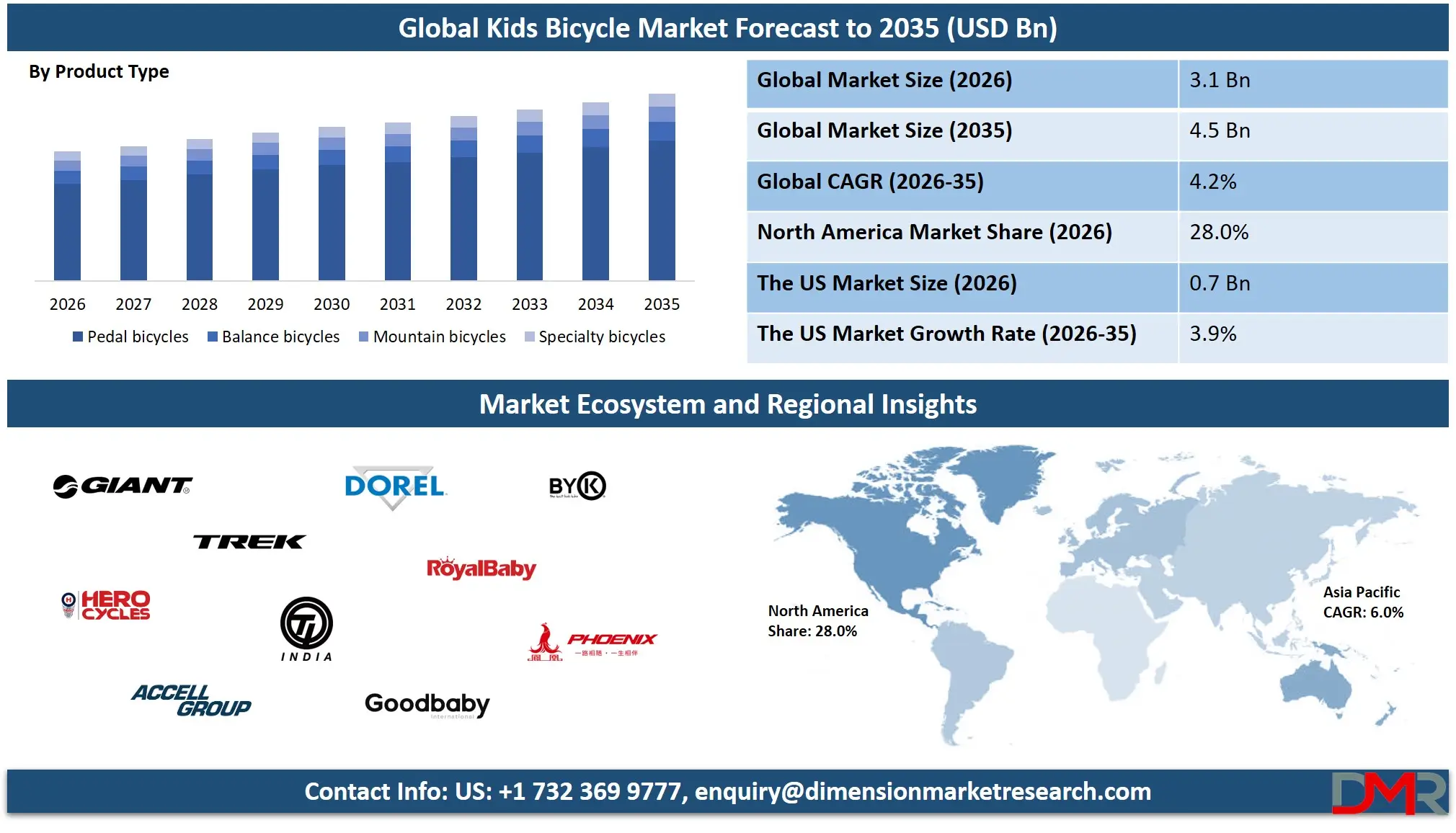
The global kids bicycle market is expected to reach USD 3.1 billion in 2026 and expand at a CAGR of 4.2% through 2035, reaching USD 4.5 billion in 2035. Growth is driven by rising demand for children bicycles, increasing awareness of outdoor activities, and adoption of safe and ergonomic bikes across key regions.
ℹ
To learn more about this report –
Download Your Free Sample Report Here
A kids bicycle is a specially designed bicycle that caters to the physical size, strength, and developmental abilities of children ranging from toddlers to early teenagers. These bicycles feature appropriate wheel sizes, lighter frames, and safety components such as training wheels, protective brakes, and non-slip handlebars to ensure a secure riding experience. Designed not only for mobility but also for skill development and recreational enjoyment, kids bicycles encourage balance, coordination, and outdoor activity. Manufacturers often integrate colorful designs, fun accessories, and adjustable components to adapt to a child’s growth while promoting a sense of independence and confidence in young riders.
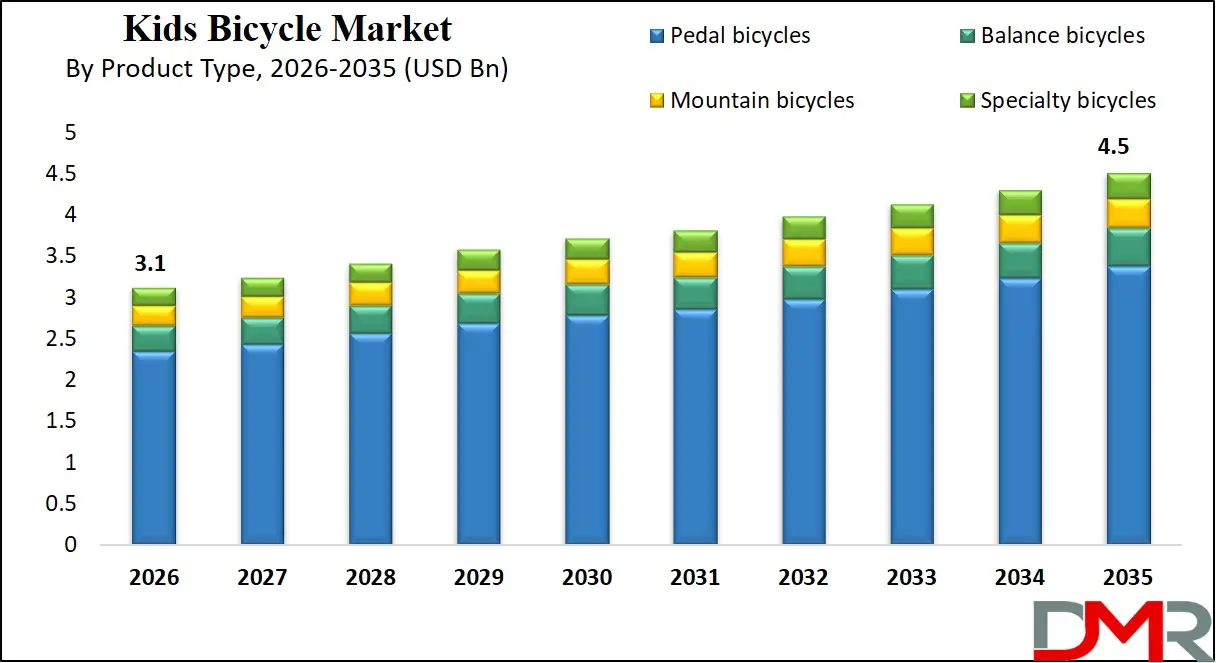
The global kids bicycle market encompasses the production, distribution, and sales of these bicycles across all regions, reflecting a dynamic interplay of innovation, consumer demand, and cultural trends. Growth is driven by increasing awareness of physical fitness among children, rising disposable incomes, and expanding retail and e-commerce channels that make bicycles more accessible. The market includes a wide range of products from balance bicycles for toddlers to performance-oriented bicycles for older children, as well as niche segments such as mountain bicycles and BMX bicycles.
ℹ
To learn more about this report –
Download Your Free Sample Report Here
Market expansion is influenced by urbanization, government initiatives promoting cycling as a healthy lifestyle, and rising interest in recreational outdoor activities. Manufacturers compete through design innovation, safety features, and brand differentiation to capture a growing customer base. Technological advancements such as lightweight materials, improved braking systems, and adjustable ergonomics further stimulate demand while regional variations in consumer preferences and spending power shape global market dynamics.
The US Kids Bicycle Market
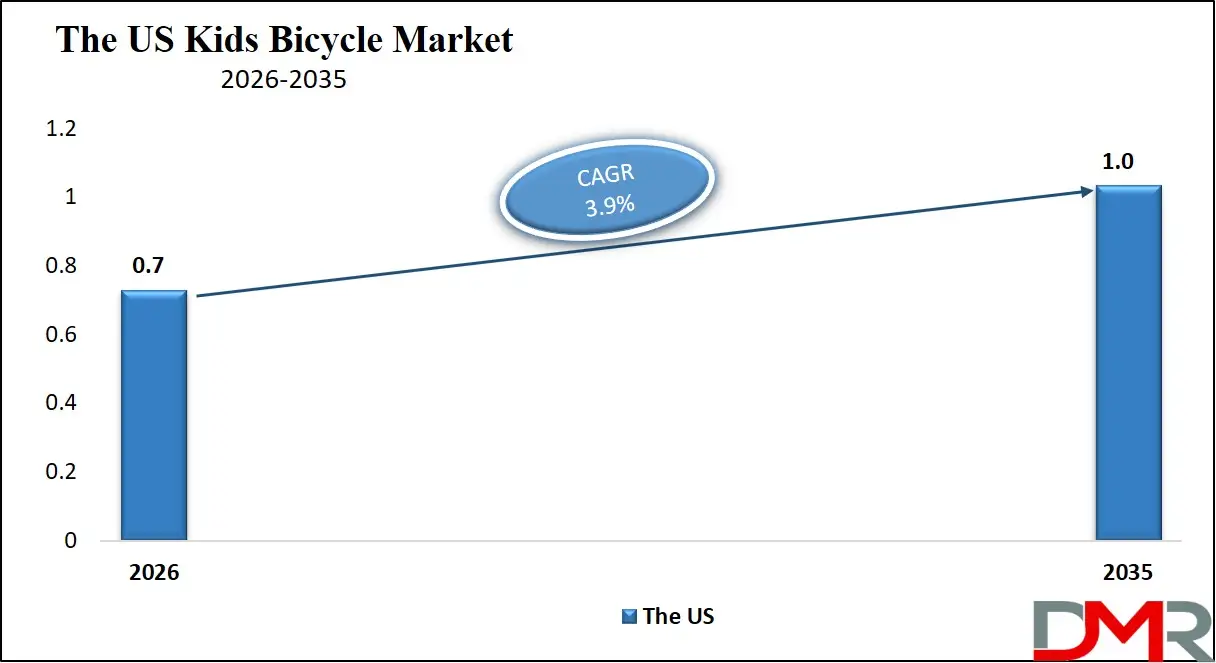
The U.S. Kids Bicycle Market size is expected to reach at USD 0.7 billion in 2026. It is further expected to witness subsequent growth in the upcoming period, holding USD 1.0 billion in 2035 at a CAGR of 3.9%.
ℹ
To learn more about this report –
Download Your Free Sample Report Here
The US kids bicycle market is witnessing steady growth fueled by increasing focus on children’s health, outdoor activities, and recreational cycling. Rising disposable income and a strong preference for quality and safety features are driving demand for ergonomically designed bicycles suitable for various age groups. Retail expansion, both through traditional stores and e-commerce platforms, has enhanced accessibility, while parents increasingly seek bicycles with durable frames, adjustable components, and innovative designs that cater to growing children. Seasonal trends and holiday gifting also contribute to market fluctuations.
Technological advancements and brand differentiation play a crucial role in the US market. Companies are introducing lightweight materials, improved braking systems, and fun, customizable features to attract young riders. Regional adoption varies, with urban and suburban areas showing higher penetration due to recreational infrastructure and cycling awareness programs. Marketing campaigns highlighting safety, fitness, and skill development further stimulate demand. Collaboration with schools and community programs promoting outdoor play reinforces growth, making the US a competitive and evolving segment of the global kids bicycle industry.
The Europe Kids Bicycle Market
The Europe kids bicycle market is projected to reach approximately USD 930 million in 2026, growing at a compound annual growth rate of 4.8%. This growth is driven by increasing awareness among parents about children’s health, outdoor activity, and the importance of physical exercise. Rising disposable incomes and strong preferences for safety, quality, and ergonomic designs support demand for both traditional pedal bicycles and performance-oriented models. Retail expansion, seasonal promotions, and brand differentiation further contribute to the steady market growth.
The market growth in Europe is further supported by well-developed cycling infrastructure, government initiatives promoting outdoor recreation, and the popularity of recreational and sports cycling among children. Countries such as Germany, France, and the United Kingdom have a strong cycling culture, which encourages early-age cycling and outdoor play. E-commerce platforms complement offline retail stores by offering wider access to premium, customizable, and innovative bicycle models. Overall, Europe’s emphasis on safety, quality, and active lifestyles positions it as a key market in the global kids bicycle industry.
The Japan Kids Bicycle Market
The Japan kids bicycle market is projected to reach approximately USD 248 million in 2026, expanding at a compound annual growth rate of 4.5%. Growth is driven by increasing awareness among parents about outdoor activities, physical fitness, and safe recreational options for children. Rising disposable incomes and a preference for high-quality, durable, and ergonomically designed bicycles support the adoption of pedal bicycles, balance bikes, and specialty models. Seasonal gifting and promotional campaigns further boost market demand, making Japan a notable regional contributor.
The market is also supported by safe urban cycling infrastructure and government initiatives promoting health and outdoor recreation. Japanese consumers increasingly prefer bicycles with lightweight frames, adjustable seats, and reliable braking systems suitable for growing children. The combination of traditional retail stores and expanding e-commerce platforms enhances accessibility to innovative and premium bicycle models, driving steady growth in the country’s kids bicycle segment.
Global Kids Bicycle Market: Key Takeaways
- Global Market Size and Growth: The global kids bicycle market is projected at USD 3.1 billion in 2026, growing at a CAGR of 4.2%, and expected to reach USD 4.5 billion by 2035.
- Regional Leadership: Asia Pacific leads with 40% of global revenue in 2026 and also posts the highest CAGR, driven by adoption in China, India, and Japan.
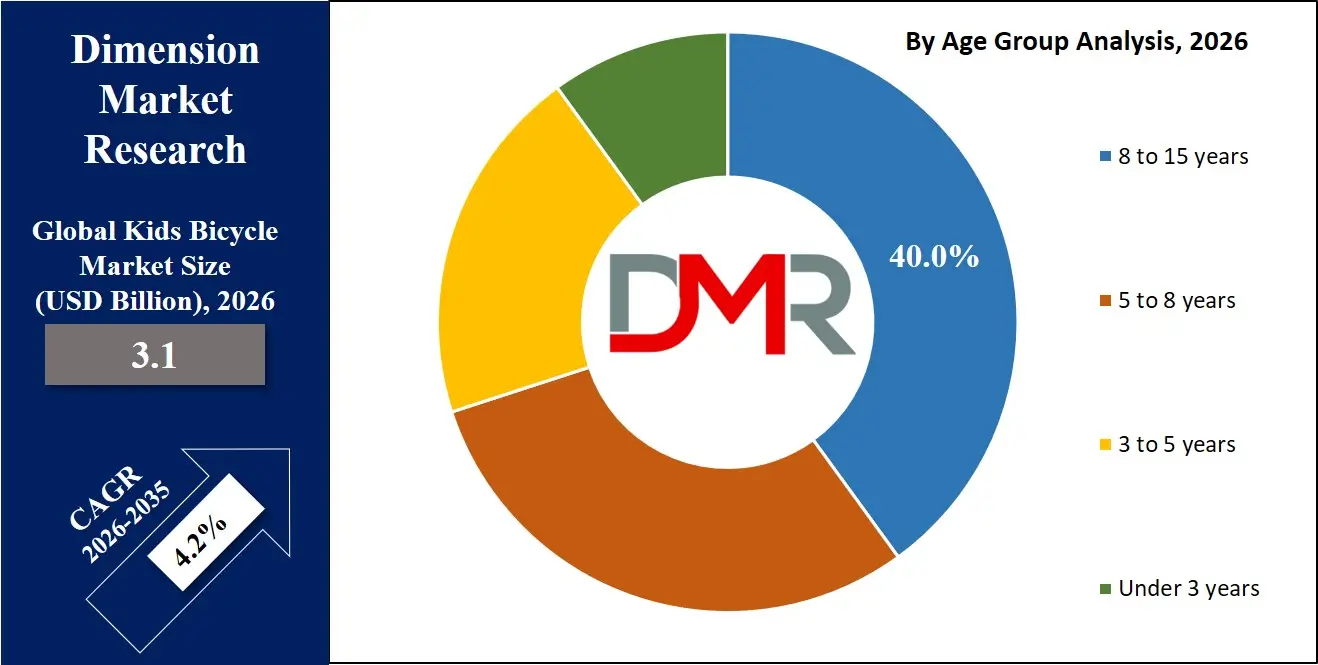
- Dominant Age Group: Children aged 8 to 15 years account for 40% of market demand, while 5 to 8 years form the second-largest segment, highlighting focus areas for manufacturers.
- Product Type Preference: Pedal bicycles dominate with 75% market share, whereas balance bicycles are growing steadily for toddlers, showing early-age adoption opportunities.
- Distribution Channels: Offline retail stores hold 70% market share, while online e-commerce is rising, enabling access to premium and customizable bicycles.
Global Kids Bicycle Market: Use Cases
- Recreational Outdoor Play: Kids bicycles are widely used for recreational activities, encouraging outdoor play and physical exercise. They help improve balance, coordination, and motor skills while providing entertainment and fun. Parents increasingly prefer bicycles with safe frames, training wheels, and colorful designs to engage children in active lifestyles, supporting overall health and development.
- Commuting and School Travel: Children bicycles serve as a convenient and eco-friendly mode of transport for school commuting. Lightweight and ergonomic bikes with adjustable seats and reliable brakes allow safe travel, reducing reliance on cars and promoting sustainable transportation habits from a young age.
- Sports and Performance Cycling: Older children and teenagers use specialized bicycles for sports and performance activities, including BMX, mountain biking, and racing. These bikes feature advanced braking systems, durable frames, and lightweight materials, fostering skill development, endurance, and competitive cycling experience.
- Gifting and Seasonal Purchases: Kids bicycles are popular as gifts for birthdays, holidays, and special occasions. Seasonal promotions, customizable designs, and branded products drive consumer interest, creating peaks in market demand and supporting retail growth globally.
Global Kids Bicycle Market: Stats & Facts
- Centers for Disease Control and Prevention (CDC)
- CDC bicycle helmet laws mandate children under 16 must wear helmets to reduce head trauma and brain injuries while riding.
- In a U.S. survey, only 42% of parents reported that their youngest child always wore a helmet while riding in the past 30 days.
- Bicycle ownership in the U.S. is approximately 30% of the population, and 45% of bike owners ride at least occasionally.
- About 80% to 90% of children in the U.S. own a bicycle by second grade.
- From 1984 through 1988, an average of 962 U.S. residents died annually from bicycle-related crashes, with 557,936 injuries treated in emergency departments.
- Head injury accounts for 62% of bicycle-related deaths in the United States.
- National Highway Traffic Safety Administration (NHTSA) and U.S. Safety Law Data
- Twenty-one U.S. states plus the District of Columbia have statewide mandatory helmet laws for children riding bicycles.
- Mandatory bicycle helmet laws cover child bicyclists younger than 18 in these jurisdictions.
- Communities with helmet laws generally have higher rates of helmet use among young bicyclists.
- U.S. Youth Surveys and Behavior Data
- Estimates from youth surveys show over two-thirds of middle school students self-reported rarely or never wearing a bicycle helmet while bicycling.
- Among middle schoolers in selected states, rarely or never wearing a helmet while riding decreased from 71.7% in 2013 to 67% in 2019.
- Male middle school students have higher odds of rarely or never wearing a helmet compared to females.
- Helmet use trends vary by race and age, with Asian students showing lower odds of rarely or never wearing helmets than White students.
- Japan Bicycle Distribution and Use (Trade Statistics)
- In Japan in 2023, domestic bicycle distribution included over 5,076,772 bicycles.
- The number of fully assembled bicycles distributed in Japan in 2023 was 714,827 units.
- Japanese distribution of light bicycles in 2023 reached 84,950 units.
- From 2023 to 2024, Japanese domestic light bicycle distribution remained above 75,000 units.
- India Ministry of Youth Affairs and Sports
- India integrated cycling modules in physical activity programs in over 6,000 schools nationwide in 2023.
- National data from India’s Ministry shows bicycle commuting among school children grew by 18% between 2020 and 2023.
Global Kids Bicycle Market: Market Dynamic
Driving Factors in the Global Kids Bicycle Market
Rising Health and Fitness Awareness among Children
Increasing awareness about childhood obesity and sedentary lifestyles is boosting demand for kids bicycles. Parents are encouraging outdoor activities, recreational cycling, and physical exercise to promote health, fitness, and motor skill development. This trend is driving growth in demand for ergonomically designed bicycles that combine safety, fun, and performance features.
Expansion of Retail and E-Commerce Channels
The growing availability of kids bicycles through offline retail stores and online e-commerce platforms is enhancing accessibility and convenience for consumers. Easy access to a wide variety of bicycles, including premium, sports, and balance models, supports market growth by attracting parents seeking quality, durability, and innovative designs.
Restraints in the Global Kids Bicycle Market
High Cost of Advanced Bicycles
Premium bicycles with lightweight frames, advanced braking systems, and adjustable ergonomics often come with higher price tags, limiting adoption in price-sensitive regions. This cost barrier restricts market penetration among middle-income families despite growing interest in children’s fitness and outdoor activities.
Safety Concerns and Risk of Injuries
Parents remain cautious about potential accidents, falls, and injuries associated with cycling. Lack of safety infrastructure such as dedicated cycling tracks and protective gear in certain regions may restrain growth, particularly in urban areas where traffic congestion and unsafe roads pose risks.
Opportunities in the Global Kids Bicycle Market
Innovative Product Development and Customization
Manufacturers have opportunities to introduce innovative bicycles with features like lightweight materials, colorful designs, adjustable frames, and digital tracking devices. Customization options that enhance safety, comfort, and style can attract more parents and children, driving higher adoption in emerging and developed markets.
Growing Popularity of Eco-Friendly Transportation
As urban areas emphasize sustainable transport, kids bicycles are increasingly viewed as an eco-friendly alternative for short-distance travel. Promoting bicycles as a green mobility solution can expand market demand, particularly in regions with cycling infrastructure and environmentally conscious consumers.
Trends in the Global Kids Bicycle Market
Integration of Smart Features and Technology
The inclusion of smart sensors, GPS tracking, and mobile applications in kids bicycles is becoming a trend. These technological enhancements provide real-time monitoring, safety alerts, and performance tracking, appealing to tech-savvy parents and aligning with the broader digital lifestyle trend.
Focus on Outdoor Recreational and Adventure Activities
There is a growing trend of encouraging children to participate in adventure cycling, mountain biking, and recreational outdoor sports. This trend drives demand for specialized bicycles, including mountain bikes, BMX models, and performance-oriented products that enhance skills and endurance.
Global Kids Bicycle Market: Research Scope and Analysis
By Age Group Analysis
In the global kids bicycle market, children aged 8 to 15 years are expected to dominate the age group segment, accounting for 40.0% of the total market share in 2026. This age range represents the largest consumer base as children at this stage have better coordination, strength, and interest in recreational and performance-oriented cycling. Bicycles for this group often feature larger wheel sizes, durable frames, advanced braking systems, and designs that cater to both outdoor play and sports activities. Manufacturers focus on combining safety, comfort, and style to meet the preferences of older children and their parents, driving strong demand in this segment.
ℹ
To learn more about this report –
Download Your Free Sample Report Here
Children aged 5 to 8 years form the second largest segment, capturing significant market attention due to their growing independence and learning abilities. Bicycles for this age group are designed with smaller wheels, training wheels, and ergonomic frames to ensure safety while encouraging skill development and confidence in riding. Bright colors, playful designs, and adjustable features help attract young riders and enhance the overall riding experience. This segment is influenced by parents seeking durable and safe bicycles that support outdoor activities, balance development, and recreational enjoyment, making it a crucial part of the market’s overall growth.
By Product Type Analysis
Pedal bicycles are expected to dominate the product type segment in the global kids bicycle market, capturing 75.0% of the total market share in 2026. These bicycles remain the most popular choice due to their versatility, affordability, and suitability for a wide range of age groups. Pedal bicycles are designed to provide stability, durability, and ease of use, allowing children to develop balance, coordination, and physical strength. They are available in various wheel sizes and frame designs to cater to both recreational riding and more active outdoor play, making them a staple in the market and a preferred choice among parents seeking reliable and long-lasting options for their children.
Balance bicycles are another important segment in the market, primarily targeted at toddlers and very young children who are just learning to ride. These bicycles are designed without pedals, enabling children to focus on developing their balance and coordination before transitioning to traditional pedal bicycles. Lightweight frames, adjustable seats, and safety-focused features make balance bicycles ideal for early skill development. The segment is growing steadily as parents increasingly recognize the benefits of introducing their children to cycling at a younger age, promoting confidence, independence, and a strong foundation for future cycling activities.
By Wheel Size Analysis
In the global kids bicycle market, bicycles with 14 to 18 inch wheels are expected to dominate the wheel size segment, capturing 45.0% of the total market share in 2026. This wheel size is ideal for children aged five to nine years, providing a perfect balance between stability and maneuverability. Bicycles in this range are designed with durable frames, reliable braking systems, and adjustable components to accommodate growing children. They are widely used for recreational cycling, school commuting, and skill-building activities, making them the most preferred choice among parents and contributing significantly to market growth.
Bicycles with wheels less than 14 inches cater primarily to toddlers and younger children who are just starting to learn how to ride. These bikes are often equipped with training wheels, lightweight frames, and safety-focused features to ensure a secure and enjoyable learning experience. Bright colors, playful designs, and easy-to-handle sizes make them appealing for both children and parents. The segment is gaining popularity as early-age cycling is increasingly encouraged to develop balance, coordination, and confidence in young riders, supporting overall demand in the kids bicycle market.
By Distribution Channel Analysis
In the global kids bicycle market, offline retail stores are expected to dominate the distribution channel segment, capturing 70.0% of the total market share in 2026. Traditional brick and mortar stores remain the preferred choice for parents due to the ability to physically examine bicycles, assess quality, and ensure proper fit for their children. These stores offer a wide variety of models, including pedal bicycles, mountain bicycles, and balance bicycles, along with accessories and after-sales services. The presence of knowledgeable staff and the opportunity for test rides enhance customer confidence, making offline retail a dominant and reliable channel in the market.
Online e-commerce is emerging as a growing segment in the kids bicycle market, offering convenience, wider selection, and competitive pricing. Parents increasingly use online platforms to compare features, read reviews, and purchase bicycles from global and regional brands without visiting physical stores. E-commerce allows access to specialty bicycles, customizable designs, and premium models that may not be available locally. The segment benefits from fast delivery services, digital payment options, and attractive promotional offers, contributing to steady growth and complementing traditional offline retail channels.
By End-Use Analysis
In the global kids bicycle market, recreational outdoor play is expected to dominate the end-use segment, capturing 50.0% of the total market share in 2026. Bicycles in this category are primarily used for leisure, fun, and physical exercise, helping children develop balance, coordination, and overall fitness. Brightly colored designs, durable frames, and safety features such as training wheels and reliable brakes make these bicycles appealing to both children and parents. The growing emphasis on outdoor activities, playtime, and healthy lifestyles drives demand for bicycles designed for recreational purposes, making this segment the largest in the market.
Utility and commuting to school represents another important segment of the kids bicycle market, focusing on practical daily use. Bicycles designed for commuting are lightweight, durable, and equipped with features such as comfortable seating, efficient braking systems, and easy handling to ensure safety and convenience for children traveling short distances. Parents are increasingly adopting bicycles for school travel to promote independence, reduce reliance on motorized transport, and encourage environmentally friendly mobility habits. This segment is particularly popular in urban and suburban areas where cycling infrastructure and awareness of sustainable transportation are improving.
The Global Kids Bicycle Market Report is segmented on the basis of the following:
By Age Group
- 8 to 15 years
- 5 to 8 years
- 3 to 5 years
- Under 3 years
By Product Type
- Pedal bicycles
- Balance bicycles
- Mountain bicycles
- Specialty Bicycles
By Wheel Size
- Less than 14 inch
- 14 to 18 inch
- Greater than 18 inch
By Distribution Channel
- Offline retail stores
- Online e-commerce
By End-Use
- Recreational outdoor play
- Utility and commuting to school
- Sports and performance
- Gifts and seasonal purchases
Impact of Artificial Intelligence in the Global Kids Bicycle Market
The integration of artificial intelligence in the global kids bicycle market is gradually transforming product design, safety, and consumer engagement. AI-powered features are being incorporated into high-end bicycles to monitor a child’s riding patterns, provide real-time feedback on speed and balance, and alert parents to potential safety risks. Smart sensors and connected devices enable tracking of performance metrics, maintenance needs, and route safety, enhancing the overall cycling experience.
In addition to product innovation, AI is influencing marketing and sales strategies. E-commerce platforms and retail brands use AI algorithms to analyze consumer behavior, recommend suitable bicycle models based on age and preferences, and personalize promotions. AI-driven data insights also assist manufacturers in optimizing production, predicting demand trends, and improving inventory management. Overall, AI adoption is enhancing safety, convenience, and engagement in the kids bicycle market, while creating opportunities for technologically advanced and premium product offerings globally.
Global Kids Bicycle Market: Regional Analysis
Region with the Largest Revenue Share
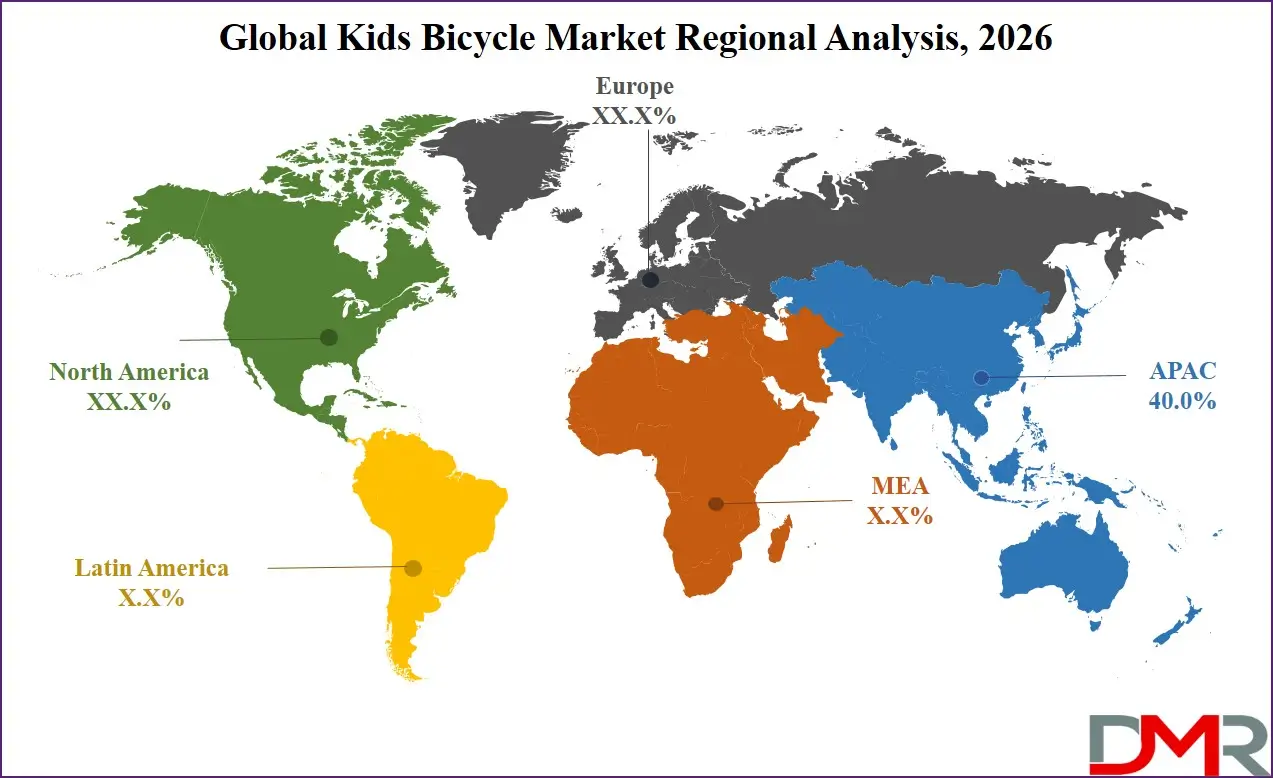
Asia Pacific is expected to lead the global kids bicycle market, capturing 40 percent of total global market revenue in 2026. The region’s dominance is driven by a large population of children, rising disposable incomes, and growing awareness among parents about health, fitness, and outdoor activities. Expanding retail networks and the rapid growth of e-commerce platforms make bicycles more accessible, while urbanization and the development of recreational infrastructure further boost demand. Countries such as China, India, and Japan contribute significantly to market growth due to increasing adoption of pedal bicycles, balance bicycles, and performance-oriented models.
ℹ
To learn more about this report –
Download Your Free Sample Report Here
Region with the Highest CAGR
The Asia Pacific region is expected to register the highest compound annual growth rate in the global kids bicycle market. Rapid urbanization, rising disposable incomes, and increasing awareness of children’s health and outdoor activities are driving demand. The growing popularity of recreational cycling, expansion of e-commerce platforms, and government initiatives promoting active lifestyles further support market growth. Emerging markets in countries such as India, China, and Southeast Asian nations are witnessing strong adoption of pedal bicycles, balance bicycles, and specialty models, making Asia Pacific the fastest-growing region in the global kids bicycle industry.
By Region
North America
Europe
- Germany
- The U.K.
- France
- Italy
- Russia
- Spain
- Benelux
- Nordic
- Rest of Europe
Asia-Pacific
- China
- Japan
- South Korea
- India
- ANZ
- ASEAN
- Rest of Asia-Pacific
Latin America
- Brazil
- Mexico
- Argentina
- Colombia
- Rest of Latin America
Middle East & Africa
- Saudi Arabia
- UAE
- South Africa
- Israel
- Egypt
- Rest of MEA
Global Kids Bicycle Market: Competitive Landscape
The competitive landscape of the global kids bicycle market is characterized by intense rivalry and continuous innovation as manufacturers strive to differentiate through product quality, safety features, and design aesthetics. Companies are increasingly focusing on research and development to introduce lightweight frames, adjustable ergonomics, advanced braking systems, and smart connectivity options that appeal to both children and parents.
Strategic investments in branding, retail expansion, and digital marketing help players strengthen their market presence across regions. Partnerships with e-commerce platforms and seasonal promotional campaigns further enhance visibility and consumer reach, while emphasis on after‑sales support and customization options contributes to customer loyalty and sustained competitive advantage in a dynamic industry environment.
Some of the prominent players in the Global Kids Bicycle Market are:
- Giant Bicycles
- Trek Bicycle Corporation
- Hero Cycles
- Accell Group
- Dorel Industries
- TI Cycles of India
- ByK Bikes
- RoyalBaby
- Happy Dino
- Goodbaby
- Phoenix Bicycles
- Flying Pigeon
- FOREVER
- Merida Bikes
- Xidesheng Bicycle
- Avon Cycles
- Cannondale
- Specialized Bicycle Components
- Scott Sports
- Dynacraft Wheels
- Other Key Players
Recent Developments in the Global Kids Bicycle Market
- November 2025: RoyalBaby introduced its "Learn to Ride in 30 Minutes" framework and associated kids bicycles equipped with quick‑release technology that allows a transition from balance mode to pedal mode. This initiative aims to reduce learning barriers for children and support parents during peak holiday shopping by offering bikes designed for faster skill acquisition and improved riding confidence.
- October 2025: woom launched its new self‑balancing bike for babies and toddlers aged from nine months to 36 months, offering an intuitive balance‑building design that supports early motor skill development before children transition to conventional balance bikes. The innovative model features self‑centering steering and a self‑stabilizing wobble effect designed to make learning to balance easier and more confidence‑boosting for young riders.
Report Details
| Report Characteristics |
| Market Size (2026) |
USD 3.1 Bn |
| Forecast Value (2035) |
USD 4.5 Bn |
| CAGR (2026–2035) |
4.2% |
| The US Market Size (2026) |
USD 0.7 Bn |
| Historical Data |
2021 – 2025 |
| Forecast Data |
2027 – 2035 |
| Base Year |
2025 |
| Estimate Year |
2026 |
| Report Coverage |
Market Revenue Estimation, Market Dynamics, Competitive Landscape, Growth Factors and etc. |
| Segments Covered |
By Age Group (8 to 15 years, 5 to 8 years, 3 to 5 years, Under 3 years), By Product Type (Pedal bicycles, Balance bicycles, Mountain bicycles, Specialty Bicycles), By Wheel Size (Less than 14 inch, 14 to 18 inch, Greater than 18 inch), By Distribution Channel (Offline retail stores, Online e-commerce), and By End-Use (Recreational outdoor play, Utility and commuting to school, Sports and performance, Gifts and seasonal purchases) |
| Regional Coverage |
North America – The US and Canada; Europe – Germany, The UK, France, Russia, Spain, Italy, Benelux, Nordic, & Rest of Europe; Asia-Pacific – China, Japan, South Korea, India, ANZ, ASEAN, Rest of APAC; Latin America – Brazil, Mexico, Argentina, Colombia, Rest of Latin America; Middle East & Africa – Saudi Arabia, UAE, South Africa, Turkey, Egypt, Israel, & Rest of MEA |
| Prominent Players |
Giant Bicycles, Trek Bicycle Corporation, Hero Cycles, Accell Group, Dorel Industries, TI Cycles of India, ByK Bikes, RoyalBaby, Happy Dino, Goodbaby, Phoenix Bicycles, Flying Pigeon, FOREVER, Merida Bikes, Xidesheng Bicycle, Avon Cycles, Cannondale, Specialized Bicycle Components, Scott Sports, and Dynacraft Wheels, and Other Key Players |
| Purchase Options |
We have three licenses to opt for: Single User License (Limited to 1 user), Multi-User License (Up to 5 Users) and Corporate Use License (Unlimited User) along with free report customization equivalent to 0 analyst working days, 3 analysts working days and 5 analysts working days respectively. |
Frequently Asked Questions
How big is the Global Kids Bicycle Market?
▾ The Global Kids Bicycle Market size is estimated to have a value of USD 3.1 billion in 2026 and is expected to reach USD 4.5 billion by the end of 2035.
What is the growth rate in the Global Kids Bicycle Market in 2026?
▾ The market is growing at a CAGR of 4.2% over the forecasted period of 2026.
What is the size of the US Kids Bicycle Market?
▾ The US Kids Bicycle market is projected to be valued at USD 0.7 billion in 2026. It is expected to witness subsequent growth in the upcoming period as it holds USD 1.0 billion in 2035 at a CAGR of 3.9%.
Which region accounted for the largest Global Kids Bicycle Market?
▾ Asia Pacific is expected to have the largest market share in the Global Kids Bicycle Market with a share of about 40.0% in 2026.
Who are the key players in the Global Kids Bicycle Market?
▾ Some of the major key players in the Global Kids Bicycle Market are Giant Bicycles, Trek Bicycle Corporation, Hero Cycles, Accell Group, Dorel Industries, TI Cycles of India, ByK Bikes, RoyalBaby, Happy Dino, Goodbaby, Phoenix Bicycles, Flying Pigeon, FOREVER, Merida Bikes, Xidesheng Bicycle, and many others.