Market Overview
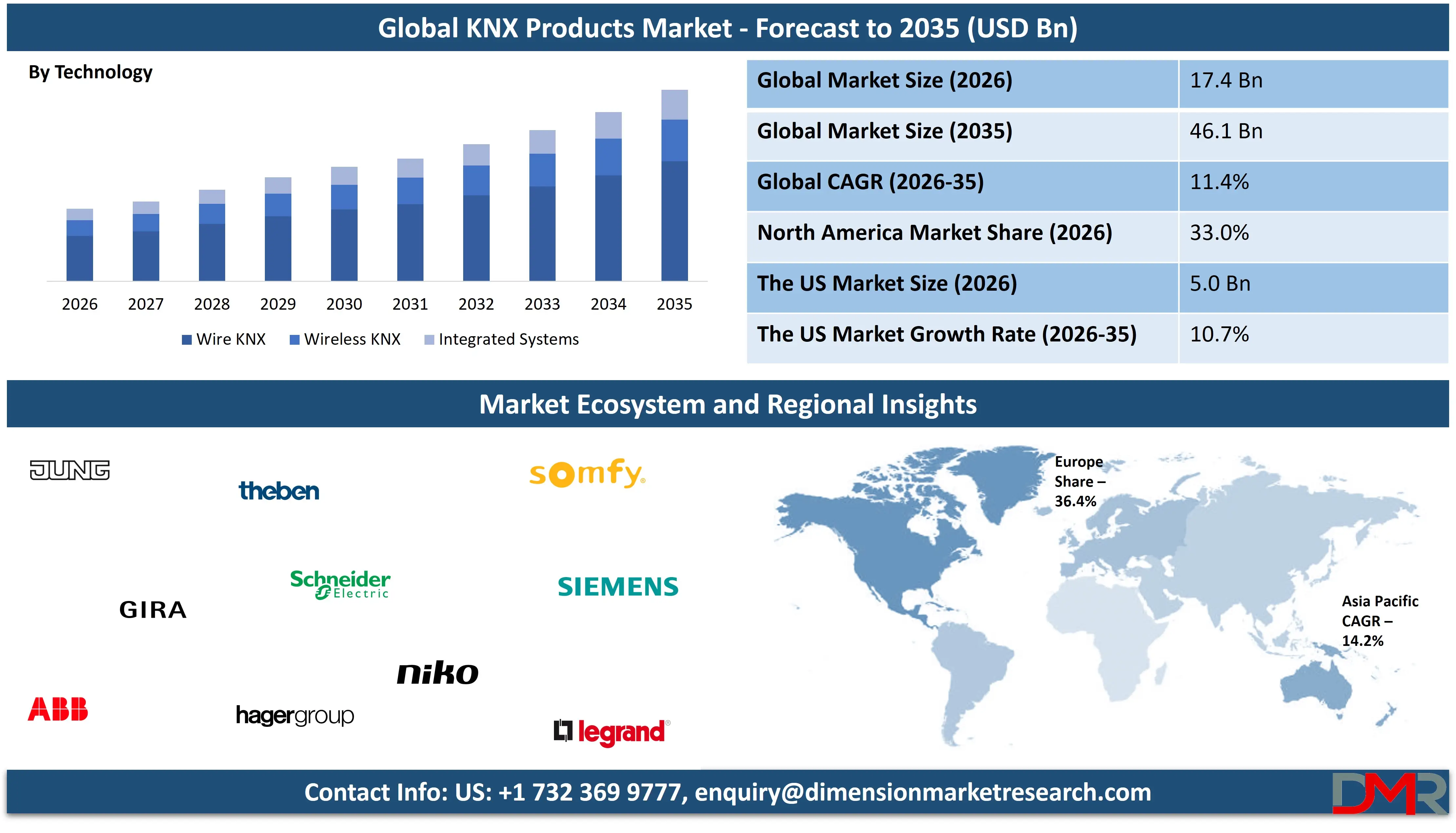
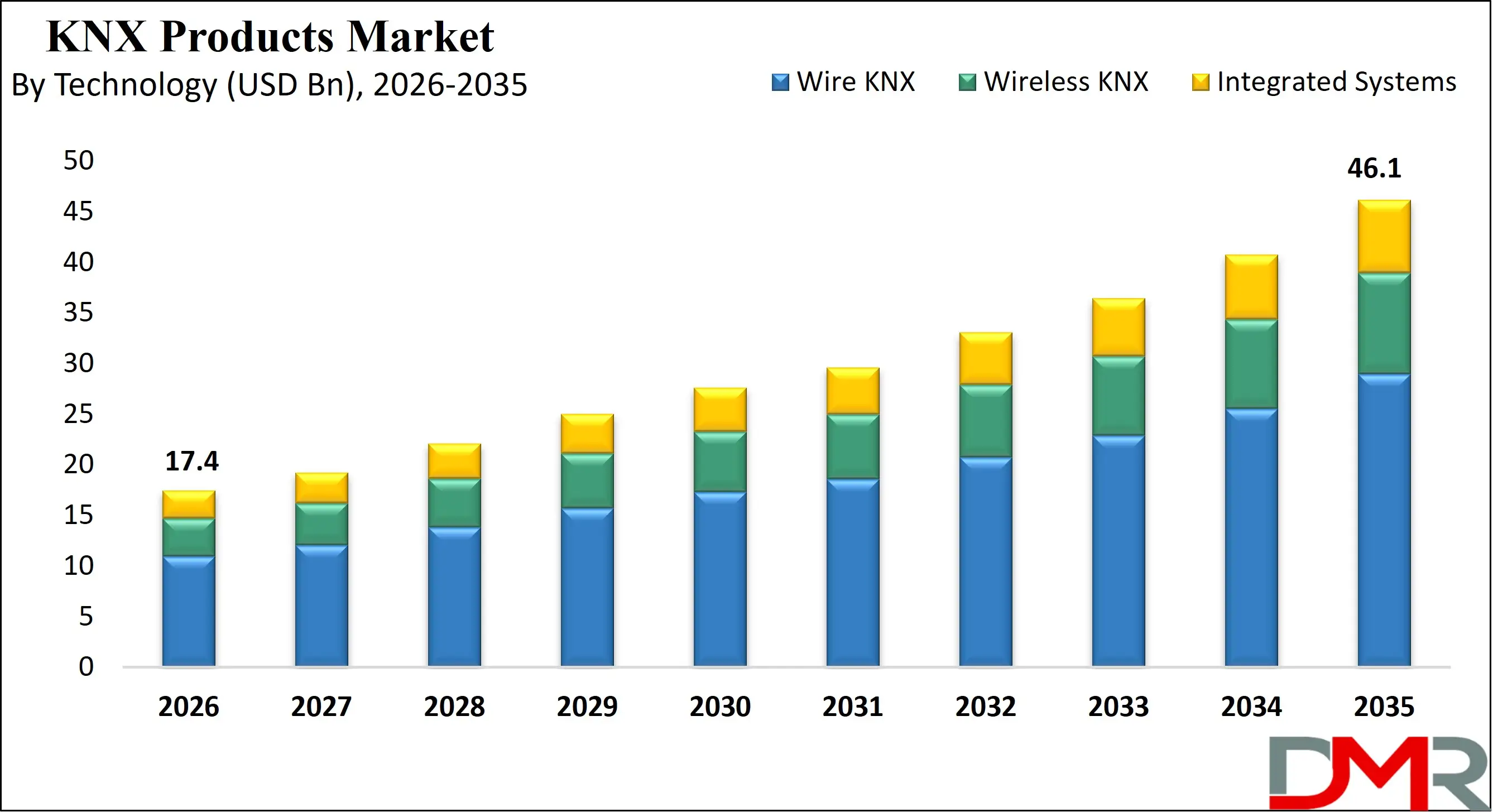
The Global Knx Products Market size is projected to reach USD 17.4 billion in 2026 and grow at a compound annual growth rate of 11.4% to reach a value of USD 46.1 billion in 2035.
ℹ
To learn more about this report –
Download Your Free Sample Report Here
KNX products are standardized building automation devices based on the KNX open communication protocol. They enable intelligent control of lighting, HVAC, shading, security, and energy systems in buildings. The product range includes sensors, actuators, controllers, user interfaces, and communication modules that work through wired or wireless networks. A key advantage of KNX technology is interoperability, allowing devices from different manufacturers to operate seamlessly together. This creates a unified and scalable automation system suitable for residential, commercial, industrial, and public infrastructure projects.
Rising demand for energy efficiency and carbon reduction is driving wider adoption of KNX systems. Integration with IoT, cloud platforms, and secure IP networks improves flexibility and enables remote monitoring and control. Growth in smart homes and green commercial buildings, along with stricter energy regulations, is further supporting deployment. As building owners focus on lowering operating costs and improving occupant comfort, KNX solutions are becoming a standard component in modern building infrastructure.
ℹ
To learn more about this report –
Download Your Free Sample Report Here
In recent years, KNX systems have become more compatible with third-party platforms, voice assistants, and advanced energy management tools. Manufacturers are investing in KNX IoT, stronger cybersecurity features, and wireless devices to support retrofit projects. Strategic partnerships with developers and system integrators are expanding market reach. At the same time, policies promoting net-zero buildings are strengthening long-term growth opportunities.
The US Knx Products Market
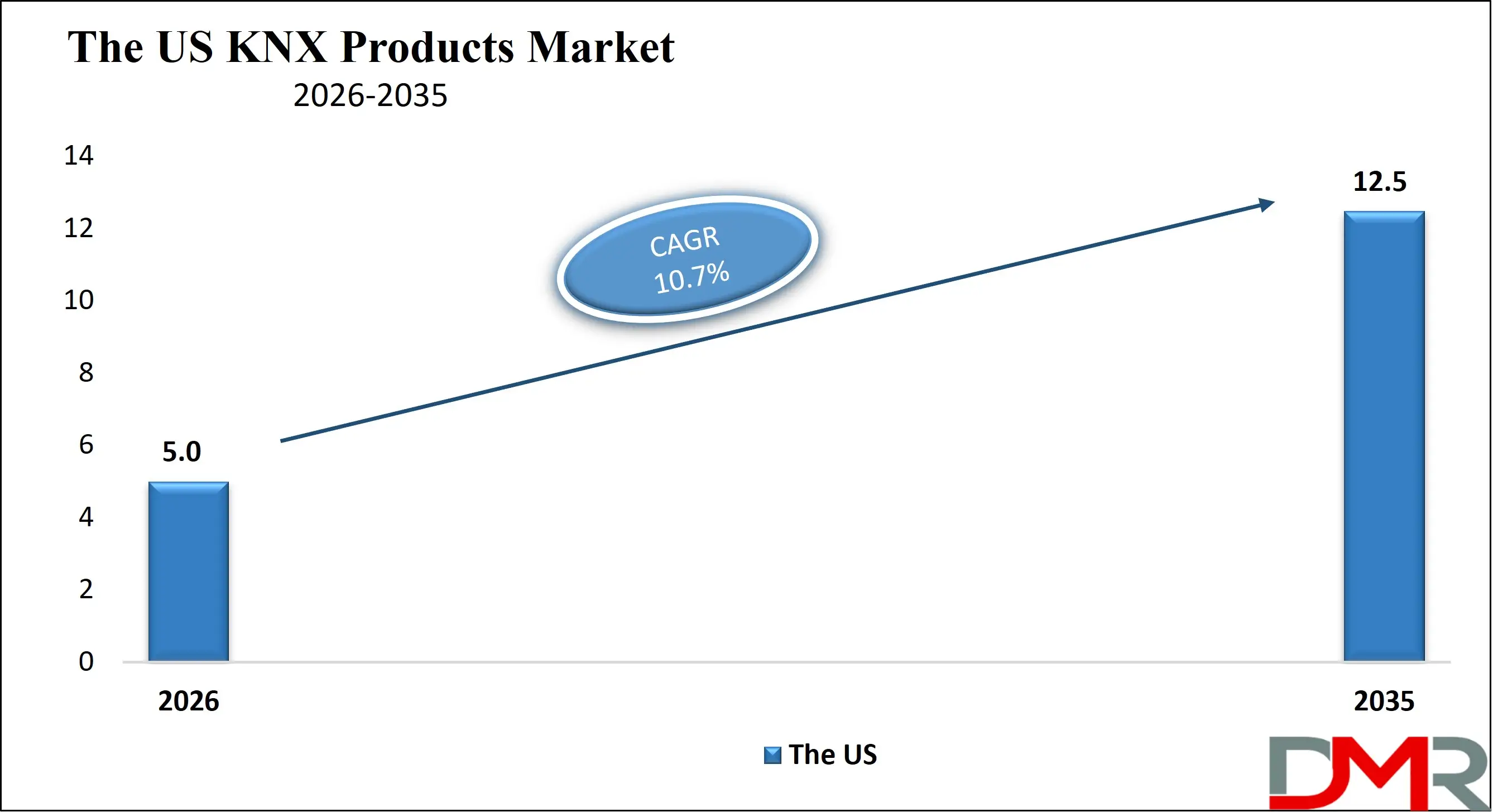
The US Knx Products Market size is projected to reach USD 5.0 billion in 2026 at a compound annual growth rate of 10.7% over its forecast period.
ℹ
To learn more about this report –
Download Your Free Sample Report Here
The US KNX products market is expanding steadily, driven by increasing smart building adoption and energy-efficiency mandates across commercial and residential sectors. Growing investments in green construction, particularly LEED-certified buildings, are supporting demand for interoperable automation systems. Federal and state-level incentives promoting energy optimization and decarbonization further enhance market attractiveness. The commercial sector—especially offices, healthcare facilities, and hospitality—accounts for a significant share, with system integrators playing a central role in deployments. Retrofit projects in aging infrastructure and demand for cybersecurity-enabled building automation solutions are also shaping growth across metropolitan areas.
Europe Knx Products Market
Europe Knx Products Market size is projected to reach USD 6.3 billion in 2026 at a compound annual growth rate of 10.5% over its forecast period.
Europe represents a mature and innovation-driven landscape for KNX products, supported by strong regulatory frameworks such as the European Green Deal and Energy Performance of Buildings Directive (EPBD). High emphasis on sustainability, carbon neutrality, and smart city development fuels widespread implementation across Germany, France, Italy, and the Nordics. The region benefits from early adoption of standardized automation protocols and strong collaboration among manufacturers. Commercial buildings and multi-family housing projects lead installations, while integration with renewable energy systems and EV charging infrastructure is accelerating innovation and long-term deployment.
Japan Knx Products Market
Japan Knx Products Market size is projected to reach USD 870 million in 2026 at a compound annual growth rate of 11.3% over its forecast period.
Japan’s KNX products market is growing with increased focus on energy-efficient buildings, disaster-resilient infrastructure, and advanced urban development. Government initiatives promoting smart cities and carbon reduction targets are encouraging automation investments in commercial and public facilities. High urban density and technological sophistication support rapid deployment in mixed-use developments and high-rise residential buildings. Integration with advanced HVAC systems and industrial automation platforms presents new opportunities. However, competition from domestic automation standards and cost sensitivity in smaller projects pose moderate challenges to broader penetration.
Knx Products Market: Key Takeaways
- Market Growth: The Knx Products Market size is expected to grow by USD 26.9 billion, at a CAGR of 11.4%, during the forecasted period of 2027 to 2035.
- By Technology: The wire Knx segment is anticipated to get the majority share of the Knx Products Market in 2026.
- By Application: The commercial segment is expected to get the largest revenue share in 2026 in the Knx Products Market.
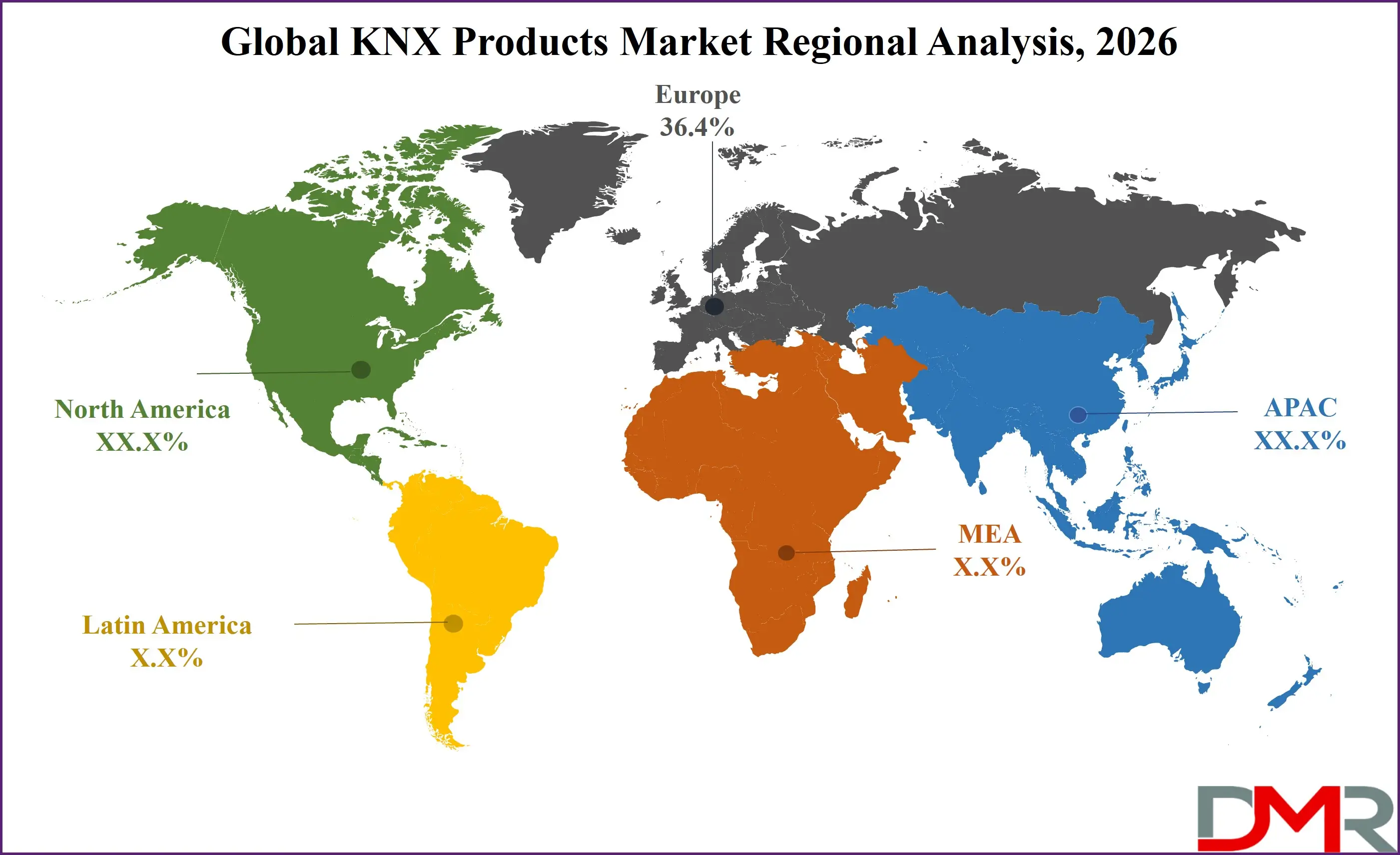
- Regional Insight: Europe is expected to hold a 36.4% share of revenue in the Global Knx Products Market in 2026.
- Use Cases: Some of the use cases of Knx Products include smart lighting management, HVAC Optimization, and more.
Knx Products Market: Use Cases
- Smart Lighting Management: Automated lighting control using motion sensors and daylight harvesting to optimize energy consumption and enhance occupant comfort.
- HVAC Optimization: Intelligent temperature and air-quality control systems that reduce operational costs and improve indoor environmental quality.
- Energy Monitoring & Management: Real-time energy tracking integrated with renewable sources to enable demand response and peak load management.
- Shading & Blind Control: Automated blinds and shutters responding to sunlight and weather conditions to improve thermal efficiency.
- Security & Access Integration: Seamless integration with surveillance, alarms, and access control systems for enhanced safety.
- Smart Home Automation: Unified control of lighting, appliances, and multimedia systems via mobile apps or touch interfaces.
- Public Infrastructure Automation: Energy-efficient management of schools, government buildings, and transport hubs.
Stats & Facts
- International Energy Agency reported in 2024 that buildings account for nearly 30% of global final energy consumption.
- European Commission stated in 2024 that buildings generate approximately 36% of EU greenhouse gas emissions.
- U.S. Department of Energy noted in 2025 that smart building technologies can reduce energy usage by up to 25% in commercial facilities.
- United Nations Environment Programme indicated in 2024 that energy-efficient retrofits could cut global building emissions by 50% by 2030.
- Japan Ministry of Economy, Trade and Industry reported in 2024 that over 60% of new large-scale commercial projects incorporate advanced energy management systems.
- U.S. Energy Information Administration stated in 2025 that commercial buildings consumed about 18% of total U.S. energy usage.
- European Environment Agency confirmed in 2024 that renovation rates must double to meet 2030 climate targets.
- International Renewable Energy Agency noted in 2024 that digital energy management solutions can improve grid flexibility by 20%.
- U.S. General Services Administration reported in 2025 that federal smart building upgrades reduced operational costs by 15% annually.
- OECD highlighted in 2024 that urbanization levels reached 81% in developed economies, increasing demand for intelligent infrastructure.
Market Dynamic
Driving Factors in the Knx Products Market
Rising Demand for Energy Efficiency and Sustainable Buildings
Growing global emphasis on reducing carbon emissions and achieving net-zero targets is significantly influencing KNX product adoption. Governments are introducing stringent building codes and performance standards that require automated energy monitoring and optimization systems. KNX solutions enable precise control of lighting, HVAC, and shading systems, contributing to measurable reductions in energy consumption. Increasing awareness among building owners regarding operational cost savings further accelerates demand. As sustainability certifications become essential for property valuation, KNX-enabled automation systems are being integrated at early construction stages to ensure compliance and long-term efficiency.
Integration of IoT and Smart Infrastructure
Advancements in IoT, cloud computing, and IP-based communication are reshaping building automation ecosystems. KNX IoT integration allows remote diagnostics, predictive maintenance, and centralized management across multiple facilities. Enhanced interoperability with third-party platforms, including security and audiovisual systems, increases deployment flexibility. Demand for real-time analytics and mobile-based control interfaces is driving technological evolution. As smart cities expand globally, KNX products are increasingly embedded in connected infrastructure networks, enabling data-driven decision-making and scalable automation frameworks across urban developments.
Restraints in the Knx Products Market
High Initial Investment and Skilled Workforce Requirements
Implementation of KNX-based automation systems involves substantial upfront costs related to hardware, system design, and professional installation. Skilled system integrators and certified professionals are required for configuration and commissioning, which increases project expenses. Small-scale residential projects may find the cost-benefit ratio less attractive compared to simpler automation alternatives. Additionally, integration complexity in retrofit scenarios can limit adoption in cost-sensitive markets. These financial and technical barriers can slow penetration, particularly in developing economies or among smaller property owners.
Interoperability Challenges with Legacy Systems
Although KNX is standardized, integration with older building management systems or proprietary automation platforms may require additional gateways and customization. Compatibility issues can increase project timelines and technical complexity. In regions with established domestic automation standards, market entry may be constrained. Cybersecurity concerns related to connected building networks also necessitate additional safeguards, adding to system design considerations and potential hesitancy among conservative end-users.
Opportunities in the Knx Products Market
Expansion of Smart City Initiatives
Rapid urbanization and government-backed smart city programs present significant growth avenues. Large-scale public infrastructure projects increasingly prioritize integrated automation for energy efficiency and operational transparency. KNX-based solutions can support lighting grids, public transport hubs, and municipal facilities. Growing investment in sustainable urban development provides untapped potential for vendors and integrators seeking long-term contracts and recurring service models.
Growth in Retrofit and Modernization Projects
Aging building stock in developed economies offers substantial modernization opportunities. Energy retrofitting mandates and performance upgrade programs are driving demand for modular and wireless KNX devices. Retrofit-friendly wireless KNX and IoT-enabled systems allow cost-effective upgrades without extensive rewiring. This segment is expected to gain momentum as governments incentivize building renovations to meet emission reduction goals.
Trends in the Knx Products Market
Adoption of KNX IoT and Cloud-Enabled Systems
The emergence of KNX IoT is enabling seamless IP-based communication and secure cloud integration. This trend enhances scalability, remote access, and cross-platform compatibility. Cloud dashboards and analytics tools allow building managers to monitor performance metrics in real time. As digital transformation accelerates, cloud-enabled KNX deployments are becoming increasingly prevalent across commercial portfolios.
Convergence of Automation with Renewable Energy Systems
Integration of KNX automation with solar PV, battery storage, and EV charging infrastructure is gaining traction. Intelligent load balancing and energy optimization systems are enabling buildings to operate more efficiently within distributed energy networks. This convergence aligns with decarbonization strategies and enhances resilience against grid instability.
Impact of Artificial Intelligence in Knx Products Market
- Predictive Maintenance: AI algorithms analyze sensor data to predict equipment failures and reduce downtime.
- Energy Optimization: Machine learning models adjust HVAC and lighting settings dynamically for efficiency.
- Occupancy Analytics: AI-driven occupancy tracking improves space utilization and comfort.
- Demand Response Automation: Intelligent systems respond to real-time energy pricing signals.
- Anomaly Detection: AI identifies irregular energy consumption patterns to prevent losses.
- Voice & Natural Language Control: AI-powered assistants enhance user interaction with KNX systems.
- Adaptive Climate Control: Algorithms learn user preferences for personalized temperature regulation.
- Security Intelligence: AI-enhanced surveillance integration strengthens building protection.
Research Scope and Analysis
By Product Type
Sensors are projected to account for 28.4% of the KNX products market in 2026, making them the dominant product category. Their leadership is attributed to the fundamental role they play in capturing real-time environmental and occupancy data that drives automated decision-making. Motion and occupancy sensors enable intelligent lighting and HVAC adjustments, while environmental sensors monitor temperature, humidity, and CO₂ levels to maintain indoor air quality and energy efficiency. Light and presence detectors further enhance adaptive lighting strategies. Growing regulatory emphasis on energy conservation and healthy buildings strengthens adoption. Integration with AI-based analytics platforms increases their value by enabling predictive automation, fault detection, and optimized energy consumption across new and retrofit projects.
Controllers represent the fastest-growing product segment as buildings increasingly require centralized intelligence and coordinated automation. Central controllers and logic modules serve as the core processing units, enabling seamless communication between sensors, actuators, and user interfaces. Room controllers and HVAC controllers allow localized optimization while maintaining system-wide integration. The shift toward IoT-enabled infrastructure and cloud-connected dashboards enhances the need for advanced, programmable controllers capable of handling complex algorithms and data streams. Commercial offices, hospitality facilities, and healthcare institutions are rapidly adopting intelligent controllers to improve operational efficiency, predictive maintenance, and occupant comfort, driving sustained growth in this segment.
By Technology Analysis
Wired KNX technology is expected to command 62.7% of the market share in 2026, reflecting its reliability and proven performance in large-scale installations. Twisted Pair (TP) remains widely adopted in new construction projects due to secure communication and stable data transmission. KNX over IP enhances scalability by enabling integration with enterprise IT networks and cloud platforms. Mission-critical environments such as hospitals, government buildings, and industrial facilities prefer wired infrastructure for consistent uptime and minimal interference. Long product lifecycles, strong standardization, and compatibility across manufacturers further reinforce this segment’s dominance in high-value commercial and institutional developments.
Wireless KNX solutions are experiencing rapid growth, primarily driven by retrofit and modernization projects. RF and secure RF technologies minimize installation complexity by reducing the need for extensive cabling, making them ideal for upgrading existing buildings. These solutions are particularly attractive in residential settings and heritage structures where rewiring is impractical. The development of KNX IoT and cloud-enabled wireless devices enhances remote configuration, scalability, and system flexibility. As demand for cost-effective and minimally disruptive automation increases, wireless KNX adoption is accelerating across both residential and small commercial applications.
By Application Analysis
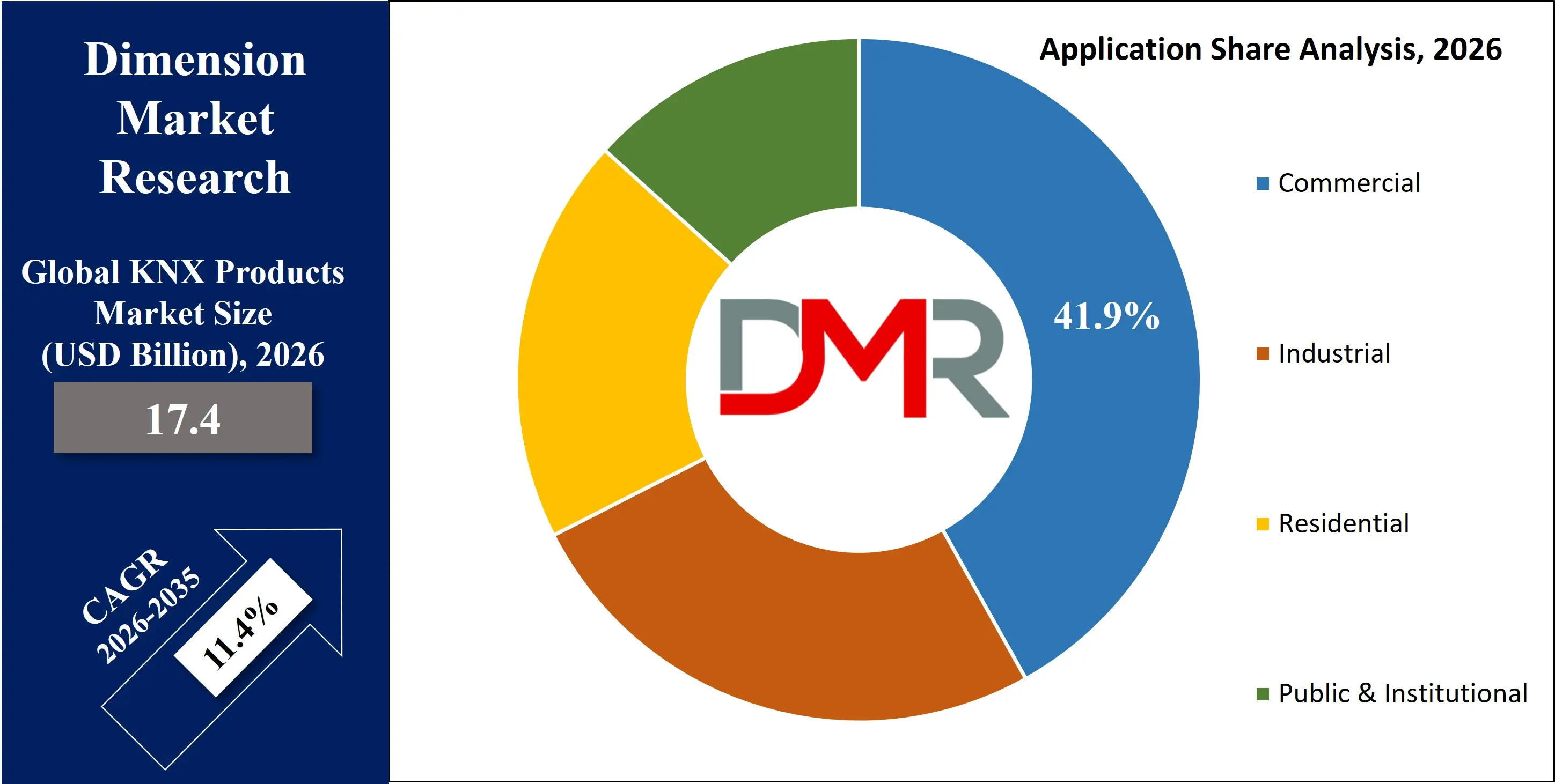
The commercial sector is projected to hold 41.9% of the KNX products market share in 2026, establishing it as the leading application segment. Offices, retail stores, hospitality facilities, and healthcare institutions increasingly rely on KNX automation to reduce energy costs and enhance occupant comfort. Demand for ESG compliance, sustainability certifications, and performance benchmarking encourages large-scale system integration. Centralized building management improves operational transparency and reduces maintenance costs. Multi-site enterprises benefit from scalable automation platforms that provide uniform performance monitoring. As corporate sustainability goals intensify, commercial adoption of KNX solutions continues to expand steadily.
ℹ
To learn more about this report –
Download Your Free Sample Report Here
Residential applications are witnessing strong expansion, especially in premium single-family homes and multi-family apartments. Growing awareness of smart home technologies, energy savings, and app-based control systems is driving adoption. Wireless KNX devices facilitate cost-effective retrofits, making automation accessible to a broader homeowner base. Increased demand for enhanced security, climate control, and voice assistant integration further accelerates growth. Rising disposable income levels and consumer preference for connected living environments are strengthening this segment’s future outlook.
By Installation Type Analysis
New construction projects are anticipated to capture 55.3% of the market in 2026, reflecting the advantage of integrating KNX systems during the building design phase. Developers increasingly embed automation to comply with stringent energy codes and sustainability standards. Pre-planned wired installations ensure optimal system performance, scalability, and long-term reliability. Large commercial complexes and mixed-use developments favor integrated automation frameworks to improve building valuation and tenant satisfaction. Incorporating KNX from the outset reduces lifecycle costs and enhances energy performance metrics, reinforcing the segment’s leading position in global markets.
Retrofit and modernization projects are expanding rapidly as aging infrastructure requires energy performance upgrades. Governments promoting renovation initiatives and carbon reduction targets are encouraging adoption of modular and wireless KNX solutions. These upgrades enable building owners to enhance efficiency without complete structural overhauls. Increasing focus on energy audits and performance benchmarking further accelerates retrofit demand. As regulatory pressure intensifies, modernization projects are becoming a major growth driver.
By End User Analysis
Facility and building managers are expected to account for 33.8% of the market share in 2026, driven by their responsibility for operational efficiency and maintenance oversight. KNX systems provide centralized monitoring dashboards, predictive maintenance tools, and energy consumption analytics. Commercial offices, hospitals, educational institutions, and public facilities depend on automation to reduce operational costs and ensure compliance with environmental regulations. The ability to monitor multiple assets in real time enhances decision-making and preventive maintenance planning. As operational transparency becomes a priority, facility managers increasingly adopt KNX solutions to streamline building performance management.
Real estate developers are rapidly integrating KNX automation to enhance property differentiation and long-term asset value. Smart-ready buildings attract sustainability-conscious buyers and tenants seeking lower operating costs. Automation systems also improve marketing appeal and compliance with green building certifications. As competitive pressures rise in real estate markets, developers increasingly view integrated automation as a strategic investment rather than an optional feature.
By Distribution Channel Analysis
Distributors are projected to hold 29.6% of the market in 2026, supported by established supply chain networks and strong relationships with installers and contractors. They provide product availability, logistics support, and technical guidance across regional markets. Their role is particularly important in large commercial projects where timely procurement and system compatibility are critical. Distributors also facilitate training programs and after-sales services, strengthening brand presence. Their regional reach and technical expertise sustain their leadership in product distribution.
Online and e-commerce channels are expanding quickly as digital procurement becomes more prevalent. Smaller system integrators and residential installers increasingly rely on online platforms for faster sourcing and competitive pricing. Standardized components and improved digital catalogs enhance purchasing convenience. As digital transformation continues, online sales are expected to gain greater importance.
The Knx Products Market Report is segmented on the basis of the following
By Product Type
- Sensors
- Motion / Occupancy Sensors
- Environmental Sensors (Temperature, Humidity, CO₂)
- Light / Presence Detectors
- Actuators
- Switching Actuators
- Dimming Actuators
- Shutter / Blind Actuators
- Relay Modules
- Controllers
- Central Controllers / Logic Modules
- Room Controllers / Touch Panels
- HVAC Controllers
- User Interfaces
- Keypads / Switch Panels
- Touchscreen Interfaces
- Mobile App / Software Interfaces
- Communication & Power Devices
- KNX IP Routers / Interfaces
- Gateways (BACnet, Modbus, DALI)
- Power Supplies
- Line Couplers
By Technology
- Wired KNX
- Twisted Pair (TP)
- KNX over IP
- Wireless KNX
- RF / Secure RF
- KNX IoT / Cloud-Enabled Devices
- Integrated Systems
- Voice Assistant Integration
- Third-Party System Integration (Security, Energy, AV)
By Application
- Residential
- Single-Family Homes
- Multi-Family Apartments
- Commercial
- Offices
- Retail
- Hospitality
- Healthcare
- Industrial
- Manufacturing Facilities
- Warehouses
- Public & Institutional
- Education
- Government
- Transport Infrastructure
By Installation Type
- New Construction
- Retrofit / Modernization
- Replacement / Upgrade
By End-User
- Homeowners
- Facility / Building Managers
- System Integrators / Installers
- Architects / Consultants
- Real Estate Developers
- Government / Municipal Authorities
By Distribution Channel
- Direct Sales (OEM / Large Projects)
- Distributors
- Electrical Wholesalers
- Authorized Dealers / Integrators
- Online / E-commerce
Regional Analysis
Leading Region in the Knx Products Market
Europe is projected to hold 36.8% of the global KNX products market share in 2026, maintaining its leadership due to early adoption and strong regulatory support. Policies such as the Energy Performance of Buildings Directive and ambitious carbon neutrality targets encourage widespread deployment of automation systems. Mature infrastructure, high awareness of sustainability, and strong manufacturer presence further consolidate Europe’s dominance. Integration with renewable energy, EV charging infrastructure, and smart grid systems enhances market expansion. Continued emphasis on green building certifications ensures sustained demand across commercial and residential sectors.
ℹ
To learn more about this report –
Download Your Free Sample Report Here
Fastest Growing Region in the Knx Products Market
Asia-Pacific is the fastest-growing region, driven by rapid urbanization, infrastructure expansion, and smart city initiatives across China, India, Japan, and Southeast Asia. Rising commercial real estate development and government-backed energy efficiency programs stimulate adoption. Expanding middle-class income levels and increasing awareness of smart home solutions accelerate residential installations. Technological advancements and supportive urban development policies further position the region for sustained high growth.
By Region
North America
Europe
- Germany
- The U.K.
- France
- Italy
- Russia
- Spain
- Benelux
- Nordic
- Rest of Europe
Asia-Pacific
- China
- Japan
- South Korea
- India
- ANZ
- ASEAN
- Rest of Asia-Pacific
Latin America
- Brazil
- Mexico
- Argentina
- Colombia
- Rest of Latin America
Middle East & Africa
- Saudi Arabia
- UAE
- South Africa
- Israel
- Egypt
- Rest of MEA
Competitive Landscape
The KNX products market is characterized by strong standardization and multi-vendor interoperability, resulting in competitive differentiation based on innovation, integration capabilities, and service quality. Companies focus on expanding IoT-enabled portfolios, enhancing cybersecurity features, and developing wireless solutions for retrofit markets. Strategic partnerships with real estate developers, system integrators, and technology providers strengthen distribution networks. Investment in R&D remains critical for maintaining compatibility with evolving digital infrastructure. Market entry barriers include certification requirements and technical expertise, while long product lifecycles and brand reputation offer competitive advantages to established participants.
Some of the prominent players in the global Knx Products are
- Schneider Electric
- ABB
- Siemens
- Legrand
- Hager Group
- Gira
- Jung
- Bosch Building Technologies
- Somfy
- Theben Group
- Steinel
- HDL Automation
- Zennio
- MDT Technologies
- Busch-Jaeger
- Ekinex
- Weinzierl Engineering
- Elsner Elektronik
- Basalte
- Niko
- Other Key Players
Report Details
| Report Characteristics |
| Market Size (2026) |
USD 17.4 Bn |
| Forecast Value (2035) |
USD 46.1 Bn |
| CAGR (2026–2035) |
11.4% |
| The US Market Size (2026) |
USD 5.0 Bn |
| Historical Data |
2021 – 2025 |
| Forecast Data |
2027 – 2035 |
| Base Year |
2025 |
| Estimate Year |
2026 |
| Report Coverage |
Market Revenue Estimation, Market Dynamics, Competitive Landscape, Growth Factors, etc. |
| Segments Covered |
By Product Type (Sensors, Actuators, Controllers, User Interfaces, Communication & Power Devices), By Technology (Wired KNX, Wireless KNX, Integrated Systems), By Application (Residential, Commercial, Industrial, Public & Institutional), By Installation Type (New Construction, Retrofit / Modernization, Replacement / Upgrade), By End-User (Homeowners, Facility / Building Managers, System Integrators / Installers, Architects / Consultants, Real Estate Developers, Government / Municipal Authorities), By Distribution Channel (Direct Sales (OEM / Large Projects), Distributors, Electrical Wholesalers, Authorized Dealers / Integrators, Online / E-commerce) |
| Regional Coverage |
North America – US, Canada; Europe – Germany, UK, France, Russia, Spain, Italy, Benelux, Nordic, Rest of Europe; Asia-Pacific – China, Japan, South Korea, India, ANZ, ASEAN, Rest of APAC; Latin America – Brazil, Mexico, Argentina, Colombia, Rest of Latin America; Middle East & Africa – Saudi Arabia, UAE, South Africa, Turkey, Egypt, Israel, Rest of MEA |
| Prominent Players |
Schneider Electric, ABB, Siemens, Legrand, Hager Group, Gira, Jung, Bosch Building Technologies, Somfy, Theben Group, Steinel, HDL Automation, Zennio, MDT Technologies, Busch-Jaeger, Ekinex, Weinzierl Engineering, Elsner Elektronik, Basalte, Niko, and Other Key Players |
| Purchase Options |
We have three licenses to opt for: Single User License (Limited to 1 user), Multi-User License (Up to 5 Users), and Corporate Use License (Unlimited User) along with free report customization equivalent to 0 analyst working days, 3 analysts working days, and 5 analysts working days respectively. |
Frequently Asked Questions
How big is the Global Knx Products Market?
▾ The Global Knx Products Market size is expected to reach USD 17.4 billion by 2026 and is projected to reach USD 46.1 billion by the end of 2035.
Which region accounted for the largest Global Knx Products Market?
▾ Europe is expected to have the largest market share in the Global Knx Products Market, with a share of about 36.4% in 2026.
How big is the Knx Products Market in the US?
▾ The US Knx Products market is expected to reach USD 5.0 billion by 2026.
Who are the key players in the Knx Products Market?
▾ Some of the major key players in the Global Knx Products Market include ABB, Siemens, Legrand, and others
What is the growth rate in the Global Knx Products Market?
▾ The market is growing at a CAGR of 11.4 percent over the forecasted period.