Market Snapshot
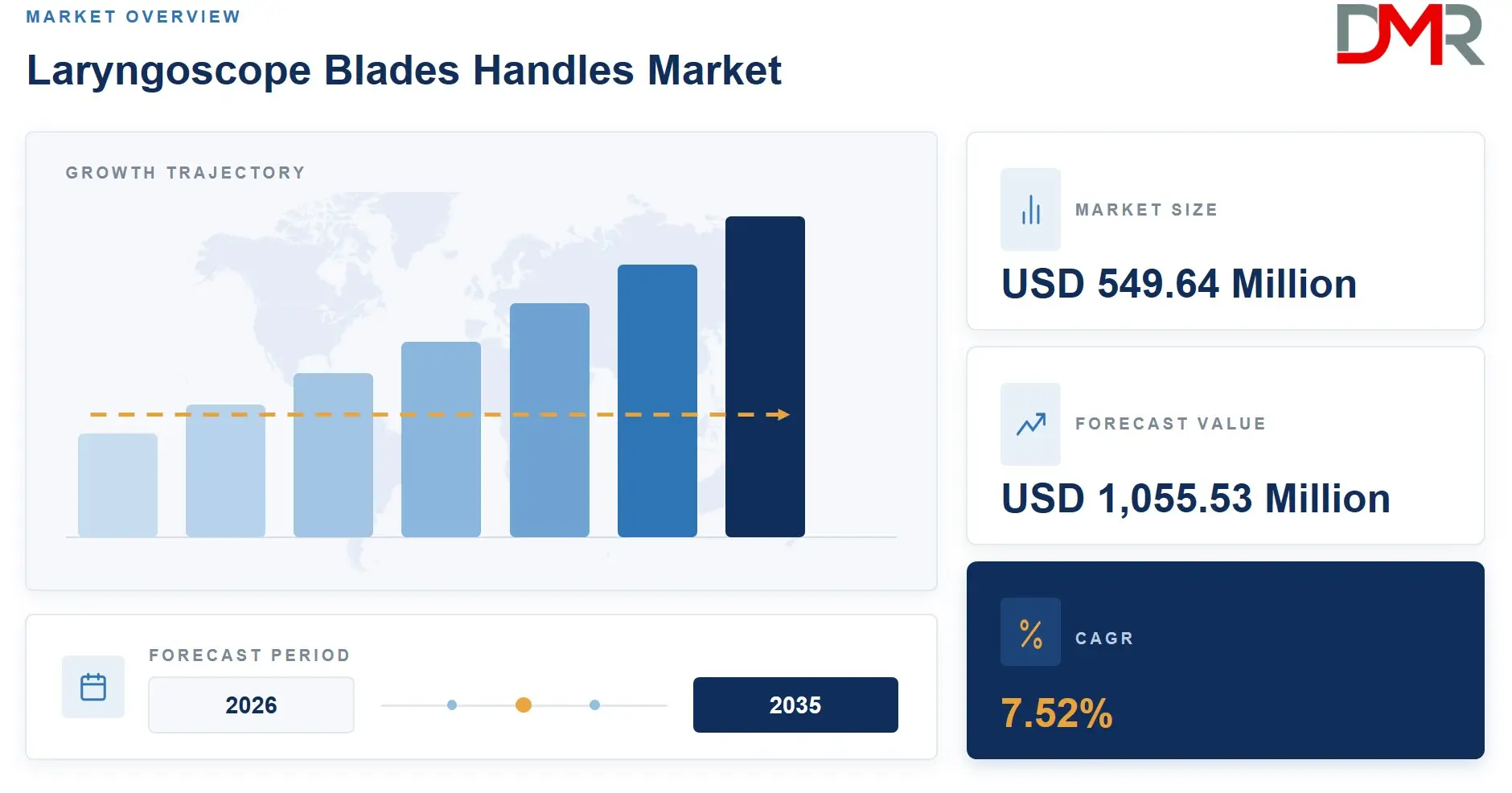
- The Global Laryngoscope Blades and Handles Market was valued at USD 511.2 Million in 2025 and is projected to reach USD 1,055.53 Million by 2035, at a CAGR of 7.52%.
- By Product Type, Blades led with a 67.2% share in 2025; Handles are the fastest-growing sub-segment.
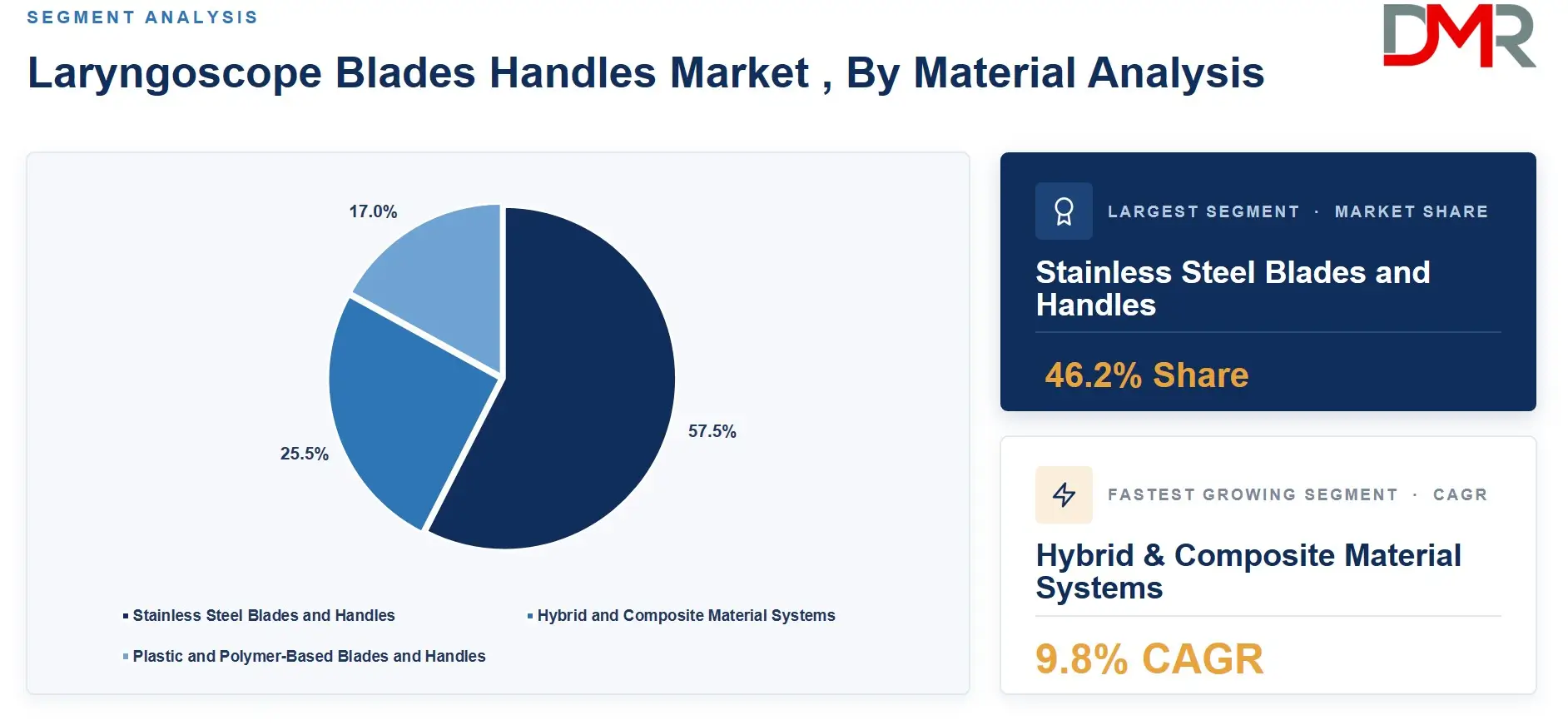
- By Material, Stainless Steel Blades and Handles held a 57.5% share in 2025; Hybrid and Composite Material Systems are growing fastest.
- By Usage, Adult Use captured a 64.7% share in 2025; Pediatric Use is the fastest-growing category.
- By End User, Hospitals accounted for a 61.2% share in 2025; Ambulatory Surgical Centers are growing fastest.
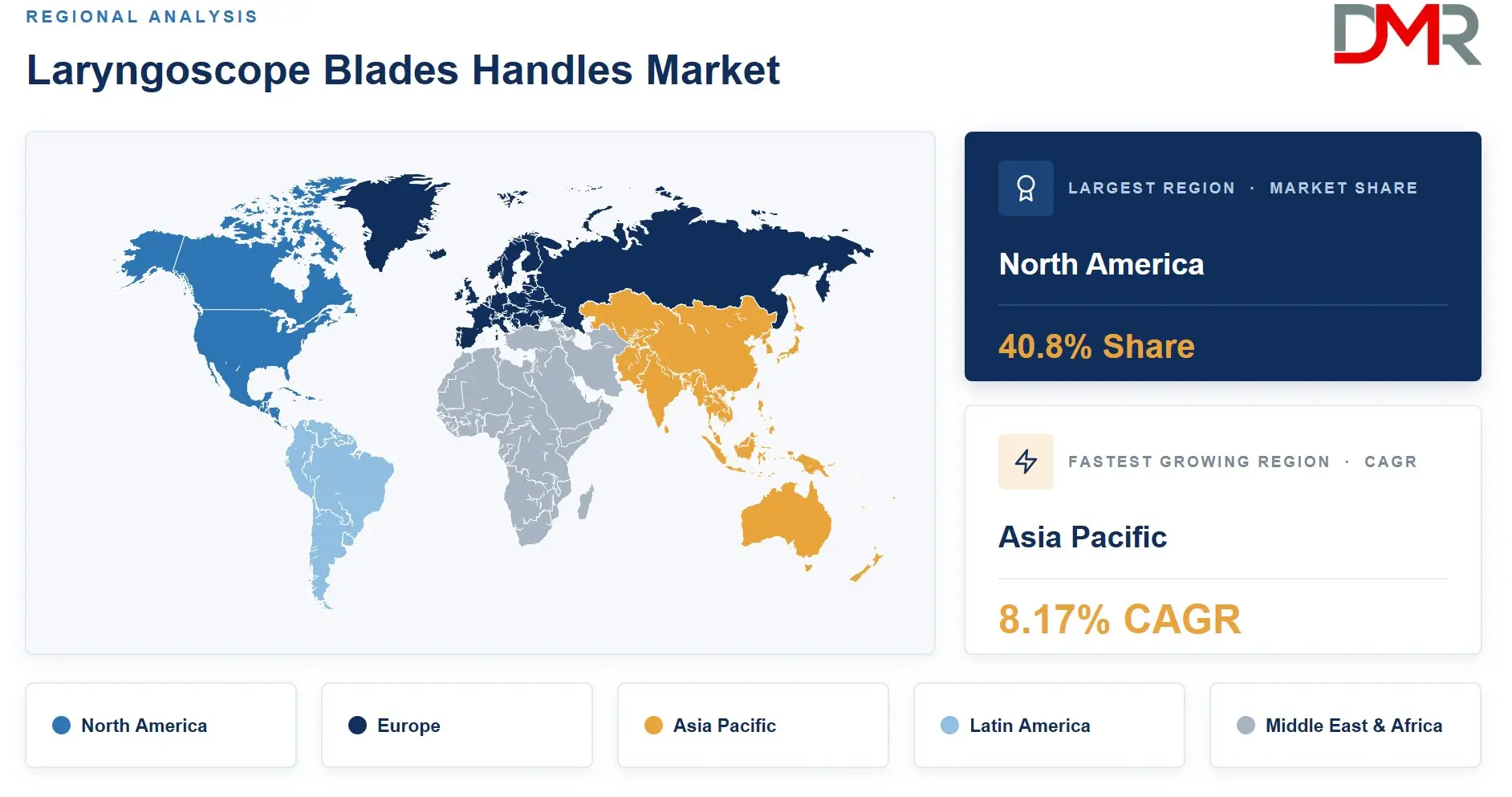
- North America held a 40.8% share in 2025, the largest of any region; Asia-Pacific is growing fastest.
Market Overview
The laryngoscope blades and handles market covers the instruments used to visualize the larynx and facilitate endotracheal intubation across operating rooms, emergency departments, intensive care units, and prehospital settings. The market excludes video laryngoscope camera modules, complete video laryngoscope systems sold as integrated units, and standalone airway accessories such as stylets or bougie catheters. Blade and handle systems sit at the intersection of critical care equipment and sterile processing, making procurement decisions sensitive to both clinical outcomes and infection-control compliance.
Contamination data sharpens that sensitivity considerably. A contamination study found that 28.2% of laryngoscope handles' knurled surfaces were contaminated with bacteria despite being stored as ready for patient use, as reported by PMC. Infection-control frameworks that classify blades as semi-critical devices therefore generate recurring replacement and reprocessing expenditure, embedding these products deeply into hospital operational budgets rather than treating them as one-time capital purchases.
In April 2025, KARL STORZ announced the worldwide launch of the Slimline C-MAC S single-use video laryngoscope, a slimmer disposable blade system designed to enhance airway management while remaining compatible with existing C-MAC platforms. That compatibility decision reflects a wider market tension: hospitals want the infection-control simplicity of single-use blades without abandoning capital already invested in reusable handle ecosystems. Vendors resolving that tension through hybrid blade-handle architectures hold a structural pricing advantage over competitors demanding full platform replacement.
Market Size and Forecast
The Global Laryngoscope Blades and Handles Market size is estimated at USD 549.64 Million in 2026 from USD 511.2 Million in 2025, and is projected to reach USD 1,055.53 Million by 2035, exhibiting a CAGR of 7.52% during the forecast period.
A universal C-MAC videolaryngoscope cohort reported a first-pass tracheal intubation success rate of 87.3% across 1,099 cases in adult patients, as reported by PMC. That performance benchmark accelerates blade procurement in facilities updating their difficult-airway protocols, as blade compatibility with video platforms becomes a non-negotiable specification rather than an optional feature. Single-use blades generate 6–8 times more greenhouse-gas emissions than reusable blades under standard U.S. energy conditions, per the Anesthesia Patient Safety Foundation. As health systems embed carbon targets into procurement scoring, the cost and emission premium of single-use blades will create a structural preference for reusable blade programs at scale.
ℹ
To learn more about this report –
Download Your Free Sample Report Here
The 7.52% CAGR reflects a market where volume growth is structural rather than cyclical. Chronic respiratory disease burden increases ICU admission rates and the intubation procedures those admissions require. Simultaneously, hospitals replacing outdated blades and handles to meet high-level disinfection standards generate a replacement cycle that runs independently of procedure volume growth. Both forces compound the base, which explains why the forecast holds well above GDP growth rates for nearly all regions covered.
Product Type Analysis
Blades led the Product Type segment with a 67.2% share in 2025.
Blades dominate because every intubation episode consumes a blade, whether reusable or single-use. Handles, by contrast, can be shared across multiple blade deployments in reusable-first settings, compressing per-procedure handle revenue while multiplying blade revenue. Hospitals operating at high intubation volumes therefore drive blade revenue at a multiple of handle revenue, a structural asymmetry embedded in the market's unit economics.
Handles are the fastest-growing sub-segment, driven by two forces running in parallel. Facilities converting from direct to video-assisted laryngoscopy need new handle platforms compatible with angled or channeled blades. Prehospital services expanding paramedic intubation scope procure portable, battery-powered handles suited to field conditions rather than hospital sets. A product engineering note from Mercury Medical indicates redesigned fiber-optic handles can be up to 40% lighter than prior designs, a specification that particularly appeals to emergency medical services prioritizing equipment weight in portable kits.
Material Analysis
With a 57.5% share in 2025, Stainless Steel Blades and Handles outpaced all other Material categories.
Stainless steel leads because its autoclave compatibility satisfies the sterilization requirements for semi-critical devices under most national infection-control standards. Procurement officers in high-volume hospitals select stainless steel specifically because validated reprocessing pathways already exist, reducing compliance risk and training burden on central sterile services departments.
ℹ
To learn more about this report –
Download Your Free Sample Report Here
Hybrid and Composite Material Systems are the fastest-growing category. Designers use composite materials to reduce handle weight, improve grip ergonomics, and create components that separate cleanly into critical and non-critical parts for disinfection, a feature that directly addresses the labor intensity problem in central sterile reprocessing. Plastic and Polymer-Based Blades and Handles remain relevant in single-use configurations, but face pressure from sustainability mandates that single-use formats cannot easily resolve.
Usage Analysis
Adult Use accounted for 64.7% of Usage demand in 2026, the highest of any category.
Adult Use dominates by volume because the patient population undergoing intubation skews heavily toward adults requiring emergency airway management, elective surgical anesthesia, and ICU respiratory support. Emergency department intubation algorithms and operating room protocols are designed around adult airway anatomy, maintaining adult blade geometry as the core SKU in hospital procurement contracts.
Pediatric Use is the fastest-growing category. A registry analysis found unadjusted first-pass success rates of 91.9% with standard-geometry video laryngoscopy versus 89.2% with hyperangulated blades across emergency department intubations, as reported by REBEL EM. That performance difference is more consequential in pediatric airways where intubation failure carries a higher physiological penalty, directing specialized children's hospitals and neonatal units to invest in pediatric-specific blade portfolios sized for smaller anatomies. Neonatal and Difficult Airway Use remains the smallest category by volume but commands premium pricing because the blade geometries required are highly specialized.
End User Analysis
Hospitals captured 61.2% of the End User segment in 2026, ahead of all rivals.
Hospitals hold the largest share because intubation volume concentrates in operating rooms and emergency departments, where structured procurement cycles and sterile processing infrastructure support both reusable and single-use blade programs at scale. Large teaching hospitals and trauma centers run thousands of intubations annually, generating recurring blade demand that makes them the anchor customers for every major supplier in Laryngoscope Blades Handles Market .
Ambulatory Surgical Centers are the fastest-growing end-user category. Procedure migration from hospitals to lower-cost outpatient settings brings intubation requirements into facilities that previously did not stock laryngoscope inventories. Emergency Medical Services and Specialty Clinics represent smaller shares but are strategically significant: EMS buyers prioritize ruggedized, lightweight handle platforms, while specialty clinics focused on bariatric, thoracic, or head-and-neck procedures create demand for difficult-airway blade geometries unavailable in standard hospital kits.
Key Market Segments
By Product Type
By Material
- Stainless Steel Blades and Handles
- Plastic and Polymer-Based Blades and Handles
- Hybrid and Composite Material Systems
By Usage
- Adult Use
- Pediatric Use
- Neonatal and Difficult Airway Use
By End User
- Hospitals
- Ambulatory Surgical Centers
- Emergency Medical Services
- Specialty Clinics
Regional Analysis
North America held a 40.8% share in 2026, equivalent to approximately USD 208.6 Million, the largest of any region.
North America leads on the strength of high per-capita intubation volumes, mature sterile processing infrastructure, and the presence of major suppliers who concentrate their primary commercial operations in the U.S. market. FDA regulatory oversight of blade and handle reprocessing creates defined compliance pathways that large hospital systems can satisfy with existing sterile services capacity, reinforcing reusable blade programs at scale.
ℹ
To learn more about this report –
Download Your Free Sample Report Here
Asia-Pacific is the fastest-growing region. Expanding hospital infrastructure in China, India, and Southeast Asian markets pulls forward demand for blade and handle inventories that district and regional hospitals previously lacked. Europe represents a mature second market where sustainability legislation, particularly policy frameworks pressing health systems toward reusable devices, is reshaping procurement preferences faster than in North America. Latin America and Middle East and Africa remain underpenetrated relative to their chronic disease burden, making them medium-horizon growth targets for suppliers with distribution presence and regulatory clearances in those geographies.
Key Regions and Countries
North America
Europe
- Germany
- France
- The UK
- Spain
- Italy
- Rest of Europe
Asia Pacific
- China
- Japan
- South Korea
- India
- Australia
- Rest of APAC
Latin America
- Brazil
- Mexico
- Rest of Latin America
Middle East & Africa
- GCC
- South Africa
- Rest of MEA
Market Dynamics
Video Laryngoscopy Adoption and Infection Control Standards Drive Demand
Clinical evidence on video laryngoscopy has reached a threshold where professional bodies are revising airway management algorithms to recommend video-first approaches. Among 1,417 critically ill adults in the NEJM DEVICE trial, first-attempt intubation succeeded in 85.1% of patients using a video laryngoscope versus 70.8% using direct laryngoscopy, an absolute difference of 14.3 percentage points, as reported by PubMed. Hospitals updating difficult-airway protocols in response to that evidence must procure blade-handle combinations compatible with video platforms, generating a replacement cycle on top of existing volume-driven demand.
Infection-control pressure compounds the procurement case. A contamination study found laryngoscope blades carried a bacterial contamination rate of 18.2% across 148 blades sampled from clinical storage, as reported by PMC. Regulators classifying blades as semi-critical devices mandate high-level disinfection protocols that require hospitals to maintain structured blade inventories rather than relying on informal reuse practices. Each facility that formalizes its reprocessing program effectively commits to a defined and recurring blade consumption rate.
Reprocessing Complexity and Device-Type Conflict Slow Unified Adoption
Central sterile services departments in mid-size hospitals face labor and turnaround constraints that make validated high-level disinfection of blade-handle assemblies operationally demanding. A literature review reported that single-use laryngoscope blades had a failed-intubation rate of 2.8% compared with 5.4% for reusable blades in one comparative study, as found in Academia.edu research. Some clinical teams cite that performance gap to justify single-use preferences, while sustainability and cost officers push in the opposite direction. That internal disagreement within the same hospital creates procurement inertia that suppresses both single-use and reusable blade adoption below the rate that guideline compliance alone would generate.
Cost Economics and Sustainability Targets Open a Reusable Platform Opportunity
Reusable laryngoscope programs offer a compelling financial case in high-volume settings. A cost analysis from Yale New Haven Hospital estimated that choosing reusable over single-use laryngoscopes for approximately 60,000 intubations per year would save USD 675,000–869,000 annually, per the Society for Pediatric Anesthesia. Reusable handles become cost-effective after 4–5 uses and reusable blades after 5–7 uses under the same analysis. At scale, hospitals running thousands of intubations monthly can recoup capital investment in reusable platforms within weeks, a payback profile that procurement committees find difficult to ignore.
In June 2025, Ambu launched its Ambu Recircle Program as a recycling solution for used single-use endoscopes, covering hospitals in Germany, France, the United States, and the United Kingdom. A French life-cycle study calculated that switching from single-use to reusable blades for 17,200 annual intubations reduced greenhouse-gas emissions by 26.5 tons of CO2-equivalent per year, as reported in ScienceDirect. Together, those data points show that the financial and environmental cases for reusable platforms are now quantified enough to anchor board-level sustainability commitments. Suppliers who can demonstrate validated reprocessing pathways and provide life-cycle data will capture hospitals pursuing both targets simultaneously.
Market Trends
Sustainability Evidence and Video Performance Data Are Reshaping Procurement Logic
Health-system sustainability programs have moved from aspiration to procurement criteria, with life-cycle assessments now quantifying the emissions gap between device types. Single-use laryngoscope handles produce 16–25 times more greenhouse-gas emissions than reusable handles under a standard U.S. energy mix, per the Anesthesia Patient Safety Foundation. Video laryngoscopy is simultaneously achieving first-pass success rates above 98% in surgical settings versus 92.4% for direct laryngoscopy, per respiratory-therapy.com. Early movers who can offer blade portfolios that perform at video-laryngoscopy standards while meeting reusable-device sustainability metrics will lock in preferred supplier status before the market consolidates around those two criteria.
Market Competition Overview
The laryngoscope blades and handles market is moderately fragmented, with a large number of regional and global players competing on blade geometry breadth, reprocessing compatibility, and handle platform ecosystems. No single vendor holds a dominant share across all segments, though leaders in video laryngoscopy handle systems carry a structural advantage as clinical guidelines shift toward video-first intubation protocols. Differentiation increasingly comes from blade-handle interoperability within a vendor's own portfolio rather than from isolated product features.
Reusable handles become cost-effective after 4–5 uses and blades after 5–7 uses per the Society for Pediatric Anesthesia cost model, which means vendors offering the most validated reprocessing documentation hold a procurement advantage in high-volume hospital accounts. Competitors offering single-use blade systems gain traction in ambulatory settings where sterile processing capacity is limited, but face intensifying pressure from sustainability mandates that may erode single-use unit economics over the forecast horizon.
Company Profiles
Teleflex Incorporated builds its competitive position around a broad portfolio of airway management products, with laryngoscope blades and handles integrated into a wider respiratory and critical care offering. Teleflex's strategy centers on bundled procurement relationships with large hospital systems, which reduces per-product price competition by embedding blades and handles within multi-category supply contracts. That bundling model creates switching costs that protect revenue across economic cycles, though it also limits Teleflex's ability to command premium pricing on individual blade SKUs against specialist competitors.
Medtronic plc approaches the laryngoscope segment through its broader airway management division, where integration with video laryngoscopy technologies creates cross-sell opportunities for blade-handle combinations optimized for Medtronic's camera platforms. Medtronic's global distribution infrastructure gives it access to emerging-market hospital tenders in Asia-Pacific and Latin America, regions where per-capita intubation capacity is still being built. The risk lies in resource prioritization: Medtronic's portfolio spans multiple high-growth device categories, and laryngoscope blades and handles must compete internally for commercial investment against higher-margin product lines.
Key Players
- Teleflex Incorporated
- Medtronic plc
- Olympus Corporation
- Ambu A/S
- KARL STORZ SE and Co. KG
- Dahlhausen Medical
- Flexicare Medical Limited
- Hartwell Medical LLC
- HEINE Optotechnik GmbH and Co. KG
- HENKE-SASS WOLF GmbH
- Medline Industries, Inc.
- Penlon Limited
- PROACT Medical Ltd
- RICHARD WOLF GmbH
- Rudolf Riester GmbH
- Smiths Group plc
- SunMed LLC
- Verathon Inc.
- Vyaire Medical, Inc.
- Vygon SA
Recent Developments
- October 2025 — Ambu announced the expansion of its Recircle Program beyond endoscopes to include blades from the Ambu SureSight Connect single-use video laryngoscope, with blade recycling expected to be available to customers starting in 2026.
- September 2023 — Verathon launched the GlideScope Go 2 handheld video laryngoscope, an updated portable platform designed to support consistent visualization in OR, ICU, and emergency settings, reinforcing its video-blade ecosystem used with dedicated handles.
- November 2025 — Olympus issued updated safety guidance and labeling changes for certain bronchoscopes after reports of endobronchial combustion leading to serious injuries and one death, instructing users to keep the endoscope at least 4 cm from the endotracheal tube and limit oxygen concentration and energy output during procedures.
Report Details
| Report Characteristics |
| Market Value (2025) |
USD 511.2 Million |
| Market Value (2026) |
USD 549.64 Million |
| Forecast Revenue (2035) |
USD 1,055.53 Million |
| CAGR (2026–2035) |
7.52% |
| Base Year for Estimation |
2025 |
| Historic Period |
2020 – 2024 |
| Forecast Period |
2026 – 2035 |
| Report Coverage |
Revenue Forecast, Market Dynamics, Competitive Landscape, Recent Developments |
| Segments Covered |
By Product Type (Blades, Handles), By Material (Stainless Steel Blades and Handles, Plastic and Polymer-Based Blades and Handles, Hybrid and Composite Material Systems), By Usage (Adult Use, Pediatric Use, Neonatal and Difficult Airway Use), By End User (Hospitals, Ambulatory Surgical Centers, Emergency Medical Services, Specialty Clinics) |
| Regional Analysis |
North America – US, Canada; Europe – Germany, France, UK, Spain, Italy, Rest of Europe; Asia-Pacific – China, Japan, South Korea, India, Australia, Rest of APAC; Latin America – Brazil, Mexico, Rest of Latin America; Middle East & Africa – GCC, South Africa, Rest of MEA |
| Competitive Landscape |
Teleflex Incorporated, Medtronic plc, Olympus Corporation, Ambu A/S, KARL STORZ SE and Co. KG, Dahlhausen Medical, Flexicare Medical Limited, Hartwell Medical LLC, HEINE Optotechnik GmbH and Co. KG, HENKE-SASS WOLF GmbH, Medline Industries Inc., Penlon Limited, PROACT Medical Ltd, RICHARD WOLF GmbH, Rudolf Riester GmbH, Smiths Group plc, SunMed LLC, Verathon Inc., Vyaire Medical Inc., Vygon SA |
| Customization Scope |
Customization for segments and region or country level will be provided. Additional customization can be done based on requirements. |
| Purchase Options |
Three license options: Single User License, Multi-User License (Up to 5 Users), and Corporate Use License (Unlimited Users and Printable PDF) |
Frequently Asked Questions
What is the biggest investment opportunity in Laryngoscope Blades Handles Market ?
▾ Reusable blade and handle platforms in high-volume hospital settings offer the clearest near-term return. A Yale New Haven cost analysis found that reusable systems could save USD 675,000–869,000 annually at approximately 60,000 intubations per year. Vendors who pair validated reprocessing documentation with sustainability reporting tools will command premium contracts as hospitals pursue both financial and carbon targets simultaneously.
Who are the top companies in Laryngoscope Blades Handles Market ?
▾ Teleflex Incorporated and Medtronic plc are the two largest players by portfolio breadth and distribution scale. Other significant competitors include Ambu A/S, KARL STORZ SE and Co. KG, Olympus Corporation, Verathon Inc., and Smiths Group plc, each with distinct product or geographic strengths. No single vendor dominates across all segments and regions.
Which segment is growing fastest in Laryngoscope Blades Handles Market and why?
▾ Handles are growing fastest within Product Type, driven by hospital conversions to video laryngoscopy platforms that require new compatible handle systems. Within End User, Ambulatory Surgical Centers lead growth as surgical procedures migrate from hospitals to outpatient settings that require their own blade and handle inventories. Both trends reflect a broadening of the intubation footprint beyond traditional hospital operating rooms.
Which region is growing fastest in Laryngoscope Blades Handles Market and why?
▾ Asia-Pacific is growing fastest, supported by hospital infrastructure expansion across China, India, and Southeast Asia that is creating first-time demand for structured laryngoscope blade and handle inventories. Many district and regional hospitals in the region are replacing improvised or aging airway tools, which means growth reflects new market entry rather than replacement cycles alone. That distinction makes Asia-Pacific a high-volume, multi-year growth opportunity for suppliers with established distribution networks.
What is the biggest challenge holding Laryngoscope Blades Handles Market back?
▾ Decision inertia inside hospitals is the primary constraint. Conflicting mandates between infection-control frameworks favoring single-use blades and sustainability policies discouraging disposable waste prevent hospitals from committing to a unified technology strategy. Single-use blade programs face scrutiny over waste; reusable programs face scrutiny over reprocessing labor. Until procurement frameworks resolve that tension with clear institutional policy, both segments grow below their addressable potential.