Market Overview
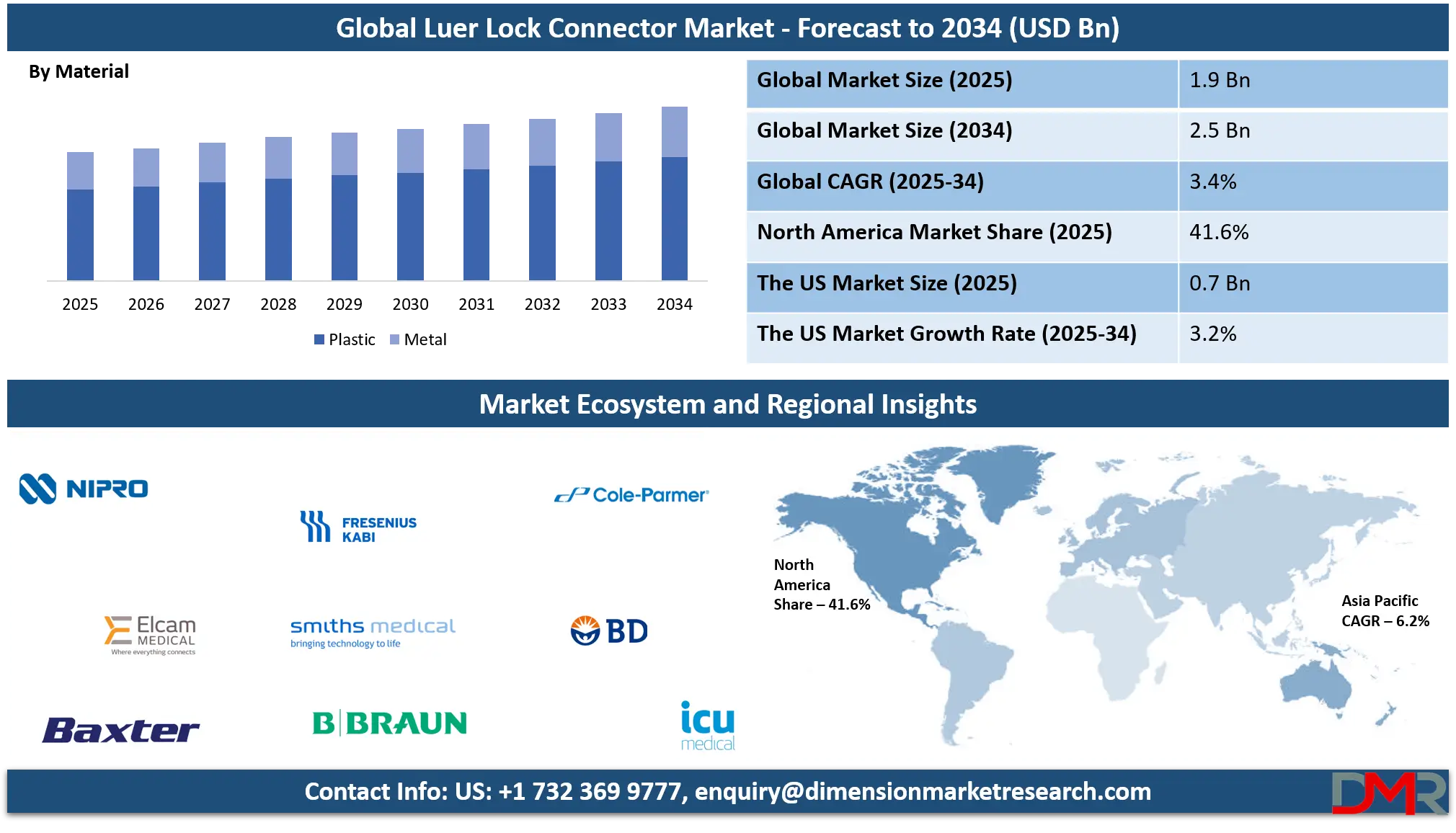
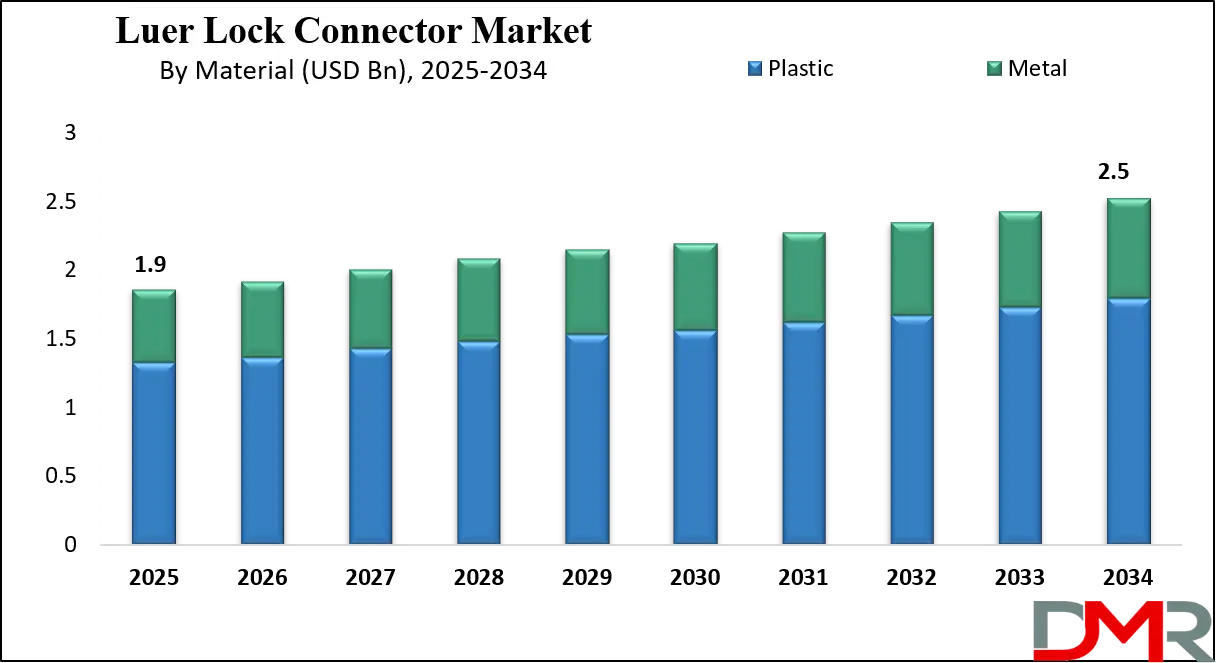
The Global Luer Lock Connector Market size is projected to reach USD 1.9 billion in 2025 and grow at a compound annual growth rate of 3.4% to reach a value of USD 2.5 billion in 2034.
Luer Lock Connectors are medical connectors used to securely join syringes, tubing, catheters, and other fluid-handling devices. They feature a twist-lock mechanism that holds components firmly in place, helping prevent leaks, spills, and accidental disconnections. These connectors are commonly used in medication delivery, blood collection, and diagnostic procedures. Their standardized design allows compatibility across a wide range of medical devices used in hospitals, clinics, and home healthcare settings.
ℹ
To learn more about this report –
Download Your Free Sample Report Here
The importance of the Luer Lock Connector market is closely tied to the expansion of healthcare infrastructure, rising procedural volumes, and the growing emphasis on patient safety and infection control. As healthcare systems worldwide move toward standardized, interoperable medical components, Luer Lock Connectors play a critical role in ensuring compatibility and compliance across devices and manufacturers. The market also benefits from the increasing adoption of single-use medical consumables, which reduces cross-contamination risks and supports regulatory compliance in hospitals and laboratories.
Ongoing shifts in healthcare delivery models, including home healthcare, outpatient procedures, and self-administration of injectable drugs, are influencing the market’s evolution. Emerging trends include the adoption of safety-engineered and needle-free Luer Lock systems, increased use of advanced polymers, and design enhancements aimed at reducing misconnections. These developments reflect a broader industry focus on improving clinical outcomes, operational efficiency, and regulatory adherence... first para just definition not market definition
ℹ
To learn more about this report –
Download Your Free Sample Report Here
The US Luer Lock Connector Market
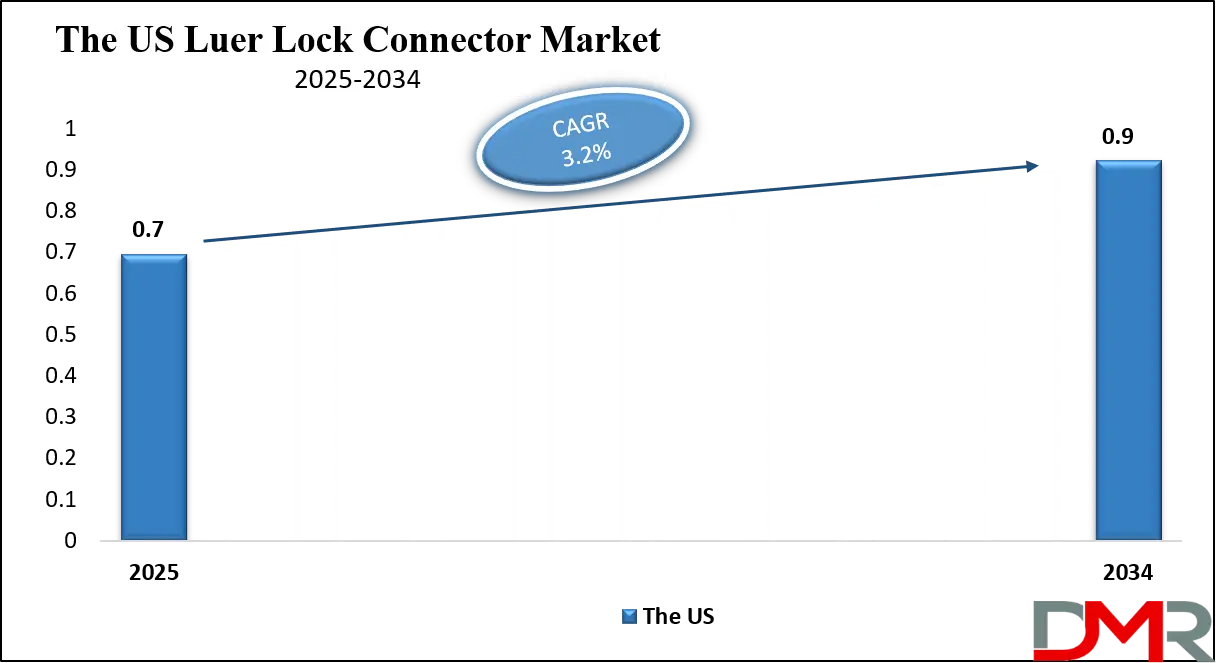
The US Luer Lock Connector Market size is projected to reach USD 700 million in 2025 at a compound annual growth rate of 3.2% over its forecast period.
The US Luer Lock Connector market is driven by a highly developed healthcare system, high procedural volumes, and strict regulatory oversight focused on patient safety. The presence of advanced hospitals, diagnostic laboratories, and pharmaceutical manufacturing facilities sustains consistent demand for high-quality connectors. Federal regulatory frameworks encourage the adoption of standardized and needle-free connectors to reduce needlestick injuries and device misconnections. Additionally, strong reimbursement systems, widespread use of disposable medical devices, and continuous investment in healthcare infrastructure support steady market growth. Innovation-led competition and emphasis on compliance further strengthen the market’s maturity.
ℹ
To learn more about this report –
Download Your Free Sample Report Here
Europe Luer Lock Connector Market
Europe Luer Lock Connector Market size is projected to reach USD 570 million in 2025 at a compound annual growth rate of 3.1% over its forecast period.
The European Luer Lock Connector market is shaped by harmonized medical device regulations and strong policy support for patient safety and sustainability. Regional initiatives emphasizing infection prevention and standardized medical components drive adoption across hospitals and laboratories. Western Europe leads in innovation and usage, supported by advanced healthcare systems and strict compliance requirements, while Central and Eastern Europe show rising adoption due to healthcare modernization. Policies aligned with safety-focused medical device usage encourage manufacturers to develop leak-proof, needle-free, and environmentally conscious connector designs.
Japan Luer Lock Connector Market
Japan Luer Lock Connector Market size is projected to reach USD 95 million in 2025 at a compound annual growth rate of 4.0% over its forecast period.
Japan’s Luer Lock Connector market benefits from a technologically advanced healthcare system, an aging population, and high demand for precision medical devices. Hospitals and clinics prioritize reliability, safety, and compact design, making standardized connectors essential. Government support for healthcare innovation and quality assurance encourages the adoption of advanced connector technologies. While market growth is stable rather than rapid, opportunities exist in home healthcare and chronic disease management. High quality standards and regulatory rigor create both challenges and opportunities for manufacturers focusing on performance-driven differentiation.
Luer Lock Connector Market: Key Takeaways
- Market Growth: The Luer Lock Connector Market size is expected to grow by USD 600 million, at a CAGR of 9.0%, during the forecasted period of 2026 to 2034.
- By Material: The plastic segment is anticipated to get the majority share of the Luer Lock Connector Market in 2025.
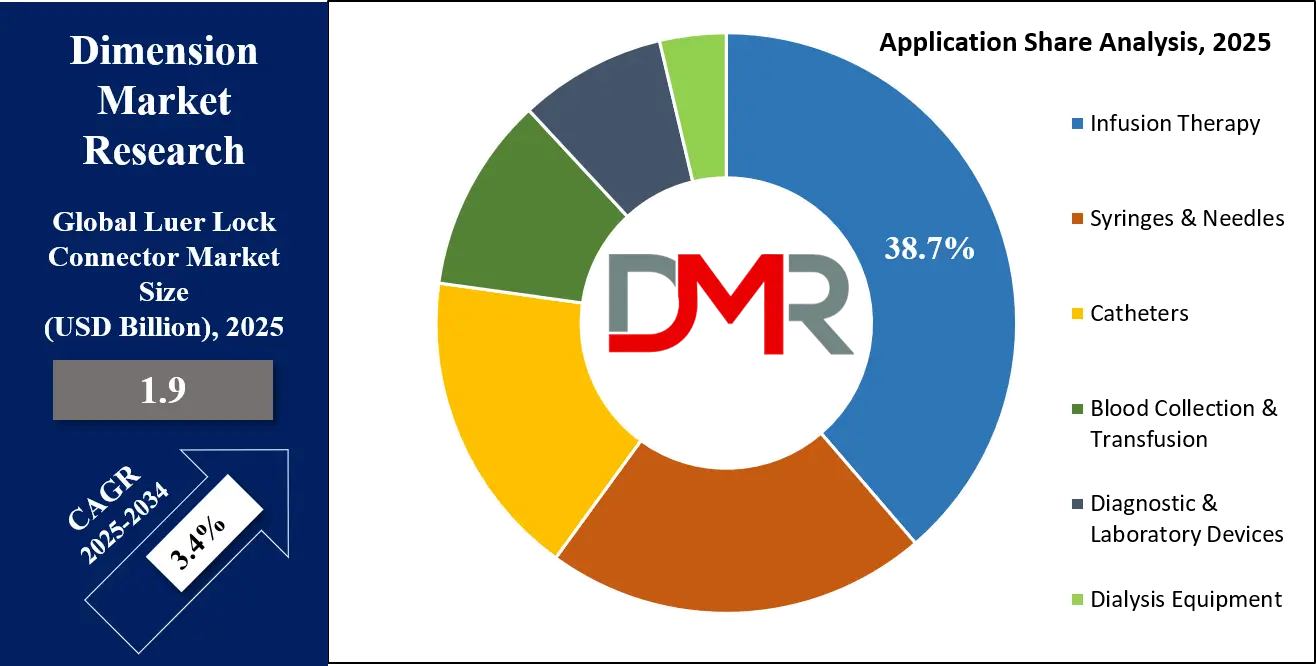
- By Application: The infusion therapy segment is expected to get the largest revenue share in 2025 in the Luer Lock Connector Market.
- Regional Insight: North America is expected to hold a 41.6% share of revenue in the Global Luer Lock Connector Market in 2025.
- Use Cases: Some of the use cases of Luer Lock Connector include infusion therapy, syringes & needles, and more.
Luer Lock Connector Market: Use Cases:
- Infusion Therapy: Enables secure connections between IV lines, pumps, and catheters, minimizing leakage and accidental disconnections during drug delivery.
- Syringes & Needles: Provides a reliable locking mechanism for precise medication administration in clinical and home-care settings.
- Blood Collection & Transfusion: Ensures safe and contamination-free transfer of blood and blood components across devices.
- Diagnostic & Laboratory Devices: Supports accurate fluid handling and sample transfer in analytical and testing workflows.
Stats & Facts
- U.S. Food and Drug Administration reported in 2024 that over 90% of hospital-administered injectable therapies rely on standardized Luer-based connectors.
- Centers for Medicare & Medicaid Services stated in 2024 that outpatient infusion procedures increased by approximately 8.6% year-over-year, supporting connector demand.
- European Commission Directorate-General for Health noted in 2025 that compliance-driven medical consumable adoption grew by 7.9% across EU healthcare facilities.
- Japan Ministry of Health, Labour and Welfare reported in 2024 that single-use medical device consumption rose by 6.4% annually.
- World Health Organization indicated in 2025 that safety-engineered connector usage reduces device-related fluid leakage incidents by over 30%.
Market Dynamic
Driving Factors in the Luer Lock Connector Market
Growth in Medical Procedures
The rising volume of medical procedures worldwide is a major driver of demand for Luer Lock Connectors. Increasing hospital admissions, outpatient surgeries, diagnostic testing, and infusion-based treatments significantly raise the need for secure fluid transfer solutions. The growing prevalence of chronic diseases such as diabetes, cancer, and cardiovascular conditions has led to long-term therapy requirements, further boosting connector usage. Aging populations and broader access to healthcare services in both developed and emerging economies intensify procedural frequency. Luer Lock Connectors remain indispensable due to their reliability, standardized compatibility, and ability to support safe, efficient clinical workflows across diverse care settings.
Emphasis on Patient Safety and Standardization
Patient safety has become a core priority for healthcare providers, directly driving adoption of standardized Luer Lock Connector systems. These connectors reduce risks associated with accidental disconnections, leakage, and device misconnections, which can lead to serious clinical complications. Regulatory authorities increasingly encourage or mandate the use of safety-engineered and needle-free connectors to reduce healthcare-associated infections and occupational injuries. Standardization also simplifies device interoperability and staff training across healthcare facilities. As hospitals seek to minimize adverse events, improve outcomes, and limit legal exposure, reliable connector systems are viewed as essential components of patient safety strategies.
Restraints in the Luer Lock Connector Market
Regulatory Compliance Costs
Stringent medical device regulations pose a significant restraint on the Luer Lock Connector market by increasing development, testing, and certification costs. Manufacturers must comply with rigorous quality, safety, and material standards, which can extend product approval timelines and elevate operational expenses. Frequent updates to regulatory frameworks further require continuous investment in compliance and documentation. Smaller manufacturers may struggle to absorb these costs, limiting their ability to innovate or scale operations. In highly regulated regions, these compliance burdens can slow product launches and reduce competitive diversity within the market.
Material and Environmental Concerns
Rising concerns regarding plastic waste and environmental sustainability present challenges for disposable Luer Lock Connectors. Healthcare systems and regulators are increasingly scrutinizing single-use plastic products due to their environmental impact. Compliance with sustainability targets may require manufacturers to adopt alternative materials, redesign products, or invest in recycling initiatives, all of which can increase production costs. Additionally, balancing environmental requirements with performance, sterility, and safety standards is complex. These factors may affect pricing, profit margins, and adoption rates, particularly in regions with strict environmental regulations.
Opportunities in the Luer Lock Connector Market
Expansion of Home Healthcare
The rapid expansion of home healthcare and self-administered treatments creates strong growth opportunities for the Luer Lock Connector market. Patients managing chronic conditions increasingly rely on injectable therapies and infusion devices outside traditional clinical settings. This shift drives demand for connectors that are easy to use, intuitive, and designed with enhanced safety features for non-professional users. Luer Lock Connectors that minimize leakage and misconnections support safe home-based care. As healthcare systems seek cost-effective alternatives to inpatient treatment, this segment offers significant untapped potential for market participants.
Advancement in Safety-Engineered Designs
Continuous innovation in safety-engineered Luer Lock technologies presents opportunities for premium product development. Features such as anti-reflux, anti-leak, and needle-free designs address key safety concerns related to infections, fluid backflow, and needlestick injuries. Regulatory encouragement for safer devices further accelerates adoption of advanced connectors. Manufacturers investing in these innovations can differentiate their offerings, improve clinical outcomes, and command higher margins. As healthcare providers prioritize safety and risk reduction, demand for technologically advanced connector systems is expected to grow steadily.
Trends in the Luer Lock Connector Market
Shift Toward Needle-Free Systems
A growing shift toward needle-free Luer Lock systems is reshaping the market landscape. Healthcare providers increasingly adopt these systems to reduce needlestick injuries, lower infection risks, and improve occupational safety for clinical staff. Needle-free connectors also support closed-system drug transfer and contamination prevention, aligning with infection control protocols. Regulatory recommendations and hospital safety initiatives are accelerating this trend. As a result, manufacturers are focusing R&D efforts on needle-free designs, making this shift a defining trend influencing product development and procurement decisions across healthcare facilities.
Increased Use of Advanced Polymers
The adoption of advanced polymer materials is a notable trend in the Luer Lock Connector market. High-performance polymers offer improved durability, chemical resistance, transparency, and compatibility with sterilization processes. These materials enable manufacturers to enhance connector performance while maintaining cost efficiency in large-scale production. Advanced polymers also support the development of lightweight, ergonomically designed connectors suitable for both clinical and home-use environments. As material science advances, polymer-based connectors are increasingly preferred over traditional materials, driving innovation and product differentiation across the market.
Impact of Artificial Intelligence in Luer Lock Connector Market
- Predictive Quality Control: AI-driven inspection systems detect micro-defects, reducing failure rates and improving compliance.
- Smart Manufacturing: AI optimizes production efficiency, minimizing material waste and downtime.
- Demand Forecasting: AI improves supply chain planning by predicting usage trends across healthcare facilities.
- Design Optimization: AI simulations enhance connector ergonomics and leak resistance.
- Regulatory Documentation Automation: AI streamlines compliance reporting and validation processes.
Research Scope and Analysis
By Product Type Analysis
Male Luer Lock Connectors dominate the product type segment, accounting for approximately 46.8% of the market share in 2025, primarily due to their broad compatibility and standardized use across medical devices. These connectors are widely integrated into syringes, infusion sets, catheters, and diagnostic equipment, making them essential in routine clinical procedures. Hospitals and clinics favor male connectors because of their secure locking mechanism, ease of connection, and reduced risk of leakage. Their widespread acceptance across healthcare facilities also simplifies inventory management and procurement. Consistent demand from both acute and chronic care applications reinforces their dominant position within the overall product landscape.
Female Luer Lock Connectors represent the fastest-growing segment, driven by their increasing incorporation into safety-engineered and closed-system medical devices. These connectors play a critical role in reducing the risk of fluid leakage and device misconnections, especially in high-risk infusion and diagnostic procedures. Rising adoption in infusion therapy, laboratory testing, and pharmaceutical applications is contributing to their accelerated growth. Additionally, growing regulatory emphasis on patient and healthcare worker safety is encouraging the use of advanced connector designs that rely on female interfaces. As healthcare facilities adopt more closed-loop and needle-free systems, demand for female Luer Lock Connectors is expected to rise steadily.
By Material Analysis
Plastic Luer Lock Connectors hold approximately 71.2% of the market share in 2025, supported by their cost-effectiveness, lightweight nature, and suitability for disposable medical applications. Plastics such as polypropylene and polycarbonate are widely used due to their chemical resistance, transparency, and compatibility with sterilization processes. These materials enable high-volume manufacturing at lower costs, making plastic connectors ideal for single-use medical devices. Advanced polymer formulations further enhance durability and leak resistance while meeting stringent regulatory standards. The growing emphasis on infection control and single-use medical consumables continues to reinforce the dominance of plastic connectors in healthcare settings.
Metal Luer Lock Connectors are experiencing steady growth in specialized medical applications that require high durability, strength, and resistance to pressure. Typically manufactured from stainless steel, these connectors are preferred in reusable systems, high-pressure fluid transfer, and certain laboratory or industrial medical environments. Their robustness allows repeated sterilization without degradation, making them suitable for long-term use. Although metal connectors represent a smaller share compared to plastic, increasing demand in precision-driven and reusable applications supports their expansion. Growth is particularly notable in settings where performance reliability outweighs cost considerations.
By Technology Analysis
Standard Luer Lock designs account for nearly 52.5% of the market share in 2025, driven by their long-standing use and broad acceptance across healthcare applications. These connectors offer a reliable and cost-efficient solution for routine medical procedures, including injections, fluid transfer, and diagnostic testing. Their simple design, ease of manufacturing, and compatibility with a wide range of medical devices contribute to sustained demand. Healthcare providers continue to rely on standard Luer Lock connectors due to familiarity, proven performance, and affordability. As a result, they remain the preferred choice in high-volume clinical environments with routine procedural requirements.
Safety and needle-free Luer Lock Connectors are expanding rapidly due to increasing awareness of occupational hazards and infection prevention. These connectors are designed to minimize needlestick injuries and reduce the risk of contamination during fluid transfer. Regulatory bodies and healthcare institutions increasingly promote needle-free systems to improve workplace safety and patient outcomes. Adoption is particularly strong in infusion therapy, oncology, and intensive care settings. As safety mandates and hospital protocols evolve, manufacturers are prioritizing innovation in needle-free designs, positioning this segment as a key driver of future market growth.
By Usage Type Analysis
Disposable or single-use Luer Lock Connectors account for approximately 64.9% of the market share in 2025, driven by strict infection control practices and regulatory guidance. These connectors help prevent cross-contamination and reduce the risk of healthcare-associated infections. Their widespread adoption in hospitals, clinics, and laboratories reflects growing reliance on single-use medical consumables. Cost efficiency, convenience, and ease of disposal further support their dominance. The increasing number of medical procedures and the expansion of outpatient and home healthcare services continue to boost demand for disposable connectors across global healthcare systems.
Reusable Luer Lock Connectors are gaining traction in specialized and cost-sensitive healthcare environments where long-term use is economically advantageous. These connectors are designed for repeated sterilization and extended durability, making them suitable for laboratories, research facilities, and certain hospital departments. While their adoption is limited by stricter sterilization requirements and regulatory oversight, reusable connectors offer cost savings over time. Growth is supported by demand in controlled environments where infection risks can be effectively managed, as well as in regions seeking to reduce medical waste.
By Application Analysis
Infusion therapy represents approximately 38.7% of the market share in 2025, reflecting its extensive use in hospitals and outpatient settings. Luer Lock Connectors are critical in ensuring secure and leak-free connections in intravenous drug delivery, chemotherapy, and fluid administration. The growing prevalence of chronic diseases requiring long-term infusion therapy significantly drives demand. Additionally, advancements in infusion pumps and drug delivery systems further support connector usage. High procedural volumes and strict safety requirements make infusion therapy a dominant application segment within the overall market.
The diagnostic and laboratory devices segment is growing rapidly due to increased testing volumes and the expansion of laboratory automation. Luer Lock Connectors play a vital role in secure sample handling, reagent transfer, and analytical workflows. Growth is supported by rising demand for diagnostic testing, research activities, and point-of-care diagnostics. Automation trends require standardized, reliable connectors to ensure accuracy and efficiency. As diagnostic infrastructure expands globally, particularly in emerging healthcare markets, this application segment is expected to continue its strong upward trajectory.
ℹ
To learn more about this report –
Download Your Free Sample Report Here
By End User Analysis
Hospitals and clinics dominate the end-user segment with approximately 58.3% market share in 2025, driven by high patient volumes and extensive use of medical devices. These facilities rely heavily on Luer Lock Connectors for routine procedures, emergency care, diagnostics, and infusion therapy. Standardized procurement practices and strict safety protocols support consistent demand. The need for reliable, compliant, and easy-to-use connectors further strengthens adoption. Ongoing investments in hospital infrastructure and patient safety initiatives continue to reinforce the leading position of hospitals and clinics in the market.
Home healthcare is the fastest-growing end-user segment, fueled by the shift toward outpatient treatment and home-based care. Patients increasingly manage chronic conditions through self-administered injections and infusion therapies. This trend drives demand for Luer Lock Connectors that are safe, intuitive, and reliable for non-professional use. Cost pressures on healthcare systems and patient preference for home care further accelerate adoption. As home healthcare infrastructure expands, this segment is expected to contribute significantly to future market growth.
The Luer Lock Connector Market Report is segmented on the basis of the following:
By Product Type
- Male Luer Lock Connectors
- Female Luer Lock Connectors
- Stopcocks & Multi-Port Luer Locks
By Material
- Plastic
- Polypropylene (PP)
- Polycarbonate (PC)
- Metal
By Technology
- Standard Luer Lock
- Safety / Needle-Free Luer Lock
- Anti-Reflux / Anti-Leak Luer Lock
By Usage Type
- Disposable / Single-Use
- Reusable
By Application
- Infusion Therapy
- Syringes & Needles
- Catheters
- Blood Collection & Transfusion
- Diagnostic & Laboratory Devices
- Dialysis Equipment
By End User
- Hospitals & Clinics
- Diagnostic & Research Laboratories
- Pharmaceutical & Biotechnology Companies
- Home Healthcare
Regional Analysis
Leading Region in the Luer Lock Connector Market
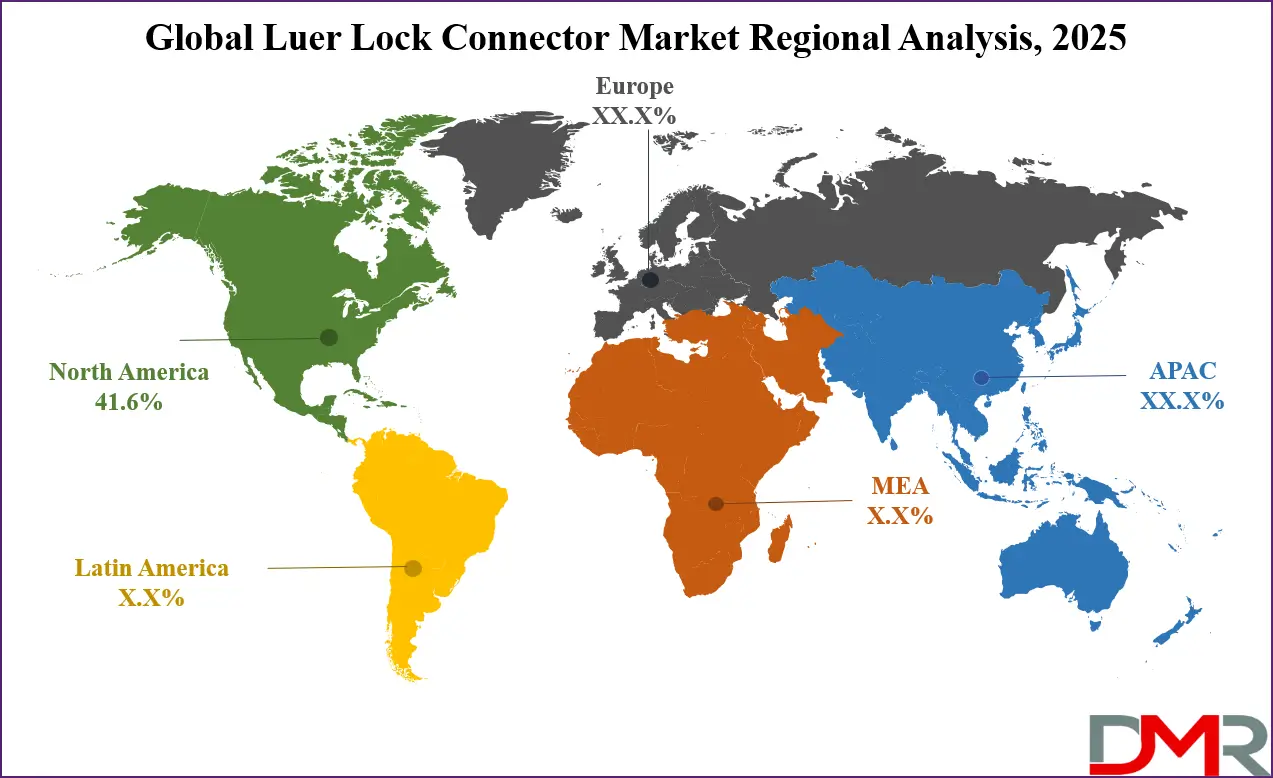
North America leads the Luer Lock Connector market with an estimated 41.6% share in 2025, supported by a highly developed healthcare infrastructure and strong regulatory enforcement. The region benefits from widespread adoption of safety-engineered and needle-free medical devices, driven by strict patient and healthcare worker safety standards. Government initiatives and regulatory frameworks emphasize infection prevention, standardization, and quality assurance, encouraging consistent use of reliable connector systems. High healthcare expenditure, advanced hospital networks, and a strong presence of medical device manufacturers further reinforce market leadership. Additionally, continuous investments in healthcare technology, outpatient services, and home healthcare solutions sustain long-term demand across both acute and chronic care settings.
ℹ
To learn more about this report –
Download Your Free Sample Report Here
Fastest Growing Region in the Luer Lock Connector Market
Asia-Pacific is the fastest-growing region in the Luer Lock Connector market, driven by rapid expansion of healthcare infrastructure and increasing government investments in hospital development. Rising population levels, urbanization, and growing prevalence of chronic diseases contribute to higher demand for medical procedures and consumables. Medical tourism growth in countries such as India, Thailand, and South Korea further supports connector usage across hospitals and clinics. Improved access to healthcare services, expanding diagnostic networks, and increasing adoption of standardized medical devices accelerate market growth. Additionally, supportive government initiatives aimed at strengthening healthcare systems create favorable conditions for sustained regional expansion.
By Region
North America
Europe
- Germany
- The U.K.
- France
- Italy
- Russia
- Spain
- Benelux
- Nordic
- Rest of Europe
Asia-Pacific
- China
- Japan
- South Korea
- India
- ANZ
- ASEAN
- Rest of Asia-Pacific
Latin America
- Brazil
- Mexico
- Argentina
- Colombia
- Rest of Latin America
Middle East & Africa
- Saudi Arabia
- UAE
- South Africa
- Israel
- Egypt
- Rest of MEA
Competitive Landscape
The Luer Lock Connector market is moderately competitive, characterized by strong emphasis on product quality, regulatory compliance, and cost efficiency. Companies focus on expanding production capabilities, investing in R&D for safety-enhanced designs, and forming strategic partnerships with medical device manufacturers. High entry barriers due to certification requirements favor established players, while innovation and scale efficiency remain key competitive advantages.
Some of the prominent players in the global Luer Lock Connector are:
- Becton, Dickinson and Company
- B. Braun Melsungen AG
- Baxter International Inc.
- Smiths Medical
- ICU Medical, Inc.
- Elcam Medical
- Nordson Medical
- Merit Medical Systems
- Medline Industries
- Gerresheimer AG
- Fresenius Kabi
- Terumo Corporation
- Teleflex Incorporated
- Vygon Group
- Nipro Corporation
- West Pharmaceutical Services
- Qosina Corporation
- CODAN Companies
- Hamilton Medical
- Cole-Parmer
- Other Key Players
Recent Developments
- In September 2025, Hynec, launched two upgraded, precision-engineered products, namely the 500pcs Radiation-Resistant Polypropylene Female Luer Lock Caps and the 500pcs R-PP Straight Female to Female Luer Lock Connector. Designed for the most demanding applications, these products set a new standard for clarity, durability, and reliability in scientific and industrial settings.
- In January 2025, Vetter announced the development and upcoming launch of the latest version of our proprietary V-OVS® syringe closure system that will advance a proprietary system with many years of proven market success supporting and differentiating a range of sterile injectables, and will integrate several unique technical advances guided by both shifting market needs and feedback from the many customers who selected V-OVS® for their products.
Report Details
| Report Characteristics |
| Market Size (2025) |
USD 1.9 Bn |
| Forecast Value (2034) |
USD 25.7 Bn |
| CAGR (2025–2034) |
8.3% |
| The US Market Size (2025) |
USD 4.2 Bn |
| Historical Data |
2019 – 2024 |
| Forecast Data |
2026 – 2034 |
| Base Year |
2024 |
| Estimate Year |
2025 |
| Report Coverage |
Market Revenue Estimation, Market Dynamics, Competitive Landscape, Growth Factors, etc. |
| Segments Covered |
By Product Type (Male Luer Lock Connectors, Female Luer Lock Connectors, and Stopcocks & Multi-Port Luer Locks), By Material (Plastic and Metal), By Technology (Standard Luer Lock, Safety / Needle-Free Luer Lock, and Anti-Reflux / Anti-Leak Luer Lock), By Usage Type (Disposable / Single-Use and Reusable), By Application (Infusion Therapy, Syringes & Needles, Catheters, Blood Collection & Transfusion, Diagnostic & Laboratory Devices, and Dialysis Equipment), By End User (Hospitals & Clinics, Diagnostic & Research Laboratories, Pharmaceutical & Biotechnology Companies, and Home Healthcare) |
| Regional Coverage |
North America – US, Canada; Europe – Germany, UK, France, Russia, Spain, Italy, Benelux, Nordic, Rest of Europe; Asia-Pacific – China, Japan, South Korea, India, ANZ, ASEAN, Rest of APAC; Latin America – Brazil, Mexico, Argentina, Colombia, Rest of Latin America; Middle East & Africa – Saudi Arabia, UAE, South Africa, Turkey, Egypt, Israel, Rest of MEA |
| Prominent Players |
Becton, Dickinson and Company, B. Braun Melsungen AG, Baxter International Inc., Smiths Medical, CU Medical, Inc., Elcam Medical, Nordson Medical, Merit Medical Systems, Medline Industries, Gerresheimer AG, Fresenius Kabi, Terumo Corporation, Teleflex Incorporated, Vygon Group, Nipro Corporation, West Pharmaceutical Services, Qosina Corporation, CODAN Companies, Hamilton Medical, Cole-Parmer, and Other Key Players |
| Purchase Options |
We have three licenses to opt for: Single User License (Limited to 1 user), Multi-User License (Up to 5 Users), and Corporate Use License (Unlimited User) along with free report customization equivalent to 0 analyst working days, 3 analysts working days, and 5 analysts working days respectively. |
Frequently Asked Questions
How big is the Global Luer Lock Connector Market?
▾ The Global Luer Lock Connector Market size is expected to reach USD 1.9 billion by 2025 and is projected to reach USD 2.5 billion by the end of 2034.
Which region accounted for the largest Global Luer Lock Connector Market?
▾ North America is expected to have the largest market share in the Global Luer Lock Connector Market, with a share of about 41.6% in 2025.
How big is the Luer Lock Connector Market in the US?
▾ The US Luer Lock Connector market is expected to reach USD 0.7 billion by 2025.
Who are the key players in the Luer Lock Connector Market?
▾ Some of the major key players in the Global Luer Lock Connector Market include BD, Braun, Smiths Medical and others
What is the growth rate in the Global Luer Lock Connector Market?
▾ The market is growing at a CAGR of 3.4 percent over the forecasted period.