What is the Lyme Disease Testing Market Size?
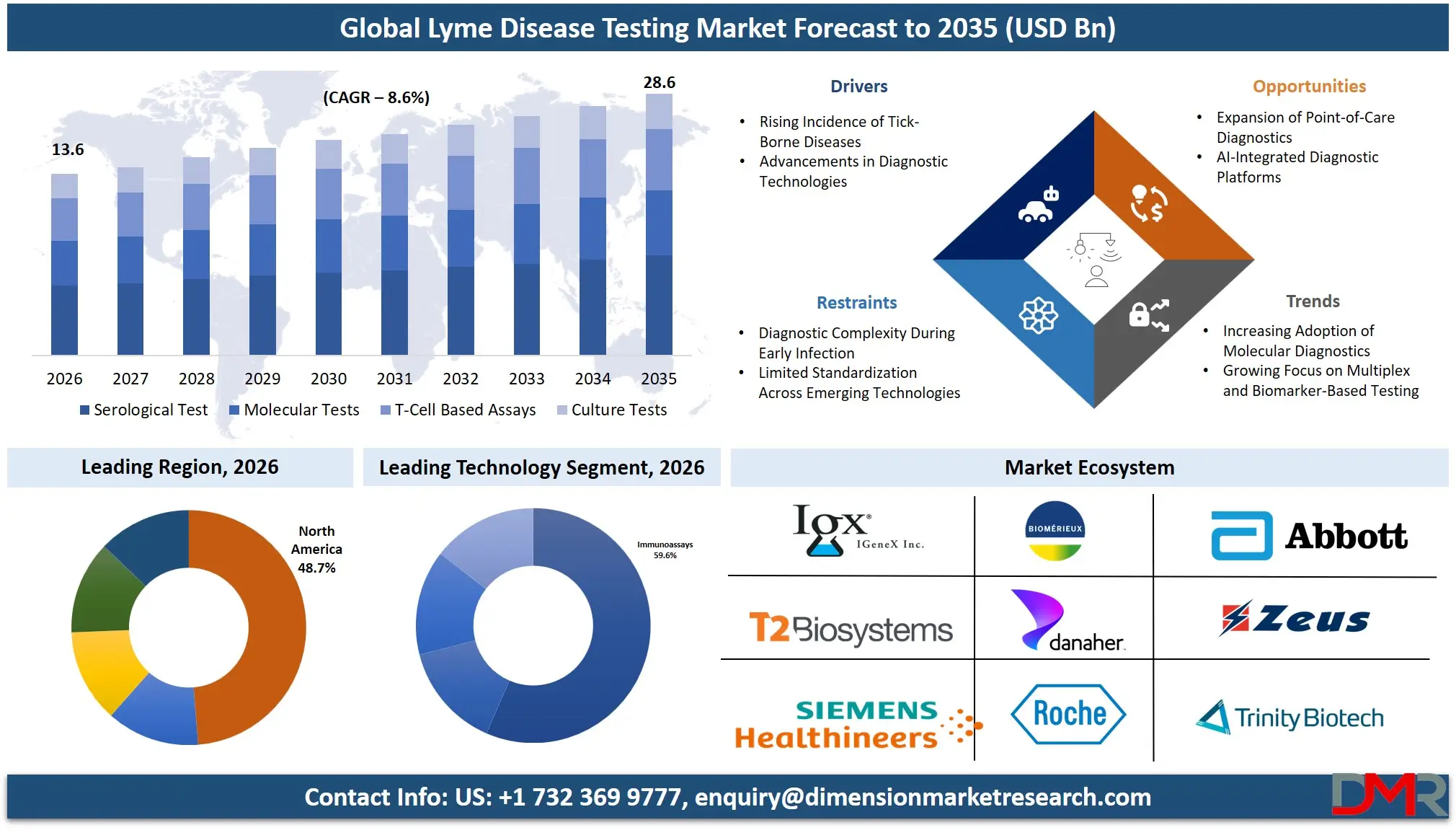
The Lyme Disease Testing Market size is expected to be USD 13.6 billion in 2026 and increase at a compound annual growth rate of 8.6% to USD 28.6 billion in 2035 due to rising incidence of tick-borne diseases.
ℹ
To learn more about this report –
Download Your Free Sample Report Here
Lyme disease testing comprises diagnostic products, laboratory services, and technologies used to identify infection caused by Borrelia bacteria, primarily Borrelia burgdorferi. The market includes serological assays, molecular diagnostics, culture-based methods, T-cell assays, laboratory automation solutions, and associated testing services. Increasing incidence of tick-borne diseases, expanding awareness regarding early diagnosis, and improvements in diagnostic accuracy are strengthening market demand worldwide. Healthcare providers are increasingly adopting advanced molecular and immunological testing platforms to reduce false-negative results and accelerate clinical decision-making. Furthermore, research into novel biomarkers, point-of-care diagnostics, multiplex testing, and AI-assisted laboratory interpretation continues to reshape the market landscape while supporting more accurate and timely disease management.
The US Lyme Disease Testing Market
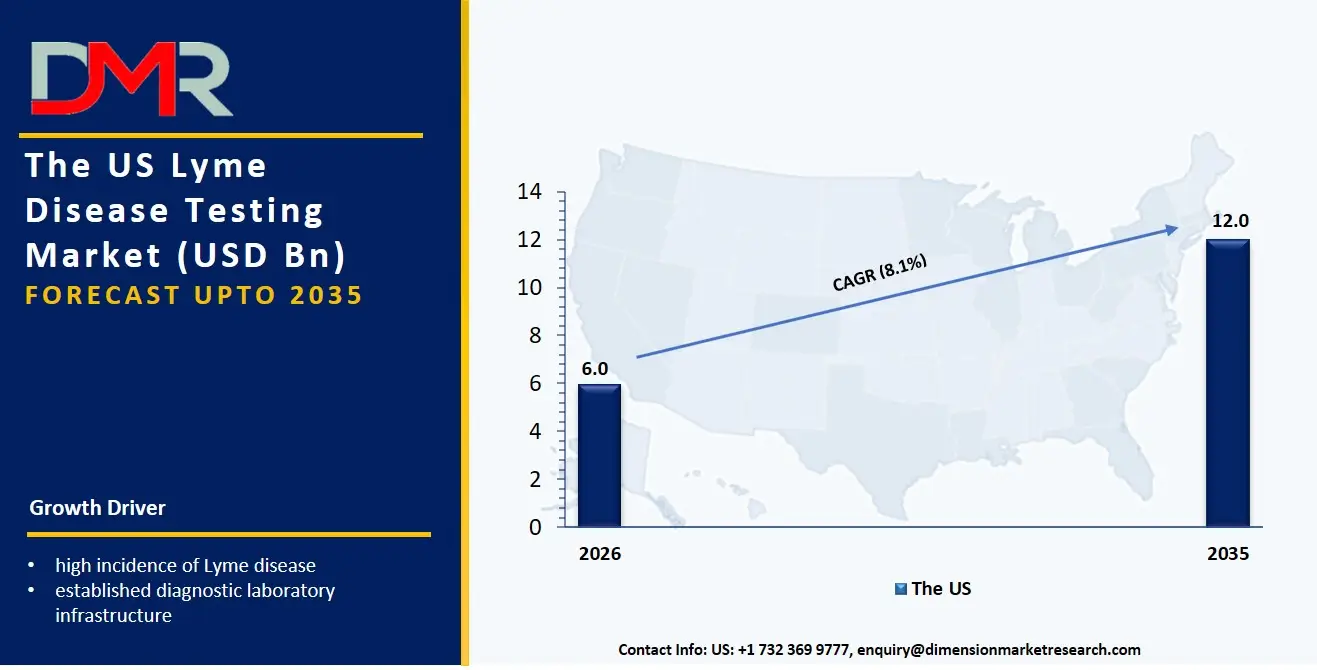
The US Lyme Disease Testing Market size is estimated to be USD 6.0 billion in 2026 and is expected to increase at a CAGR of 8.1% over the forecast period.
ℹ
To learn more about this report –
Download Your Free Sample Report Here
The United States represents one of the most mature markets because of the high incidence of Lyme disease, established diagnostic laboratory infrastructure, and strong physician awareness. Continuous surveillance programs, reimbursement support for approved diagnostic tests, and ongoing investment in improved molecular diagnostics encourage market expansion. Large reference laboratories and diagnostic manufacturers continue introducing enhanced testing platforms that improve sensitivity, workflow efficiency, and turnaround time. The increasing number of reported tick-borne disease cases further supports sustained testing demand across hospitals, independent laboratories, and physician offices.
Europe Lyme Disease Testing Market
The Europe Lyme Disease Testing Market size is estimated to be USD 2.7 billion in 2026 and is expected to increase at a CAGR of 8.0% over the forecast period.
Europe continues to witness growing demand for Lyme disease testing owing to increasing tick populations, expanding disease surveillance, and rising public awareness. Regulatory frameworks emphasizing diagnostic quality and laboratory accreditation encourage adoption of validated testing technologies. Regional healthcare systems are investing in molecular diagnostics and standardized two-tier testing approaches. Collaborative research initiatives, cross-border surveillance, and public health policies supporting infectious disease monitoring are further accelerating innovation while strengthening laboratory capabilities throughout European countries.
Japan Lyme Disease Testing Market
The market size of Japan Lyme Disease Testing will be USD 816 million in 2026 and at a CAGR of 8.4% in the forecast period.
Japan maintains a comparatively smaller market but continues to experience gradual expansion supported by increasing awareness of vector-borne diseases, improvements in molecular diagnostics, and investments in infectious disease preparedness. Academic research institutions actively investigate advanced diagnostic biomarkers, while healthcare providers increasingly utilize high-sensitivity laboratory technologies. Government support for public health surveillance, modernization of clinical laboratories, and broader adoption of precision diagnostics create opportunities for gradual market growth despite relatively lower disease prevalence than North America.
Key Takeaways
- Market Size & Forecast: The Lyme Disease Testing Market size is projected to reach USD 13.6 billion in 2026 and is anticipated to have a value of USD 28.6 billion in 2035.
- Growth Rate & Outlook: The Lyme Disease Testing Market size is set to grow at a compound annual growth rate of 8.6% during the forecast period of 2026 to 2035.
- Primary Growth Drivers: Some of the major growth drivers in the market are Rising Incidence of Tick-Borne Diseases, and more.
- Key Market Trends: Some of the major trends in the market are Increasing Adoption of Molecular Diagnostics,, and more.
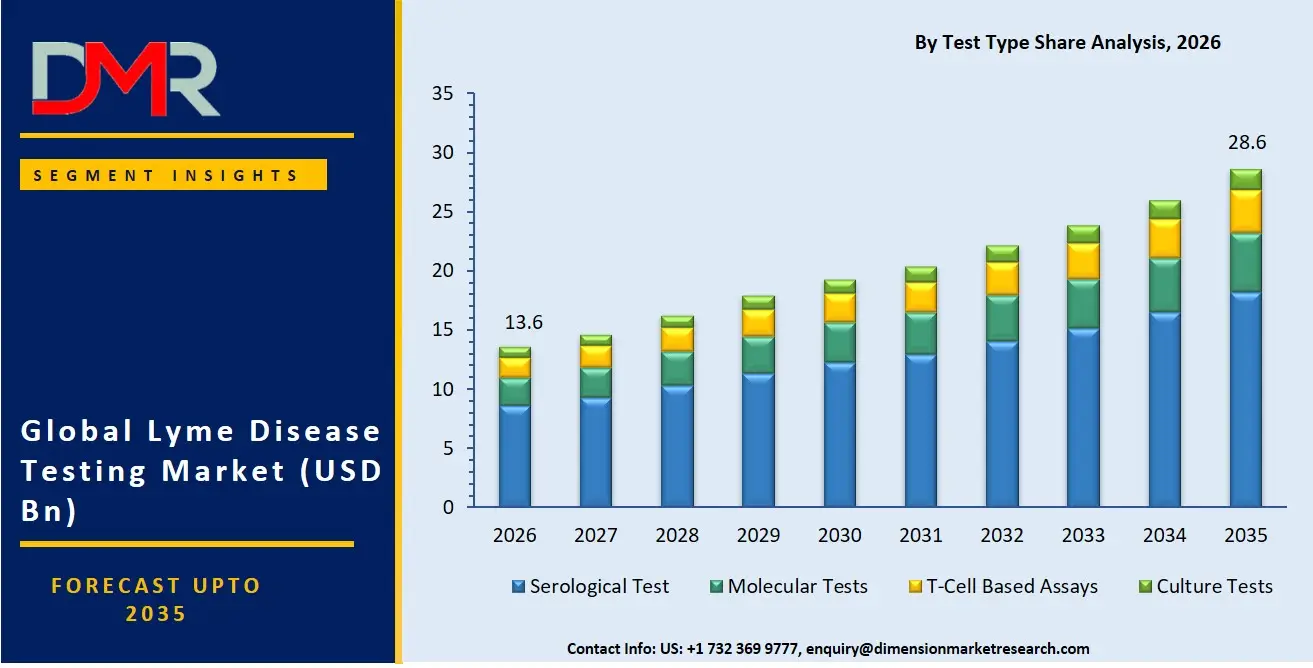
- By Test Type: Serological tests are anticipated to get the majority share of the Lyme Disease Testing Market in 2026.
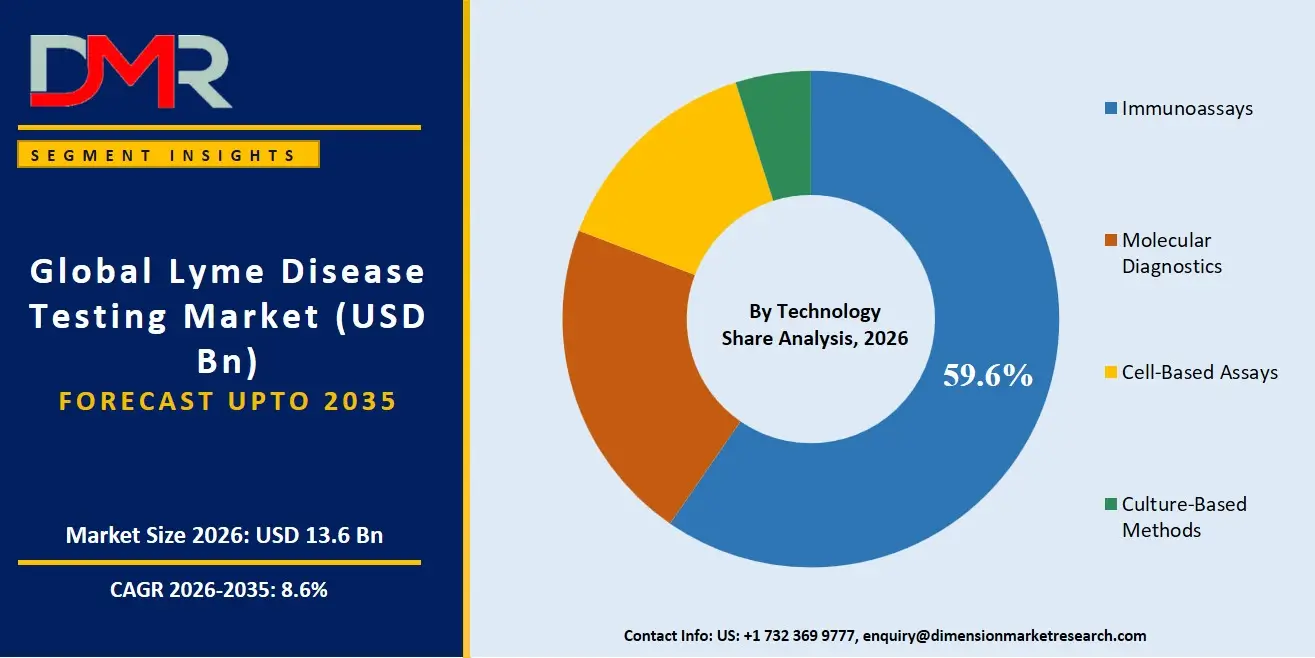
- By Technology Type: Immunoassays is expected to get the largest revenue share in 2026 in the Lyme Disease Testing Market.
- Regional Leadership: North America is set to lead the Lyme Disease Testing Market with an estimated 48.7% share in 2026.
What is the Lyme Disease Testing?
Lyme disease testing refers to laboratory diagnostic procedures used to detect infection caused by Borrelia bacteria transmitted through infected tick bites. These procedures include antibody-based serological assays, molecular diagnostic techniques, culture methods, and emerging cellular immune response tests. The objective is to confirm infection accurately, support timely clinical intervention, differentiate active from previous exposure where possible, and guide appropriate treatment decisions while minimizing diagnostic uncertainty and improving patient outcomes.
Use Cases
- Early Clinical Diagnosis: Hospitals and physicians utilize Lyme disease testing to confirm infection during the early stages following suspected tick exposure. Early laboratory confirmation enables prompt antibiotic treatment, reducing the likelihood of neurological complications, arthritis, and chronic manifestations associated with delayed diagnosis.
- Public Health Surveillance: Government laboratories employ Lyme disease testing to monitor disease prevalence, identify outbreak clusters, and evaluate geographic spread. Surveillance data assists policymakers in implementing preventive campaigns, allocating healthcare resources, and strengthening vector-control strategies.
- Blood Donor and Research Screening: Research institutes and specialized laboratories use advanced Lyme disease testing technologies to study infection epidemiology, biomarker discovery, immune response characterization, and assay development. These activities contribute to next-generation diagnostic innovation and improved disease understanding.
- Differential Diagnosis: Clinicians frequently use Lyme disease testing to distinguish Lyme disease from autoimmune disorders, chronic fatigue syndrome, neurological conditions, and other infectious diseases presenting with overlapping symptoms, thereby improving diagnostic confidence and patient management.
How AI Is Transforming the Lyme Disease Testing Market
Artificial intelligence is improving laboratory diagnostics by automating image analysis, interpreting immunoassay results, optimizing laboratory workflow, and identifying diagnostic patterns that may be overlooked during manual review. AI algorithms also support predictive analytics, quality assurance, and clinical decision support by integrating laboratory findings with patient history and epidemiological information.
AI additionally enhances research by accelerating biomarker discovery, improving assay development, and enabling large-scale analysis of clinical datasets. Diagnostic manufacturers increasingly integrate machine learning into laboratory software to improve result consistency, reduce turnaround times, optimize resource utilization, and strengthen diagnostic accuracy, contributing to better patient outcomes and more efficient healthcare delivery.
Market Dynamic
Driving Factors in the Lyme Disease Testing Market
Rising Incidence of Tick-Borne Diseases
The growing prevalence of Lyme disease and other tick-borne infections remains the strongest driver of market expansion. Climate change, expanding tick habitats, changing land use patterns, and increased outdoor recreational activities have collectively increased human exposure to infected ticks. Healthcare providers consequently perform greater numbers of confirmatory laboratory tests, encouraging investments in high-throughput diagnostic systems, improved assay sensitivity, and expanded laboratory capacity. Increasing physician awareness regarding early diagnosis further supports sustained testing demand across developed and emerging healthcare markets.
Restraints in the Lyme Disease Testing Market
Diagnostic Complexity During Early Infection
Early Lyme disease remains difficult to diagnose because antibody production may not reach detectable levels immediately after infection. False-negative results during early disease stages can delay treatment and reduce physician confidence in existing diagnostic methods. This limitation increases demand for confirmatory testing and discourages complete reliance on conventional serological approaches, creating challenges for healthcare providers and diagnostic manufacturers.
Opportunities in the Lyme Disease Testing Market
Expansion of Point-of-Care Diagnostics
Point-of-care diagnostic solutions represent a significant growth opportunity by enabling rapid diagnosis outside centralized laboratories. Portable molecular platforms, digital immunoassays, and simplified testing workflows can improve access in rural healthcare settings, emergency departments, and primary care clinics. Earlier diagnosis also supports better clinical outcomes while reducing disease progression and healthcare costs.
Trends in the Lyme Disease Testing Market
Increasing Adoption of Molecular Diagnostics
Healthcare laboratories are gradually incorporating PCR and nucleic acid amplification technologies alongside traditional serological testing. Molecular diagnostics provide improved specificity and enable earlier pathogen detection in selected clinical settings. Continued investments in automation and multiplex molecular platforms are expected to strengthen this trend over the coming years.
Research Scope and Analysis
The Lyme Disease Testing Market research scope evaluates market performance based on test type, sample type, technology, and end-user segments. The analysis examines growth drivers, adoption trends, regional developments, competitive strategies, technological advancements, and segment-level opportunities influencing market expansion.
ℹ
To learn more about this report –
Download Your Free Sample Report Here
By Test Type Analysis
The Lyme disease testing market by test type is primarily led by serological tests, which accounted for an estimated approximately 63.5% share of the global market in 2026. Serological testing maintains dominance because it is widely recommended in clinical practice, offers cost-effective diagnosis, and is supported by established laboratory infrastructure. Enzyme-linked immunosorbent assay (ELISA) followed by confirmatory Western blot testing remains a common diagnostic pathway due to its reliability and broad availability.
ℹ
To learn more about this report –
Download Your Free Sample Report Here
However, molecular tests represent the fastest-growing segment due to increasing demand for early-stage detection, higher specificity, and rapid turnaround times. Advancements in PCR-based diagnostics, nucleic acid amplification technologies, and improved pathogen detection capabilities are expected to accelerate adoption. T-cell-based assays are also gaining attention because they may provide additional diagnostic value in cases where antibody responses are unclear.
By Sample Type Analysis
The Lyme disease testing market by sample type is dominated by blood/serum samples, representing an estimated approximately 72.8% share of the market in 2026. Blood-based testing remains the preferred approach because serological assays primarily rely on antibody detection from serum samples, making collection simple, minimally invasive, and compatible with existing laboratory workflows. Hospitals, diagnostic laboratories, and public health institutions extensively utilize blood samples for routine Lyme disease confirmation. Meanwhile, cerebrospinal fluid (CSF) testing is projected to be the fastest-growing segment due to rising demand for diagnosing neurological Lyme disease manifestations such as meningitis, encephalitis, and neuroborreliosis. Increasing awareness among clinicians regarding advanced-stage complications is encouraging broader use of specialized sample types. Synovial fluid and skin biopsy analysis continue to serve niche applications, particularly in arthritis-related cases and research environments.
By Technology Analysis
The technology segment of the Lyme disease testing market is led by immunoassays, which are expected to hold an estimated approximately 59.6% market share in 2026. Immunoassays remain dominant due to their extensive clinical validation, affordability, scalability, and compatibility with automated laboratory systems. ELISA-based platforms and other antibody detection technologies continue to represent the foundation of routine Lyme disease diagnosis worldwide. However, molecular diagnostics are anticipated to be the fastest-growing technology segment because healthcare providers are increasingly seeking faster and more precise detection methods. PCR and nucleic acid amplification technologies offer opportunities for improved pathogen identification, particularly during early infection stages when antibody levels may be insufficient. Additionally, integration of automation, digital interpretation systems, and multiplex molecular platforms is expected to accelerate technology transition within diagnostic laboratories.
By End User Analysis
The Lyme disease testing market by end user is dominated by diagnostic laboratories, accounting for an estimated approximately 46.2% share of the global market in 2026. Diagnostic laboratories maintain leadership due to their specialized testing capabilities, advanced equipment availability, centralized workflows, and ability to process high testing volumes. Reference laboratories also support healthcare providers by conducting confirmatory testing and complex diagnostic evaluations. However, hospitals are projected to be the fastest-growing end-user segment due to increasing integration of in-house diagnostic capabilities, emergency care requirements, and demand for faster clinical decision-making. Hospitals are investing in automated analyzers and advanced diagnostic infrastructure to reduce turnaround time and improve patient management. Public health laboratories and academic institutions continue contributing to market expansion through surveillance programs, epidemiological research, and development of innovative diagnostic technologies.
The Lyme Disease Testing Market Report is segmented on the basis of the following:
By Test Type
- Serological Tests
- Enzyme-Linked Immunosorbent Assay (ELISA)
- Western Blot
- Immunofluorescence Assay (IFA)
- Molecular Tests
- Polymerase Chain Reaction (PCR)
- Nucleic Acid Amplification Tests (NAAT)
- T-Cell-Based Assays
- Culture Tests
By Sample Type
- Blood/Serum
- Cerebrospinal Fluid (CSF)
- Synovial Fluid
- Skin Biopsy
By Technology
- Immunoassays
- Molecular Diagnostics
- Cell-Based Assays
- Culture-Based Methods
By End User
- Hospitals
- Diagnostic Laboratories
- Physician Office Laboratories
- Public Health Laboratories
- Academic & Research Institutes
Regional Analysis
Leading Region in the Lyme Disease Testing Market
ℹ
To learn more about this report –
Download Your Free Sample Report Here
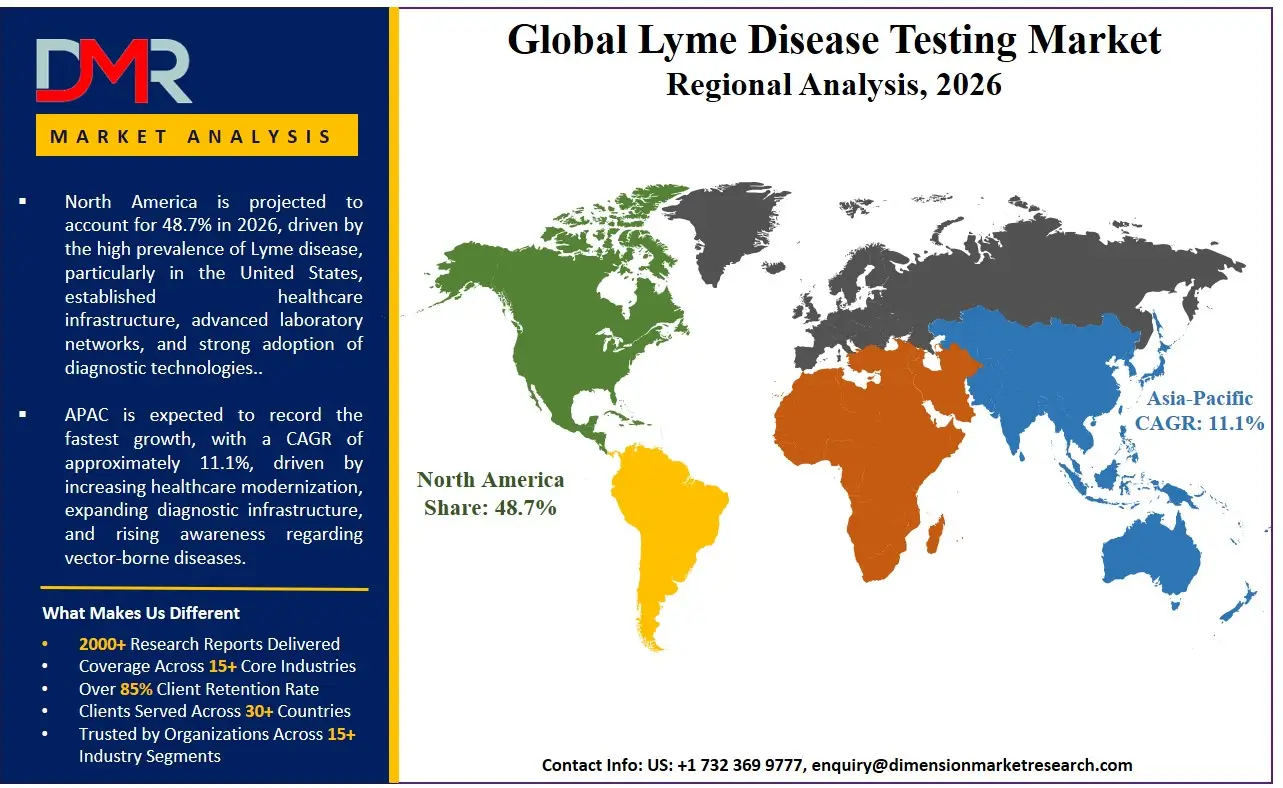
North America is expected to remain the leading region in the Lyme disease testing market, accounting for an estimated approximately 48.7% share of the global market in 2026. The region's dominance is supported by the high prevalence of Lyme disease, particularly in the United States, established healthcare infrastructure, advanced laboratory networks, and strong adoption of diagnostic technologies. Government surveillance programs, research funding, and increasing awareness campaigns contribute significantly to market development. The presence of sophisticated reference laboratories and favorable reimbursement structures further strengthen regional growth. Additionally, continuous investment in molecular diagnostics, automated testing platforms, and innovative assay development positions North America as the primary hub for Lyme disease testing advancements.
Fastest Growing Region in the Lyme Disease Testing Market
Asia-Pacific is projected to be the fastest-growing region in the Lyme disease testing market due to increasing healthcare modernization, expanding diagnostic infrastructure, and rising awareness regarding vector-borne diseases. Countries such as Japan, China, South Korea, and Australia are improving infectious disease monitoring systems and investing in advanced laboratory technologies. Growing urbanization, increased outdoor activities, climate-related expansion of tick habitats, and government initiatives supporting disease surveillance are contributing to regional demand. Additionally, increasing healthcare expenditure and adoption of molecular diagnostics are creating opportunities for international and domestic diagnostic companies. Although the region currently represents a smaller market compared with North America and Europe, improving healthcare access and technological advancement are expected to drive rapid expansion.
By Region
North America
Europe
- Germany
- The U.K.
- France
- Italy
- Russia
- Spain
- Benelux
- Nordic
- Rest of Europe
Asia-Pacific
- China
- Japan
- South Korea
- India
- ANZ
- ASEAN
- Rest of Asia-Pacific
Latin America
- Brazil
- Mexico
- Argentina
- Colombia
- Rest of Latin America
Middle East & Africa
- Saudi Arabia
- UAE
- South Africa
- Israel
- Egypt
- Rest of MEA
Competitive Landscape
The Lyme disease testing market is characterized by competition based on diagnostic accuracy, technology innovation, regulatory approvals, laboratory integration capabilities, and pricing strategies. Market participants focus on developing highly sensitive assays, expanding diagnostic portfolios, strengthening distribution networks, and improving automation capabilities to maintain competitiveness. Strategic collaborations between diagnostic developers, research institutions, and healthcare organizations are becoming increasingly important for accelerating innovation. Companies are investing in research and development to introduce molecular platforms, multiplex testing solutions, and AI-enabled laboratory systems. High regulatory requirements, clinical validation processes, and established laboratory relationships create entry barriers for new competitors. Competitive advantage increasingly depends on technological differentiation, scalability, and the ability to provide comprehensive diagnostic solutions across healthcare settings.
Some of the prominent players in the global Lyme Disease Testing are:
- F. Hoffmann-La Roche Ltd.
- Abbott Laboratories
- Siemens Healthineers AG
- Danaher Corporation (Beckman Coulter)
- Thermo Fisher Scientific Inc.
- bioMérieux SA
- Bio-Rad Laboratories, Inc.
- QuidelOrtho Corporation
- DiaSorin S.p.A.
- ZEUS Scientific, Inc.
- Trinity Biotech plc
- Gold Standard Diagnostics (Eurofins Technologies)
- T2 Biosystems, Inc.
- IGeneX Inc.
- Oxford Immunotec Ltd. (PerkinElmer)
- Euroimmun SE (Revvity)
- Viramed Biotech AG
- Creative Diagnostics
- Immunetics, Inc.
- CerTest Biotec S.L.
- Other Key Players
Recent Developments
- In June 2025, bioMérieux continued strengthening its infectious disease diagnostics strategy by advancing molecular testing technologies, automated laboratory workflows, and precision diagnostic solutions. The company focused on improving pathogen detection capabilities, accelerating laboratory decision-making, and supporting healthcare systems seeking faster and more accurate diagnostic results. These developments correspond with increasing demand for advanced infectious disease testing solutions driven by rising disease surveillance requirements and technological modernization.
- In March 2025, DiaSorin continued expanding its infectious disease diagnostics portfolio through investments in immunodiagnostic technologies, molecular testing capabilities, and laboratory automation solutions. The company focused on improving testing accuracy, operational efficiency, and integration of diagnostic workflows across healthcare facilities. These initiatives support growing clinical demand for reliable infectious disease identification, including conditions requiring antibody-based and molecular testing approaches such as Lyme disease.
- In February 2025, QuidelOrtho continued advancing its diagnostics strategy by focusing on improvements across its automated immunodiagnostic platforms and infectious disease testing capabilities. The company emphasized laboratory efficiency, workflow optimization, and enhanced assay performance to support healthcare providers managing infectious diseases requiring accurate diagnostic interpretation. These developments align with increasing demand for automated testing systems that reduce manual processing requirements and improve turnaround times.
Report Details
| Report Characteristics |
| Market Size (2026) |
USD 13.6 Bn |
| Forecast Value (2035) |
USD 28.6 Bn |
| CAGR (2026–2035) |
8.6% |
| Historical Period |
2021 – 2025 |
| Forecast Period |
2027 – 2035 |
| Base Year |
2025 |
| Estimate Year |
2026 |
| Segments Covered |
By Test Type, By Sample Type, By Technology, By End User |
| Regional Coverage |
North America – The US and Canada; Europe – Germany, The UK, France, Russia, Spain, Italy, Benelux, Nordic, & Rest of Europe; Asia-Pacific – China, Japan, South Korea, India, ANZ, ASEAN, Rest of APAC; Latin America – Brazil, Mexico, Argentina, Colombia, Rest of Latin America; Middle East & Africa – Saudi Arabia, UAE, South Africa, Turkey, Egypt, Israel, & Rest of MEA |
Frequently Asked Questions
How big is the Lyme Disease Testing Market?
▾ The Lyme Disease Testing Market size is expected to reach USD 13.6 billion by 2026 and is projected to reach USD 28.6 billion by the end of 2035.
What is the CAGR of the Lyme Disease Testing Market from 2026 to 2035?
▾ The market is growing at a CAGR of 8.6 percent over the forecasted period.
What factors are driving the growth of the Lyme Disease Testing Market?
▾ Rising Incidence of Tick-Borne Diseases, and more are the factors driving the growth of the Lyme Disease Testing Market.
What are the major trends in the Lyme Disease Testing Market?
▾ Increasing Focus on Real-World Evidence Generation, and more are some of the major trends in the market.
Who are the key players in the Lyme Disease Testing Market?
▾ Some of the key players in the Lyme Disease Testing Market include Roche, Abbott, Danaher, more
How is the Lyme Disease Testing Market segmented?
▾ The Lyme Disease Testing Market is segmented by test type, sample type, technology, end user.
Which region held the largest share of the Lyme Disease Testing Market in 2026?
▾ North America is set to lead the Lyme Disease Testing Market with an estimated 48.7% share in 2026.
Which region is expected to grow the fastest in the Lyme Disease Testing Market?
▾ Asia Pacific is the fastest-growing region in the Lyme Disease Testing Market during the forecast period.