Market Overview
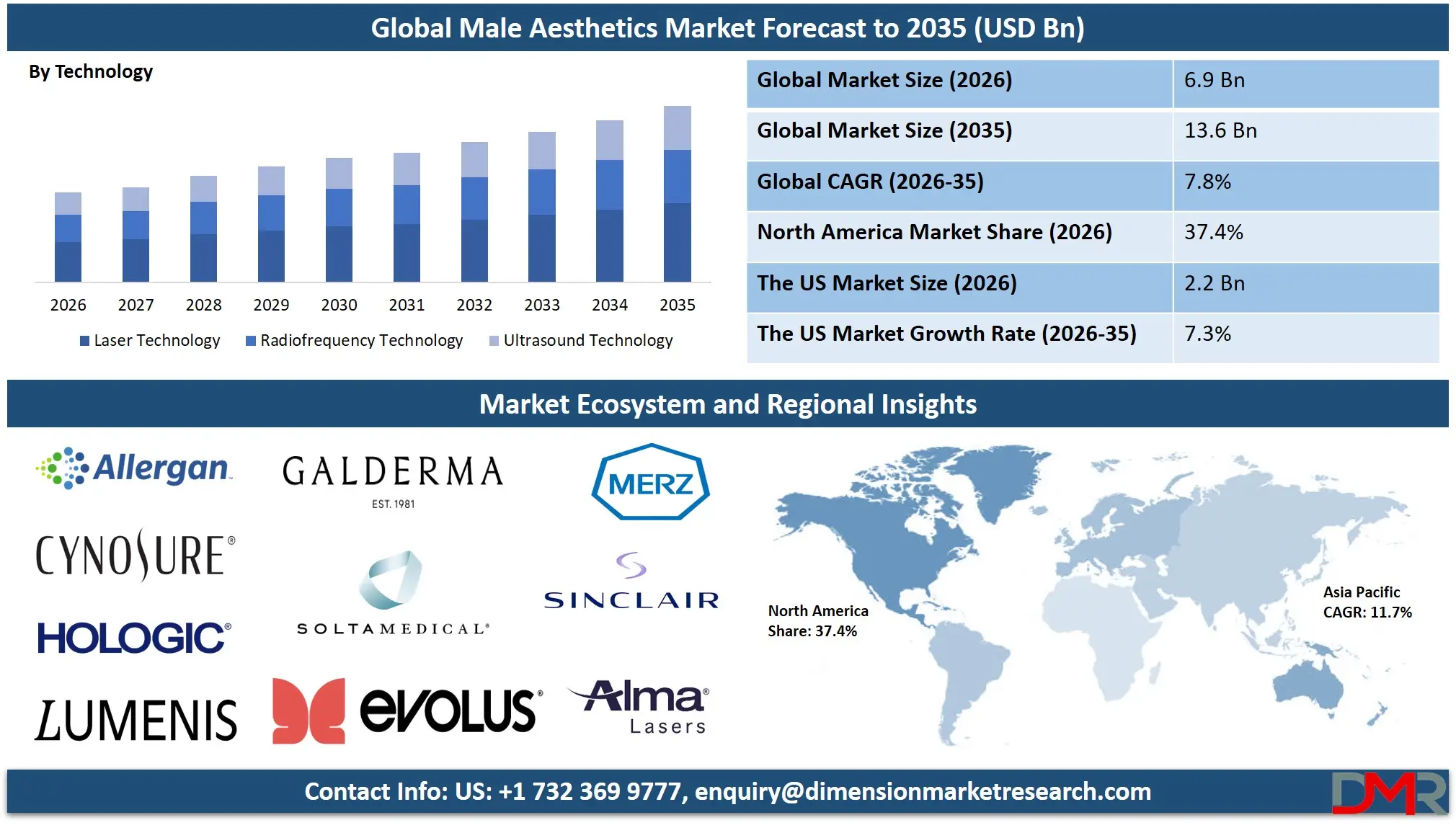
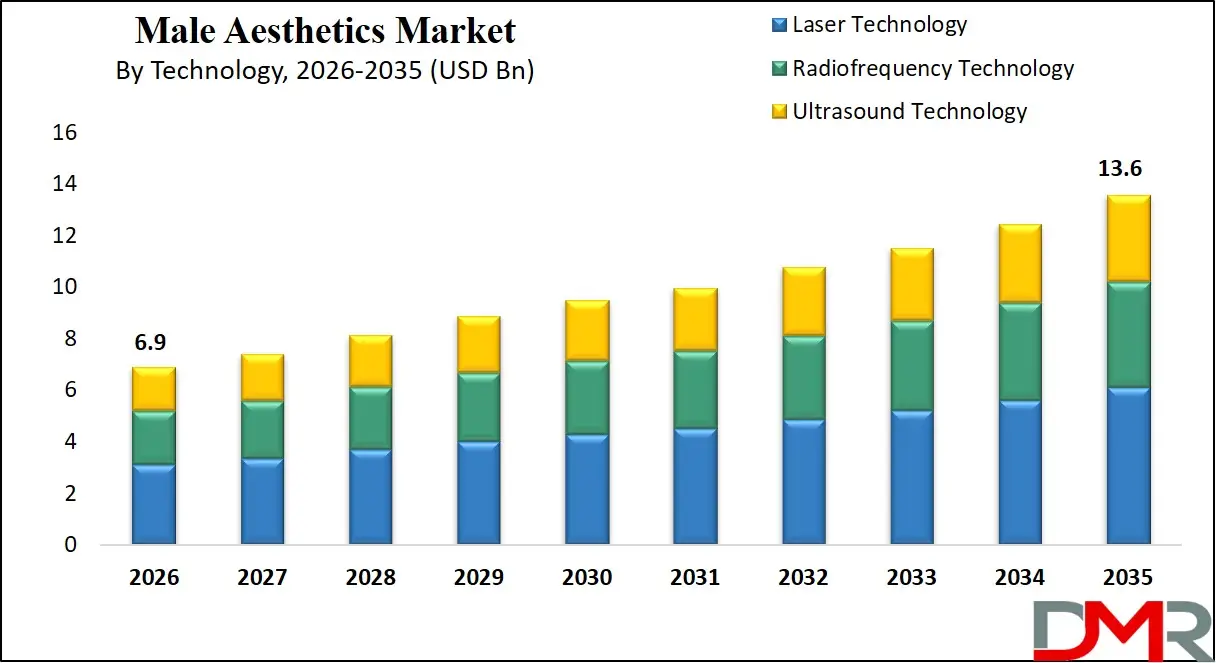
The Global Male Aesthetics Market is projected to reach USD 6.9 billion in 2026 and grow at a compound annual growth rate of 7.8 % from there until 2035 to reach a value of USD 13.6 billion.
ℹ
To learn more about this report –
Download Your Free Sample Report Here
This growth reflects increasing demand for minimally invasive cosmetic procedures, rising awareness regarding male grooming and personal appearance, expanding adoption of non-surgical body contouring and hair restoration, and greater deployment of advanced aesthetic technologies across hospitals, dermatology clinics, medical spas, and franchised chains. The market expansion is further supported by advancements in laser, radiofrequency, and ultrasound technologies, along with strengthening social acceptance of male aesthetic enhancement and the normalization of "preventive aging" treatments among younger demographics.
Male aesthetic solutions enable rapid, effective enhancement through precision surgical techniques, minimally invasive injectables, and energy-based devices engineered for skin tightening, fat reduction, and hair regrowth. These solutions address critical self-esteem and professional image concerns related to aging, hair loss, and body contour dissatisfaction, supporting individuals in achieving their desired physical appearance and confidence.
Technological advancements, including AI-driven treatment planning platforms, robotic-assisted hair transplantation, smart energy-based devices with real-time skin sensors, and extended-duration dermal fillers, are transforming the market into a scalable and highly accessible ecosystem. Integration of biocompatible and long-lasting injectable formulations, alongside combination therapies for maximal results in minimal downtime, is reshaping patient outcomes and satisfaction rates.
ℹ
To learn more about this report –
Download Your Free Sample Report Here
Growing social media influence and the "Zoom Boom" effect, where individuals become more conscious of their appearance through video calls, have further accelerated global adoption. However, barriers such as high procedural costs, lack of standardized practitioner training, limited insurance coverage, and regulatory variability for medical devices and injectables remain. Despite these limitations, the convergence of advanced aesthetic technology, personalized treatment protocols, and proactive self-care trends positions male aesthetics as a cornerstone of the global medical aesthetics industry through 2035.
The US Male Aesthetics Market
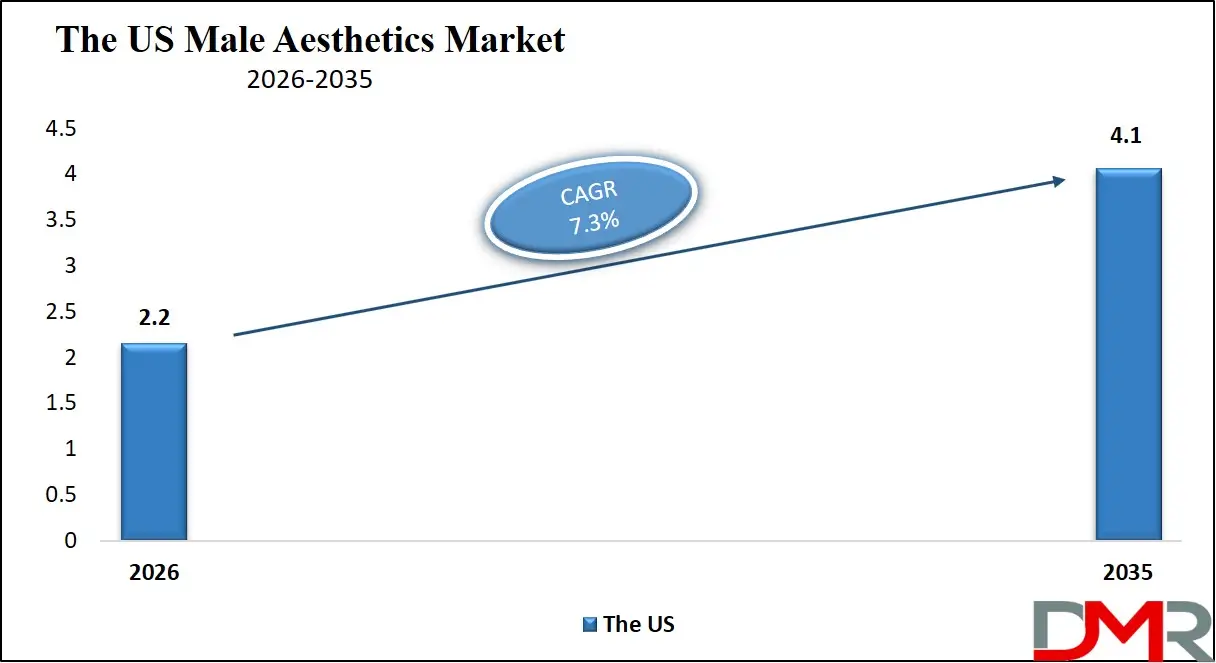
The US Male Aesthetics Market is projected to reach USD 2.2 billion in 2026 at a compound annual growth rate of 7.3% over its forecast period. The U.S. leads global adoption due to its mature medical aesthetics infrastructure, high disposable income, strong emphasis on professional appearance in corporate culture, and early adoption of innovative cosmetic technologies.
The national expansion of male-focused treatment options in dermatology clinics and medical spas, coupled with growing demand from millennials and Gen Z for preventative procedures, fuels sustained market growth. Major providers such as Allergan Aesthetics (AbbVie), Galderma, and Cutera are scaling production and innovating next-generation injectables and energy-based devices optimized for male anatomical considerations.
ℹ
To learn more about this report –
Download Your Free Sample Report Here
U.S. market growth is further supported through direct-to-consumer marketing, the rise of franchised aesthetic chains, and celebrity endorsements normalizing male cosmetic procedures. Partnerships between device manufacturers and professional bodies like the American Society of Plastic Surgeons continue to advance clinical education and treatment accessibility.
The rapid rise of personalized treatment plans combining surgical and non-surgical modalities, integration with wellness and grooming routines, and development of at-home aesthetic devices with professional oversight continues to redefine the U.S. medical aesthetics landscape, positioning the country as the global benchmark for male aesthetic care.
The Europe Male Aesthetics Market
The Europe Male Aesthetics Market is estimated to be valued at USD 1.9 billion in 2026 and is further anticipated to reach USD 4.5 billion by 2035 at a CAGR of 9.8%. Europe's leadership is anchored by high aesthetic awareness, strengthening medical tourism infrastructure, and harmonized medical device regulations across member states.
Countries such as Germany, the U.K., France, Italy, and Spain are widely adopting advanced aesthetic treatments, driven by an aging population, high standards of living, and EU initiatives supporting innovation in medical technology. The U.K.'s private healthcare sector and Germany's renowned dermatology clinics are particularly active in deploying cutting-edge laser and radiofrequency treatments.
Europe's high concentration of experienced practitioners, demand for natural-looking results, and emphasis on patient safety across borders further drive adoption. Funding through Horizon Europe research grants and national healthcare innovation programs supports R&D in next-generation injectables, combination therapies, and personalized treatment protocols.
Urban centers like Paris, Berlin, London, and Milan increasingly see a proliferation of premium medical spas and barbershop-adjacent grooming clinics, offering everything from laser hair removal to injectables in a comfortable, accessible setting. With robust clinical frameworks, integration into wellness tourism packages, and emphasis on personalized care, Europe remains one of the most advanced regions in male aesthetic treatment penetration.
The Japan Male Aesthetics Market
The Japan Male Aesthetics Market is projected to be valued at USD 552.0 million in 2026. It is further expected to witness subsequent growth in the upcoming period, holding USD 1,320.0 million in 2035 at a CAGR of 10.2%. Japan's high cultural emphasis on appearance and meticulous grooming habits, combined with an aging population seeking age-defying treatments, drives strong demand for both surgical and non-surgical aesthetic procedures.
The Ministry of Health, Labour and Welfare actively supports innovation in medical aesthetics through regulatory pathways for advanced devices and treatments, ensuring patient safety while encouraging market growth. Japan's leadership in miniaturized, patient-friendly aesthetic devices and high-precision techniques accelerates innovation in treatments suitable for subtle, natural-looking results.
Japan's concept of "precision beauty," supported by highly trained practitioners and advanced clinics, integrates aesthetic treatments into holistic wellness and anti-aging programs. Clinics in Tokyo, Osaka, and Kyoto are deploying state-of-the-art laser, ultrasound, and radiofrequency technologies. Japan's cultural emphasis on subtle enhancement and meticulous aftercare, combined with technological prowess, positions the country as a high-growth innovator in the male aesthetics sector.
Global Male Aesthetics Market: Key Takeaways
- Strong Global Market Growth Outlook: The Global Male Aesthetics Market is expected to be valued at USD 6.9 billion in 2026 and is projected to reach USD 13.6 billion by 2035, showcasing rapid expansion supported by rising male grooming awareness and demand for minimally invasive procedures.
- High CAGR Driven by Non-Surgical Innovations: The market is expected to grow at an impressive CAGR of 7.8% from 2026 to 2035, fueled by accelerating adoption of injectables, laser hair removal, and body contouring technologies, alongside increasing social acceptance of male aesthetic enhancement.
- Strong Growth Trajectory in the United States: The U.S. Male Aesthetics Market stands at USD 2.2 billion in 2026 and is projected to reach USD 4.1 billion by 2035, expanding at a CAGR of 7.3% due to high disposable income, strong corporate appearance culture, and advanced medical device innovation.
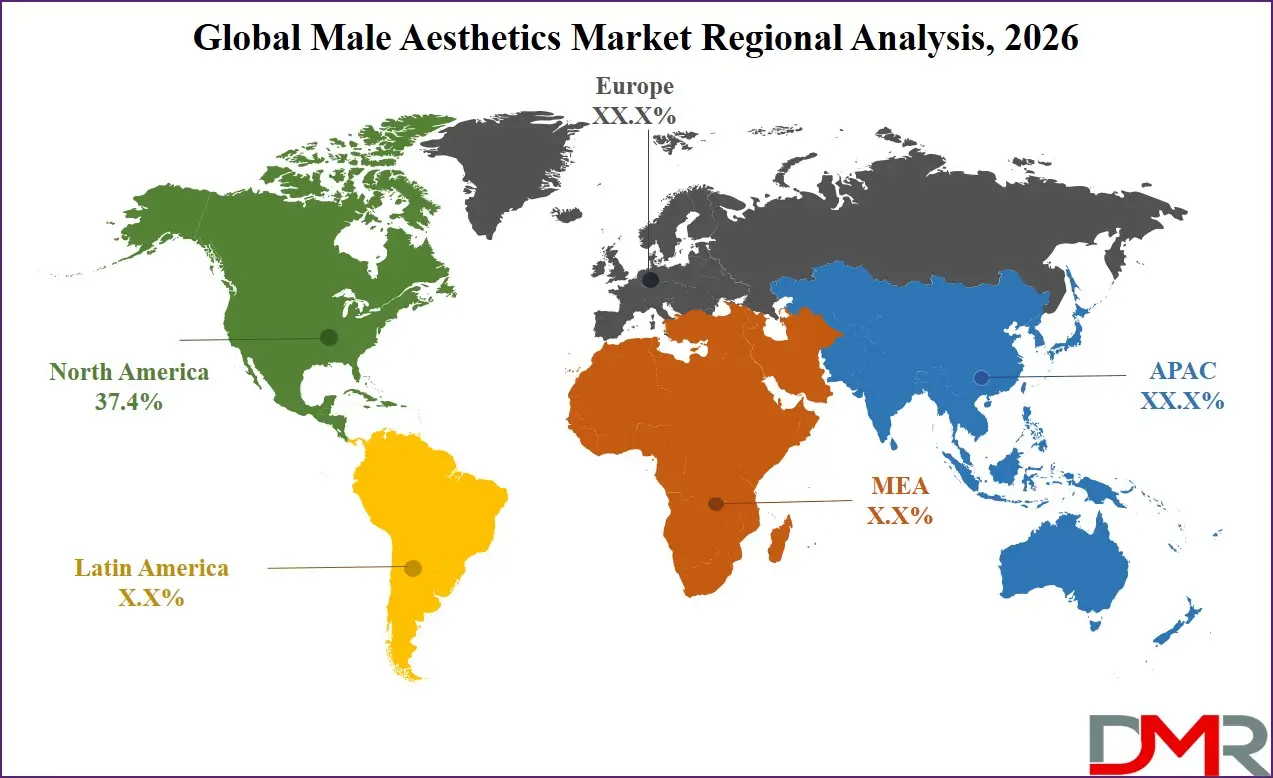
- North America Maintains Regional Dominance: North America is expected to capture approximately 37.4% of the global market share in 2026, supported by mature medical aesthetics infrastructure, significant private sector investment, and early adoption of AI-integrated aesthetic technologies.
- Rapid Advancement in Aesthetic Technologies: Innovations including AI-driven treatment planning, robotic hair transplantation, smart energy-based devices, and long-lasting biocompatible injectables are significantly accelerating treatment efficacy, patient satisfaction, and clinical outcomes.
- Growing Media Influence and Self-Care Trends Boost Adoption: Rising global influence of social media, the "Zoom Boom" effect, and increasing focus on preventive aging among younger demographics is driving sustained demand for a wide range of aesthetic procedures.
Global Male Aesthetics Market: Use Cases
- Corporate Professional Enhancement: Middle-aged executives seek subtle interventions like Botox and skin tightening to maintain a youthful, energetic appearance, enhancing confidence in competitive corporate environments.
- Hair Restoration for Aging Men: Individuals experiencing androgenic alopecia undergo hair transplantation or low-level laser therapy to restore a fuller hairline, addressing a key concern in both personal and professional spheres.
- Body Contouring Post-Weight Loss: Men who have undergone significant weight loss utilize liposuction or radiofrequency skin tightening to eliminate stubborn fat pockets and reduce loose skin, achieving a more defined physique.
- Preventive Anti-Aging for Young Adults: Men in their 20s and 30s increasingly seek preventative treatments like prophylactic Botox and regular skin rejuvenation sessions to delay the onset of visible aging signs.
- Grooming and Maintenance Routines: Regular laser hair removal for back, chest, or beard shaping, alongside maintenance injectables, becomes integrated into the modern male grooming regimen, often accessed through medical spas or specialized clinics.
Global Male Aesthetics Market: Stats & Facts
International Society of Aesthetic Plastic Surgery (ISAPS)
- In 2023, over 3.5 million surgical and non-surgical procedures were performed on men globally.
- Men accounted for approximately 15-20% of all aesthetic procedures worldwide.
- The most popular surgical procedures for men globally are rhinoplasty, blepharoplasty, and liposuction.
- The most popular non-surgical procedures for men globally are Botox, dermal fillers, and laser hair removal.
- Hair transplantation in men increased by over 10% from the previous year.
- Male cosmetic procedures have grown by more than 50% over the past five years.
American Society of Plastic Surgeons (ASPS)
- In the U.S., over 1.3 million cosmetic procedures were performed on men in a recent reporting year.
- Since 2019, male cosmetic procedures have increased by 5-7% annually.
- Botox remains the most common male cosmetic procedure, with over 400,000 procedures annually in the U.S.
- Male breast reduction (gynecomastia treatment) accounts for over 20,000 procedures annually.
- Liposuction in men has increased by 15% over the last five years.
- Over 150,000 laser hair removal procedures are performed on men in the U.S. annually.
The Aesthetic Society
- Non-surgical procedures represent over 60% of all spending on male aesthetics in the U.S.
- The average spend per male patient on aesthetic procedures is approximately $3,500 annually.
- Patient satisfaction rates for minimally invasive procedures among men exceed 90%.
Global Industry Data & Research
- The global injectables market for men is growing at a CAGR of over 10% .
- The Asia-Pacific region is the fastest-growing market for male hair restoration.
- Over 40% of millennial men express interest in trying a minimally invasive cosmetic procedure.
- Social media is cited as a primary influence for seeking aesthetic treatment by nearly 50% of men under 35.
Global Male Aesthetics Market: Market Dynamic
Driving Factors in the Global Male Aesthetics Market
Evolving Male Grooming and Self-Care Norms
The de-stigmatization of male cosmetic procedures represents a primary driver for market adoption. Societal shifts toward accepting and even encouraging male grooming and self-enhancement have opened a vast consumer base. Men are increasingly viewing aesthetic treatments as a routine part of personal maintenance and career investment, much like skincare or fitness. This cultural shift, amplified by male celebrities and influencers openly discussing their procedures, has normalized aesthetic interventions, driving both surgical and non-surgical market growth.
Technology Innovation and Minimally Invasive Options
Aesthetic technology innovation has shifted decisively toward patient comfort, minimal downtime, and natural-looking results. Advancements in energy-based devices, precision injectables, and combination therapies lower the barrier to entry for men seeking enhancement without the recovery time of traditional surgery. Smart devices with real-time skin sensing, longer-lasting and more natural dermal fillers, and robotic-assisted hair transplantation offer predictable, superior outcomes. The convergence of biomaterials engineering, AI-driven treatment planning, and digital health connectivity makes male aesthetics more accessible, effective, and appealing than ever before.
Restraints in the Global Male Aesthetics Market
High Costs and Limited Insurance Coverage
Even with growing demand, the high out-of-pocket costs for most aesthetic procedures and the lack of insurance coverage (except for reconstructive cases) significantly limit market penetration among price-sensitive demographics. Multiple treatment sessions for laser or injectable series can represent a substantial financial commitment. This cost barrier is particularly acute in developing regions and among younger men with lower disposable income, creating a gap between treatment interest and actual utilization.
Practitioner Training and Standardization Gaps
The efficacy and safety of aesthetic treatments are heavily dependent on practitioner skill and experience. Rapid proliferation of new technologies and injectables creates a training deficit, with varying levels of expertise across clinics and regions. Poor outcomes from under-trained practitioners can lead to patient dissatisfaction, adverse events, and reputational damage to the field. This lack of standardized, mandatory training protocols, especially in non-surgical aesthetics, remains a significant restraint to consistent, high-quality market growth.
Opportunities in the Global Male Aesthetics Market
Expansion into Emerging Economy Middle Classes
Rapidly growing middle classes across Southeast Asia, Latin America, and the Middle East represent major growth frontiers as disposable income rises and Western beauty standards gain influence. Partnerships with local clinic chains, medical tourism facilitators, and regional distributors can accelerate market entry. Localized training programs, financing options, and treatment packages tailored to regional beauty ideals and purchasing power constraints can unlock massive volume-driven expansion.
Personalized and Combination Treatment Protocols
The growing trend toward personalized medicine extends to aesthetics. Developing tailored treatment plans combining surgical and multiple non-surgical modalities for individual patient anatomy and goals creates opportunities for premium pricing and enhanced patient loyalty. AI-powered skin analysis and treatment simulation tools can aid in consultation and set realistic expectations. This approach transforms the patient journey from a single transaction to a long-term, value-added relationship with the provider.
Trends in the Global Male Aesthetics Market
The "Prejuvenation" Trend Among Young Adults
Men in their 20s and 30s are increasingly seeking preventative treatments, a trend known as "prejuvenation." Early intervention with neuromodulators like Botox to prevent wrinkle formation, and energy-based treatments to maintain skin quality, is rapidly growing. This shifts the patient demographic younger and creates a long-term customer lifecycle from early maintenance to later corrective procedures.
Rise of Franchised Chains and Barbershop-Adjacent Clinics
Market segmentation is deepening with the proliferation of franchised aesthetic chains offering standardized, accessible treatments, and the emergence of barbershop-adjacent grooming clinics. These models place non-invasive procedures like laser hair removal, skin tightening, and even injectables in comfortable, familiar, and low-pressure environments, effectively meeting men where they already groom. This trend reflects maturation beyond traditional clinical settings toward integrated, lifestyle-oriented service delivery.
Global Male Aesthetics Market: Research Scope and Analysis
By Procedure Type Analysis
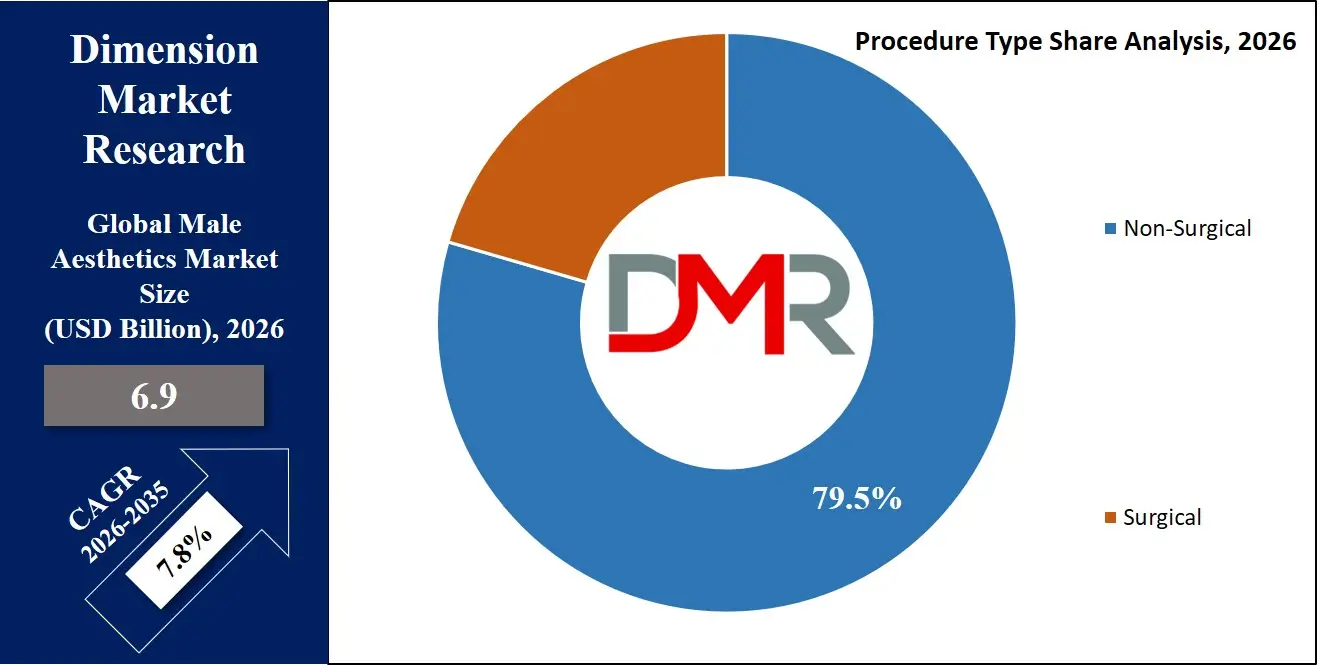
Non-Surgical Procedures are projected to dominate the Procedure Type segment of the Global Male Aesthetics Market. This dominance is driven by the appeal of minimal downtime, lower cost per procedure compared to surgery, and the growing efficacy of injectables and energy-based devices. The convenience of lunchtime procedures like Botox and the visible results of dermal fillers for facial rejuvenation resonate strongly with the male demographic seeking subtle, natural enhancements. Laser hair removal offers a permanent solution to a common grooming concern, further solidifying the non-surgical segment's leadership.
ℹ
To learn more about this report –
Download Your Free Sample Report Here
While Surgical Procedures like rhinoplasty, liposuction, and hair transplantation remain high-value pillars of the market, offering definitive, dramatic results, their relative growth rate is moderated by the accessibility and popularity of non-surgical alternatives. Rhinoplasty and blepharoplasty address specific, often long-standing anatomical concerns, while hair transplantation provides a permanent solution to hair loss. Liposuction, including treatments for gynecomastia, remains a top choice for body contouring. However, the sheer volume of repeat treatments and the expanding consumer base for non-surgical procedures secure their leading revenue position throughout the forecast period.
By Age Group Analysis
Middle-Aged Adults (40-60 years) are projected to dominate the global market, representing the core demographic for both corrective surgical and rejuvenating non-surgical procedures. Their dominance stems from a combination of financial stability, visible signs of aging (hair loss, wrinkles, sagging skin), and strong motivation related to career and social image. This group is the primary consumer of hair transplants, blepharoplasty, and premium injectables, seeking to maintain a youthful and vital appearance. Their willingness to invest significantly in longer-lasting results makes them the most valuable patient cohort.
Young Adults (20-40 years) form the crucial and substantial second-largest segment, primarily driving growth in the "prejuvenation" and grooming categories. This group is highly influenced by social media and peer norms, making them the core market for preventative Botox, laser hair removal, and early-stage hair loss interventions. Their adoption of aesthetic treatments as a routine part of self-care creates a long-term patient pipeline. As such, young adults will remain indispensable for sustained market growth, meeting the nuanced needs of a generation that views aesthetic enhancement as an integral part of personal branding.
By Technology Analysis
Laser Technology is poised to be the largest and most dominant technology segment, driven by its versatility and broad application base. Its dominance is secured by its foundational role in laser hair removal, the most popular non-surgical procedure for men. Beyond hair removal, laser technology is critical for skin rejuvenation, treating scars, sun damage, and wrinkles, and is also utilized in some body contouring and hair restoration protocols (low-level laser therapy). The technology's proven efficacy, continuous innovation in wavelength and delivery systems, and wide availability across clinics ensure its leading position.
Radiofrequency (RF) and Ultrasound Technologies rank as significant segments, fueled by the demand for non-invasive skin tightening and body contouring. RF technology is highly effective for stimulating collagen production, tightening loose skin, and reducing cellulite, often used on the face, neck, and body. Ultrasound technology, particularly high-intensity focused ultrasound (HIFU), provides deep tissue lifting and contouring without incisions. While currently a smaller market than laser, the growing preference for non-surgical alternatives to a facelift or tummy tuck positions these segments for robust future growth.
By Treatment Frequency Analysis
One-Time Treatments are anticipated to dominate the market by revenue, driven by the high unit cost of major surgical procedures like rhinoplasty and hair transplantation. These procedures, while less frequent, represent a significant financial investment per patient and are a primary revenue source for hospitals and cosmetic centers. The definitive results they offer cement their status as a cornerstone of the market.
Maintenance Treatments represent the vital second-largest and fastest-growing segment, reflecting the nature of non-surgical aesthetics. Injectable neuromodulators and fillers require repeat sessions every few months to maintain results, creating a recurring revenue model for providers. Similarly, series-based treatments for laser hair removal or skin rejuvenation require multiple sessions. This frequency of touchpoints builds strong patient-provider relationships and ensures sustained, predictable market activity, making this segment crucial for long-term market vitality.
By Application Analysis
Facial Aesthetics is poised to be the largest and most dominant application segment, driven by the universal desire for a youthful, attractive appearance. This segment encompasses the most popular procedures for men, including injectables (Botox, fillers) for wrinkle reduction and volume restoration, and surgical procedures like rhinoplasty and blepharoplasty. The face is the primary focus of social interaction and self-perception, making it the most common area for aesthetic intervention. From subtle enhancements in medical spas to transformative surgeries in hospital settings, the operational and social pressures in facial aesthetics make it the core of the market.
Hair Restoration ranks as the second-largest application segment, fueled by its own distinct psychosocial imperatives. Hair loss is a highly prevalent concern for aging men, directly impacting self-esteem and confidence. Surgical hair transplantation offers a permanent, natural-looking solution, while non-surgical options like laser therapy and topical treatments provide entry-level management. The high per-procedure value of transplantation and the large addressable patient population secure this segment's role as an enduring, high-growth market pillar.
By End-User Analysis
Service Providers (Clinics and Hospitals) are anticipated to dominate the market as the primary delivery channel for aesthetic procedures. These entities possess the clinical expertise, medical infrastructure, and regulatory licensing to perform both surgical and complex non-surgical treatments. Hospitals and cosmetic centers are essential for high-acuity procedures, while dermatology clinics and medical spas serve as the primary access points for injectables and energy-based treatments. Franchised chains are rapidly gaining share by offering standardized, accessible, and often more affordable non-surgical options. Together, these service providers serve as the essential anchor customers for device and injectable manufacturers, providing predictable, high-volume demand.
Direct-to-Consumer (DTC) Channels represent the vital second-largest and fastest-growing end-user segment. Online retail is booming for at-home aesthetic devices (e.g., LED masks, microcurrent tools) and topical skincare products, empowering consumers to engage in low-level treatments independently. Salons and barbershop-adjacent grooming clinics are also emerging as crucial DTC touchpoints, offering entry-level, non-invasive services like laser hair removal or skin tightening in a relaxed, familiar environment. By mastering these accessible channels, the industry is transitioning from purely clinical delivery to integrated, lifestyle-oriented patient engagement.
The Global Male Aesthetics Market Report is segmented on the basis of the following:
By Procedure Type
- Surgical
- Rhinoplasty
- Liposuction
- Eyelid surgery (Blepharoplasty)
- Hair transplantation
- Non-Surgical
- Injectables: Botulinum Toxin (Botox), Dermal Fillers
- Laser Hair Removal
- Radiofrequency Skin Tightening
- Ultrasound Lifting
By Age Group
- Young Adults
- Middle-Aged Adults
- Seniors
By Technology
- Laser Technology
- Radiofrequency Technology
- Ultrasound Technology
By Treatment Frequency
- One-Time Treatments
- Series-Based Treatments
- Maintenance Treatments
By Application
- Facial Aesthetics
- Hair Restoration
- Body Contouring
- Skin Rejuvenation
- Others
By End-User
- Service Providers
- Hospitals and Cosmetic Centers
- Dermatology Clinics
- Medical Spas
- Ambulatory Surgery Centers
- Franchised Chains
- Barbershop-Adjacent Grooming Clinics
- Direct-to-Consumer
Impact of Artificial Intelligence in the Global Male Aesthetics Market
- AI for Treatment Planning & Simulation: AI models analyze patient facial features, skin type, and desired outcomes to recommend optimal treatment combinations. Virtual simulation tools allow men to visualize potential post-procedure results, enhancing consultation satisfaction and informed decision-making.
- AI-Driven Skin Analysis & Recommendation: Computer vision applications assess skin conditions (wrinkles, pigmentation, elasticity) from smartphone images, providing personalized skincare regimen recommendations and flagging candidates for specific professional procedures.
- Predictive Practice Management: AI algorithms analyze patient demographics, booking patterns, and local trends to help clinics predict demand for specific services, optimize staffing, and personalize marketing campaigns for maximum ROI.
- Robotic-Assisted Surgical Precision: In hair transplantation and other surgical fields, AI-guided robotic systems assist practitioners in harvesting and implanting follicles with micron-level precision, improving graft survival rates and ensuring natural-looking results.
- Patient Outcome Analytics and Protocol Refinement: AI-enabled analysis of aggregated treatment data (injectable volumes, device settings, patient feedback) provides practitioners with data-driven insights to refine their techniques and optimize clinical protocols for better, more consistent patient outcomes.
Global Male Aesthetics Market: Regional Analysis
Region with the Largest Revenue Share
North America is projected to dominate the Global Male Aesthetics Market with 37.4% of market share by the end of 2026, owing to a powerful combination of high disposable income, mature medical aesthetics infrastructure, strong cultural emphasis on appearance, and the presence of dominant pharmaceutical and device innovators. The United States and Canada have rapidly integrated aesthetic treatments into mainstream healthcare and wellness, with a high density of specialized providers. Major manufacturers are scaling production and distribution networks to meet sustained institutional and consumer demand.
ℹ
To learn more about this report –
Download Your Free Sample Report Here
The region's high prevalence of medical marketing, coupled with celebrity culture and expansive corporate wellness benefits, creates a durable multi-channel demand environment. Supportive FDA approvals for new technologies and gradual adoption of aesthetic treatments among younger demographics further solidify North America's leadership position.
Region with the Highest CAGR
Asia-Pacific holds the highest CAGR and is poised to achieve rapid market share growth due to its massive population, rapidly growing middle class, and increasing adoption of Western beauty standards. Countries like China, South Korea, Japan, and India are investing heavily in medical aesthetics infrastructure and medical tourism. South Korea's position as a global beauty hub and China's massive market potential are creating fertile ground for market expansion. The region's price sensitivity is being addressed through localized manufacturing, financing options, and scaled basic treatment packages. This, combined with immense urbanization-driven demand and high social media penetration, positions APAC as the fastest-growing market for male aesthetics.
By Region
North America
Europe
- Germany
- The U.K.
- France
- Italy
- Russia
- Spain
- Benelux
- Nordic
- Rest of Europe
Asia-Pacific
- China
- Japan
- South Korea
- India
- ANZ
- ASEAN
- Rest of Asia-Pacific
Latin America
- Brazil
- Mexico
- Argentina
- Colombia
- Rest of Latin America
Middle East & Africa
- Saudi Arabia
- UAE
- South Africa
- Israel
- Egypt
- Rest of MEA
Global Male Aesthetics Market: Competitive Landscape
The Global Male Aesthetics Market is moderately consolidated, featuring a mix of established pharmaceutical and medical device giants, specialized aesthetic technology firms, and pure-play injectable manufacturers. Leading players Allergan Aesthetics (AbbVie), Galderma, and Merz Aesthetics dominate the injectables space, leveraging their extensive product portfolios and strong relationships with practitioners. Medical device innovators such as Cutera, Cynosure, and Lumenis are driving market dynamics with advanced laser, radiofrequency, and ultrasound platforms.
Consumer-focused brands and direct-to-consumer players play increasingly influential roles in expanding the at-home device and skincare segments through digital marketing and e-commerce. Traditional pharmaceutical companies are also entering the space through strategic acquisitions and licensing deals, aiming to capture share in this high-growth market.
Some of the prominent players in the Global Male Aesthetics Market are:
- Allergan Aesthetics (AbbVie)
- Galderma S.A.
- Merz Pharma GmbH & Co. KGaA
- Cynosure, LLC
- Lumenis Ltd.
- Cutera, Inc.
- Solta Medical (Bausch Health)
- Syneron Medical Ltd.
- Alma Lasers Ltd.
- Revance Therapeutics, Inc.
- Evolus, Inc.
- Sinclair Pharma plc
- Sientra, Inc.
- Johnson & Johnson Services Inc.
- Hologic, Inc.
- Candela Corporation
- Fotona d.o.o.
- BTL Industries
- Aesthetic & Advanced Radiology Technologies (AART)
- AQTIS Medical
- Other Key Players
Recent Developments in the Global Male Aesthetics Market
- November 2025: Galderma received U.S. FDA approval for Restylane® Lyft™ for chin enhancement in adults with mild-to-moderate retrusion. The approval expands injectable options to the lower face, supporting targeted contouring for male and female patients. This strengthens Galderma’s position in the male aesthetics segment.
- November 2025: At ASDS 2025, Galderma presented clinical data on Restylane, Sculptra, and Relfydess, highlighting efficacy, safety, and patient satisfaction, including male patients. These updates reinforce Galderma’s innovation pipeline and its competitive position in global injectables.
- July 2025: Merz Pharma/Aesthetics expanded partnerships in India and appointed new leadership to drive growth. These actions strengthen its global position in non-surgical aesthetics and support increasing male patient adoption.
- June 2025: Cynosure introduced an upgraded laser resurfacing platform with integrated cooling technology, improving comfort and outcomes. The device reduces downtime and enhances procedural efficiency. This reinforces Cynosure’s innovation in energy-based treatments for male aesthetics.
- March 2025: Allergan Aesthetics (AbbVie) launched a hybrid injectable in Europe for longer-lasting facial volume restoration. The product combines lift and natural-looking results, reflecting Allergan’s continued innovation. This supports European market expansion and rising interest in male non-surgical rejuvenation.
- February 2025: Evolus, Inc. launched Evolysse Form and Smooth in the U.S. after FDA approval in February. The fillers use Cold-X technology for smoother delivery and improved patient comfort. This marks Evolus’s entry into the U.S. dermal filler market for male and female facial aesthetics.
Report Details
| Report Characteristics |
| Market Size (2026) |
USD 6.9 Bn |
| Forecast Value (2035) |
USD 13.6 Bn |
| CAGR (2026–2035) |
7.8% |
| The US Market Size (2026) |
USD 2.2 Bn |
| Historical Data |
2020 – 2025 |
| Forecast Data |
2027 – 2035 |
| Base Year |
2025 |
| Estimate Year |
2026 |
| Report Coverage |
Market Revenue Estimation, Market Dynamics, Competitive Landscape, Growth Factors and etc. |
| Segments Covered |
By Procedure Type (Surgical and Non-Surgical), By Age Group (Young Adults, Middle-Aged Adults and Seniors), By Technology (Laser Technology, Radiofrequency Technology and Ultrasound Technology), By Treatment Frequency (One-Time Treatments, Series-Based Treatments, and Maintenance Treatments), By Application (Facial Aesthetics, Hair Restoration, Body Contouring, Skin Rejuvenation, and Others), By End-User (Service Providers and Direct-to-Consumer) |
| Regional Coverage |
North America – The US and Canada; Europe – Germany, The UK, France, Russia, Spain, Italy, Benelux, Nordic, & Rest of Europe; Asia-Pacific – China, Japan, South Korea, India, ANZ, ASEAN, Rest of APAC; Latin America – Brazil, Mexico, Argentina, Colombia, Rest of Latin America; Middle East & Africa – Saudi Arabia, UAE, South Africa, Turkey, Egypt, Israel, & Rest of MEA |
| Prominent Players |
Allergan Aesthetics, Galderma S.A., Merz Pharma GmbH & Co. KGaA, Cynosure, LLC, Lumenis Ltd., Cutera, Inc., Solta Medical (Bausch Health), Syneron Medical Ltd., Alma Lasers Ltd., Revance Therapeutics, Inc., Evolus, Inc., Sinclair Pharma plc, Sientra, Inc., Johnson & Johnson Services Inc., Hologic, Inc., Candela Corporation, Fotona d.o.o., BTL Industries, Aesthetic & Advanced Radiology Technologies (AART), AQTIS Medical, and Other Key Players |
| Purchase Options |
We have three licenses to opt for: Single User License (Limited to 1 user), Multi-User License (Up to 5 Users) and Corporate Use License (Unlimited User) along with free report customization equivalent to 0 analyst working days, 3 analysts working days and 5 analysts working days respectively. |
Frequently Asked Questions
How big is the Global Male Aesthetics Market?
▾ The Global Male Aesthetics Market size is estimated to have a value of USD 6.9 billion in 2026 and is expected to reach USD 13.6 billion by the end of 2035.
What is the growth rate in the Global Male Aesthetics Market in 2026?
▾ The market is growing at a CAGR of 7.8% over the forecasted period of 2026.
What is the size of the US Male Aesthetics Market?
▾ The US Male Aesthetics Market is projected to be valued at USD 2.2 billion in 2026. It is expected to witness subsequent growth in the upcoming period as it holds USD 4.1 billion in 2035 at a CAGR of 7.3%.
Which region accounted for the largest Global Male Aesthetics Market?
▾ North America is expected to have the largest market share in the Global Male Aesthetics Market with a share of about 37.4% in 2026.
Who are the key players in the Global Male Aesthetics Market?
▾ Some of the major key players in the Global Male Aesthetics Market are Allergan Aesthetics, Galderma S.A., Merz Pharma GmbH & Co. KGaA, Cutera, Inc., Solta Medical (Bausch Health), and many others.