Market Overview
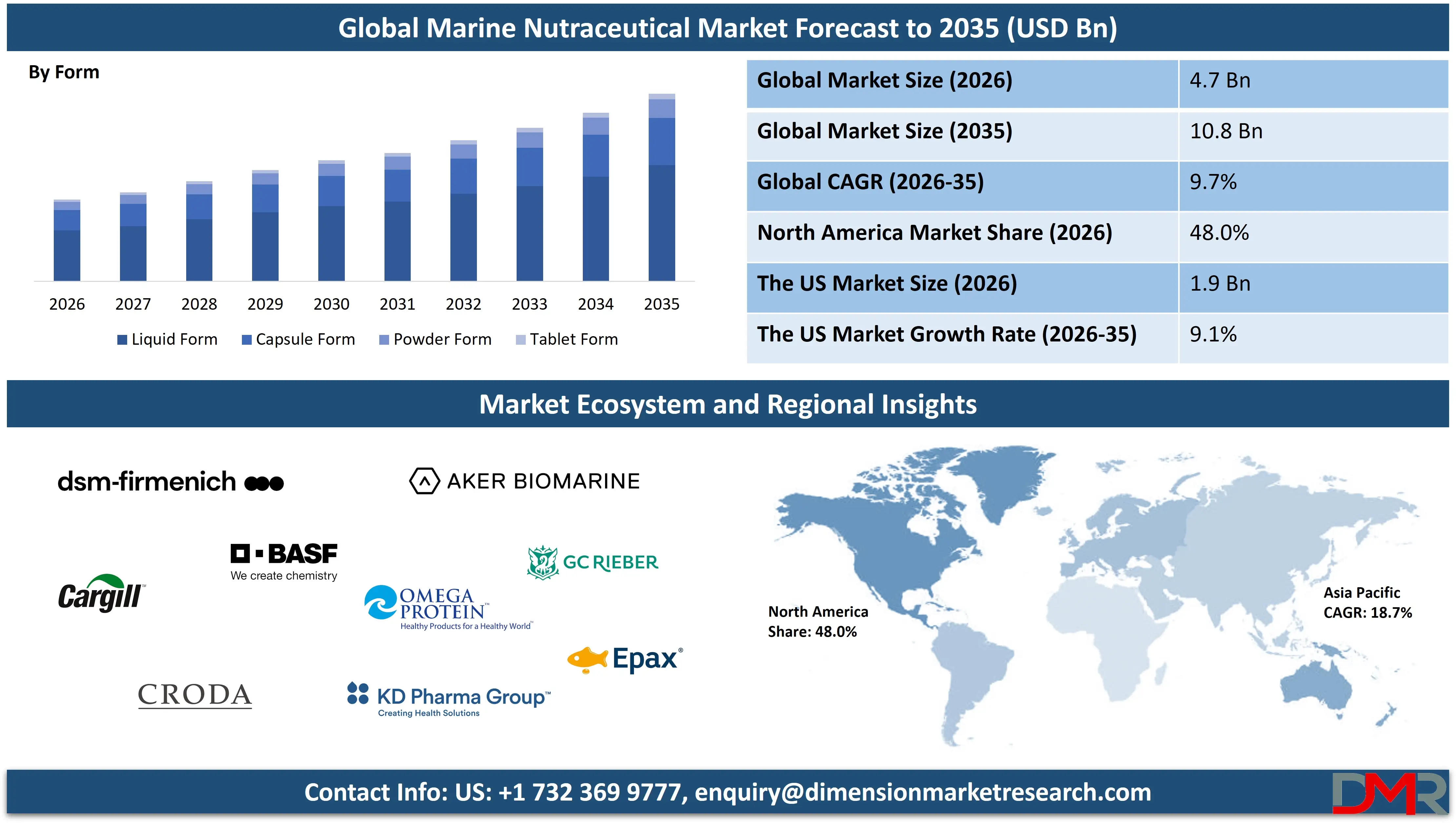
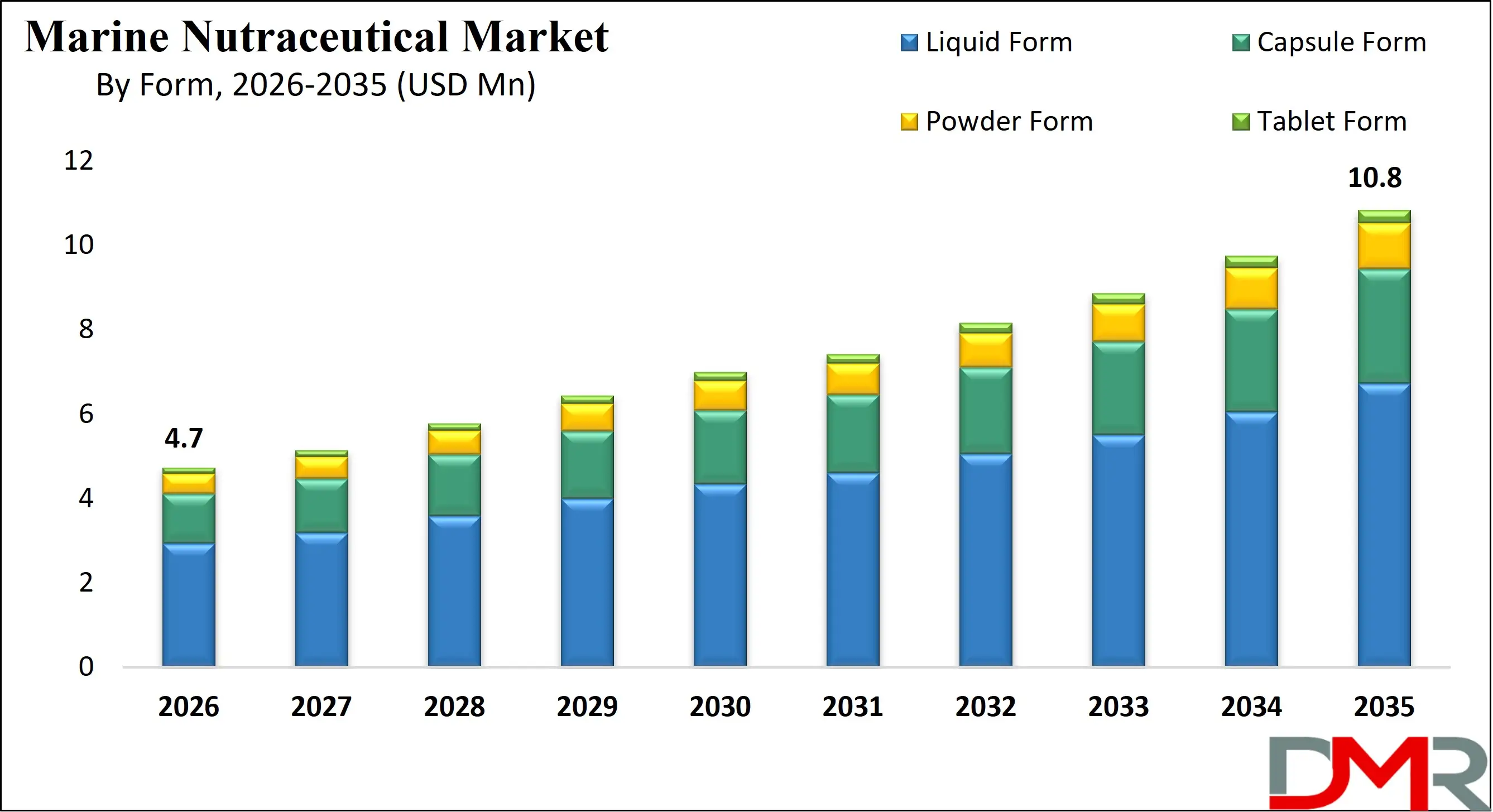
The global Marine Nutraceutical Market is projected to reach USD 4.7 billion in 2026 and is expected to expand at a CAGR of 9.7% through 2035, reaching USD 10.8 billion, driven by rising demand for omega three ingredients, marine based dietary supplements, functional nutrition, and health focused marine bioactives.
ℹ
To learn more about this report –
Download Your Free Sample Report Here
Marine nutraceuticals are bioactive compounds derived from marine organisms such as fish, algae, krill, and shellfish that are formulated to support human health and wellness beyond basic nutrition. These ingredients include omega three fatty acids, marine collagen, carotenoids like astaxanthin, proteins, peptides, polysaccharides, and trace minerals, all of which offer clinically recognized benefits for cardiovascular health, cognitive function, joint mobility, skin vitality, immune support, and metabolic balance. Extracted through advanced purification and bioprocessing technologies, marine nutraceuticals are valued for their high bioavailability, natural origin, and ability to address lifestyle related health conditions through preventive nutrition and targeted supplementation.
The global Marine Nutraceutical Market represents the worldwide commercial ecosystem involved in the production, processing, formulation, and distribution of marine based nutritional ingredients and finished health products. It spans a wide range of applications including dietary supplements, functional foods, fortified beverages, clinical nutrition, and sports nutrition, driven by growing consumer awareness about natural health solutions, aging populations, and the shift toward preventive healthcare. The market is supported by innovations in marine biotechnology, sustainable aquaculture, algae cultivation, and advanced extraction methods that enhance purity, stability, and efficacy of marine derived bioactives.
ℹ
To learn more about this report –
Download Your Free Sample Report Here
Across regions such as North America, Europe, Asia Pacific, and emerging economies, the global Marine Nutraceutical Market continues to expand as regulatory frameworks improve and demand rises for clean label, traceable, and environmentally responsible nutrition solutions. Manufacturers are increasingly focusing on algae based omega oils, krill derived phospholipids, and marine collagen peptides to meet vegan friendly, premium, and performance driven nutrition trends. This evolving landscape is also shaped by e commerce expansion, clinical research, and partnerships between ingredient suppliers and nutraceutical brands, which together strengthen product innovation and global market penetration.
The US Marine Nutraceutical Market
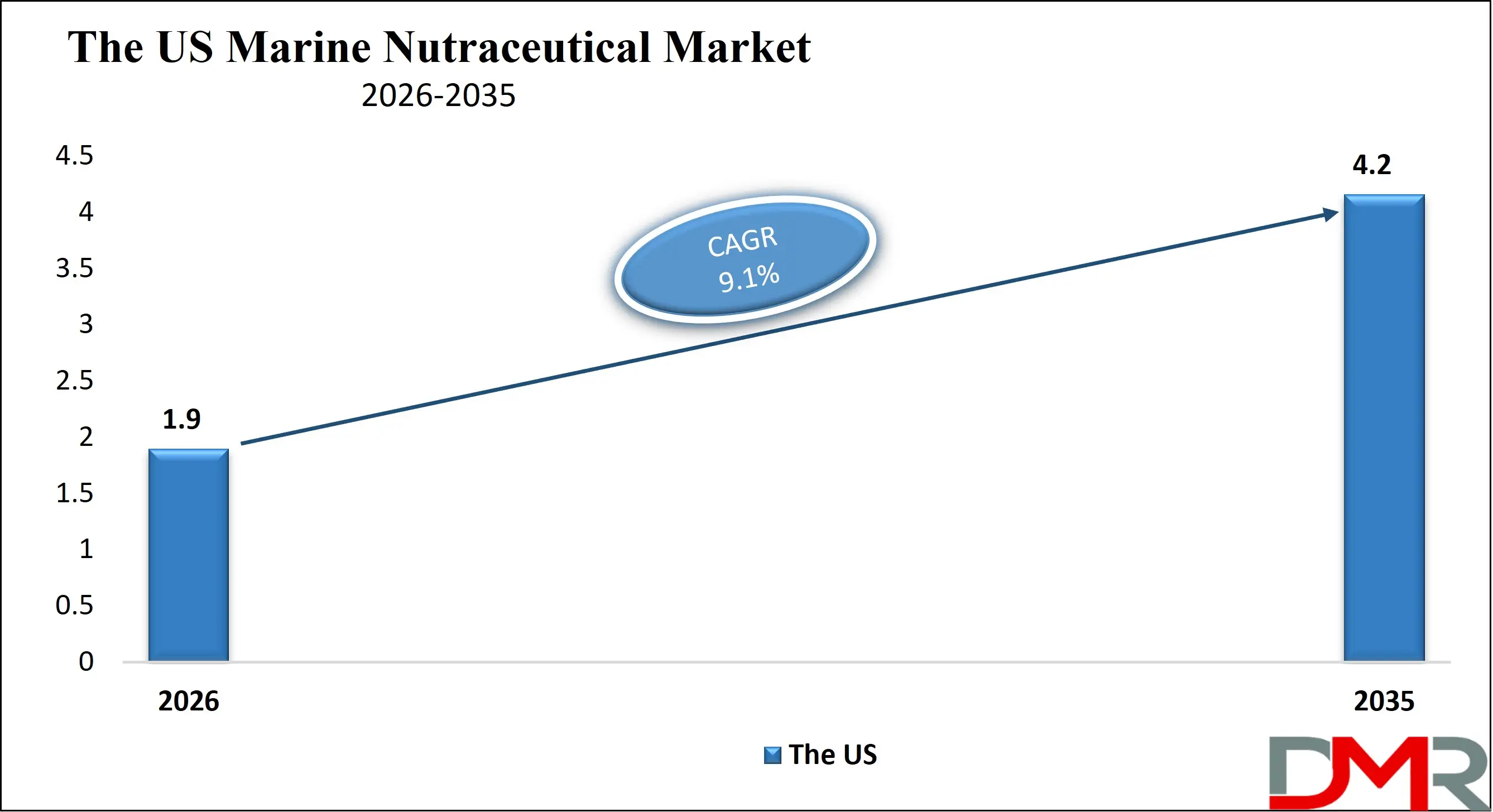
The U.S. Marine Nutraceutical Market size is expected to reach at USD 1.9 billion in 2026. It is further expected to witness subsequent growth in the upcoming period, holding USD 4.2 billion in 2035 at a CAGR of 9.1%.
ℹ
To learn more about this report –
Download Your Free Sample Report Here
The US Marine Nutraceutical Systems Market is experiencing steady growth as consumers increasingly prioritize preventive healthcare, natural nutrition, and functional wellness products. Rising awareness of omega three fatty acids, marine collagen, and algae derived nutrients is driving demand across dietary supplements, functional foods, and fortified beverages. The market benefits from strong distribution networks, advanced research capabilities, and high consumer spending on health and wellness products. In addition, growing interest in clean label, sustainably sourced marine ingredients is encouraging manufacturers to invest in traceable supply chains and innovative marine based formulations.
Technological advancements in marine biotechnology and extraction processes are further strengthening the US Marine Nutraceutical Systems Market by improving product purity, bioavailability, and shelf stability. Companies are expanding their portfolios with krill oil, algal omega oils, and marine protein concentrates to address diverse consumer needs such as heart health, cognitive support, joint mobility, and skin nutrition. The rapid growth of e commerce and direct to consumer channels is also increasing market accessibility, while regulatory support for nutraceutical products continues to enhance consumer trust and product adoption across the country.
The Europe Marine Nutraceutical Market
Europe’s Marine Nutraceutical Market is projected to reach a value of around USD 850 million in 2026, reflecting the region’s strong demand for marine based health and wellness products. This growth is being driven by rising consumer awareness of omega three fatty acids, marine collagen, and algae derived nutrition, particularly across countries such as Germany, the United Kingdom, France, Italy, and the Nordic region. A well-developed nutraceutical industry, high disposable income, and strong preference for preventive healthcare solutions are supporting the steady expansion of marine based dietary supplements, functional foods, and fortified beverages across the European market.
With a projected compound annual growth rate of 9.2%, Europe is expected to maintain healthy momentum through the forecast period as sustainability and clean label trends continue to influence purchasing decisions. Increasing adoption of algae based omega oils, responsibly sourced fish oils, and clinically supported marine bioactives is helping manufacturers differentiate their offerings. In addition, supportive regulatory frameworks, expanding e commerce platforms, and growing interest in beauty from within and healthy aging products are strengthening long term growth prospects for the European Marine Nutraceutical Market.
The Japan Marine Nutraceutical Market
Japan’s Marine Nutraceutical Market is projected to reach approximately USD 329 million in 2026, reflecting the country’s long standing cultural acceptance of marine based nutrition and its strong focus on healthy aging. Japanese consumers widely use omega three fatty acids, fish oil, marine collagen, and algae derived ingredients as part of daily wellness routines to support cardiovascular health, cognitive function, joint mobility, and skin health. A highly developed functional food and dietary supplement industry, combined with strong trust in science backed nutrition, and is driving consistent demand for marine based nutraceutical products across the country.
With a projected compound annual growth rate of 10.1%, Japan is expected to grow faster than the global average as lifestyle related health concerns and the aging population continue to shape consumer behavior. Increasing innovation in algae based omega oils, high purity marine bioactives, and convenient delivery formats such as ready to drink beverages and softgel supplements is further accelerating market expansion. Strong retail networks, advanced product formulation capabilities, and rising interest in preventive healthcare are positioning Japan as one of the most dynamic and high value markets within the global marine nutraceutical landscape.
Global Marine Nutraceutical Market: Key Takeaways
- Preventive Health Drives Market Growth: Rising focus on heart health, brain function, and healthy aging is increasing demand for omega three, marine collagen, and algae based nutraceuticals.
- Technology Is Improving Product Quality: Advances in marine biotechnology and extraction methods are enhancing purity, bioavailability, and sustainability of marine ingredients.
- North America Leads While Asia Pacific Accelerates: North America dominates revenue, while Asia Pacific shows the fastest growth due to aging populations and rising health awareness.
- Product Applications Are Expanding: Marine nutraceuticals are increasingly used in beauty nutrition, sports supplements, functional foods, and personalized wellness products.
- Digital and Direct Sales Are Reshaping the Market: E commerce and direct to consumer channels are boosting market access, brand visibility, and personalized nutrition delivery.
Global Marine Nutraceutical Market: Use Cases
- Cardiovascular and Heart Health Nutrition: Marine nutraceuticals are widely used in heart health formulations due to their high concentration of omega three fatty acids such as EPA and DHA, which help reduce triglyceride levels, support healthy blood circulation, and improve overall cardiovascular function. Fish oil and algae based omega oils are commonly included in dietary supplements and functional foods to address rising cases of hypertension, cholesterol imbalance, and lifestyle related heart conditions, especially in aging populations.
- Brain Health and Cognitive Support: The global marine nutraceutical market plays a critical role in brain health and cognitive performance through marine derived lipids, phospholipids, and antioxidants. Omega three fatty acids and krill oil are increasingly used in supplements designed to support memory, focus, and neurological development. These ingredients are also integrated into functional beverages and nutrition products targeting students, professionals, and elderly consumers seeking mental clarity and long term cognitive wellness.
- Joint, Bone, and Mobility Enhancement: Marine collagen, proteins, and bioactive peptides are extensively used in joint health and mobility products. These ingredients help improve cartilage strength, bone density, and connective tissue repair, making them popular in sports nutrition and clinical nutrition formulations. As osteoarthritis and age related joint disorders rise globally, marine based nutraceuticals offer a natural and bioavailable solution for improving flexibility, physical endurance, and overall musculoskeletal health.
- Skin, Beauty, and Anti-Aging Nutrition: Marine nutraceuticals are increasingly used in beauty from within products that promote skin hydration, elasticity, and anti-aging benefits. Ingredients such as marine collagen, astaxanthin, and marine minerals support skin structure, reduce oxidative stress, and enhance overall complexion. These bioactive compounds are widely used in nutricosmetics, functional foods, and dietary supplements as consumers seek holistic solutions for skin health, hair strength, and long term beauty wellness.
Global Marine Nutraceutical Market: Stats & Facts
-
NIH / U.S. Government Dietary Guidance (Omega-3 / EPA & DHA)
- The FDA recommends consuming no more than 5 g per day of EPA and DHA combined from supplements (NIH Office of Dietary Supplements).
- The FDA sets a supplemental upper guidance of 3 g per day of EPA + DHA, including up to 2 g from dietary supplements (NIH Office of Dietary Supplements).
- Western populations with low fish intake typically have EPA+DHA comprising about 3 %–5 % of erythrocyte fatty acids (NIH Office of Dietary Supplements).
- In contrast, Japan’s higher fish consumption results in about twice the erythrocyte EPA and DHA levels of Western populations (NIH Office of Dietary Supplements).
- U.S. adults typically consume about 0.1 g per day of EPA and DHA combined on average (American Heart Association).
- The American Heart Association recommends eating two servings of fish per week to help lower heart disease risk (American Heart Association).
- Two servings of fish per week equal about 6 ounces cooked seafood weekly for EPA/DHA intake (American Heart Association).
- NIH workshops recommend a daily intake of 650 mg of EPA + DHA for general cardiovascular health (DHA Omega-3 Overview).
- Current actual daily EPA + DHA intake levels in many populations range from 130–150 mg per day, below recommended amounts (DHA Omega-3 Overview).
- The FDA acknowledges that research shows that EPA + DHA may reduce risk of coronary heart disease as part of conventional foods/supplements (U.S. Food and Drug Administration).
-
EFSA (European Government Health Guidance)
- EFSA concluded that daily supplemental intakes of EPA and DHA up to 5 g per day raise no safety concerns for adults (European Food Safety Authority).
- EFSA states that an intake of 250 mg per day of EPA + DHA is sufficient to maintain normal cardiac function (European Food Safety Authority).
- EFSA also indicates that intakes between 2 g and 4 g per day are needed to achieve certain health effects such as blood pressure and triglyceride management (European Food Safety Authority).
- At intake levels obtained from foods, long-chain omega-3s have no adverse effects in healthy adults and children (European Food Safety Authority).
- EFSA maintains that supplemental intakes of EPA + DHA up to the 5 g safety limit are not linked to increased adverse effects (European Food Safety Authority).
-
Government / National Reference Intake Stats (Omega-3 PUFAs)
- National dietary guidelines often recommend 250–500 mg per day of EPA + DHA for general adult health (Research overview of national intake recommendations).
- Recommended adult EPA + DHA intake levels globally typically range from 250 mg to 2 g per day in various national standards (Research overview of national intake recommendations).
- In adolescents, several national nutrient standards recommend 250–500 mg per day of EPA + DHA (Research overview of national intake recommendations).
- In some national guidelines, male teenage intake recommendations can be as high as 610 mg per day of EPA + DHA (Research overview of national intake recommendations).
- In other national recommendations, female teenage EPA + DHA intake is recommended at approximately 430 mg per day (Research overview of national intake recommendations).
- For pregnancy and lactation, some international guidelines recommend EPA + DHA intakes of 300 mg per day for optimal fetal and infant development (Research overview of national intake recommendations).
- Specific recommendations for pregnant women at risk of deficiency may reach EPA + DHA intake levels of 800 mg to 1 g per day (Research overview of national intake recommendations).
-
Population & Consumption Patterns (Government-Referenced Data)
- In the United States, federal dietary guidance indicates no official EPA + DHA dietary reference intake but notes that EPA + DHA consumption supports heart health when part of diet (American Heart Association).
- U.S. dietary guidelines recommend that pregnant or breastfeeding people consume 8–12 ounces of seafood weekly to meet EPA + DHA needs (U.S. dietary guidelines).
- The American Academy of Pediatrics recommends that breastfeeding people consume 200–300 mg DHA per day to ensure DHA in breast milk (American Academy of Pediatrics).
- NIH notes that higher plasma EPA + DHA values correlate with increased intake from fish and supplements in population studies (NIH health professional fact sheet).
- Western populations with low fish intake have a lower omega-3 index compared with high fish-consuming regions, indicating lower EPA + DHA status (NIH Office of Dietary Supplements).
- Japan’s higher fish consumption supports higher erythrocyte EPA + DHA levels, reflecting national dietary patterns (NIH Office of Dietary Supplements).
- U.S. guidelines emphasize that nutrient intake should come primarily from foods and beverages, with supplements used when dietary needs are unmet (NIH Office of Dietary Supplements).
- Federal guidance highlights that marine omega-3 PUFAs such as EPA + DHA are linked with roles in blood pressure regulation, inflammation modulation, and heart health maintenance based on scientific assessments (European Food Safety Authority).
Global Marine Nutraceutical Market: Market Dynamic
Driving Factors in the Global Marine Nutraceutical Market
Rising demand for preventive healthcare and functional nutrition
The growing focus on preventive healthcare is significantly driving the marine nutraceutical market as consumers seek natural ways to maintain long term wellness. Marine based ingredients such as omega three fatty acids, marine collagen, and algae derived nutrients are increasingly used in dietary supplements and functional foods to support heart health, brain function, and immune strength. This shift from treatment to prevention is fueling strong demand for marine derived bioactive compounds across both developed and emerging economies.
Growing awareness of marine based omega and protein benefits
Increasing scientific evidence highlighting the benefits of fish oil, krill oil, and marine proteins is boosting consumer confidence in marine nutraceutical products. These ingredients are widely recognized for improving lipid profiles, cognitive performance, and joint health, making them essential components of modern nutritional formulations. As health conscious consumers seek clean label and clinically supported nutrition, marine sourced nutraceuticals are gaining stronger acceptance in the global market.
Restraints in the Global Marine Nutraceutical Market
High production and processing costs
Marine nutraceuticals require advanced extraction, purification, and stabilization technologies, which raise overall production costs. Ingredients such as algae based omega oils and marine collagen peptides involve complex bioprocessing, making finished products more expensive than conventional plant based alternatives. This cost barrier can limit product affordability and restrict market penetration in price sensitive regions.
Sustainability and raw material supply challenges
The availability of fish, krill, and other marine organisms is affected by overfishing, climate change, and strict environmental regulations. These factors create supply chain uncertainties and volatility in raw material pricing. As sustainability becomes a major concern, manufacturers must invest in certified sourcing and alternative marine biomass, which adds to operational complexity.
Opportunities in the Global Marine Nutraceutical Market
Expansion of algae based and sustainable marine ingredients
Algae derived omega three oils and marine bioactives present a major growth opportunity as they offer a sustainable and vegan friendly alternative to fish based ingredients. With increasing consumer demand for ecofriendly nutrition, algae cultivation technologies are enabling scalable production of high purity marine lipids, opening new avenues for product innovation and global market expansion.
Rising adoption of nutricosmetics and beauty nutrition
Marine nutraceuticals are gaining strong traction in the beauty and skin health segment due to the effectiveness of marine collagen, astaxanthin, and marine minerals. These ingredients are being integrated into nutricosmetics, functional beverages, and dietary supplements that target skin hydration, anti-aging, and hair health. This growing crossover between nutrition and personal care is creating new revenue streams for marine based nutraceutical manufacturers.
Trends in the Global Marine Nutraceutical Market
Shift toward personalized and condition specific marine supplements
Consumers are increasingly choosing marine nutraceutical products tailored for specific health needs such as cardiovascular support, cognitive performance, joint mobility, and metabolic balance. This trend is encouraging brands to develop specialized formulations using targeted marine bioactives, supported by clinical research and advanced delivery systems for improved absorption and efficacy.
Growth of direct to consumer and digital health platforms
The rise of e commerce and digital wellness platforms is transforming how marine nutraceuticals reach consumers. Online channels allow brands to educate customers about the benefits of marine based omega oils, proteins, and antioxidants while offering subscription models and personalized recommendations. This digital shift is improving market accessibility and accelerating global adoption of marine nutraceutical products.
Global Marine Nutraceutical Market: Research Scope and Analysis
By Active Compound Analysis
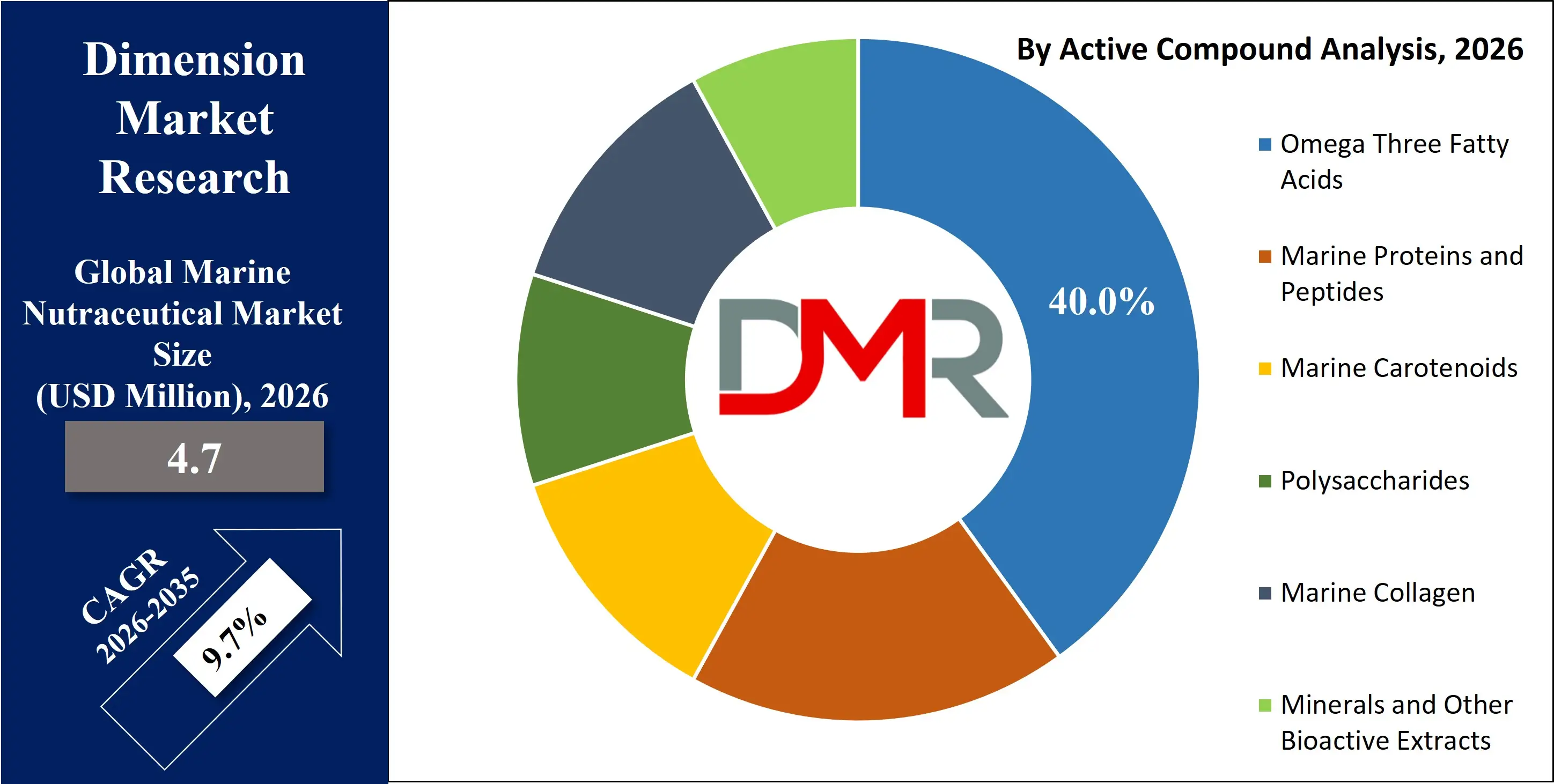
Omega Three Fatty Acids are anticipated to dominate the active compound segment of the marine nutraceutical market, capturing around 40.0% of the total market share in 2026, largely due to their well-established benefits in supporting cardiovascular health, brain function, and anti-inflammatory responses. These fatty acids, mainly EPA and DHA derived from fish oil, krill oil, and algae sources, are widely incorporated into dietary supplements, functional foods, and clinical nutrition products. Growing consumer awareness, strong clinical validation, and increasing recommendations from healthcare professionals are reinforcing their position as the most trusted and widely consumed marine based bioactive ingredients, making them the primary revenue driver within this segment.
ℹ
To learn more about this report –
Download Your Free Sample Report Here
Marine Proteins and Peptides also play a significant role in this market segment as they are increasingly used for muscle recovery, joint support, metabolic health, and beauty from within applications. Extracted from fish, shellfish, and other marine organisms, these proteins and bioactive peptides offer high digestibility and superior amino acid profiles compared to many land based sources. Their ability to support tissue repair, collagen synthesis, and immune function is driving their adoption across sports nutrition, clinical nutrition, and anti-aging formulations, positioning them as one of the fastest growing compound categories within the global marine nutraceutical landscape.
By Product Type Analysis
Dietary Supplements are anticipated to dominate the product type segment of the marine nutraceutical market, capturing around 40.0% of the total market share in 2026, as they remain the most convenient and widely accepted format for consuming marine based bioactive ingredients. Supplements containing omega three fatty acids, marine collagen, krill oil, and algae derived nutrients are increasingly used to support heart health, cognitive performance, joint mobility, and immune function. Their standardized dosing, longer shelf life, and easy integration into daily wellness routines make them highly attractive to both aging populations and health conscious consumers, which continues to strengthen their leadership in this segment.
Functional Foods also hold an important position in this market segment as they enable consumers to obtain marine derived nutrition through everyday food products rather than pills or capsules. Fortified cereals, nutrition bars, dairy alternatives, and ready to eat meals enriched with marine proteins, omega oils, and bioactive compounds are gaining popularity among consumers seeking natural and preventive health solutions. This format supports broader adoption across different age groups and lifestyle profiles, helping expand the reach of marine nutraceuticals into mainstream diets and reinforcing steady growth within the global market.
By Form Analysis
Liquid Form is anticipated to dominate the form segment of the marine nutraceutical market, capturing around 67.0% of the total market share in 2026, primarily due to its superior bioavailability and faster absorption of marine based nutrients such as omega three fatty acids, marine collagen, and algae derived bioactives. Liquid formulations are widely used in functional beverages, health drinks, and clinical nutrition products because they allow for easier digestion and more efficient delivery of active ingredients into the bloodstream. This format is especially preferred by elderly consumers, patients with swallowing difficulties, and individuals seeking quick nutritional benefits, which continues to drive its strong market dominance.
Capsule Form also plays a crucial role in this market segment as it offers precise dosage control, longer shelf life, and enhanced stability for sensitive marine ingredients such as fish oil and krill oil. Capsules are highly popular in dietary supplements due to their convenience, portability, and ability to mask the taste and odor of marine derived compounds. Their compatibility with mass production and global distribution makes them a preferred choice for manufacturers, supporting consistent demand and sustained growth alongside liquid based marine nutraceutical products.
By Source of Marine Ingredients Analysis
Fish are anticipated to dominate the source of marine ingredients segment, capturing around 58.0% of the total market share in 2026, as they remain the most established and commercially viable source of marine nutraceutical compounds. Fish such as anchovy, sardine, and mackerel are rich in omega three fatty acids, proteins, and essential micronutrients, making them the primary raw material for fish oil, marine collagen, and protein extracts used in dietary supplements and functional foods. Well-developed fishing, processing, and refining infrastructure across major producing regions further supports the consistent availability and cost efficiency of fish based marine ingredients, reinforcing their leadership in this segment.
Algae is emerging as a highly attractive source within this market segment due to its sustainability, purity, and suitability for vegetarian and vegan nutrition products. Algal oils are a direct source of EPA and DHA, offering an alternative to fish derived omega three while eliminating concerns related to ocean contamination and overfishing. As consumer demand grows for environmentally responsible and plant based marine nutrition, algae cultivation and fermentation technologies are gaining significant investment, enabling scalable production of high quality marine bioactives and positioning algae as one of the fastest growing sources in the global marine nutraceutical market.
By Distribution Channel Analysis
Direct Sales are anticipated to dominate the distribution channel segment, capturing around 67.0% of the total market share in 2026, driven by the strong presence of business to business supply chains and the rapid growth of direct to consumer platforms. Manufacturers and ingredient suppliers prefer direct sales channels to maintain better control over pricing, quality assurance, and customer relationships, especially for high value marine nutraceutical products such as omega three concentrates, marine collagen, and algae based oils. Digital commerce, subscription based models, and brand owned online stores are further strengthening this channel by enabling personalized nutrition offerings and wider global reach.
Retail Sales continue to play a vital role in this market segment by providing accessibility and trust through pharmacies, health food stores, and specialty nutrition outlets. Many consumers still rely on physical retail locations to compare products, seek professional advice, and purchase marine based dietary supplements and functional foods. The presence of marine nutraceutical brands in well-established retail networks supports brand visibility and impulse purchases, particularly among older and less digitally engaged consumers, ensuring steady demand alongside the expansion of direct sales channels.
The Global Marine Nutraceutical Market Report is segmented on the basis of the following
By Active Compound
- Omega Three Fatty Acids
- Marine Proteins and Peptides
- Fish Protein Hydrolysates
- Collagen Peptides
- Marine Carotenoids
- Polysaccharides
- Marine Collagen
- Minerals and Other Bioactive Extracts
By Product Type
-
Dietary Supplements
- Softgels
- Capsules
- Tablets
- Functional Foods
- Fortified Bars
- Fortified Cereals
- Functional Beverages
- Probiotic Fortified Foods
- Energy and Specialty Drinks
- Protein and Clinical Nutrition Products
By Form
- Liquid Form
- Capsule Form
- Powder Form
- Tablet Form
By Source of Marine Ingredients
- Fish
- Algae
- Krill
- Shellfish and Other Marine Microorganisms
By Distribution Channel
- Direct Sales
- Retail Sales
- Online E Commerce Sales
Impact of Artificial Intelligence in the Global Marine Nutraceutical Market
Artificial intelligence is having a transformative impact on the global Marine Nutraceutical Market by improving how marine based ingredients are discovered, produced, formulated, and delivered to consumers. AI driven analytics help researchers identify high value bioactive compounds from fish, algae, and other marine organisms by analyzing vast biological datasets and predicting their health benefits. This accelerates the development of new omega three variants, marine peptides, and antioxidant compounds while reducing the time and cost required for laboratory testing and clinical validation. As a result, nutraceutical companies can bring innovative marine based products to market faster and with higher scientific confidence.
AI is also enhancing manufacturing efficiency and quality control in the marine nutraceutical supply chain. Smart algorithms optimize extraction processes for fish oil, algae oil, and marine collagen by adjusting temperature, pressure, and purification parameters in real time, improving yield and ingredient purity. Predictive maintenance powered by artificial intelligence reduces equipment downtime and minimizes waste, which is especially important for sensitive marine raw materials. These advancements help manufacturers achieve better cost efficiency while maintaining strict regulatory and safety standards for nutraceutical production.
In marketing and product development, artificial intelligence is enabling more personalized and targeted marine nutraceutical offerings. By analyzing consumer behavior, dietary preferences, and health data, AI tools help brands design customized omega three supplements, marine protein blends, and beauty nutrition products tailored to specific age groups, lifestyles, and health conditions. This data driven approach improves customer engagement and supports the growing trend toward personalized nutrition, which is becoming a major growth driver in the global marine nutraceutical industry.
Artificial intelligence is further supporting sustainability and traceability in marine nutraceutical sourcing. AI powered monitoring systems track fish stocks, algae cultivation, and harvesting patterns to ensure responsible use of marine resources. This helps companies comply with environmental regulations and meet consumer expectations for clean label and sustainably sourced marine ingredients. As sustainability becomes a core purchasing factor, the integration of AI into sourcing and supply chain management is strengthening the long term growth and credibility of the global Marine Nutraceutical Market.
Global Marine Nutraceutical Market: Regional Analysis
Region with the Largest Revenue Share
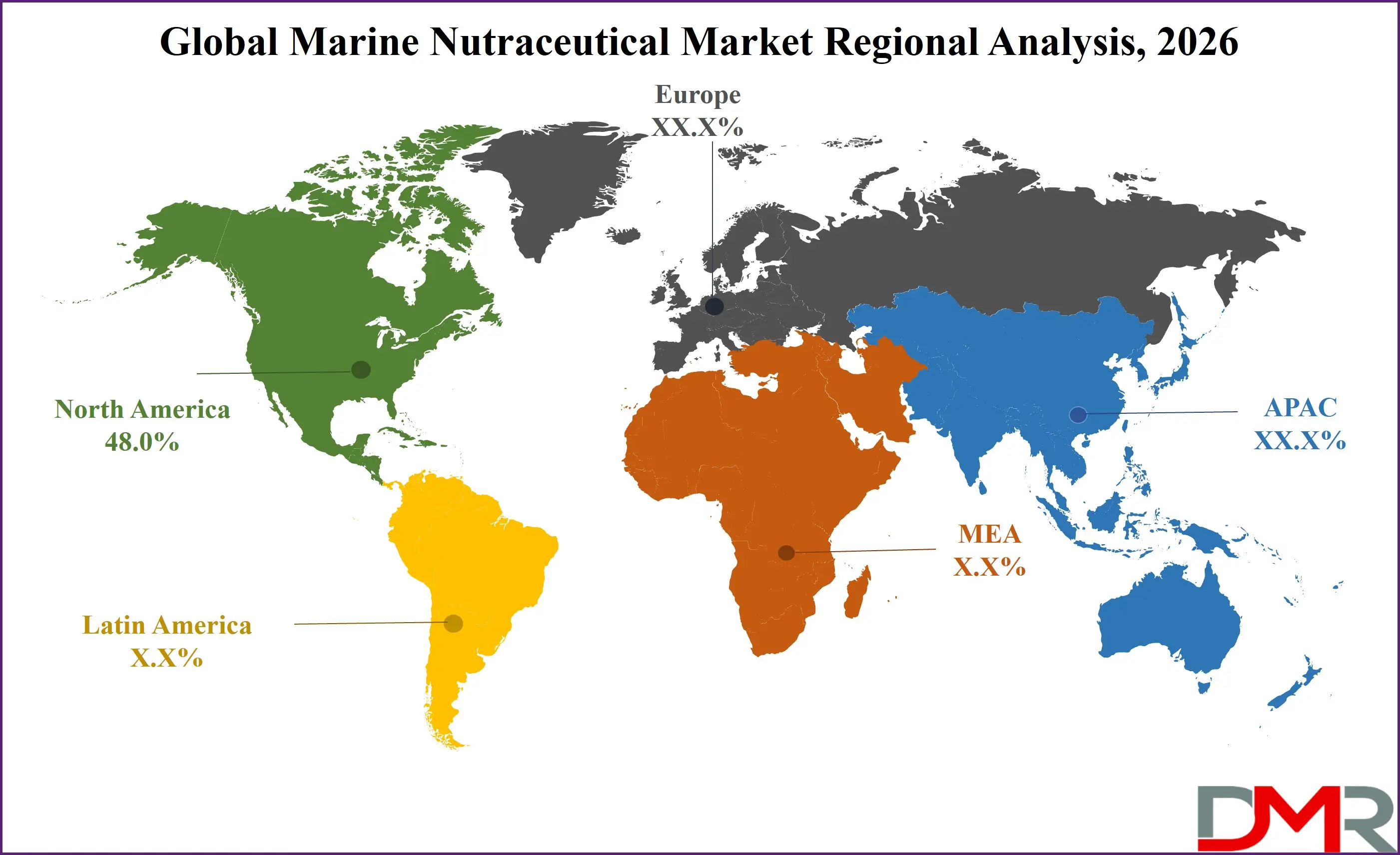
North America is anticipated to lead the global Marine Nutraceutical Market landscape with approximately 48.0% of total global market revenue in 2026, driven by high consumer awareness of preventive healthcare, strong demand for omega three dietary supplements, and widespread adoption of functional nutrition products. The region benefits from advanced research infrastructure, well established nutraceutical brands, and a mature regulatory framework that supports product innovation and quality standards. In addition, the growing popularity of marine collagen, algae based omega oils, and clean label nutrition is reinforcing market growth across the United States and Canada, making North America the most dominant and commercially attractive region for marine nutraceuticals.
ℹ
To learn more about this report –
Download Your Free Sample Report Here
Region with Significant Growth
Asia Pacific is expected to emerge as the region with the most significant growth in the global Marine Nutraceutical Market, supported by rising health awareness, expanding middle class populations, and increasing consumption of dietary supplements and functional foods. Countries such as China, Japan, South Korea, and India are witnessing strong demand for omega three fatty acids, marine collagen, and algae based nutrition due to aging populations and lifestyle related health concerns. Rapid urbanization, growing e commerce penetration, and improving access to preventive healthcare products are further accelerating the adoption of marine nutraceuticals, positioning the Asia Pacific region as a key growth engine for the global market.
By Region
North America
Europe
- Germany
- The U.K.
- France
- Italy
- Russia
- Spain
- Benelux
- Nordic
- Rest of Europe
Asia-Pacific
- China
- Japan
- South Korea
- India
- ANZ
- ASEAN
- Rest of Asia-Pacific
Latin America
- Brazil
- Mexico
- Argentina
- Colombia
- Rest of Latin America
Middle East & Africa
- Saudi Arabia
- UAE
- South Africa
- Israel
- Egypt
- Rest of MEA
Global Marine Nutraceutical Market: Competitive Landscape
The competitive landscape of the global Marine Nutraceutical Market is shaped by intense innovation, strategic partnerships, and ongoing investments in research and development to enhance product efficacy and meet evolving consumer needs. Companies are focusing on expanding their product portfolios with high purity omega three formulations, algae derived ingredients, marine collagen complexes, and specialized functional nutrition products. Emphasis on sustainable sourcing, advanced extraction technologies, and compliance with regulatory standards is driving differentiation, while digital marketing and direct to consumer engagement strategies are helping firms strengthen brand visibility and market penetration across regions. Continuous efforts to enhance supply chain efficiency and collaborate with academic and clinical research institutions further support competitiveness in this rapidly evolving market.
Some of the prominent players in the Global Marine Nutraceutical Market are
- DSM-Firmenich
- BASF
- Cargill
- Croda International
- Aker BioMarine
- Omega Protein
- GC Rieber Oils
- KD Pharma Group
- Epax Norway
- Golden Omega
- Polaris Nutritional Lipids
- Nordic Naturals
- Pharma Marine
- Lonza Group
- Pharmavite
- NOW Foods
- NutriGold
- AlgaeCytes
- Cellana
- Corbion
- Other Key Players
Recent Developments in the Global Marine Nutraceutical Market
- January 2026: A leading marine ingredient manufacturer introduced a new algae derived DHA formulation aimed at nutraceutical brands seeking vegetarian friendly omega three solutions for brain health and cardiovascular nutrition products.
- December 2025: GC Rieber launched Algae 1060 TG Premium, a high EPA and DHA algae based omega three ingredient designed to deliver concentrated and highly bioavailable marine nutrition for dietary supplement and functional food applications, supporting the growing demand for sustainable non fish omega oils.
- December 2025: A European investment group acquired a marine nutraceutical ingredient producer to strengthen its presence in the global omega three, marine protein, and bioactive ingredient supply chain, enabling broader geographic reach and improved manufacturing capabilities.
Report Details
| Report Characteristics |
| Market Size (2026) |
USD 4.7 Bn |
| Forecast Value (2035) |
USD 10.8 Bn |
| CAGR (2026–2035) |
9.7% |
| The US Market Size (2026) |
USD 1.9 Bn |
| Historical Data |
2021 – 2025 |
| Forecast Data |
2027 – 2035 |
| Base Year |
2025 |
| Estimate Year |
2026 |
| Report Coverage |
Market Revenue Estimation, Market Dynamics, Competitive Landscape, Growth Factors, etc. |
| Segments Covered |
By active compound (Omega Three Fatty Acids, Marine Proteins and Peptides, Marine Carotenoids, Polysaccharides, Marine Collagen, Minerals and Other Bioactive Extracts), By product type (Dietary Supplements, Functional Foods, Functional Beverages, Probiotic Fortified Foods, Energy and Specialty Drinks, Protein and Clinical Nutrition Products), By form (Liquid Form, Capsule Form, Powder Form, Tablet Form), By distribution channel (Direct Sales, Retail Sales, Online E Commerce Sales), and By source of marine ingredients (Fish, Algae, Krill, Shellfish and Other Marine Microorganisms) |
| Regional Coverage |
North America – US, Canada; Europe – Germany, UK, France, Russia, Spain, Italy, Benelux, Nordic, Rest of Europe; Asia-Pacific – China, Japan, South Korea, India, ANZ, ASEAN, Rest of APAC; Latin America – Brazil, Mexico, Argentina, Colombia, Rest of Latin America; Middle East & Africa – Saudi Arabia, UAE, South Africa, Turkey, Egypt, Israel, Rest of MEA |
| Prominent Players |
DSM-Firmenich, BASF, Cargill, Croda International, Aker BioMarine, Omega Protein, GC Rieber Oils, KD Pharma Group, Epax Norway, Golden Omega, Polaris Nutritional Lipids, Nordic Naturals, Pharma Marine, Lonza Group, Pharmavite, NOW Foods, and many others. |
| Purchase Options |
We have three licenses to opt for: Single User License (Limited to 1 user), Multi-User License (Up to 5 Users), and Corporate Use License (Unlimited User) along with free report customization equivalent to 0 analyst working days, 3 analysts working days, and 5 analysts working days respectively. |
Frequently Asked Questions
How big is the Global Marine Nutraceutical Market?
▾ The Global Marine Nutraceutical Market size is estimated to have a value of USD 4.7 billion in 2026 and is expected to reach USD 10.8 billion by the end of 2035.
What is the growth rate in the Global Marine Nutraceutical Market in 2026?
▾ The market is growing at a CAGR of 9.7% over the forecasted period of 2026.
What is the size of the US Marine Nutraceutical Market?
▾ witness subsequent growth in the upcoming period as it holds USD 4.2 billion in 2035 at a CAGR of 9.1%.
Which region accounted for the largest Global Marine Nutraceutical Market?
▾ North America is expected to have the largest market share in the Global Marine Nutraceutical Market with a share of about 48.0% in 2026.
Who are the key players in the Global Marine Nutraceutical Market?
▾ Some of the major key players in the Global Marine Nutraceutical Market are DSM-Firmenich, BASF, Cargill, Croda International, Aker BioMarine, Omega Protein, GC Rieber Oils, KD Pharma Group, Epax Norway, Golden Omega, Polaris Nutritional Lipids, Nordic Naturals, Pharma Marine, Lonza Group, Pharmavite, NOW Foods, and many others.