Market Overview
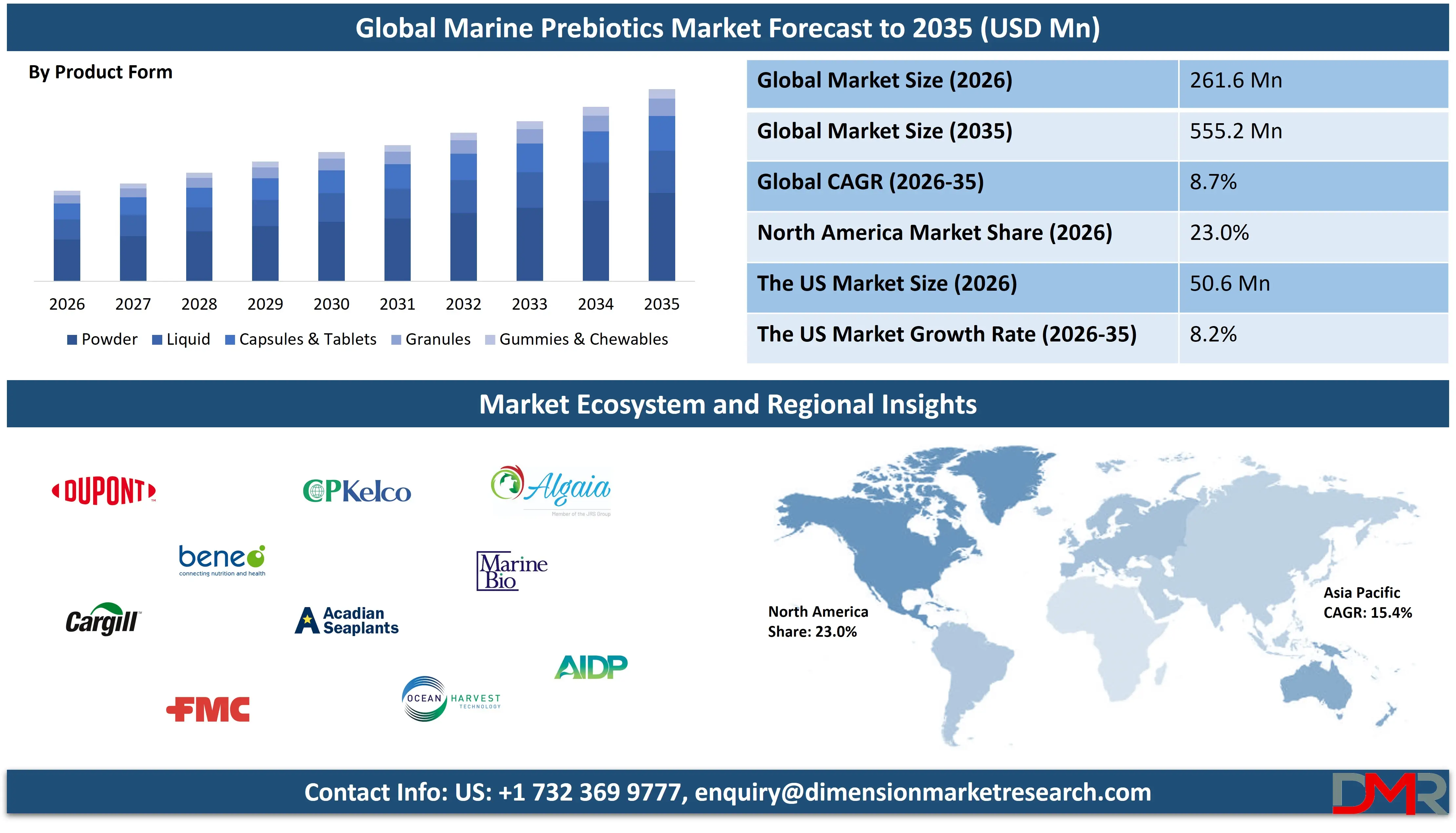
The global marine prebiotics market is projected to reach USD 261.6 million in 2026 and is expected to expand at a CAGR of 8.7% through 2035, driven by rising demand for marine derived dietary fibers, gut health ingredients and functional nutrition, reaching USD 555.2 million by the end of the forecast period.
ℹ
To learn more about this report –
Download Your Free Sample Report Here
Marine prebiotics are specialized non digestible bioactive compounds derived from marine biomass such as seaweed, microalgae and marine microorganisms that selectively stimulate the growth and activity of beneficial gut bacteria. These compounds mainly include marine oligosaccharides, polysaccharides, dietary fibers and chitin derivatives that reach the colon intact where they are fermented by probiotic microbes. Through this process they support digestive health, enhance nutrient absorption, regulate immune response and improve metabolic balance. Unlike conventional plant based prebiotics, marine sourced prebiotics contain unique sulfated and bioactive structures that show stronger anti-inflammatory and microbiome modulating properties, making them highly valuable in functional nutrition and therapeutic food applications.
The global marine prebiotics market represents the commercial ecosystem built around the extraction, processing and application of these marine derived gut health ingredients across food, nutraceutical, pharmaceutical and animal nutrition industries. The market is driven by the rising demand for microbiome friendly diets, clean label functional ingredients and preventive healthcare solutions, along with increasing research into marine biotechnology and algae based bioactives. Growing awareness of digestive wellness, immune support and metabolic health has accelerated the use of marine prebiotics in dietary supplements, functional beverages, fortified foods and clinical nutrition formulations across developed and emerging economies.
ℹ
To learn more about this report –
Download Your Free Sample Report Here
The global marine prebiotics market is also shaped by sustainability trends and the expanding utilization of renewable marine resources, especially seaweed farming and algae cultivation. Manufacturers are investing in advanced extraction technologies and fermentation science to improve bioavailability and efficacy of marine fibers and oligosaccharides. In parallel, the animal feed and aquaculture sectors are adopting marine prebiotics to enhance gut health, disease resistance and feed efficiency, which further broadens the market scope. With increasing regulatory support for natural bio ingredients and continuous innovation in marine based functional compounds, the market is evolving into a high growth segment within the global gut health and functional nutrition industry.
The US Marine Prebiotics Market
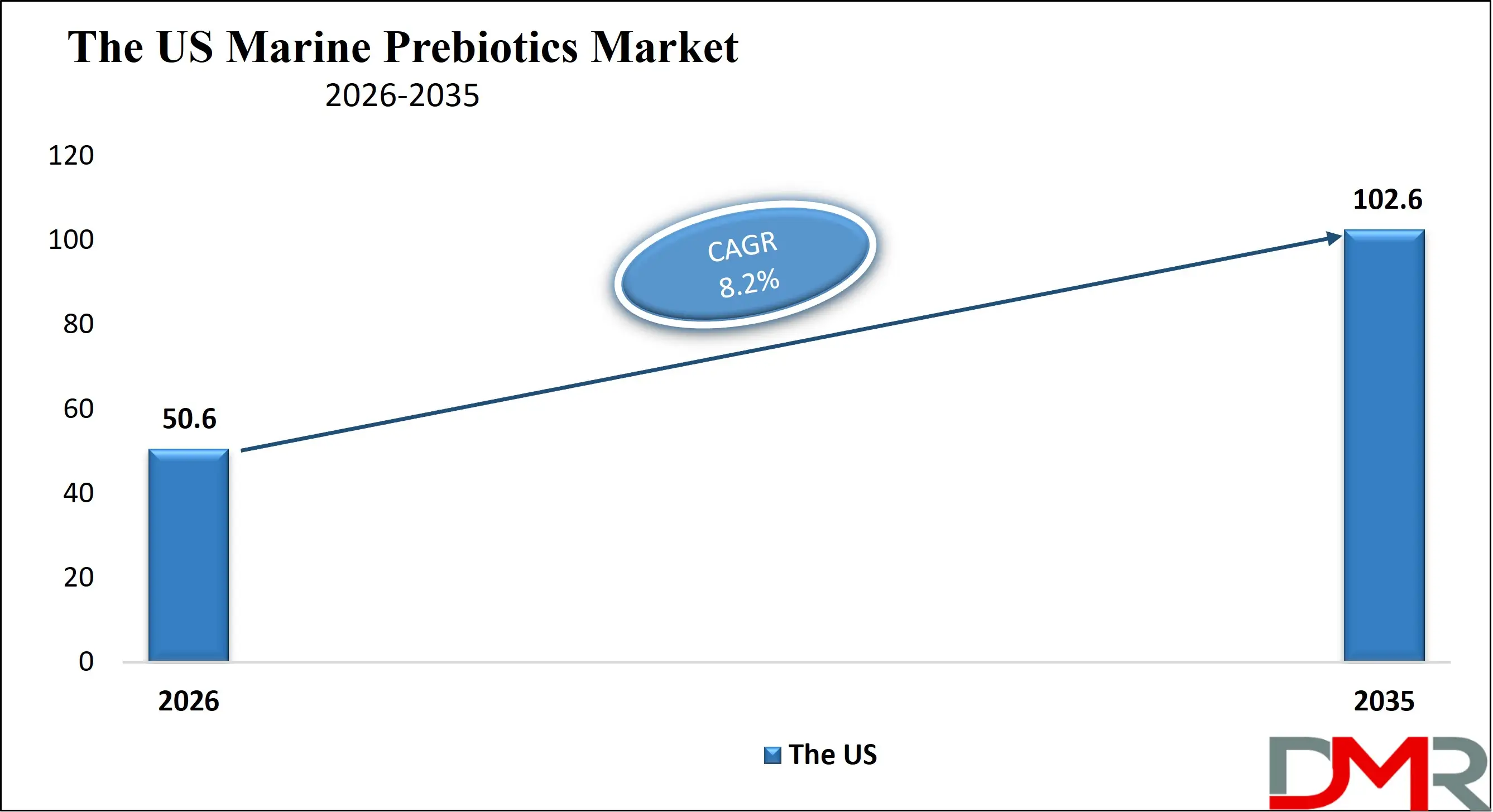
The U.S. marine prebiotics Market size is expected to reach at USD 50.6 million in 2026. It is further expected to witness subsequent growth in the upcoming period, holding USD 102.6 million in 2035 at a CAGR of 8.2%.
ℹ
To learn more about this report –
Download Your Free Sample Report Here
The US marine prebiotics market is gaining strong momentum as consumers increasingly prioritize gut health, immune support and natural functional ingredients in their daily diets. Growing adoption of microbiome based nutrition, combined with rising interest in algae derived dietary fibers and marine oligosaccharides, and is supporting wider use of marine prebiotics across dietary supplements, functional foods and medical nutrition products. The presence of advanced marine biotechnology firms, along with strong research activity in gut microbiome science, is further accelerating innovation and commercialization of marine sourced prebiotic ingredients in the US market.
The market is also being driven by sustainability focused sourcing and clean label trends, with seaweed and microalgae emerging as highly attractive renewable inputs for food and nutraceutical manufacturers. US consumers are showing increasing preference for plant and marine based alternatives over synthetic additives, which is boosting demand for marine fibers and bioactive compounds that support digestive wellness and metabolic balance. In addition, the expanding use of marine prebiotics in animal nutrition and pet food is creating new growth avenues, reinforcing the long term expansion outlook of the US marine prebiotics market.
The Europe Marine Prebiotics Market
The Europe marine prebiotics market is projected to reach approximately USD 71 million in 2026, driven by growing awareness of digestive health and the benefits of prebiotic ingredients derived from marine sources. Countries such as Germany, France, and the UK are witnessing increasing demand for dietary supplements, functional foods, and clinical nutrition products that incorporate seaweed and algae based oligosaccharides and fibers. The presence of well-established nutraceutical and functional food industries, along with stringent quality standards, supports the adoption of marine prebiotics in Europe.
The market in Europe is also supported by technological advancements in marine ingredient extraction and formulation, which allow manufacturers to produce high purity, bioactive prebiotics suitable for a variety of applications. Rising consumer preference for natural, clean label and sustainable ingredients is encouraging companies to expand their product portfolios with marine derived fibers and oligosaccharides. Combined with the increasing use of marine prebiotics in animal nutrition and clinical formulations, these factors are expected to sustain a steady CAGR of 8.3% through the forecast period.
The Japan Marine Prebiotics Market
The Japan marine prebiotics market is projected to reach approximately USD 32 million in 2026, driven by a strong consumer focus on gut health, immunity, and preventive nutrition. Japanese consumers increasingly prefer natural and functional ingredients, including seaweed and microalgae derived oligosaccharides and dietary fibers, in supplements, functional foods, and beverages. The country’s advanced nutraceutical and food technology sector, along with high regulatory standards for quality and safety, supports the adoption of marine prebiotics across multiple health and wellness applications.
In addition, Japan’s market growth is fueled by innovation in marine biotechnology and extraction technologies, allowing for high purity and bioactive marine ingredients suitable for both human and animal nutrition. The rising trend of clean label, sustainable, and plant-based nutrition is further encouraging manufacturers to introduce marine prebiotic formulations tailored to local dietary preferences. These factors are expected to sustain a robust compound annual growth rate of 9.2% over the forecast period.
Global Marine Prebiotics Market: Key Takeaways
- Rising Demand for Gut Health Ingredients: Growing focus on digestive wellness and immunity is boosting the use of seaweed, microalgae, and marine oligosaccharides in functional foods and supplements.
- Dominance of Powder Forms and B2B Channels: Powdered marine prebiotics are preferred for stability and versatility, while B2B ingredient supply remains the leading distribution channel.
- Regional Growth Patterns: Asia Pacific leads in revenue share, and North America shows the highest CAGR, driven by advanced research and clean label trends.
- Emerging Applications in Animal Nutrition: Marine prebiotics are increasingly used in livestock, aquaculture, and pet food for gut health and improved feed efficiency.
- Innovation and Sustainability: Advances in extraction, fermentation, AI‑driven R&D, and sustainable seaweed farming are enhancing quality, bioactivity, and supply security.
Global Marine Prebiotics Market: Use Cases
- Functional Foods and Beverages: Marine prebiotics are used in functional foods and drinks to support digestive health and gut microbiome balance. Seaweed based fibers and marine oligosaccharides are added to fortified foods, nutrition beverages and wellness snacks to improve probiotic activity and overall digestive function.
- Dietary Supplements and Nutraceuticals: Marine derived prebiotics are included in supplements such as powders, capsules and chewables to enhance immune health, gut flora and nutrient absorption. Their natural origin and bioactive properties make them attractive ingredients in microbiome focused nutrition products.
- Pharmaceutical and Medical Nutrition: In clinical and therapeutic nutrition, marine prebiotics help manage digestive disorders and support metabolic and immune function. They are used in specialized medical foods and recovery formulas to improve gut integrity and reduce inflammation.
- Animal Nutrition and Aquaculture: Marine prebiotics are added to animal feed and aquaculture diets to improve digestion, strengthen immunity and enhance feed efficiency. These ingredients support healthier livestock and farmed fish, reducing reliance on antibiotics and promoting sustainable animal nutrition.
Global Marine Prebiotics Market: Stats & Facts
-
Government of India – Department of Fisheries, Ministry of Fisheries, Animal Husbandry & Dairying
- Total seaweed production in India was 72,385 tonnes (wet weight) in 2023.
- The Government approved ₹194.09 crore in seaweed development projects under the PMMSY scheme, including cultivation infrastructure support.
- India dispatched guidelines for import of live seaweed seed strains in October 2024 to support quality inputs and farming innovation.
-
State Government Data – Gujarat, India
- In 2023–24, seaweed cultivation in the Saurashtra‑Kutch region reached 14 tonnes, supported by investments in processing and research infrastructure.
-
United States NOAA / National Seaweed Sector Initiatives
- The 2023 National Seaweed Symposium gathered over 250 leaders from industry and research across the US to advance seaweed production priorities.
- NOAA Sea Grant reports that seaweed farming is the fastest‑growing aquaculture sector in the United States, with notable production increases (e.g., Alaska kelp production up over 200% since 2017).
-
US Centers for Disease Control and Prevention – OHHABS Data
- In 2022, 372 harmful algal bloom events were reported by states through the One Health Harmful Algal Bloom System with 95 human illnesses and 102,071+ animal illnesses linked.
- In 2021, 368 HAB events were reported with 117 human illnesses and at least 2,715 animal illnesses.
Global Marine Prebiotics Market: Market Dynamic
Driving Factors in the Global Marine Prebiotics Market
Rising Demand for Gut Health and Microbiome Support
Growing consumer awareness of gut health and the human microbiome is a key driver for the marine prebiotics market. Seaweed derived dietary fibers and marine oligosaccharides are increasingly recognized for their ability to selectively stimulate beneficial bacteria, improve digestion, and enhance immune function, leading to higher demand in functional foods, beverages, and nutraceuticals.
Increased Adoption of Clean Label and Natural Ingredients
Consumers are shifting away from synthetic additives toward natural and sustainable alternatives. Marine sourced prebiotics from algae and macroalgae fit the clean label trend, offering manufacturers environmentally friendly and plant based solutions that align with health conscious purchasing behavior.
Restraints in the Global Marine Prebiotics Market
High Extraction and Processing Costs
The production of marine prebiotics involves complex extraction, purification, and quality control processes that require advanced technologies and significant capital investment. These high processing costs can limit competitive pricing and slow adoption rates among smaller ingredient manufacturers and food formulators.
Regulatory Challenges and Approval Timelines
Marine prebiotic ingredients must meet stringent food safety and regulatory standards in different regions. Variations in approval processes and health claim regulations can delay product launches and increase compliance costs, posing a restraint for global market expansion.
Opportunities in the Global Marine Prebiotics Market
Expansion in Animal Nutrition and Pet Food Sectors
There is growing potential for marine prebiotics in animal health markets as livestock and pet owners seek natural gut health solutions. Inclusion of seaweed based oligosaccharides and marine fibers in animal feed enhances digestion and immune resilience, creating new revenue streams for ingredient suppliers.
Advancements in Marine Biotechnology and R&D
Ongoing research in marine biotechnology is unlocking novel prebiotic compounds from algae and marine microorganisms. Breakthroughs in bioactive extraction and fermentation science can lead to higher efficacy ingredients, expanded applications, and differentiated product portfolios.
Trends in the Global Marine Prebiotics Market
Integration with Probiotics and Synbiotic Formulations
The combination of marine prebiotics with probiotics to create synbiotic products is a notable trend. These formulations promote synergistic effects on gut flora, enhancing overall digestive wellness and offering added value in functional nutrition and supplement markets.
Sustainable Seaweed Farming and Algae Cultivation
Sustainability trends are driving investment in seaweed farming and algae cultivation as renewable sources of marine prebiotic biomass. Eco friendly harvesting practices and scalable cultivation systems support long term supply security and align with corporate sustainability goals.
Global Marine Prebiotics Market: Research Scope and Analysis
By Source Analysis
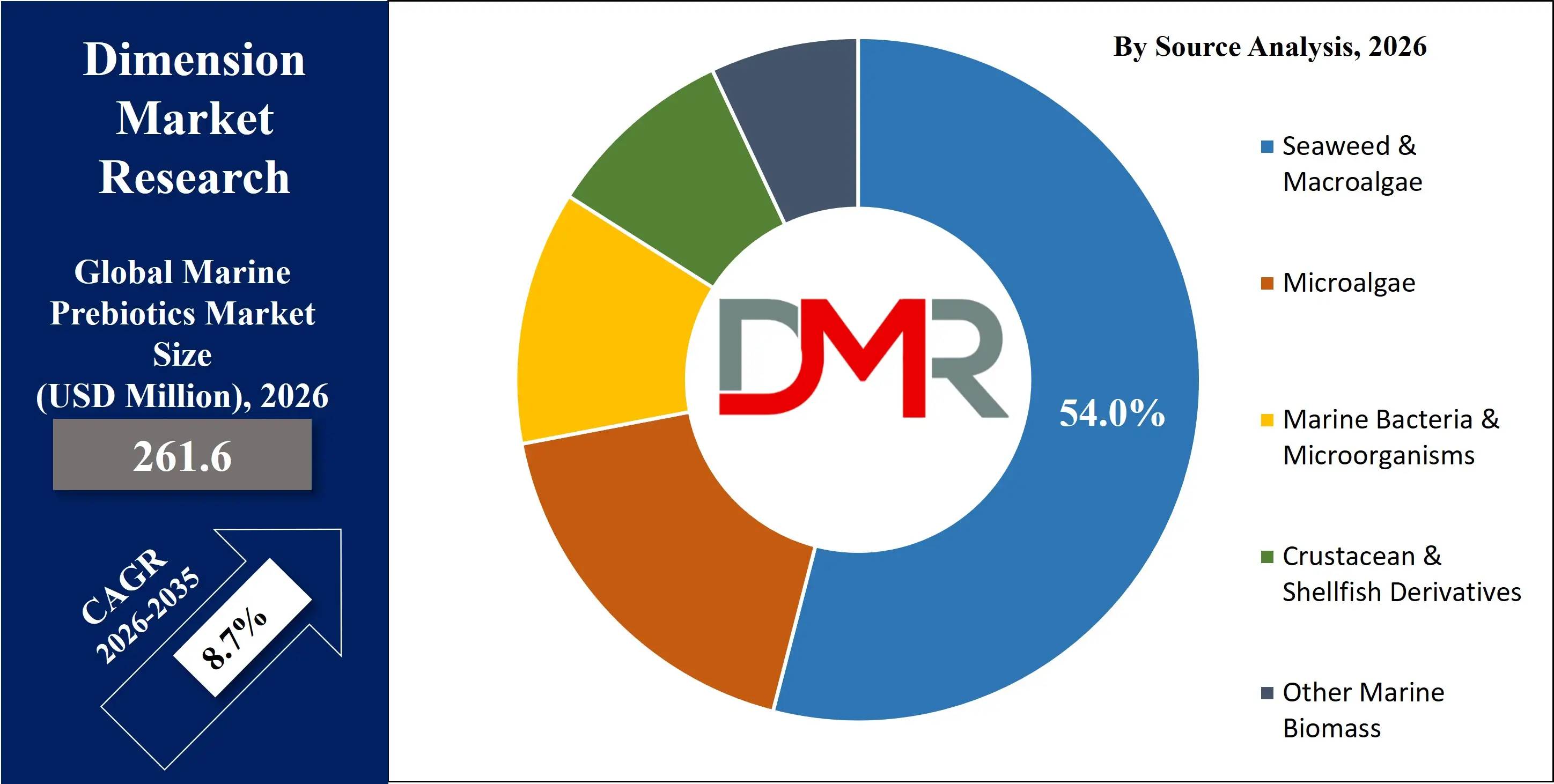
Seaweed and macroalgae are anticipated to dominate the source segment of the marine prebiotics market, capturing about 54.0% of the total market share in 2026, because they are the most abundant and commercially scalable sources of marine dietary fibers, polysaccharides and oligosaccharides used in gut health and functional nutrition. Brown, red and green seaweeds contain high levels of alginate, fucoidan and laminarin that show strong prebiotic activity and support the growth of beneficial gut bacteria. Their wide availability, cost efficiency and compatibility with clean label and sustainable ingredient trends make seaweed based prebiotics the preferred choice for food, nutraceutical and pharmaceutical manufacturers worldwide.
Microalgae also play a growing role in this market segment as a high value source of specialized prebiotic compounds, including soluble fibers and bioactive polysaccharides that support digestive health and immune function. Unlike macroalgae, microalgae can be cultivated in controlled environments, which allows for consistent quality, high purity and targeted bioactive production. This makes them especially suitable for premium supplements, medical nutrition and microbiome focused products, positioning microalgae as an important emerging source within the marine prebiotics market.
By Prebiotic Compound Type Analysis
Marine oligosaccharides are anticipated to dominate the prebiotic compound type segment, capturing about 42.0% of the total market share in 2026, as they are among the most effective marine derived ingredients for stimulating beneficial gut microbiota. Compounds such as alginate oligosaccharides, fucoidan and laminarin are highly fermentable by probiotic bacteria and help improve digestive health, immune response and metabolic balance. Their high bioavailability, compatibility with functional foods and supplements, and strong clinical support in microbiome research make marine oligosaccharides a preferred choice for nutraceutical and food manufacturers seeking targeted gut health solutions.
ℹ
To learn more about this report –
Download Your Free Sample Report Here
Polysaccharides also hold a significant position in this market segment due to their ability to act as long chain dietary fibers that support sustained fermentation in the gut. Marine polysaccharides derived from seaweed and algae contribute to improved intestinal health, better nutrient absorption and reduced inflammation. These compounds are widely used in functional foods, medical nutrition and animal feed formulations because they provide both structural fiber and bioactive benefits, making them valuable ingredients in the expanding marine prebiotics market.
By Product Form Analysis
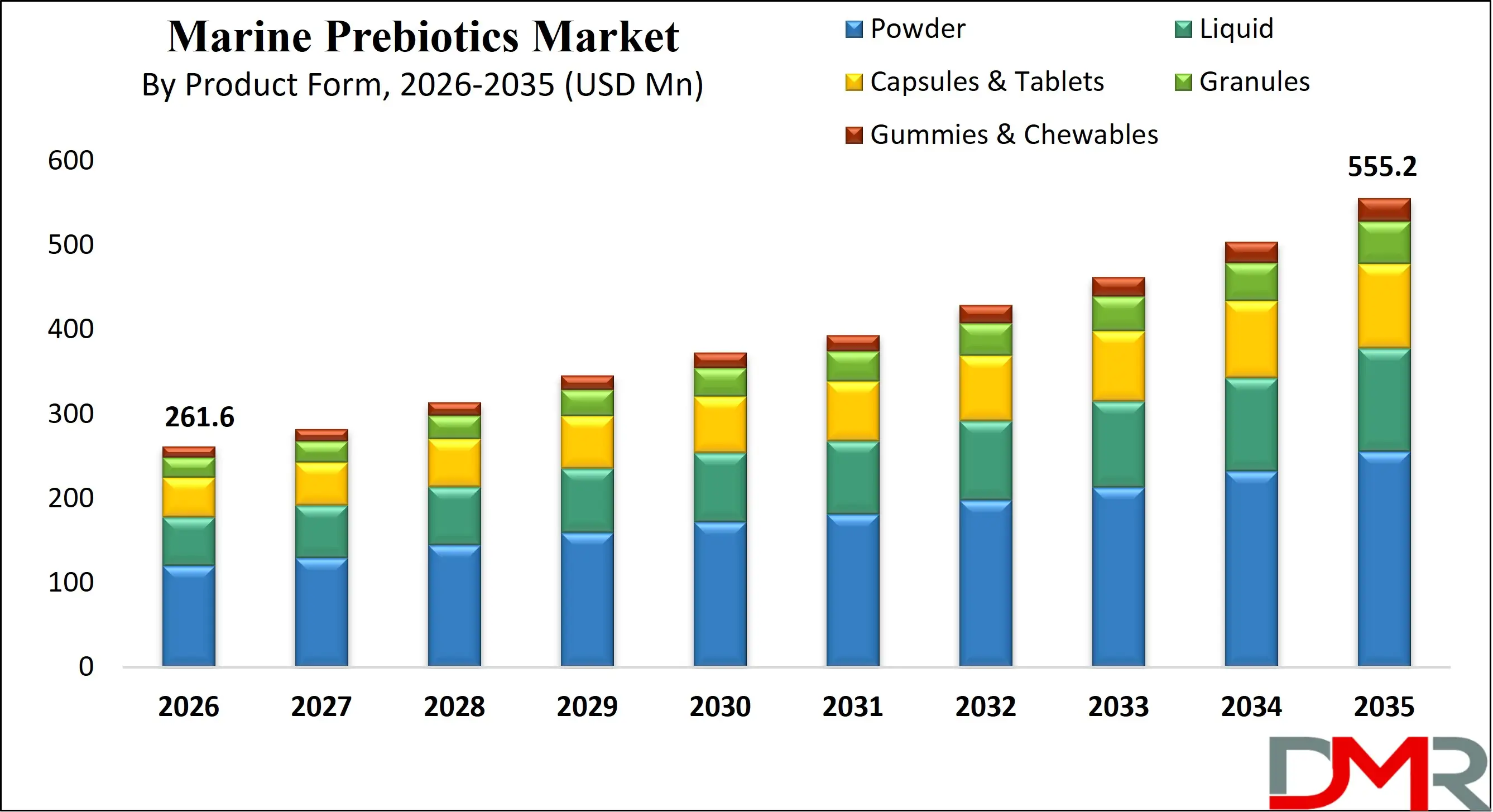
Powder forms are anticipated to dominate the product form segment, capturing about 46.0% of the total market share in 2026, because they offer the highest stability, ease of storage and versatility across a wide range of applications. Marine prebiotic powders can be easily blended into dietary supplements, functional foods, nutrition bars and medical nutrition products without affecting taste or texture. They also provide longer shelf life and better dose accuracy, making them the preferred format for manufacturers supplying large scale nutraceutical, food and animal nutrition markets.
Liquid marine prebiotics are gaining traction due to their fast absorption and convenience in ready to drink beverages, syrups and liquid supplements. This form is especially popular in functional drinks and clinical nutrition where rapid bioavailability and ease of consumption are important. Liquids also allow for better formulation flexibility in wellness shots, fortified beverages and pediatric or geriatric nutrition, supporting their growing use within the marine prebiotics market.
By Distribution Channel Analysis
B2B ingredient supply is anticipated to dominate the distribution channel segment, capturing about 41.0% of the total market share in 2026, because most marine prebiotics are sold as functional ingredients to food, nutraceutical, pharmaceutical and animal feed manufacturers. These companies require marine derived oligosaccharides, fibers and polysaccharides in bulk for use in large scale product formulations, making direct supplier to manufacturer relationships the most efficient and cost effective route to market. Long term supply contracts, consistent quality standards and customized ingredient solutions further strengthen the dominance of B2B distribution in this market.
Online retail is steadily expanding in this market segment as consumer demand for gut health supplements, functional powders and marine based wellness products continues to rise. E commerce platforms and direct to consumer channels allow brands to reach health conscious buyers looking for natural prebiotic products with greater convenience and product transparency. This channel also supports the growth of niche marine prebiotic brands and specialty nutrition products, helping online retail gain importance alongside traditional B2B ingredient sales.
By Application Analysis
Dietary supplements and nutraceuticals are anticipated to dominate the application segment, capturing about 38.0% of the total market share in 2026, as consumers increasingly turn to gut health focused products for immune support, digestion and overall wellness. Marine derived prebiotics such as oligosaccharides and dietary fibers are widely used in capsules, powders and chewable formats because they offer targeted microbiome benefits and are easy to incorporate into daily health routines. The strong growth of preventive healthcare, personalized nutrition and microbiome based supplements further supports the leading position of this segment.
Functional foods and beverages are also an important application area as food manufacturers add marine prebiotics to yogurts, nutrition drinks, snack bars and fortified foods to enhance digestive and metabolic health. Seaweed and algae based fibers provide natural prebiotic functionality while meeting clean label and plant based trends. This allows brands to offer everyday food products that support gut health, making functional foods and beverages a rapidly expanding part of the marine prebiotics market.
By End-User Analysis
Human consumption is anticipated to dominate the end user segment, capturing about 72.0% of the total market share in 2026, as marine prebiotics are increasingly used in dietary supplements, functional foods and medical nutrition products designed to support gut health, immunity and metabolic balance. Rising awareness of the role of the microbiome in overall wellness, along with growing preference for natural and marine based ingredients, is driving strong demand for seaweed and algae derived prebiotics among health conscious consumers across developed and emerging markets.
Animal nutrition is also an important end user segment as livestock, poultry, pets and aquaculture producers adopt marine prebiotics to improve digestive efficiency and immune resilience. Marine derived fibers and oligosaccharides help enhance gut microbiota in animals, leading to better feed utilization, improved growth and reduced reliance on antibiotics. This makes marine prebiotics valuable ingredients in sustainable and performance driven animal feed formulations.
The Global Marine Prebiotics Market Report is segmented on the basis of the following
By Source
- Seaweed & Macroalgae
- Microalgae
- Marine Bacteria & Microorganisms
- Crustacean & Shellfish Derivatives
- Other Marine Biomass
By Prebiotic Compound Type
- Marine Oligosaccharides
- Polysaccharides
- Chitin & Chitosan-based Prebiotics
- Marine Dietary Fibers
- Other Marine Bioactives
By Product Form
- Powder
- Liquid
- Capsules & Tablets
- Granules
- Gummies & Chewables
By Distribution Channel
- B2B Ingredient Supply
- Online Retail
- Pharmacies & Health Stores
- Supermarkets & Specialty Food Stores
- Others
By Application
- Dietary Supplements & Nutraceuticals
- Functional Foods & Beverages
- Pharmaceutical & Medical Nutrition
- Animal Nutrition & Aquafeed
- Cosmetics & Skin Health
By End-User
- Human Consumption
- Animal Nutrition
- Aquaculture
Impact of Artificial Intelligence in the Global Marine Prebiotics Market
The impact of artificial intelligence in the global marine prebiotics market is becoming increasingly significant as companies leverage AI driven technologies to optimize research, production and market strategies. In R&D, machine learning algorithms and predictive analytics are being used to identify novel marine bioactive compounds from seaweed, microalgae and marine microorganisms with enhanced prebiotic potential. AI powered bioinformatics platforms enable faster screening of molecular structures and fermentation effects, reducing time and cost associated with traditional laboratory experiments and accelerating innovation in gut health ingredients.
In manufacturing and supply chain operations, artificial intelligence helps improve extraction efficiency, quality control and process automation. Advanced AI enabled sensors and real time monitoring systems ensure consistent purity and performance of marine fibers and oligosaccharides, while predictive maintenance reduces downtime and enhances production reliability. On the commercial side, AI driven market analytics and consumer insights tools allow companies to anticipate demand trends in functional nutrition, tailor product portfolios for different regions and consumer segments and optimize pricing and distribution strategies. Together, these AI applications are enhancing competitiveness, supporting precision nutrition formulation and enabling more sustainable and data driven growth across the global marine prebiotics market.
Global Marine Prebiotics Market: Regional Analysis
Region with the Largest Revenue Share
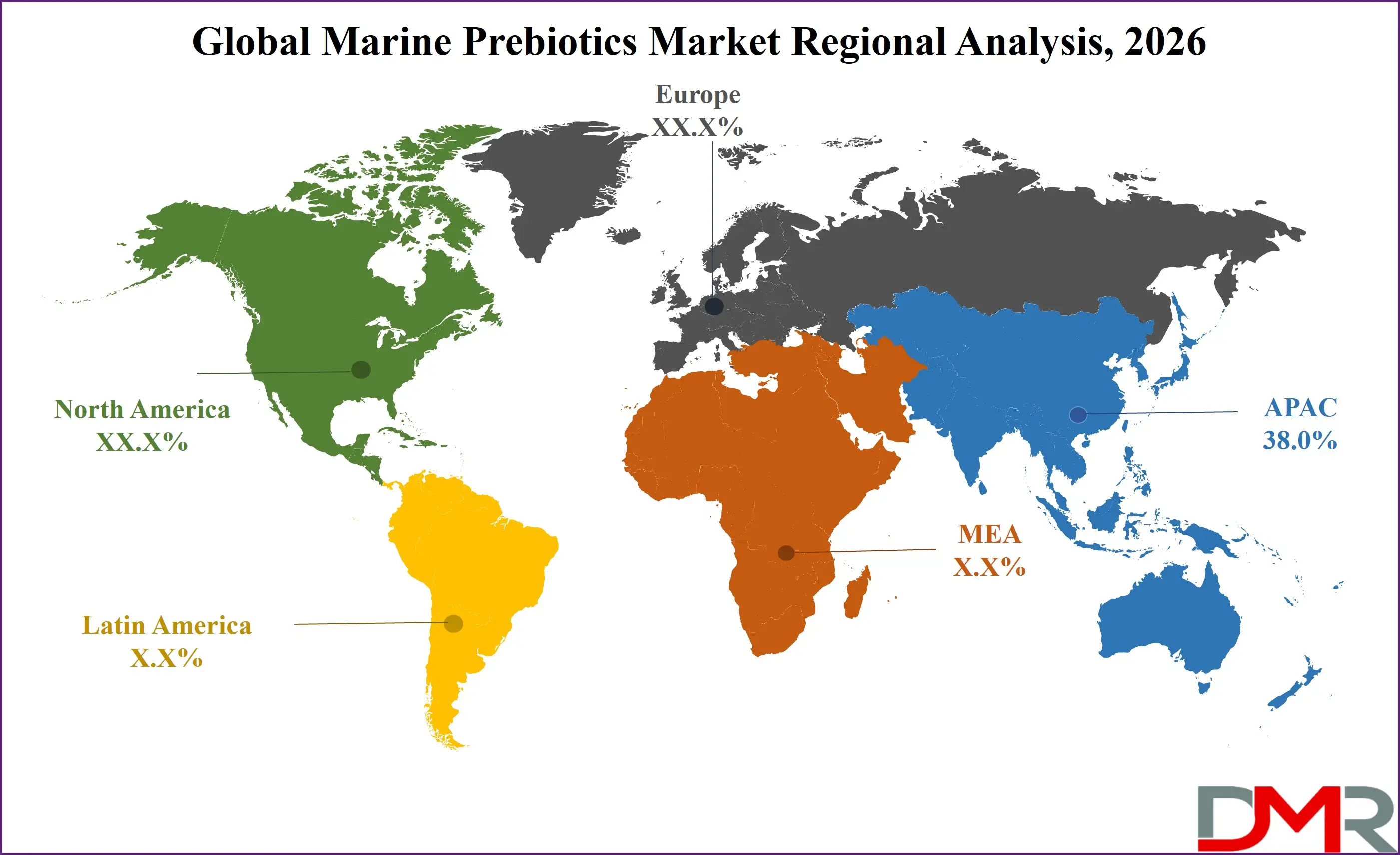
Asia Pacific is anticipated to lead the global marine prebiotics market with about 38.0 percent of total global revenue in 2026, driven by high consumption of seaweed and algae based foods, strong traditional dietary practices and rapid growth of functional nutrition industries across countries such as China, Japan, South Korea and India. The region benefits from abundant marine resources, well established seaweed farming and advancing marine biotechnology capabilities, which support large scale production of marine oligosaccharides and dietary fibers. Rising awareness of gut health, immunity and natural wellness solutions further accelerates demand for marine derived prebiotics in dietary supplements, functional foods and clinical nutrition throughout Asia Pacific.
ℹ
To learn more about this report –
Download Your Free Sample Report Here
Region with the Highest CAGR
North America is expected to register the highest compound annual growth rate in the global marine prebiotics market, driven by increasing consumer focus on digestive health, immunity support and preventive nutrition. The region benefits from advanced research in microbiome science, strong adoption of functional foods and supplements, and growing investments in marine biotechnology for high purity prebiotic extraction. Rising awareness of clean label and natural ingredients, along with expanding use of marine prebiotics in clinical nutrition, animal feed and specialty wellness products, is supporting accelerated market growth across the United States and Canada.
By Region
North America
Europe
- Germany
- The U.K.
- France
- Italy
- Russia
- Spain
- Benelux
- Nordic
- Rest of Europe
Asia-Pacific
- China
- Japan
- South Korea
- India
- ANZ
- ASEAN
- Rest of Asia-Pacific
Latin America
- Brazil
- Mexico
- Argentina
- Colombia
- Rest of Latin America
Middle East & Africa
- Saudi Arabia
- UAE
- South Africa
- Israel
- Egypt
- Rest of MEA
Global Marine Prebiotics Market: Competitive Landscape
The competitive landscape of the global marine prebiotics market is characterized by strategic investments in research and development, innovation in extraction and formulation technologies, and expanding partnerships across the value chain. Key players are focusing on enhancing product efficacy, purity and scalability to meet the rising demand for natural, gut health focused ingredients in food, nutraceutical, pharmaceutical and animal nutrition segments. Companies are increasingly collaborating with marine biotechnology research institutes and food formulators to develop differentiated marine oligosaccharides, fibers and bioactive compounds. In addition, emphasis on sustainable sourcing, quality certification and tailored ingredient solutions is intensifying competition, while mergers, acquisitions and geographic expansion strategies are shaping market positioning and long term growth opportunities.
Some of the prominent players in the Global Marine Prebiotics Market are
- DuPont Nutrition & Biosciences (IFF)
- Beneo GmbH
- Cargill, Incorporated
- FMC Corporation
- CP Kelco
- Acadian Seaplants
- Algaia
- Marine Bio Co., Ltd.
- Ocean Harvest Technology Group
- AIDP, Inc.
- Qingdao BZ Oligo Co., Ltd.
- Qingdao Bright Moon Seaweed Group
- Marinova
- Seaweed Solutions
- Nutraceutical International
- Kappa Bioscience
- Aker BioMarine
- SNAP Natural & Alginate Products
- Ceamsa
- Qingdao Seawin Biotech Group
- Other Key Players
Recent Developments in the Global Marine Prebiotics Market
- October 2025: A UK biotech firm unveiled a new seaweed‑derived prebiotic ingredient with reduced digestive side effects, offering effective gut microbiome support at low daily doses compared with traditional prebiotic sources.
- September 2025: Industry sources reported that a functional nutrition firm introduced a new synbiotic supplement that combines prebiotic and probiotic elements to support digestive health, reflecting broader investment and expansion in gut‑focused dietary products.
- June 2025: A specialty prebiotic solutions provider launched a new range of formulation‑ready prebiotic fibers aimed at enhancing gut health in food and beverage systems, catering to growing consumer demand for microbiome wellness ingredients.
Report Details
| Report Characteristics |
| Market Size (2026) |
USD 261.6 Mn |
| Forecast Value (2035) |
USD 555.2 Mn |
| CAGR (2026–2035) |
8.7% |
| The US Market Size (2026) |
USD 50.6 Mn |
| Historical Data |
2021 – 2025 |
| Forecast Data |
2027 – 2035 |
| Base Year |
2025 |
| Estimate Year |
2026 |
| Report Coverage |
Market Revenue Estimation, Market Dynamics, Competitive Landscape, Growth Factors, etc. |
| Segments Covered |
By Source of Marine Raw Material (Seaweed & Macroalgae, Microalgae, Marine Bacteria & Microorganisms, Crustacean & Shellfish Derivatives, Other Marine Biomass), By Prebiotic Compound Type (Marine Oligosaccharides, Polysaccharides, Chitin & Chitosan-based Prebiotics, Marine Dietary Fibers, Other Marine Bioactives), By Product Form (Powder, Liquid, Capsules & Tablets, Granules, Gummies & Chewables), By Application (Dietary Supplements & Nutraceuticals, Functional Foods & Beverages, Pharmaceutical & Medical Nutrition, Animal Nutrition & Aquafeed, Cosmetics & Skin Health), By End-User (Human Consumption, Animal Nutrition, Aquaculture), and By Distribution Channel (B2B Ingredient Supply, Online Retail, Pharmacies & Health Stores, Supermarkets & Specialty Food Stores, Others) |
| Regional Coverage |
North America – US, Canada; Europe – Germany, UK, France, Russia, Spain, Italy, Benelux, Nordic, Rest of Europe; Asia-Pacific – China, Japan, South Korea, India, ANZ, ASEAN, Rest of APAC; Latin America – Brazil, Mexico, Argentina, Colombia, Rest of Latin America; Middle East & Africa – Saudi Arabia, UAE, South Africa, Turkey, Egypt, Israel, Rest of MEA |
| Prominent Players |
DuPont Nutrition & Biosciences (IFF), Beneo GmbH, Cargill, Incorporated, FMC Corporation, CP Kelco, Acadian Seaplants, Algaia, Marine Bio Co., Ltd., Ocean Harvest Technology Group, AIDP, Inc., Qingdao BZ Oligo Co., Ltd., Qingdao Bright Moon Seaweed Group, Marinova, Seaweed Solutions, Nutraceutical International, Kappa Bioscience, and many others. |
| Purchase Options |
We have three licenses to opt for: Single User License (Limited to 1 user), Multi-User License (Up to 5 Users), and Corporate Use License (Unlimited User) along with free report customization equivalent to 0 analyst working days, 3 analysts working days, and 5 analysts working days respectively. |
Frequently Asked Questions
How big is the Global Marine Prebiotics Market?
▾ The Global Marine Prebiotics Market size is estimated to have a value of USD 261.6 million in 2026 and is expected to reach USD 555.2 million by the end of 2035.
What is the growth rate in the Global Marine Prebiotics Market in 2026?
▾ The market is growing at a CAGR of 8.7 percent over the forecasted period of 2026.
What is the size of the US Marine Prebiotics Market?
▾ The US Marine Prebiotics market is projected to be valued at USD 50.6 million in 2026. It is expected to witness subsequent growth in the upcoming period as it holds USD 102.6 million in 2035 at a CAGR of 8.2%
Which region accounted for the largest Global Marine Prebiotics Market?
▾ Asia Pacific is expected to have the largest market share in the Global Marine Prebiotics Market with a share of about 38.0% in 2026.
Who are the key players in the Global Marine Prebiotics Market?
▾ Some of the major key players in the Global Marine Prebiotics Market are DuPont Nutrition & Biosciences (IFF), Beneo GmbH, Cargill, Incorporated, FMC Corporation, CP Kelco, Acadian Seaplants, Algaia, Marine Bio Co., Ltd., Ocean Harvest Technology Group, AIDP, Inc., Qingdao BZ Oligo Co., Ltd., Qingdao Bright Moon Seaweed Group, Marinova, Seaweed Solutions, Nutraceutical International, Kappa Bioscience, and many others.