Market Snapshot
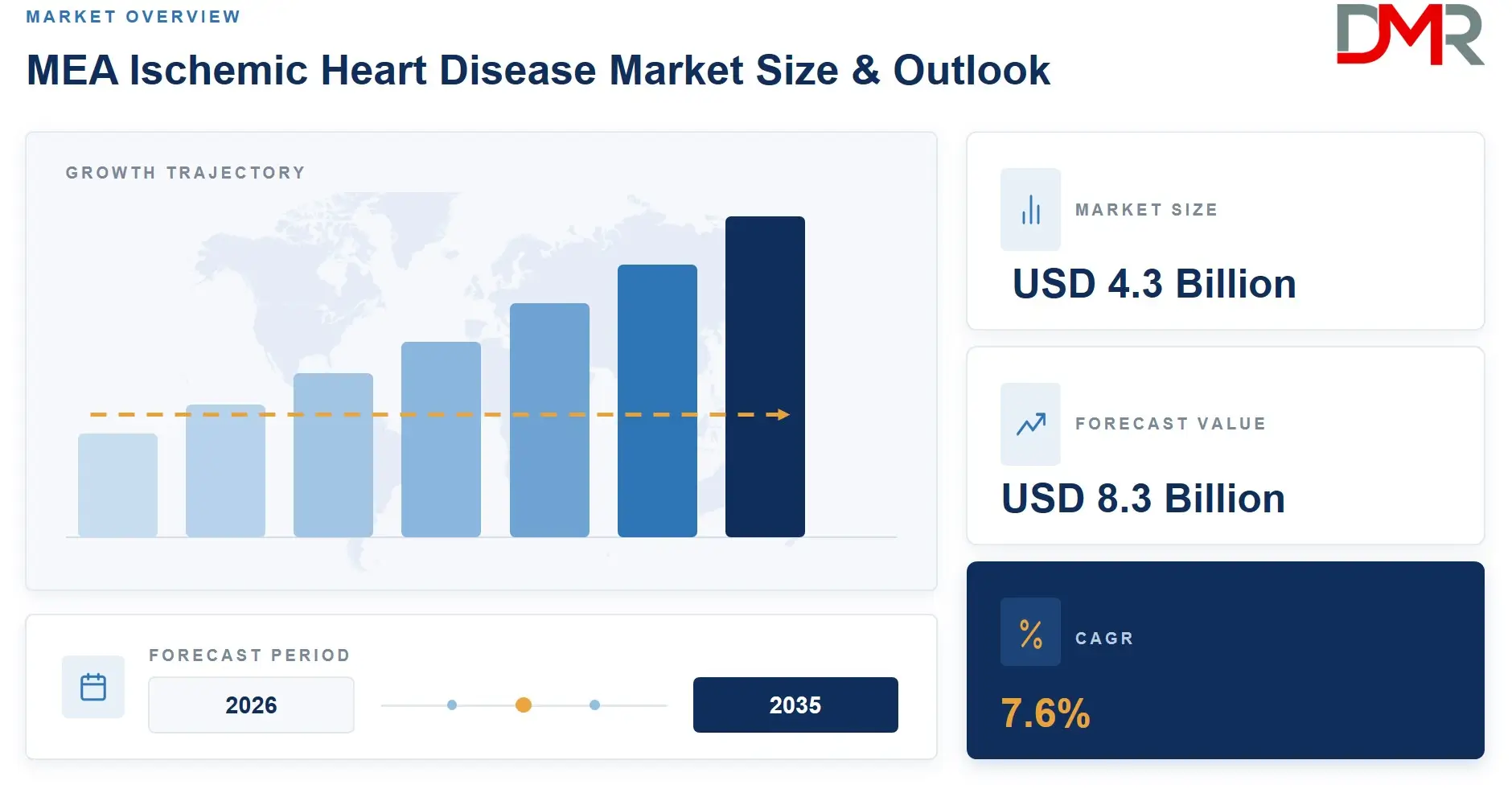
- Market Size (2026): USD 4.3 Bn
- Forecast Value (2035): USD 8.3 Bn
- CAGR (2026-2035): 7.6%
- Leading Type (2026): Myocardial Infarction, around 46%
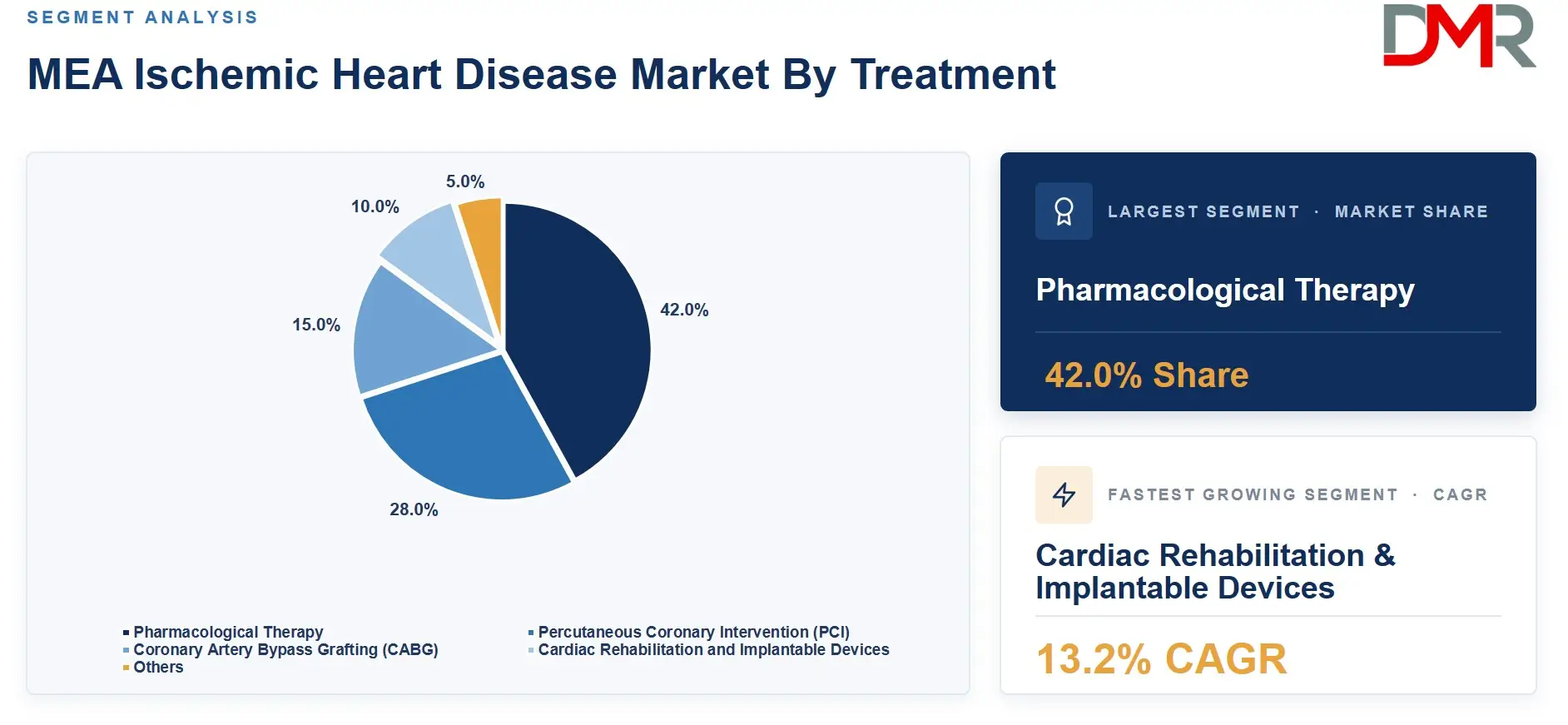
- Leading Treatment (2026): Pharmacological Therapy, close to 42%
- Key Players: Pfizer, Medtronic, Abbott Laboratories and others
What is the Ischemic Heart Disease Market and its Market Size?
The MEA Ischemic Heart Disease Market size is estimated to reach USD 4.3 Bn in 2026 and is further anticipated to reach USD 8.3 Bn by 2035, at a CAGR of 7.6%.
ℹ
To learn more about this report –
Download Your Free Sample Report Here
Ischemic heart disease describes a narrowing or blockage of the coronary arteries that restricts oxygen rich blood flow to the heart muscle, presenting clinically as stable or unstable angina, acute myocardial infarction, or asymptomatic silent ischemia detected on routine screening. The market covers the full care pathway built around this condition across the Middle East and Africa: diagnostic imaging and electrophysiology, pharmacological therapy, catheter based and surgical revascularization, implantable rhythm and monitoring devices, and structured cardiac rehabilitation. The figures in this report describe demand generated inside the stated geography, meaning procedures performed, prescriptions dispensed and devices implanted within Saudi Arabia, the UAE, South Africa and the wider bloc, rather than the worldwide revenue booked by companies headquartered there.
Buyers span ministries of health running national tertiary cardiac centers, private hospital groups competing for insured and medical tourism patients, employer mandated insurance schemes underwriting interventional procedures, and retail pharmacy chains dispensing long term antiplatelet and lipid lowering therapy. Saudi Arabia and the UAE lead on catheterization laboratory density and large scale capital spending under national healthcare strategy, while South Africa carries the region's most developed private hospital and medical scheme infrastructure and Egypt carries its largest patient population and public screening apparatus.
What is structurally changing is the shift from a treatment only posture toward risk based screening and outpatient recovery. National chronic disease screening drives, expanding mandatory employer insurance, and a widening base of private catheterization labs are pulling diagnosis earlier in the disease course, while day case percutaneous intervention and home based rehabilitation programs are compressing both the length and cost of an average episode of care.
Use Cases
- Tertiary Cath Lab Chest Pain Triage: Cardiac centers in Riyadh and Jeddah route suspected acute coronary syndrome patients through rapid troponin and ECG protocols before catheterization, cutting the interval between hospital arrival and revascularization and lowering in hospital mortality for confirmed infarction cases.
- Community Pharmacy Adherence Counseling: Retail pharmacy chains across the UAE and Saudi Arabia run structured counseling for patients on long term statin and antiplatelet regimens, flagging refill gaps early and referring uncontrolled cases back to primary care before a recurrent event.
- Primary Health Unit Risk Screening: Egypt's public primary healthcare network conducts blood pressure, lipid and glucose screening for adults over forty, identifying asymptomatic ischemic disease and hypertensive risk factors well before a patient would otherwise present at a cardiac emergency department.
- Private Scheme Rehabilitation Bundling: South African medical schemes package structured cardiac rehabilitation, remote monitoring and dietitian support with post procedure claims, encouraging patients discharged after bypass surgery or stenting to complete a supervised recovery program rather than an unsupervised one.
Key Takeaways
- Market Size & Share: The MEA Ischemic Heart Disease Market is valued at USD 4.3 Bn in 2026 and is set to reach USD 8.3 Bn by 2035, expanding at a 7.6% CAGR.
- Type Analysis: Myocardial infarction leads by type, accounting for close to 46% of 2026 demand, while silent myocardial ischemia is expected to post the fastest growth through 2035.
- Treatment Analysis: Pharmacological therapy is projected to hold approximately 42% of 2026 revenue, while cardiac rehabilitation and implantable devices is expected to expand at the steepest rate to 2035.
- Demand Concentration: Saudi Arabia is expected to remain the single largest national market within the MEA bloc, with Egypt and South Africa rounding out the top three by 2026 demand.
- Diagnostic Shift: National screening drives and expanding catheterization lab capacity are pulling diagnosis earlier in the disease course across the region's largest healthcare systems.
- Regulatory Momentum: Tightening device marketing authorization and quality system requirements from the region's national regulators are raising the bar for market entry while improving procedural safety standards.
How AI/Gen AI is Transforming the Ischemic Heart Disease Market?
Artificial intelligence is reshaping ischemic heart disease diagnosis and triage across the region's largest cardiac centers rather than displacing existing therapy protocols outright. Automated interpretation of twelve lead electrocardiograms flags time critical ST elevation changes within seconds, cutting the interval between patient arrival and catheterization lab activation in busy tertiary centers across Saudi Arabia and the UAE. Computer vision applied to coronary angiography and CT calcium scoring images helps junior radiologists and cardiologists grade lesion severity consistently, a meaningful gain in health systems where subspecialist cardiologist density outside major Gulf and South African metros remains uneven.
The larger operational impact, however, sits in workforce and access rather than novel drug discovery. Predictive risk models built on primary care vitals and laboratory values help Egypt's national screening program prioritize which patients need referral to a cardiologist first, and remote monitoring platforms let South African medical schemes track post discharge recovery without requiring every patient to travel back to a tertiary hospital.
- Automated ECG Triage: flags ST elevation and arrhythmia patterns on intake so emergency teams can activate the cath lab before a full cardiology consult.
- Angiography Image Grading: computer vision assists lesion severity scoring on angiography and calcium scoring scans, standardizing reads across facilities of varying subspecialist depth.
- Risk Stratified Screening: predictive models rank primary care patients for cardiology referral using vitals and lab history rather than symptom presentation alone.
- Remote Post Procedure Monitoring: wearable and app based platforms track recovery after PCI or CABG, flagging complications before a patient needs to return to hospital.
Key Drivers in the Ischemic Heart Disease Market
Two forces are pulling demand forward across the bloc, one rooted in disease burden and one in access.
- Rising Cardiometabolic Disease Burden: Diabetes and hypertension prevalence continue to climb across the Gulf and North Africa as diets and activity patterns urbanize, and both conditions accelerate coronary atherosclerosis, translating directly into higher volumes of angina, infarction and revascularization procedures. Saudi Arabia, the UAE and Egypt are each expanding catheterization laboratory and cardiac surgery capacity to keep pace, with national health strategies naming cardiovascular disease a priority spending area. As at risk populations age into their fifties and sixties, the base of patients requiring long term antiplatelet, statin and antihypertensive therapy widens alongside acute procedural demand, reinforcing pharmacological revenue even as interventional volumes grow.
- Expanding Insurance and Hospital Capacity: Mandatory employer funded health insurance in Saudi Arabia and the UAE, alongside South Africa's push toward broader medical scheme coverage, is widening the pool of patients who can afford catheter based intervention rather than medication alone. Private hospital groups are responding with new catheterization labs and hybrid operating theaters in Riyadh, Jeddah, Dubai and Abu Dhabi, while public systems in Egypt and South Africa add capacity through phased infrastructure programs. The combined effect shortens the wait between diagnosis and treatment and shifts case mix toward earlier, less costly intervention.
Restraints in the Ischemic Heart Disease Market
Two structural brakes temper how fast the bloc's care capacity can scale.
- Uneven Cardiac Care Access Outside Major Metros: Catheterization labs, cardiac surgeons and subspecialist cardiologists remain concentrated in Riyadh, Jeddah, Dubai, Abu Dhabi, Cairo and South Africa's major metros, leaving rural and peri urban populations reliant on delayed referral or basic pharmacological management. Patients presenting with acute infarction outside these hubs often face longer transport times to a capable cath lab, worsening outcomes and limiting the interventional segment's addressable base relative to its clinical need. Bridging this gap requires capital investment that several national health budgets have only partially prioritized against competing infrastructure demands.
- Import Dependence and Currency Exposure: Coronary stents, guidewires, catheters and implantable rhythm devices are almost entirely imported into the MEA bloc, exposing procurement budgets to currency depreciation and shipping cost volatility, a pressure felt acutely in Egypt's foreign exchange constrained public system. Local manufacturing remains limited to a handful of Gulf based initiatives, so most price relief has to come from bulk procurement through national and regional group purchasing organizations rather than domestic supply. This keeps device intensive segments more price sensitive to macroeconomic shocks than pharmacological therapy.
Growth Opportunities in the Ischemic Heart Disease Market
Two openings stand out for suppliers positioning inside the bloc's uneven care geography.
- Private Hospital and Medical Tourism Hubs: Riyadh, Jeddah and Dubai are positioning themselves as regional cardiac care destinations, combining new hybrid operating theaters with internationally accredited hospital networks to draw patients from neighboring markets that lack comparable interventional capacity. This concentration creates a premium, cash and insurance pay channel for advanced procedures such as complex PCI and structural heart repair that is largely insulated from the reimbursement pressure public systems face elsewhere in the bloc.
- Retail and Online Pharmacy Adherence Channels: Chronic antiplatelet and lipid lowering therapy depends on sustained refill behavior, and retail pharmacy chains across the Gulf are building loyalty and reminder programs around this need while online pharmacy platforms extend reach into peri urban South Africa and Egypt. Distribution channel players that can combine adherence support with home delivery stand to capture share as insurers push more chronic disease management outside the hospital setting.
Trends in the Ischemic Heart Disease Market
Two shifts are changing how and where care is delivered.
- Shift Toward Day Case and Minimally Invasive Intervention: Radial access percutaneous coronary intervention performed as a same day or overnight procedure is displacing longer inpatient stays in the region's better resourced private hospitals, freeing bed capacity and lowering the average cost per case even as procedure volumes climb.
- Earlier Detection Through National Screening: Egypt's primary care chronic disease screening program and comparable initiatives elsewhere in the bloc are identifying hypertension, dyslipidemia and silent ischemia earlier, pulling a growing share of patients into pharmacological management before they ever require an acute intervention.
Research Scope and Analysis
Segment performance is assessed across five axes: type, diagnosis, treatment, end user and distribution channel. Each axis identifies the sub-segment carrying the largest share of 2026 demand and the one expanding fastest through 2035, along with the commercial reason behind each position.
ℹ
To learn more about this report –
Download Your Free Sample Report Here
By Type
Myocardial infarction is projected to hold the largest share by type in 2026, accounting for close to 46% of demand, since acute presentations consistently drive the highest cost care pathway across emergency departments and cath labs region wide, from immediate biomarker testing through revascularization and post event pharmacotherapy. Angina pectoris follows as the second largest category, reflecting the large pool of patients managed on long term antianginal and antiplatelet therapy without an acute event. Growth, however, is concentrated in silent myocardial ischemia, expanding at a CAGR of 12.4% between 2026 and 2035 as expanding national screening programs and routine stress testing in employer mandated check ups catch asymptomatic disease that would previously have gone undetected until a first acute presentation.
By Diagnosis
Electrocardiography is expected to remain the leading diagnostic modality in 2026, holding around 28% of demand, since it is the fastest and lowest cost first line test available at every level of the region's health system, from rural primary care units to tertiary emergency departments. Echocardiography follows closely, supported by its role in confirming structural damage after a suspected event. The steeper trajectory sits with cardiac biomarker testing, projected to expand at a CAGR of 14.6% through 2035 as point of care troponin assays spread beyond flagship hospitals into secondary facilities across Saudi Arabia, Egypt and South Africa, shortening the time to a confirmed diagnosis and reducing reliance on catheterization purely for diagnostic purposes.
By Treatment
Pharmacological therapy is projected to account for approximately 42% of 2026 revenue, the largest share by treatment, since every diagnosed patient, whether managed medically or scheduled for a procedure, is placed on some combination of antiplatelet, statin and antihypertensive medication for the remainder of their care. Percutaneous coronary intervention holds the second largest share, reflecting the region's growing catheterization lab capacity. Growth, however, is concentrated in cardiac rehabilitation and implantable devices, expanding at a CAGR of 13.2% between 2026 and 2035 as insurers increasingly bundle structured recovery programs and remote monitoring with post procedure reimbursement rather than treating rehabilitation as an optional add on.
By End User
Hospitals and cardiac care centers are projected to hold the largest share by end user in 2026, at approximately 52% of demand, since acute admissions, catheterization and surgical procedures are concentrated almost entirely within hospital walls across every market in the bloc. Cardiac catheterization labs and specialty clinics hold the second position, serving diagnostic and lower acuity interventional volume outside full hospital admission. The fastest growth sits with homecare and remote monitoring, expanding at a CAGR of 15.8% through 2035 as insurers in South Africa and the Gulf extend post discharge coverage to app based vitals tracking, reducing readmission risk without adding hospital bed pressure.
By Distribution Channel
Hospital pharmacies are projected to remain the leading distribution channel in 2026, dispensing close to 58% of medication volume, since acute and post procedure prescriptions are filled on site before discharge across nearly every health system in the region. Retail pharmacies hold the second largest share, carrying the bulk of long term chronic refill volume once patients return to community based care. The fastest growth belongs to online pharmacies, projected to expand at a CAGR of 16.4% between 2026 and 2035 as delivery based refill services gain traction in peri urban Egypt and South Africa, where travel to a physical pharmacy remains a genuine adherence barrier.
The Ischemic Heart Disease Market Report is Segmented Based on the Following
By Type
- Myocardial Infarction
- Angina Pectoris
- Silent Myocardial Ischemia
- Others
By Diagnosis
- Electrocardiography (ECG)
- Echocardiography
- Cardiac Catheterization and Angiography
- Cardiac Biomarker Testing
- Stress Testing
- Others
By Treatment
- Pharmacological Therapy
- Percutaneous Coronary Intervention (PCI)
- Coronary Artery Bypass Grafting (CABG)
- Cardiac Rehabilitation and Implantable Devices
- Others
By End User
- Hospitals and Cardiac Care Centers
- Cardiac Catheterization Labs and Specialty Clinics
- Ambulatory Surgical Centers
- Homecare and Remote Monitoring
- Others
By Distribution Channel
- Hospital Pharmacies
- Retail Pharmacies
- Online Pharmacies
- Others
Regulatory Landscape
Saudi Arabia's SFDA, the UAE's MOHAP and Dubai Health Authority, Egypt's EDA and South Africa's SAHPRA each run independent device and pharmaceutical authorization pathways rather than a single bloc wide regime, so bringing a new stent, catheter or lipid lowering drug to market means clearing several national dossiers in parallel. SFDA's MDMA2 route has tightened quality system and technical file requirements in recent cycles, and SAHPRA has pushed similar internationally aligned expectations onto device registrants. The commercial opening sits with distributors and local representatives able to manage multi country submissions efficiently, while the brake is the added cost and lead time this fragmentation places on smaller entrants, slowing how quickly newer technology reaches patients outside the region's largest markets.
Epidemiology
Cardiovascular disease remains the leading cause of death across the bloc's largest health systems, with guideline bodies in Egypt and Saudi Arabia recently updating dyslipidemia and cardiac risk protocols to reflect locally observed lipid and metabolic risk patterns rather than importing international thresholds unchanged. Rising hypertension, diabetes and obesity prevalence across urbanizing Gulf and North African populations continue to widen the at risk pool feeding into diagnosed ischemic disease. The commercial opening lies in earlier, primary care risk stratification that reduces the share of patients first diagnosed only after an acute event. The brake is uneven screening infrastructure and clinician density outside major metros, keeping a meaningful share of the region's disease burden undiagnosed until it reaches an emergency department.
Competitive Landscape
Competition in the MEA Ischemic Heart Disease Market spans multinational pharmaceutical and device majors selling through in country distributors, regional pharmaceutical manufacturers competing on price for chronic cardiovascular medication, and a smaller set of device specialists focused on interventional and structural heart technology. Basis of competition differs by segment: pharmacological therapy competes primarily on price and formulary access as national health systems and insurers negotiate volume based procurement, while interventional devices compete on clinical outcomes data, physician training support and after sales service reach into secondary cities. Dominant strategies include partnering with locally authorized representatives and distributors to navigate fragmented national registration requirements, investing in physician training tied to new device launches, and building manufacturing or packaging footholds inside Saudi Arabia and Egypt to qualify for localization linked procurement preference under national healthcare strategies.
Some of the Prominent Players in the Ischemic Heart Disease Market are
- Pfizer
- AstraZeneca
- Novartis
- Sanofi
- Bayer
- Merck & Co.
- Boehringer Ingelheim
- Medtronic
- Abbott Laboratories
- Boston Scientific
- Siemens Healthineers
- GE HealthCare
- Edwards Lifesciences
- Terumo Corporation
- Biotronik
- Abiomed
- Daiichi Sankyo
- Amgen
- Bristol Myers Squibb
- Roche Diagnostics
- Philips Healthcare
- Getinge
- LivaNova
- Artivion
- Penumbra
- iRhythm Technologies
- Biosense Webster
- Julphar
- SPIMACO
- Tabuk Pharmaceuticals
- Jamjoom Pharma
- NeoPharma
- Aspen Pharmacare
- Adcock Ingram
- Pharco Pharmaceuticals
- EIPICO
- EVA Pharma
- Amoun Pharmaceutical
- Hikma Pharmaceuticals
- Nahdi Medical Company
- Other Key Players
Recent Developments
- In July 2026, Dubai Health completed a round of cardiac surgeries and catheterization procedures under the first edition of its 2026 Nabadat campaign, delivered with the Al Jalila Foundation to expand access to specialized cardiac care for congenital and chronic heart conditions across its hospital network.
- In April 2026, Egypt's Ministry of Health and Population reported that its presidential initiative for chronic disease screening had reached over twenty one million citizens nationwide since 2021, extending blood pressure, lipid and glucose testing through primary healthcare units to catch ischemic risk earlier in the disease course.
- In January 2026, Egyptian cardiology and endocrinology societies published updated national dyslipidemia management guidelines introducing a locally defined extreme risk category, giving clinicians a structured basis for earlier combination lipid lowering therapy in patients at the highest risk of a coronary event.
- In 2025, South African researchers published stakeholder interviews examining the feasibility of a fixed dose cardiovascular polypill for primary care rollout, informing how the country's medical schemes and public health system might simplify long term ischemic heart disease prevention therapy.
Report Details
| Report Characteristics |
| Market Size (2026) |
USD 4.3 Bn |
| Forecast Value (2035) |
USD 8.3 Bn |
| CAGR (2026-2035) |
7.6% |
| Historical Data |
2021 - 2025 |
| Forecast Data |
2026 - 2035 |
| Base Year |
2025 |
| Segments Covered |
By Type, By Diagnosis, By Treatment, By End User and By Distribution Channel |
| Regional Coverage |
Middle East & Africa - Saudi Arabia, The UAE, South Africa, Rest of MEA |
Frequently Asked Questions
How big is the MEA Ischemic Heart Disease Market?
▾ The MEA Ischemic Heart Disease Market is estimated at USD 4.3 Bn in 2026 and is projected to reach USD 8.3 Bn by 2035, reflecting steady demand growth for diagnostic, pharmacological, interventional and rehabilitation care across Saudi Arabia, the UAE, South Africa and the wider bloc as cardiovascular disease prevalence and screening coverage both continue to expand.
What is the growth rate of the MEA Ischemic Heart Disease Market?
▾ The market is expected to grow at a CAGR of 7.6% between 2026 and 2035, supported by rising cardiometabolic disease prevalence, expanding catheterization laboratory capacity and broadening insurance coverage across the region's largest health systems, with growth concentrated more in device intensive and rehabilitation segments than in the mature pharmacological therapy base.
Which country holds the largest share in the MEA Ischemic Heart Disease Market?
▾ Saudi Arabia is expected to hold the largest share of regional demand in 2026, supported by its scale of catheterization laboratory investment and hospital expansion under national healthcare strategy, with Egypt and South Africa following as the bloc's second and third largest markets by patient volume and installed care capacity respectively.
Who are the key players in the MEA Ischemic Heart Disease Market?
▾ Key players include Pfizer, AstraZeneca, Medtronic, Abbott Laboratories, Boston Scientific, Siemens Healthineers and Hikma Pharmaceuticals, alongside a wide base of MEA headquartered pharmaceutical manufacturers and distributors such as Julphar, SPIMACO, Tabuk Pharmaceuticals and Aspen Pharmacare that supply chronic cardiovascular therapy and device distribution across Saudi Arabia, the UAE, South Africa and Egypt.
Which type holds the largest share in the MEA Ischemic Heart Disease Market?
▾ Myocardial infarction holds the largest share by type, reflecting the concentration of cost and clinical resources around acute coronary events, while silent myocardial ischemia is expected to grow fastest through 2035 as national screening programs in Egypt and the Gulf identify asymptomatic disease earlier than routine clinical presentation would otherwise allow.
What treatment segment is expected to grow fastest in the MEA Ischemic Heart Disease Market?
▾ Cardiac rehabilitation and implantable devices is projected to be the fastest growing treatment segment through 2035, as insurers across South Africa and the Gulf increasingly bundle structured recovery and remote monitoring into post procedure reimbursement, even as pharmacological therapy continues to account for the largest overall share of regional treatment revenue.
What factors are driving demand for ischemic heart disease care across the MEA region?
▾ Demand across the MEA Ischemic Heart Disease Market is driven by rising diabetes and hypertension prevalence, expanding catheterization laboratory and hospital capacity under national healthcare strategies, and widening insurance coverage that is shifting more patients from medication only management toward earlier interventional treatment, particularly across Saudi Arabia, the UAE and South Africa's most developed private healthcare markets.