Market Snapshot
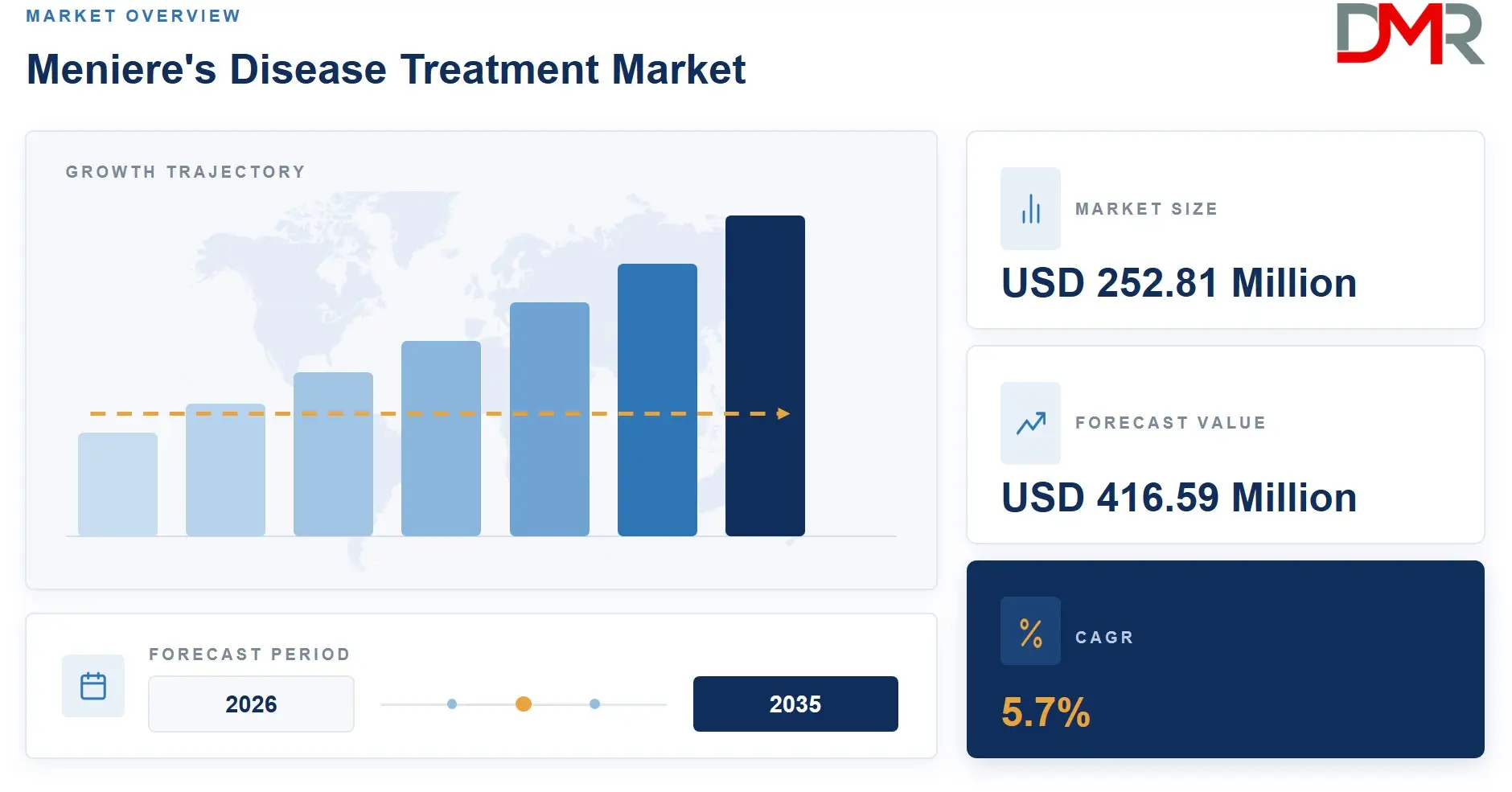
- The Global Meniere's Disease Treatment Market was valued at USD 239.18 Million in 2025 and is projected to reach USD 416.59 Million by 2035, growing at a CAGR of 5.7%.
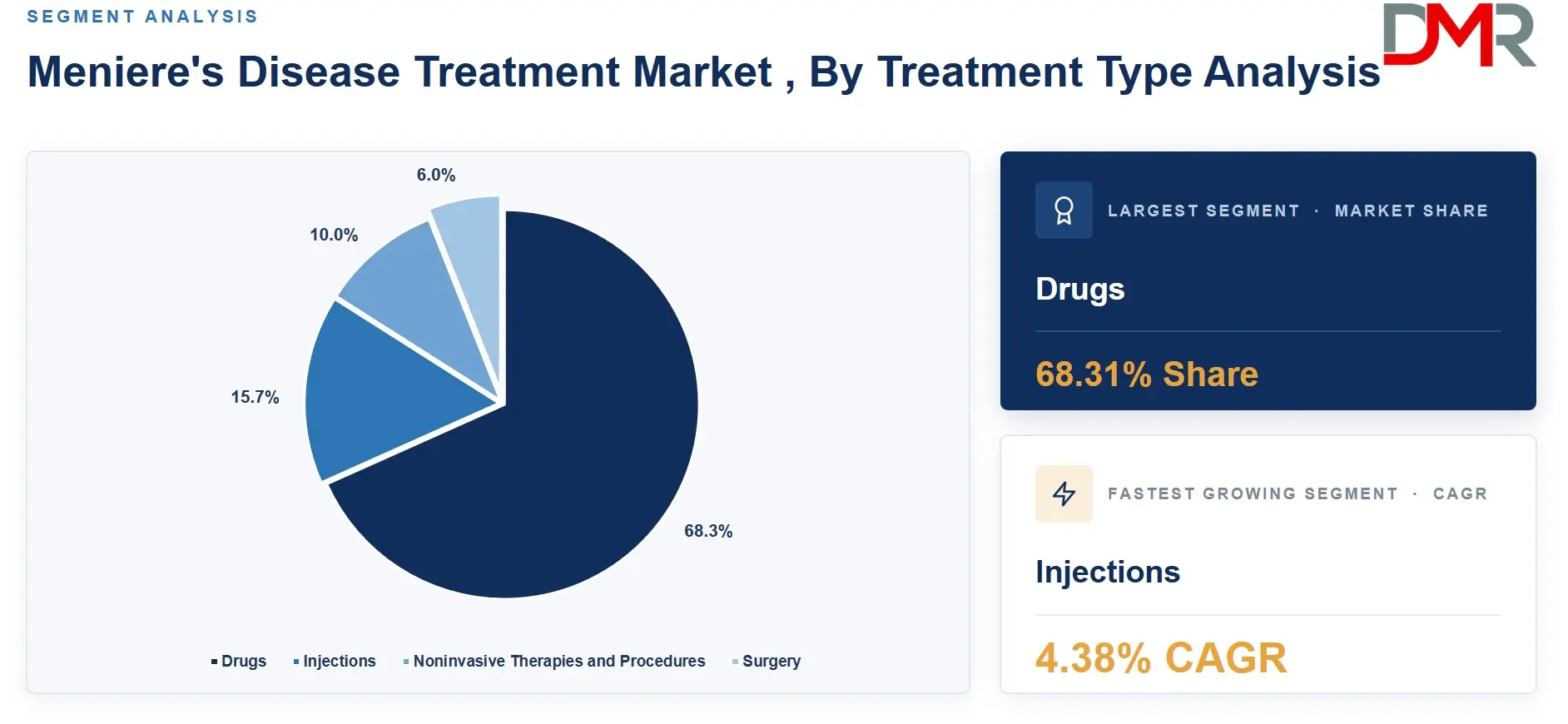
- By Treatment Type, Drugs led with a 68.31% share in 2025; Injections are the fastest-growing sub-segment at a 4.38% CAGR through 2031.
- By Symptom Type, Vertigo Management commanded a 45.24% share; Tinnitus Relief is the fastest-growing category.
- By Disease Severity, Moderate severity held the largest share at 47.52%; Severe is the fastest-growing sub-segment.
- By End User, Hospitals and Clinics accounted for 61.74% of demand; Specialty ENT Centers are growing fastest.
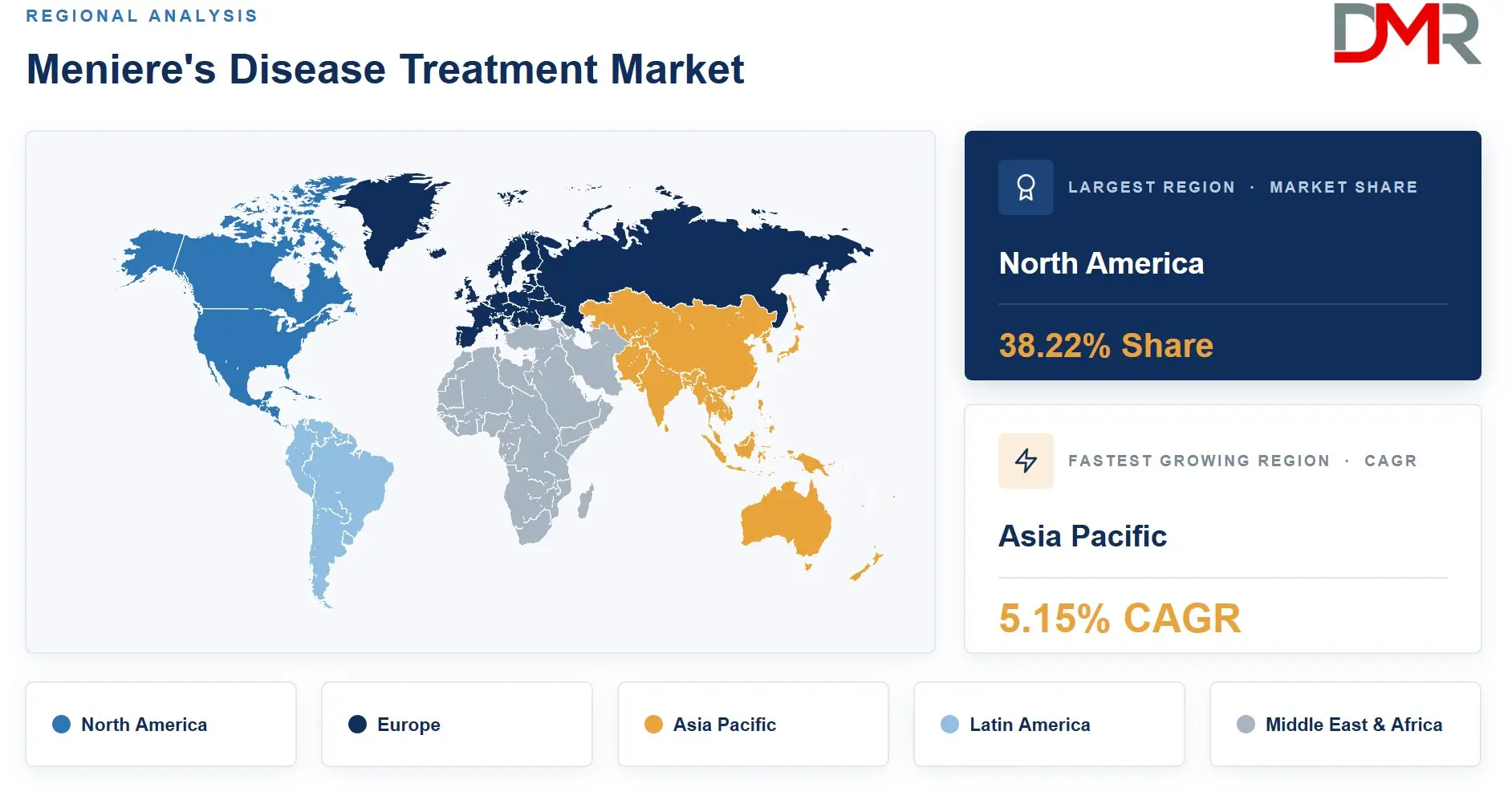
- North America led all regions with a 38.22% share; Asia-Pacific is the fastest-growing region at a 5.15% CAGR through 2031.
Market Overview
The Meniere's disease treatment market covers pharmaceutical therapies, injectables, noninvasive interventions, and surgical procedures directed at managing the four defining manifestations of the condition: episodic vertigo, fluctuating hearing loss, tinnitus, and aural fullness. The market excludes general otology devices, cochlear implant hardware, and diagnostic imaging, which are tracked under separate otology and neurology segments. Hearing aids prescribed to Meniere's patients are counted in the broader hearing device market rather than here.
Prevalence data underscore the commercial scale of this condition. As reported by the Vestibular Disorders Association, approximately 615,000 people in the United States alone are estimated to carry a Meniere's diagnosis, with roughly 45,500 new cases identified annually. No definitive cure currently exists, meaning patients cycle through treatment regimens across decades of disease management. That dynamic creates durable recurring revenue for pharmaceutical and specialty device manufacturers alike.
The broader connection to otolaryngology and neurology makes Meniere’s Disease Treatment Market vulnerable to parallel innovation in adjacent categories. Vestibular rehabilitation technology, AI-assisted audiometry platforms, and wearable balance monitoring tools are all advancing independently. Vendors active in Meniere's treatment must now position their products relative to this expanding ecosystem, not just against direct competitors.
Market Size and Forecast
The Global Meniere's Disease Treatment Market size is estimated at USD 252.81 Million in 2026 from USD 239.18 Million in 2025, and is projected to reach USD 416.59 Million by 2035, exhibiting a CAGR of 5.7% during the forecast period.
Historical growth in Meniere’s Disease Treatment Market has been anchored by the pharmaceutical segment, which has consistently captured the largest revenue share due to the chronic nature of disease management. Diuretic and betahistine prescriptions generate predictable repeat demand, and branded drug makers have maintained pricing power in the absence of curative alternatives. Surgical options have remained stable in volume but constrained in growth, partly because clinical evidence challenges their long-term effectiveness. Based on data published by ENT Key, sac decompression and shunting procedures report vertigo control in 65% to 90% of patients depending on case series definitions, but no surgical technique has demonstrated benefit for hearing or tinnitus. That limitation narrows the addressable patient pool for surgery and redirects treatment pathways toward pharmacological and injection-based options.
ℹ
To learn more about this report –
Download Your Free Sample Report Here
Pipeline activity is reshaping the growth trajectory. Sound Pharmaceuticals completed the last patient visit in its pivotal Phase 3 STOPMD-3 trial of SPI-1005 on 25 July 2024, following enrollment that began in August 2022. Findings from that trial showed a LFPTA responder rate of 57.9% in the SPI-1005 arm versus 36.5% in the placebo arm at day 84 (p=0.0037), as reported by Sound Pharmaceuticals. A regulatory approval of SPI-1005 would introduce a novel anti-inflammatory mechanism into a market currently dominated by repurposed generics and off-label injectables.
Treatment Type Analysis
Drugs led the Treatment Type segment with a 68.31% share in 2026.
The dominance of the Drugs sub-segment reflects the long-established clinical protocol of prescribing diuretics, betahistine, and corticosteroids as first-line responses to Meniere's symptoms. Physicians and patients both prefer oral therapeutics for their non-invasive profile and wide availability across primary care settings. Generic competition keeps unit costs low, which sustains high prescription volumes even as individual product revenues compress. Brand manufacturers with differentiated formulations or novel mechanisms hold the strongest pricing positions within this sub-segment.
ℹ
To learn more about this report –
Download Your Free Sample Report Here
Injections are the fastest-growing sub-segment at a 4.38% CAGR through 2031, a pace driven by accumulating clinical evidence favoring intratympanic delivery over systemic routes. A clinical study published in The Lancet found that intratympanic gentamicin reduced vertigo attacks by approximately 90%, while intratympanic methylprednisolone achieved a comparable reduction with better hearing preservation.
Research published in ScienceDirect further showed that 57% of patients reached Class A or B vertigo control under AAO-HNS criteria with five or fewer gentamicin injections. Noninvasive Therapies and Procedures occupy the middle tier, serving patients who fail pharmacologic management but prefer to defer surgery. Surgery remains a low-volume, last-resort category, constrained by the absence of hearing or tinnitus benefit documented across current techniques.
Symptom Type Analysis
With a 45.24% share in 2026, Vertigo Management outpaced all other Symptom Type categories.
Vertigo carries the highest treatment urgency among all Meniere's manifestations because debilitating episodes directly impair patient mobility, employment, and safety. Neurologists and ENT specialists consistently prioritize vertigo suppression in their prescribing decisions. The commercial concentration in this category gives pharmaceutical and injection-based vendors a clear primary use case when developing market access strategies.
Tinnitus Relief is the fastest-growing symptom category, propelled by rising patient advocacy and the entry of investigational compounds targeting auditory nerve inflammation. Hearing Loss Treatment and Balance Disorder Therapy represent specialized niches that are increasingly addressed through combined treatment protocols rather than standalone products. Vendors that package multi-symptom benefit claims will find stronger reimbursement traction than those competing on single-outcome efficacy.
Disease Severity Analysis
Moderate severity accounted for 47.52% of Disease Severity demand in 2026, the highest of any category.
Moderate-stage patients represent the most therapeutically active cohort. Symptom frequency is sufficient to demand regular medical intervention, but disease progression has not yet reached the point where surgical options dominate. Pharmaceutical and injection-based revenues are highest in this severity band, making it the primary battleground for competing brands.
Severe-stage Meniere's is the fastest-growing sub-segment, driven by a patient population that has exhausted first-line treatments and now requires more aggressive intervention. As the overall diagnosed population ages and moderate cases progress, the severe segment will expand. Vendors with established surgical or ablative injection portfolios are positioned to benefit. Mild-stage patients generate lower treatment intensity and shorter prescription durations, placing this group at the margin of commercial relevance for most manufacturers.
End User Analysis
Hospitals and Clinics captured 61.74% of End User demand in 2026, ahead of all rival categories.
Hospitals and clinics command this segment because Meniere's diagnosis requires specialist workup, audiometric testing, and ongoing monitoring that community pharmacies and general practitioners cannot fully provide. Inpatient and outpatient ENT departments administer intratympanic injections under controlled conditions, generating revenue from both the procedure and the pharmaceutical agent. That procedural requirement sustains hospital dominance regardless of shifts in broader ambulatory care patterns.
Specialty ENT Centers are the fastest-growing end-user category, reflecting the global expansion of subspecialty outpatient infrastructure. Patients seeking targeted vestibular management are being routed to ENT-dedicated facilities that offer same-day injection procedures and vestibular rehabilitation in a single visit. Ambulatory Surgical Centers occupy a smaller share but are gaining relevance for minimally invasive surgical interventions, particularly in geographies where hospital-based surgical costs are under payer pressure.
Key Market Segments
By Treatment Type
- Drugs
- Injections
- Noninvasive Therapies and Procedures
- Surgery
By Symptom Type
- Vertigo Management
- Tinnitus Relief
- Hearing Loss Treatment
- Balance Disorder Therapy
By Disease Severity
By End User
- Hospitals and Clinics
- Specialty ENT Centers
- Ambulatory Surgical Centers
Regional Analysis
North America led all regions with a 38.22% share in 2026, equivalent to USD 91.37 Million in absolute value.
North America's position at the top of the regional hierarchy reflects a combination of high diagnostic rates, established specialist networks, and the strongest pipeline activity globally. United States ENT practices and academic medical centers are active sites for clinical trials, which feeds early adoption of emerging therapies. Reimbursement frameworks in the US support both pharmaceutical and procedural revenue streams, reducing the commercial risk that constrains uptake in other regions.
ℹ
To learn more about this report –
Download Your Free Sample Report Here
Asia-Pacific is the fastest-growing region at a 5.15% CAGR through 2031, driven by expanding ENT specialty capacity in China, Japan, South Korea, and India. A 2024 network meta-analysis published in SAGE Journals found no statistically significant difference in pure-tone average between gentamicin and dexamethasone treatment (standardized mean difference 0.09; 95% CI −0.42 to 0.24), a finding that supports broader clinical adoption of intratympanic therapy in markets where surgical infrastructure is less accessible.
Europe holds a stable mid-tier position, supported by guideline-based ENT practice in Germany, France, and the UK. Latin America and the Middle East and Africa remain underpenetrated, with commercial opportunity constrained by limited specialist density and inconsistent public health reimbursement for vestibular conditions.
Key Regions and Countries
North America
Europe
- Germany
- France
- The UK
- Spain
- Italy
- Rest of Europe
Asia Pacific
- China
- Japan
- South Korea
- India
- Australia
- Rest of APAC
Latin America
- Brazil
- Mexico
- Rest of Latin America
Middle East & Africa
- GCC
- South Africa
- Rest of MEA
Market Dynamics
Intratympanic Therapies Displace Systemic Prescribing
Physicians are shifting refractory Meniere's patients from systemic oral therapy to intratympanic injections based on superior efficacy data. As reported by the Vestibular Disorders Association, intratympanic gentamicin is more than 80% effective at controlling vertigo in Meniere's disease. That outcome benchmark surpasses what diuretics and betahistine typically achieve in moderate-to-severe cases, creating a clinical rationale that specialist bodies increasingly codify in treatment guidelines.
The commercial implication is a revenue transfer from oral generics to injectable procedures. Hospital ENT departments and specialty centers that perform intratympanic injections capture both the drug cost and the procedure fee, concentrating revenue in clinical settings rather than pharmacy channels. Pharmaceutical manufacturers with injectable portfolios are gaining over pure oral-drug players.
Long-Term Treatment Failure Limits Market Ceiling
Clinical evidence points to a structural ceiling on treatment efficacy that restrains revenue potential across both pharmaceutical and surgical sub-segments. A 20-year follow-up study found that more than 70% of patients who had undergone endolymphatic sac and shunt surgery continued to experience the full triad of vertigo, hearing loss, and tinnitus long term, as confirmed by findings from PubMed. In that same cohort, cochlear endolymphatic hydrops was still visible on hydrops MRI in 65% of operated ears years after surgery.
Persistent treatment failure reduces patient confidence in interventions and compresses the window for escalated therapy. Payers observing long-term outcomes data are also tightening reimbursement criteria for repeat procedures. Vendors must demonstrate durable rather than short-term symptom control to secure formulary positions and surgical pre-authorization.
Novel Anti-Inflammatory Mechanism Opens Premium Pricing Window
Pipeline compounds targeting the endolymphatic hydrops pathway at a molecular level represent the clearest near-term opportunity in Meniere’s Disease Treatment Market . Using a stricter LFPTA definition requiring improvement at two adjacent low frequencies, SPI-1005 achieved a responder rate of 41.1% versus 13.5% with placebo, corresponding to a 204.4% higher improvement rate over placebo (p<0.0001), as reported by Sound Pharmaceuticals. A treatment that consistently restores low-frequency hearing would address a clinical gap that no current approved therapy fills.
Regulators in the US and EU have historically supported orphan drug pathways for rare vestibular conditions, and a Meniere's-specific label would carry premium pricing authority. Specialty ENT centers preparing to adopt new injectables or oral anti-inflammatories should build physician education programs now, ahead of any potential launch, to reduce the time-to-treatment-adoption curve.
Market Trends
Evidence Hierarchy Shifts Treatment Selection Toward Injectables
A 2024 systematic review and network meta-analysis published in SAGE Journals concluded that intratympanic gentamicin achieved the highest vertigo-control rate among pharmacological options, while intratympanic methylprednisolone and dexamethasone showed similar vertigo outcomes but superior hearing preservation compared with gentamicin. Clinical practice guidelines are incorporating this hierarchy, and ENT specialists are stratifying patients by hearing preservation priority before selecting an injectable agent. Early-mover pharmaceutical companies that support clinician-focused evidence dissemination will establish formulary preference before competitors build equivalent trial records.
Market Competition Overview
The Meniere's disease treatment market is fragmented across generics manufacturers, specialty pharmaceutical developers, and a small number of clinical-stage innovators. No single company holds a dominant commercial share, because the primary pharmaceutical treatments are mature generics with widespread off-patent manufacturing. Competition in the established segment centers on supply chain reliability, pricing, and distribution depth rather than clinical differentiation.
Specialty-injectable positioning is emerging as the key battleground for mid-tier competitors. A classic clinical series published in PMC found that 96% of Meniere's disease patients achieved sufficient vertigo control with gentamicin therapy to avoid more destructive ablative surgery, a finding that cements intratympanic gentamicin as the de facto standard in refractory cases. Competitors attempting to displace gentamicin must deliver measurable hearing preservation advantages, not merely comparable vertigo control. Clinical-stage players with novel mechanisms hold disproportionate upside if they clear Phase 3 and secure ENT specialist adoption ahead of any future market consolidation.
Company Profiles
Pfizer Inc. competes in the Meniere's treatment market through its established generics and specialty pharmaceutical portfolio, which includes corticosteroid formulations used in intratympanic procedures. Pfizer's global distribution network and manufacturing scale give it a structural cost advantage over smaller generics producers, allowing it to maintain supply reliability across hospital formularies in North America and Europe. The company's long-term position in Meniere’s Disease Treatment Market depends on its ability to participate in the next generation of precision otology therapies, either through internal development or licensing of clinical-stage assets.
Sound Pharmaceuticals, Inc. represents the most clinically differentiated competitor in Meniere’s Disease Treatment Market . The company's investigational compound SPI-1005 (ebselen) is the only asset in late-stage development with a novel anti-inflammatory mechanism directly targeting Meniere's disease. The company's pipeline concentration creates both upside and risk: a regulatory approval would give Sound Pharmaceuticals a first-mover advantage in a category with no approved disease-modifying agents, but commercial execution would require building de novo ENT specialist relationships without an existing sales infrastructure.
Key Players
- Pfizer Inc.
- GlaxoSmithKline plc
- Teva Pharmaceutical Industries Ltd.
- Viatris Inc.
- Sun Pharmaceutical Industries Ltd.
- Astellas Pharma Inc.
- Auris Medical Holding AG
- Baxter International Inc.
- Cipla Ltd.
- Hikma Pharmaceuticals PLC
- Intas Pharmaceuticals Ltd.
- Lannett Company, Inc.
- Merck & Co., Inc.
- Novartis AG
- Otonomy, Inc.
- Perrigo Company plc
- Sanofi S.A.
- Sound Pharmaceuticals, Inc.
- Spiral Therapeutics, Inc.
Recent Developments
- October 2025 — An open-label extension study of SPI-1005 for Meniere's disease was initiated under ClinicalTrials.gov identifier NCT06859788. The study evaluates 400 mg twice-daily treatment for 6 or 12 months in adults with Meniere's disease, with a planned completion date in late 2026.
- January 2023 — Spiral Therapeutics reported completion of enrollment in an open-label pilot study of SPT-2101 in 10 patients with Meniere's disease. A Phase 2 randomized, placebo-controlled evaluation to assess single-administration safety and efficacy was subsequently planned.
Report Details
| Report Characteristics |
| Market Value (2025) |
USD 239.18 Million |
| Market Value (2026) |
USD 252.81 Million |
| Forecast Revenue (2035) |
USD 416.59 Million |
| CAGR (2026–2035) |
5.7% |
| Base Year for Estimation |
2025 |
| Historic Period |
2020 – 2024 |
| Forecast Period |
2026 – 2035 |
| Report Coverage |
Revenue Forecast, Market Dynamics, Competitive Landscape, Recent Developments |
| Segments Covered |
By Treatment Type (Drugs, Injections, Noninvasive Therapies and Procedures, Surgery), By Symptom Type (Vertigo Management, Tinnitus Relief, Hearing Loss Treatment, Balance Disorder Therapy), By Disease Severity (Moderate, Severe, Mild), By End User (Hospitals and Clinics, Specialty ENT Centers, Ambulatory Surgical Centers) |
| Regional Analysis |
North America – US and Canada; Europe – Germany, France, The UK, Spain, Italy, and Rest of Europe; Asia Pacific – China, Japan, South Korea, India, Australia, and Rest of APAC; Latin America – Brazil, Mexico, and Rest of Latin America; Middle East & Africa – GCC, South Africa, and Rest of MEA |
| Competitive Landscape |
Pfizer Inc., GlaxoSmithKline plc, Teva Pharmaceutical Industries Ltd., Viatris Inc., Sun Pharmaceutical Industries Ltd., Astellas Pharma Inc., Auris Medical Holding AG, Baxter International Inc., Cipla Ltd., Hikma Pharmaceuticals PLC, Intas Pharmaceuticals Ltd., Lannett Company, Inc., Merck & Co. Inc., Novartis AG, Otonomy Inc., Perrigo Company plc, Sanofi S.A., Sound Pharmaceuticals Inc., Spiral Therapeutics Inc. |
| Customization Scope |
Customization for segments and region or country level will be provided. Additional customization can be done based on requirements. |
| Purchase Options |
Three license options: Single User License, Multi-User License (Up to 5 Users), and Corporate Use License (Unlimited Users and Printable PDF) |
Frequently Asked Questions
What is the biggest investment opportunity in Meniere’s Disease Treatment Market ?
▾ The clearest near-term opportunity lies in novel anti-inflammatory agents for Meniere's disease. SPI-1005 demonstrated a 204.4% higher hearing improvement rate over placebo in the strictest LFPTA analysis, pointing to a category with no approved disease-modifying product. First-mover approval would carry orphan drug pricing authority in both the US and EU.
Who are the top companies in Meniere’s Disease Treatment Market ?
▾ Pfizer Inc., GlaxoSmithKline plc, and Teva Pharmaceutical Industries Ltd. are among the leading commercial players by portfolio breadth and distribution reach. Sound Pharmaceuticals, Inc. and Spiral Therapeutics, Inc. represent the most advanced clinical-stage competitors, with pipeline assets that could redefine the treatment standard if approved.
Which segment is growing fastest in Meniere’s Disease Treatment Market and why?
▾ Injections are the fastest-growing Treatment Type sub-segment, at a 4.38% CAGR through 2031. The Lancet data showing intratympanic gentamicin reducing vertigo attacks by approximately 90% has reinforced specialist prescribing toward intratympanic delivery, and ENT center expansion globally is adding the procedural capacity to support higher injection volumes.
Which region is growing fastest in Meniere’s Disease Treatment Market and why?
▾ Asia-Pacific is growing fastest at a 5.15% CAGR through 2031, driven by ENT specialist capacity expansion in China, Japan, South Korea, and India. Rising healthcare expenditure and government investment in specialist outpatient infrastructure are pulling forward diagnosis rates that have historically lagged Western markets.
What is the biggest challenge holding Meniere’s Disease Treatment Market back?
▾ The fundamental barrier is the absence of treatments that produce durable long-term remission. A 20-year follow-up study confirmed that more than 70% of patients who underwent endolymphatic sac surgery continued to experience the full symptom triad years later. That outcome record suppresses patient and payer willingness to authorize escalated interventions and constrains the addressable market for premium-priced therapies.