What is Menopause Care Technology Market Size?
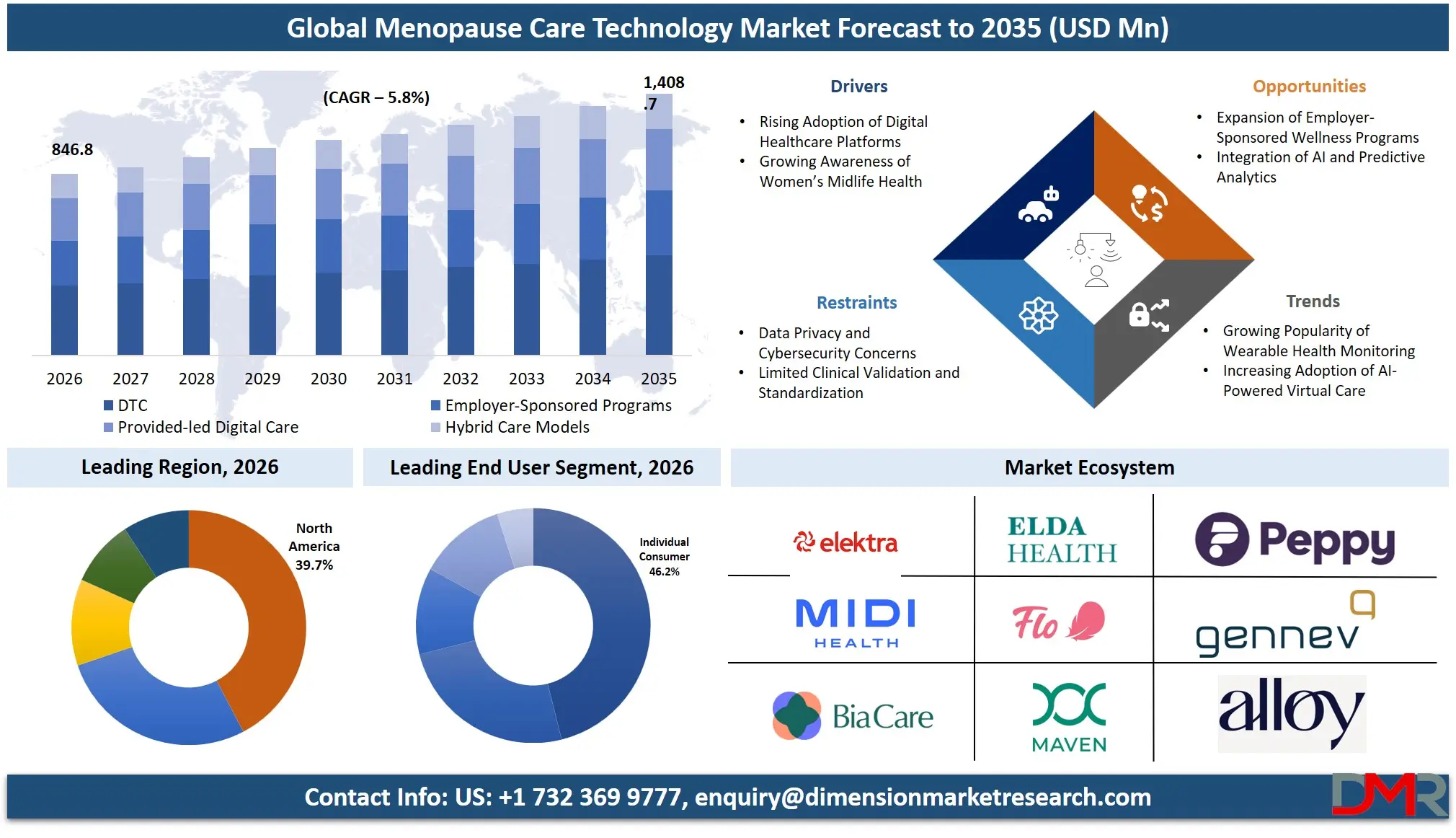
The Menopause Care Technology Market size is expected to be USD 846.8 million in 2026 and increase at a compound annual growth rate of 5.8% to USD 1,408.7 million in 2035 rising awareness, demand for personalized care, and wider adoption of digital health solutions.surgery disorders.
ℹ
To learn more about this report –
Download Your Free Sample Report Here
The market of Menopause Care Technology is experiencing significant growth due to the rise of technologies that can assist women in dealing with various diseases that accompany the phases of perimenopause, menopause, and post-menopause. Technologies in the Menopause Care Technology market consist of symptom management applications, wearables, telemedicine, artificial intelligence (AI), and wellness technologies designed to help control hormonal levels, manage sleep disorders, regulate moods, and improve metabolic health. Increased awareness of women's health in middle age, personalized health solutions, and employer-sponsored wellness initiatives fuel the growth of the market. The development of femtech, the rise of telemedicine, and investments in digital technologies for women's healthcare open up new prospects for technology vendors and healthcare organizations.
ℹ
To learn more about this report –
Download Your Free Sample Report Here
The US Menopause Care Technology Market
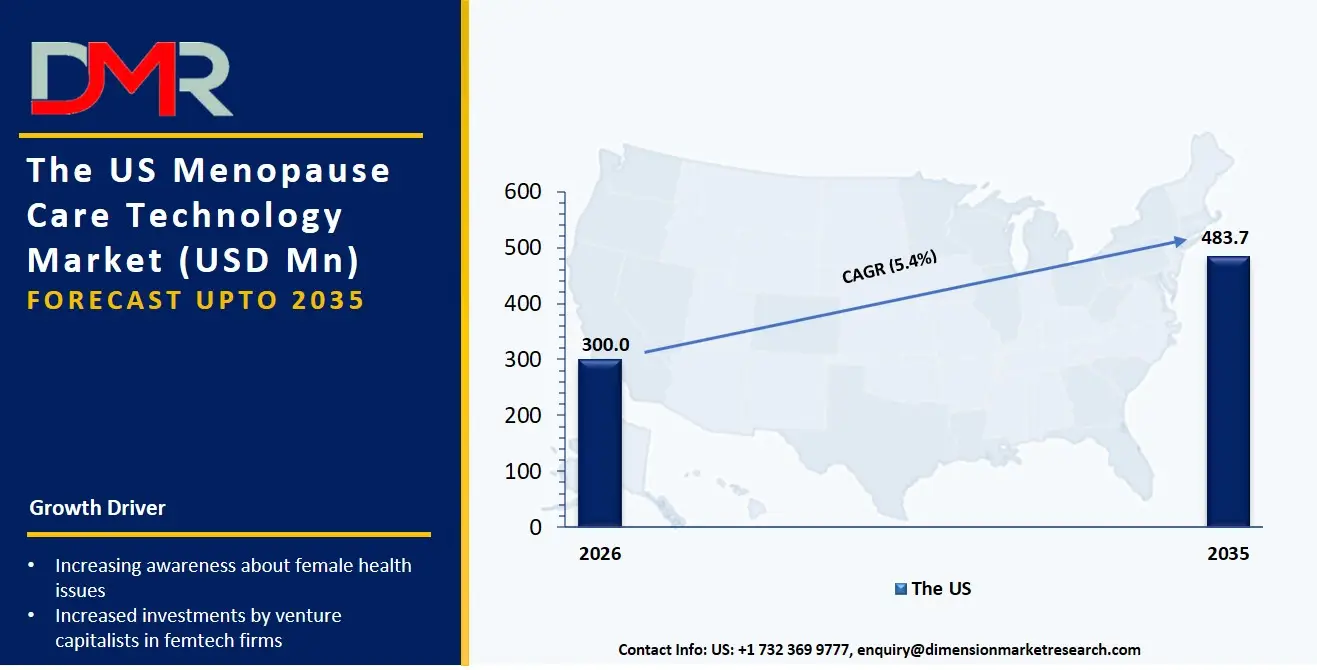
The US Menopause Care Technology Market size is estimated to be USD 300 million in 2026 and is expected to increase at a CAGR of 5.4% over the forecast period.
The US Menopause Care Technology Market is experiencing robust growth because of increasing awareness about female health issues, increased investments by venture capitalists in femtech firms, and enhanced telehealth facilities. The US is blessed with sophisticated digital health systems, high usage of smartphones, and increasing popularity of corporate menopause wellness programs. There are digital menopause clinics and symptom management apps that utilize artificial intelligence to cater to consumers' needs. Moreover, federal and state government initiatives to encourage innovations in women's health and increasing coverage of insurance providers for telemedicine also facilitate acceptance.
ℹ
To learn more about this report –
Download Your Free Sample Report Here
Europe Menopause Care Technology Market
The Europe Menopause Care Technology Market size is estimated to be USD 212 million in 2026 and is expected to increase at a CAGR of 5.3% over the forecast period.
The European market is fast becoming a very dynamic one, thanks to its well-established health care structure, health education awareness campaigns, and positive policies for regional health care. The efforts being made to adopt technology through women's health-related initiatives and digital health transformation programs are helping the market. In countries such as the UK, Germany, and France, there has been growing interest in telemedicine menopause consultations and use of wearables. Also, companies are increasingly adopting workplace policies that favor menopausal employees, leading to increased investment in technologically-based care services.
Japan Menopause Care Technology Market
The market size of Japan Menopause Care Technology will be USD 42.3 million in 2026 and at a CAGR of 5.1% in the forecast period.
The market for Menopause Care Technologies in Japan is progressing steadily because of the increasing number of older females in Japan, advanced digital technology in the region, and the focus of preventive healthcare services in the country. With the increased understanding of handling the hormonal disorders of women, along with company-led initiatives for promoting wellness among employees, menopause care technologies are increasingly being adopted. Consumer preference is now inclined towards utilizing wearable gadgets for symptom tracking and mobile applications for getting personalized guidance. Initiatives have been undertaken by the government to revolutionize the digital healthcare landscape.
Key Takeaways
- Market Size & Forecast: The Menopause Care Technology Market size is projected to reach USD 846.8 million in 2026 and is anticipated to have a value of USD 1,408.7 million in 2035.
- Growth Rate & Outlook: The Menopause Care Technology Market size is set to grow at a compound annual growth rate of 5.8% during the forecast period of 2026 to 2035.
- Primary Growth Drivers: Some of the major growth drivers in the market include Growing Preference for Telemedicine Technologies in Menopause Care, and more.
- Key Market Trends: Some of the major trends in the market are AI-Enabled Virtual Tools for the Treatment of Menopause, and more.
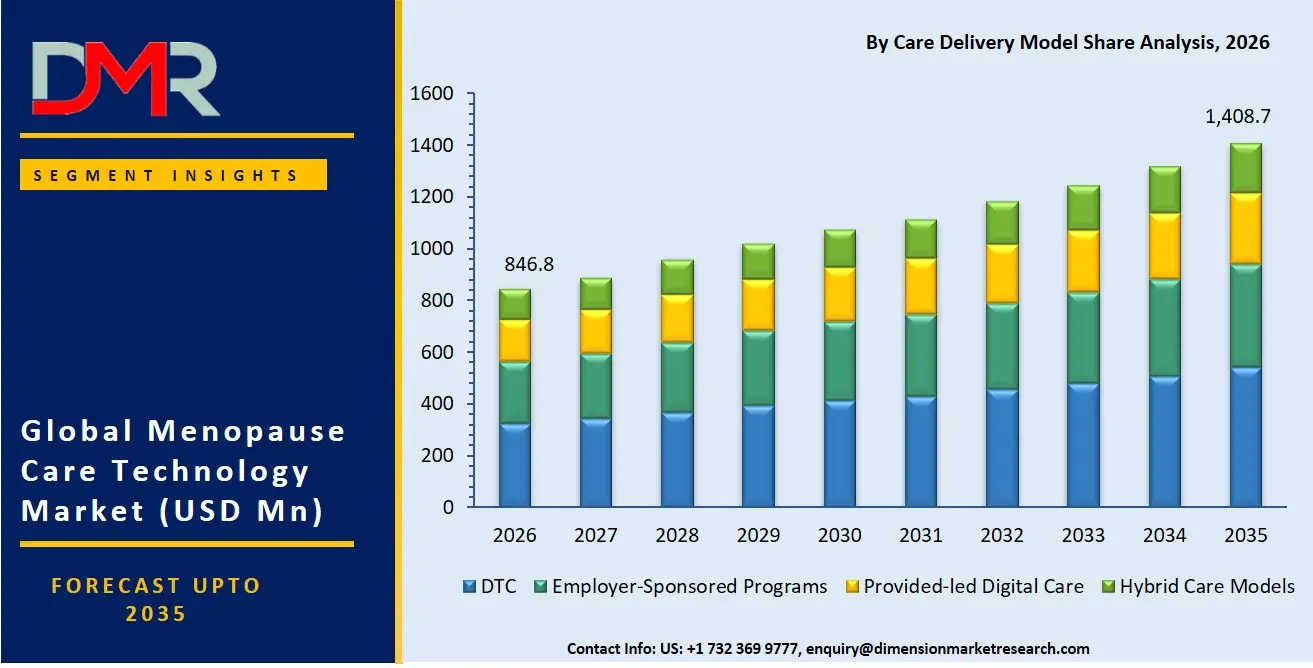
- By Care Delivery Model: The DTC segment is anticipated to get the majority share of the Menopause Care Technology market in 2026.
- By Application Area: Vasomotor Symptoms is expected to get the largest revenue share in 2026 in the Menopause Care Technology market.
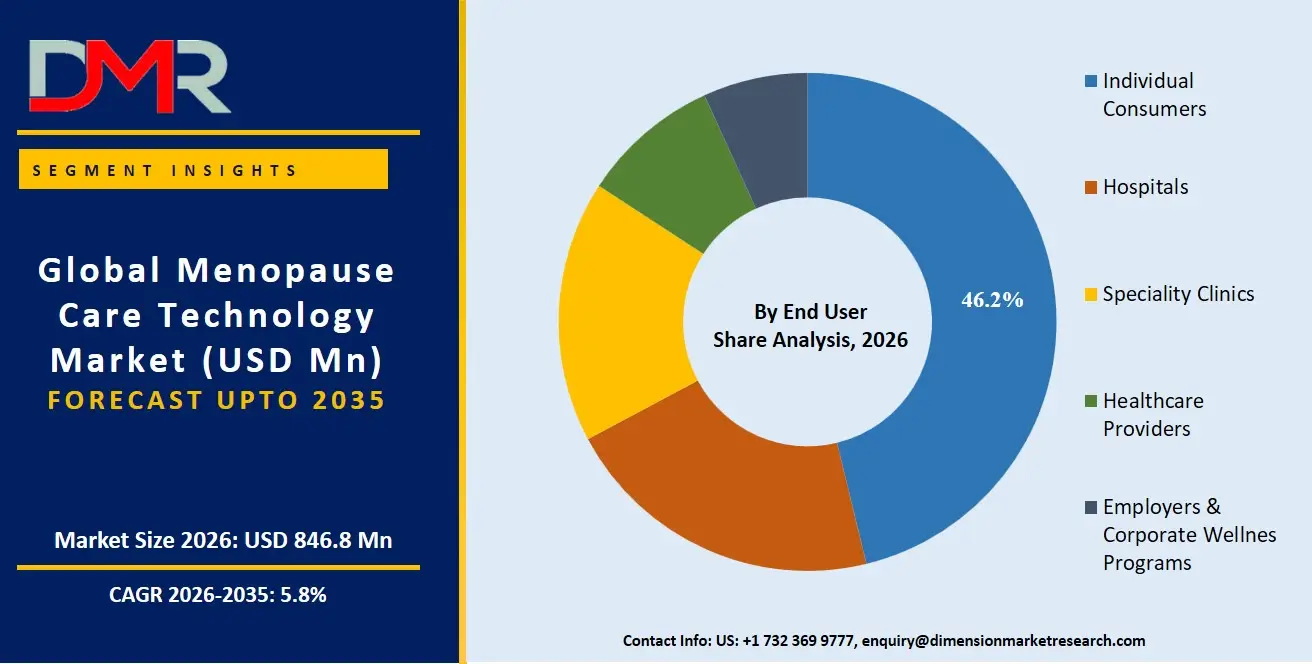
- By End User: The individual consumer segment is expected to get the largest revenue share in 2026 in the Menopause Care Technology market.
- Regional Leadership: North America is set to lead the Menopause Care Technology market with an estimated 39.7% share in 2026.
What is the Menopause Care Technology?
The Menopause Care Technology is defined as the technologies that use digital approaches to help the women cope up with their perimenopause, menopause, and post-menopausal stage through symptom tracking, treatments, virtual health care delivery, and other wellness management initiatives. This industry comprises different applications that focus on areas such as hormonal well-being, sleep disorders, mood problems, and metabolic well-being of the individuals. The significance of such technology is rising in the context of the broader femtech and digital health care landscape, with healthcare organizations and employers showing more interest in improving the well-being of women in their midlife stages.
Use Cases
- Monitoring of Symptoms and Individualization of Tracking: Using digital apps and wearables will assist women in tracking their hot flashes, sleep quality, hormones, fatigue levels, and mood swings. They offer personalized information as well as symptom identification to help women manage menopause effectively and treat it in the long term.
- Remote Medical Consultations: Telemedicine applications will enable women to consult with specialized menopause experts who can assist them with hormone replacement therapy, mental health treatment, and other issues associated with the condition. Telemedicine is very beneficial, especially for women living far from menopause experts.
- Workplace Wellbeing: Companies are now incorporating technologies designed for the treatment and management of menopause into the company's wellbeing programs. It will benefit both the productivity of the workforce as well as its retention rate.
How AI Is Transforming the Menopause Care Technology Market
Menopause management technologies are becoming more effective owing to the emergence of AI, thanks to which the process of customization of symptom detection, predicting of health changes, and treatment proposal becomes automated. Artificial intelligence technologies use data such as wearable device readings, hormone levels, sleep patterns, and behavior patterns to provide personalized healthcare suggestions to the individual. The use of virtual assistants and chatbots is also enhancing patient interaction by constantly supporting them and reminding about their medications and symptoms.
Another way that AI tools are used to improve the operation of healthcare providers is through automation of clinical documentation, assessment of risks, and analysis of predictions. Machine learning algorithms are able to identify cardiovascular, metabolic, and bone health risks associated with menopause, and consequently develop preventative action. Besides, artificial intelligence tools are also used to improve remote health care delivery through conducting virtual consultations.
Market Dynamic
Driving Factors in the Menopause Care Technology Market
Growing Preference for Telemedicine Technologies in Menopause Care
The accelerated development of telemedicine technologies and increasing adoption of digital healthcare solutions have become key factors impacting the menopause care technology market. There has been an observed trend towards the use of telemedicine technologies among consumers due to the convenience and effectiveness of such services. In addition, the shortage of menopause specialists globally has further fueled the market growth.
Rising adoption of digital health
Menopause-focused apps, telehealth platforms, and remote care services are making support easier to access. These tools help users track symptoms, receive tailored information, and consult healthcare professionals without frequent in-person visits. Wider smartphone use and growing comfort with virtual care are encouraging adoption among women seeking convenient, ongoing menopause support.
Restraints in the Menopause Care Technology Market
Privacy and Cyber Security Risks
Healthcare data that include personal hormonal and reproductive behavior information pose great privacy and cyber security risks. Health care laws like GDPR and HIPAA have increased the cost of compliance for businesses. Privacy and security of health care information shared on mobile and AI healthcare apps has restricted adoption among customers in different parts of the world.
Limited clinical validation
Some menopause care apps and digital platforms offer symptom guidance, tracking, or wellness recommendations without sufficient clinical evidence to demonstrate their effectiveness. This can make healthcare professionals and users cautious about relying on them. The lack of standardized evaluation and clear outcomes may also slow adoption, limit integration into care pathways, and weaken trust in these solutions.
Opportunities in the Menopause Care Technology Market
Expanding Employer-Initiated Wellness Programs
Big businesses have started incorporating workplace policies that include menopause awareness initiatives to retain and motivate their employees. Such developments will provide plenty of business prospects for firms specializing in digital menopause services, such as virtual consultations and artificial intelligence-based wellness tracking apps.
Workplace menopause programs
Employers are increasingly recognizing how menopause symptoms can affect wellbeing, attendance, and work performance. This creates an opportunity for technology providers to offer confidential symptom-tracking tools, educational resources, telehealth access, and care navigation through workplace benefits. Partnerships with employers can expand access, encourage earlier support, and help companies build more menopause-inclusive workplace policies.
Trends in the Menopause Care Technology Market
AI-Enabled Virtual Tools for the Treatment of Menopause
There has been tremendous improvement in the field of artificial intelligence-based chatbots, digital assistants, and artificial intelligence-based medical equipment that have brought about a significant transformation in the way patients suffering from menopausal symptoms are treated. Tech firms are using chatbots powered by conversational AI to provide personalized care in managing menopause symptoms.
Integration with wearables
Menopause care platforms are increasingly connecting with smartwatches and other wearable devices to provide a broader view of users’ health and wellbeing. Wearables can track indicators such as sleep, activity, and heart rate, helping users notice patterns alongside reported symptoms. These insights can support more informed conversations with healthcare professionals and encourage personalized care.
Research Scope and Analysis
The Research Scope on Menopause Care Technology Market provides information analysis of digital therapeutic products, wearable devices, AI-powered analytics solutions, telemedicine services, and mHealth solutions that can be used to manage menopause issues. In addition, the research evaluates the performance of these products in terms of technology type, solution type, care delivery models, end users, use cases, and regional adoption rates.
ℹ
To learn more about this report –
Download Your Free Sample Report Here
By Technology Type Analysis
The Digital Therapeutics (DTx) will be expected to remain the leading segment in 2026, holding the maximum market share of 31.8% on account of rising demand for cognitive-behavioral therapy-based therapeutic platforms, prescriptions, and DTx, along with behavioral therapies to manage symptoms during menopause. The DTx segment has gained considerable acceptance on the grounds of clinical validation and integration into telemedicine. The wearable technology segment is projected to experience the fastest growth rate, attributable to the growing inclination among consumers towards continuous monitoring and tracking of their symptoms. Temperature monitoring, biometrics tracking, and sleep trackers have seen growing demand owing to growing consumer awareness regarding preventive health care and health management.
By Solution Type Analysis
The Symptom Management Solutions segment is forecasted to lead the market in 2026 by holding an approximate market share of 29.4%, primarily attributed to the high occurrence of hot flashes, night sweats, fatigue, and mood disorders amongst women undergoing menopause. Such solutions are being incorporated into various mobile apps and digital therapies, providing wide applicability. The Sleep & Mental Health segment will be growing at the highest rate since consumers are becoming aware of their mental health concerning issues like anxiety and insomnia during menopause.
By Care Delivery Model Analysis
It is predicted that the Direct-to-Consumer (DTC) segment will dominate the market with around 38.6% share in 2026 because of the growing demand for discreet and subscription-based healthcare services. The DTC solutions provide convenience through virtual consultation, symptom tracking, and wellness plan recommendations without undergoing a physical visit to the clinic. The fastest-growing segment of healthcare delivery is the hybrid approach due to its ability to provide patients with a blend of both virtual services and physical meetings with specialists.
By End User Analysis
The Individual Consumers category will occupy nearly 46.2% of the market share in 2026, thanks to increasing awareness about the health issues associated with menopause, leading to an inclination towards self-managing their symptoms by way of technological advancements. Wearable devices, health apps, and telehealth services have seen rising adoption among perimenopausal and menopausal women who wish to enhance their well-being and health outcomes through preventative care. The employers & corporate wellness programs category will witness the highest growth rate among all end-users because of the rising efforts made within the corporate sector to improve women's health conditions.
By Application Area Analysis
The Vasomotor Symptoms Application Segment is projected to continue holding the top spot in the overall market, generating around 27.9% of total revenues by 2026, driven by the prevalence of symptoms such as hot flashes and night sweats that afflict most postmenopausal women. Applications based on symptom management, monitoring via wearables, and the use of artificial intelligence for optimized treatments are proving highly successful in improving patient management practices. The Mood & Mental Health applications segment, on the other hand, is set to record the highest growth due to the rising understanding of the psychological effects of menopause.
The Menopause Care Technology Market Report is segmented on the basis of the following:
By Technology Type
- Digital Therapeutics (DTx)
- CBT-based therapeutic platforms
- Symptom management software
- Prescription digital therapeutics
- Behavioral intervention platforms
- Wearable Technologies
- Temperature monitoring wearables
- Sleep monitoring wearables
- Hormone tracking devices
- Smart biometric trackers
- Hot-flash detection wearables
- Mobile & Digital Applications
- Symptom tracking apps
- Lifestyle coaching apps
- Medication adherence apps
- Wellness companion platforms
- AI & Analytics Platforms
- Predictive symptom analytics
- Personalized recommendation engines
- AI virtual assistants/chatbots
- Risk assessment tools
- Telehealth & Remote Monitoring Platforms
- Virtual menopause clinics
- Specialist consultation platforms
- Remote patient monitoring systems
- Connected care platforms
By Solution Type
- Symptom Management Solutions
- Hot flash management
- Night sweat monitoring
- Fatigue management
- Mood management
- Sleep & Mental Health Solutions
- Sleep optimization tools
- Stress management platforms
- Anxiety & depression support
- Hormonal Health Solutions
- Hormone therapy monitoring
- Hormonal assessment tools
- Treatment optimization systems
- Bone & Metabolic Health Solutions
- Osteoporosis monitoring
- Weight management tools
- Cardiovascular risk tracking
- Sexual & Pelvic Health Solutions
- Vaginal health platforms
- Pelvic floor therapy solutions
- Sexual wellness tools
By Care Delivery Model
- Direct-to-Consumer (DTC)
- Employer-sponsored programs
- Provider-led digital care
- Hybrid care models
By End User
- Individual Consumers
- Perimenopausal women
- Menopausal women
- Post-menopausal women
- Hospitals
- Specialty clinics
- Healthcare providers
- Employers & corporate wellness programs
By Application Area
- Vasomotor Symptoms
- Sleep Disorders
- Mood & Mental Health
- Weight & Metabolic Health
- Bone Health
- Sexual Wellness
Regional Analysis
Leading Region in the Menopause Care Technology Market
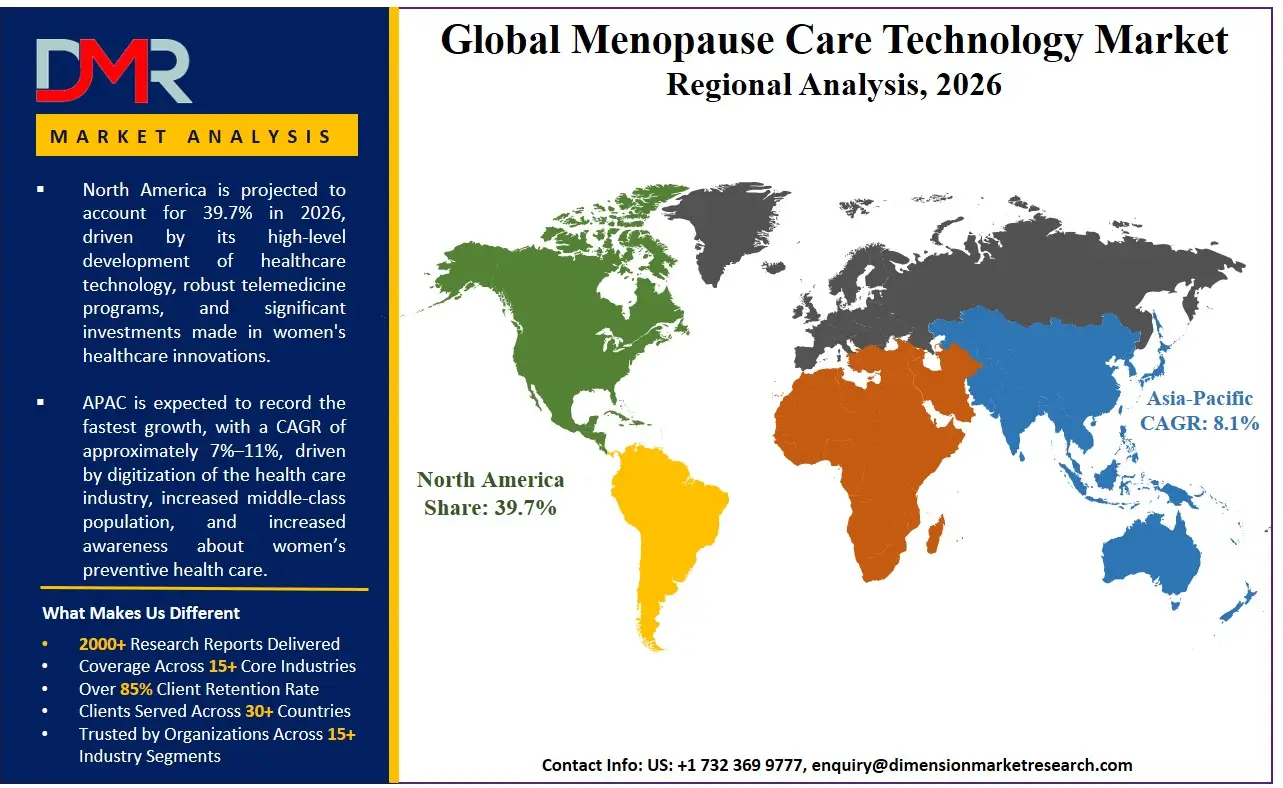
North America is anticipated to dominate the market for Menopause Care Technology, accounting for around 39.7% of the market share in 2026. North America is advantaged by its high-level development of healthcare technology, robust telemedicine programs, and significant investments made in women's healthcare innovations. Growth in the market will be driven by an increase in corporate wellness programs and virtual healthcare reimbursement. The United States continues to be the key revenue generator because of the country's active venture capital funding in femtech, greater knowledge about menopause disorders, and quick implementation of artificial intelligence healthcare platforms.
ℹ
To learn more about this report –
Download Your Free Sample Report Here
Fastest Growing Region in the Menopause Care Technology Market
The Asia-Pacific region is likely to be the fastest-growing regional segment in the global Menopause Care Technology market on account of the digitization of the health care industry, increased middle-class population, and increased awareness about women's preventive health care. Countries like Japan, China, India, and South Korea have been witnessing increased use of telemedicine and wearables. The digital health care transition by governments and availability of health care through smartphones are expected to drive market growth positively. Moreover, increasing numbers of aged women along with investments in femtech startups are creating promising opportunities for the market.
By Region
North America
Europe
- Germany
- The U.K.
- France
- Italy
- Russia
- Spain
- Benelux
- Nordic
- Rest of Europe
Asia-Pacific
- China
- Japan
- South Korea
- India
- ANZ
- ASEAN
- Rest of Asia-Pacific
Latin America
- Brazil
- Mexico
- Argentina
- Colombia
- Rest of Latin America
Middle East & Africa
- Saudi Arabia
- UAE
- South Africa
- Israel
- Egypt
- Rest of MEA
Competitive Landscape
The market for Menopause Care Technology is very competitive with ongoing innovations, strategic alliances, and investments in healthcare technology powered by artificial intelligence. Market players are concentrating on developing telemedicine technology, incorporating wearable devices, and providing customized treatments in order to increase their engagement with customers. The competitive advantage within this market is derived from proprietary analytical platforms, clinical validation of products, subscription services, and comprehensive digital ecosystems. Research & development, strategic healthcare collaborations, and workplace wellness programs have also become crucial for companies operating in this industry.
Some of the prominent players in the global Menopause Care Technology are:
- Midi Health
- Gennev
- Elektra Health
- Alloy Women's Health
- Flo Health
- Maven Clinic
- Peppy Health
- Balance App
- Vira Health
- Elda Health
- Bia Care
- Femilog
- Lisa Health
- Evernow
- Stella
- My Menopause Centre
- Clarity Health
- Pause Well-Aging
- Hers
- Kindra
- Other Key Players
Recent Developments
-
September 2026: Medable and ICON reported high adoption of electronic consent in a menopause-focused women’s health study, showing how digital tools can support remote participation in clinical research.
-
July 2026: Daré Bioscience partnered with MyMenopauseRx, a menopause-focused telehealth platform, to expand access to its DARE to PLAY product and specialized menopause care.
-
April 2026: Aviva expanded menopause support through its Digital GP service to individual and small-business private medical insurance customers in the UK.
-
March 2026: Sword Health expanded Bloom into a broader women’s health platform, adding menopause and midlife support that includes symptom management and integrated hormone therapy.
-
February 2026: Midi Health raised USD 100 million in Series D funding to scale its AI-enabled women’s healthcare platform, which includes perimenopause and menopause care.
Report Details
| Report Characteristics |
| Market Size (2026) |
USD 846.8 Mn |
| Forecast Value (2035) |
USD 1,408.7 Mn |
| CAGR (2026–2035) |
5.8% |
| Historical Period |
2021 – 2025 |
| Forecast Period |
2026 – 2035 |
| Base Year |
2025 |
| Estimate Year |
2026 |
| Segments Covered |
By Technology Type, By Solution Type, By Care Delivery Model, By End User, By Application Area |
| Regional Coverage |
North America – The US and Canada; Europe – Germany, The UK, France, Russia, Spain, Italy, Benelux, Nordic, & Rest of Europe; Asia-Pacific – China, Japan, South Korea, India, ANZ, ASEAN, Rest of APAC; Latin America – Brazil, Mexico, Argentina, Colombia, Rest of Latin America; Middle East & Africa – Saudi Arabia, UAE, South Africa, Turkey, Egypt, Israel, & Rest of MEA |
Frequently Asked Questions
How big is the Menopause Care Technology Market?
▾ The Menopause Care Technology Market size is expected to reach USD 846.8 million by 2026 and is projected to reach USD 1,408.7 million by the end of 2035.
What is the CAGR of the Menopause Care Technology Market from 2026 to 2035?
▾ The market is growing at a CAGR of 5.8 percent over the forecasted period.
What factors are driving the growth of the Menopause Care Technology Market?
▾ Growing Preference for Telemedicine Technologies in Menopause Care, and more are the factors driving the growth of the Menopause Care Technology Market.
What are the major trends in the Menopause Care Technology Market?
▾ AI-Enabled Virtual Tools for the Treatment of Menopause, and more are some of the major trends in the market.
Who are the key players in the Menopause Care Technology Market?
▾ Some of the key players in the Menopause Care Technology Market include Midi Health, Gennev, Elektra Health, Alloy Women’s Health, Flo Health, Maven Clinic, Peppy Health, Balance App, Vira Health, Elda Health, Bia Care, Femilog, Lisa Health, Evernow, Stella, My Menopause Centre, Clarity Health, Pause Well-Aging, Hers
How is the Menopause Care Technology Market segmented?
▾ The Menopause Care Technology Market is segmented by technology type, solution type, care delivery model, end user, application area.
Which region held the largest share of the Menopause Care Technology Market in 2026?
▾ North America is set to lead the Menopause Care Technology market with an estimated 39.7% share in 2026.
Which region is expected to grow the fastest in the Menopause Care Technology Market?
▾ Asia Pacific is the fastest-growing region in the Menopause Care Technology market during the forecast period.