What is the Mental Health Apps Market Size?
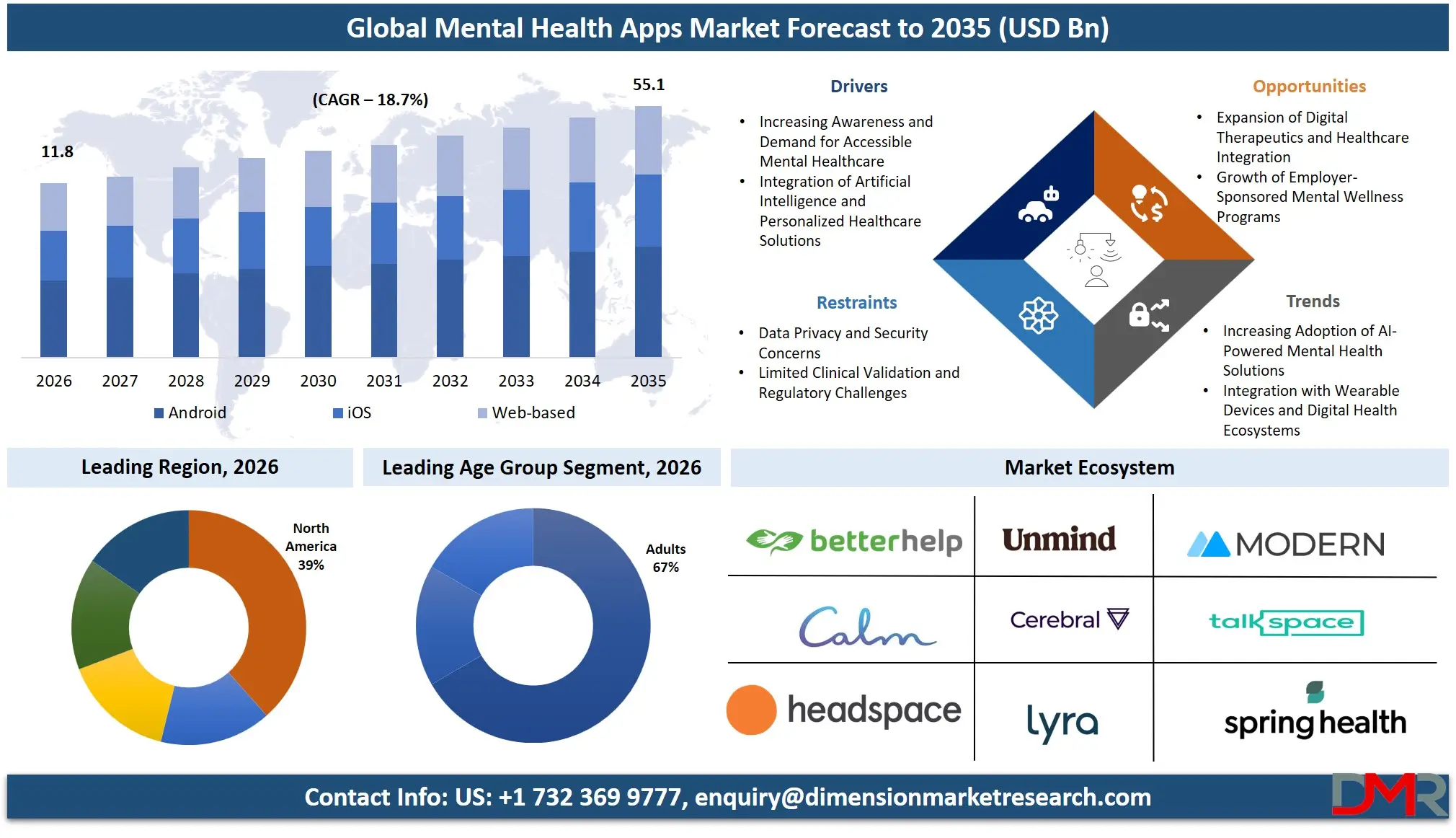
The Mental Health Apps Market size is expected to be USD 11.8 billion in 2026 and increase at a compound annual growth rate of 18.7% to USD 55.1 billion in 2035 due to increasing awareness and demand for accessible mental healthcare.
ℹ
To learn more about this report –
Download Your Free Sample Report Here
The Mental Health Apps Market refers to digital platforms and mobile applications designed to support psychological well-being through services such as meditation, mindfulness training, cognitive behavioral therapy (CBT), stress management, mood tracking, sleep improvement, and emotional support. The market includes app developers, healthcare technology providers, digital therapeutics companies, and service platforms integrating artificial intelligence, personalized recommendations, and remote care solutions. Growing awareness of mental health issues, increasing smartphone penetration, rising demand for accessible healthcare solutions, and the expansion of telehealth services are accelerating market growth. Emerging trends include AI-driven mental health assistants, personalized therapy programs, and integration with wearable health devices.
The US Mental Health Apps Market
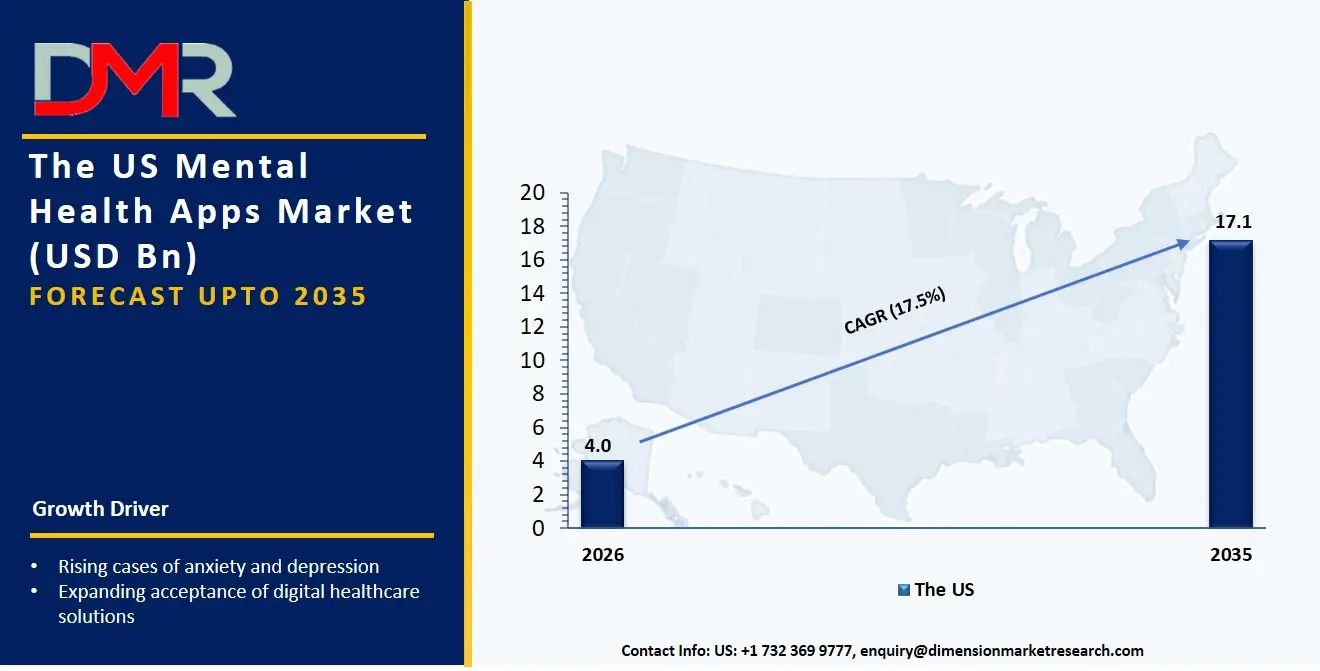
The US Mental Health Apps Market size is estimated to be USD 4.0 billion in 2026 and is expected to increase at a CAGR of 17.5% over the forecast period.
ℹ
To learn more about this report –
Download Your Free Sample Report Here
The US mental health apps market is experiencing strong growth due to increasing mental health awareness, rising cases of anxiety and depression, and expanding acceptance of digital healthcare solutions. The presence of advanced healthcare infrastructure, strong investment in health technology startups, and favorable reimbursement developments are supporting adoption. The market benefits from partnerships between technology companies, healthcare providers, and employers offering digital wellness programs. Increasing integration of artificial intelligence, remote therapy platforms, and evidence-based digital therapeutics is further strengthening market expansion. Regulatory focus on digital health quality and data privacy is shaping competitive strategies among market participants.
Europe Mental Health Apps Market
The Europe Mental Health Apps Market size is estimated to be USD 2.8 billion in 2026 and is expected to increase at a CAGR of 17.4% over the forecast period.
The European mental health apps market is expanding due to increasing government initiatives supporting digital healthcare transformation and growing emphasis on preventive mental wellness solutions. Policies promoting healthcare digitalization, including national e-health strategies and investments under broader European health programs, are encouraging adoption. Demand is rising among individuals, employers, and healthcare systems seeking affordable mental health support. Countries such as Germany, the United Kingdom, and France are witnessing strong innovation due to healthcare modernization and increasing acceptance of digital therapeutics. Data protection regulations, particularly strict privacy standards, influence app development and encourage secure, transparent solutions.
Japan Mental Health Apps Market
The market size of Japan Mental Health Apps will be USD 706 million in 2026 and at a CAGR of 18.3% in the forecast period.
The Japan mental health apps market is growing as the country addresses rising workplace stress, aging-related mental health concerns, and increasing demand for accessible healthcare services. Urbanization, technological advancement, and government efforts toward digital healthcare adoption are supporting market development. Employers are increasingly adopting workplace wellness applications to improve employee productivity and reduce stress-related issues. AI-enabled counseling tools, remote healthcare platforms, and elderly-focused mental wellness solutions represent key growth areas. However, challenges such as cultural hesitation toward discussing mental health and preference for traditional healthcare channels continue to influence adoption patterns.
Key Takeaways
- Market Size & Forecast: The Mental Health Apps Market size is projected to reach USD 11.8 billion in 2026 and is anticipated to have a value of USD 55.1 billion in 2035.
- Growth Rate & Outlook: The Mental Health Apps Market size is set to grow at a compound annual growth rate of 18.7% during the forecast period of 2026 to 2035.
- Primary Growth Drivers: Some of the major growth drivers in the market are Increasing Awareness and Demand for Accessible Mental Healthcare, and more.
- Key Market Trends: Some of the major trends in the market are Integration with Wearable Devices and Digital Health Ecosystems, and more.
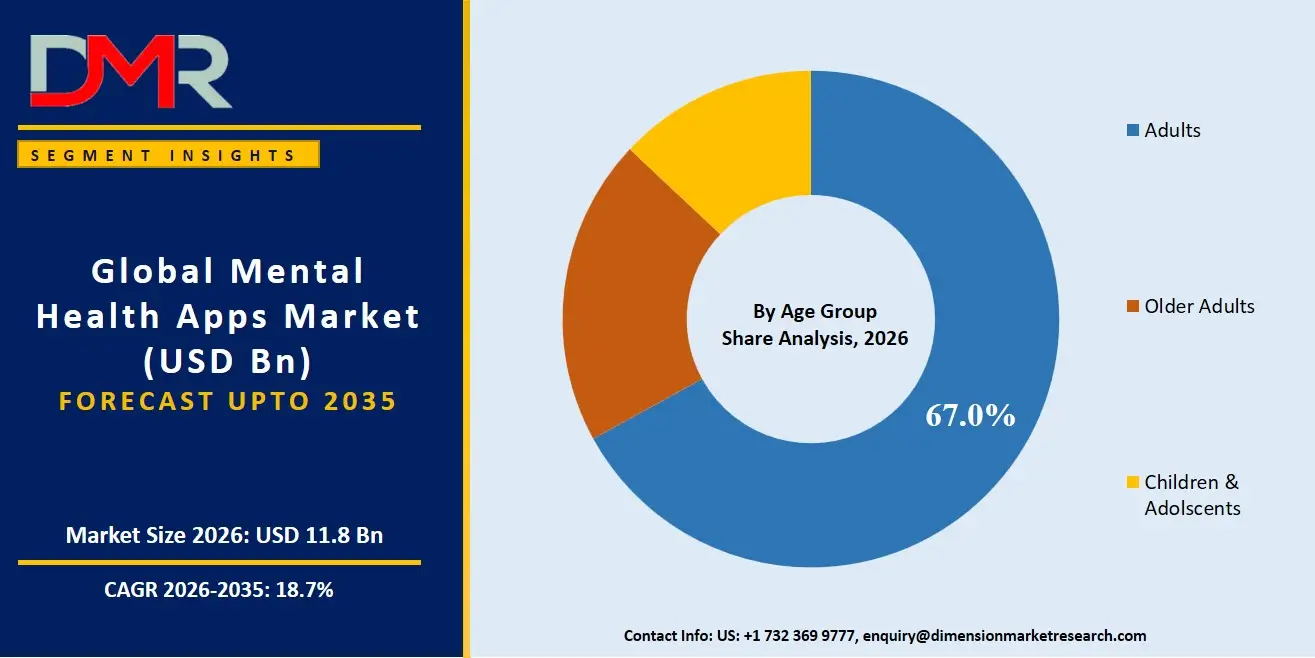
- By Age Group Type: Adults are anticipated to get the majority share of the Mental Health Apps Market in 2026.
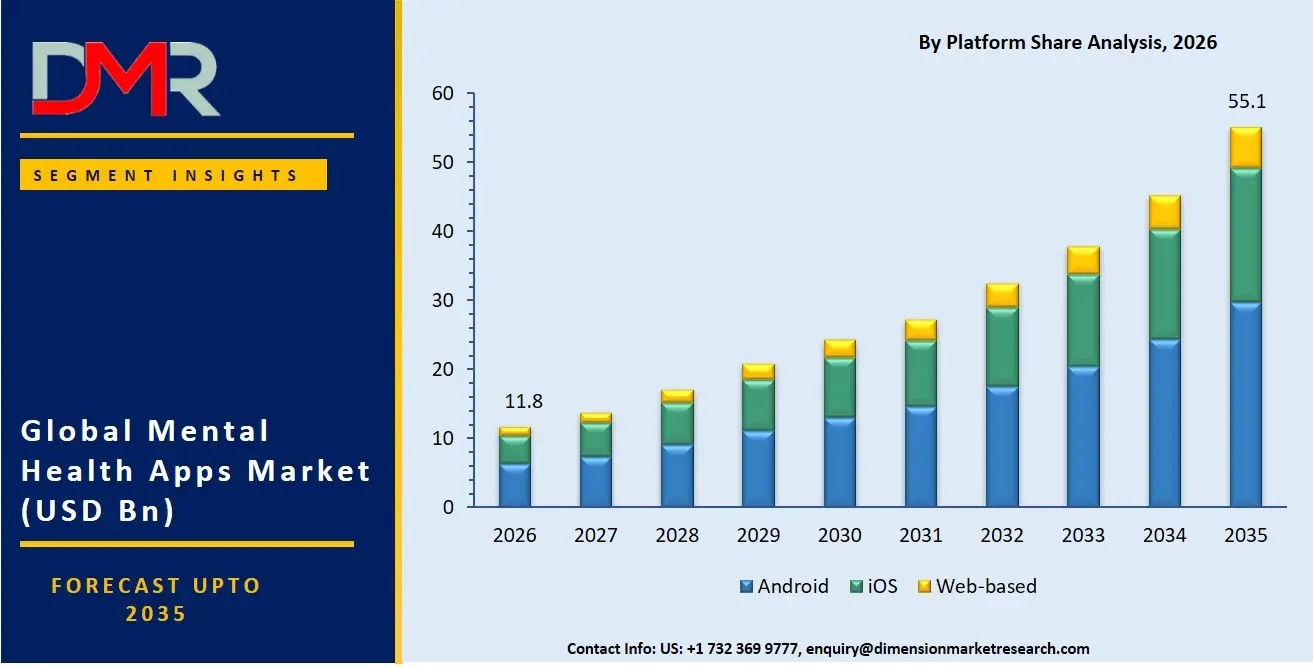
- By Platform Type: Android is expected to get the largest revenue share in 2026 in the Mental Health Apps Market.
- Regional Leadership: North America is set to lead the Mental Health Apps Market with an estimated 39.0% share in 2026.
What is the Mental Health Apps?
Mental Health Apps are digital software applications that provide users with tools and resources to monitor, manage, and improve emotional, psychological, and behavioral health. These applications offer services including meditation guidance, stress reduction exercises, therapy-based interventions, mood tracking, sleep assistance, and self-care programs. They are accessible through smartphones, tablets, and web platforms, enabling users to receive mental wellness support conveniently without requiring continuous in-person consultations.
Use Cases
- Stress and Anxiety Management: Mental health apps provide guided breathing exercises, relaxation techniques, mindfulness sessions, and stress-monitoring tools to help users manage daily emotional challenges. These solutions are increasingly used by individuals and organizations seeking preventive mental wellness support. AI-powered recommendations allow applications to personalize stress reduction strategies based on user behavior and engagement patterns.
- Digital Therapy and Counseling Support: Mental health applications offering cognitive behavioral therapy (CBT), counseling resources, and behavioral interventions are becoming important alternatives to traditional therapy models. These apps improve accessibility by providing structured therapeutic exercises, self-assessment tools, and remote support options. They are particularly valuable for users facing barriers related to cost, location, or therapist availability.
- Sleep Improvement and Relaxation: Sleep-focused mental health apps provide meditation programs, sleep stories, sound therapy, and relaxation exercises designed to improve sleep quality. Growing awareness of the relationship between sleep and psychological health is increasing adoption among consumers. Integration with wearable devices enables better tracking of sleep patterns and personalized recommendations.
- Workplace Mental Wellness: Organizations are adopting mental health apps to support employee well-being, reduce workplace stress, and improve productivity. Employer-sponsored wellness programs provide employees with access to meditation, counseling resources, and emotional health monitoring tools. The growing focus on employee retention and workplace satisfaction is driving corporate adoption of these platforms.
How AI Is Transforming the Mental Health Apps Market
Artificial intelligence is improving mental health apps by enabling personalized recommendations based on user behavior, emotional patterns, and engagement history. AI-powered chatbots provide immediate conversational support, helping users access mental wellness resources at any time. Machine learning algorithms assist in identifying changes in mood, stress levels, and behavioral patterns, allowing early intervention strategies.
AI technologies are also enhancing operational efficiency by automating assessments, improving content personalization, and supporting healthcare professionals with data-driven insights. Integration of AI with wearable devices enables continuous monitoring of wellness indicators, while advanced analytics help developers improve app performance, user experience, and treatment effectiveness.
Market Dynamic
Driving Factors in the Mental Health Apps Market
Increasing Awareness and Demand for Accessible Mental Healthcare
Growing awareness regarding mental health disorders such as anxiety, depression, and stress-related conditions is one of the primary factors driving market growth. Limited availability of mental health professionals and increasing healthcare costs are encouraging users to adopt affordable digital alternatives. Mental health apps provide convenient access to self-care tools, therapy resources, and emotional support, making them attractive solutions for underserved populations. Rising acceptance of digital healthcare, increasing smartphone usage, and expanding telemedicine adoption are further accelerating demand across consumer and institutional segments.
Restraints in the Mental Health Apps Market
Data Privacy and Security Concerns
Data privacy remains a major challenge for mental health apps because these platforms handle highly sensitive personal and psychological information. Concerns regarding unauthorized access, data misuse, and cybersecurity risks can reduce consumer trust and limit adoption. Developers must comply with healthcare data protection regulations and implement strong encryption and security frameworks. Regulatory requirements increase operational complexity and development costs, creating challenges particularly for smaller companies entering the market.
Opportunities in the Mental Health Apps Market
Expansion of Digital Therapeutics and Healthcare Integration
The increasing integration of mental health apps with healthcare systems represents a major growth opportunity. Digital therapeutics platforms that combine clinical evidence, remote monitoring, and professional support are gaining attention among healthcare providers and insurers. Partnerships between technology companies and healthcare organizations can improve credibility and expand access. Growing acceptance of virtual healthcare services creates opportunities for app developers to establish stronger positions within the healthcare ecosystem.
Trends in the Mental Health Apps Market
Integration with Wearable Devices and Digital Health Ecosystems
Integration of mental health applications with wearable devices and broader digital health ecosystems is reshaping the market landscape. Smartwatches and fitness trackers provide physiological data such as heart rate, sleep patterns, and activity levels, enabling applications to deliver more comprehensive wellness insights. This trend supports preventive healthcare approaches by identifying behavioral changes linked to stress or emotional challenges. Increasing consumer interest in self-monitoring, personalized healthcare, and connected health solutions is encouraging developers to create integrated platforms combining physical and mental health management.
Research Scope and Analysis
The research scope analyzes the Mental Health Apps Market across app type, platform, business model, age group, and end-user segments. It evaluates market trends, growth drivers, challenges, regional performance, competitive strategies, technological advancements, and emerging opportunities influencing future market expansion.
ℹ
To learn more about this report –
Download Your Free Sample Report Here
By App Type Analysis
The app type segment plays a crucial role in determining market adoption, with meditation and mindfulness apps representing the leading category due to their broad consumer acceptance, ease of use, and preventive wellness approach. In 2026, meditation and mindfulness apps are estimated to account for approximately 31% share of the global mental health apps market. Their dominance is supported by increasing awareness of stress management, rising demand for relaxation tools, and widespread adoption among individuals and corporate wellness programs. Cognitive behavioral therapy (CBT) apps are expected to be the fastest-growing segment due to increasing clinical recognition, integration of evidence-based interventions, and growing demand for affordable digital therapy alternatives.
By Platform Analysis
The platform segment includes Android, iOS, and web-based applications, with Android expected to maintain the leading position due to its extensive global user base, affordability, and widespread smartphone adoption. In 2026, Android platforms are projected to hold approximately 54% share of the mental health apps market.
ℹ
To learn more about this report –
Download Your Free Sample Report Here
The availability of affordable Android devices in emerging economies is supporting broader accessibility of digital wellness solutions. Meanwhile, web-based platforms represent a rapidly growing segment as healthcare providers, employers, and institutions increasingly adopt browser-based solutions for easier deployment, centralized management, and integration with enterprise healthcare systems.
By Business Model Analysis
The business model segment is dominated by subscription-based applications, as recurring revenue models allow developers to provide continuous content updates, personalized services, and advanced features. Subscription-based models are estimated to capture approximately 43% share of the market in 2026. Increasing willingness among users to pay for premium meditation programs, therapy resources, and personalized wellness plans supports this segment's growth. Freemium models are expected to experience rapid expansion as companies use free access to attract users before converting them into paying subscribers. This approach improves customer acquisition and encourages wider market penetration.
By Age Group Analysis
The adults segment represents the largest user category due to increasing workplace stress, lifestyle-related mental health challenges, and greater awareness of emotional wellness. In 2026, adults are expected to account for approximately 67% share of the mental health apps market. The segment benefits from growing adoption of meditation, stress management, and digital therapy solutions among working professionals. Children and adolescents represent the fastest-growing segment due to increasing concerns regarding youth mental health, rising academic pressure, and greater focus on early psychological support. Schools and parents are increasingly exploring digital tools designed specifically for younger users.
By End User Analysis
The individuals segment dominates the end-user category because consumers increasingly prefer private, convenient, and affordable mental wellness solutions accessible through smartphones. In 2026, individual users are projected to contribute approximately 72% share of the global mental health apps market. Increased awareness of self-care practices and reduced stigma surrounding mental health discussions are supporting direct consumer adoption. Healthcare providers represent the fastest-growing segment as hospitals, therapists, and clinics increasingly integrate digital applications into patient support programs. Employer adoption is also increasing due to workplace wellness initiatives aimed at improving employee productivity and reducing burnout.
The Mental Health Apps Market Report is segmented on the basis of the following:
By App Type
- Meditation & Mindfulness Apps
- Cognitive Behavioral Therapy (CBT) Apps
- Stress & Anxiety Management Apps
- Depression Management Apps
- Mood Tracking & Self-Monitoring Apps
- Sleep & Relaxation Apps
- Addiction Recovery Apps
- Other Mental Health Apps
By Platform
By Business Model
- Free
- Freemium
- Subscription-Based
- Paid
By Age Group
- Children & Adolescents
- Adults
- Older Adults
By End User
- Individuals
- Healthcare Providers
- Employers
- Educational Institutions
Regional Analysis
Leading Region in the Mental Health Apps Market
ℹ
To learn more about this report –
Download Your Free Sample Report Here
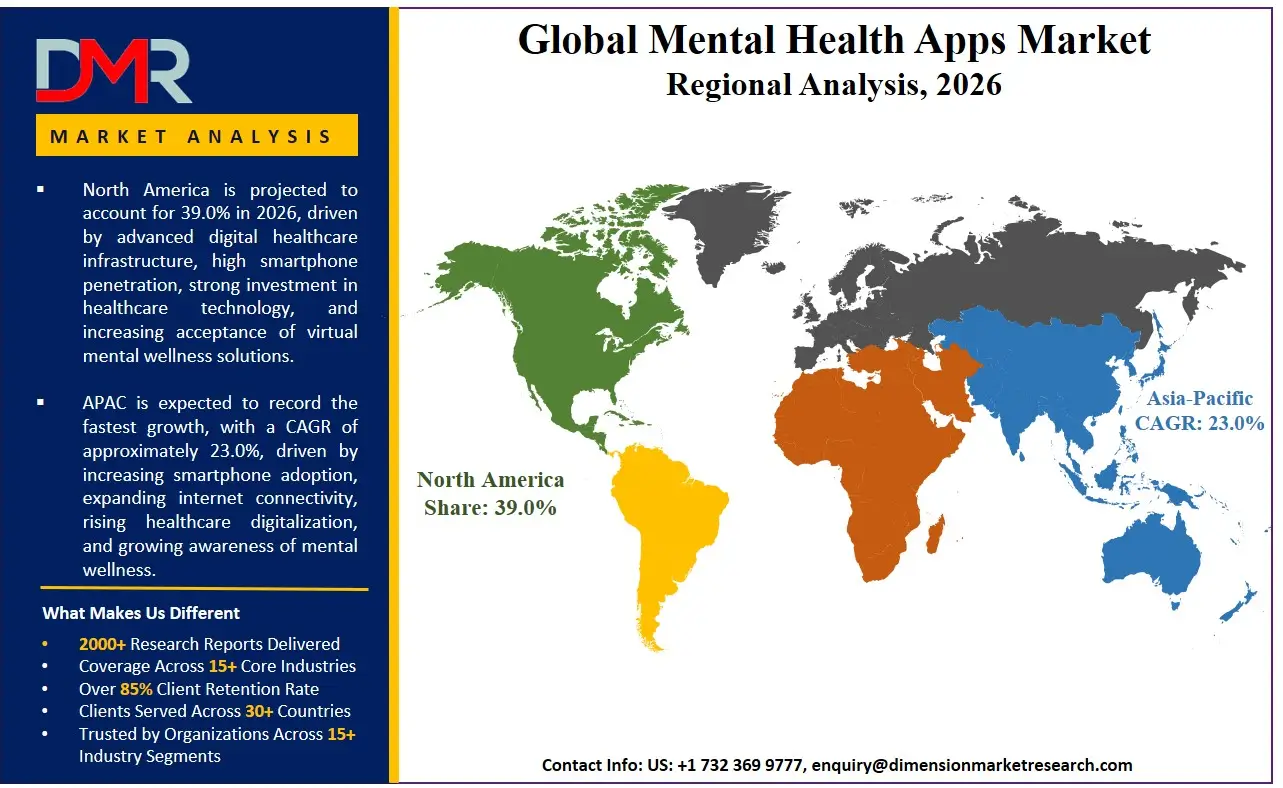
North America is expected to remain the leading region in the mental health apps market, supported by advanced digital healthcare infrastructure, high smartphone penetration, strong investment in healthcare technology, and increasing acceptance of virtual mental wellness solutions. The region is estimated to hold approximately 39% share of the global market in 2026. The United States contributes significantly due to increasing demand for digital therapy, employer-sponsored wellness programs, and AI-powered healthcare applications. Favorable investment conditions, partnerships between technology companies and healthcare organizations, and growing awareness of mental health services continue to strengthen North America's dominant market position.
Fastest Growing Region in the Mental Health Apps Market
Asia-Pacific is projected to be the fastest-growing region in the mental health apps market due to increasing smartphone adoption, expanding internet connectivity, rising healthcare digitalization, and growing awareness of mental wellness. Countries including Japan, China, India, and South Korea are witnessing increased adoption of digital healthcare solutions as governments promote technology-driven healthcare access. Growing urbanization, workplace stress, and demand for affordable healthcare alternatives are accelerating regional expansion. The presence of emerging technology companies, increasing investment in health applications, and rising acceptance of online counseling platforms are expected to create significant growth opportunities throughout the forecast period.
By Region
North America
Europe
- Germany
- The U.K.
- France
- Italy
- Russia
- Spain
- Benelux
- Nordic
- Rest of Europe
Asia-Pacific
- China
- Japan
- South Korea
- India
- ANZ
- ASEAN
- Rest of Asia-Pacific
Latin America
- Brazil
- Mexico
- Argentina
- Colombia
- Rest of Latin America
Middle East & Africa
- Saudi Arabia
- UAE
- South Africa
- Israel
- Egypt
- Rest of MEA
Competitive Landscape
The mental health apps market is characterized by intense competition driven by innovation, user engagement strategies, and technological differentiation. Companies are focusing on improving personalization through artificial intelligence, expanding content libraries, strengthening clinical credibility, and forming partnerships with healthcare providers and employers. Market entry barriers include regulatory compliance requirements, data security challenges, and the need for strong user trust. Competitive advantages are increasingly determined by evidence-based approaches, seamless digital experiences, subscription strategies, and integration with broader healthcare ecosystems. Continuous research and development investment remains essential for companies seeking long-term market growth.
Some of the prominent players in the global Mental Health Apps are:
- Calm.com, Inc.
- Headspace Health
- BetterHelp
- Talkspace, Inc.
- Lyra Health, Inc.
- Modern Health
- Spring Health
- Ginger (Headspace Health)
- Sanvello Health
- Woebot Health
- Wysa Ltd.
- MindDoc Health GmbH
- Unmind Ltd.
- SilverCloud Health
- Happify Health
- Big Health Inc.
- K Health Inc.
- Brightside Health
- SonderMind Inc.
- Cerebral Inc.
- Other Key Players
Recent Developments
- In June 2025, Calm increased its focus on enterprise mental wellness solutions by expanding partnerships aimed at supporting workplace emotional health initiatives. The company emphasized digital mindfulness programs, stress reduction resources, and employee wellness accessibility. This development reflects the growing adoption of mental health applications by organizations seeking solutions to address workplace stress, burnout, and employee retention challenges.
- In March 2025, Headspace expanded its digital wellness offerings by strengthening meditation, mindfulness, and mental health support solutions for individual and organizational users. The company focused on improving personalized experiences, expanding workplace wellness capabilities, and enhancing digital content accessibility. The development aligns with increasing demand from employers seeking employee mental health solutions and consumers looking for preventive wellness tools.
- In January 2025, Woebot Health continued advancing its artificial intelligence-based mental health technology by focusing on conversational AI solutions designed to improve accessibility to behavioral health support. The company's platform development emphasized personalized digital interactions, evidence-based therapeutic approaches, and scalable mental health assistance.
Report Details
| Report Characteristics |
| Market Size (2026) |
USD 11.8 Bn |
| Forecast Value (2035) |
USD 55.1 Bn |
| CAGR (2026–2035) |
18.7% |
| Historical Period |
2021 – 2025 |
| Forecast Period |
2027 – 2035 |
| Base Year |
2025 |
| Estimate Year |
2026 |
| Segments Covered |
By App Type, By Platform, By Business Model, By Age Group, By End User |
| Regional Coverage |
North America – The US and Canada; Europe – Germany, The UK, France, Russia, Spain, Italy, Benelux, Nordic, & Rest of Europe; Asia-Pacific – China, Japan, South Korea, India, ANZ, ASEAN, Rest of APAC; Latin America – Brazil, Mexico, Argentina, Colombia, Rest of Latin America; Middle East & Africa – Saudi Arabia, UAE, South Africa, Turkey, Egypt, Israel, & Rest of MEA |
Frequently Asked Questions
How big is the Mental Health Apps Market?
▾ The Mental Health Apps Market size is expected to reach USD 11.8 billion by 2026 and is projected to reach USD 55.1 billion by the end of 2035.
What is the CAGR of the Mental Health Apps Market from 2026 to 2035?
▾ The market is growing at a CAGR of 18.7 percent over the forecasted period.
What factors are driving the growth of the Mental Health Apps Market?
▾ Increasing Awareness and Demand for Accessible Mental Healthcare, and more are the factors driving the growth of the Mental Health Apps Market.
What are the major trends in the Mental Health Apps Market?
▾ Integration with Wearable Devices and Digital Health Ecosystems, and more are some of the major trends in the market.
Who are the key players in the Mental Health Apps Market?
▾ Some of the key players in the Mental Health Apps Market include Calm, Lyra, Talkspace, and more
How is the Mental Health Apps Market segmented?
▾ The Mental Health Apps Market is segmented by app type, platform, business model, age group, end user.
Which region held the largest share of the Mental Health Apps Market in 2026?
▾ North America is set to lead the Mental Health Apps Market with an estimated 39.0% share in 2026.
Which region is expected to grow the fastest in the Mental Health Apps Market?
▾ Asia Pacific is the fastest-growing region in the Mental Health Apps Market during the forecast period.