Global Microbial and Enzyme-Based Wastewater Treatment Market Snapshot
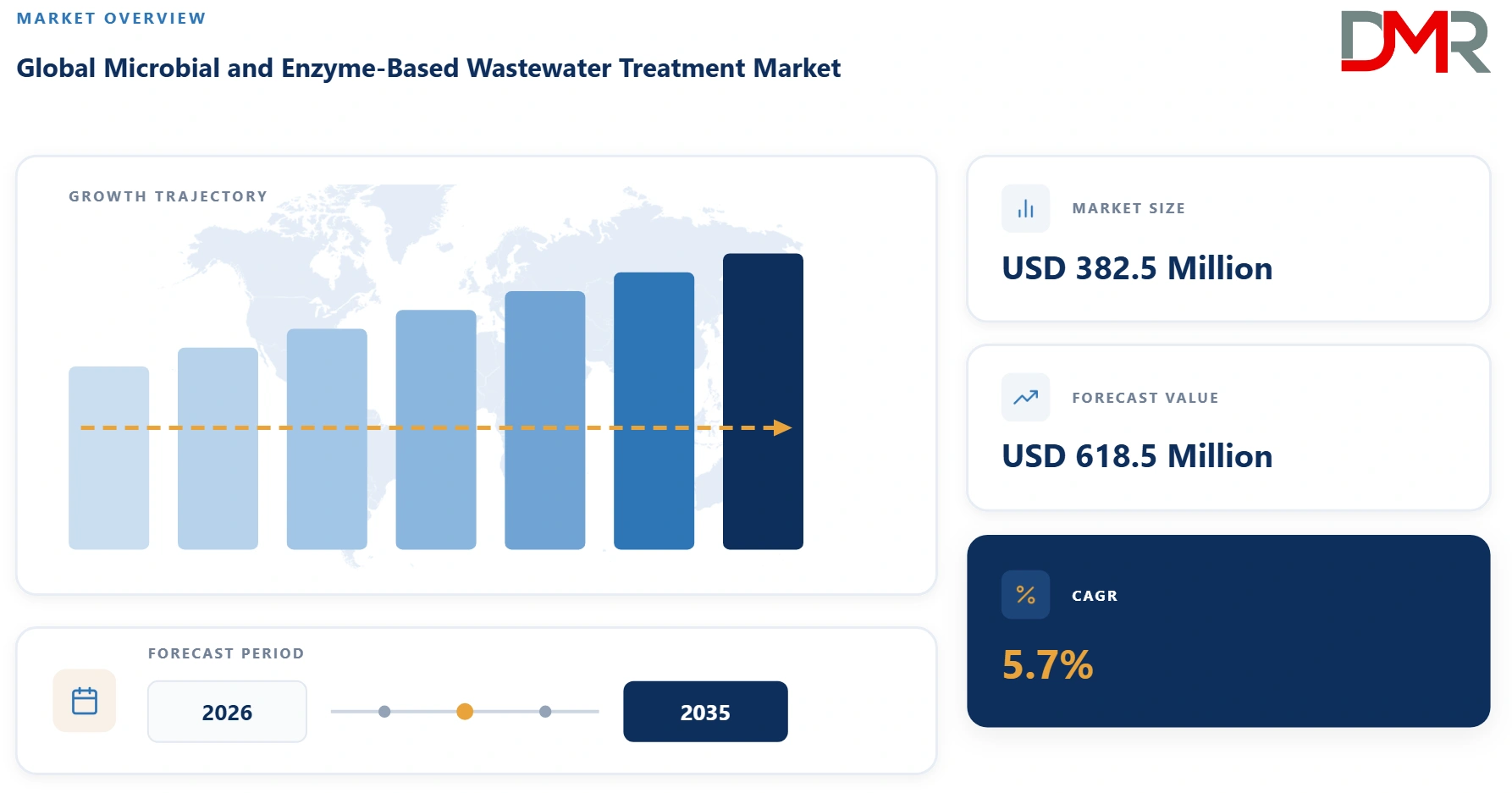
- Global Microbial and Enzyme-Based Wastewater Treatment Market Size in 2026: USD 382.5 million
- Global Microbial and Enzyme-Based Wastewater Treatment Market Size in 2035: USD 618.5 million
- Global CAGR from 2027 to 2035: 5.7%
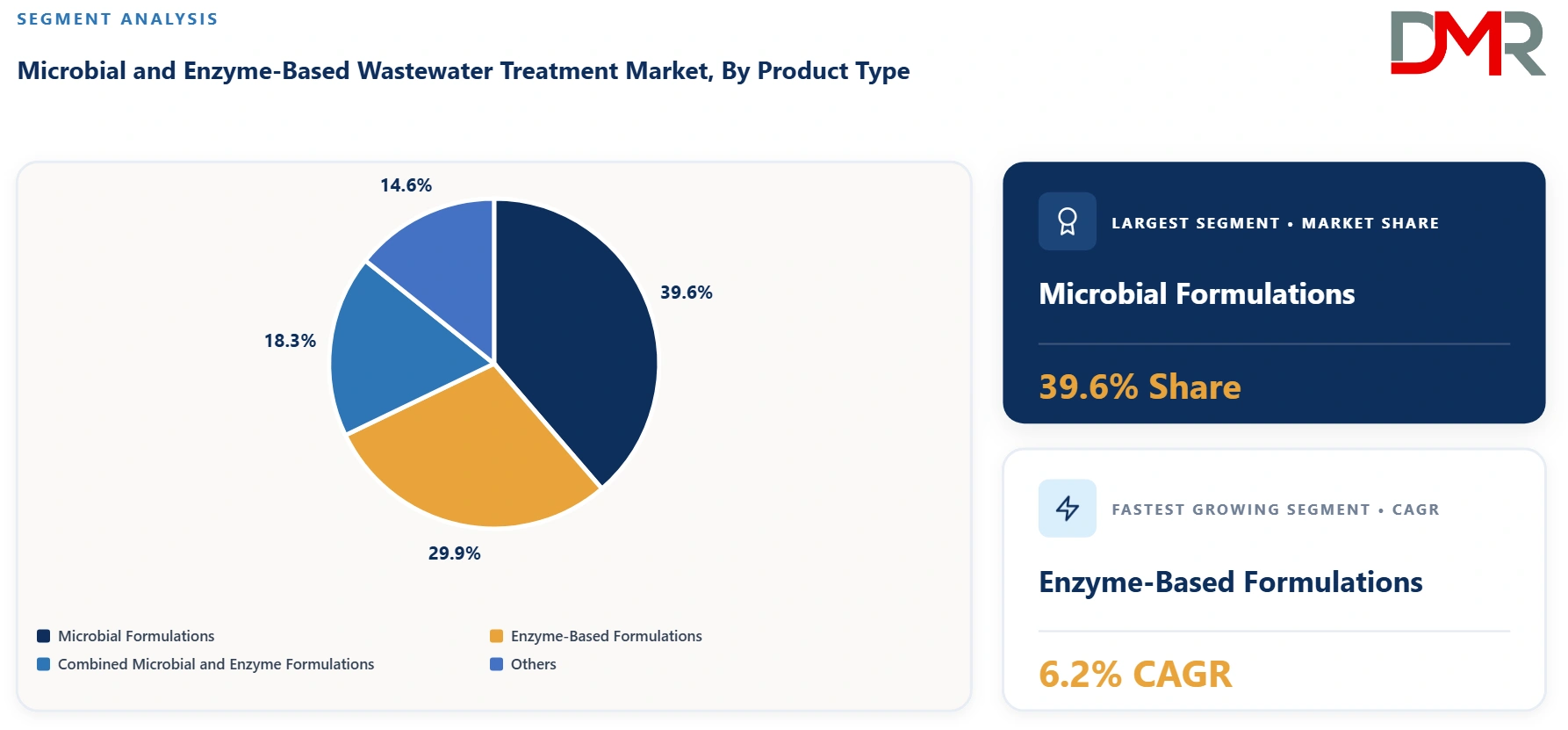
- Microbial Formulations are the leading Product Type segment in 2026: 39.6%
- Municipal Wastewater Treatment is the leading Application segment in 2026: 68.4%
- Combined Microbial and Enzyme Formulations is the fastest-growing Product Type segment: 6.2% CAGR
- Industrial Wastewater Treatment is the fastest-growing Application segment: 6.1% CAGR
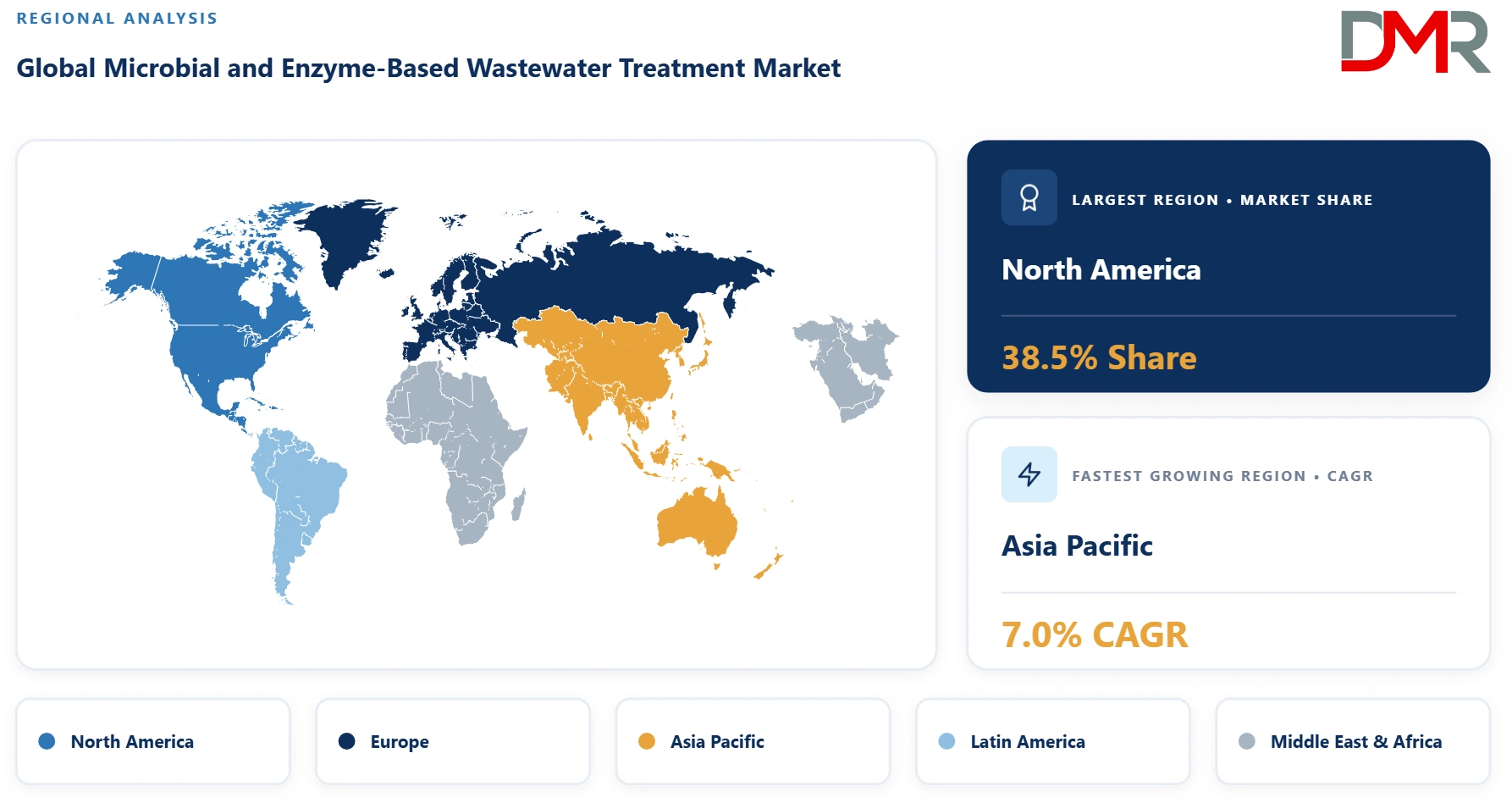
- North America is the leading Region in 2026: 38.5%
- Asia Pacific is the fastest-growing Region: 7.0% CAGR
What is the Global Microbial and Enzyme-Based Wastewater Treatment and its Market Size?
The Global Microbial and Enzyme-Based Wastewater Treatment Market size is projected to be valued at USD 382.5 million in 2026, and it is further anticipated to reach a market value of USD 618.5 million by 2035 at a CAGR of 5.7%.
ℹ
To learn more about this report –
Download Your Free Sample Report Here
The Global Microbial and Enzyme Based Wastewater Treatment Market focuses on products that clean wastewater and remove pollution. These products contain microorganisms, bacteria, enzymes or a mix of both. The microorganisms break down matter in the waste while the enzymes break larger organic molecules into smaller ones. The Microbial and Enzyme Based Wastewater Treatment Market grows as more cities and industries seek a way to treat wastewater and meet environmental obligations. Products are used in industries such as food and beverage, pulp and paper refining and petrochemicals, chemicals, pharmaceuticals and textiles. The growth of the Microbial and Enzyme Based Wastewater Treatment Market is driven by industry expansion, higher wastewater volumes, the need for water reuse and the demand, for efficient treatment processes.
Use Cases
- Municipal Sewage Treatment: Microbial & Enzyme Based Products - For Municipal Wastewater Treatment Plant microbial and enzyme based products can assist in breaking down organics, enhancing biological activity, managing undesired odors and much more for municipal wastewater treatment plant. When the load of wastewater increases or the effectiveness of the native bacteria declines, our products will compliment your process to ensure your wastewater treatment plant runs smoothly.
- Industrial Wastewater Treatment: Industries use of Microbial and Enzymes Formulations for Wastewaters Containing Oils, Fats, Sugars, Proteins and Other Organic Materials. For Example: Food Processing Units, Chemical Manufacturing, Textile Facilities etc Can Leverage Suitable Biological Products to Augment Waste Breakdown Processes and Meet Water Discharge Requirements. Choice Of Suitable Formulation Depends on Type of Wastewater.
- Sludge reduction/odor control: A number of microbial/enzyme-based formulations have been developed to assist in the decomposition of organic materials that accumulate in different types of wastewater treatment tanks, lagoons, etc. Using these types of formulations may lead to reductions in sludge buildup while increasing rates of organic matter breakdown under normal conditions.
- Treatment plant recovery/maintenance: If the biologically mediated processes for wastewater treatment begin to break down because of increases in volumes of wastes being treated, or for some other reason, many wastewater treatment facilities will turn to using specialized microbial products. By introducing selected types of microorganisms to treat those problems, they’re hoping to jump-start/restart their biological systems and bring them back to proper function. Some of these products are used to help get plants started when they put in newly installed processing equipment. Others allow plants to perform routine maintenance on this equipment.
Key Takeaways
- Global Market Value: The Global Microbial and Enzyme-Based Wastewater Treatment Market generated a revenue of USD 382.5 million in 2026 and which is further anticipated to reach USD 618.5 million by 2035.
- Global Growth Rate: The Global Microbial and Enzyme-Based Wastewater Treatment Market is expected to have a CAGR of 5.7% during the forecast period from 2027 to 2035.
- Technology Trends: Increased interest in specific bacterial mixtures for targeted functions such as better waste breakdown with enzymes, greater product stability and automation of biological dosing provides opportunities for the development of technology that addresses critical issues facing wastewater treatment plants including more efficiently processing organic waste, ensuring consistent results, and addressing changes to wastewater characteristics.
- Market Drivers: Factors driving growth in the Global Microbial and Enzyme Based Wastewater Treatment Markets include increasing volumes of wastewater being generated, increasingly stringent regulations on the quality of discharges from water reclamation systems, increased levels of industrial activity, increased need for water reuse, and the need to improve current biological wastewater treatment systems.
- Product Type Segment Analysis: The Microbial Formulations segment is anticipated to be the largest product segment, having a market share of 39.6% by the end of 2026. Whereas the Combined Microbial and Enzyme Formulations segment is expected to be the fastest-growing segment with a CAGR of 6.2% from 2027 to 2035.
- Application Segment Analysis: Municipal Wastewater Treatment is the major end-user segment, representing the highest market share of 68.4% in 2026, while the Industrial Wastewater Treatment segment is projected to have the highest growth rate with a CAGR of 6.1% during the forecast period.
- Regional Analysis: The North America region is poised to hold the largest market share of 38.5% in the global market in 2026. While the Asia Pacific region is expected to be the fastest-growing region with a CAGR of 7.0% during the forecast period.
How AI/Gen AI is Transforming the Microbial and Enzyme-Based Wastewater Treatment Market?
The market of microbial and enzyme-based wastewater treatment is benefiting from the use of artificial intelligence (AI). Generative artificial intelligence (Gen AI), another subset of AI, has been gaining attention recently and could create new opportunities in biological wastewater treatment. AI-based systems can analyze water quality, temperature, pH levels, oxygen levels, and other parameters related to organic pollution to help wastewater treatment plant operators understand how well their systems are performing. These insights allow operators to identify changes in treatment performance, adjust product dosing, monitor plant conditions, and make better operational decisions. Gen AI can also help researchers analyze scientific data and explore new combinations of microorganisms and enzymes that may improve wastewater treatment. Although these technologies are still developing for specialized biological products, they could help improve treatment planning, reduce unnecessary product use, and support more efficient wastewater management.
Key Drivers in the Global Microbial and Enzyme-Based Wastewater Treatment Market
Market Drivers
Increasing Need for Wastewater Treatment and Water Reuse
With growing need for wastewater treatment, microbial and enzyme based product is being used in cities and industries that generate large quantities of used water that must be treated before it can be disposed or reused. There is organic matter of various degrees in the waste water that can lead to pollution and foul odours if not treated correctly. In this way, suitability of such waste material can be used in the treatment plant where after the treatment, it can be decomposed after which its application efficiency can be improved. This has also prompted governments and industries to contemplate using these types of products given the increased concern about water conservation and environmental preservation among other reasons. An increasing demand for efficient biological treatment solutions.
Growing need for efficient biological treatment solutions.
The challenges for efficient wastewater treatments are high loads of organic wastes in wastewater, varying wastewater composition and high biological volatilities. Specialized microorganisms and enzymes that would supplement existing system processes to also treat organics pollutants could be used to overcome these challenges. Industries have shown interest towards utilizing biological products which might help improve efficiency of water treatment processes without necessitating significant modifications to current setups. These requirements drive product development that allows the product to be easily applied and adapted to different types of water waste.
Market Restraints
Sensitivity to Wastewater Conditions
A big problem facing this sector is the need for appropriate working conditions for microbial and enzyme-based goods. This means that the operation might be affected by things like temperatures, pH levels, and oxygen availability. In addition to these factors, the presence of detrimental chemicals could impair the product’s efficacy. This implies that waste water processing facilities will have to constantly check on their processes and pick out suitable items. As a result, using biological treatments could become harder as different industries’ wastewater compositions are more frequently modified.
Limited Awareness and Uncertain Treatment Performance
Lack of awareness around these specialised biological products could constrain their uptake, especially at smaller scale wastewater treatment facilities where limited capacity for knowledge acquisition may mean some facility managers do not understand the nuances of different microbial/enzyme formulations and/or how best to deploy them. In addition, outcomes can depend on characteristics of the incoming wastewater stream and operating systems, potentially requiring lab tests, trial applications and assistance from experts prior to purchase decision making, all of which would drive up the costs associated with treating water.
Market Opportunities
Expansion of Wastewater Treatment Infrastructure
Development of wastewater treatment infrastructure in emerging countries provides an opportunity for microbial/ enzyme-based product manufacturers. Countries across Asia Pacific, Latin America & the Middle East have been focusing on investment in sewage treatment as well as in handling industrial effluents. As there will be setting up of new wastewater treatment plants and/or upgrades in the already established ones, therefore leading to rise in usage of various biological support products. Manufacturers need to offer affordable yet easy-to-use formulations along with technical assistance depending upon wastewater conditions prevailing in each country respectively.
Development of Industry-Specific Biological Formulations
Growth Opportunities through Development of Specialized Microbial / Enzyme Formulations – Given that various industries emit wastewater containing distinct types of contaminants (such as fat/proteins from food-processing facilities or fiber-related organics from pulp-and-paper operations), companies could target developing tailored formulations addressing such needs. This could allow them to expand into novel markets served by other industry segments within this category while simultaneously strengthening existing customer connections over time.
Market Trends
Increasing Use of Combined Microbial and Enzyme Formulations
Combined microbial and enzyme formulations are taking off in the market. In these products, microorganisms and enzymes are combined to aid in the digestion of high molecular weight organic compounds. Enzymes break down larger materials, including fats, proteins and starches, into smaller ones that microorganisms can use. It is useful for wastewater that has multiple organic contaminants. Suppliers are creating sludge management, industrial wastewater and biological treatment support combined formulations.
Growing Interest in Easy-to-Use Biological Products
Other market activities that are gaining in importance are the production of microbial and enzyme products that are easier to store, transport and apply. Biological formulations are available from suppliers in liquid, powder, tablet and block formulations to suit the needs of the treatment. Liquid products can be dosed directly into wastewater treatment systems, while powders offer advantages in storage and transportation. Tablets and blocks can be used for the gradual release of biological formulations in suitable applications. These options allow treatment facilities to select products based on their operating conditions, treatment requirements, and maintenance needs.
Research Scope and Analysis
On the basis of the Product Type, the Global Microbial and Enzyme-Based Wastewater Treatment Market is segmented into Microbial Formulations, Enzyme Based Formulations, Combined Microbial and Enzyme Formulations and Others. The market can be segmented on the basis of Product Form as Liquid, Powder, Tablets and Blocks and Others. On the basis of Application, the market can be segmented into Municipal Wastewater Treatment, and Industrial Wastewater Treatment. Industrial Wastewater Treatment can be segmented into Food and Beverage, Pulp and Paper, Refining and Petrochemicals, Chemicals, Pharmaceuticals, Textiles, and Other Industries.
ℹ
To learn more about this report –
Download Your Free Sample Report Here
By Product Type
Microbial Formulations are projected to dominate the product type segment in the Microbial and Enzyme-Based Wastewater Treatment Market as they are expected to hold 39.6% of the total market share in 2026. The dominance is caused by the rising need for biological wastewater treatment, rising industrial wastewater generation and increasing need for effective organic waste removal. Microbial formulations are commonly employed in municipal and industrial waste water treatment plants to achieve a reduction in organic pollutants, to prevent accumulation of sludge, to control unpleasant odors and to improve the biological treatment efficiency. While Combined Microbial and Enzyme Formulations are poised to have the highest CAGR of 6.2% during the forecast period (2027–2035) in the Product Type segment, driven by increasing treatment demand for advanced biological treatment solutions, increasing use of advanced microbial/enzymatic combinations, increasing industrial wastewater treatment needs, and efficient removal of complex organic pollutants.
By Product Form
Liquid formulations are projected to dominate the product form segment in the Microbial and Enzyme-Based Wastewater Treatment Market as they are expected to hold 37.4% of the total market share in 2026. The dominance is due to the ready-to-use biological treatment products are needed more and more, and automated dosing systems are being used more and more in the wastewater treatment plants. Liquid material is widely used in municipal and industrial waste water treatment plants (WWTPs) to enhance microbial activity, decompose organic wastes, control odors and stabilize wastewater treatment. While Powder formulations are poised to have the highest CAGR of 5.8% during the forecast period (2027–2035) in the Product Form segment, driven the need for concentrated biological products, ease of storage and transportation, longer product shelf life, growing industrial wastewater treatment activities, and cost-effective wastewater treatment solutions are all driving factors.
By Application
Municipal Wastewater Treatment is projected to dominate the application segment in the Microbial and Enzyme-Based Wastewater Treatment Market as it is expected to hold 68.4% of the total market share in 2026. This dominance is attributed to the rising volume of wastewater generated in these urban areas, the investments in sewage treatment facilities and in urban wastewater infrastructure, increasing environmental concerns, and more stringent discharge requirements for wastewater. The microbial and enzyme-based formulations are spread in municipal wastewater treatment plants for degradation of organic matter, sludge reduction, control of foul odours and optimization of biological treatment. While Industrial Wastewater Treatment is poised to have the highest CAGR of 6.1% during the forecast period (2027–2035) in the Application segment, driven by increasing wastewater generation from food and beverage, pulp and paper, refining and petrochemicals, chemicals, pharmaceuticals, and textile industries, growing demand for effective organic pollutant removal, rising adoption of biological treatment solutions, and increasing focus on industrial wastewater reuse.
The Global Microbial and Enzyme-Based Wastewater Treatment Market Report is segmented based on the following:
By Product Type
- Microbial Formulations
- Enzyme-Based Formulations
- Combined Microbial and Enzyme Formulations
- Others
By Product Form
- Liquid
- Powder
- Tablets and Blocks
- Others
By Application
- Municipal Wastewater Treatment
- Industrial Wastewater Treatment
- Food and Beverage
- Pulp and Paper
- Refining and Petrochemicals
- Chemicals
- Pharmaceuticals
- Textiles
- Other Industries
Regional Analysis
North America is the Leading Region in the Global Microbial and Enzyme-Based Wastewater Treatment Market
The North America is expected to become the dominant force within the Global Microbial and Enzyme-Based Wastewater Treatment Market as it will hold a market share of 38.5% in 2026. The dominance of the wastewater treatment market can be attributed to the presence of wastewater treatment major biological treatment companies, continuous investment in municipal and industrial wastewater treatment plant, rising demand for biological wastewater treatment solutions, rising interest in wastewater reuse, stringent wastewater treatment regulation and well-developed wastewater treatment infrastructure.
ℹ
To learn more about this report –
Download Your Free Sample Report Here
Asia Pacific is the Fastest-Growing Region in the Global Microbial and Enzyme-Based Wastewater Treatment Market
Asia Pacific is expected to witness the fastest-growing regional market with a compound annual growth rate of 7.0% during the forecast period from 2027 to 2035, due to growth in treatment works for industrial effluents in China, India, Japan, etc., increasing emphasis on water recycling, tougher environmental laws and regulations and higher investment in sewage treatment plants, increasing demand for microbial & enzyme-based wastewater treatment solutions, and rising wastewater production.
Europe Microbial and Enzyme-Based Wastewater Treatment Market
The Europe Microbial and Enzyme-Based Wastewater Treatment Market is supported by the modernization of existing treatment facilities and growing adoption of advanced biological treatment technologies. Countries such as Germany, France, the United Kingdom, Italy, and Spain are focusing on improving treatment efficiency and reducing chemical usage in wastewater processing. Municipal facilities are exploring specialized microbial formulations to improve organic matter breakdown and manage sludge accumulation. Industries such as food processing, pulp and paper, and pharmaceuticals are also adopting biological treatment products to handle complex wastewater. Increasing research into enzyme efficiency, microbial stability, and automated dosing systems is creating opportunities for product manufacturers.
Latin America Microbial and Enzyme-Based Wastewater Treatment Market
This increasing investments in wastewater infrastructure, as well as a requirement for water management in industries are fueling the Latin America Microbial and Enzyme-Based Wastewater Treatment Market. Brazil and Mexico are important markets due to their manufacturing activities and urban population and wastewater treatment needs. Different industrial sectors like food and beverage, pulp and paper, chemicals and textiles produce wastewater with organic contaminants which can be treated using biological methods. Earlier wastewater treatment plants can be helped using microbial/enzymatic products and the degradation of organic matter can be optimized. Wastewater treatment facilities and expanding access to them, along with more environmental awareness, and the demand for low-cost treatment solutions should aid adoption.
Middle East and Africa (MEA) Microbial and Enzyme-Based Wastewater Treatment Market
The Middle East and Africa Microbial and Enzyme Based Wastewater Treatment Market is expected to grow because of the increasing emphasis on water conservation and the reuse of wastewater and protection of the environment. Wastewater treatment and water management facilities are being built in both Saudi Arabia and the United Arab Emirates. The wastewater system for industrial facilities (petrochemicals, chemical, food processing) needs to be suitable for the process. There are also opportunities in South Africa with regards to municipal wastewater management requirements and industrial wastewater treatment. Biological treatment may be utilized for some organic pollutants and microbiological and enzyme-based formulations can be used in the biological treatment process. Demand, however, is affected by the local operating conditions, the cost of treatment, technical skills of biological products that are available and appropriate.
Major Countries Analysis
United States Microbial and Enzyme-Based Wastewater Treatment Market
The US Microbial and Enzyme-Based Wastewater Treatment Market is projected to be valued at USD 114.8 million in 2026. The current municipal wastewater treatment plants, industrial wastewater needs, and availability of some biological wastewater treatment products are positive aspects of the microbially and enzyme-based wastewater treatment market in the United States. The biological method can be used to remove organic waste in municipal facilities and other pollutants are contained in industrial wastewater and need other methods of solution. Food/Processing, chemicals, refining and pulp & paper industries microbial and enzyme formulations. This is because not only is there an increase in re-use, there is also an increased interest in how to improve wastewater treatment processes and the maintenance of existing ones. Manufacturers make specific microorganisms and enzymes which can be used for sludge management; for oil and grease breakdown or biological treatment recovery. The demand for products will be further boosted by regulations in the environment and the need for constant wastewater treatment efficiency.
Japan Microbial and Enzyme-Based Wastewater Treatment Market
The growth of industrialization in Japan, the wastewater treatment plants and the effective utilization of water in Japan are some of the factors driving the market. This market is being supported by the Japanese's support on efficient water management, wastewater treatment plants and well-developed industrial sector. Industries such as food processing, chemicals, pharmaceuticals and pulp and paper, require reliable wastewater treatment solutions. If properly used, biological treatment products will help maintain treatment plant functions and will reduce and break down the organic pollutants. Specialized microbial and enzyme formulations may have some potential in Japan due to its interest in the efficiency of process, automation and environment protection. New biological treatment technology and improved wastewater monitoring can be helpful in promoting development of markets. The demand for these products is related to their effectiveness, operating costs, and ability to be compatible with existing treatment systems.
Saudi Arabia Microbial and Enzyme-Based Wastewater Treatment Market
Investment in water management and wastewater treatment systems along with the industrial investments are driving the Saudi Arabia Microbial and Enzyme-Based Wastewater Treatment market. Saudi Arabia Microbial and Enzyme-Based Wastewater Treatment market is being boosted due to investments in water management and wastewater treatment systems, apart from industrial investments. Water conservation and wastewater reuse are among the areas of focus in the country, and there are solutions available to further improve wastewater treatment performance. Wastewater from industries like refining, petrochemicals, chemicals and food processing industries needs to be properly treated for discharge or reuse. The use of microbial and enzym based products can degrade some organic pollutants and can be used to aid biological wastewater treatments. Opportunities for biological product suppliers may also exist from continuous industrial development and installation of wastewater treatment plants and water reuse projects. But treatment is only successful if the composition of the waste water, operating conditions and efficiency of the microorganisms and enzymes used for the treatment are correct.
Regulatory Landscape
The Global Microbial and Enzyme Based Wastewater Treatment Market is regulated by the relevant environmental laws and standards governing wastewater discharge, water quality, industrial pollution and biological product usage. In the United States, the Environmental Protection Agency (EPA) regulates wastewater discharge requirements under the Clean Water Act and other legislation. The amended Urban Wastewater Treatment Directive establishes more stringent provisions for collecting, treating and preventing pollution from wastewater in Europe. Pollution control bodies in India control the discharge of wastewater by setting up national and state environmental regulations. Wastewater quality and discharge standards are also in place in Japan and other countries. Companies providing microbial and enzyme products need to think about the requirements that may apply to the safety of microorganisms, handling of products, and chemical or biological substances. While biological formulations don't necessarily mean regulatory compliance, this guidance promotes wastewater treatment facilities to have effective processes.
Investment and White Space Analysis
The investment in wastewater treatment infrastructure, biological product development, and industry's wastewater management is increasing opportunities in the Global Microbial and Enzyme-Based Wastewater Treatment Market. Specialized microorganisms and enzymes are being developed to aid in the breakdown of organic waste, sludge management and stability of treatment. There are opportunities in formulations for food processing wastewater, hydrocarbon containing wastewater, pulp and paper waste, and other industrial applications. There are other potential applications in stable liquid products, concentrated powders, controlled release and microbial and enzyme mixtures. The rising demand for industrial wastewater treatment in emerging economies – such as those in Asia Pacific, Latin America, and the Middle East – creates opportunities. Manufacturers can also concentrate on technical support, small scale product research, and budget friendly options for current treatment plant
By Region
North America
Europe
- Germany
- France
- The U.K.
- Italy
- Spain
- Rest of Europe
Asia Pacific
- China
- Japan
- India
- Australia
- South Korea
- Rest of APAC
Latin America
- Mexico
- Brazil
- Rest of LATAM
Middle East & Africa
- Saudi Arabia
- The UAE
- South Africa
- Rest of MEA
Competitive Landscape
The competitive landscape of the Global Microbial and Enzyme-Based Wastewater Treatment Market includes specialized biological product manufacturers, biotechnology companies, and suppliers of wastewater treatment solutions. Companies compete through product effectiveness, microbial and enzyme formulation quality, technical support, pricing, and suitability for different wastewater applications. Suppliers offer products for municipal sewage treatment, industrial organic waste breakdown, sludge reduction, odor control, and biological treatment recovery. Some companies focus on selected bacterial strains, while others provide enzyme-based or combined microbial and enzyme formulations. Product development is aimed at improving stability, storage life, ease of application, and treatment performance under different operating conditions. Companies also work with wastewater treatment operators and distributors to expand their reach. Increasing demand for industry-specific solutions and reliable technical support is expected to influence competition as municipalities and industries seek better wastewater management options.
Some of the prominent players in the Global Microbial and Enzyme-Based Wastewater Treatment Market are:
- EnviroZyme
- Bionetix International
- Ecological Laboratories, Inc. (MICROBE-LIFT)
- Aquafix, Inc.
- Microbial Discovery Group
- Organica Biotech Pvt. Ltd.
- BiOWiSH Technologies
- Pharem Biotech AB
- Penetron Products Pvt. Ltd. (Penebiotech)
- Ecolab Inc. (Nalco Water)
- Hydrite Chemical Co.
- Genesis Water Technologies
- Novonesis
- Solenis LLC
- Kurita Water Industries Ltd.
- World Water Works, Inc.
- Aster Bio
- Xylem Inc.
- BASF SE
- Kemira Oyj
- Lallemand Inc.
- Genesis Biosciences
- Osprey Biotechnics, Inc.
- BioMicrobics, Inc.
- In-Pipe Technology Company, Inc.
- Drylet, Inc.
- Microvi Biotech Inc.
- Bio-Systems International, Inc.
- Bio Huma Netics, Inc.
- American Bio-Systems, Inc.
- Biomax Technologies Pte. Ltd.
- Realco SA/NV
- Aquatech International LLC
- Environmental Operating Solutions, Inc.
- Team One Biotech
- Probiosphere, Inc.
- Biorem Technologies Inc.
- Bio-Organic Catalyst, Inc.
- Monera Technologies
- Regenesis Corporation
Recent Developments
- In August 2026, EnviroZyme completed a major expansion of its production facility in Bowling Green, Ohio, increasing its overall production capacity by 3.5 times. The expansion strengthened microbial production, fermentation, packaging, and product development capabilities, supporting growing demand for biological wastewater treatment solutions.
- In June 2026, Microvi Biotech Inc. commissioned a commercial-scale biological nitrogen removal plant with Wessex Water at the Yeovil Water Recycling Centre in the United Kingdom. The project uses Aerovi and Denitrovi technologies to remove ammonia and nitrate from wastewater, supporting more efficient municipal wastewater treatment.
- In June 2026, Solenis, through its Diversey business, expanded its biological treatment portfolio with the ecoSTORM drain maintenance program. The system uses activated bacteria to break down fats, oils, grease, and organic waste in commercial drainage systems, helping reduce blockages, unpleasant odors, and maintenance requirements.
Report Details
| Report Characteristics |
| Market Size (2026) |
USD 382.5 Mn |
| Forecast Value (2035) |
USD 618.5 Mn |
| CAGR (2027–2035) |
5.7% |
| The US Market Size (2026) |
USD 114.8 Mn |
| Historical Data |
2021 – 2025 |
| Forecast Data |
2027 – 2035 |
| Base Year |
2026 |
| Segments Covered |
By Product Type, By Product Form, By Application |
| Regional Coverage |
North America – The US and Canada; Europe – Germany, France, The UK, Italy, Spain, Rest of Europe; Asia-Pacific – China, Japan, India, Australia, South Korea, Rest of APAC; Latin America – Mexico, Brazil, Colombia, Argentina, Rest of LATAM; Middle East & Africa – Saudi Arabia, The UAE, South Africa, Rest of MEA |
Frequently Asked Questions
How big is the Microbial and Enzyme-Based Wastewater Treatment Market?
▾ The Global Microbial and Enzyme-Based Wastewater Treatment Market is projected to be valued at USD 382.5 million in 2026 and is expected to reach USD 618.5 million by 2035.
What is the CAGR of the Microbial and Enzyme-Based Wastewater Treatment Market from 2027 to 2035?
▾ The Global Microbial and Enzyme-Based Wastewater Treatment Market is anticipated to grow at a compound annual growth rate (CAGR) of 5.7% during the forecast period from 2027 to 2035.
What factors are driving the growth of the Microbial and Enzyme-Based Wastewater Treatment Market?
▾ The Market development is supported by increasing wastewater generation, growing industrial activity, stricter environmental standards, higher demand for wastewater reuse, and the need for efficient biological treatment. Municipalities and industries are seeking products that can help break down organic pollutants, manage sludge, control odors, and support existing wastewater treatment systems.
What are the major trends in the Microbial and Enzyme-Based Wastewater Treatment Market?
▾ Major trends include growing interest in combined microbial and enzyme formulations, development of industry-specific biological products, improvements in microbial stability, and the use of liquid, powder, and controlled-release product forms. Digital monitoring and improved dosing systems are also helping wastewater treatment operators manage biological processes more effectively.
Which region held the largest share of the Microbial and Enzyme-Based Wastewater Treatment Market in 2026?
▾ North America is poised to hold the largest share of the Global Microbial and Enzyme-Based Wastewater Treatment Market in 2026, accounting for 38.5% of the total market.
Which region is expected to grow the fastest in the Microbial and Enzyme-Based Wastewater Treatment Market?
▾ Asia Pacific is projected to be the fastest-growing regional market during the forecast period, registering a CAGR of 7.0%.
Who are the key players in the Microbial and Enzyme-Based Wastewater Treatment Market?
▾ Companies relevant to the market include EnviroZyme, Bionetix International, Ecological Laboratories, Aquafix, Microbial Discovery Group, Organica Biotech, BiOWiSH Technologies, Pharem Biotech, Penetron Products, and other biological wastewater treatment suppliers. These companies offer different microbial, enzyme-based, or related wastewater treatment products and services.
How is the Microbial and Enzyme-Based Wastewater Treatment Market segmented?
▾ The market is segmented by Product Type into Microbial Formulations, Enzyme-Based Formulations, Combined Microbial and Enzyme Formulations, and Others. By Product Form, it includes Liquid, Powder, Tablets and Blocks, and Others. By Application, it includes Municipal Wastewater Treatment and Industrial Wastewater Treatment. The industrial segment covers Food and Beverage, Pulp and Paper, Refining and Petrochemicals, Chemicals, Pharmaceuticals, Textiles, and Other Industries. Geographically, the market covers North America, Europe, Asia Pacific, Latin America, and the Middle East and Africa.