Market Overview
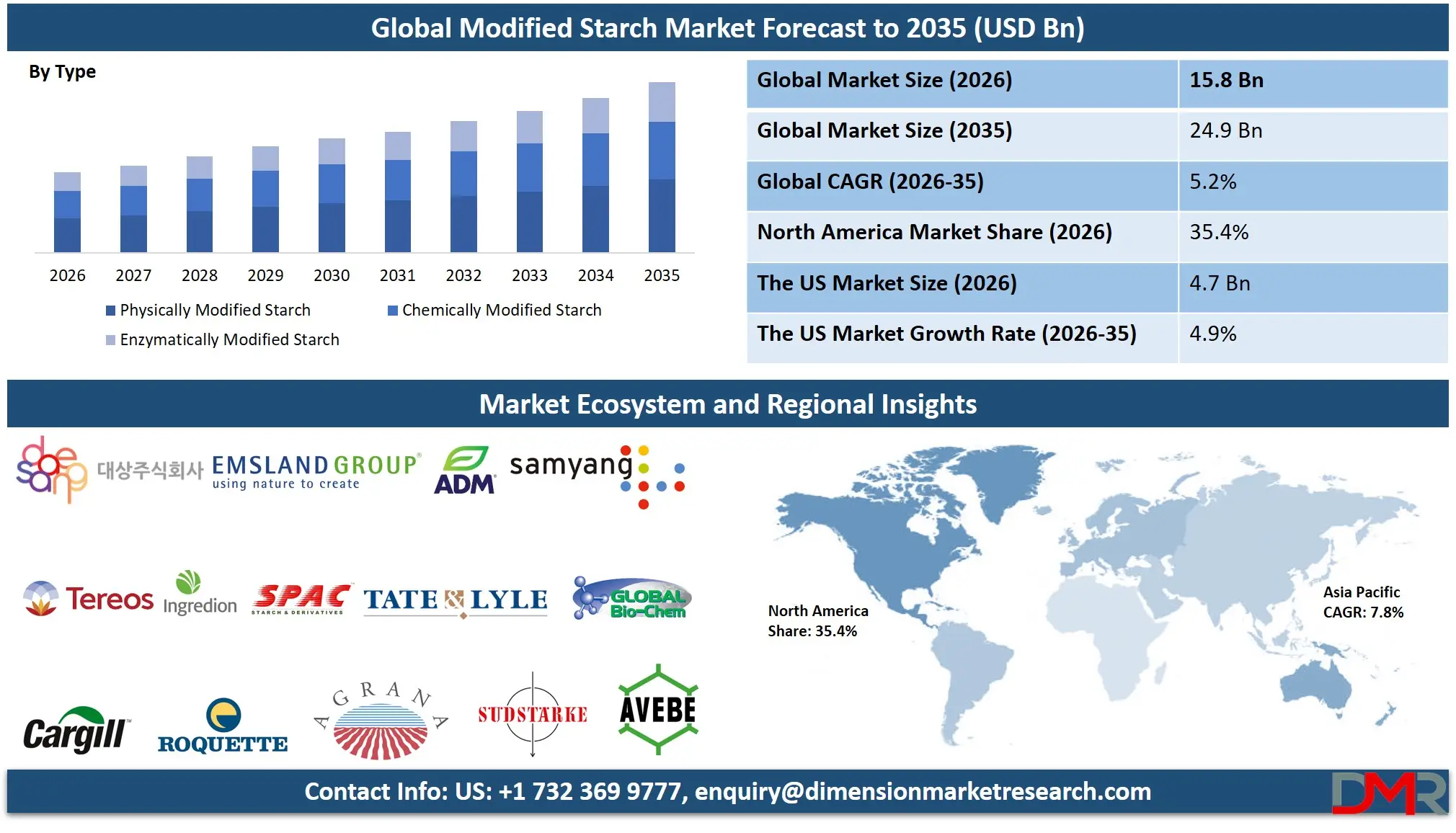
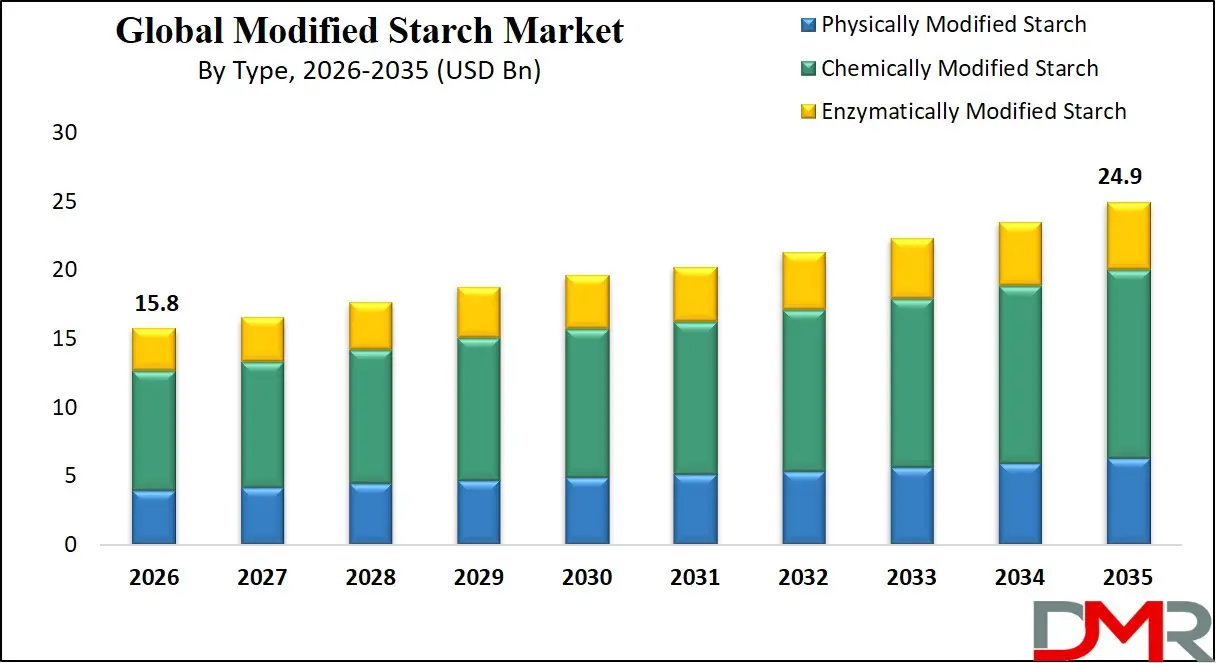
The Global Modified Starch Market is set for substantial expansion, reaching an estimated USD 15.8 billion in 2026 and projected to grow at a strong CAGR of 5.2% from 2026 to 2035, reaching the market value of USD 24.9 billion by 2035. This robust growth trajectory is fueled by the accelerating adoption of clean-label ingredients, natural thickeners and stabilizers, resistant starches for functional foods, and texturizing agents across the food processing and industrial sectors.
ℹ
To learn more about this report –
Download Your Free Sample Report Here
Rising consumer demand for convenience foods, extended shelf-life products, and plant-based formulations is compelling manufacturers to implement advanced modified starch solutions that enhance texture, stability, and mouthfeel. The rapid expansion of ready-to-eat meals, dairy alternatives, gluten-free products, confectionery, and processed meat applications is significantly increasing demand for specialized starch derivatives.
Additionally, growing regulatory approvals related to food safety standards, clean-label certifications, non-GMO verification, and sustainability claims are further accelerating market adoption. Food manufacturers are increasingly integrating physically modified starches, enzymatically treated variants, and resistant starches to improve nutritional profiles and functional performance while meeting consumer expectations for natural ingredients.
Clean-label trends, cost-effective formulations, and sustainable sourcing practices are enabling large enterprises and SMEs to implement versatile and globally accepted modified starch solutions. As processed food consumption dominates dietary patterns and industrial applications expand in paper, textiles, and pharmaceuticals worldwide, the Modified Starch Market is expected to witness sustained moderate growth through 2035, driven by innovation in functional ingredients and changing consumer lifestyles.
ℹ
To learn more about this report –
Download Your Free Sample Report Here
Growing government initiatives promoting food fortification, sustainable agriculture, and waste reduction in starch processing further accelerate global adoption. However, barriers such as varying food additive regulations (FDA, EFSA, FSSAI), volatility in raw material prices (corn, potato, tapioca), competition from synthetic alternatives, and supply chain disruptions remain. Despite these limitations, the convergence of biotechnology, enzyme engineering, and green chemistry positions modified starch as a central pillar of global food formulation and industrial processing through 2035.
The US Modified Starch Market
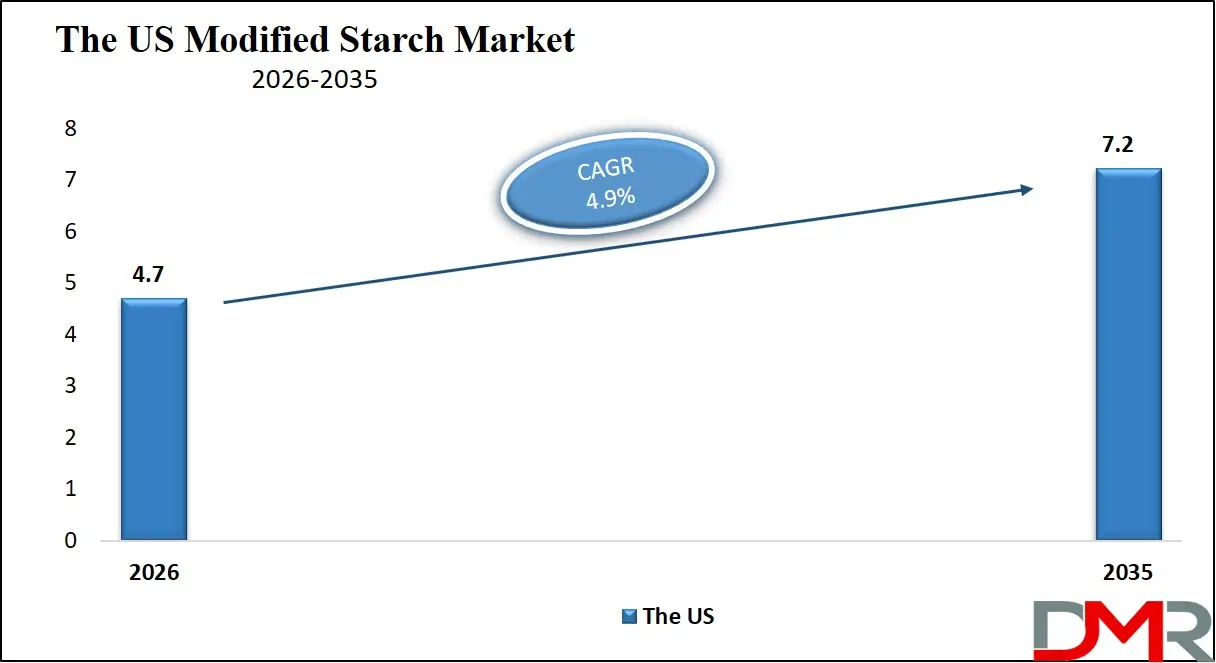
The U.S. Modified Starch Market is projected to reach USD 4.7 billion in 2026 and grow at a CAGR of 4.9%, reaching USD 7.2 billion by 2035. The U.S. leads global adoption due to its mature processed food industry, high demand for convenience foods, and strong regulatory framework from the FDA regarding food additive approvals.
ℹ
To learn more about this report –
Download Your Free Sample Report Here
The proliferation of plant-based alternatives, clean-label bakery items, and premium sauces in the food service sector, coupled with consumers' expectations of natural yet functional ingredients, fuels demand for advanced modified starch solutions. Major food corporations, beverage manufacturers, and industrial players such as Cargill, Ingredion, and Archer Daniels Midland are integrating specialty starches to improve viscosity, freeze-thaw stability, and texture in diverse applications.
U.S. regulatory support for food innovation, alongside frameworks like the Food Safety Modernization Act, encourages investment in modified starch technologies. The market is witnessing a shift toward non-GMO certified, organic-compliant, and physically modified starches, reducing reliance on chemically modified alternatives and enhancing consumer trust. The rise of keto-friendly and low-carb diets as high-profile consumer trends has further intensified the focus on resistant starches and dietary fiber enrichment, positioning the U.S. as a critical innovator in this space.
The Europe Modified Starch Market
The Europe Modified Starch Market is projected to be valued at approximately USD 4.1 billion in 2026 and is projected to reach around USD 5.2 billion by 2035, growing at a CAGR of about 3.0% from 2026 to 2035. Europe's leadership is anchored by its stringent regulatory environment, particularly the EU Novel Food Regulation and strict additive labeling requirements under EU Regulation 1169/2011.
Countries such as Germany, the U.K., France, and Italy are widely adopting modified starch ingredients, driven by a high emphasis on clean-label transparency and allergen management. The U.K.'s Food Standards Agency guidelines and the EU's Farm to Fork Strategy further necessitate sustainable sourcing and natural ingredient preferences across food and beverage manufacturers.
Europe's sophisticated bakery and confectionery sector, premium dairy market, and growing plant-based meat alternatives drive the demand for functional, label-friendly starch solutions. Funding and support for circular economy initiatives encourage partnerships between starch producers and agricultural cooperatives to optimize raw material utilization and reduce processing waste across member states. With a discerning consumer base and a regulatory landscape that prioritizes sustainability and safety, Europe remains a highly advanced and essential region for modified starch innovation.
The Japan Modified Starch Market
The Japan Modified Starch Market is anticipated to be valued at approximately USD 912.0 million in 2026 and is expected to attain nearly USD 1,241.0 million by 2035, expanding at a CAGR of about 3.5% during the forecast period. Japan's aging population and government push for "Food Tech Innovation" initiatives are driving the adoption of texture-modified foods for elderly care and nutritional enhancement, making modified starch a cornerstone of functional food development.
The Ministry of Health, Labour and Welfare (MHLW) actively supports the development of food ingredients that improve digestibility and nutrient absorption, promoting the use of modified starch in hospital foods, meal replacements, and senior nutrition products. Japan's leadership in fermentation technology and enzyme applications provides a robust foundation for advanced starch modification methods, including enzymatic treatments and physically processed variants.
Japan's concept of "Sho-kuiku" (food education), driven by major food conglomerates and research institutions, integrates modified starch into everything from premium sauces to pharmaceutical excipients. Manufacturers are deploying specialty starches to combat texture degradation in frozen foods and ensure quality consistency in Tokyo's competitive convenience store market and regional distribution networks. Japan's cultural emphasis on quality, texture, and food safety positions it as a high-value, quality-focused market for modified starch solutions.
Global Modified Starch Market: Key Takeaways
- Steady Global Market Growth Outlook: The Global Modified Starch Market is expected to be valued at USD 15.2 billion in 2026 and is projected to reach USD 24.9 billion by 2035, showcasing steady expansion supported by rising demand for processed foods and functional ingredients.
- Moderate CAGR Driven by Clean-Label Adoption: The market is expected to grow at a CAGR of 5.2% from 2026 to 2035, fueled by accelerating food processing activities, enzyme-based modification technologies, and increasing consumer preference for natural texturizing agents worldwide.
- Sustained Growth Trajectory in the United States: The U.S. Modified Starch Market stands at USD 4.7 billion in 2026 and is projected to reach USD 7.2 billion by 2035, expanding at a CAGR of 4.9% due to high convenience food consumption and strong R&D capabilities.
- Regional Dominance: North America is expected to capture approximately 35.4% of the global market share in 2026, supported by established food processing infrastructure, a mature functional ingredients sector, and high consumer demand for clean-label products.
- Rapid Advancement in Modification Technologies: Innovations including enzyme-specific hydrolysis, physically pre-gelatinized starches, organic-compliant modification processes, and resistant starch development are significantly enhancing functionality, clean-label appeal, and application versatility.
- Growing Health Consciousness Boosts Adoption: Rising global incidences of obesity, diabetes, and digestive health concerns, coupled with the need for reduced-calorie formulations, are driving sustained demand for resistant starches and low-digestible carbohydrate ingredients.
Global Modified Starch Market: Use Cases
- Bakery & Confectionery Texture Enhancement: Bakeries use modified starches to improve crumb structure, moisture retention, and shelf-life in breads, cakes, and cookies while maintaining soft texture and fresh appeal.
- Dairy Product Stabilization: Yogurt and pudding manufacturers incorporate modified starch to prevent syneresis, enhance creaminess, and maintain consistency during refrigerated storage and transportation.
- Sauces & Dressings Emulsification: Food companies utilize modified starch as a stabilizer and thickener in salad dressings, gravies, and cooking sauces to achieve desired viscosity and freeze-thaw stability.
- Meat & Poultry Processing: Processors apply modified starch in marinated meats, sausages, and nuggets to improve water binding, juiciness, and sliceability while reducing cook loss.
- Pharmaceutical Tablet Binding: Pharmaceutical companies use modified starch as a binder and disintegrant in tablet formulations, ensuring uniform drug distribution and controlled dissolution rates.
Global Modified Starch Market: Stats & Facts
Food and Agriculture Organization (FAO)
- Global starch production exceeds 85 million metric tons annually.
- Corn accounts for over 75% of global starch production, followed by potato, tapioca, and wheat.
- Asia-Pacific produces more than 35% of the world's starch, driven by tapioca and corn processing.
- Modified starch represents approximately 25-30% of total starch production volume.
- Over 60 countries produce starch commercially, with the top 10 countries accounting for 80% of output.
International Food Information Council (IFIC)
- 72% of consumers seek out clean-label foods with recognizable ingredients.
- 63% of consumers would switch to a brand that offers simpler ingredient labels.
- Texture and mouthfeel influence purchase decisions for 58% of food shoppers.
- 47% of consumers actively avoid products with chemical-sounding ingredients.
European Food Safety Authority (EFSA)
- Over 50 modified starch variants are approved as safe food additives in the EU under E numbers (E1400-E1451).
- Clean-label modified starches (physically or enzymatically modified) grew at 7% annually versus 3% for chemically modified variants.
- Bakery applications account for approximately 30% of modified starch consumption in Europe.
US Food and Drug Administration (FDA)
- Food starch-modified is Generally Recognized as Safe (GRAS) for use in human food.
- Over 90% of processed foods in the US contain some form of starch-based ingredient.
- Modified starch usage in gluten-free products increased by over 150% in the last decade.
Global Modified Starch Market: Market Dynamic
Driving Factors in the Global Modified Starch Market
Escalating Demand for Convenience and Processed Foods
The growing global consumption of ready-to-eat meals, frozen foods, and shelf-stable products is a major driver for modified starch. Urbanization, busy lifestyles, and changing dietary habits have increased reliance on processed foods that require specific textural attributes and stability during storage. Modified starches provide essential functionality, including freeze-thaw stability, viscosity control, and emulsion stabilization, allowing manufacturers to deliver consistent quality in products ranging from frozen pizzas to canned soups, especially in developed and emerging urban markets.
Clean-Label Movement and Natural Ingredient Preference
Modified starch benefits significantly from global consumer shifts toward transparency and natural ingredients. Regulations and consumer advocacy demanding recognizable, non-chemical ingredients have pushed manufacturers to replace synthetic additives with physically or enzymatically modified starches. The ability to deliver "clean-label" modified starches that provide the same functional benefits as chemically modified versions helps brands meet consumer expectations for healthier, more natural products while maintaining processing efficiency and avoiding negative perceptions associated with E-numbers and chemical-sounding additives.
Restraints in the Global Modified Starch Market
Volatility in Raw Material Prices and Supply Chains
The significant challenge of fluctuating prices for corn, potato, tapioca, and wheat creates uncertainty for modified starch producers. Agricultural commodity prices are influenced by weather patterns, geopolitical factors, energy costs, and competing uses such as biofuels. This volatility impacts production costs and profit margins, making it difficult for manufacturers to offer stable pricing to food companies. In many regions, supply chain disruptions or crop failures can lead to shortages, forcing substitution with alternative starches or synthetic competitors.
Regulatory and Labeling Complexity Across Regions
Food additive regulations vary significantly across major markets, creating barriers for global modified starch suppliers. The EU's detailed E-number classifications, FDA's GRAS determinations, and emerging market-specific approval processes require substantial compliance investments. Obtaining certifications for non-GMO, organic, allergen-free, and halal/kosher status adds operational complexity. Varying interpretations of what constitutes "clean-label" across jurisdictions make it difficult to build universal product formulations and packaging claims.
Opportunities in the Global Modified Starch Market
Expansion into Plant-Based and Alternative Proteins
Emerging markets in plant-based meat, dairy alternatives, and novel protein products represent major growth opportunities due to rapid category expansion and the need for textural mimicry. Countries seeing a surge in flexitarian and vegan populations across North America, Europe, and Asia-Pacific create massive demand for starches that replicate the mouthfeel of animal-based products. Specialized starches for plant-based burgers, cheeses, and yogurts, partnerships with alternative protein startups, and co-development of application-specific ingredients can drive the next wave of market expansion.
Resistant Starch Development for Health-Conscious Consumers
The integration of modified starch not only for texture but for nutritional enhancement creates new value streams. Resistant starches function as dietary fiber, supporting digestive health, glycemic management, and weight control. Manufacturers can develop starch ingredients that withstand processing while retaining their resistant properties, enabling applications in low-carb foods, high-fiber snacks, and diabetic-friendly products. This transforms modified starch from a processing aid into a functional health ingredient that commands premium pricing and aligns with wellness trends.
Trends in the Global Modified Starch Market
Enzyme-Treated Clean-Label Starches
The rise of enzyme-specific modification methods, which alter starch functionality without chemical reagents, is gaining significant traction. This trend leverages advances in biotechnology to produce starches with targeted properties—improved clarity, heat stability, or gel strength—while maintaining natural ingredient status. These methods eliminate chemical processing aids and enable "cleaner" ingredient declarations, becoming the gold standard for premium food applications.
Sustainable Sourcing and Circular Economy Practices
Leading starch manufacturers are implementing sustainability programs, including regenerative agriculture partnerships, water recycling in wet milling, and upcycling of by-products into animal feed or bioenergy. This trend supports corporate sustainability commitments and resonates with environmentally conscious consumers and B2B customers. Companies investing in transparent, traceable supply chains and reduced carbon footprints gain a competitive advantage in the evolving regulatory and consumer landscape.
Global Modified Starch Market: Research Scope and Analysis
By Type Analysis
Chemically Modified Starch is projected to dominate the global modified starch market due to its superior functional performance across diverse end-use industries. These starches are altered through chemical treatments to enhance stability, viscosity control, texture, and resistance to heat, shear, and acidic environments. Variants such as cross-linked starch, oxidized starch, stabilized starch, cationic starch, and acid-thinned starch are widely used in processed food formulations, paper coatings, textile sizing, adhesives, and pharmaceutical binders. Their ability to maintain structural integrity under extreme processing conditions makes them highly preferred in large-scale industrial production. In the food sector, chemically modified starch ensures consistent texture in sauces, gravies, dairy desserts, and frozen foods. In paper manufacturing, cationic starch improves paper strength and printability, further supporting segment dominance.
Physically Modified Starch holds a significant but smaller share, primarily driven by rising clean-label demand. Since it undergoes physical treatments such as heat or pre-gelatinization without chemical reagents, it is perceived as more natural. Pre-gelatinized starch is particularly popular in instant soups, baby foods, and convenience meals due to its rapid hydration properties. However, its functional stability is relatively lower compared to chemically modified starch.
Enzymatically Modified Starch is an emerging but niche segment. Produced using specific enzymes to tailor molecular structure, it offers targeted functionality and improved digestibility. Despite its growing use in specialty food and pharmaceutical formulations, higher production costs and limited large-scale applications restrict its overall market share compared to chemically modified starch.
By Source Analysis
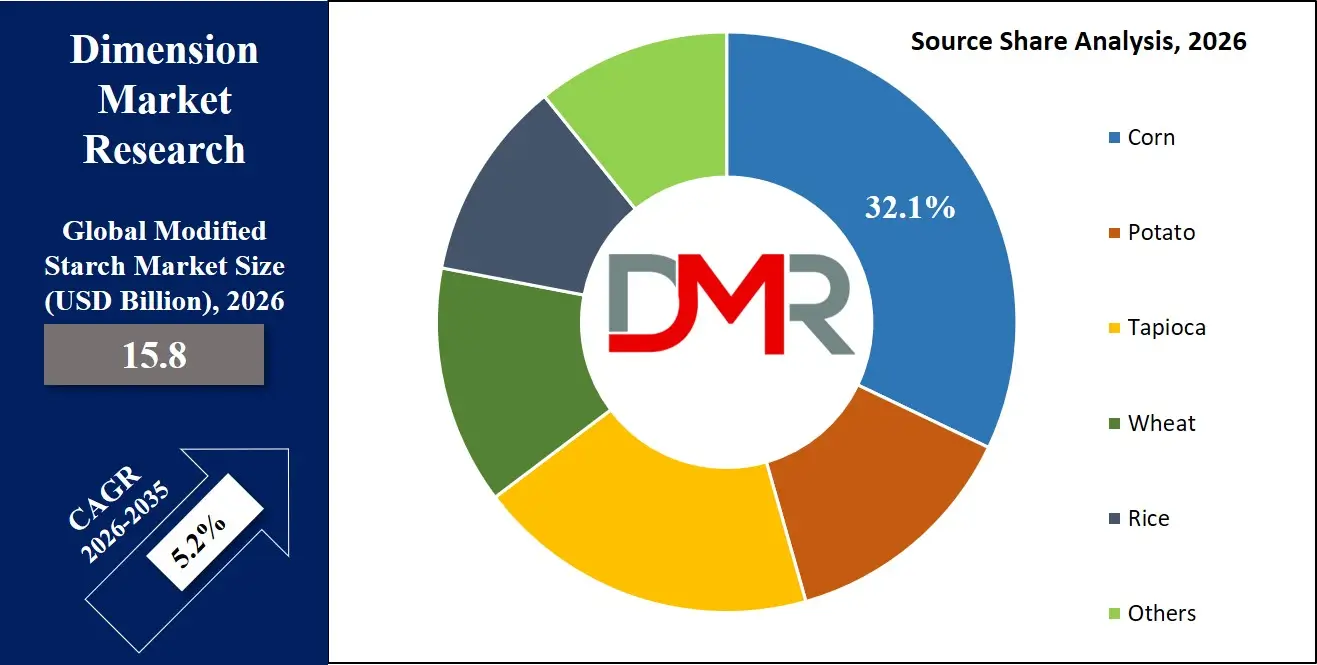
Corn-based modified starch is anticipated to dominate the global market owing to its abundant availability, cost efficiency, and versatile functional properties. Corn is cultivated extensively across North America, Asia-Pacific, and parts of Europe, ensuring stable raw material supply. Its high starch yield and compatibility with chemical, physical, and enzymatic modification processes make it the most commercially viable source. Corn-based modified starch is widely utilized in food processing, paper manufacturing, adhesives, textiles, and animal feed. In the food industry, it serves as a thickener, stabilizer, and binding agent in bakery products, confectionery, ready meals, and beverages. The strong global corn supply chain and established processing infrastructure further strengthen its dominance.
ℹ
To learn more about this report –
Download Your Free Sample Report Here
Potato and tapioca starch represent important secondary sources. Potato starch is widely used in Europe due to strong regional production, offering high viscosity and neutral taste, which benefits premium food formulations. Tapioca starch, derived from cassava, is particularly dominant in Asia-Pacific and Latin America. It is valued for its clarity, freeze-thaw stability, and gluten-free positioning, making it attractive in clean-label and specialty food segments.
Wheat-based modified starch holds a moderate share but faces limitations due to gluten-related concerns and allergen labeling regulations. Rice starch remains comparatively small in global industrial usage due to limited scalability and higher cost. Other sources, including barley and sorghum, contribute minimally. Overall, corn maintains clear leadership due to scalability, affordability, and broad industrial adaptability.
By Form Analysis
Dry modified starch is expected to dominate the global market due to its operational convenience, extended shelf life, and cost-effective logistics. In powder form, modified starch is easy to store, transport, and incorporate into large-scale manufacturing processes. It is widely used across food processing, pharmaceuticals, paper, and textile industries because of its stability under varying environmental conditions. Dry starch can be easily blended with other ingredients, ensuring uniform dispersion and controlled viscosity during production. The lower risk of microbial contamination and reduced packaging complexity also contribute to its preference among manufacturers.
In food applications, dry modified starch is commonly used in powdered soups, baking mixes, instant desserts, and snack seasonings. In pharmaceutical formulations, it functions as a binder or disintegrant in tablet manufacturing. Paper and packaging industries also favor dry starch due to ease of dosing and compatibility with automated systems. The versatility and scalability of dry form significantly reinforce its dominance.
Liquid modified starch holds a comparatively smaller market share. It is primarily used in paper and textile industries where continuous processing systems require ready-to-use starch solutions. Liquid starch offers convenience by eliminating pre-mixing steps, but it has shorter shelf life and higher transportation costs due to bulk and weight. Additionally, storage and microbial stability challenges limit its widespread adoption. While liquid starch remains important in specific industrial settings, dry modified starch continues to dominate due to flexibility, lower costs, and broader application compatibility.
By Function Analysis
The thickening function is projected to dominate the modified starch market due to its widespread application in food and industrial formulations. Modified starch is extensively used to increase viscosity and improve texture in soups, sauces, gravies, dairy products, pie fillings, and ready-to-eat meals. Its ability to maintain consistent thickness under heat processing, freezing, and reheating conditions makes it highly valuable in modern food manufacturing. The growing demand for convenience foods and processed meals globally further strengthens thickening as the leading functional segment.
Stabilizing is the second major function, particularly important in dairy products, beverages, and frozen foods. Modified starch prevents ingredient separation, maintains emulsion stability, and enhances product shelf life. In yogurt and flavored milk drinks, starch stabilizers improve mouthfeel and consistency. Binding function also holds substantial importance, especially in bakery products, meat processing, and pharmaceutical tablet formulations. It helps hold ingredients together, ensuring structural integrity.
Emulsifying and film-forming functions are widely used in processed foods, confectionery coatings, and packaging applications. Gelling functionality is essential in desserts, candies, and specialty food items that require specific texture characteristics. Water retention is another critical function, especially in bakery and meat products, where moisture control improves freshness and yield. Although these functions contribute significantly, thickening remains dominant due to its universal requirement across most end-use applications and high consumption volumes.
By Application Analysis
Food application is projected to dominate the global modified starch market, accounting for the largest consumption share. Modified starch plays a vital role in improving texture, stability, moisture retention, and shelf life in bakery, confectionery, dairy, beverages, snacks, and ready-to-eat meals. Rising urbanization, busy lifestyles, and increasing demand for convenience and processed foods continue to drive consumption. In bakery products, modified starch enhances softness and structure, while in dairy desserts and sauces, it provides stable viscosity and prevents separation. Its adaptability to various processing conditions such as freezing, heating, and extrusion further strengthens its dominance in the food sector.
Industrial applications represent the second-largest segment. In the paper and packaging industry, modified starch improves paper strength, printability, and coating quality. It is also used in adhesives, textiles, and construction materials. The expansion of e-commerce and sustainable packaging solutions supports demand in this segment. In textiles, starch acts as a sizing agent to strengthen yarn during weaving.
Animal feed applications utilize modified starch as a binder and energy source, though volumes are comparatively smaller than food and industrial uses. Pharmaceutical and personal care applications are steadily growing due to increasing demand for excipients, tablet binders, and stabilizers in creams and lotions. However, food applications remain dominant due to higher consumption volumes and broad functionality across multiple processed food categories.
By End-Use Industry Analysis
The Food Processing industry is anticipated to dominate the modified starch market due to the global expansion of processed and packaged food production. Manufacturers rely on modified starch to improve texture, consistency, shelf stability, and overall product quality. It is widely used in ready meals, frozen foods, snacks, bakery items, dairy products, and beverages. Increasing consumer demand for convenience foods, coupled with urbanization and changing dietary habits, continues to fuel growth in this segment. Food processors benefit from the versatility of modified starch, which performs effectively under varying temperature, pH, and mechanical stress conditions.
Paper & Packaging is the second-largest end-use industry. Modified starch is essential in paper strengthening, surface sizing, coating, and corrugation adhesives. The growth of sustainable and biodegradable packaging materials further boosts demand, as starch-based solutions are renewable and environmentally friendly. Expanding e-commerce activities globally have also increased corrugated packaging consumption.
The Pharmaceutical industry utilizes modified starch as a binder, disintegrant, and filler in tablet production. While important, its consumption volume is smaller compared to food and paper sectors. Textile manufacturing employs starch for yarn sizing to improve durability during weaving processes. Animal nutrition uses modified starch as a feed binder and energy source. Personal care and cosmetics apply starch in powders and creams for moisture control and texture enhancement. Despite diversified usage across industries, food processing remains the clear dominant end-use segment due to large-scale consumption and consistent global demand.
The Global Modified Starch Market Report is segmented on the basis of the following:
By Type
- Physically Modified Starch
- Pre-gelatinized Starch
- Heat-Treated Starch
- Chemically Modified Starch
- Stabilized Starch
- Cross-Linked Starch
- Cationic Starch
- Oxidized Starch
- Acid-Thinned Starch
- Enzymatically Modified Starch
By Source
- Corn
- Potato
- Tapioca
- Wheat
- Rice
- Others
By Form
By Function
- Thickening
- Stabilizing
- Binding
- Emulsifying
- Film-Forming
- Gelling
- Water Retention
By Application
- Food
- Industrial
- Animal Feed
- Pharmaceutical & Personal Care
- Other Applications
By End-Use Industry
- Food Processing
- Food Service (HoReCa)
- Pharmaceutical
- Paper & Packaging
- Textile Manufacturing
- Animal Nutrition
- Personal Care & Cosmetics
Impact of Artificial Intelligence in the Global Modified Starch Market
- AI for Process Optimization: AI analyzes vast datasets from starch modification processes to identify optimal temperature, pH, and enzyme concentration parameters, improving yield consistency and reducing energy consumption in real-time.
- AI-Driven Product Development: Machine learning algorithms predict functional properties of starch variants based on molecular structure and processing conditions, accelerating formulation of application-specific modified starches.
- Predictive Quality Control: AI-powered imaging systems continuously monitor starch granule morphology during modification, enabling early detection of deviations and automatic process adjustments.
- AI-Based Supply Chain Optimization: AI analyzes global weather patterns, crop yields, and commodity prices to optimize raw material sourcing, inventory management, and procurement timing.
- Learning from Application Performance: AI systems aggregate performance data across customer applications to identify optimal starch selection for specific food matrices, enabling data-driven recommendations for formulators.
Global Modified Starch Market: Regional Analysis
Region with the Largest Revenue Share
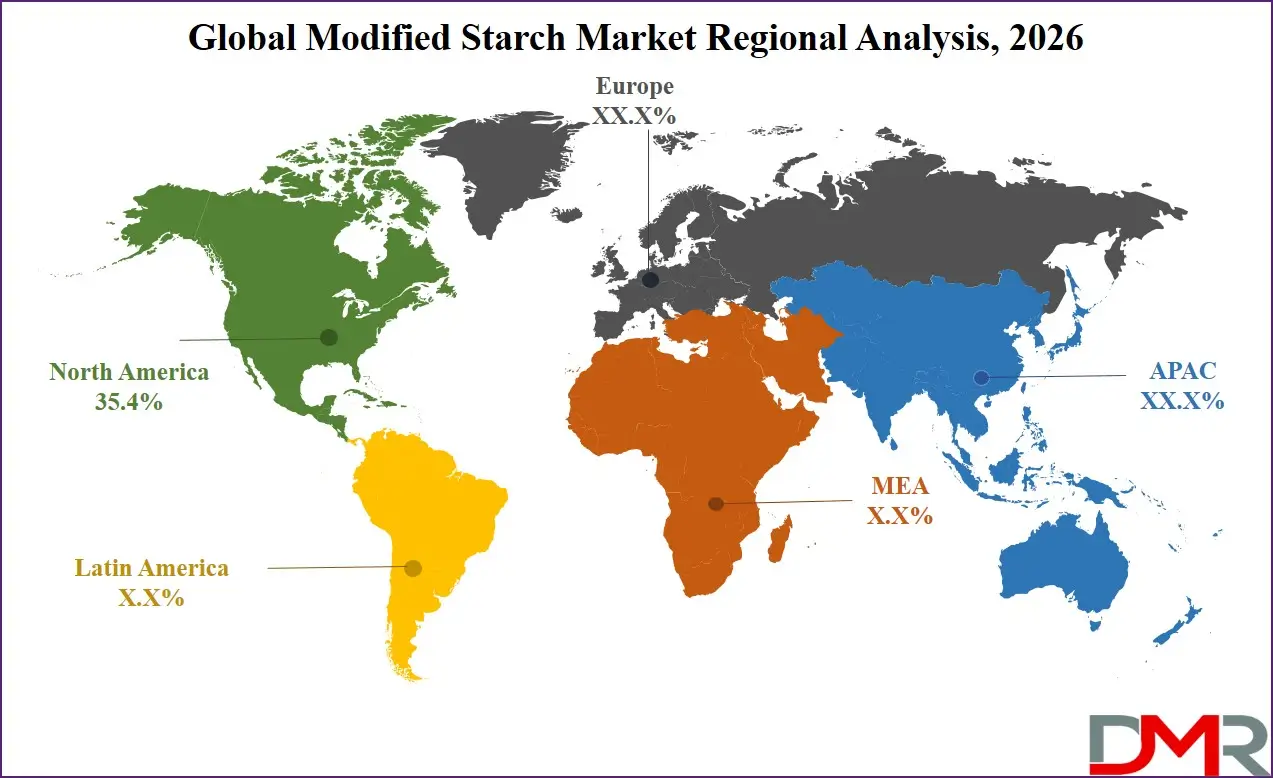
North America is projected to dominate the regional segment with the highest market share as it is anticipated to hold 35.4% of the total market revenue by the end of 2026, due to advanced food processing infrastructure, high consumption of convenience foods, and widespread adoption of value-added ingredients. The region is home to leading starch producers and food innovation centers, driving technological advancements in modification processes. Strong food safety regulations regarding additive approvals and labeling compel manufacturers to adopt consistent, high-quality starch ingredients. High consumer awareness regarding ingredient transparency and functional benefits further strengthens demand.
ℹ
To learn more about this report –
Download Your Free Sample Report Here
The United States, in particular, accounts for the largest share within North America due to its large processed food sector and continuous new product introductions. Although Asia Pacific is the fastest-growing region, North America continues to hold the largest revenue share due to mature food industry structures and strong R&D investments.
Region with the Highest CAGR
Asia-Pacific holds the highest CAGR and is poised to achieve rapid market share growth due to its massive population, rising disposable incomes, booming food processing sector, and significant government push for agricultural value addition. Countries like China, India, Indonesia, and Vietnam are investing heavily in starch processing infrastructure and export capabilities. India's "Food Processing" initiatives and similar programs across Southeast Asia are creating fertile ground for adoption. The region's price sensitivity is being addressed through local raw material sourcing, cost-competitive manufacturing, and partnerships between global starch companies and regional food conglomerates. This, combined with immense population and expanding middle class, positions APAC as the fastest-growing market for modified starch systems.
By Region
North America
Europe
- Germany
- The U.K.
- France
- Italy
- Russia
- Spain
- Benelux
- Nordic
- Rest of Europe
Asia-Pacific
- China
- Japan
- South Korea
- India
- ANZ
- ASEAN
- Rest of Asia-Pacific
Latin America
- Brazil
- Mexico
- Argentina
- Colombia
- Rest of Latin America
Middle East & Africa
- Saudi Arabia
- UAE
- South Africa
- Israel
- Egypt
- Rest of MEA
Global Modified Starch Market: Competitive Landscape
The Global Modified Starch Market is moderately consolidated, featuring a mix of global agricultural processing giants, specialty ingredient manufacturers, and regional starch producers. Leading players like Cargill, Incorporated, Ingredion Incorporated, and Archer Daniels Midland Company leverage their vast agricultural supply chains and wet milling infrastructure to offer modified starch as a core product line. Pure-play ingredient innovators such as Tate & Lyle PLC, Roquette Frères, and Agrana Beteiligungs-AG are driving market dynamics with specialized, high-purity starch derivatives and clean-label solutions.
Agricultural cooperatives and regional processors like Emsland-Stärke GmbH, Südstärke GmbH, and SPAC Starch Products (India) Ltd. play a crucial role as reliable suppliers to local food industries, while ingredient distribution giants such as Kerry Group and Sensient Technologies are increasingly integrating modified starch into their broader texture and flavor platforms. Regional players and joint ventures with local farmers are also active, forming strategic alliances to secure raw material access and market penetration.
Some of the prominent players in the Global Modified Starch Market are:
- Cargill, Incorporated
- Ingredion Incorporated
- Archer Daniels Midland Company
- Tate & Lyle PLC
- Roquette Frères
- Agrana Beteiligungs-AG
- Emsland-Stärke GmbH
- Südstärke GmbH
- SPAC Starch Products (India) Ltd.
- Global Bio-chem Technology Group Company Limited
- Grain Processing Corporation
- Avebe U.A.
- Tereos S.A.
- Royal Cosun
- Samyang Holdings Corporation
- Daesang Corporation
- Shandong Fufeng Fermentation Co., Ltd.
- Zhucheng Xingmao Corn Developing Co., Ltd.
- Henan Hengrui Starch Technology Co., Ltd.
- Sanstar Bio-Polymers Ltd.
- Other Key Players
Recent Developments in the Global Modified Starch Market
- November 2025: Ingredion introduced its "Clean-Tex" line of physically modified starches, using proprietary thermal processing to provide texture without chemical modification, enabling clean-label declarations in premium sauces and dressings.
- October 2025: Cargill demonstrated its enhanced resistant starch technology at Fi Europe 2025, highlighting digestive health benefits and glycemic management applications in bakery and snack formulations.
- September 2025: Tate & Lyle announced a multi-year agreement with a top-3 global yogurt manufacturer to supply its CLARIA functional clean-label starch across 30+ countries, signaling the critical role of modified starch in dairy texture.
- August 2025: Roquette completed the acquisition of a specialized enzyme technology firm to enhance its modified starch platform's ability to develop targeted functionalities for plant-based meat applications.
- July 2025: A Horizon Europe grant was awarded to a consortium developing low-environmental-impact starch modification methods using green chemistry and renewable energy, linking starch processing with sustainability goals.
- June 2025: Emsland-Stärke partnered with a major Indian food processor to provide its pea-based modified starches, aiming to set new standards for clean-label ingredients in the region's growing plant-based sector.
Report Details
| Report Characteristics |
| Market Size (2026) |
USD 15.8 Bn |
| Forecast Value (2035) |
USD 24.9 Bn |
| CAGR (2026–2035) |
5.2% |
| The US Market Size (2026) |
USD 4.7 Bn |
| Historical Data |
2021 – 2025 |
| Forecast Data |
2027 – 2035 |
| Base Year |
2025 |
| Estimate Year |
2026 |
| Report Coverage |
Market Revenue Estimation, Market Dynamics, Competitive Landscape, Growth Factors and etc. |
| Segments Covered |
By Type (Physically Modified Starch, Chemically Modified Starch, Enzymatically Modified Starch), By Source (Corn, Potato, Tapioca, Wheat, Rice, Others), By Form (Dry, Liquid), By Function (Thickening, Stabilizing, Binding, Emulsifying, Film-Forming, Gelling, Water Retention), By Application (Food, Industrial, Animal Feed, Pharmaceutical & Personal Care, Other Applications), By End-Use Industry (Food Processing, Food Service (HoReCa), Pharmaceutical, Paper & Packaging, Textile Manufacturing, Animal Nutrition, Personal Care & Cosmetics) |
| Regional Coverage |
North America – The US and Canada; Europe – Germany, The UK, France, Russia, Spain, Italy, Benelux, Nordic, & Rest of Europe; Asia-Pacific – China, Japan, South Korea, India, ANZ, ASEAN, Rest of APAC; Latin America – Brazil, Mexico, Argentina, Colombia, Rest of Latin America; Middle East & Africa – Saudi Arabia, UAE, South Africa, Turkey, Egypt, Israel, & Rest of MEA |
| Prominent Players |
Cargill, Incorporated, Ingredion Incorporated, Archer Daniels Midland Company, Tate & Lyle PLC, Roquette Frères, Agrana Beteiligungs-AG, Emsland-Stärke GmbH, Südstärke GmbH, SPAC Starch Products (India) Ltd., Global Bio-chem Technology Group Company Limited, Grain Processing Corporation, Avebe U.A., Tereos S.A., Royal Cosun, Samyang Holdings Corporation, Daesang Corporation, Shandong Fufeng Fermentation Co., Ltd., Zhucheng Xingmao Corn Developing Co., Ltd., Henan Hengrui Starch Technology Co., Ltd., Sanstar Bio-Polymers Ltd., and Other Key Players |
| Purchase Options |
We have three licenses to opt for (Single User License (Limited to 1 user), Multi-User License (Up to 5 Users) and Corporate Use License (Unlimited User) along with free report customization equivalent to 0 analyst working days, 3 analysts working days and 5 analysts working days respectively. |
Frequently Asked Questions
How big is the Global Modified Starch Market?
▾ The Global Modified Starch Market size is estimated to have a value of USD 15.2 billion in 2026 and is expected to reach USD 24.9 billion by the end of 2035.
What is the growth rate in the Global Modified Starch Market?
▾ The market is growing at a CAGR of 5.2 percent over the forecasted period of 2026-2035.
What is the size of the US Modified Starch Market?
▾ The US Modified Starch Market is projected to be valued at USD 4.7 billion in 2026. It is expected to witness subsequent growth as it holds USD 7.2 billion in 2035 at a CAGR of 4.9%.
Which region accounted for the largest Global Modified Starch Market?
▾ North America is expected to have the largest market share in the Global Modified Starch Market with a share of about 35.4% in 2026.
Who are the key players in the Global Modified Starch Market?
▾ Some of the major key players in the Global Modified Starch Market are Cargill, Incorporated, Ingredion Incorporated, Archer Daniels Midland Company, Tate & Lyle PLC, Roquette Frères, and many others.