Market Snapshot
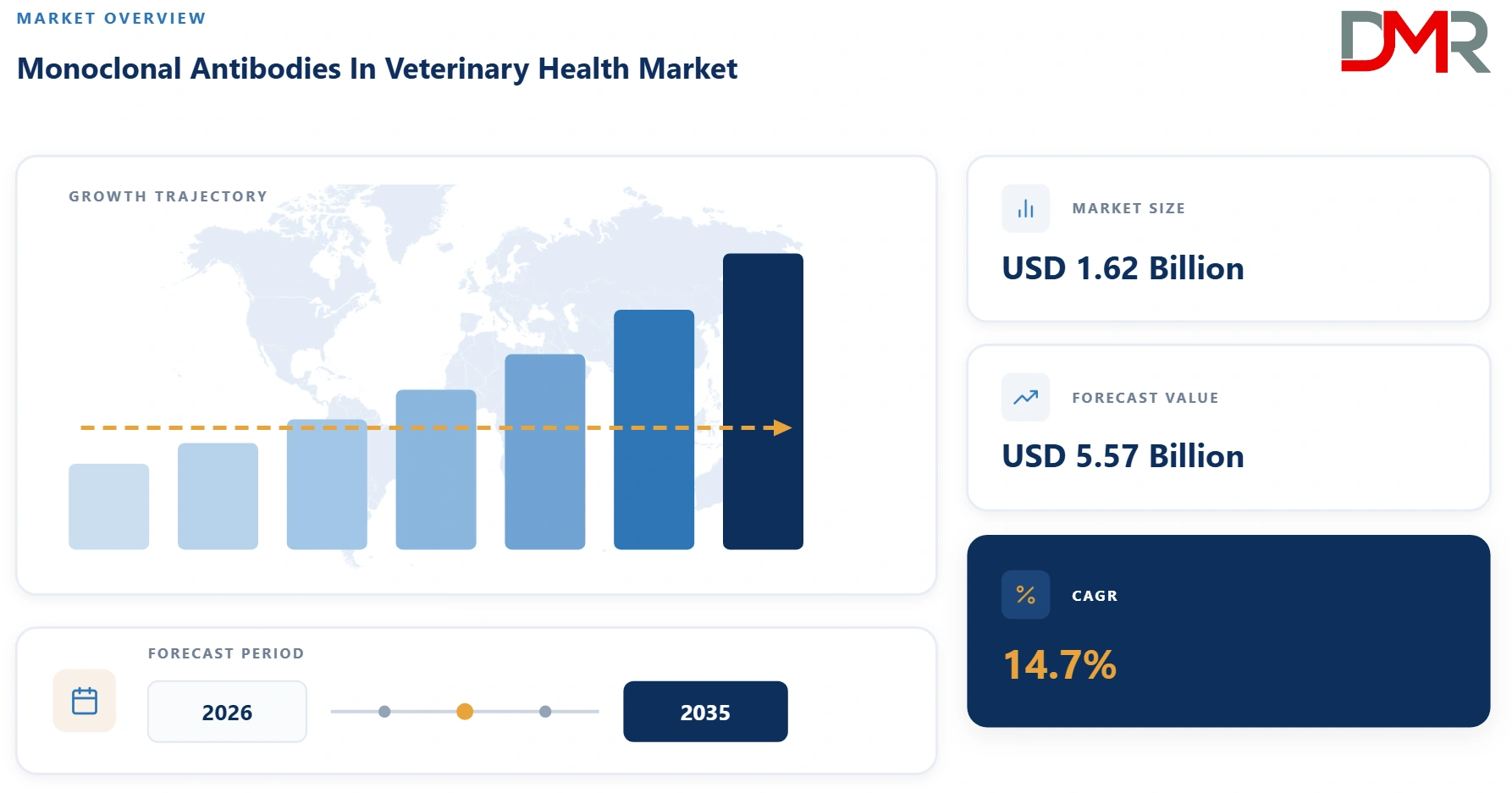
- Market Size (2026): USD 1.62 Bn
- Forecast Value (2035): USD 5.57 Bn
- CAGR (2026-2035): 14.7%
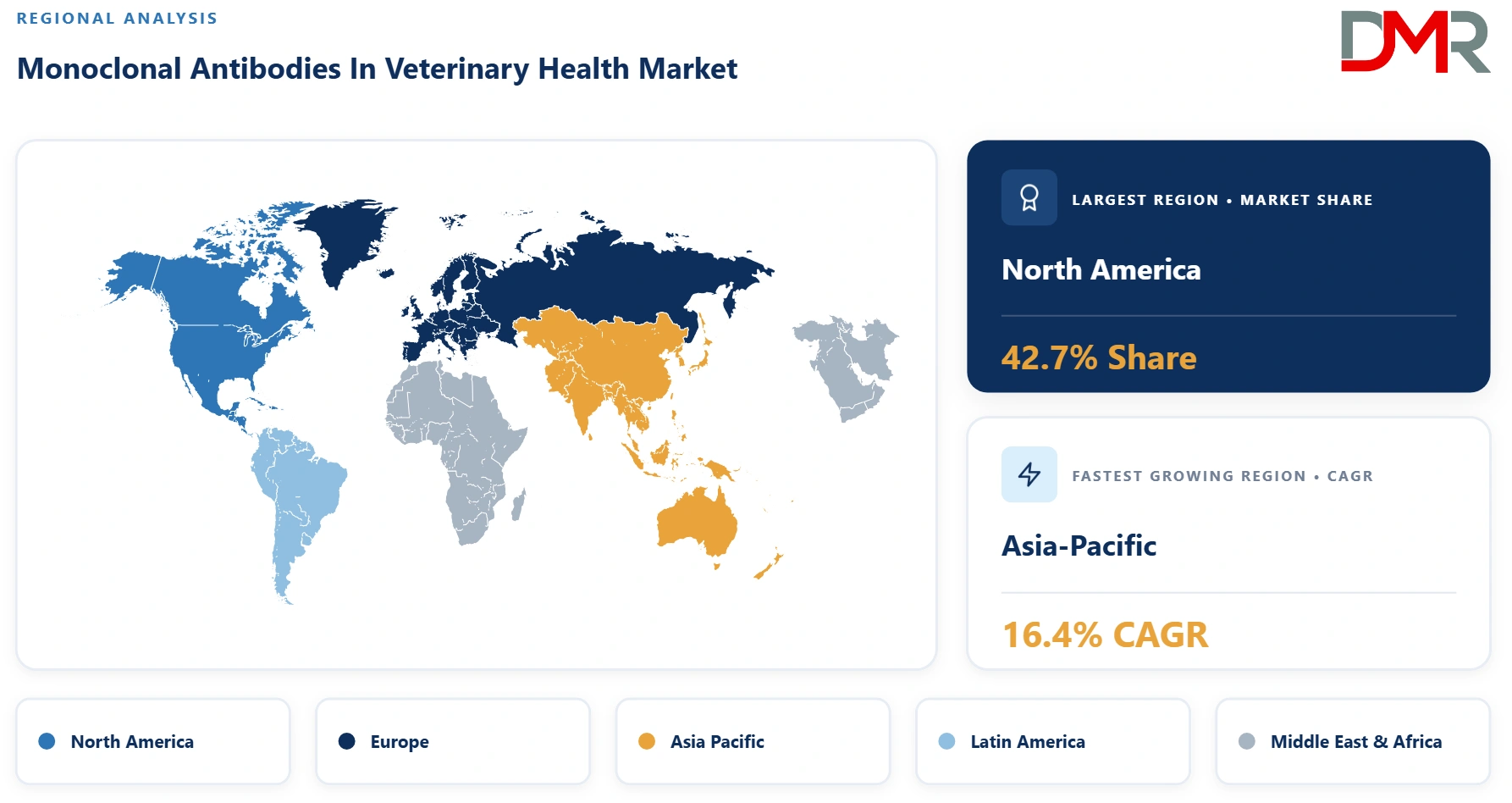
- Largest Region (2026): North America, approximately 42.7%
- Fastest-Growing Region: Asia-Pacific
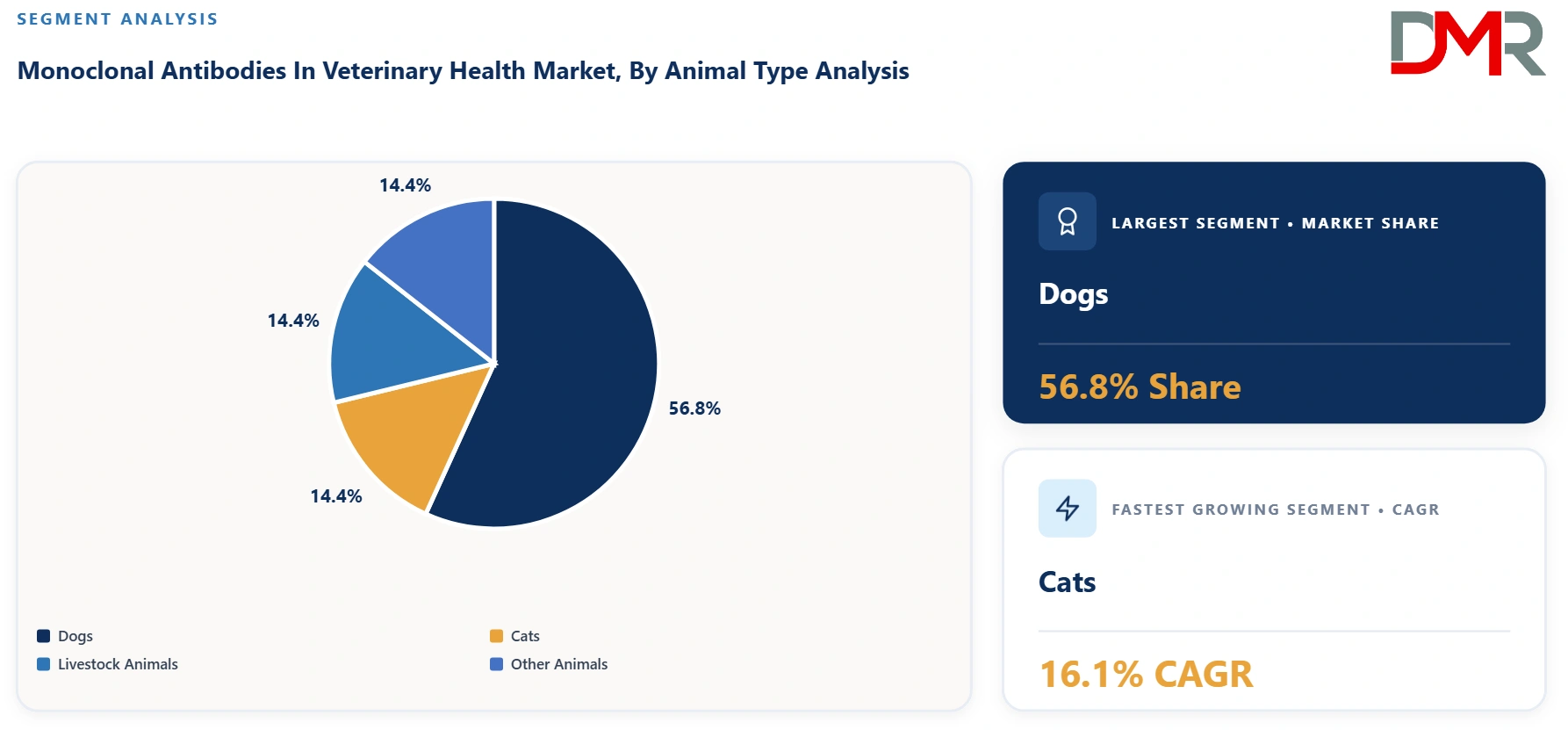
- Leading Animal Type (2026): Dogs, around 56.8%
- Leading Therapeutic Area (2026): Pain & Osteoarthritis, around 41.6%
- Key Players: Zoetis, Elanco Animal Health, Merck Animal Health, Boehringer Ingelheim Animal Health, and Others
What is Monoclonal Antibodies In Veterinary Health Market and its Market Size?
Global Monoclonal Antibodies In Veterinary Health Market size is estimated to reach USD 1.62 Bn in 2026 and is further anticipated to reach USD 5.57 Bn by 2035, at a CAGR of 14.7%.
ℹ
To learn more about this report –
Download Your Free Sample Report Here
Veterinary monoclonal antibodies are targeted biologic medicines engineered to bind specific molecular pathways associated with pain, inflammation, allergy, cancer, or infectious disease in animals. The market is currently concentrated in companion-animal medicine, where antibody therapies have established commercial roles in canine and feline osteoarthritis pain and canine atopic dermatitis. Their species-specific design and extended dosing intervals can provide therapeutic options when conventional small-molecule treatment is unsuitable or difficult to administer.
Demand is being supported by pet humanization, longer animal lifespans, rising diagnosis of chronic diseases, and greater owner willingness to pay for advanced therapies that improve mobility and quality of life. Veterinary hospitals and clinics are central to adoption because many antibody products are administered by veterinary professionals and require clinical diagnosis, treatment selection, and follow-up.
Innovation is expanding from established pain and dermatology applications toward oncology, infectious disease, and other immune-mediated conditions. Antibody engineering, species-specific target validation, improved cell-line development, and biologics manufacturing capabilities are increasing the number of veterinary programs entering development. Long-acting formulations are particularly attractive because they can reduce the burden of daily oral dosing for owners.
The market remains specialized compared with conventional veterinary pharmaceuticals because biologics require complex discovery, manufacturing, cold-chain management, and regulatory evidence. Commercial success depends on clear clinical differentiation, veterinarian confidence, safety, dosing convenience, owner affordability, intellectual property, and scalable manufacturing. Large animal-health companies hold strong commercialization advantages, while biotechnology developers contribute specialized antibody platforms and early-stage pipelines.
Use Cases
- Osteoarthritis Pain Management: Species-specific antibodies can target mediators of chronic pain and provide extended relief for dogs and cats with osteoarthritis, improving mobility and reducing daily dosing requirements.
- Atopic Dermatitis and Pruritus: Monoclonal antibodies can inhibit cytokine pathways associated with allergic itch, providing targeted treatment for dogs with atopic dermatitis and related inflammatory skin disease.
- Oncology Research and Treatment: Veterinary antibody programs are being explored for tumor-specific or immune targets, creating potential future options for precision oncology in companion animals.
- Infectious Disease Management: Antibodies can provide targeted passive immunity against specific pathogens, offering potential preventive or therapeutic applications where rapid immune protection is valuable.
Key Takeaways
- Market Size & Share: Global revenue is estimated at USD 1.62 Bn in 2026, with North America contributing approximately 42.7%.
- Animal Type Analysis: Dogs lead with approximately 56.8% share in 2026, while Cats are projected to expand at 16.1% CAGR.
- Therapeutic Area Analysis: Pain & Osteoarthritis holds around 41.6% share, while Dermatology & Allergy is projected to grow at 16.8% CAGR.
- Route Analysis: Subcutaneous administration accounts for approximately 71.4% of 2026 revenue and remains the primary route for commercial veterinary antibody therapies.
- Regional Analysis: Asia-Pacific is projected to be the fastest-growing region at approximately 16.4% CAGR through 2035.
- Commercial Catalyst: Veterinarian-administered long-acting biologics are gaining acceptance because they reduce owner dosing burden and support treatment adherence.
How AI/Gen AI is Transforming the Monoclonal Antibodies In Veterinary Health Market?
AI is increasingly relevant to antibody discovery through target prioritization, protein structure prediction, antibody sequence optimization, developability assessment, and prediction of binding interactions. These capabilities can help veterinary biotechnology teams screen larger design spaces and focus laboratory resources on candidates with stronger probability of success. Machine learning can also integrate clinical records, imaging, pathology, and biomarker data to identify animal populations most likely to respond to targeted biologics.
Generative AI can support sequence ideation, literature synthesis, protocol development, regulatory document preparation, pharmacovigilance workflows, and manufacturing knowledge management. In commercial development, predictive analytics can improve patient-population estimates and launch planning for species-specific indications. Human scientific review remains essential because veterinary datasets are smaller than human-health datasets and biologic candidates require experimental validation, species-specific safety assessment, and regulatory evidence.
- Antibody Design: AI can prioritize antibody sequences for affinity, specificity, stability, and lower immunogenicity risk.
- Target Discovery: Integrated clinical and molecular data can help identify disease pathways suitable for species-specific biologic intervention.
- Clinical Development: Predictive analytics can support patient selection, endpoint design, dose optimization, and post-treatment response analysis.
- Manufacturing: Data models can assist process monitoring, yield optimization, quality control, and biologics supply forecasting.
Key Drivers in the Global Monoclonal Antibodies In Veterinary Health Market
Rising Prevalence of Chronic Companion Animal Diseases
Longer pet lifespans and improved veterinary diagnostics are increasing recognition of chronic osteoarthritis, allergic dermatitis, cancer, and immune-mediated conditions. These diseases often require sustained treatment, creating demand for therapies that provide durable symptom control and convenient administration. Monoclonal antibodies can offer targeted mechanisms and extended dosing intervals, making them attractive in cases where daily medication is difficult or conventional therapies have limitations. Higher pet healthcare expenditure further supports adoption of premium biologic medicines.
Commercial Success of Targeted Veterinary Biologics
The successful adoption of antibody therapies for canine and feline pain and canine dermatology has validated monoclonal antibodies as a commercial veterinary drug class. Veterinarian familiarity with injectable biologics is increasing, while owners value longer treatment intervals and quality-of-life improvements. This commercial validation encourages animal-health companies and biotechnology developers to invest in additional antibody targets and indications, expanding the pipeline and strengthening manufacturing and regulatory capabilities.
Restraints in the Global Monoclonal Antibodies In Veterinary Health Market
High Development and Treatment Costs
Monoclonal antibodies require specialized discovery, cell-line development, biologics manufacturing, analytical characterization, clinical studies, and cold-chain logistics. These factors can raise development and treatment costs compared with established generic small molecules. Since much companion-animal healthcare is paid directly by owners, affordability can restrict adoption, especially for chronic conditions requiring repeated administration. Developers must therefore demonstrate meaningful clinical value and dosing advantages.
Species-Specific Development Complexity
Antibodies designed for human use cannot simply be transferred into veterinary medicine because species differences can affect target biology, immunogenicity, pharmacokinetics, and safety. Developers need species-specific sequences, assays, clinical evidence, and manufacturing strategies. Smaller addressable populations for individual animal indications can also make development economics challenging. These constraints increase the importance of careful target selection and platform technologies that can support multiple veterinary programs.
Growth Opportunities in the Global Monoclonal Antibodies In Veterinary Health Market
Expansion into Oncology and Immune-Mediated Diseases
Veterinary oncology and immune-mediated diseases offer substantial white-space opportunities for targeted biologics. Antibodies could be developed against tumor antigens, immune checkpoints, inflammatory cytokines, or other disease pathways where conventional treatment remains limited. Growth in veterinary specialty hospitals and advanced diagnostics can support identification of appropriate patients and biomarker-driven treatment. Successful programs could establish new premium categories beyond pain and dermatology.
Feline-Specific Biologic Therapies
Cats present a significant opportunity because medication administration can be difficult and several chronic feline diseases have limited therapeutic options. Long-acting injectable antibodies can reduce owner dosing burden and improve persistence. Osteoarthritis pain has already demonstrated the commercial potential of feline biologics, while additional opportunities may emerge in dermatology, inflammatory disease, oncology, and other chronic conditions as target validation and clinical research expand.
Trends in the Global Monoclonal Antibodies In Veterinary Health Market
Long-Acting Injectable Treatment
Extended-duration injectable antibodies are becoming a defining feature of veterinary biologics. Monthly or longer dosing intervals can improve adherence compared with daily oral therapy and allow veterinarians to maintain closer oversight of chronic disease management. This treatment model is particularly relevant for cats and animals that resist oral medication. Future antibody engineering is expected to continue focusing on half-life, potency, stability, and administration convenience.
Partnerships Between Animal Health Companies and Biotech Developers
Large animal-health companies increasingly combine their regulatory, manufacturing, and commercial capabilities with specialized biotechnology platforms. Smaller developers can contribute antibody discovery, species-specific engineering, and novel targets, while established companies provide global clinical development and veterinary distribution. Licensing, acquisition, and research collaborations are therefore expected to remain important mechanisms for expanding veterinary biologic pipelines.
Research Scope and Analysis
The market is analyzed by Animal Type, Therapeutic Area, Route of Administration, and Distribution Channel, with regional assessment across North America, Europe, Asia-Pacific, Latin America, and Middle East & Africa.
ℹ
To learn more about this report –
Download Your Free Sample Report Here
By Animal Type
Dogs is estimated to lead the animal type category with approximately 56.8% of revenue in 2026. The position reflects current commercial antibody indications, veterinarian familiarity, treatment frequency, and the concentration of biologic innovation in companion-animal medicine. Cats is projected to record the fastest expansion at approximately 16.1% CAGR from 2026 to 2035. Growth will depend on additional approvals, broader clinical evidence, treatment affordability, veterinarian adoption, and the ability of manufacturers to scale species-specific biologics while maintaining consistent quality.
By Therapeutic Area
Pain & Osteoarthritis is estimated to lead the therapeutic area category with approximately 41.6% of revenue in 2026. The position reflects current commercial antibody indications, veterinarian familiarity, treatment frequency, and the concentration of biologic innovation in companion-animal medicine. Dermatology & Allergy is projected to record the fastest expansion at approximately 16.8% CAGR from 2026 to 2035. Growth will depend on additional approvals, broader clinical evidence, treatment affordability, veterinarian adoption, and the ability of manufacturers to scale species-specific biologics while maintaining consistent quality.
By Route of Administration
Subcutaneous is estimated to lead the route of administration category with approximately 71.4% of revenue in 2026. The position reflects current commercial antibody indications, veterinarian familiarity, treatment frequency, and the concentration of biologic innovation in companion-animal medicine. Subcutaneous is projected to record the fastest expansion at approximately 15.2% CAGR from 2026 to 2035. Growth will depend on additional approvals, broader clinical evidence, treatment affordability, veterinarian adoption, and the ability of manufacturers to scale species-specific biologics while maintaining consistent quality.
By Distribution Channel
Veterinary Hospitals & Clinics is estimated to lead the distribution channel category with approximately 68.9% of revenue in 2026. The position reflects current commercial antibody indications, veterinarian familiarity, treatment frequency, and the concentration of biologic innovation in companion-animal medicine. Online Pharmacies is projected to record the fastest expansion at approximately 17.6% CAGR from 2026 to 2035. Growth will depend on additional approvals, broader clinical evidence, treatment affordability, veterinarian adoption, and the ability of manufacturers to scale species-specific biologics while maintaining consistent quality.
The Global Monoclonal Antibodies In Veterinary Health Market Report is Segmented Based on the Following
By Animal Type
- Dogs
- Cats
- Livestock Animals
- Other Animals
By Therapeutic Area
- Pain & Osteoarthritis
- Dermatology & Allergy
- Infectious Diseases
- Oncology
- Other Therapeutic Areas
By Route of Administration
- Subcutaneous
- Intravenous
- Other Routes
By Distribution Channel
- Veterinary Hospitals & Clinics
- Retail & Specialty Pharmacies
- Online Pharmacies
- Other Channels
Regional Analysis
Regional demand reflects companion-animal healthcare expenditure, availability of veterinary specialists, biologic regulatory pathways, pet insurance penetration, product launches, and veterinarian familiarity with advanced injectable therapies.
Region with the Largest Revenue Share
North America is estimated to hold approximately 42.7% of global revenue in 2026. The region benefits from high spending on companion-animal healthcare, extensive veterinary hospital networks, specialty care, established biologic product launches, and strong owner willingness to pursue advanced treatment for chronic pain and dermatologic disease. The United States represents the majority of regional revenue and remains an important market for clinical development and commercialization of novel veterinary biologics.
ℹ
To learn more about this report –
Download Your Free Sample Report Here
Region with the Highest CAGR
Asia-Pacific is projected to record the highest regional CAGR at approximately 16.4% from 2026 to 2035. Growth is supported by increasing pet ownership, rising household income, expansion of organized veterinary care, and growing awareness of chronic disease treatment. Japan and Australia provide established veterinary markets, while China, South Korea, and urban India offer expanding premium pet-health demand. Adoption will depend on approvals, distribution, pricing, and veterinarian education.
By Region
- North America: The US, Canada
- Europe: Germany, France, The UK, Italy, Spain, Rest of Europe
- Asia-Pacific: China, Japan, India, Australia, South Korea, Rest of APAC
- Latin America: Mexico, Brazil, Colombia, Argentina, Rest of LATAM
- Middle East & Africa: Saudi Arabia, The UAE, South Africa, Rest of MEA
Regulatory Landscape
Veterinary monoclonal antibodies are regulated as animal drugs or veterinary biologic products depending on jurisdiction, product mechanism, and regulatory framework. Developers must establish identity, purity, potency, manufacturing consistency, safety, and clinical effectiveness in the target species. Species-specific immunogenicity, dose selection, long-term safety, and post-market pharmacovigilance are important considerations. Global commercialization requires coordination across different authorities and biologics manufacturing standards. Novel mechanisms may also require early regulatory engagement to define development pathways, endpoints, and evidence expectations.
Patent Analysis
Intellectual property is a central competitive factor because veterinary antibodies can be protected through composition, sequence, epitope, target, formulation, manufacturing, dosing, and therapeutic-use claims. Species-specific engineering creates opportunities for differentiated patent estates even when biological pathways are known from human medicine. Developers also use platform patents covering antibody discovery or modification technologies. As commercial veterinary biologics expand, freedom-to-operate assessment, licensing, and lifecycle management are expected to become increasingly important, particularly in pain, dermatology, oncology, and immune-mediated disease.
Competitive Landscape
Competition is concentrated among large animal-health companies with biologics development and global veterinary commercialization capabilities, alongside specialist biotechnology developers building species-specific antibody platforms. Established products in osteoarthritis pain and dermatology provide first-mover advantages through veterinarian familiarity and real-world evidence. Future competition will depend on target differentiation, duration of action, safety, convenience, price, intellectual property, manufacturing scale, and geographic approvals. Partnerships and acquisitions are likely to remain important because specialized antibody discovery capabilities can complement the regulatory and distribution infrastructure of multinational animal-health companies.
Some of the Prominent Players in the Global Monoclonal Antibodies In Veterinary Health Market Are:
- Zoetis Inc.
- Elanco Animal Health Incorporated
- Merck Animal Health
- Boehringer Ingelheim Animal Health
- Virbac S.A.
- Ceva Santé Animale
- Dechra Pharmaceuticals
- Vetoquinol S.A.
- PetMedix Ltd.
- Vetigenics
- Animalcare Group plc
- Invetx Inc.
- Nexvet Biopharma
- Kindred Biosciences
- Bioceltix S.A.
- Vetbiolix
- PetBioCell GmbH
- Aratana Therapeutics
- Gallant
- VetStem Biopharma
- Bimeda
- Norbrook Laboratories
- Phibro Animal Health Corporation
- HIPRA
- Bioveta a.s.
- Kyoritsu Seiyaku Corporation
- Orion Animal Health
- Chanelle Pharma
- Jurox Pty Ltd
- Ourofino Saúde Animal
- Alivira Animal Health
- Zenex Animal Health
- Tianjin Ringpu Bio-Technology Co., Ltd.
- Indian Immunologicals Limited
- Hester Biosciences Limited
- Endovac Animal Health
- Agrovet Market Animal Health
- Laboratorios Calier
- Laboratorios Karizoo
- Vetanco
- Other Key Players
Recent Developments
- In December 2025, Elanco received USDA approval for Befrena (tirnovetmab), an anti-IL31 monoclonal antibody injection for canine allergic and atopic dermatitis.
- In December 2025, Elanco announced full USDA approval of Trutect, a canine parvovirus monoclonal antibody.
- In October 2025, European authorization was reported for Portela (relfovetmab), a long-acting monoclonal antibody therapy for osteoarthritis pain in cats.
- In 2025, veterinary biologics developers continued advancing species-specific antibody platforms targeting chronic inflammatory, infectious, and oncology indications.
- In 2024 and 2025, commercial adoption of monoclonal antibody therapies for canine and feline osteoarthritis pain continued to expand across major veterinary markets.
Report Details
| Report Characteristics |
| Market Size (2026) |
USD 1.62 Bn |
| Forecast Value (2035) |
USD 5.57 Bn |
| CAGR (2026–2035) |
14.7% |
| The US Market Size (2026) |
USD 0.63 Bn |
| Historical Data |
2021 – 2025 |
| Forecast Data |
2026 – 2035 |
| Base Year |
2025 |
| Segments Covered |
By Animal Type, By Therapeutic Area, By Route of Administration, By Distribution Channel |
| Regional Coverage |
North America, Europe, Asia-Pacific, Latin America, Middle East & Africa |
Frequently Asked Questions
How big is the Global Monoclonal Antibodies In Veterinary Health Market?
▾ The market is estimated at USD 1.62 Bn in 2026 and is projected to reach USD 5.57 Bn by 2035, expanding at a CAGR of 14.7%.
What is the growth rate of the market?
▾ The Global Monoclonal Antibodies In Veterinary Health Market is projected to grow at approximately 14.7% CAGR from 2026 to 2035 as targeted biologics gain wider veterinary adoption.
Which region dominates the market?
▾ North America is estimated to lead with approximately 42.7% of global revenue in 2026, supported by high pet healthcare expenditure, advanced veterinary care, and early adoption of biologic therapies.
Which animal type holds the largest share?
▾ Dogs are estimated to account for approximately 56.8% of 2026 revenue because several established veterinary antibody therapies target canine osteoarthritis pain and allergic dermatologic conditions.
Which therapeutic area leads the market?
▾ Pain & Osteoarthritis is estimated to hold approximately 41.6% of 2026 revenue, reflecting commercial adoption of long-acting antibody therapies for chronic musculoskeletal pain.
What factors are driving market growth in Global Monoclonal Antibodies In Veterinary Health Market ?
▾ Growth is driven by pet humanization, longer animal lifespans, chronic disease diagnosis, owner demand for convenient long-acting therapies, and expansion of species-specific antibody pipelines.
Who are the major companies in Global Monoclonal Antibodies In Veterinary Health Market ?
▾ Major participants include Zoetis, Elanco Animal Health, Merck Animal Health, Boehringer Ingelheim Animal Health, and specialist veterinary biotechnology developers working on species-specific biologics.