Indication Covered
The report covers mucopolysaccharidosis type I (MPS-I) as an ultra-rare, inherited lysosomal storage disorder, with emphasis on its clinical burden, treatment patterns, therapeutic innovation, and commercial market development across the seven markets covered. MPS-I is caused by pathogenic variants in the IDUA gene, resulting in deficient activity of the lysosomal enzyme alpha-L-iduronidase. This deficiency prevents the normal degradation of glycosaminoglycans (GAGs), particularly dermatan sulfate and heparan sulfate, leading to progressive accumulation within cells and widespread organ dysfunction. The condition is inherited in an autosomal recessive pattern and presents across a broad spectrum of severity, ranging from severe, rapidly progressive Hurler syndrome to attenuated Hurler-Scheie and Scheie syndromes.
The indication scope includes major clinical manifestations and associated disease conditions relevant to treatment demand, including:
- Severe MPS-I (Hurler Syndrome, MPS-IH)
- Attenuated MPS-I (Hurler-Scheie Syndrome, MPS-IH/S)
- Attenuated MPS-I (Scheie Syndrome, MPS-IS)
- MPS-I with Central Nervous System Involvement
- MPS-I with Skeletal and Joint Complications
- MPS-I with Cardiac, Respiratory, and Ocular Complications
- MPS-I with Residual Manifestations Following Transplantation
Severe MPS-I remains a major focus because of its early onset, progressive neurocognitive deterioration, multisystem involvement, and requirement for early therapeutic intervention. Hematopoietic stem cell transplantation (HSCT) is an established disease-modifying treatment for appropriately selected patients, particularly when performed before substantial neurological deterioration. The report also considers attenuated MPS-I because patients frequently require long-term enzyme replacement therapy (ERT), specialist monitoring, and supportive interventions throughout their lives.
Other difficult-to-treat manifestations, including skeletal dysplasia, joint contractures, corneal clouding, cardiac valve abnormalities, airway obstruction, hearing impairment, and neurological complications, are evaluated as areas of continuing clinical need.
The treatment landscape covers enzyme replacement therapy, hematopoietic stem cell transplantation, supportive and symptomatic care, and investigational gene and cell therapies. Particular attention is given to blood-brain barrier-penetrating enzyme therapies, autologous hematopoietic stem cell gene therapy, and emerging therapeutic platforms designed to improve enzyme delivery, provide sustained enzyme activity, and address neurological manifestations that remain inadequately controlled by conventional treatment.
Epidemiology Parameters
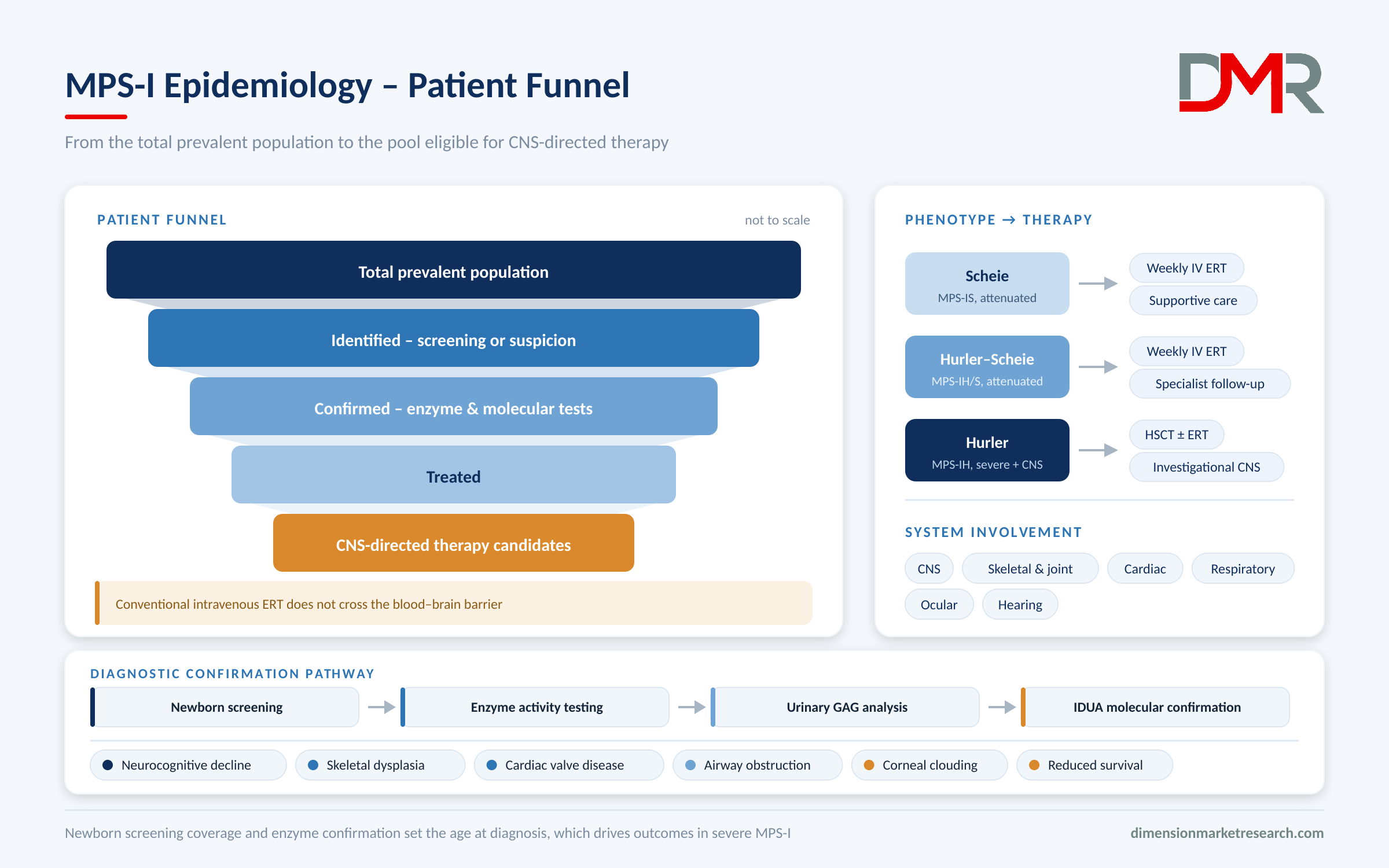
MPS-I represents an ultra-rare inherited metabolic disorder with a relatively small patient population and substantial clinical variation. Epidemiological studies have reported differences in birth prevalence and disease phenotype distribution across populations. These differences are influenced by genetic background, consanguinity, diagnostic practices, newborn screening coverage, access to specialist healthcare, and disease awareness. The epidemiological assessment considers both severe and attenuated MPS-I, recognizing that clinical presentation, diagnostic timing, survival, and treatment requirements can vary considerably.
ℹ
To learn more about this report –
Download Your Free Sample Report Here
The epidemiology assessment provides a structured evaluation of the MPS-I population from overall prevalence through diagnosis and treatment. Key parameters include:
- Total MPS-I Patient Population
- Prevalent Population
- Incidence Population
- Diagnosed Patient Population
- Treated Patient Population
- Untreated Patient Population
- Treatment-Eligible Population
- Disease Severity Distribution
- Hurler Syndrome (MPS-IH) Population
- Hurler-Scheie Syndrome (MPS-IH/S) Population
- Scheie Syndrome (MPS-IS) Population
- Patients Receiving Hematopoietic Stem Cell Transplantation
- Patients Receiving Enzyme Replacement Therapy
- Age Distribution
- Diagnosis Rate
- Treatment Rate
- Treatment Penetration
- Regional Disease Burden
- Epidemiological Trends
The analysis distinguishes between the overall prevalent population, diagnosed patients, and individuals actively receiving disease-specific treatment. This distinction is particularly important because attenuated MPS-I may remain undiagnosed for extended periods due to nonspecific symptoms, slow disease progression, and limited access to specialized diagnostic testing. Diagnosis generally involves biochemical assessment of GAG accumulation, measurement of alpha-L-iduronidase enzyme activity, and molecular genetic confirmation.
The report also evaluates the influence of newborn screening, improved diagnostic technologies, and increasing disease awareness on the identification and management of MPS-I. Earlier diagnosis can improve access to appropriate treatment, particularly for severe disease requiring timely transplantation. Advances in supportive care, enzyme replacement therapy, and transplantation have improved survival, contributing to a growing need for long-term management of skeletal, cardiovascular, respiratory, neurological, and ophthalmological complications.
Patient Segmentation
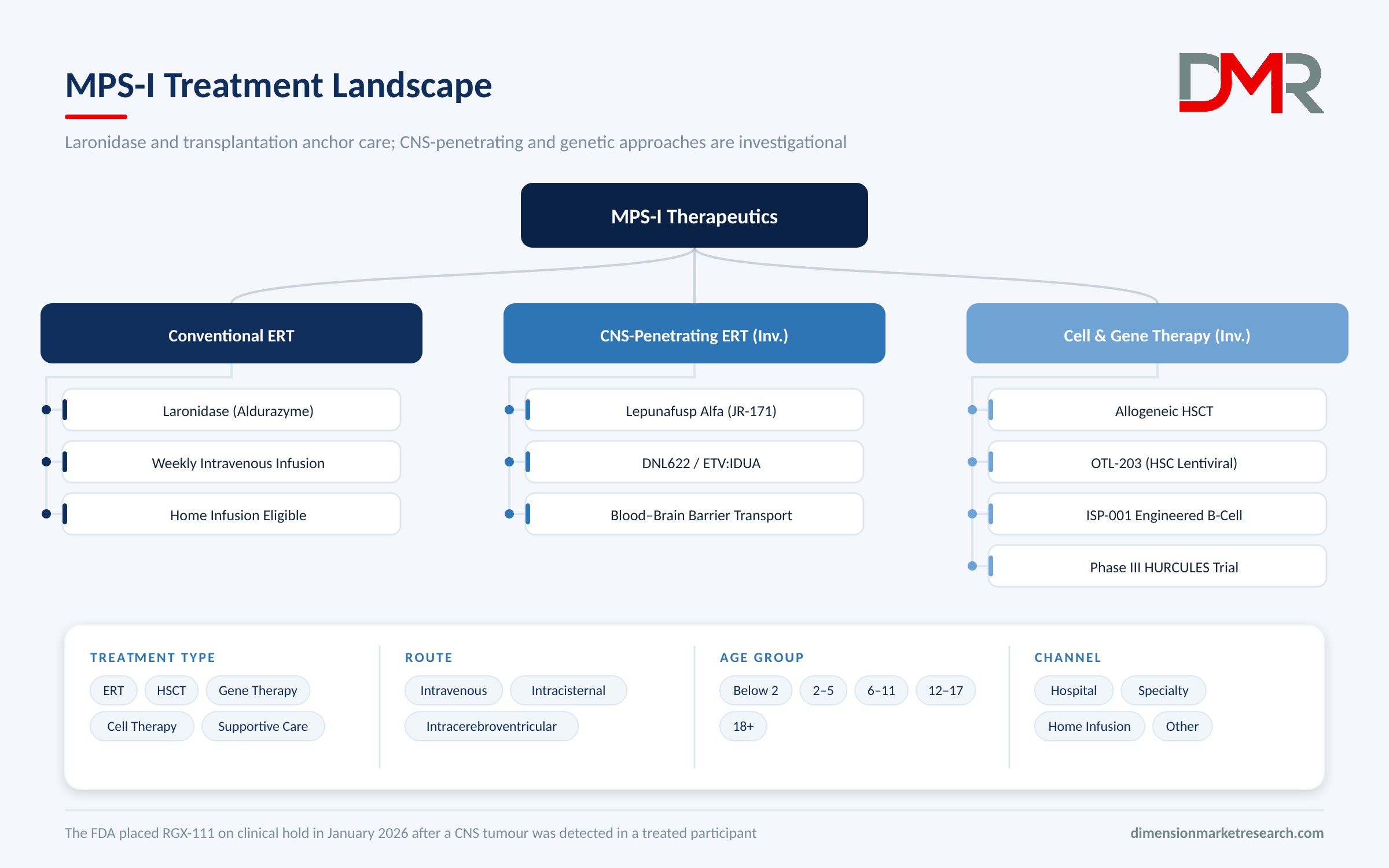
The MPS-I patient population is segmented according to disease severity, disease manifestation, treatment status, and therapeutic requirements. This approach provides a clearer understanding of patients eligible for different treatment categories and helps assess the potential addressable population for emerging therapies.
ℹ
To learn more about this report –
Download Your Free Sample Report Here
By Disease Severity
Severe MPS-I (Hurler Syndrome): Patients generally develop symptoms during infancy or early childhood, with manifestations including developmental delay, skeletal abnormalities, hepatosplenomegaly, recurrent respiratory infections, cardiac complications, and progressive neurological deterioration. Early allogeneic HSCT remains an established disease-modifying approach for appropriately selected patients, particularly before significant cognitive decline. Treatment decisions depend on age at diagnosis, disease progression, clinical condition, donor availability, and specialist assessment. ERT may be administered before transplantation to improve systemic manifestations and clinical stability.
Attenuated MPS-I (Hurler-Scheie Syndrome): Patients generally experience slower disease progression and significant somatic complications, including joint stiffness, skeletal abnormalities, cardiac valve disease, respiratory problems, and corneal clouding. Neurocognitive involvement is usually less prominent than in severe MPS-I. Long-term ERT and supportive interventions play an important role in management, while HSCT may be considered in selected circumstances following specialist evaluation.
Attenuated MPS-I (Scheie Syndrome): Patients typically experience comparatively mild and slowly progressive disease, often presenting later in childhood or adulthood. Common manifestations include joint contractures, corneal clouding, cardiac valve abnormalities, and musculoskeletal limitations, while intellectual development is generally preserved. Patients with clinically significant symptoms may receive long-term ERT, supportive treatment, and ongoing specialist monitoring.
By Disease Manifestation
- CNS and Neurocognitive Involvement
- Skeletal and Joint Disease
- Cardiac Disease
- Respiratory and Airway Disease
- Ocular and Hearing Disease
Disease manifestations may occur simultaneously in individual patients. These categories are therefore used to assess clinical burden and therapeutic requirements rather than representing mutually exclusive patient populations.
By Treatment Status
- Diagnosed and Treated
- Diagnosed and Untreated
- Undiagnosed
The treatment-status segmentation helps identify differences between the total disease population and patients actively receiving medical intervention. Improvements in newborn screening, biochemical testing, molecular diagnosis, physician awareness, specialist availability, and healthcare accessibility can gradually increase the diagnosed and treated population.
By Treatment Requirement
- Hematopoietic Stem Cell Transplantation Candidates
- Long-Term Enzyme Replacement Therapy Candidates
- Pre-Transplant Enzyme Replacement Therapy Candidates
- Gene Therapy Candidates (Investigational)
- Blood-Brain Barrier-Penetrating ERT Candidates (Investigational)
- Supportive and Symptomatic Care Candidates
This segmentation helps evaluate how changes in clinical guidelines, diagnostic practices, treatment eligibility, reimbursement, transplant availability, and emerging therapeutic technologies can influence treatment selection. Patients may qualify for multiple interventions at different stages, and these categories should not be interpreted as mutually exclusive populations.
Geographic Coverage
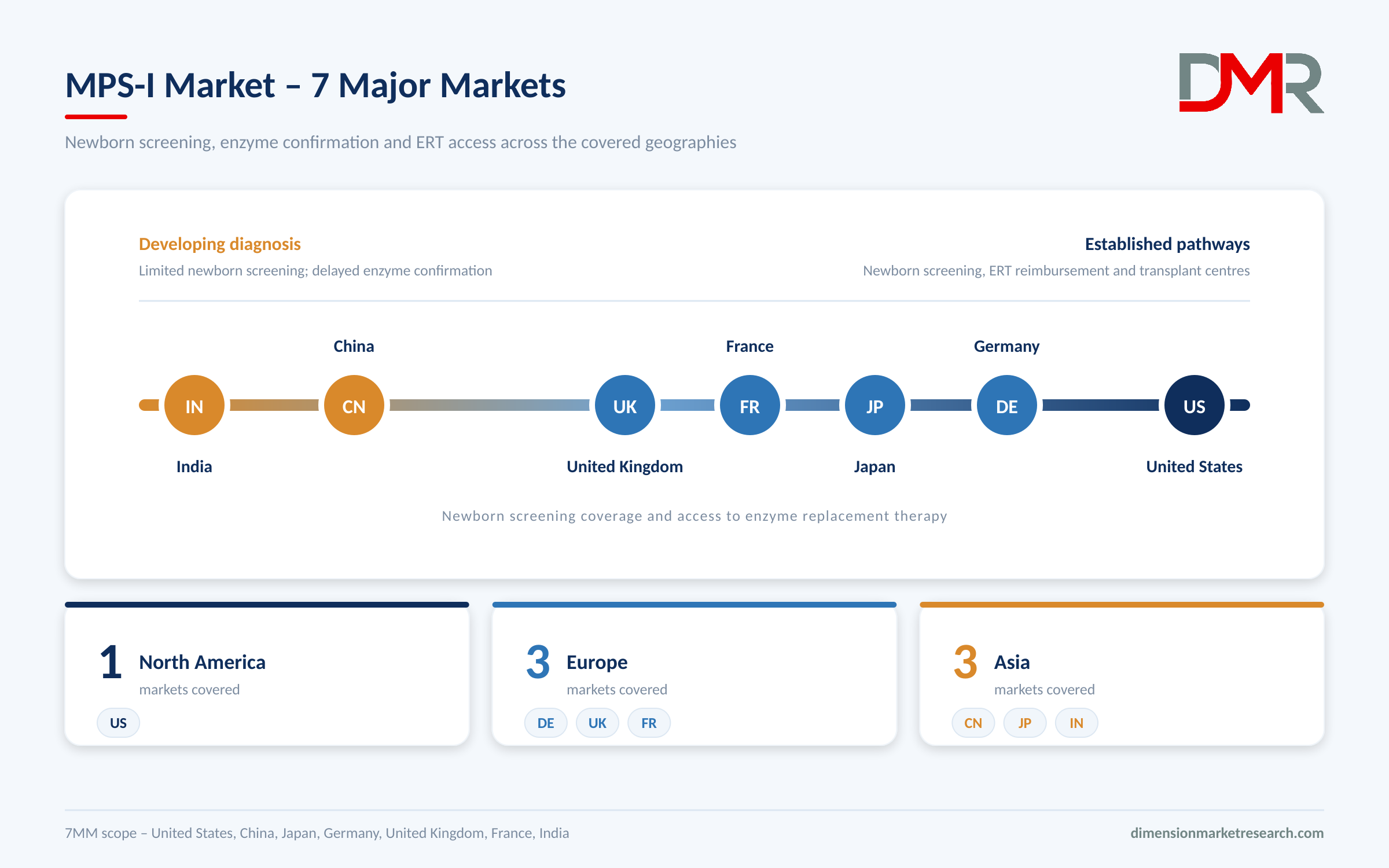
The report provides detailed market, treatment, epidemiological framework, and competitive analysis across seven major markets:
- United States
- China
- Japan
- Germany
- United Kingdom
- France
- India
The geographic analysis considers differences in disease recognition, newborn screening, diagnostic infrastructure, specialist treatment accessibility, orphan-drug reimbursement, transplantation capabilities, regulatory environment, physician adoption, and competitive activity. These factors are important because the commercial opportunity for MPS-I therapies differs considerably between mature orphan-drug markets and emerging markets where diagnosis and treatment access remain limited.
ℹ
To learn more about this report –
Download Your Free Sample Report Here
United States
The United States represents an important MPS-I market, supported by established metabolic disease treatment networks, newborn screening programs, specialist healthcare infrastructure, and pharmaceutical innovation. Laronidase (Aldurazyme) is an approved enzyme replacement therapy used for eligible patients with Hurler, Hurler-Scheie, and Scheie syndromes. HSCT remains an established treatment approach for appropriately selected patients with severe disease.
The market is characterized by demand for established ERT, specialized transplantation services, and the development of investigational therapies targeting neurological and systemic manifestations. Treatment decisions are influenced by disease severity, age at diagnosis, clinical condition, reimbursement, and specialist recommendations. Continued research into blood-brain barrier-penetrating therapies and gene-modified cell treatments may create opportunities for improving long-term disease management, subject to clinical and regulatory outcomes.
China
China represents a developing opportunity in MPS-I management because of its large healthcare population, improving rare-disease awareness, and increasing availability of genetic and metabolic diagnostic services. Recognition of inherited metabolic disorders is supporting greater attention to early diagnosis, specialist referrals, and access to disease-specific treatment.
The market is influenced by treatment affordability, reimbursement conditions, availability of specialist centers, and differences in healthcare accessibility between urban and rural areas. Laronidase has received regulatory approval in China, supporting access to disease-specific enzyme replacement therapy. Continued development of rare-disease healthcare infrastructure and diagnostic capabilities may improve treatment identification and adoption.
Japan
Japan represents an established orphan-drug market with developed healthcare infrastructure, specialist metabolic services, and experience in managing lysosomal storage disorders. Laronidase is an approved treatment for MPS-I, while HSCT and supportive interventions remain important components of disease management according to clinical presentation.
Japan is also an important center of therapeutic innovation, with JCR Pharmaceuticals developing lepunafusp alfa (JR-171), an investigational blood-brain barrier-penetrating enzyme replacement therapy. Treatment selection is influenced by disease phenotype, specialist recommendations, reimbursement conditions, clinical outcomes, and long-term treatment requirements. Therapies capable of improving neurological outcomes and reducing the limitations of conventional ERT may provide future treatment opportunities.
Germany
Germany represents an important European MPS-I market supported by developed healthcare infrastructure, specialized metabolic disease networks, and established transplantation capabilities. Laronidase is authorized in the European Union for the treatment of non-neurological manifestations in patients with confirmed MPS-I. Disease management includes ERT, early HSCT for appropriately selected severe cases, and multidisciplinary supportive care.
The market is influenced by orphan-drug reimbursement, specialist access, clinical treatment guidelines, and the adoption of innovative therapies. Participation in international rare-disease research and clinical development activities may support the future introduction of advanced gene and cell therapies, depending on regulatory approval and demonstrated therapeutic benefit.
United Kingdom
The United Kingdom benefits from established rare-disease treatment pathways, specialist metabolic centers, and experience in managing inherited lysosomal storage disorders. Diagnosis and treatment involve multidisciplinary assessment, with enzyme replacement therapy and hematopoietic stem cell transplantation used according to disease severity and clinical eligibility.
Market development is influenced by specialized commissioning, health technology assessment, clinical treatment recommendations, and access to expert treatment centers. Continued improvements in diagnostic recognition, long-term follow-up, and research into advanced therapies may support the management of patients with severe and attenuated MPS-I.
France
France represents an important European market supported by specialized reference centers for rare metabolic disorders, developed healthcare infrastructure, and established treatment pathways. Enzyme replacement therapy, hematopoietic stem cell transplantation, and supportive care are important components of MPS-I management, depending on clinical presentation and therapeutic eligibility.
The market is influenced by reimbursement conditions, specialist availability, rare-disease policy, and developments in advanced therapeutic approaches. Continued clinical research into blood-brain barrier-penetrating enzymes and gene-modified cell treatments may create opportunities for addressing the limitations of existing treatment options.
India
India represents a potential growth market for MPS-I therapies because of its large population, increasing recognition of inherited metabolic disorders, and expanding availability of molecular diagnostics and specialized pediatric healthcare services. Improvements in disease awareness, biochemical testing, and genetic diagnosis may support earlier identification of affected patients.
Affordability remains an important factor influencing access to disease-specific treatment, particularly because long-term enzyme replacement therapy involves recurring healthcare expenditure and HSCT requires specialized infrastructure. Government rare-disease initiatives, patient assistance programs, charitable support, specialist center development, and improvements in diagnostic accessibility may support future treatment adoption, although access remains uneven.
Market Segmentation
The global MPS-I market is segmented across drug class, treatment type, route of administration, patient age group, and distribution channel. The segmentation captures established pharmaceutical treatment and emerging therapeutic approaches, including conventional enzyme replacement therapy, blood-brain barrier-penetrating enzymes, hematopoietic stem cell-based gene therapies, and other investigational interventions. Established clinical procedures and supportive care are considered within treatment patterns but are distinguished from pharmaceutical revenue.
By Drug Class
Conventional Enzyme Replacement Therapy
Conventional enzyme replacement therapy represents the established pharmaceutical treatment category in the MPS-I market because of its approved role in managing systemic manifestations of the disease. These therapies provide functional alpha-L-iduronidase enzyme to reduce GAG accumulation and improve selected clinical outcomes.
The segment includes laronidase (Aldurazyme), a recombinant human alpha-L-iduronidase administered through weekly intravenous infusion. The therapy is used for eligible patients with severe and attenuated forms of MPS-I, although its ability to address neurological disease is limited because conventional intravenous ERT does not adequately cross the blood-brain barrier. Continued treatment demand is supported by long-term disease management requirements and its established role in treating non-neurological manifestations.
Blood-Brain Barrier-Penetrating Enzyme Replacement Therapy (Investigational)
Blood-brain barrier-penetrating ERT represents an emerging therapeutic category focused on overcoming the neurological limitations of conventional enzyme replacement treatment. These therapies use engineered transport mechanisms designed to facilitate delivery of functional enzyme into the central nervous system.
The segment includes lepunafusp alfa (JR-171), developed by JCR Pharmaceuticals, and DNL622 (ETV:IDUA), developed by Denali Therapeutics. Lepunafusp alfa has undergone Phase I/II clinical evaluation, while DNL622 remains in preclinical, IND-enabling development. These therapies are investigational and are not included in current approved MPS-I pharmaceutical revenue.
Gene Therapy (Investigational)
Gene therapy represents an emerging treatment category focused on introducing functional IDUA genetic material to support sustained enzyme production. These therapies aim to address the underlying enzyme deficiency and potentially reduce dependence on repeated enzyme infusions.
The segment includes OTL-203, an investigational autologous hematopoietic stem cell gene therapy developed by Orchard Therapeutics, a Kyowa Kirin company. OTL-203 uses a lentiviral vector to introduce a functional IDUA gene into the patient's hematopoietic stem cells and is being evaluated in the Phase III HURCULES study against allogeneic HSCT.
Engineered Cell Therapy (Investigational)
Engineered cell therapy represents a developing treatment category focused on modifying patient-derived cells to provide sustained therapeutic enzyme expression. Unlike conventional ERT, these approaches seek to establish a cellular source of functional enzyme rather than relying exclusively on repeated administration.
The segment includes iduronicrin genleukocel-T (ISP-001), developed by Immusoft, an investigational engineered B-cell therapy designed to deliver alpha-L-iduronidase. Clinical development remains early stage, and commercial adoption depends on demonstration of safety, durable enzyme expression, meaningful clinical benefit, and regulatory approval.
By Treatment Type
- Enzyme Replacement Therapy
- Hematopoietic Stem Cell Transplantation
- Autologous Hematopoietic Stem Cell Gene Therapy (Investigational)
- In Vivo Gene Therapy (Investigational)
- Engineered Cell Therapy (Investigational)
- Supportive and Symptomatic Care
Enzyme replacement therapy remains an important component of MPS-I management because of its established role in treating systemic manifestations, particularly among patients with attenuated disease. HSCT remains an established disease-modifying treatment for appropriately selected patients with severe MPS-I, particularly when performed early in life. Investigational gene and cell therapies are being evaluated for their potential to provide sustained enzyme production and improve outcomes beyond conventional treatment.
HSCT and supportive care are included to characterize treatment utilization and clinical pathways rather than as direct pharmaceutical revenue categories. Emerging therapies remain subject to clinical development, long-term safety assessment, regulatory review, and reimbursement decisions.
By Route of Administration
- Intravenous
- Intracisternal (Investigational)
- Intracerebroventricular (Investigational)
- Other Investigational Routes
Intravenous administration represents the established route for marketed MPS-I enzyme replacement therapy and is also used for investigational blood-brain barrier-penetrating enzyme treatments. Autologous gene-modified hematopoietic stem cells and other engineered cell products may also be administered intravenously following specialized preparation or conditioning, but these treatments differ substantially from repeated enzyme infusions.
Investigational CNS-directed gene therapies may use intracisternal or intracerebroventricular administration to deliver genetic material closer to the central nervous system. These approaches require specialized clinical capabilities and careful procedural and safety assessment. Future treatment development may influence administration frequency, treatment convenience, and long-term therapeutic management.
By Patient Age Group
- Below 2 Years
- 2–5 Years
- 6–11 Years
- 12–17 Years
- 18 Years and Above
Infants and young children represent an important treatment population because severe MPS-I often presents early and timely intervention is critical for preserving neurological and systemic function. HSCT is generally considered as early as feasible for eligible patients with severe disease, while age-specific criteria for investigational therapies vary according to clinical trial protocols.
Children and adolescents with attenuated disease may require continued enzyme replacement therapy and specialist monitoring. Adults represent an important long-term care population as individuals with attenuated MPS-I and survivors of severe disease require ongoing management of skeletal, cardiac, respiratory, ocular, and other complications.
By Distribution Channel
- Hospital Pharmacies
- Specialty Pharmacies
- Home Infusion Services
- Other Authorized Distribution Channels
Distribution is concentrated in hospital and specialty settings because approved MPS-I therapy requires supervised administration of an intravenous biologic, appropriate monitoring, and management of potential infusion-related reactions. Hospital pharmacies are particularly relevant for specialist metabolic centers and multidisciplinary treatment facilities.
Specialty pharmacies support access to enzyme replacement therapy through regulated distribution and coordinated treatment services. Home infusion services may provide an alternative administration setting for appropriately selected, clinically stable patients where permitted and supported by healthcare providers. Investigational gene and cell therapies are administered through specialized treatment centers rather than conventional retail distribution channels.
Market Dynamics
Growth Drivers
Increasing Newborn Screening and Early Diagnosis
Newborn screening and advances in diagnostic technologies are important drivers of the MPS-I market because they support earlier identification of affected individuals. Improved use of enzyme activity testing, GAG analysis, and molecular diagnostics can reduce diagnostic delays and facilitate more timely access to specialized care.
Earlier diagnosis is particularly important for severe MPS-I because therapeutic intervention before substantial neurological deterioration can influence long-term clinical outcomes. Continued expansion of screening programs, physician awareness, and specialist referral pathways may increase treatment access and support the adoption of approved and emerging therapies.
Advancement of Gene and Cell Therapies
The development of gene and cell therapies represents an important area of innovation in MPS-I management. These approaches seek to address the underlying IDUA deficiency by providing a sustained source of functional enzyme, potentially reducing reliance on repeated enzyme infusions and improving disease management.
OTL-203 is being evaluated in a Phase III clinical program comparing autologous hematopoietic stem cell gene therapy with allogeneic HSCT. Engineered cell therapies such as ISP-001 are also under investigation. Continued progress in clinical evaluation, manufacturing methods, safety monitoring, and regulatory development may support future therapeutic opportunities, although approval and commercial availability remain uncertain.
Development of Blood-Brain Barrier-Penetrating Therapies
The limited ability of conventional ERT to cross the blood-brain barrier represents a major unmet medical need in MPS-I, particularly among patients with severe neurological involvement. This limitation has encouraged the development of therapies designed to improve delivery of functional enzyme into the central nervous system.
Lepunafusp alfa (JR-171) and DNL622 are examples of investigational enzyme-based approaches using transferrin receptor-mediated transport technology. Continued research may support the development of therapies capable of addressing both neurological and systemic manifestations, subject to successful demonstration of clinical efficacy and acceptable safety.
Increasing Rare-Disease Research and Regulatory Support
Rare-disease research initiatives, orphan-drug development incentives, and regulatory pathways supporting innovative treatments are encouraging continued investment in MPS-I therapeutic development. The availability of specialized research networks and international clinical collaborations also supports progress in understanding disease mechanisms, treatment response, and long-term patient outcomes.
Growing attention to unmet neurological needs, improvements in genetic medicine technologies, and advances in specialized biologic manufacturing are creating opportunities for pharmaceutical developers. Continued investment in clinical research and appropriate regulatory support may help advance innovative treatment options.
Market Restraints
Ultra-Rare Patient Population
The limited number of patients with MPS-I represents a major challenge for pharmaceutical development and commercialization. Small patient populations make clinical trial recruitment difficult, restrict the availability of comparative clinical evidence, and increase uncertainty around long-term treatment outcomes.
Differences in disease severity, patient age, diagnostic timing, and clinical manifestations further complicate patient selection and trial design. These factors may increase development costs, prolong clinical evaluation, and constrain commercial opportunities for new therapies.
High Cost of Treatment
Long-term enzyme replacement therapy, specialized transplantation procedures, and emerging gene and cell therapies involve substantial treatment and healthcare expenditures. The requirement for repeated infusions, specialist monitoring, multidisciplinary care, and management of long-term complications can create financial pressure on healthcare systems and patients.
In markets with limited reimbursement coverage, high treatment costs may restrict access to disease-specific interventions. The potential introduction of advanced therapies could create additional pricing and reimbursement challenges, particularly where long-term clinical benefits and treatment durability remain uncertain.
Safety Risks and Regulatory Challenges
Safety concerns are an important restraint in advanced MPS-I therapy development. Gene and cell therapies require careful assessment of long-term risks, including insertional mutagenesis, treatment-related toxicity, immune responses, and complications associated with conditioning regimens or specialized administration procedures.
The FDA clinical hold placed on RGX-111 in January 2026 following the identification of a CNS tumor in a treated participant highlights the importance of long-term safety monitoring. These developments may increase regulatory scrutiny of related treatment approaches and influence future clinical development decisions.
Limited Efficacy of Existing Treatments
Although conventional ERT provides important benefits in managing systemic disease manifestations, it does not adequately address neurological involvement and has limited effectiveness against certain skeletal, joint, corneal, and cardiac valve complications. Patients may also experience infusion-associated reactions or develop anti-drug antibodies.
HSCT can improve outcomes in appropriately selected patients with severe disease but does not eliminate all long-term complications and carries transplantation-related risks. The persistence of residual disease manifestations creates ongoing clinical challenges and underscores the need for improved therapeutic approaches.
Competitive Landscape
The global MPS-I market is characterized by a concentrated commercial landscape involving established enzyme replacement therapy providers and emerging pharmaceutical developers focused on blood-brain barrier-penetrating enzymes, gene therapy, and engineered cell treatment approaches.
Leading companies covered in the competitive assessment include:
- Sanofi (Genzyme)
- BioMarin Pharmaceutical Inc.
- Kyowa Kirin Co., Ltd. (including Orchard Therapeutics)
- JCR Pharmaceuticals Co., Ltd.
- REGENXBIO Inc.
- Nippon Shinyaku Co., Ltd.
- Immusoft Corporation
- Denali Therapeutics Inc.
Competition is increasingly focused on developing treatments capable of demonstrating meaningful improvements in neurological outcomes, systemic disease management, durability, and overall patient quality of life. Established companies benefit from clinical experience, regulatory approvals, treatment familiarity, and existing commercialization infrastructure, while emerging developers are pursuing differentiated mechanisms intended to overcome the limitations of current treatment.
The competitive environment is influenced by the collaboration between BioMarin Pharmaceutical Inc. and Sanofi for Aldurazyme, as well as development activities involving companies such as Kyowa Kirin, JCR Pharmaceuticals, Denali Therapeutics, and Immusoft. These companies are investing in advanced enzyme delivery technologies, autologous gene-modified stem cells, and engineered cellular platforms.