Indication Covered
The report covers Multiple Myeloma (MM) as a hematological malignancy and plasma cell neoplasm, with emphasis on its clinical burden, treatment patterns, therapeutic innovation, and commercial market development across the seven major markets. Multiple Myeloma is primarily characterized by the uncontrolled proliferation of malignant plasma cells in the bone marrow, resulting in the production of monoclonal immunoglobulins or free light chains. The condition can range from asymptomatic smoldering multiple myeloma to symptomatic active disease characterized by bone destruction, anemia, renal impairment, hypercalcemia, and other organ complications, requiring a combination of immunomodulatory agents, proteasome inhibitors, corticosteroids, monoclonal antibodies, and cellular therapies.
The indication scope includes major clinical manifestations and associated disease conditions relevant to treatment demand, including:
- Newly Diagnosed Multiple Myeloma (NDMM)
- Relapsed or Refractory Multiple Myeloma (RRMM)
- Smoldering Multiple Myeloma (SMM)
- Light Chain Multiple Myeloma
- Extramedullary Multiple Myeloma
- High-Risk Multiple Myeloma
Newly Diagnosed Multiple Myeloma remains the primary focus because of its substantial treatment burden and the need for continuous disease management following initial diagnosis. The report also considers Relapsed or Refractory Multiple Myeloma because of its significant clinical and commercial relevance, particularly as patients frequently require multiple subsequent lines of therapy due to disease progression or treatment resistance. Other difficult-to-treat manifestations, including high-risk cytogenetic disease, extramedullary disease, and triple-class refractory Multiple Myeloma, are evaluated as areas of continuing clinical need.
The treatment landscape covers proteasome inhibitors, immunomodulatory drugs, corticosteroids, monoclonal antibodies, and cellular and targeted therapies. Particular attention is given to advanced therapies targeting B-cell maturation antigen (BCMA), G protein-coupled receptor class C group 5 member D (GPRC5D), CD38, and other plasma cell-associated targets, as well as emerging bispecific antibodies, antibody-drug conjugates, CAR T-cell therapies, and next-generation immunotherapies.
Epidemiology Parameters
Multiple Myeloma represents a significant progressive and life-threatening hematological cancer burden across the major healthcare markets covered in the report. Epidemiological patterns vary substantially between countries because of differences in population age distribution, genetic susceptibility, environmental factors, healthcare access, disease awareness, diagnostic practices, and availability of hematologists, oncologists, and specialized diagnostic services.
ℹ
To learn more about this report –
Download Your Free Sample Report Here
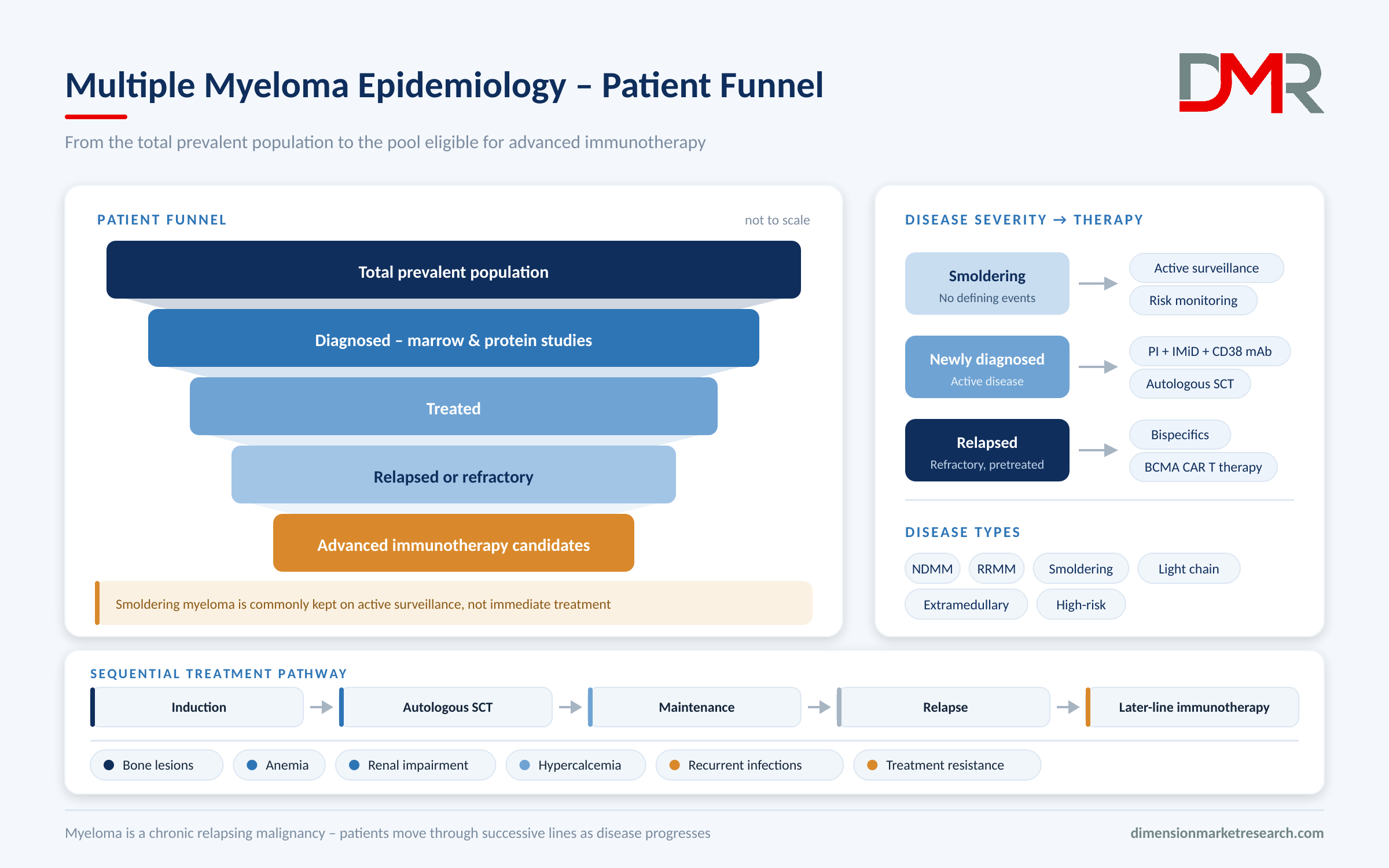
The epidemiology assessment provides a structured evaluation of the Multiple Myeloma population from overall prevalence through diagnosis and treatment. Key parameters include:
- Total Multiple Myeloma patient population
- Prevalent population
- Incidence population
- Diagnosed patient population
- Treated patient population
- Untreated patient population
- Treatment-eligible population
- Disease stage distribution
- Smoldering Multiple Myeloma population
- Newly Diagnosed Multiple Myeloma population
- Relapsed or Refractory Multiple Myeloma population
- High-Risk Multiple Myeloma population
- Light Chain Multiple Myeloma population
- Extramedullary Multiple Myeloma population
- Age distribution
- Gender distribution
- Diagnosis rate
- Treatment rate
- Treatment penetration
- Regional disease burden
- Epidemiological trends
The analysis distinguishes between the broader prevalent population and patients who are diagnosed and actively receiving treatment. This distinction is particularly important because some patients with smoldering disease may remain under active surveillance without immediate pharmaceutical intervention, while others may experience diagnostic delays due to nonspecific symptoms or limited access to specialized hematological services.
The report also evaluates the increasing recognition of Multiple Myeloma as a chronic relapsing hematological malignancy requiring continuous treatment monitoring and sequential therapeutic intervention. Associated manifestations such as renal impairment, skeletal-related events, anemia, infections, and treatment-related complications can influence treatment decisions, disease monitoring, healthcare utilization, and long-term management strategies.
Patient Segmentation
The Multiple Myeloma patient population is segmented according to disease severity, disease manifestation, treatment status, and therapeutic requirements. This approach provides a clearer understanding of the population eligible for different treatment categories and helps assess the potential addressable population for advanced therapies.
By Disease Severity
Smoldering / Early Disease: Patients with smoldering Multiple Myeloma generally do not have myeloma-defining events or attributable end-organ damage and are frequently managed through active surveillance and regular disease monitoring. Treatment decisions are influenced by progression risk, biomarker profile, cytogenetic abnormalities, and clinical eligibility for early intervention.
Newly Diagnosed / Active Disease: Patients with newly diagnosed active Multiple Myeloma generally require systemic treatment through combination regimens incorporating proteasome inhibitors, immunomodulatory drugs, corticosteroids, and monoclonal antibodies. Treatment selection is influenced by transplant eligibility, age, frailty, renal function, cytogenetic risk, and patient preference.
Relapsed / Refractory Disease: Patients experiencing disease progression or inadequate response to previous treatment are more likely to require subsequent-line therapies, including next-generation proteasome inhibitors, immunomodulatory agents, monoclonal antibodies, bispecific antibodies, and CAR T-cell therapies. This segment represents a major contributor to advanced Multiple Myeloma treatment demand.
By Disease Type
- Newly Diagnosed Multiple Myeloma
- Relapsed Multiple Myeloma
- Refractory Multiple Myeloma
- Smoldering Multiple Myeloma
- Light Chain Multiple Myeloma
- High-Risk Multiple Myeloma
By Treatment Status
- Diagnosed and Treated
- Diagnosed and Untreated
- Undiagnosed
The treatment-status segmentation helps identify the gap between the total disease population and the population actively participating in healthcare treatment. Improvements in cancer awareness, diagnostic capabilities, hematology services, and healthcare access can gradually increase the diagnosed and treated population.
By Treatment Requirement
- Active Surveillance Candidates
- First-Line Combination Therapy Candidates
- Autologous Stem Cell Transplant Candidates
- Maintenance Therapy Candidates
- Relapsed Disease Therapy Candidates
- Advanced Immunotherapy Candidates
This segmentation helps evaluate how changes in treatment guidelines, physician preferences, reimbursement, and therapy availability can shift patients between conventional combination regimens and advanced treatment categories.
Geographic Coverage
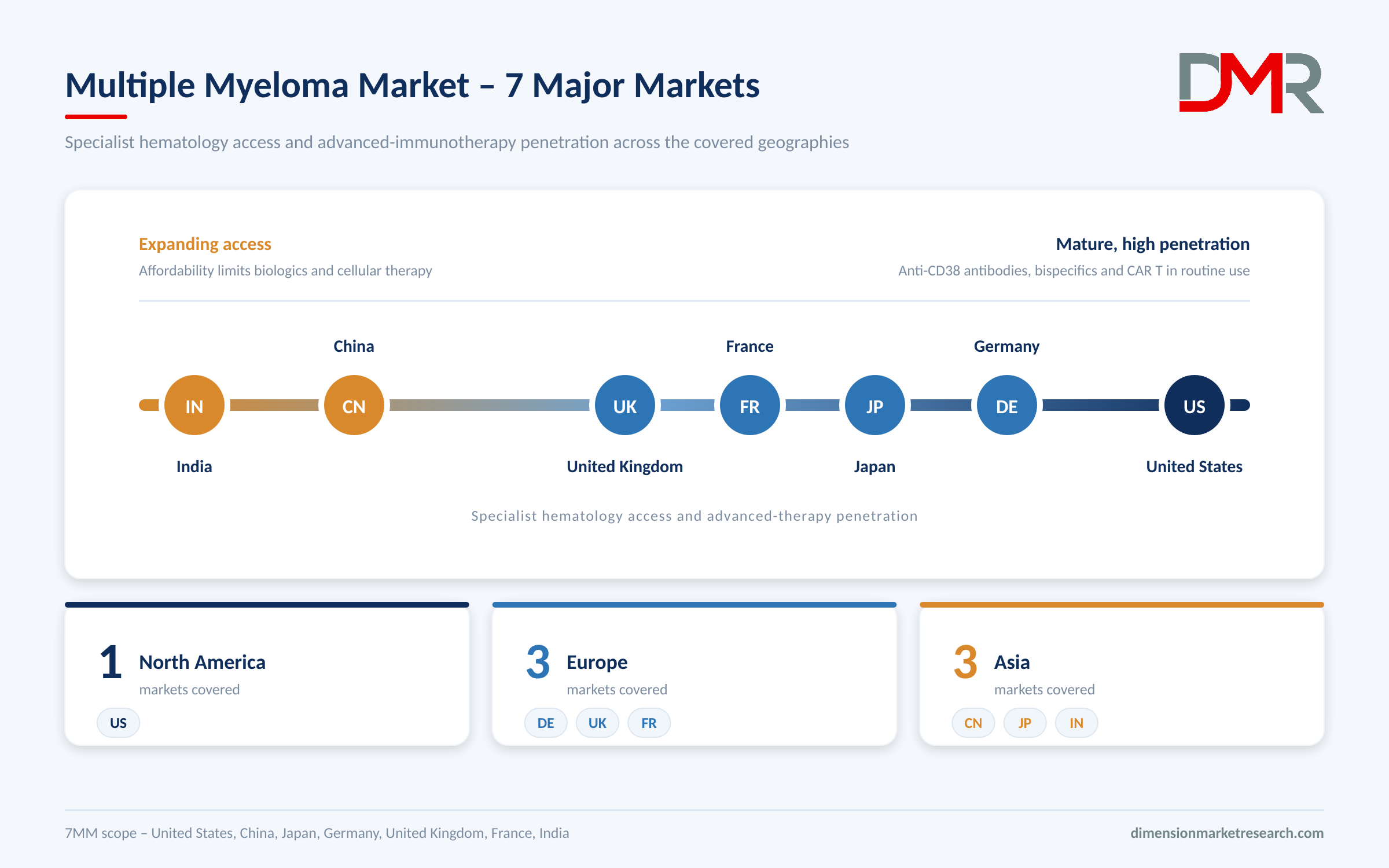
The report provides detailed market, epidemiology, treatment, and competitive analysis across 7 major markets:
- United States
- China
- Japan
- Germany
- United Kingdom
- France
- India
The geographic analysis considers differences in patient population, diagnosis rates, healthcare infrastructure, treatment accessibility, reimbursement, therapeutic penetration, regulatory environment, physician adoption, and competitive activity. These factors are particularly important because the commercial opportunity for Multiple Myeloma therapies differs considerably between mature pharmaceutical markets and high-growth emerging markets.
ℹ
To learn more about this report –
Download Your Free Sample Report Here
United States
The United States represents one of the most important Multiple Myeloma markets, supported by high cancer awareness, established hematology and oncology networks, strong pharmaceutical innovation, and broad availability of advanced therapies. Proteasome inhibitors, immunomodulatory drugs, anti-CD38 monoclonal antibodies, bispecific antibodies, and BCMA-directed CAR T-cell therapies have achieved substantial penetration among eligible patients.
The market is also characterized by significant competition between established combination regimens and newer immunotherapies. Treatment selection is influenced by clinical efficacy, safety, durability of response, dosing frequency, payer restrictions, patient preference, transplant eligibility, and prior treatment history. Continued development of bispecific antibodies, next-generation CAR T-cell therapies, and novel targeted treatments is expected to further intensify competition.
China
China represents a significant long-term growth opportunity because of its large patient population and increasing recognition of Multiple Myeloma as a progressive hematological malignancy requiring sustained management. Improvements in healthcare infrastructure, cancer diagnosis, and specialist availability are supporting greater diagnosis and treatment access.
The market is gradually experiencing increased adoption of advanced therapies, although affordability, reimbursement coverage, treatment accessibility, and differences between urban and rural healthcare services remain important considerations. Expansion of innovative domestic pharmaceutical development, particularly in BCMA-targeted therapies, bispecific antibodies, and cellular immunotherapies, may also increase competitive intensity.
Japan
Japan represents a mature healthcare and pharmaceutical market with sophisticated medical infrastructure and established hematology and oncology services. Increasing awareness of treatment goals and the availability of proteasome inhibitors, immunomodulatory drugs, monoclonal antibodies, and advanced immunotherapies support continued demand for advanced Multiple Myeloma management.
Treatment decisions are influenced by clinical efficacy, safety, reimbursement conditions, patient age, dosing convenience, and physician familiarity. The market also provides opportunities for innovative therapies that can demonstrate meaningful improvements in treatment durability, tolerability, or administration convenience, particularly among elderly and heavily pretreated patients.
Germany
Germany represents a leading European Multiple Myeloma market with established hematology networks and strong utilization of advanced systemic therapies. Treatment pathways are supported by a developed healthcare system, established transplant infrastructure, and established clinical management practices.
The market is increasingly influenced by biosimilar availability, treatment optimization, reimbursement considerations, and the introduction of therapies with differentiated mechanisms. Continued adoption of anti-CD38 monoclonal antibodies, proteasome inhibitors, immunomodulatory drugs, and BCMA-directed therapies is expected to remain important to market development.
United Kingdom
The UK Multiple Myeloma market benefits from established clinical guidelines, specialist hematology and oncology services, and structured treatment pathways. Advanced therapies are increasingly incorporated into management strategies for patients with newly diagnosed, relapsed, and refractory disease, particularly those who have inadequate response to conventional treatment.
Market development is influenced by National Health Service treatment criteria, cost-effectiveness considerations, clinical outcomes, and access to specialist services. Increasing emphasis on achieving deeper and sustained responses, improving progression-free survival, and expanding treatment options for heavily pretreated patients supports continued innovation in targeted immunotherapy.
France
France represents an important European market supported by developed healthcare infrastructure, specialist hematology services, and established reimbursement mechanisms. Anti-CD38 monoclonal antibodies, proteasome inhibitors, immunomodulatory drugs, and advanced cellular therapies have become important components of treatment for patients with newly diagnosed and relapsed or refractory disease.
Market growth is influenced by therapeutic innovation, treatment accessibility, reimbursement conditions, and increasing use of targeted immunotherapies. Biosimilar adoption and the introduction of newer mechanisms, particularly bispecific antibodies and next-generation cellular therapies, are expected to shape the competitive environment.
India
India represents a high-potential Multiple Myeloma market because of its large population, expanding healthcare infrastructure, increasing cancer awareness, and improving access to specialty oncology care. Diagnosis and treatment rates have significant potential for expansion as healthcare services, diagnostic capabilities, and specialist coverage become more accessible.
Affordability remains an important factor influencing treatment selection, particularly for advanced biologics, monoclonal antibodies, and cellular therapies. Greater availability of generic and cost-effective treatment options, increasing specialist coverage, and improving patient awareness can support future market expansion.
Market Segmentation
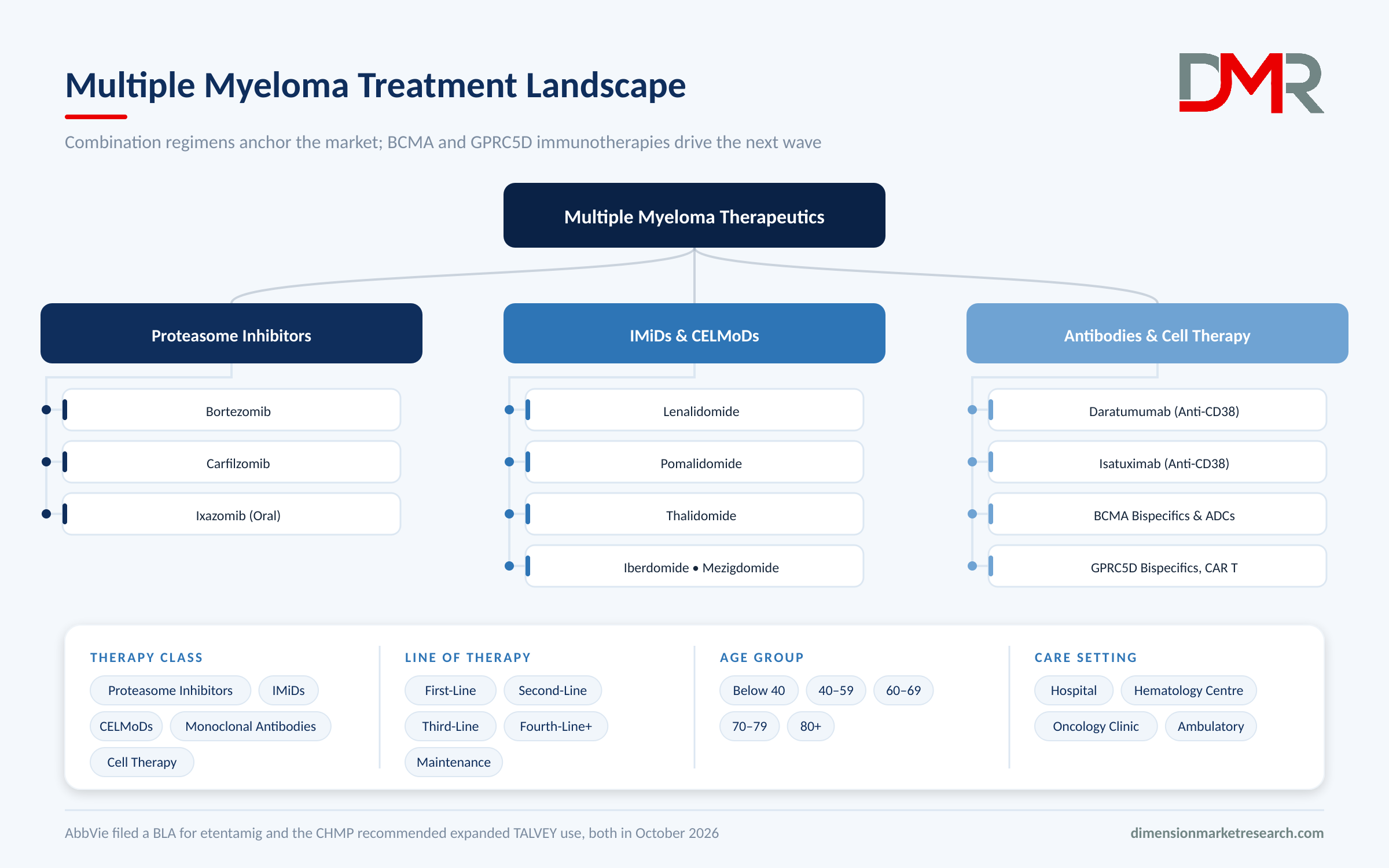
The Multiple Myeloma market is segmented across therapy class, line of therapy, route of administration, patient age group, and care setting. The segmentation captures both established treatment categories and emerging therapeutic approaches, reflecting differences in treatment selection, disease progression, patient eligibility, and healthcare delivery.
ℹ
To learn more about this report –
Download Your Free Sample Report Here
By Therapy Class
Proteasome Inhibitors
Proteasome inhibitors represent a major segment of the Multiple Myeloma market because of their established efficacy in newly diagnosed and relapsed disease. These therapies interfere with the proteasome-mediated degradation of intracellular proteins, resulting in the accumulation of abnormal proteins and induction of apoptosis in malignant plasma cells.
The segment includes bortezomib, carfilzomib, and ixazomib. Increasing physician familiarity, established clinical evidence, combination treatment strategies, and availability of oral and injectable formulations continue to support proteasome inhibitor utilization.
Immunomodulatory Drugs (IMiDs) and CELMoDs
Immunomodulatory drugs represent an important segment because of their established role in combination regimens and maintenance treatment. These therapies influence immune-cell activity, inhibit myeloma cell proliferation, and promote the degradation of proteins involved in malignant plasma cell survival.
The segment includes lenalidomide, pomalidomide, and thalidomide, alongside emerging cereblon E3 ligase modulator (CELMoD) therapies such as iberdomide and mezigdomide. Continued development of next-generation immunomodulatory agents could increase treatment options for patients with relapsed or refractory disease.
Monoclonal Antibodies and Immunotherapies
Monoclonal antibodies and immunotherapies represent an increasingly important segment because of their ability to selectively recognize and eliminate malignant plasma cells through immune-mediated mechanisms.
The segment includes anti-CD38 antibodies such as daratumumab and isatuximab, BCMA-directed antibody-drug conjugates, bispecific antibodies, and other immune-targeted therapies. Continued clinical development and expanded treatment indications are supporting the growing role of immunotherapy across multiple lines of treatment.
By Line of Therapy
- First-Line Therapy
- Second-Line Therapy
- Third-Line Therapy
- Fourth-Line Therapy and Beyond
- Maintenance Therapy
First-line therapy remains central to the Multiple Myeloma market because newly diagnosed patients generally require combination treatment to achieve disease control and reduce the risk of progression. Subsequent lines of therapy represent an important commercial segment because patients frequently experience relapse, treatment resistance, or declining response to previously administered agents. Maintenance therapy also remains important for extending remission and improving long-term disease control following initial treatment or autologous stem cell transplantation.
By Route of Administration
- Oral
- Intravenous
- Subcutaneous
- Other Routes
Oral administration remains important within immunomodulatory drugs and proteasome inhibitor treatment, particularly for long-term disease management and maintenance therapy. Intravenous administration remains relevant for several monoclonal antibodies, proteasome inhibitors, and cellular therapy procedures. Subcutaneous administration is becoming increasingly attractive because it can reduce administration time, improve treatment convenience, and support outpatient management.
By Patient Age Group
- Below 40 Years
- 40–59 Years
- 60–69 Years
- 70–79 Years
- 80 Years and Above
Patients aged 60 years and above represent the largest portion of the Multiple Myeloma treatment population because disease incidence increases substantially with advancing age. Treatment decisions in older patients are influenced by frailty, renal function, comorbidities, transplant eligibility, and treatment tolerability. Younger patients may be more likely to receive intensive combination regimens and autologous stem cell transplantation, while elderly and frail patients frequently require dose-adjusted and tolerability-focused treatment approaches.
By Care Setting
- Hospitals
- Specialty Oncology Clinics
- Hematology Centers
- Ambulatory Care Centers
- Other Healthcare Facilities
Hospitals and specialized hematology centers represent important treatment settings because Multiple Myeloma management frequently requires specialist assessment, combination treatment administration, stem cell transplantation, and management of disease-related complications. Specialty oncology clinics and ambulatory care centers are becoming increasingly relevant for outpatient administration of monoclonal antibodies, maintenance therapies, and selected immunotherapies. The expansion of outpatient treatment pathways is also influencing healthcare utilization and treatment accessibility.
Market Dynamics
Growth Drivers
Increasing Adoption of Advanced Therapies
Advanced therapies continue to be one of the strongest growth drivers in the Multiple Myeloma market. Their ability to selectively interfere with key plasma cell survival and immune-regulatory pathways has significantly improved disease control for patients with newly diagnosed and relapsed or refractory disease.
The growing use of anti-CD38 monoclonal antibodies, BCMA-directed CAR T-cell therapies, bispecific antibodies, and antibody-drug conjugates is particularly important as physicians increasingly consider depth of response, minimal residual disease negativity, treatment durability, safety, and dosing convenience when selecting therapies. Expanded clinical experience and improved physician familiarity are also supporting adoption.
Advancement in Disease Biology-Based Drug Development
Advances in understanding the biological mechanisms underlying Multiple Myeloma have created opportunities for more precise therapeutic intervention. Pharmaceutical companies are increasingly investing in therapies designed to selectively target BCMA, GPRC5D, FcRH5, CD38, cereblon, and other molecular pathways involved in plasma cell survival rather than relying solely on conventional treatment approaches.
Development activity is focused on novel immunological targets, next-generation bispecific antibodies, oral CELMoD therapies, improved CAR T-cell technologies, treatment durability, and potentially more personalized approaches to treatment selection. These developments are expected to increase therapeutic competition.
Increasing Healthcare Access in Emerging Markets
Improving healthcare infrastructure and rising healthcare expenditure are increasing access to hematological cancer diagnosis and treatment in emerging markets. Expansion of specialist oncology networks, greater disease awareness, and improvements in diagnostic capabilities are also helping identify patients who previously remained undiagnosed or untreated.
China and India are particularly important growth opportunities because of their large patient populations. Increased reimbursement, wider availability of advanced therapies, expansion of domestic pharmaceutical development, and development of cost-effective treatment options could accelerate market penetration.
Growing Recognition of Multiple Myeloma Clinical Burden
The increasing understanding of Multiple Myeloma as a progressive and relapsing hematological malignancy is encouraging more comprehensive disease management. Recognition of renal impairment, bone lesions, pathological fractures, anemia, infections, and other associated complications can encourage earlier diagnosis, specialist management, and continued treatment monitoring.
This shift can increase treatment intensity and create demand for therapies capable of achieving deeper and more sustained disease control while reducing the risk of disease progression and treatment-related complications.
Market Restraints
High Cost of Advanced Therapies
Biologics, bispecific antibodies, CAR T-cell therapies, and other targeted treatments often carry substantially higher treatment costs than conventional therapies. High costs can create affordability challenges for patients and increase pressure on healthcare payers.
In emerging markets, limited reimbursement coverage and high out-of-pocket expenditure can restrict access to advanced treatment. Cost considerations may therefore continue to influence treatment selection and delay the adoption of innovative therapies.
Treatment Accessibility Gap
Unequal access to hematologists, specialized oncology centers, diagnostic services, stem cell transplantation facilities, and advanced medicines remains a major challenge. Rural and underserved populations may experience longer diagnostic delays and fewer treatment options.
Differences in healthcare infrastructure between regions can therefore result in significant variations in diagnosis, treatment penetration, and disease outcomes.
Variable Patient Response
Although advanced therapies have significantly improved Multiple Myeloma management, treatment response is not uniform across patients. Some individuals may experience inadequate initial response, secondary loss of efficacy, treatment resistance, disease relapse, intolerance, or treatment discontinuation.
The need to switch therapies across successive lines of treatment can increase healthcare utilization and creates continuing demand for treatments offering durable and predictable disease control.
Competitive Landscape
The global Multiple Myeloma market is characterized by intense competition among pharmaceutical companies with established hematological oncology portfolios and emerging developers focused on differentiated mechanisms and treatment approaches.
Leading companies covered in the competitive assessment include:
- Johnson & Johnson
- Bristol Myers Squibb
- Pfizer
- Amgen
- Takeda Pharmaceutical Company
- Sanofi
- GSK
- AbbVie
- Regeneron Pharmaceuticals
- AstraZeneca
Competition is increasingly focused on demonstrating superior or differentiated clinical outcomes rather than simply introducing additional therapies within existing drug classes. Companies are investing in novel mechanisms, improved dosing schedules, subcutaneous administration, treatment durability, safety profiles, and lifecycle expansion.
The competitive environment is also being influenced by biosimilar availability, pricing pressure, reimbursement restrictions, and physician familiarity with established products. BCMA-directed therapies, GPRC5D-targeted treatments, bispecific antibodies, CELMoD agents, and other targeted immunotherapies are expected to remain important areas of competition.
Pipeline innovation is another major competitive factor. Companies with strong clinical-development capabilities and diversified hematological oncology portfolios may be better positioned to respond to changing treatment preferences and emerging unmet needs, particularly among patients with triple-class refractory and heavily pretreated Multiple Myeloma.
Recent Developments
- October 2026 – AbbVie advances etentamig regulatory development: AbbVie submitted a Biologics License Application (BLA) to the U.S. FDA for etentamig, an investigational second-generation BCMA-directed bispecific antibody T-cell engager for adults with relapsed or refractory Multiple Myeloma. The submission follows positive Phase III CERVINO trial results demonstrating improvements in objective response rate and progression-free survival compared with standard available therapies. The development highlights the industry's increasing interest in next-generation BCMA-directed immunotherapies and their potential to provide more convenient treatment schedules and improved disease control.
- October 2026 – Johnson & Johnson advances talquetamab treatment program: Johnson & Johnson received a positive recommendation from the European Medicines Agency's Committee for Medicinal Products for Human Use (CHMP) for an expanded treatment indication of TALVEY (talquetamab) in combination with daratumumab, with or without pomalidomide, for adults with relapsed or refractory Multiple Myeloma who have received at least one prior therapy. The recommendation reflects continued investment in GPRC5D-directed bispecific antibody development and its potential to expand treatment options into earlier lines of therapy for patients with relapsed or refractory disease.
Report Coverage
The report provides a comprehensive assessment of the Global Multiple Myeloma market across the seven specified major markets. It integrates epidemiological analysis with commercial market assessment to provide a broader understanding of the current and future treatment landscape.
The study covers:
- Indication Covered
- Epidemiology Parameters
- Patient Segmentation
- Geographic Coverage
- Market Segmentation
- Units of Measurement
- Study Period
- Data Sources
- Companies Covered
- Report Deliverables
- Out of Scope
- Customization