Market Snapshot
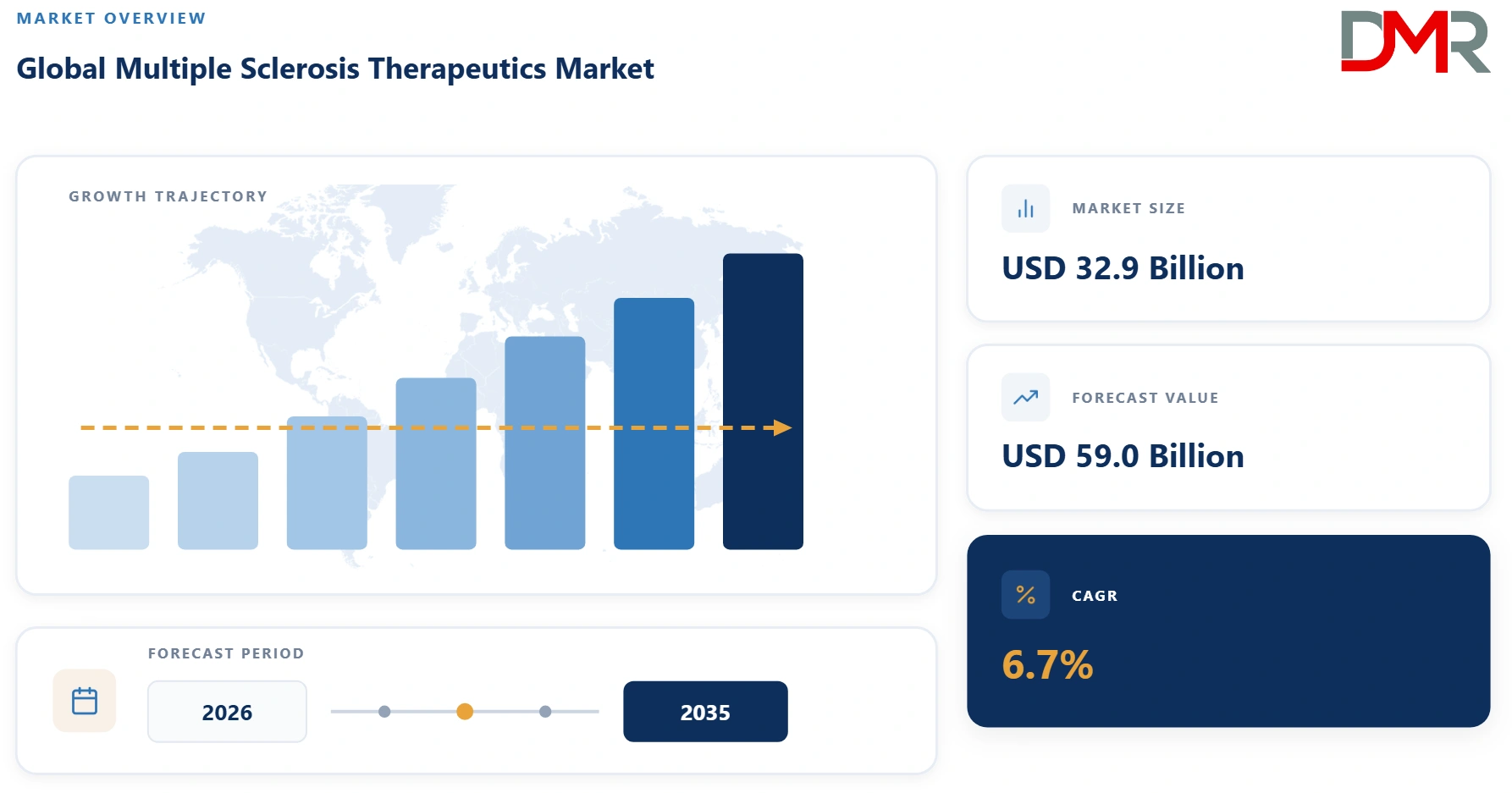
- Market Size (2026): USD 32.9 Bn
- Forecast Value (2035): USD 59.0 Bn
- CAGR (2026-2035): 6.7%
- Largest Region (2026): North America, approximately 46%
- Fastest-Growing Region: Asia-Pacific
- Leading Product (2026): Monoclonal Antibodies, around 35%
- Leading Modality (2026): Oral, close to 39%
- Key Players: F. Hoffmann-La Roche Ltd., Novartis AG, Sanofi and others
What is Multiple Sclerosis Therapeutics Market and its Market Size?
Global Multiple Sclerosis Therapeutics Market size is estimated to reach USD 32.9 Bn in 2026 and is further anticipated to reach USD 59.0 Bn by 2035, at a CAGR of 6.7%.
ℹ
To learn more about this report –
Download Your Free Sample Report Here
Multiple sclerosis therapeutics encompass disease-modifying medicines used to reduce inflammatory disease activity, delay disability accumulation and manage relapsing or progressive forms of multiple sclerosis. The commercial boundary centers on branded and generic pharmacologic therapies used for clinically isolated syndrome, relapsing-remitting disease, active secondary progressive disease and primary progressive disease. It includes oral small molecules, injectable immunomodulators and high-efficacy biologic therapies, but excludes diagnostic imaging, rehabilitation services and non-pharmacologic supportive care.
Demand is anchored by a growing diagnosed patient pool, earlier treatment initiation and a continuing shift toward higher-efficacy disease-modifying therapy. Neurologists increasingly select treatment according to disease activity, MRI burden, disability risk, comorbidities, pregnancy planning, infection risk and convenience. This has moved competition away from relapse control alone toward durable disability outcomes, central nervous system penetration, simpler administration, lower monitoring burden and the ability to treat progressive disease where therapeutic options remain narrower.
Commercial structure is also changing as mature oral and injectable brands face generic or biosimilar competition while newer monoclonal antibodies and emerging BTK inhibitors seek share through differentiated efficacy and administration profiles. Specialty-pharmacy management, payer authorization and safety surveillance influence access in high-income markets, while affordability and treatment availability constrain uptake across lower-resource settings. The model therefore captures manufacturer-level therapeutic revenue generated by prescription disease-modifying medicines across retail, specialty and institutional channels, including branded, generic and biosimilar products. It does not count diagnostic services, MRI equipment, rehabilitation, mobility aids or general symptom-management spending outside the defined MS therapeutic portfolio. Revenue growth consequently depends on innovation, treatment duration, earlier initiation, sustained adherence, reimbursement expansion and wider access rather than patient prevalence alone, with treatment intensity varying materially by geography.
Use Cases
- Early High-Efficacy Treatment: Neurology centers initiate potent disease-modifying therapy in patients with highly active relapsing disease, aiming to suppress inflammatory activity before irreversible neurological damage accumulates. This changes care from sequential escalation toward earlier control of relapse, MRI lesion formation and disability risk.
- Progressive Disease Management: Specialist MS clinics use therapies approved for primary or secondary progressive disease when disability worsens despite lower relapse activity. The treatment objective shifts toward slowing functional decline, preserving mobility and extending independence rather than only preventing acute relapses.
- Long-Term Oral Maintenance: Community neurologists and specialty pharmacies coordinate oral therapies for patients who prioritize home administration and predictable dosing. Simplified delivery can reduce infusion-center dependence, but requires ongoing laboratory monitoring, adherence management and risk-based switching when safety or disease control changes.
- Self-Administered Biologic Therapy: Patients suitable for subcutaneous treatment use self-administered or rapidly administered biologics under specialist supervision, reducing time spent in infusion facilities. This can expand treatment capacity for providers and improve convenience for patients who require high-efficacy therapy without recurring intravenous visits.
Key Takeaways
- Market Size & Share: North America is expected to represent approximately 46% of 2026 revenue, reflecting high treatment penetration and premium biologic utilization.
- Product Analysis: BTK inhibitors are modeled to expand at a CAGR of 18.4% during 2026-2035 as the class begins commercial penetration in progressive MS.
- Regional Analysis: Asia-Pacific is projected to grow at a CAGR of 8.4% through 2035 as diagnosis, specialty neurology capacity and access to disease-modifying therapies improve.
- Application Analysis: Relapsing-remitting multiple sclerosis is set to account for roughly 62% of therapeutic revenue in 2026 because the broadest approved treatment range remains concentrated in relapsing disease.
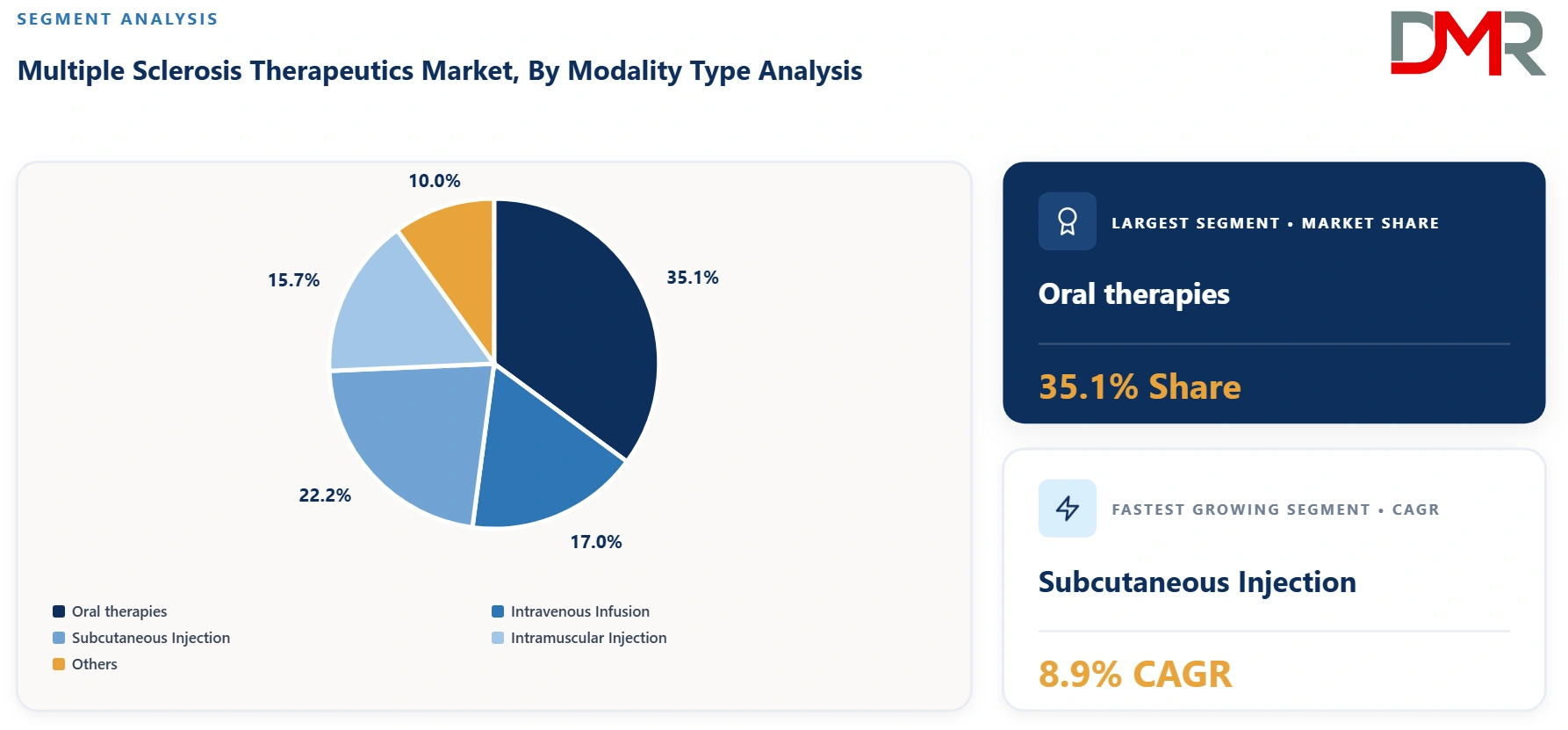
- Modality Shift: Subcutaneous injection is projected to advance at a CAGR of 8.9% as self-administered biologics and shorter administration pathways gain acceptance.
- Channel Evolution: Specialty pharmacy is expected to hold around 41% of 2026 distribution value because high-cost therapies require benefit verification, cold-chain handling and adherence support.
How AI/Gen AI is Transforming the Multiple Sclerosis Therapeutics Market?
Artificial intelligence is affecting multiple sclerosis therapeutics mainly through drug development, imaging interpretation, patient stratification and trial operations rather than through direct treatment delivery. Machine-learning models can combine MRI, relapse history, disability scores, laboratory data and treatment exposure to identify patterns associated with progression risk or inadequate response. These tools may improve cohort selection and reduce noise in trials where disability progression can take longer to observe than inflammatory activity.
Generative AI is also being applied to protocol drafting, regulatory document preparation, safety-case summarization and medical-information workflows. Its commercial impact depends on validated human oversight because MS treatment decisions are clinically complex and highly individualized. The strongest near-term value is therefore operational, helping sponsors and care teams process multimodal evidence faster while preserving specialist judgment.
- Imaging Analytics: Computer vision can quantify lesion burden, brain volume change and other MRI features to support trial endpoints and longitudinal disease monitoring.
- Trial Matching: Predictive models can screen structured and unstructured clinical records against protocol criteria to identify suitable relapsing or progressive MS participants.
- Regulatory Documentation: LLM-assisted document processing can organize safety narratives, literature surveillance and submission content while keeping final medical review with qualified teams.
- Progression Modeling: Multimodal machine learning can combine clinical, imaging and biomarker data to enrich studies for patients more likely to experience measurable disability progression.
Key Drivers in the Global Multiple Sclerosis Therapeutics Market
Demand is being pulled by a larger treated population and earlier use of therapies that suppress disease more completely. Better diagnosis adds volume while therapeutic innovation raises value per treated patient.
- Rising Diagnosed Population and Earlier Disease-Modifying Treatment: The addressable patient base continues to broaden as awareness, MRI access and specialist diagnosis improve. The model assumes a 2026 diagnosed population approaching 3.0 million people worldwide, with treatment penetration still below mature-market levels. Earlier initiation lengthens therapy duration and moves more patients into sustained disease-modifying treatment before disability advances. Outside North America and Western Europe, improving reimbursement can convert previously untreated patients into recurring pharmaceutical demand.
- Migration Toward High-Efficacy and Progressive-Disease Therapies: Monoclonal antibodies are expected to represent approximately 35% of 2026 product revenue because clinicians increasingly prioritize deeper inflammatory control in patients at higher risk of disability. The next growth layer comes from progression-focused mechanisms, including brain-penetrant BTK inhibition, because progressive MS historically has offered fewer choices than relapsing disease. Therapies that demonstrate durable disability benefits with manageable safety can reach patients who previously had limited disease-modifying options.
Restraints in the Global Multiple Sclerosis Therapeutics Market
Affordability, safety tradeoffs and mature drug classes constrain revenue growth. Long treatment duration also makes payers sensitive to clinical differentiation and annual cost.
- Generic and Biosimilar Erosion Across Mature Therapies: Oral and injectable products that once carried premium pricing increasingly face generic or follow-on competition, limiting revenue expansion even when treatment volume rises. In the 2026 model, oral therapies account for close to 39% of modality revenue, but several molecules within this pool now compete against lower-cost alternatives. Payers can use formulary preference, step therapy and substitution to redirect patients toward lower-cost products when efficacy is broadly comparable. Mature brands therefore defend share through convenience, safety evidence and lifecycle extensions rather than class growth alone.
- Safety Monitoring and Benefit-Risk Constraints: Immune-modifying therapy can introduce infection, liver, cardiovascular, malignancy, pregnancy or hypersensitivity risks that differ by mechanism and patient profile. These concerns can slow novel-class adoption even when efficacy is compelling. The model assigns around 2% of 2026 product revenue to BTK inhibitors because uptake remains gated by labeling, safety experience and specialist confidence. High-efficacy biologics can also require screening or treatment-specific monitoring, slowing launch curves relative to efficacy expectations.
Growth Opportunities in the Global Multiple Sclerosis Therapeutics Market
White space centers on residual disability progression, administration burden and uneven treatment access. The best opportunities create a clear clinical or delivery reason to switch.
- Non-Relapsing Secondary Progressive Multiple Sclerosis: Secondary progressive disease is modeled at approximately 18% of 2026 application revenue, but its commercial importance is rising faster than its current share suggests. Patients may continue accumulating disability even when obvious relapses become infrequent, creating demand for mechanisms directed at progression biology. A successful therapy can expand beyond relapse prevention and reach patients with few remaining escalation options. The segment is projected to grow at a CAGR of 9.5% through 2035 as regulatory precedent and progression endpoints improve. Commercial advantage will depend on meaningful disability slowing with manageable monitoring.
- Subcutaneous and Decentralized High-Efficacy Treatment: Subcutaneous injection represents around 18% of 2026 modality revenue and offers room for expansion as manufacturers compress administration time and move selected biologic treatment away from conventional infusion infrastructure. This can increase neurologist capacity and make high-efficacy therapy more practical outside infusion-heavy settings. The segment is modeled at a CAGR of 8.9% because convenience can influence new starts and switching. Autoinjectors, home support and specialty-pharmacy coordination can add further value.
Trends in the Global Multiple Sclerosis Therapeutics Market
Competition is shifting toward earlier high-efficacy use, progression-focused mechanisms and lower administration burden, while genericization separates volume growth from revenue growth in older products.
- Shift From Escalation to Earlier High-Efficacy Therapy: Treatment sequencing is becoming less dependent on starting with lower-potency agents and waiting for breakthrough disease before escalation. This trend benefits monoclonal antibodies, which are projected to hold roughly 35% of 2026 product revenue, and supports specialty distribution models that can manage prior authorization and safety requirements. Value is concentrating in therapies with stronger efficacy evidence despite higher cost or monitoring. Manufacturers are investing in comparative data, long-term disability outcomes and simpler administration to defend earlier-line positioning.
- Expansion of Brain-Penetrant and Progression-Oriented Mechanisms: Development pipelines increasingly target compartmentalized inflammation and neurodegenerative processes that may continue after relapses become less prominent. BTK inhibition is the clearest near-term example, with the class modeled to expand at 18.4% CAGR from a small 2026 commercial base. Sponsors are also exploring remyelination, immune reset and cell-based approaches. Development is shifting toward confirmed disability progression, functional measures and imaging biomarkers. Differentiation will increasingly depend on altering disability trajectories rather than only suppressing inflammatory lesions.
Research Scope and Analysis
Segment performance is assessed across product, modality, application and distribution channel. Each axis identifies where 2026 therapeutic revenue is concentrated and where growth is shifting through 2035, with emphasis on mechanism, treatment setting, disease phenotype and route-to-patient economics.
ℹ
To learn more about this report –
Download Your Free Sample Report Here
By Product
Monoclonal Antibodies are projected to hold the largest share by product in 2026, accounting for approximately 35% of revenue, supported by high-efficacy positioning, strong uptake in active relapsing disease and established use of B-cell directed therapy. Their revenue weight is amplified by biologic pricing and recurring specialist administration. Growth, however, is concentrated in BTK Inhibitors, forecast to expand at a CAGR of 18.4% during 2026-2035 as the class begins to address progression biology and offers oral, brain-penetrant mechanisms that differ from conventional peripheral immune suppression. Early uptake will remain selective because safety, regulatory labeling and specialist experience must mature, but successful launches in secondary progressive or primary progressive disease could create an additional high-value treatment layer beyond the crowded relapsing-MS segment.
By Modality
Oral therapies are expected to lead by modality in 2026 with a share of roughly 39%, reflecting the broad installed base of S1P modulators, fumarates, teriflunomide, cladribine and other self-administered options. Convenience and established prescriber familiarity keep oral treatment important even as generic competition reduces unit revenue for older molecules. The steeper trajectory sits with Subcutaneous Injection, which is projected to expand at a CAGR of 8.9% through 2035. Growth is being pulled by self-administered monoclonal antibodies and shortened subcutaneous versions of high-efficacy biologics that reduce infusion-center dependence. These products can preserve biologic efficacy while changing the care setting, making them attractive where infusion capacity is constrained or patients place greater value on shorter, less disruptive administration.
By Application
Relapsing-Remitting Multiple Sclerosis is set to account for close to 62% of application revenue in 2026 because the widest range of approved disease-modifying therapies remains concentrated in relapsing disease and treatment often begins before major fixed disability develops. High diagnosis rates and established treatment algorithms reinforce this revenue base. Growth, however, is concentrated in Secondary Progressive Multiple Sclerosis, projected at a CAGR of 9.5% during 2026-2035 as development programs focus on disability accumulation that can continue even without frequent relapses. New regulatory precedent for non-relapsing secondary progressive disease expands the addressable treatment concept. The segment remains clinically heterogeneous, so commercial success will depend on clear phenotype definitions, measurable progression endpoints and a benefit-risk profile suitable for long-duration use in an older patient population.
By Distribution Channel
Specialty Pharmacy is projected to hold the largest distribution share in 2026 at around 41%, supported by the high cost, prior-authorization requirements, cold-chain needs and adherence services associated with many disease-modifying therapies. Specialty channels also coordinate benefits investigation and patient support across oral and self-injected products. Growth, however, is fastest in Online Pharmacy, modeled at a CAGR of 9.1% during 2026-2035 as digital refill management, home delivery and remote adherence support expand for appropriate oral maintenance therapies. The segment starts from a small base and will remain constrained for products requiring infusion or intensive clinical handling. Even so, digital fulfillment can improve continuity for stable patients and reduce dispensing friction where regulations and payer contracts permit home delivery.
The Global Multiple Sclerosis Therapeutics Market Report is Segmented Based on the Following
By Product
- Monoclonal Antibodies
- S1P Receptor Modulators
- Fumarates
- Interferons
- Purine Analogues
- BTK Inhibitors
- Others
By Modality
- Oral
- Intravenous Infusion
- Subcutaneous Injection
- Intramuscular Injection
- Others
By Application
- Relapsing-Remitting Multiple Sclerosis
- Secondary Progressive Multiple Sclerosis
- Primary Progressive Multiple Sclerosis
- Clinically Isolated Syndrome
- Others
By Distribution Channel
- Specialty Pharmacy
- Hospital Pharmacy
- Retail Pharmacy
- Online Pharmacy
- Others
Epidemiology Analysis
Multiple sclerosis has an uneven geographic burden, with prevalence highest across North America and Europe and lower reported prevalence across much of Asia and Africa. The model uses a 2026 diagnosed population approaching 3.0 million people. Commercial demand is narrower because not every diagnosed patient receives continuous disease-modifying therapy. Treatment rates vary by age, disease activity, reimbursement and country income. Closing the gap between diagnosed and treated prevalence is therefore an important source of long-term volume growth, particularly where neurologist access, MRI capacity and reimbursement are improving.
Regulatory Landscape
Regulation increasingly differentiates therapies by disease phenotype, disability endpoint and long-term safety. In 2026, European approval of a BTK inhibitor for non-relapsing secondary progressive multiple sclerosis created a new precedent for progression-focused treatment. Sponsors must demonstrate meaningful disability outcomes while managing mechanism-specific hepatic, infectious, cardiovascular or hypersensitivity risks. Subcutaneous formulations, biosimilars and generics add comparability, device and pharmacovigilance requirements. Regulatory execution matters commercially because label breadth can materially expand the treatable patient pool.
Regional Analysis
Region with the Largest Revenue Share
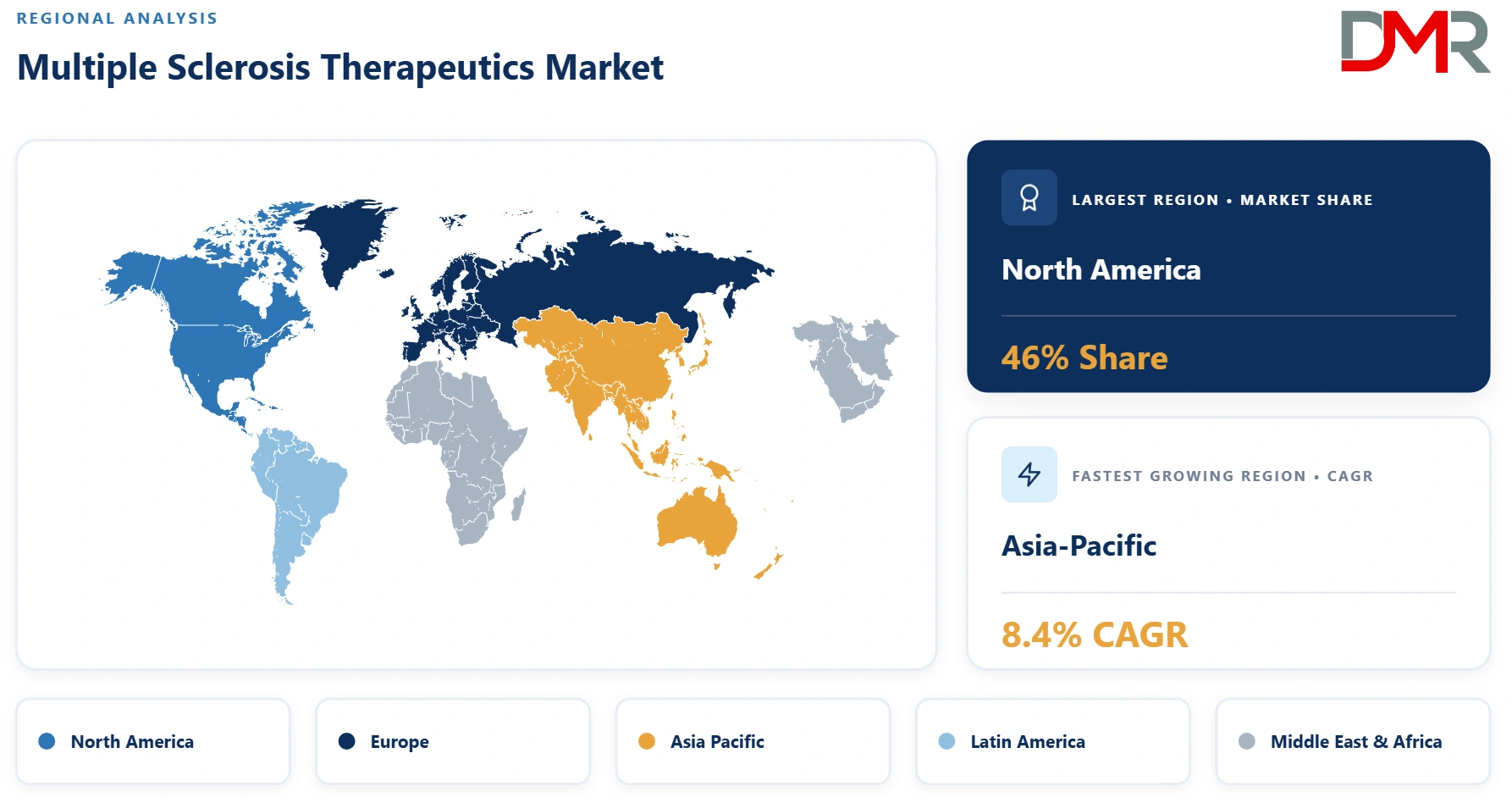
North America is expected to remain the largest regional market in 2026, accounting for approximately 46% of global revenue. The United States drives most of this value through high diagnosis rates, broad therapy availability, biologic adoption and specialist infrastructure. Premium pricing and specialty-pharmacy management keep the revenue mix weighted toward higher-value treatment even as generics pressure older products. Canada adds a smaller but established reimbursed patient base.
ℹ
To learn more about this report –
Download Your Free Sample Report Here
Region with the Highest CAGR
Asia-Pacific is projected to be the fastest-growing region, expanding at a CAGR of 8.4% during 2026-2035. Growth is being pulled by better diagnosis, MRI access and reimbursement expansion in China, India and other developing markets. Japan, Australia and South Korea already support higher-value biologics, while underpenetrated populations create volume headroom elsewhere. Local generic supply can lower entry costs, so growth is expected to come mainly from wider treatment penetration rather than uniform premiumization.
By Region
North America
Europe
- Germany
- France
- The UK
- Italy
- Spain
- Rest of Europe
Asia-Pacific
- China
- Japan
- India
- Australia
- South Korea
- Rest of APAC
Latin America
- Mexico
- Brazil
- Colombia
- Argentina
- Rest of LATAM
Middle East & Africa
- Saudi Arabia
- The UAE
- South Africa
- Rest of MEA
Competitive Landscape
Competition is moderately concentrated at the innovative end and highly fragmented across mature generics. Large biopharma companies defend share through high-efficacy biologics, broader labels, long-term outcome data and easier administration, while generic manufacturers compete on price and channel access in established oral and injectable classes. The next strategic battleground is progressive disease, where BTK inhibitors, remyelination programs and immune-reset approaches could change treatment sequencing. Partnerships, licensing and acquisitions remain relevant because neurological development carries long timelines and specialized clinical endpoints. Distribution capability also matters: manufacturers of premium therapies depend on specialty pharmacies, infusion networks, patient-support programs and payer evidence to convert regulatory approval into sustained treated volume.
Some of the Prominent Players in the Global Multiple Sclerosis Therapeutics Market Are
- F. Hoffmann-La Roche Ltd.
- Novartis AG
- Sanofi
- Biogen Inc.
- Merck KGaA
- Bristol Myers Squibb
- TG Therapeutics, Inc.
- Teva Pharmaceutical Industries Ltd.
- Sandoz Group AG
- Bayer AG
- Johnson & Johnson
- Viatris Inc.
- Sun Pharmaceutical Industries Ltd.
- Biocon Limited
- Glenmark Pharmaceuticals Ltd.
- Aurobindo Pharma Limited
- Cipla Limited
- Dr. Reddy's Laboratories Ltd.
- Zydus Lifesciences Limited
- Lupin Limited
- HEC Pharm Co., Ltd.
- Synthon B.V.
- Neuraxpharm
- Accord Healthcare
- Banner Life Sciences LLC
- Zenas BioPharma
- Immunic, Inc.
- InnoCare Pharma Limited
- Contineum Therapeutics, Inc.
- Clene Inc.
- Kyverna Therapeutics, Inc.
- Cabaletta Bio, Inc.
- Abata Therapeutics, Inc.
- Cartesian Therapeutics, Inc.
- Century Therapeutics, Inc.
- Nuvig Therapeutics, Inc.
- Mapi Pharma Ltd.
- Polpharma Biologics S.A.
- Pharmascience Inc.
- Alvogen
- Other Key Players
Recent Developments
- In June 2026, Sanofi received European Commission approval for Cenrifki, or tolebrutinib, for adults with non-relapsing secondary progressive multiple sclerosis, establishing a commercial BTK inhibitor pathway in a progression-focused treatment setting.
- In February 2026, Roche reported Phase III FENtrepid results showing fenebrutinib met the primary non-inferiority endpoint against Ocrevus in primary progressive multiple sclerosis, strengthening the late-stage competitive outlook for brain-penetrant BTK inhibition.
- In December 2025, Sanofi said the US review of tolebrutinib in non-relapsing secondary progressive multiple sclerosis would extend beyond the previously communicated target date, highlighting the regulatory sensitivity surrounding benefit-risk assessment in progressive disease.
- In September 2025, Roche presented additional Ocrevus data in advanced primary progressive multiple sclerosis showing reduced risk of confirmed disability progression, reinforcing long-term competition around disability outcomes rather than relapse control alone.
- In January 2025, the US FDA added a boxed warning for anaphylaxis to glatiramer acetate products, increasing safety communication requirements for a mature injectable therapy used in relapsing multiple sclerosis.
| Report Characteristics |
| Market Size (2026) |
USD 32.9 Bn |
| Forecast Value (2035) |
USD 59.0 Bn |
| CAGR (2026-2035) |
6.7% |
| The US Market Size (2026) |
USD 12.1 Bn |
| Historical Data |
2021 - 2025 |
| Forecast Data |
2026 - 2035 |
| Base Year |
2025 |
| Segments Covered |
By Product, By Modality, By Application and By Distribution Channel |
| Regional Coverage |
North America - The US and Canada; Europe - Germany, France, The UK, Italy, Spain, Rest of Europe; Asia-Pacific - China, Japan, India, Australia, South Korea, Rest of APAC; Latin America - Mexico, Brazil, Colombia, Argentina, Rest of LATAM; Middle East & Africa - Saudi Arabia, The UAE, South Africa, Rest of MEA |
Frequently Asked Questions
How big is the Global Multiple Sclerosis Therapeutics Market?
▾ The Global Multiple Sclerosis Therapeutics Market is estimated at USD 32.9 Bn in 2026 and is projected to reach USD 59.0 Bn by 2035. Revenue is supported by long-duration disease-modifying treatment, earlier diagnosis, high-efficacy biologic adoption and expanding therapy options for progressive disease, while generic competition limits growth across several mature product classes.
What is the growth rate of the Global Multiple Sclerosis Therapeutics Market?
▾ The market is projected to expand at a CAGR of 6.7% from 2026 to 2035. Growth reflects a larger diagnosed and treated patient pool, migration toward higher-efficacy medicines, wider access in underpenetrated countries and the emergence of progression-focused mechanisms. Pricing pressure from generics and payer management keeps the overall rate below the growth of newer therapeutic classes.
Which region holds the largest share in the Global Multiple Sclerosis Therapeutics Market?
▾ North America is expected to hold the largest regional position in 2026, representing approximately 46% of worldwide revenue. The concentration reflects high multiple sclerosis diagnosis rates, extensive disease-modifying therapy access, strong uptake of premium monoclonal antibodies and established specialty-pharmacy infrastructure. The United States contributes the majority of regional value, while Canada adds a smaller but mature reimbursed treatment base.
Which product segment leads the Global Multiple Sclerosis Therapeutics Market?
▾ Monoclonal antibodies are projected to lead the product segment in 2026 with around 35% of revenue. Their position reflects strong efficacy in active relapsing disease, broad specialist acceptance of B-cell directed treatment and biologic pricing. BTK inhibitors remain much smaller in 2026 but are expected to grow faster as progressive-disease indications and additional late-stage programs broaden the class.
What is driving demand in the Global Multiple Sclerosis Therapeutics Market?
▾ Demand is driven by earlier diagnosis, longer treatment duration, growing use of high-efficacy disease-modifying therapy and the need to slow disability progression in patients whose disease advances despite fewer relapses. Expansion of specialist neurology capacity and reimbursement in Asia-Pacific and other underpenetrated regions adds volume, while new administration formats can shift patients toward more convenient biologic treatment.
Who are the key players in the Global Multiple Sclerosis Therapeutics Market?
▾ Key participants include F. Hoffmann-La Roche Ltd., Novartis AG, Sanofi, Biogen Inc., Merck KGaA, Bristol Myers Squibb and TG Therapeutics, Inc. Competition spans established oral and injectable therapies, high-efficacy monoclonal antibodies and emerging progression-focused mechanisms. Generic and biosimilar suppliers also influence pricing and access across mature disease-modifying drug classes.
How is AI influencing the Multiple Sclerosis Therapeutics Market?
▾ AI is supporting the Multiple Sclerosis Therapeutics Market through MRI analysis, clinical-trial enrichment, progression-risk modeling, safety surveillance and regulatory-document workflows. Computer vision can quantify imaging changes, while machine-learning models can combine clinical and biomarker data to improve patient stratification. Generative AI is more likely to improve development and documentation productivity than directly change treatment decisions without specialist oversight.