Indication Covered
The report covers Non-Alcoholic Steatohepatitis (NASH), also referred to as Metabolic Dysfunction-Associated Steatohepatitis (MASH), as a chronic, progressive metabolic liver disease, with emphasis on its clinical burden, treatment patterns, therapeutic innovation, and commercial market development across the seven major markets. MASH is primarily characterized by hepatic steatosis, hepatocellular ballooning, and inflammation, which can lead to progressive liver fibrosis, cirrhosis, liver failure, and hepatocellular carcinoma. The condition can range from early-stage fatty liver disease with limited inflammation to advanced fibrotic disease and cirrhosis, requiring lifestyle interventions, metabolic risk-factor management, pharmacological treatment, and, in advanced cases, liver transplantation.
The indication scope includes major clinical manifestations and associated disease conditions relevant to treatment demand, including:
- Metabolic Dysfunction-Associated Steatotic Liver Disease (MASLD)
- Metabolic Dysfunction-Associated Steatohepatitis (MASH)
- MASH with fibrosis
- Non-cirrhotic MASH with moderate-to-advanced fibrosis (F2–F3)
- MASH-related cirrhosis
- MASH-associated hepatocellular carcinoma
MASH with moderate-to-advanced fibrosis remains the primary focus because of its elevated risk of progression to cirrhosis, liver-related complications, and mortality, as well as its importance for pharmacological treatment eligibility. The report also considers MASLD and associated metabolic conditions, including obesity, type 2 diabetes, dyslipidemia, and cardiovascular disease, because of their substantial contribution to disease prevalence, treatment demand, and long-term healthcare utilization. Other difficult-to-treat manifestations, including advanced fibrosis, compensated cirrhosis, decompensated cirrhosis, and MASH-associated liver complications, are evaluated as areas of continuing clinical need.
The treatment landscape covers lifestyle modification, metabolic and weight-management therapies, lipid-lowering and antidiabetic treatments, liver-directed pharmacological therapies, and advanced investigational treatments. Particular attention is given to advanced therapies targeting thyroid hormone receptor beta (THR-β), glucagon-like peptide-1 (GLP-1), fibroblast growth factor (FGF), peroxisome proliferator-activated receptors (PPARs), and other metabolic and fibrogenic pathways, as well as emerging oral small molecules and combination treatment approaches.
Epidemiology Parameters
MASH represents a significant chronic and progressive metabolic liver disease burden across the major healthcare markets covered in the report. Epidemiological patterns vary substantially between countries because of differences in obesity prevalence, type 2 diabetes, genetic susceptibility, dietary patterns, physical activity, healthcare access, disease awareness, diagnostic practices, and availability of hepatology specialists and non-invasive liver diagnostic services.
ℹ
To learn more about this report –
Download Your Free Sample Report Here
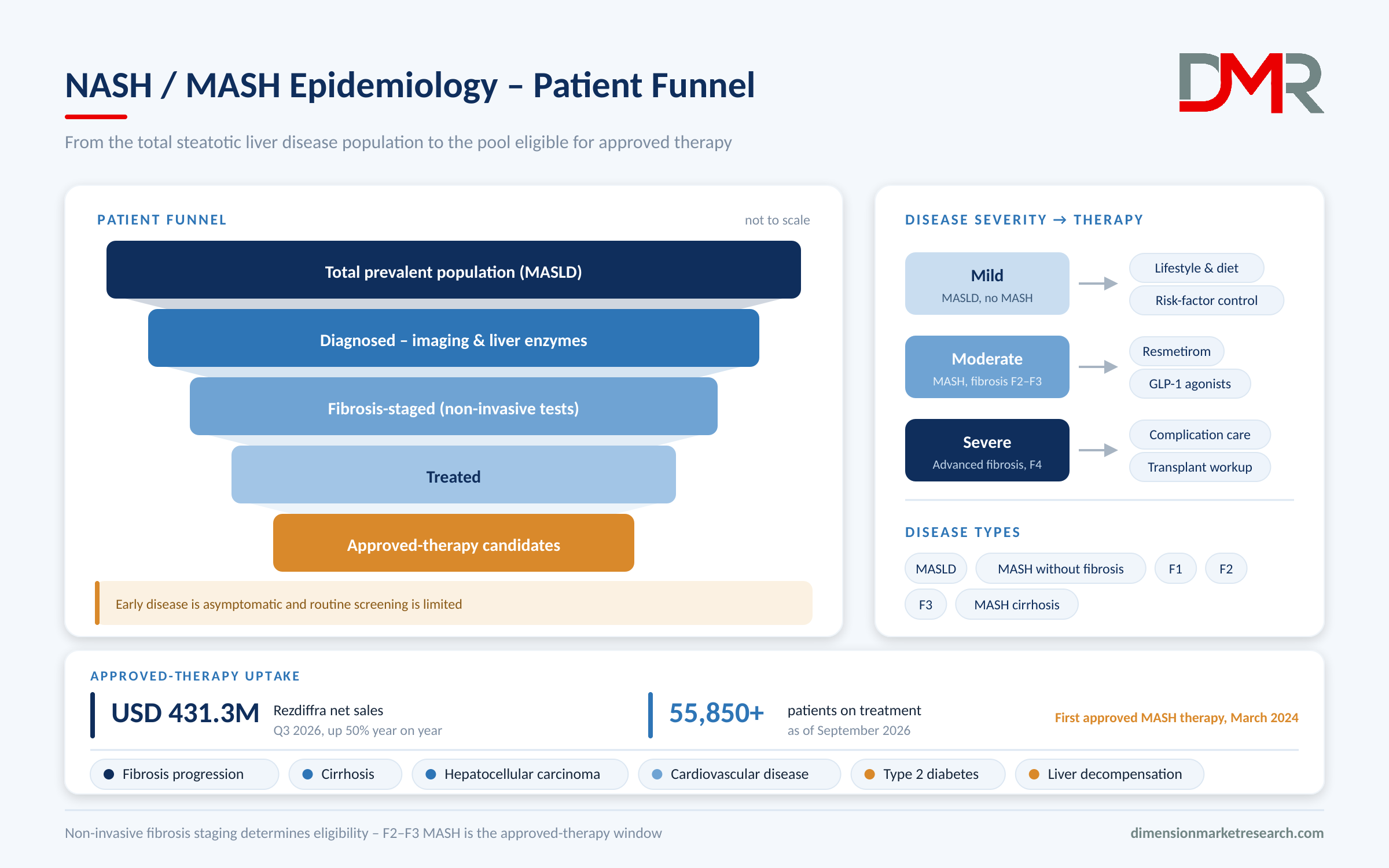
The epidemiology assessment provides a structured evaluation of the MASH population from overall prevalence through diagnosis and treatment. Key parameters include:
- Total MASH patient population
- Prevalent MASLD population
- MASH population
- Incidence population, where reliable data are available
- Diagnosed patient population
- Treated patient population
- Untreated patient population
- Treatment-eligible population
- Disease severity distribution
- Mild MASLD population
- Moderate MASH population
- Severe MASH population
- Non-cirrhotic MASH population
- MASH with F2–F3 fibrosis population
- MASH-related cirrhosis population
- Age distribution
- Gender distribution, where available
- Diagnosis rate
- Treatment rate
- Treatment penetration
- Regional disease burden
- Epidemiological trends
The analysis distinguishes between the broader MASLD and MASH prevalent populations and patients who are diagnosed and actively receiving treatment. This distinction is particularly important because a considerable proportion of patients remain undiagnosed due to the asymptomatic nature of early disease, limited routine screening, and reliance on specialist assessment and non-invasive or invasive diagnostic procedures for disease staging.
The report also evaluates the increasing recognition of MASH as a systemic metabolic disease associated with progressive liver damage and substantial cardiometabolic risk. Associated conditions such as obesity, type 2 diabetes, cardiovascular disease, dyslipidemia, chronic kidney disease, and hypertension can influence treatment decisions, disease monitoring, healthcare utilization, and long-term management strategies.
Patient Segmentation
The MASH patient population is segmented according to disease severity, disease manifestation, treatment status, and therapeutic requirements. This approach provides a clearer understanding of the population eligible for different treatment categories and helps assess the potential addressable population for advanced therapies.
ℹ
To learn more about this report –
Download Your Free Sample Report Here
By Disease Severity
Mild: Patients with MASLD and limited liver inflammation or fibrosis are generally managed through lifestyle modification, dietary interventions, physical activity, weight reduction, and management of associated metabolic conditions. Treatment decisions are influenced by obesity, insulin resistance, diabetes status, liver enzyme abnormalities, previous treatment response, and patient adherence.
Moderate: Patients with established MASH and moderate fibrosis may require more intensive metabolic management and pharmacological treatment. Increasing expectations for fibrosis improvement, resolution of steatohepatitis, and reduction in long-term liver-related complications can encourage the adoption of targeted therapies and more comprehensive disease management.
Severe: Patients with advanced fibrosis, substantial liver inflammation, cirrhosis, or significant metabolic complications require intensive specialist management and may require advanced pharmacological interventions, cirrhosis management, or liver transplantation. Patients with non-cirrhotic F2–F3 fibrosis represent a particularly important segment for approved and emerging MASH-directed therapies.
By Disease Type
- MASLD
- MASH without significant fibrosis
- MASH with F1 fibrosis
- MASH with F2 fibrosis
- MASH with F3 fibrosis
- MASH-related cirrhosis
By Treatment Status
- Diagnosed and Treated
- Diagnosed and Untreated
- Undiagnosed
The treatment-status segmentation helps identify the gap between the total disease population and the population actively participating in healthcare treatment. Improvements in disease awareness, metabolic screening, non-invasive diagnostic technologies, specialist availability, and healthcare access can gradually increase the diagnosed and treated population.
By Treatment Requirement
- Lifestyle Modification Candidates
- Conventional Metabolic Therapy Candidates
- GLP-1-Based Therapy Candidates
- THR-β Agonist Therapy Candidates
- Other Targeted Therapy Candidates
- Combination Therapy Candidates
This segmentation helps evaluate how changes in treatment guidelines, physician preferences, reimbursement, and therapy availability can shift patients between lifestyle-based management, conventional metabolic treatment, and advanced MASH-directed treatment categories.
Geographic Coverage
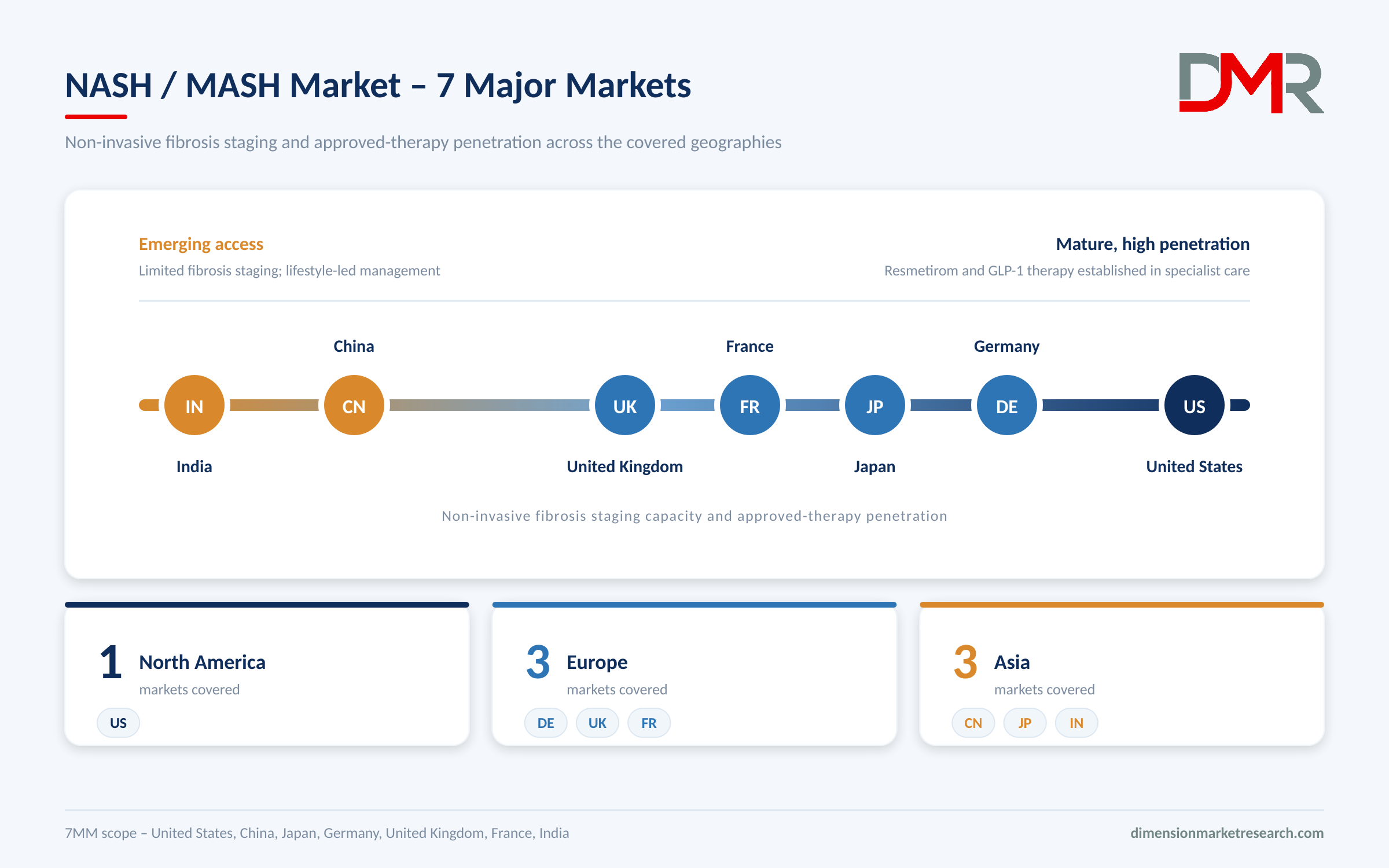
The report provides detailed market, epidemiology, treatment, and competitive analysis across 7 major markets:
- United States
- China
- Japan
- Germany
- United Kingdom
- France
- India
The geographic analysis considers differences in patient population, diagnosis rates, healthcare infrastructure, treatment accessibility, reimbursement, therapeutic penetration, regulatory environment, physician adoption, and competitive activity. These factors are particularly important because the commercial opportunity for MASH therapies differs considerably between mature pharmaceutical markets and high-growth emerging markets.
ℹ
To learn more about this report –
Download Your Free Sample Report Here
United States
The United States represents one of the most important MASH markets, supported by high obesity and type 2 diabetes prevalence, established hepatology networks, strong pharmaceutical innovation, and broad availability of advanced metabolic treatments. The approval of Rezdiffra (resmetirom), a thyroid hormone receptor beta agonist, in March 2024 marked an important milestone in the development of pharmacological treatment specifically for non-cirrhotic MASH with moderate-to-advanced fibrosis.
The market is also characterized by significant competition between established metabolic therapies and emerging liver-directed treatments. Treatment selection is influenced by clinical efficacy, fibrosis improvement, safety, cardiovascular and metabolic benefits, dosing frequency, payer restrictions, and patient eligibility. Continued development of GLP-1-based therapies, FGF analogues, and combination treatments is expected to further intensify competition.
China
China represents a significant long-term growth opportunity because of its large population affected by metabolic disorders, obesity, and type 2 diabetes, alongside increasing recognition of MASH as a progressive liver disease requiring sustained management. Improvements in healthcare infrastructure, metabolic screening, and specialist availability are supporting greater diagnosis and treatment access.
The market is gradually experiencing increased investment in innovative metabolic and liver-directed therapies, although affordability, reimbursement coverage, treatment accessibility, and differences between urban and rural healthcare services remain important considerations. Expansion of domestic pharmaceutical development and clinical research involving GLP-1 therapies, metabolic targets, and antifibrotic mechanisms may also increase competitive intensity.
Japan
Japan represents a mature healthcare and pharmaceutical market with sophisticated medical infrastructure and established hepatology and gastroenterology services. Increasing awareness of metabolic liver disease and the availability of advanced diagnostic technologies support continued demand for improved MASH management.
Treatment decisions are influenced by clinical efficacy, safety, reimbursement conditions, metabolic risk factors, dosing convenience, and physician familiarity. The market also provides opportunities for innovative therapies that can demonstrate meaningful improvements in liver fibrosis, steatohepatitis resolution, metabolic outcomes, and long-term disease progression.
Germany
Germany represents a leading European MASH market with established hepatology networks and strong utilization of advanced metabolic and specialty treatments. Treatment pathways are supported by a developed healthcare system, access to diagnostic services, and established management practices for obesity, diabetes, and liver disease.
The market is increasingly influenced by reimbursement considerations, treatment optimization, the availability of innovative metabolic therapies, and the introduction of differentiated mechanisms. Continued adoption of GLP-1-based treatments and emerging liver-directed therapies is expected to remain important to market development.
United Kingdom
The UK MASH market benefits from established clinical guidelines, specialist hepatology services, and structured treatment pathways for metabolic liver disease. Advanced metabolic therapies and emerging liver-directed treatments are increasingly incorporated into the management discussion for patients with significant fibrosis and associated metabolic complications.
Market development is influenced by healthcare-system treatment criteria, cost-effectiveness considerations, clinical outcomes, and access to specialist diagnostic services. Increasing emphasis on early identification of advanced fibrosis, sustained weight management, and improving liver-related outcomes supports continued innovation in targeted treatment.
France
France represents an important European market supported by developed healthcare infrastructure, specialist hepatology services, and established reimbursement mechanisms. Metabolic therapies and emerging MASH-directed treatments have become important areas of clinical and commercial interest for patients with advanced fibrosis and associated metabolic disorders.
Market growth is influenced by therapeutic innovation, treatment accessibility, reimbursement conditions, and increasing use of targeted metabolic therapies. The introduction of newer mechanisms, combination treatment approaches, and potentially more convenient oral therapies is expected to shape the competitive environment.
India
India represents a high-potential MASH market because of its large population, increasing prevalence of obesity, type 2 diabetes, and metabolic syndrome, expanding healthcare infrastructure, and improving access to specialty care. Diagnosis and treatment rates have significant potential for expansion as awareness of metabolic liver disease increases and non-invasive diagnostic services become more accessible.
Affordability remains an important factor influencing treatment selection, particularly for advanced specialty and targeted therapies. Greater availability of cost-effective metabolic treatments, increasing specialist coverage, improved diagnostic capabilities, and growing patient awareness can support future market expansion.
Market Segmentation
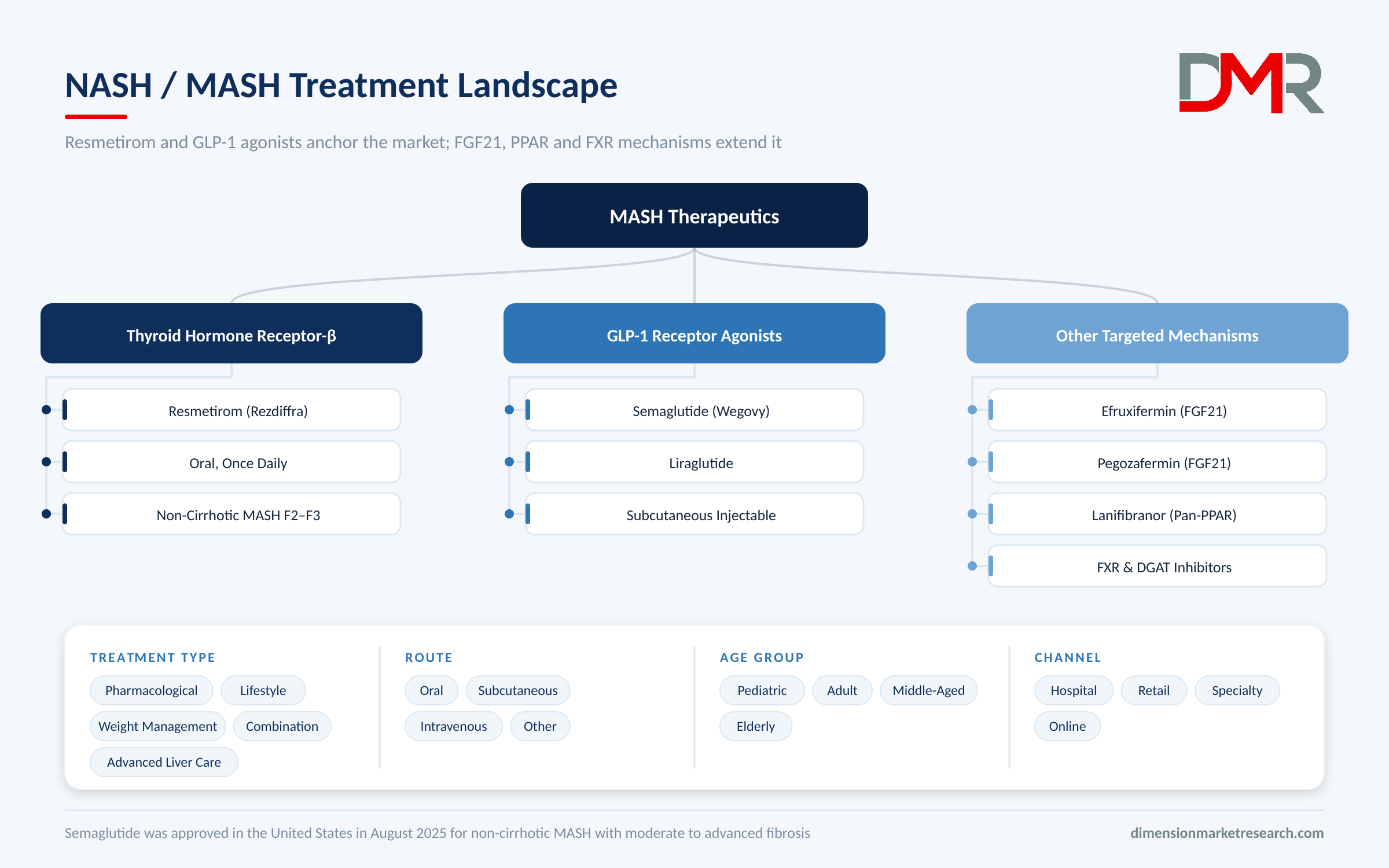
The MASH market is segmented across drug class, treatment type, route of administration, patient age group, and distribution channel. The segmentation captures both established metabolic treatment categories and emerging liver-directed therapeutic approaches. The analysis considers the increasing transition from lifestyle-based management toward targeted pharmacological treatment, particularly among patients with moderate-to-advanced fibrosis.
By Drug Class
THR-β Agonists
THR-β agonists represent a major segment of the MASH market because of their targeted mechanism and established clinical role in patients with non-cirrhotic MASH and moderate-to-advanced fibrosis. These therapies selectively activate thyroid hormone receptor beta in the liver, helping reduce hepatic fat accumulation and improve liver-related histological outcomes.
The segment is led by resmetirom (Rezdiffra), developed by Madrigal Pharmaceuticals. Increasing physician familiarity, clinical evidence, regulatory approvals, and commercial adoption continue to support utilization of this drug class. Further development of combination approaches involving THR-β agonists may strengthen its market position.
GLP-1 Receptor Agonists
GLP-1 receptor agonists represent an increasingly important segment because of their ability to address obesity, insulin resistance, glycemic control, and metabolic dysfunction associated with MASH. These therapies provide an important treatment approach for patients with obesity and type 2 diabetes alongside progressive liver disease.
The segment includes semaglutide, liraglutide, and other investigational GLP-1-based therapies. The approval of semaglutide (Wegovy) for non-cirrhotic MASH with moderate-to-advanced fibrosis in the United States in August 2025 represents an important development. Continued clinical development and combination treatment strategies could increase the role of GLP-1 therapies in MASH management.
Other Targeted Drug Classes
Other targeted drug classes represent an emerging segment because of increasing investment in therapies designed to address hepatic inflammation, metabolic dysfunction, and fibrosis. These approaches include FGF21 analogues, PPAR agonists, FXR agonists, DGAT inhibitors, and other metabolic and antifibrotic mechanisms.
The segment includes investigational agents such as efruxifermin, pegozafermin, lanifibranor, and other pipeline candidates. Continued clinical development and potential differentiation in fibrosis improvement, steatohepatitis resolution, and metabolic outcomes could expand the role of these therapies in future MASH treatment.
By Treatment Type
- Pharmacological Treatment
- Lifestyle Modification
- Metabolic and Weight Management
- Combination Therapy
- Advanced Liver Disease Management
Pharmacological treatment is becoming increasingly important because of the introduction of MASH-directed therapies and growing clinical evidence supporting targeted intervention. Lifestyle modification remains central to early-stage disease management, while metabolic and weight-management treatments address major underlying risk factors. Combination therapy represents an emerging approach for patients requiring simultaneous improvements in liver inflammation, fibrosis, and metabolic dysfunction.
By Route of Administration
- Oral
- Subcutaneous Injectable
- Intravenous
- Other Routes
Oral administration remains important within the THR-β agonist and other small-molecule treatment classes, particularly because it offers convenient long-term dosing. Subcutaneous administration is increasingly relevant for GLP-1 receptor agonists and investigational metabolic therapies. Intravenous administration remains relevant for selected investigational biologic and specialty treatment approaches, although its commercial role is comparatively limited.
By Patient Age Group
- Pediatric Patients
- Adult Patients
- Middle-Aged Patients
- Elderly Patients
Adult and middle-aged patients represent the largest treatment population because MASH is strongly associated with obesity, insulin resistance, type 2 diabetes, and other metabolic risk factors that increase with age. Elderly patients represent an important segment because of their greater likelihood of advanced fibrosis, cardiovascular comorbidities, and long-term liver complications. Pediatric MASH represents an emerging area of clinical need because of increasing childhood obesity and metabolic dysfunction, although approved pharmacological treatment options remain limited.
By Distribution Channel
- Hospital Pharmacies
- Retail Pharmacies
- Specialty Pharmacies
- Online Pharmacies
Distribution patterns vary by treatment type, country, reimbursement environment, and healthcare system. Hospital and specialty pharmacies are particularly relevant for high-cost targeted therapies requiring specialist prescription, treatment monitoring, and reimbursement coordination. Retail pharmacies may have greater relevance for established metabolic treatments and oral prescription therapies, while online pharmacies can support prescription fulfillment and access to selected chronic disease medications.
Market Dynamics
Growth Drivers
Increasing Adoption of Advanced Therapies
Advanced therapies continue to be one of the strongest growth drivers in the MASH market. Their ability to selectively interfere with key metabolic, inflammatory, and fibrogenic pathways has created new treatment opportunities for patients with moderate-to-advanced fibrosis.
The growing use of THR-β agonists and GLP-1 receptor agonists is particularly important as physicians increasingly consider fibrosis improvement, resolution of steatohepatitis, metabolic benefits, safety, and dosing convenience when selecting therapies. Expanded clinical experience and regulatory approvals are also supporting adoption.
Advancement in Disease Biology-Based Drug Development
Advances in understanding the biological mechanisms underlying MASH have created opportunities for more precise therapeutic intervention. Pharmaceutical companies are increasingly investing in therapies designed to selectively target hepatic lipid metabolism, insulin resistance, inflammation, and fibrotic pathways rather than relying solely on broad metabolic treatment approaches.
Development activity is focused on novel FGF21 analogues, PPAR agonists, THR-β agonists, GLP-1-based therapies, combination treatments, and potentially more personalized approaches to treatment selection. These developments are expected to increase therapeutic competition.
Increasing Healthcare Access in Emerging Markets
Improving healthcare infrastructure and rising healthcare expenditure are increasing access to metabolic disease diagnosis and treatment in emerging markets. Expansion of hepatology networks, greater awareness of metabolic liver disease, and wider availability of non-invasive diagnostic technologies are also helping identify patients who previously remained undiagnosed.
China and India are particularly important growth opportunities because of their large populations and substantial metabolic disease burden. Increased reimbursement, wider availability of advanced therapies, and development of cost-effective treatment options could accelerate market penetration.
Growing Recognition of MASH-Related Clinical Burden
The increasing understanding of MASH as a progressive metabolic liver disease is encouraging more comprehensive disease management. Recognition of associated complications, including cirrhosis, hepatocellular carcinoma, cardiovascular disease, and chronic kidney disease, can encourage earlier diagnosis, specialist management, and continued treatment monitoring.
This shift can increase treatment intensity and create demand for therapies capable of achieving broader and more sustained improvements in liver health and metabolic outcomes.
Market Restraints
High Cost of Advanced Therapies
THR-β agonists, biologics, and other targeted therapies often carry substantially higher treatment costs than conventional metabolic treatments and lifestyle interventions. High costs can create affordability challenges for patients and increase pressure on healthcare payers.
In emerging markets, limited reimbursement coverage and high out-of-pocket expenditure can restrict access to advanced treatment. Cost considerations may therefore continue to influence treatment selection and delay the adoption of innovative therapies.
Treatment Accessibility Gap
Unequal access to hepatologists, gastroenterologists, specialty clinics, diagnostic services, and advanced medicines remains a major challenge. Rural and underserved populations may experience longer diagnostic delays and fewer treatment options.
Differences in healthcare infrastructure between regions can therefore result in significant variations in diagnosis, treatment penetration, and disease outcomes. The lack of widespread non-invasive fibrosis assessment also creates challenges in identifying treatment-eligible patients.
Variable Patient Response
Although advanced therapies have created important treatment opportunities for MASH management, treatment response is not uniform across patients. Some individuals may experience inadequate histological response, insufficient fibrosis improvement, intolerance, metabolic complications, or treatment discontinuation.
The need for combination treatment or alternative therapies creates continuing demand for treatments offering durable improvements in liver fibrosis, steatohepatitis resolution, and long-term clinical outcomes.
Competitive Landscape
The global MASH market is characterized by increasing competition among pharmaceutical companies with established metabolic and hepatology portfolios and emerging developers focused on differentiated mechanisms and treatment approaches.
Leading companies covered in the competitive assessment include:
- Madrigal Pharmaceuticals, Inc.
- Novo Nordisk A/S
- Eli Lilly and Company
- Boehringer Ingelheim International GmbH
- AstraZeneca plc
- Pfizer Inc.
- Merck & Co., Inc.
- Gilead Sciences, Inc.
- Roche Holding AG
Competition is increasingly focused on demonstrating superior or differentiated clinical outcomes rather than simply introducing additional therapies within existing drug classes. Companies are investing in novel mechanisms, improved dosing schedules, oral administration, treatment durability, metabolic benefits, safety profiles, and combination treatment approaches.
The competitive environment is also being influenced by regulatory approvals, reimbursement restrictions, treatment costs, physician familiarity with established products, and the development of additional treatment options. THR-β agonists, GLP-1 receptor agonists, FGF21 analogues, and other targeted approaches are expected to remain important areas of competition.
Pipeline innovation is another major competitive factor. Companies with strong clinical-development capabilities and diversified metabolic and liver disease portfolios may be better positioned to respond to changing treatment preferences and emerging unmet needs.
Recent Developments
- August 2025 – Novo Nordisk receives US FDA approval for Wegovy in MASH: Novo Nordisk received US FDA approval for Wegovy (semaglutide 2.4 mg) for the treatment of non-cirrhotic MASH in adults with moderate-to-advanced liver fibrosis (F2–F3). The approval was supported by the ESSENCE clinical trial, which demonstrated improvements in steatohepatitis resolution and liver fibrosis. The development highlights the growing importance of GLP-1 receptor agonists in MASH treatment and their potential to address both metabolic dysfunction and liver-related disease progression.
- November 2026 – Madrigal Pharmaceuticals reports continued commercial expansion of Rezdiffra: Madrigal Pharmaceuticals reported third-quarter 2026 Rezdiffra (resmetirom) net sales of USD 431.3 million, representing 50% year-over-year growth. The company also reported more than 55,850 patients receiving treatment as of September 2026, and outlined further development plans targeting MASH-associated cirrhosis through its MAESTRO clinical program. The development reflects increasing commercial adoption of THR-β agonist therapy and continued investment in addressing advanced MASH populations.
Report Coverage
The report provides a comprehensive assessment of the Global MASH market across the seven specified major markets. It integrates epidemiological analysis with commercial market assessment to provide a broader understanding of the current and future treatment landscape.
The study covers:
- Indication Covered
- Epidemiology Parameters
- Patient Segmentation
- Geographic Coverage
- Market Segmentation
- Units of Measurement
- Study Period
- Data Sources
- Companies Covered
- Report Deliverables
- Out of Scope
- Customization