Market Overview
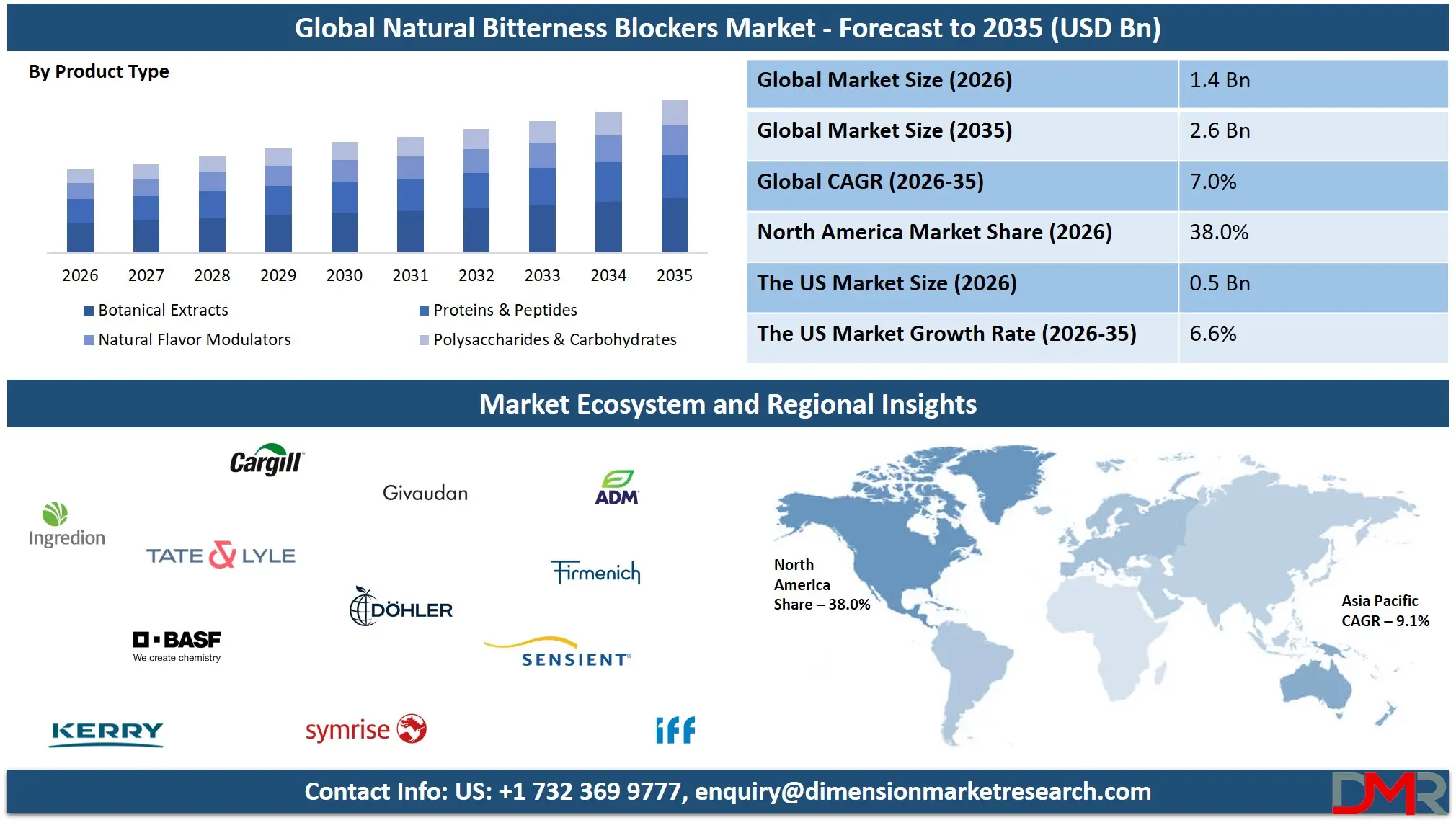
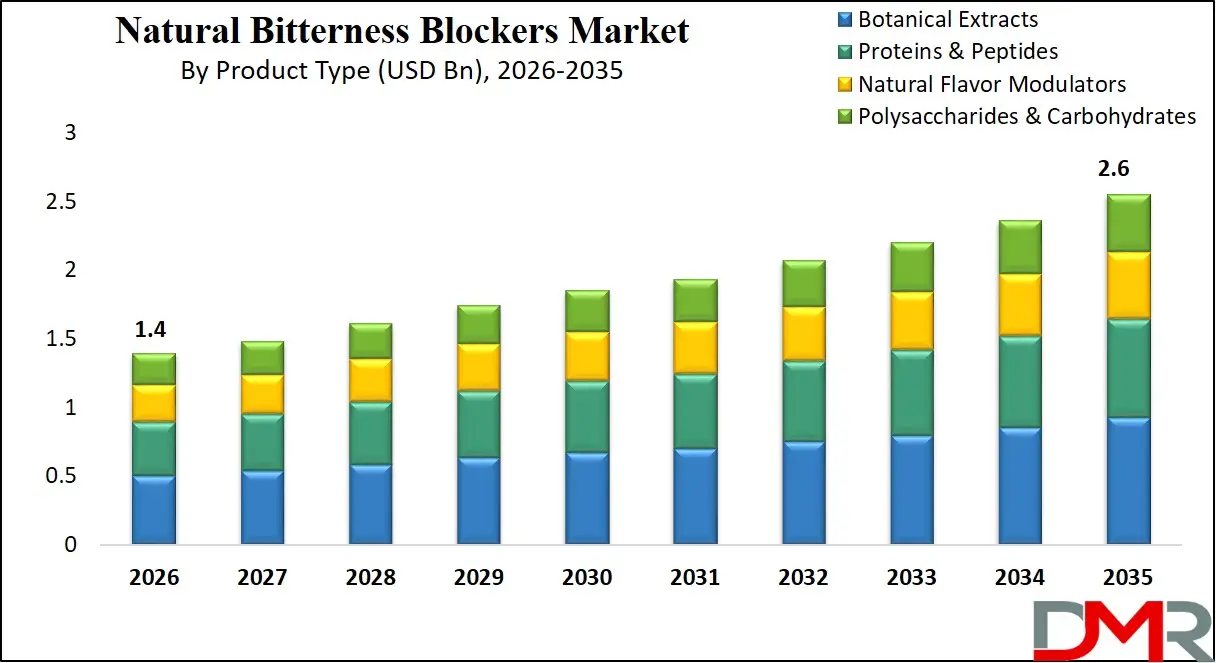
The Global Natural Bitterness Blockers Market size is projected to reach USD 1.4 billion in 2026 and grow at a compound annual growth rate of 7.0% to reach a value of USD 2.6 billion in 2035.
ℹ
To learn more about this report –
Download Your Free Sample Report Here
Natural bitterness blockers are ingredients and formulation solutions used to suppress or neutralize bitter taste profiles arising from functional components such as plant proteins, botanical extracts, vitamins, minerals, and active pharmaceutical compounds. These solutions include botanical extracts, peptides, polysaccharides, and natural flavor modulators that interact with taste receptors or alter flavor perception. They are widely used across food, pharmaceutical, nutraceutical, and personal care formulations to enhance palatability, support clean-label positioning, and maintain sensory balance in health-focused products.
The Natural Bitterness Blockers market has gained strategic importance as manufacturers reduce sugar, sodium, and artificial additives while expanding fortified, plant-based, and functional product offerings. Taste challenges associated with these formulations have increased reliance on natural taste-masking technologies. The ability of bitterness blockers to improve flavor acceptance without compromising nutritional value has positioned them as essential components across multiple industries.
ℹ
To learn more about this report –
Download Your Free Sample Report Here
Ongoing shifts toward sensory optimization, sustainable sourcing, and advanced flavor science continue to reshape the market. Innovations in receptor-level modulation, fermentation-derived ingredients, and multifunctional flavor systems are accelerating adoption. These developments, combined with rising consumer expectations for natural and enjoyable products, are supporting sustained market expansion and long-term growth potential.
The US Natural Bitterness Blockers Market
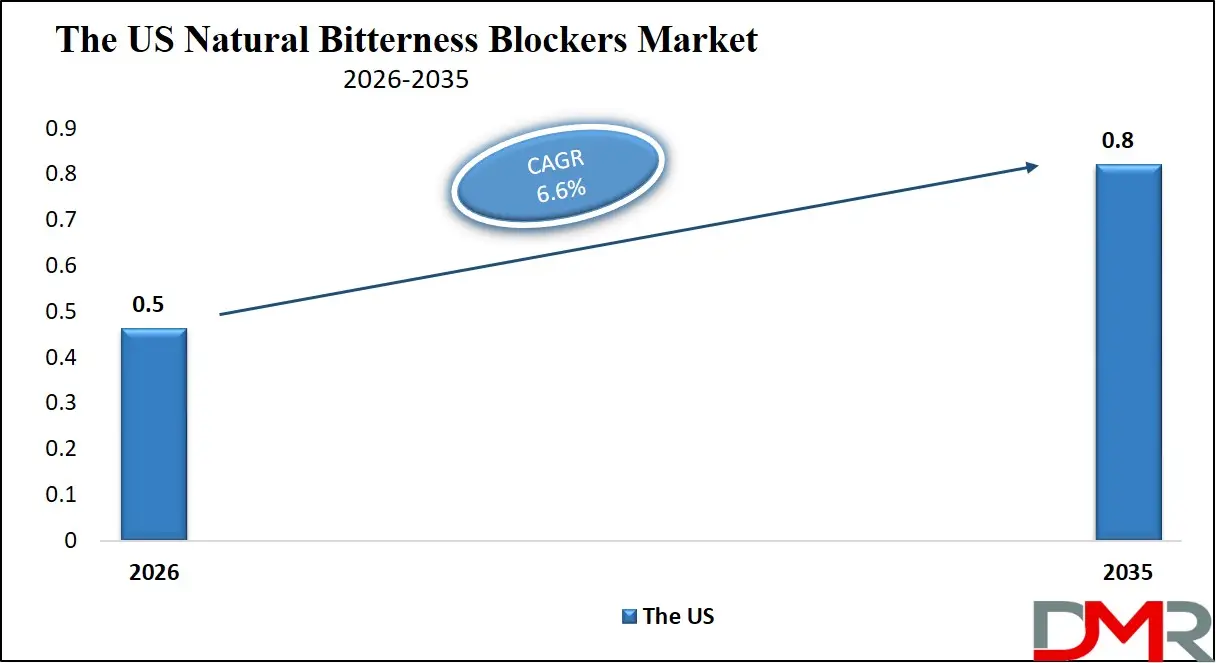
The US Natural Bitterness Blockers Market size is projected to reach USD 500 million in 2026 at a compound annual growth rate of 6.6% over its forecast period.
ℹ
To learn more about this report –
Download Your Free Sample Report Here
The US market is driven by strong consumer demand for clean-label, reduced-sugar, and plant-based products across food, beverage, and dietary supplement categories. Manufacturers actively adopt natural bitterness blockers to address taste challenges linked to protein fortification, functional beverages, and pediatric pharmaceuticals. A mature food innovation ecosystem, coupled with significant R&D investments in sensory science, supports rapid product development. Government initiatives promoting healthier diets and transparent labeling further encourage reformulation efforts, positioning the US as a major contributor to market revenue and technological advancement.
Europe Natural Bitterness Blockers Market
Europe Natural Bitterness Blockers Market size is projected to reach USD 350 million in 2026 at a compound annual growth rate of 6.9% over its forecast period.
Europe represents a well-regulated and innovation-driven market, shaped by strict food safety standards and sustainability-oriented policies. Regional emphasis on natural ingredients, botanical extracts, and reduced additive usage supports steady demand for natural bitterness blockers. Policies aligned with nutrition reformulation and environmental responsibility encourage manufacturers to adopt advanced taste-modulation solutions. Strong adoption across functional foods, pharmaceuticals, and nutraceuticals, combined with collaborative research between ingredient suppliers and manufacturers, continues to strengthen Europe’s market position.
Japan Natural Bitterness Blockers Market
Japan Natural Bitterness Blockers Market size is projected to reach USD 84 million in 2026 at a compound annual growth rate of 6.7% over its forecast period.
Japan’s market is influenced by a high concentration of functional food products, fortified beverages, and oral pharmaceutical formulations requiring effective taste masking. An aging population and strong focus on consumer experience drive demand for bitterness reduction in health-oriented products. Protein-based and fermentation-derived blockers are widely used due to their compatibility with traditional and modern formulations. Government support for functional foods and innovation in sensory science presents opportunities, while high quality expectations create both challenges and incentives for advanced solution development.
Natural Bitterness Blockers Market: Key Takeaways
- Market Growth: The Natural Bitterness Blockers Market size is expected to grow by USD 1.1 billion, at a CAGR of 7.0%, during the forecasted period of 2027 to 2035.
- By Product Type: The Botanical extracts segment is anticipated to get the majority share of the Natural Bitterness Blockers Market in 2026.
- By Application: The Food & beverage segment is expected to get the largest revenue share in 2026 in the Natural Bitterness Blockers Market.
- Regional Insight: North America is expected to hold a 38.0% share of revenue in the Global Natural Bitterness Blockers Market in 2026.
- Use Cases: Some of the use cases of Natural Bitterness Blockers include protein supplements, functional beverages, and more.
Natural Bitterness Blockers Market: Use Cases
- Functional Beverages: Used to mask bitterness from vitamins, minerals, and botanical extracts while maintaining clean-label profiles.
- Protein Supplements: Enhances palatability of plant-derived proteins in sports and clinical nutrition.
- Pharmaceutical Syrups: Improves taste of bitter active ingredients in pediatric and geriatric liquid medicines.
- Dietary Supplements: Reduces bitterness in herbal and micronutrient-rich capsules and tablets.
- Plant-based Dairy Alternatives: Addresses off-notes from legumes, soy, and pea proteins.
- Oral Care Products: Balances bitterness from herbal actives in toothpaste and mouthwash.
- Animal Nutrition: Improves feed intake by masking bitterness from additives and supplements.
Stats & Facts
- United States Department of Agriculture states that the global natural bitterness blockers market exceeded USD 1.7 billion in 2024.
- United States Department of Agriculture projects steady mid-single-digit annual growth through 2025.
- Food and Drug Administration reports food and beverage applications accounting for nearly 40% of total usage in 2024.
- Food and Drug Administration notes liquid forms represented the highest formulation share in 2025.
- European Food Safety Authority highlights botanical extracts as the fastest-growing product category in Europe.
- European Commission indicates increasing reformulation mandates driving adoption of taste-modulation solutions.
- Ministry of Health, Labour and Welfare of Japan reports rising use of bitterness blockers in functional beverages.
- Ministry of Health, Labour and Welfare of Japan identifies protein-based blockers as dominant in pharmaceutical use.
- World Health Organization associates reduced sugar initiatives with increased demand for taste-masking technologies.
- Food and Agriculture Organization reports growth in plant-based food production contributing to bitterness challenges.
- National Institutes of Health emphasizes palatability as a key factor in supplement compliance.
- European Commission data shows sustained R&D funding for natural ingredient innovation through 2025.
Market Dynamic
Driving Factors in the Natural Bitterness Blockers Market
Clean-Label and Health-Focused Reformulation
The shift toward clean-label and health-focused reformulation is a major driver of the natural bitterness blockers market. Manufacturers are actively removing artificial sweeteners, synthetic flavor enhancers, and chemical masking agents while striving to preserve taste quality. Natural bitterness blockers enable effective reformulation of products containing plant proteins, botanical extracts, and functional nutrients without compromising consumer acceptance. Regulatory pressure to reduce sugar and sodium content further accelerates adoption, making bitterness blockers essential tools for achieving both nutritional compliance and desirable sensory profiles across food, beverage, and pharmaceutical products.
Growth of Functional and Plant-Based Products
The rapid expansion of functional foods, plant-based alternatives, and nutraceuticals has intensified bitterness challenges associated with proteins, botanicals, and fortified ingredients. Natural bitterness blockers play a critical role in addressing these sensory limitations, enabling manufacturers to launch innovative products with improved taste profiles. Rising consumer interest in wellness, sports nutrition, and preventive healthcare continues to drive demand for fortified and protein-rich formulations. This driver strongly influences ingredient selection, formulation strategies, and product positioning, supporting sustained market growth and diversification.
Restraints in the Natural Bitterness Blockers Market
High Development and Formulation Costs
The development of effective natural bitterness blockers requires advanced sensory science, specialized ingredient sourcing, and extensive formulation testing, resulting in higher development costs. Smaller manufacturers often face financial and technical constraints due to limited research budgets and longer development timelines. In cost-sensitive and price-competitive markets, particularly in emerging economies, these factors can restrict adoption. The need for customized solutions further adds to production expenses, limiting broader market penetration and slowing adoption among mid- and low-scale manufacturers.
Formulation Complexity and Performance Variability
Natural bitterness blockers often exhibit performance variability depending on formulation matrices, concentration levels, and the specific bitter compounds involved. This complexity can lead to inconsistent taste outcomes across different product applications, discouraging adoption in highly standardized manufacturing environments. Achieving optimal performance frequently requires application-specific customization and technical expertise, increasing formulation time and complexity. These challenges may limit scalability and create barriers for manufacturers seeking consistent, high-volume production with predictable sensory results.
Opportunities in the Natural Bitterness Blockers Market
Expansion in Emerging Markets
Emerging markets present strong growth opportunities due to increasing urbanization, rising disposable incomes, and growing consumption of functional foods and dietary supplements. As consumers in these regions become more health-conscious, manufacturers are adopting global quality and formulation standards, increasing demand for effective taste-masking solutions. Natural bitterness blockers offer significant potential in supporting product innovation and market expansion. Improved access to modern food processing infrastructure further enhances opportunities for market players in these high-growth regions.
Advances in Sensory Science and Ingredient Innovation
Advancements in sensory science, receptor-level modulation, and fermentation-derived ingredients are creating new opportunities for the natural bitterness blockers market. These innovations enable more precise, efficient, and cost-effective bitterness reduction while maintaining clean-label integrity. Multifunctional flavor systems that combine taste modulation and nutritional benefits are gaining traction across applications. Such developments allow manufacturers to differentiate products, improve performance consistency, and introduce premium solutions tailored to evolving consumer preferences.
Trends in the Natural Bitterness Blockers Market
Integration of Digital and Sensory Technologies
Digital modeling, predictive analytics, and sensory mapping technologies are increasingly integrated into formulation development to optimize bitterness blocking performance. These tools enable faster identification of effective ingredient combinations, reducing trial-and-error processes and shortening development timelines. Enhanced data-driven insights improve formulation accuracy and sensory consistency. As digital technologies continue to advance, they are reshaping product innovation strategies and improving efficiency across research, development, and commercialization stages in the market.
Multi-Functional Taste Modulation Systems
Manufacturers are increasingly adopting multi-functional taste modulation systems that combine bitterness blocking with sweetness enhancement and flavor balancing. These integrated solutions help reduce ingredient complexity while supporting clean-label objectives and simplified formulations. By improving overall sensory experience and reducing the need for multiple additives, such systems enhance formulation efficiency. This trend reflects growing demand for holistic flavor solutions that deliver consistent taste performance across diverse applications while meeting evolving regulatory and consumer expectations.
Impact of Artificial Intelligence in Natural Bitterness Blockers Market
- Sensory Prediction Models: AI models accurately predict bitterness intensity and blocker performance across diverse formulations, reducing sensory uncertainty and formulation risks.
- Ingredient Optimization: AI analyzes molecular interactions to select optimal natural compounds, enabling precise and effective bitterness modulation across applications.
- Faster Product Development: Virtual simulations powered by AI significantly reduce formulation trials, accelerating development timelines and improving time-to-market efficiency.
- Customized Solutions: AI enables development of application-specific bitterness blocking profiles tailored to product matrices, ingredient combinations, and target sensory outcomes.
- Consumer Preference Analysis: AI evaluates regional and demographic taste data to align formulations with localized flavor expectations and consumer acceptance trends.
- Quality Consistency: AI-driven process controls ensure consistent sensory performance and reduce batch-to-batch variability in large-scale manufacturing.
- Cost Optimization: AI minimizes excessive use of costly natural ingredients by optimizing dosage levels while maintaining effective bitterness suppression.
Research Scope and Analysis
By Product Type Analysis
Botanical extracts dominate the product type category, accounting for an estimated 36% market share in 2026, primarily due to their natural origin and strong alignment with clean-label requirements. These extracts are highly effective in masking bitterness derived from plant proteins, herbal actives, and functional ingredients commonly used in food, beverage, and nutraceutical formulations. Their widespread acceptance is supported by long-standing consumer trust, favorable regulatory treatment, and compatibility with natural positioning claims. Continuous innovation in extraction technologies, purification processes, and standardization methods has improved efficacy and consistency, enabling broader application across beverages, supplements, and pharmaceutical products while reinforcing their leadership position.
Proteins and peptides represent the fastest-growing product segment due to their advanced functional properties and targeted bitterness-blocking mechanisms. Enzymatic peptide blends interact directly with taste receptors, offering precise bitterness suppression while maintaining nutritional integrity. Their multifunctional nature allows simultaneous taste modulation and functional benefits, making them highly attractive for functional beverages, sports nutrition, and pharmaceutical formulations. Growing demand for protein-fortified products and improved palatability in clinical nutrition has accelerated adoption. Ongoing advancements in enzymatic processing and fermentation technologies are enhancing scalability and cost efficiency, positioning this segment for sustained growth across premium and performance-driven applications.
By Application Analysis
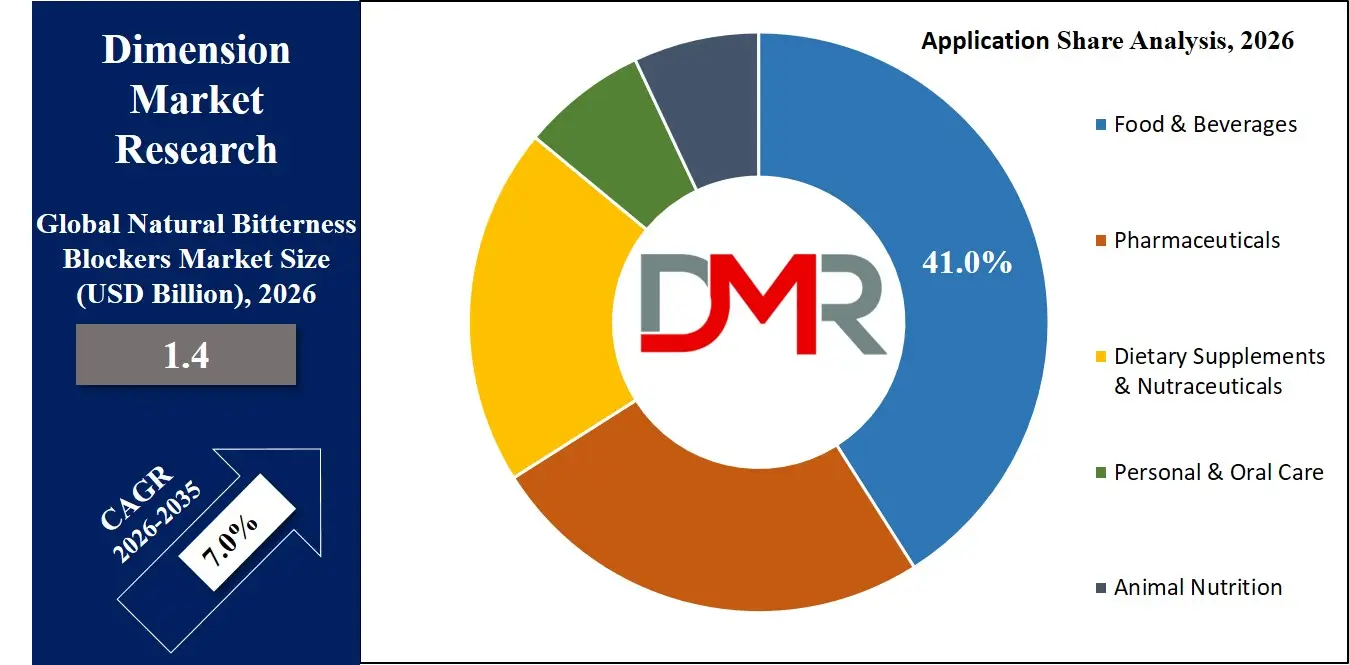
The food and beverages segment leads the market with an expected 41% share in 2026, driven by extensive use in beverages, bakery products, confectionery, and dairy and plant-based alternatives. Reformulation initiatives aimed at reducing sugar, sodium, and artificial additives have increased reliance on natural bitterness blockers to maintain taste quality. Functional beverages, protein drinks, and fortified foods particularly benefit from effective bitterness masking solutions. Clean-label demand, evolving consumer taste expectations, and rapid innovation in product development continue to support dominance. Manufacturers increasingly integrate bitterness blockers early in formulation design to enhance sensory appeal and accelerate market acceptance.
ℹ
To learn more about this report –
Download Your Free Sample Report Here
Pharmaceutical applications are expanding rapidly as taste compliance becomes a critical factor in patient adherence, especially for liquid, pediatric, and geriatric formulations. Many active pharmaceutical ingredients exhibit strong bitterness, necessitating effective and safe taste-masking solutions. Natural bitterness blockers offer advantages over synthetic alternatives by improving palatability while aligning with regulatory and safety expectations. Their use is increasing in syrups, suspensions, and oral dissolvable products. Rising focus on patient-centric drug design and improved medication experiences is encouraging pharmaceutical manufacturers to adopt advanced bitterness blocking technologies, supporting steady growth in this application segment.
By Source Analysis
Plant-based sources hold approximately 58% market share in 2026, supported by strong sustainability trends and consumer preference for naturally derived ingredients. These sources align well with clean-label, vegan, and allergen-free product claims, making them highly attractive across food, beverage, and supplement applications. Plant-based bitterness blockers are commonly derived from fruits, herbs, and botanical materials, offering broad functional compatibility. Increased emphasis on environmental responsibility and transparent sourcing further strengthens demand. Continuous improvements in extraction efficiency and ingredient consistency are expanding their usability, reinforcing plant-based sources as the dominant choice in the market.
Microbial and fermentation-derived bitterness blockers are experiencing rapid growth due to their scalability, consistency, and advanced functional performance. These sources allow precise control over molecular composition, resulting in reliable bitterness reduction across diverse formulations. Fermentation-based production supports sustainable manufacturing practices and reduces dependency on agricultural variability. This segment is particularly attractive for pharmaceutical and functional food applications requiring high purity and repeatable results. As biotechnological advancements continue to lower production costs and improve yields, microbial-derived solutions are gaining traction as a high-performance alternative to traditional plant-based ingredients.
By Form Analysis
Powder forms account for nearly 49% market share in 2026, favored for their stability, extended shelf life, and ease of storage and transportation. Powders offer formulation flexibility and compatibility with dry mixes, capsules, tablets, and powdered beverages. Their low moisture content reduces degradation risks, making them suitable for large-scale manufacturing and long distribution cycles. Food and supplement manufacturers prefer powder forms due to precise dosing and simplified handling. Continuous improvements in spray drying and encapsulation technologies further enhance performance, supporting the continued dominance of powdered bitterness blockers across multiple industries.
Liquid forms are the fastest-growing segment, driven by increasing use in beverages, pharmaceutical syrups, and oral care products. Liquids integrate easily into formulations, ensuring uniform dispersion and immediate functionality. Their suitability for liquid-based applications makes them essential for ready-to-drink beverages and pediatric medicines. Advances in stabilization and preservation technologies are improving shelf life and performance consistency. As demand for functional drinks and liquid supplements grows, manufacturers are increasingly adopting liquid bitterness blockers to streamline formulation processes and enhance sensory outcomes.
By End User Industry Analysis
Food and beverage manufacturers lead the end-user category with an estimated 44% market share in 2026, driven by aggressive reformulation strategies and product innovation. The need to balance taste with nutritional improvements has made natural bitterness blockers essential across multiple product lines. From protein drinks to plant-based dairy alternatives, manufacturers rely on these solutions to enhance palatability while meeting clean-label expectations. Strong competition and rapid product launches further accelerate adoption, reinforcing the segment’s dominance in overall market demand.
Dietary supplement manufacturers represent a rapidly growing end-user segment due to rising consumer health awareness and increased consumption of vitamins, minerals, and herbal supplements. Many supplement ingredients possess inherent bitterness, making taste masking critical for repeat usage and compliance. Natural bitterness blockers enable manufacturers to improve sensory appeal without compromising perceived efficacy or natural positioning. Growth in personalized nutrition, sports supplements, and preventive healthcare continues to drive demand, positioning this segment as a key contributor to future market expansion.
The Natural Bitterness Blockers Market Report is segmented on the basis of the following:
By Product Type
- Botanical Extracts
- Stevia-based derivatives
- Monk fruit extract
- Citrus-based extracts
- Proteins & Peptides
- Plant-derived proteins
- Enzymatic peptide blends
- Natural Flavor Modulators
- Bitter receptor blockers
- Taste-masking compounds
- Polysaccharides & Carbohydrates
By Application
- Food & Beverages
- Beverages
- Bakery & Confectionery
- Dairy & Plant-based Alternatives
- Pharmaceuticals
- Liquid formulations
- Pediatric medicines
- Dietary Supplements & Nutraceuticals
- Protein supplements
- Herbal supplements
- Personal & Oral Care
- Animal Nutrition
- Feed additives
- Palatability enhancers
By Source
- Plant-based
- Microbial / Fermentation-derived
By Form
- Powder
- Liquid
- Encapsulated
By End-User Industry
- Food & Beverage Manufacturers
- Pharmaceutical Manufacturers
- Dietary Supplement Manufacturers
- Personal Care Product Manufacturers
- Animal Feed Manufacturers
Regional Analysis
Leading Region in the Natural Bitterness Blockers Market
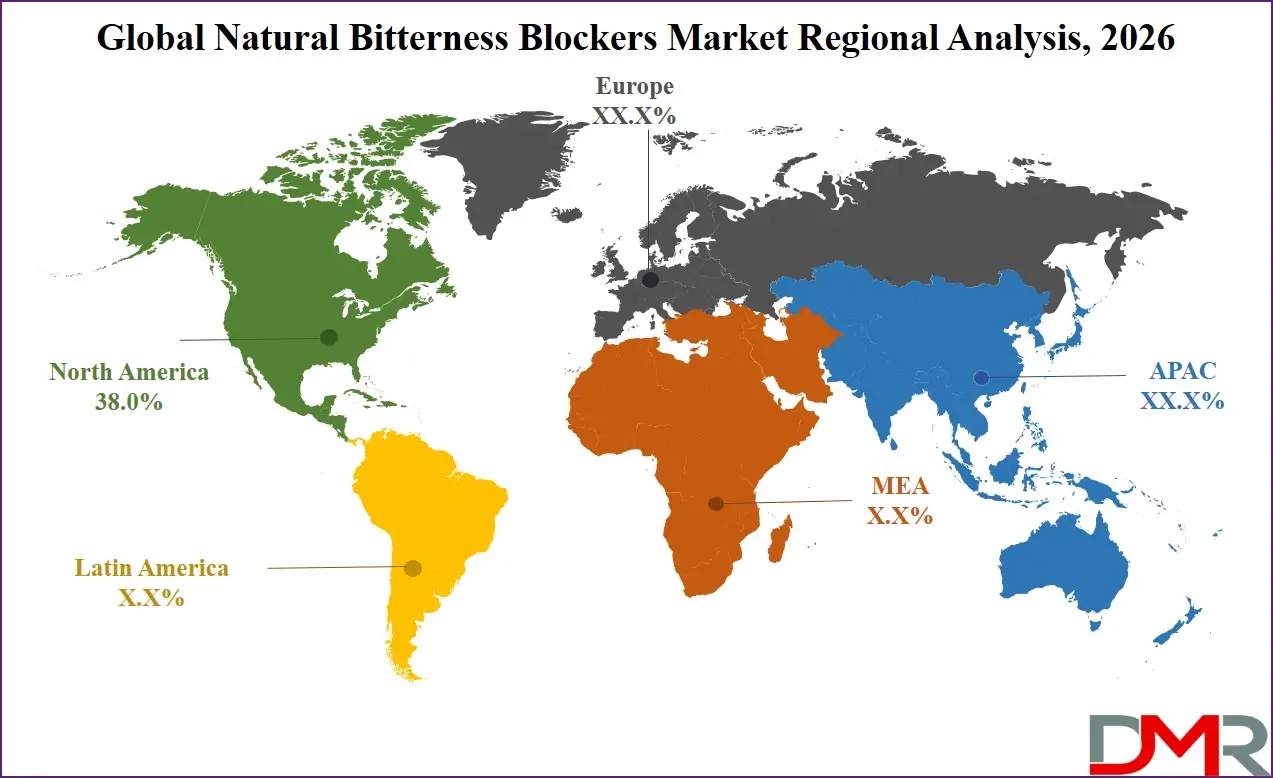
North America is expected to account for approximately 38% market share in 2026, supported by advanced R&D infrastructure, high consumer awareness, and strong demand for clean-label products. The region benefits from proactive reformulation initiatives, stringent food quality standards, and rapid adoption of functional and plant-based products. Manufacturers invest heavily in sensory science and innovation to enhance taste experiences. Favorable regulatory frameworks and a mature food and pharmaceutical industry ecosystem further reinforce North America’s leadership in the global natural bitterness blockers market.
ℹ
To learn more about this report –
Download Your Free Sample Report Here
Fastest Growing Region in the Natural Bitterness Blockers Market
Asia-Pacific is the fastest-growing region due to rapid expansion of food processing industries, rising disposable incomes, and increasing health consciousness among consumers. Growing demand for functional foods, supplements, and fortified beverages is driving the need for effective taste-masking solutions. Government initiatives supporting nutrition improvement and food quality standards further stimulate market growth. Rapid urbanization and changing dietary patterns are accelerating adoption across emerging economies, positioning Asia-Pacific as a high-growth region with strong long-term potential.
By Region
North America
Europe
- Germany
- The U.K.
- France
- Italy
- Russia
- Spain
- Benelux
- Nordic
- Rest of Europe
Asia-Pacific
- China
- Japan
- South Korea
- India
- ANZ
- ASEAN
- Rest of Asia-Pacific
Latin America
- Brazil
- Mexico
- Argentina
- Colombia
- Rest of Latin America
Middle East & Africa
- Saudi Arabia
- UAE
- South Africa
- Israel
- Egypt
- Rest of MEA
Competitive Landscape
The Natural Bitterness Blockers market is characterized by innovation-driven competition, with companies focusing on proprietary formulations, application-specific solutions, and strategic partnerships to strengthen their positions. High entry barriers exist due to technical formulation complexity, regulatory compliance requirements, and the need for advanced sensory science expertise. Continuous investment in research and development, taste-modulation technologies, and sustainable ingredient sourcing remains essential for maintaining competitive advantage, ensuring performance consistency, and expanding market presence across food, pharmaceutical, and nutraceutical applications.
Some of the prominent players in the global Natural Bitterness Blockers are:
- Givaudan
- Firmenich
- International Flavors & Fragrances (IFF)
- Kerry Group
- Symrise
- Sensient Technologies
- Tate & Lyle
- Cargill
- Archer Daniels Midland (ADM)
- BASF
- Döhler
- Ingredion
- Takasago
- Robertet
- T. Hasegawa
- Bell Flavors & Fragrances
- Mane
- Synergy Flavors
- NTC Flavors
- Flavorchem
- Other Key Players
Recent Developments
- In July 2025, Biospringer by Lesaffre has launched advanced yeast-based flavor solutions aimed at delivering intense sensory profiles in food applications. The fermentation-derived Springer Mask 102 is designed to block bitterness and neutralize off-notes from alternative sweeteners, while Maxarome Prime enhances savory formulations by reinforcing umami, meaty, and salty notes. These innovations were showcased through live product tastings at the recently concluded IFT First event, highlighting their versatility and performance in savory food systems.
- In March 2025, dsm-firmenich has launched a comprehensive portfolio of pharmaceutical-focused taste solutions, including flavors, extracts, aromatic compounds, maskers, blockers, and sensates. Designed for solid, liquid, and semi-solid dosage forms, the portfolio supports improved palatability without affecting drug safety or efficacy. Recognizing that bitterness is driven by complex TAS2R receptors activated by many APIs, these newly launched taste modulation solutions work at multiple levels to directly reduce bitterness and enhance overall flavor balance.
Report Details
| Report Characteristics |
| Market Size (2026) |
USD 1.4 Bn |
| Forecast Value (2035) |
USD 2.6 Bn |
| CAGR (2026–2035) |
7.0% |
| The US Market Size (2026) |
USD 0.5 Bn |
| Historical Data |
2021 – 2025 |
| Forecast Data |
2027 – 2035 |
| Base Year |
2025 |
| Estimate Year |
2026 |
| Report Coverage |
Market Revenue Estimation, Market Dynamics, Competitive Landscape, Growth Factors and etc. |
| Segments Covered |
By Product Type (Botanical Extracts, Proteins & Peptides, Natural Flavor Modulators, Polysaccharides & Carbohydrates), By Application (Food & Beverages, Pharmaceuticals, Dietary Supplements & Nutraceuticals, Personal & Oral Care, Animal Nutrition), By Source (Plant-based, Microbial / Fermentation-derived), By Form (Powder, Liquid, Encapsulated), By End-User Industry (Food & Beverage Manufacturers, Pharmaceutical Manufacturers, Dietary Supplement Manufacturers, Personal Care Product Manufacturers, Animal Feed Manufacturers) |
| Regional Coverage |
North America – The US and Canada; Europe – Germany, The UK, France, Russia, Spain, Italy, Benelux, Nordic, & Rest of Europe; Asia-Pacific – China, Japan, South Korea, India, ANZ, ASEAN, Rest of APAC; Latin America – Brazil, Mexico, Argentina, Colombia, Rest of Latin America; Middle East & Africa – Saudi Arabia, UAE, South Africa, Turkey, Egypt, Israel, & Rest of MEA |
| Prominent Players |
Givaudan, Firmenich, International Flavors & Fragrances (IFF), Kerry Group, Symrise, Sensient Technologies, Tate & Lyle, Cargill, Archer Daniels Midland (ADM), BASF, Döhler, Ingredion, Takasago, Robertet, T. Hasegawa, Bell Flavors & Fragrances, Mane, Synergy Flavors, NTC Flavors, Flavorchem, and Other Key Players |
Frequently Asked Questions
How big is the Global Natural Bitterness Blockers Market?
▾ The Global Natural Bitterness Blockers Market size is expected to reach USD 1.4 billion by 2026 and is projected to reach USD 2.6 billion by the end of 2035.
Which region accounted for the largest Global Natural Bitterness Blockers Market?
▾ North America is expected to have the largest market share in the Global Natural Bitterness Blockers Market, with a share of about 38.0% in 2026.
How big is the Natural Bitterness Blockers Market in the US?
▾ The US Natural Bitterness Blockers market is expected to reach USD 0.5 billion by 2026.
Who are the key players in the Natural Bitterness Blockers Market?
▾ Some of the major key players in the Global Natural Bitterness Blockers Market include Cargill, ADM, BASF, and others.
What is the growth rate in the Global Natural Bitterness Blockers Market?
▾ The market is growing at a CAGR of 7.0 percent over the forecasted period.