What is the Global Nutraceuticals Market Size?
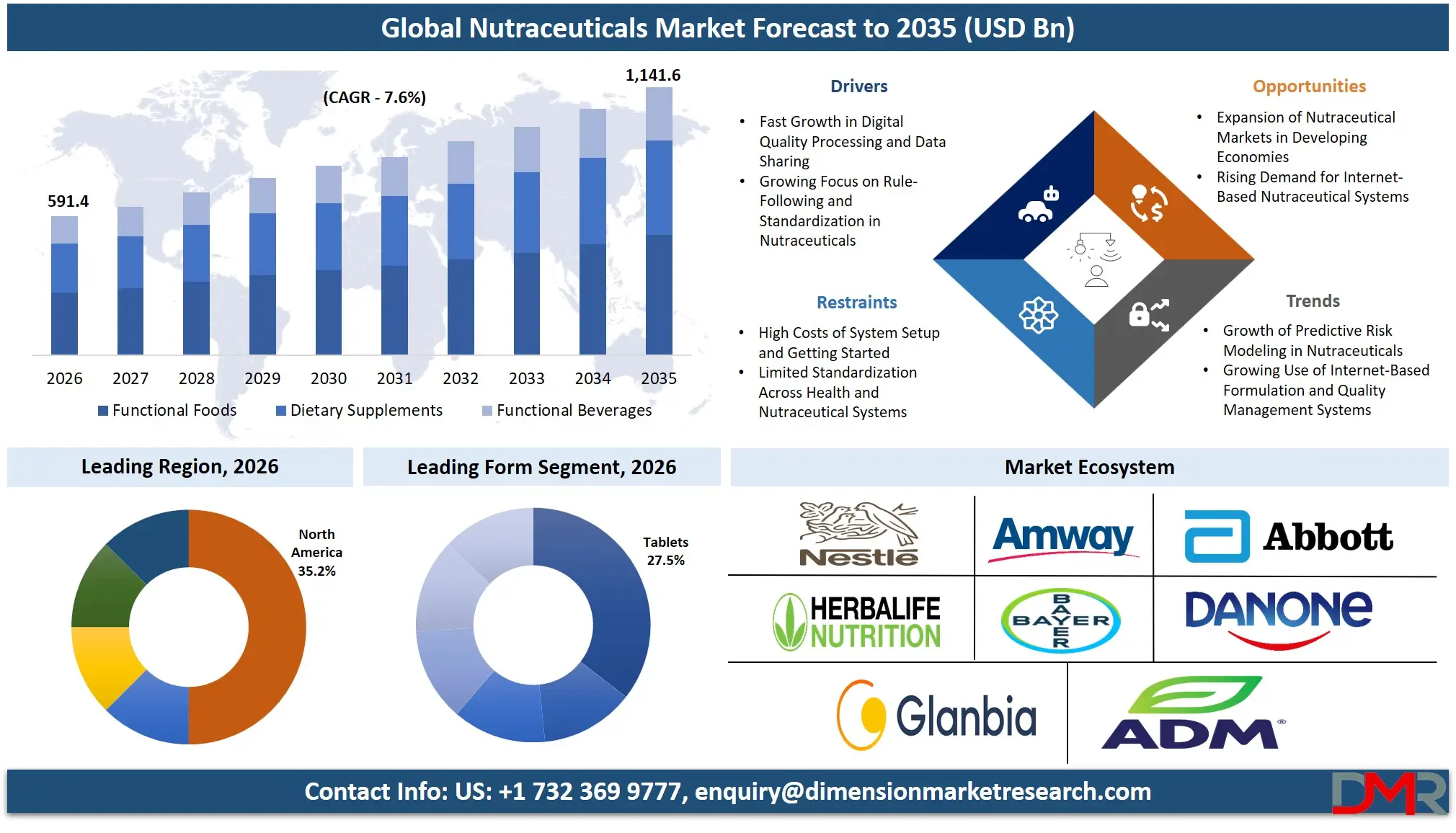
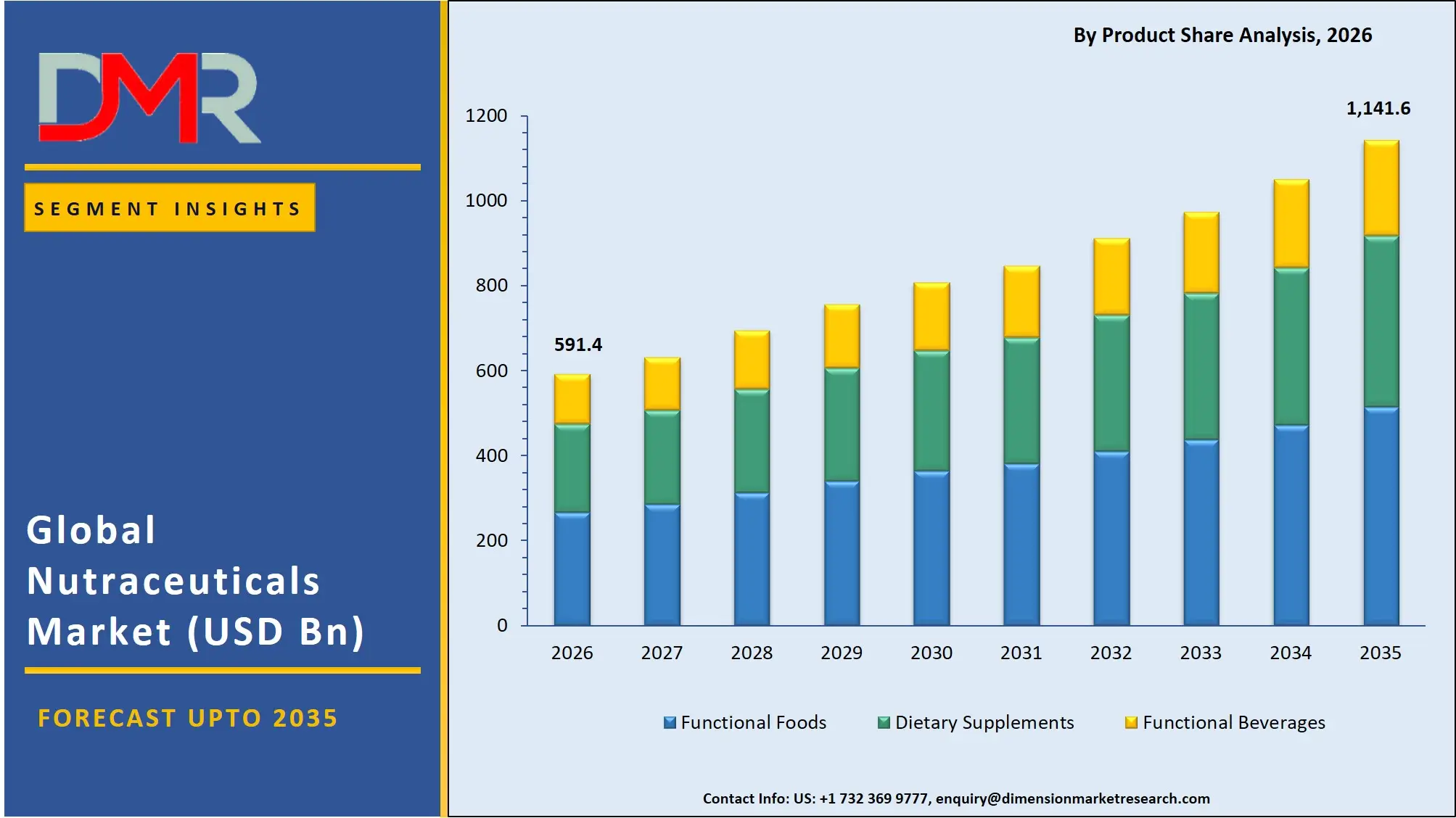
The Global Nutraceuticals Market size is estimated at USD 591.4 billion in 2026 and is projected to reach USD 1,141.6 billion by 2035, exhibiting a CAGR of 7.6% during the forecast period, driven by the rising use of better data tools in personalized nutrition, automated quality checks in manufacturing, and connected health management systems.
ℹ
To learn more about this report –
Download Your Free Sample Report Here
The Global Nutraceuticals Market is expanding because of increasing use of smart software in detecting and analyzing consumer health patterns and ingredient effectiveness; increasing approvals which reduce the chance of rule-breaking during production and speed up the review process for new ingredients; and more funding in automating the use of nutrition-related health data. Some other reasons for expansion in this market are new technologies in real-time quality assurance, health risk prediction through body markers, automated supply chain handling, and high-volume digital platforms along with better data sharing rules.
The digital shift in health and wellness companies has been helpful in speeding up product development and making nutraceutical management easier. This includes wellness tracking research. In addition, government plans focusing on preventing illness and the bio-economy have ensured steady research in functional foods and dietary supplements.
ℹ
To learn more about this report –
Download Your Free Sample Report Here
The US Nutraceuticals Market
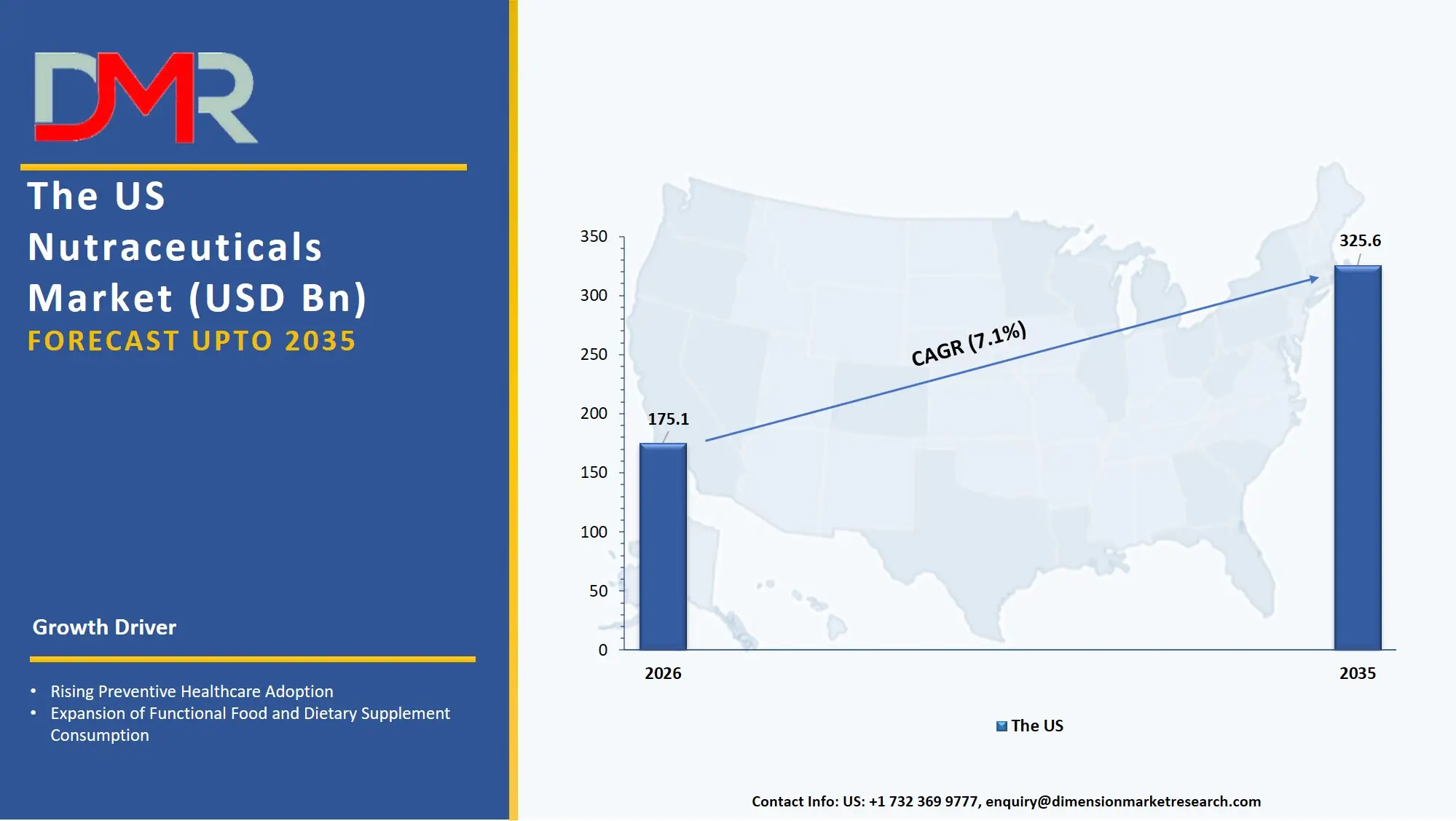
The US Nutraceuticals Market is estimated to grow to USD 175.1 billion in 2026 with a compound annual growth rate of 7.1% during the forecast period.
ℹ
To learn more about this report –
Download Your Free Sample Report Here
The U.S. nutraceuticals market benefits from high consumer awareness of dietary supplements, preventive wellness, sports nutrition, healthy aging, and functional nutrition. A broad product ecosystem spanning vitamins, minerals, probiotics, herbal supplements, omega-3 products, protein-based nutrition, functional foods, and beverages supports sustained market activity. Consumers increasingly seek products addressing immunity, digestive health, energy, weight management, cardiovascular wellness, cognitive health, and healthy aging. The country's established retail, pharmacy, specialty-store, and e-commerce networks also provide manufacturers with multiple routes to reach consumers and support rapid product commercialization.
Europe Nutraceuticals Market
The Europe Nutraceuticals Market is estimated to be valued at USD 159.7 billion in 2026, witnessing growth at a CAGR of 6.4%, during the forecast period.
Europe represents a mature nutraceutical market supported by strong consumer interest in preventive healthcare, healthy aging, functional nutrition, and natural ingredients. Demand is expanding across vitamins, minerals, probiotics, herbal and botanical extracts, omega-3 fatty acids, functional foods, and specialized dietary supplements. Consumers increasingly prioritize product quality, ingredient transparency, sustainability, and scientifically supported nutritional benefits. This has encouraged manufacturers to develop clean-label, plant-based, organic, and targeted products designed for specific demographic and wellness requirements.
Japan Nutraceuticals Market
The Japan Nutraceuticals Market is projected to be valued at USD 18.8 billion in 2026, progressing at a CAGR of 7.3%, during the period spanning from 2026 to 2035.
Japan has a well-established nutraceutical market supported by strong consumer interest in preventive health, functional foods, healthy aging, and longevity. An aging population creates sustained demand for products supporting bone and joint health, cardiovascular wellness, cognitive function, immunity, digestive health, and nutritional maintenance. Functional foods and beverages represent important areas of opportunity, alongside dietary supplements containing vitamins, minerals, probiotics, botanical ingredients, and other functional components. Consumers generally place strong emphasis on product quality, safety, convenience, and clearly communicated functional benefits.
Key Takeaways
- Market Size & Forecast: The Global Nutraceuticals Market is estimated to be valued at USD 591.4 billion in 2026 and is expected to grow to USD 1,141.6 billion by 2035.
- Growth Rate & Outlook: The market is expected to witness growth at a compound annual growth rate of 7.6% in the forecast period.
- Primary Growth Drivers: The availability of new formulation processing technologies that use smart software, the need to speed up preventive healthcare results and improve success rates of nutrition-based treatments, and more government investment in national preventive health infrastructure are key growth drivers.
- Key Market Trends: The predictive profiling of individual health risks, real-time quality data handling and the shift to internet-based nutraceutical and product management platforms are key market trends.
- By Ingredient: Vitamins are expected to take the largest revenue share in 2026 in the global nutraceuticals market.
- By Product: Dietary Supplements are expected to take the largest revenue share in 2026 in the nutraceuticals market.
- By Distribution Channel: Online Retail is estimated to take the lead in 2026 with the largest share in the nutraceuticals market, owing to digital adoption and ease of buying products.
- Regional Leadership: North America is estimated to take the lead in 2026 with 35.2% share in the nutraceuticals market, owing to significant investment in preventive healthcare and nutrition technologies.
What is Nutraceuticals?
Nutraceuticals are food-derived products that provide health or physiological benefits beyond basic nutritional value. They include dietary supplements, functional foods, functional beverages, vitamins, minerals, probiotics, omega-3 fatty acids, herbal extracts, amino acids, and other bioactive ingredients. Nutraceuticals are consumed to support overall wellness and may help maintain specific health functions, including immunity, digestive health, cardiovascular health, cognitive wellness, bone health, and healthy aging. They are positioned between conventional foods and pharmaceuticals, combining nutritional properties with targeted health benefits. Growing consumer awareness of preventive healthcare, personalized nutrition, clean-label products, and lifestyle-related health concerns is driving demand for nutraceutical products across global markets.
Use Cases
- Immunity Support for Daily Wellness: Nutraceuticals can provide immune-boosting benefits through vitamins (C, D), minerals (zinc), and plant-based ingredients (elderberry) to reduce infection risk and support recovery.
- Long-Term Illness Management: Long-term data on ongoing health issues, including diabetes, joint pain, or heart conditions, are studied to better understand disease progression and to help plan long-term nutrition-based care.
- Digestive Health Tracking: Probiotic and prebiotic supplements are handled through digital platforms and smart software in clinic and home settings to support gut health balance.
- Community Health & Government Programs: Faster nutraceutical product development helps nutrition innovation and development of targeted treatments; government programs through smart monitoring of population health data advance national preventive health strategies and help adoption of care standards.
How AI Is Transforming the Global Nutraceuticals Market?
Artificial intelligence is increasingly being applied to nutraceutical research and product development to evaluate large volumes of ingredient, nutrition, consumer, and scientific data. AI-supported systems can help manufacturers identify potential ingredient combinations, evaluate formulation possibilities, analyze scientific literature, and prioritize products aligned with specific health objectives. These capabilities can shorten formulation cycles and support the development of targeted products for areas such as gut health, immunity, healthy aging, cognitive wellness, and sports nutrition. AI can also assist companies in identifying emerging consumer preferences and evaluating potential product concepts before large-scale commercialization.
AI is also supporting operational efficiency across nutraceutical supply chains by improving demand forecasting, inventory planning, supplier monitoring, and quality-control processes. Machine-learning models can identify purchasing patterns and anticipate demand for specific ingredients or finished products, helping manufacturers reduce inventory imbalances and improve production planning. AI-based quality systems can analyze manufacturing and testing data to identify unusual patterns and potential deviations. Increasing integration of AI across formulation, procurement, manufacturing, and commercialization is therefore expected to strengthen efficiency and accelerate innovation across the nutraceutical value chain.
Market Dynamics
Key Drivers of the Global Nutraceuticals Market
Rising Consumer Focus on Preventive Health and Wellness
Growing awareness of preventive healthcare is encouraging consumers to use nutraceutical products as part of daily wellness routines. Increasing interest in immunity, digestive health, cardiovascular health, cognitive wellness, bone and joint support, and healthy aging is expanding demand for vitamins, minerals, probiotics, omega-3 fatty acids, herbal extracts, and other functional ingredients. Consumers are increasingly seeking products that complement conventional diets and support specific health objectives. This shift is strengthening demand across dietary supplements, functional foods, and functional beverages, while encouraging manufacturers to develop products targeting clearly defined wellness needs.
Growing Demand for Functional and Convenient Nutrition
Demand for convenient nutrition is supporting the expansion of nutraceutical products across multiple consumption formats. Consumers increasingly prefer tablets, capsules, powders, liquids, soft gels, and gummies that can be incorporated easily into daily routines. Functional beverages and fortified foods are also gaining attention among consumers seeking nutrition benefits without relying exclusively on traditional supplements. Product innovation around taste, portability, dosage flexibility, clean-label positioning, and targeted functionality is enabling manufacturers to reach broader consumer groups and expand nutraceutical consumption beyond traditional supplement users.
Restraints in the Global Nutraceuticals Market
Regulatory Complexity and Product Claim Restrictions
Regulatory requirements remain a significant challenge for nutraceutical manufacturers because ingredient approvals, permissible health claims, labeling requirements, safety assessments, and quality standards vary across countries. Manufacturers operating internationally must adapt formulations and marketing claims to different regulatory frameworks, increasing compliance costs and product development timelines. Greater scrutiny of product efficacy and ingredient safety can also limit the use of certain emerging ingredients or restrict health-related claims. These requirements create additional barriers for smaller companies and can slow the commercialization of innovative nutraceutical products.
Quality, Safety, and Ingredient Supply Challenges
Variations in raw-material quality, ingredient authenticity, contamination risks, and supply-chain disruptions can affect nutraceutical production and brand reputation. Manufacturers depend on consistent supplies of botanical extracts, vitamins, minerals, probiotics, proteins, omega-3 oils, and other specialized ingredients, many of which are exposed to agricultural conditions, transportation costs, and global supply fluctuations. Maintaining batch-to-batch consistency and demonstrating product quality requires rigorous testing and traceability. These challenges can increase production costs and create difficulties for companies seeking to scale products across multiple markets.
Growth Opportunities in the Global Nutraceuticals Market
Expansion of Nutraceutical Markets in Developing Economies
Newly developing economies such as Brazil, Indonesia, Nigeria, the UAE, and Vietnam are slowly building their healthcare and nutraceutical systems. These regions have long-term growth possibilities, with more people adopting preventive health, and with more people becoming aware of functional foods and slowly digitizing nutrition care. These markets have few older production systems and can be used with new, technology-driven nutraceutical systems that can grow over time.
Rising Demand for Internet-Based Nutraceutical Systems
The move to remote nutrition care, spread-out health networks, and real-time quality checks is creating the adoption of internet-based nutraceutical systems. These systems allow centralized data access, better coordination between health providers and manufacturers, and faster product management. Internet-based setup is increasingly becoming a trend among modern nutraceutical providers as operational efficiency becomes one of the competitive factors.
Global Nutraceuticals Market Trends
Personalized and Targeted Nutrition Products
Personalized nutrition is becoming an important direction within the nutraceuticals market as consumers increasingly seek products aligned with individual health goals, lifestyles, age groups, dietary preferences, and wellness requirements. Manufacturers are responding with targeted formulations focused on areas such as gut health, immunity, healthy aging, sports nutrition, cognitive performance, women's health, and metabolic wellness. Advances in consumer health assessment, nutritional profiling, and data-driven product recommendations are further supporting the development of customized supplement combinations and specialized nutrition programs.
Expansion of Clean-Label and Plant-Based Formulations
Consumer preference for recognizable ingredients, natural formulations, plant-based products, and transparent sourcing is influencing nutraceutical product development. Manufacturers are increasingly emphasizing botanical extracts, plant proteins, natural flavors, sustainably sourced ingredients, and simplified ingredient lists. Demand for products positioned around clean-label, vegan, organic, non-GMO, and naturally derived characteristics is creating opportunities for differentiated formulations. This trend is also encouraging companies to improve ingredient traceability, packaging transparency, and communication around sourcing and manufacturing practices.
Research Scope and Analysis
The nutraceuticals market is expanding steadily, driven by rising demand for immunity support, dietary supplements, digestive health solutions, and convenient nutrition formats. Growing online retail adoption, health awareness, and innovation in functional ingredients and formulations continue to support long-term market growth globally.
ℹ
To learn more about this report –
Download Your Free Sample Report Here
By Ingredient Analysis
The Vitamins segment is likely to continue dominating the market in 2026, with 31.5% of the global nutraceuticals market share. This is due to its key role in covering immunity support, energy production, and long-term illness management, and its usefulness in various consumer settings where complete nutrition protection is needed. The Probiotics segment is also growing rapidly, with increasing demand for digestive health needed in health-conscious consumer groups that require gut health support and regularity. They are also helped by the improvement of formulation processes, real-time quality checks, and flexibility through modular platforms that combine several ingredient types for better usefulness and customer convenience.
By Product Analysis
The Dietary Supplements segment is expected to account for 58.7% share in 2026, due to higher consumer awareness, condition-specific health needs, and greater willingness to buy compared to other product types. The segment is also driven by growing adoption of complete vitamin and mineral plans, and combined formulation options to increase value for consumers in clinic and home settings. It's also the fastest-growing segment in the nutraceuticals market, due to the fast uptake of fully connected nutrition health workflows and health infrastructure. Functional Beverages are the second-largest segment, followed by Functional Foods.
By Application Analysis
The Immunity Support segment is expected to dominate with around 27.4% market share in 2026, driven by greater consumer focus on preventive health, faster product adoption, and broader store access compared to other applications. Immunity nutraceuticals support customized health plans because they can offer multiple levels of daily intake, amounts, and yearly plans. The Digestive Health segment, while smaller, is seeing strong growth in regions with government-sponsored gut health awareness programs and subsidized probiotic products.
By Form Analysis
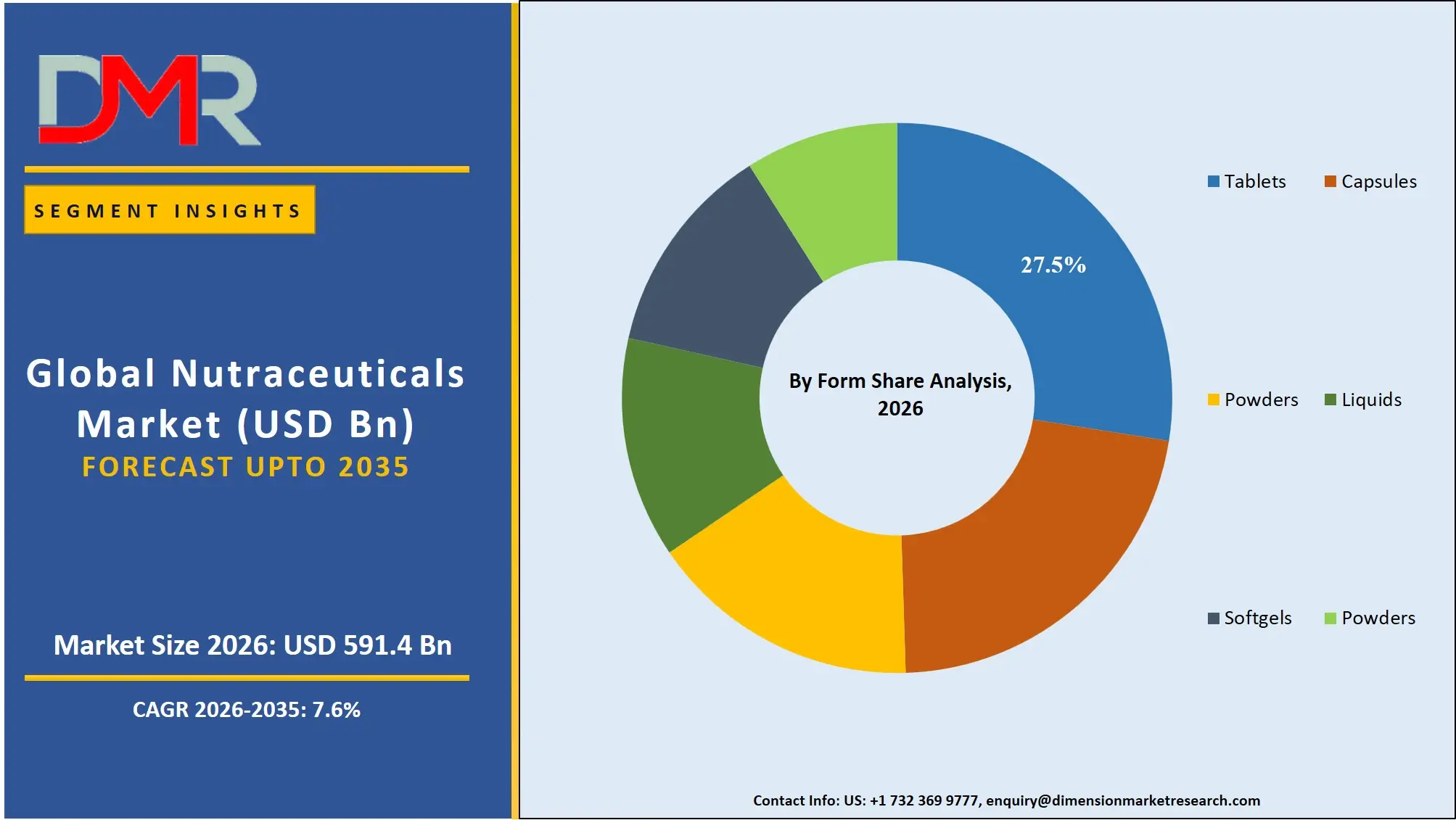
The Tablets segment is the largest form in 2026, accounting for 27.5% share, driven by ease of swallowing, exact dosing, and longer shelf life. Capsules are also a major segment, supported by established manufacturing processes and broad consumer familiarity. The fastest-growing area is Gummies, where consumers prefer chewable, good-tasting alternatives to traditional pills. Powders are also emerging for high-dose and customizable supplementation.
By Distribution Channel Analysis
The Online Retail segment is the largest distribution channel in 2026, accounting for 35.6% share, driven by digital adoption, subscription plans, and the ease of buying products via websites and mobile apps. Pharmacies & Drug Stores are the second-largest segment, using professional advice and cross-selling with other health products. The fastest-growing area is Supermarkets & Hypermarkets, where food and drink retailers offer nutraceuticals as part of everyday shopping. Specialty Stores are also emerging for premium, condition-specific or high-value formulations.
The Global Nutraceuticals Market Report is segmented based on the following:
By Ingredient
- Vitamins
- Minerals
- Proteins & Amino Acids
- Probiotics
- Prebiotics
- Herbal & Botanical Extracts
- Omega-3 Fatty Acids
- Enzymes
- Others
By Product
- Functional Foods
- Fortified Cereals & Grains
- Functional Bakery Products
- Nutritional Bars
- Infant Nutrition Products
- Functional Dairy Products
- Other Functional Foods
- Dietary Supplements
- Vitamin Supplements
- Mineral Supplements
- Protein Supplements
- Botanical Supplements
- Probiotic Supplements
- Other Dietary Supplements
- Functional Beverages
- Energy Beverages
- Sports Beverages
- Fortified Juices
- Other Functional Beverages
By Application
- Digestive Health
- Immunity Support
- Energy & Performance
- Weight Management
- Bone & Joint Health
- Cardiovascular Health
- Cognitive Health
- Skin & Hair Health
- Others
By Form
- Tablets
- Capsules
- Soft gels
- Powders
- Liquids
- Gummies
By Distribution Channel
- Supermarkets & Hypermarkets
- Pharmacies & Drug Stores
- Convenience Stores
- Specialty Stores
- Online Retail
Regional Analysis
Leading Region in the Nutraceuticals Market
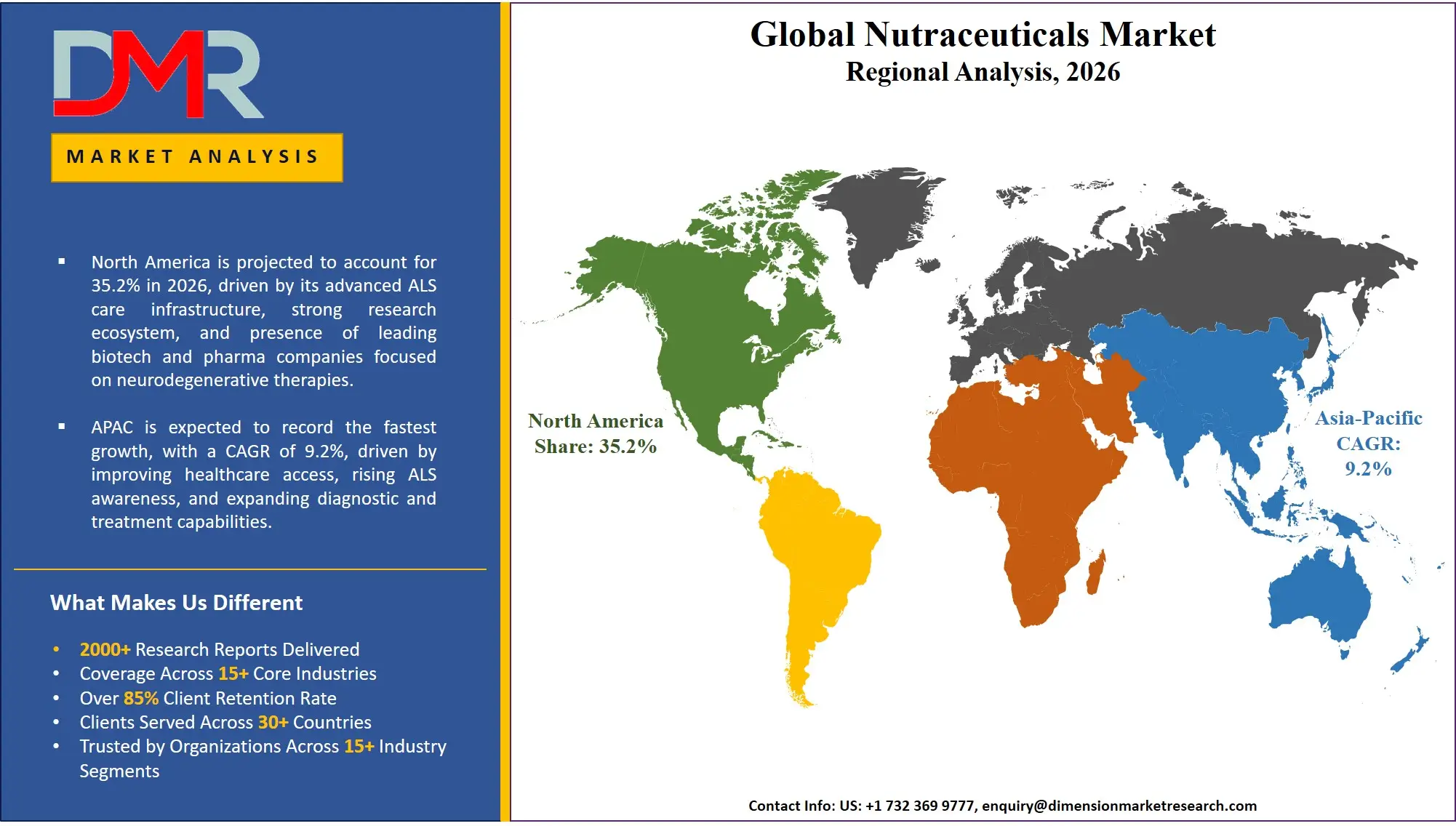
It is projected that North America will take the lead in the global nutraceuticals market (by value), covering a market share of about 35.2% in the year 2026. The region's dominance is driven by strong preventive healthcare spending funded by private and public sources, higher average product prices compared to other regions, a mature digital supply chain for advanced data sharing, and the presence of major nutraceutical manufacturers and health networks. The widespread adoption of advanced quality processing and automation for functional foods, dietary supplements, and long-term illness management further strengthens North America's leading position. Additionally, ongoing investments in smart quality monitoring and system interoperability further reinforce the region's technology leadership.
ℹ
To learn more about this report –
Download Your Free Sample Report Here
Fastest-Growing Region in the Nutraceuticals Market
Asia-Pacific is the fastest-growing region, supported by strong digital health infrastructure goals in China, India, and Japan, increasing preventive health awareness efforts, rising investments in local nutraceutical capabilities, and growing adoption of automated quality analysis systems. The region benefits from well-established digital payment systems for health products, increasing business activity, and alignment with national preventive health roadmaps. Countries across the region are actively setting up nutraceutical platforms to improve formulation efficiency and strengthen nutrition infrastructure. Growing focus on nutraceutical research and structured data development further speeds up market expansion. Moreover, increasing government support and business health commitments are expected to keep growth momentum high.
By Region
North America
Europe
- Germany
- The U.K.
- France
- Italy
- Russia
- Spain
- Benelux
- Nordic
- Rest of Europe
Asia-Pacific
- China
- Japan
- South Korea
- India
- ANZ
- ASEAN
- Rest of Asia-Pacific
Latin America
- Brazil
- Mexico
- Argentina
- Colombia
- Rest of Latin America
Middle East & Africa
- Saudi Arabia
- UAE
- South Africa
- Israel
- Egypt
- Rest of MEA
Competitive Landscape
The nutraceuticals market is highly competitive, with new ideas and strategic partnerships shaping the competitive environment. To gain an advantage, companies and manufacturers are focused on developing better digital platforms (such as smart formulation engines, automated quality systems, and mobile apps for product management), smart data analysis, and digital platform-based quality monitoring. There are high barriers to entering the market due to the large amount of money needed for regulatory approval, specialized nutrition knowledge, and the need for mature software systems and rule-following.
Strategic approaches to increase market presence include partnerships with health research groups and health stores, mergers between manufacturers and technology providers, and long-term support contracts with customers and health institutions. Additionally, research and development in data-sharing rules and flexible software designs are important for staying competitive and meeting the changing needs of the nutraceutical community.
Some of the prominent players in the Global Nutraceuticals Market are:
- Nestlé S.A.
- Abbott Laboratories
- Amway Corporation
- Herbalife Nutrition Ltd.
- Archer Daniels Midland Company
- Danone S.A.
- Glanbia plc
- Bayer AG
- DSM-Firmenich
- BASF SE
- PepsiCo Inc.
- General Mills Inc.
- GNC Holdings LLC
- Ajinomoto Co., Inc.
- Cargill, Incorporated
- Kerry Group plc
- International Flavors & Fragrances Inc.
- Ingredion Incorporated
- Kirin
- Otsuka
- Yakult
- Other Key Players
Recent Developments
- February 2026: Otsuka Holdings Co., Ltd. announced the launch of new functional nutrition products, including "/zeroz," a self-conditioning food containing plant-derived ingredients to support oxygen utilization and overall wellness, strengthening its functional nutrition portfolio.
- February 2026: Kerry Group plc reported strong growth in its proactive health ingredients portfolio, including the launch of Plenibiotic postbiotic solutions targeting digestive and skin health, reinforcing its focus on gut health and functional nutrition innovation.
- December 2025: Nestlé S.A. announced the expansion of its Materna nutrition range focused on women's health and postnatal recovery, strengthening its presence in specialized and functional nutrition segments.
- March 2025: Yakult Honsha Co., Ltd. announced the expansion of its global production capacity and R&D initiatives to strengthen its probiotic-based functional beverage portfolio, supporting growing demand for gut health solutions worldwide.
Report Details
| Report Characteristics |
| Market Size (2026) |
USD 591.4 Bn |
| Forecast Value (2035) |
USD 1,141.6 Bn |
| CAGR (2026–2035) |
7.6% |
| The US Market Size (2026) |
USD 175.1 Bn |
| Historical Period |
2021 – 2025 |
| Forecast Period |
2027 – 2035 |
| Base Year |
2025 |
| Estimated Year |
2026 |
| Segments Covered |
By Ingredient (Vitamins, Minerals, Proteins & Amino Acids, Probiotics, Prebiotics, Herbal & Botanical Extracts, Omega-3 Fatty Acids, Enzymes, Others), By Product (Functional Foods, Dietary Supplements, Functional Beverages), By Application (Digestive Health, Immunity Support, Energy & Performance, Weight Management, Bone & Joint Health, Cardiovascular Health, Cognitive Health, Skin & Hair Health, Others), By Form (Tablets, Capsules, Soft gels, Powders, Liquids, Gummies), By Distribution Channel (Supermarkets & Hypermarkets, Pharmacies & Drug Stores, Convenience Stores, Specialty Stores, Online Retail) |
| Regional Coverage |
North America – The US and Canada; Europe – Germany, The UK, France, Russia, Spain, Italy, Benelux, Nordic, & Rest of Europe; Asia-Pacific – China, Japan, South Korea, India, ANZ, ASEAN, Rest of APAC; Latin America – Brazil, Mexico, Argentina, Colombia, Rest of Latin America; Middle East & Africa – Saudi Arabia, UAE, South Africa, Turkey, Egypt, Israel, & Rest of MEA |
Frequently Asked Questions
How big is the Global Nutraceuticals Market?
▾ The Global Nutraceuticals Market size is estimated to have a value of USD 591.4 billion in 2026 and is expected to reach USD 1,141.6 billion by the end of 2035.
Which region held the largest share of the Global Nutraceuticals Market in 2026?
▾ North America is expected to account for the largest market share in 2026, with a share of about 35.2%.
Who are the key players in the Global Nutraceuticals Market?
▾ Some of the major key players in the Global Nutraceuticals Market are Herbalife Nutrition Ltd., Amway Corporation, Nestlé S.A., Glanbia plc, Abbott Laboratories, Danone S.A., and many others.
What is the CAGR of the Global Nutraceuticals Market from 2026 to 2035?
▾ The market is growing at a CAGR of 7.6% over the forecasted period.
What factors are driving the growth of the Global Nutraceuticals Market?
▾ The market is driven by advances in smart software-based formulation processing, regulatory pressure to speed up preventive health results and reduce mistakes, and increased government investment in national preventive health infrastructure.
What are the major trends in the Global Nutraceuticals Market?
▾ The key market trends include the adoption of predictive health risk tracking and real-time quality data analysis, along with a growing shift toward internet-based nutraceutical platforms and data-enabled product management systems.
Which region is expected to grow the fastest in the Global Nutraceuticals Market?
▾ Asia Pacific is the fastest-growing region in the market during the forecast period.
How is the Global Nutraceuticals Market segmented?
▾ The market is segmented by ingredient, product, application, form, and distribution channel.