Market Overview
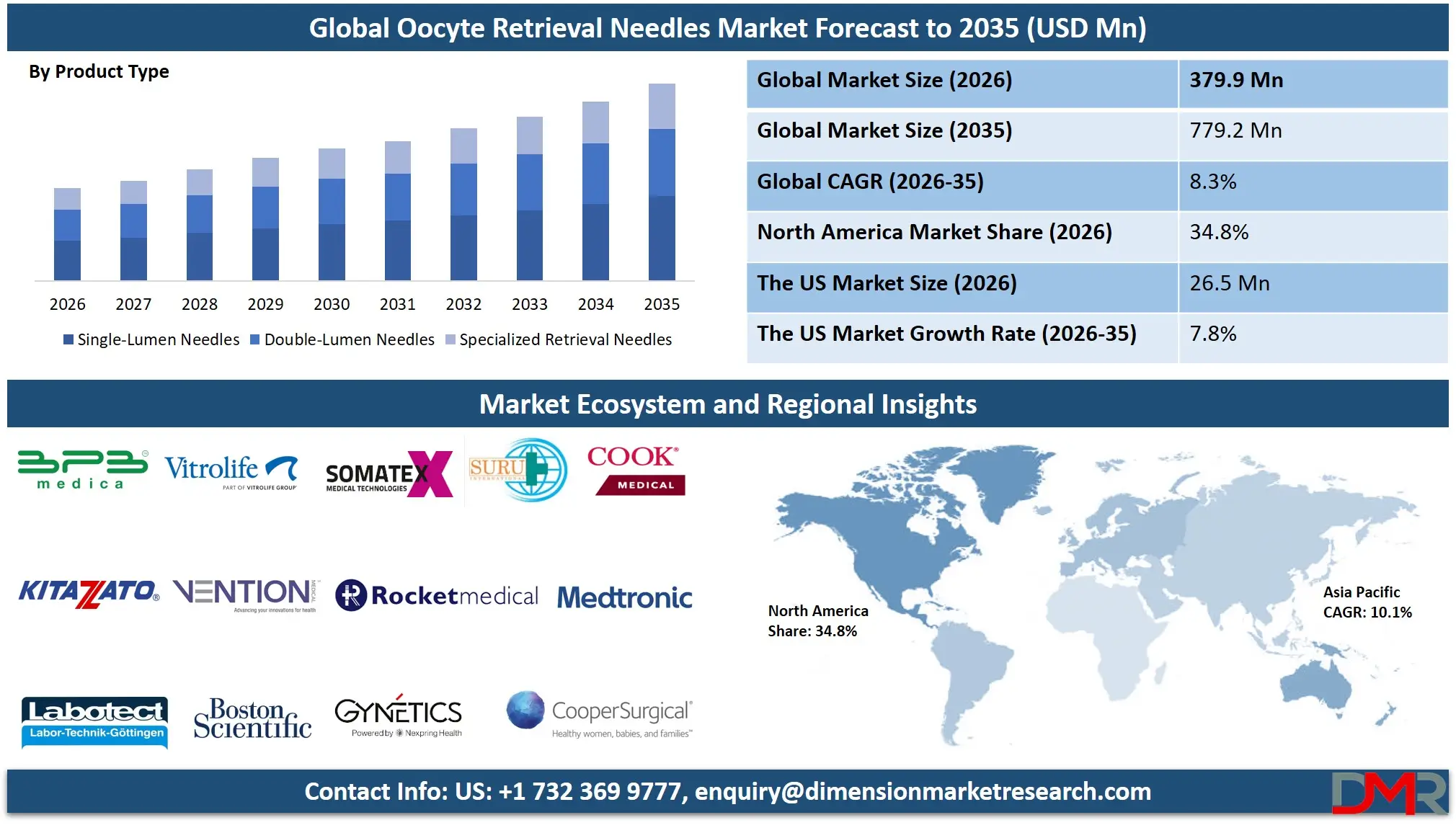
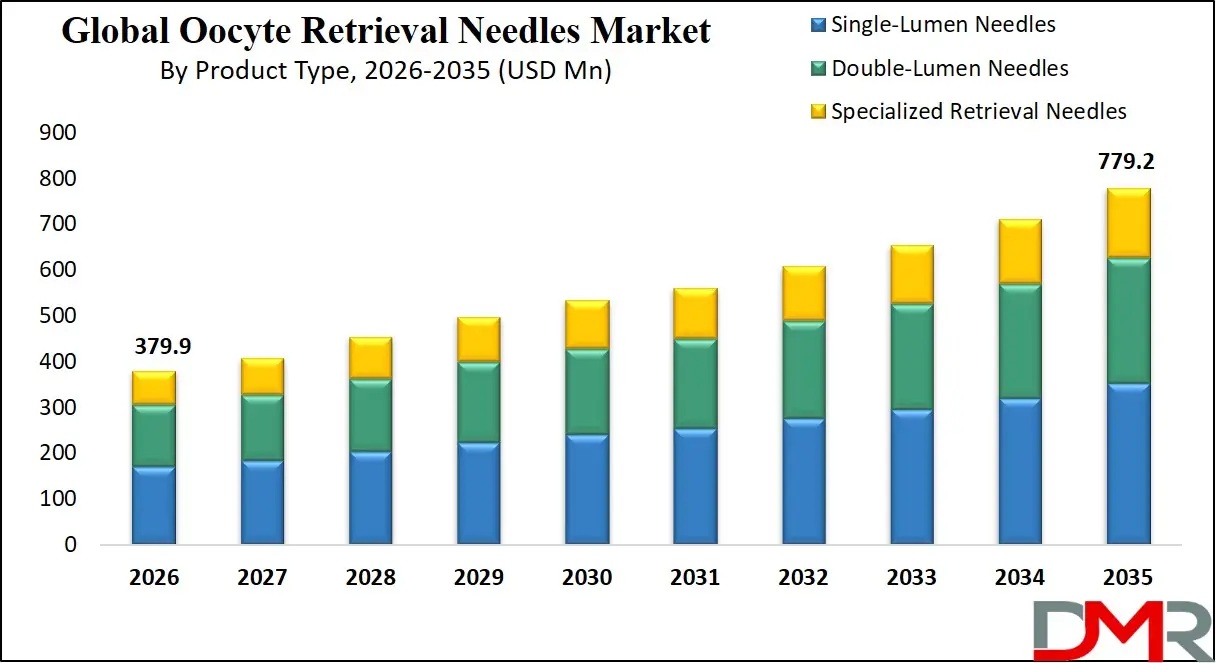
The Global Oocyte Retrieval Needles Market is set for substantial expansion, reaching an estimated USD 379.9 million in 2026 and projected to grow at a strong CAGR of 8.3% from 2026 to 2035, reaching the market value of USD 779.2 million by 2035. This robust growth trajectory is fueled by the accelerating adoption of assisted reproductive technologies (ART), rising prevalence of infertility worldwide, delayed parenthood trends, and increasing success rates of in-vitro fertilization (IVF) procedures across both developed and emerging healthcare markets.
ℹ
To learn more about this report –
Download Your Free Sample Report Here
Rising incidences of polycystic ovary syndrome (PCOS), endometriosis, male factor infertility, and age-related fertility decline are compelling couples and individuals to seek advanced fertility treatments, thereby driving demand for high-precision oocyte retrieval needles. The rapid expansion of fertility clinics, hospital-based IVF centers, egg freezing programs, and donor egg banks is significantly increasing requirements for reliable, sterile, and minimally invasive follicle aspiration systems.
Additionally, growing government initiatives and insurance coverage expansions for fertility treatments in countries across North America, Europe, and the Asia-Pacific are further accelerating market adoption. Healthcare providers are increasingly integrating single-lumen, double-lumen, and specialized echogenic tip needles designed to maximize oocyte yield while minimizing patient trauma and procedure-related complications.
Technological advancements in needle design, including ultra-thin walls, enhanced echogenicity under ultrasound guidance, optimized fluid dynamics for follicle flushing, and kink-resistant materials, are enabling fertility specialists to perform safer and more effective retrievals. As fertility tourism grows and access to ART expands globally, the Oocyte Retrieval Needles Market is expected to witness sustained double-digit growth through 2035, driven by clinical excellence prioritization and reproductive health awareness initiatives.
ℹ
To learn more about this report –
Download Your Free Sample Report Here
Growing public-private partnerships promoting fertility preservation programs, oncology fertility counseling, and LGBTQ+ family planning services further accelerate global adoption. However, barriers such as high procedure costs, cultural stigma surrounding infertility in certain regions, stringent regulatory approval processes for medical devices, and a shortage of trained reproductive specialists remain. Despite these limitations, the convergence of precision engineering, ultrasound imaging advancements, and minimally invasive surgical techniques positions oocyte retrieval needles as a critical component of global reproductive medicine through 2035.
The US Oocyte Retrieval Needles Market
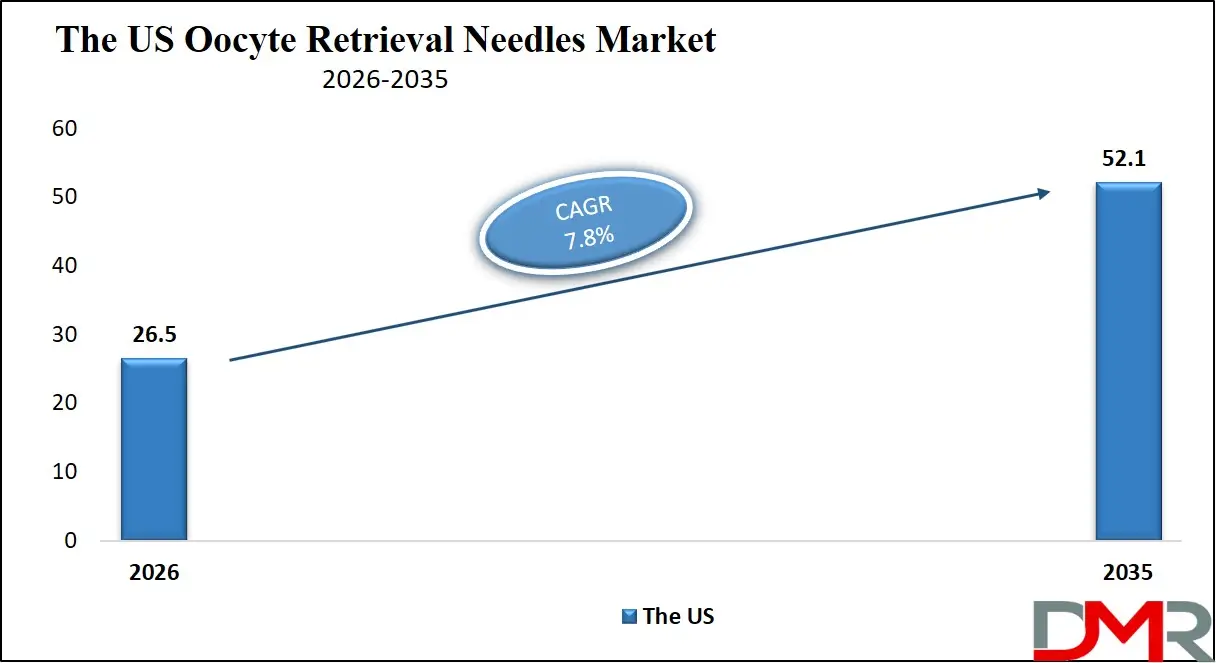
The U.S. Oocyte Retrieval Needles Market is projected to reach USD 26.5 million in 2026 and grow at a CAGR of 7.8%, reaching USD 52.1 million by 2035. The U.S. leads global adoption due to its mature fertility treatment infrastructure, high per capita healthcare spending, and supportive regulatory environment from bodies like the CDC and ASRM (American Society for Reproductive Medicine).
ℹ
To learn more about this report –
Download Your Free Sample Report Here
The proliferation of fertility clinic networks, employer-sponsored fertility benefits (including those offered by major corporations like Apple, Google, and Meta), and increasing acceptance of elective egg freezing fuel demand for high-quality oocyte retrieval devices. Major hospital systems and fertility chains such as CCRM, Shady Grove Fertility, and Kindbody are integrating advanced single-lumen and double-lumen needles to optimize oocyte recovery rates during ultrasound-guided transvaginal aspiration procedures.
U.S. regulatory support for fertility treatment accessibility, alongside state-level mandates for insurance coverage of IVF, encourages investment in advanced reproductive technologies. The market is witnessing a shift toward specialized needle designs, including 16G, 17G, and 19G variants with echogenic tips and optimized aspiration channels, enhancing visualization and reducing procedure time. The rise of elective fertility preservation among healthy women has further intensified the focus on patient comfort and procedural efficiency, positioning the U.S. as a critical innovator in this space.
The Europe Oocyte Retrieval Needles Market
The Europe Oocyte Retrieval Needles Market is projected to reach USD 82.4 million in 2026 and is expected to grow at a CAGR of 6.1% from 2026 to 2035, reaching approximately USD 140.3 million by 2035. Europe's leadership is anchored by its comprehensive fertility treatment coverage under national healthcare systems, particularly in countries with progressive reproductive health policies and government-funded IVF programs.
Countries such as Spain, Germany, France, the U.K., and the Nordic region are widely adopting oocyte retrieval procedures, driven by high success rates in leading European fertility clinics and favorable regulatory frameworks. Spain, in particular, has emerged as a European hub for fertility tourism due to its liberal reproductive laws and high concentration of world-class ART centers. The U.K.'s HFEA (Human Fertilisation and Embryology Authority) oversight and the EU's evolving Medical Device Regulation (MDR) further necessitate high-quality, traceable, and clinically validated oocyte retrieval devices.
Europe's high acceptance of third-party reproduction, egg donation programs, and single-parent/same-sex family planning drives the demand for reliable, sterile, and single-use retrieval needles designed to maximize oocyte yield while ensuring patient safety. With a sophisticated reproductive medicine community and regulatory landscape prioritizing clinical outcomes and patient safety, Europe remains a highly advanced and essential region for oocyte retrieval needle manufacturers.
The Japan Oocyte Retrieval Needles Market
Japan Oocyte Retrieval Needles Market is estimated to reach USD 21.7 million in 2026 and is forecast to expand at a CAGR of 7.5% through 2035, reaching nearly USD 39.3 million by 2035, driven by the increasing adoption of assisted reproductive technologies and the growing number of fertility clinics. Japan's aging population, declining birth rates, and government push for fertility treatment subsidies are driving the adoption of advanced reproductive technologies, making oocyte retrieval needles a cornerstone of national fertility support programs.
The Ministry of Health, Labour and Welfare (MHLW) actively supports fertility treatment coverage under national health insurance, with expanded reimbursement policies for IVF procedures and associated medical devices. Japan's leadership in precision medical device manufacturing and rigorous quality standards provides a robust foundation for advanced needle technologies, including ultra-thin wall designs and vibration-free aspiration systems.
Japan's concept of "supporting declining birthrate countermeasures," driven by national policy initiatives and corporate fertility benefits, integrates oocyte retrieval into mainstream gynecological practice. Clinics are deploying advanced retrieval needles to optimize outcomes in Japan's rapidly growing fertility sector, serving both aging first-time mothers and younger patients undergoing fertility preservation before cancer treatment. Japan's cultural emphasis on precision, safety, and minimally invasive techniques positions it as a high-growth, quality-focused market for oocyte retrieval solutions.
Global Oocyte Retrieval Needles Market: Key Takeaways
- Strong Global Market Growth Outlook: The Global Oocyte Retrieval Needles Market is expected to be valued at USD 379.9 million in 2026 and is projected to reach USD 779.2 million by 2035, showcasing rapid expansion supported by rising demand for fertility treatments and advanced reproductive technologies.
- High CAGR Driven by Fertility Treatment Adoption: The market is expected to grow at an impressive CAGR of 8.3% from 2026 to 2035, fueled by accelerating IVF procedure volumes, increasing maternal age at first pregnancy, and growing awareness of fertility preservation options worldwide.
- Strong Growth Trajectory in the United States: The U.S. Oocyte Retrieval Needles Market stands at USD 26.5 million in 2026 and is projected to reach USD 52.1 million by 2035, expanding at a CAGR of 7.8% due to high IVF success rates, employer-sponsored fertility benefits, and advanced healthcare infrastructure.
- Regional Dominance: North America is expected to capture approximately 34.8% of the global market share in 2026, supported by high fertility treatment uptake, favorable reimbursement policies, and concentration of leading fertility clinic networks.
- Rapid Advancement in Needle Technologies: Innovations including echogenic tip designs for enhanced ultrasound visibility, double-lumen needles for simultaneous flushing and aspiration, ultra-thin wall construction maximizing flow rates, and vibration-dampening materials are significantly improving oocyte recovery rates and patient comfort.
- Growing Infertility Prevalence Boosts Adoption: Rising global incidence of infertility affecting approximately 15% of reproductive-aged couples, coupled with delayed parenthood trends and expanding access to fertility care, is driving sustained demand for high-quality, single-use oocyte retrieval needles.
Global Oocyte Retrieval Needles Market: Use Cases
- Transvaginal Ultrasound-Guided Follicle Aspiration: Reproductive specialists use specialized retrieval needles to aspirate mature oocytes from ovarian follicles during standard IVF procedures, maximizing yield while minimizing trauma to surrounding tissue.
- Oocyte Cryopreservation (Egg Freezing): Fertility clinics utilize retrieval needles for elective egg freezing procedures, enabling women to preserve fertility for medical reasons (oncology patients) or personal family planning purposes.
- Donor Egg Retrieval Programs: Egg banks and donor agencies employ retrieval needles to harvest oocytes from screened donors, ensuring sterile, efficient collection for anonymous or directed donation cycles.
- Fertility Preservation in Oncology: Reproductive endocrinologists perform urgent oocyte retrieval using specialized needles for cancer patients prior to initiating gonadotoxic chemotherapy or radiation treatment.
- Research and Embryology Laboratories: Clinical research settings utilize retrieval needles for collecting oocytes intended for embryology studies, genetic testing, or experimental reproductive technologies.
Global Oocyte Retrieval Needles Market: Stats & Facts
World Health Organization (WHO)
- Approximately 1 in 6 people globally experience infertility in their lifetime.
- Infertility affects 17.5% of the adult population worldwide, highlighting the need for accessible fertility care.
- Prevalence of infertility is similar across high-income, middle-income, and low-income countries, affecting 17.8% in high-income countries and 16.5% in low/middle-income countries.
- Over 150 million couples globally are affected by infertility.
International Committee for Monitoring Assisted Reproductive Technologies (ICMART)
- More than 3 million IVF cycles are performed annually worldwide.
- Europe accounts for over 500,000 IVF cycles per year, the highest regional volume.
- Approximately 1.5 million oocyte retrieval procedures are conducted each year globally.
- Global IVF success rates average 25-30% per cycle, with significant variation by age and clinical factors.
CDC (Centers for Disease Control and Prevention) – ART Surveillance
- Over 300,000 ART cycles are performed annually in the United States.
- Approximately 80,000 infants are born through ART in the U.S. each year.
- Live birth rates per cycle range from 10% for women over 42 to 50% for women under 35.
- Over 400 fertility clinics operate in the United States.
Human Fertilisation and Embryology Authority (HFEA) – UK
- Over 75,000 IVF cycles are performed annually in the UK.
- Approximately 20,000 egg freezing cycles have been recorded since 2010.
- Female age is the single biggest factor affecting IVF success, with live birth rates dropping from 29% (under 35) to 5% (over 44).
European Society of Human Reproduction and Embryology (ESHRE)
- Europe performs over 50% of all global IVF cycles.
- Spain, Germany, and France account for the highest procedure volumes in Europe.
- Over 900 fertility clinics operate across European countries.
Japan Society of Obstetrics and Gynecology (JSOG)
- Japan performs over 450,000 IVF cycles annually, one of the highest national volumes globally.
- Over 60,000 babies are born through ART in Japan each year, accounting for approximately 1 in 16 births nationwide.
- Government subsidies cover up to 75% of fertility treatment costs for eligible couples.
Global Oocyte Retrieval Needles Market: Market Dynamic
Driving Factors in the Global Oocyte Retrieval Needles Market
Rising Global Infertility Rates and Delayed Childbearing
The increasing prevalence of infertility worldwide, driven by factors including delayed maternal age, lifestyle changes, environmental factors, and rising incidence of conditions such as PCOS and endometriosis, represents the primary market driver. Women increasingly pursue careers and education before starting families, naturally reducing their fertile window and increasing reliance on assisted reproduction. Additionally, male factor infertility contributes to approximately 40-50% of cases, further driving demand for comprehensive fertility services, including oocyte retrieval. As awareness grows and societal acceptance of ART expands, the volume of follicle aspiration procedures continues to rise steadily.
Expanding Insurance Coverage and Government Support
Government initiatives mandating or subsidizing fertility treatment coverage significantly boost market growth. Countries including Japan, Israel, Australia, and several European nations provide substantial public funding for IVF cycles, directly increasing procedure volumes. In the U.S., a growing number of states mandate insurance coverage for fertility treatment, while major employers increasingly include IVF benefits in employee health packages. These financial support mechanisms reduce out-of-pocket burden for patients, making ART accessible to broader populations and subsequently increasing demand for oocyte retrieval needles.
Restraints in the Global Oocyte Retrieval Needles Market
High Procedure Costs and Limited Access
Despite expanding insurance coverage, the high cost of IVF cycles remains a significant barrier, particularly in developing regions and countries without public fertility funding. A single IVF cycle in the U.S. typically costs $12,000-$15,000, excluding medications, with multiple cycles often required for a successful pregnancy. This financial burden limits patient volumes and consequently restricts market growth. Furthermore, oocyte retrieval needles are premium-priced single-use devices, adding to overall procedure costs and potentially discouraging adoption in price-sensitive healthcare markets.
Stringent Regulatory Approvals and Quality Standards
Oocyte retrieval needles are classified as Class II medical devices in most regulated markets, requiring rigorous pre-market clearance through FDA 510(k), CE Marking under MDR, or equivalent regional approvals. These regulatory pathways demand extensive clinical validation, sterility assurance, and biocompatibility testing, creating significant time and cost barriers for new market entrants. Additionally, post-market surveillance requirements and quality management system certifications (ISO 134.885) impose ongoing compliance burdens on manufacturers, potentially limiting innovation and market competition.
Opportunities in the Global Oocyte Retrieval Needles Market
Expansion into Emerging Fertility Markets
Emerging markets in Asia-Pacific, Latin America, and the Middle East represent significant growth opportunities due to rising healthcare expenditure, growing medical tourism for fertility treatments, and increasing awareness of ART options. Countries including India, Thailand, Mexico, and the UAE are developing specialized fertility centers catering to both domestic patients and international medical travelers seeking more affordable IVF options. Localized distribution partnerships, region-specific regulatory strategies, and competitive pricing models can improve accessibility in these high-growth potential markets.
Technological Innovations Improving Outcomes
Continuous advancement in needle design creates opportunities for differentiation and premium pricing. Echogenic needle tips, improving ultrasound visualization during follicle aspiration, reduce procedure time and improve oocyte recovery rates. Double-lumen needles enabling simultaneous follicle flushing and aspiration enhance efficiency in challenging retrievals. Ultra-thin wall technology maximizes internal diameter for a given outer gauge, improving flow dynamics while maintaining needle strength. Manufacturers investing in these advanced features can capture market share among clinics prioritizing clinical outcomes and operational efficiency.
Trends in the Global Oocyte Retrieval Needles Market
Single-Use Sterile Needle Dominance
The shift toward single-use, sterile, disposable oocyte retrieval needles represents an established trend driven by infection control protocols, patient safety concerns, and convenience. Single-use configuration eliminates cross-contamination risk associated with reprocessing and ensures consistent needle sharpness for each procedure. This trend aligns with broader healthcare emphasis on preventing healthcare-associated infections and has become standard practice in reputable fertility clinics worldwide.
Integration with Advanced Ultrasound Systems
Modern oocyte retrieval needles are increasingly designed for seamless integration with high-frequency ultrasound transducers and dedicated follicle aspiration guidance systems. Needle visualization enhancements, including surface treatments improving echogenicity and compatibility with needle guidance brackets, facilitate precise follicle targeting. This trend supports the growing preference for minimally invasive, ultrasound-guided procedures and enhances procedural confidence among reproductive endocrinologists.
Global Oocyte Retrieval Needles Market: Research Scope and Analysis
By Product Type Analysis
Single-lumen needles are projected to dominate the global oocyte retrieval needles market due to their widespread use in standard IVF procedures and their procedural simplicity. These needles consist of a single channel through which follicular fluid and oocytes are aspirated during ultrasound-guided transvaginal oocyte retrieval. Because the design is straightforward, single-lumen needles allow faster aspiration, reduced equipment complexity, and shorter procedure time compared with double-lumen systems. In most fertility clinics, physicians prefer single-lumen needles when follicular flushing is not required, which is the case for the majority of IVF cycles. Their lower manufacturing cost also contributes to higher adoption, making them more accessible for clinics operating under strict treatment cost constraints.
Additionally, single-lumen needles often provide sufficient oocyte yield for routine fertility treatments, which reduces the need for additional flushing steps that double-lumen needles provide. Since IVF cycles have been increasing globally due to delayed pregnancies, infertility prevalence, and rising awareness of assisted reproductive technologies, demand for reliable and cost-effective retrieval devices has grown significantly. Single-lumen needles, therefore, remain the preferred option across many high-volume fertility centers. Double-lumen needles and specialized retrieval needles are primarily used in complex cases where follicular flushing may increase oocyte recovery, but these procedures represent a smaller proportion of total IVF cycles. As a result, single-lumen needles continue to hold the largest market share within the product type segment and are expected to remain dominant due to their efficiency, affordability, and clinical reliability.
By Needle Gauge Analysis
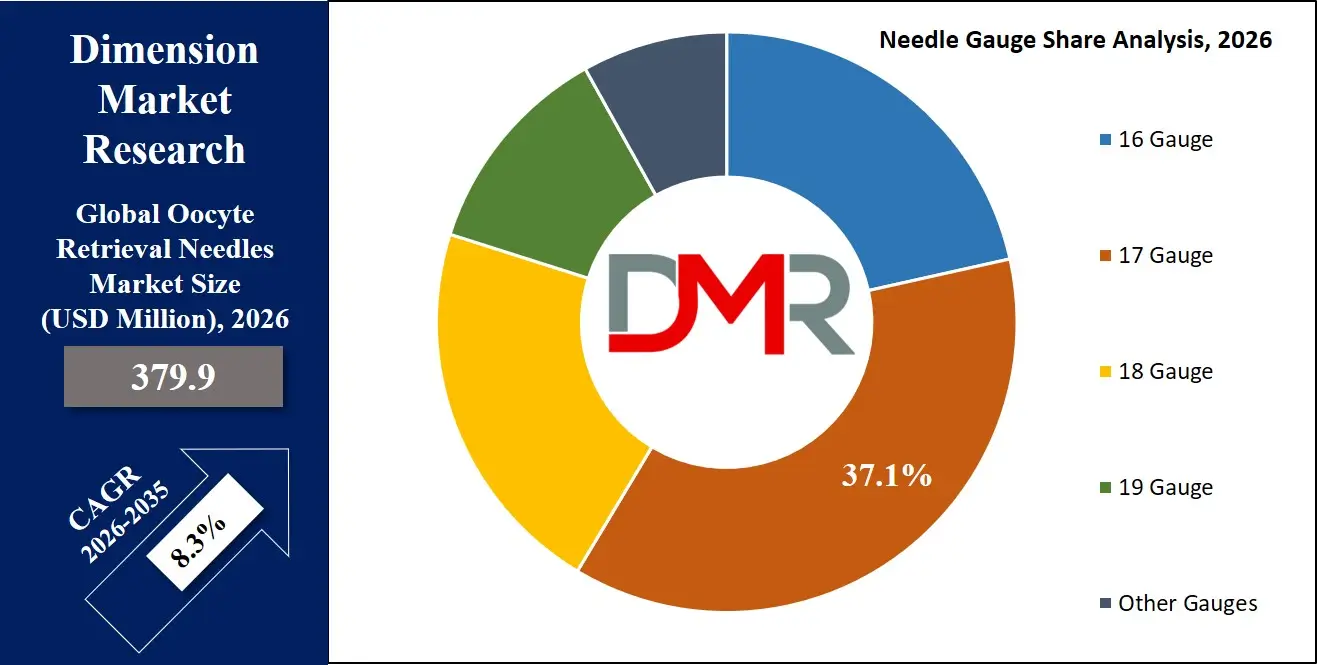
Among different needle gauge options, 17-gauge needles are anticipated to dominate the oocyte retrieval needles market due to their optimal balance between aspiration efficiency and patient safety. In transvaginal ultrasound-guided oocyte retrieval procedures, needle diameter plays a critical role in follicular aspiration speed, oocyte integrity, and patient comfort. A 17-gauge needle provides a lumen wide enough to enable efficient aspiration of follicular fluid and oocytes without excessive suction pressure, which helps maintain oocyte viability. Fertility specialists commonly prefer this gauge because it reduces the risk of follicular collapse during aspiration while still maintaining a manageable needle size for minimally invasive procedures. Compared with thicker needles such as 16-gauge, the 17-gauge option causes less tissue trauma and reduces postoperative discomfort for patients.
ℹ
To learn more about this report –
Download Your Free Sample Report Here
At the same time, it offers faster aspiration performance than thinner gauges like 18 or 19, which may require higher vacuum pressure and longer retrieval time. Because IVF procedures often involve aspirating multiple follicles during a single cycle, procedure efficiency is an important factor influencing device choice. The 17-gauge needle has therefore become the standard gauge used in many IVF laboratories and fertility clinics worldwide. Its compatibility with common ultrasound-guided aspiration systems further supports widespread adoption. While smaller gauges are sometimes used for patients requiring less invasive approaches, the overall procedural efficiency and clinical familiarity of the 17-gauge needle have established it as the dominant gauge segment in the market.
By Material Analysis
Stainless steel is projected to dominate the material segment of the oocyte retrieval needles market due to its superior mechanical strength, corrosion resistance, and reliability in medical procedures. Oocyte retrieval requires highly precise and durable needles capable of penetrating ovarian tissue while maintaining structural integrity under vacuum aspiration conditions. Stainless steel provides excellent rigidity and sharpness, allowing clinicians to perform smooth follicular punctures during ultrasound-guided procedures. Its durability also ensures that the needle maintains consistent performance throughout the aspiration process, even when multiple follicles are retrieved during a single IVF cycle. Another important factor supporting the dominance of stainless steel is its long history of use in medical devices and surgical instruments. The material complies with stringent medical regulatory standards and is widely accepted in sterilized, single-use medical equipment.
Manufacturing processes for stainless steel needles are well established, which allows producers to maintain high precision and quality while controlling production costs. In contrast, materials such as nitinol offer flexibility and shape memory properties, but they are typically more expensive and are not necessary for most routine oocyte retrieval procedures, where rigidity is preferred. Additionally, stainless steel supports various surface coatings used to reduce friction and improve needle performance during follicular aspiration. Because IVF clinics prioritize reliability, safety, and cost efficiency, stainless steel remains the most widely used material in oocyte retrieval needle production and continues to hold the largest share within the material segment.
By Surface Coating Analysis
Teflon coating is expected to dominate the surface coating segment of the oocyte retrieval needles market because it significantly improves needle performance during follicular aspiration procedures. During oocyte retrieval, the needle must pass through vaginal tissue and ovarian follicles while aspirating delicate oocytes. A low-friction surface is essential to minimize mechanical resistance and prevent potential damage to the follicular environment. Teflon coatings provide an extremely smooth and non-stick surface that reduces friction during the insertion and withdrawal of the needle. This property allows clinicians to perform the procedure more smoothly and reduces the likelihood of tissue trauma or disruption to surrounding follicles. Another important advantage of Teflon coating is its chemical stability and biocompatibility, which make it suitable for medical devices used in sensitive reproductive procedures.
The coating also helps maintain consistent aspiration flow by preventing cellular or protein buildup inside the needle lumen during follicular fluid extraction. In addition, Teflon-coated needles are known for their durability and ability to maintain lubricity throughout the entire procedure. Although silicone coatings are also used in some retrieval needles to enhance smooth penetration, Teflon generally offers superior long-lasting lubricity and surface uniformity. Because IVF procedures require high precision and minimal disturbance to oocytes, manufacturers often incorporate Teflon coatings into premium needle designs. As a result, Teflon-coated needles have become the most widely adopted option across fertility clinics and IVF centers, making this coating type the dominant segment in the surface coating category.
By Application Analysis
In-vitro fertilization (IVF) is projected to dominate the application segment of the oocyte retrieval needles market because oocyte retrieval is a fundamental step in the IVF treatment process. During IVF, mature eggs are collected from the ovaries using ultrasound-guided aspiration before fertilization occurs in a laboratory environment. Since every IVF cycle requires the retrieval of multiple oocytes, the demand for specialized retrieval needles is directly linked to the number of IVF procedures performed worldwide. The increasing prevalence of infertility, delayed parenthood, lifestyle factors, and rising awareness of assisted reproductive technologies have contributed to a steady increase in IVF cycles globally. Many countries have also expanded access to fertility treatments through improved healthcare infrastructure and supportive policies, further driving IVF adoption. While other applications, such as egg freezing, donor egg retrieval, and fertility preservation, are growing, they still represent smaller portions of overall assisted reproductive procedures.
Egg freezing is particularly increasing among women choosing to delay pregnancy for personal or professional reasons, but it still relies on similar retrieval procedures performed during IVF cycles. Research applications involving oocytes are comparatively limited and mainly confined to academic institutions or specialized laboratories. Because IVF remains the most common assisted reproductive technology and requires routine oocyte retrieval, this application segment generates the largest demand for retrieval needles. Consequently, IVF procedures continue to dominate the application segment of the global oocyte retrieval needles market.
By End-User Analysis
Fertility clinics are projected to dominate the end-user segment of the oocyte retrieval needles market because they perform the majority of assisted reproductive procedures worldwide. These specialized clinics are dedicated to diagnosing and treating infertility and typically offer a comprehensive range of reproductive services, including IVF, egg freezing, donor egg programs, and fertility preservation. Since oocyte retrieval is a critical step in many of these treatments, fertility clinics require a consistent supply of high-quality retrieval needles for routine procedures. Compared with general hospitals, fertility clinics often conduct a higher volume of IVF cycles, making them the primary consumers of these specialized medical devices. Many fertility clinics are also equipped with advanced reproductive laboratories and ultrasound-guided aspiration systems, allowing them to perform oocyte retrieval procedures efficiently and safely. Additionally, the growth of private fertility centers in regions such as North America, Europe, and the Asia-Pacific has significantly expanded access to reproductive treatments. Patients often prefer specialized fertility clinics due to their focused expertise, experienced reproductive endocrinologists, and higher success rates in assisted reproductive technologies. Egg banks and donor agencies also utilize retrieval needles when collecting donor oocytes, but these procedures are typically conducted within fertility clinic facilities. Research and academic institutes contribute to a smaller share of demand because their use of retrieval needles is limited to experimental or educational purposes. As a result, fertility clinics remain the dominant end-user segment in the global oocyte retrieval needles market.
The Global Oocyte Retrieval Needles Market Report is segmented on the basis of the following:
By Product Type
- Single-Lumen Needles
- Double-Lumen Needles
- Specialized Retrieval Needles
By Needle Gauge
- 16 Gauge
- 17 Gauge
- 18 Gauge
- 19 Gauge
- Other Gauges
By Material
- Stainless Steel
- Nitinol
- Other Materials
By Surface Coating
- Teflon Coating
- Silicone Coating
- Other Coatings
By Application
- In-Vitro Fertilization (IVF)
- Oocyte Cryopreservation (Egg Freezing)
- Donor Egg Retrieval
- Fertility Preservation
- Research Applications
By End-User
- Fertility Clinics
- Hospitals
- Egg Banks & Donor Agencies
- Research & Academic Institutes
Impact of Artificial Intelligence on the Global Oocyte Retrieval Needles Market
- AI for Follicle Detection and Measurement: AI algorithms analyze ultrasound images to automatically detect, count, and measure ovarian follicles, assisting clinicians in planning optimal retrieval strategies and selecting appropriate needle gauges for individual patients.
- Predictive Modeling of Oocyte Yield: Machine learning models integrate patient characteristics, hormonal profiles, and follicle measurements to predict likely oocyte recovery, enabling personalized procedure planning and patient counseling.
- AI-Assisted Needle Guidance: Emerging AI systems provide real-time guidance during follicle aspiration, enhancing needle tip visualization and suggesting optimal trajectory adjustments to improve follicle targeting.
- Quality Control in Needle Manufacturing: Computer vision systems employing AI inspect manufactured needles for dimensional accuracy, tip geometry, and surface defects, ensuring consistent product quality meeting stringent regulatory requirements.
- Procedure Outcome Analysis: AI platforms aggregate and analyze outcomes across large patient populations, identifying correlations between needle selection, procedural techniques, and clinical success rates to inform best practice guidelines.
Global Oocyte Retrieval Needles Market: Regional Analysis
Region with the Largest Revenue Share
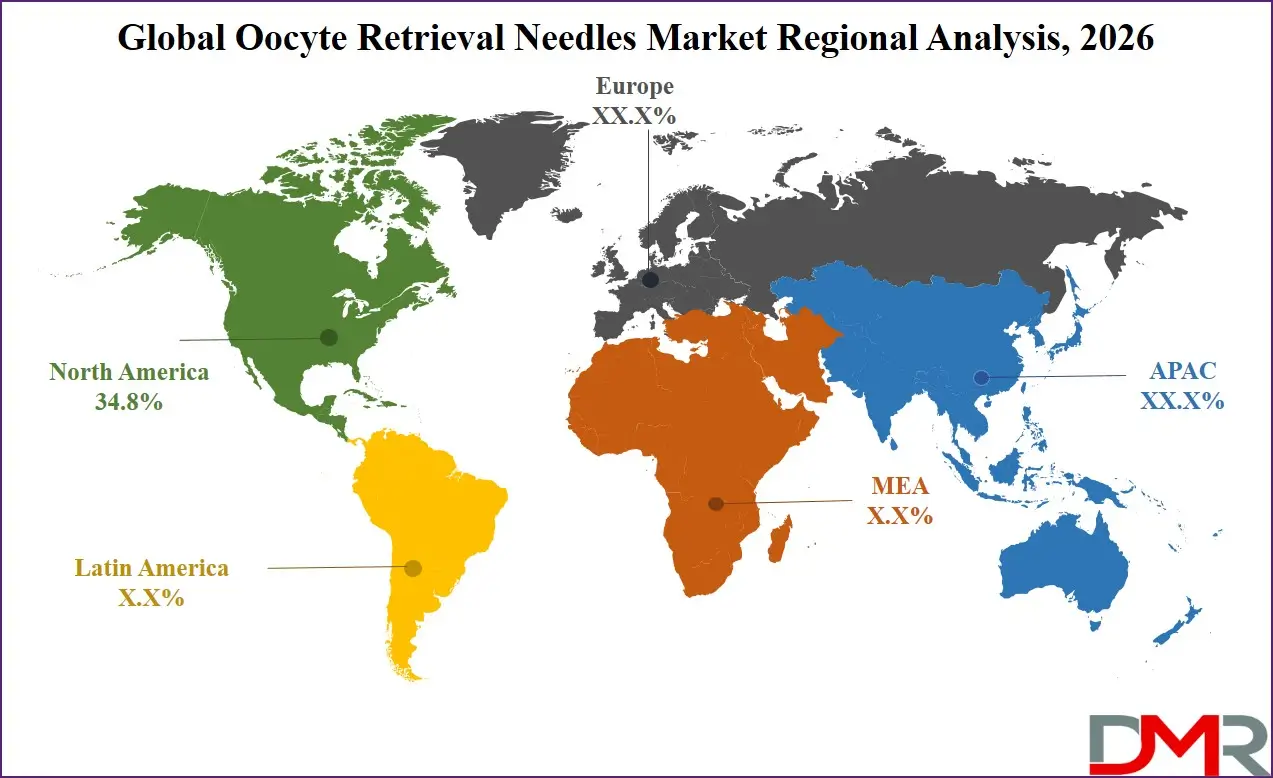
North America is projected to dominate the regional segment with the highest market share as it is anticipated to hold approximately 34.8% of the total market revenue by the end of 2026, due to advanced healthcare infrastructure, high IVF procedure volumes, and widespread insurance coverage for fertility treatments. The region is home to leading fertility clinic networks and reproductive technology innovators, driving clinical advancements in oocyte retrieval procedures. Strong patient awareness regarding fertility options and acceptance of ART as mainstream healthcare further strengthens demand. The United States, in particular, accounts for the largest share within North America due to its large private-pay fertility market, employer-sponsored fertility benefits, and concentration of world-renowned reproductive medicine centers. Although Asia Pacific is the fastest-growing region, North America continues to hold the largest revenue share due to premium procedure pricing and early adoption of advanced retrieval technologies.
ℹ
To learn more about this report –
Download Your Free Sample Report Here
Region with the Highest CAGR
Asia-Pacific holds the highest CAGR and is poised to achieve rapid market share growth due to its massive population base, rising infertility awareness, expanding medical tourism for fertility treatments, and government initiatives supporting reproductive healthcare. Countries including Japan, China, India, and Australia are investing heavily in fertility infrastructure and treatment accessibility. Japan's comprehensive national insurance coverage for IVF and China's increasing acceptance of ART, following policy adjustments, are creating fertile ground for market expansion. The region's large patient volumes, combined with growing numbers of fertility clinics adopting international quality standards, position APAC as the fastest-growing market for oocyte retrieval needle systems.
By Region
North America
Europe
- Germany
- The U.K.
- France
- Italy
- Russia
- Spain
- Benelux
- Nordic
- Rest of Europe
Asia-Pacific
- China
- Japan
- South Korea
- India
- ANZ
- ASEAN
- Rest of Asia-Pacific
Latin America
- Brazil
- Mexico
- Argentina
- Colombia
- Rest of Latin America
Middle East & Africa
- Saudi Arabia
- UAE
- South Africa
- Israel
- Egypt
- Rest of MEA
Global Oocyte Retrieval Needles Market: Competitive Landscape
The Global Oocyte Retrieval Needles Market is moderately consolidated, featuring a mix of specialized medical device manufacturers, reproductive technology companies, and diversified healthcare product suppliers. Leading players like CooperSurgical (CooperCompanies), Kitazato Corporation, and Cook Medical leverage their established fertility product portfolios and global distribution networks to maintain market presence. Specialized manufacturers such as Rocket Medical, Vitrolife, and Gynetics drive market dynamics with clinically focused innovation and strong relationships with fertility specialists. Medical device conglomerates, including Medtronic and Boston Scientific, maintain a selective presence through specialized gynecology divisions, while regional manufacturers serve local markets with cost-competitive alternatives. The market also features partnerships between needle manufacturers and fertility clinic chains, ensuring consistent product supply and collaborative product development based on clinical feedback.
Some of the prominent players in the Global Oocyte Retrieval Needles Market are:
- CooperSurgical, Inc.
- Cook Medical Incorporated
- Kitazato Corporation
- Vitrolife AB
- Rocket Medical plc
- Gynetics Medical Products N.V.
- Medtronic plc
- Boston Scientific Corporation
- Smiths Medical (ICU Medical)
- Suru International Pvt. Ltd.
- Labotect GmbH
- Vention Medical (part of Freudenberg Group)
- SOMATEX Medical Technologies GmbH
- Biopsybell S.r.l.
- Hakuzo Medical Corporation
- Mohan Mediquip Pvt. Ltd.
- Heka s.r.l.
- InvitroMed Co., Ltd.
- THD SpA
- Other Key Players
Recent Developments in the Global Oocyte Retrieval Needles Market
- November 2025: CooperSurgical launched its next-generation echogenic oocyte retrieval needle featuring enhanced ultrasound visibility and optimized flow dynamics, designed to improve follicle targeting efficiency during challenging aspiration procedures.
- October 2025: Kitazato Corporation announced expansion of its European distribution network through partnerships with major fertility clinic groups in Spain and Germany, strengthening market presence in Europe's largest IVF markets.
- September 2025: Cook Medical received FDA 510(k) clearance for its newly designed double-lumen retrieval needle incorporating advanced flushing capabilities and reduced dead space, enhancing oocyte recovery in low-yield patients.
- August 2025: Vitrolife AB completed the acquisition of a specialized needle manufacturing facility in Japan, expanding production capacity and strengthening supply chain resilience for the Asia-Pacific market.
- July 2025: A Horizon Europe research grant was awarded to a consortium developing smart aspiration systems integrating pressure-sensing technology with oocyte retrieval needles for real-time feedback during follicle puncture.
- June 2025: Rocket Medical partnered with a leading Indian fertility hospital chain to provide specialized retrieval needles and clinical training programs, aiming to enhance procedural standards in India's rapidly growing IVF sector.
Report Details
| Report Characteristics |
| Market Size (2026) |
USD 379.9 Mn |
| Forecast Value (2035) |
USD 779.2 Mn |
| CAGR (2026–2035) |
8.3% |
| The US Market Size (2026) |
USD 34.8 Mn |
| Historical Data |
2020 – 2025 |
| Forecast Data |
2027 – 2035 |
| Base Year |
2025 |
| Estimate Year |
2026 |
| Report Coverage |
Market Revenue Estimation, Market Dynamics, Competitive Landscape, Growth Factors and etc. |
| Segments Covered |
By Product Type (Single-Lumen Needles, Double-Lumen Needles, Specialized Retrieval Needles), By Needle Gauge (16 Gauge, 17 Gauge, 18 Gauge, 19 Gauge, Other Gauges), By Material (Stainless Steel, Nitinol, Other Materials), By Surface Coating (Teflon Coating, Silicone Coating, Other Coatings), By Application (In-Vitro Fertilization (IVF), Oocyte Cryopreservation (Egg Freezing), Donor Egg Retrieval, Fertility Preservation, Research Applications), and By End-User (Fertility Clinics, Hospitals, Egg Banks & Donor Agencies, Research & Academic Institutes) |
| Regional Coverage |
North America – The US and Canada; Europe – Germany, The UK, France, Russia, Spain, Italy, Benelux, Nordic, & Rest of Europe; Asia-Pacific – China, Japan, South Korea, India, ANZ, ASEAN, Rest of APAC; Latin America – Brazil, Mexico, Argentina, Colombia, Rest of Latin America; Middle East & Africa – Saudi Arabia, UAE, South Africa, Turkey, Egypt, Israel, & Rest of MEA |
| Prominent Players |
CooperSurgical, Inc., Cook Medical Incorporated, Kitazato Corporation, Vitrolife AB, Rocket Medical plc, Gynetics Medical Products N.V., Medtronic plc, Boston Scientific Corporation, Smiths Medical (ICU Medical), Suru International Pvt. Ltd., Labotect GmbH, Vention Medical (part of Freudenberg Group), SOMATEX Medical Technologies GmbH, Biopsybell S.r.l., Hakuzo Medical Corporation, Mohan Mediquip Pvt. Ltd., Heka S.r.l., InvitroMed Co., Ltd., and Other Key Players |
| Purchase Options |
We have three licenses to opt for (Single User License (Limited to 1 user), Multi-User License (Up to 5 Users), and Corporate Use License (Unlimited User) along with free report customization equivalent to 0 analyst working days, 3 analysts working days and 5 analysts working days, respectively. |
Frequently Asked Questions
How big is the Global Oocyte Retrieval Needles Market?
▾ The Global Oocyte Retrieval Needles Market size is estimated to have a value of USD 379.9 million in 2026 and is expected to reach USD 779.2 million by the end of 2035.
What is the growth rate in the Global Oocyte Retrieval Needles Market?
▾ The market is growing at a CAGR of 8.3 percent over the forecasted period of 2026-2035.
What is the size of the US Oocyte Retrieval Needles Market?
▾ The US Oocyte Retrieval Needles Market is projected to be valued at USD 26.5 million in 2026. It is expected to witness subsequent growth as it holds USD 52.1 million in 2035 at a CAGR of 7.8%.
Which region accounted for the largest Global Oocyte Retrieval Needles Market?
▾ North America is expected to have the largest market share in the Global Oocyte Retrieval Needles Market with a share of about 34.8% in 2026.
Who are the key players in the Global Oocyte Retrieval Needles Market?
▾ Some of the major key players in the Global Oocyte Retrieval Needles Market are CooperSurgical, Inc., Cook Medical Incorporated, Kitazato Corporation, Vitrolife AB, Rocket Medical plc, Gynetics Medical Products N.V., and many others.