Market Snapshot
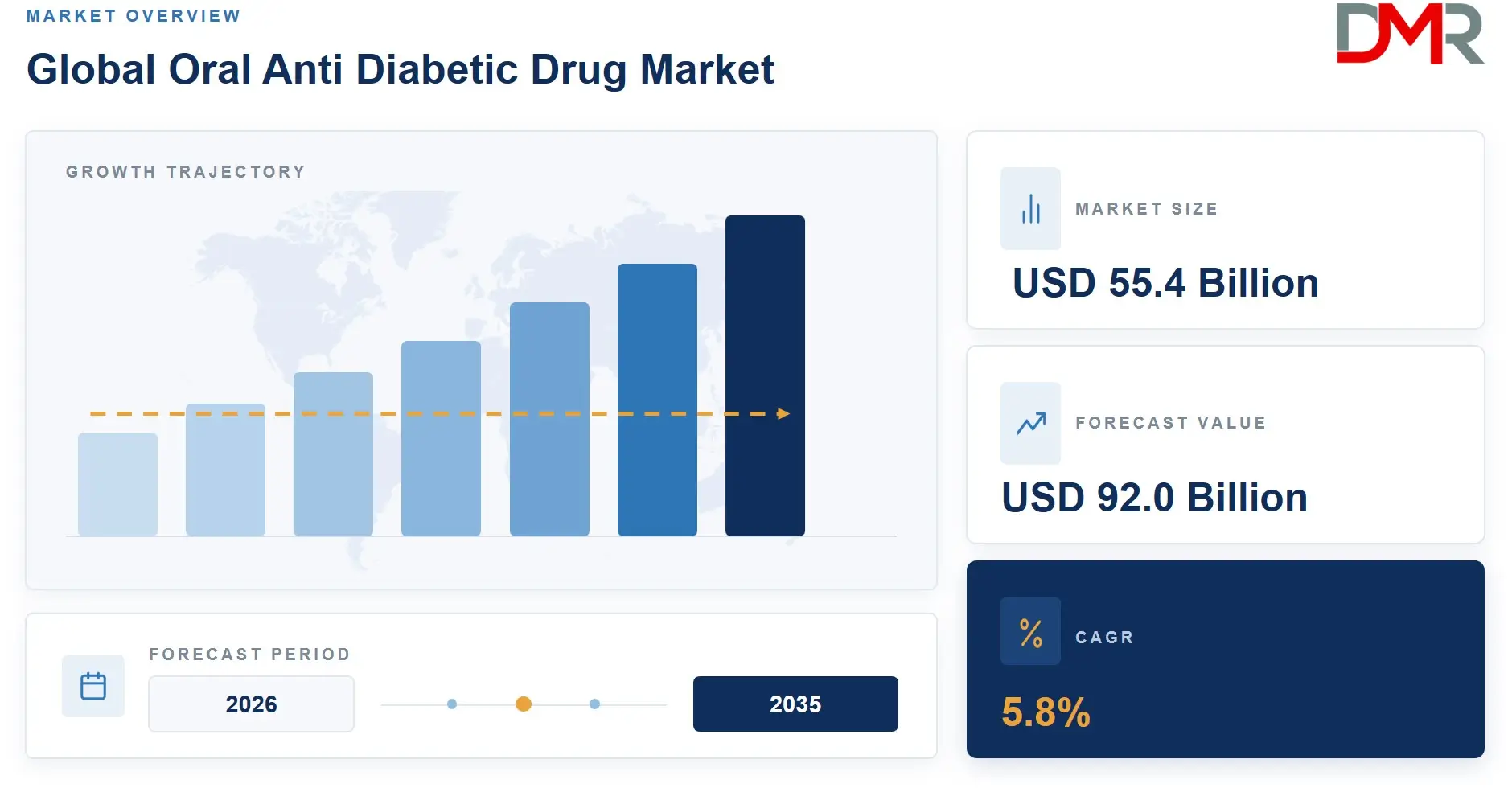
- Market Size (2026): USD 55.4 Bn
- Forecast Value (2035): USD 92.0 Bn
- CAGR (2026-2035): 5.8%
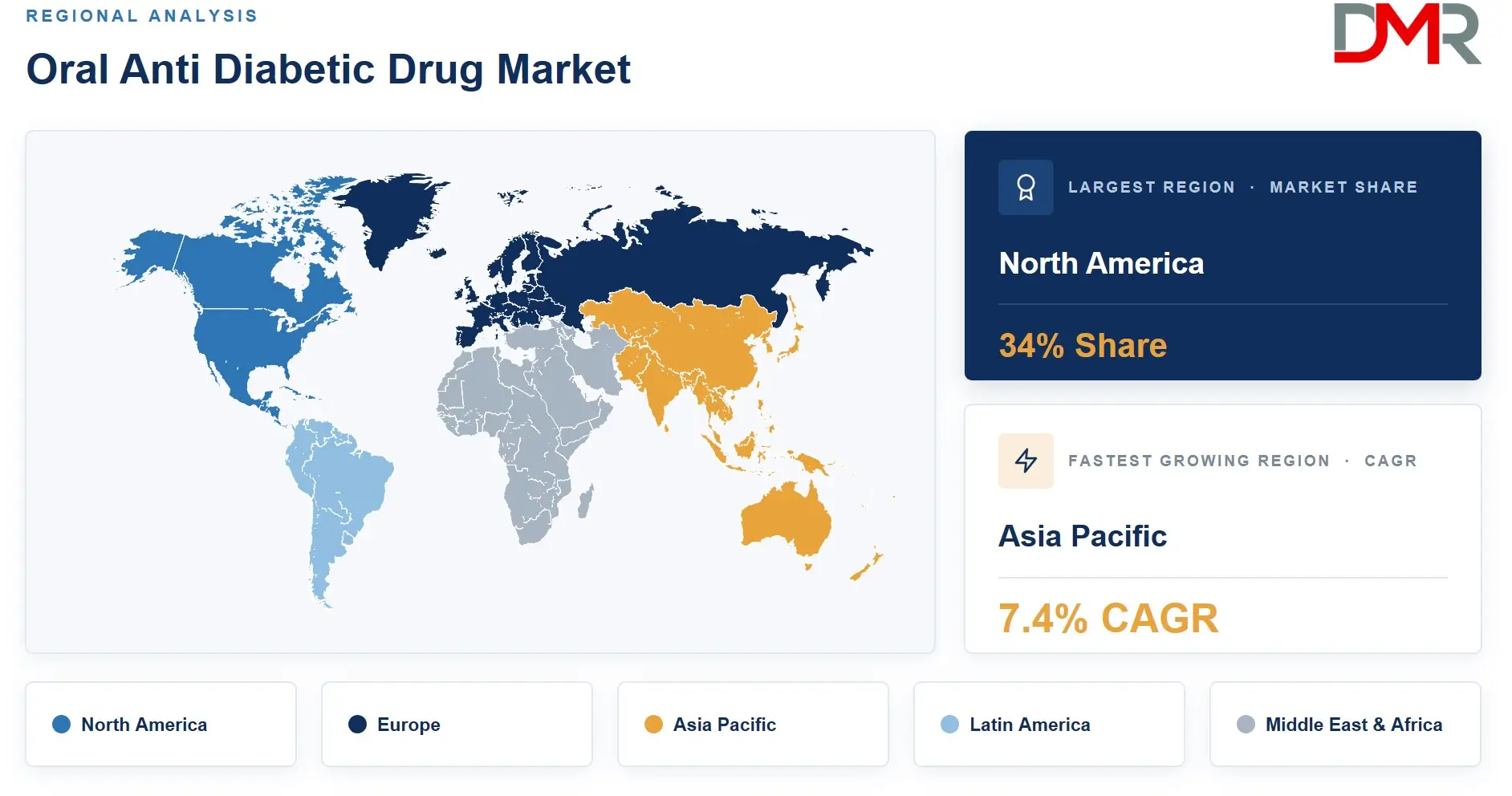
- Largest Region (2026): North America, approximately 34%
- Fastest-Growing Region: Asia-Pacific
- Leading Drug Class (2026): Biguanides, around 24%
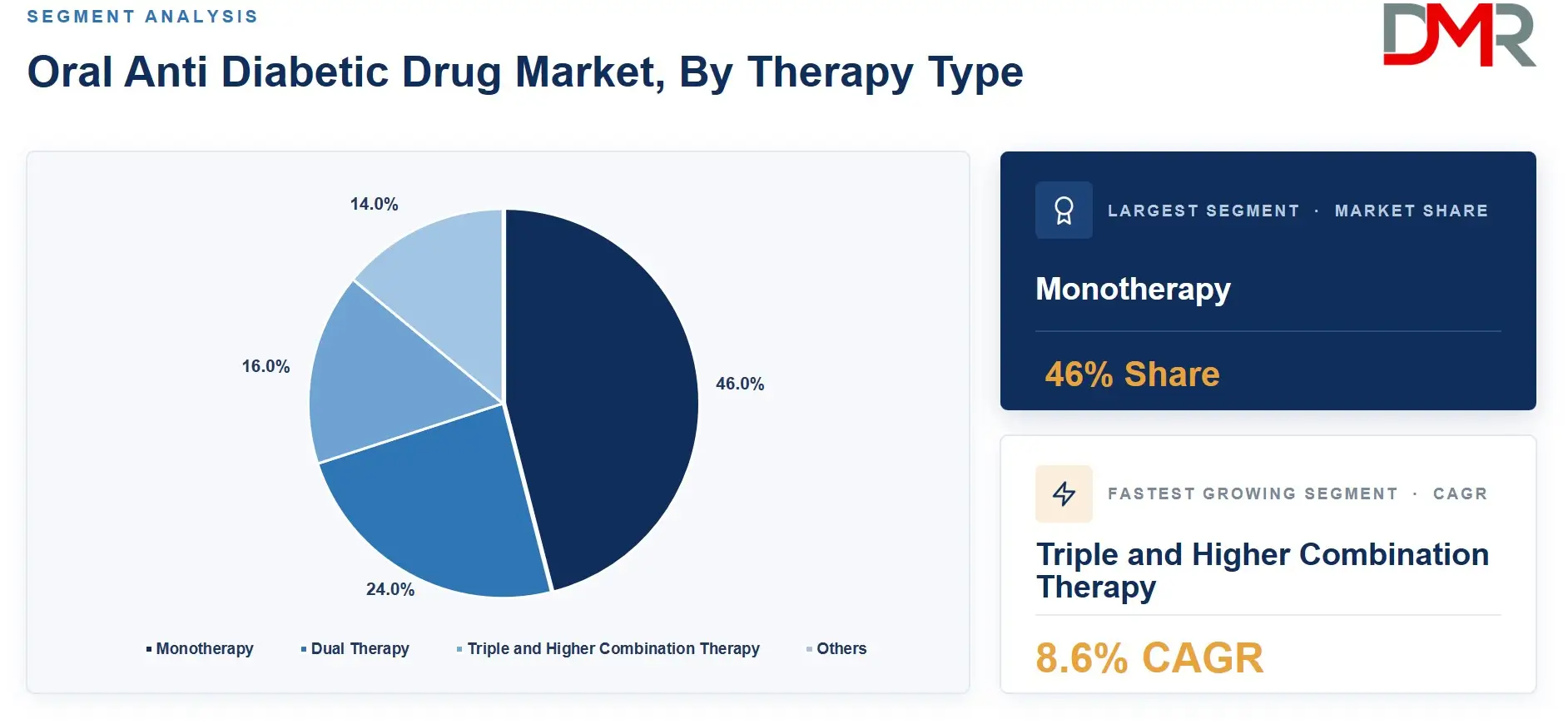
- Leading Therapy Type (2026): Monotherapy, close to 46%
- Key Players: Novo Nordisk, Merck & Co., AstraZeneca and others
What is Oral Anti Diabetic Drug Market and its Market Size?
Global Oral Anti Diabetic Drug Market size is estimated to reach USD 55.4 Bn in 2026 and is further anticipated to reach USD 92.0 Bn by 2035, at a CAGR of 5.8%. The market covers prescription oral medicines used primarily to improve glycemic control in people with type 2 diabetes, including long established small molecules, fixed dose combinations and newer orally delivered incretin therapies. Revenue includes branded and generic products dispensed through retail, hospital and digital pharmacy channels.
ℹ
To learn more about this report –
Download Your Free Sample Report Here
Demand is anchored by a large treated population that often requires years of pharmacologic management after lifestyle measures alone become insufficient. Metformin remains a foundational option because of familiarity, cost and its position in treatment pathways, while SGLT2 inhibitors and DPP4 inhibitors have broadened choice for patients needing additional control. Prescribers increasingly consider cardiovascular risk, renal status, body weight, hypoglycemia risk, dosing convenience and affordability rather than selecting medicines only on glucose lowering potency.
The product mix is changing as oral therapy moves from a sequence of inexpensive conventional agents toward more individualized combinations and oral incretin options. Fixed dose tablets can reduce pill burden, and extended release formulations can simplify daily routines for selected patients. At the same time, generic entry across older classes continues to compress unit prices, making value growth increasingly dependent on premium mechanisms, combination therapy, improved outcomes and penetration in countries where diagnosis and treatment rates remain below those of mature markets.
Commercially, the market sits between mass primary care and specialist cardiometabolic treatment. Primary care physicians account for substantial prescribing volume, while endocrinologists influence escalation in complex cases involving kidney disease, obesity or persistent hyperglycemia. Payers and formulary managers shape access through step therapy, reimbursement rules and generic substitution. This creates a two speed structure in which high volume generic oral agents coexist with newer branded therapies competing on outcome evidence, adherence benefits and broader cardiometabolic positioning.
Use Cases
- Primary Care Treatment Initiation: General practitioners and family physicians use oral anti diabetic medicines when adults with type 2 diabetes require pharmacologic control beyond diet and activity changes. Treatment can begin with a familiar low cost agent and progress according to response, comorbidities and tolerance, allowing longitudinal disease management outside specialist settings.
- Cardiorenal Risk Management: Endocrinologists, cardiologists and nephrologists prescribe selected oral agents for patients whose diabetes overlaps with chronic kidney disease or cardiovascular risk. Drug selection can therefore address glucose control alongside clinically relevant organ protection, changing therapy from a narrow glycemic intervention into part of broader cardiometabolic risk management.
- Combination Therapy Escalation: Clinicians use fixed dose or multi drug oral regimens when a single agent no longer provides adequate control. Combining complementary mechanisms can improve treatment intensity without immediately moving every patient to an injectable regimen, while fixed dose products may reduce the daily number of tablets and simplify refill behavior.
- Long Term Community Pharmacy Management: Retail and online pharmacies support recurring dispensing for people receiving chronic oral therapy, including generics and branded products. Refill reminders, substitution management and pharmacist counseling help maintain continuity across long treatment periods, especially where patients obtain diabetes care from multiple prescribers or increasingly use digital prescription services.
Key Takeaways
- Market Size & Share: North America is expected to represent roughly 34% of worldwide revenue in 2026, supported by high treatment intensity and access to premium therapies.
- Drug Class Analysis: Oral GLP-1 receptor agonists are projected to record the fastest class CAGR of 14.8% between 2026 and 2035 as oral incretin competition broadens.
- Regional Analysis: Asia-Pacific is forecast to expand at a CAGR of 7.4% through 2035 as diagnosis, urban treatment access and medicine availability improve.
- Therapy Mix: Dual therapy is expected to account for nearly 35% of 2026 revenue, reflecting routine escalation beyond a single oral mechanism.
- Dosage Form: Extended release tablets are set to represent close to 28% of the 2026 market as adherence and dosing convenience remain important.
- Channel Shift: Online pharmacies are forecast to grow at a CAGR of 10.4% through 2035, ahead of conventional channels as digital refill behavior expands.
How AI/Gen AI is Transforming the Oral Anti Diabetic Drug Market?
Artificial intelligence is influencing this market mainly through discovery, trial design, evidence generation and commercial operations rather than changing the tablet itself. Machine learning models can rank molecular candidates, identify responder subgroups and analyze longitudinal clinical records for treatment patterns. In commercial settings, forecasting tools can help manufacturers anticipate demand by molecule, geography and channel, which is valuable when mature generics and newer branded therapies have very different inventory and pricing dynamics.
Generative AI is also being applied to documentation workflows that surround oral diabetes medicines, including medical writing support, regulatory document preparation, literature synthesis and field medical content review. Its practical value depends on governance because clinical and regulatory outputs require expert verification, traceability and protection of patient information. The most immediate gains are likely to come from reducing administrative cycle time rather than autonomous clinical decision making.
- Clinical Development Analytics: Predictive models can support trial site selection, recruitment forecasting and subgroup analysis across large type 2 diabetes programs.
- Real World Evidence Processing: Natural language processing can structure information from clinical notes and claims to study adherence, switching and persistence patterns.
- Regulatory Document Workflows: Large language models can assist controlled drafting and summarization of technical documents while human reviewers retain accountability for accuracy.
- Demand and Supply Planning: Forecasting systems can separate mature generic demand from faster changing branded uptake to improve production and distribution planning.
Key Drivers in the Global Oral Anti Diabetic Drug Market
Growth is being supported by both expanding treatment need and a change in what prescribers expect from oral therapy. Volume remains important, but value is increasingly linked to products that address risk factors beyond glucose control.
- Large Treated Type 2 Diabetes Population: Chronic disease duration creates recurring prescription demand, and oral medicines remain central to early and intermediate treatment for many adults. In the 2026 market model, monotherapy is projected to hold approximately 46% of therapy revenue, showing how large the first pharmacologic treatment layer remains even as more patients later require escalation. Aging populations, urban lifestyles and earlier detection increase the pool entering treatment, while better continuity of care extends time on medicine. This mechanism supports broad prescription volume across branded and generic portfolios, especially in primary care systems that prioritize convenient outpatient treatment before or alongside injectable options.
- Shift Toward Cardiometabolic Outcome Based Prescribing: Treatment decisions increasingly account for kidney disease, cardiovascular risk and weight alongside HbA1c control. SGLT2 inhibitors are expected to represent about 22% of 2026 drug class revenue, reflecting their expanding role in patients for whom organ protection influences drug choice. This changes competition because clinical value can support continued branded use even where older glucose lowering agents are inexpensive. Manufacturers with evidence across diabetes and related comorbidities can address broader patient segments, while clinicians can tailor oral regimens to risk profiles rather than following a uniform glucose centered sequence.
Restraints in the Global Oral Anti Diabetic Drug Market
The market faces strong cost pressure despite rising disease prevalence. Generic competition, safety considerations and uneven reimbursement can slow revenue growth even when prescription volumes remain high.
- Genericization and Price Compression Across Mature Classes: Long established therapies compete heavily on price, particularly when multiple generic suppliers can meet the same prescription need. Biguanides are expected to account for around 24% of 2026 class revenue, yet their very large prescription footprint does not translate into equivalent value growth because low unit prices limit monetization. Similar pressure affects older sulfonylureas and several DPP4 products as exclusivity erodes. This reduces the ability of manufacturers to raise prices and shifts commercial emphasis toward differentiated combinations, new mechanisms and lifecycle management, while payers retain strong incentives to steer uncomplicated patients toward lower cost options.
- Access Barriers for Newer Premium Oral Therapies: More advanced oral agents can face prior authorization, step therapy, reimbursement restrictions and higher patient out of pocket costs. Hospital pharmacies are projected to represent only about 17% of 2026 distribution revenue, with most chronic dispensing occurring in community channels where formulary coverage strongly shapes refill behavior. When newer drugs require patients to fail lower cost alternatives first, uptake can lag clinical interest. Adverse effect monitoring and contraindications also narrow eligible populations for specific classes, creating a gap between theoretical addressable demand and actual reimbursed use.
Growth Opportunities in the Global Oral Anti Diabetic Drug Market
The strongest white spaces sit where convenience, treatment intensification and underserved patient access intersect. Companies can grow by making advanced therapy easier to start, combine and sustain.
- Expansion of Oral Incretin Therapy: Oral GLP-1 receptor agonists are modeled at only about 6% of 2026 drug class revenue but are expected to expand at a CAGR of 14.8% through 2035. The opportunity comes from patients who want incretin based efficacy without injection handling and from prescribers seeking stronger oral escalation options before moving to injectable therapy. New small molecule oral agonists may also reduce formulation constraints associated with peptide delivery. Commercial success will depend on tolerability, reimbursement, manufacturing scale and the ability to demonstrate meaningful differentiation from established oral and injectable alternatives.
- Fixed Dose Combination Penetration in High Volume Markets: Dual therapy is projected to hold nearly 35% of 2026 therapy revenue, giving manufacturers room to develop combinations that align with common escalation pathways. Pairing mechanisms such as metformin with SGLT2 or DPP4 inhibition can reduce pill burden and simplify prescribing for patients already receiving multiple agents. Opportunity is particularly strong in countries where diabetes prevalence is high but specialist capacity is limited, because standardized combinations can support primary care management. Pricing must remain competitive with separately dispensed generics, so differentiated release profiles and convenient dosing become important commercial levers.
Trends in the Global Oral Anti Diabetic Drug Market
Current market shifts are visible in formulation, channel behavior and treatment architecture. The direction is toward more convenient regimens and greater differentiation within oral therapy rather than simple expansion of traditional classes.
- Movement Toward Once Daily and Extended Release Regimens: Extended release tablets are expected to account for close to 28% of 2026 dosage form revenue. Manufacturers are using modified release technology to support simpler schedules, smoother exposure profiles and lifecycle extension for established molecules and combinations. This trend matters because adherence can deteriorate when patients manage several chronic medicines at once. Formulation differentiation does not eliminate generic pressure, but it can sustain brand relevance where prescribers and patients value convenience. It also supports combination products that would otherwise require separate tablets with different dosing schedules.
- Digital Refill and Home Delivery Becoming a Larger Channel: Online pharmacies are forecast to expand at a CAGR of 10.4% between 2026 and 2035, faster than traditional dispensing channels. Diabetes medicines are well suited to recurring digital refill models because therapy is chronic and prescription histories are predictable. E-prescribing, remote consultations and home delivery can reduce friction for stable patients, while platforms can use reminders to improve refill continuity. The shift also changes manufacturer and payer engagement because formulary visibility, substitution rules and patient support increasingly occur through digital interfaces rather than only at a physical pharmacy counter.
Research Scope and Analysis
Segment performance is assessed across four axes: drug class, therapy type, dosage form and distribution channel. Each axis identifies where 2026 revenue is concentrated and which sub-segment is expected to expand fastest through 2035, together with the commercial mechanism behind that position.
ℹ
To learn more about this report –
Download Your Free Sample Report Here
By Drug Class
Biguanides are projected to hold the largest share by drug class in 2026, accounting for approximately 24% of revenue because metformin remains deeply embedded in treatment pathways, is broadly available and is inexpensive compared with newer branded options. Its use across newly treated and combination patients keeps prescription volume high even where unit value is modest. Growth, however, is concentrated in oral GLP-1 receptor agonists, which are forecast to expand at a CAGR of 14.8% from 2026 to 2035. Demand is being pulled by interest in stronger glucose lowering, weight related benefits and oral alternatives to injectable incretin therapy. Competition should intensify as new small molecule and peptide based oral products enter, although reimbursement and tolerability will determine how quickly that clinical interest converts into sustained revenue.
By Therapy Type
Monotherapy is expected to lead therapy type in 2026 with a share of roughly 46%, supported by the large number of patients who begin pharmacologic treatment with a single oral agent and remain controlled without immediate escalation. Its position is reinforced by low cost generics and simple prescribing in primary care. The steeper trajectory sits with triple and higher combination therapy, expanding at a CAGR of 8.6% between 2026 and 2035 as longer disease duration and progressive beta cell dysfunction increase the number of patients requiring multiple mechanisms. Fixed dose combinations can capture part of this escalation by reducing pill burden, while separate oral agents remain necessary when dose flexibility matters. Growth therefore depends on balancing regimen simplicity with individualized titration and payer coverage.
By Dosage Form
Immediate release tablets are set to represent the largest dosage form in 2026, with around 52% of revenue, because many generic and established oral anti diabetic drugs use conventional tablet technology with broad manufacturing capacity and low production cost. Their installed prescription base keeps this format dominant across both mature and emerging markets. Growth, however, is concentrated in oral peptide tablets, forecast to rise at a CAGR of 12.9% through 2035 as formulation science enables systemic delivery of molecules that historically required injection. Absorption enhancers, dosing instructions and bioavailability remain important constraints, but successful oral peptide products can command premium value. This makes formulation intellectual property and reproducible manufacturing central to competition in the fastest developing part of the dosage form mix.
By Distribution Channel
Retail pharmacies are projected to account for close to 68% of 2026 distribution revenue because oral diabetes medicines are chronic outpatient products with frequent repeat prescriptions and broad community dispensing. Their scale is supported by generic substitution, pharmacist counseling and integration with primary care prescription systems. The fastest growth is expected in online pharmacies at a CAGR of 10.4% between 2026 and 2035 as e-prescriptions, telemedicine and home delivery reduce refill friction for stable patients. Digital channels can strengthen adherence through reminders and automatic renewal workflows, but growth depends on national pharmacy regulation, reimbursement compatibility and reliable cold free last mile handling. Traditional retail networks will remain important, particularly for newly treated patients and markets with lower digital pharmacy penetration.
The Global Oral Anti Diabetic Drug Market Report is Segmented Based on the Following
By Drug Class
- Biguanides
- SGLT2 Inhibitors
- DPP4 Inhibitors
- Sulfonylureas
- Thiazolidinediones
- Oral GLP-1 Receptor Agonists
- Others
By Therapy Type
- Monotherapy
- Dual Therapy
- Triple and Higher Combination Therapy
- Others
By Dosage Form
- Immediate Release Tablets
- Extended Release Tablets
- Oral Peptide Tablets
- Other Oral Solid Forms
By Distribution Channel
- Retail Pharmacies
- Hospital Pharmacies
- Online Pharmacies
- Others
Regional Analysis
Region with the Largest Revenue Share
North America is expected to remain the largest regional market in 2026, accounting for approximately 34% of worldwide revenue. The region combines high diagnosed prevalence, broad use of pharmacologic treatment and faster uptake of newer branded classes than many price sensitive markets. US commercial coverage and specialist access support use of premium oral therapies for patients with cardiovascular, renal or weight related treatment priorities. At the same time, generics remain widely prescribed, creating a large base of chronic volume. Formulary management can limit unrestricted uptake, but the region's high per patient pharmaceutical spending keeps revenue concentration above its share of the worldwide diabetes population.
ℹ
To learn more about this report –
Download Your Free Sample Report Here
Region with the Highest CAGR
Asia-Pacific is forecast to record the highest regional CAGR of 7.4% between 2026 and 2035. Growth is supported by large patient pools in China and India, improving diagnosis, urban primary care expansion and wider availability of both generic and patented oral medicines. The region also has substantial local manufacturing capacity, which improves access to low cost therapies while supporting competition in fixed dose combinations. Rising incomes and broader insurance coverage can gradually increase use of newer classes, although affordability remains a major constraint in several countries. The mix therefore expands from both ends, with high volume generics serving broad populations and differentiated branded products gaining share among insured urban patients.
By Region
North America
Europe
- Germany
- France
- The UK
- Italy
- Spain
- Rest of Europe
Asia-Pacific
- China
- Japan
- India
- Australia
- South Korea
- Rest of APAC
Latin America
- Mexico
- Brazil
- Colombia
- Argentina
- Rest of LATAM
Middle East & Africa
- Saudi Arabia
- The UAE
- South Africa
- Rest of MEA
Regulatory Landscape
Oral anti diabetic medicines operate under mature prescription drug frameworks in major markets, with regulators evaluating efficacy, safety, manufacturing quality and increasingly cardiovascular and renal evidence for differentiated claims. Current change is concentrated in newer incretin mechanisms, pediatric label expansion, fixed dose combinations and broader outcome based indications. Commercial openings favor products that can demonstrate clinically meaningful benefits without adding administration burden, especially where a tablet can extend an established mechanism to new patient groups. The brake is that approval alone does not guarantee reimbursement, and regulators may require substantial evidence for long term safety or label expansion. These conditions favor well capitalized developers and can widen the competitive gap between commodity generics and evidence intensive premium therapies.
Epidemiology
The addressable population is shaped mainly by type 2 diabetes prevalence, diagnosis rates, treatment access and the progressive nature of the disease. Population aging, obesity and urbanization are increasing the number of adults requiring long term glycemic management, while earlier screening brings more patients into treatment before complications appear. The commercial opening is largest where diagnosis is improving faster than specialist capacity, because oral medicines can be initiated and managed in primary care at scale. Risk remains concentrated in affordability, adherence and therapeutic inertia, all of which can keep treated demand below epidemiologic need. As a result, market growth depends not only on disease burden but also on health system ability to diagnose, prescribe, reimburse and sustain chronic therapy.
Competitive Landscape
Competition spans multinational innovators, established diabetes specialists and large generic manufacturers. Mature molecules compete on price, supply reliability and distribution reach, while newer branded therapies compete on clinical outcomes, dosing convenience, tolerability and access to reimbursement. The most important strategic divide is between companies monetizing high volume generic prescriptions and those investing in differentiated mechanisms such as SGLT2 inhibition or oral incretin therapy. Partnerships are common where a manufacturer has a strong molecule but another company offers broader local distribution. Portfolio breadth also matters because prescribers frequently escalate from monotherapy to combinations, giving companies with multiple complementary agents more opportunities to retain patients within a franchise.
Some of the Prominent Players in the Global Oral Anti Diabetic Drug Market Are
- Novo Nordisk
- Eli Lilly and Company
- Merck & Co.
- AstraZeneca
- Boehringer Ingelheim
- Sanofi
- Takeda Pharmaceutical
- Astellas Pharma
- Bayer
- Pfizer
- Novartis
- Viatris
- Teva Pharmaceutical Industries
- Sun Pharmaceutical Industries
- Cipla
- Dr. Reddy's Laboratories
- Lupin
- Zydus Lifesciences
- Torrent Pharmaceuticals
- Biocon
- Glenmark Pharmaceuticals
- Alkem Laboratories
- Intas Pharmaceuticals
- Ajanta Pharma
- Aurobindo Pharma
- USV
- Tonghua Dongbao Pharmaceutical
- Huadong Medicine
- Jiangsu Hengrui Pharmaceuticals
- Shanghai Fosun Pharmaceutical
- Daewoong Pharmaceutical
- Dong-A ST
- Hanmi Pharmaceutical
- Celltrion
- Kalbe Farma
- Eurofarma
- EMS Pharma
- Adalvo
- Abbott
- Menarini Group
- Other Key Players
Recent Developments
- In August 2026, Eli Lilly reported that it had submitted orforglipron for type 2 diabetes in the US, advancing a once daily small molecule oral GLP-1 candidate toward potential commercial entry and adding competitive pressure to established oral incretin therapy.
- In June 2026, Eli Lilly presented pivotal ACHIEVE program results for Foundayo, orforglipron, showing strong glucose lowering across several type 2 diabetes trials and supporting its strategy to position a nonpeptide oral GLP-1 as a major treatment option.
- In April 2026, Novo Nordisk reported positive Phase 3a PIONEER TEENS results for oral semaglutide in children and adolescents with type 2 diabetes, creating a pathway for potential label expansion into a younger patient population with limited oral incretin options.
- In September 2025, Adalvo submitted a decentralized procedure application for a dapagliflozin plus metformin immediate release fixed dose combination, expanding its partner ready diabetes portfolio and targeting demand for dual mechanism oral treatment in European markets.
- In June 2025, Abbott and MSD announced a distribution agreement in India covering sitagliptin, sitagliptin plus metformin and an extended release combination, using Abbott's local commercial network to maintain broad access to established oral diabetes therapies.
Report Details
| Report Characteristics |
| Market Size (2026) |
USD 55.4 Bn |
| Forecast Value (2035) |
USD 92.0 Bn |
| CAGR (2026-2035) |
5.8% |
| The US Market Size (2026) |
USD 14.1 Bn |
| Historical Data |
2021 - 2025 |
| Forecast Data |
2026 - 2035 |
| Base Year |
2025 |
| Segments Covered |
By Drug Class, By Therapy Type, By Dosage Form, By Distribution Channel |
| Regional Coverage |
North America - The US and Canada; Europe - Germany, France, The UK, Italy, Spain, Rest of Europe; Asia-Pacific - China, Japan, India, Australia, South Korea, Rest of APAC; Latin America - Mexico, Brazil, Colombia, Argentina, Rest of LATAM; Middle East & Africa - Saudi Arabia, The UAE, South Africa, Rest of MEA |
Frequently Asked Questions
How big is the Global Oral Anti Diabetic Drug Market?
▾ The global market is estimated at USD 55.4 Bn in 2026. Demand is supported by the large number of adults receiving long term treatment for type 2 diabetes, continued reliance on oral therapy in primary care and growing use of newer agents selected for cardiometabolic benefits as well as glucose control.
What is the growth rate of the Global Oral Anti Diabetic Drug Market?
▾ The industry is projected to expand at a CAGR of 5.8% from 2026 to 2035. Growth reflects rising treatment volumes and adoption of newer oral mechanisms, while generic price erosion across mature classes limits the pace at which prescription growth converts into market value.
Which region holds the largest share in the Global Oral Anti Diabetic Drug Market?
▾ North America is expected to hold the leading position, representing around 34% of worldwide revenue in 2026. High diagnosis rates, greater use of premium therapies, broad prescription coverage and strong specialist access support regional value, although payer controls continue to influence product selection and patient affordability.
Which drug class is growing fastest in the market?
▾ Oral GLP-1 receptor agonists are expected to be the fastest growing drug class, with a CAGR of 14.8% through 2035. Their expansion is driven by demand for incretin based efficacy in a tablet format, although reimbursement, gastrointestinal tolerability and competition with injectable therapies will shape actual uptake.
What factors are driving demand for oral anti diabetic medicines?
▾ Demand is driven by the expanding treated type 2 diabetes population, long duration of therapy and greater use of drugs selected for cardiovascular, renal and weight related considerations. Convenient outpatient dosing also supports oral treatment across primary care, especially when clinicians can intensify therapy through combinations without immediately shifting every patient to injections.
What are the main restraints affecting market growth?
▾ Generic price compression, reimbursement restrictions for premium products, step therapy and class specific safety considerations are the main constraints. The market therefore grows more slowly in value than the underlying prescription need might suggest, because high volume older agents are often inexpensive and newer medicines must justify their cost through stronger clinical differentiation.
Who are the key players in the Global Oral Anti Diabetic Drug Market?
▾ Key participants in the Oral Anti Diabetic Drug Market include Novo Nordisk, Eli Lilly and Company, Merck & Co., AstraZeneca, Boehringer Ingelheim, Sanofi and Sun Pharmaceutical Industries. Competition spans innovative branded therapies, established diabetes franchises, fixed dose combinations and high volume generic portfolios sold through diverse national reimbursement and pharmacy systems.