What is the Orthopedic Trauma Fixation Devices Market Size?
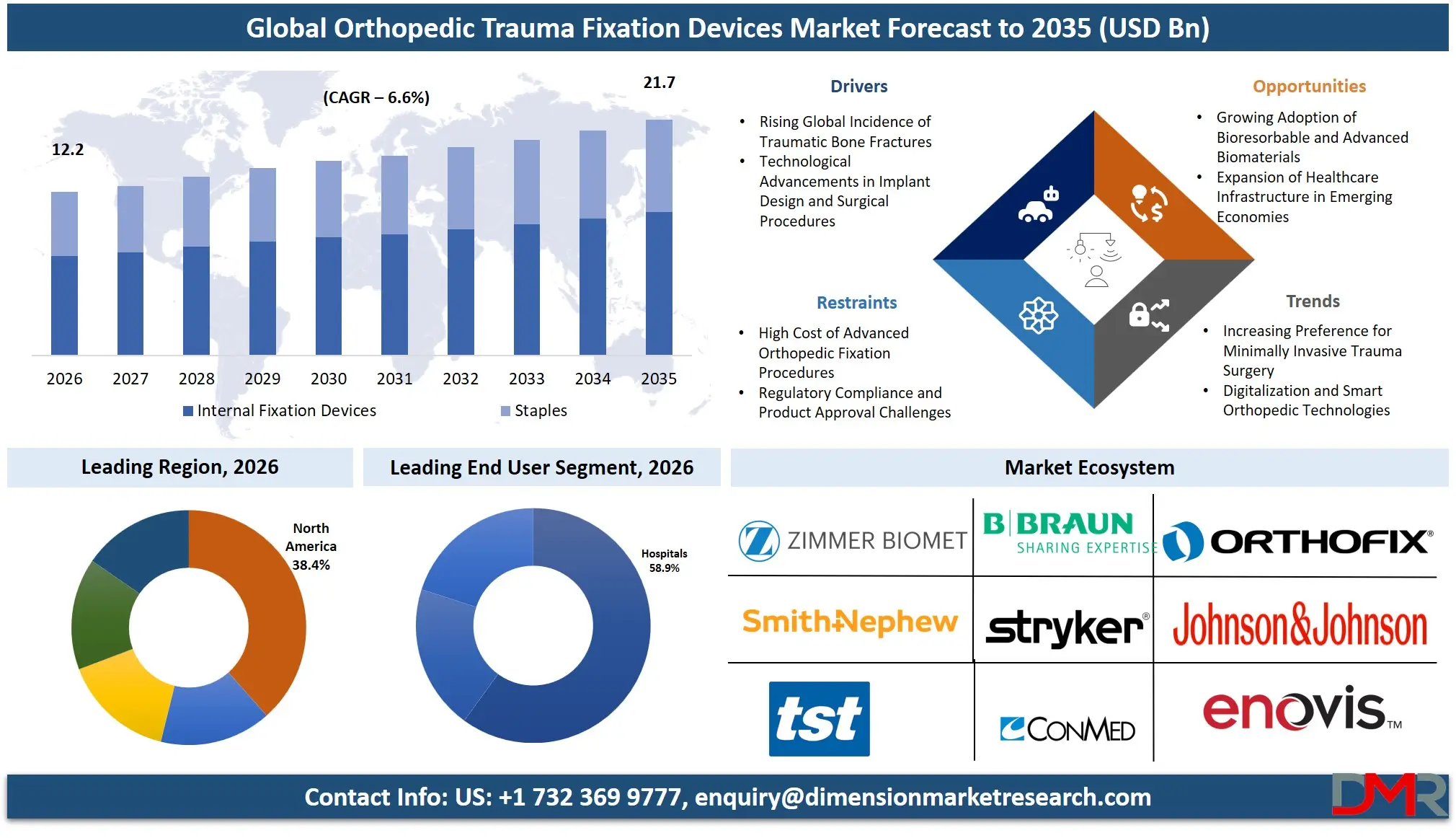
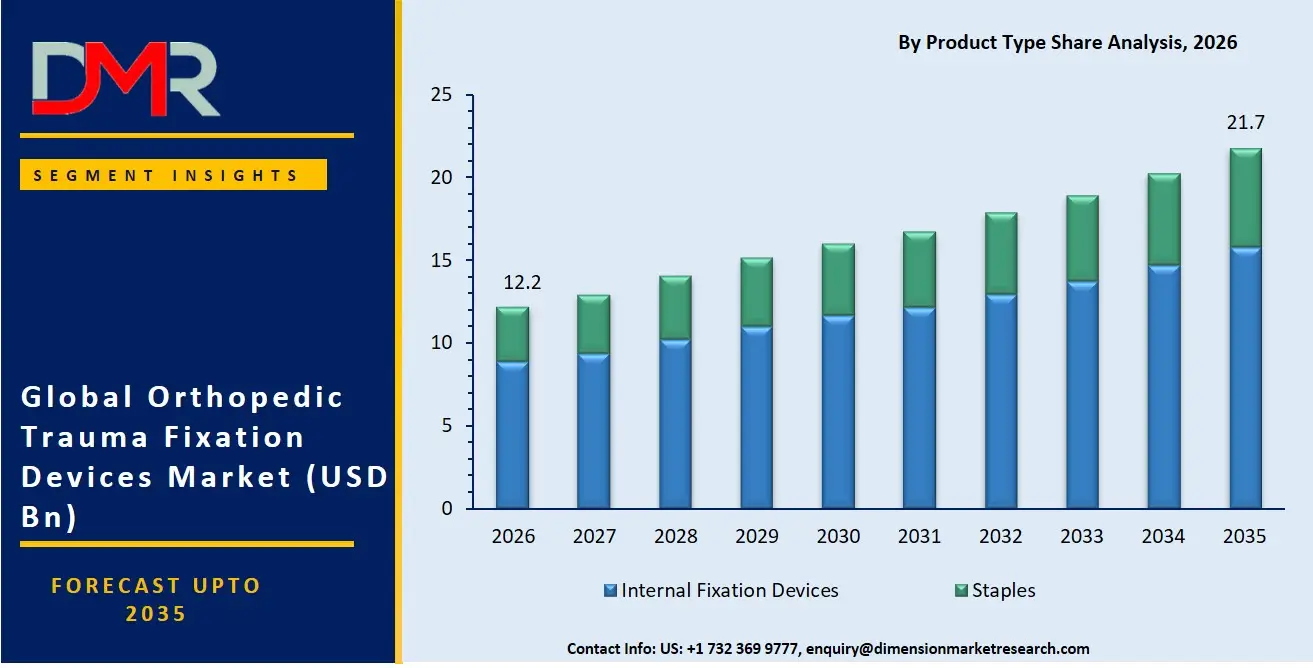
The Orthopedic Trauma Fixation Devices Market size is expected to be USD 12.2 billion in 2026 and increase at a compound annual growth rate of 6.6% to USD 21.7 billion in 2035 due to rising global incidence of traumatic bone fractures.
ℹ
To learn more about this report –
Download Your Free Sample Report Here
Orthopedic Trauma Fixation Devices comprise specialized implants and fixation systems designed to stabilize fractured bones, restore anatomical alignment, and promote effective healing following traumatic injuries. The market includes internal fixation devices such as plates, screws, intramedullary nails, pins, wires, staples, and external fixation systems manufactured using stainless steel, titanium alloys, bioresorbable materials, and carbon fiber composites. Growing incidences of road accidents, sports injuries, osteoporosis-related fractures, and an expanding elderly population continue to increase demand. Technological advancements including patient-specific implants, minimally invasive fixation techniques, advanced biomaterials, and digital surgical planning are reshaping product development while improving clinical outcomes and procedural efficiency.
The US Orthopedic Trauma Fixation Devices Market
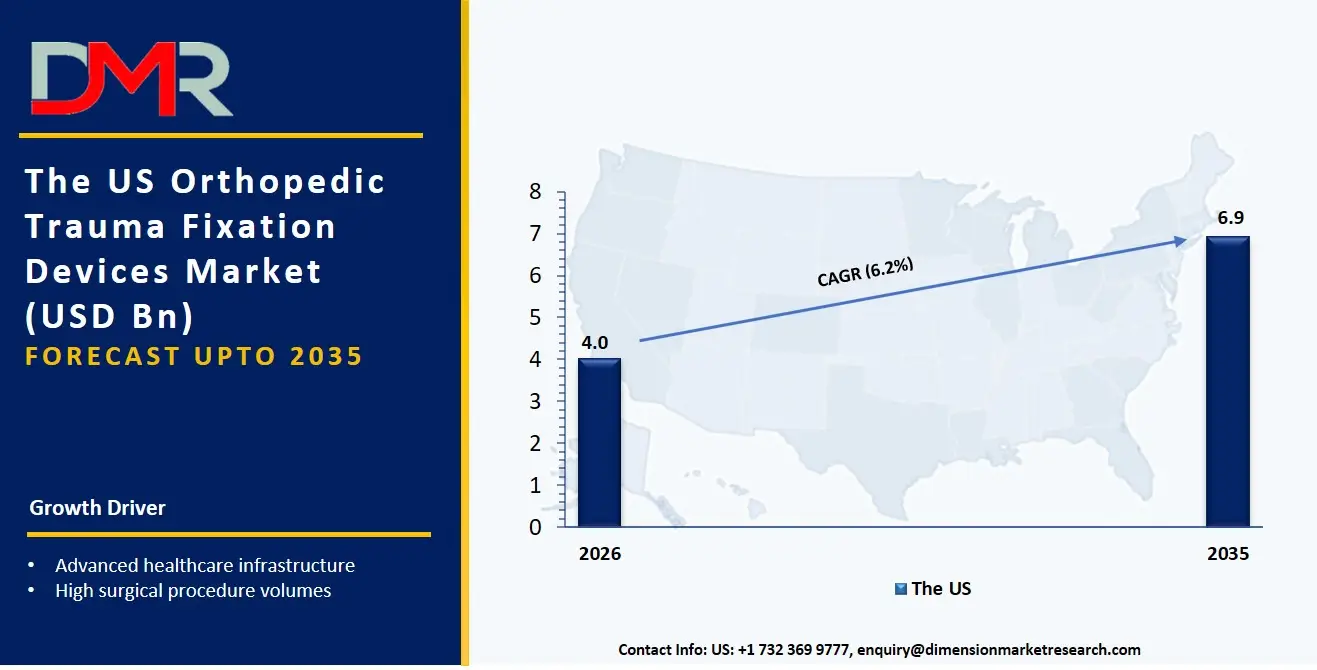
The US Orthopedic Trauma Fixation Devices Market size is estimated to be USD 4.0 billion in 2026 and is expected to increase at a CAGR of 6.2% over the forecast period.
ℹ
To learn more about this report –
Download Your Free Sample Report Here
The US Orthopedic Trauma Fixation Devices Market benefits from advanced healthcare infrastructure, high surgical procedure volumes, and widespread adoption of innovative orthopedic technologies. Continuous investment in trauma centers, favorable reimbursement for orthopedic procedures, and increasing demand for minimally invasive fixation solutions contribute to market growth. Strong research capabilities, established medical device manufacturers, and regulatory oversight encouraging product innovation further strengthen market expansion, while rising geriatric fracture cases continue supporting long-term demand.
Europe Orthopedic Trauma Fixation Devices Market
The Europe Orthopedic Trauma Fixation Devices Market size is estimated to be USD 3.1 billion in 2026 and is expected to increase at a CAGR of 6.0% over the forecast period.
The Europe Orthopedic Trauma Fixation Devices Market is supported by robust public healthcare systems, increasing orthopedic surgeries, and stringent quality regulations ensuring patient safety. Regional initiatives promoting medical innovation and sustainable healthcare technologies encourage manufacturers to develop advanced implants and bioresorbable fixation materials. Growing aging populations, increasing incidence of osteoporotic fractures, and continuous investments in trauma care infrastructure accelerate adoption across hospitals and specialized orthopedic centers throughout the region.
Japan Orthopedic Trauma Fixation Devices Market
The market size of Japan Orthopedic Trauma Fixation Devices will be USD 854 million in 2026 and at a CAGR of 6.1% in the forecast period.
Japan represents a technologically advanced orthopedic trauma fixation market driven by its aging population, sophisticated healthcare facilities, and strong focus on precision medicine. Increasing cases of osteoporosis-related fractures, demand for minimally invasive surgical procedures, and government support for advanced medical technologies encourage market expansion. Domestic innovation in biomaterials, robotics-assisted orthopedic surgery, and improved implant designs creates significant opportunities while addressing the country's evolving trauma care requirements.
Key Takeaways
- Market Size & Forecast: The Orthopedic Trauma Fixation Devices Market size is projected to reach USD 12.2 billion in 2026 and is anticipated to have a value of USD 21.7 billion in 2035.
- Growth Rate & Outlook: The Orthopedic Trauma Fixation Devices Market size is set to grow at a compound annual growth rate of 6.6% during the forecast period of 2026 to 2035.
- Primary Growth Drivers: Some of the major growth drivers in the market are Rising Global Incidence of Traumatic Bone Fractures, and more.
- Key Market Trends: Some of the major trends in the market are Digitalization and Smart Orthopedic Technologies, and more.
- By Product Type: Internal Fixation Devices are anticipated to get the majority share of the Orthopedic Trauma Fixation Devices Market in 2026.
- By End User Type: Hospitals are expected to get the largest revenue share in 2026 in the Orthopedic Trauma Fixation Devices Market.
- Regional Leadership: North America is set to lead the Orthopedic Trauma Fixation Devices Market with an estimated 38.4% share in 2026.
What is the Orthopedic Trauma Fixation Devices?
Orthopedic Trauma Fixation Devices are medical implants and external support systems used to stabilize broken bones, maintain proper alignment, and facilitate bone healing after traumatic injuries. These devices include internal implants such as plates, screws, intramedullary nails, pins, and staples, along with external fixation systems that provide structural stability without extensive surgical exposure. They are manufactured from biocompatible materials engineered to deliver strength, durability, corrosion resistance, and optimal patient recovery.
Use Cases
- Fracture Stabilization: Orthopedic trauma fixation devices are extensively used to stabilize simple and complex bone fractures following accidents or traumatic injuries. Internal and external fixation systems maintain proper bone alignment, reduce movement at the fracture site, and promote faster bone healing while minimizing complications during recovery.
- Sports Injury Management: Professional athletes and physically active individuals frequently require trauma fixation devices following severe fractures sustained during sports activities. Modern fixation implants enable stable reconstruction, facilitate early rehabilitation, improve mobility, and support faster return to athletic performance with reduced long-term disability.
- Osteoporotic Fracture Treatment: The growing elderly population increasingly experiences fragility fractures caused by osteoporosis. Specialized trauma fixation devices with enhanced fixation strength provide reliable stabilization in weakened bones, improving surgical outcomes, reducing revision procedures, and supporting effective rehabilitation among geriatric patients.
- Complex Polytrauma Surgery: Patients suffering multiple traumatic injuries often require advanced fixation systems capable of stabilizing several fractures simultaneously. External fixators and modular internal fixation devices help surgeons manage emergency trauma cases efficiently, allowing staged reconstruction while minimizing additional surgical complications.
How AI Is Transforming the Orthopedic Trauma Fixation Devices Market
Artificial intelligence is transforming orthopedic trauma fixation by improving diagnostic accuracy, fracture classification, surgical planning, and implant selection. AI-powered medical imaging systems assist surgeons in detecting complex fractures more accurately while supporting personalized treatment strategies based on patient anatomy and clinical history. Predictive analytics further optimize inventory management, hospital resource allocation, and postoperative care planning.
AI also enhances implant design through simulation-driven engineering, enabling manufacturers to develop stronger and more anatomically optimized fixation devices. Machine learning algorithms improve surgical navigation systems, reduce procedural variability, and support robotic-assisted orthopedic surgeries. Additionally, AI-powered rehabilitation platforms monitor patient recovery, predict complications, and provide personalized rehabilitation recommendations, contributing to improved clinical outcomes and greater healthcare efficiency.
Market Dynamic
Driving Factors in the Orthopedic Trauma Fixation Devices Market
Rising Global Incidence of Traumatic Bone Fractures
The increasing number of road traffic accidents, workplace injuries, sports-related trauma, and falls among elderly populations remains one of the strongest drivers for the orthopedic trauma fixation devices market. Growing urbanization and active lifestyles have contributed to higher fracture incidence worldwide. Simultaneously, increasing life expectancy has expanded the population vulnerable to osteoporosis-related fractures, creating sustained demand for advanced fixation implants that improve patient recovery, reduce hospital stays, and enhance long-term functional outcomes.
Restraints in the Orthopedic Trauma Fixation Devices Market
High Cost of Advanced Orthopedic Fixation Procedures
Premium orthopedic trauma implants, advanced biomaterials, robotic-assisted surgical systems, and specialized surgical instruments substantially increase treatment costs. In many developing healthcare systems, limited reimbursement policies and constrained healthcare budgets restrict widespread adoption of technologically advanced fixation devices. These financial challenges can delay treatment decisions and limit access to innovative orthopedic solutions, particularly among economically disadvantaged populations.
Opportunities in the Orthopedic Trauma Fixation Devices Market
Growing Adoption of Bioresorbable and Advanced Biomaterials
Increasing demand for implants that naturally degrade after bone healing presents substantial growth opportunities. Bioresorbable fixation devices eliminate the need for secondary implant removal surgeries while reducing long-term complications. Continuous advancements in polymer science, composite biomaterials, and biodegradable metals are expanding clinical applications and encouraging healthcare providers to adopt innovative trauma fixation technologies across multiple orthopedic specialties.
Trends in the Orthopedic Trauma Fixation Devices Market
Digitalization and Smart Orthopedic Technologies
The integration of digital surgical planning, artificial intelligence, 3D printing, robotic assistance, and patient-specific implant manufacturing is transforming orthopedic trauma care. Digital technologies improve surgical precision, optimize implant selection, and enhance preoperative planning. These innovations contribute to personalized treatment strategies, better fracture management, and improved long-term clinical outcomes while increasing overall healthcare efficiency.
Research Scope and Analysis
The research scope analyzes the Orthopedic Trauma Fixation Devices Market across product types, materials, anatomical applications, and end-user segments. It evaluates market trends, growth drivers, regional performance, technological advancements, competitive strategies, and emerging opportunities influencing future industry expansion.
ℹ
To learn more about this report –
Download Your Free Sample Report Here
By Product Type Analysis
The Orthopedic Trauma Fixation Devices Market, segmented by product type, is dominated by internal fixation devices, which are estimated to account for approximately 72.5% of the global market share in 2026. Internal fixation systems, including plates, screws, intramedullary nails, and pins & wires, maintain leadership due to their widespread clinical adoption, superior stability, faster patient mobility, and preference among orthopedic surgeons for treating complex fractures.
ℹ
To learn more about this report –
Download Your Free Sample Report Here
Among these, locking plates and intramedullary nails are gaining significant traction due to their biomechanical advantages and suitability for minimally invasive procedures. The fastest-growing segment is expected to be bioengineered and advanced fixation systems within internal fixation devices, supported by increasing demand for patient-specific implants, improved surgical precision, and innovations in implant materials. External fixation devices continue to maintain importance in severe trauma cases, open fractures, and emergency stabilization procedures, particularly in developing regions where staged surgical management is frequently required.
By Material Analysis
Based on material type, titanium and titanium alloy fixation devices are projected to hold the leading position, accounting for approximately 46.8% of the Orthopedic Trauma Fixation Devices Market share in 2026. Titanium alloys are preferred because of their excellent biocompatibility, corrosion resistance, high strength-to-weight ratio, and ability to support bone integration. Their lower modulus of elasticity compared with stainless steel reduces stress shielding, making them highly suitable for long-term orthopedic applications. Stainless steel remains widely used due to cost advantages and established clinical reliability, particularly in price-sensitive healthcare markets. The fastest-growing material segment is expected to be bioabsorbable/bioresorbable materials, driven by increasing preference for implants that naturally degrade after healing and eliminate the requirement for additional removal surgeries. Carbon fiber composites are also gaining attention due to radiolucency advantages, enabling improved imaging during postoperative monitoring and complex trauma reconstruction procedures.
By Anatomical Site Analysis
Based on anatomical location, the lower extremity segment is expected to dominate the Orthopedic Trauma Fixation Devices Market with an estimated 41.6% market share in 2026. Lower extremity fractures, including femoral, tibial, and ankle injuries, represent a significant portion of trauma cases due to road accidents, sports injuries, and falls among elderly populations. The high mechanical load-bearing requirements of these bones increase demand for durable fixation systems such as intramedullary nails, plates, and screws. The fastest-growing segment is anticipated to be pelvis and acetabulum fixation, supported by rising adoption of advanced trauma care techniques and improved surgical approaches for complex fractures. Increasing investments in specialized trauma centers and the availability of advanced imaging technologies are enabling better diagnosis and treatment of anatomically challenging fractures. Upper extremity and craniofacial fixation applications continue expanding due to increasing sports-related injuries and reconstructive trauma procedures.
By End User Analysis
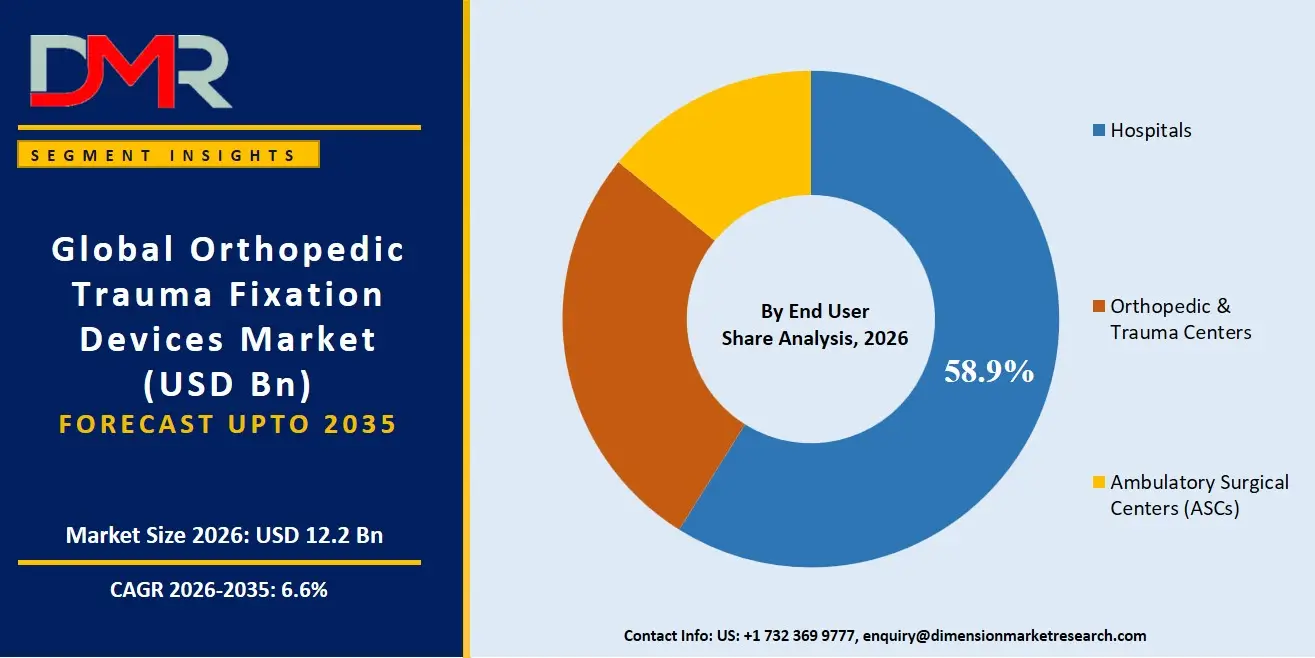
Based on end-user segmentation, hospitals are expected to remain the largest segment, representing approximately 58.9% of the Orthopedic Trauma Fixation Devices Market share in 2026. Hospitals dominate because they manage a high volume of emergency trauma cases, possess advanced surgical infrastructure, and provide comprehensive orthopedic care services. Large tertiary hospitals and trauma centers increasingly invest in advanced fixation technologies to improve surgical outcomes and manage complex fractures. The fastest-growing segment is projected to be ambulatory surgical centers (ASCs) due to increasing preference for outpatient orthopedic procedures, cost-efficient healthcare delivery models, and advancements in minimally invasive fixation techniques. Orthopedic and trauma centers are also experiencing strong growth as specialized facilities improve access to expert surgical care, rehabilitation services, and advanced implant technologies.
The Orthopedic Trauma Fixation Devices Market Report is segmented on the basis of the following:
By Product Type
- Internal Fixation Devices
- Plates
- Screws
- Intramedullary Nails
- Pins & Wires
- Staples
- External Fixation Devices
- Unilateral External Fixators
- Circular External Fixators
- Hybrid External Fixators
By Material
- Stainless Steel
- Titanium & Titanium Alloys
- Bioabsorbable / Bioresorbable Materials
- Carbon Fiber Composite
By Anatomical Site
- Upper Extremity
- Lower Extremity
- Pelvis & Acetabulum
- Spine
- Craniofacial
By End User
- Hospitals
- Orthopedic & Trauma Centers
- Ambulatory Surgical Centers (ASCs)
Regional Analysis
Leading Region in the Orthopedic Trauma Fixation Devices Market
ℹ
To learn more about this report –
Download Your Free Sample Report Here
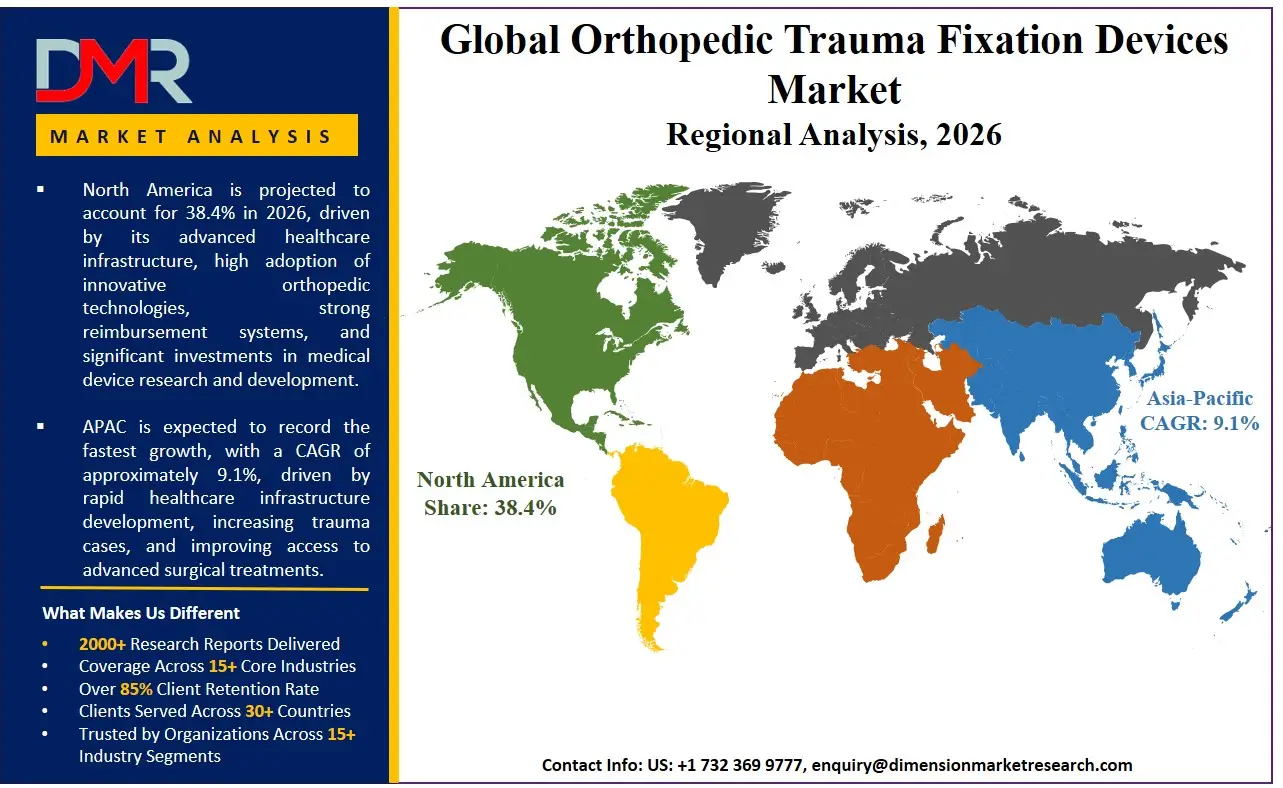
North America is expected to remain the leading region in the Orthopedic Trauma Fixation Devices Market, accounting for an estimated 38.4% market share in 2026. The region maintains dominance due to advanced healthcare infrastructure, high adoption of innovative orthopedic technologies, strong reimbursement systems, and significant investments in medical device research and development. The presence of specialized trauma hospitals, experienced orthopedic surgeons, and established regulatory frameworks supports rapid commercialization of advanced fixation solutions. Increasing elderly populations, rising osteoporosis-related fractures, and growing demand for minimally invasive orthopedic procedures further strengthen market growth. Additionally, continuous innovation in implant design, digital surgical technologies, and personalized orthopedic solutions enables North America to maintain its leadership position.
Fastest Growing Region in the Orthopedic Trauma Fixation Devices Market
Asia-Pacific is projected to be the fastest-growing region in the Orthopedic Trauma Fixation Devices Market due to rapid healthcare infrastructure development, increasing trauma cases, and improving access to advanced surgical treatments. Countries including China, India, Japan, and South Korea are witnessing rising demand for orthopedic implants because of expanding elderly populations, increasing road accidents, and growing awareness regarding fracture management. Government investments in healthcare modernization, medical tourism expansion, and domestic medical device manufacturing initiatives are accelerating regional adoption. The increasing number of hospitals, trauma centers, and orthopedic specialists further supports market expansion. Additionally, lower manufacturing costs and improving regulatory environments are encouraging international companies to expand their presence across emerging Asian markets.
By Region
North America
Europe
- Germany
- The U.K.
- France
- Italy
- Russia
- Spain
- Benelux
- Nordic
- Rest of Europe
Asia-Pacific
- China
- Japan
- South Korea
- India
- ANZ
- ASEAN
- Rest of Asia-Pacific
Latin America
- Brazil
- Mexico
- Argentina
- Colombia
- Rest of Latin America
Middle East & Africa
- Saudi Arabia
- UAE
- South Africa
- Israel
- Egypt
- Rest of MEA
Competitive Landscape
The Orthopedic Trauma Fixation Devices Market is characterized by strong competition driven by continuous product innovation, technological differentiation, and expansion into emerging healthcare markets. Companies operating in this sector focus on developing advanced implant materials, improving fixation biomechanics, enhancing surgical instruments, and integrating digital technologies into orthopedic procedures. Market participants strengthen their positions through research and development investments, strategic collaborations, surgeon training programs, and regional distribution partnerships. High regulatory requirements, significant clinical validation costs, and the need for specialized manufacturing capabilities create entry barriers for new competitors. Competitive advantage is increasingly determined by product reliability, portfolio diversity, innovation capabilities, and the ability to provide comprehensive orthopedic trauma solutions.
Some of the prominent players in the global Orthopedic Trauma Fixation Devices are:
- Johnson & Johnson MedTech
- Stryker Corporation
- Zimmer Biomet Holdings, Inc.
- Smith & Nephew plc
- B. Braun SE
- Orthofix Medical Inc.
- Globus Medical, Inc.
- Medartis Holding AG
- Acumed LLC
- CONMED Corporation
- Arthrex, Inc.
- Enovis Corporation
- Integra LifeSciences Holdings Corporation
- Lepu Medical Technology (Beijing) Co., Ltd.
- Double Medical Technology Inc.
- MicroPort Scientific Corporation
- WEGO Orthopaedic Device Co., Ltd.
- Auxein Medical Pvt. Ltd.
- Narang Medical Limited
- TST Medical Devices
- Other Key Players
Recent Developments
- In June 2025, DePuy Synthes expanded its orthopedic trauma capabilities by advancing its fixation technology portfolio with improved implant solutions and surgical tools designed for complex fracture management. The company focused on enhancing procedural accuracy, reducing surgical complexity, and supporting surgeons in treating challenging orthopedic trauma cases. Investments in research and product development highlighted the industry's movement toward personalized fixation solutions, improved biomaterials, and minimally invasive approaches.
- In September 2025, Smith+Nephew announced continued investments in orthopedic innovation aimed at improving trauma care efficiency and surgical outcomes. The company focused on expanding advanced orthopedic solutions through enhanced fixation technologies, digital integration, and improved surgical workflows. These developments aligned with growing demand for precise fracture management solutions and technologies that support faster patient recovery.
- In March 2025, Stryker introduced advancements within its orthopedic trauma product portfolio by focusing on enhanced fixation technologies designed to improve surgical efficiency and patient outcomes. The company continued strengthening its trauma business through innovations in implant design, surgical instrumentation, and digital support solutions.
Report Details
| Report Characteristics |
| Market Size (2026) |
USD 12.2 Bn |
| Forecast Value (2035) |
USD 21.7 Bn |
| CAGR (2026–2035) |
6.6% |
| Historical Period |
2021 – 2025 |
| Forecast Period |
2027 – 2035 |
| Base Year |
2025 |
| Estimate Year |
2026 |
| Segments Covered |
By Product Type, By Material, By Anatomical Site, By End User |
| Regional Coverage |
North America – The US and Canada; Europe – Germany, The UK, France, Russia, Spain, Italy, Benelux, Nordic, & Rest of Europe; Asia-Pacific – China, Japan, South Korea, India, ANZ, ASEAN, Rest of APAC; Latin America – Brazil, Mexico, Argentina, Colombia, Rest of Latin America; Middle East & Africa – Saudi Arabia, UAE, South Africa, Turkey, Egypt, Israel, & Rest of MEA |
Frequently Asked Questions
How big is the Orthopedic Trauma Fixation Devices Market?
▾ The Orthopedic Trauma Fixation Devices Market size is expected to reach USD 12.2 billion by 2026 and is projected to reach USD 21.7 billion by the end of 2035.
What is the CAGR of the Orthopedic Trauma Fixation Devices Market from 2026 to 2035?
▾ The market is growing at a CAGR of 6.6 percent over the forecasted period.
What factors are driving the growth of the Orthopedic Trauma Fixation Devices Market?
▾ Rising Global Incidence of Traumatic Bone Fractures, and more are the factors driving the growth of the Orthopedic Trauma Fixation Devices Market.
What are the major trends in the Orthopedic Trauma Fixation Devices Market?
▾ Digitalization and Smart Orthopedic Technologies, and more are some of the major trends in the market.
Who are the key players in the Orthopedic Trauma Fixation Devices Market?
▾ Some of the key players in the Orthopedic Trauma Fixation Devices Market include B Braun, TST, Enovis, more
How is the Orthopedic Trauma Fixation Devices Market segmented?
▾ The Orthopedic Trauma Fixation Devices Market is segmented by product type, material, anatomical site, end user.
Which region held the largest share of the Orthopedic Trauma Fixation Devices Market in 2026?
▾ North America is set to lead the Orthopedic Trauma Fixation Devices Market with an estimated 38.4% share in 2026.
Which region is expected to grow the fastest in the Orthopedic Trauma Fixation Devices Market?
▾ Asia Pacific is the fastest-growing region in the Orthopedic Trauma Fixation Devices Market during the forecast period.