What is the Pelvic Floor Health Technology Market Size?
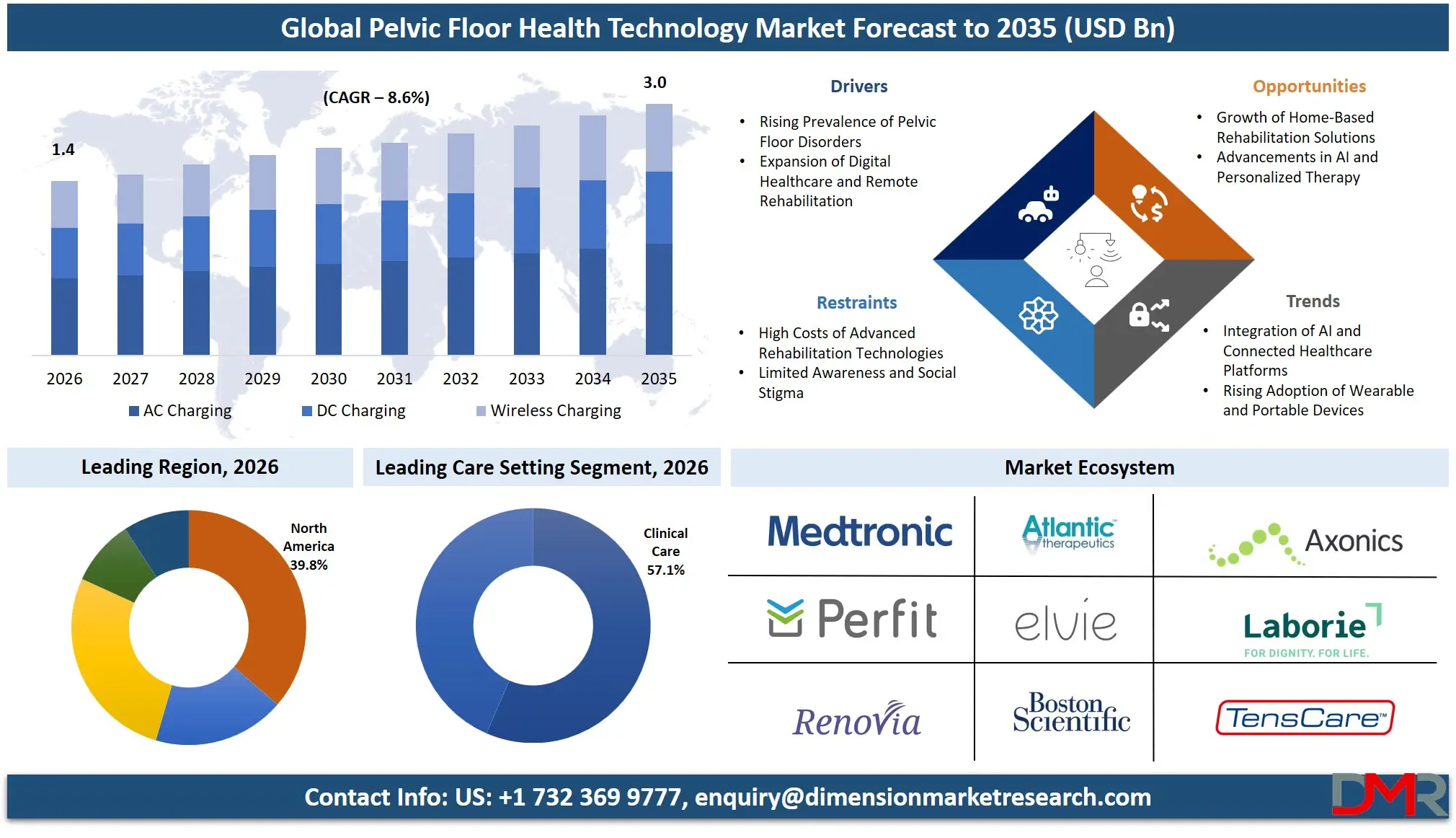
The Pelvic Floor Health Technology Market size is expected to be USD 1.4 billion in 2026 and increase at a compound annual growth rate of 8.6% to USD 3.0 billion in 2035 due to increase in the occurrence of urinary incontinence, pelvic organ prolapse, chronic pelvic pain, and post-surgery disorders.
ℹ
To learn more about this report –
Download Your Free Sample Report Here
The Pelvic Floor Health Technology market includes innovative and cutting-edge diagnostic, therapeutic, and rehabilitation products that can help diagnose, manage, and even treat pelvic disorders. The devices include biofeedback devices, neuromodulation devices, wearables and digital devices for monitoring and tracking symptoms, and even technology-driven therapies like artificial intelligence solutions. With growing awareness about women's pelvic health, aging populations, and greater need for postpartum care, there is an increased focus on these devices within the wider healthcare technology industry. Innovation in AI-powered rehabilitative technologies, remote monitoring, personalized treatment programs, and homecare-connected devices is driving adoption across the market.
ℹ
To learn more about this report –
Download Your Free Sample Report Here
The US Pelvic Floor Health Technology Market
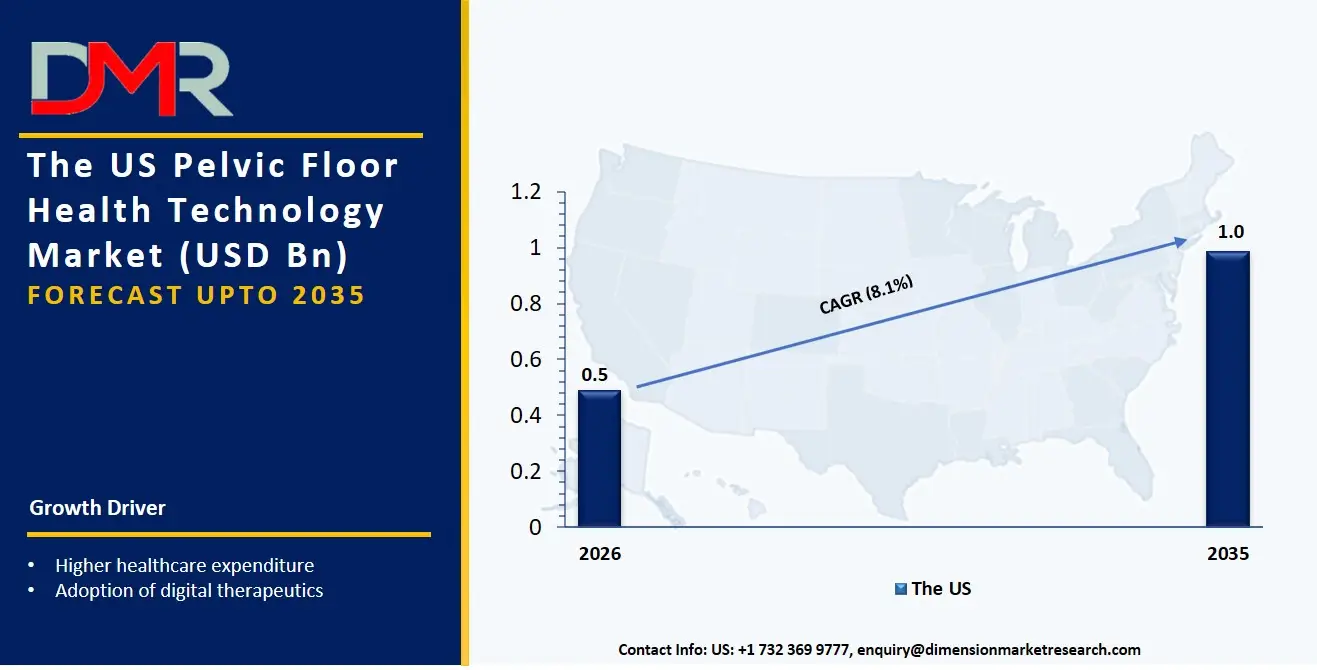
The US Pelvic Floor Health Technology Market size is estimated to be USD 500 million in 2026 and is expected to increase at a CAGR of 8.1% over the forecast period.
Pelvic Floor Health Technology market in the US is backed by the higher healthcare expenditure, adoption of digital therapeutics, and increasing awareness about pelvic disorders. The higher need for minimally invasive pelvic rehabilitation devices and increased use of at-home therapy devices are fueling the growth of the market. Advanced healthcare facilities in the region, reimbursement for pelvic rehabilitation therapies, and investments in AI-based healthcare technologies are boosting the growth of the market. Rising postpartum care facilities and telehealth platforms are further boosting the adoption of connected pelvic rehabilitation solutions.
ℹ
To learn more about this report –
Download Your Free Sample Report Here
Europe Pelvic Floor Health Technology Market
The Europe Pelvic Floor Health Technology Market size is estimated to be USD 378 million in 2026 and is expected to increase at a CAGR of 7.9% over the forecast period.
Europe is a sophisticated and innovative market that benefits from excellent healthcare infrastructure, an aging population, and increased interest in women's healthcare programs. The implementation of regional digital health strategies and rehabilitation devices is fueling market growth. In countries like Germany, the United Kingdom, France, and the Netherlands, the adoption of advanced AI-based platforms for pelvic rehabilitation and wearable devices has been observed. The focus of European healthcare organizations on prevention, patient-centered care, and telemedicine adoption is driving healthcare providers to deploy advanced pelvic floor monitoring devices for patients with chronic diseases.
Japan Pelvic Floor Health Technology Market
The market size of Japan Pelvic Floor Health Technology will be USD 70 million in 2026 and at a CAGR of 8.4% in the forecast period.
The market for pelvic floor health technology in Japan will continue growing due to a number of reasons such as aging population, occurrence of diseases that are associated with the urinary system, and the use of advanced technologies in the healthcare industry. The efforts made by the government to promote innovation in elderly care and rehabilitation technology are some of the key drivers of the demand for advanced therapeutic products and remote monitoring devices. Additionally, the expertise of the Japanese people in robotics and advanced medical technologies makes the adoption of robotic-assisted treatments likely.
Key Takeaways
- Market Size & Forecast: The Pelvic Floor Health Technology Market size is projected to reach USD 1.4 billion in 2026 and is anticipated to have a value of USD 3.0 billion in 2035.
- Growth Rate & Outlook: The Pelvic Floor Health Technology Market size is set to grow at a compound annual growth rate of 8.6% during the forecast period of 2026 to 2035.
- Primary Growth Drivers: Some of the major growth drivers in the market include Increasing Prevalence of Pelvic Health Disorders, and more.
- Key Market Trends: Some of the major trends in the market are AI Implementation within Healthcare Connectivity Ecosystems, and more.
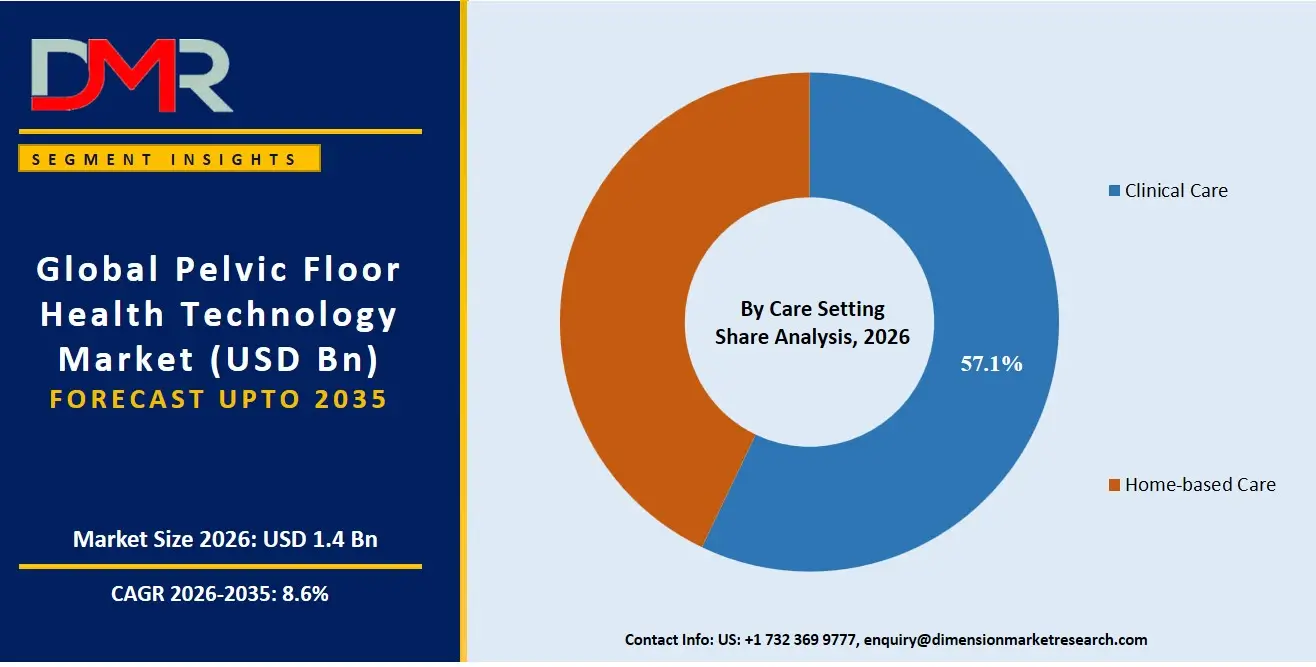
- By Care Setting: The clinical care segment is anticipated to get the majority share of the Pelvic Floor Health Technology market in 2026.
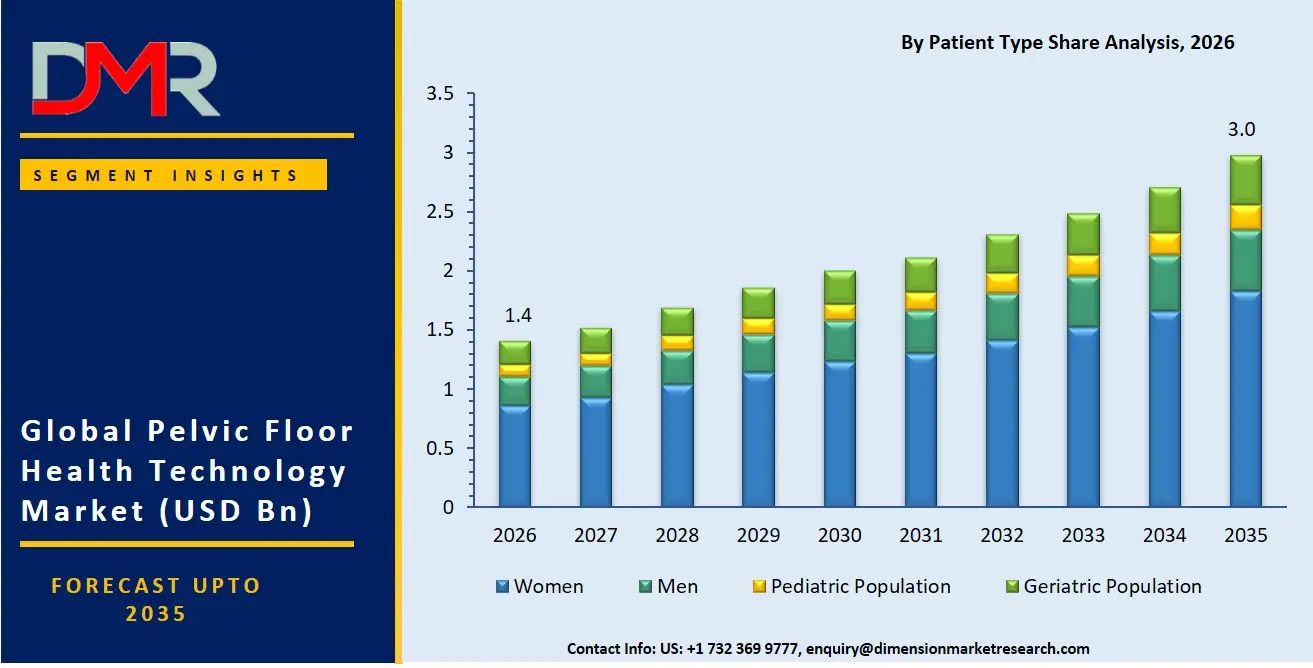
- By Patient Type: Women are expected to get the largest revenue share in 2026 in the Pelvic Floor Health Technology market.
- By End User: The hospital segment is expected to get the largest revenue share in 2026 in the Pelvic Floor Health Technology market.
- Regional Leadership: North America is set to lead the Pelvic Floor Health Technology market with an estimated 39.8% share in 2026.
What is the Pelvic Floor Health Technology?
Pelvic Floor Health Technology pertains to the various medical devices and digital solutions that enhance the pelvic floor muscle's functionality and address any underlying problems in the pelvic region. This involves biofeedback devices, electric stimulation systems, wearable sensors, rehabilitation apps powered by artificial intelligence, tele-pelvic therapy applications, and remote monitoring systems. The technology is significant in the areas of clinical treatment, at-home therapies, rehabilitation after childbirth, and long-term treatment of pelvic floor disorders among men and women. The reason why this technology is becoming more and more significant is because of the increased incidence of urinary incontinence, pelvic organ prolapse, and pelvic pain syndromes.
Use Cases
- Pelvic Floor Rehabilitation Postpartum: Technologies related to pelvic floor may be employed by numerous women following childbirth as a means of restoring pelvic muscle strength. Intelligent Kegel trainers, application software utilizing artificial intelligence as well as pelvic floor wearables offer personalized exercise recommendations to the user.
- Urinary Incontinence Management: Biofeedback or neuromodulation devices can prove effective for the patients dealing with stress, urge or mixed urinary incontinence. The device can stimulate non-invasively the muscles of the body and help them restore proper coordination and gain control over the bladder.
- Rehabilitation Following Surgery: Individuals, who underwent surgical treatment due to prostatic issues or gynecological disorders, may benefit from pelvic floor technologies during the post-surgical rehabilitation process. With the help of digital treatments and remote patient monitoring technologies, personalized exercise recommendation is available.
- Chronic Pelvic Pain Treatment: Digital health platforms with the intelligent system or even electrical stimulation units may prove beneficial when treating pelvic pain disorders and issues with hypertonicity of pelvic muscles.
How AI Is Transforming the Pelvic Floor Health Technology Market
Artificial intelligence is transforming pelvic floor health technology by enabling more personalized rehabilitation, continuous performance monitoring, and data-driven treatment optimization. AI-powered platforms can analyze muscle activity, exercise performance, movement patterns, and patient-reported outcomes to develop individualized therapy programs. Smart pelvic floor devices equipped with sensors can provide real-time feedback on muscle contraction, relaxation, and exercise technique, helping patients perform therapeutic exercises more accurately. These capabilities can support improved adherence, facilitate earlier identification of ineffective exercises, and help healthcare professionals make more informed adjustments to rehabilitation plans.
AI is also strengthening remote pelvic floor care through intelligent monitoring and digital rehabilitation platforms. AI-enabled systems can track patient progress between clinical visits, identify changes in performance, and provide personalized exercise guidance through connected applications and virtual rehabilitation tools. Integration with telemedicine can further enable healthcare professionals to review patient data remotely and adjust treatment programs when required. In addition, AI-assisted analysis of clinical and physiological data may support the assessment of pelvic floor disorders, although clinical diagnosis and treatment decisions remain dependent on qualified healthcare professionals.
Market Dynamic
Driving Factors in the Pelvic Floor Health Technology Market
Rising Prevalence of Pelvic Floor Disorders
The increasing prevalence of pelvic floor disorders is a major driver for pelvic floor health technology adoption. Conditions such as urinary incontinence, fecal incontinence, pelvic organ prolapse, and pelvic pain affect women and men across different age groups. Childbirth, aging, obesity, surgery, and other factors can increase the risk of pelvic floor dysfunction. Growing recognition of these conditions is encouraging patients to seek rehabilitation and monitoring solutions. Technology-enabled pelvic floor trainers, biofeedback systems, wearable devices, and connected applications provide convenient tools for supporting therapy. As diagnosis and treatment awareness improves, demand for technology-assisted pelvic floor management is expected to increase.
Growing Adoption of Digital Rehabilitation Solutions
The growing adoption of digital healthcare and remote rehabilitation is supporting demand for pelvic floor health technologies. Smartphone applications, connected exercise devices, biofeedback platforms, and remote monitoring systems allow patients to participate in rehabilitation programs outside conventional clinical settings. These technologies can provide exercise guidance, performance tracking, reminders, and feedback, which may improve adherence to prescribed pelvic floor exercises. Healthcare professionals can also use digitally collected information to monitor progress and adjust rehabilitation programs. Increasing acceptance of telehealth, home-based care, and patient-centered treatment models is therefore creating favorable conditions for technology-enabled pelvic floor rehabilitation and monitoring solutions.
Restraints in the Pelvic Floor Health Technology Market
Limited Patient Awareness and Diagnosis
Limited awareness of pelvic floor disorders remains a significant barrier to market growth. Symptoms such as urinary leakage, pelvic pain, and sexual dysfunction may be considered embarrassing or normal consequences of aging or childbirth, leading some individuals to avoid medical consultation. Underdiagnosis can reduce demand for specialized rehabilitation technologies because patients may not recognize the need for treatment. In addition, differences in healthcare access and availability of trained pelvic floor specialists can limit diagnosis and technology adoption in certain regions. Improving public education, clinical screening, and awareness of available treatment options remains important for expanding the addressable patient population.
Data Privacy and Technology Adoption Concerns
Concerns regarding privacy, cybersecurity, and the handling of sensitive health information can restrict adoption of connected pelvic floor technologies. Smartphone applications, wearable devices, and remote monitoring platforms may collect personal health, physiological, and behavioral information that requires appropriate protection. Patients may be reluctant to use digital solutions if they are uncertain about how their information is stored, processed, or shared. In addition, some users may face difficulties with device connectivity, application usability, or unfamiliar digital interfaces. These factors can particularly affect adoption among older or less digitally experienced populations and may limit consistent utilization of technology-based pelvic floor solutions.
Opportunities in the Pelvic Floor Health Technology Market
Expansion of Home-Based Pelvic Floor Rehabilitation
The increasing shift toward home-based rehabilitation creates opportunities for pelvic floor health technology providers. Many pelvic floor exercises can be performed outside clinical settings, making the segment suitable for connected devices, mobile applications, biofeedback systems, and remote monitoring platforms. Technology can provide structured exercise programs, reminders, progress tracking, and feedback while reducing the need for frequent in-person visits. This model may be particularly valuable for postpartum recovery, chronic pelvic floor conditions, and patients living far from specialized providers. Integration with telehealth platforms can further connect patients with physiotherapists and other healthcare professionals, supporting continued management beyond conventional clinical environments.
Integration of AI and Connected Technologies
The integration of artificial intelligence, sensors, and connected health platforms presents significant opportunities for innovation in pelvic floor health technology. Sensor-enabled devices can capture information related to muscle activity and exercise performance, while AI-based software can analyze collected data to support personalized exercise recommendations and progress monitoring. Connected platforms can combine device-generated information with patient-reported outcomes to provide a broader view of rehabilitation. As digital health technologies become more sophisticated, manufacturers have opportunities to develop solutions that offer real-time feedback, automated monitoring, and personalized rehabilitation support while maintaining appropriate clinical oversight and data protection.
Trends in the Pelvic Floor Health Technology Market
Increasing Focus on Personalized Pelvic Floor Therapy
Personalized rehabilitation is emerging as an important trend in pelvic floor health technology. Conventional exercise programs may provide standardized guidance, whereas technology-enabled platforms can increasingly tailor rehabilitation according to individual performance, symptoms, and treatment objectives. Wearable sensors, biofeedback devices, and digital applications can collect patient-specific information and use it to provide customized exercise instructions and progress feedback. This approach supports the broader healthcare shift toward patient-centered and data-driven treatment. As technology improves, pelvic floor solutions are increasingly being designed to adapt rehabilitation programs to individual needs rather than relying solely on generalized exercise protocols.
Increasing Use of Wearable and Biofeedback Devices
Wearable and biofeedback technologies are gaining importance in pelvic floor rehabilitation because they can provide users with information about exercise performance. Sensor-based devices can help detect muscle contractions, relaxation patterns, and exercise consistency, while connected applications can translate this information into understandable feedback. Such technologies may help users perform exercises correctly and maintain regular rehabilitation routines. The increasing miniaturization of sensors, smartphone connectivity, and development of user-friendly digital interfaces are supporting innovation in this area. As patients and healthcare providers increasingly value measurable rehabilitation outcomes, wearable and biofeedback solutions are expected to remain an important technology trend.
Research Scope and Analysis
Pelvic Floor Health Technology Market Research is an evaluation of therapy devices, digital rehabilitation, monitoring, applications in clinics, patient profiles, treatment facilities, end users, among other factors in significant regions around the world. The analysis looks into technology developments, role of artificial intelligence in this market, adoption patterns, regulatory impact, competition, and growth potential.
ℹ
To learn more about this report –
Download Your Free Sample Report Here
By Technology Type Analysis
Therapeutic Devices is predicted to lead in the Pelvic Floor Health Technology market with a market share of 38.7% in 2026 because of growing usage of biofeedback systems, electrical stimulation devices, and neuromodulation systems for the treatment of urinary incontinence and post-operative therapy. The preference for these technologies lies in their clinically effective results without any invasiveness, making patients adhere to them easily. Awareness about pelvic floor therapy is also expected to aid the dominance of this segment, along with a growing elderly population. Digital & Connected Platforms, on the other hand, are predicted to register the fastest growth because of increasing adoption of telemedicine services, use of artificial intelligence in pelvic floor rehabilitation, and growing need for remote patient monitoring systems.
By Clinical Application Analysis
Urinary Disorders will continue to hold the leading position in the clinical applications segment and will capture a market share of around 34.2% in 2026, driven by the high prevalence rate of stress urinary incontinence and overactive bladder problems. The increased uptake of minimally invasive treatments and the growing awareness about pelvic health are driving segment expansion. The adoption of advanced therapeutic systems in hospitals and physiotherapy centers for treating urinary disorders will be on the rise. Nevertheless, Postpartum Recovery is expected to register the highest CAGR, supported by the high prevalence of pelvic floor dysfunction following childbirth and increasing awareness of postpartum rehabilitation, including pelvic floor muscle training and digital recovery solutions.
By Patient Type Analysis
Women will hold the dominant position within the Patient Type category with a projected market share of 61.4% in 2026 based on the prevalence of pelvic pain after childbirth, muscle weaknesses associated with menopause, and urinary incontinence disorders in the female demographic. Awareness programs concerning women's health issues, coupled with rehabilitation programs following childbirth, are expected to fuel the adoption of technology in hospitals and home care environments. The increased availability of smart Kegel trainers and digital treatments will bolster the growth of the segment. On the other hand, the Geriatric Population segment is poised for rapid growth attributed to the rising number of older people in different parts of the world and cases of pelvic floor dysfunctions associated with aging.
By Care Setting Analysis
Clinical Care is projected to dominate the market with a 2026 market share estimate of 57.1%, owing to the continued role of hospitals, physiotherapy clinics, and specialized pelvic clinics as the main centers for treating moderate to severe pelvic conditions. The presence of sophisticated diagnostic tools, qualified rehab therapists, and insurance support plays a major part in the market dominance of clinical care facilities. At the same time, growing capital investments toward developing digital rehabilitation technologies at hospitals are contributing to the expansion of the market. On the other hand, Home-Based Care is expected to grow the fastest, driven by the growing consumer interest in convenient and affordable rehab programs.
By End User Analysis
The hospitals segment will enjoy a dominant market share of about 35.8% in 2026 because of the high level of utilization of advanced rehabilitation technology, neuromodulation systems, and pelvic diagnosis instruments in the sector. The advantage that hospitals will enjoy from their ability to deliver comprehensive treatment through multidisciplinary approaches and high levels of patients visiting hospitals for pelvic and post-operative rehabilitation services will continue to fuel their dominance. However, the Home Users segment will enjoy the fastest growth rate in the period, thanks to the rising popularity of home-based wearable rehabilitation devices, mobile therapy software, and artificial intelligence-based pelvic wellness platforms.
The Pelvic Floor Health Technology Market Report is segmented on the basis of the following:
By Technology Type
- Therapeutic Devices
- Biofeedback devices
- Electrical stimulation devices (NMES/EMS)
- Magnetic stimulation systems
- Neuromodulation systems
- Smart Kegel trainers
- Digital & Connected Platforms
- Mobile pelvic health applications
- AI-guided rehabilitation platforms
- Tele-pelvic therapy solutions
- Digital therapeutics (DTx)
- Remote patient monitoring platforms
- Monitoring & Diagnostic Technologies
- EMG-based monitoring systems
- Sensor-enabled assessment devices
- Pressure monitoring systems
- Wearable monitoring devices
By Clinical Application
- Urinary Disorders
- Stress urinary incontinence
- Urge urinary incontinence
- Mixed urinary incontinence
- Overactive bladder
- Pelvic Support Disorders
- Pelvic organ prolapse
- Pelvic floor muscle weakness
- Postpartum Recovery
- Postnatal rehabilitation
- Childbirth recovery therapy
- Pain & Functional Disorders
- Chronic pelvic pain
- Hypertonic pelvic floor dysfunction
- Dyspareunia
- Bowel Disorders
- Fecal incontinence
- Constipation-related dysfunction
- Post-Surgical Rehabilitation
- Post-prostate surgery recovery
- Post-gynecologic surgery recovery
By Patient Type
- Women
- Postpartum women
- Perimenopausal women
- Men
- Pediatric Population
- Geriatric Population
By Care Setting
- Clinical Care
- Hospitals
- Specialty pelvic clinics
- Physiotherapy centers
- Rehabilitation centers
- Home-Based Care
- Self-guided rehabilitation
- App-connected home therapy
- Remote supervised therapy
By End User
- Hospitals
- Gynecology clinics
- Urology clinics
- Physiotherapy clinics
- Home users
Regional Analysis
Leading Region in the Pelvic Floor Health Technology Market
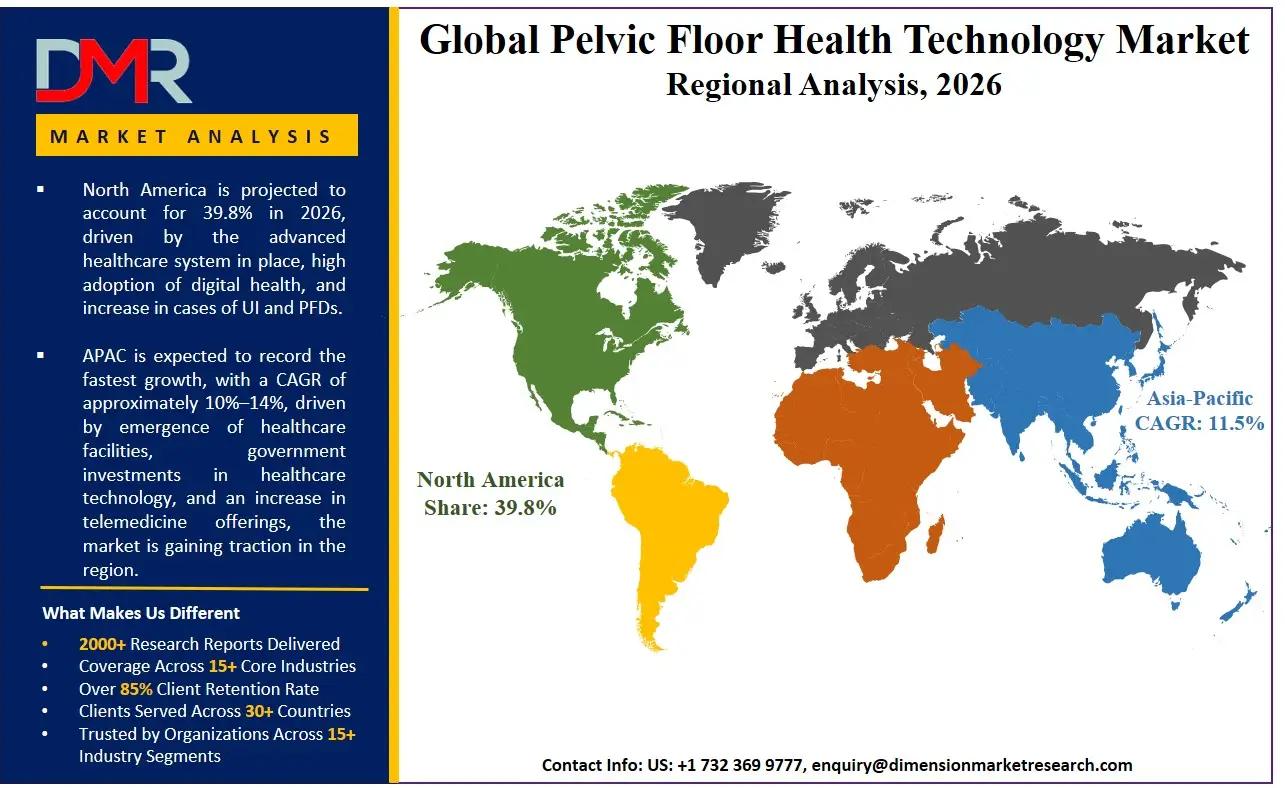
North America is expected to maintain its dominant position in the regional market with its anticipated market share of 39.8% by 2026 due to the advanced healthcare system in place, high adoption of digital health, and increase in cases of UI and PFDs. The region enjoys huge investments into the healthcare system, favorable reimbursement rates, and increased investments into AI-powered rehabilitation systems. Increasing awareness about women's health issues, advancements in telemedicine, and adoption of home-based rehabilitation systems add to the strength of the regional market leader. Further, the presence of leading players in healthcare technology and ongoing research activities make North America a key market player in this sector.
ℹ
To learn more about this report –
Download Your Free Sample Report Here
Fastest Growing Region in the Pelvic Floor Health Technology Market
The Asia-Pacific market is expected to witness significant growth due to the increasing aging population, digitization of the healthcare industry, and awareness regarding pelvic rehabilitation practices. The utilization of wearable devices for pelvic rehabilitation and artificial intelligence-based treatment options has been witnessed in countries such as China, India, Japan, and South Korea. With the emergence of healthcare facilities, government investments in healthcare technology, and an increase in telemedicine offerings, the market is gaining traction in the region. Furthermore, the presence of childbirth disorders, urbanization, and healthcare expenditures have influenced healthcare providers to adopt pelvic rehabilitation procedures.
By Region
North America
Europe
- Germany
- The U.K.
- France
- Italy
- Russia
- Spain
- Benelux
- Nordic
- Rest of Europe
Asia-Pacific
- China
- Japan
- South Korea
- India
- ANZ
- ASEAN
- Rest of Asia-Pacific
Latin America
- Brazil
- Mexico
- Argentina
- Colombia
- Rest of Latin America
Middle East & Africa
- Saudi Arabia
- UAE
- South Africa
- Israel
- Egypt
- Rest of MEA
Competitive Landscape
The Pelvic Floor Health Technology market is characterized by increasing levels of technological innovation, collaboration, and continuous investment in digital rehabilitation technology. The organizations in this market have been focusing on making use of AI-powered therapy platforms, wearable technology, and home therapy devices in order to increase their competitiveness. Diversification of products is being done through the process of research and development activities along with the integration of their products with telemedicine solutions. The high level of entry barriers because of factors such as regulatory concerns, product efficacy, and technical expertise becomes an important competitive advantage for the players operating in the market.
Some of the prominent players in the global Pelvic Floor Health Technology Market are:
- Laborie Medical Technologies
- Atlantic Therapeutics (INNOVO)
- Elvie (Willow/Chiaro Technology)
- Perifit
- Axena Health
- Medtronic
- Boston Scientific
- InControl Medical
- TensCare
- Kegel8
- INTIMINA
- PeriCoach
- Pelvital USA
- BTL (Emsella)
- Origin
- Carrot
- FEMSelect
- Elidah
- Novuqare
- Verity Medical
- Neen Healthcare
- Zynex Medical
- Msys Medical Systems
- Iskra Medical
- Other Key Players
Recent Developments
- In April 2026, Carrot collaborated with Origin to increase the availability of holistic pelvic floor therapy to its members via telemedicine and face-to-face appointments as well as digital therapeutic interventions. This partnership seeks to solve the prevalent but undiagnosed problem of pelvic floor dysfunctions, which can cause physical and mental distress. With this integration of pelvic-specific services in its health management application, Carrot intends to enhance the quality of healthcare delivery, patient outcomes, and quality of life while cutting down future healthcare and economic losses.
- In April 2026, Gazelle Chair has been launched by Bedrock Bioscience, which is an innovative non-surgical approach to pelvic health that improves bladder control, pelvic muscle strength, and enhances overall wellbeing. This revolutionary product uses state-of-the-art Extracorporeal Magnetic Innervation (ExMI) technology to deliver thousands of pelvic muscle contractions. The process is painless, requires no operation and recovery time, and can be carried out while wearing comfortable clothing.
- In September 2025, FEMSelect successfully entered the market of urinary incontinence through a strategic alliance with Elidah where Elitone® and Elitone URGE, which have been FDA-cleared for home use in the treatment of pelvic disorders, will be marketed. Elitone is another addition to FEMSelect's existing range of EnPlace®, designed for pelvic organ prolapse; Elitone provides electrical stimulation to enhance the function of the pelvic organs and minimize urinary leakage.
Report Details
| Report Characteristics |
| Market Size (2026) |
USD 1.4 Bn |
| Forecast Value (2035) |
USD 3.0 Bn |
| CAGR (2026–2035) |
8.6% |
| Historical Period |
2021 – 2025 |
| Forecast Period |
2026 – 2035 |
| Base Year |
2025 |
| Estimate Year |
2026 |
| Segments Covered |
By Technology Type, By Clinical Application, By Patient Type, By Care Setting, By End User |
| Regional Coverage |
North America – The US and Canada; Europe – Germany, The UK, France, Russia, Spain, Italy, Benelux, Nordic, & Rest of Europe; Asia-Pacific – China, Japan, South Korea, India, ANZ, ASEAN, Rest of APAC; Latin America – Brazil, Mexico, Argentina, Colombia, Rest of Latin America; Middle East & Africa – Saudi Arabia, UAE, South Africa, Egypt, Israel, & Rest of MEA |
Frequently Asked Questions
How big is the Pelvic Floor Health Technology Market?
▾ The Pelvic Floor Health Technology Market size is expected to reach USD 1.4 billion by 2026 and is projected to reach USD 3.0 billion by the end of 2035.
What is the CAGR of the Pelvic Floor Health Technology Market from 2026 to 2035?
▾ The market is growing at a CAGR of 8.6 percent over the forecasted period.
What factors are driving the growth of the Pelvic Floor Health Technology Market?
▾ Increasing Prevalence of Pelvic Health Disorders, and more are the factors driving the growth of the Pelvic Floor Health Technology Market.
What are the major trends in the Pelvic Floor Health Technology Market?
▾ AI Implementation within Healthcare Connectivity Ecosystems, and more are some of the major trends in the market.
Who are the key players in the Pelvic Floor Health Technology Market?
▾ Some of the key players in the Pelvic Floor Health Technology Market include Medtronic, Axonics, Perifit, and more
How is the Pelvic Floor Health Technology Market segmented?
▾ The Pelvic Floor Health Technology Market is segmented by technology type, clinical application, patient type, care setting, end user.
Which region held the largest share of the Pelvic Floor Health Technology Market in 2026?
▾ North America is set to lead the Pelvic Floor Health Technology market with an estimated 39.8% share in 2026.
Which region is expected to grow the fastest in the Pelvic Floor Health Technology Market?
▾ Asia Pacific is the fastest-growing region in the Pelvic Floor Health Technology market during the forecast period.