What is the Pharmacogenomics Clinical Service Market Size?
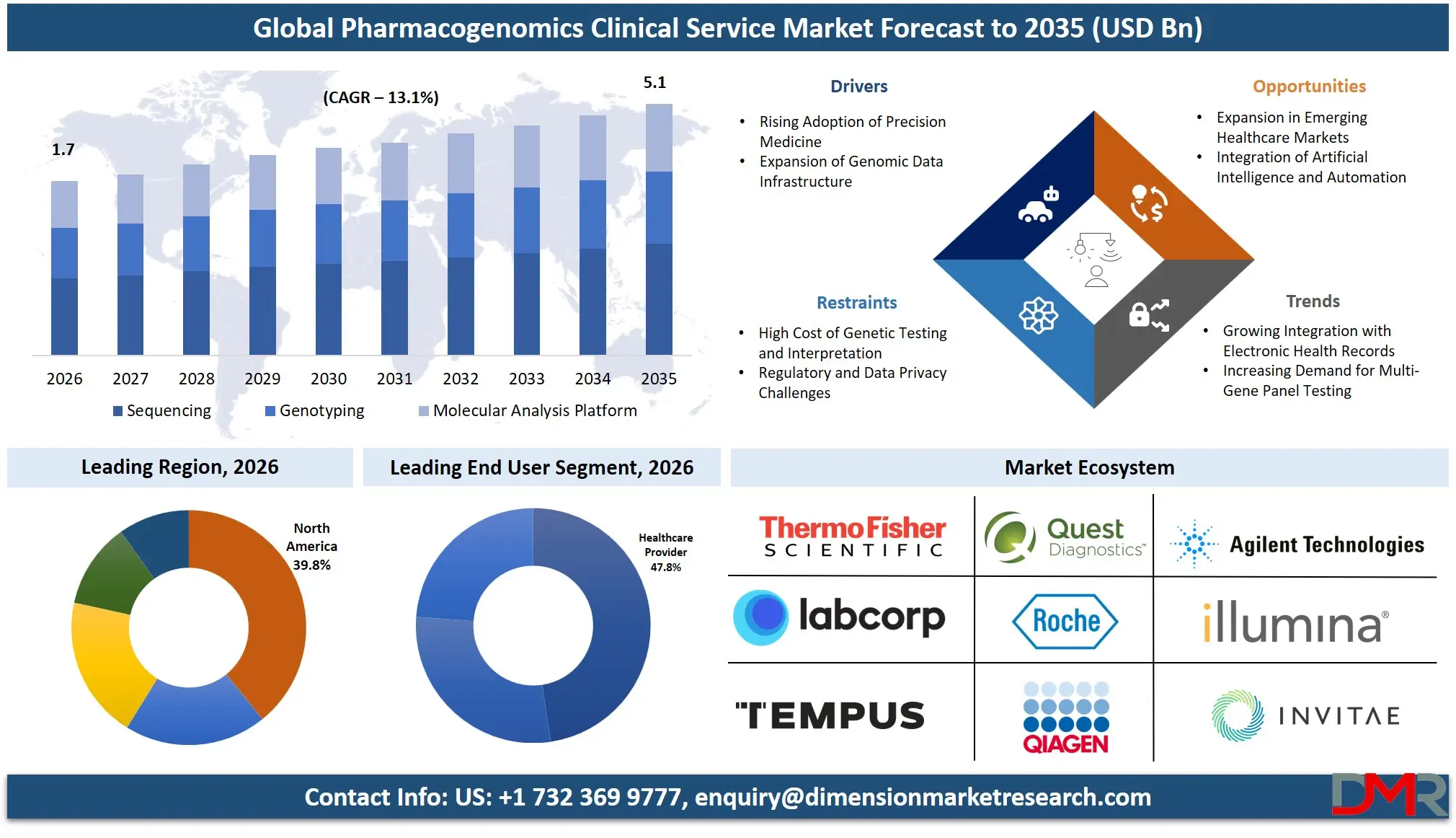
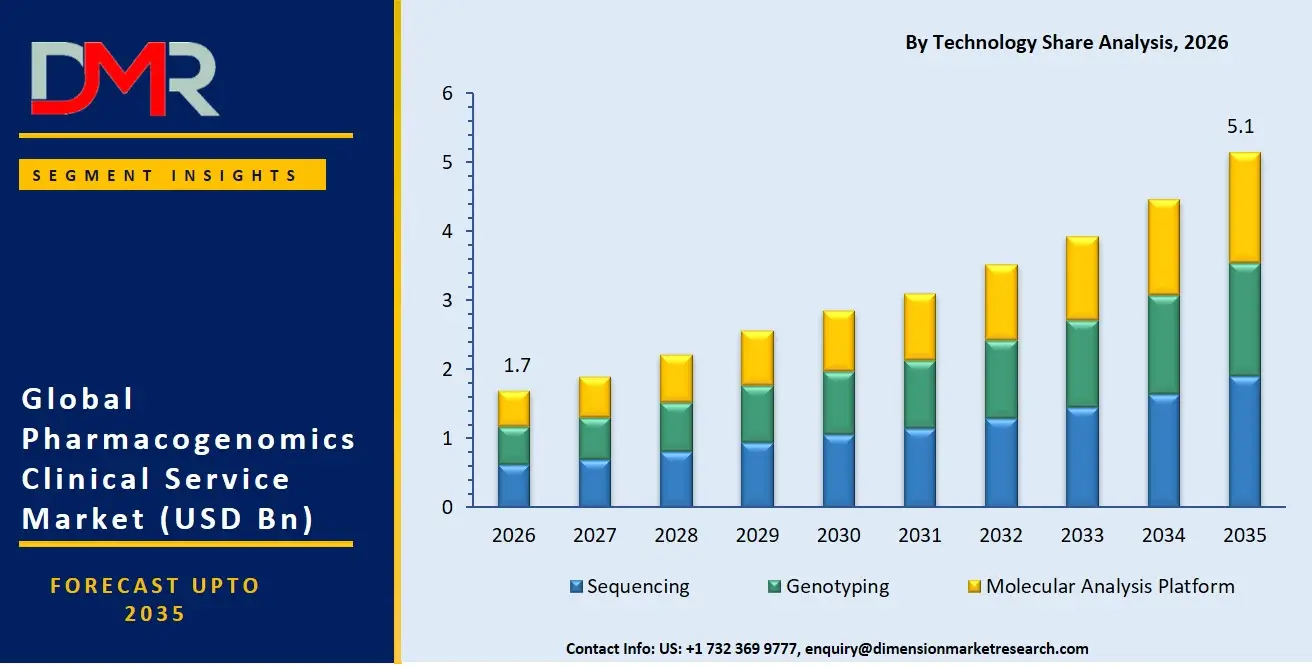
The Pharmacogenomics Clinical Service Market size is expected to be USD 1.7 billion in 2026 and increase at a compound annual growth rate of 13.1% to USD 5.1billion in 2035 due to health institutions are making investments towards establishing comprehensive digital health systems.
ℹ
To learn more about this report –
Download Your Free Sample Report Here
The Pharmacogenomics Clinical Service Market targets healthcare service providers involved in analysis of genetic variation to ensure optimal choice, dose and efficacy of drug administration on an individual basis. It consists of genetic testing services, clinical interpretation services, decision support technology services, consultation services, and companion diagnostic services used in oncology, cardiology, psychiatry and neurology areas. The market is becoming increasingly strategic as more importance is attached to personalized care and fewer adverse drug events under precision medicine. Innovations in next generation sequencing technologies, artificial intelligence analysis and EHR integration technologies have been driving growth in the market space.
ℹ
To learn more about this report –
Download Your Free Sample Report Here
The US Pharmacogenomics Clinical Service Market
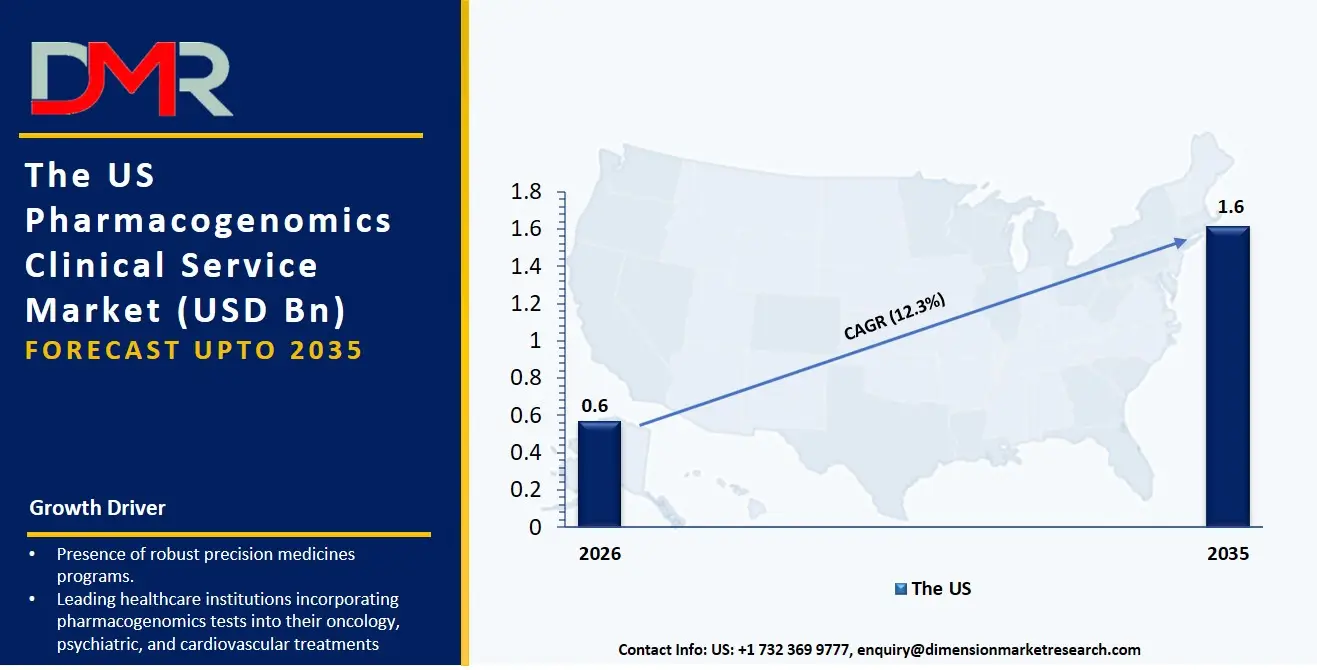
The US Pharmacogenomics Clinical Service Market size is estimated to be USD 600 million in 2026 and is expected to increase at a CAGR of 12.3% over the forecast period.
The United States' Pharmacogenomics Clinical Services market has been driven by the presence of robust precision medicines programs, genomic testing adoption, and well-developed healthcare system. Factors such as higher personalizing medicines expenditure, favorable reimbursement policies, and growth in electronic medical records usage have been contributing to deeper market penetration. Leading healthcare institutions and diagnostic service providers are incorporating pharmacogenomics tests into their oncology, psychiatric, and cardiovascular treatments. Federal regulatory approvals and active involvement of biotechnology companies have been supporting commercialization activities. In addition, the country also enjoys advantages like considerable genomic study expenditure, heightened clinical practitioner awareness, and pharma collaborations.
ℹ
To learn more about this report –
Download Your Free Sample Report Here
Europe Pharmacogenomics Clinical Service Market
The Europe Pharmacogenomics Clinical Service Market size is estimated to be USD 425 million in 2026 and is expected to increase at a CAGR of 12.5% over the forecast period.
Pharmacogenomics Clinical Services Market in Europe is growing on account of the increasing preference for personalized healthcare in Europe, in addition to favorable policies from the respective regions towards genomic medicine. European Green Deal and digital health transformation programs are indirectly driving the sustainable and technology-based innovations in healthcare. Leading the market are countries like Germany, UK, France, and the Netherlands, through their precision medicine and collaborative genomic medicine research efforts. Regulation on the patient data and genetic testing practices in the form of stringent regulations drives the activities in the market.
Japan Pharmacogenomics Clinical Service Market
The market size of Japan Pharmacogenomics Clinical Service will be USD 85 million in 2026 and at a CAGR of 12.2% in the forecast period.
The Japanese market is technologically advanced, has robust healthcare infrastructure, a high aging population, and increased demand for precision therapies, making it an ideal environment for pharmacogenomics clinical services. The success of genomics-based medicine programs supported by the government and advances in sequencing technology are pushing adoption into oncology and chronic disease management in the background.However, genomics-based medicine programs supported by the government and advances in sequencing technologies are pushing genomics into the background of adoption in oncology and chronic disease management. The adoption of pharmacogenomic testing into clinical practice is growing, as pharmaceutical companies and hospitals seek to use genetic information to guide the most precise treatment. As urbanization and digitalization of healthcare services continue to grow, access to services is rapidly increasing. But reimbursement restrictions and complex regulatory requirements continue to be challenges. The opportunities in specialized applications of pharmacogenomics remain high in Japan due to its innovation-driven biotechnology environment.
Key Takeaways
- Market Size & Forecast: The Pharmacogenomics Clinical Service Market size is projected to reach USD 1.7 billion in 2026 and is anticipated to have a value of USD 5.1 billion in 2035.
- Growth Rate & Outlook: The Pharmacogenomics Clinical Service Market size is set to grow at a compound annual growth rate of 13.1% during the forecast period of 2026 to 2035.
- Primary Growth Drivers: Some of the major growth drivers in the market include Pharmacogenomics Services Data Infrastructure Expansion, and more.
- Key Market Trends: Some of the major trends in the market are Electronic Health Records (EHR) Integration, and more.
- By Technology: Sequencing segment is anticipated to get the majority share of the Pharmacogenomics Clinical Service market in 2026.
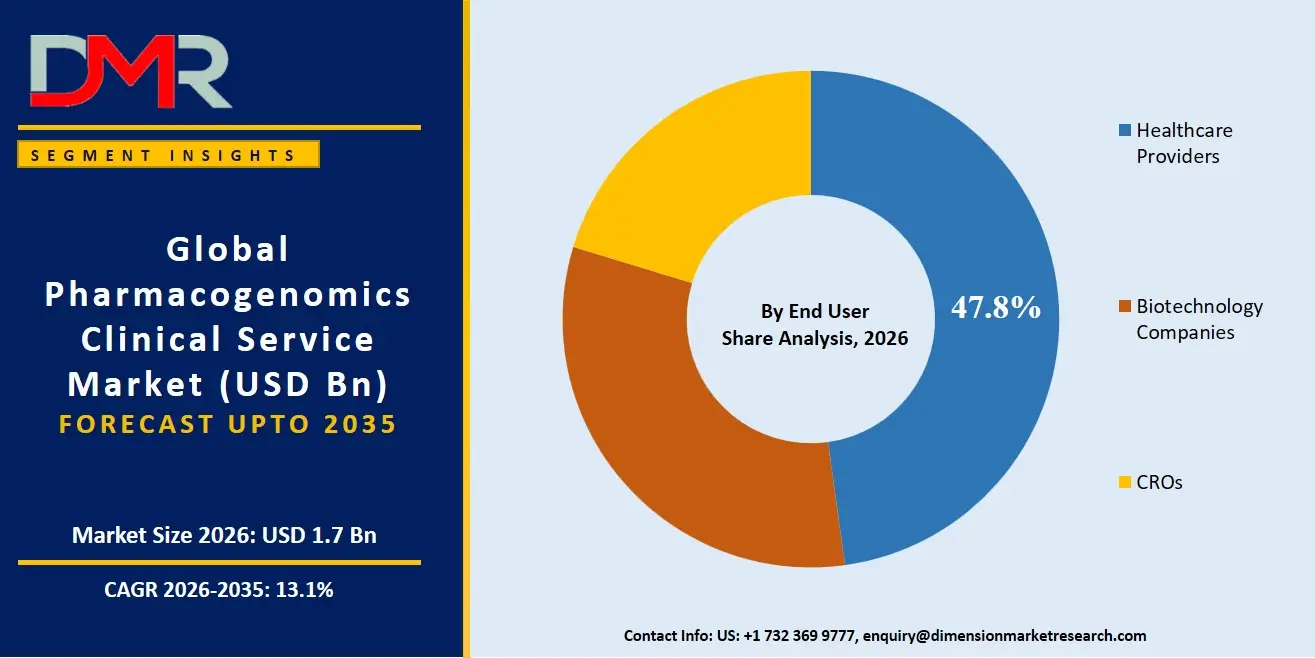
- By End User: Healthcare Provider is expected to get the largest revenue share in 2026 in the Pharmacogenomics Clinical Service market.
- By Therapeutic Area: Oncology segment is expected to get the largest revenue share in 2026 in the Pharmacogenomics Clinical Service market.
- Regional Leadership: North America is set to lead the Pharmacogenomics Clinical Service market with an estimated 39.8% share in 2026.
What is the Pharmacogenomics Clinical Service?
Pharmacogenomics Clinical Services, are special medical services where the genetic makeup of an individual is analyzed as well as how the person is affected by taking drugs. This encompasses services of genomic tests, bioinformatics, interpretation and recommendations on therapy aimed at helping in prescribing drugs. This also involves interactions of the drugs with genes tests, dosing, analysis of the risk of adverse reactions, companion diagnostics as well as integrating the service into health care systems. The use of next generation sequencing, PCR genotyping and data analytics through Artificial Intelligence forms part of the major contributors towards these services. The field is increasingly becoming more and more critical in the application of precision medicine since it improves the efficacy of the treatment, lowers the risk of adverse reactions of drugs and enables targeted therapies.
Use Cases
- Oncology Therapy Personalization: Pharmacogenomics clinical services enable oncologists to detect genetic biomarkers that influence patient responses to chemotherapy, immunotherapy, and targeted oncology treatments. These services help minimize ineffective therapies, enhance clinical outcomes, and strengthen companion diagnostic approaches within precision cancer care programs.
- Psychiatric Drug Response Management: Pharmacogenomic testing is increasingly applied in psychiatric care to evaluate how patients respond to antidepressants and antipsychotic medications. These services assist healthcare professionals in reducing adverse reactions, limiting trial-and-error prescribing methods, and improving medication adherence and treatment effectiveness in mental health management.
- Personalized Cardiovascular Treatment: Pharmacogenomics services support clinicians in tailoring anticoagulant and statin therapies through detailed analysis of gene-drug interactions. This approach enhances dosing precision, reduces the likelihood of hospitalization, and promotes safer and more effective management of cardiovascular conditions, particularly among elderly patients.
- Integrated Clinical Decision Support Systems: Healthcare institutions are implementing AI-driven pharmacogenomics platforms connected with electronic health record systems to deliver real-time medication alerts and personalized dosage guidance. These integrated solutions improve clinical workflow efficiency, strengthen patient safety, and support data-driven precision medicine practices.
How AI Is Transforming the Pharmacogenomics Clinical Service Market
The pharmacogenomics clinical service market is changing due to artificial intelligence by way of improved genomic interpretation, enhanced speed in diagnostics, and better precision in prescribing medicines. Advanced software can quickly interpret genomic data, detect drug-gene interaction, and give recommendations in respect of personalized prescription of drugs. In addition, the use of this technology alleviates the workload of interpreting genomic data for geneticists and doctors.
AI-powered platforms for clinical decision-making are incorporated into EHR systems, providing a great tool for improving patient safety and decreasing the number of adverse drug events. Machine learning solutions contribute to the prediction of patients' response to the therapy, and automation tools improve laboratory practices regarding the efficiency and speed of tests. In such a manner, pharmacogenomics services receive additional commercial and clinical value through AI.
Market Dynamic
Driving Factors in the Pharmacogenomics Clinical Service Market
Pharmacogenomics Services Data Infrastructure Expansion
With rapid development in genomics data infrastructure and analytics using the cloud and artificial intelligence, there is notable improvement in services provided by pharmacogenomics clinically. Health institutions are making investments towards establishing comprehensive digital health systems that can handle genomics data well. Availability of powerful bioinformatics software makes it possible to understand genetic variants effectively. Furthermore, the use of electronic medical records provides health professionals with pharmacogenomics data when prescribing drugs. Technology has made pharmacogenomics services less complex and commercially feasible across the globe.
Restraints in the Pharmacogenomics Clinical Service Market
The Genetics Testing and Interpretation Cost
One of the major obstacles to wide-spread use of pharmacogenomic testing and sequencing technologies is the relative expense of the testing, sequencing, and specialized clinical interpretation. Limited budgets are a challenge for smaller health care facilities in deploying genomic testing infrastructure and AI-enabled decision-support systems. In some developing countries, the pilotage of reimbursement limits patient access. Moreover, trained genetic counselors and bioinformatic experts are required, which adds to operational costs. These economic and physical obstacles create obstacles to market penetration, especially in cost-conscious healthcare settings.
Opportunities in the Pharmacogenomics Clinical Service Market
Hiring additional staff in Emerging Healthcare Markets
The emerging economies offer enormous growth potential to clinical service providers in the field of pharmacogenomics, with better healthcare infrastructure and greater investments in precision medicine. In Asia-Pacific, LATAM, and the Middle East, countries are developing their genomic research capabilities and improving their hospital system. Pharmacogenomic testing services are being sought for because of the increasing awareness of personalized medicine and the increasing burden of chronic diseases. Significant partnerships between biotechnology firms, healthcare providers, and governments are poised to speed up market adoption in underpenetrated areas in the future.
Trends in the Pharmacogenomics Clinical Service Market
Electronic Health Records (EHR) Integration
The focus on incorporating pharmacogenomics information with eHR systems is one of the most notable trends in the market. Clinical decision support tools are becoming more popular in healthcare, providing real-time genetic information to inform decision making in prescribing. This integration can boost medication safety, simplify doctor workflows, and give better individual treatment outcomes. Pharmacogenomics services are increasingly becoming more accessible and clinically actionable in interoperable digital health ecosystems, to which hospitals and healthcare networks are investing considerable resources in a variety of therapeutic areas.
Research Scope and Analysis
The Pharmacogenomics Clinical Service market analysis evaluates key service categories, technologies, therapeutic applications, delivery models, and end-user industries influencing market expansion. The study examines regional growth patterns, technological advancements, regulatory frameworks, competitive strategies, and emerging precision medicine trends. It also assesses the impact of AI integration, genomic testing adoption, and healthcare digitalization on future market opportunities, innovation, and long-term industry development.
ℹ
To learn more about this report –
Download Your Free Sample Report Here
By Service Type Analysis
In the service type segment, genetic testing services are likely to capture 38.6% market share by the end of 2026 driven by increasing preference for personalized medicine along with growing adoption of genomic diagnostics in applications such as oncology and psychiatry. Multi-gene panel testing services will gain more importance owing to its ability to provide information regarding various drug response genes simultaneously. Factors such as decreasing cost of sequencing technology, greater awareness among physicians, and wider implementation within hospitals can be credited to the growth witnessed by the segment. The clinical decision support services segment is estimated to show rapid growth in terms of value during the forecast period due to the increasing use of AI-driven prescription alerts and EHR-based genomic insight generation.
By Technology Analysis
It is estimated that Sequencing Technologies will hold about 36.9% of market share in 2026 owing to increased use of next-generation sequencing tools in precision medicine projects. With the help of next generation sequencing based analysis, genomic evaluation can be carried out with better scalability and increased accuracy, which makes them very effective for applications in oncology and rare diseases. The adoption of sequencing technologies among pharmaceutical and biotech companies has risen for the purpose of biomarker identification and diagnostics. On the other hand, it is estimated that Molecular Analysis Platforms will witness maximum growth because of advances in biomarker analysis, mass spectrometry, and high-throughput diagnostics.
By Therapeutic Area Analysis
Oncology segment is expected to maintain its leading position because of the crucial role played by pharmacogenomics in creating cancer-targeting drugs and diagnostics, which is shown by the segment's market share of 41.4% in 2026. Higher incidence of cancer, expanding use of immunotherapy, and growing demand for customized treatment using biomarkers will lead to the dominance of this segment. Genomic analysis is gradually becoming part of everyday practice in healthcare, with practitioners willing to provide their patients with personalized therapy options that include both chemotherapy and other types of treatment. The psychiatry segment is expected to experience the highest CAGR because of the increased awareness of differences in people's reactions to antidepressants and fewer side effects from medications used in psychiatry.
By Delivery Model Analysis
The Laboratory Based Services are estimated to dominate the market with a forecasted share of 44.2% in 2026 owing to the presence of several central laboratories, hospital laboratories, and reference diagnostic laboratories. This category involves provision of all-inclusive genomic analysis, sequencing capability, and professional expertise. It is the most preferred form of testing for advanced pharmacogenomics tests. The rise in collaborations between hospitals and laboratories is further driving the market's growth. On the other hand, the Remote & Digital Services have a high potential of becoming the fastest-growing category because of the growing demand for tele-genomics platforms, electronic health records-based services, and point of care testings.
By End User Analysis
It is predicted that Healthcare Providers will have around 47.8% share in the market by 2026 owing to their adoption of pharmacogenomic testing within hospitals and precision medicine clinics. Genomic testing is being adopted by hospitals and health systems for better results and minimizing adverse drug interactions and maximizing efficiency in oncology, cardiology, and psychiatry. Awareness and reimbursement framework in favor of healthcare providers is adding to their leadership. It is expected that Diagnostic & Research Organizations will experience the highest growth rate because there is an ongoing effort in universities and laboratories to conduct genomic research and biomarker discovery in conjunction with biotechnology/pharmaceutical companies.
The Pharmacogenomics Clinical Service Market Report is segmented on the basis of the following:
By Service Type
- Genetic Testing Services
- Single-gene PGx testing
- Multi-gene panel testing
- Whole exome/genome pharmacogenomic testing
- Point-of-care PGx testing
- Clinical Interpretation & Reporting Services
- Drug-gene interaction interpretation
- Dose optimization recommendations
- Adverse drug reaction risk assessment
- Personalized therapy guidance
- Clinical Decision Support Services
- EHR-integrated PGx support
- Prescribing alerts & recommendations
- AI-enabled clinical decision tools
- Pharmacogenomic Consultation Services
- Physician consultation
- Genetic counseling
- Medication management consultation
- Companion Diagnostic Support Services
- Biomarker-based patient stratification
- Therapy selection support
- Clinical trial genomic support
By Technology
- Sequencing Technologies
- Next-Generation Sequencing (NGS)
- Targeted gene sequencing
- Whole genome sequencing (WGS)
- Genotyping Technologies
- SNP genotyping
- CYP enzyme profiling
- PCR-based testing
- Molecular Analysis Platforms
- Microarray technology
- Biomarker analysis platforms
- Mass spectrometry
By Therapeutic Area
- Oncology
- Breast cancer
- Lung cancer
- Colorectal cancer
- Hematologic malignancies
- Psychiatry
- Depression treatment optimization
- Antipsychotic response testing
- Cardiology
- Anticoagulant therapy optimization
- Statin response testing
- Neurology
- Pain Management
By Delivery Model
- Laboratory-Based Services
- Centralized laboratory testing
- Reference laboratory services
- Hospital-based testing
- Remote & Digital Services
- Tele-genomics services
- EHR-integrated PGx workflow
- Point-of-care testing
- Outsourcing Services
- Third-party laboratory services
- Clinical partnership models
- Managed PGx services
By End User
- Healthcare Providers
- Hospitals & Health Systems
- Specialty clinics
- Precision medicine centers
- Diagnostic & Research Organizations
- Diagnostic laboratories
- Academic & research institutes
- Industry Users
- Pharmaceutical companies
- Biotechnology companies
- Contract Research Organizations (CROs)
Regional Analysis
Leading Region in the Pharmacogenomics Clinical Service Market
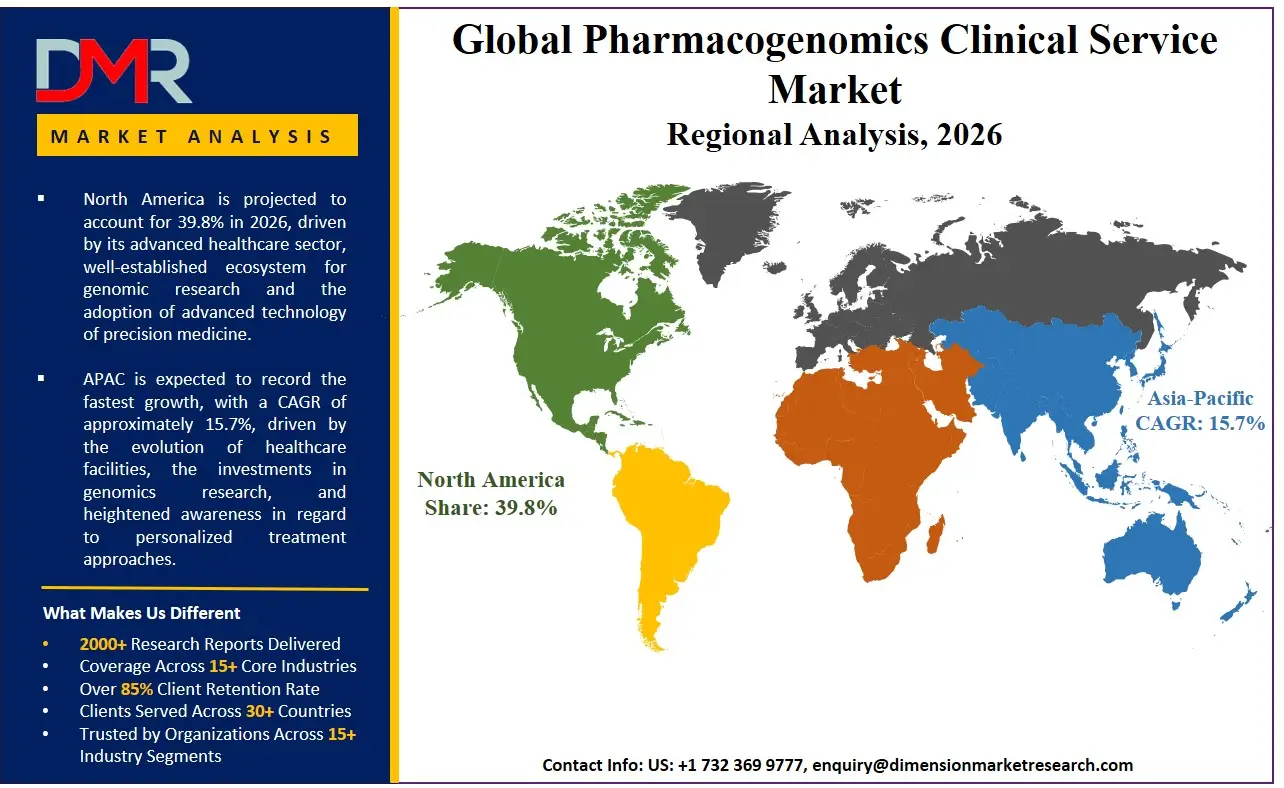
The North America region holds the position of the leader in terms of market shares with 39.8% share expected in 2026 attributed to its advanced healthcare sector, well-established ecosystem for genomic research and the adoption of advanced technology of precision medicine. The region derives benefits due to considerable funding in the case of next-generation sequencing, reimbursement and the active involvement of biotech firms and pharmaceutical organizations. The market lead is further reinforced by the involvement of governments in promoting genomic programs and the extensive use of electronic health records. The US constitutes the biggest contributor in the region due to the increased applications of pharmacogenomics in various diseases.
ℹ
To learn more about this report –
Download Your Free Sample Report Here
Fastest Growing Region in the Pharmacogenomics Clinical Service Market
The Asia-Pacific region holds the promise to be the most lucrative one for the growth of the pharmacogenomics clinical service market, driven by the evolution of healthcare facilities, the investments in genomics research, and heightened awareness in regard to personalized treatment approaches. There are many nations like China, Japan, South Korea, and India that are concentrating on building up genomics capabilities, and simultaneously they are also promoting precision medicine within the healthcare industry through government policies. Urbanization, presence of more patients suffering from chronic ailments, and technological advancement of diagnostics have also played an important part in the growth of the market.
By Region
North America
Europe
- Germany
- The U.K.
- France
- Italy
- Russia
- Spain
- Benelux
- Nordic
- Rest of Europe
Asia-Pacific
- China
- Japan
- South Korea
- India
- ANZ
- ASEAN
- Rest of Asia-Pacific
Latin America
- Brazil
- Mexico
- Argentina
- Colombia
- Rest of Latin America
Middle East & Africa
- Saudi Arabia
- UAE
- South Africa
- Israel
- Egypt
- Rest of MEA
Competitive Landscape
It is a competitive market continuously evolving with the continuous advancement of technology, growing amount of genomic data available and growing ecosystem within the healthcare environment. Investments in research and innovation, AI-led interpretation solutions based on genomics, and the ability to integrate pharmacogenomic data into electronic health record (EHR) systems are spearheading the way in the industry. The entry into the market is still difficult because of stringent regulations, a great demand for specialized genomic expertise and large laboratory infrastructure needs. Collaborations between organisations and hospitals, biotechnology companies and pharmaceutical companies, and research institutions are expanding in order to diversify services, improve market penetration and facilitate the global adoption of solutions in the field of precision medicine.
Some of the prominent players in the global Pharmacogenomics Clinical Service are:
- Thermo Fisher Scientific
- Illumina
- Quest Diagnostics
- Labcorp
- Roche
- Foundation Medicine
- QIAGEN
- Agilent Technologies
- Myriad Genetics
- Invitae
- Natera
- Tempus AI
- Guardant Health
- Eurofins Scientific
- Fulgent Genetics
- SOPHiA GENETICS
- BGI Genomics
- Bio-Rad Laboratories
- Exact Sciences
- Gene by Gene
- Other Key Players
Recent Developments
- In April 2026, Fortis Healthcare group launched a new Preventive Genomics Clinic in their hospital centers located in Bengaluru. This clinic offers state-of-the-art services ranging from whole genome/exome sequencing, hereditary cancer testing, pharmacogenomics, prenatal and neonatal testing to many other genetic programs dedicated for cardiologists, neurologists, orthopedicians, and oncologists. It is indeed a novel concept involving genetic testing, counseling and customized treatments which will benefit in early diagnosis and management of diseases.
- In November 2025, Baylor Genetics entered into a long-term national agreement with the U.S. Department of Veterans Affairs to offer pharmacogenomic (PGx) and germline genetic testing services, which include hereditary cancer testing, to veterans throughout the country. This project will help expand the use of precision medicine testing across the VA health care network to enable personalized therapy, optimize drug choice, improve mental health, and detect hereditary cancers.
- In September 2025, Quest Diagnostics introduced an advanced PGx lab testing service, created in collaboration with Coriell Life Sciences, which helps healthcare professionals choose appropriate medications and doses for their patients according to genetic predisposition. The test covers 17 genes and four HLA alleles and supports such specializations as psychiatry, neurology, cardiology, oncology, and transplant medicine. It uses clinically validated gene-drug associations to eliminate the guesswork involved in prescribing and ensure optimal outcomes.
Report Details
| Report Characteristics |
| Market Size (2026) |
USD 1.7 Bn |
| Forecast Value (2035) |
USD 5.1 Bn |
| CAGR (2026–2035) |
13.1% |
| Historical Period |
2021 – 2025 |
| Forecast Period |
2027 – 2035 |
| Base Year |
2025 |
| Estimate Year |
2026 |
| Segments Covered |
By Service Type, By Technology, By Therapeutic Area, By Delivery Model, By End User |
| Regional Coverage |
North America – The US and Canada; Europe – Germany, The UK, France, Russia, Spain, Italy, Benelux, Nordic, & Rest of Europe; Asia-Pacific – China, Japan, South Korea, India, ANZ, ASEAN, Rest of APAC; Latin America – Brazil, Mexico, Argentina, Colombia, Rest of Latin America; Middle East & Africa – Saudi Arabia, UAE, South Africa, Turkey, Egypt, Israel, & Rest of MEA |
Frequently Asked Questions
How big is the Pharmacogenomics Clinical Service Market?
▾ The Pharmacogenomics Clinical Service Market size is expected to reach USD 1.7 billion by 2026 and is projected to reach USD 5.1 billion by the end of 2035.
What is the CAGR of the Pharmacogenomics Clinical Service Market from 2026 to 2035?
▾ The market is growing at a CAGR of 13.1 percent over the forecasted period.
What factors are driving the growth of the Pharmacogenomics Clinical Service Market?
▾ Pharmacogenomics Services Data Infrastructure Expansion, and more are the factors driving the growth of the Pharmacogenomics Clinical Service Market.
What are the major trends in the Pharmacogenomics Clinical Service Market?
▾ Electronic Health Records (EHR) Integration, and more are some of the major trends in the market.
Who are the key players in the Pharmacogenomics Clinical Service Market?
▾ Some of the key players in the Pharmacogenomics Clinical Service Market include Roche, Illumina, QIAGEN, and more
How is the Pharmacogenomics Clinical Service Market segmented?
▾ The Pharmacogenomics Clinical Service Market is segmented by service type, technology, therapeutic area, delivery model, end user.
Which region held the largest share of the Pharmacogenomics Clinical Service Market in 2026?
▾ North America is set to lead the Pharmacogenomics Clinical Service market with an estimated 39.8% share in 2026.
Which region is expected to grow the fastest in the Pharmacogenomics Clinical Service Market?
▾ Asia Pacific is the fastest-growing region in the Pharmacogenomics Clinical Service market during the forecast period.