What is the Postpartum Mental Health Tech Market Size?
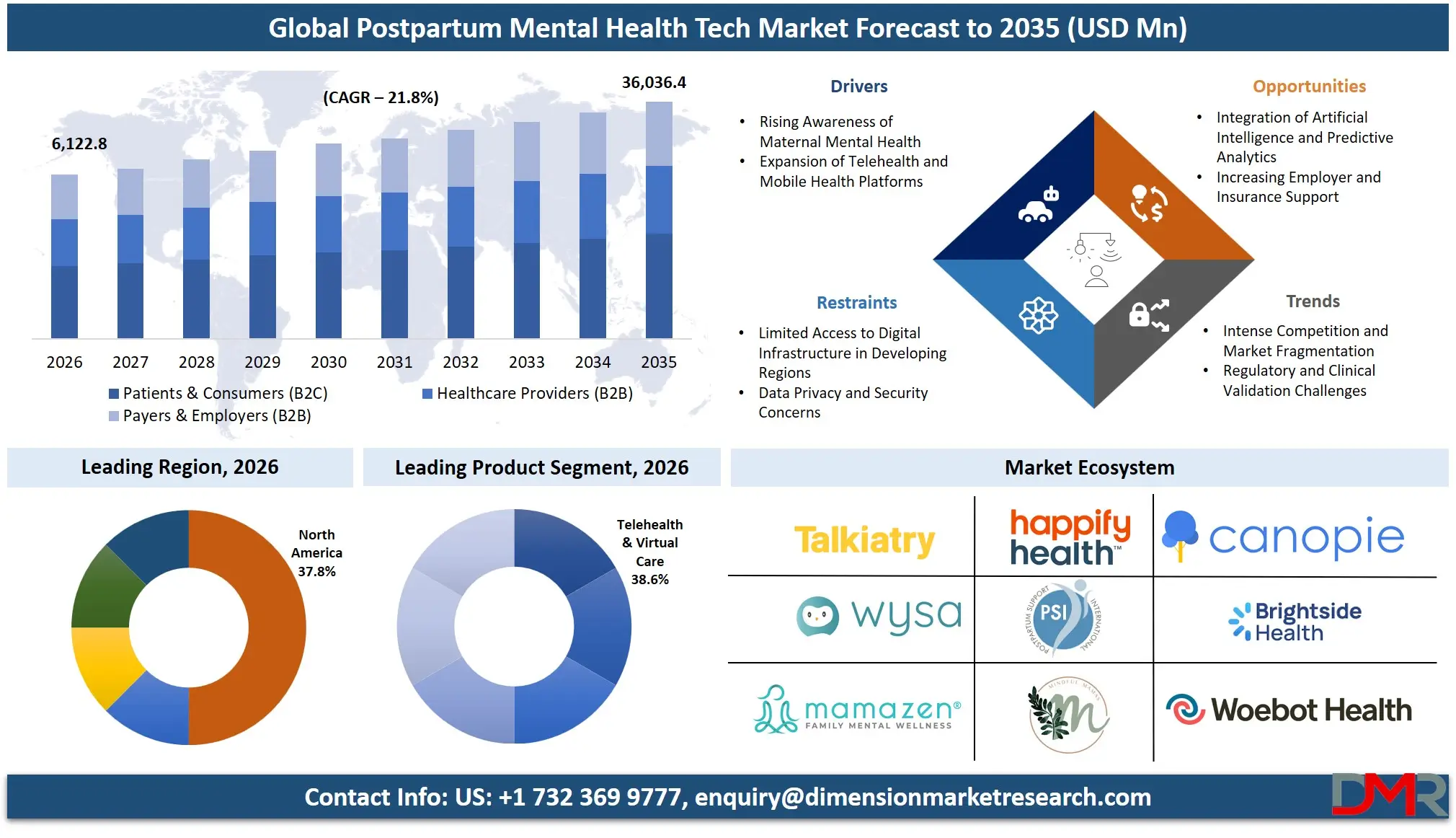
The Global Postpartum Mental Health Tech Market is expected to reach a value of USD 6,122.8 million in 2026, and it is further anticipated to reach USD 36,036.4 million by 2035, growing at a CAGR of 21.8% during the forecast period.
ℹ
To learn more about this report –
Download Your Free Sample Report Here
The postpartum mental health tech market has experienced unprecedented growth, driven by the rising number of postpartum mental disorders and the high demand for experts in perinatal psychiatry. This industry can be divided based on the existence of technological solutions for screening, managing, and treating various postpartum mental conditions, including PPD, anxiety, PTSD, OCD, psychosis, and emotional exhaustion.
As the importance of providing a more flexible, non-stigmatized, and convenient way of offering care becomes more apparent, so does the requirement for care models based on technology. Healthcare organizations, insurance companies, and direct-to-consumer platforms are among the most widespread adopters, and smartphone apps and online counseling services have become the most popular ones due to their accessibility and continuous availability.
ℹ
To learn more about this report –
Download Your Free Sample Report Here
The US Postpartum Mental Health Tech Market
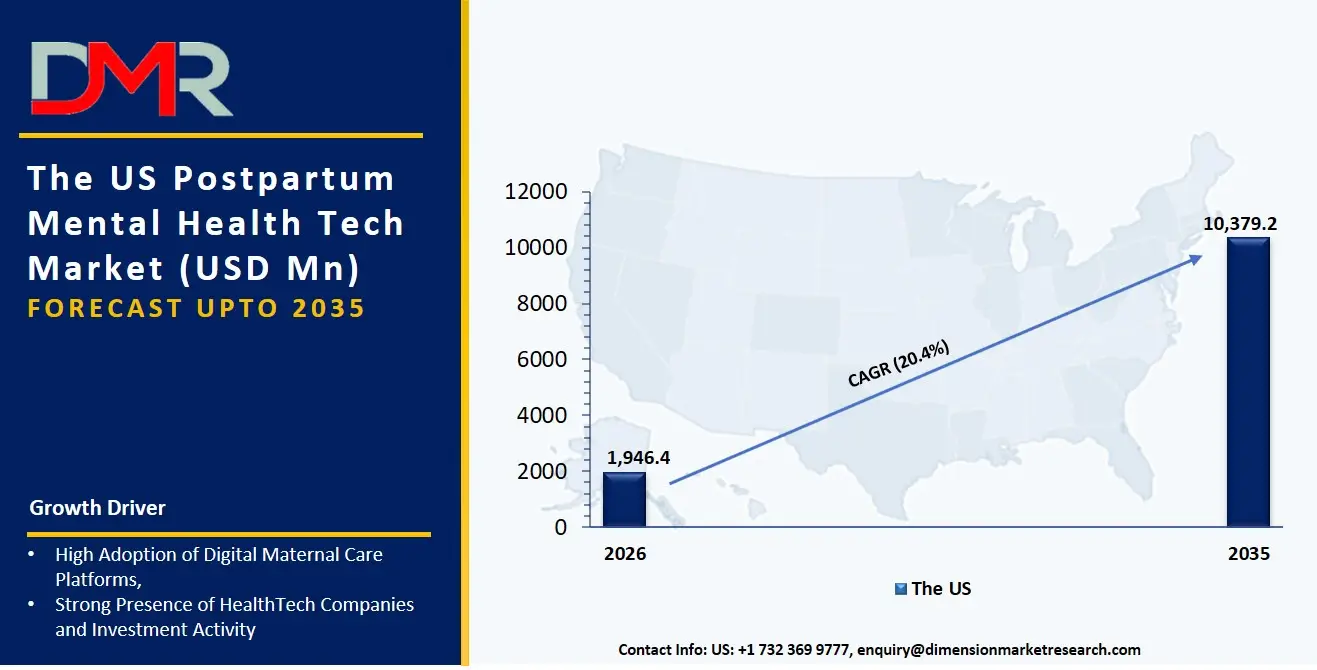
The US Postpartum Mental Health Tech Market is projected to reach USD 1,946.4 million in 2026 at a compound annual growth rate of 20.4% over its forecast period.
The United States continues to be the most advanced and largest market for mental health technologies after childbirth, with existing legislative support (for example, the MOMNIBUS Act), the rise in digital therapeutics being included in Medicaid coverage and private insurance plans, and more venture capital investing in femtech and maternal health products. The United States is already a market driven by strong demand for Predictive Analytics software, where hospitals have been trying to leverage their EHR data to identify mothers who might be at risk. But then again, the use of Conversational AI in delivering real-time interventions for patients is also driving demand for crisis intervention services.
ℹ
To learn more about this report –
Download Your Free Sample Report Here
The Europe Postpartum Mental Health Tech Market
There are significant market opportunities for postpartum mental health technology companies as more employers and health insurance companies get involved. Insurers also are increasing the amount of reimbursement they provide for telepsychiatry, digital Cognitive Behavioral Therapy (CBT), and remote postpartum care. Such advancements have a great impact on making such treatments affordable and accessible for patients. Further, digital health provider-insurer-corporate wellness program collaborations can facilitate the technology's adoption and recurring revenue streams, which can drive rapid growth in enterprise and consumer health care markets.
Trends in the Global Postpartum Mental Health Tech Market
Intense Competition and Market Fragmentation
The global postpartum mental health tech market is highly competitive with the emergence of start-ups, telehealth companies, wellness app developers and digital therapeutics companies. This competition puts price pressure, and squeezes profit margins for smaller providers. These are the big tech firms and the established digital health-care platforms, which have more money, a wider customer base, and more powerful AI tools, making it hard to carve out a niche. New innovations are needed on a regular basis, which adds to the cost of operations. Consequently, many companies struggle to get the long-term differentiation, customer retention and sustainable profit they are looking for, in the new market environment.
Regulatory and Clinical Validation Challenges
As more mental health technologies become available for use in the postpartum period, there is a growing need for evidence-based validation for approval by medical institutions, insurers, and healthcare authorities. Digital therapeutics and AI-powered platforms need to be proven safe, effective and regulatory compliant in various regions. The process of securing certifications and conducting clinical trials can be a time-cons
The Europe Postpartum Mental Health Tech Market is estimated to be valued at USD 1,776.5 million in 2026 and is further anticipated to reach USD 9,987.2 million by 2035 at a CAGR of 21.1%. Regulations such as the GDPR and the forthcoming EU AI Act influence the European market greatly, forcing companies to utilize platforms with Cloud-based solutions that have data sovereignty and compliance capabilities. The use of IMHPs is becoming common across Europe, especially in the UK, Germany, and France, where the healthcare system strives to balance the provision of psychological care postpartum and the pressures imposed by a publicly-funded healthcare budget. Furthermore, there are emerging pressures from projects such as the EHDS to create remote monitoring platforms ensuring compatibility among the various member states.
The Japan Postpartum Mental Health Tech Market
The Japan Postpartum Mental Health Tech Market is projected to be valued at USD 451.2 million in 2026. It is further expected to witness robust growth, holding USD 2,268.5 million in 2035 at a CAGR of 19.6%. The Japanese market is specific, both companies and the government work to solve the problem of low fertility, and there is a cultural burden on the phenomenon of "sato-go" isolation and maternal burnout. A significant portion of the spending is on mobile health (mHealth) and Smartphone Applications for mood tracking; new mothers opt for anonymous screening digitally rather than a psychiatrist in-person. A very important need is to be in-depth with local maternal-child health handbooks (boshi techos), which would create a place for Cloud-Based Platforms that would link the public health nurses, paediatric visits and psychiatrists.
Key Takeaways
- Market Size & Forecast: The Global Postpartum Mental Health Tech market is projected to reach USD 6,122.8 million in 2026, while rising drastically to USD 36,036.4 million in 2035, backed by digitization of the perinatal care pathway and rising recognition of maternal mental health.
- Growth Rate & Outlook: The market is projected to grow at strong growth rate of 21.8% is forecasted due to a lack of Perinatal psychiatrists and complexity in coordination of postpartum care within an ever more complex healthcare environment.
- Primary Growth Drivers: Key forces include the broad adoption of episodic face-to-face screening to continuous remote monitoring, demand for AI-powered early warning systems to prevent adverse outcomes and the inclusion of DTx in routine postpartum insurance coverage.
- Key Market Trends: Platform-specific applications, implementation of Predictive Analytics for Telehealth & Virtual Care to flag potential patients, and employer-backed Meditation & Wellness Programs are some major trends in the industry, where companies prioritize maternal retention.
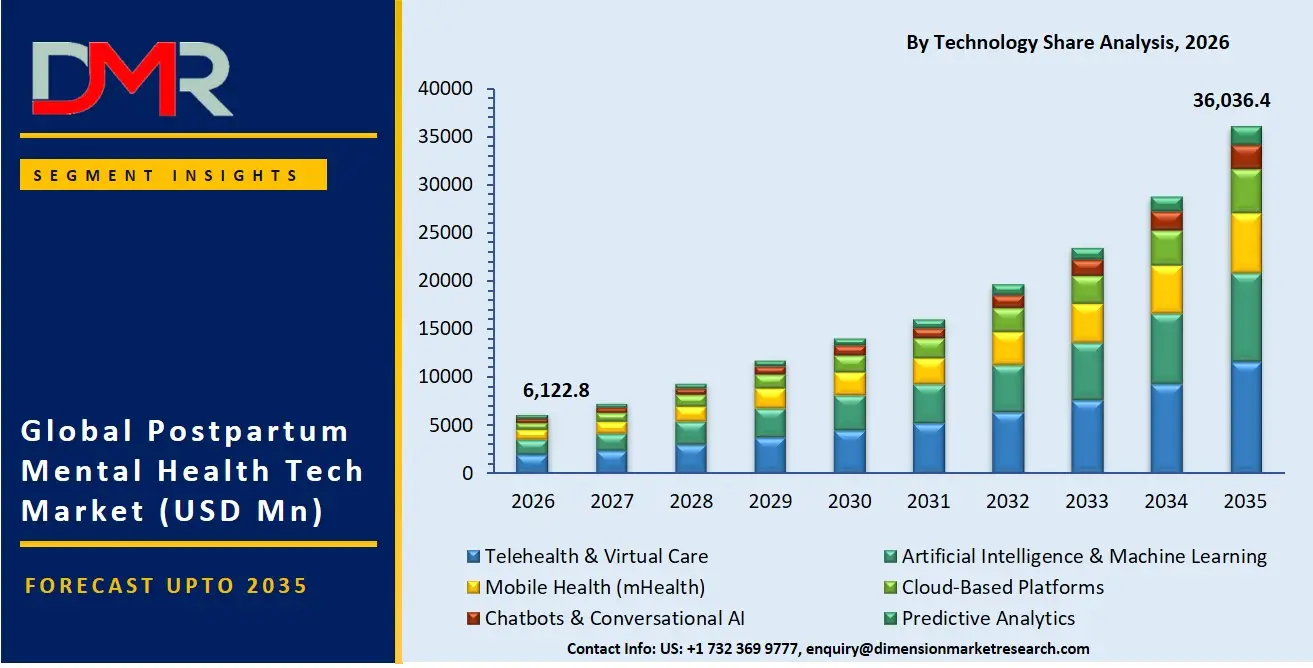
- By Technology Analysis: Mobile Health (mHealth) will take the lead in this segment owing to the omnipresence and preference of people for smartphones with discreet access. However, cloud-based applications are becoming popular as well for making layers for easy integration of medical records and direct-to-consumer applications.
- By Service Type Analysis: Mood Tracking & Screening segment is likely to hold a dominant market position, while the fastest-growing segment is crisis intervention services due to the presence of real-time escalation protocols on platforms.
- Regional Leadership: North America is poised to dominate this market with 37.8% of the market share in 2026 owing to the presence of strong digital health infrastructure and favorable reimbursement structure for DTx, along with a high awareness of maternal mental health in the region.
What is the Postpartum Mental Health Tech?
Postpartum Mental Health Tech" is the term used when referring to the specific sort of digital tools and platforms provided by digital health vendors, telehealth providers, and femtech innovators designed to support mothers on their postpartum mental health journey. These services are targeted to the physiological and emotional shifts of the postpartum (up to 12 months after birth) period and not general mental health applications. This includes Virtual Counseling for therapeutic intervention, CBT through smartphone, Mood Tracking & Screening to provide baseline depression scores, and Crisis Intervention Services to address urgent suicidal ideation. Technology also can help ensure scalable, low-cost, and stigma-free access to mental health, as 1 in 5 women suffer from a mental health disorder during the postpartum period, and digital investments can directly lead to improved maternal and infant outcomes.
Use Cases
- Telepsychiatry for Rural Postpartum Mothers: Through the use of telehealth and virtual care technology, health practitioners may provide Cognitive Behavioral Therapy (CBT) to rural new mothers by consulting with a perinatal psychiatrist who offers services via telehealth technology from a faraway medical center.
- PPD Prediction Using AI: The health care systems use Artificial Intelligence and Machine Learning algorithms through cloud computing technologies to screen Electronic Health Records (EHRs) (such as previous history of depression, admission into NICU, premature delivery) to predict the high risk of mothers and then track their mood.
- Peer Support for Postpartum Psychosis: Anonymous chatbots, conversational AI provides constant psychoeducation and triage for such uncommonly occurring conditions as postpartum psychosis, which eventually leads to forming peer groups anonymously before seeking professional help.
- Burnout Mitigation through Mobile App: Companies can also incorporate the use of telemedicine and mobile health applications to offer meditation and wellness programs to employees upon their return from the leave to check the moods of such people, resulting in less postpartum burnout among employees.
How AI is Transforming the Postpartum Mental Health Tech Market?
By streamlining the detection process and tailoring care to individual needs, AI is transforming the postpartum mental health tech landscape. In Predictive Analytics, AI models can potentially forecast the onset of a PPD episode before clinical symptoms are severe, significantly reducing the lag time between onset and intervention. Meanwhile, features powered by AI in Chatbots & Conversational AI enable platforms to respond immediately with empathy, and triage to crisis intervention services based on risk levels detected.
Governance and clinical integration are also revolving around AI. In the area of Integrated Maternal Health Platforms, intelligent monitoring agents are used to continuously scan user interactions for suicidal ideation keywords and flag these to a human clinician. Furthermore, generative AI assistants are enhancing Virtual Counseling by providing personalized CBT homework exercises for new mothers and summarizing sessions.
Market Dynamics
Key Drivers in the Global Postpartum Mental Health Tech Market
Rising Awareness of Maternal Mental Health
The increasing awareness of postpartum depression and other mental health issues globally is a significant factor propelling the Global Postpartum Mental Health Tech Market forward. There is growing global interest in early screening and intervention for postpartum depression, anxiety, and burnout, with governments, healthcare providers, and advocacy groups all pushing for such initiatives.Various governments, healthcare providers and advocacy groups worldwide are increasingly calling for the development of early screening and intervention strategies for postpartum depression, anxiety, and emotional burnout. Social media campaigns and celebrity advocacy have also helped to decrease stigma associated with mental health care for mothers, making it easier for women to find professional assistance online.
Expansion of Telehealth and Mobile Health Platforms
The fast-rising telephone health system and the smartphone-based healthcare services are highly propelling the market expansion. With more flexible and convenient access to support during the postpartum period, women are increasingly opting for virtual counseling, mobile apps, and remote monitoring, as these options help them to keep up with their childcare duties. Healthcare providers have made significant investments in cloud-based platforms for maternal wellness, which allows for real-time consultations, AI-assisted symptom tracking and digital cognitive behavioral therapy (CBT). Mobile health solutions are also cost-effective and scalable, enabling them to be adopted in both urban and rural areas. Moreover, the advancements in the internet connectivity, wearables, multilingual interfaces, and secure digital health ecosystems are playing pivotal roles in boosting user engagement and clinical outcomes, thereby emerging as indispensable growth drivers for the market.
Restraints in the Global Postpartum Mental Health Tech Market
Limited Access to Digital Infrastructure in Developing Regions
Poorly developed technological infrastructure for healthcare in low income or developing regions represents another important barrier to the growth of the global postnatal mental health technologies market. Many rural areas are not yet covered by good internet access, and smartphone penetration is low as well as access to healthcare facilities providing telemedicine capabilities. The implementation of mobile applications for mental health and remote consultation services faces difficulties due to the lack of these prerequisites.
Data Privacy and Security Concerns
In addition to differing data privacy and security regulations in various countries that may cause trouble for global companies operating in these countries, the question of transparent algorithms and ethical treatment of mental health data by artificial intelligence applications is also a matter of concern. It poses a challenge to small enterprises due to financial problems with meeting cybersecurity requirements.
Growth Opportunities in the Global Postpartum Mental Health Tech Market
Integration of Artificial Intelligence and Predictive Analytics
One of the significant opportunities in the Global Postpartum Mental Health Tech Market is the integration of Artificial Intelligence (AI) and predictive analytics. AI systems can detect patterns of behavior and changes in mood, sleep, and emotional signals to flag potential early signs of postpartum depression and anxiety. Predictive algorithms can help healthcare providers tailor interventions to the individual, potentially preventing symptoms from manifesting and resulting in better treatment and overall healthcare cost savings. Conversational AI and chatbots are another technology that offers emotional support and guidance to new mothers 24/7. In fact, with the continued developments of machine learning technologies, companies are creating super-adaptive and data-driven maternal wellness solutions. Moreover, the rising need for preventive healthcare and personalized medicine bolsters the prospects of AI-driven postpartum psychological well-being solutions across the globe.
Increasing Employer and Insurance Support
uming and expensive endeavor, especially for small startups with limited resources. International expansion strategies are made more complex by inconsistent regulations between countries. Moreover, there are issues of potential biases, accuracy of diagnosis, and ethical use of patient information, which could lead to more stringent regulations and oversight in the future.
Research Scope and Analysis
Global Postpartum Mental Health Tech Market segments are divided based on Technology, which includes telehealth and virtual care, artificial intelligence and machine learning, mobile health, cloud-based platforms, chatbots and conversational AI, and predictive analytics. The segments are also classified based on Mental Health Condition, Platform Type, Service Type, and Target End-User.
ℹ
To learn more about this report –
Download Your Free Sample Report Here
By Technology Analysis
The telehealth and virtual care segment is projected to be leading the technology segment, as there is a increasing preference for people to receive maternal mental health care remotely and for continuous emotional support in the postpartum period. Virtual counseling provides the mother with access to licensed therapists, psychiatrists, lactation consultants and wellness coaches without having to travel, which is particularly helpful for mothers recovering and doing childcare. Increased access to mental health care through telepsychiatry and video-based therapy is increasingly being integrated into the maternal health care pathway to destigmatize postpartum mental health. Further, the telehealth technology provides a quick intervention, continuity of care, and personalized support, which makes it dominant technology in the global postpartum mental health tech market.
By Mental Health Condition Analysis
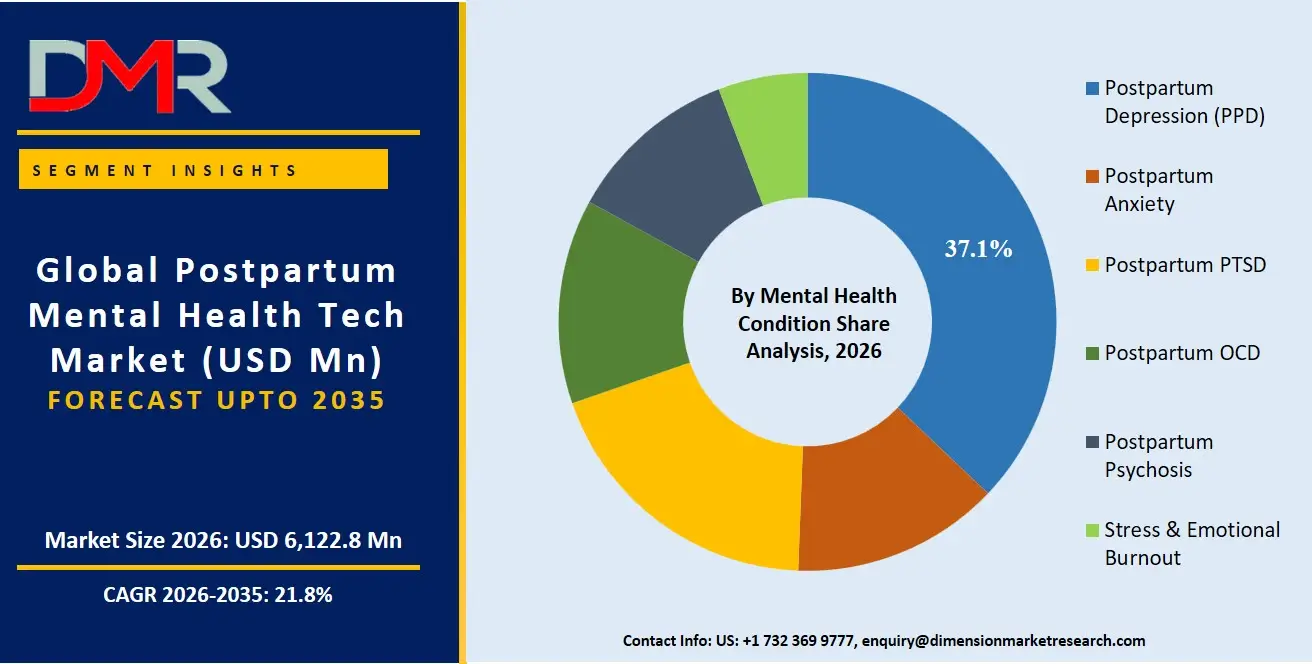
Postpartum Depression (PPD) is anticipated to lead the segment of mental health conditions as the most prevalent postpartum mental health condition in the world. PPD screening and treatment are recognized as having a profound impact on maternal well-being, infant development and family health outcomes and are of high priority for healthcare providers, digital health startups, and insurers. The majority of postpartum mental health apps and digital therapeutics focus on tracking mood, completing assessments using AI, and providing virtual counseling sessions to detect depressive symptoms. In addition, the number of people who are aware of and diagnosed with maternal mental health issues is growing, as are government-backed maternal mental health programs for diagnosis and treatment. Further, the evidence-based digital solutions for depression using Cognitive Behavioral Therapy (CBT) have further consolidated PPD's market leadership.
By Platform Type Analysis
The smartphone applications category is poised to lead the platform type segment as they are easily accessible, convenient, and provide constant mental health support no matter the time or place. Smartphones are part and parcel of everyday life, and postpartum women are becoming more and more interested in app-based platforms to track their mood, guided therapy, meditation, symptom checks and virtual consultations. Real-time notifications, AI-powered emotional tracking, and customized well-being advice, also available through mobile apps, enhance customer engagement and adherence. App features are continually improved with the help of multilingual interfaces, wearable features, and secure cloud connectivity. Moreover, the cost-effectiveness of mobile health platforms over traditional therapy services speeds up the adoption of mobile health platforms, making smartphone applications the largest platform category in the developed and emerging markets.
By Service Type Analysis
The service type segment is poised to be led by virtual counseling as postpartum mothers are looking for accessible, flexible, and confidential mental health care from licensed mental health professionals. Digital counselling platforms take away geographical constraints and minimise stigma of attending physical mental health clinics. Being able to schedule therapy sessions remotely, combined with the management of newborn care, greatly enhances patient convenience and continuity of care. In addition, healthcare providers and employers are making a concerted effort to expand teletherapy benefits in their maternal wellness offerings to enhance postpartum outcomes and lower healthcare expenses.
By Target End-User Analysis
The target end-user segment is is expected to be dominated by patients & consumers (B2C) as postpartum mental health technologies are mainly intended for direct use by postpartum women looking for emotional support, self-monitoring, and access to therapy. In recent years, consumers have turned to mobile applications, meditation services, AI chatbots and teletherapy as standalone ways to cope with postpartum stress, anxiety and depression. The increased awareness and acceptance of maternal mental health and the growing trend of direct-to-consumer digital wellness tools has helped drive direct-to-consumer adoption on a global scale. Wellness applications on a subscription basis and freemium mental health platforms are also contributing to the mass adoption of these platforms. Furthermore, customized user experiences, privacy and 24/7 accessibility of B2C platforms renders them more appealing when compared with traditional care pathways, making patients and consumers the predominant end-user segment in the market.
The Global Postpartum Mental Health Tech Market Report is segmented on the basis of the following:
By Technology
- Telehealth & Virtual Care
- Artificial Intelligence & Machine Learning
- Mobile Health (mHealth)
- Cloud-Based Platforms
- Chatbots & Conversational AI
- Predictive Analytics
By Mental Health Condition
- Postpartum Depression (PPD)
- Postpartum Anxiety
- Postpartum PTSD
- Postpartum OCD
- Postpartum Psychosis
- Stress & Emotional Burnout
By Platform Type
- Web-Based Platforms
- Smartphone Applications
- Integrated Maternal Health Platforms
- Digital Therapeutics (DTx)
- Remote Monitoring Platforms
By Service Type
- Virtual Counseling
- Cognitive Behavioral Therapy (CBT)
- Mood Tracking & Screening
- Peer Support Communities
- Meditation & Wellness Programs
- Crisis Intervention Services
By Target End-User
- Patients & Consumers (B2C)
- Healthcare Providers (B2B)
- Payers & Employers (B2B)
Regional Analysis
Leading Region by Market Share
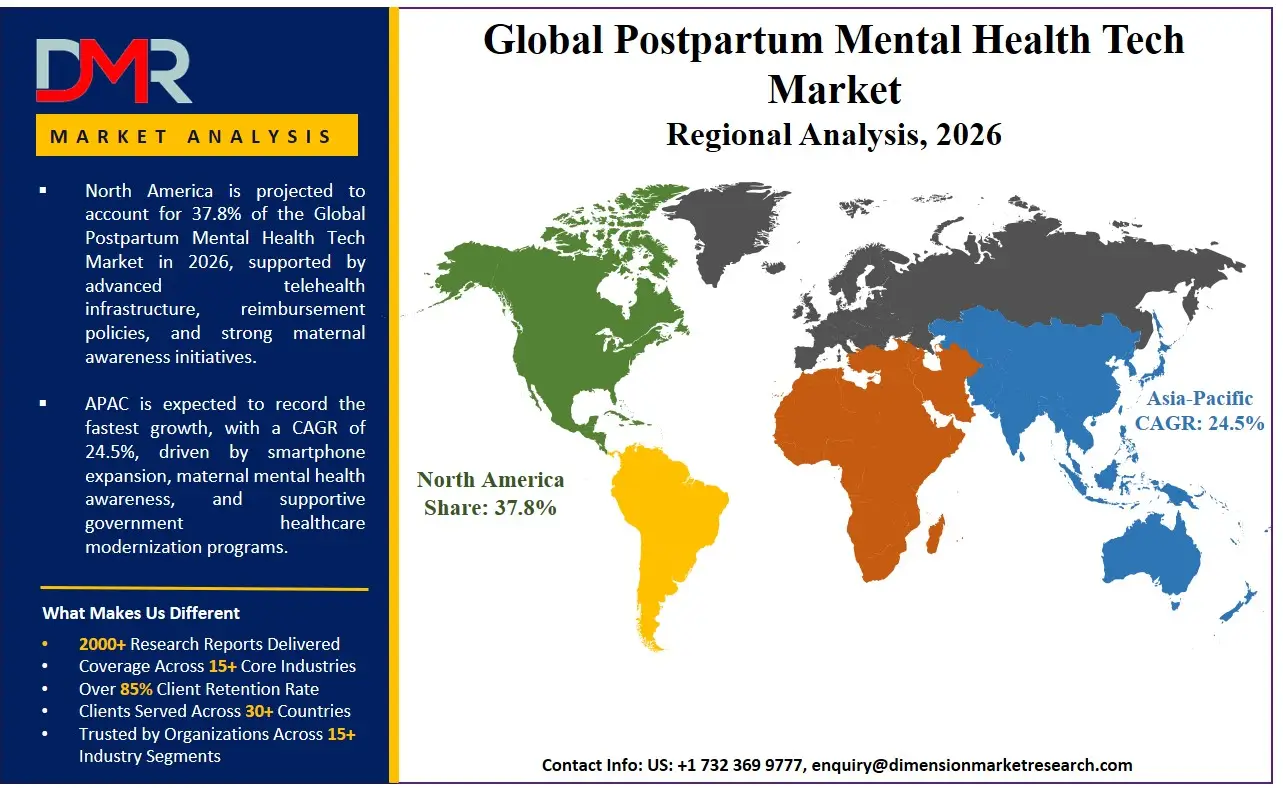
The North American market is poised to hold the largest share of the global postpartum mental health tech industry and is forecast to make up 37.8% of the total market by the end of 2026. The region has access to superior healthcare facilities, great awareness of the importance of mental health for mothers, and excellent uptake of digital healthcare technologies. The United States continues to be a leading contributor as more and more insurance companies include mental health care for women in their plans, and investments in femtech innovation continue to rise. To enhance early identification and intervention for postpartum depression and anxiety, healthcare providers have started using AI-driven mood tracking apps, digital therapeutics, and integrated maternal health platforms. The region also sees market growth bolstered by robust venture capital funding and healthcare policies that support the growth of the market.
ℹ
To learn more about this report –
Download Your Free Sample Report Here
Fastest-Growing Regional Market
Asia-Pacific is expected to witness the highest growth rate for the postpartum mental health tech market throughout the forecast period. Expansion of digital healthcare infrastructures, growing smartphone penetration, and the governments' increasing emphasis on maternal healthcare modernization in countries including India, China, Japan and Southeast Asia are the primary drivers of growth. Mobile health apps, virtual counseling, and online mood tracking are growing tools for public health groups to enhance access to mental health care services for new mothers.
By Region
North America
Europe
- Germany
- The U.K.
- France
- Italy
- Russia
- Spain
- Benelux
- Nordic
- Rest of Europe
Asia-Pacific
- China
- Japan
- South Korea
- India
- ANZ
- ASEAN
- Rest of Asia-Pacific
Latin America
- Brazil
- Mexico
- Argentina
- Colombia
- Rest of Latin America
Middle East & Africa
- Saudi Arabia
- UAE
- South Africa
- Israel
- Egypt
- Rest of MEA
Competitive Landscape
In the competitive environment within the international market space for postpartum mental health technology, there is an interesting mix of pure-play femtech start-ups (such as Maven Clinic, Mahmee, Little Lullaby), digital therapeutic technology companies that focus on mental wellness (e.g. Happify Health and Woebot), along with the Digital Health Divisions from telehealth organizations. However, the key to success in this space is thorough clinical validation and effective collaboration with OB/GYN, peds organizations, and employer benefits consultants. In addition, rapid consolidation is taking place with large digital health companies acquiring postpartum mental health start-ups. Clinical algorithms within Predictive Analytics along with Chatbots customized based on different cultures will be the basis for competitive advantage rather than CBT content alone.
Some of the prominent players in the Global Postpartum Mental Health Tech Market are:
- Maven Clinic
- Canopie
- Postpartum Support International (PSI)
- Wysa
- Woebot Health
- Happify Health
- Talkiatry
- Brightside Health
- Expectful
- MamaZen
- Mindful Mamas
- Youper
- Calm
- Headspace
- Huckleberry
- Wildflower Health
- Lōvu Health
- Therapy Mama
- SonderMind
- Clue
- Other Key Players
Recent Developments
- January 2026: Maven Clinic made a strategic move in expanding their postpartum mental health hub, a tech-based service that helps patients in the B2C and B2B categories access predictive analytics and online counseling on their maternal health platform.
- November 2025: Talkspace forged its partnership with a prominent national health insurance provider and launched a specialized offering of cognitive behavior therapy (CBT) and crisis intervention for Medicaid members dealing with postpartum depression and anxiety.
- October 2025: Unmind (Parent company of Little Lullaby) has made an acquisition of a Chatbot & Conversational AI start-up in Europe to advance their solutions in Cloud-Based Platforms & Peer Support Communities for the employer clients.
Report Details
| Report Characteristics |
| Market Size (2026) |
USD 6,122.8 Mn |
| Forecast Value (2035) |
USD 36,036.4 Mn |
| CAGR (2026–2035) |
21.8% |
| The US Market Size (2026) |
USD 1,946.4 Mn |
| Historical Data |
2021 – 2025 |
| Forecast Data |
2027 – 2035 |
| Base Year |
2025 |
| Estimate Year |
2026 |
| Segments Covered |
By Technology, By Mental Health Condition, By Platform Type, By Service Type, and By Target End-User |
| Regional Coverage |
North America – The US and Canada; Europe – Germany, The UK, France, Russia, Spain, Italy, Benelux, Nordic, & Rest of Europe; Asia-Pacific – China, Japan, South Korea, India, ANZ, ASEAN, Rest of APAC; Latin America – Brazil, Mexico, Argentina, Colombia, Rest of Latin America; Middle East & Africa – Saudi Arabia, UAE, South Africa, Turkey, Egypt, Israel, & Rest of MEA |
Frequently Asked Questions
How big is the Global Postpartum Mental Health Tech Market?
▾ The Global Postpartum Mental Health Tech market is poised to be valued at USD 6,122.8 million in 2026 and is projected to reach USD 36,036.4 million by 2035, driven by the universal need for scalable, accessible, and stigma-free digital solutions for maternal mental health conditions.
What is the CAGR of the Global Postpartum Mental Health Tech Market from 2026 to 2035?
▾ The market is expected to grow at a CAGR of 21.8% from 2026 to 2035, reflecting the accelerating digital transformation of perinatal care pathways and the persistent shortage of specialized postpartum mental health clinicians.
What factors are driving the growth of the Global Postpartum Mental Health Tech Market?
▾ Key drivers include the global shortage of perinatal psychiatrists, the imperative to provide early screening for PPD and anxiety, the management complexity of postpartum care across fragmented health systems, and the surge in demand for Predictive Analytics and Crisis Intervention Services.
Which region held the largest share of the Postpartum Mental Health Tech Market in 2026?
▾ North America, specifically the United States, is poised to hold the 37.8% of market share in 2026, driven by a mature digital health reimbursement ecosystem and aggressive enterprise investment in Integrated Maternal Health Platforms and Digital Therapeutics (DTx).
Which region is expected to grow the fastest in the Postpartum Mental Health Tech Market?
▾ The Asia-Pacific region is expected to grow the fastest, fueled by rapid smartphone adoption and digital health initiatives in India, China, and Japan, where Mobile Health (mHealth) solutions are critical for scaling access to Mood Tracking & Screening.
What are the major trends in the Global Postpartum Mental Health Tech Market?
▾ Major trends include the rise of prescription Digital Therapeutics (DTx) for PPD, the integration of Predictive Analytics into Telehealth & Virtual Care platforms, the demand for culturally adapted Chatbots, and the focus on Crisis Intervention Services within employer-sponsored wellness programs.
Who are the key players in the Global Postpartum Mental Health Tech Market?
▾ Key players include pure-play femtech platforms like Maven Clinic and Mahmee, digital mental health providers like Talkspace and Woebot Health, and integrated maternal health platforms like Ovia Health and Wildflower Health.
How is the Global Postpartum Mental Health Tech Market segmented?
▾ The market is segmented by Technology, Mental Health Condition, Platform Type, Service Type, and Target End-User.