What is the Predictive and Prescriptive Analytics Market Size?
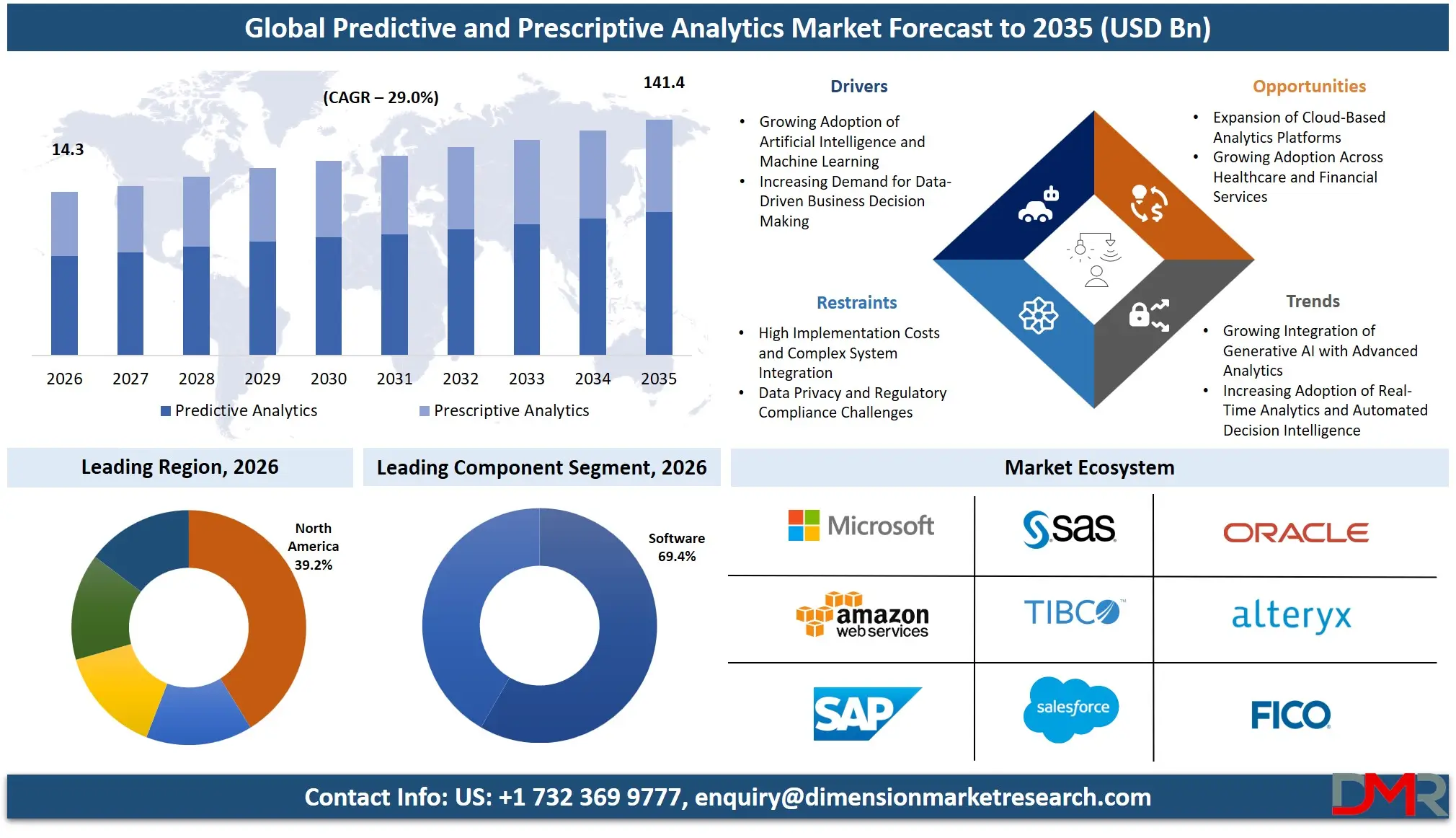
The Global Predictive and Prescriptive Analytics Market is expected to reach a value of USD 14.3 billion in 2026, and it is further anticipated to surge to USD 141.4 billion by 2035, growing at a robust CAGR of 29.0% during the forecast period.
ℹ
To learn more about this report –
Download Your Free Sample Report Here
The predictive and prescriptive analytics market is experiencing explosive growth as enterprises shift from simply diagnosing past events to forecasting future outcomes and automating optimal decisions. The market encompasses a range of software platforms and services that leverage statistical algorithms, machine learning, and artificial intelligence to analyze historical and real-time data. The escalating demand to optimize complex supply chains, personalize customer experiences at scale, mitigate multifaceted risks, and automate real-time operational decisions is driving the necessity for specialized analytics solutions. Enterprises across all sectors are the primary adopters, with cloud-based deployments remaining the most popular due to their agility and ability to handle computationally intensive AI workloads. The BFSI, Healthcare & Life Sciences, and Retail & E-commerce industries are key players as they require advanced analytics to power fraud detection, patient outcome prediction, and hyper-personalized marketing in highly competitive ecosystems.
The US Predictive and Prescriptive Analytics Market
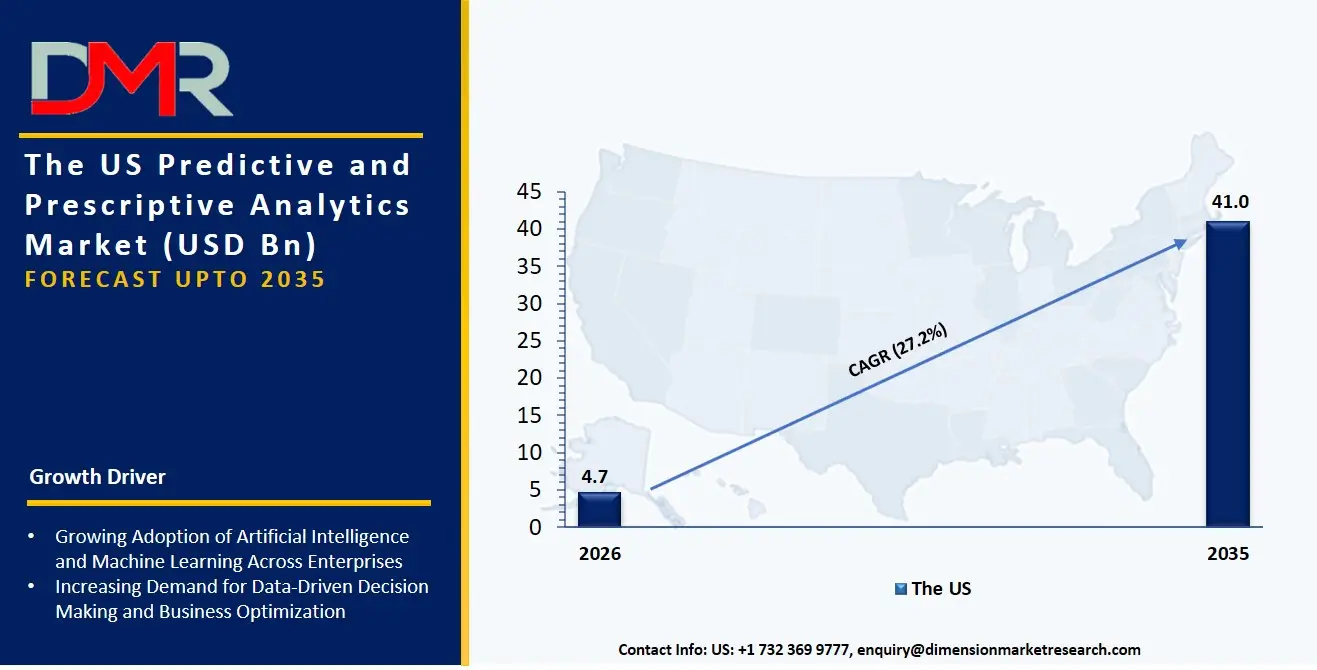
The US Predictive and Prescriptive Analytics Market is projected to reach USD 4.7 billion in 2026, demonstrating a strong compound annual growth rate of 27.2% over its forecast period, culminating in a value of USD 41.0 billion by 2035. The US remains the global epicenter for analytics innovation, fueled by aggressive data-driven strategies from Fortune 500 companies and the world's highest concentration of AI and machine learning talent.
ℹ
To learn more about this report –
Download Your Free Sample Report Here
The market is typified by high demand for advanced analytics platforms that unify siloed data estates into intelligent decision engines. Furthermore, the integration of Generative AI to simulate business scenarios and recommend prescriptive actions is creating a parallel surge in demand for consulting and system integration services to govern AI ethics and ensure model explainability within core business functions like finance and customer experience.
The Europe Predictive and Prescriptive Analytics Market
The Europe Predictive and Prescriptive Analytics Market is estimated to be valued at USD 4.2 billion in 2026 and is further anticipated to reach USD 39.6 billion by 2035 at a robust CAGR of 28.3%. The European market is profoundly shaped by stringent regulatory frameworks such as GDPR and the upcoming EU AI Act, which drive an acute need for model transparency, data governance, and ethical AI consulting. Accelerated growth in hybrid deployment modes is being experienced in the region, as manufacturers and automotive giants in Germany and France seek to balance operational technology (OT) data security with the predictive maintenance capabilities of cloud-based analytics. In addition, initiatives like GAIA-X are compelling service providers to create dedicated system integration solutions that ensure data sovereignty and interoperability across European data ecosystems.
The Japan Predictive and Prescriptive Analytics Market
The Japan Predictive and Prescriptive Analytics Market is projected to be valued at USD 1.1 billion in 2026 at a CAGR of 28.0%. The Japanese market is uniquely driven by a corporate imperative to address a declining workforce and optimize industrial productivity through "Society 5.0" initiatives. Prescriptive analytics software and operations & supply chain business functions constitute a large share of spending, as traditional conglomerates automate factory floor decisions and logistics networks. There is also a strong need for deeply localized system integration services to bridge the gap between decades-old manufacturing execution systems and modern AI-driven analytics platforms, creating a niche for specialized support and maintenance tailored to industrial control frameworks.
Key Takeaways
- Market Size & Forecast: The Global Predictive and Prescriptive Analytics market is projected to reach USD 14.3 billion in 2026, expanding dramatically to USD 141.4 billion by 2035, fueled by the dual engines of pervasive AI adoption and the imperative to monetize vast, previously untapped data repositories.
- Growth Rate & Outlook: Global market growth is expected at a CAGR of 29.0%, driven by a critical shortage of data scientists and the escalating complexity of building real-time decision intelligence systems that can prescribe actions autonomously at scale.
- Primary Growth Drivers: Key forces include the widespread transition from gut-feeling decision-making to data-backed certainty, the need for prescriptive analytics to optimize pricing and resource allocation in volatile markets, and the integration of automated machine learning (AutoML) within advanced analytics platforms to democratize data science.
- Key Market Trends: Major trends include the rise of decision intelligence as a formal business discipline, the embedding of Generative AI copilots within data visualization tools to narrate insights, and the shift toward cloud-based platforms as the foundational layer for computationally intensive simulation and optimization models.
- By Deployment Mode Analysis: Cloud-based models are expected to dominate enterprise strategies due to their inherent scalability for processing massive datasets and the accessibility of pre-built AI/ML services. However, hybrid deployments are increasingly critical, requiring specialized system integration services to orchestrate analytics across on-premises legacy data lakes and public cloud innovation engines.
- By Business Function Analysis: Finance & Risk Management and Sales & Marketing are the most mature functions for adoption, driven by direct ROI. Operations & Supply Chain is the fastest-growing function as predictive twin simulations and prescriptive disruption management become essential for global resilience.
- Regional Leadership: North America is poised to dominate this market with 39.2% of the market share in 2026 due to its deeply entrenched cloud hyperscaler infrastructure and a mature venture capital ecosystem that aggressively funds next-generation analytics startups.
What is the Predictive and Prescriptive Analytics?
Predictive and Prescriptive Analytics are the specialized software and services layers within the broader data ecosystem that move organizations from hindsight to foresight and automated action. Unlike descriptive analytics (which answers "what happened?"), predictive analytics uses statistical models and machine learning to forecast future probabilities ("what will happen?"), while prescriptive analytics goes a step further to recommend specific actions to optimize outcomes ("what should we do?"). This market comprises software for data visualization, reporting, and advanced modeling, along with expert services including consulting, system integration, and managed services. With 90% of enterprise data being unstructured or siloed, professional analytics services are essential to build the data pipelines, establish model governance, and perform the continuous performance tuning necessary to translate algorithmic insights into tangible competitive advantage and autonomous business processes.
Use Cases
- Real-Time Fraud Intervention in BFSI: Banking institutions deploy prescriptive analytics software to not only predict fraudulent credit card transactions in milliseconds but also prescribe the optimal mitigation action—such as blocking a transaction, requesting biometric re-authentication, or alerting a human analyst—based on risk scores and customer value.
- Predictive Patient Deterioration in Healthcare: Hospital networks utilize predictive analytics platforms integrated with electronic health records to forecast which patients are at high risk of sepsis or cardiac arrest hours before clinical symptoms manifest, enabling proactive, life-saving interventions through prescriptive clinical decision support.
- Hyper-Personalized Supply Chains in Retail: Global retailers use advanced analytics platforms to predict demand at a hyper-local level and then prescribe dynamic inventory rebalancing actions across their distribution network, integrating real-time weather, social media trends, and logistics data to prevent stockouts and markdowns.
- Prescriptive Maintenance in Manufacturing: Manufacturers integrate sensor data from production line machinery with predictive models to forecast component failure, while prescriptive analytics engines automatically schedule maintenance windows, order replacement parts, and adjust production scheduling to minimize disruption.
How AI is Transforming the Predictive and Prescriptive Analytics Market?
AI is fundamentally transforming the analytics market by accelerating the path from data discovery to automated action, while simultaneously lowering the barrier to entry. In software, AI-powered AutoML and generative AI are automating the heavy lifting of feature engineering and model selection, allowing citizen data scientists to build sophisticated predictive models without deep coding expertise. Generative AI copilots embedded in data visualization & reporting tools are now translating complex data queries into natural language visualizations and narratives, democratizing insights for business users.
Governance and business strategy projects are also revolving around AI. In consulting services, intelligent compliance agents continuously monitor model outputs for bias, drift, and ethical violations, helping organizations adhere to evolving regulations and maintain trust. Moreover, prescriptive analytics platforms are moving beyond rule-based optimization to incorporate reinforcement learning, enabling systems that learn optimal actions in complex, dynamic environments like real-time supply chain logistics and automated financial trading, directly simulating outcomes before a decision is committed.
Market Dynamics
Key Drivers in the Global Predictive and Prescriptive Analytics Market
Growing Adoption of Artificial Intelligence and Machine Learning
The rapid integration of artificial intelligence AI and machine learning ML into enterprise operations is a major driver of the Global Predictive and Prescriptive Analytics Market. Organizations are leveraging intelligent analytics platforms to forecast demand, optimize business processes, detect anomalies, and automate complex decision-making. AI-powered predictive models continuously improve forecasting accuracy by learning from historical and real-time data. Businesses across banking, healthcare, manufacturing, retail, and telecommunications increasingly rely on advanced analytics to gain competitive advantages, improve operational efficiency, and reduce business risks. This widespread adoption of AI-enabled analytics solutions continues to accelerate global market growth.
Increasing Demand for Data-Driven Business Decision Making
Organizations are generating unprecedented volumes of structured and unstructured data from digital platforms, IoT devices, enterprise applications, and customer interactions. Predictive and prescriptive analytics enable enterprises to transform this information into actionable insights that improve strategic planning, operational efficiency, and customer engagement. Companies increasingly use analytics to optimize pricing, forecast market trends, manage inventory, personalize customer experiences, and improve financial performance. As executives prioritize evidence-based decision-making over intuition, investments in advanced analytics platforms continue to rise across industries, making data-driven business intelligence one of the strongest growth drivers for the market.
Restraints in the Global Predictive and Prescriptive Analytics Market
High Implementation Costs and Complex System Integration
Deploying enterprise-scale predictive and prescriptive analytics platforms often requires significant investments in software, cloud infrastructure, data integration, and skilled personnel. Organizations must integrate analytics solutions with ERP, CRM, business intelligence, and operational systems while ensuring high-quality data availability. Complex implementation projects increase deployment time and overall costs, particularly for organizations operating legacy IT environments. Small and medium-sized enterprises may find these investments financially challenging, slowing adoption. Ongoing maintenance, software updates, and model optimization further increase operational expenses, limiting widespread implementation across cost-sensitive organizations.
Data Privacy and Regulatory Compliance Challenges
Predictive and prescriptive analytics rely heavily on collecting, processing, and analyzing large volumes of sensitive customer, financial, and operational data. Organizations must comply with evolving global privacy regulations governing data collection, storage, and processing while maintaining customer trust. Managing data governance, ensuring data quality, and preventing unauthorized access add complexity to analytics deployment. Regulatory uncertainty across multiple jurisdictions can delay implementation and increase compliance costs. Concerns regarding data security, algorithm transparency, and ethical AI usage continue to represent significant barriers to broader enterprise adoption of advanced analytics solutions.
Growth Opportunities in the Global Predictive and Prescriptive Analytics Market
Expansion of Cloud-Based Analytics Platforms
The increasing adoption of cloud computing presents significant growth opportunities for predictive and prescriptive analytics vendors. Cloud-based platforms provide scalable computing resources, faster deployment, lower infrastructure costs, and easy integration with artificial intelligence, machine learning, and big data technologies. Organizations increasingly migrate analytics workloads to cloud environments to improve flexibility and support remote operations. Cloud-native analytics also enable businesses of all sizes to access advanced forecasting and optimization capabilities without extensive capital investment. This transition toward cloud-first enterprise strategies is expected to significantly expand market opportunities over the coming years.
Growing Adoption Across Healthcare and Financial Services
Healthcare providers and financial institutions are rapidly expanding their use of predictive and prescriptive analytics to improve operational performance and customer outcomes. Healthcare organizations use analytics for disease prediction, patient risk assessment, treatment optimization, and resource planning, while financial institutions apply advanced analytics for fraud detection, credit scoring, investment optimization, and regulatory compliance. Increasing digital transformation initiatives, AI adoption, and growing data availability across these industries create substantial opportunities for analytics vendors to develop specialized industry-specific solutions and expand recurring software and cloud service revenues.
Trends in the Global Predictive and Prescriptive Analytics Market
Growing Integration of Generative AI with Advanced Analytics
Generative AI is increasingly being integrated into predictive and prescriptive analytics platforms to automate insight generation, scenario modeling, and business recommendations. AI-powered assistants enable users to interact with analytics platforms using natural language, simplifying complex data analysis and improving decision-making speed. Organizations are adopting generative AI to enhance forecasting accuracy, automate reporting, and accelerate strategic planning. This convergence of generative AI with predictive analytics is transforming enterprise decision support and creating more accessible, intelligent analytics solutions across multiple industries.
Increasing Adoption of Real-Time Analytics and Automated Decision Intelligence
Organizations are moving beyond historical reporting toward real-time predictive analytics and automated decision intelligence platforms capable of responding instantly to changing business conditions. Streaming analytics, edge computing, and AI-driven automation enable enterprises to optimize operations, detect risks, personalize customer interactions, and improve supply chain performance continuously. Businesses increasingly demand analytics solutions that not only predict future events but also recommend optimal actions automatically. This shift toward intelligent, real-time decision-making is becoming one of the most significant technology trends shaping the future of the predictive and prescriptive analytics market.
Research Scope and Analysis
The Global Predictive and Prescriptive Analytics Market is segmented by Component into Software and Services, Deployment Mode, Organization Size, Analytics Type, Business Function, and End User, including Banking Financial Services and Insurance, Healthcare and Life Sciences, Retail and E-commerce, Manufacturing, Information Technology and Telecommunications, Government and Public Sector, Energy and Utilities, Transportation and Logistics, Media and Entertainment, Education, and Others.
ℹ
To learn more about this report –
Download Your Free Sample Report Here
By Component Analysis
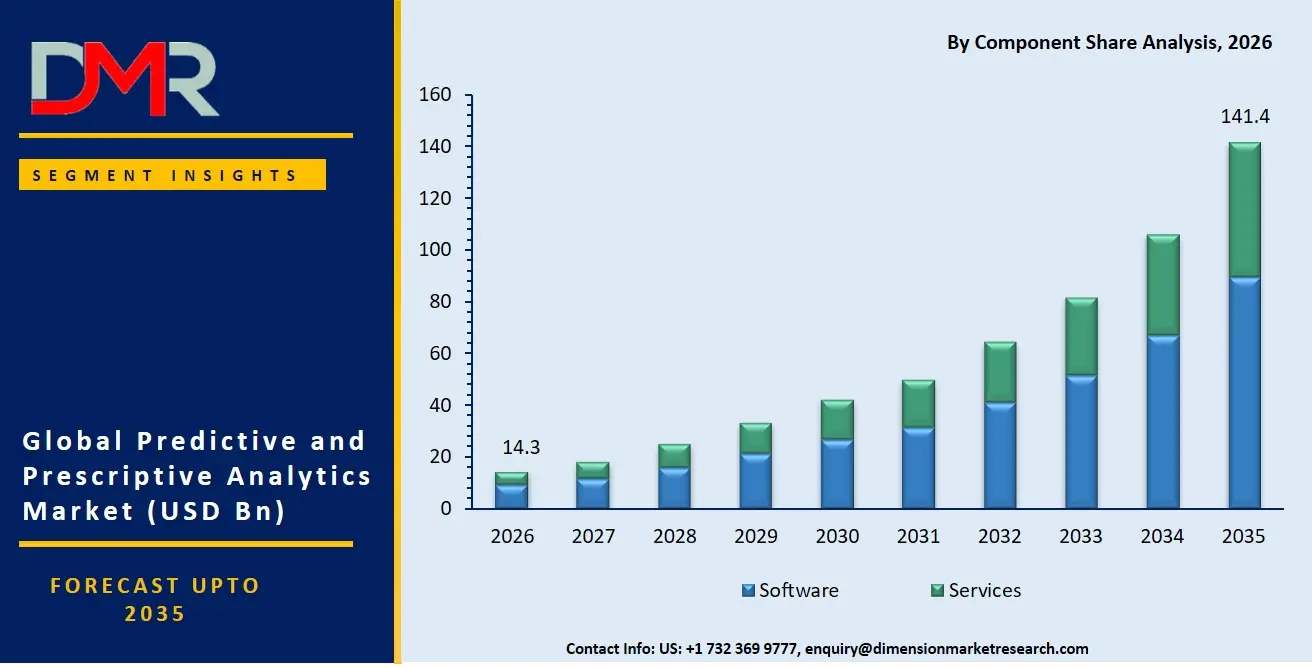
The Software segment is poised to dominate the Global Predictive and Prescriptive Analytics Market because organizations increasingly rely on advanced analytics platforms to transform large volumes of structured and unstructured data into actionable business insights.
ℹ
To learn more about this report –
Download Your Free Sample Report Here
Predictive and prescriptive analytics software enables forecasting, optimization, scenario modeling, risk analysis, and automated decision-making across multiple industries. The integration of artificial intelligence, machine learning, and cloud computing has further enhanced software capabilities, allowing enterprises to improve operational efficiency and strategic planning. Continuous innovation, subscription-based deployment models, and growing enterprise demand for intelligent analytics solutions ensure software remains the largest contributor to overall market revenue.
By Deployment Mode Analysis
The Cloud-Based is expected to dominate the deployment segment in this market due to its scalability, flexibility, lower infrastructure costs, and faster implementation. Organizations increasingly adopt cloud analytics platforms to process large datasets, enable real-time insights, and support distributed workforces without significant capital investment. Cloud deployment also facilitates seamless integration with artificial intelligence, machine learning, and big data ecosystems while providing automatic software updates and high availability. As enterprises accelerate digital transformation and migrate business workloads to cloud environments, cloud-based predictive and prescriptive analytics solutions continue to experience widespread adoption across industries of all sizes.
By Organization Size Analysis
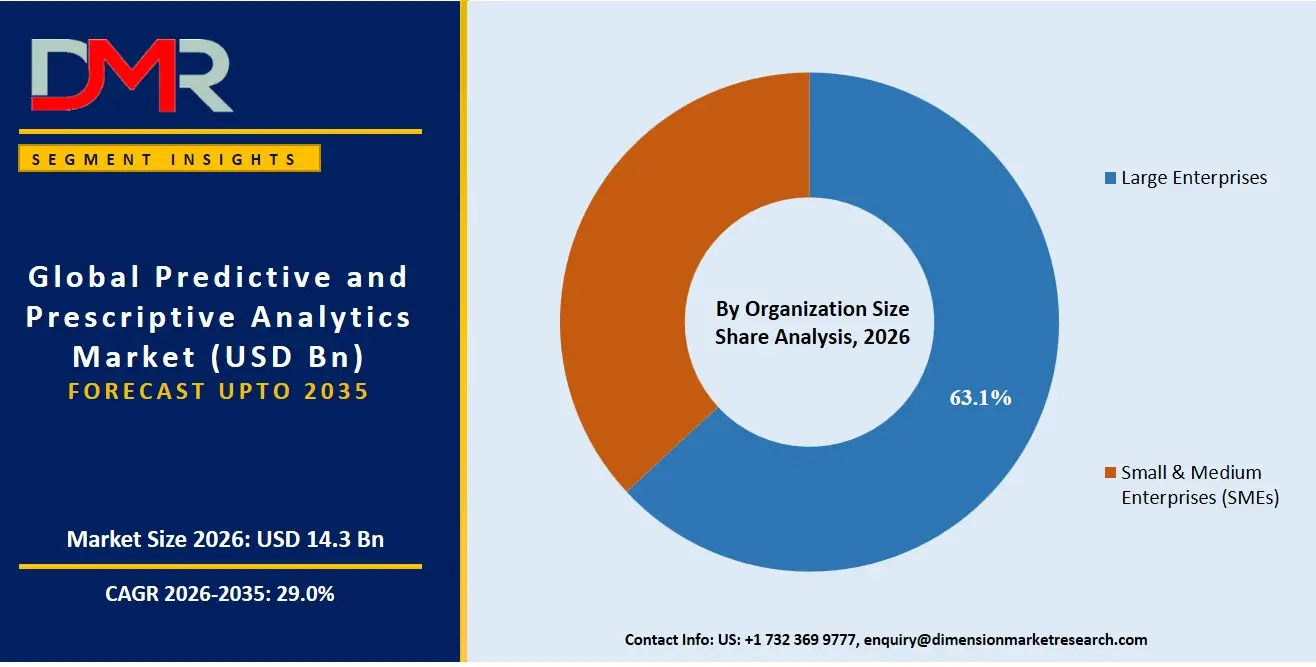
Large Enterprises is poised to dominate the Predictive and Prescriptive Analytics Market because they generate enormous volumes of operational, financial, and customer data requiring advanced analytical capabilities. These organizations possess the financial resources and technical expertise necessary to deploy enterprise-scale analytics platforms integrated with cloud infrastructure, ERP, CRM, and business intelligence systems. Predictive and prescriptive analytics support strategic decision-making, operational optimization, fraud detection, and customer engagement across complex global operations. Growing investments in artificial intelligence, digital transformation, and data-driven business strategies further reinforce large enterprises as the leading adopters of advanced analytics technologies.
By Analytics Type Analysis
Predictive Analytics is projected to dominate the analytics type segment because organizations primarily focus on forecasting future outcomes, identifying business risks, and improving operational planning through data-driven insights. Predictive models leverage historical data, machine learning algorithms, and statistical analysis to anticipate customer behavior, equipment failures, financial risks, and market trends. The widespread use of predictive analytics across banking, healthcare, retail, manufacturing, and telecommunications has significantly accelerated adoption. As enterprises increasingly seek proactive decision-making capabilities and business forecasting, predictive analytics continues to generate the highest market demand compared to prescriptive analytics solutions.
By Business Function Analysis
Finance & Risk Management is projected to dominates the business function segment because organizations extensively utilize predictive and prescriptive analytics to strengthen financial planning, credit risk assessment, fraud detection, investment analysis, regulatory compliance, and operational risk management. Financial institutions and enterprises rely on advanced analytics to improve forecasting accuracy, optimize resource allocation, and automate complex financial decision-making processes. Increasing financial regulations, growing digital transactions, and rising cybersecurity risks continue driving demand for intelligent analytics platforms. The strategic importance of financial performance optimization ensures Finance & Risk Management remains the leading business application for predictive and prescriptive analytics.
By End User Analysis
The Banking, Financial Services & Insurance (BFSI) sector is anticipated to dominated by the Global Predictive and Prescriptive Analytics Market due to its extensive use of advanced analytics for fraud detection, credit scoring, customer segmentation, risk management, regulatory compliance, and personalized financial services. Financial institutions process massive volumes of transactional and customer data, making predictive and prescriptive analytics essential for improving decision-making and operational efficiency. Artificial intelligence and machine learning further enhance forecasting accuracy, fraud prevention, and investment strategies. Growing digital banking adoption, regulatory requirements, and increasing demand for personalized financial experiences continue strengthening BFSI as the largest end-user segment.
The Global Predictive and Prescriptive Analytics Market Report is segmented on the basis of the following:
By Component
- Software
- Predictive Analytics Software
- Prescriptive Analytics Software
- Data Visualization & Reporting
- Advanced Analytics Platforms
- Services
- Consulting
- System Integration & Deployment
- Support & Maintenance
- Managed Services
By Deployment Mode
- Cloud-Based
- On-Premises
- Hybrid
By Organization Size
- Large Enterprises
- Small & Medium Enterprises (SMEs)
By Analytics Type
- Predictive Analytics
- Prescriptive Analytics
By Business Function
- Finance & Risk Management
- Sales & Marketing
- Operations & Supply Chain
- Customer Experience Management
- Human Resources
- Fraud Detection & Security
- Asset Management
- Others
By End User
- Banking, Financial Services & Insurance
- Healthcare & Life Sciences
- Retail & E-commerce
- Manufacturing
- Information Technology & Telecommunications
- Government & Public Sector
- Energy & Utilities
- Transportation & Logistics
- Media & Entertainment
- Education
- Others
Regional Analysis
Leading Region by Market Share
ℹ
To learn more about this report –
Download Your Free Sample Report Here
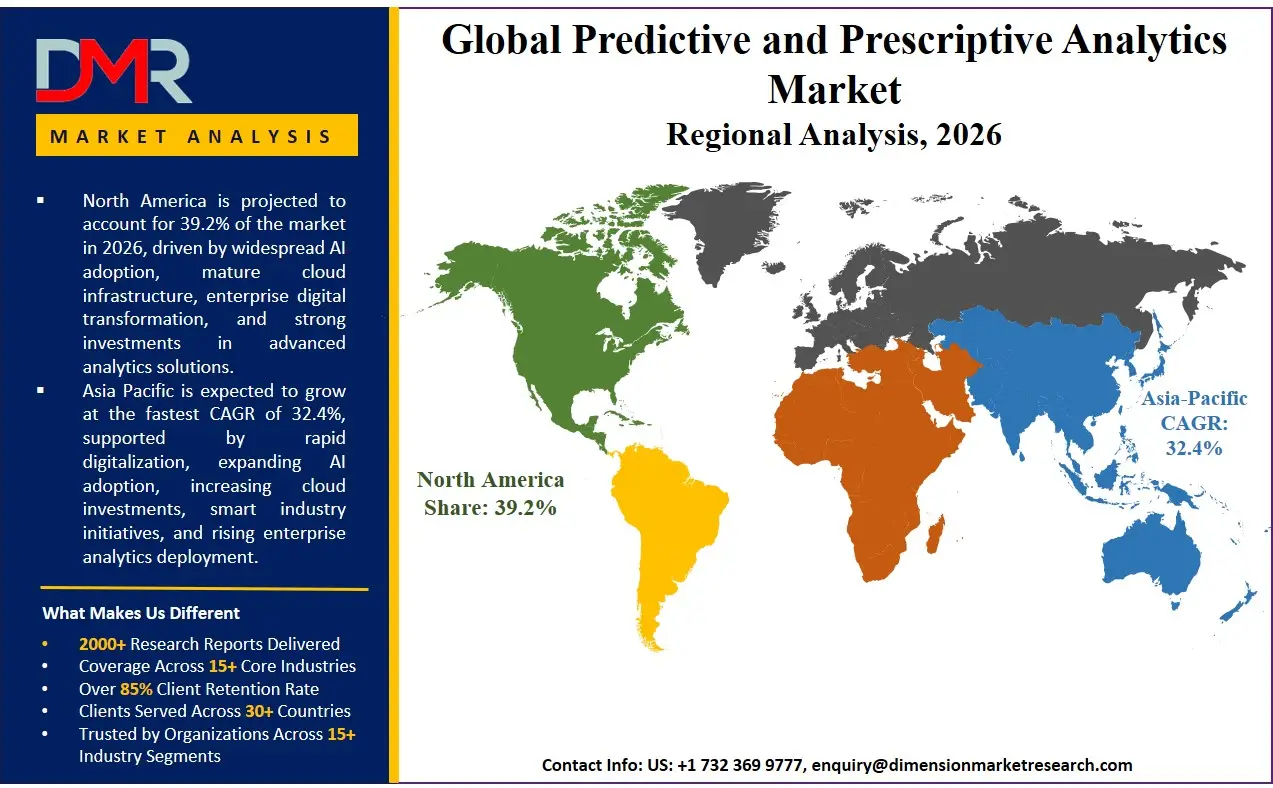
North America is poised to dominate the global predictive and prescriptive analytics market, projected to hold 39.2% of the market share by the end of 2026. The United States, which anchors North America, commands the highest share due to an unparalleled concentration of pioneering AI software vendors, hyperscale cloud partners, and a deep venture capital pool that aggressively funds cutting-edge analytics innovation. The region's ecosystem of global system integrators, boutique data science consultancies, and a rich talent pool of PhD-level data scientists remains unmatched. Enterprise investment in real-time decision intelligence, hyper-personalization, and the wholesale modernization of data infrastructure drives sustained demand for prescriptive analytics software and the sophisticated system integration services needed to embed models directly into operational workflows.
Fastest-Growing Regional Market
Asia-Pacific is expected to be the most rapidly expanding predictive and prescriptive analytics market, driven by sweeping government-led smart city and digital economy initiatives across India, China, and Southeast Asia. The rapid economic expansion, the rise of a digitally-native middle class, and the explosion of data from mobile-first consumer platforms are compelling established conglomerates and agile startups alike to leapfrog legacy IT and directly adopt cloud-based advanced analytics platforms. There is also a severe shortage of data science talent in the region, making it necessary to outsource managed services and consulting to build, deploy, and maintain predictive models, covering the skills gap and enabling faster monetization of data assets without protracted internal capacity building.
By Region
North America
Europe
- Germany
- The U.K.
- France
- Italy
- Russia
- Spain
- Benelux
- Nordic
- Rest of Europe
Asia-Pacific
- China
- Japan
- South Korea
- India
- ANZ
- ASEAN
- Rest of Asia-Pacific
Latin America
- Brazil
- Mexico
- Argentina
- Colombia
- Rest of Latin America
Middle East & Africa
- Saudi Arabia
- UAE
- South Africa
- Israel
- Egypt
- Rest of MEA
Competitive Landscape
The competitive environment of the global predictive and prescriptive analytics market has become highly dynamic, featuring a heterogeneous mix of global cloud hyperscalers embedding AI into their platforms, established enterprise software giants acquiring niche data science firms, and a vibrant ecosystem of pure-play startups focused on decision intelligence. The key to success lies in deep strategic partnerships with major cloud providers like AWS, Microsoft Azure, and Google Cloud, as these alliances unlock essential co-selling opportunities and early access to next-generation AI infrastructure. A rapid trend toward market consolidation is underway, with traditional software vendors and IT outsourcing companies acquiring specialized boutique firms to gain expertise in prescriptive optimization and AutoML. Proprietary intellectual property, including pre-built vertical AI models and automated model governance toolkits, is becoming the primary basis of competitive differentiation, moving beyond generic platform capabilities to delivering proven, industry-specific business outcomes.
Some of the prominent players in the Global Predictive and Prescriptive Analytics Market are:
- Microsoft Corporation
- IBM Corporation
- SAS Institute Inc.
- Oracle Corporation
- SAP SE
- Salesforce Inc.
- TIBCO Software Inc.
- Alteryx Inc.
- FICO
- Teradata Corporation
- Amazon Web Services Inc.
- Google LLC
- Dell Technologies Inc.
- Hewlett Packard Enterprise Development LP
- QlikTech International AB
- MicroStrategy Incorporated
- Altair Engineering Inc.
- DataRobot Inc.
- RapidMiner Inc.
- Domino Data Lab Inc.
- Other Key Players
Recent Developments
- June 2026: Salesforce and Databricks expanded their strategic partnership to securely connect enterprise data with AI agents, adding federated search, governance capabilities, and advanced analytics to improve predictive insights and prescriptive business actions.
- May 2026: IBM announced major enhancements to its watsonx portfolio at Think 2026, introducing next-generation agent orchestration, real-time AI-ready data capabilities, and intelligent automation to strengthen predictive and prescriptive enterprise decision-making.
- April 2026: SAS expanded SAS Viya with governed AI assistants, agentic AI capabilities, and Model Context Protocol integration, enabling organizations to accelerate predictive modeling, prescriptive analytics, and enterprise decision intelligence.
Report Details
| Report Characteristics |
| Market Size (2026) |
USD 14.3 Bn |
| Forecast Value (2035) |
USD 141.4 Bn |
| CAGR (2026–2035) |
29.0% |
| The US Market Size (2026) |
USD 4.7 Bn |
| Historical Data |
2021 – 2025 |
| Forecast Data |
2027 – 2035 |
| Base Year |
2025 |
| Estimate Year |
2026 |
| Segments Covered |
By Component, By Deployment Mode, By Organization Size, By Analytics Type, By Business Function, and By End User |
| Regional Coverage |
North America – The US and Canada; Europe – Germany, The UK, France, Russia, Spain, Italy, Benelux, Nordic, & Rest of Europe; Asia-Pacific – China, Japan, South Korea, India, ANZ, ASEAN, Rest of APAC; Latin America – Brazil, Mexico, Argentina, Colombia, Rest of Latin America; Middle East & Africa – Saudi Arabia, UAE, South Africa, Turkey, Egypt, Israel, & Rest of MEA |
Frequently Asked Questions
How big is the Global Predictive and Prescriptive Analytics Market?
▾ The Global Predictive and Prescriptive Analytics market is poised to be valued at USD 14.3 billion in 2026 and is projected to reach USD 141.4 billion by 2035, driven by the universal need for specialized platforms and services that translate raw data into automated foresight and optimized action.
What is the CAGR of the Global Predictive and Prescriptive Analytics Market from 2026 to 2035?
▾ The market is expected to grow at a CAGR of 29.0% from 2026 to 2035, reflecting the accelerating corporate mandate to embed real-time, AI-driven decision intelligence into every core business function.
What factors are driving the growth of the Global Predictive and Prescriptive Analytics Market?
▾ Key drivers include the global data science talent shortage, the imperative to move beyond descriptive dashboards to automated action, the complexity of orchestrating real-time decisions at scale, and the surge in demand for model governance consulting amid evolving AI regulatory frameworks.
Which region held the largest share of the Predictive and Prescriptive Analytics Market in 2026?
▾ North America is projected to hold a 39.2% market share in 2026, driven by its mature cloud and AI ecosystem and aggressive enterprise investment in prescriptive analytics and decision automation platforms.
Which region is expected to grow the fastest in the Predictive and Prescriptive Analytics Market?
▾ The Asia-Pacific region is expected to grow the fastest, fueled by rapid digital transformation in India, China, and Southeast Asia, where cloud-based advanced analytics platforms are critical for leapfrogging legacy IT and monetizing data from massive digital-native populations.
What are the major trends in the Global Predictive and Prescriptive Analytics Market?
▾ Major trends include the integration of Generative AI copilots into visualization tools, the rise of composable analytics architectures, the application of prescriptive analytics for sustainability (GreenOps), and a focus on AutoML to democratize data science within enterprises.
Who are the key players in the Global Predictive and Prescriptive Analytics Market?
▾ Key players include tech giants like IBM, Microsoft, and SAP; specialized analytics leaders like SAS Institute and FICO; and cloud hyperscaler platforms offering embedded AI services, alongside a dynamic tier of pure-play prescriptive analytics and decision intelligence startups.
How is the Global Predictive and Prescriptive Analytics Market segmented?
▾ The market is segmented by Component, Deployment Mode, Organization Size, Analytics Type, Business Function, and End User.