What is the Global Proteomics Market Size?
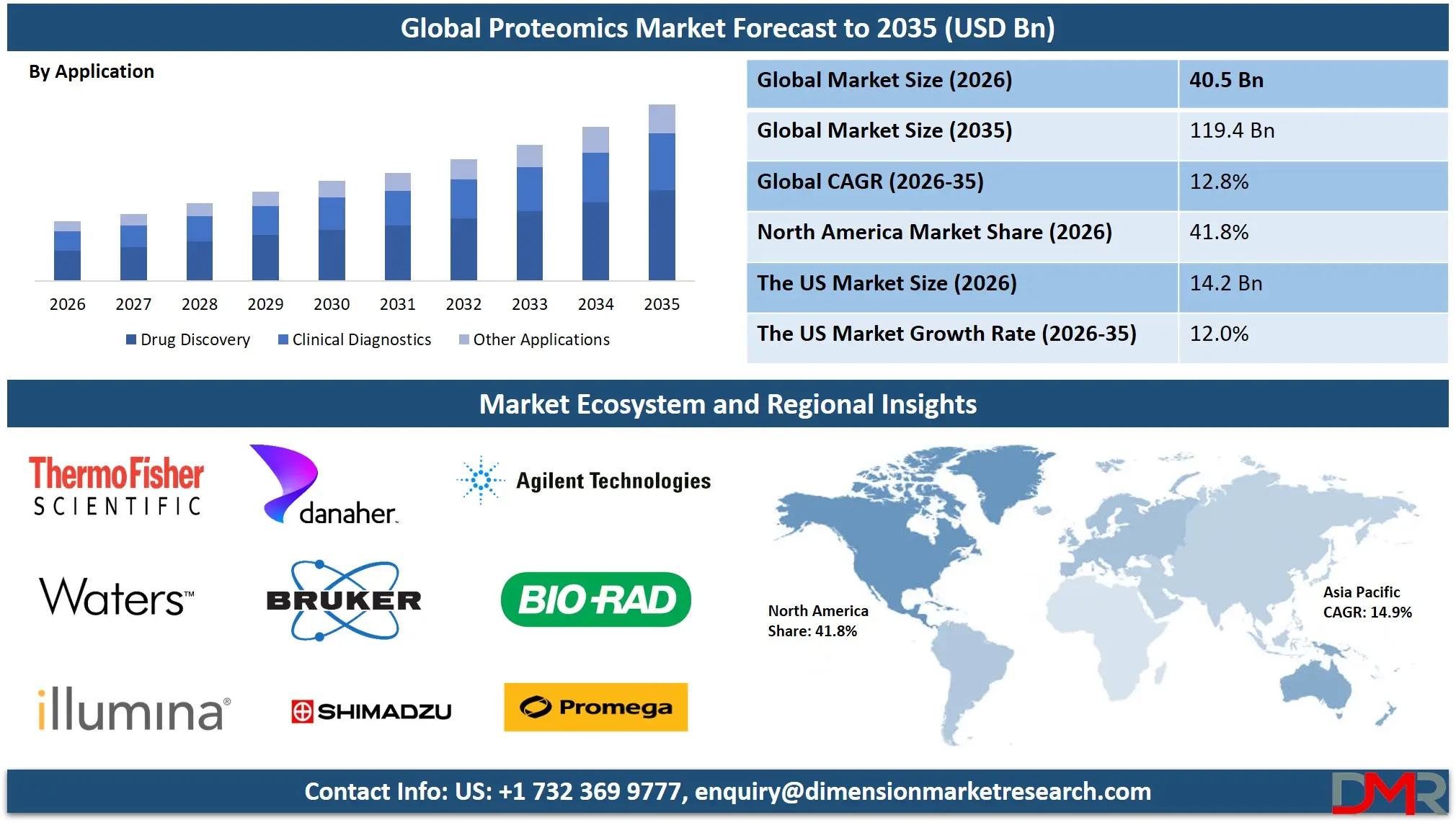
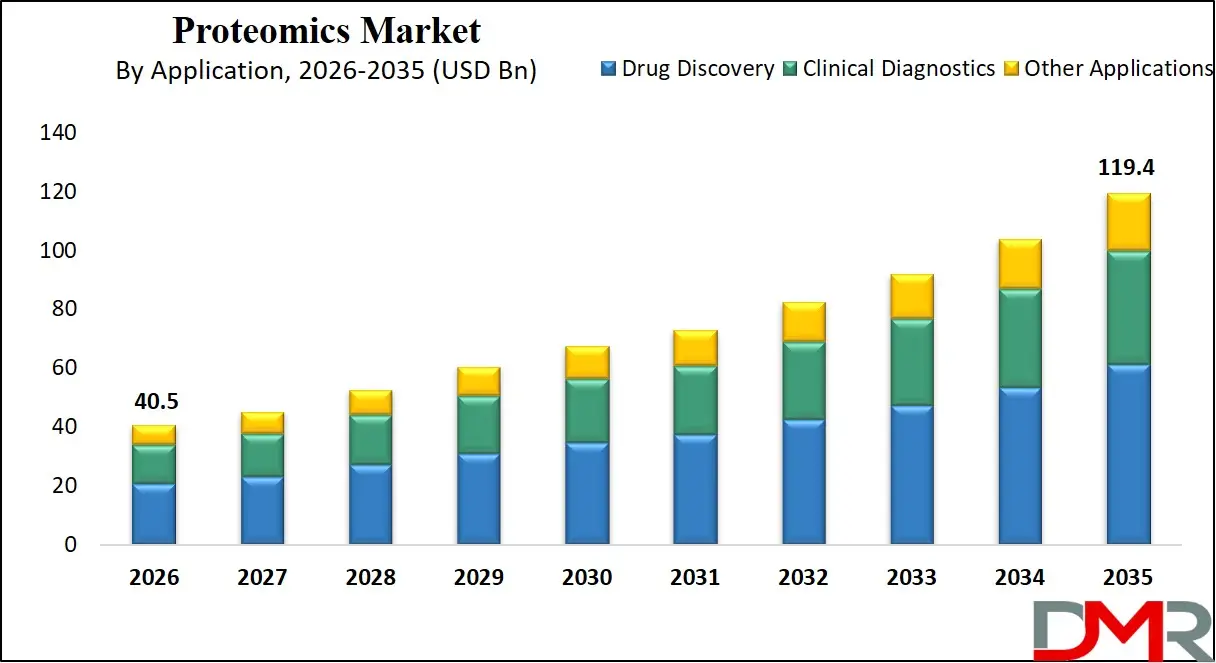
The Global Proteomics Market size is estimated at USD 40.5 billion in 2026 and is projected to reach USD 119.4 billion by 2035, exhibiting a CAGR of 12.8% during the forecast period, driven by the rising use of artificial intelligence in protein analysis, laboratory automation, and integrated proteomics workflow in biological research.
ℹ
To learn more about this report –
Download Your Free Sample Report Here
The Global Proteomics Market is expanding because of increasing use of machine learning in detecting and analyzing proteins and post-translational modifications; increasing approvals which reduce the probability of failures during bioprocessing and speed up the production process of biologic products; and greater funding in automating the application of proteomics. Some other reasons for expansion in this market are technological innovations in real-time protein quantitation, protein-protein interaction prediction, automated sample preparation, and high-throughput mass spectrometry along with better data integration standards.
The digital revolution in pharmaceuticals and biotechnology companies has been helpful in speeding up protein characterization and making research easier. This includes biomarker identification research. In addition, national policies focusing on the bio-economy have ensured sustainable research in proteomics.
ℹ
To learn more about this report –
Download Your Free Sample Report Here
The US Proteomics Market
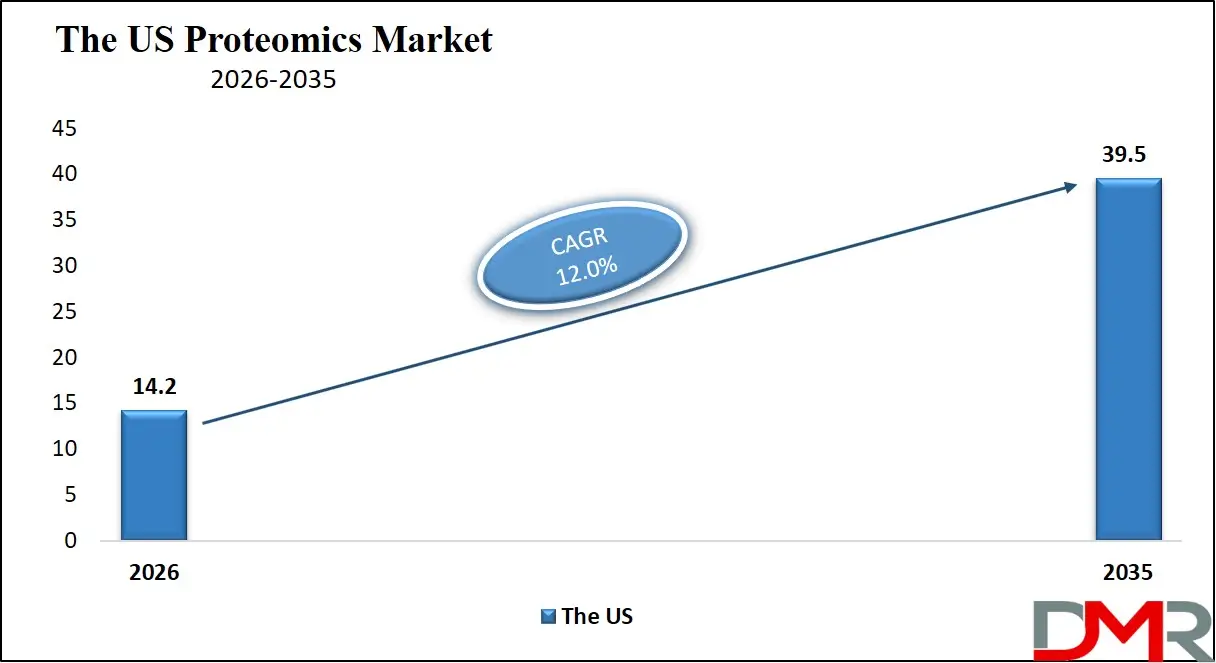
The US Proteomics Market is estimated to grow to USD 14.2 billion in 2026 with a compound annual growth rate of 12.0% during the forecast period.
ℹ
To learn more about this report –
Download Your Free Sample Report Here
The US market is shaped by major federal funding from the National Institutes of Health (NIH) , biopharmaceutical manufacturing programs supported by the FDA, and NIH-led AI initiatives for protein therapeutics and vaccine quality control. These programs encourage the use of AI-driven protein identification, real-time mass spectrometry data analysis, and predictive proteomics software. Automated proteomics instruments are being rapidly adopted, and the US continues to invest in better data sharing between systems, electronic lab notebooks, and reliable AI tools for proteomics. Service providers are also influenced by laws like the 21st Century Cures Act and national AI strategies to offer services that ensure data security, compliance, and smooth integration across pharma R&D and academic labs.
Europe Proteomics Market
The Europe Proteomics Market is estimated to be valued at USD 8.9 billion in 2026, witnessing growth at a CAGR of 12.1%, during the forecast period.
Europe's proteomics market is mature, shaped by EU-wide policies such as the EU Bioeconomy Strategy, the European Horizon Europe research program and national policies to support digital biotech (e.g., France's national proteomics plans and Germany's Bioökonomie 2030 strategy). Countries are also making proteomics processes more modular to align research and production demands and enable the sharing of data across national borders. The market grows due to new tools like software for real-time protein identification and scoring systems for post-translational modifications. Use is facilitated by public-private collaborations and data standards. Researchers have access to technologies such as cloud computing and encryption, and Europe is at the forefront of the digitisation of safe and efficient proteomics work.
Japan Proteomics Market
The Japan Proteomics Market is projected to be valued at USD 3.2 billion in 2026, progressing at a CAGR of 14.3%, during the period spanning from 2026 to 2035.
Japan's proteomics market is well developed, with high-quality mass spectrometry, integrated chromatography, and a wide array of AI-powered protein analysis software tools. National focus on automation, efficiency and process integrity is delivered via predictive protein models and smart lab management. Growth opportunities are aided by government measures under the Society 5.0 program by Japan's Ministry of Economy, Trade and Industry (METI), and continued investment in digital biomanufacturing. Biopharma R&D, industrial protein analysis for enzyme development and clinical proteomics all need effective AI to keep pace with data analysis. Higher costs for validating new proteomics automation systems and integrating them with legacy systems are significant, but there are opportunities for the export of Japanese proteomics technologies to the Asian and Pacific markets.
Key Takeaways
- Market Size & Forecast: The Global Proteomics Market is estimated to be valued at USD 40.5 billion in 2026 and is expected to grow to USD 119.4 billion by 2035.
- Growth Rate & Outlook: The market is expected to witness growth at a compound annual growth rate of 12.8% in the forecast period.
- Primary Growth Drivers: The availability of new protein identification technologies that use machine learning, the need to accelerate development of biologic drugs and improve success rates, and more government investment in national research infrastructure are key growth drivers.
- Key Market Trends: The predictive profiling of protein interactions, real-time data processing and the shift to cloud-based proteomics and lab management platforms are key market trends.
- By Product: Reagents & Consumables are expected to occupy the largest revenue share in 2026 in the global proteomics market.
- By Technology: The Mass Spectrometry segment (under Spectroscopy) is expected to occupy the largest revenue share in 2026 in the proteomics market.
- By Application: Clinical Diagnostics segment is likely to capture the largest revenue share in 2026 in the proteomics market.
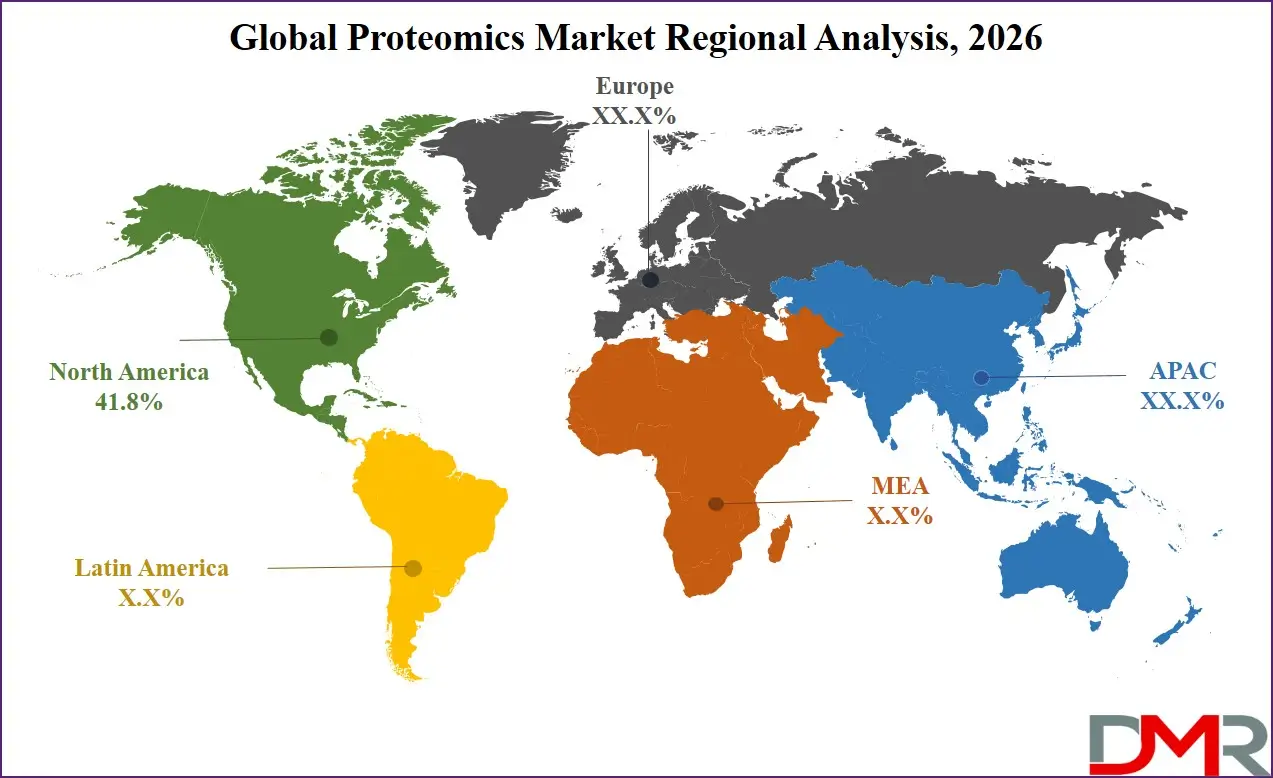
- Regional Leadership: North America is estimated to take the lead in 2026 with 41.8% share in the proteomics market, owing to the significant investment in biotech R&D and proteomics technologies.
What is Proteomics?
Proteomics is the systemic study of proteins, their structures, functions, interactions and changes within a biological system on a large scale. It uses advanced instruments like mass spectrometers, chromatography instruments and bioinformatics to measure, detect and map protein alterations and interactions. Proteomics is expanding into clinical diagnosis, drug development and industrial biotechnology to improve disease diagnosis, assist personalized medicine and spur protein drug and marker development.
Use Cases
- Biomarker Discovery for Disease Diagnosis: Proteomics has the potential to discover protein biomarkers in blood, urine, or tissue samples to identify early diseases such as cancers, brain diseases and cardiovascular disease within weeks as opposed to months using conventional manual methods.
- Protein Interaction Mapping: Longitudinal data on protein interactions and complexes are modeled to learn more about biological processes to help design drugs.
- Post-Translational Modification Analysis: Post-translational modifications are chemical marks on proteins (like phosphorylation) that control their activity and are detected by mass spectrometry and machine learning in clinical and research laboratories.
- Population Health & Government Programs: Faster proteomics assists biopharma innovation and development of rare disease treatments, government programs through smart monitoring of biomarkers, advances national bioeconomy and assists adoption of research standards.
How AI Is Transforming the Global Proteomics Market?
Artificial intelligence can be applied to proteomics to predict the structure and function of proteins, automatically identify odd patterns in mass spectrometry data, and improve protein identification with single samples. Mass spectrometry and chromatography can be analysed using AI to identify drift or quality control issues and allow scaling up research. This is less expensive, more dependable and quicker than the manual analysis of data.
AI also improves research confidence by offering smarter experiment scheduling, predicting bottlenecks in protein identification, and monitoring instrument health. It also lowers the cost of routine testing and ongoing performance checks, helping labs reduce their equipment footprint and improve the reliability of proteomics work and its financial returns.
Market Dynamics
Key Drivers of the Global Proteomics Market
Rapid Progress in Machine Learning and Real-Time Protein Analysis
The market is growing quickly due to widespread use of AI for protein identification and measurement, efficient processing of proteomics data, and better connections between electronic lab notebooks and lab information systems. Real-time data from mass spectrometers helps monitor instrument performance, spot issues early, predict protein interaction rates, and simplify experimental validation. As a result, lab uptime and R&D efficiency improve while manual data analysis costs drop. The growth of machine learning for protein structure prediction is also driving demand for smarter proteomics automation, as research labs increasingly adopt automation and workflow improvements based on proteomics data.
Growing Focus on Regulatory Compliance and Sustainable Biomanufacturing
The world is paying more attention to data quality and reproducibility. Governments and regulators are introducing efficiency frameworks, such as the EU Bioeconomy Strategy and the FDA's advanced manufacturing programs for biologics and cell therapies. These programs drive demand for proteomics automation that can support real-time data monitoring and continuous improvement. At the same time, global efforts to standardize data and train workers encourage the use of proven proteomics systems. Increasing demands for transparency in protein analysis and fewer experimental failures also make reliable, scalable proteomics automation more necessary in both public and private research systems.
Restraints in the Global Proteomics Market
High Costs of Integration and Method Validation
Setting up proteomic technology is costly and labor-intensive, as it needs thorough testing and evaluation under lab conditions. Moreover, the process involves many regulatory restrictions as well as data protection policies such as the General Data Protection Regulation for clinical proteomics data and other trade secrets. This increases the cost of deploying the technology and also acts as a barrier for potential investors.
Limited Standardization Across Proteomics Data and Workflows
There is still an array of proteomics automation tools available in the market, such as those using mass spectrometry, artificial intelligence (AI), and even the traditional chromatography method for protein identification and separation, respectively. The problem with this diversity of methods is that there are no standard data formats except for PSI and mzML. As opposed to other analytical sciences, the field of proteomics does not have standardized plug-and-play solutions, which makes its interoperability hard to achieve.
Growth Opportunities in the Global Proteomics Market
Expansion of Emerging Research Programs
Developing research markets such as Brazil, Indonesia, Nigeria, the UAE, and Vietnam are investing in digital bioeconomy infrastructure and advanced proteomics capabilities. These regions offer strong growth potential due to rising demand for automated protein identification, post-translational modification analysis, and remote data consultation. With limited older lab infrastructure, they provide opportunities to deploy modern proteomics automation built for research and clinical environments.
Rising Demand for Cloud-Based Proteomics Deployment
The need for advanced proteomics automation is being driven by the growth of remote research collaboration, distributed biomanufacturing, and real-time protein analysis applications. These technologies are essential for virtual proteomics platforms, remote diagnostic labs, and biotech innovation hubs. As fast data turnaround becomes a major operational priority, cloud-based proteomics analysis will likely become a cornerstone of future research and biotech IT infrastructure.
Global Proteomics Market Trends
Predictive Protein Interaction Tracking and Computational Analytics
Proteomics platforms are now being monitored in real time, with data anomalies detected as they happen and identification patterns predicted using built-in learning systems. Digital models of protein interactions and machine learning algorithms are improving workflow scheduling, extending equipment life, and increasing reliability. This shift is moving proteomics management from manual data review to a fully automated, continuously optimized system monitoring.
Cloud-Based Data Telemetry and Laboratory Management Systems
Cloud computing is becoming central to how proteomics core facilities operate. These cloud platforms enable real-time storage and analysis of proteomics data, centralized management of mass spectrometers and chromatography systems, and remote monitoring of instrument health. Cloud-based systems improve transparency, lower on-site infrastructure costs, and allow faster responses to workflow changes across multiple research sites, as seen by operators of large proteomics networks.
Research Scope and Analysis
The proteomics market is driven by rising demand for reagents, mass spectrometry technologies, biomarker discovery, and high-throughput protein analysis across pharmaceutical, biotechnology, and clinical research applications. Growing adoption of AI-powered personalized medicine and integrated proteomics workflows is further accelerating market expansion globally.
ℹ
To learn more about this report –
Download Your Free Sample Report Here
By Product Analysis
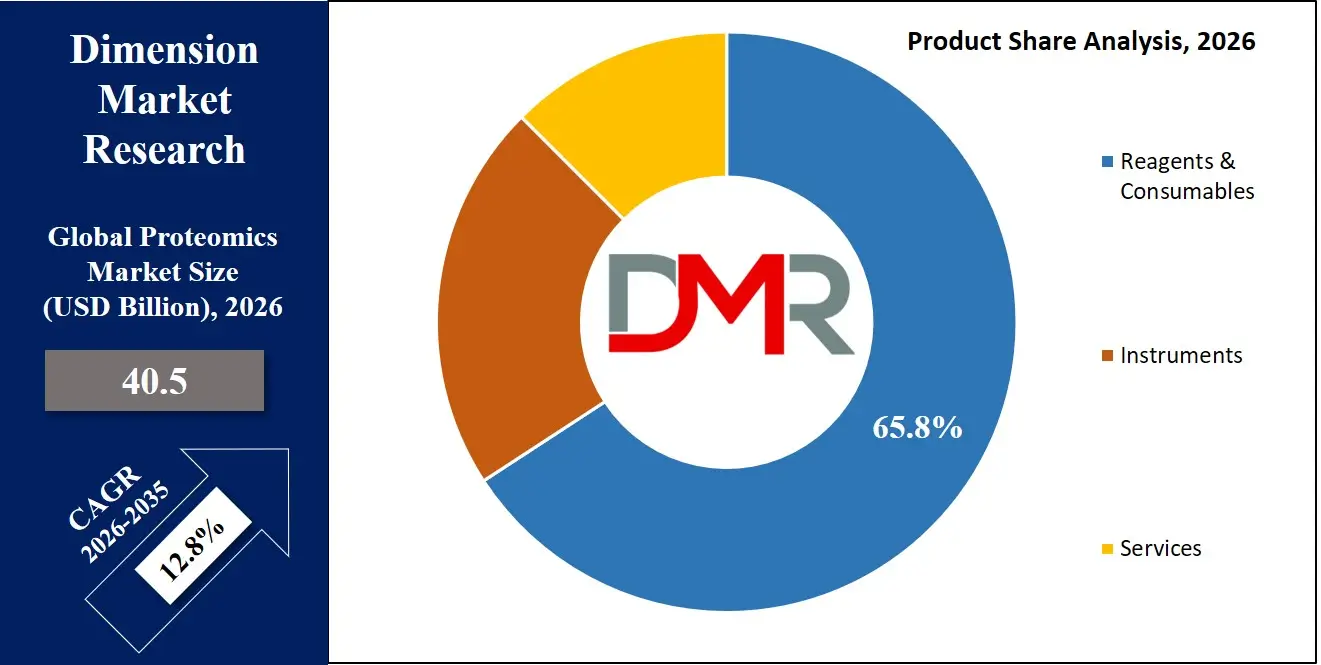
The Reagents & Consumables segment is likely to continue dominating the market in 2026, with 65.8% of the global proteomics market share. This is due to their integral part in isolation, digestion and labeling of proteins, and their versatility in various research environments where high-performance antibodies, enzymes and kits are needed. The Instruments segment is also growing rapidly, with increasing demand for mass spectrometers, chromatography equipment and electrophoresis systems required in R&D and clinical laboratories that require high sensitivity and consistency. They are also driven by the improvement of processes, real-time productivity, and flexibility through modular platforms that combine several analytical technologies for improved versatility and user convenience.
By Technology Analysis
The Spectroscopy segment, particularly Mass Spectrometry, is expected to account for 55.8% share in 2026, due to its use for protein identification and measurement and post-translational modification analysis in proteomics. The segment is also driven by growing adoption of high-resolution and tandem MS/MS mass spectrometers, and integrated platforms to increase sensitivity and efficiency in proteomics workflows for clinical and research applications. It's also the fastest-growing segment in the proteomics market, due to the rapid uptake of fully integrated proteomics workflows and lab infrastructure.
By Application Analysis
The Clinical Diagnostics segment (specifically Biomarker Discovery and Validation) is expected to dominate with around 42.7% market share in 2026, driven by the critical need for rapid and accurate detection of disease-related proteins in patient samples. Proteomics supports biomarker discovery because it can identify and measure thousands of proteins at once, delivering fast results while keeping data within clinical research systems. The Drug Discovery segment (specifically Target Identification and Validation), while smaller, is seeing strong growth, driven by biotech firms and pharma labs that need high-throughput screening and protein interaction mapping. The Personalized Medicine segment, using AI-powered protein profiling to group patients, is the fastest-growing area.
By End-User Analysis
The Pharmaceutical & Biotechnology Companies segment is the largest end-user in 2026, accounting for 45.2% share, driven by complex R&D environments that require high-throughput protein identification and measurement for biologic development, target validation, and toxicology studies. Academic & Research Institutes are the second-largest segment, using proteomics for basic protein science and pathway discovery. The fastest-growing area is Clinical Laboratories, which are adopting proteomics for diagnostic tests and companion diagnostics. Hospitals are also emerging for clinical proteomics applications in patient care.
The Global Proteomics Market Report is segmented based on the following:
By Product
- Reagents & Consumables
- Antibodies and Antigens
- Buffers and Solvents
- Enzymes
- Kits and Assays
- Instruments
- Mass Spectrometers
- Chromatography Systems
- Microarray Instruments
- Electrophoresis Systems
- Spectroscopy Instruments
- Services
- Protein Identification and Characterization
- Quantitative Proteomics
- Post-translational Modifications (PTMs) Analysis
- Bioinformatics Analysis
By Technology
- Spectroscopy
- Mass Spectrometry
- NMR Spectroscopy
- CD Spectroscopy
- Microarray Instruments
- X-Ray Crystallography
- Chromatography
- HPLC Chromatography
- Ion Chromatography
- Affinity Chromatography
- Superficial Chromatography
- Electrophoresis
- Gel Electrophoresis
- Capillary Electrophoresis
- Protein Fractionation Systems
- Surface Plasma Resonance System
By Application
- Clinical Diagnostics
- Biomarker Discovery and Validation
- Diagnostic Assays
- Personalized Medicine
- Drug Discovery
- Target Identification and Validation
- Lead Compound Screening
- Mechanism of Action Studies
- Toxicology Studies
- Other Application
By End-User
- Hospitals
- Clinical Laboratories
- Pharmaceutical & Biotechnology Companies
- Academic Research Laboratories
- Other End Users
Regional Analysis
Leading Region in the Proteomics Market
It is projected that North America will take the lead in the global proteomics market (by value), covering a market share of about 41.8% in the year 2026. The region's dominance is driven by strong biotech R&D activity funded by the NIH, high instrument and software prices relative to other regions, a mature lab IT supply chain for advanced data sharing, and the presence of major proteomics vendors and research labs. The widespread adoption of advanced mass spectrometry and automation for clinical diagnostics, drug discovery, and biomanufacturing further strengthens North America's leading position. Additionally, ongoing investments in AI-powered data monitoring and system interoperability further reinforce the region's technology leadership.
ℹ
To learn more about this report –
Download Your Free Sample Report Here
Fastest-Growing Region in the Proteomics Market
Asia-Pacific is the fastest-growing region, supported by strong digital research infrastructure targets in China, India, and Japan, increasing research independence initiatives, rising investments in local proteomics capabilities, and growing adoption of automated protein analysis systems. The region benefits from well-established instrument manufacturing capacity for analytical equipment, increasing commercial activity, and alignment with national bioeconomy roadmaps. Countries across the region are actively deploying proteomics platforms to improve R&D productivity and strengthen research infrastructure. Growing emphasis on proteomics R&D and structured data development further accelerates market expansion. Moreover, increasing government support and commercial biotech commitments are expected to sustain high growth momentum.
By Region
North America
Europe
- Germany
- The U.K.
- France
- Italy
- Russia
- Spain
- Benelux
- Nordic
- Rest of Europe
Asia-Pacific
- China
- Japan
- South Korea
- India
- ANZ
- ASEAN
- Rest of Asia-Pacific
Latin America
- Brazil
- Mexico
- Argentina
- Colombia
- Rest of Latin America
Middle East & Africa
- Saudi Arabia
- UAE
- South Africa
- Israel
- Egypt
- Rest of MEA
Competitive Landscape
The proteomics market is highly competitive, with innovation and strategic alliances shaping the competitive environment. To gain an advantage, companies and research labs are focused on developing better instruments (such as high-resolution mass spectrometers, automated chromatography systems, and AI-based software for protein identification), AI-powered data analysis, and digital platform-based experiment monitoring. There are high barriers to entry due to the large capital needed for validation, specialized proteomics expertise, and the need for mature software ecosystems and regulatory compliance.
Strategic approaches to increase market presence include partnerships with pharma companies and clinical labs, mergers between instrument providers and software companies, and long-term support contracts with research labs and academic institutions. Additionally, research and development in data-sharing standards and scalable software architectures are important for staying competitive and meeting the changing needs of the proteomics community.
Some of the prominent players in the Global Proteomics Market are:
- Thermo Fisher Scientific Inc.
- Danaher Corporation
- Agilent Technologies, Inc.
- Waters Corporation
- Bruker Corporation
- Bio-Rad Laboratories, Inc.
- Merck KGaA
- F. Hoffmann-La Roche Ltd
- Illumina, Inc.
- Revvity, Inc.
- QIAGEN N.V.
- Shimadzu Corporation
- Promega Corporation
- Eurofins Scientific SE
- Standard BioTools Inc.
- SomaLogic Operating Co., Inc.
- Olink Holding AB
- Seer, Inc.
- Nautilus Biotechnology, Inc.
- Creative Proteomics
- Other Key Players
Recent Developments
- June 2025: Illumina, Inc. announced plans to acquire SomaLogic Operating Co., Inc. to accelerate its expansion into proteomics and multi-omics, integrating large-scale protein analysis with its sequencing platforms.
- May 2025: Danaher Corporation, through its life sciences subsidiaries (including SCIEX and Cytiva), announced a strategic collaboration with AstraZeneca to scale AI-enabled precision medicine and proteomics-driven diagnostics workflows, enhancing translational research and biomarker discovery capabilities across pharmaceutical R&D pipelines.
- May 2025: Bruker Corporation announced the commercial expansion of its timsOmni / timsTOF-based proteomics systems, targeting ultra-deep proteome coverage for drug discovery and clinical research, strengthening its position in high-resolution mass spectrometry-based proteomics workflows.
- July 2024: Thermo Fisher Scientific Inc. completed its USD 3.1 billion acquisition of Olink Holding AB, strengthening its next-generation proteomics capabilities and expanding its high-throughput protein analysis portfolio.
Report Details
| Report Characteristics |
| Market Size (2026) |
USD 40.5 Bn |
| Forecast Value (2035) |
USD 119.4 Bn |
| CAGR (2026–2035) |
12.8% |
| The US Market Size (2026) |
USD 14.2 Bn |
| Historical Period |
2021 – 2025 |
| Forecast Period |
2027 – 2035 |
| Base Year |
2025 |
| Estimated Year |
2026 |
| Segments Covered |
By Product (Reagents & Consumables, Instruments and Services), By Technology (Spectroscopy, Microarray Instruments, X-ray crystallography, Chromatography, Electrophoresis, Protein Fractionation Systems, and Surface Plasma Resonance System), By Application (Clinical Diagnostics, Drug Discovery, and Other Application), By End User (Hospitals, Clinical Laboratories, Pharmaceutical & Biotechnology Companies, Academic Research Laboratories, and Other End Users) |
| Regional Coverage |
North America – The US and Canada; Europe – Germany, The UK, France, Russia, Spain, Italy, Benelux, Nordic, & Rest of Europe; Asia-Pacific – China, Japan, South Korea, India, ANZ, ASEAN, Rest of APAC; Latin America – Brazil, Mexico, Argentina, Colombia, Rest of Latin America; Middle East & Africa – Saudi Arabia, UAE, South Africa, Turkey, Egypt, Israel, & Rest of MEA |
Frequently Asked Questions
How big is the Global Proteomics Market?
▾ The Global Proteomics Market size is estimated to have a value of USD 40.5 billion in 2026 and is expected to reach USD 119.4 billion by the end of 2035.
Which region held the largest share of the Global Proteomics Market in 2026?
▾ North America is expected to account for the largest market share in 2026, with a share of about 41.8%.
Who are the key players in the Global Proteomics Market?
▾ Some of the major key players in the Global Proteomics Market are Thermo Fisher Scientific Inc., Danaher Corporation (SCIEX), Bruker Corporation, Waters Corporation, Seer, Inc., Olink Proteomics AB, and many others.
What is the CAGR of the Global Proteomics Market from 2026 to 2035?
▾ The market is growing at a CAGR of 12.8% over the forecasted period.
What factors are driving the growth of the Global Proteomics Market?
▾ The market is driven by advances in machine learning-based protein identification, regulatory pressure to speed up biologic development and reduce failures, and increased government investment in national research infrastructure.
What are the major trends in the Global Proteomics Market?
▾ The key market trends include the adoption of predictive protein interaction tracking and real-time data analysis, along with a growing shift toward cloud-based proteomics platforms and data-enabled lab management systems.
Which region is expected to grow the fastest in the Global Proteomics Market?
▾ Asia Pacific is the fastest-growing region in the market during the forecast period.
How is the Global Proteomics Market segmented?
▾ The market is segmented by product, technology, application, and end-user.