Indication Covered
The report covers psoriasis as a chronic immune-mediated inflammatory disease, with emphasis on its clinical burden, treatment patterns, therapeutic innovation, and commercial market development across the seven major markets. Psoriasis is primarily characterized by abnormal immune activity that accelerates skin-cell turnover and produces persistent inflammatory lesions. The condition can range from localized mild disease to extensive severe disease requiring systemic or biologic treatment.
The indication scope includes major clinical manifestations and associated disease conditions relevant to treatment demand, including:
- Plaque Psoriasis
- Psoriatic Arthritis
- Nail Psoriasis
- Pustular Psoriasis
- Inverse Psoriasis
- Erythrodermic Psoriasis
Plaque psoriasis remains the primary focus because of its high prevalence and substantial treatment demand. The report also considers psoriatic arthritis because of the close relationship between cutaneous psoriasis and systemic inflammatory disease. Other difficult-to-treat manifestations, including nail, pustular, inverse, and erythrodermic psoriasis, are evaluated as areas of continuing clinical need.
The treatment landscape covers topical therapies, phototherapy, conventional systemic therapies, biologics, and targeted small-molecule therapies. Particular attention is given to advanced therapies targeting inflammatory pathways such as TNF-α, IL-17, IL-23, and TYK2, as well as emerging oral and next-generation treatment approaches.
Epidemiology Parameters
Psoriasis represents a significant chronic disease burden across the major healthcare markets covered in the report. Epidemiological patterns vary substantially between countries because of differences in genetic susceptibility, environmental factors, healthcare access, disease awareness, diagnostic practices, and availability of dermatological services.
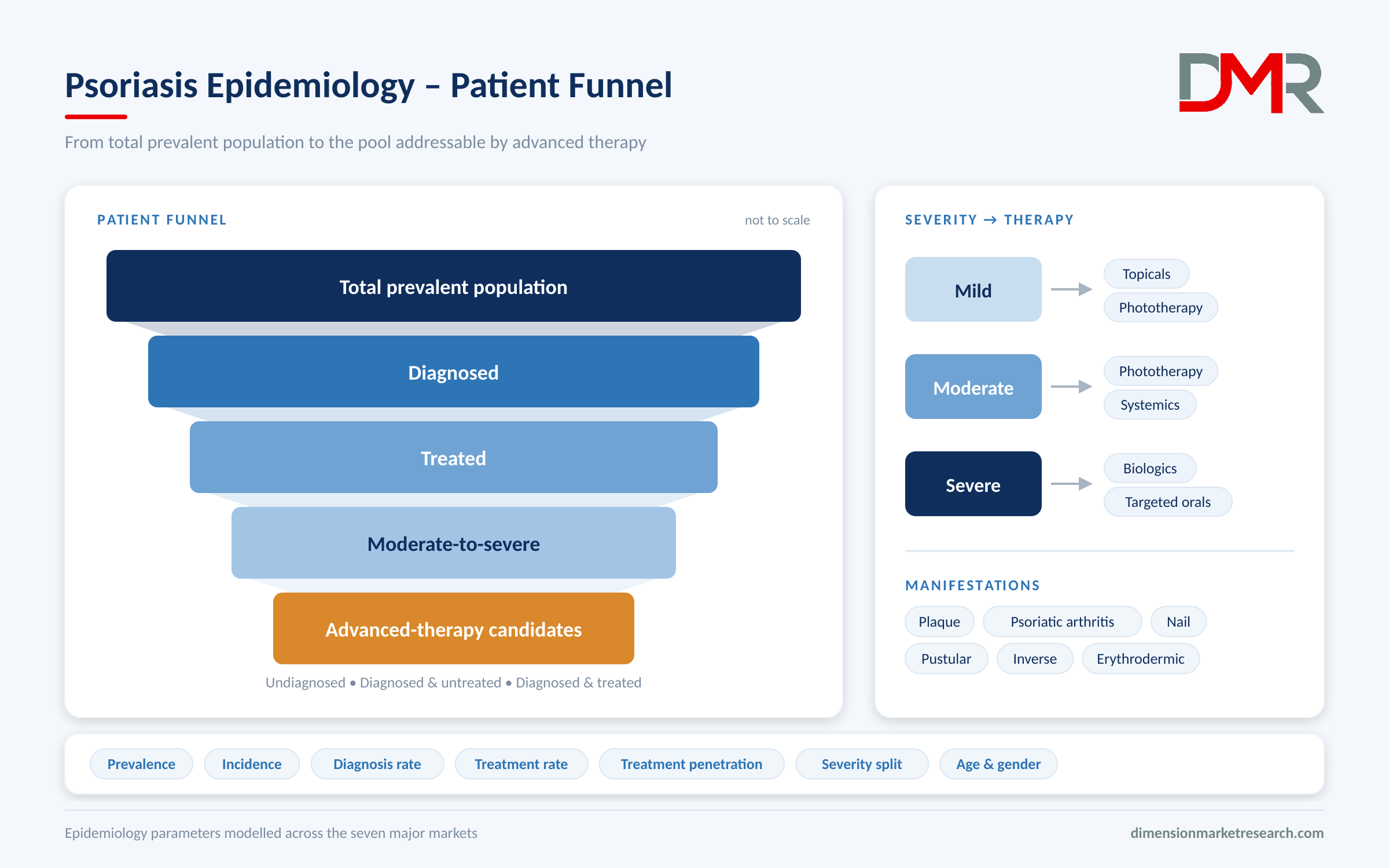
The epidemiology assessment provides a structured evaluation of the psoriasis population from overall prevalence through diagnosis and treatment. Key parameters include:
- Total psoriasis patient population
- Prevalent population
- Incidence population, where reliable data are available
- Diagnosed patient population
- Treated patient population
- Untreated patient population
- Treatment-eligible population
- Disease severity distribution
- Mild psoriasis population
- Moderate psoriasis population
- Severe psoriasis population
- Plaque psoriasis population
- Psoriatic arthritis population
- Age distribution
- Gender distribution, where available
- Diagnosis rate
- Treatment rate
- Treatment penetration
- Regional disease burden
- Epidemiological trends
The analysis distinguishes between the broader prevalent population and patients who are diagnosed and actively receiving treatment. This distinction is particularly important because a considerable proportion of patients may remain undiagnosed, undertreated, or managed through therapies that do not require advanced pharmaceutical intervention.
The report also evaluates the increasing recognition of psoriasis as a systemic inflammatory condition. Associated manifestations such as psoriatic arthritis and metabolic, cardiovascular, and psychological comorbidities can influence treatment decisions, disease monitoring, healthcare utilization, and long-term management strategies.
ℹ
To learn more about this report –
Download Your Free Sample Report Here
Patient Segmentation
The psoriasis patient population is segmented according to disease severity, disease manifestation, treatment status, and therapeutic requirements. This approach provides a clearer understanding of the population eligible for different treatment categories and helps assess the potential addressable population for advanced therapies.
By Disease Severity
Mild: Patients with limited disease burden are generally managed through topical therapies, phototherapy, or other less intensive treatment approaches. Treatment decisions are influenced by lesion location, symptoms, quality-of-life impact, and previous treatment response.
Moderate: Patients with more extensive or persistent disease may require phototherapy or systemic treatment. Increasing treatment expectations and quality-of-life considerations can encourage movement toward more effective systemic or targeted therapies.
Severe: Patients with extensive disease, substantial quality-of-life impairment, or inadequate response to conventional treatment are more likely to require biologics or targeted systemic therapies. This segment represents a major contributor to advanced psoriasis treatment demand.
By Disease Type
- Plaque Psoriasis
- Psoriatic Arthritis
- Nail Psoriasis
- Pustular Psoriasis
- Inverse Psoriasis
- Erythrodermic Psoriasis
By Treatment Status
- Diagnosed and Treated
- Diagnosed and Untreated
- Undiagnosed
The treatment-status segmentation helps identify the gap between the total disease population and the population actively participating in healthcare treatment. Improvements in awareness, screening, specialist availability, and healthcare access can gradually increase the diagnosed and treated population.
By Treatment Requirement
- Topical Therapy Candidates
- Phototherapy Candidates
- Conventional Systemic Therapy Candidates
- Biologic Therapy Candidates
- Targeted Oral Therapy Candidates
This segmentation helps evaluate how changes in treatment guidelines, physician preferences, reimbursement, and therapy availability can shift patients between conventional and advanced treatment categories.
Geographic Coverage
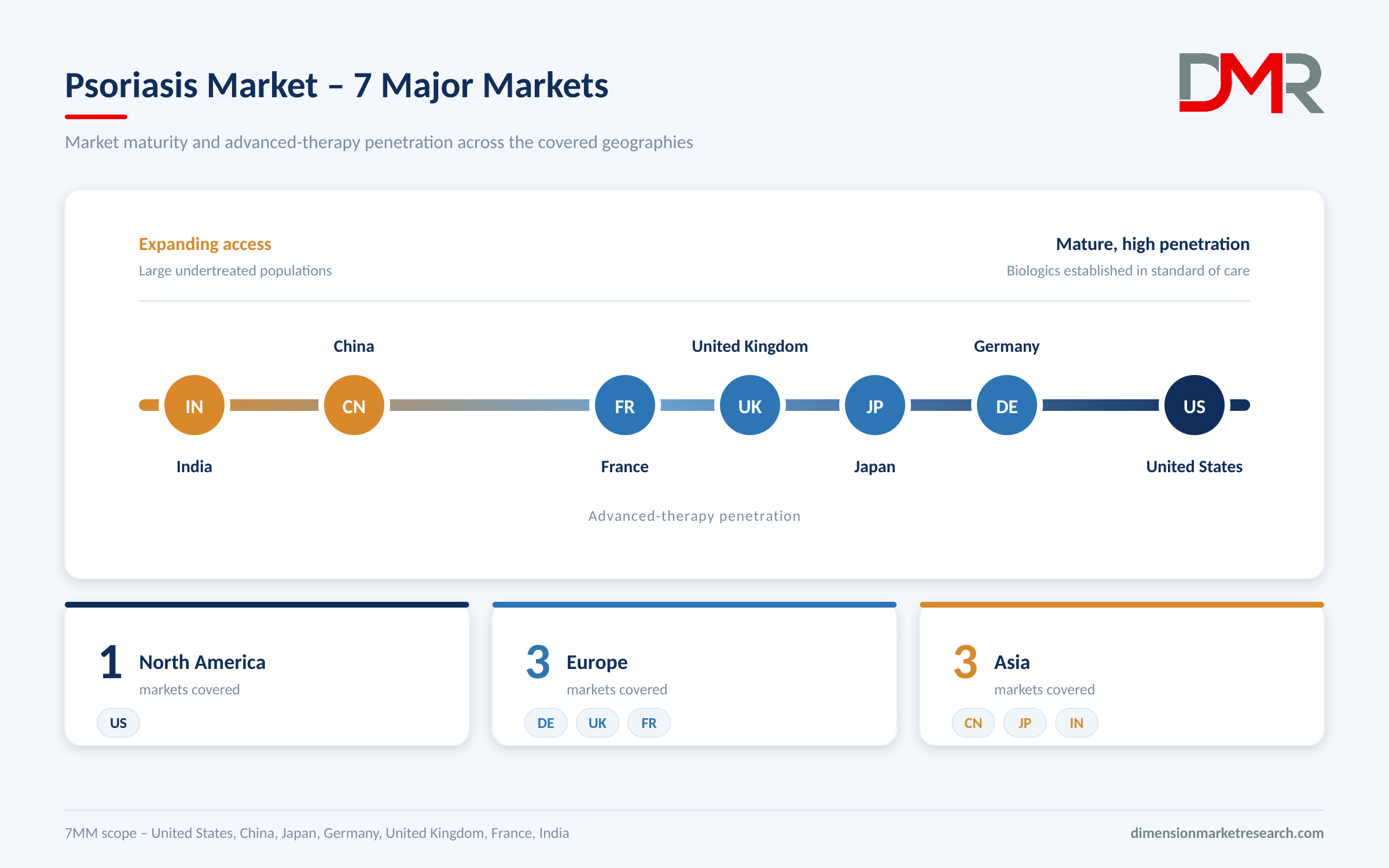
The report provides detailed market, epidemiology, treatment, and competitive analysis across 7 major markets:
- United States
- China
- Japan
- Germany
- United Kingdom
- France
- India
ℹ
To learn more about this report –
Download Your Free Sample Report Here
The geographic analysis considers differences in patient population, diagnosis rates, healthcare infrastructure, treatment accessibility, reimbursement, therapeutic penetration, regulatory environment, physician adoption, and competitive activity. These factors are particularly important because the commercial opportunity for psoriasis therapies differs considerably between mature pharmaceutical markets and high-growth emerging markets.
United States
The United States represents one of the most important psoriasis markets, supported by high disease awareness, established dermatology and specialty-care networks, strong pharmaceutical innovation, and broad availability of advanced therapies. Biologics and targeted therapies have achieved substantial penetration among eligible moderate-to-severe patients.
The market is also characterized by significant competition between established biologics and newer therapies. Treatment selection is influenced by clinical efficacy, safety, dosing frequency, payer restrictions, patient preference, and prior treatment history. Continued development of oral targeted therapies and next-generation biologics is expected to further intensify competition.
China
China represents a significant long-term growth opportunity because of its large patient population and increasing recognition of psoriasis as a chronic inflammatory disease requiring sustained management. Improvements in healthcare infrastructure and specialist availability are supporting greater diagnosis and treatment access.
The market is gradually experiencing increased adoption of advanced therapies, although affordability, reimbursement coverage, treatment accessibility, and differences between urban and rural healthcare services remain important considerations. Expansion of innovative domestic pharmaceutical development may also increase competitive intensity.
Japan
Japan represents a mature healthcare and pharmaceutical market with sophisticated medical infrastructure and established dermatology services. Increasing awareness of treatment goals and the availability of targeted therapies support continued demand for advanced psoriasis management.
Treatment decisions are influenced by clinical efficacy, safety, reimbursement conditions, dosing convenience, and physician familiarity. The market also provides opportunities for innovative therapies that can demonstrate meaningful improvements in treatment durability, tolerability, or administration convenience.
Germany
Germany represents a leading European psoriasis market with established specialist networks and strong utilization of advanced systemic and biologic therapies. Treatment pathways are supported by a developed healthcare system and established clinical management practices.
The market is increasingly influenced by biosimilars, treatment optimization, reimbursement considerations, and the introduction of therapies with differentiated mechanisms. Continued adoption of IL-17 and IL-23 pathway therapies is expected to remain important to market development.
United Kingdom
The UK psoriasis market benefits from established clinical guidelines, specialist dermatology services, and structured treatment pathways. Advanced therapies are increasingly incorporated into management strategies for patients who have inadequate response to conventional treatment.
Market development is influenced by healthcare-system treatment criteria, cost-effectiveness considerations, clinical outcomes, and access to specialist services. Increasing emphasis on achieving sustained disease control and improving quality of life supports continued innovation in targeted treatment.
France
France represents an important European market supported by developed healthcare infrastructure, specialist dermatology services, and established reimbursement mechanisms. Biologics and other systemic therapies have become important components of treatment for patients with moderate-to-severe disease.
Market growth is influenced by therapeutic innovation, treatment accessibility, reimbursement conditions, and increasing use of targeted therapies. Biosimilar adoption and the introduction of newer mechanisms are expected to shape the competitive environment.
India
India represents a high-potential psoriasis market because of its large population, expanding healthcare infrastructure, increasing dermatology awareness, and improving access to specialty care. Diagnosis and treatment rates have significant potential for expansion as healthcare services become more accessible.
Affordability remains an important factor influencing treatment selection, particularly for advanced biologics and specialty therapies. Greater availability of cost-effective treatment options, increasing specialist coverage, and improving patient awareness can support future market expansion.
Market Segmentation
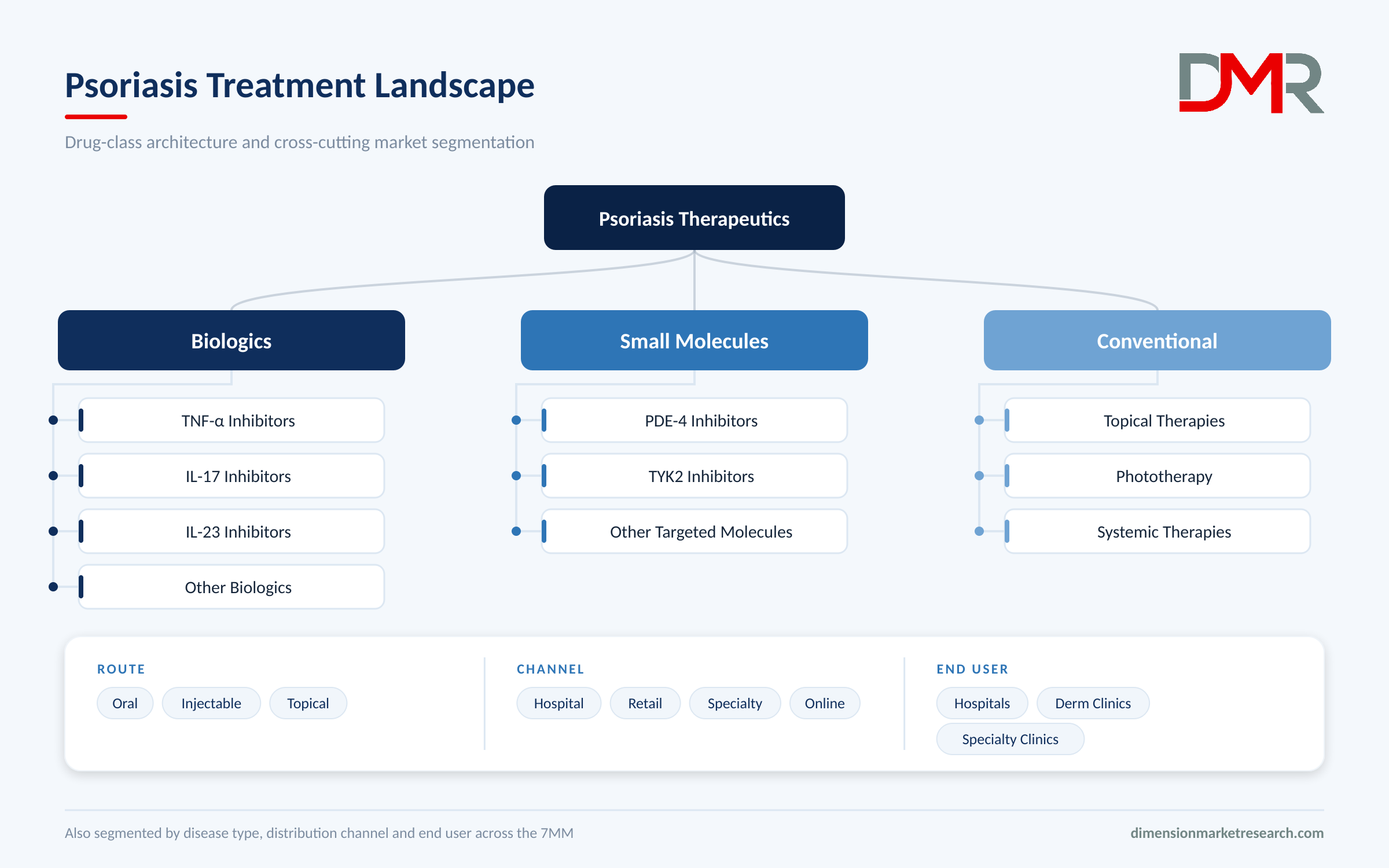
The psoriasis market is segmented across drug class, biologic class, small-molecule class, conventional therapy, disease type, route of administration, distribution channel, and end user. The segmentation captures both established treatment categories and emerging therapeutic approaches.
ℹ
To learn more about this report –
Download Your Free Sample Report Here
By Drug Class
Biologics
Biologics represent a major segment of the psoriasis market because of their high efficacy and established role in moderate-to-severe disease management. These therapies selectively target specific inflammatory pathways involved in psoriasis pathogenesis.
The biologic segment includes TNF-α inhibitors, IL-17 inhibitors, and IL-23 inhibitors. Increasing physician familiarity, clinical evidence, expanded treatment experience, and improvements in dosing convenience continue to support biologic utilization.
Small Molecules
Small molecules represent an increasingly important segment because of growing demand for effective oral treatment options. Unlike injectable biologics, oral targeted therapies can provide an alternative administration approach for patients who prefer non-injectable treatment.
The segment includes PDE-4 inhibitors, TYK2 inhibitors, and other targeted small molecules. Continued pipeline development and clinical differentiation could increase the role of oral therapies in future treatment algorithms.
Conventional Therapies
Conventional therapies continue to represent an important component of psoriasis treatment, particularly among patients with mild disease and in markets where advanced therapy access remains limited.
This category includes topical treatments, phototherapy, and conventional systemic therapies. Although advanced therapies are gaining market share in eligible patients, conventional treatment remains important because of its accessibility, established clinical use, and relatively lower treatment cost.
By Biologic Class
- TNF-α Inhibitors
- IL-17 Inhibitors
- IL-23 Inhibitors
- Other Biologics
IL-23 inhibitors are increasingly important because of their targeted mechanism, durable disease control, and convenient dosing schedules. IL-17 inhibitors also maintain strong market relevance because of their rapid and substantial efficacy in skin disease.
By Small-Molecule Class
- PDE-4 Inhibitors
- TYK2 Inhibitors
- Other Targeted Small Molecules
The development of TYK2 inhibitors is particularly significant because these therapies provide an oral targeted approach to immune-mediated disease management. Continued clinical development may broaden the role of small molecules in patients who are unsuitable for, or prefer alternatives to, injectable biologics.
By Conventional Therapy
- Topical Therapies
- Phototherapy
- Conventional Systemic Therapies
Topical therapies remain central to mild psoriasis management, while phototherapy and conventional systemic therapies continue to provide treatment options for patients requiring escalation beyond topical management.
By Disease Type
- Plaque Psoriasis
- Psoriatic Arthritis
- Nail Psoriasis
- Pustular Psoriasis
- Inverse Psoriasis
- Erythrodermic Psoriasis
Plaque psoriasis accounts for the largest portion of treatment demand because of its prevalence. Psoriatic arthritis represents an important adjacent treatment population because several psoriasis therapies also address joint manifestations.
By Route of Administration
- Oral
- Injectable
- Topical
- Other Routes
Injectable therapies remain important within biologic treatment, while oral administration is becoming increasingly attractive as targeted small-molecule development expands. Topical administration remains particularly important in mild and localized disease.
By Distribution Channel
- Hospital Pharmacies
- Retail Pharmacies
- Specialty Pharmacies
- Online Pharmacies
Distribution patterns vary by treatment type, country, reimbursement environment, and healthcare system. Specialty pharmacies are particularly relevant for high-cost biologic and specialty therapies, while retail and online channels may have greater relevance for conventional and topical treatments.
By End User
- Hospitals
- Dermatology Clinics
- Specialty Clinics
- Ambulatory Care Centers
- Other Healthcare Facilities
Dermatology clinics and specialty care facilities represent important treatment settings because psoriasis management frequently requires specialist assessment, treatment escalation, monitoring, and long-term disease management.
Market Dynamics
Growth Drivers
Increasing Adoption of Biologic Therapies
Biologic therapies continue to be one of the strongest growth drivers in the psoriasis market. Their ability to selectively interfere with key inflammatory pathways has significantly improved disease control for patients with moderate-to-severe psoriasis.
The growing use of IL-17 and IL-23 inhibitors is particularly important as physicians increasingly consider treatment durability, depth of response, safety, and dosing convenience when selecting therapies. Expanded clinical experience and improved physician familiarity are also supporting adoption.
Advancement in Immunology-Based Drug Development
Advances in understanding the immunological mechanisms underlying psoriasis have created opportunities for more precise therapeutic intervention. Pharmaceutical companies are increasingly investing in therapies designed to selectively target inflammatory pathways rather than relying solely on broad immunosuppression.
Development activity is focused on novel inflammatory pathways, oral targeted therapies, next-generation biologics, improved treatment durability, and potentially more personalized approaches to treatment selection. These developments are expected to increase therapeutic competition.
Increasing Healthcare Access in Emerging Markets
Improving healthcare infrastructure and rising healthcare expenditure are increasing access to dermatological diagnosis and treatment in emerging markets. Expansion of specialist networks and greater disease awareness are also helping identify patients who previously remained untreated.
China and India are particularly important growth opportunities because of their large patient populations. Increased reimbursement, wider availability of advanced therapies, and development of cost-effective treatment options could accelerate market penetration.
Growing Recognition of Psoriasis as a Systemic Disease
The increasing understanding of psoriasis as a systemic inflammatory disorder is encouraging more comprehensive disease management. Recognition of psoriatic arthritis and associated metabolic, cardiovascular, and psychological conditions can encourage earlier diagnosis, specialist management, and continued treatment monitoring.
This shift can increase treatment intensity and create demand for therapies capable of achieving broader and more sustained disease control.
Market Restraints
High Cost of Advanced Therapies
Biologics and other targeted therapies often carry substantially higher treatment costs than conventional therapies. High costs can create affordability challenges for patients and increase pressure on healthcare payers.
In emerging markets, limited reimbursement coverage and high out-of-pocket expenditure can restrict access to advanced treatment. Cost considerations may therefore continue to influence treatment selection and delay the adoption of innovative therapies.
Treatment Accessibility Gap
Unequal access to dermatologists, specialty clinics, diagnostic services, and advanced medicines remains a major challenge. Rural and underserved populations may experience longer diagnostic delays and fewer treatment options.
Differences in healthcare infrastructure between regions can therefore result in significant variations in diagnosis, treatment penetration, and disease outcomes.
Variable Patient Response
Although advanced therapies have significantly improved psoriasis management, treatment response is not uniform across patients. Some individuals may experience inadequate initial response, secondary loss of efficacy, intolerance, or treatment discontinuation.
The need to switch therapies can increase healthcare utilization and creates continuing demand for treatments offering durable and predictable disease control.
Competitive Landscape
The global psoriasis market is characterized by intense competition among pharmaceutical companies with established immunology portfolios and emerging developers focused on differentiated mechanisms and treatment approaches.
Leading companies covered in the competitive assessment include:
- AbbVie
- Johnson & Johnson
- Novartis
- Eli Lilly
- Amgen
- Bristol Myers Squibb
- UCB
- Almirall
- Boehringer Ingelheim
- Innovent Biologics
Competition is increasingly focused on demonstrating superior or differentiated clinical outcomes rather than simply introducing additional therapies within existing drug classes. Companies are investing in novel mechanisms, improved dosing schedules, oral administration, treatment durability, safety profiles, and lifecycle expansion.
The competitive environment is also being influenced by biosimilar availability, pricing pressure, reimbursement restrictions, and physician familiarity with established products. IL-23 inhibitors, IL-17 inhibitors, TYK2 inhibitors, and other targeted approaches are expected to remain important areas of competition.
Pipeline innovation is another major competitive factor. Companies with strong clinical-development capabilities and diversified immunology portfolios may be better positioned to respond to changing treatment preferences and emerging unmet needs.
Recent Developments
- September 2025 – Johnson & Johnson advances icotrokinra development: Johnson & Johnson reported progress in the development of icotrokinra, an investigational oral IL-23 receptor-targeted therapy. The development highlights the industry's increasing interest in oral approaches that can provide targeted immune modulation while potentially offering an alternative to injectable biologic therapies.
- May 2025 – Innovent Biologics advances picankibart program: Innovent Biologics progressed the clinical development of picankibart, an IL-23p19 monoclonal antibody. The program reflects continued investment in targeted biologic therapies designed to address inflammatory dermatological diseases and improve long-term disease control.
Report Coverage
The report provides a comprehensive assessment of the psoriasis market across the seven specified major markets. It integrates epidemiological analysis with commercial market assessment to provide a broader understanding of the current and future treatment landscape.
The study covers:
- Indication Covered
- Epidemiology Parameters
- Patient Segmentation
- Geographic Coverage
- Market Segmentation
- Units of Measurement
- Study Period
- Data Sources
- Companies Covered
- Report Deliverables
- Out of Scope
- Customization