Market Snapshot
- Global Radiology Services Market size reached USD 3.98 Billion in 2025.
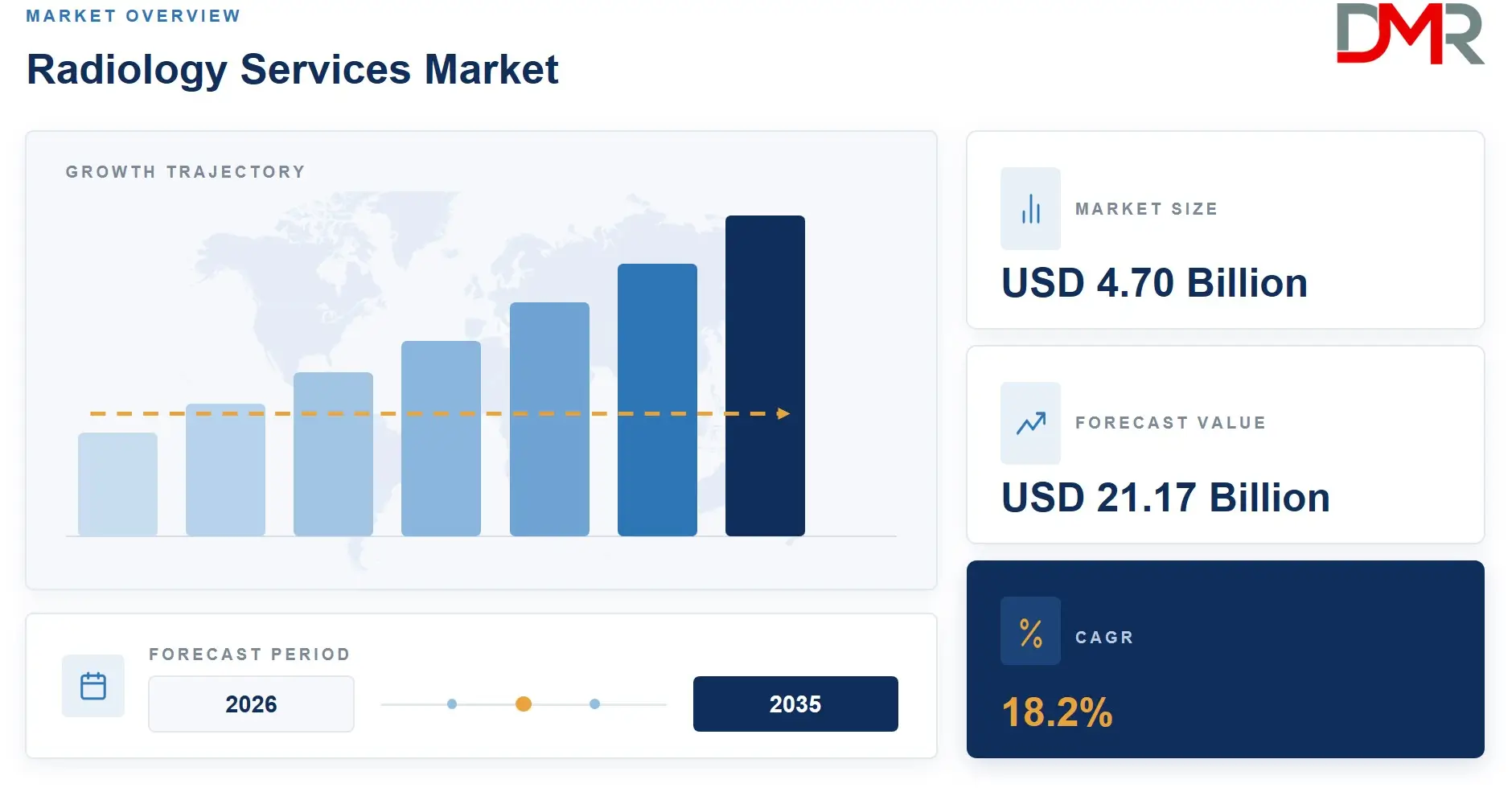
- The market is projected to reach USD 21.17 Billion by 2035 at a CAGR of 18.2%.
- By Modality, X-Ray led with a 30.24% share in 2025; Computed Tomography is the fastest-growing sub-segment.
- By Service Type, Diagnostic Imaging held a 38.1% share; Interventional Radiology is the fastest-growing category.
- By Service Setting, Hospital-Based Imaging commanded a 47.2% share; Freestanding Imaging Centers are expanding fastest.
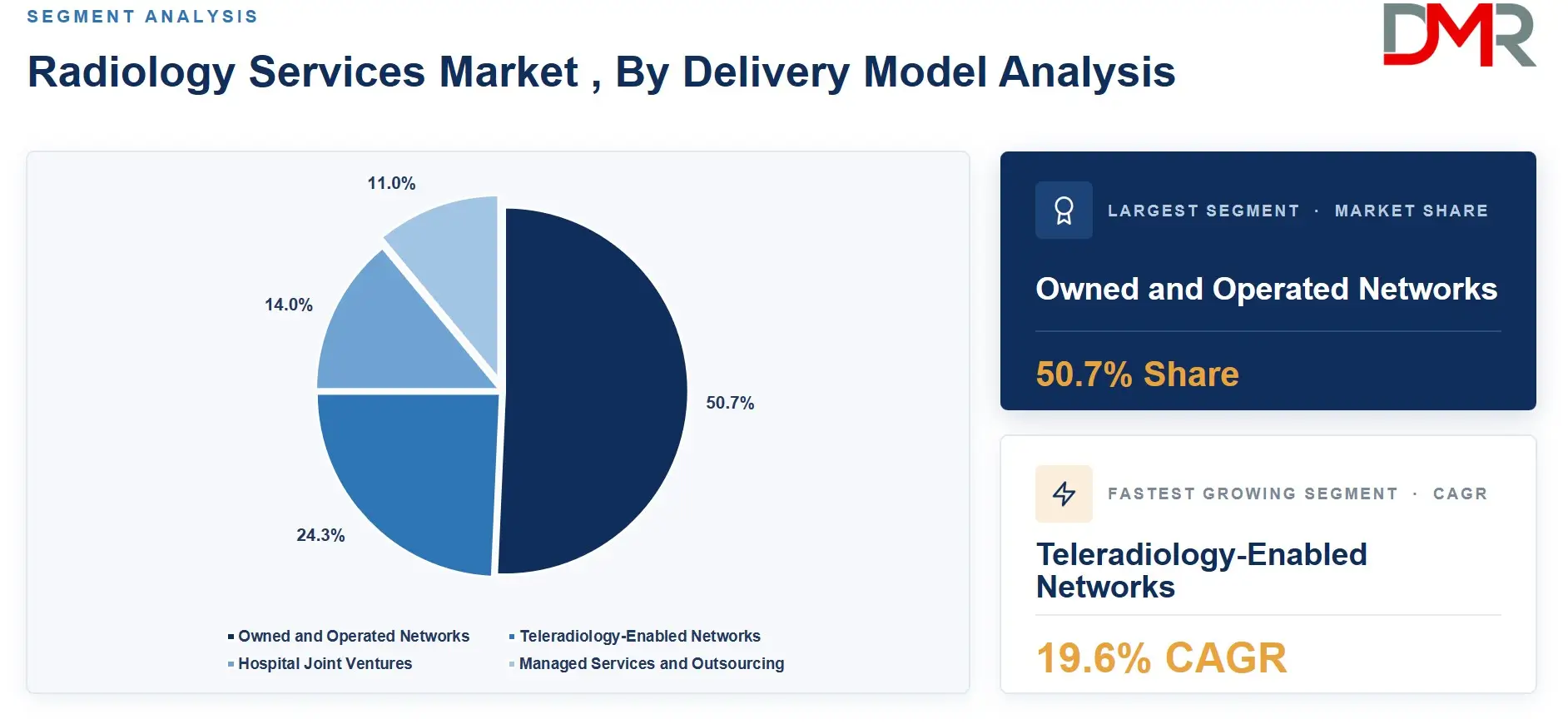
- By Delivery Model, Owned and Operated Networks held 50.7%; Teleradiology-Enabled Networks are the fastest-growing model.
- By Application, Oncology led with a 35.8% share; Neurology and Spine is the fastest-growing application.
- By End User, Hospitals held a 52.81% share; Diagnostic Imaging Centers are growing fastest.
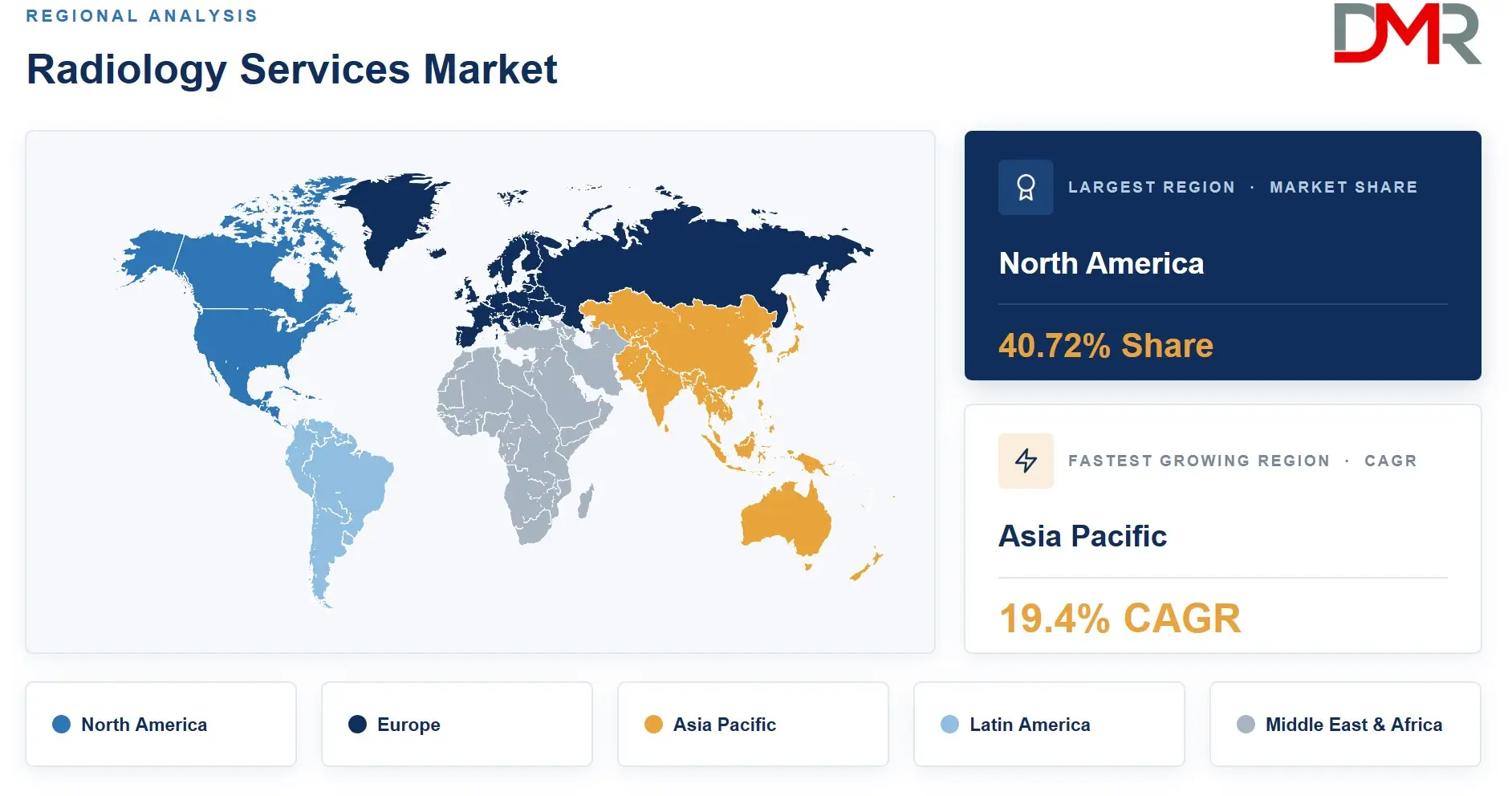
- North America led regionally with a 40.72% share; Asia-Pacific is the fastest-growing region.
Market Overview
The global radiology services market covers the full spectrum of medical imaging interpretation and delivery: diagnostic imaging reads, interventional radiology procedures, teleradiology networks, and radiation oncology support services. The market excludes equipment manufacturing, contrast agent production, and standalone health IT platforms not bundled with imaging service delivery. Providers range from hospital-owned imaging departments to national freestanding chains and cross-border teleradiology groups.
Demand for imaging interpretation is structurally decoupled from radiologist supply. Across 30 OECD countries, combined CT, MRI, and PET utilization exceeded 360 exams per 1,000 population in the United States, Luxembourg, Korea, France, and Austria in 2021, as reported by the OECD, making these the highest-utilization markets in the dataset. That volume creates a commercial floor for outsourced and remote reading services that cannot be erased by efficiency gains alone.
Artificial intelligence is reshaping how services are priced and staffed rather than merely how images are processed. The FDA had authorized roughly 873 AI-enabled medical devices by mid-period, with medical imaging as the single largest category. Vendors embedding algorithmic triage into radiology workflows accelerate turnaround times and allow fewer radiologists to cover higher volumes. The consequence for buyers is a shift from headcount-based contracting to outcome-based service agreements.
Market Size and Forecast
The Global Radiology Services Market size is estimated at USD 4.70 Billion in 2026 from USD 3.98 Billion in 2025, and is projected to reach USD 21.17 Billion by 2035, exhibiting a CAGR of 18.2% during the forecast period.
Sustained 3–5% annual growth in CT and MRI utilization from 2011 to 2021 created a structural backlog of unread studies that health systems could not resolve through physician hiring alone. That gap compelled investment in outsourced and teleradiology models before the current forecast window opened. The 18.2% CAGR forecast reflects a services market that is repricing upward as scale economies in teleradiology reduce per-read cost while AI integration raises the defensible price of high-complexity reads. In February 2024, Radiology Partners closed a $720 million growth equity investment alongside a credit facility amendment, signaling that institutional capital views the consolidation phase of U.S. radiology as a generational capture opportunity.
ℹ
To learn more about this report –
Download Your Free Sample Report Here
Forecast assumptions rest on continued radiologist supply shortfalls, the Medicare graduate medical education expansion of 1,200 new GME positions reshaping only the long-term pipeline, and ongoing migration of advanced imaging to outpatient settings. Upside risk exists if the Healthcare Workforce Resilience Act provisions for international radiologist recruitment advance, materially easing interpretation capacity constraints in underserved U.S. markets.
Modality Analysis
X-Ray led the modality segment with a 30.24% share in 2025.
X-Ray holds the largest modality share because it remains the entry point for most clinical pathways, from emergency triage to routine chest assessment. High throughput, low per-exam cost, and near-universal installation across hospital types make X-Ray the backbone of radiology volume in both high-income and emerging markets. AI-assisted chest radiograph reading has accelerated X-Ray's commercial viability by reducing radiologist time per study.
Computed Tomography is the fastest-growing modality. CT expansion is driven by oncology staging protocols and the growth of cardiac imaging pipelines. MRI captures premium pricing in neurology and musculoskeletal markets where soft-tissue resolution is non-negotiable. Nuclear Imaging and Positron Emission Tomography remain lower-volume but higher-margin categories, benefiting from unbundled Medicare reimbursement for radiopharmaceuticals above the $630 per-day threshold. Ultrasound and Mammography hold stable shares tied to women's health and obstetrics pathways.
Service Type Analysis
With a 38.1% share in 2026, Diagnostic Imaging outpaced all other service type categories.
Diagnostic Imaging commands the largest share because volume-based reimbursement structures favor high-read-count services over procedural categories. Every clinical specialty generates referrals for diagnostic reads, making this the most scalable service line for national radiology groups building hub-and-spoke delivery models.
Interventional Radiology is the fastest-growing service type. Minimally invasive procedures replacing open surgeries in oncology, vascular, and hepatology settings are pulling interventional volume out of surgical suites and into dedicated radiology-led units. Radiation Oncology Support Services remain stable contributors as treatment planning and dosimetry outsourcing grows alongside cancer incidence.
Service Setting Analysis
Hospital-Based Imaging accounted for 47.2% of service setting demand in 2026, the highest of any category.
Hospitals anchor the largest service-setting share because complex cases, trauma imaging, and inpatient workflows demand on-site equipment and immediate radiologist access. Inpatient volume creates a protected revenue base that freestanding centers cannot replicate for acuity-driven cases.
Freestanding Imaging Centers are the fastest-growing setting. Payers pushing patients toward lower-cost outpatient sites, combined with private equity consolidation of independent imaging chains, is redirecting elective volume away from hospital outpatient departments. Community Diagnostic Centers and Mobile Imaging Units are gaining traction in rural and semi-urban markets where permanent facility investment is not economically justified.
Delivery Model Analysis
Owned and Operated Networks captured 50.7% of the delivery model segment in 2026, ahead of all rivals.
Owned and Operated Networks lead because large radiology groups and hospital systems prefer direct asset control for quality assurance and contract leverage. Owning the imaging infrastructure lets operators capture both technical and professional component reimbursement, improving margin per study.
ℹ
To learn more about this report –
Download Your Free Sample Report Here
Teleradiology-Enabled Networks are the fastest-growing delivery model. After-hours and overflow reading contracts are consolidating around a small number of high-volume teleradiology platforms able to staff across time zones. Hospital Joint Ventures allow academic centers to share ownership with community hospitals, creating shared-cost models for expensive equipment without full capital outlay. Managed Services and Outsourcing are expanding as smaller health systems exit the complexity of radiology workforce management entirely.
Application Analysis
A 35.8% share made Oncology the clear leader across application categories in 2026.
Oncology drives more imaging volume than any other clinical area because staging, treatment response monitoring, and surveillance each require multiple modalities across a patient's care pathway. Every new oncology drug approved adds imaging protocol requirements, making oncology a structurally sticky demand driver for advanced radiology services.
Neurology and Spine is the fastest-growing application. Aging populations, rising stroke incidence, and expanded MRI protocols for dementia workups are compounding annual demand. Cardiology imaging growth is closely tied to cardiac CT and MRI adoption. Orthopedics and Musculoskeletal, Chest and Pulmonary Imaging, Women's Health and Obstetrics, and General Imaging each serve distinct clinical pipelines, giving diversified service providers a natural hedge against single-specialty volume fluctuations.
End User Analysis
Hospitals led the end user segment with a 52.81% share in 2026.
Hospitals generate the largest share of radiology service spend because they combine inpatient complexity with outpatient clinics under one billing umbrella. Integrated health systems using in-house radiology groups capture professional component margins that independent operators cannot access without a direct hospital contract.
Diagnostic Imaging Centers are the fastest-growing end-user category. Lower overheads relative to hospitals and direct payer contracting make freestanding centers an attractive vehicle for private equity consolidation. Ambulatory Centers and Clinics are growing as point-of-care imaging investments reduce referral leakage. Research and Academic Institutions represent a modest but stable segment anchored by imaging research grants and clinical trials requiring specialized modality access.
Key Market Segments
By Modality
- X-Ray
- Computed Tomography
- Magnetic Resonance Imaging
- Ultrasound
- Nuclear Imaging
- Mammography
- Positron Emission Tomography
By Service Type
- Diagnostic Imaging
- Interventional Radiology
- Radiation Oncology Support Services
By Service Setting
- Hospital-Based Imaging
- Freestanding Imaging Centers
- Community Diagnostic Centers
- Mobile Imaging Units
By Delivery Model
- Owned and Operated Networks
- Teleradiology-Enabled Networks
- Hospital Joint Ventures
- Managed Services and Outsourcing
By Application
- Oncology
- Neurology and Spine
- Cardiology
- Orthopedics and Musculoskeletal
- Chest and Pulmonary Imaging
- Women's Health and Obstetrics
- General Imaging
By End User
- Hospitals
- Diagnostic Imaging Centers
- Ambulatory Centers
- Clinics
- Research and Academic Institutions
Regional Analysis
North America led the global radiology services market with a 40.72% share in 2026, equivalent to USD 1.62 Billion.
North America dominates because the United States combines the world's highest imaging utilization rates with a reimbursement architecture that separates technical and professional component payments, allowing specialized radiology groups to capture margin at both layers. The roughly 1,500 unfilled radiologist positions against approximately 37,500 practicing physicians have accelerated outsourced reading contracts faster than in any other region.
OECD data shows colorectal-cancer screening coverage reached 73% in the United States versus under 3% in Hungary, illustrating how screening infrastructure density converts into recurring radiology volume that lower-coverage markets cannot yet generate. As reported by the OECD, this structural utilization gap makes North America's revenue base more durable than its population size alone would suggest.
ℹ
To learn more about this report –
Download Your Free Sample Report Here
Asia-Pacific is the fastest-growing region. Underpenetrated rural imaging markets across India, Southeast Asia, and China are absorbing teleradiology infrastructure at a pace that outstrips local radiologist recruitment. Europe holds steady volumes anchored by organized screening programs and national health service contracts, but reimbursement compression in several markets limits service-price expansion. Latin America and the Middle East and Africa are early-stage markets where private hospital investment and cross-border teleradiology are beginning to formalize previously fragmented imaging delivery.
Key Regions and Countries
North America
Europe
- Germany
- France
- The UK
- Spain
- Italy
- Rest of Europe
Asia Pacific
- China
- Japan
- South Korea
- India
- Australia
- Rest of APAC
Latin America
- Brazil
- Mexico
- Rest of Latin America
Middle East & Africa
- GCC
- South Africa
- Rest of MEA
Market Dynamics
Radiologist Shortage Forces Health Systems to Scale Outsourcing
Roughly 1,500 unfilled radiologist positions against approximately 37,500 practicing physicians have pushed health systems past the tipping point of managing interpretation capacity internally. Sustained 3–5% annual growth in CT and MRI utilization from 2011 to 2021 outpaced physician supply before service consolidation began, creating a volume backlog that individual hospital radiology departments could not clear. Health systems unable to hire have had no viable option except long-term outsourcing contracts with national radiology groups and teleradiology platforms.
Congressional authorization of 1,200 new Medicare-supported GME positions will reshape the long-term supply pipeline but offers no near-term relief. Providers entering the outsourced reading market now face a multi-year demand floor before domestic graduate supply can close the interpretation gap. In December 2024, VSee Health secured a 24/7 teleradiology contract with a U.S. post-acute care hospital system specifically to accelerate imaging turnaround times, illustrating how supply constraints translate directly into new service contracts.
Reimbursement Compression Erodes Imaging Margins
Medicare technical-component payment reductions and provider-based department relativity adjustments have steadily compressed imaging service profitability. Radiology groups dependent on hospital outpatient department rates face a margin squeeze as payers redirect patients to lower-cost freestanding settings where reimbursement is structurally lower. The combination of volume growth and per-study rate decline forces providers to expand read counts faster than reimbursement falls in order to preserve absolute revenue.
Burnout compounds the reimbursement problem by reducing available radiologist hours. An analysis published in the American Journal of Roentgenology using validated tools found burnout rates between 34% and 39% among radiologists worldwide, with emotional exhaustion at 54%, depersonalization at 52%, and low personal accomplishment at 36%. The American College of Radiology reports that 44% of male radiologists and 65% of female radiologists experience burnout, revealing a substantial gender gap in workforce well-being. Providers relying on radiologist overtime to clear backlogs face an accelerating attrition risk that outsourced service models alone cannot solve.
Rural Markets and AI-Enabled Coverage Open Scalable Revenue Channels
Rural and small-hospital imaging markets that cannot recruit or retain on-site radiologists represent the most underpenetrated opportunity in the current market structure. Teleradiology platforms able to guarantee sub-one-hour turnaround for overnight and weekend reads can price coverage contracts at a premium because the alternative for rural hospitals is unread studies and delayed diagnoses. Only 22% of the public supported using AI to replace specialist or cancer doctors, and just 18% supported AI performing surgery independently, as found by the RCR survey. This public skepticism limits fully autonomous AI deployment but creates a durable commercial position for hybrid human-AI reading services.
Team-based service models extending Registered Radiologist Assistants, nurse practitioners, and physician assistants to absorb workflow tasks below the radiologist tier can materially reduce per-read cost. Unbundled separate Medicare reimbursement for high-cost radiopharmaceuticals above the $630 per-day threshold creates margin headroom in advanced nuclear and molecular imaging services that most operators have not yet fully captured. International radiologist recruitment pathways tied to proposed Healthcare Workforce Resilience Act provisions could accelerate capacity building faster than domestic GME expansion allows.
Market Trends
Teleradiology Consolidation and Rapid AI Clearance Redefine Service Delivery
Teleradiology is consolidating into high-volume hybrid staffing models built specifically to clear reporting backlogs created by chronic staffing shortages. The FDA added roughly 115 new radiology AI algorithms by mid-2025, and autonomous chest radiograph reading pilots normalized in the UK and South Korea. A Royal College of Radiologists survey found 39% of respondents preferred radiologists using AI as a supplementary tool, while 36% favored AI operating with subsequent clinician review. Early movers who embed AI-assisted triage into multi-site teleradiology operations will establish throughput and cost advantages before appropriate-use criteria reenter U.S. policy debate and rationalize demand.
Market Competition Overview
The radiology services market is moderately fragmented at the delivery level but consolidating rapidly among large-scale radiology practices and teleradiology platforms. No single operator commands more than a low double-digit share of total market revenue, yet the top five national radiology groups collectively control a disproportionate share of outsourced hospital reading contracts in the United States. Private equity capital has accelerated acquisitions of independent radiology practices since 2020, and the pace has not slowed. A European Journal of Radiology review found burnout prevalence among radiologists ranging from 61.0% to 92.5% across studies, a figure that signals the workforce instability pushing health system buyers toward long-term outsourced contracts rather than physician employment models.
Scale is the primary competitive differentiator. Operators capable of staffing reads across time zones maintain consistent turnaround guarantees that single-region groups cannot replicate. Competitive pressure is pushing smaller teleradiology firms either to merge with larger platforms or to specialize in sub-markets such as after-hours pediatric reads or neuroradiology second opinions, where volume expectations are lower but per-read fees command a premium.
Company Profiles
Radiology Partners, Inc. is the largest private radiology practice in the United States by physician count, built through a sustained acquisition strategy targeting independent radiology groups across major metropolitan markets. The firm's competitive advantage rests on its ability to offer hospitals a single national contract for coverage across multiple facilities, replacing fragmented per-hospital negotiations with a bundled service agreement. In February 2024, Radiology Partners closed a $720 million growth equity investment and finalized an amendment to its credit facilities, strengthening its balance sheet ahead of continued consolidation activity.
RadNet, Inc. operates the largest network of freestanding outpatient imaging centers in the United States and has positioned itself at the intersection of facility ownership and AI-powered workflow technology. Owning the technical component reimbursement stream while developing proprietary AI tools for mammography and general radiology creates a dual margin structure that pure-play teleradiology operators cannot replicate. In June 2025, RadNet secured a $100 million term loan maturing in April 2031 to fund future acquisitions, confirming continued outpatient imaging consolidation as its core capital allocation strategy.
Key Players
- GE HealthCare Technologies Inc.
- Koninklijke Philips N.V.
- Fujifilm Holdings Corporation
- Siemens Healthineers AG
- Unilabs
- Affidea Group
- Akumin Inc.
- Alliance Medical Group
- Everlight Radiology
- HCA Healthcare, Inc.
- I-MED Radiology Network
- Mednax, Inc.
- ONRAD, Inc.
- RadNet, Inc.
- Radiology Partners, Inc.
- Ramsay Health Care Limited
- RAYUS Radiology
- SimonMed Imaging
- Sonic Healthcare Limited
Supply Chain and Value Chain Analysis
The radiology services value chain runs from equipment manufacturers and radiopharmaceutical producers supplying the technical layer, through imaging center operators and hospital radiology departments performing acquisition, to radiologist groups or teleradiology platforms delivering interpretation. Maximum value creation concentrates at the interpretation and reporting node, where professional fee reimbursement and contract pricing are set. The biggest supply-side risk sits at the radiologist workforce tier: attrition, burnout-driven exits, and geographic maldistribution create persistent bottlenecks that depress throughput even when imaging equipment capacity is adequate.
Regulatory Landscape
In the United States, Medicare reimbursement policy is the dominant regulatory force shaping radiology service economics. Technical-component payment reductions and provider-based department relativity adjustments have progressively shifted imaging volume from hospital outpatient departments to freestanding settings. FDA clearance of AI-enabled radiology devices — now exceeding 873 cumulative authorizations — creates a de facto regulatory framework for algorithmic triage tools that operators must navigate to deploy AI at scale.
Appropriate use criteria, under continued congressional debate, could introduce ordering restrictions that reduce unnecessary imaging volume and materially alter referral patterns. Internationally, cross-border teleradiology is subject to licensure rules that vary by country, and proposed U.S. Healthcare Workforce Resilience Act provisions would create new pathways for international radiologist credentialing that most jurisdictions currently do not permit.
Investment and White Space Analysis
Capital is flowing predominantly into U.S. radiology practice consolidation, outpatient imaging center roll-ups, and AI-enabled workflow platforms. Radiology Partners' $720 million equity raise and RadNet's $100 million term loan in 2024 and 2025 respectively confirm that large-scale consolidators remain the primary investment vehicle for institutional capital. Rural and small-hospital teleradiology coverage is the most underpenetrated white space: dozens of markets lack guaranteed overnight and subspecialty reading coverage, and no operator has achieved dominant scale outside of large metropolitan areas.
Asia-Pacific freestanding imaging chains represent a high-growth, low-competition entry point for international capital, particularly in India and Southeast Asia where private hospital expansion is outpacing domestic radiology workforce supply. Advanced nuclear and molecular imaging, supported by unbundled Medicare reimbursement above the $630 radiopharmaceutical threshold, is a margin-expansion opportunity that most mid-size radiology groups have not yet prioritized.
Recent Developments
- August 2024 — Hexarad, a UK radiology technology company, raised EUR 13 million in a funding round led by European healthtech investor MTIP to build out its end-to-end radiology software suite, including a proprietary RIS and urgent-reporting hub.
- December 2024 — DeepHealth launched its Diagnostic Suite and TechLive SmartTechnology platform, a cloud-native operating system offering a unified diagnostic workspace with AI-powered image analysis and remote multi-modality scanning support for MRI, CT, PET/CT, and ultrasound.
- December 2024 — VSee Health secured a teleradiology contract with a U.S. post-acute care hospital system to provide 24/7 radiology interpretations aimed at accelerating imaging turnaround times. (Referenced inline in Market Dynamics
Report Details
| Report Characteristics |
| Market Value (2025) |
USD 3.98 Billion |
| Market Value (2026) |
USD 4.70 Billion |
| Forecast Revenue (2035) |
USD 21.17 Billion |
| CAGR (2026 to 2035) |
18.2% |
| Base Year for Estimation |
2025 |
| Historic Period |
2020 to 2024 |
| Forecast Period |
2026 to 2035 |
| Report Coverage |
Revenue Forecast, Market Dynamics, Competitive Landscape, Recent Developments |
| Segments Covered |
By Modality (X-Ray, Computed Tomography, MRI, Ultrasound, Nuclear Imaging, Mammography, PET), By Service Type (Diagnostic Imaging, Interventional Radiology, Radiation Oncology Support Services), By Service Setting (Hospital-Based Imaging, Freestanding Imaging Centers, Community Diagnostic Centers, Mobile Imaging Units), By Delivery Model (Owned and Operated Networks, Teleradiology-Enabled Networks, Hospital Joint Ventures, Managed Services and Outsourcing), By Application (Oncology, Neurology and Spine, Cardiology, Orthopedics and Musculoskeletal, Chest and Pulmonary Imaging, Women's Health and Obstetrics, General Imaging), By End User (Hospitals, Diagnostic Imaging Centers, Ambulatory Centers, Clinics, Research and Academic Institutions) |
| Regional Analysis |
North America – US and Canada; Europe – Germany, France, The UK, Spain, Italy, and Rest of Europe; Asia Pacific – China, Japan, South Korea, India, Australia, and Rest of APAC; Latin America – Brazil, Mexico, and Rest of Latin America; Middle East & Africa – GCC, South Africa, and Rest of MEA |
| Competitive Landscape |
GE HealthCare Technologies Inc., Koninklijke Philips N.V., Fujifilm Holdings Corporation, Siemens Healthineers AG, Unilabs, Affidea Group, Akumin Inc., Alliance Medical Group, Everlight Radiology, HCA Healthcare Inc., I-MED Radiology Network, Mednax Inc., ONRAD Inc., RadNet Inc., Radiology Partners Inc., Ramsay Health Care Limited, RAYUS Radiology, SimonMed Imaging, Sonic Healthcare Limited |
| Customization Scope |
Customization for segments and region or country level will be provided. Additional customization can be done based on requirements. |
| Purchase Options |
Three license options: Single User License, Multi-User License (Up to 5 Users), Corporate Use License (Unlimited Users and Printable PDF) |
Frequently Asked Questions
What is the biggest investment opportunity in Radiology Services Market ?
▾ Rural and small-hospital teleradiology coverage is the most capital-efficient white space in the market. Dozens of underserved markets lack guaranteed overnight and subspecialty reads, and no operator has achieved dominant scale outside metropolitan areas. Asia-Pacific outpatient imaging roll-ups offer a secondary high-growth entry point for international capital.
Who are the top companies in Radiology Services Market ?
▾ Radiology Partners, Inc. and RadNet, Inc. are the two largest U.S.-based radiology service operators by scale and capital deployment. Global equipment-linked service players include GE HealthCare Technologies Inc., Siemens Healthineers AG, and Koninklijke Philips N.V. International pure-play service operators include Sonic Healthcare Limited, Unilabs, Affidea Group, and I-MED Radiology Network.
Which segment is growing fastest in Radiology Services Market and why?
▾ Teleradiology-Enabled Networks are the fastest-growing delivery model because chronic radiologist shortages force health systems to outsource interpretation at scale. Freestanding Imaging Centers are the fastest-growing service setting as payers redirect elective volume away from higher-cost hospital outpatient departments. Both trends are driven by the same underlying supply-demand imbalance in radiologist workforce availability.
Which region is growing fastest in Radiology Services Market and why?
▾ Asia-Pacific is the fastest-growing region. Private hospital expansion in India, China, and Southeast Asia is outpacing domestic radiology workforce recruitment, creating immediate demand for teleradiology coverage and imported imaging technology. Urbanization and rising per-capita health expenditure in these markets are pulling advanced imaging out of tertiary centers and into community diagnostic settings at a pace that no other region matches.
What is the biggest challenge holding Radiology Services Market back?
▾ Medicare technical-component payment reductions and provider-based department relativity adjustments compress imaging margins precisely when volume is highest, forcing operators to expand read counts faster than reimbursement declines just to hold absolute revenue flat. Compounding this, radiologist burnout rates between 34% and 39% reduce available interpretation hours, deepening backlogs that reimbursement compression has already made expensive to clear.