What is the Rare Disease Treatment Market Size?
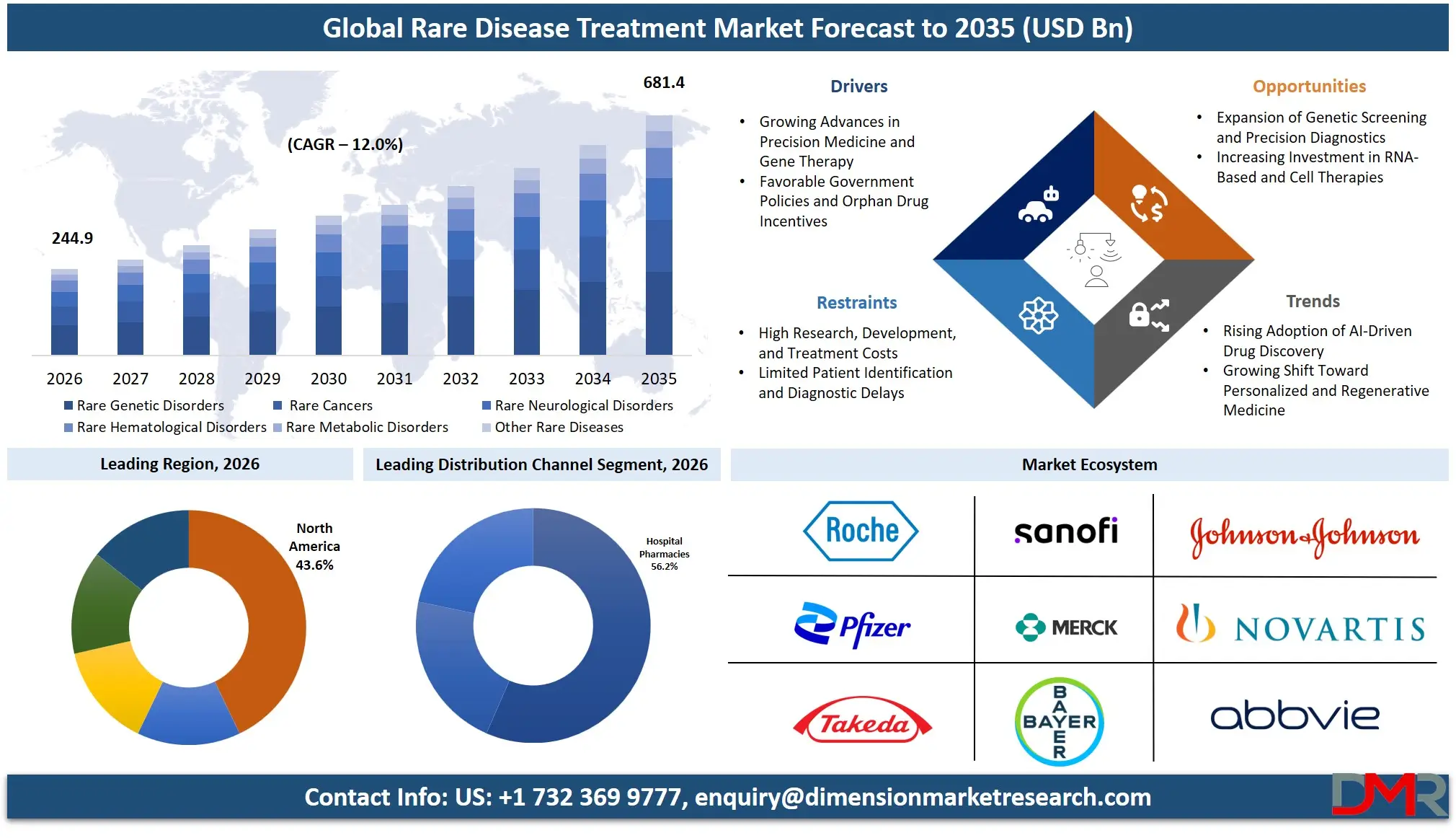
The Rare Disease Treatment Market size is expected to be USD 244.9 billion in 2026 and increase at a compound annual growth rate of 12.0% to USD 681.4 billion by 2035 due to growing advances in precision medicine and gene therapy.
ℹ
To learn more about this report –
Download Your Free Sample Report Here
Rare disease treatment refers to the development and application of specialized therapies, medicines, biologics, gene-based interventions, cell therapies, enzyme replacement therapies, and supportive care solutions designed to diagnose, manage, or cure uncommon medical conditions affecting small patient populations. These treatments combine advanced biotechnology, precision medicine, orphan drug development, genetic diagnostics, and personalized healthcare approaches to address complex disorders with limited therapeutic options. Growing investments in genomic research, expanding orphan drug designations, improved diagnostic technologies, and increasing adoption of gene and RNA-based therapies are transforming the sector, strengthening innovation and improving long-term treatment outcomes across global healthcare systems.
The US Rare Disease Treatment Market
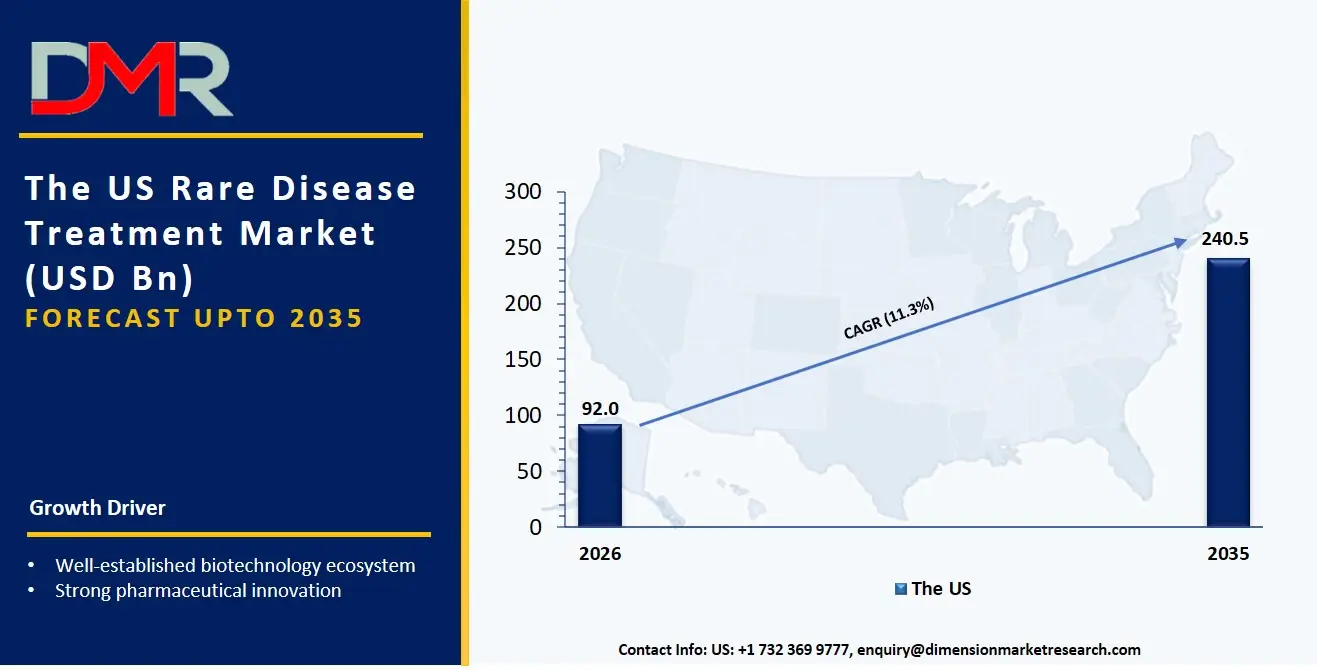
The US Rare Disease Treatment Market size is estimated to be USD 92.0 billion in 2026 and is expected to increase at a CAGR of 11.3% over the forecast period.
ℹ
To learn more about this report –
Download Your Free Sample Report Here
The US Rare Disease Treatment Market is supported by a well-established biotechnology ecosystem, strong pharmaceutical innovation, and favorable orphan drug regulations. Significant investments in clinical research, widespread adoption of precision medicine, and advanced healthcare infrastructure continue to drive market expansion. Government incentives, expedited regulatory pathways, and increasing collaborations between biotechnology firms, academic institutions, and healthcare providers accelerate the commercialization of novel therapies. High healthcare expenditure and improved patient awareness further strengthen the country's leadership in rare disease treatment development.
Europe Rare Disease Treatment Market
The Europe Rare Disease Treatment Market size is estimated to be USD 56.3 billion in 2026 and is expected to increase at a CAGR of 11.5% over the forecast period.
The Europe Rare Disease Treatment Market benefits from coordinated healthcare initiatives, supportive reimbursement policies, and robust research funding across member states. Regional strategies promoting innovation in personalized medicine and cross-border collaboration have enhanced access to orphan drugs. The European Green Deal indirectly supports sustainable pharmaceutical manufacturing practices, while regulatory harmonization encourages clinical trials and drug approvals. Growing investments in genetic research, expanding diagnostic capabilities, and increased focus on early disease detection continue to stimulate market growth throughout the region.
Japan Rare Disease Treatment Market
The market size of Japan Rare Disease Treatment will be USD 12.2 billion in 2026 and at a CAGR of 11.9% in the forecast period.
Japan's Rare Disease Treatment Market is expanding through continuous advancements in regenerative medicine, gene therapy, and precision healthcare. Government initiatives supporting orphan drug development, accelerated approval pathways, and public-private research collaborations contribute significantly to innovation. An aging population, sophisticated healthcare infrastructure, and increasing genetic screening programs strengthen demand for advanced therapies. While high development costs and limited patient populations remain challenges, ongoing investments in biotechnology and personalized medicine create substantial long-term growth opportunities.
Key Takeaways
- Market Size & Forecast: The Rare Disease Treatment Market size is projected to reach USD 244.9 billion in 2026 and is anticipated to have a value of USD 681.4 billion in 2035.
- Growth Rate & Outlook: The Rare Disease Treatment Market size is set to grow at a compound annual growth rate of 12.0% during the forecast period of 2026 to 2035.
- Primary Growth Drivers: Some of the major growth drivers in the market are Growing Advances in Precision Medicine and Gene Therapy and more.
- Key Market Trends: Some of the major trends in the market are Rising Adoption of AI-Driven Drug Discovery and more.
- By Disease Type: Rare Genetic Disorders segment is anticipated to get the majority share of the Rare Disease Treatment Market in 2026.
- By Treatment Type: Biologics are expected to get the largest revenue share in 2026 in the Rare Disease Treatment Market.
- By Distribution Channel Type: Hospital Pharmacies is expected to get the largest revenue share in 2026 in the Rare Disease Treatment Market.
- Regional Leadership: North America is set to lead the Rare Disease Treatment Market with an estimated 43.6% share in 2026.
What is the Rare Disease Treatment?
Rare disease treatment refers to specialized medical therapies, pharmaceutical products, biologics, gene therapies, cell therapies, enzyme replacement therapies, and supportive care approaches developed to diagnose, manage, or cure diseases affecting a small percentage of the population. These treatments focus on addressing underlying genetic or biological causes, improving patient outcomes, enhancing quality of life, and meeting unmet clinical needs through personalized and innovative healthcare solutions.
Use Cases
- Genetic Disorder Management: Gene therapies, enzyme replacement therapies, and biologics are increasingly used to treat inherited disorders by targeting the underlying genetic cause. These approaches improve disease progression, reduce complications, and enhance long-term patient outcomes through personalized treatment strategies.
- Oncology for Rare Cancers: Targeted therapies and precision oncology enable clinicians to develop customized treatment plans for patients with rare cancers. Biomarker-driven medicines improve therapeutic effectiveness while minimizing adverse effects and supporting better survival rates.
- Neurological Disease Treatment: Advanced biologics, RNA-based therapies, and cell therapies are being adopted for rare neurological disorders. These innovative treatments help slow disease progression, preserve neurological function, and improve quality of life for affected individuals.
- Pediatric Rare Disease Care: Many rare diseases appear during childhood, making early diagnosis and specialized treatment essential. Precision medicine, newborn genetic screening, and advanced therapeutic interventions help improve survival rates while reducing lifelong disease complications.
How AI Is Transforming the Rare Disease Treatment Market
Artificial intelligence is transforming rare disease treatment by improving genetic data interpretation, accelerating biomarker discovery, and supporting faster identification of potential therapeutic candidates. Machine learning algorithms analyze large genomic datasets to identify disease patterns, optimize drug development, and improve clinical trial design while reducing research costs and development timelines.
AI also enhances patient diagnosis through advanced medical imaging, predictive analytics, and clinical decision support systems. Healthcare providers benefit from personalized treatment recommendations, improved disease monitoring, and optimized patient management, while pharmaceutical companies leverage AI to streamline drug discovery, increase research productivity, and enhance overall operational efficiency.
Market Dynamic
Driving Factors in the Rare Disease Treatment Market
Growing Advances in Precision Medicine and Gene Therapy
Rapid progress in precision medicine, genomic sequencing, and gene-editing technologies is significantly driving the Rare Disease Treatment Market. Improved understanding of disease-causing genetic mutations enables the development of highly targeted therapies with enhanced effectiveness. Pharmaceutical companies continue investing in personalized medicines and advanced biologics that address previously untreatable conditions. These technological innovations improve patient outcomes while encouraging regulatory support and increased investment in orphan drug research.
Restraints in the Rare Disease Treatment Market
High Research, Development, and Treatment Costs
Developing therapies for rare diseases requires extensive research, specialized clinical trials, and complex manufacturing processes, resulting in exceptionally high costs. Limited patient populations reduce potential revenue, making investment decisions challenging. Additionally, expensive gene therapies and biologics often create affordability concerns for healthcare systems, insurers, and patients, limiting broader market adoption despite therapeutic benefits.
Opportunities in the Rare Disease Treatment Market
Expansion of Genetic Screening and Precision Diagnostics
Growing adoption of next-generation sequencing, newborn screening programs, and molecular diagnostics presents significant opportunities for the Rare Disease Treatment Market. Earlier disease identification enables timely therapeutic intervention and increases patient eligibility for advanced treatments. Expanding diagnostic capabilities across emerging economies is expected to broaden the addressable patient population and improve healthcare accessibility.
Trends in the Rare Disease Treatment Market
Rising Adoption of AI-Driven Drug Discovery
Artificial intelligence is increasingly integrated into drug discovery, biomarker identification, and clinical trial optimization for rare diseases. AI accelerates candidate selection, predicts therapeutic responses, and improves research efficiency by analyzing complex genomic datasets. These capabilities shorten development timelines while reducing research costs and increasing the probability of successful drug development.
Research Scope and Analysis
The research analyzes the Rare Disease Treatment Market across disease type, treatment type, and distribution channel while evaluating regional performance, technological advancements, market dynamics, competitive landscape, emerging opportunities, and evolving healthcare trends. It also assesses growth drivers, challenges, and future market potential across key global regions.
ℹ
To learn more about this report –
Download Your Free Sample Report Here
By Disease Type Analysis
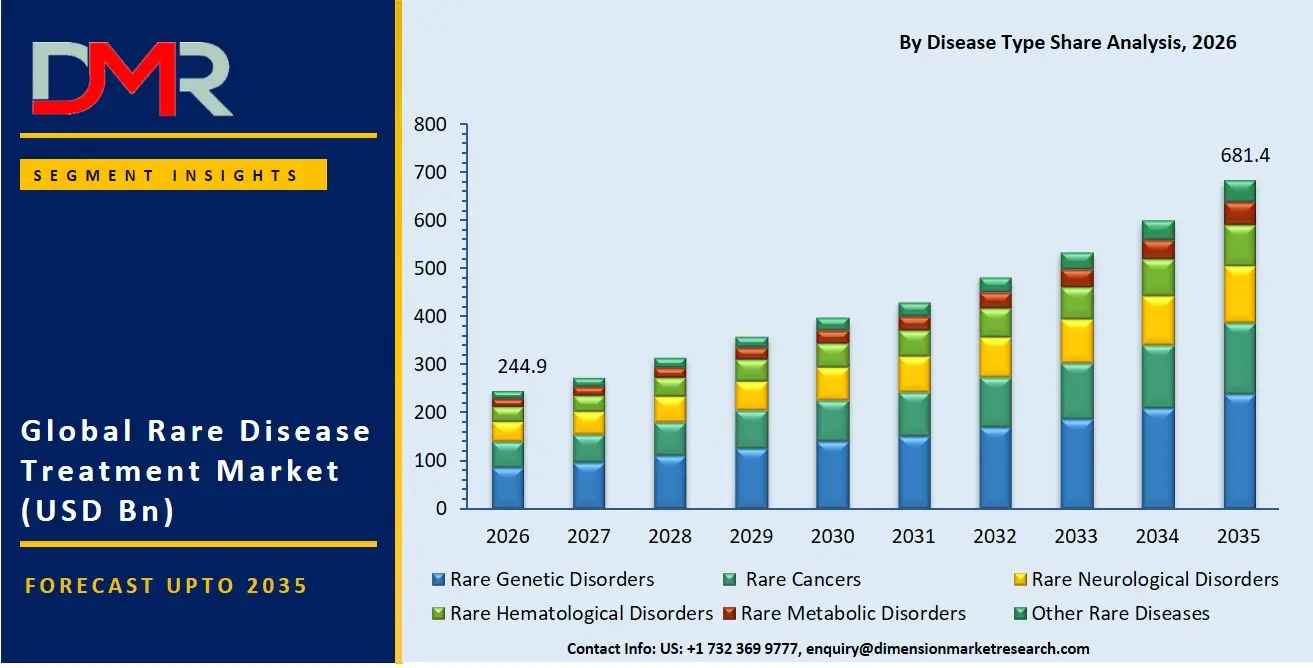
Among disease types, Rare Genetic Disorders are expected to dominate the market with an estimated 34.8% market share in 2026, primarily due to the increasing prevalence of inherited genetic conditions, expanding newborn screening programs, and growing commercialization of gene therapies.
ℹ
To learn more about this report –
Download Your Free Sample Report Here
Continuous advancements in molecular diagnostics and personalized medicine further strengthen this segment's leadership. Meanwhile, Rare Neurological Disorders are projected to be the fastest-growing segment owing to rising investments in RNA-based therapeutics, regenerative medicine, and advanced biologics targeting complex neurological diseases. Increasing awareness, improved diagnosis, and expanding clinical research activities continue supporting long-term growth across both established and emerging therapeutic areas.
By Treatment Type Analysis
Biologics are projected to lead the treatment type segment with an estimated 31.5% market share in 2026, supported by their strong clinical efficacy, expanding regulatory approvals, and broad application across multiple rare diseases. Continuous improvements in monoclonal antibodies and recombinant proteins reinforce market leadership. At the same time, Gene Therapy is expected to register the fastest growth as scientific breakthroughs, favorable orphan drug incentives, and increasing investments accelerate commercialization. Improved manufacturing technologies, expanding clinical pipelines, and long-term curative potential continue driving significant adoption of advanced genetic therapies worldwide.
By Distribution Channel Analysis
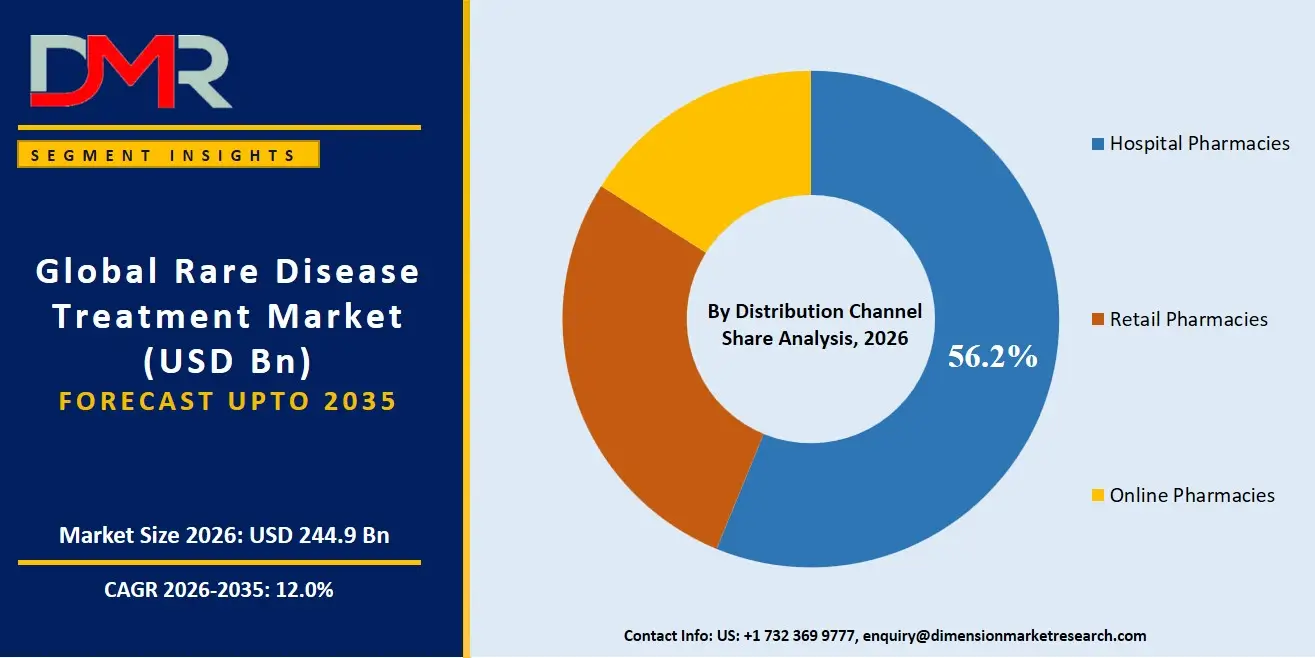
Hospital Pharmacies are anticipated to account for an estimated 56.2% market share in 2026, maintaining leadership due to specialized administration requirements, physician supervision, and complex handling procedures associated with biologics, gene therapies, and enzyme replacement therapies. Hospitals also provide multidisciplinary care essential for managing rare diseases. Meanwhile, Online Pharmacies are expected to witness the fastest growth as digital healthcare adoption, home-based treatment models, improved specialty drug distribution, and enhanced patient convenience continue expanding access to rare disease medications globally.
The Rare Disease Treatment Market Report is segmented on the basis of the following:
By Disease Type
- Rare Genetic Disorders
- Rare Cancers
- Rare Neurological Disorders
- Rare Hematological Disorders
- Rare Metabolic Disorders
- Other Rare Diseases
By Treatment Type
- Small Molecule Drugs
- Biologics
- Gene Therapy
- Cell Therapy
- Enzyme Replacement Therapy (ERT)
- RNA-Based Therapies
By Distribution Channel
- Hospital Pharmacies
- Retail Pharmacies
- Online Pharmacies
Regional Analysis
Leading Region in the Rare Disease Treatment Market
ℹ
To learn more about this report –
Download Your Free Sample Report Here
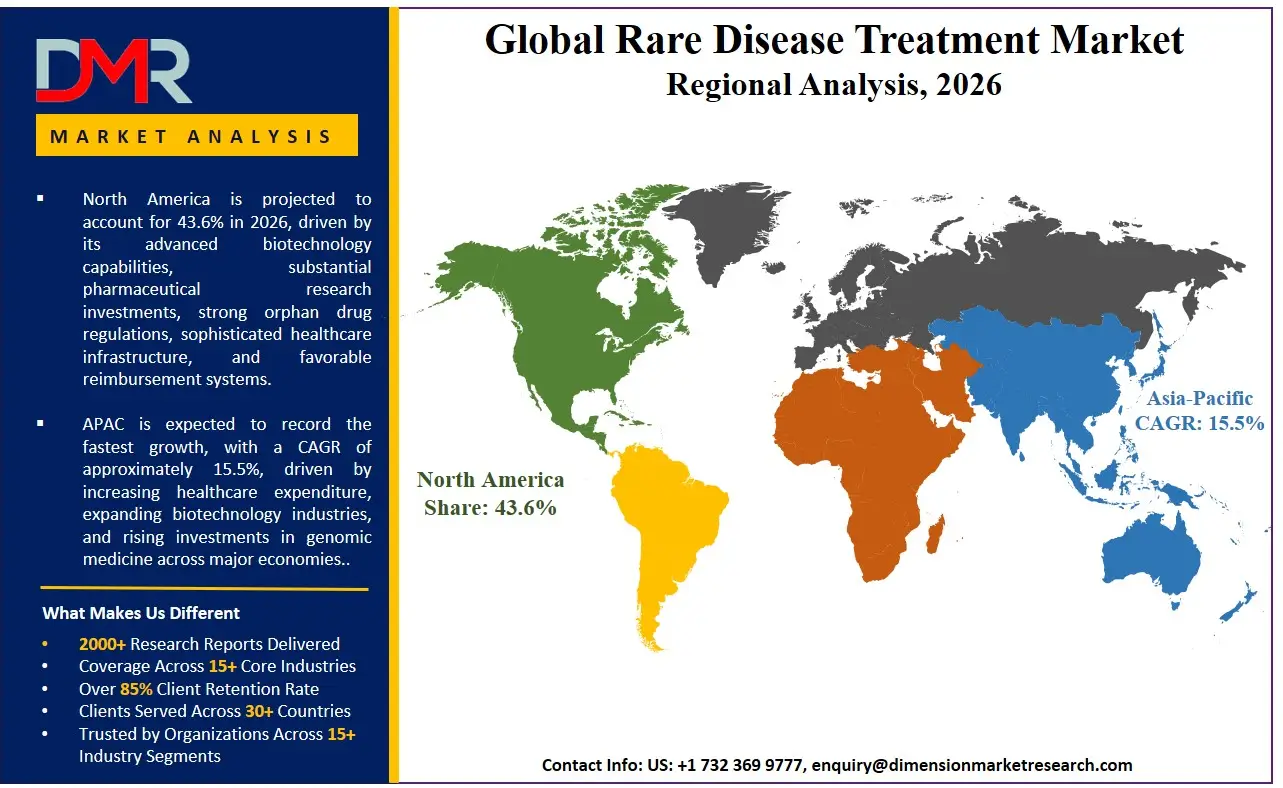
North America is expected to remain the leading regional market with an estimated 43.6% market share in 2026. The region benefits from advanced biotechnology capabilities, substantial pharmaceutical research investments, strong orphan drug regulations, sophisticated healthcare infrastructure, and favorable reimbursement systems. High adoption of precision medicine, widespread genetic testing, extensive clinical trial activity, and continuous innovation in gene and cell therapies further strengthen regional leadership. Strategic collaborations among research institutions, biotechnology companies, and healthcare providers continue supporting sustained market dominance.
Fastest Growing Region in the Rare Disease Treatment Market
Asia-Pacific is projected to be the fastest-growing region due to increasing healthcare expenditure, expanding biotechnology industries, and rising investments in genomic medicine across major economies. Government initiatives supporting orphan drug development, improved healthcare infrastructure, growing awareness of rare diseases, and expanding genetic diagnostic capabilities contribute significantly to market growth. Rapid urbanization, increasing clinical research activities, favorable regulatory reforms, and greater participation of domestic biotechnology companies further accelerate regional expansion over the forecast period.
By Region
North America
Europe
- Germany
- The U.K.
- France
- Italy
- Russia
- Spain
- Benelux
- Nordic
- Rest of Europe
Asia-Pacific
- China
- Japan
- South Korea
- India
- ANZ
- ASEAN
- Rest of Asia-Pacific
Latin America
- Brazil
- Mexico
- Argentina
- Colombia
- Rest of Latin America
Middle East & Africa
- Saudi Arabia
- UAE
- South Africa
- Israel
- Egypt
- Rest of MEA
Competitive Landscape
The Rare Disease Treatment Market is characterized by continuous innovation, significant research investments, and high barriers to entry associated with regulatory requirements, specialized manufacturing, and lengthy clinical development processes. Market participants primarily compete through pipeline expansion, strategic collaborations, licensing agreements, acquisitions, advanced technology integration, and precision medicine capabilities rather than price competition. Increasing investments in gene therapy, biologics, artificial intelligence-enabled drug discovery, and global clinical trial expansion remain key competitive strategies for strengthening long-term market positioning.
Some of the prominent players in the global Rare Disease Treatment are:
- Roche Holding AG
- Novartis AG
- Pfizer Inc.
- Johnson & Johnson
- Sanofi
- Takeda Pharmaceutical Company Limited
- AstraZeneca PLC
- Amgen Inc.
- AbbVie Inc.
- Bristol Myers Squibb
- Eli Lilly and Company
- Merck & Co., Inc.
- Bayer AG
- BioMarin Pharmaceutical Inc.
- Vertex Pharmaceuticals Incorporated
- Alexion Pharmaceuticals
- CSL Behring
- Chiesi Farmaceutici S.p.A.
- Recordati S.p.A.
- Ultragenyx Pharmaceutical Inc.
- Other Key Players
Recent Developments
- In January 2025, Johnson & Johnson announced its agreement to acquire Intra-Cellular Therapies, Inc. in a multibillion-dollar transaction aimed at expanding its neuroscience portfolio. The acquisition strengthens Johnson & Johnson's pipeline with innovative therapies targeting central nervous system disorders while enhancing long-term research capabilities in neurological diseases. The strategic move also supports broader investments in precision medicine, advanced drug development platforms, and specialized therapeutic innovation, reinforcing the company's position within complex disease treatment markets, including selected rare neurological disorder research initiatives.
- In January 2025, Eli Lilly and Company announced the acquisition of Scorpion Therapeutics' PI3Kα inhibitor oncology program through the creation of a new independent company. The agreement included a substantial upfront payment and additional milestone-based consideration while allowing Scorpion Therapeutics to continue advancing its remaining precision oncology pipeline. The acquisition strengthens Eli Lilly's precision medicine portfolio by expanding targeted therapy capabilities and supporting future development of innovative treatments that may also contribute to therapies addressing genetically driven rare diseases and oncology indications.
Report Details
| Report Characteristics |
| Market Size (2026) |
USD 244.9 Bn |
| Forecast Value (2035) |
USD 681.4 Bn |
| CAGR (2026–2035) |
12.0% |
| Historical Period |
2021 – 2025 |
| Forecast Period |
2027 – 2035 |
| Base Year |
2025 |
| Estimate Year |
2026 |
| Segments Covered |
By Disease Type, By Treatment Type, By Distribution Channel |
| Regional Coverage |
North America – The US and Canada; Europe – Germany, The UK, France, Russia, Spain, Italy, Benelux, Nordic, & Rest of Europe; Asia-Pacific – China, Japan, South Korea, India, ANZ, ASEAN, Rest of APAC; Latin America – Brazil, Mexico, Argentina, Colombia, Rest of Latin America; Middle East & Africa – Saudi Arabia, UAE, South Africa, Turkey, Egypt, Israel, & Rest of MEA |
Frequently Asked Questions
How big is the Rare Disease Treatment Market?
▾ The Rare Disease Treatment Market size is expected to reach USD 244.9 billion by 2026 and is projected to reach USD 681.4 billion by the end of 2035.
What is the CAGR of the Rare Disease Treatment Market from 2026 to 2035?
▾ The market is growing at a CAGR of 12.0 percent over the forecasted period.
What factors are driving the growth of the Rare Disease Treatment Market?
▾ Growing Advances in Precision Medicine and Gene Therapy, and more are the factors driving the growth of the Rare Disease Treatment Market.
What are the major trends in the Rare Disease Treatment Market?
▾ Rising Adoption of AI-Driven Drug Discovery, and more are some of the major trends in the market.
Who are the key players in the Rare Disease Treatment Market?
▾ Some of the key players in the Rare Disease Treatment Market include Roche, Pfizer, Merck, and more.
How is the Rare Disease Treatment Market segmented?
▾ The Rare Disease Treatment Market is segmented by disease type, treatment type, distribution channel.
Which region held the largest share of the Rare Disease Treatment Market in 2026?
▾ North America is set to lead the Rare Disease Treatment Market with an estimated 43.6% share in 2026.
Which region is expected to grow the fastest in the Rare Disease Treatment Market?
▾ Asia Pacific is the fastest-growing region in the Rare Disease Treatment Market during the forecast period.