Market Overview
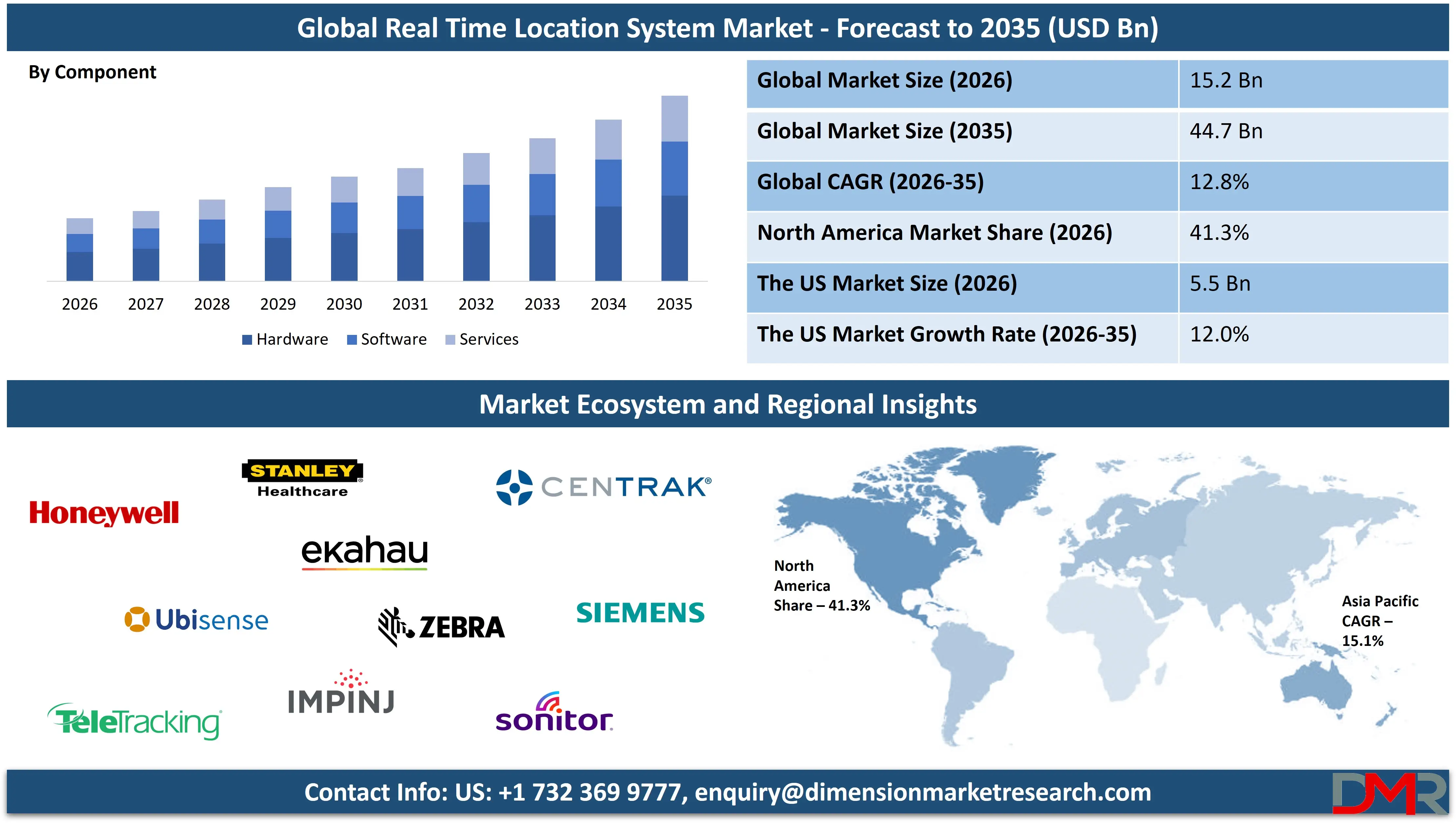
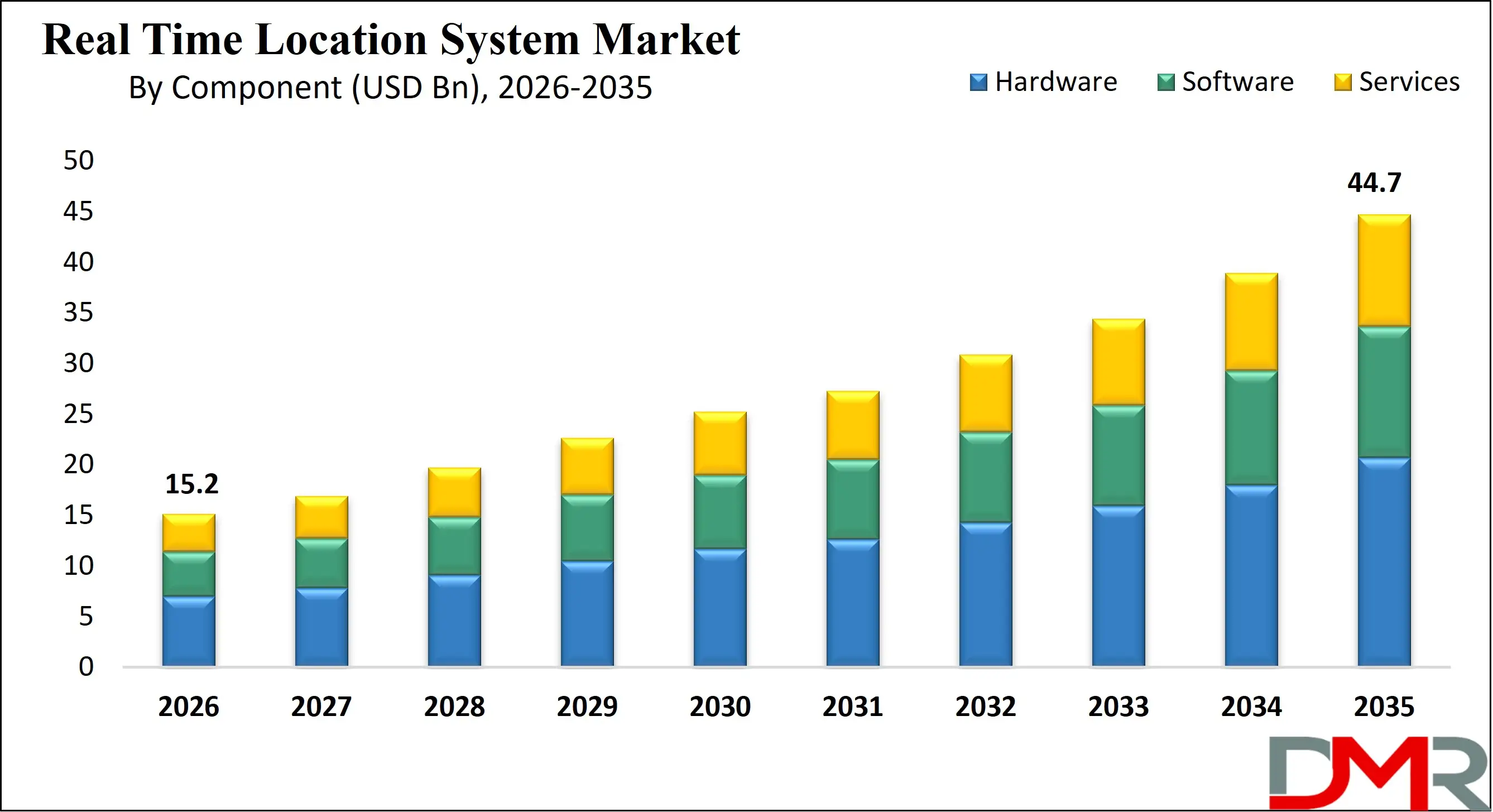
The Global Real Time Location System Market size is projected to reach USD 15.2 billion in 2026 and grow at a compound annual growth rate of 12.8% to reach a value of USD 44.7 billion in 2035.
ℹ
To learn more about this report –
Download Your Free Sample Report Here
A Real Time Location System (RTLS) is a technology framework designed to automatically identify and track the location of objects or people in real time within a defined area. It typically integrates hardware components such as tags, readers, anchors, sensors, and gateways with software platforms that process spatial data and generate actionable insights. RTLS leverages technologies including RFID, Ultra-Wideband (UWB), Wi-Fi, Bluetooth Low Energy (BLE), and GPS/GNSS to deliver precise indoor and outdoor positioning. These systems are widely deployed across healthcare, manufacturing, logistics, retail, and government facilities to enhance visibility, operational control, and safety.
The growing dependency on data-driven decision-making has elevated RTLS from a niche tracking solution to a mission-critical infrastructure layer in smart facilities and Industry 4.0 ecosystems. Advancements in UWB accuracy, low-power BLE beacons, and cloud-native RTLS platforms have significantly improved scalability and affordability. The integration of IoT, edge computing, and 5G connectivity is further strengthening real-time tracking capabilities, enabling centimeter-level precision and low-latency communication.
ℹ
To learn more about this report –
Download Your Free Sample Report Here
Organizations are majorly prioritizing workflow optimization, asset utilization, and regulatory compliance, accelerating RTLS adoption. The shift toward digital twins, automation, and intelligent supply chains is influencing market expansion. As enterprises focus on resilience and transparency, RTLS is becoming central to operational intelligence strategies worldwide.
The US Real Time Location System Market
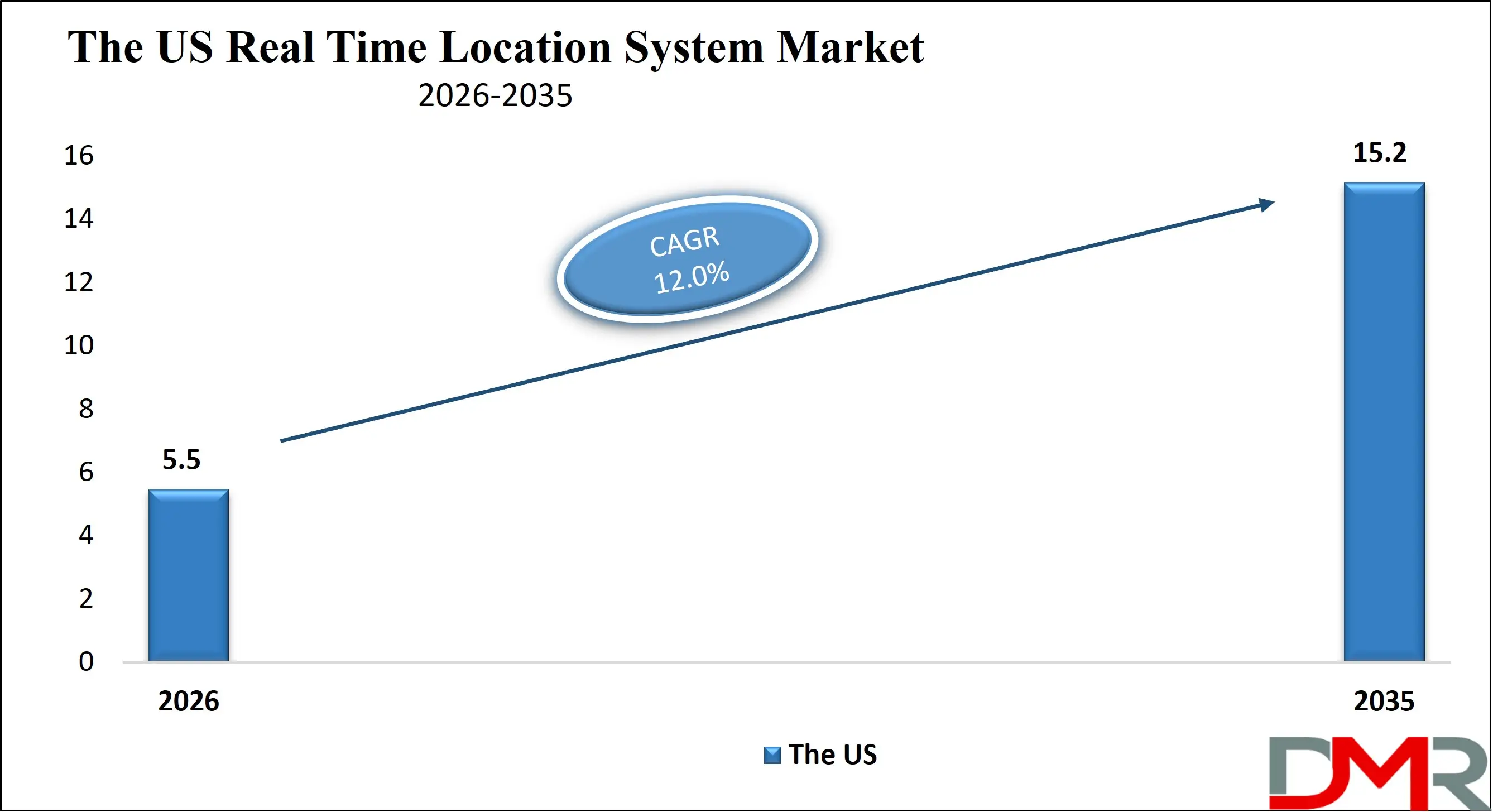
The US Real Time Location System Market size is projected to reach USD 5.5 billion in 2026 at a compound annual growth rate of 12.0% over its forecast period.
ℹ
To learn more about this report –
Download Your Free Sample Report Here
The US represents a mature and innovation-driven RTLS landscape, supported by early adoption across healthcare, defense, and manufacturing sectors. Hospitals increasingly deploy RTLS for asset and patient tracking to improve workflow efficiency and regulatory compliance. Strong investment in Industry 4.0 initiatives and warehouse automation is driving demand for high-precision UWB and RFID systems. Federal regulations around workplace safety and asset accountability encourage implementation across government and defense facilities. Additionally, robust venture capital funding and technology partnerships are accelerating innovation in AI-powered location analytics and cloud-based RTLS platforms.
Europe Real Time Location System Market
Europe Real Time Location System Market size is projected to reach USD 3.3 billion in 2026 at a compound annual growth rate of 11.8% over its forecast period.
Europe’s RTLS market is shaped by strict regulatory standards, industrial automation goals, and sustainability initiatives aligned with the European Green Deal. Manufacturing hubs in Germany, France, and Italy are leveraging RTLS to optimize production lines and reduce operational waste. The region’s emphasis on data privacy under GDPR influences system architecture, encouraging secure and compliant deployments. Healthcare digitization programs and smart logistics networks are expanding RTLS applications. Adoption is steady, with increasing focus on energy-efficient BLE and hybrid positioning systems that support green building objectives and smart city infrastructure.
Japan Real Time Location System Market
Japan Real Time Location System Market size is projected to reach USD 760 million in 2026 at a compound annual growth rate of 12.7% over its forecast period.
Japan’s RTLS market is propelled by advanced manufacturing, robotics integration, and smart factory initiatives. The country’s strong focus on precision engineering aligns well with UWB-based high-accuracy tracking solutions. Urban density and aging demographics are encouraging healthcare facilities to implement RTLS for patient safety and staff coordination. Government-backed digital transformation programs and smart infrastructure investments further stimulate adoption. However, integration complexity in legacy industrial systems presents challenges. Despite this, Japan’s technological sophistication and emphasis on automation create significant growth potential in logistics, transportation, and industrial IoT environments.
Real Time Location System Market: Key Takeaways
- Market Growth: The Real Time Location System Market size is expected to grow by USD 27.8 billion, at a CAGR of 12.8%, during the forecasted period of 2027 to 2035.
- By Component: The hardware segment is anticipated to get the majority share of the Real Time Location System market in 2026.
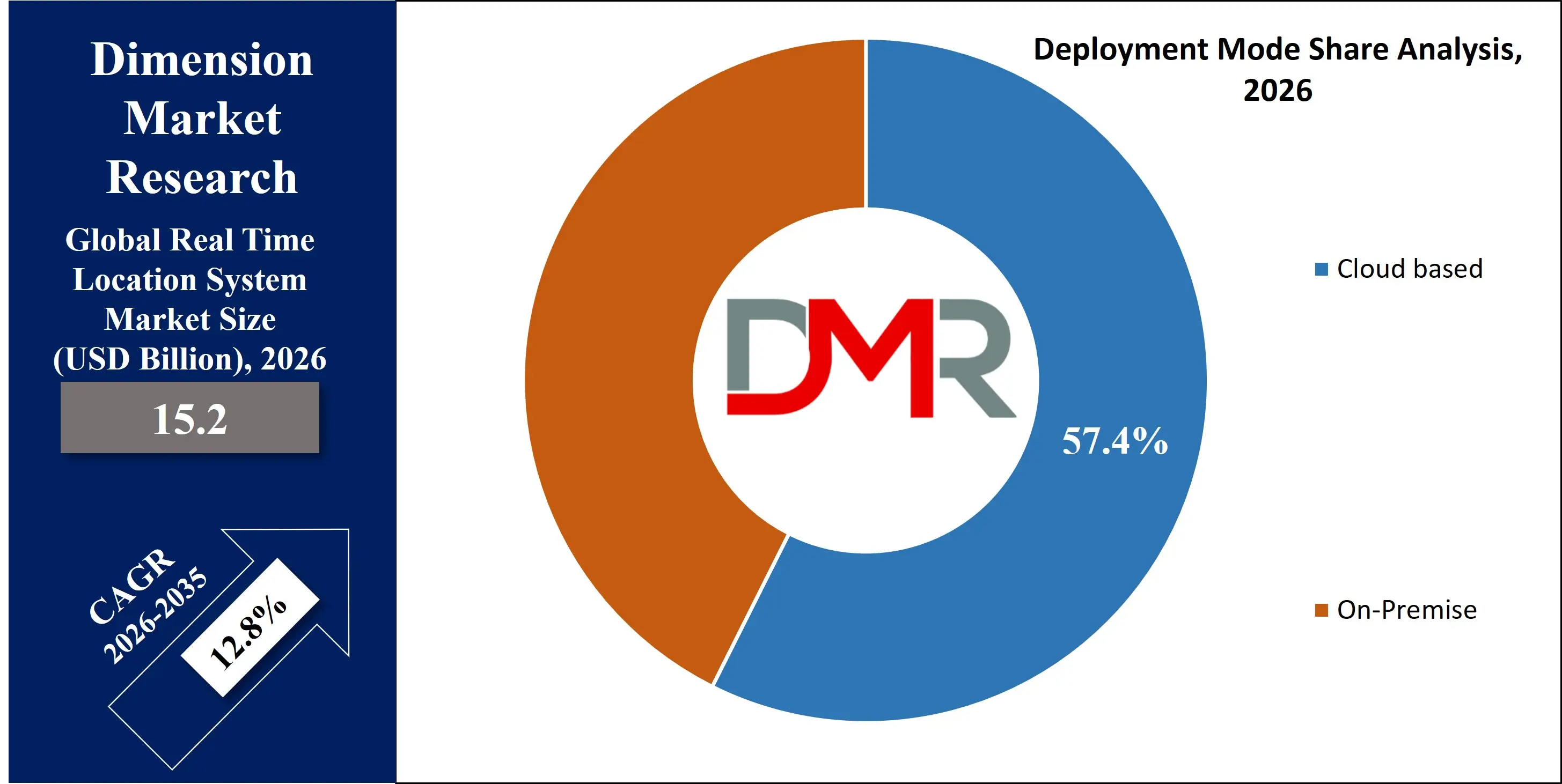
- By Deployment: The cloud based segment is expected to get the largest revenue share in 2026 in the Real Time Location System market.
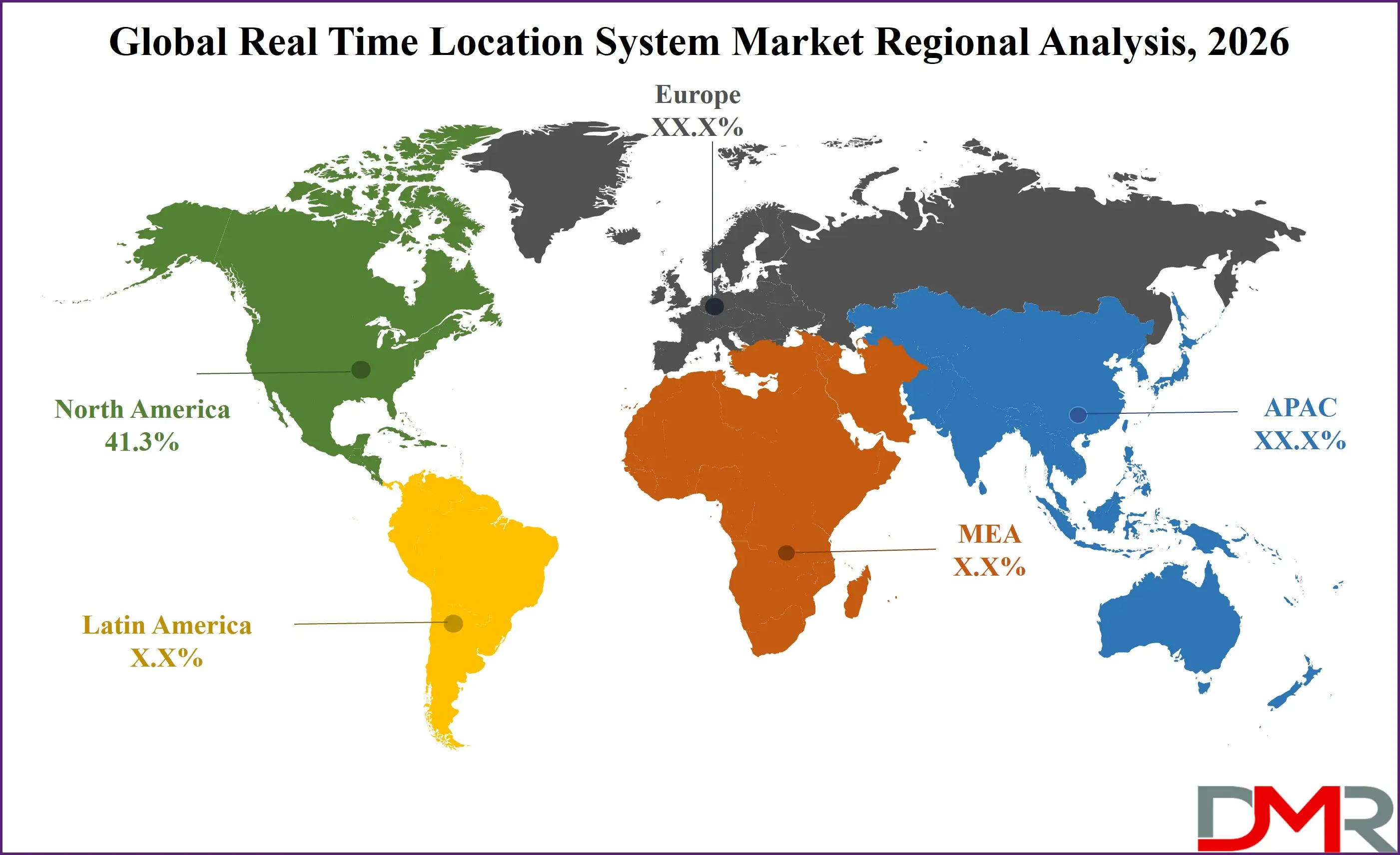
- Regional Insight: North America is expected to hold a 41.3% share of revenue in the global Real Time Location System market in 2026.
- Use Cases: Some of the use cases of Real Time Location System include asset tracking, fleet coordination, and more.
Real Time Location System Market: Use Cases
- Asset Tracking: Real-time monitoring of medical devices, tools, and high-value equipment to reduce loss, improve utilization, and streamline maintenance cycles.
- Personnel Safety Monitoring: Tracking staff in hazardous industrial zones to enhance emergency response and ensure compliance with safety protocols.
- Inventory Optimization: Automated location visibility in warehouses to minimize stock discrepancies and improve order fulfillment accuracy.
- Fleet Coordination: Monitoring vehicle movement for route optimization, fuel efficiency, and theft prevention.
- Patient Flow Management: Enhancing hospital workflow by tracking patient movement and reducing wait times.
- Smart Manufacturing: Supporting production line optimization through real-time material and component tracking.
- Government & Defense Asset Control: Secure tracking of sensitive equipment within restricted facilities.
Stats & Facts
- U.S. Department of Commerce reported in 2024 that manufacturing contributed over USD 2.3 trillion to U.S. GDP, reinforcing demand for smart factory tracking systems.
- U.S. Bureau of Labor Statistics stated in 2024 that logistics employment exceeded 6.5 million workers, highlighting tracking needs.
- European Commission indicated in 2025 that over 60% of EU enterprises adopted advanced digital technologies.
- Eurostat reported in 2024 that 58% of large EU enterprises used IoT-connected devices.
- Japan Ministry of Economy, Trade and Industry noted in 2024 that smart factory investments grew by 12% year-over-year.
- World Health Organization reported in 2024 that global healthcare digitalization spending increased by 15%.
- U.S. Department of Transportation recorded in 2025 that freight volumes rose by 3.2%.
- International Telecommunication Union stated in 2024 that global IoT connections surpassed 15 billion.
- OECD reported in 2025 that industrial automation adoption increased by 10% across member countries.
- U.S. Energy Information Administration noted in 2024 that industrial energy efficiency programs expanded by 8%.
- European Investment Bank reported in 2025 that green digital infrastructure investments exceeded EUR 150 billion.
Market Dynamic
Driving Factors in the Real Time Location System Market
Expansion of Industry 4.0 and Smart Infrastructure
The rapid integration of Industry 4.0 technologies is a primary catalyst for RTLS adoption. Smart factories require precise asset and workflow tracking to support automation, robotics, and predictive maintenance. Governments worldwide are funding digital transformation initiatives that incentivize IoT and real-time analytics implementation. The convergence of 5G, edge computing, and AI enhances location accuracy and responsiveness, making RTLS indispensable in mission-critical environments. As enterprises seek operational transparency and data-driven optimization, RTLS serves as a foundational layer for intelligent infrastructure and connected ecosystems.
Rising Demand for Operational Efficiency and Cost Reduction
Organizations increasingly prioritize cost optimization and asset utilization. RTLS reduces equipment loss, minimizes downtime, and enhances labor productivity. In healthcare, real-time tracking improves patient throughput and resource allocation. In logistics, it streamlines warehouse management and order accuracy. Supply chain disruptions have intensified the need for real-time visibility, prompting companies to invest in tracking solutions that enhance resilience. By improving workflow automation and reducing manual processes, RTLS directly contributes to measurable cost savings and performance gains.
Restraints in the Real Time Location System Market
High Initial Implementation Costs
Deploying RTLS infrastructure requires substantial upfront investment in hardware, integration services, and system customization. UWB anchors, RFID readers, and software platforms can be capital-intensive, particularly for large facilities. Integration with legacy enterprise systems further increases complexity and cost. Small and medium enterprises may face budgetary constraints, slowing adoption. Additionally, calibration, maintenance, and periodic upgrades add to total cost of ownership, creating financial barriers for widespread implementation.
Data Privacy and Security Concerns
RTLS collects continuous location data, raising concerns about employee privacy and cybersecurity risks. Regulations such as GDPR in Europe impose strict data protection requirements, increasing compliance burdens. Unauthorized access to location data could expose sensitive operational details. Organizations must implement robust encryption, secure network architecture, and transparent data governance policies. These concerns can delay procurement decisions and require additional investment in cybersecurity infrastructure.
Opportunities in the Real Time Location System Market
Growth in Healthcare Digital Transformation
Healthcare facilities are rapidly adopting digital health technologies, creating strong potential for RTLS integration. Hospitals seek improved patient safety, reduced equipment loss, and optimized staff workflows. Integration with electronic health records and AI analytics enhances operational visibility. Aging populations in developed economies further drive demand for efficient care delivery systems. Emerging markets investing in hospital modernization present untapped potential for RTLS providers.
Expansion of Smart Warehousing and E-commerce
The rise of e-commerce is accelerating warehouse automation and demand for real-time inventory visibility. Smart warehouses rely on RTLS for automated picking, robotics coordination, and inventory accuracy. Governments supporting logistics infrastructure development create favorable conditions. As omnichannel retail expands, businesses require advanced tracking solutions to manage complex distribution networks, offering significant growth avenues.
Trends in the Real Time Location System Market
Integration with Artificial Intelligence and Analytics
RTLS platforms increasingly integrate AI to deliver predictive insights rather than simple location data. Machine learning algorithms analyze movement patterns to optimize workflows and prevent bottlenecks. Predictive maintenance, anomaly detection, and workforce analytics are becoming standard features. This shift transforms RTLS from a tracking tool into a strategic decision-support system.
Adoption of Hybrid Positioning Technologie
Organizations are combining RFID, BLE, UWB, and Wi-Fi to achieve optimal cost and accuracy balance. Hybrid systems enable seamless indoor-outdoor tracking and scalable deployments. Cloud-based architectures allow centralized data management and remote monitoring. This technological convergence enhances flexibility and broadens application scope across industries.
Impact of Artificial Intelligence in Real Time Location System Market
- Predictive Asset Maintenance: AI analyzes location and usage patterns to forecast equipment failures and schedule maintenance proactively.
- Workflow Optimization: Machine learning identifies movement inefficiencies and recommends process improvements.
- Anomaly Detection: AI detects unusual asset or personnel behavior, enhancing security.
- Capacity Planning: Advanced analytics predict peak utilization periods for better resource allocation.
- Automated Alerts: Intelligent systems generate real-time alerts based on contextual location data.
- Behavioral Insights: AI evaluates staff and customer movement patterns to improve facility layout.
- Energy Efficiency Optimization: Smart algorithms reduce energy consumption through occupancy-based controls.
- Enhanced Decision Support: AI-driven dashboards convert raw location data into actionable intelligence.
Research Scope and Analysis
By Technology Analysis
RFID technology is projected to account for 34.8% of the Real Time Location System market share in 2026, maintaining its leadership due to widespread deployment across healthcare, retail, and logistics environments. Passive RFID remains particularly dominant because of its cost-effectiveness and scalability for large asset inventories. Hospitals rely heavily on RFID for equipment and patient tracking, while retailers use it for inventory visibility and shrinkage reduction. The technology’s maturity, interoperability with enterprise resource planning (ERP) systems, and relatively low infrastructure complexity contribute to its strong market position. Furthermore, advancements in RFID reader sensitivity and tag miniaturization are enhancing performance, enabling better accuracy in complex indoor environments. As organizations prioritize affordability and operational transparency, RFID continues to serve as the foundational technology for large-scale RTLS deployments.
Ultra-Wideband is emerging as the fastest-growing technology segment due to its centimeter-level accuracy and low interference capabilities. Industries such as manufacturing, automotive, and defense increasingly deploy UWB for high-precision tracking in mission-critical environments. The declining cost of UWB chips and integration into consumer devices are expanding adoption. Additionally, the technology’s compatibility with Industry 4.0 automation systems and robotics makes it particularly attractive for smart factories. As enterprises seek greater accuracy and reliability, UWB is expected to capture a growing share of high-value, precision-focused applications.
By Component Analysis
Hardware is anticipated to hold 46.2% of the market share in 2026, driven by continuous investments in tags, anchors, readers, and sensors required for RTLS infrastructure. Large-scale facility deployments demand significant hardware installation, especially in warehouses, hospitals, and industrial plants. UWB anchors and BLE beacons are experiencing strong demand due to rising accuracy requirements. Hardware upgrades and periodic replacements further sustain revenue generation. Although software capabilities are expanding, physical infrastructure remains indispensable for system functionality, reinforcing hardware’s dominant contribution. Increasing miniaturization, battery efficiency improvements, and ruggedized industrial-grade devices are further enhancing hardware adoption across sectors.
Software is the fastest-growing component segment as organizations seek advanced analytics, integration capabilities, and cloud-based dashboards. RTLS platform software increasingly incorporates AI-driven insights, predictive analytics, and digital twin integration. Cloud-native solutions reduce on-premises IT burden and enable remote management. As enterprises focus on extracting actionable intelligence rather than just location data, software investment is accelerating. Subscription-based pricing models further drive adoption among mid-sized enterprises.
By Application Analysis
Asset tracking is projected to command 38.5% of the market share in 2026, driven by high demand across healthcare, logistics, and manufacturing sectors. Organizations deploy RTLS to monitor high-value equipment, reduce loss, and improve asset utilization rates. In hospitals, tracking critical devices enhances patient care efficiency and lowers procurement costs. Warehouses benefit from improved inventory visibility and faster order fulfillment. The financial impact of misplaced assets and downtime strongly justifies investment in asset tracking solutions. Continuous integration with inventory management systems and ERP platforms further strengthens this segment’s leadership position in the overall market.
Personnel tracking is witnessing rapid growth due to rising workplace safety requirements and regulatory compliance standards. Industrial facilities use RTLS to monitor worker movement in hazardous zones and enable rapid emergency response. Healthcare institutions deploy staff tracking to improve workflow coordination. Increasing emphasis on occupational safety and productivity optimization is accelerating adoption. Privacy-conscious system designs and secure data management solutions are supporting wider acceptance across industries.
By Deployment Mode Analysis
Cloud-based deployment is expected to hold 57.4% of the market share in 2026, supported by scalability, lower upfront costs, and remote accessibility advantages. Enterprises prefer cloud solutions for centralized monitoring across multiple facilities. Automatic updates, subscription pricing models, and integration with enterprise SaaS platforms enhance flexibility. As digital transformation initiatives expand, cloud-native RTLS platforms are becoming the default choice for new deployments, especially among mid-sized and large enterprises seeking agile infrastructure.
ℹ
To learn more about this report –
Download Your Free Sample Report Here
On-premises solutions remain relevant, particularly in defense, government, and highly regulated industries requiring strict data control. Organizations handling sensitive data prefer localized infrastructure to maintain compliance and reduce cybersecurity risks. Hybrid models combining cloud analytics with on-site data processing are also gaining traction, ensuring balance between security and scalability.
By End User Industry Analysis
Healthcare is projected to capture 29.6% of the RTLS market share in 2026, driven by hospital digitization and patient safety initiatives. RTLS supports asset utilization, patient flow management, infection control monitoring, and staff coordination. Rising healthcare expenditures and emphasis on operational efficiency further accelerate adoption. Integration with electronic health records and smart medical devices strengthens the value proposition. As healthcare providers aim to reduce costs while improving service quality, RTLS remains a critical technology investment.
Logistics and warehousing is the fastest-growing industry segment, fueled by e-commerce expansion and supply chain digitalization. Real-time inventory visibility, automated picking systems, and fleet monitoring enhance operational efficiency. Growing investments in smart distribution centers and robotics integration further drive RTLS deployment. As global trade and last-mile delivery demands increase, logistics operators increasingly rely on precise tracking systems.
The Real Time Location System Market Report is segmented on the basis of the following
By Technology
- RFID
- Ultra-Wideband (UWB)
- Wi-Fi
- Bluetooth Low Energy (BLE)
- GPS/GNSS
By Component
- Hardware
- Tags
- Readers/Anchors
- Sensors & Gateways
- Software
- RTLS Platform Software
- Analytics & Integration Software
- Services
- Professional Services
- Managed Services
By Application
- Asset Tracking
- Personnel Tracking
- Inventory Tracking
- Fleet/Vehicle Tracking
By Deployment Mode
By End-User Industry
- Healthcare
- Manufacturing
- Retail
- Logistics & Warehousing
- Transportation
- Government & Defense
Regional Analysis
Leading Region in the Real Time Location System Market
North America is expected to dominate the RTLS market with 41.3% share in 2026, driven by strong technology adoption, advanced healthcare infrastructure, and widespread Industry 4.0 implementation.
ℹ
To learn more about this report –
Download Your Free Sample Report Here
The region benefits from early-stage innovation, significant R&D investments, and high enterprise IT spending. Government regulations related to workplace safety and asset accountability encourage deployment in industrial and defense sectors. Additionally, the presence of major technology developers and system integrators accelerates innovation cycles. Strong cloud infrastructure penetration and venture capital support further reinforce North America’s leadership position in the global RTLS ecosystem.
Fastest Growing Region in the Real Time Location System Market
Asia-Pacific is the fastest-growing regional market due to rapid industrialization, expanding e-commerce networks, and smart manufacturing initiatives. Countries such as China, India, South Korea, and Japan are investing heavily in automation and digital supply chain infrastructure. Government-backed smart city projects and healthcare modernization programs are boosting adoption. The region’s growing manufacturing base and logistics hubs create substantial demand for scalable tracking solutions. Increasing foreign investments and rising awareness of operational efficiency benefits further accelerate market expansion across Asia-Pacific economies.
By Region
North America
Europe
- Germany
- The U.K.
- France
- Italy
- Russia
- Spain
- Benelux
- Nordic
- Rest of Europe
Asia-Pacific
- China
- Japan
- South Korea
- India
- ANZ
- ASEAN
- Rest of Asia-Pacific
Latin America
- Brazil
- Mexico
- Argentina
- Colombia
- Rest of Latin America
Middle East & Africa
- Saudi Arabia
- UAE
- South Africa
- Israel
- Egypt
- Rest of MEA
Competitive Landscape
The RTLS market is characterized by strong competition driven by innovation, technological differentiation, and integration capabilities. Companies focus heavily on research and development to improve positioning accuracy, battery efficiency, and AI-powered analytics. Strategic partnerships with IoT platform providers, cloud vendors, and system integrators strengthen ecosystem presence. Market participants emphasize vertical-specific solutions tailored to healthcare, logistics, and manufacturing needs. High entry barriers stem from infrastructure costs, technical expertise requirements, and long enterprise sales cycles. Vendors increasingly adopt subscription-based and hybrid deployment models to enhance customer retention and recurring revenue streams.
Some of the prominent players in the global Real Time Location System are
- Zebra Technologies
- Stanley Healthcare
- Impinj
- Siemens AG
- Ubisense Group
- CenTrak
- Sonitor Technologies
- TeleTracking Technologies
- Savi Technology
- Identec Solutions
- AiRISTA Flow
- Ekahau
- Decawave (Qorvo)
- Honeywell International
- Tracktio
- Blueiot
- Sewio Networks
- Litum Technologies
- GE Healthcare
- Versus Technology
- Other Key Players
Recent Developments
- In February 2026, Reelables introduced its Smart Label Indoor Tracking solution, the first printable active smart label integrating RTLS capabilities for cargo and inventory tracking. Powered by Bluetooth, the solution delivers indoor location accuracy of up to 10 centimeters, rivaling ultra-wideband technologies. By combining smart shipping labels with real-time tracking, it enables continuous visibility across warehouses and supply chains. The system automates workflows, reduces losses, enhances facility management, and replaces manual scanning with always-on location intelligence.
- In October 2025, ZeroKey, a member of the NVIDIA Inception Program and developer of Quantum RTLS™, has launched OmniVisor AI™, an advanced AI platform for smart factory operations. Leveraging 1.5 mm-accurate spatial data, the agentic AI system converts highly contextual factory data into faster decisions, improved throughput, and reduced costs. By combining reinforcement learning with large language models, OmniVisor AI processes complex operational data in real time, delivering holistic intelligence and overcoming the limits of traditional, manual analysis.
Frequently Asked Questions
How big is the Global Real Time Location System Market?
▾ The Global Real Time Location System Market size is expected to reach USD 15.2 billion by 2026 and is projected to reach USD 44.7 billion by the end of 2035.
Which region accounted for the largest Global Real Time Location System Market?
▾ North America is expected to have the largest market share in the Global Real Time Location System Market, with a share of about 41.3% in 2026.
How big is the Real Time Location System Market in the US?
▾ The US Real Time Location System market is expected to reach USD 5.5 billion by 2026.
Who are the key players in the Real Time Location System Market?
▾ Some of the major key players in the Global Real Time Location System Market include Siemens, Zebra, Ubisense, and others
What is the growth rate in the Global Real Time Location System Market?
▾ The market is growing at a CAGR of 12.8 percent over the forecasted period.