Market Snapshot
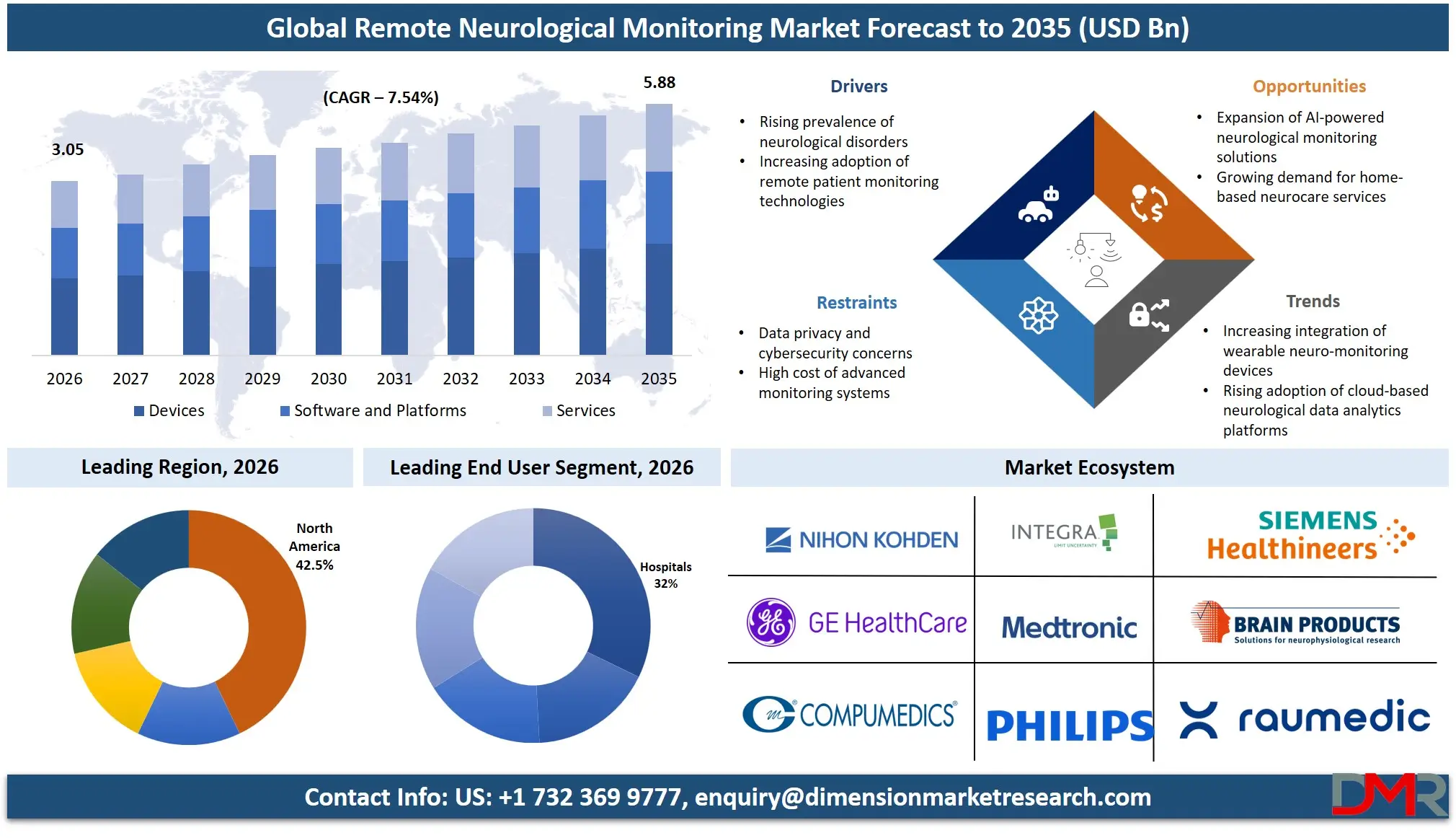
- The market size is USD 2.84 Billion in 2025, reached USD 3.05 Billion in 2026, and is projected to hit USD 5.88 Billion by 2035 at a CAGR of 7.54%.
- By Product Type: Magnetic Resonance Imaging (MRI) Devices led with a 38.42% share in 2026.
- By Application: Parkinson's Disease led as the dominant application segment in 2026.
- By End User: Hospitals led as the dominant end-user segment in 2026.
- By Component: Devices led as the dominant component segment in 2026.
- By Patient Population: Pediatric Patients led as the dominant patient population segment in 2026.
- By Regulatory Approval Pathway: FDA 510(k) Cleared Devices led as the dominant regulatory pathway segment in 2026.
- By Region: North America led with a 42.5% share, valued at USD 1.21 Billion, in 2026.
Market Overview
The remote neurological monitoring market covers devices, software platforms, and associated services used to assess brain function, neural signals, and related physiological parameters outside the traditional clinical setting. The market excludes purely diagnostic imaging conducted in fixed hospital radiology suites where remote data transmission plays no role. Connectivity, cloud-based analytics, and miniaturized sensor hardware define the boundary between this market and conventional inpatient neurology equipment.
Automated algorithms now reduce the time required to review a 24-hour behind-the-ear EEG recording from 1–2 hours to just 5–10 minutes, as reported by PMC11818620. Deep neural networks applied to subcutaneous EEG data achieve data-reduction ratios of 99.6% in epilepsy patients and 99.9% in controls for the volume requiring visual review, per findings from the same source. Neurologists can assess far more patients per session when software handles preliminary signal triage.
Broader healthcare digitalization pulls the remote neurological monitoring market into a converging ecosystem of telehealth platforms, decentralized clinical trials, and chronic disease management programs. Buyers now evaluate neurological monitoring tools alongside interoperability with electronic health records and remote patient management systems. Vendors that position software as the integration layer, not just hardware as the product, capture stickier customer relationships and recurring revenue streams.
Market Size and Forecast
The Global Remote Neurological Monitoring Market size is estimated at USD 3.05 Billion in 2026 from USD 2.84 Billion in 2025, and is projected to reach USD 5.88 Billion by 2035, exhibiting a CAGR of 7.54% during the forecast period.
ℹ
To learn more about this report –
Download Your Free Sample Report Here
A 2025 study published on PMC12014937 confirmed that 24–72-hour video-EEG monitoring achieved an overall diagnostic yield of 81.4%, with 98.2% of epileptic events captured within the first 24 hours. Diagnostic yield at this level validates remote and ambulatory EEG as a clinically credible substitute for extended inpatient stays, a finding that accelerates hospital adoption decisions. Payers that previously withheld reimbursement pending clinical proof now face mounting evidence supporting coverage expansion.
Forecast assumptions rest on sustained reimbursement expansion across the US and Western European markets, continued miniaturization of EEG and multimodal sensor hardware, and rising chronic neurological disease prevalence among aging populations. Downside risk exists if cybersecurity regulations tighten cross-border data transfer requirements faster than vendors can adapt their infrastructure. Upside potential opens if employer-sponsored neurological wellness programs scale beyond pilot deployments into mainstream benefit packages.
Product Type Analysis
MRI Devices accounted for 38.42% of product type demand in 2026, the highest of any category.
MRI devices command their dominant share because they produce the highest-resolution structural and functional neurological data available to clinicians. Hospitals investing in remote reading workflows and teleradiology networks anchor those networks around MRI output, making MRI the data source that justifies the broader remote monitoring infrastructure. No competing modality offers equivalent anatomical specificity for conditions including brain tumors, multiple sclerosis, and stroke assessment.
EEG devices represent the fastest-growing product category as miniaturization reduces unit costs and enables home deployment at scale. Cerebral oximeters are gaining traction in intensive care and post-surgical monitoring, where continuous regional oxygenation data reduces adverse event risk. Intracranial pressure monitors serve a narrow but high-acuity acute care niche, while EMG, TCD, MEG, and nerve monitors each address specialist workflows where EEG or MRI alone cannot capture the required signal type. Vendors serving multiple modalities hold a meaningful cross-sell advantage over single-product competitors.
Application Analysis
With a dominant share in 2026, Parkinson's Disease outpaced all other application categories.
Parkinson's disease drives application leadership because continuous longitudinal monitoring of motor symptoms, tremor frequency, and gait variability creates a strong clinical case for home-based wearable sensor deployment. Neurologists managing Parkinson's patients need between-visit data that episodic clinic appointments cannot capture. Remote monitoring closes this surveillance gap and directly informs medication adjustment decisions.
Scalp-EEG seizure-detection devices deliver sensitivities of 75–90% with false alarm rates of 0.1–5 per hour in inpatient video-EEG monitoring, as reported by PMC11818620. A 2025 study found that average monitoring duration for video-EEG reached 44.23 hours, with minimal additional diagnostic benefit beyond 72 hours, per PMC12014937. Epilepsy is therefore the second-largest and fastest-scaling application, with monitoring protocols now compressed to clinically optimal windows. Traumatic brain injury and stroke represent high-acuity acute-phase applications, while dementia, sleep disorders, migraine, and Alzheimer's disease represent the emerging chronic surveillance category that will define the next five years of application mix.
End User Analysis
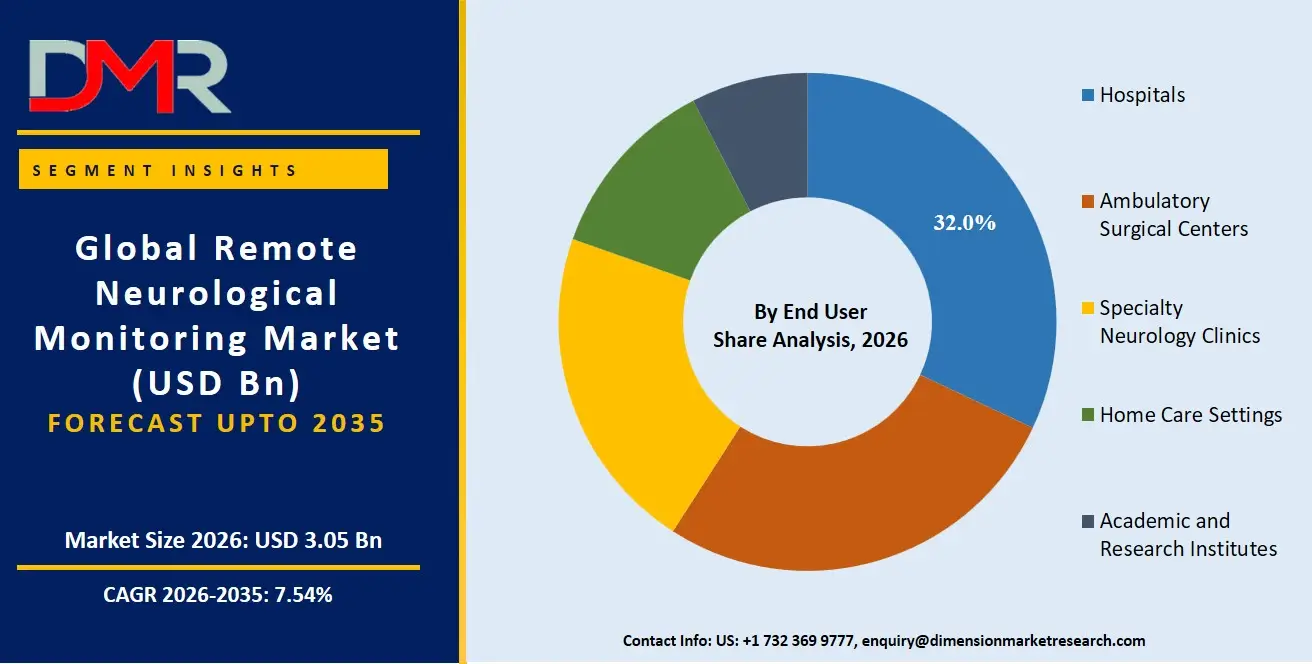
Hospitals captured the dominant share across end-user categories in 2026, ahead of all rivals.
ℹ
To learn more about this report –
Download Your Free Sample Report Here
Hospitals lead end-user demand because they operate the highest-volume neurology departments and carry the infrastructure needed to integrate remote monitoring data into existing clinical workflows. The combination of inpatient and outpatient neurology services within hospital systems creates both the patient volume and the reimbursement scale that justifies investment in remote monitoring platforms.
Ambulatory Surgical Centers and Specialty Neurology Clinics are the fastest-growing end-user segments as outpatient neurological care expands. Home Care Settings represent the white-space opportunity with the highest growth potential, contingent on reimbursement clarity and caregiver training infrastructure. Academic and Research Institutes drive protocol validation and product development partnerships, pulling early-generation devices into commercial pathways through clinical trial activity.
Component Analysis
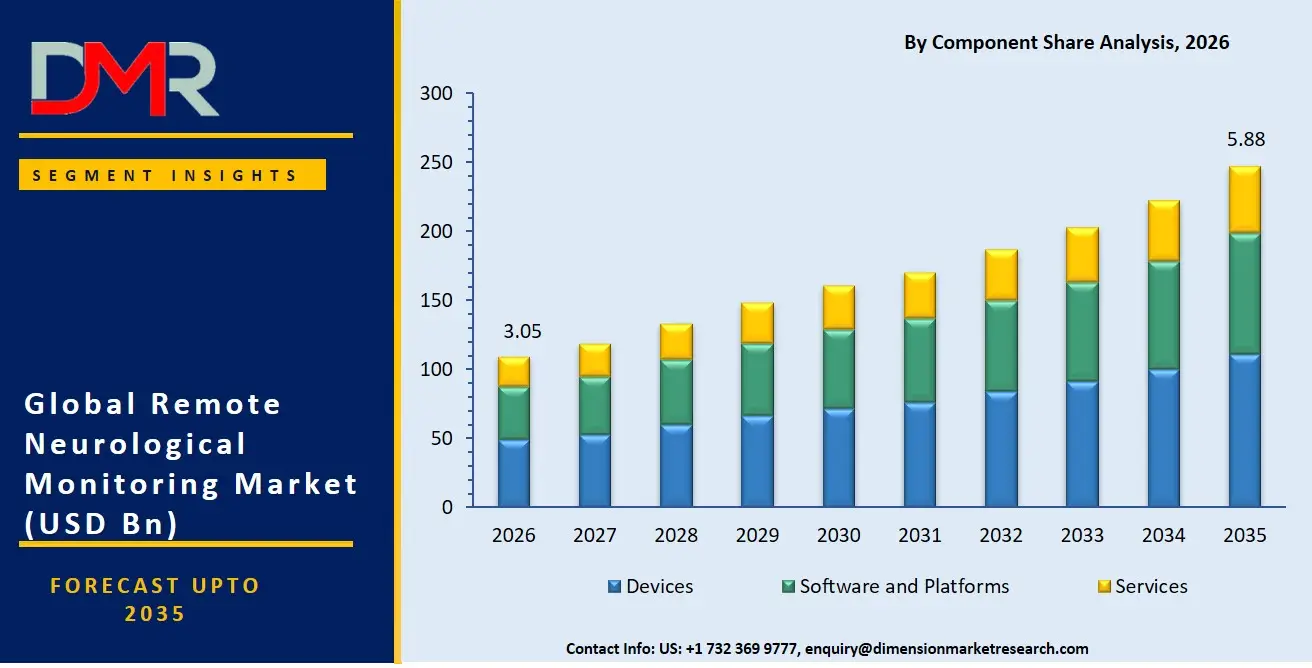
Devices led the component segment with a dominant share in 2026.
ℹ
To learn more about this report –
Download Your Free Sample Report Here
Hardware devices generate the majority of revenue because sensor technology remains the primary capital expenditure in remote neurological monitoring buildouts. Procurement cycles for medical-grade EEG, EMG, and cerebral oximetry hardware involve multi-year contracts with institutional buyers, creating predictable, high-value revenue lines for established manufacturers.
Software and Platforms represent the fastest-growing component category as AI-driven signal processing, cloud analytics, and clinical decision support layers attract recurring subscription revenue. Services, including remote monitoring management, data interpretation support, and device maintenance, complete the value chain and provide vendors with a post-sale revenue stream that extends customer lifetime value beyond hardware replacement cycles.
Patient Population Analysis
Pediatric Patients led the patient population segment with a dominant share in 2026.
Pediatric neurological conditions, including childhood epilepsy and neonatal seizure disorders, generate disproportionate monitoring intensity relative to patient volume. A neonatal seizure detection system combining a 23-layer CNN and a random forest classifier achieved sensitivity of 77%, a false alarm rate of 0.9 per hour, and an AUC of 83%, per research published in Frontiers in Neurology 2025. Automated detection tools designed for neonatal signals reduce the burden on monitoring staff in neonatal intensive care units where continuous human review is impractical.
A semi-automated binaural temporal EEG combined with ECG raised average detection sensitivity from 59.1% to 62.2% and cut the false alarm rate from 6.5 to 2.4 per day, per Frontiers in Neurology 2025. Adult patients constitute the largest absolute patient pool, with Parkinson's disease, epilepsy, and stroke driving monitoring demand. Geriatric patients are the fastest-growing population cohort given global demographic aging, creating demand for dementia surveillance, fall-risk neurological assessment, and cognitive decline monitoring tools optimized for frail patient compliance.
Regulatory Approval Pathway Analysis
FDA 510(k) Cleared Devices captured the dominant share of the regulatory approval pathway segment in 2026.
FDA 510(k) clearance dominates because it provides the fastest regulatory route for devices that demonstrate substantial equivalence to a legally marketed predicate. Most remote EEG, EMG, and cerebral oximetry hardware fits this pathway, giving manufacturers a commercially viable approval timeline without the multi-year burden of a Premarket Approval submission.
FDA PMA devices serve the higher-complexity implantable and subcutaneous monitoring category, where the clinical evidence bar is higher but the resulting clearance creates a steeper competitive moat. CE Mark Approved Devices enable European market entry and are increasingly the entry point for Asia-Pacific regulatory reciprocity frameworks. Vendors that pursue simultaneous 510(k) and CE Mark strategies compress their global time-to-market compared with sequential regional submissions.
Key Market Segments
By Product Type
- Magnetic Resonance Imaging (MRI) Devices
- Electroencephalography (EEG) Devices
- Cerebral Oximeters
- Intracranial Pressure Monitors
- Electromyography (EMG) Devices
- Transcranial Doppler (TCD) Devices
- Magnetoencephalography (MEG) Devices
- Nerve Monitors
By Application
- Parkinson's Disease
- Epilepsy
- Traumatic Brain Injury
- Dementia
- Sleep Disorders
- Stroke
- Migraine
- Alzheimer's Disease
By End User
- Hospitals
- Ambulatory Surgical Centers
- Specialty Neurology Clinics
- Home Care Settings
- Academic and Research Institutes
By Component
- Devices
- Software and Platforms
- Services
By Patient Population
- Pediatric Patients
- Adult Patients
- Geriatric Patients
By Regulatory Approval Pathway
- FDA 510(k) Cleared Devices
- FDA PMA (Premarket Approval) Devices
- CE Mark Approved Devices
Regional Analysis
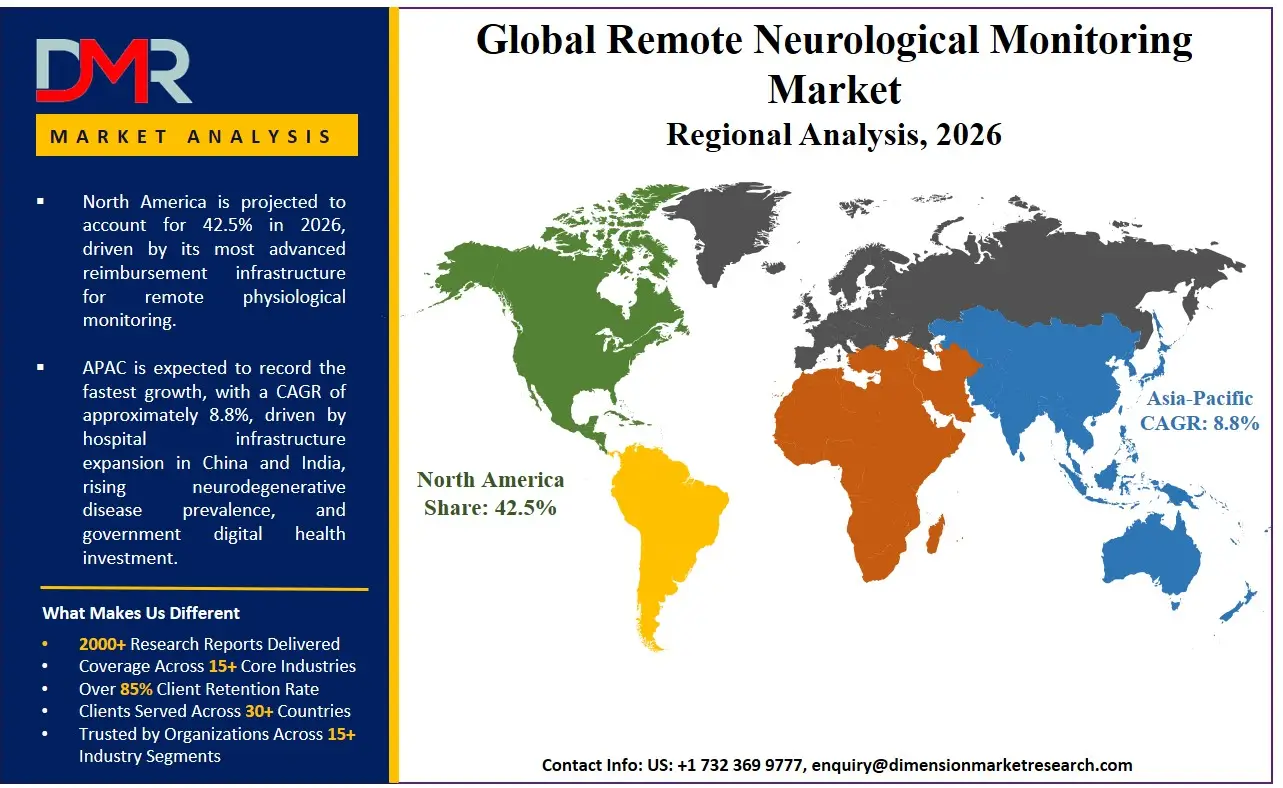
North America led all regions with a 42.5% share, valued at USD 1.21 Billion, in 2026.
North America holds its commanding position because the US operates the world's most advanced reimbursement infrastructure for remote physiological monitoring. CMS coding frameworks for remote patient monitoring provide a revenue model that justifies clinical deployment at scale. The US market at USD 1.58 Billion in 2024, as per structural data, reflects a payer environment where neurological telehealth services earn direct reimbursement, not just experimental coding slots.
ℹ
To learn more about this report –
Download Your Free Sample Report Here
Europe represents the second-largest regional market, driven by Germany, France, and the UK, where national health systems are integrating remote monitoring into chronic disease pathways. Asia Pacific is the fastest-growing region, pulled by hospital infrastructure expansion in China and India, rising neurodegenerative disease prevalence, and government digital health investment. Latin America and the Middle East and Africa remain early-stage markets, where cloud-connected diagnostic support networks will prove decisive in reaching populations with low neurologist density.
Key Regions and Countries
North America
Europe
- Germany
- France
- The UK
- Spain
- Italy
- Rest of Europe
Asia Pacific
- China
- Japan
- South Korea
- India
- Australia
- Rest of APAC
Latin America
- Brazil
- Mexico
- Rest of Latin America
Middle East & Africa
- GCC
- South Africa
- Rest of MEA
Market Dynamics
Driver: Multimodal Sensor Fusion and AI Accuracy Gains Validate Remote Deployment
Combining EEG with EMG and accelerometry for tonic-clonic seizure detection achieved 90.9% sensitivity with a false alarm rate of 0.1 per 24 hours, versus 10.3 per 24 hours for EEG alone, as reported by PMC11818620. The 100-fold reduction in false alarms is the clinical argument that persuades hospital neurology departments to approve ambulatory discharge for previously monitored inpatients. Fewer false alarms reduce nursing response burden and lower monitoring program operating costs simultaneously.
The SCORE-AI EEG system achieved specificity of 90% against 73.3% for a consensus of three human experts, with sensitivity of 86.7% and overall accuracy of 88.3%, per Frontiers in Neurology 2025. AI that outperforms human consensus on specificity resolves the longstanding concern that automated systems produce too many clinically irrelevant alerts. In November 2025, Merck KGaA announced a partnership with Valo Health worth potentially over USD 3 billion to apply AI-driven discovery methods to Parkinson's disease, signaling that pharmaceutical investment in AI-neurological data integration is scaling beyond device vendors into drug development pipelines.
Restraint: Seizure Self-Awareness Gaps and Data Governance Complexity Limit Adoption
During home subcutaneous EEG monitoring, patients noticed only 25%–86.7% of their own seizures, with three of five patients aware of fewer than half, as reported by PMC11818620. Patients who cannot accurately self-report neurological events undermine the clinical case for home monitoring as a reliable substitute for supervised care. Payers reviewing reimbursement extensions for home-based neurological monitoring cite self-reporting gaps as a core validation concern.
Neurological data carries the highest sensitivity classification under HIPAA, GDPR, and emerging Asian data protection frameworks. Multi-vendor neurological monitoring ecosystems generate fragmented data formats that complicate cross-border transfer and clinical integration. Vendors operating across North America, Europe, and Asia Pacific must maintain simultaneous compliance with three distinct cybersecurity audit regimes, a structural cost that disadvantages smaller entrants and slows deployment timelines for new platform releases.
Opportunity: Post-Stroke Rehabilitation and Cloud-Connected Low-Resource Markets
Post-stroke rehabilitation programs represent an underserved application for continuous remote neurological monitoring. Recovery management tied to objective neural outcome data shifts reimbursement from time-based to outcome-based models, which both payers and providers increasingly prefer. Vendors that design monitoring protocols specifically for stroke recovery tracking can access rehabilitation budgets that traditional neurology monitoring programs do not reach.
During ultra-long-term subcutaneous EEG home recordings, patient adherence data covered 73%–78.4% of the monitored time, as reported by PMC11818620. Adherence at that level demonstrates home monitoring viability even without supervised clinical environments. Adding a single ECG channel to behind-the-ear EEG raised focal-seizure detection sensitivity by 8–11%, from 82% to 90% and 81% to 92%, with an unchanged false alarm rate, per PMC11818620. Low-cost multimodal expansion creates a product upgrade pathway that generates incremental revenue per device without requiring new hardware platforms.
Market Trends
AI Seizure Prediction and Digital Biomarkers Converge Toward Commercial Deployment
A deep neural network applied to two-channel subcutaneous EEG achieved a seizure detection sensitivity of 86% with a false alarm rate of 2.4 per 24 hours, per PMC11818620. A nested LSTM deep-learning model for automated seizure detection reached average sensitivity of 97.47%, specificity of 96.17%, and a false detection rate of 0.487 per hour, per Frontiers in Neurology 2025. A tiny one-dimensional stacked CNN based on STFT achieved seizure-prediction sensitivity of 94.44%, a false positive rate of 0.011 per hour, and an AUC of 0.979, per the same source.
A personalized deep-learning algorithm on behind-the-ear EEG improved sensitivity from 90.4% to 94.2% and cut the false alarm rate from 0.83 to 0.29 per hour after personal calibration, per PMC11818620. Consumer neurotechnology wearables are converging with these clinical-grade algorithms through regulatory-cleared device pathways, while digital biomarkers gain acceptance as neurological endpoints in both care and CNS drug research settings.
Market Competition Overview
The remote neurological monitoring market is moderately consolidated at the top, with a small group of large diversified medical technology companies controlling the majority of hospital-facing product portfolios. Integrated hardware-software offerings from established players create switching costs that protect incumbent revenue, particularly in hospital neurology departments where EHR integration drives long contract cycles. Smaller specialists compete on signal fidelity, clinical algorithm performance, and device form factor rather than breadth.
A real-time STFT combined with a GoogleNet CNN achieved accuracy of 97.74%, sensitivity of 98.90%, and a false positive rate of 1.94% on the CHB-MIT scalp EEG database, per Frontiers in Neurology 2025. An XGBoost model predicting antiseizure medication response delivered an F1 score of 0.947 and an AUC of 0.979 from the same source. A CNN-based high-frequency oscillation detector identified events in 1–3 seconds each, with model training completing within 3 minutes, at precision of 94.19% and recall of 89.37%, per the same source. Vendors that embed algorithm performance at this level into commercial products differentiate from competitors still relying on rule-based detection systems.
Company Profiles
Medtronic plc holds a structural advantage in remote neurological monitoring through its deep brain stimulation and implantable neurology device portfolio, which generates longitudinal patient data that its remote monitoring software layer converts into a continuous revenue stream. The company's ability to combine therapeutic devices with monitoring platforms creates a closed-loop clinical offering that pure monitoring vendors cannot replicate, though regulatory complexity around implantable devices increases the compliance overhead that accompanies each product generation.
Koninklijke Philips N.V. approaches the market through its broader patient monitoring and telehealth infrastructure, embedding neurological monitoring capabilities within integrated hospital-wide monitoring ecosystems. Philips benefits from existing EHR integration agreements and hospital capital budget relationships that reduce the sales cycle length for new neurological monitoring product additions. Margin pressure from hardware commoditization pushes Philips toward software-as-a-service models where recurring subscription revenue per monitoring episode replaces one-time capital equipment transactions.
Key Players
- Medtronic plc
- Koninklijke Philips N.V.
- General Electric Company (GE HealthCare)
- Nihon Kohden Corporation
- Integra LifeSciences Holdings Corporation
- Compumedics Limited
- Cadwell Laboratories, Inc.
- g.tec medical engineering GmbH
- Brain Products GmbH
- Advanced Brain Monitoring, Inc.
- Siemens Healthineers AG
- RAUMEDIC AG
- Masimo Corporation
- Nonin Medical, Inc.
Supply Chain and Value Chain Analysis
The remote neurological monitoring value chain opens with semiconductor and precision electronics suppliers providing sensor components, ASIC chips, and electrode materials to device manufacturers. Device manufacturers integrate hardware with embedded firmware and signal-processing software before selling finished systems to distributors, group purchasing organizations, and direct hospital procurement channels. Maximum value creation occurs at the software and AI analytics layer, where algorithm-driven clinical insights carry higher margins than commoditized hardware.
The biggest supply chain risk sits at the semiconductor component tier, where global chip shortages demonstrated during 2021–2023 exposed lead-time vulnerabilities in medical device production. Contract manufacturers handling miniaturized EEG and implantable sensor assemblies operate with limited supplier redundancy. Vendors building dual-sourcing agreements for critical sensor components reduce this exposure, while those relying on single-source arrangements carry concentration risk that can delay product launches by six to twelve months during disruption events.
Regulatory Landscape
The US FDA governs the majority of commercially significant remote neurological monitoring products through 510(k) substantial equivalence clearance for non-implantable devices and PMA pathways for implantable and higher-risk monitoring hardware. The EU Medical Device Regulation, which replaced the legacy MDD framework, raised the clinical evidence requirements for CE Mark approval and extended certification timelines for both new products and device renewals. Vendors that completed MDR certification ahead of schedule gained a competitive window as slower-moving rivals navigated transition delays.
Cross-border neurological data governance adds a second regulatory layer above device approval. GDPR in Europe and HIPAA in the US impose data residency, consent documentation, and breach notification requirements that shape how remote monitoring platforms store and transmit patient neural data. China's Personal Information Protection Law creates an additional compliance tier for vendors entering the Asia Pacific market. Regulatory divergence across these three frameworks increases the compliance cost for global platform deployments and creates a structural barrier that favors established vendors with dedicated regulatory affairs infrastructure.
Investment and White Space Analysis
Investment flows concentrate in the AI-driven signal processing software layer, where venture and corporate capital pursues seizure prediction algorithms, digital biomarker platforms, and multimodal data integration tools. Hardware investment remains primarily the domain of large medical technology companies with the capital base to absorb long product development and regulatory timelines. The white space sits at the intersection of home monitoring hardware and AI software platforms designed for non-clinical caregivers, where the addressable patient volume is large but the distribution infrastructure is underdeveloped.
Regions with low neurologist density across Southeast Asia, Sub-Saharan Africa, and Latin America represent high-growth, low-competition geographies where cloud-connected remote monitoring can substitute for specialist access that the local healthcare system cannot provide. Decentralized clinical trial infrastructure for CNS drug development is a second white space, where pharma sponsors need validated remote neurological endpoints but available monitoring tools are not yet optimized for trial protocol compliance. Early entrants who build trial-grade remote monitoring capabilities capture both commercial market share and pharma partnership revenue simultaneously.
Recent Developments
- November 2024: Recursion Pharmaceuticals completed its all-stock merger with AI drug-discovery firm Exscientia, combining phenomic screening with automated precision chemistry to accelerate CNS compound identification.
- January 2025: Johnson and Johnson announced the acquisition of CNS specialist Intra-Cellular Therapies for $14.6 billion, gaining the schizophrenia and bipolar drug Caplyta. The deal closed in April 2025.
- May 2025: Sanofi agreed to acquire Vigil Neuroscience for approximately $470 million plus a contingent value right tied to its TREM2 agonist VG-3927, with the transaction closing in August 2025.
- June 2025: Supernus Pharmaceuticals agreed to acquire Sage Therapeutics for $561 million ($8.50 per share) plus a CVR of up to $3.50 per share, with the deal closing in July 2025.
- December 2025: Ambros Therapeutics launched with $125 million in Series A financing to advance neridronate, a non-opioid therapy targeting Complex Regional Pain Syndrome Type 1.
Report Details
| Report Characteristics |
| Market Value (2025) |
USD 2.84 Billion |
| Market Value (2026) |
USD 3.05 Billion |
| Forecast Revenue (2035) |
USD 5.88 Billion |
| CAGR (2026–2035) |
7.54% |
| Base Year for Estimation |
2025 |
| Historic Period |
2020 – 2024 |
| Forecast Period |
2026 – 2035 |
| Report Coverage |
Revenue Forecast, Market Dynamics, Competitive Landscape, Recent Developments |
| Segments Covered |
By Product Type (MRI Devices, EEG Devices, Cerebral Oximeters, Intracranial Pressure Monitors, EMG Devices, TCD Devices, MEG Devices, Nerve Monitors), By Application (Parkinson's Disease, Epilepsy, Traumatic Brain Injury, Dementia, Sleep Disorders, Stroke, Migraine, Alzheimer's Disease), By End User (Hospitals, Ambulatory Surgical Centers, Specialty Neurology Clinics, Home Care Settings, Academic and Research Institutes), By Component (Devices, Software and Platforms, Services), By Patient Population (Pediatric Patients, Adult Patients, Geriatric Patients), By Regulatory Approval Pathway (FDA 510(k) Cleared Devices, FDA PMA Devices, CE Mark Approved Devices) |
| Regional Analysis |
North America – US and Canada; Europe – Germany, France, The UK, Spain, Italy, and Rest of Europe; Asia Pacific – China, Japan, South Korea, India, Australia, and Rest of APAC; Latin America – Brazil, Mexico, and Rest of Latin America; Middle East & Africa – GCC, South Africa, and Rest of MEA |
| Competitive Landscape |
Medtronic plc, Koninklijke Philips N.V., General Electric Company (GE HealthCare), Nihon Kohden Corporation, Integra LifeSciences Holdings Corporation, Compumedics Limited, Cadwell Laboratories Inc., g.tec medical engineering GmbH, Brain Products GmbH, Advanced Brain Monitoring Inc., Siemens Healthineers AG, RAUMEDIC AG, Masimo Corporation, Nonin Medical Inc. |
| Customization Scope |
Customization for segments and region or country level will be provided. Additional customization can be done based on requirements. |
| Purchase Options |
Three license options: Single User License, Multi-User License (Up to 5 Users), and Corporate Use License (Unlimited Users and Printable PDF). |
Frequently Asked Questions
What is the biggest investment opportunity in Remote Neurological Monitoring Market ?
▾ The biggest investment opportunity lies in AI-driven software platforms that integrate multimodal neurological signals for home-based patient monitoring. Home Care Settings remain underpenetrated relative to the clinical evidence now supporting ambulatory deployment. Vendors that build caregiver-friendly interfaces atop validated AI algorithms capture both commercial market revenue and pharma decentralized-trial contracts.
Who are the top companies in Remote Neurological Monitoring Market ?
▾ Medtronic plc and Koninklijke Philips N.V. lead the competitive landscape through integrated hardware-software neurological monitoring portfolios. General Electric Company (GE HealthCare), Nihon Kohden Corporation, and Siemens Healthineers AG hold significant positions across hospital-focused product lines. Cadwell Laboratories, Compumedics, and Advanced Brain Monitoring serve specialist neurology and research segments.
Which segment is growing fastest in Remote Neurological Monitoring Market and why?
▾ EEG Devices are the fastest-growing product segment because miniaturization has reduced form factor and cost to levels that enable home deployment at scale. Software and Platforms is the fastest-growing component category as AI signal-processing tools generate recurring subscription revenue. Home Care Settings is the fastest-growing end-user segment as reimbursement pathways for remote physiological monitoring expand across major healthcare systems.
Which region is growing fastest in Remote Neurological Monitoring Market and why?
▾ Asia Pacific is the fastest-growing region, driven by hospital infrastructure expansion in China and India alongside rising neurodegenerative disease prevalence in aging populations. Government digital health investment in South Korea and Australia is accelerating telehealth platform adoption. Low neurologist density across much of the region creates strong demand for cloud-connected remote diagnostic support as a specialist access substitute.
What is the biggest challenge holding Remote Neurological Monitoring Market back?
▾ Clinical validation gaps and interoperability barriers across multi-vendor neurological monitoring ecosystems remain the primary growth constraint. Neurological data sensitivity triggers stringent cybersecurity and cross-border data governance requirements under GDPR, HIPAA, and Asia Pacific privacy frameworks simultaneously. Vendors unable to demonstrate simultaneous compliance across all three regulatory environments face delayed market access in their highest-growth target geographies.