Market Overview
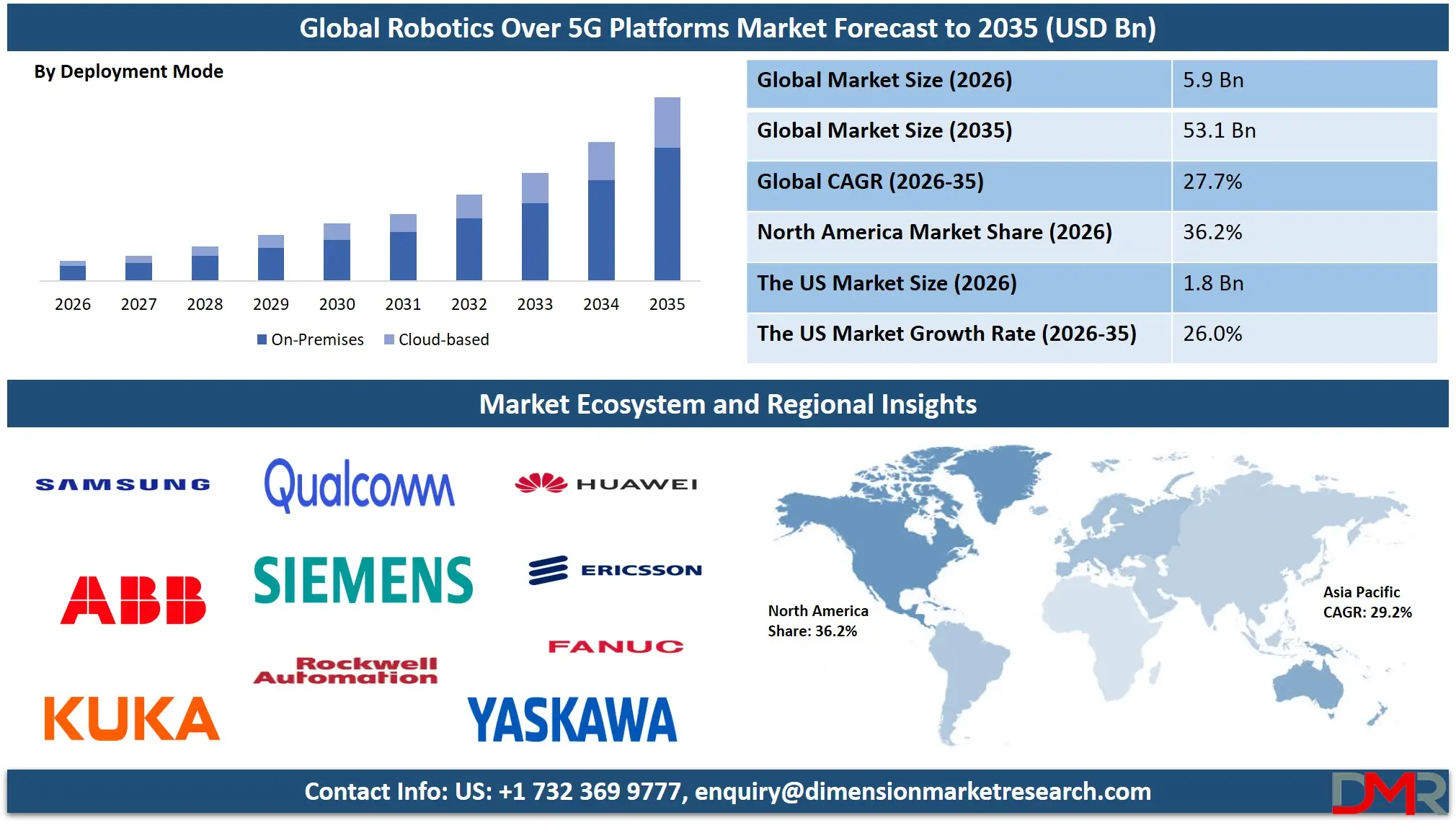
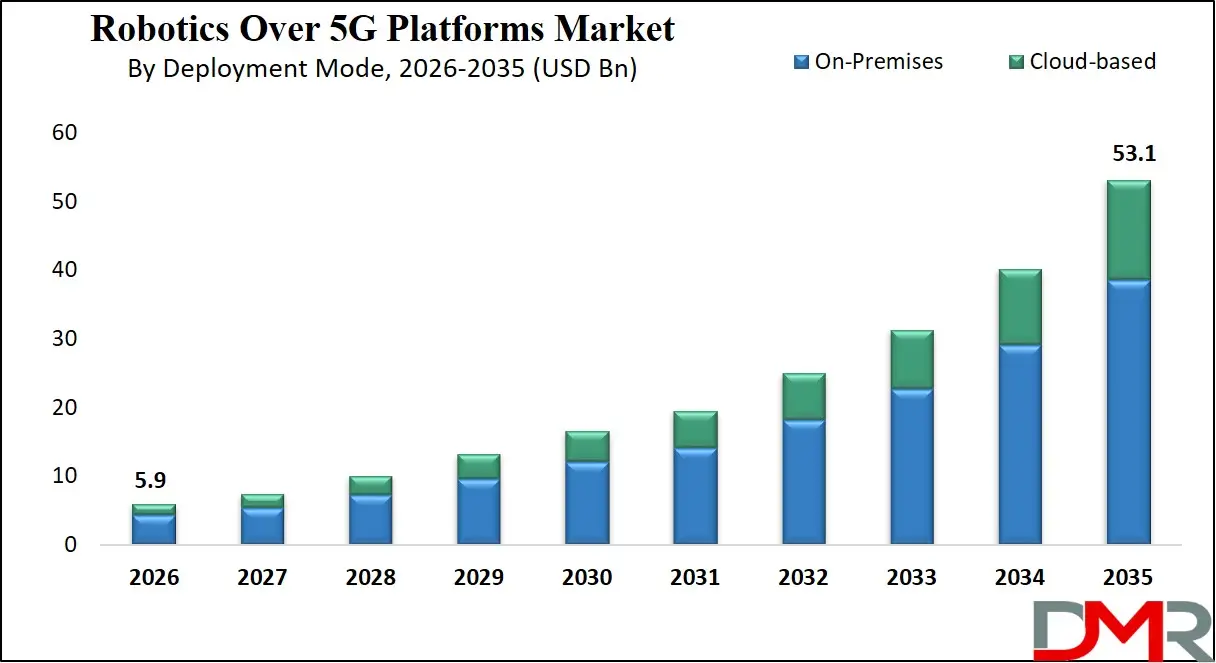
The Global Robotics Over 5G Platforms Market is expected to reach USD 5.9 billion in 2026 and grow at a compound annual growth rate of 27.7 % from there until 2035 to reach a value of USD 53.1 billion, driven by the convergence of advanced robotics and high-speed, low-latency 5G connectivity.
ℹ
To learn more about this report –
Download Your Free Sample Report Here
Robotics Over 5G Platforms refers to the integration of robotic systems, including industrial arms, autonomous mobile robots (AMRs), and collaborative robots (cobots), with 5G network infrastructure to enable real time control, data processing, and advanced functionalities. This synergy leverages 5G's ultra-reliable low latency communication (URLLC), massive machine type communications (mMTC), and enhanced mobile broadband (eMBB) to offload computational tasks to the edge or cloud. This allows for the creation of lighter, more efficient, and intelligent robots that can perform complex tasks in manufacturing, logistics, and other sectors by utilizing real time AI, high-definition video streaming, and precise remote operation, transforming static automation into agile, connected intelligence.
The global Robotics Over 5G Platforms Market encompasses the entire ecosystem of 5G enabled robotic hardware, specialized software platforms, and deployment services that facilitate the next generation of automated operations. Growth in Industry 4.0 initiatives, smart factory rollouts, and the need for flexible automation in dynamic environments is fueling demand for robots un tethered from Wi Fi limitations and wired connections. As 5G networks mature globally, they provide the digital infrastructure necessary for swarms of robots to collaborate, share data instantaneously, and be managed from centralized cloud platforms, unlocking new levels of productivity and operational agility.
ℹ
To learn more about this report –
Download Your Free Sample Report Here
From a market perspective, the industry is being shaped by the push for digital transformation in manufacturing, the explosion of data from IIoT sensors, and a critical shortage of skilled labor. Technology providers and telecom companies are collaborating to develop private 5G networks and edge computing solutions that guarantee security and performance. With industries demanding greater flexibility, lower downtime, and higher ROI from their automation investments, the global Robotics Over 5G Platforms Market is emerging as a foundational element of the future connected industrial landscape.
The US Robotics Over 5G Platforms Market
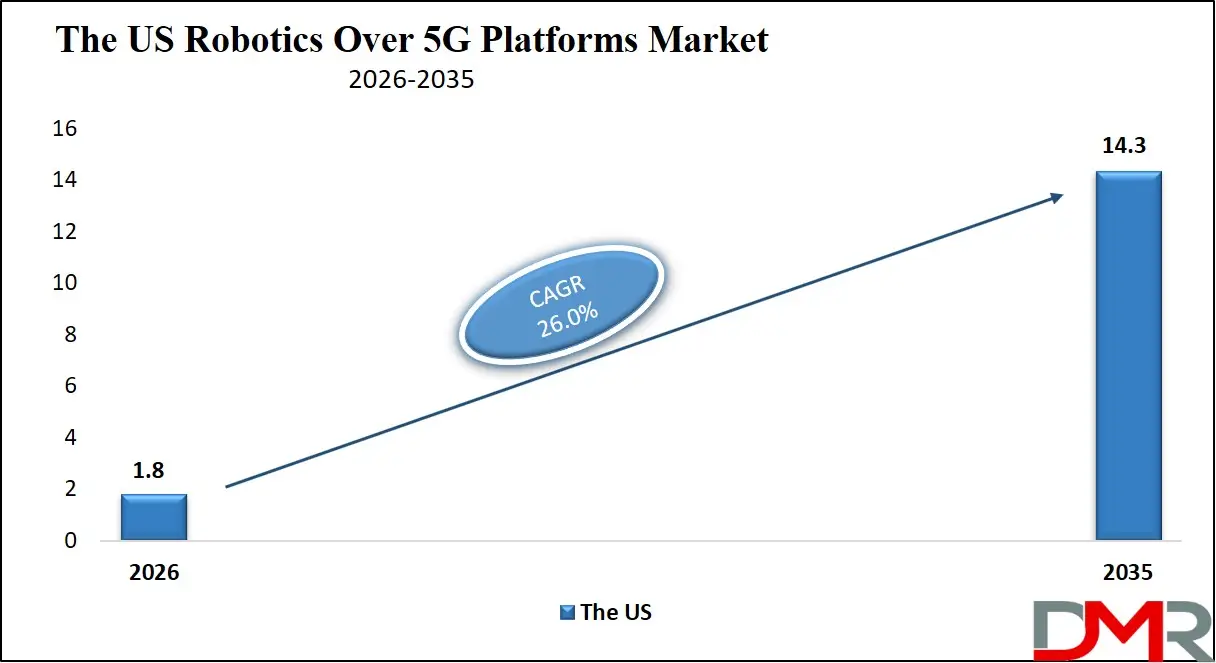
The U.S. Robotics Over 5G Platforms Market is projected to reach USD 1.8 billion in 2026 at a compound annual growth rate of 26.0% over its forecast period.
ℹ
To learn more about this report –
Download Your Free Sample Report Here
The U.S. Robotics Over 5G Platforms market is experiencing explosive growth due to early and widespread adoption of private 5G networks in manufacturing and logistics hubs. Large scale investments in smart factories, e commerce fulfillment centers, and the reshoring of advanced manufacturing are driving demand for flexible, high-performance automation. 5G enabled robots are increasingly used for real time inventory management, precision assembly, and remote quality control, allowing companies to achieve unprecedented efficiency and adaptability in their operations.
The market is further propelled by the presence of leading 5G infrastructure providers, cloud hyperscalers, and innovative robotics manufacturers. The rapid rollout of private 5G spectrum (CBRS) enables enterprises to deploy secure, dedicated networks with guaranteed performance for their robotic fleets. The growing focus on autonomous mobile robots for intralogistics and the need for collaborative robots that can safely work alongside humans are also accelerating adoption, making the U.S. a global leader in innovation and revenue generation for robotics over 5G.
The Europe Robotics Over 5G Platforms Market
The Europe Robotics Over 5G Platforms Market is estimated to be valued at USD 1.6 billion in 2026 and is further anticipated to reach USD 13.2 billion by 2035 at a CAGR of 26.2%. This expansion is being driven by the region's strong industrial base, particularly in automotive and heavy machinery manufacturing, where there is a high demand for sophisticated, flexible automation solutions. Stringent regulations on worker safety and a focus on maintaining global competitiveness through Industry 4.0 are encouraging manufacturers to adopt 5G enabled robotics for enhanced precision and real time control.
Growth in Europe is further supported by significant public and private funding for 5G corridors and industrial testbeds. Countries like Germany, Sweden, and France are at the forefront of integrating 5G with manufacturing execution systems (MES). Teleoperation of machinery in hazardous environments and the use of digital twins powered by real time robot data are becoming key applications. As European manufacturers seek to modernize their production lines and create "lights out" factories, the market is expected to maintain strong and sustainable growth through the forecast period.
The Japan Robotics Over 5G Platforms Market
The Japan Robotics Over 5G Platforms Market is projected to be valued at USD 876.2 million in 2026. It is further expected to witness subsequent growth in the upcoming period, holding USD 6,041.2 million in 2035 at a CAGR of 23.9%, reflecting the country's global leadership in robotics and its aggressive push for "Society 5.0" and smart manufacturing. The widespread adoption of 5G in industrial automation, particularly in electronics manufacturing and automotive production, is driving steady demand for high precision, low latency robotic control. Japanese robot manufacturers are integrating 5G modules as a standard feature to enable new capabilities like remote monitoring and predictive maintenance, further accelerating market penetration.
Growth in Japan is also supported by government initiatives to build smart cities and next generation industrial parks with ubiquitous 5G coverage. These digital infrastructures combine robotics data with AI and edge computing to optimize complex production processes. As the country faces a shrinking workforce, 5G enabled robots offer a critical solution for maintaining productivity. Telematics for mobile robots and real time control of robotic arms in high precision tasks will play an increasingly important role in supporting the long-term modernization of Japan's industrial sector.
Global Robotics Over 5G Platforms Market: Key Takeaways
- The Digital Nervous System for Automation: Robotics over 5G platforms acts as the critical digital link, enabling real time control, data streaming, and cloud-based intelligence for the next generation of automated systems.
- Hardware Foundation, Software Intelligence: While 5G modules, sensors, and robotic arms form the hardware base, the software layer, AI algorithms, real time control OS, and data processing platforms, is where the core value and differentiation lie.
- Private 5G Networks as the Primary Catalyst: The deployment of dedicated, on premises private 5G networks is the leading driver, offering enterprises the security, low latency, and reliability required for mission critical robotic operations.
- Edge Computing Unlocks True Potential: The combination of 5G and edge computing is key, allowing data to be processed near the source for instantaneous reaction, making cloud-controlled robotics a practical reality.
- Cross Industry Expansion: While manufacturing leads, rapid growth is occurring in logistics, healthcare, and mining, as diverse sectors recognize the agility and efficiency gains from untethered, connected intelligence.
Global Robotics Over 5G Platforms Market: Use Cases
- Smart Manufacturing and Flexible Assembly: 5G connects industrial robots and collaborative robots on the factory floor, enabling rapid reconfiguration for new tasks. Real time control and synchronization of robotic arms for high precision assembly, powered by AI driven vision systems, boosts throughput and quality in automotive and electronics manufacturing.
- Warehouse and Logistics Automation: Autonomous mobile robots (AMRs) equipped with 5G navigate dynamically through warehouses, coordinating with each other and the central management system. This enables real time inventory tracking, optimized pick and pack operations, and seamless integration with automated storage and retrieval systems, improving efficiency in logistics hubs.
- Remote Operation and Hazardous Environment Inspection: 5G's low latency allows for precise teleoperation of robots in dangerous environments like mining, nuclear decommissioning, or deep-sea exploration. Operators can control robotic arms or vehicles from a safe distance, receiving high-definition video and sensory feedback in real time to perform complex tasks.
- Precision Agriculture and Field Operations: Autonomous tractors and harvesters leverage 5G connectivity to stream real time data on crop health and soil conditions. They can coordinate as a fleet for efficient planting and harvesting, while AI algorithms on the cloud optimize routes and tasks based on live data, maximizing yield and reducing resource usage.
Global Robotics Over 5G Platforms Market: Stats & Facts
- Global 5G Industrial IoT Connections
- Over 25 million industrial IoT connections were using 5G in 2024.
- It is projected that by 2030, over 50% of industrial robots shipped will be 5G enabled.
- The number of private 5G networks deployed in manufacturing and logistics doubled between 2023 and 2024.
- 5G networks can achieve latency as low as 1 millisecond, critical for real time robotic control.
- Data throughput for 5G is up to 100 times faster than 4G, enabling high-def video streaming from multiple robots.
- US Manufacturing and Logistics Trends
- Over 300,000 industrial robots were deployed in US factories by the end of 2024.
- Logistics companies reported a 30% increase in efficiency after deploying 5G connected AMRs.
- Investment in private 5G networks for industrial use in the US exceeded $1.5 billion in 2024.
- CBRS spectrum is being used by over 40% of large manufacturers for internal IIoT networks.
- The US is home to over 200 companies developing robotics and 5G integration solutions.
- European Smart Industry Initiatives
- Over 15,000 5G base stations have been deployed across major European industrial zones.
- The European Commission has funded over 50 cross border 5G corridor projects for autonomous systems.
- Germany's "5G Industry Campus Europe" features over 100 5G enabled robots and production modules.
- Adoption of 5G in automotive manufacturing is projected to grow by 40% annually through 2028.
- Over 70% of large European manufacturers are trialing or have deployed 5G for automation.
- Asia Pacific's 5G Automation Leadership
- China leads the world with over 2.5 million 5G base stations, heavily concentrated in industrial parks.
- South Korea has connected over 50,000 industrial robots to its nationwide 5G network.
- Japan's "Connected Industries" initiative has funded over $200 million in 5G robotics projects.
- In 2024, over 60% of new industrial robots sold in China were 5G ready.
- Smart factories in Southeast Asia using 5G reported a 25% reduction in unplanned downtime.
- Global Robotics and 5G Infrastructure
- Over 500,000 autonomous mobile robots (AMRs) were deployed globally in 2024, many with 5G capability.
- The average modern factory is expected to generate over 5 petabytes of data per day from connected robots and sensors.
- Investment in edge computing for industrial automation reached $10 billion in 2024.
- 5G networks are projected to support over 1 million connected robots per square kilometer in dense industrial environments.
- The number of collaborative robots (cobots) installed worldwide grew by 22% in 2024, with 5G models growing twice as fast.
Global Robotics Over 5G Platforms Market: Market Dynamic
Driving Factors in the Global Robotics Over 5G Platforms Market
Growing Demand for Flexible and Scalable Automation
Manufacturers and logistics providers are moving away from rigid automation. 5G enables wireless robot fleets that can be easily reprogrammed and redeployed for new tasks without costly rewiring. This flexibility is crucial for high mix, low volume production and adapting to changing market demands, driving investment in 5G enabled robotic platforms. In addition, dynamic production environments require rapid layout adjustments and seamless fleet coordination, which 5G connectivity supports through reliable, low-latency communication. Companies are increasingly prioritizing modular automation strategies, and 5G-based robotics provides the agility needed to scale operations up or down with minimal disruption.
Need for Real Time Data and AI at the Edge
The value of robotics is amplified by AI. 5G allows computationally intensive AI algorithms to run on edge servers rather than onboard the robot, reducing robot cost and weight. Real time data from robot sensors can be analyzed instantly to make on the fly adjustments to operations, improving quality, safety, and efficiency. Ultra-low latency connectivity ensures synchronized multi-robot coordination in complex industrial environments. Furthermore, centralized AI updates across connected fleets enhance continuous performance optimization and predictive maintenance capabilities.
Restraints in the Global Robotics Over 5G Platforms Market
High Infrastructure and Integration Costs
Deploying a private 5G network and integrating it with existing enterprise resource planning (ERP) and manufacturing execution systems (MES) requires significant capital investment and specialized expertise. For small and medium sized enterprises, this initial cost and complexity can be a substantial barrier to entry. The need for spectrum licensing, advanced networking equipment, and skilled IT personnel further increases deployment expenses. Additionally, integration with legacy industrial systems often requires customization, adding to implementation time and operational risks.
Security Concerns and Data Privacy
Connecting robotic fleets to a 5G network expands the potential attack surface for cyber threats. Ensuring the security of the network, the robots, and the data they generate is a paramount concern. Companies must invest in robust cybersecurity measures to prevent unauthorized access, data breaches, or malicious control of robotic systems. Compliance with regional data protection regulations and safeguarding proprietary operational data add further complexity. Any security breach in connected robotic systems could result in operational downtime and financial losses.
Opportunities in the Global Robotics Over 5G Platforms Market
Robotics as a Service (RaaS) Models
The combination of 5G and cloud computing enables new "as a service" business models. Instead of large upfront capital purchases, customers can subscribe to robotic capabilities, with the 5G network ensuring performance is guaranteed. This lowers the barrier to entry and opens up massive new market segments. Subscription-based models also allow vendors to offer continuous software updates, remote diagnostics, and performance optimization services. As operational expenditure models gain popularity, RaaS is expected to accelerate adoption among cost-sensitive enterprises.
Development of Specialized 5G Hardware and Software
There is a significant opportunity for component manufacturers to create specialized hardware, such as ruggedized 5G modules and high precision sensors designed for industrial robots. Similarly, software developers can create advanced orchestration platforms and AI algorithms specifically optimized for 5G's low latency, high bandwidth environment. Custom-designed chipsets and industrial-grade connectivity solutions can enhance reliability in harsh manufacturing settings. This specialization is likely to create strong competitive differentiation among technology providers.
Trends in the Global Robotics Over 5G Platforms Market
Convergence of IT and OT (Operational Technology)
5G is acting as a bridge, bringing together the information technology (IT) world of data analytics and the operational technology (OT) world of machine control. This convergence leads to more intelligent, data driven factories where robotic operations are seamlessly integrated with business planning and supply chain management. Enhanced data visibility enables predictive analytics and improved decision making across departments. As digital transformation initiatives accelerate, the integration of IT and OT is becoming a foundational element of smart manufacturing ecosystems.
Focus on human robot collaboration (HRC)
5G's low latency and high reliability are enabling safer and more intuitive collaboration between humans and robots. Safety rated, 5G connected sensors allow robots to instantly detect and react to human presence, eliminating the need for physical safety cages and fostering more efficient hybrid work cells. Improved responsiveness enhances worker confidence and operational efficiency in shared environments. The rise of collaborative robots supported by reliable wireless connectivity is reshaping modern production floors.
Global Robotics Over 5G Platforms Market: Research Scope and Analysis
By Component Analysis
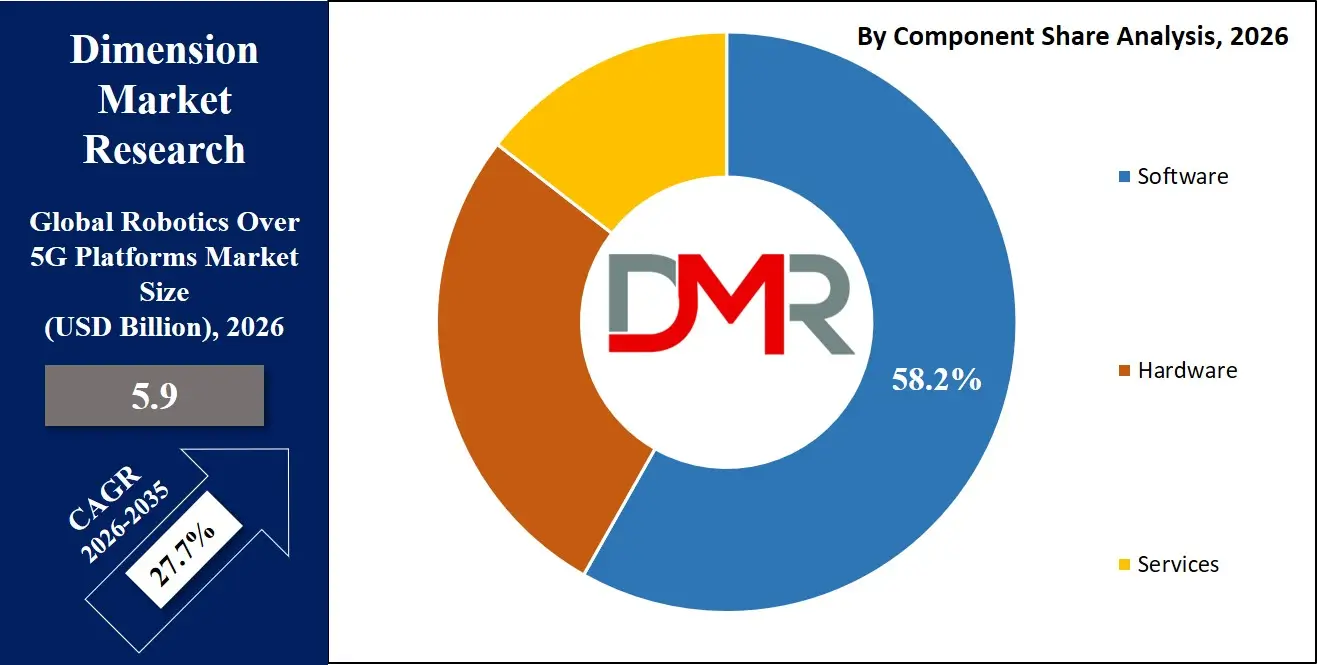
In the robotics over 5G platforms market, hardware is expected to dominate the component segment with a projected share of 58.2% in 2026 because it comprises the essential physical elements required for any robotic system. This includes the 5G modules that enable high speed, low latency communication; the array of sensors (LiDAR, vision systems, force/torque) that perceive the environment; and the core actuation units like robotic arms and mobile bases. The high unit cost of precision engineered industrial robots, coupled with the expense of integrating specialized 5G communication modules and advanced sensor suites, drives the strong revenue contribution from hardware compared to other components.
ℹ
To learn more about this report –
Download Your Free Sample Report Here
Software is the critical intelligence layer, transforming hardware into a flexible and intelligent asset. AI and algorithms are essential for tasks like object recognition, path planning, and predictive maintenance. Real time control software ensures precise execution of movements over the 5G link, while data processing platforms aggregate and analyze information from the entire robot fleet. As the industry moves toward more autonomous and adaptive systems, software's importance is skyrocketing, though its revenue share often comes through recurring licenses or subscriptions, contrasting with the one time sale of hardware.
By Deployment Mode Analysis
Cloud based deployment is expected to dominate the deployment mode segment with a 72.4% market share in 2026 because it aligns perfectly with the value proposition of 5G. By offloading computation to the cloud, robots can be made simpler, lighter, and less expensive. Cloud platforms enable centralized fleet management, continuous over the air software updates, and access to virtually unlimited computational power for training and running complex AI models. This model supports the scalability and flexibility that modern enterprises demand, allowing them to manage globally distributed robotic fleets from a single pane of glass.
On premises deployment, while holding a smaller share, remains critical for specific use cases. This mode involves hosting the robotic control and data processing software on local servers within the factory or facility. It is preferred in industries with stringent data sovereignty rules, extreme security requirements, or where operations are mission critical and cannot tolerate any potential latency or disruption from a public cloud. It offers maximum control and deterministic performance, often in conjunction with a private 5G network.
By Robot Type Analysis
Autonomous Mobile Robots (AMRs) are projected to be the dominant robot type, accounting for 34.9% of the market share in 2026. The logistics and warehousing boom, coupled with the need for flexible material handling in factories, is driving massive demand for AMRs. 5G is the ideal connectivity solution for these robots, as they operate over large areas and require constant, reliable communication for navigation, traffic coordination, and integration with automated systems like conveyors and sortation systems. 5G ensures they can operate seamlessly without the range and reliability issues of Wi Fi.
Industrial Robots remain a cornerstone of the market, holding a significant share. These include traditional articulated arms for welding, painting, and assembly. 5G enables them to cut the cord, allowing for greater flexibility on the production line. They can be easily moved and reconfigured, and their high-definition vision systems can stream data to the cloud for advanced quality control. The push for smarter, more connected factories ensures the continued adoption of 5G enabled industrial robots.
By End User Industry Analysis
Manufacturing is projected to dominate the end use segment with a 44.8% market share in 2026. As the heart of Industry 4.0, the manufacturing sector is the primary adopter of advanced automation. 5G enabled robots are used extensively in automotive assembly, electronics production, and heavy machinery fabrication. The need for flexible, reconfigurable production lines to handle product variation, combined with the demand for real time quality data, makes 5G connectivity indispensable. Manufacturers use these robots to increase throughput, improve precision, and enhance worker safety.
Logistics and Warehousing represent the fastest growing segment. The exponential growth of e commerce has created immense pressure on fulfillment centers to operate faster and more accurately. 5G connected AMRs for picking, packing, and moving goods are becoming standard. They work collaboratively in large fleets, coordinated by cloud-based software, to optimize the flow of goods. This application showcases the immediate ROI of 5G robotics in terms of speed, accuracy, and operational flexibility, making it a key driver of market growth.
The Global Robotics Over 5G Platforms Market Report is segmented on the basis of the following:
By Component
- Hardware
- 5G Modules
- Sensors
- Robotic Arms
- Software
- AI & Algorithms
- Real-Time Control
- Data Processing
- Services
- Deployment
- Maintenance
- Consulting
- Professional Services
- Managed Services
By Deployment Mode
By Robot Type
- Industrial Robots
- Service Robots
- Cobots
- Autonomous Mobile Robots
By End-User Industry
- Manufacturing
- Logistics & Warehousing
- Automotive
- Healthcare
- Energy & Utilities
- Agriculture
- Mining & Construction
- Others
Impact of Artificial Intelligence in the Global Robotics Over 5G Platforms Market
Artificial intelligence is not just an enhancement but the fundamental driver of value in the global robotics over 5G platforms market. While 5G provides the high speed, low latency data pipe, AI provides the intelligence that makes sense of the torrent of information. Traditional industrial robots follow pre-programmed paths; integrating AI, enabled by 5G's bandwidth, allows them to perceive, learn, and adapt. High-definition cameras and sensors on robots' stream data to edge servers where AI models perform complex tasks like real time defect detection, dynamic path planning around obstacles, and predictive analytics for maintenance. Instead of halting production for a faulty part, an AI powered robotic arm can identify the defect and adjust its grip in milliseconds.
AI also revolutionizes fleet management and human robot interaction. Machine learning algorithms analyze data from an entire fleet of AMRs to optimize traffic flow in a warehouse, predict bottlenecks, and dynamically reassign tasks. In collaborative applications, AI enables robots to understand and predict human movements, allowing for safe and natural cooperation without barriers. Furthermore, AI driven simulation and digital twins, fed by real world robot data over 5G, allow operators to test new processes in a virtual environment before deploying them in the physical world. The convergence of AI with 5G enabled robotics is thus creating a new paradigm of intelligent, autonomous, and adaptive automation, driving unprecedented levels of productivity and flexibility.
Global Robotics Over 5G Platforms Market: Regional Analysis
Region with the Largest Revenue Share
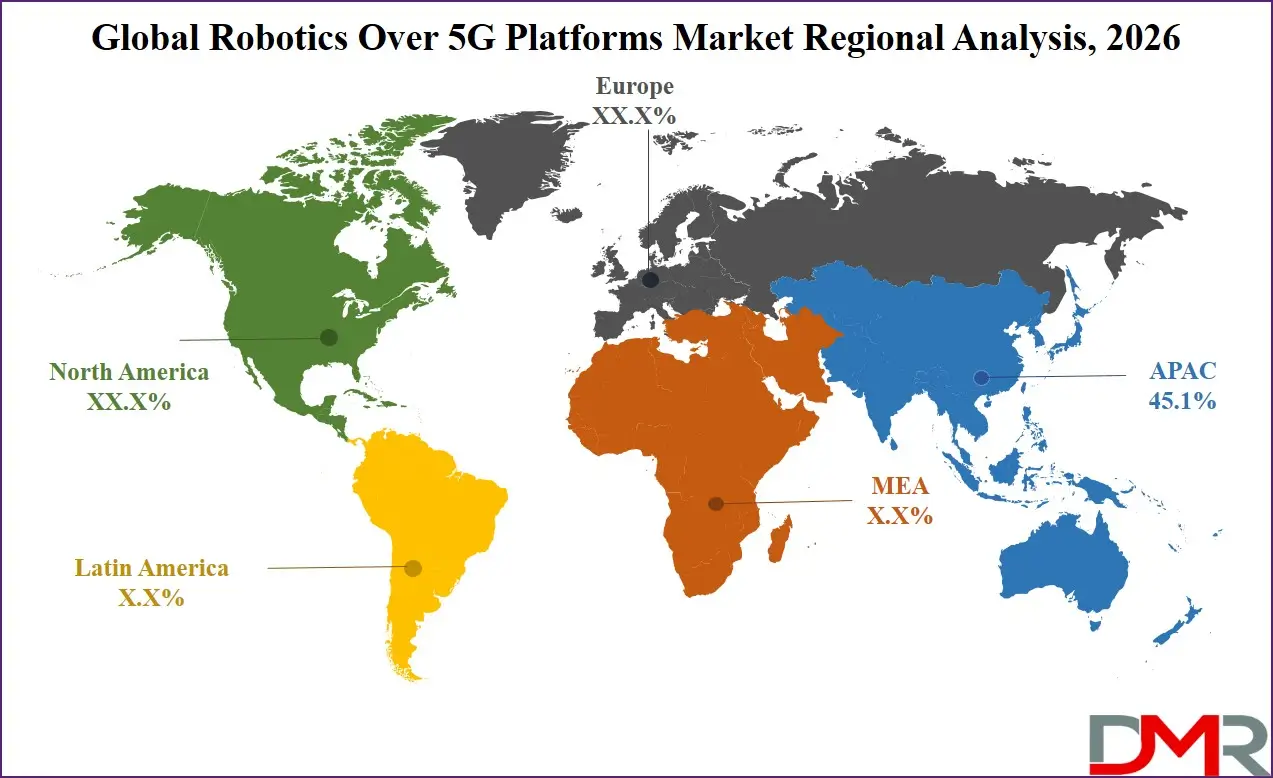
Asia Pacific is expected to dominate the global Robotics Over 5G Platforms Market in 2026, capturing approximately 45.1% of total market revenue. This leadership is driven by the region's position as the world's manufacturing hub, particularly in China, and its rapid investments in smart manufacturing and infrastructure. Countries like China, South Korea, and Japan are heavily subsidizing the deployment of 5G in industrial parks to maintain their manufacturing dominance. The increasing labor costs and the need for greater precision in electronics and automotive production are forcing a rapid shift toward automation. Government-led initiatives for digitalization and the sheer scale of manufacturing operations in the region create an unparalleled demand for scalable, high-performance 5G-connected robotic systems.
ℹ
To learn more about this report –
Download Your Free Sample Report Here
Region with the Highest CAGR
Among all regions, Asia Pacific is also expected to register the highest compound annual growth rate in the global robotics over 5G platforms market. This explosive growth is fueled by continuous industrialization, expanding 5G infrastructure, and the rapid adoption of Industry 4.0 technologies across emerging economies. Countries such as China, India, and Southeast Asian nations are witnessing significant investments in smart factories, logistics automation, and government-backed digital transformation programs. The combination of large-scale manufacturing operations, favorable government policies, and increasing focus on automation to address labor challenges ensures that Asia Pacific will maintain its growth momentum throughout the forecast period.
By Region
North America
Europe
- Germany
- The U.K.
- France
- Italy
- Russia
- Spain
- Benelux
- Nordic
- Rest of Europe
Asia-Pacific
- China
- Japan
- South Korea
- India
- ANZ
- ASEAN
- Rest of Asia-Pacific
Latin America
- Brazil
- Mexico
- Argentina
- Colombia
- Rest of Latin America
Middle East & Africa
- Saudi Arabia
- UAE
- South Africa
- Israel
- Egypt
- Rest of MEA
Global Robotics Over 5G Platforms Market: Competitive Landscape
The competitive landscape of the global robotics over 5G platforms market is characterized by dynamic convergence and intense innovation. Traditional industrial robot manufacturers are partnering with telecom equipment providers and cloud platform companies to create integrated, end to end solutions. The market is seeing a blurring of lines as technology giants enter the industrial automation space, leveraging their strengths in AI, cloud computing, and 5G technology. Competition is increasingly focused on providing complete ecosystems, from the 5G module and robot hardware to the AI driven orchestration software and deployment services. Players are differentiating themselves through the sophistication of their AI algorithms, the reliability and security of their private 5G solutions, and their ability to offer flexible, outcome-based business models. Continuous investment in R&D, strategic acquisitions of niche technology providers, and building robust partner networks are the key dynamics shaping this rapidly evolving industry.
Some of the prominent players in the Global Robotics Over 5G Platforms Market are:
- ABB Ltd.
- Qualcomm Technologies, Inc.
- Huawei Technologies Co., Ltd.
- Nokia Corporation
- Samsung Electronics Co., Ltd.
- Ericsson AB
- Siemens AG
- KUKA AG
- FANUC Corporation
- Yaskawa Electric Corporation
- Rockwell Automation, Inc.
- Universal Robots A/S
- Mitsubishi Electric Corporation
- Intel Corporation
- Cisco Systems, Inc.
- SK Telecom Co., Ltd.
- SoftBank Robotics Group Corp.
- Boston Dynamics, Inc.
- Omron Corporation
- LG Electronics Inc.
- Other Key Players
Recent Developments in the Global Robotics Over 5G Platforms Market
- January 2026: Qualcomm Technologies, Inc. introduced its Dragonwing IQ10 robotics technology portfolio, designed for 5G‑connected humanoids and autonomous mobile robots with edge AI processing capabilities, highlighting the integration of high-performance AI with low-latency 5G networks.
- January 2026: Qualcomm Technologies, Inc. showcased its Robotics System at the India AI Impact Summit 2026, combining hardware, software, and AI for industrial and humanoid robots, enabling rapid deployment of 5G-enabled robotics across enterprise applications.
- July 2025: ABB Ltd. expanded its robot portfolio in China with three new robot families (Lite+, PoWa, IRB 1200), facilitating faster automation deployment in dynamic factory environments and supporting factories integrating 5G connectivity for fleet coordination and remote control.
- July 2025: Intel Corporation spun out its RealSense division into a separate company focused on AI robotics and computer vision, securing USD 50 million in Series A funding from Intel Capital and MediaTek Innovation Fund to accelerate development of depth cameras and perception systems used in autonomous mobile robots and humanoids — technology critical for 5G‑enabled robotic vision.
- March 2025: Nokia Corporation launched the MX Context AI-Powered Platform for Industry 4.0, integrating edge AI, sensor fusion, and 5G connectivity to optimize real-time industrial robotics operations and predictive analytics in smart factories.
- January 2025: Freshwave and the National Robotarium deployed a portable 5G private network to test agritech robots, including Boston Dynamics' Spot robot utilizing 5G for real time 3D mapping and live data streaming, exemplifying 5G's role in outdoor robotics pilots.
Report Details
| Report Characteristics |
| Market Size (2026) |
USD 5.9 Bn |
| Forecast Value (2035) |
USD 53.1 Bn |
| CAGR (2026–2035) |
27.7% |
| The US Market Size (2026) |
USD 1.8 Bn |
| Historical Data |
2020 – 2025 |
| Forecast Data |
2027 – 2035 |
| Base Year |
2025 |
| Estimate Year |
2026 |
| Report Coverage |
Market Revenue Estimation, Market Dynamics, Competitive Landscape, Growth Factors and etc. |
| Segments Covered |
By Component (Hardware, Software and Services), By Deployment Mode (On-Premises and Cloud-based), By Robot Type (Industrial Robots, Service Robots, Collaborative Robots and Autonomous Mobile Robots), By End-User Industry (Manufacturing, Logistics & Warehousing, Automotive, Healthcare, Energy & Utilities, Agriculture, Mining & Construction and Others) |
| Regional Coverage |
North America – The US and Canada; Europe – Germany, The UK, France, Russia, Spain, Italy, Benelux, Nordic, & Rest of Europe; Asia-Pacific – China, Japan, South Korea, India, ANZ, ASEAN, Rest of APAC; Latin America – Brazil, Mexico, Argentina, Colombia, Rest of Latin America; Middle East & Africa – Saudi Arabia, UAE, South Africa, Turkey, Egypt, Israel, & Rest of MEA |
| Prominent Players |
ABB Ltd., Qualcomm Technologies, Inc., Huawei Technologies Co., Ltd., Nokia Corporation, Samsung Electronics Co., Ltd., Ericsson AB, Siemens AG, KUKA AG, FANUC Corporation, Yaskawa Electric Corporation, Rockwell Automation, Inc., Universal Robots A/S, Mitsubishi Electric Corporation, Intel Corporation, Cisco Systems, Inc., SK Telecom Co., Ltd., SoftBank Robotics Group Corp., Boston Dynamics, Inc., Omron Corporation, LG Electronics Inc., and Other Key Players |
| Purchase Options |
We have three licenses to opt for: Single User License (Limited to 1 user), Multi-User License (Up to 5 Users) and Corporate Use License (Unlimited User) along with free report customization equivalent to 0 analyst working days, 3 analysts working days and 5 analysts working days respectively. |
Frequently Asked Questions
How big is the Global Robotics Over 5G Platforms Market?
▾ The Global Robotics Over 5G Platforms Market size is estimated to have a value of USD 5.9 billion in 2026 and is expected to reach USD 53.1 billion by the end of 2035.
What is the growth rate in the Global Robotics Over 5G Platforms Market in 2026?
▾ The market is growing at a CAGR of 27.7% over the forecasted period of 2026.
What is the size of the US Robotics Over 5G Platforms Market?
▾ The US Robotics Over 5G Platforms Market is projected to be valued at USD 1.8 billion in 2026. It is expected to witness subsequent growth in the upcoming period as it holds USD 14.3 billion in 2035 at a CAGR of 26.0%.
Which region accounted for the largest Global Robotics Over 5G Platforms Market?
▾ Asia Pacific is expected to have the largest market share in the Global Robotics Over 5G Platforms Market with a share of about 45.1% in 2026.
Who are the key players in the Global Robotics Over 5G Platforms Market?
▾ Some of the major key players in the Global Robotics Over 5G Platforms Market are ABB Ltd., Qualcomm Technologies, Inc., Huawei Technologies Co., Ltd., Samsung Electronics Co., Ltd., Siemens AG, and many others.