What is the Rural Telehealth Technology Market Size?
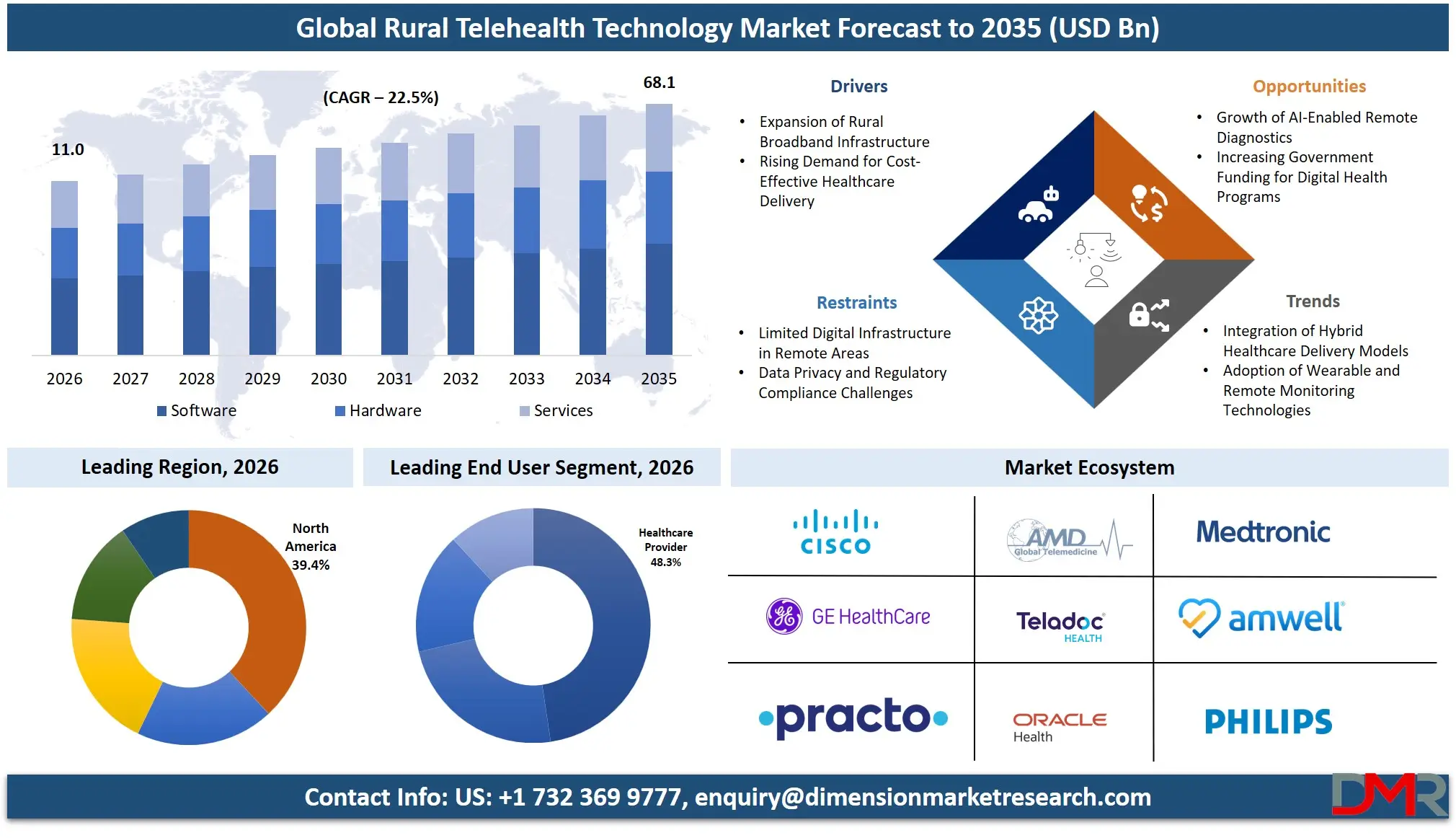
The Rural Telehealth Technology Market size is expected to be USD 11.0 billion in 2026 and increase at a compound annual growth rate of 22.5% to USD 68.1 billion in 2035 due to the farmers inclined towards buying second-hand machinery to reduce expenses.
ℹ
To learn more about this report –
Download Your Free Sample Report Here
Rural Telehealth Technology Market is an eco-system of healthcare technology solutions including digital health platforms, telehealth technology, connectivity tools, remote monitoring systems, teleconsultation platforms, among others, for providing access to healthcare for the rural population. This market encompasses technologies like AI-powered diagnostic tools, telehealth platforms based on cloud technology, mobile health apps, and wearable healthcare solutions. The importance of this market has grown in light of issues such as a lack of physicians, high levels of chronic diseases, and improved broadband connectivity in rural areas. Some of the recent trends associated with the market include hybrid care model, remote patient monitoring, 5G-based healthcare, and use of AI in clinical settings.
ℹ
To learn more about this report –
Download Your Free Sample Report Here
The US Rural Telehealth Technology Market
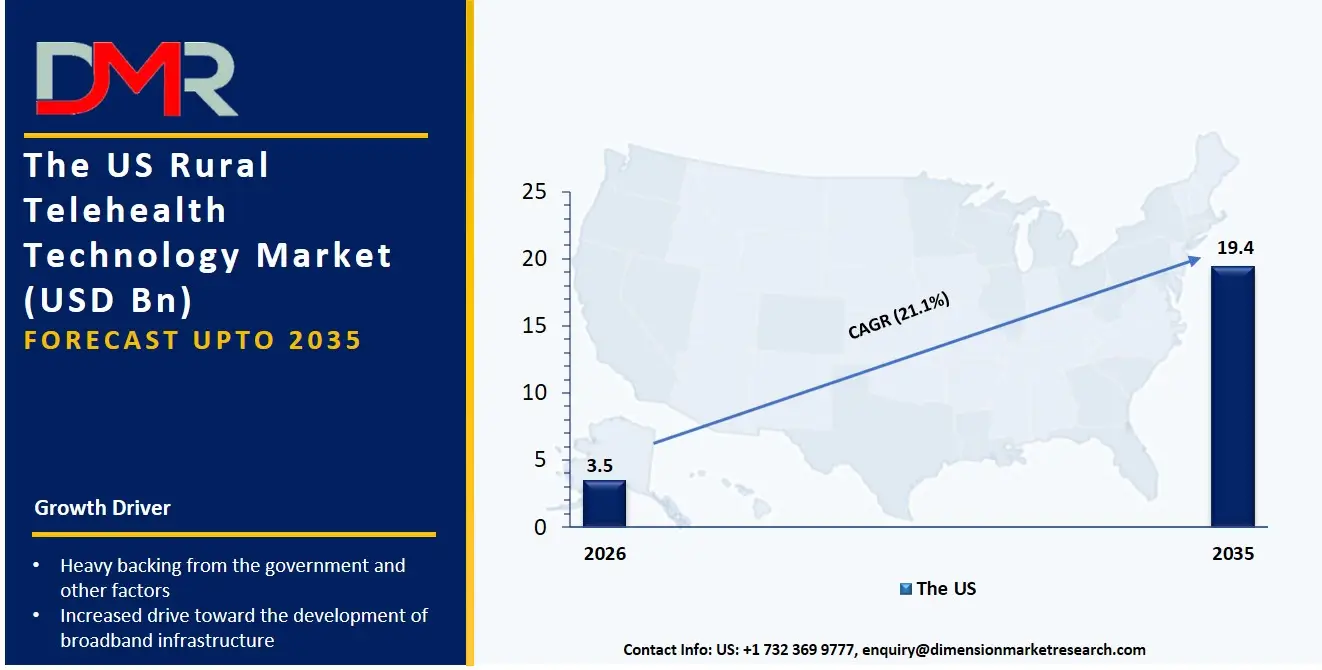
The US Rural Telehealth Technology Market size is estimated to be USD 3.5 billion in 2026 and is expected to increase at a CAGR of 21.1% over the forecast period.
There has been considerable growth seen in the US Rural Telehealth Technology Market, owing to heavy backing from the government and other factors. With the involvement of entities like HRSA and FCC, there is an increased drive toward the development of broadband infrastructure as well as telehealth reimbursement programs. Hospitals located in rural areas as well as community health centers have started implementing remote patient monitoring technology as well as virtual care systems for improving access to healthcare facilities. Chronic disease incidence is one more factor fueling the growth of the market.
ℹ
To learn more about this report –
Download Your Free Sample Report Here
Europe Rural Telehealth Technology Market
The Europe Rural Telehealth Technology Market size is estimated to be USD 2.9 billion in 2026 and is expected to increase at a CAGR of 21.3% over the forecast period.
The Europe Rural Telehealth Technology Market is experiencing consistent growth because of policies that favor the implementation of digital health care measures and help improve access to healthcare facilities. Policies that align with the European Green Deal and the European Digital Agenda promote sustainable development within the healthcare environment and help in implementing telehealth services. Significant investments by major countries including Germany, France, and the Nordic countries are being made in terms of digital health measures, remote patient monitoring equipment, and patient management systems.
Japan Rural Telehealth Technology Market
The market size of Japan Rural Telehealth Technology will be USD 440 million in 2026 and at a CAGR of 21.8% in the forecast period.
The Rural Telehealth Technology Market of Japan is expanding based on the demographics of an aging population, increased use of healthcare technology automation, and governmental programs that focus on transforming healthcare into a digital industry. Rural populations are embracing telehealth solutions as a means of resolving the problem of medical staff shortages and improving the process of managing elderly patients' health. Japan has embarked on developing diagnostic tools powered by AI and robot-supported remote care delivery systems. The country's highly advanced communications network and the widespread use of digital health technology tools present opportunities for hybrid healthcare models.
Key Takeaways
- Market Size & Forecast: The Rural Telehealth Technology Market size is projected to reach USD 11.0 billion in 2026 and is anticipated to have a value of USD 68.1 billion in 2035.
- Growth Rate & Outlook: The Rural Telehealth Technology Market size is set to grow at a compound annual growth rate of 22.5% during the forecast period of 2026 to 2035.
- Primary Growth Drivers: Some of the major growth drivers in the market include Rural Expansion of Broadband Infrastructure, and more.
- Key Market Trends: Some of the major trends in the market are Integration of Hybrid Healthcare Delivery Models, and more.
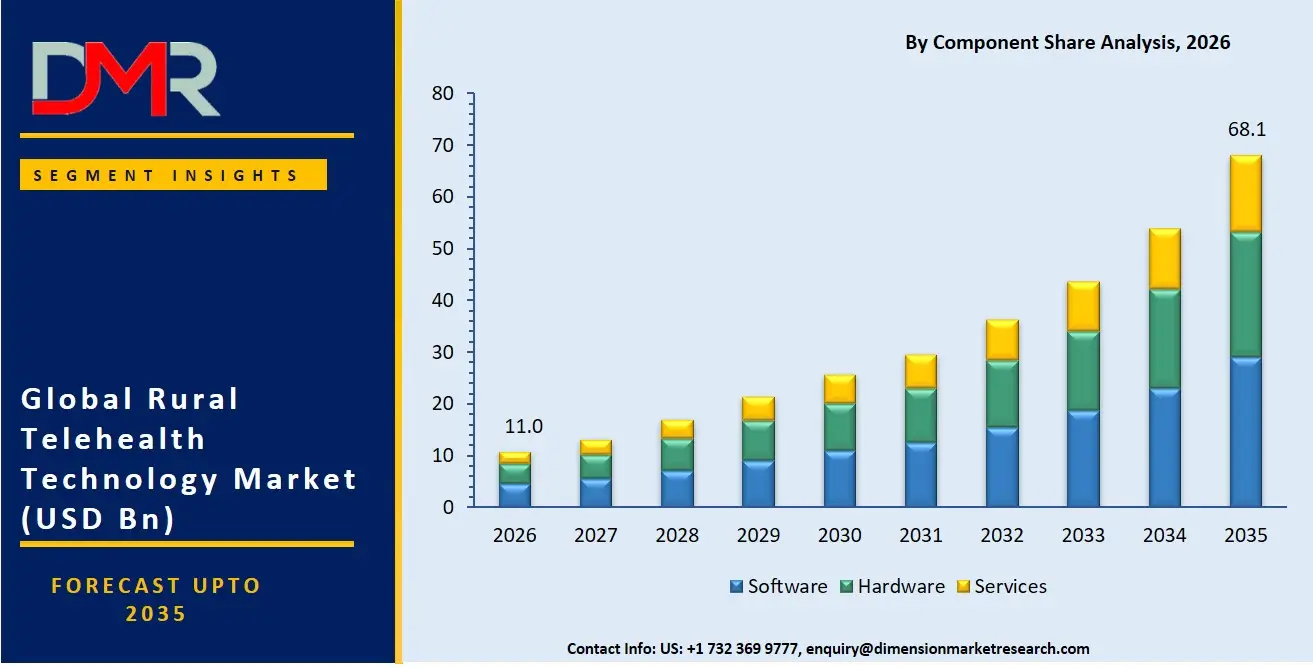
- By Component: Software segment is anticipated to get the majority share of the Rural Telehealth Technology market in 2026.
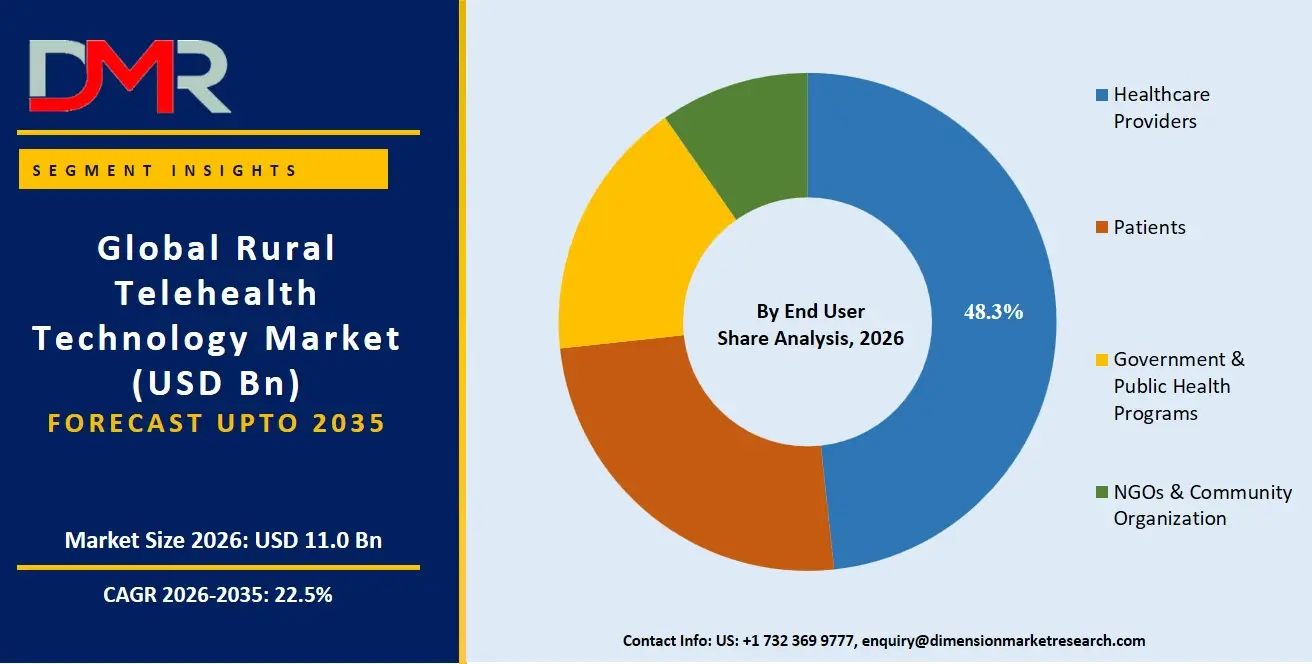
- By End User: Healthcare Provider is expected to get the largest revenue share in 2026 in the Rural Telehealth Technology market.
- By Application: Chronic Disease Management segment is expected to get the largest revenue share in 2026 in the Rural Telehealth Technology market.
- Regional Leadership: North America is set to lead the Rural Telehealth Technology market with an estimated 39.4% share in 2026.
What is the Rural Telehealth Technology?
Rural Telehealth Technology refers to digital health technologies and telecommunications tools that facilitate remote medical consultation, diagnosis, patient monitoring, health education, and collaboration among healthcare providers. Such technology involves the use of hardware, including telemedicine equipment and wearable sensors; software tools used to facilitate delivery of virtual care; and various services that pertain to implementation, connectivity, and health care services delivery. The technology is geared toward addressing challenges associated with accessing healthcare services by reducing travel time and other impediments, facilitating improved management of chronic diseases, and enabling the operation of healthcare providers in remote communities.
Use Cases
- Remote Monitoring for Chronic Diseases: With the use of telehealth technologies, diabetes, hypertension, and cardiovascular disorders can be remotely monitored through the use of connected devices and remote diagnostic services. Healthcare specialists can monitor patients' health indicators remotely, which can help reduce emergency hospital visits. This also improves adherence to treatment in the underprivileged areas.
- Virtual Psychological Assistance: As part of their initiatives to improve telehealth, telepsychiatry and telecounseling platforms have become quite common in rural areas where there is a lack of trained psychologists and counselors. Such approaches increase access to behavioral care services at lower travel and treatment costs.
- Specialized Emergency Consultations: For emergency and critical conditions, the hospitals in rural regions use telehealth platforms to connect with the experts remotely. In this case, teleradiology, telecardiology, and even virtual ICU consultation becomes possible.
- Access to Maternal and Pediatric Services: Access to prenatal and postnatal care is being ensured using telehealth technologies. Remote care technology increases access to healthcare for both mothers and young patients.
How AI Is Transforming the Rural Telehealth Technology Market
The technology is playing a huge role in changing the dynamics of the Rural Telehealth Technology Market. The technology is facilitating healthcare accessibility, increasing diagnostic capabilities, and increasing efficiency within the healthcare sector. The AI technology allows healthcare facilities to handle many patients through virtual assistants and automatic triaging systems. Additionally, AI diagnostics allow for quick interpretation of medical images and disease risks in areas that lack specialized doctors.
AI technology is also helping with remote patient monitoring as it can analyze patient data and detect medical issues on time. Chatbots and virtual care systems make patients more engaged with their health issues and help schedule appointments. Many healthcare organizations are using AI technology to automate their workflow processes.
Market Dynamic
Driving Factors in the Rural Telehealth Technology Market
Rural Expansion of Broadband Infrastructure
The growth in investments for broadband connectivity in rural areas is a major factor responsible for driving the Rural Telehealth Technology Market. Fiber optic and 5G networks are being expanded by governments and telecom companies in order to provide better access to digital healthcare in rural areas. The increase in internet coverage allows for quality video consultation, cloud-based healthcare management, and remote patient monitoring. It also facilitates AI-based diagnosis and mobility of healthcare services in remote locations.
Restraints in the Rural Telehealth Technology Market
Lack of Adequate Digital Infrastructure in Rural Areas
Although there have been continuous efforts, lack of adequate broadband infrastructure and poor internet connectivity are still major obstacles in the adoption of telehealth in rural settings. There are still many areas that continue to suffer from slow network speed and inadequate digital healthcare infrastructure that may hinder access to teleconsultation and other cloud-based healthcare services. This may affect video clarity and diagnosis of diseases and patient participation in treatment.
Opportunities in the Rural Telehealth Technology Market
Remote Diagnosis Opportunities Based on AI
There are many opportunities that artificial intelligence technology creates for growth in the field of telehealth technologies that are applied in rural areas. Diagnostic systems based on AI will be helpful for diagnosing patients suffering from chronic diseases, analyzing medical images, and prioritizing remote treatment of patients. In rural areas where there are few specialists, healthcare institutions are increasingly using clinical decision support systems based on AI to improve their ability to make an accurate diagnosis and deliver effective treatment.
Trends in the Rural Telehealth Technology Market
Integration of Hybrid Healthcare Delivery Models
The use of hybrid healthcare delivery models that include both in-person and virtual consultation services has been identified as an emerging trend in the Rural Telehealth Technology Market. Healthcare providers are incorporating telehealth technology into the traditional healthcare system in order to enhance patients' flexibility and accessibility to healthcare services. Hybrid healthcare delivery models facilitate follow-up consultations, chronic illness management, and specialist referrals while decreasing congestion at healthcare facilities.
Research Scope and Analysis
The Rural Telehealth Technology Market research analyzes key segments including component, delivery model, application, end user, specialty services, and hardware adoption trends. The study evaluates technological advancements, AI integration, regional growth patterns, regulatory frameworks, healthcare digitization initiatives, competitive dynamics, and investment trends influencing market expansion across rural healthcare ecosystems globally.
ℹ
To learn more about this report –
Download Your Free Sample Report Here
By Component Analysis
It is anticipated that the software category will capture the largest share of the Rural Telehealth Technology Market, having a market share of about 42.8% by 2026 owing to the increasing use of telehealth platforms, AI-based diagnosis systems, and EHRs. With the increasing use of software ecosystems in health care facilities, which ensure smooth teleconsultations, remote patient monitoring, and healthcare workflows, more money is being invested in software technology in rural health care facilities. The increasing need for telehealth platforms capable of facilitating secure communication and patient data management systems is boosting the adoption of software technology. On the other hand, the services segment is expected to show the fastest growth rate.
By Telehealth Delivery Analysis
Real-time (Synchronous) Telehealth is expected to have a market share of around 38.6% by 2026 as a result of the rise in popularity of video-based consultations and immediate virtual interaction between doctors and patients. Synchronous telehealth technology has become more common in the provision of primary care services, emergencies, and referrals to specialists in rural health organizations. The expansion in broadband connectivity and use of smartphones is enabling the deployment of real-time platforms. Nonetheless, Remote Patient Monitoring (RPM) is expected to be the fastest-growing segment because of the increase in chronic conditions, use of wearable technologies, and proactive healthcare.
By Application Analysis
Chronic disease management application is estimated to have a market share of 31.9% in 2026 because of the adoption of telehealth technology for managing diabetes, cardiovascular diseases, respiratory diseases, and hypertension in rural areas. Increasing cases of chronic disease conditions and shortage of healthcare professionals in rural areas are driving the development of telemonitoring solutions and artificial intelligence-based healthcare platforms. Telehealth technology has been adopted by healthcare organizations for improving patient adherence and reducing hospitalizations. The Mental and behavioral health application segment is projected to experience high growth rate due to increasing awareness regarding mental health services and telepsychiatry applications in rural areas.
By End User Analysis
Healthcare Providers are projected to be the dominant players in the Rural Telehealth Technology Market with a forecasted market share of 48.3% in 2026 owing to the heavy investments made by hospitals, rural clinics, and physician networks in digital healthcare infrastructure. The telehealth technologies have enabled providers to enhance accessibility, boost physician productivity, and cut down the burden of traveling among patients. Rising government investments and reimbursement trends have also been contributing to the growth of the segment. The other major segments include Government & Public Health Programs, which are expected to record the fastest growth owing to the rising investments in digital healthcare access and healthcare modernization programs.
The Rural Telehealth Technology Market Report is segmented on the basis of the following:
By Component
- Hardware
- Telemedicine carts & kiosks
- Remote diagnostic devices
- Wearables & remote monitoring devices
- Mobile devices & peripherals
- Software
- Telehealth platforms
- EHR/EMR integrated systems
- Clinical workflow & scheduling software
- AI-enabled diagnostic solutions
- Services
- Implementation & integration
- Managed services
- Support & maintenance
- Training & consulting
By Telehealth Delivery Model
- Real-time (Synchronous) Telehealth
- Video consultations
- Audio consultations
- Store-and-Forward (Asynchronous)
- Remote Patient Monitoring (RPM)
- Mobile Health (mHealth)
- Hybrid Care Models
By Application
- Primary Care
- Chronic Disease Management
- Diabetes
- Cardiovascular diseases
- Respiratory diseases
- Hypertension management
- Mental & Behavioral Health
- Maternal & Child Health
- Emergency & Acute Care
- Diagnostic & Specialty Services
- Teleradiology
- Telecardiology
- Telepsychiatry
- Teledermatology
- Others
By End User
- Healthcare Providers
- Hospitals
- Rural clinics
- Community health centers
- Physician networks
- Patients
- Government & Public Health Programs
- NGOs & Community Organizations
Regional Analysis
Leading Region in the Rural Telehealth Technology Market
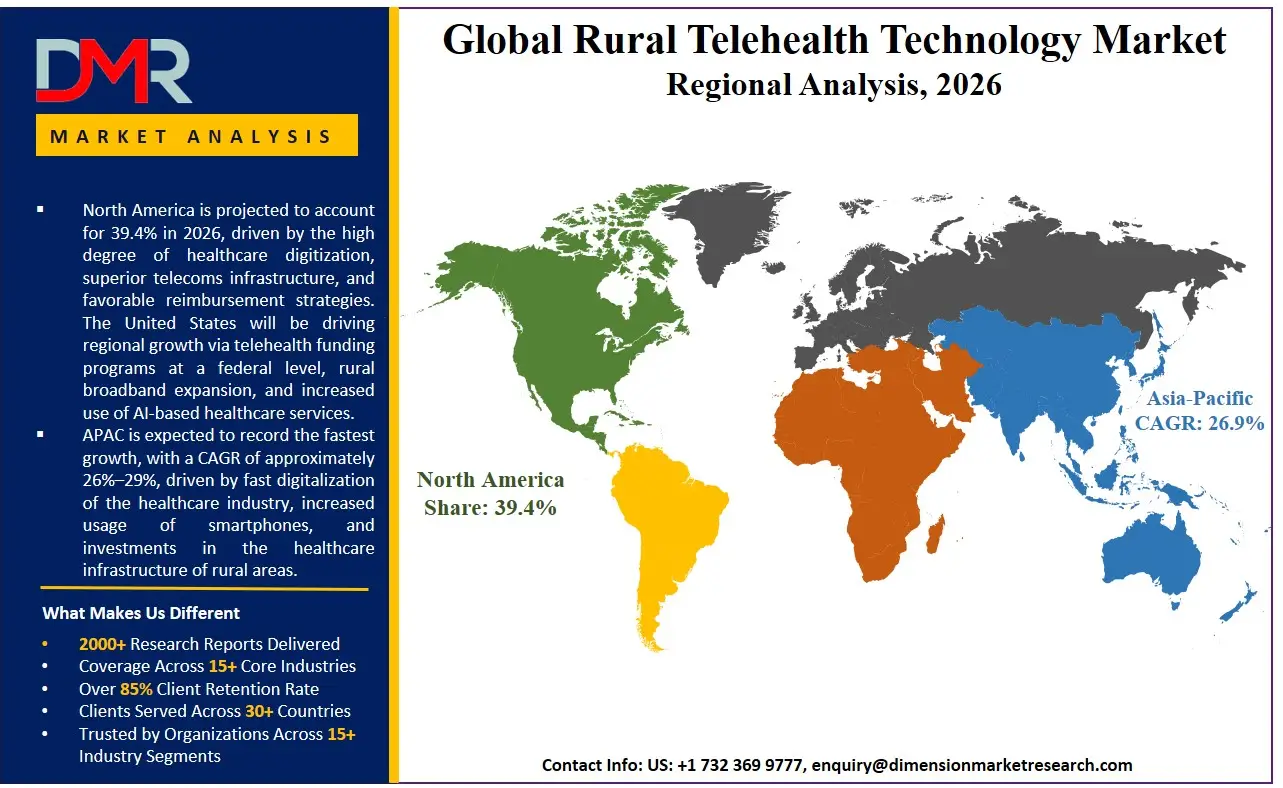
North America is projected to be the leader in the Rural Telehealth Technology Market by attaining a share of 39.4% in 2026 because of the high degree of healthcare digitization, superior telecoms infrastructure, and favorable reimbursement strategies. The United States will be driving regional growth via telehealth funding programs at a federal level, rural broadband expansion, and increased use of AI-based healthcare services. Healthcare organizations in North America have been making substantial investments in remote patient monitoring solutions, cloud-based telehealth software, and virtual care systems. Increased prevalence of chronic diseases, lack of physicians in rural areas, and robust public-private partnerships for modernizing digital healthcare are fueling the market dominance of the region.
ℹ
To learn more about this report –
Download Your Free Sample Report Here
Fastest Growing Region in the Rural Telehealth Technology Market
The Asia Pacific region is forecasted to be the fastest-growing region in the Rural Telehealth Technology Market because of the fast digitalization of the healthcare industry, increased usage of smartphones, and investments in the healthcare infrastructure of rural areas. Countries like China, India, Japan, and Australia have been making efforts through telemedicine to make their healthcare services available to far-flung areas. The increase in government funding for digital health, rise in cases of chronic diseases, and shortage of healthcare professionals are among the reasons why there is an increasing trend towards telehealth.
By Region
North America
Europe
- Germany
- The U.K.
- France
- Italy
- Russia
- Spain
- Benelux
- Nordic
- Rest of Europe
Asia-Pacific
- China
- Japan
- South Korea
- India
- ANZ
- ASEAN
- Rest of Asia-Pacific
Latin America
- Brazil
- Mexico
- Argentina
- Colombia
- Rest of Latin America
Middle East & Africa
- Saudi Arabia
- UAE
- South Africa
- Israel
- Egypt
- Rest of MEA
Competitive Landscape
The Rural Telehealth Technology Market features robust competition as a result of advancements in technology, digitization of healthcare, and growth of rural healthcare programs. Market players are concentrating on leveraging artificial intelligence diagnostics, telehealth ecosystem, and cloud-based healthcare solutions in order to improve their competitive position. Partnerships with healthcare organizations, telecommunication firms, and public health organizations are gaining importance as an effective tool for reaching rural markets. Furthermore, significant investments in cybersecurity, remote monitoring, and customization of products are being made to address healthcare issues specific to certain regions.
Some of the prominent players in the global Rural Telehealth Technology are:
- Teladoc Health
- Amwell (American Well)
- Koninklijke Philips
- Medtronic
- Oracle Health (Cerner)
- Cisco Systems
- GE HealthCare
- AMD Global Telemedicine
- Honeywell Life Care Solutions
- Aerotel Medical Systems
- Practo
- Doctor On Demand Included Health
- HealthTap
- MDLIVE
- Doximity
- Omron Healthcare
- BioTelemetry
- Resideo Health
- Vivify Health
- CareCloud
- Other Key Players
Recent Developments
- In March 2026, Compass, a digital health platform that is based on Epic EMR, was introduced by Ovatient, which is a virtual-first healthcare company founded by both MUSC Health and The MetroHealth System. The purpose of Compass is to provide assistance to the Rural Health Transformation Program as well as to offer rural healthcare organizations more opportunities to deliver virtual care. With substantial funding from the government till 2030, the platform is designed to assist health systems and Medicaid programs in implementing sustainable healthcare solutions.
- In March 2026, The Department of Agriculture Rural Development announced an award of USD 853,043 for the Distance Learning and Telemedicine Grant for Crittenden County that will help provide educational and healthcare services to the area. The grant will be used to fund a hub site as well as five end-user sites for providing teleconferencing that will facilitate dual credit classes, professional development for teachers, and telehealth services including mental health counseling and substance abuse prevention. This project is aligned with the initiatives of the USDA to use technology to increase rural access to education and healthcare services.
- In January 2026, Health, Inc., has released the Rural Health Transformation Solution that is an AI-based system designed to help rural hospitals increase their specialty care access, improve outcomes for patients, and become financially sustainable without increasing their costs due to fixed staffing. This release follows the recently launched CMS Rural Health Transformation Program, which will provide $10 billion per year over five years to support rural healthcare through telehealth, integration, and technology-enabled care delivery.
Report Details
| Report Characteristics |
| Market Size (2026) |
USD 11.0 Bn |
| Forecast Value (2035) |
USD 68.1 Bn |
| CAGR (2026–2035) |
22.5% |
| Historical Period |
2021 – 2025 |
| Forecast Period |
2027 – 2035 |
| Base Year |
2025 |
| Estimate Year |
2026 |
| Segments Covered |
By Component, By Telehealth Delivery Model, By Application, By End User |
| Regional Coverage |
North America – The US and Canada; Europe – Germany, The UK, France, Russia, Spain, Italy, Benelux, Nordic, & Rest of Europe; Asia-Pacific – China, Japan, South Korea, India, ANZ, ASEAN, Rest of APAC; Latin America – Brazil, Mexico, Argentina, Colombia, Rest of Latin America; Middle East & Africa – Saudi Arabia, UAE, South Africa, Turkey, Egypt, Israel, & Rest of MEA |
Frequently Asked Questions
How big is the Rural Telehealth Technology Market?
▾ The Rural Telehealth Technology Market size is expected to reach USD 11.0 billion by 2026 and is projected to reach USD 68.1 billion by the end of 2035.
What is the CAGR of the Rural Telehealth Technology Market from 2026 to 2035?
▾ The market is growing at a CAGR of 22.5 percent over the forecasted period.
What factors are driving the growth of the Rural Telehealth Technology Market?
▾ Rural Expansion of Broadband Infrastructure, and more are the factors driving the growth of the Rural Telehealth Technology Market.
What are the major trends in the Rural Telehealth Technology Market?
▾ Integration of Hybrid Healthcare Delivery Models, and more are some of the major trends in the market.
Who are the key players in the Rural Telehealth Technology Market?
▾ Some of the key players in the Rural Telehealth Technology Market include Cisco, Teladoc, GE Healthcare, and more.
How is the Rural Telehealth Technology Market segmented?
▾ The Rural Telehealth Technology Market is segmented by component, telehealth delivery model, application, end user.
Which region held the largest share of the Rural Telehealth Technology Market in 2026?
▾ North America is set to lead the Rural Telehealth Technology market with an estimated 39.4% share in 2026.
Which region is expected to grow the fastest in the Rural Telehealth Technology Market?
▾ Asia Pacific is the fastest-growing region in the Rural Telehealth Technology market during the forecast period.