Market Overview
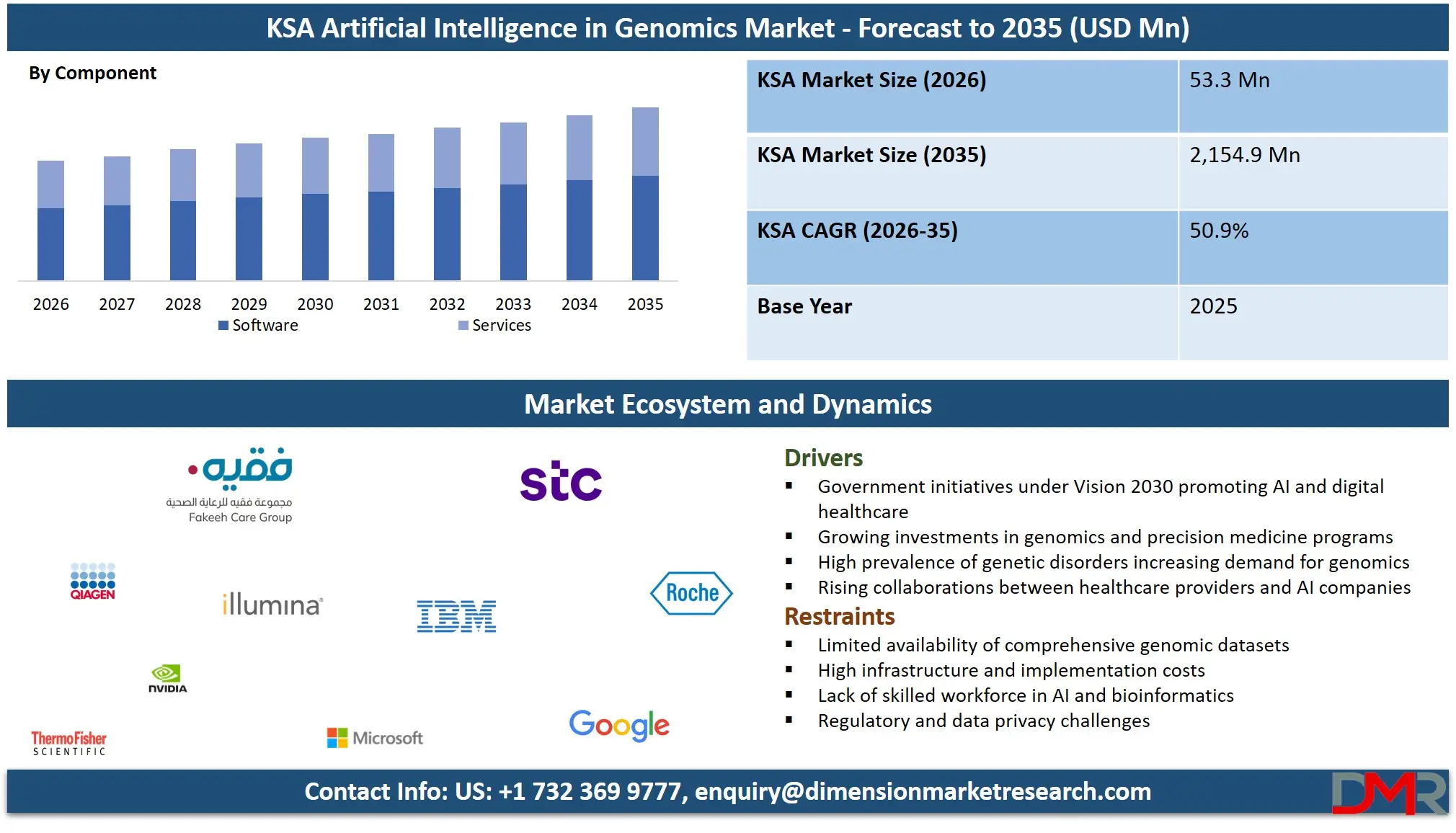
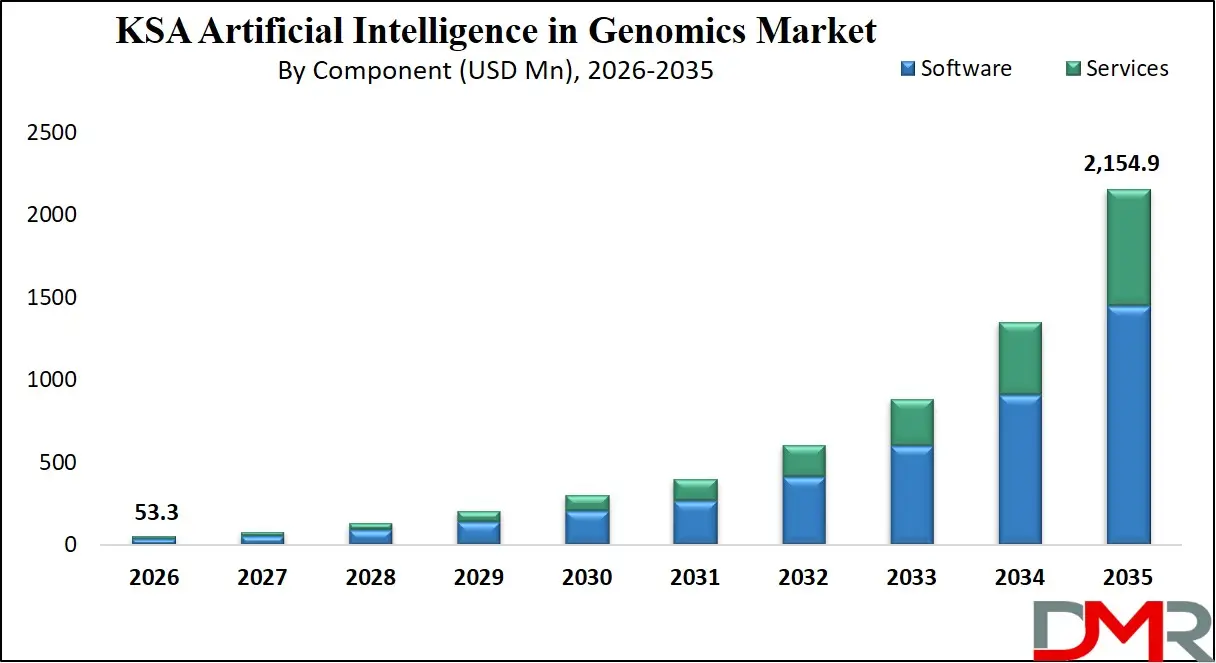
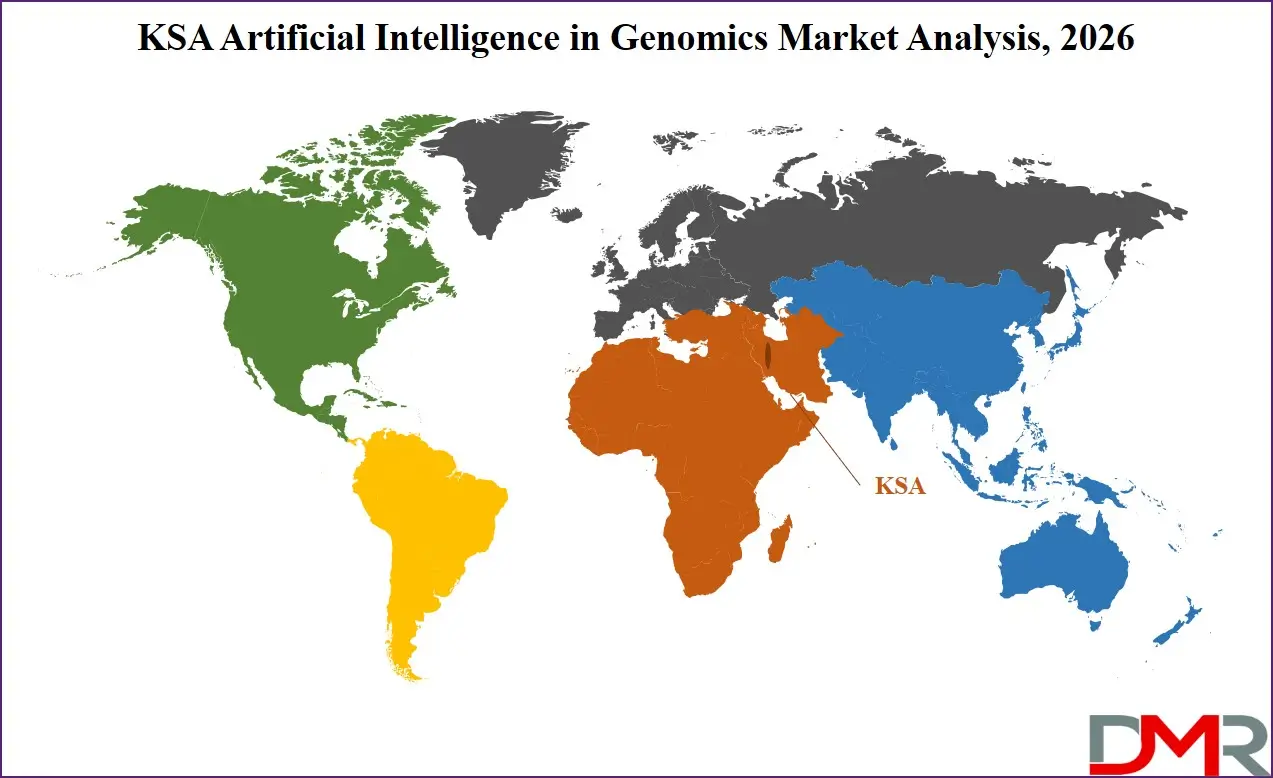
The KSA Artificial Intelligence in Genomics Market size is projected to reach USD 53.3 million in 2026 and grow at a compound annual growth rate of 50.9% to reach a value of USD 2,154.9 million in 2035.
ℹ
To learn more about this report –
Download Your Free Sample Report Here
KSA Artificial Intelligence in Genomics refers to the integration of advanced computational algorithms, data analytics, and machine learning models into genomic research and healthcare applications across Saudi Arabia. It encompasses technologies such as sequencing analytics, gene editing tools, predictive diagnostics, and AI-powered clinical decision systems. These solutions enable faster interpretation of complex genomic data, supporting precision medicine, disease prediction, and drug discovery. The market plays a critical role in transforming healthcare infrastructure by enabling personalized treatment approaches and improving clinical outcomes.
The sector is gaining importance as Saudi Arabia advances its national healthcare transformation agenda under Vision 2030. Increasing investments in biotechnology, genomics research centers, and digital health infrastructure are accelerating adoption. AI-driven genomic tools are being integrated into hospitals, research labs, and pharmaceutical pipelines, enhancing efficiency and reducing time-to-diagnosis. The convergence of big data, cloud computing, and bioinformatics is further strengthening the ecosystem.
ℹ
To learn more about this report –
Download Your Free Sample Report Here
Emerging shifts include the rise of population-scale genome projects, increasing collaboration between public institutions and private firms, and growing emphasis on rare disease diagnosis. Ethical AI frameworks and data governance policies are also evolving, shaping responsible adoption while fostering innovation in genomic sciences.
KSA Artificial Intelligence in Genomics Market: Key Takeaways
- Market Growth: The KSA Artificial Intelligence in Genomics Market size is expected to grow by USD 2,077.2 million, at a CAGR of 50.9%, during the forecasted period of 2027 to 2035.
- By Component: The software segment is anticipated to get the majority share of the KSA Artificial Intelligence in Genomics market in 2026.
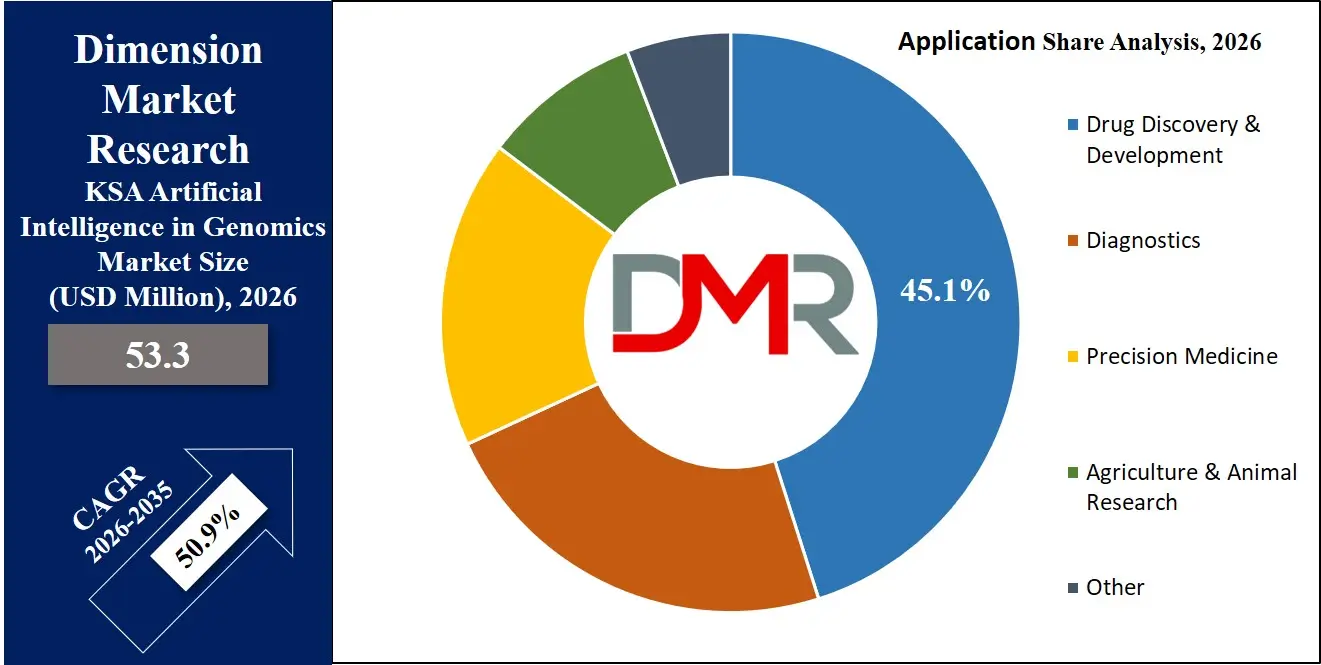
- By Application: The drug discovery & development segment is expected to get the largest revenue share in 2026 in the KSA Artificial Intelligence in Genomics market.
- Use Cases: Some of the use cases of artificial intelligence in genomics include precision medicine, clinical decision support, and more.
KSA Artificial Intelligence in Genomics Market: Use Cases
- Precision Medicine: AI-driven genomic analysis enables personalized treatment plans by identifying patient-specific genetic variations, improving therapeutic outcomes and reducing adverse reactions.
- Rare Disease Diagnosis: Advanced AI models help detect rare genetic disorders faster by analyzing complex genomic patterns that are difficult to interpret manually.
- Drug Discovery & Development: AI accelerates drug target identification and reduces development timelines by analyzing genomic data and predicting molecular interactions.
- Cancer Genomics: AI tools assist in identifying mutations and biomarkers, enabling targeted cancer therapies and early detection strategies.
- Population Genomics: Large-scale genome sequencing initiatives use AI to study genetic diversity and disease prevalence within Saudi populations.
- Agricultural Genomics: AI applications support genetic improvements in crops and livestock, enhancing productivity and disease resistance.
- Clinical Decision Support: AI-integrated genomic platforms provide real-time insights to clinicians, aiding in diagnosis and treatment planning.
Stats & Facts
- Saudi Ministry of Health reported in 2025 that over 65% of major hospitals are adopting AI-enabled diagnostic tools.
- Saudi Data and AI Authority stated in 2024 that national AI investments exceeded USD 20 billion across sectors including healthcare.
- World Health Organization indicated in 2025 that genetic disorders account for nearly 30% of pediatric hospital admissions in the Middle East.
- Saudi Human Genome Program reported in 2024 sequencing over 500,000 genomes as part of national initiatives.
- International Monetary Fund noted in 2025 that Saudi Arabia allocated over 6% of GDP to healthcare modernization.
- World Bank stated in 2024 that digital health adoption in Saudi Arabia grew by 18% annually.
- Saudi Ministry of Communications and Information Technology reported in 2025 that AI adoption in healthcare increased by 40% year-on-year.
- United Nations highlighted in 2024 that precision medicine adoption in Gulf countries is growing at over 20% annually.
- Saudi Food and Drug Authority noted in 2025 increased approvals for AI-based diagnostic tools by 25%.
- OECD reported in 2024 that genomic data generation globally is doubling every 7 months, influencing regional markets.
- Saudi Vision 2030 reports indicated in 2025 that over USD 3 billion has been invested in biotech and genomics initiatives.
- Gulf Health Council stated in 2024 that cancer incidence in the region is expected to rise by 60% by 2040, boosting genomics demand.
Market Dynamic
Driving Factors in the KSA Artificial Intelligence in Genomics Market
Government Initiatives and Vision 2030 Alignment
Saudi Arabia’s Vision 2030 is a major catalyst driving the adoption of AI in genomics. The government is heavily investing in healthcare digitalization, genomics research, and AI innovation hubs. Programs such as national genome mapping and precision medicine initiatives are accelerating infrastructure development. Public funding and policy support are encouraging collaborations between academia, healthcare providers, and technology companies. These initiatives aim to reduce disease burden, enhance early diagnosis, and improve healthcare efficiency. As a result, the integration of AI in genomics is becoming a strategic priority, fostering long-term market growth and innovation.
Rising Demand for Personalized Healthcare
The increasing prevalence of chronic diseases and genetic disorders is fueling demand for personalized healthcare solutions. AI-driven genomics enables tailored treatments based on individual genetic profiles, improving patient outcomes. Healthcare providers are adopting advanced analytics to deliver precise diagnoses and targeted therapies. Additionally, growing patient awareness and demand for preventive care are accelerating adoption. The ability of AI to process large genomic datasets quickly and accurately is transforming clinical workflows. This shift toward precision medicine is a key driver, expanding the application of AI across diagnostics, drug development, and treatment planning.
Restraints in the KSA Artificial Intelligence in Genomics Market
High Implementation Costs and Infrastructure Requirements
The adoption of AI in genomics requires significant investment in advanced technologies, including high-performance computing systems, sequencing equipment, and data storage infrastructure. These costs can be prohibitive for smaller healthcare providers and research institutions. Additionally, maintaining and upgrading these systems adds to operational expenses. The need for skilled professionals in bioinformatics and AI further increases costs. This financial barrier limits widespread adoption, particularly in smaller facilities, slowing overall market growth despite strong demand and government support.
Data Privacy and Ethical Concerns
Genomic data is highly sensitive, raising concerns about privacy, security, and ethical usage. Strict regulations are required to ensure data protection and prevent misuse. In Saudi Arabia, evolving data governance frameworks can create uncertainty for market players. Additionally, concerns about consent, data ownership, and cross-border data sharing may hinder collaboration. These challenges can slow the implementation of AI-driven genomic solutions, as organizations must invest in compliance and risk management strategies while maintaining trust among patients and stakeholders.
Opportunities in the KSA Artificial Intelligence in Genomics Market
Expansion of National Genomics Programs
Large-scale national genomics initiatives present significant growth opportunities. These programs generate vast datasets that require AI-powered analytics, creating demand for advanced solutions. Expanding genome sequencing efforts and integrating AI into public healthcare systems can enhance disease prediction and prevention. This provides opportunities for technology providers to develop scalable platforms and services. Additionally, collaborations with global research institutions can accelerate innovation and knowledge transfer, positioning Saudi Arabia as a leader in genomic research.
Advancements in AI and Cloud Computing
The rapid evolution of AI technologies and cloud computing is opening new avenues for market growth. Cloud-based platforms enable efficient storage and analysis of genomic data, reducing infrastructure costs and improving accessibility. AI advancements, such as deep learning models, are enhancing accuracy in genomic interpretation. These innovations are making AI-driven genomics more accessible to a wider range of users, including smaller research centers and healthcare providers, thereby expanding market reach.
Trends in the KSA Artificial Intelligence in Genomics Market
Integration of AI with Next-Generation Sequencing
The combination of AI with next-generation sequencing technologies is transforming genomic analysis. AI algorithms can process sequencing data faster and more accurately, enabling real-time insights. This integration is improving diagnostic capabilities and accelerating research. It is also reducing costs associated with genomic analysis, making it more accessible. The trend is driving adoption across healthcare and research sectors, enhancing efficiency and scalability.
Growth of Collaborative Ecosystems
Collaborations between government entities, research institutions, and private companies are becoming increasingly common. These partnerships are fostering innovation and accelerating the development of AI-driven genomic solutions. Shared resources, data, and expertise are enabling faster advancements in research and clinical applications. This trend is strengthening the overall ecosystem and creating a more integrated and efficient market landscape.
Research Scope and Analysis
By Component Analysis
Software solutions are set to dominate the market with 67.3% share in 2026 due to their critical role in genomic data analysis, visualization, and interpretation. AI-powered platforms enable researchers and clinicians to process vast datasets efficiently, identify genetic variations, and derive actionable insights. The increasing adoption of cloud-based genomic software and advanced analytics tools is significantly driving this segment’s growth. Additionally, continuous advancements in machine learning algorithms are enhancing the accuracy, scalability, and speed of genomic analysis. Integrated platforms that combine sequencing, analytics, and reporting functionalities are gaining strong traction among healthcare providers. As institutions increasingly prioritize digital transformation and data-driven decision-making, software solutions are expected to maintain their leading position and continue evolving with enhanced automation and interoperability capabilities.
Services represent the fastest-growing segment, driven by the increasing need for specialized expertise in artificial intelligence and genomics. These services include consulting, system integration, deployment, training, and ongoing maintenance. As healthcare organizations and research institutions adopt AI-powered genomic solutions, they require professional support to ensure seamless implementation and optimization of these technologies. The shortage of skilled professionals in bioinformatics and AI is further accelerating reliance on third-party service providers. Additionally, the growing complexity of genomic data and regulatory requirements necessitates expert guidance. Managed services and support solutions are also gaining traction, helping organizations reduce operational burdens while improving efficiency, scalability, and long-term system performance.
By Technology Analysis
Machine learning will hold the leading position in this segment with a share of 33.9% in 2026 due to its extensive application in genomic data processing, predictive analytics, and clinical decision support. It enables efficient identification of patterns within large genomic datasets, supporting disease prediction, risk assessment, and personalized treatment planning. Continuous advancements in algorithm design, computational power, and data availability are significantly enhancing its performance and accuracy. Machine learning models are increasingly being integrated into clinical workflows, enabling faster and more reliable diagnoses. Furthermore, its scalability and adaptability make it highly suitable for large-scale genomic projects and national health initiatives. As demand for precision medicine grows, machine learning is expected to remain a cornerstone technology in the genomics ecosystem.
Deep learning is emerging as the fastest-growing technology segment due to its superior ability to analyze highly complex and unstructured genomic data. Utilizing neural networks, deep learning models can identify intricate patterns in DNA sequences that traditional methods may overlook. This capability is particularly valuable in applications such as mutation detection, cancer genomics, and advanced diagnostics. Increasing investments in AI research and improvements in computational infrastructure are accelerating its adoption. Additionally, deep learning is enabling breakthroughs in predictive modeling and image-based genomic analysis. As research continues to expand and datasets become more sophisticated, deep learning is expected to play a crucial role in advancing genomic science and improving healthcare outcomes.
By Functionality Analysis
Genome sequencing will dominate this segment as it forms the fundamental basis of genomic research and analysis and will acquire 34.9% of share in 2026. AI integration is significantly enhancing sequencing processes by improving accuracy, reducing errors, and accelerating data interpretation. This functionality is essential for identifying genetic variations, understanding disease mechanisms, and supporting large-scale population genomics initiatives. Government-backed programs and increased funding for genomic research are further driving adoption. Additionally, advancements in next-generation sequencing technologies are making genome sequencing more cost-effective and accessible. As demand for personalized medicine and early disease detection continues to rise, genome sequencing is expected to maintain its leading position while benefiting from ongoing technological innovations and expanded clinical applications.
Predictive gene testing is witnessing rapid growth as healthcare systems shift toward preventive and personalized care models. AI-powered tools enable the early identification of genetic predispositions to diseases, allowing for timely intervention and improved patient outcomes. This functionality is particularly valuable in managing chronic conditions and reducing long-term healthcare costs. Increasing awareness among patients and healthcare providers is driving adoption, along with advancements in data analytics and genomic interpretation. Additionally, integration with electronic health records and clinical decision support systems is enhancing usability. As the focus on proactive healthcare intensifies, predictive gene testing is expected to become a key component of modern medical practice.
By Application Analysis
Drug discovery and development will remain the leading application segment in 2026 with a share of 45.1% owing to the transformative impact of AI in accelerating research processes and improving success rates. AI-driven genomic insights enable the identification of novel drug targets, optimization of molecular structures, and prediction of drug efficacy and safety. This significantly reduces the time and cost associated with traditional drug development methods. Pharmaceutical and biotech companies are increasingly investing in AI technologies to enhance their R&D capabilities and gain a competitive edge. Additionally, collaborations between research institutions and industry players are fostering innovation. As demand for new therapies grows, this segment is expected to maintain its dominance and continue driving advancements in the market.
ℹ
To learn more about this report –
Download Your Free Sample Report Here
Precision medicine is the fastest-growing application segment, driven by the increasing demand for personalized healthcare solutions. AI-powered genomic analysis allows for the customization of treatments based on an individual’s genetic profile, improving effectiveness and minimizing adverse effects. This approach is particularly beneficial in oncology, rare diseases, and chronic condition management. Growing patient awareness, advancements in diagnostic technologies, and supportive government initiatives are accelerating adoption. Additionally, integration with digital health platforms is enhancing accessibility and clinical implementation. As healthcare systems continue to prioritize patient-centric approaches, precision medicine is expected to experience substantial growth and become a core component of modern healthcare delivery.
By End User Analysis
Pharmaceutical and biotech companies are set dominate with a share of 45.3% in 2026 for their extensive use of AI in genomic research, drug discovery, and clinical trials. These organizations are investing heavily in advanced technologies to enhance research efficiency and accelerate the development of new therapies. AI-driven genomic tools enable better understanding of disease mechanisms and identification of potential drug targets. Collaborations with academic institutions and research centers are further strengthening innovation capabilities. Additionally, the increasing focus on precision medicine and personalized therapies is driving demand for genomic solutions within this segment. As competition intensifies, these companies are expected to continue leading market growth through strategic investments and technological advancements.
Healthcare providers are rapidly emerging as a key segment due to the growing adoption of AI-driven genomics in clinical settings. Hospitals and diagnostic centers are integrating genomic analysis into routine care to improve diagnosis accuracy and treatment outcomes. AI tools assist clinicians in interpreting complex genetic data, enabling more informed decision-making. Increasing patient demand for personalized treatments and preventive care is further fueling adoption. Additionally, government initiatives aimed at modernizing healthcare infrastructure are supporting integration efforts. As clinical applications of genomics expand, healthcare providers are expected to play a significant role in driving market growth and bridging the gap between research and patient care.
The KSA Artificial Intelligence in Genomics Market Report is segmented on the basis of the following:
By Component
By Technology
- Machine Learning
- Deep Learning
- Natural Language Processing (NLP)
- Computer Vision
- Others
By Functionality
- Genome Sequencing
- Gene Editing
- Clinical Workflow
- Predictive Gene Testing
By Application
- Drug Discovery & Development
- Diagnostics
- Precision Medicine
- Agriculture & Animal Research
- Other
By End User
- Pharmaceutical and Biotech Companies
- Healthcare Providers
- Research Centers
- Others
Competitive Landscape
The KSA Artificial Intelligence in Genomics Market is highly competitive, driven by innovation, technological advancements, and strategic collaborations. Organizations are focusing on advanced AI algorithms and integrated genomic platforms to strengthen their market position, but entry barriers remain due to significant capital requirements, technical expertise, and regulatory requirements.
ℹ
To learn more about this report –
Download Your Free Sample Report Here
Companies are investing in research and development to enhance capabilities and expand offerings, alongside forming partnerships with healthcare and research institutions to access data and accelerate innovation. Additionally, aligning with national healthcare goals and adopting localized strategies are essential for sustaining growth and competitiveness in the KSA Artificial Intelligence in Genomics Market.
Some of the prominent players in the KSA Artificial Intelligence in Genomics are:
- Illumina
- Thermo Fisher Scientific
- Roche
- QIAGEN
- SOPHiA GENETICS
- IBM
- Microsoft
- Google
- NVIDIA Corporation
- Saudi Data and Artificial Intelligence Authority
- Saudi Human Genome Program
- King Abdullah International Medical Research Center
- King Faisal Specialist Hospital & Research Centre
- King Abdulaziz City for Science and Technology
- BGI Genomics
- Dr. Sulaiman Al Habib Medical Group
- Fakeeh Care Group
- Johns Hopkins Aramco Healthcare
- Al Borg Diagnostics
- STC Solutions
- Other Key Players
Recent Developments
- In June 2025, a global technology company partnered with a Saudi research institute to invest in AI-driven genomics research. The collaboration focuses on developing predictive analytics tools for disease prevention and personalized treatment. The investment includes funding for infrastructure, data platforms, and training programs. This initiative aims to strengthen Saudi Arabia’s position in the global genomics landscape while enhancing local capabilities. The partnership also emphasizes data security and ethical AI practices, ensuring compliance with national regulations and fostering trust among stakeholders.
- In February 2025, a leading Saudi biotechnology firm launched an advanced AI-powered genomic analysis platform aimed at improving rare disease diagnosis. The platform integrates machine learning algorithms with next-generation sequencing data to provide faster and more accurate results. It is designed for use in hospitals and research centers, enabling clinicians to identify genetic mutations efficiently. The launch aligns with Saudi Arabia’s Vision 2030 goals, supporting the expansion of precision medicine.
Report Details
| Report Characteristics |
| Market Size (2026) |
USD 53.3 Mn |
| Forecast Value (2035) |
USD 2,154.9 Mn |
| CAGR (2026–2035) |
50.9% |
| Historical Data |
2021 – 2025 |
| Forecast Data |
2027 – 2035 |
| Base Year |
2025 |
| Estimate Year |
2026 |
| Report Coverage |
Market Revenue Estimation, Market Dynamics, Competitive Landscape, Growth Factors and etc. |
| Segments Covered |
By Component (Software, Services), By Technology (Machine Learning, Deep Learning, Natural Language Processing (NLP), Computer Vision, Others), By Functionality (Genome Sequencing, Gene Editing, Clinical Workflow, Predictive Gene Testing), By Application (Drug Discovery & Development, Diagnostics, Precision Medicine, Agriculture & Animal Research, Other), By End User (Pharmaceutical and Biotech Companies, Healthcare Providers, Research Centers, Others) |
| Country Coverage |
Saudi Arabia |
| Prominent Players |
Illumina, Thermo Fisher Scientific, Roche, QIAGEN, SOPHiA GENETICS, IBM, Microsoft, Google, NVIDIA Corporation, Saudi Data and Artificial Intelligence Authority, Saudi Human Genome Program, King Abdullah International Medical Research Center, King Faisal Specialist Hospital & Research Centre, King Abdulaziz City for Science and Technology, BGI Genomics, Dr. Sulaiman Al Habib Medical Group, Fakeeh Care Group, Johns Hopkins Aramco Healthcare, Al Borg Diagnostics, STC Solutions, and Other Key Players |
| Purchase Options |
We have three licenses to opt for: Single User License (Limited to 1 user), Multi-User License (Up to 5 Users) and Corporate Use License (Unlimited User) along with free report customization equivalent to 0 analyst working days, 3 analysts working days and 5 analysts working days respectively. |
Frequently Asked Questions
How big is the KSA Artificial Intelligence in Genomics Market?
▾ The KSA Artificial Intelligence in Genomics Market size is expected to reach USD 53.3 million by 2026 and is projected to reach USD 2,154.9 million by the end of 2035.
Who are the key players in the KSA Artificial Intelligence in Genomics Market?
▾ Some of the major key players in the KSA Artificial Intelligence in Genomics Market include Roche, IBM, Google and others.
What is the growth rate in the KSA Artificial Intelligence in Genomics Market?
▾ The market is growing at a CAGR of 50.9 percent over the forecasted period.