Market Overview
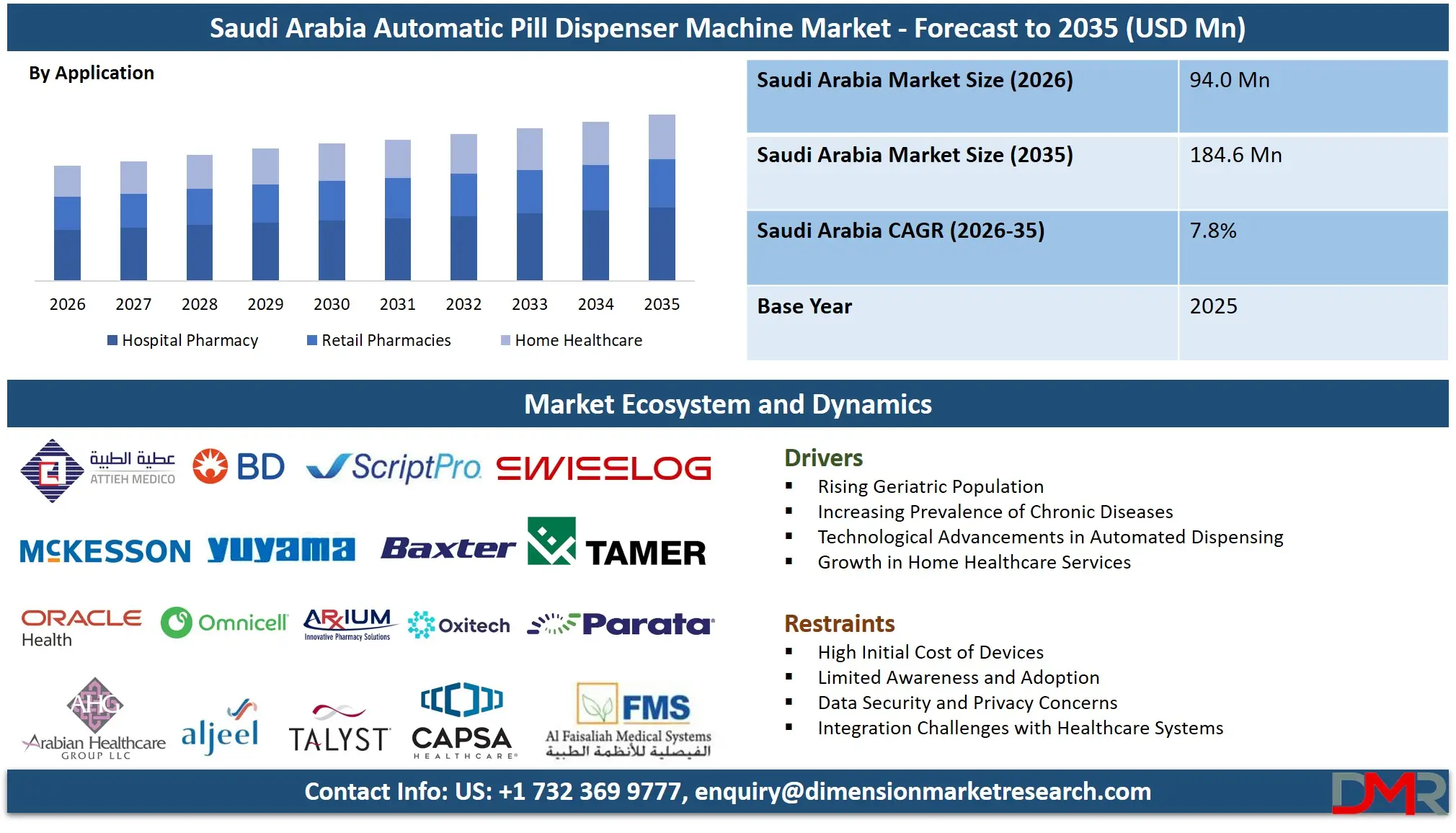
The Saudi Arabia Automatic Pill Dispenser Machine Market size is expected to reach a value of USD 94.0 million in 2026, and it is further anticipated to reach a market value of USD 184.6 million by 2035 at a CAGR of 7.8%.
ℹ
To learn more about this report –
Download Your Free Sample Report Here
Saudi Arabia Automatic Pill Dispenser Machine Market is experiencing a fast transformation and growth directly due to the national development agenda of Vision 2030 that has placed privatization of the healthcare sector and digitalization of the healthcare sector as a priority. Huge government spending on new healthcare facilities, such as medical cities and specialized hospitals, and a strategic drive to digital health solutions in the transformation programs of the Ministry of Health are driving the market. Automated systems are becoming more adopted in military hospitals, specialist medical centers, and the new breed of private hospital chains with the aim to improve patient safety, optimize pharmaceutical supply chains, and to lessen dependence on expatriate labor.
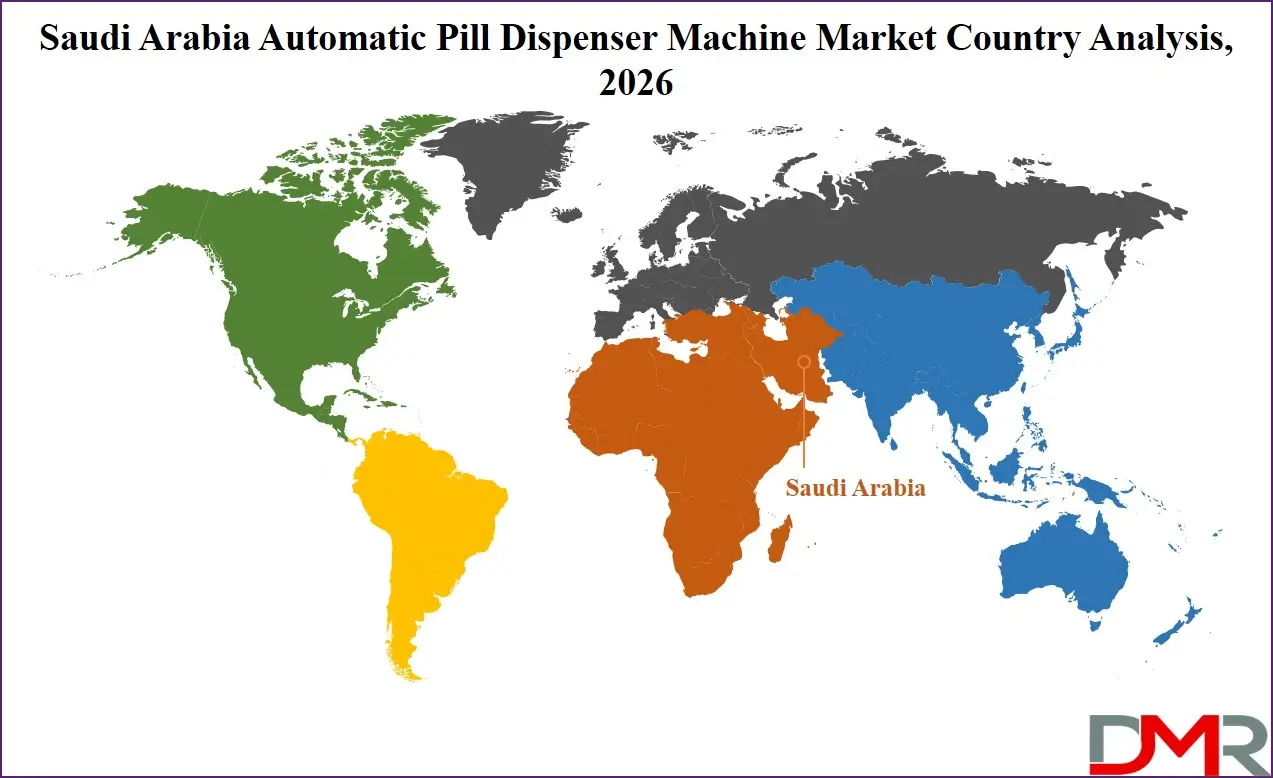
The new model of healthcare, dubbed as a Cluster, is being implemented in this region, and is incorporating technologies such as cloud-based pharmacy management and advanced robotics. Central and Eastern Provinces are the most leading in the market share as they harbor major metropolitan cities such as Riyadh and Dammam where tertiary care hospitals and greater budgetary allocations towards medical technology are concentrated. The Western Region, such as Jeddah and the Holy Cities, also offers a great demand due to the large traffic of patients and the needs of Hajj and Umrah medical services. The key companies that will work in this industry are large global companies such as Omnicell and BD, and local healthcare distribution conglomerates.
ℹ
To learn more about this report –
Download Your Free Sample Report Here
Saudi Arabia Automatic Pill Dispenser Machine Market: Key Takeaways and Other Influencing Factors
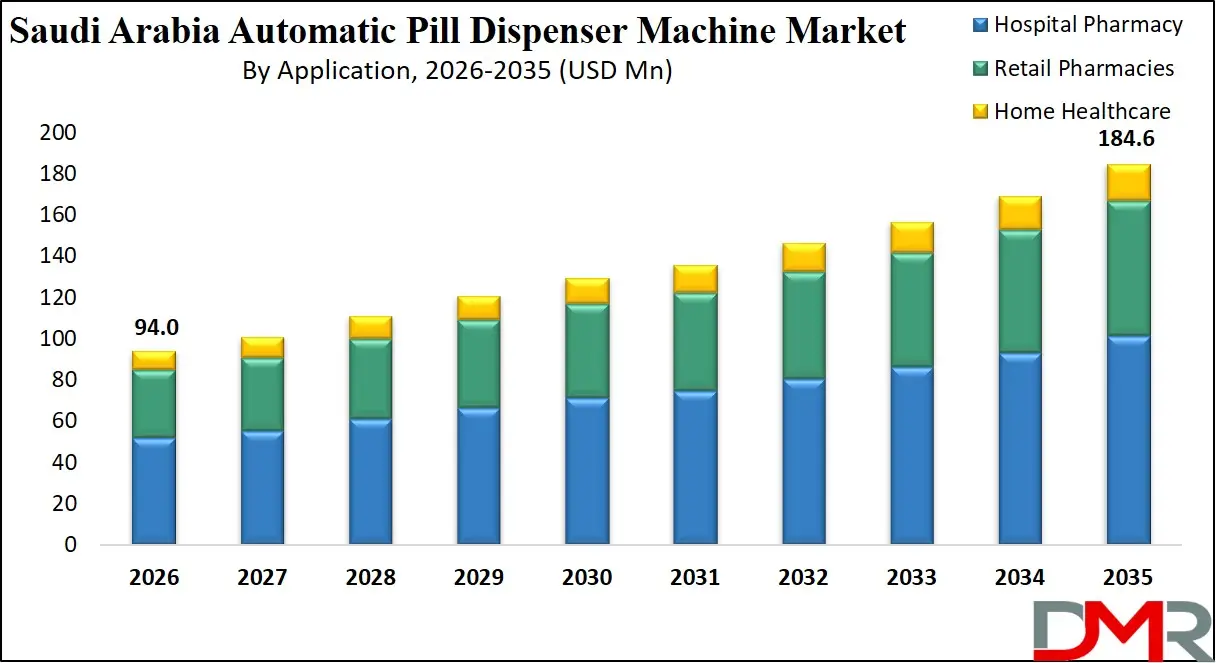
- Saudi Arabia Market Value: The Saudi Arabia Automatic Pill Dispenser Machine Market was valued at USD 94.0 million in 2026 and is anticipated to reach USD 184.6 million by 2035, fueled by the strategic privatization of government hospitals and the construction of world-class medical facilities that demand cutting-edge operational technology.
- Saudi Arabia Growth Rate: The market of Saudi Arabian automatic pill dispenser machine is expected to experience a compound annual growth rate (CAGR) of 7.8%, due to the digital leapfrog strategy of the healthcare sector, the prevalence of non-communicable diseases such as diabetes and the emphasis on medication safety accreditation by the country.
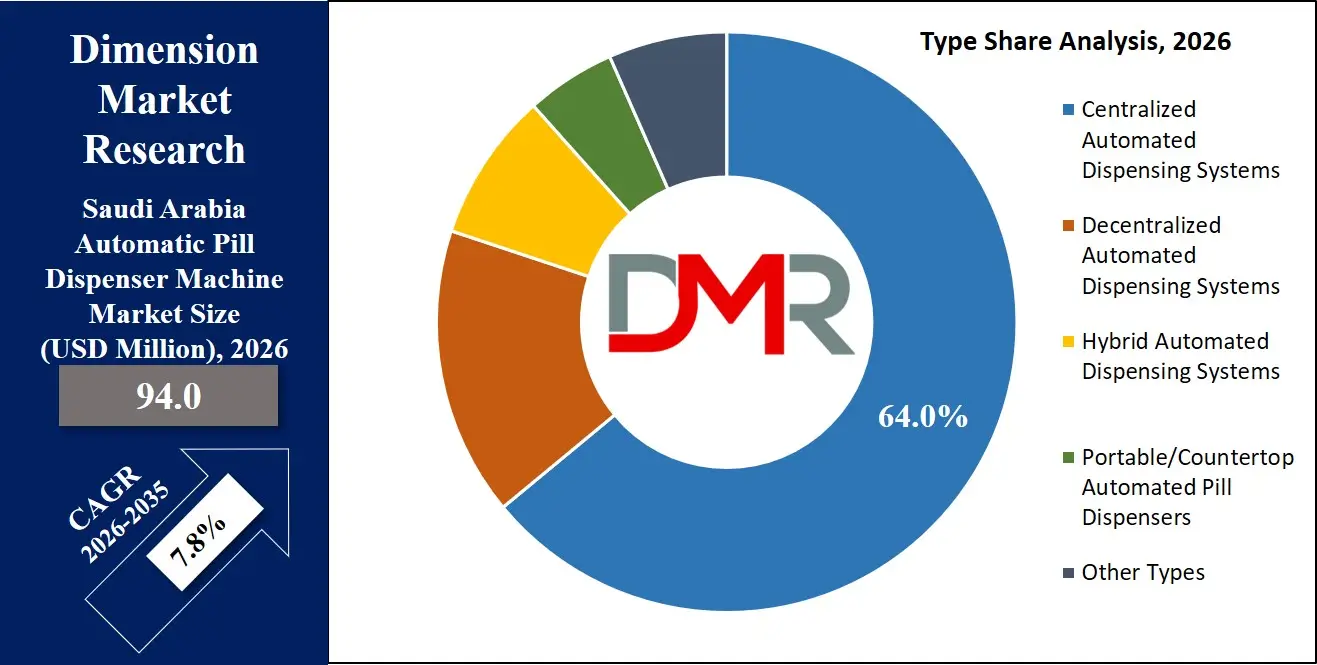
- By Type Segment Analysis: Centralized automated dispensing systems is expected to hold the largest share of 64.0% in 2026, because of their compatibility with the centralized pharmacy model of large government hospitals, and the necessity of controlling high-cost imported pharmaceuticals tightly in the Region supply chain.
- By Technology Segment Analysis: RFID-based systems is poised to dominate the technology segment, which have proven reliability, lower implementation cost and meets the Saudi Food and Drug Authority (SFDA) requirements of drug traceability and serialization.
- By Application Segment Analysis: The hospital pharmacy segment occupies the largest share of 39.2% in 2026 due to the vast quantity of medications dispensed in Ministries of Health and military hospitals, and the private home healthcare segment is fast-growing with the wealthy population in search of high-quality eldercare and convenience.
- Saudi Food and Drug Authority (SFDA) / Ministry of Health: The primary performance indicators used in the accreditation of hospitals by the Saudi Central Board of Accreditation of Healthcare Institutions (CBAHI) include medication safety and reduction of dispensing errors, which provides a regulatory imperative to use automation in both the public and the non-public sectors.
- Saudi Vision 2030 / Health Sector Transformation Program: The reorganization of healthcare delivery into accountable care "Clusters" requires the centralization of pharmacy services, and introduction of unified electronic medical records, which is a root cause of the massive pharmacy automation projects throughout the region.
- National Diabetes Registry / Gulf Data: Saudi Arabia has one of the highest incidence rates of diabetes in the world, which means that many people in the population are forced to take complicated regimens of daily medications, which is why adherence tools and automated dispensing are urgently needed to avoid complications and hospitalization.
Impact of Iran Conflict on Saudi Arabia Automatic Pill Dispenser Machine Market
The Iran crisis is affecting the Saudi Arabia automatic pill dispenser machine industry both directly and indirectly through economic and supply chain challenges. The attacks on oil infrastructure have led to a decrease in the production levels of the product, thus making prices very unstable. Moreover, due to the high costs of energy and transport due to the rising prices, there will be increased costs of producing and importing medical devices. There are also disruptions in the production of petrochemicals, which are used as raw materials for some parts of the device. International health care technology supply chains face challenges such as shipping delays and a shortage of supplies. On the other hand, healthcare demands remain high.
Saudi Arabia Automatic Pill Dispenser Machine Market: Use Cases
- Specialist Diabetes and Endocrinology Centers Use: Automated dispensers in specialty diabetes facilities allow accurate monitoring of insulin and oral hypoglycemic agents, and they provide the visual and auditory adherence reinforcement of a high-polypharmacy patient population with high risks of severe glycemic episodes.
- Military and National Guard Hospitals Use: These systems offer high security and audit trails of controlled substance and high-value medication management in high-security healthcare settings, and they ensure that chain-of-custody requirements are properly adhered to and that diversion is kept to a minimum.
- Private Home Healthcare for VIP Families Use: Advanced, discreet automated pill dispensers are being embraced by private nursing companies with high-net-worth families, enabling family offices and private doctors to remotely monitor the medication compliance of elderly parents without having to make intrusive visits.
Saudi Arabia Automatic Pill Dispenser Machine Market: Market Dynamic
Market Trends in Saudi Arabia Automatic Pill Dispenser Machine Market
Shift Toward "Pharmacy of the Future" Designs in New Hospitals
The region is investing tens of billions of dollars in new healthcare infrastructure. These new medical cities are not retrofitting old buildings, as the Pharmacy of the Future concept is taking centre stage. This tendency incorporates the architectural blend of enormous central pharmacy robots, pneumatic tube systems, and decentralized nursing unit cabinets into the blueprint phase. The emphasis lies in developing a zero-touch as much as possible material flow process between the loading dock and the patient bedside. This is a big change of piecemeal procurement to enterprise-wide automation planning.
Growth of Localized Service and Maintenance Ecosystems
With the increasing installed base of advanced Western automation equipment, a market trend is evident in the direction of the localization of service and support ecosystems. In response to the time and expenses of flying in engineers based in Europe or the U.S., large global suppliers are also setting up regional headquarters and training facilities in Riyadh. Meanwhile, local Saudi conglomerates and healthcare distributors are developing in-country technical capacities. This move towards the Saudization of service and support is essential in the provision of high uptime and system dependability which are essential in 24/7 operation of the hospital in the Region.
Growth Drivers in Saudi Arabia Automatic Pill Dispenser Machine Market
Healthcare Privatization and Public-Private Partnerships (PPP)
One of the pillars of Saudi Vision 2030 is the privatization of state-owned healthcare resources and the increased use of Public-Private Partnership schemes to manage hospitals. The operators in the private sector introduce an acute sense of operational efficiency, cost containment, and payback. Automated dispensing systems are here viewed as important mechanisms to maximize inventory turns, decrease pharmaceutical waste through expiry and minimize labor expenses related to manual dispensing. The move to a more business-oriented mindset of operations in the hospital industry is a compelling driver of automation investment.
Mandated Drug Traceability (SFDA Track and Trace)
The Saudi Food and Drug Authority has successfully adopted an all-inclusive drug traceability framework (Rased) which compels the serialization and monitoring of pharmaceutical goods between manufacturers and the patients. These laws are time-consuming and labour intensive to comply with manually, and are susceptible to errors. Embarkation of barcode scanning and data logging capabilities in automated dispensing systems offers a classy and effective solution to these regulatory requirements. The necessity to meet the requirements of SFDA track-and-trace directly contributes to the rationale behind capital investment in automated hardware and software upgrades in the hospital and retail pharmacy facilities.
Growth Opportunities in Saudi Arabia Automatic Pill Dispenser Machine Market
Expansion of Retail Pharmacy Chains and E-Pharmacy Services
Saudi pharmacy is experiencing a wave of consolidation and modernization, as bigger chains, such as Nahdi Medical Company and Al-Dawaa Pharmacies, are expanding their presence and digital services. Automated dispensing solutions to suit high-volume retail and mail-order pharmacy fulfillment are an increasing opportunity. With e-prescriptions (Wasfaty) becoming the standard and the growth of home delivery of medicines, automated central fill and prescription assembly systems will be highly sought after to fulfill the demands of a tech-savvy and convenience-focused Saudi consumer base.
Serving the Hajj and Umrah Medical Ecosystem
The annual arrival of millions of pilgrims poses a distinctive and repeatable spike need of healthcare services in Makkah and Madinah. One of the significant logistical problems is to control the delivery of medication in peak times effectively and without mishaps. Portable, high-capacity automated dispensing units and portable, rapidly deployable, automated dispensing units are strategic opportunities in temporary clinics and field hospitals. The acute demand of chronic disease drugs, antibiotics, pain management of a varied international population can be managed by these systems to enhance the quality of services during the pilgrimage seasons.
Market Restraints in Saudi Arabia Automatic Pill Dispenser Machine Market
Dependency on International Supply Chains for Hardware and Parts
The Saudi market is virtually dependent on imported automated dispensing equipment and proprietary spares, which are manufactured in the United States, Europe and Japan. This exposes it to the global supply chain disruption, shipment delays, and currency exchange rate fluctuations. The long lead times on the replacement of key parts may lead to a lot of downtime on key pharmacy automation systems, which affect hospital operations. This dependence on lengthy and global logistics pipelines is a bottleneck to the velocity of deployment and overall cost of ownership to the regional end-users.
Complexity of Bilingual System Interfaces
While English is the primary working language in many Saudi healthcare professional settings, the need for Arabic language interfaces for certain technical staff and for patient-facing applications is critical. Automated dispensing systems and their accompanying software must provide flawless, contextually accurate Arabic translation and support right-to-left script rendering. The added layer of software localization and the need for bilingual technical support documentation adds complexity and cost for international vendors seeking to penetrate the Saudi market effectively and meet the expectations of a diverse healthcare workforce.
Saudi Arabia Automatic Pill Dispenser Machine Market: Research Scope and Analysis
By Type Analysis
The centralized automated dispensing systems are more prevalent in Saudi Arabia because they are more in line with the operational and architectural planning of the large tertiary and quaternary care medical cities in the Kingdom. The centralized order allows the Ministry of Health and other government health services to centralize inventory management and procurement of an entire hospital or of a group of hospitals within a region and to enjoy economies of scale.
ℹ
To learn more about this report –
Download Your Free Sample Report Here
This is especially relevant in terms of handling the massive stocks of expensive biologics, vaccines and specialty drugs that are typical of advanced referral centers. These high-value assets can be tracked and placed in a central automated vault which is a major contributor to the superiority of this segment.
By Technology Analysis
RFID-based technology is expected to be the dominant and most widely adopted foundation for automation in the Saudi market. This is because its technology is mature, it has been proven to be effective in minimizing picking errors, and it is compliant to the raised serialization requirements by the SFDA. Introducing barcode scanning at the dispensing and restocking point is a practical and economical measure that Saudi hospitals will want to take to enhance safety without the increased investment of the infrastructure required to support a complete RFID ecosystem. Although RFID is being considered in narcotics high security vaults, barcode scanning is still the workhorse technology in the large majority of general pharmaceutical inventories.
By Application Analysis
The Hospital Pharmacy segment is the undisputed leader in the Saudi Arabia automatic pill dispenser machine market. The Ministry of Health has a huge network of hospitals, which are the main care providers to most of the Saudi people, and these facilities carry out the huge number of pharmaceutical transactions. Automation is a strategic requirement in these flagship facilities due to the push towards CBAHI accreditation and meeting international objectives on patient safety. At the same time, there is a high growth potential of the Home Healthcare and Ambulatory segments due to the privatization of home care services and the cultural focus on taking care of aged family members at home with the help of high-tech devices.
Saudi Arabia Automatic Pill Dispenser Machine Market Report is segmented on the basis of the following:
By Type
- Centralized Automated Dispensing Systems
- Decentralized Automated Dispensing Systems
- Hybrid Automated Dispensing Systems
- Portable/Countertop Automated Pill Dispensers
- Other Types
By Technology
- RFID-Based Systems
- Barcode-Based Systems
By Application
- Hospital Pharmacy
- Retail Pharmacies
- Home Healthcare
Impact of Artificial Intelligence in Saudi Arabia Automatic Pill Dispenser Machine Market
The deployment of Artificial Intelligence technology in automated pill dispenser devices will have implications in terms of setting new standards as far as pharmacy performance in some of the leading hospitals in the Region goes. By applying algorithms to track past trends in medication consumption, there will be more accurate predictions of when certain medicines need to be replenished at pharmacies to avoid stockouts. Also, less money will be wasted on expired medicine stock. The benefit of this application of AI in the case of pharmaceuticals is especially notable where fast-turnaround products used in emergencies and intensive care units of busy hospitals in Saudi Arabia are involved.
AI in automated pill dispenser devices will improve patient monitoring for patients with chronic diseases in remote locations across Saudi Arabia through remote monitoring of those patients' health indicators from the hospital cluster in the main city. The information obtained via AI in the automated pill dispenser will assist the primary care physician in delivering better patient outcomes. Such a strategy will be in line with Saudi Arabia's telemedicine approach that seeks to cut costs related to the delivery of quality health services to remote communities.
Saudi Arabia Automatic Pill Dispenser Machine Market: Competitive Landscape
In the Saudi Arabia Automatic Pill Dispenser Machine Market, the competitive environment is dominated by leading global multinational companies that fiercely compete in the awarding of large hospital tenders from the government and private hospitals. Factors that influence this environment include the involvement of established distribution channels in the form of partnerships that possess the required connections and logistical support for addressing the needs of the Ministry of Health and other organizations. Leading manufacturers such as Omnicell, BD, and Swisslog Healthcare have formed alliances with Saudi medical conglomerates in order to enter into this market space.
ℹ
To learn more about this report –
Download Your Free Sample Report Here
The main determinants in the competition involve the provision of quality service level agreements (SLAs), which are supported by fast response times in the Region, successful deployment in the leading Hospital Information Systems in the region, and adherence to the SFDA and CBAHI requirements. Being competitive in price may be an advantage in winning bids during the bidding process, but being compliant in the technical sense and offering training and support for Saudi nationals plays an equal role.
Some of the prominent players in Saudi Arabia Automatic Pill Dispenser Machine Market are:
- Omnicell
- BD (Becton, Dickinson and Company)
- Swisslog
- McKesson
- Oracle Health
- ScriptPro
- Capsa Healthcare
- Baxter
- Yuyama
- Philips
- ARxIUM
- Parata
- Talyst
- Tamer Group
- Al Faisaliah Medical
- OxyTech
- Attieh Medico
- Arabian Health Care
- Al Jeel Medical
- Qomel
- Other Key Players
Saudi Arabia Automatic Pill Dispenser Machine Market: Recent Developments
- December 2025: The Ministry of Health signed a framework agreement with a leading global automation vendor for the phased deployment of centralized pharmacy automation systems across 15 new medical cluster hospitals being inaugurated under the Health Sector Transformation Program.
- November 2025: A major private healthcare provider in Riyadh announced the successful go-live of a fully integrated closed-loop medication management system, linking CPOE in the HIS directly to automated dispensing cabinets in the new King Faisal Specialist Hospital expansion.
- October 2025: The Saudi Food and Drug Authority (SFDA) issued updated technical guidance on the validation and qualification requirements for automated dispensing and packaging systems used in licensed pharmaceutical warehouses and health insurance pharmacies.
- September 2025: Nahdi Medical Company unveiled its new central fill robotic dispensing facility in Jeddah, designed to support the growing demand for its e-prescription refill and home delivery service across the Western Province, utilizing high-speed automated pouch packaging.
Report Details
| Report Characteristics |
| Market Size (2026) |
USD 94.0 Mn |
| Forecast Value (2035) |
USD 184.6 Mn |
| CAGR (2026–2035) |
7.8% |
| Historical Data |
2021 – 2025 |
| Forecast Data |
2026 – 2035 |
| Base Year |
2025 |
| Estimate Year |
2026 |
| Report Coverage |
Market Revenue Estimation, Market Dynamics, Competitive Landscape, Growth Factors and etc. |
| Segments Covered |
By Type (Centralized Automated Dispensing Systems, Decentralized Automated Dispensing Systems, Hybrid Automated Dispensing Systems, Portable/Countertop Automated Pill Dispensers, and Other Types), By Technology (RFID-Based Systems, and Barcode-Based Systems), By Application (Hospital Pharmacy, Retail Pharmacies, and Home Healthcare) |
| Country Coverage |
Saudi Arabia |
| Prominent Players |
Omnicell, BD, Swisslog, McKesson, Oracle Health, ScriptPro, Capsa Healthcare, Baxter, Yuyama, Philips, ARxIUM, Parata, Talyst, Tamer Group, Al Faisaliah Medical, OxyTech, Attieh Medico, Arabian Health Care, Al Jeel Medical, Qomel, and Other Key Players |
| Purchase Options |
We have three licenses to opt for: Single User License (Limited to 1 user), Multi-User License (Up to 5 Users), and Corporate Use License (Unlimited User) along with free report customization equivalent to 0 analyst working days, 3 analysts working days and 5 analysts working days respectively. |
Frequently Asked Questions
How big is the Saudi Arabia Automatic Pill Dispenser Machine Market?
▾ The Saudi Arabia Automatic Pill Dispenser Machine Market size is estimated to have a value of USD 94.0 million in 2026 and is expected to reach USD 184.6 million by the end of 2035.
Who are the key players in the Saudi Arabia Automatic Pill Dispenser Machine Market?
▾ Some of the major key players in the Saudi Arabia Automatic Pill Dispenser Machine Market are Baxter International Inc., ScriptPro LLC, Talyst Inc., Yuyama Co., Ltd., Koninklijke Philips N.V., Oracle Cerner Corporation, ARxIUM Inc., Omnicell Inc., Swisslog Healthcare, and many others.
What is the growth rate in the Saudi Arabia Automatic Pill Dispenser Machine Market?
▾ The Market is growing at a CAGR of 7.8 percent over the forecasted period.